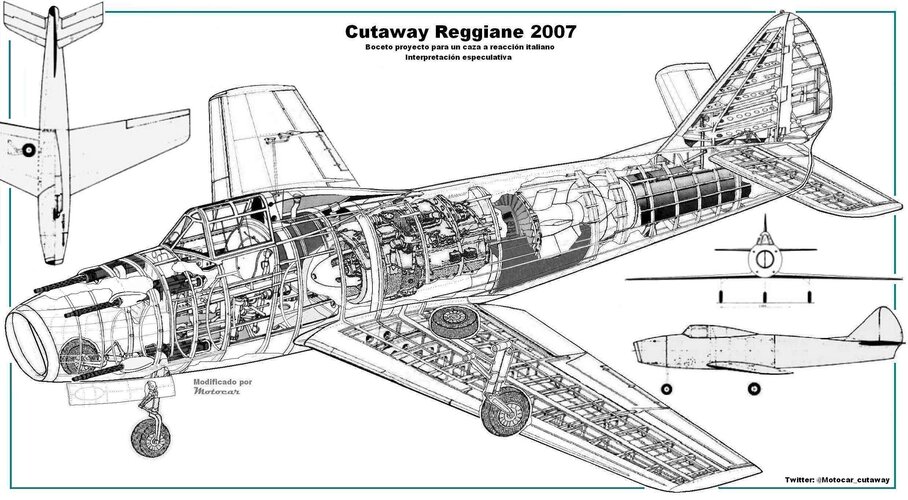
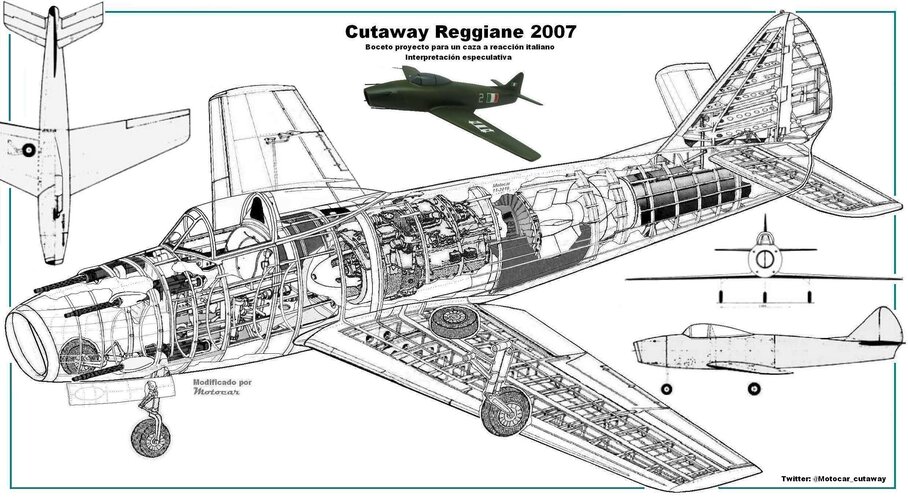
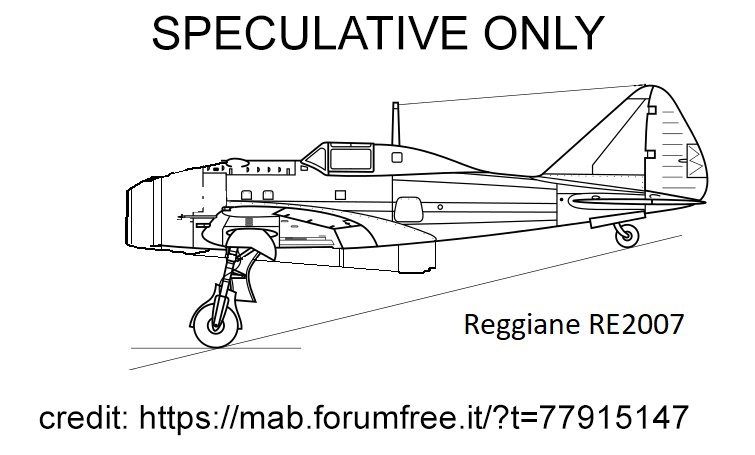
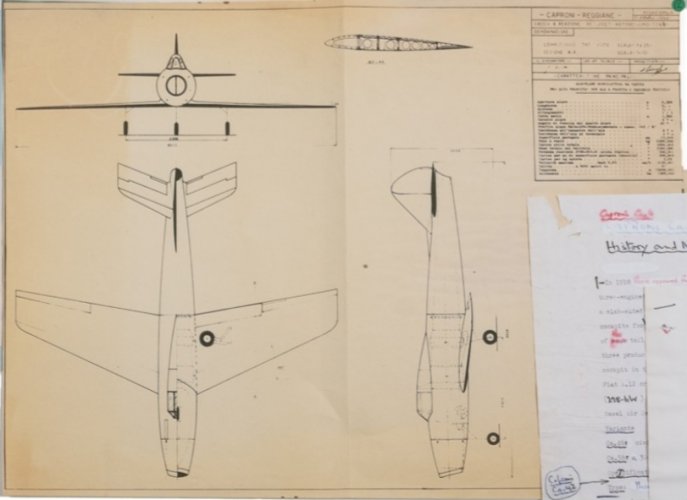
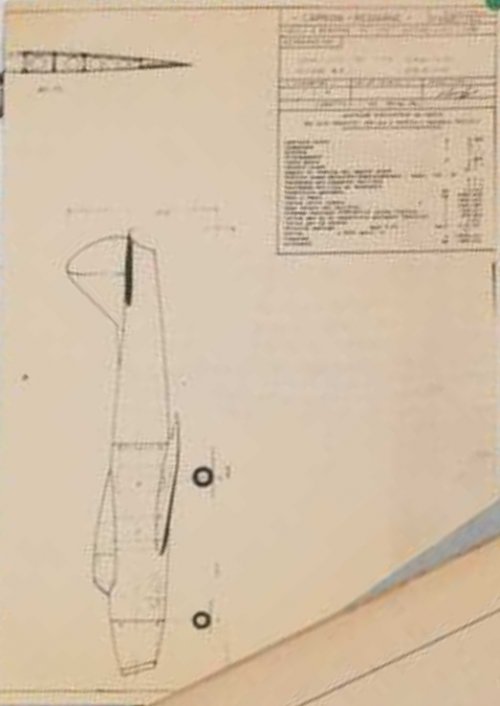
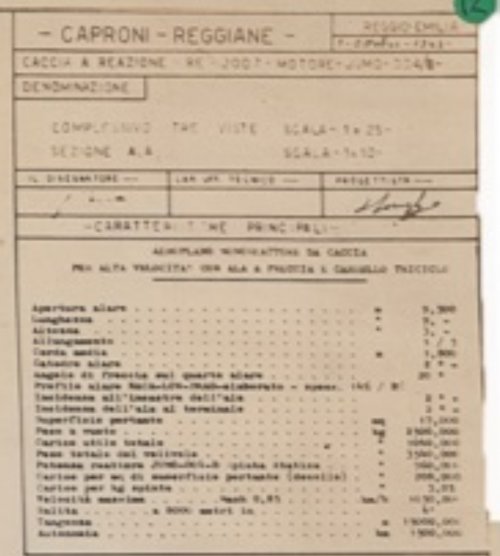
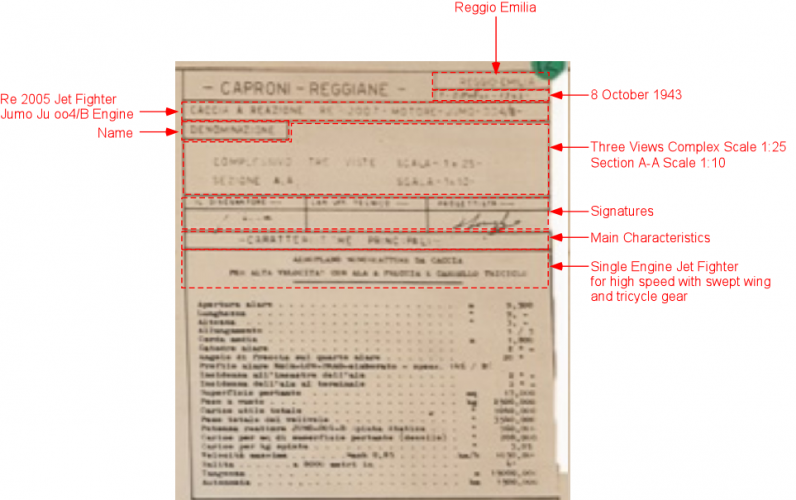
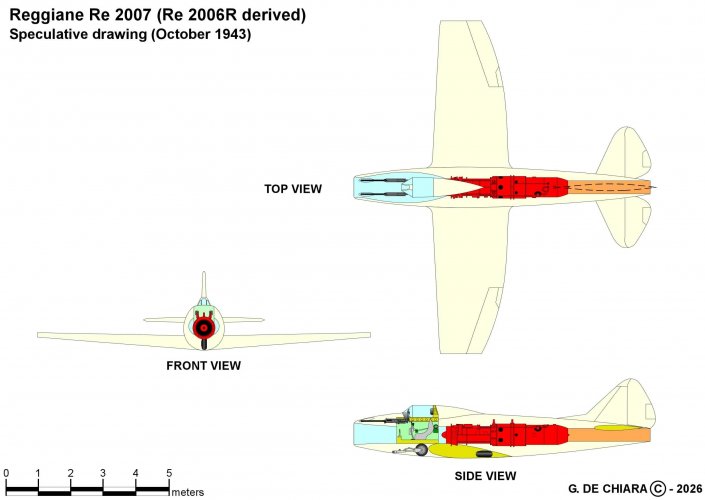
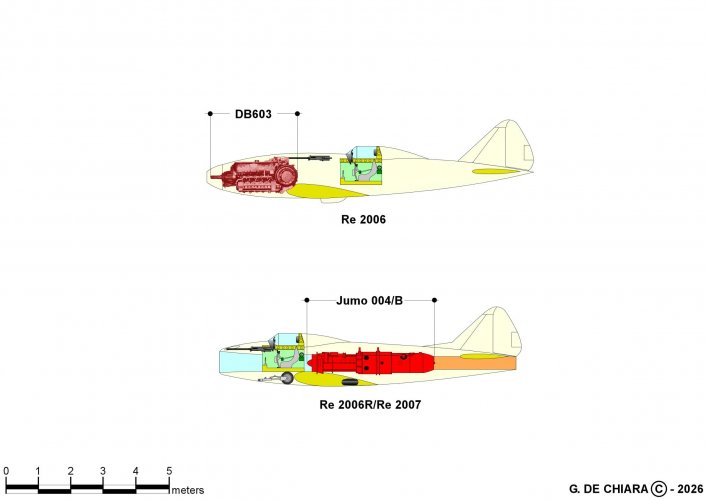
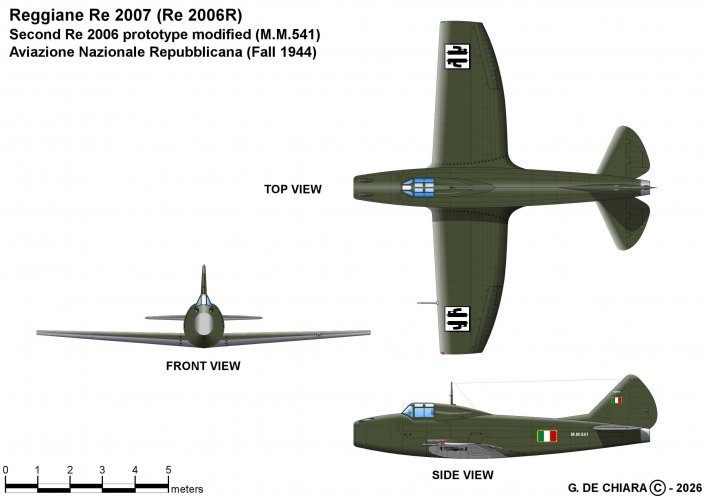
Yes: I don't know where now is the large scale sectional view of the RE 2007.
About that mattera I would add something. Longhi's alleged engineering degree is questionable, as this possibility doesn't fit into his biography: in 1927, Longhi was working as a purser (an administrative role) for a shipping company, and during a trip he met industrialist Giuseppe Bellanca, who convinced him to settle in the United States to work on airplanes. He did so, and held organizational positions in small industries (Bellanca and Burnelli), before attempting to set up his own business, with little success. In this regard, Marco Gueli (a respected expert on Italian aeronautical history) wrote in "Storia Militare" No. 266, page 16: "Neither the precise date of his graduation in 1927 nor the American university that awarded it are known."
Caproni was impressed by his management skills, his resourcefulness, and the fact that he had gained an insider's perspective on industries that operated with more advanced technologies than those available in Italy. During several meetings and interviews, Longhi consistently told me that he had indeed taken inspiration from the P-35, but that he had designed a new wing with a profile resulting from the interpolation of the P-39's with the NACA N-38. However, this was not the case: the Re 2000 was, in fact, based on the Clark YH wing profile, which was quite different.
At the end of February 1938, Longhi moved into the Reggiane's Reggio Emilia plant, where he had brought several large trunks (presumably containing the construction plans for the American Seversky P-35 fighter and samples of light alloys such as Dural and Alclad).
The discerning Italian bureaucracy likely overlooked the fact that Longhi lacked the credentials to "sign off" the designs. In fact, he held the title of experimental workshop manager until September 1939, when he was appointed head of the experimental construction factory, and from May 1941 onwards, he became a technical inspector. However, everyone believed he was "Engineer Longhi," and Robert staged a charade, creating a fake technical office inside the factory. Every morning, a team of workers would arrive to impersonate his assistants, busy designing the RE 2000.
In reality, the task of converting the project from the imperial to the decimal metric system, introducing significant modifications such as a new landing gear designed by engineer Virgilio Vardanega, modifications to the wing and the engine cowling design, was assigned to engineer Giuseppe Pambianchi, a competent engineer who had already been consulted several manufacturers for "rescues" or situations requiring confidentiality. Pambianchi had participated in the design work on the Meridionali Ro. 37 and Ro. 41 from 1934 to 1936, when the Neapolitan company still lacked a full technical office. From March 1, 1938, he was head of the aviation technical office of the Caproni Studies and Patents Company, where he worked alongside the inventive engineer Giovanni Pegna. When Pegna left the Caproni group, Pambianchi moved to the Officine Reggiane factory, where he was the actual technical director until October 15, 1941.
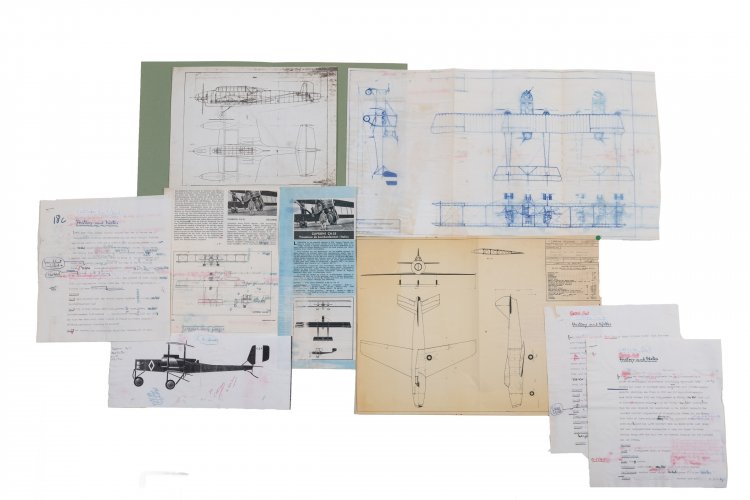
Regarding the RE 2007, I agree with what Sky wrote and, to some extent, with Justo. In 1968, I had the opportunity to see the original cross-section drawing of the RE 2007, and it was clearly visible that the wing, swept at 20° and with marked negative dihedral, appeared to have been added later. Under the same circumstances, the three-view drawing of the Caproni-Reggiane Ca.2008 project also appeared, an apparent reworking of the same RE 2007, which bore a certain resemblance to the North American F-86 Sabre. For sure all the paperwork related to RE 2007 was made after the end of WW II.
Evidently, Longhi and Caproni's idea was an attempt to meet the Italian Air Force's specifications for an advanced trainer, a solution that was later found in the sale of the T-33s from the US.