
You are using an out of date browser. It may not display this or other websites correctly.
You should upgrade or use an alternative browser.
You should upgrade or use an alternative browser.
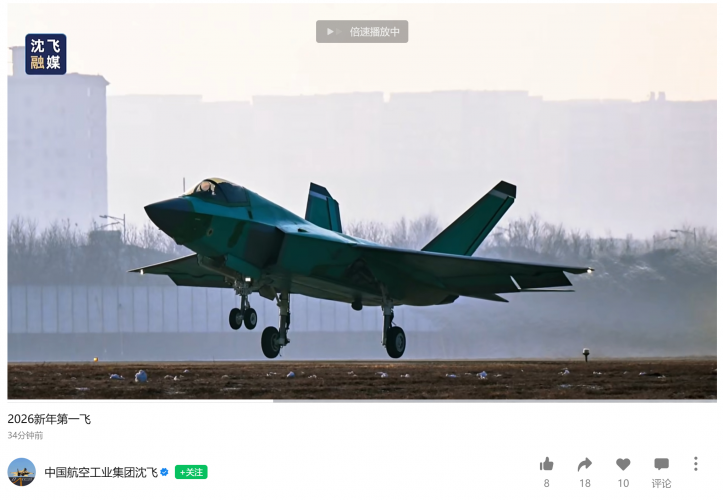
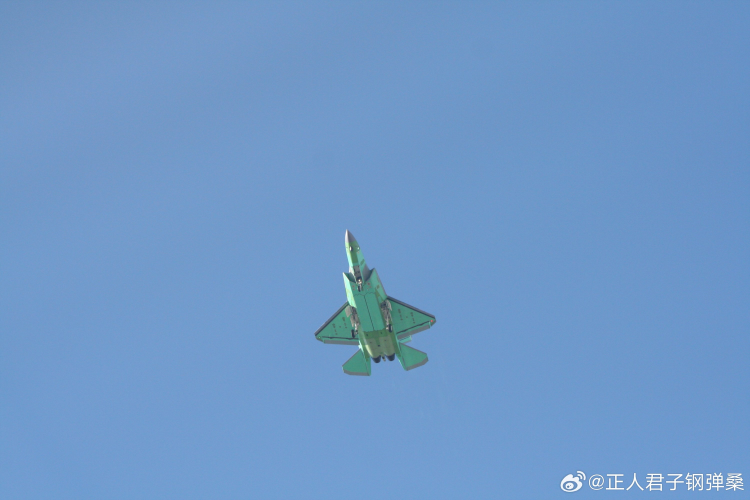
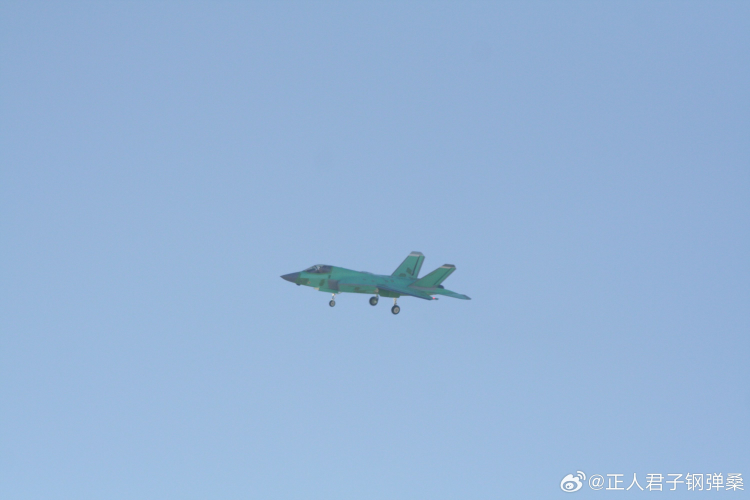
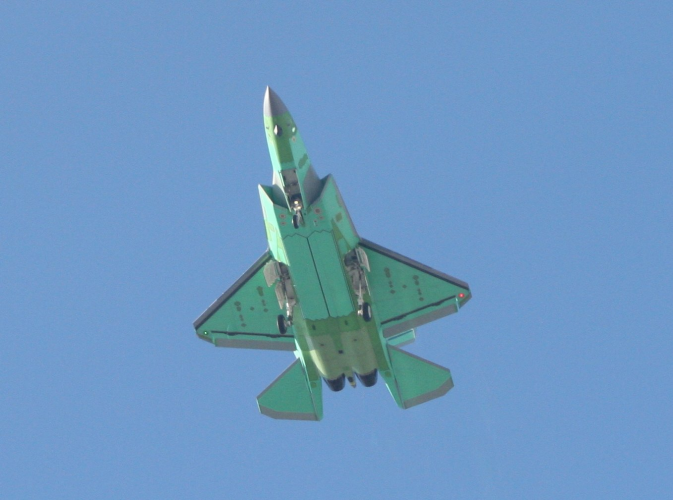
Shenyang FC-31 demonstrators / J-35 naval fighter / J-35A land-based version




FighterJock
ACCESS: Above Top Secret
- Joined
- 29 October 2007
- Messages
- 7,229
- Reaction score
- 8,540
So one question that has been bothering me recently how many J-35s will eventually be built not including the prototypes.
It's a difficult prediction to make as with any other combat aircraft that early in production. Logically we should expect production taking place over decades, and what with PLAAF, PLANAF and export needs numbers to get into 4 digits.

snne
ACCESS: Top Secret
- Joined
- 3 July 2022
- Messages
- 2,408
- Reaction score
- 8,848
The reason the (PLA)AF decided to also procure the J-35A is to close the 5th gen quantity gap with the US. Current conservative estimates of J-20 numbers range from 450 to 550, with annual production of around 100 aircraft, but the US military already has around 1,000 5th-gen fighters. Japan and Australia are also going to be involved once the Americans are involved, which adds even more 5th-gen aircraft to counter.So one question that has been bothering me recently how many J-35s will eventually be built not including the prototypes.
Since global politics are going off the rails, the PLA sees an increasingly higher risk stemming from the lack of 5th-gen fleet parity with the US and its allies. To reduce this risk over the next five years, they decided to adopt the J-35A as a more affordable aircraft that can be procured in larger numbers. Meanwhile, the J-35 is the only modern (VLO) aircraft the Navy has and they will operate in 2IC waters at the frontline, so they opted to order the full package rather than a stripped-down, cheaper option like the Air Force.
FighterJock
ACCESS: Above Top Secret
- Joined
- 29 October 2007
- Messages
- 7,229
- Reaction score
- 8,540
So the production status of the J-35 will be from anything from 400 to 500 aircraft. I would think that the J-35 being the more affordable equivalent to the J-20 I could easily see the J-35 being bought in such numbers.

BonPlan2
ACCESS: Top Secret
- Joined
- 5 June 2025
- Messages
- 577
- Reaction score
- 737
too clean to be real, no ?WS-21 nozzles extreme close-up


donnage99
ACCESS: Top Secret
- Joined
- 16 June 2008
- Messages
- 1,584
- Reaction score
- 1,629
depend on how quickly they are introducing their 2 6th gen fighters/ air cruisers. I've always seen the air force purchase of j-35a as a temporary mean to expand production and achieve economies of scale, making it both affordable domestically and as export later on on top of erasing mass disparity with USA, Japan, Korea combined f-35 fleet in potential war. They probably want to achieve their high low mix of 6th gens and CCA's as soon as those mature.So the production status of the J-35 will be from anything from 400 to 500 aircraft. I would think that the J-35 being the more affordable equivalent to the J-20 I could easily see the J-35 being bought in such numbers.
I can't see significant rate of production for the 6th gens before 2030 and exports for those (J-50 basically, i find hard to think China would sell or anyone could afford the J-36) until much later after that, so meanwhile i can see high rate of J-35 production for PLAAF/PLANAF until at least first half of the 2030s and for exports at least until 2040s.
Well, assuming J20 will take over remaining J11 units and J16 will take over remaining jh7 units, there's still gonna be something like 700 J10 of various vintage to be replaced. Oldest J10A are something like 23 years old now. Plus there are PLAN's needs, possibly a few hundred planes. So - I wouldn't be surprised if J35 remains in production for PLA beyond 2035, maybe even beyond 2040. Produced alongside stuff like SAC's 6th gen offering. And in said timeframe the production will likely fluctuate. Probably gonna ramp up until 2030. Then maybe hold a few years of big volume production (no one knows how many that could be but even a 100 a year isn't impossible) and then gradually ramp down for another 5 or even 10 years. Production until 2040 with an usual ramp up to 100 (mimicked after j20) would yield some 800+ planes. Sort of close to J10+PLAN needs numbers, but not quite. Production until 2024 with a more gradual ramp down might yield 900-1000 planes which should be quite close to J10 replacement+PLAN needs. (with excess PLAN planes perhaps being a 6th gen design)

- Joined
- 2 January 2006
- Messages
- 4,235
- Reaction score
- 8,279
Unfortunately not apparently! IMO these are older images and were released just now ... anyway a great sight!


- Joined
- 3 June 2011
- Messages
- 20,898
- Reaction score
- 19,088
It has two engines vs one.How is it comparison with F-35 ?
- Joined
- 2 January 2006
- Messages
- 4,235
- Reaction score
- 8,279
How is it comparison with F-35 ?
I think as long as we have almost no useful data, all we can do is to speculate and if this is useful, is another question ... otherwise I nowadays often remember Bill Sweetman's "perfect" conclusion in one of his early analysis: "The J-35 is almost everything the F-35 could have been ..." (or similar)!
- Joined
- 3 June 2011
- Messages
- 20,898
- Reaction score
- 19,088
Yeah, but that's the same guy who said the Gripen is a 6th-gen fighter. His opinion of the F-35 is well known and could hardly be considered objective. But it's undeniable it wasn't constrained in the way the F-35 was (to fit on a particular elevator). More length gives you potentially better aero properties (drag). The two-vs-one engines is debatable IMO. One big engine makes the F-35 look chunky, much like the original Lightning did with its stacked engines. Safety, anymore it's a wash. Power vs weight? Maybe, but then you'd be stuck with the F414s that aren't exactly spring chickens.I think as long as we have almost no useful data, all we can do is to speculate and if this is useful, is another question ... otherwise I nowadays often remember Bill Sweetman's "perfect" conclusion in one of his early analysis: "The J-35 is almost everything the F-35 could have been ..." (or similar)!
Last edited:
FighterJock
ACCESS: Above Top Secret
- Joined
- 29 October 2007
- Messages
- 7,229
- Reaction score
- 8,540
The F414s are the same engines that power the Super Hornet right?
- Joined
- 3 June 2011
- Messages
- 20,898
- Reaction score
- 19,088
Yep. And the KF-21.The F414s are the same engines that power the Super Hornet right?
I don't see why you would be stuck with F414's, the F-135 was designed for the F-35, a twin engine variant I would presume use a newly developed engine as well. Not exactly a downside unless you're planning to be a cheapo.Yeah, but that's the same guy who said the Gripen is a 6th-gen fighter. His opinion of the F-35 is well known and could hardly be considered objective. But it's undeniable it wasn't constrained in the way the F-35 was (to fit on a particular elevator). More length gives you potentially better aero properties (drag). The two-vs-one engines is debatable IMO. One big engine makes the F-35 look chunky, much like the original Lightning did with its stacked engines. Safety, anymore it's a wash. Power vs weight? Maybe, but then you'd be stuck with the F414s that aren't exactly spring chickens.
Ainen
I really should change my personal text
- Joined
- 25 August 2011
- Messages
- 2,819
- Reaction score
- 4,926
Hard to look at it this way, b/c ultimately USAF got in F-35A exactly what it specified. One may argue the specificaton wasn't right - but it's what they wanted.Yeah, but that's the same guy who said the Gripen is a 6th-gen fighter. His opinion of the F-35 is well known and could hardly be considered objective. But it's undeniable it wasn't constrained in the way the F-35 was (to fit on a particular elevator). More length gives you potentially better aero properties (drag). The two-vs-one engines is debatable IMO. One big engine makes the F-35 look chunky, much like the original Lightning did with its stacked engines. Safety, anymore it's a wash. Power vs weight? Maybe, but then you'd be stuck with the F414s that aren't exactly spring chickens.
Hard to say it this way about F-35C, but USN "specified" something like F-35C only at a gunpoint; one engine, two engines, it isn't even close to something they wanted.
Basics of what F-35 is are either 2 /existing/ 2000lb weapons, or STOVL configuration. And fitting existing sealift and decks."The J-35 is almost everything the F-35 could have been ..." (or similar)!
J-35 is none of these things.
- Joined
- 3 June 2011
- Messages
- 20,898
- Reaction score
- 19,088
The F135 was derived from the F119, which kept the cost lower. An F414 replacement would have to be a clean-sheet design.I don't see why you would be stuck with F414's, the F-135 was designed for the F-35, a twin engine variant I would presume use a newly developed engine as well. Not exactly a downside unless you're planning to be a cheapo.
- Joined
- 3 June 2011
- Messages
- 20,898
- Reaction score
- 19,088
Commonality constrained the length of both the A and C to that of the B.Hard to look at it this way, b/c ultimately USAF got in F-35A exactly what it specified. One may argue the specificaton wasn't right - but it's what they wanted.
Hard to say it this way about F-35C, but USN "specified" something like F-35C only at a gunpoint; one engine, two engines, it isn't even close to something they wanted.
Basics of what F-35 is are either 2 /existing/ 2000lb weapons, or STOVL configuration. And fitting existing sealift and decks.
J-35 is none of these things.
Ainen
I really should change my personal text
- Joined
- 25 August 2011
- Messages
- 2,819
- Reaction score
- 4,926
IIRC it's B and C on A, not B on C and A.Commonality constrained the length of both the A and C to that of the B.
In any case, USAF didn't have strong requirement on higher length, and IIRC(don't quote me on that) it was a soft positive, as F-35A still fits most HAS.
BonPlan2
ACCESS: Top Secret
- Joined
- 5 June 2025
- Messages
- 577
- Reaction score
- 737
It is a well born F-35, without all the bad compromises made on the US jet.How is it comparison with F-35 ?
- Joined
- 3 June 2011
- Messages
- 20,898
- Reaction score
- 19,088
B drove everything. The C could be much larger and still fit on CVNs. The USAF didn't have a requirement on length because it couldn't and still maintain commonality. Commonality with the B that is.IIRC it's B and C on A, not B on C and A.
In any case, USAF didn't have strong requirement on higher length, and IIRC(don't quote me on that) it was a soft positive, as F-35A still fits most HAS.
Ainen
I really should change my personal text
- Joined
- 25 August 2011
- Messages
- 2,819
- Reaction score
- 4,926
Requirement on length came from sealift, which was came for both B and C variants to my knowledge.B drove everything. The C could be much larger and still fit on CVNs. The USAF didn't have a requirement on length because it couldn't and still maintain commonality. Commonality with the B that is.
I.e. it's hard to push it on STOVL - the only other supersonic VTOL is Yak-141, which at 18.3m was even longer than J-35...
- Joined
- 3 June 2011
- Messages
- 20,898
- Reaction score
- 19,088
The B has always been intended to operate off amphibious assault ships. They have smaller elevators. I saw somewhere that it was actually constrained by a UK elevator on a retired ship but, in any case, it was elevator size on the intended ship. It had nothing to do with the fact it was STOVL.Requirement on length came from sealift, which was came for both B and C variants to my knowledge.
I.e. it's hard to push it on STOVL - the only other supersonic VTOL is Yak-141, which at 18.3m was even longer than J-35...

- Joined
- 24 November 2008
- Messages
- 1,858
- Reaction score
- 4,327
The stretched, twin-engine F-35 you dream of is the F-22
FighterJock
ACCESS: Above Top Secret
- Joined
- 29 October 2007
- Messages
- 7,229
- Reaction score
- 8,540
You are thinking about the Trump inspired F-55 which is just a dream right now. Whether or not it becomes reality is another thing.
- Joined
- 3 June 2011
- Messages
- 20,898
- Reaction score
- 19,088
What are you talking about?The stretched, twin-engine F-35 you dream of is the F-22
- Joined
- 24 November 2008
- Messages
- 1,858
- Reaction score
- 4,327
Alright, back to topic!What are you talking about?
Scott Kenny
ACCESS: USAP
- Joined
- 15 May 2023
- Messages
- 19,517
- Reaction score
- 27,966
On the order of 1000, just for the PLAAF. There are over right about 700x J10s of all types plus 200 JH-7s to replace.So one question that has been bothering me recently how many J-35s will eventually be built not including the prototypes.
Not really sure how many the PLANAF will need, but I'd guess at about 24x per carrier.
Ainen
I really should change my personal text
- Joined
- 25 August 2011
- Messages
- 2,819
- Reaction score
- 4,926
If you look at J-35(a) closely, it's more of a somewhat smaller, BYD version of 2020s raptor with modern bells&whistles instead of WVR bays, rather than an F-35. And big part of it is exactly two engines and geometrical layout they create.What are you talking about?
It's meant to be a supercruiser, it probably (we don't have way to be sure, but it isn't too unlikely due to general configuration) doesn't have deep bays either.
This is not to say you can't have deep bays with this layout - you absolutely can, but something will have to give.

In_A_Dream
ACCESS: Top Secret
- Joined
- 3 June 2019
- Messages
- 786
- Reaction score
- 926
On the order of 1000, just for the PLAAF. There are over right about 700x J10s of all types plus 200 JH-7s to replace.
Not really sure how many the PLANAF will need, but I'd guess at about 24x per carrier.
In light of recent world events, it'll be interesting to see whether China chooses to flex its manufacturing might in the coming years.
I believe they've been somewhat modest with regards to current production rates.
Scott Kenny
ACCESS: USAP
- Joined
- 15 May 2023
- Messages
- 19,517
- Reaction score
- 27,966
They're pushing pretty hard to make carriers at the speed they are.In light of recent world events, it'll be interesting to see whether China chooses to flex its manufacturing might in the coming years.
I believe they've been somewhat modest with regards to current production rates.
The big problem is the crews for them, not so much the ship production rate.
snne
ACCESS: Top Secret
- Joined
- 3 July 2022
- Messages
- 2,408
- Reaction score
- 8,848
They already are. Between 20-50 J-35(A)s are expected to roll off the production line this year.In light of recent world events, it'll be interesting to see whether China chooses to flex its manufacturing might in the coming years.
The reason the (PLA)AF decided to also procure the J-35A is to close the 5th gen quantity gap with the US. Current conservative estimates of J-20 numbers range from 450 to 550, with annual production of around 100 aircraft, but the US military already has around 1,000 5th-gen fighters. Japan and Australia are also going to be involved once the Americans are involved, which adds even more 5th-gen aircraft to counter.
Since global politics are going off the rails, the PLA sees an increasingly higher risk stemming from the lack of 5th-gen fleet parity with the US and its allies. To reduce this risk over the next five years, they decided to adopt the J-35A as a more affordable aircraft that can be procured in larger numbers. Meanwhile, the J-35 is the only modern (VLO) aircraft the Navy has and they will operate in 2IC waters at the frontline, so they opted to order the full package rather than a stripped-down, cheaper option like the Air Force.
Last edited:
- Joined
- 2 January 2006
- Messages
- 4,235
- Reaction score
- 8,279
In light of recent world events, it'll be interesting to see whether China chooses to flex its manufacturing might in the coming years.
I believe they've been somewhat modest with regards to current production rates.
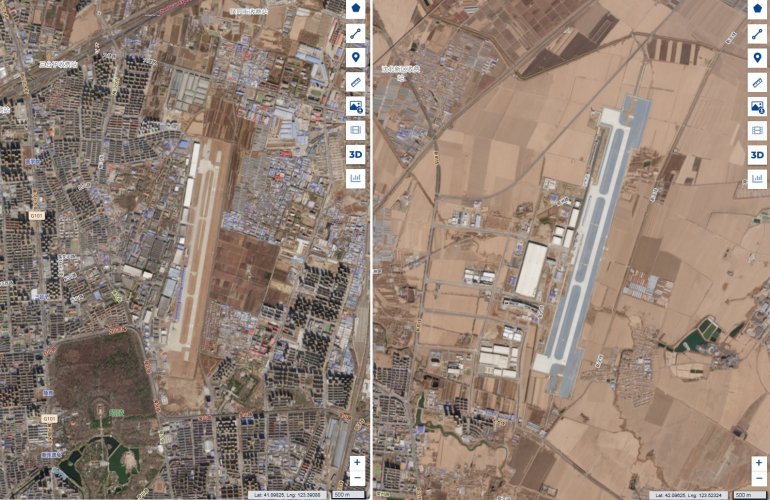
Well, at least at the moment they are built at the old SAC facility (left) ... but according to the latest news (https://www.ln.gov.cn/web/ywdt/qsgd/ass_2_1/2025122609225927312/index.shtml) the new facility (right) is ready!
FighterJock
ACCESS: Above Top Secret
- Joined
- 29 October 2007
- Messages
- 7,229
- Reaction score
- 8,540
Interesting to see the new SAC facility Deino compaired to what the old one looked like.
Scorpion82
ACCESS: Secret
- Joined
- 20 May 2006
- Messages
- 406
- Reaction score
- 871
It has two engines vs one.
And looks better than fat Dave.
Similar threads
-

-

-
Chengdu J-10 "Vigorous Dragon" fighter - News only
- Started by overscan (PaulMM)
- Replies: 939
-

-
 Shenyang Jianjiji-11 / J-11 Lightweight Fighter
- Started by Deino
- Replies: 11