
You are using an out of date browser. It may not display this or other websites correctly.
You should upgrade or use an alternative browser.
You should upgrade or use an alternative browser.
Polish Projects

- Joined
- 1 February 2011
- Messages
- 3,341
- Reaction score
- 5,029
Here:What designs of Vickers cruisers were there in 1933-36? Why am I asking this:
I think I once wrote here about the mention of the Vickers cruiser for Poland in the mid-1930s.
What was then available from the famous Vickers cruiser offerings of those years?
As far as I know, this happened when others were offered the same project but under a different number.
They know the known offers of what Vickers could offer Poles back then (depending on what the Poles wanted: 8 inch or 6 inch)
Do you have any guesses as to what it could be, assuming that it is one of the well-known projects from those years but with a different number?
Light Cruisers:
Vickers Export Design 1054 for Norway - 1932
Vickers Export Design 1070 for Portugal - 1932
Vickers Export Design 1071 for Portugal - 1932
Vickers Proposal - 1936
Vickers Design 1089 - 1937
Vickers Design 1094 - 1937
Vickers Export Design 1087 for Siam - 1938
Heavy Cruisers:
Vickers Export Design 819 for Mexico - 1933
Vickers Export Design 1045 for Brazil - 1933
Vickers Export Design for Chile - 1937

USSEssex
ACCESS: Confidential
- Joined
- 11 May 2021
- Messages
- 166
- Reaction score
- 294
Several ships of the Polish Navy, I think worth mentioning.
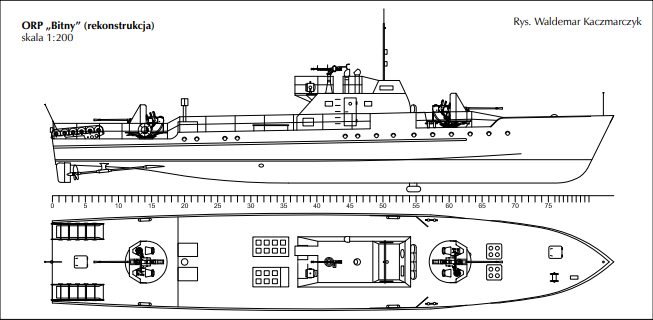
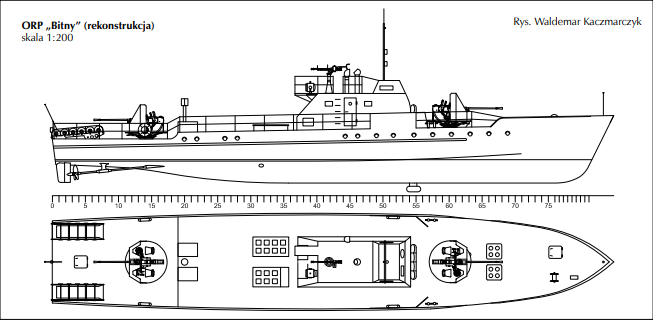
1. ORP Bitny - a former German partisan chaser of the ZPK type, the hull of which was found in Toruń and then completed as a submarine chaser.
It was armed with two single 37 mm 70-K guns, the engine was not changed.
He served only a short time, and there are not many photos of him to this day.
The drawing below shows a reconstruction of this ship(from Okręty Wojenne 4/2010).

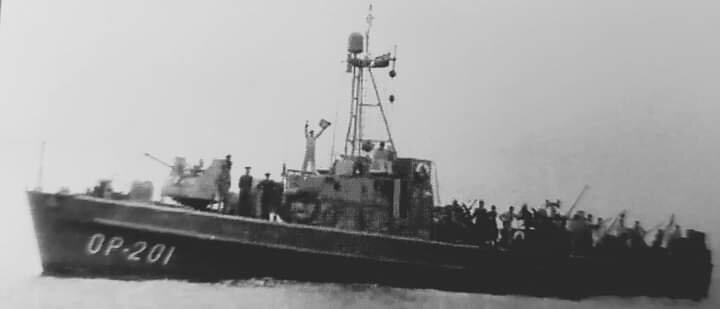
2. ORP Jamno OP-201.
It was a prototype of the Project 9 patrol ship, which was built on the hull of a German R-boat that had been found. It had a 37 mm 70-K gun.
Project 9 patrol ships were the first patrol ships of Polish design (as I remember), later project 902 was built, I will write about patrol ships another time.

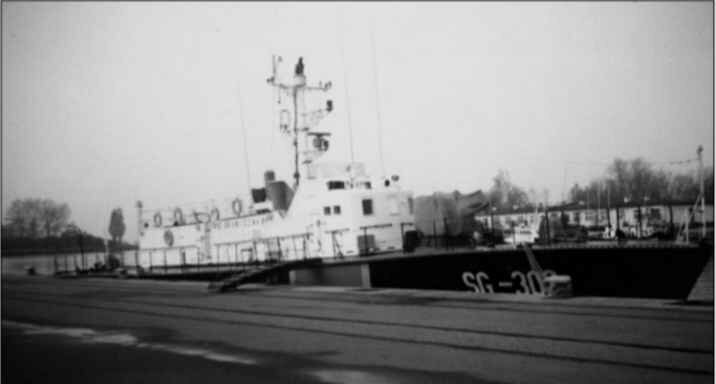
3. Type 205 patrol ships.
These were project 205 missile boats, known as Osa, rebuilt in the late 1980s, there were only 3 units of these patrol ships:
ORP Gdynia OP-301, later SG-301
ORP Szczecin OP-302, later SG-302
ORP Elbląg OP-303, later SG-303.
The changes were as follows: missile armament, main guns, Rangout and MR-104 radars were removed
a second navigation radar and a 25 mm 2M-3M gun were added.
However, they served only for a short time, until the 1990s.
Below is ORP Szczecin, the photo comes from Okręty Wojenne 4/2011.

Not everyone may know them, so I'm giving them to you.
1. ORP Bitny - a former German partisan chaser of the ZPK type, the hull of which was found in Toruń and then completed as a submarine chaser.
It was armed with two single 37 mm 70-K guns, the engine was not changed.
He served only a short time, and there are not many photos of him to this day.
The drawing below shows a reconstruction of this ship(from Okręty Wojenne 4/2010).
2. ORP Jamno OP-201.
It was a prototype of the Project 9 patrol ship, which was built on the hull of a German R-boat that had been found. It had a 37 mm 70-K gun.
Project 9 patrol ships were the first patrol ships of Polish design (as I remember), later project 902 was built, I will write about patrol ships another time.
3. Type 205 patrol ships.
These were project 205 missile boats, known as Osa, rebuilt in the late 1980s, there were only 3 units of these patrol ships:
ORP Gdynia OP-301, later SG-301
ORP Szczecin OP-302, later SG-302
ORP Elbląg OP-303, later SG-303.
The changes were as follows: missile armament, main guns, Rangout and MR-104 radars were removed
a second navigation radar and a 25 mm 2M-3M gun were added.
However, they served only for a short time, until the 1990s.
Below is ORP Szczecin, the photo comes from Okręty Wojenne 4/2011.
Not everyone may know them, so I'm giving them to you.
Attachments
USSEssex
ACCESS: Confidential
- Joined
- 11 May 2021
- Messages
- 166
- Reaction score
- 294
Other ships.
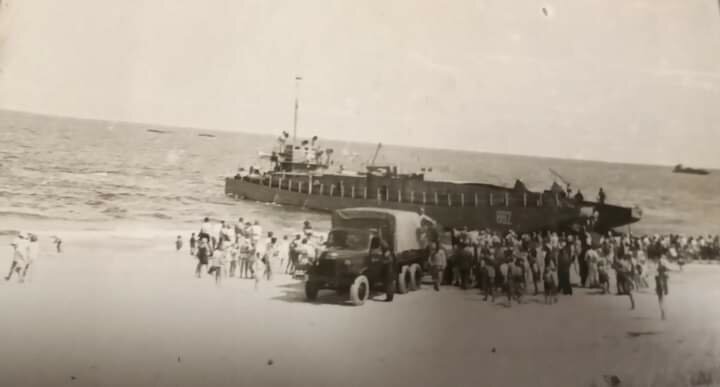
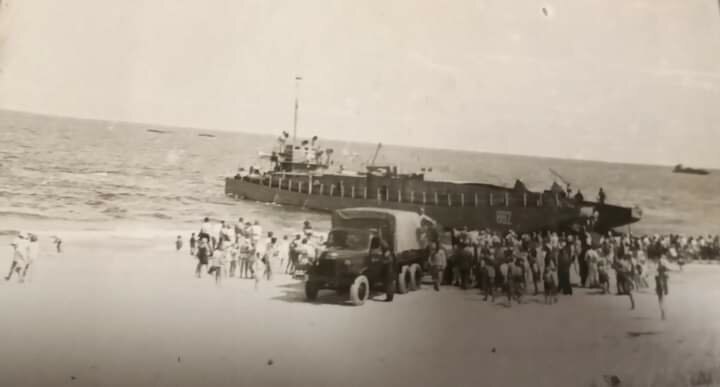
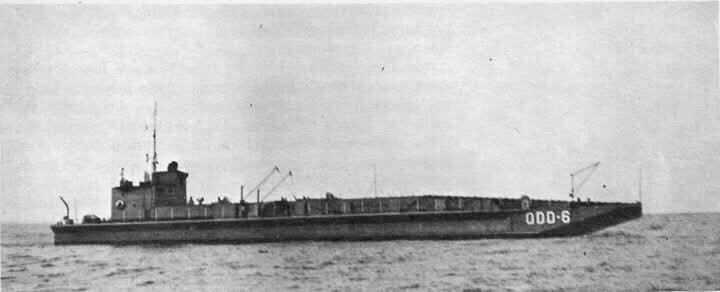
There was an Italian MZ type landing barge, apparently the Germans brought this ship to the Baltic Sea, and then we found this ship and it was incorporated into the Polish Navy.

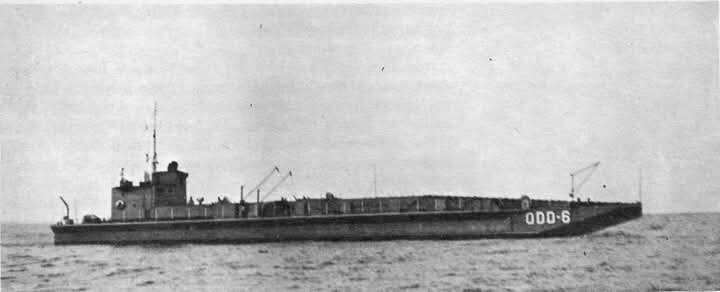
In addition, we used 6 former German MFP landing barges - type D and DM, which were found in the river shipyard in Głogów and then underwent a thorough renovation.
The photo shows one of these landing craft - type DM as ODD-6.

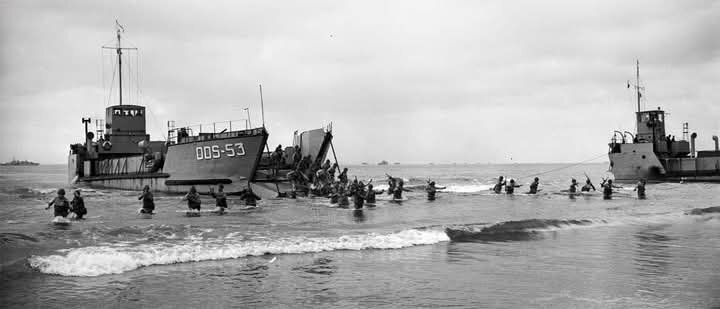
They served in the landing craft flotilla along with American landing craft purchased from surplus in 1950.
These were:
11 LCT mk V landing craft, numbers BDS-50 - BDS-60,
3 small landing craft type LCM mk III - numbers BDM-100 - BDM-102
In September 1953, the flotilla was joined by 6 LCP type landing boats.
The photo shows one of such ships.
I thought I would remind you about these ships, although the American ones are known, the Italian landing barge and the German landing barges are a bit forgotten.
In addition, sturmboot 42s were in use - we had 4 of them.
There was also an Sz-1 motorboat which could have been built on the Sturmboot 42 hull, but with different engines.
There was also a used motorboat from Gneisenau.
I don't want to write about smaller ships now.
There was an Italian MZ type landing barge, apparently the Germans brought this ship to the Baltic Sea, and then we found this ship and it was incorporated into the Polish Navy.
In addition, we used 6 former German MFP landing barges - type D and DM, which were found in the river shipyard in Głogów and then underwent a thorough renovation.
The photo shows one of these landing craft - type DM as ODD-6.
They served in the landing craft flotilla along with American landing craft purchased from surplus in 1950.
These were:
11 LCT mk V landing craft, numbers BDS-50 - BDS-60,
3 small landing craft type LCM mk III - numbers BDM-100 - BDM-102
In September 1953, the flotilla was joined by 6 LCP type landing boats.
The photo shows one of such ships.
I thought I would remind you about these ships, although the American ones are known, the Italian landing barge and the German landing barges are a bit forgotten.
In addition, sturmboot 42s were in use - we had 4 of them.
There was also an Sz-1 motorboat which could have been built on the Sturmboot 42 hull, but with different engines.
There was also a used motorboat from Gneisenau.
I don't want to write about smaller ships now.
Attachments
Last edited:
USSEssex
ACCESS: Confidential
- Joined
- 11 May 2021
- Messages
- 166
- Reaction score
- 294
As an addition to the previous post, I will attach a photo of ORP Mors.
It was an YMS type minesweeper, 3 ships of this type were purchased and entered the service of the Polish Navy in 1948, they were named ORP Delfin (DF) later number T-31, ORP Foka (FK) then number T-32, and ORP Mors (MS) then number T-33.
They were rearmed with one 85 mm gun.
The fourth unit of this type entered civil service as Zodiak.

The photo shows ORP Mors with armament, I am giving it as a illustrative photo of these ships with armament.
It was an YMS type minesweeper, 3 ships of this type were purchased and entered the service of the Polish Navy in 1948, they were named ORP Delfin (DF) later number T-31, ORP Foka (FK) then number T-32, and ORP Mors (MS) then number T-33.
They were rearmed with one 85 mm gun.
The fourth unit of this type entered civil service as Zodiak.
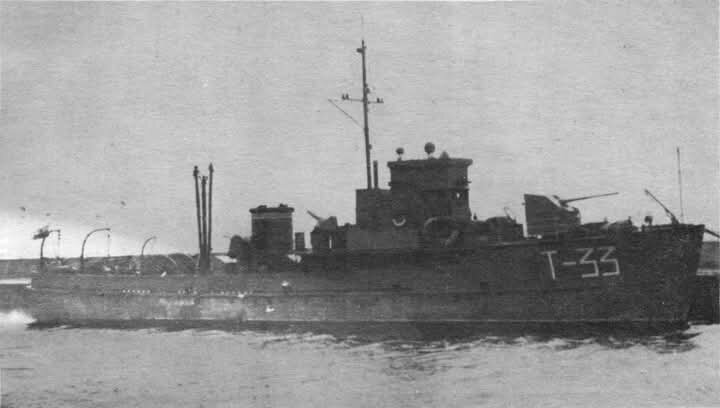
The photo shows ORP Mors with armament, I am giving it as a illustrative photo of these ships with armament.
USSEssex
ACCESS: Confidential
- Joined
- 11 May 2021
- Messages
- 166
- Reaction score
- 294
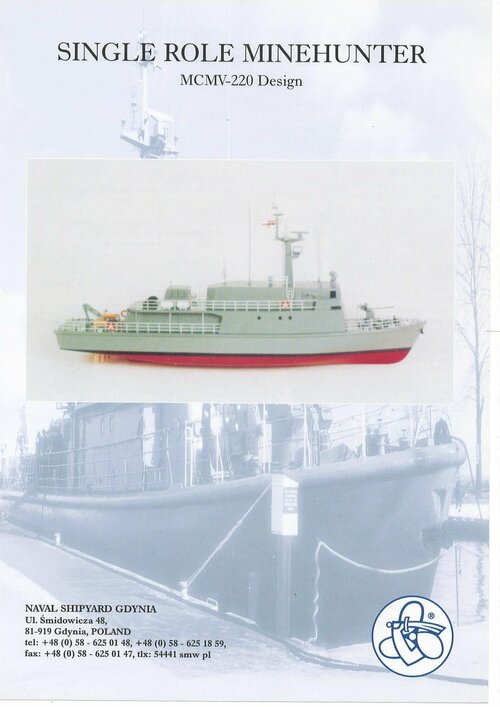
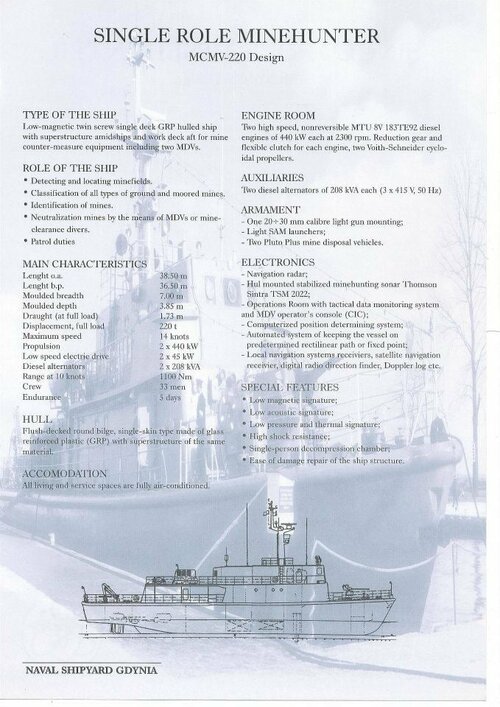
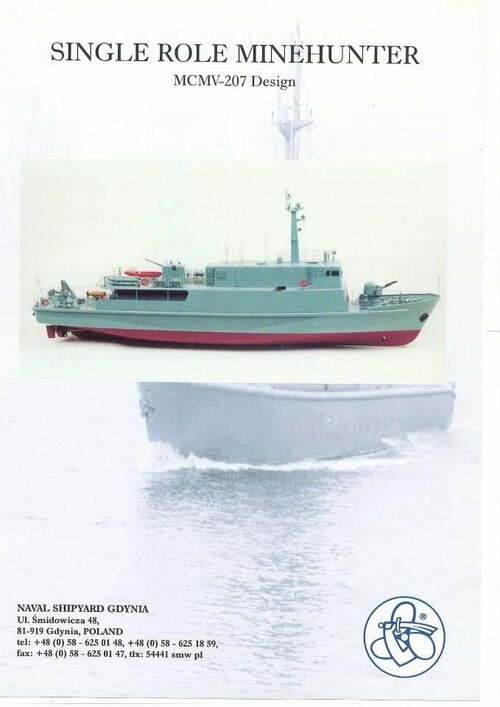
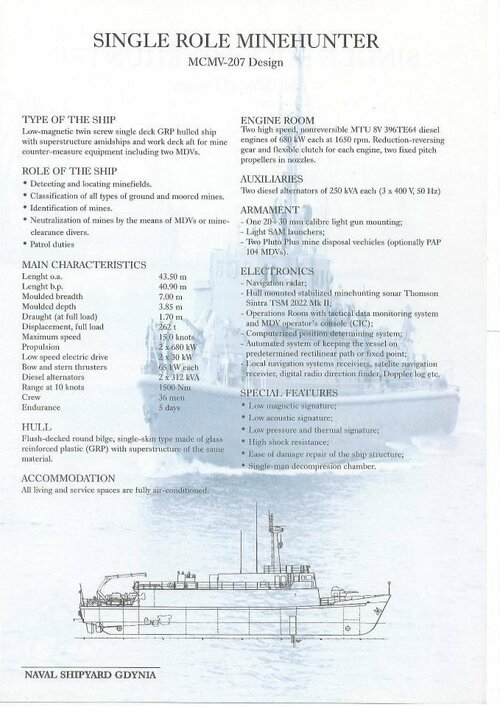
Designs of minehunters from the 1990s offered by the Naval Shipyard in Gdynia. They were to be built based on the hull of project 207 minesweepers.
I found the leaflets on one of the Polish groups on FB.
I am posting them here because I think it is worth reminding about these offers.
There were 2 designs: MCMV-220 which is shorter, and MCMV-207 which is longer.
I don't think I have anything more to say about them, the information is on the leaflets.
MCMV-220:


MCMV-207:
I found the leaflets on one of the Polish groups on FB.
I am posting them here because I think it is worth reminding about these offers.
There were 2 designs: MCMV-220 which is shorter, and MCMV-207 which is longer.
I don't think I have anything more to say about them, the information is on the leaflets.
MCMV-220:
MCMV-207:
USSEssex
ACCESS: Confidential
- Joined
- 11 May 2021
- Messages
- 166
- Reaction score
- 294
I updated my post about the planned rearmament of Wicher-class destroyers.
I still have a small expansion left in the early variants section, and now my rebuilt post is ready.
If you have any questions regarding the rearmament of Wicher and Burza, you can ask and I will answer if I know the answer.
https://www.secretprojects.co.uk/threads/polish-projects.38305/page-3#post-586520
I still have a small expansion left in the early variants section, and now my rebuilt post is ready.
If you have any questions regarding the rearmament of Wicher and Burza, you can ask and I will answer if I know the answer.
https://www.secretprojects.co.uk/threads/polish-projects.38305/page-3#post-586520
Last edited:
USSEssex
ACCESS: Confidential
- Joined
- 11 May 2021
- Messages
- 166
- Reaction score
- 294
After the war, ORP Burza was not completed according to original plans.
It was planned to have one funnel and a different superstructure, just like in the Grom/Huragan class destroyers.
I won't write more details because I don't have much information, years ago there was an article about the post-war reconstruction of the ORP Burza destroyer, but I don't have that article, I got this information from a friend.
The armament was also to be different - 4xII 100 mm, 6xII 37 mm guns and 2xII 12.7 mm DSHK.
As far as I know, the above information comes from the archive.
Only during the first renovation, the decision was made to purchase B 34U guns, and the 2xII 37 mm guns in the stern had to be given space for an additional rangefinder.
(as to the planned armament, this information was provided by user Storm on the fow.pl forum https://fow.pl/forum/viewtopic.php?t=7632&start=336 . )
So what was actually done was a poor version for savings/budget reasons compared to what was planned.
I don't have anything more on this topic at this time, if I know anything more I will write.
It was planned to have one funnel and a different superstructure, just like in the Grom/Huragan class destroyers.
I won't write more details because I don't have much information, years ago there was an article about the post-war reconstruction of the ORP Burza destroyer, but I don't have that article, I got this information from a friend.
The armament was also to be different - 4xII 100 mm, 6xII 37 mm guns and 2xII 12.7 mm DSHK.
As far as I know, the above information comes from the archive.
Only during the first renovation, the decision was made to purchase B 34U guns, and the 2xII 37 mm guns in the stern had to be given space for an additional rangefinder.
(as to the planned armament, this information was provided by user Storm on the fow.pl forum https://fow.pl/forum/viewtopic.php?t=7632&start=336 . )
So what was actually done was a poor version for savings/budget reasons compared to what was planned.
I don't have anything more on this topic at this time, if I know anything more I will write.

Dilandu
I'm dissatisfied, which means, I exist.
I take it the main idea was to equip her with weapons, for which ammo could be easily obtained?The armament was also to be different - 4xII 100 mm, 6xII 37 mm guns and 2xII 12.7 mm DSHK.
As far as I know, the above information comes from the archive.
USSEssex
ACCESS: Confidential
- Joined
- 11 May 2021
- Messages
- 166
- Reaction score
- 294
I don't know the details, so I don't know.I take it the main idea was to equip her with weapons, for which ammo could be easily obtained?
For example, ORP Błyskawica had twin B 24 guns because this destroyer had English Mk XIX masks, so it was easier to install twin guns, it was decided, among other things, to replace the barrels because it was not possible to obtain ammunition from England.
ORP Burza has always had single guns, the B 34 and B 24 were single guns, so I think it could be the SM 5 guns, but I'm not sure.
Unless the Russians had other 100mm twin guns.
USSEssex
ACCESS: Confidential
- Joined
- 11 May 2021
- Messages
- 166
- Reaction score
- 294
I finished rebuilding my post about the planned rearmament of ORP Wicher and ORP Burza.
I have written everything that is known at this time, I do not rule out further updates if there is any new information or I find something additional in the books.
I have written everything that is known at this time, I do not rule out further updates if there is any new information or I find something additional in the books.
Looking for some info on Polish cruisers a Three Crown class cruiser fit very closely into the possible specification.There was a development of naval aviation, such as the purchase of Cant aircraft and the construction of the RWD-22.
Last edited:
USSEssex
ACCESS: Confidential
- Joined
- 11 May 2021
- Messages
- 166
- Reaction score
- 294
Currently, there is not much information about cruisers for Poland, I know that such projects are in Polish archives, but most of them have not been published and described so far.
I published here a fragment of the Trento project for Poland, and there is also a mention (specifically, information about the model) about the Polish project, but there is not much specific information.
In addition, there is one mention of the Vickers Armstrong offer and several Italian cruiser offers that are in the archives, but that's all I know at the moment.
I published here a fragment of the Trento project for Poland, and there is also a mention (specifically, information about the model) about the Polish project, but there is not much specific information.
In addition, there is one mention of the Vickers Armstrong offer and several Italian cruiser offers that are in the archives, but that's all I know at the moment.
USSEssex
ACCESS: Confidential
- Joined
- 11 May 2021
- Messages
- 166
- Reaction score
- 294
If you were to put together a list of cruiser projects for Poland, it would look like this
Italy
Several offers, one of them was published here with data https://www.secretprojects.co.uk/threads/polish-projects.38305/page-2#post-581562 .
Great Britain
1(I only know about the mention, I don't even know the details)
Poland
Cruiser design (based on the information I have, it was supposed to be a medium cruiser with a displacement of over 8,000 tons, this information is in the Plan M naval program, but only short information, there is also information about the cruiser model according to the Polish design).
Italy
Several offers, one of them was published here with data https://www.secretprojects.co.uk/threads/polish-projects.38305/page-2#post-581562 .
Great Britain
1(I only know about the mention, I don't even know the details)
Poland
Cruiser design (based on the information I have, it was supposed to be a medium cruiser with a displacement of over 8,000 tons, this information is in the Plan M naval program, but only short information, there is also information about the cruiser model according to the Polish design).
USSEssex
ACCESS: Confidential
- Joined
- 11 May 2021
- Messages
- 166
- Reaction score
- 294
And just to be precise.
At the beginning, I wrote about the order in 1940 in one of the shipyards in England, because that's what Kingpin wrote to me (that's what I originally based it on and took it into account), but when it turned out that I had the source he was referring to, it wasn't there written like that, later I checked the main source they refer to, and there was more detailed information, I combined information about the Polish cruiser not long ago when I had information about the cruiser model, and Józef Dyskant, in his book about the Dragon and Conrad cruisers, mentioning the development of construction plans for the first Polish cruiser in the late 1930s (he was based on the memoirs of Włdzimierz Steyer, which was published in 1960), could have had the same meaning as the information about the cruiser model , and about the planned order from the maritime program (I also quoted this information here).
I combined these three pieces of information rather correctly, because as I wrote above, there is not much information about him.
At the beginning, I wrote about the order in 1940 in one of the shipyards in England, because that's what Kingpin wrote to me (that's what I originally based it on and took it into account), but when it turned out that I had the source he was referring to, it wasn't there written like that, later I checked the main source they refer to, and there was more detailed information, I combined information about the Polish cruiser not long ago when I had information about the cruiser model, and Józef Dyskant, in his book about the Dragon and Conrad cruisers, mentioning the development of construction plans for the first Polish cruiser in the late 1930s (he was based on the memoirs of Włdzimierz Steyer, which was published in 1960), could have had the same meaning as the information about the cruiser model , and about the planned order from the maritime program (I also quoted this information here).
I combined these three pieces of information rather correctly, because as I wrote above, there is not much information about him.
USSEssex
ACCESS: Confidential
- Joined
- 11 May 2021
- Messages
- 166
- Reaction score
- 294
The Polish fleet would certainly have expanded in the 1940s.
A few examples.
The rearmament of the Wicher and Burza destroyers was planned to be completed by 1942, because they were to be in service for another 5-7 years, i.e. they were planned to be withdrawn in 1947 and 1949.
So if I were to count logically, I would start working on their successors only around 1943/1944 or later, because the construction of destroyers takes at least 2 years.
According to a document from October 21, 1936, an escort ship was planned to be built in 1941.
Wilk-class submarines were planned to be withdrawn in 1946/1947
The Komendant Piłsudski-class gunboats were planned to be withdrawn in 1941.
ORP Mazur was planned to be withdrawn in 1944.
The ORP Orkan and ORP Huragan were introduced into service sometime around 1942 or even 1943.
The 2 new submarines that began to be built in France were scheduled to enter service by about 1942.
The next such submarines were planned to be built at the Polish shipyard in Gdynia, but I don't know if this would happen, perhaps the next submarines would be successors of the Wilk class.
So the cruiser would be 1940s too.
Of course, World War II interrupted these plans.
I will have further updates on the subject of the Polish cruiser only when there is a book or article on this subject.
And if so, I will write it.
A few examples.
The rearmament of the Wicher and Burza destroyers was planned to be completed by 1942, because they were to be in service for another 5-7 years, i.e. they were planned to be withdrawn in 1947 and 1949.
So if I were to count logically, I would start working on their successors only around 1943/1944 or later, because the construction of destroyers takes at least 2 years.
According to a document from October 21, 1936, an escort ship was planned to be built in 1941.
Wilk-class submarines were planned to be withdrawn in 1946/1947
The Komendant Piłsudski-class gunboats were planned to be withdrawn in 1941.
ORP Mazur was planned to be withdrawn in 1944.
The ORP Orkan and ORP Huragan were introduced into service sometime around 1942 or even 1943.
The 2 new submarines that began to be built in France were scheduled to enter service by about 1942.
The next such submarines were planned to be built at the Polish shipyard in Gdynia, but I don't know if this would happen, perhaps the next submarines would be successors of the Wilk class.
So the cruiser would be 1940s too.
Of course, World War II interrupted these plans.
I will have further updates on the subject of the Polish cruiser only when there is a book or article on this subject.
And if so, I will write it.
USSEssex
ACCESS: Confidential
- Joined
- 11 May 2021
- Messages
- 166
- Reaction score
- 294
Maybe I'll expand on the topic of submarine plans right now.
According to the plans, a total of 12 submarines were planned, i.e. 3 Wilk-class submarines, 2 Orzeł-class submarines, so 7 are new submarines.
As I wrote before the war, work on two submarines was started in France, the next such submarine would be built in Poland as submarine number 8, so we have submarines number 6, 7 and 8( Orzeł mod class) (we count the Wilk class and the Orzeł class).
After the eighth submarine that was planned to be built in Poland, the construction of four more submarines in Poland was planned (Orzeł Mod class, i.e. submarines that were built in France before the outbreak of the war), it was postulated to be postponed by 2 years, for budgetary reasons, so they were to be deferred to the financial year 1944/45, but as I wrote, it is not known whether they would have been built because there were voices about their cancellation, as far as I know.
And this makes sense, considering the years in which they wanted to withdraw the Wilk-class submarines.
So the next submarines after the eighth submarine that was planned to be built in the country and the third one in the Orzeł Mod class (this is what they call submarines built in France because we do not know the names of the 2 submarines), which were to be built in Poland, would perhaps be successors of the Wilk class, and after subtracting 3 Wilk class submarines, we are left with 7 submarines for their successors, if I didn't make a mistake in counting all this, if they still wanted to build 12 submarines according to the plans, if not, then 4 and we have 9 submarines then. (3 Orzeł Mod and 2 Orzeł class submarines).
According to the plans, a total of 12 submarines were planned, i.e. 3 Wilk-class submarines, 2 Orzeł-class submarines, so 7 are new submarines.
As I wrote before the war, work on two submarines was started in France, the next such submarine would be built in Poland as submarine number 8, so we have submarines number 6, 7 and 8( Orzeł mod class) (we count the Wilk class and the Orzeł class).
After the eighth submarine that was planned to be built in Poland, the construction of four more submarines in Poland was planned (Orzeł Mod class, i.e. submarines that were built in France before the outbreak of the war), it was postulated to be postponed by 2 years, for budgetary reasons, so they were to be deferred to the financial year 1944/45, but as I wrote, it is not known whether they would have been built because there were voices about their cancellation, as far as I know.
And this makes sense, considering the years in which they wanted to withdraw the Wilk-class submarines.
So the next submarines after the eighth submarine that was planned to be built in the country and the third one in the Orzeł Mod class (this is what they call submarines built in France because we do not know the names of the 2 submarines), which were to be built in Poland, would perhaps be successors of the Wilk class, and after subtracting 3 Wilk class submarines, we are left with 7 submarines for their successors, if I didn't make a mistake in counting all this, if they still wanted to build 12 submarines according to the plans, if not, then 4 and we have 9 submarines then. (3 Orzeł Mod and 2 Orzeł class submarines).
Last edited:
The successors of Wicher and Burza would be the next version of Grom-type units, but already built in Poland after Hurgan and Orkan.
I don't know where Poland would find money for a cruiser here, without abandoning the gold standard.
Coming back, I came across an opinion somewhere that there were plans to replace the French 13.2 mm wz. 30 NKM with Polish 20 mm wz. 38 NKM.
I don't know where Poland would find money for a cruiser here, without abandoning the gold standard.
Coming back, I came across an opinion somewhere that there were plans to replace the French 13.2 mm wz. 30 NKM with Polish 20 mm wz. 38 NKM.
USSEssex
ACCESS: Confidential
- Joined
- 11 May 2021
- Messages
- 166
- Reaction score
- 294
As for the 20 mm Nkm guns, they were not ready yet, so 13.2 mm Hotchkiss guns were planned for the Orkan and Huragan destroyers, perhaps they would be replaced with Polish guns at the end of construction, or later.
In the naval program itself, 8 destroyers were originally planned, but the program was shortened and 6 destroyers remained, and from this I know Orkan and Huragan were not supposed to be the successors of Wicher and Burza, but subsequent destroyers as destroyers no. 5 and 6, Wicher and Burza were planned to be withdrawn from service only in the following year In 1947 and 1949, previously until 1942, rearmament was planned.
In the naval program itself, 8 destroyers were originally planned, but the program was shortened and 6 destroyers remained, and from this I know Orkan and Huragan were not supposed to be the successors of Wicher and Burza, but subsequent destroyers as destroyers no. 5 and 6, Wicher and Burza were planned to be withdrawn from service only in the following year In 1947 and 1949, previously until 1942, rearmament was planned.
USSEssex
ACCESS: Confidential
- Joined
- 11 May 2021
- Messages
- 166
- Reaction score
- 294
Regarding the rearmament of the Wichra and Burza destroyers, I will add that I have a book by Jerzy Pertek, Burza Weteran atlantyckich szlaków, published in 1970, and Pertek in this book mentions a variant of rearmament with 3 120 mm guns, i.e. 1xII heightened, and 1xI, in addition, in terms of rearmament of 5 guns he came to the same conclusions as Andrzej Bartelski and Marcin Mikiel in their article in 2015.
So he knew about Szulc's letter, he had seen documents from 1936 and 1937.
Unfortunately, Pertek did not provide a source for information about 3 guns, but I assume it is based on documents, so it would seem to me that the rearmament with 3 guns is older than the 4xI mentioned by Zarzycki, who also used the documents, and this rearmament with 3 guns mentioned by Pertek should take priority as the original variant.
So he knew about Szulc's letter, he had seen documents from 1936 and 1937.
Unfortunately, Pertek did not provide a source for information about 3 guns, but I assume it is based on documents, so it would seem to me that the rearmament with 3 guns is older than the 4xI mentioned by Zarzycki, who also used the documents, and this rearmament with 3 guns mentioned by Pertek should take priority as the original variant.
USSEssex
ACCESS: Confidential
- Joined
- 11 May 2021
- Messages
- 166
- Reaction score
- 294
Today there will be a short post about the cruisers offered for Poland in 1925, because I have new information.
It turned out that in 1925 the Italians offered us two different cruisers, one was Ansaldo, and the other was STT, i.e. Stabilimento Tecnico Triestino.
1. Heavy cruiser offer for Poland, offered by Ansaldo.
Displacement
standard 10 000 ton
full 12 600 ton
Dimensions
length 198 m,
width 20 m,
height 12 m
Armor
citadel 70 mm, deck 50 mm
Armament
4xII 203 mm
12xI 102 mm
4xII torpedo tubes.
Drive
Machine power 150,000 HP
Speed 35 knots
I write data on armor, armament and propulsion from the Lesta Wiki https://wiki.lesta.ru/ru/Navy:Итальянский_тяжелый_крейсер_проекта_1923_года .
There is a question whether this cruiser actually has 76 mm guns, I haven't noticed them yet.
When I saw these plans on a YouTube video about Polish cruisers of the Second Polish Republic, I thought I had seen them somewhere before.
The above cruiser offer is nothing more than the design of a 10,000-ton heavy cruiser from 1923, known as Genova in the World of Warships game.
Anyway, this cruiser has 12 102 mm guns (at least that's what I think).
A picture of a 10,000 ton cruiser from 1923 can be found here https://www.anb-online.it/?p=453 .
2. The offer of the Stabilimento Tecnico Triestino (STT) shipyard dated May 11, 1925.
I posted this offer here, it's a well-known trento mod.
I posted the parameters of this offer here, but I will remind them.
- Total length 199.5 m;
- length at the waterline 195.0 m;
- maximum width 19.0 m;
- draft for sea trials 5.8 m;
displacement:
10,980 tons;
- machine power 125,000 hp;
- speed 35 knots
- 4 sets of turbines 10 boilers;
- fuel supply 2,400 tons;
- fuel reserve for sea trials 760 tons;
Armament :
- 8x203 L/50,
- 12x102 L/50,
8 Torpedo tubes( 4xII) .
The 102 mm anti-aircraft guns were placed singly, and the rotary torpedo tubes were placed in pairs below the deck.
- Deck armor 50 mm in the area of main artillery turrets 70 mm, side armor of the citadel 70 mm and towards the bow and stern, decreasing to 25 mm.
So it looks to me as if the project above was an enlarged but modified version for export of the original project from 1923, specifically for Poland in mind, see different machine power of 150,000 HP, the original project from 1923, later offered to Poland, version 125,000 HP, project 2, and both projects have 8 203 mm guns, 4xII torpedo tubes, 12 guns each 102 mm and have a speed of 35 knots as far as I remember.
As a reminder, both plans were found in Polish archives.
Both offers above were commercial offers and we did not plan to purchase these cruisers, so let me remind you that at that time Poland was conducting negotiations about acquiring the cruiser Dessaix.
Finally, short information about the Vickers Armstrong cruiser offer.
There is a mention (as I wrote earlier) from March 1935 when Vickers started a discussion about building a cruiser for Poland, the price of this cruiser was 2 million pounds.
Unfortunately, it was not possible to find any plans for this cruiser, and I do not know any more details.
Source
The above informations about offers nas the Vickers cruiser, were available on the YouTube channel Wolski o Wojnie film Polish cruisers of the Second Polish Republic. Here link
View: https://www.youtube.com/watch?v=fZ6xEkQF7jo&t=1062s
The Polish trento is from the 14th minute
however, Ansaldo's offer comes in the 17th minute.
It turned out that in 1925 the Italians offered us two different cruisers, one was Ansaldo, and the other was STT, i.e. Stabilimento Tecnico Triestino.
1. Heavy cruiser offer for Poland, offered by Ansaldo.
Displacement
standard 10 000 ton
full 12 600 ton
Dimensions
length 198 m,
width 20 m,
height 12 m
Armor
citadel 70 mm, deck 50 mm
Armament
4xII 203 mm
12xI 102 mm
4xII torpedo tubes.
Drive
Machine power 150,000 HP
Speed 35 knots
I write data on armor, armament and propulsion from the Lesta Wiki https://wiki.lesta.ru/ru/Navy:Итальянский_тяжелый_крейсер_проекта_1923_года .
There is a question whether this cruiser actually has 76 mm guns, I haven't noticed them yet.
When I saw these plans on a YouTube video about Polish cruisers of the Second Polish Republic, I thought I had seen them somewhere before.
The above cruiser offer is nothing more than the design of a 10,000-ton heavy cruiser from 1923, known as Genova in the World of Warships game.
Anyway, this cruiser has 12 102 mm guns (at least that's what I think).
A picture of a 10,000 ton cruiser from 1923 can be found here https://www.anb-online.it/?p=453 .
2. The offer of the Stabilimento Tecnico Triestino (STT) shipyard dated May 11, 1925.
I posted this offer here, it's a well-known trento mod.
I posted the parameters of this offer here, but I will remind them.
- Total length 199.5 m;
- length at the waterline 195.0 m;
- maximum width 19.0 m;
- draft for sea trials 5.8 m;
displacement:
10,980 tons;
- machine power 125,000 hp;
- speed 35 knots
- 4 sets of turbines 10 boilers;
- fuel supply 2,400 tons;
- fuel reserve for sea trials 760 tons;
Armament :
- 8x203 L/50,
- 12x102 L/50,
8 Torpedo tubes( 4xII) .
The 102 mm anti-aircraft guns were placed singly, and the rotary torpedo tubes were placed in pairs below the deck.
- Deck armor 50 mm in the area of main artillery turrets 70 mm, side armor of the citadel 70 mm and towards the bow and stern, decreasing to 25 mm.
So it looks to me as if the project above was an enlarged but modified version for export of the original project from 1923, specifically for Poland in mind, see different machine power of 150,000 HP, the original project from 1923, later offered to Poland, version 125,000 HP, project 2, and both projects have 8 203 mm guns, 4xII torpedo tubes, 12 guns each 102 mm and have a speed of 35 knots as far as I remember.
As a reminder, both plans were found in Polish archives.
Both offers above were commercial offers and we did not plan to purchase these cruisers, so let me remind you that at that time Poland was conducting negotiations about acquiring the cruiser Dessaix.
Finally, short information about the Vickers Armstrong cruiser offer.
There is a mention (as I wrote earlier) from March 1935 when Vickers started a discussion about building a cruiser for Poland, the price of this cruiser was 2 million pounds.
Unfortunately, it was not possible to find any plans for this cruiser, and I do not know any more details.
Source
The above informations about offers nas the Vickers cruiser, were available on the YouTube channel Wolski o Wojnie film Polish cruisers of the Second Polish Republic. Here link
The Polish trento is from the 14th minute
however, Ansaldo's offer comes in the 17th minute.
Last edited:
Dilandu
I'm dissatisfied, which means, I exist.
Awesome!Today there will be a short post about the cruisers offered for Poland in 1925, because I have new information.
USSEssex
ACCESS: Confidential
- Joined
- 11 May 2021
- Messages
- 166
- Reaction score
- 294
In the early 1950s, they wanted to introduce the battleship Gneisenau into the service of the Polish Navy.
However, after extraction it was scrapped.
The only source of this information that I found is the following video on YouTube about the work of divers from 1951, which mentions it
View: https://www.youtube.com/watch?v=YiPAMNuocnI .
And considering that we wanted to put former German submarines into service, as well as the T42 destroyer, and I wrote about attempts to introduce former German warships into service, this may be true.
However, after extraction it was scrapped.
The only source of this information that I found is the following video on YouTube about the work of divers from 1951, which mentions it
And considering that we wanted to put former German submarines into service, as well as the T42 destroyer, and I wrote about attempts to introduce former German warships into service, this may be true.
I'm not surprised by the needs, but the Soviets would get their hands on it sooner.In the early 1950s, they wanted to introduce the battleship Gneisenau into the service of the Polish Navy.
However, after extraction it was scrapped.
The only source of this information that I found is the following video on YouTube about the work of divers from 1951, which mentions itView: https://www.youtube.com/watch?v=YiPAMNuocnI .
And considering that we wanted to put former German submarines into service, as well as the T42 destroyer, and I wrote about attempts to introduce former German warships into service, this may be true.
Dilandu
I'm dissatisfied, which means, I exist.
Hm! Never heard about that, frankly! But from where they wanted to get turrets?In the early 1950s, they wanted to introduce the battleship Gneisenau into the service of the Polish Navy.
USSEssex
ACCESS: Confidential
- Joined
- 11 May 2021
- Messages
- 166
- Reaction score
- 294
Good question, the only mention of such an attempt is the above video to which I provided a link.Hm! Never heard about that, frankly! But from where they wanted to get turrets?
Perhaps these could have been turrets for the Stalingrad battlecruisers that were being built at that time.
So it turns out that the topic of attempts to incorporate former German ships into service in the Polish Navy has not been researched, apart from the matters I wrote about.
Dilandu
I'm dissatisfied, which means, I exist.
Hm... theoretically possible, but it would require another rather major reconstruction of Gneisenau hull, mainly barbettes. If turrets were in place, it would be possible to install new guns in them. But placing a new turrets... problematic, very problematic.Perhaps these could have been turrets for the Stalingrad battlecruisers that were being built at that time.
Interesting!!!Good question, the only mention of such an attempt is the above video to which I provided a link.
Perhaps these could have been turrets for the Stalingrad battlecruisers that were being built at that time.
So it turns out that the topic of attempts to incorporate former German ships into service in the Polish Navy has not been researched, apart from the matters I wrote about.
USSEssex
ACCESS: Confidential
- Joined
- 11 May 2021
- Messages
- 166
- Reaction score
- 294
As for the armament, I know from my friend that they did not think about it when the damage to Gneisenau was known, which was much worse than on Lutzow, which was stationed in Szczecin.
So I guess that's why the issue of armament was not discussed and the idea of repairing it was abandoned, and for that reason it was scrapped because repairing it turned out to be unprofitable.
So for the hypothetical armament after its repair, it is debatable, but the 305 mm guns seem to be the most logical, I don't know about the 406 guns that were supposed to be on Soviet battleships.
So I guess that's why the issue of armament was not discussed and the idea of repairing it was abandoned, and for that reason it was scrapped because repairing it turned out to be unprofitable.
So for the hypothetical armament after its repair, it is debatable, but the 305 mm guns seem to be the most logical, I don't know about the 406 guns that were supposed to be on Soviet battleships.
Last edited:
USSEssex
ACCESS: Confidential
- Joined
- 11 May 2021
- Messages
- 166
- Reaction score
- 294
In general, there was no major choice of main guns, apart from the 305 mm guns, I remembered one more gun, namely the 220 mm, but they were probably not available in 1951.
Normally, German 38 cm guns would fit, but the Soviets did not have such guns, and Gneisenau did not have the original 283 mm guns in the 1950s.
Unless they rebuilt it into an aircraft carrier, but I have doubts about that, because the USSR would probably not agree.
Normally, German 38 cm guns would fit, but the Soviets did not have such guns, and Gneisenau did not have the original 283 mm guns in the 1950s.
Unless they rebuilt it into an aircraft carrier, but I have doubts about that, because the USSR would probably not agree.

Grey Havoc
ACCESS: USAP
- Joined
- 9 October 2009
- Messages
- 24,500
- Reaction score
- 18,175
Regarding the Polish Navy's planned new Miecznik-class frigate:
View: https://www.reddit.com/r/WarshipPorn/comments/1iy3kgz/infographics_of_the_polish_navys_new/
https://www.naval-technology.com/projects/miecznik-class-multi-role-frigates-poland/
View: https://www.reddit.com/r/WarshipPorn/comments/1iy3kgz/infographics_of_the_polish_navys_new/
https://www.naval-technology.com/projects/miecznik-class-multi-role-frigates-poland/
Grey Havoc
ACCESS: USAP
- Joined
- 9 October 2009
- Messages
- 24,500
- Reaction score
- 18,175
USSEssex
ACCESS: Confidential
- Joined
- 11 May 2021
- Messages
- 166
- Reaction score
- 294
I will now compare the state of knowledge about the navy with armored weapons.
a) armored weapons
Although armored weapons are popular in Poland, the subject is complex - there are many myths about Polish armored weapons until 1939, although this changes over time.
The development of armored weapons from the post-war period is a more complicated matter - this subject is unexplored in terms of projects and prototypes or other concepts, partly because of the mess in the archives because nothing is organized there, some things are still secret, the second part is the lack of interest from researchers in this subject because tanks from WW2 are more interesting and additionally it is assumed that there is nothing interesting from this period (post-war years), which is why information about projects and prototypes contained in books and articles regarding the post-war years usually ends with mentions and short information.
Another favorite practice in Poland after the war was the destruction of documents, including design documentation of vehicles developed in Poland during communism - this was done because it was necessary to make room for new things - an example of such actions was the "Turkus" vehicle, the design documentation of which was destroyed.
Now conclusions from my own observations:
A few years ago, when I created a topic here about Polish armored vehicles from 1918 - until now, I had one goal - to collect information in one place about prototypes, projects, German vehicles in Polish service, captured vehicles (because, of course, when you capture a vehicle, you don't always have to use it right away) and rare vehicles, i.e. those that the Poles used only a few or just single vehicles, and vehicles used in the West, but only types of tanks (an example of what I mean: you have a Valentine tank and you write what models were used, inserting graphics and a caption).
Before starting the thread, I suspected that the topic, according to my assumptions, could be long, so I planned it for 4 time periods as 4 parts: before 1939, the post-war period 1945-1989, from 1990 - until now, and the Polish army in the east and west.
So I decided to start with the post-war period and the Polish army in the east (I did not count the main tanks of the Polish Army from 1943-1989, i.e. the ones that were the most numerous, such as the T-34-85 with the S-83 gun, but such as the M17 MGMC - a self-propelled anti-aircraft gun, similar to the M16, Universal carrier, SU-57), because the topic of work on armored weapons in Poland from the post-war period is almost absent in Poland, there are no serious discussions in society about it, so I saw the need for such a discussion and wanted to raise this topic, unfortunately I encountered a problem:
- at the time I created this topic, i.e. until writing in the thread about Poland, I was new to the topic of work on armored weapons in the post-war period in Poland, and I knew as much as what is written on Wikipedia + what can be found in general on the Internet, i.e. I knew such vehicles: Polon (a project of a self-propelled anti-aircraft vehicle with artillery and missile armament from 1986 (if I remember correctly), in short it had be an equivalent of the Russian Tunguska), "Turkus" (it was a missile anti-aircraft vehicle from the 70s, which in the first version had R-3S missiles, its improved version was built on the MTLB chassis with 9M31 missiles - in this version the vehicle is called Turkus 2, I think you can safely compare this vehicle to the Russian BRDM with 9M31 or MTLB with the 9k35 set), Promet (it is a self-propelled anti-aircraft vehicle on the MTLB chassis from the end of the 70s, there are 2 versions: Promet 1 - a version with 2 23 mm guns that was built, and Promet 2 - a version with 2 30 mm guns that did not enter the prototype phase) BTP-20 Skorpion (a missile tank destroyer with 9M14M anti-tank guided missiles on the MTLB chassis - this one was built, as I remember, in 1981), I also knew about the wheeled armored personnel carriers TK-20 and TK-30 and the tracked armored personnel carriers TG-40, PTG-30 and TGP-50 (the last two vehicles mentioned are tracked floating armored personnel carriers - sometimes TGP-50 is called PTG-50), but I forgot to write them down or forgot about them at all, i.e. I could have forgotten about these vehicles - but I had absolutely no knowledge of why it was the way it was, I wrote the 3 basic reasons above until the post-war period - I simply was not well versed in this.
Because the issues regarding this period are complex, I am not able to list all the reasons in short, so I think it is important that there is no website that would collect all the information from the post-war period regarding the development of armored weapons in Poland and captured vehicles - because at the moment there is information chaos where one writes this way, another that way and a third another, an example would be the photo with the Stug.
And as I say - there is no website that would constantly collect information about work on armored weapons in the post-war period + captured vehicles, something like the website about Polish aviation "samolotypolskie", and as we know, people get information from the Internet, and a person who does not constantly collect books or does not have contacts who could introduce such a person to such a subject - in such a situation they may get lost, like I did at the beginning.
Someone will ask - what about schools?
To this I will answer: currently Poland is stuck in the Prussian system, lessons are long because they last 45 minutes (I guess nothing has changed in this) and you spend several hours there, let's say, and when I went to school the earliest was 7:00 in the morning and the earliest I finished was 14:10 in the afternoon, so currently they do not teach about the equipment used by Poles, sometimes something may be mentioned in connection with the September campaign, but that's all, a lot of attention is paid to the kings (at least that's how it was for me).
So if someone is interested in military, whether it's armored weapons/navy/aviation, they have to look for such information on their own - and the effects, well, can vary.
for this reason + I had a yt channel until 2022, I collected photos of graphics, etc. but as a hobby for myself, so I never organized what I collected, only from 2023 I started collecting magazines and books on Polish armored weapons, and from 2022 I organize everything that is known along with graphics, etc. on my own private discord server.
and my last thought (not counting the flawed logic that seemed logical to me at first - resulting from the chaos that exists and the neglect and my disability - which makes me more likely to do something stupid, but as you can see, considering the whole situation, this is still nothing): In my opinion, too much is expected of one's own country, which is why some people in Poland imagine, let's say, the development of armored weapons in Poland after the war in their own way, this is also the result of lack of knowledge.
I would also draw attention to one more thing - people are most interested in those countries that have or have worked on battleships, aircraft carriers, heavy tanks or main battle tanks, among the countries that have something recognizable - Germany: Panther/Tiger or Leopard 2, USA: for example Iowa or Abrams, Russia: obviously T-34 - these example countries have some recognizable symbol by which you will immediately know which country it is from, Poland currently does not have something like that, I doubt that in the USA the average person would associate such a 7TP with Poland, the above countries have too many projects and different vehicles, even prototypes which for many are original, for many Poland is associated with the Soviet bloc and therefore with Soviet weapons, so there is nothing interesting for the average enthusiast, the vehicle does not have to be implemented into production to be such a recognizable symbol, people are also interested in what did not go into production and if Poland had its own MBT-70 or I don't know WZ-122-4 the interest would be greater + finally the topic of unrealized projects of armor development would be addressed by searching in archives and writing books and organizing exhibitions with models, well that's something else but nothing will change in this matter in the coming years I guess.
There are also few photos of vehicles from the communist period.
As of today I am introduced to the topic of armor development, I also have contacts and information relatively up to date, although I will not catch up on all the arrears in a few years, but I am slowly moving forward.
As I said, it is a vast topic but I have listed a few factors.
Could I ask you to delete my last posts in the thread about Polish armor that I created a while ago?
I'm finishing checking if I have everything I need - and when I have everything, I'll do part 1 from the post-war period in my free time and write down everything that's known from that time (and of course when I have a new computer - because the one I had broke down and it's hard for me to write on my phone), and I'll devote a separate post to German and Italian vehicles in Polish service - because that's not that easy either.
It was supposed to be about Polish vehicles and I'll keep my word.
Sometimes, however, it's worth being patient and not rushing things.
b) Polish Navy
In general, the Polish Navy is holding up well, there are articles about unfinished ships, there are books - I would say the opposite of the situation with armored vehicles.
But to console you, I will say that a more difficult topic in Poland than tanks are the rulers before Mieszko I - I know something about this because I am involved in this topic myself, I will say that here we enter different times, the Gothic, i.e. the time when the Goths were in Poland and were supposed to have founded the first kingdom, then there is the topic of Croats (supposedly ancestors of Poles, Ukrainians, Croats, among others) and the issue of the name Lechites, a broad topic.
a) armored weapons
Although armored weapons are popular in Poland, the subject is complex - there are many myths about Polish armored weapons until 1939, although this changes over time.
The development of armored weapons from the post-war period is a more complicated matter - this subject is unexplored in terms of projects and prototypes or other concepts, partly because of the mess in the archives because nothing is organized there, some things are still secret, the second part is the lack of interest from researchers in this subject because tanks from WW2 are more interesting and additionally it is assumed that there is nothing interesting from this period (post-war years), which is why information about projects and prototypes contained in books and articles regarding the post-war years usually ends with mentions and short information.
Another favorite practice in Poland after the war was the destruction of documents, including design documentation of vehicles developed in Poland during communism - this was done because it was necessary to make room for new things - an example of such actions was the "Turkus" vehicle, the design documentation of which was destroyed.
Now conclusions from my own observations:
A few years ago, when I created a topic here about Polish armored vehicles from 1918 - until now, I had one goal - to collect information in one place about prototypes, projects, German vehicles in Polish service, captured vehicles (because, of course, when you capture a vehicle, you don't always have to use it right away) and rare vehicles, i.e. those that the Poles used only a few or just single vehicles, and vehicles used in the West, but only types of tanks (an example of what I mean: you have a Valentine tank and you write what models were used, inserting graphics and a caption).
Before starting the thread, I suspected that the topic, according to my assumptions, could be long, so I planned it for 4 time periods as 4 parts: before 1939, the post-war period 1945-1989, from 1990 - until now, and the Polish army in the east and west.
So I decided to start with the post-war period and the Polish army in the east (I did not count the main tanks of the Polish Army from 1943-1989, i.e. the ones that were the most numerous, such as the T-34-85 with the S-83 gun, but such as the M17 MGMC - a self-propelled anti-aircraft gun, similar to the M16, Universal carrier, SU-57), because the topic of work on armored weapons in Poland from the post-war period is almost absent in Poland, there are no serious discussions in society about it, so I saw the need for such a discussion and wanted to raise this topic, unfortunately I encountered a problem:
- at the time I created this topic, i.e. until writing in the thread about Poland, I was new to the topic of work on armored weapons in the post-war period in Poland, and I knew as much as what is written on Wikipedia + what can be found in general on the Internet, i.e. I knew such vehicles: Polon (a project of a self-propelled anti-aircraft vehicle with artillery and missile armament from 1986 (if I remember correctly), in short it had be an equivalent of the Russian Tunguska), "Turkus" (it was a missile anti-aircraft vehicle from the 70s, which in the first version had R-3S missiles, its improved version was built on the MTLB chassis with 9M31 missiles - in this version the vehicle is called Turkus 2, I think you can safely compare this vehicle to the Russian BRDM with 9M31 or MTLB with the 9k35 set), Promet (it is a self-propelled anti-aircraft vehicle on the MTLB chassis from the end of the 70s, there are 2 versions: Promet 1 - a version with 2 23 mm guns that was built, and Promet 2 - a version with 2 30 mm guns that did not enter the prototype phase) BTP-20 Skorpion (a missile tank destroyer with 9M14M anti-tank guided missiles on the MTLB chassis - this one was built, as I remember, in 1981), I also knew about the wheeled armored personnel carriers TK-20 and TK-30 and the tracked armored personnel carriers TG-40, PTG-30 and TGP-50 (the last two vehicles mentioned are tracked floating armored personnel carriers - sometimes TGP-50 is called PTG-50), but I forgot to write them down or forgot about them at all, i.e. I could have forgotten about these vehicles - but I had absolutely no knowledge of why it was the way it was, I wrote the 3 basic reasons above until the post-war period - I simply was not well versed in this.
Because the issues regarding this period are complex, I am not able to list all the reasons in short, so I think it is important that there is no website that would collect all the information from the post-war period regarding the development of armored weapons in Poland and captured vehicles - because at the moment there is information chaos where one writes this way, another that way and a third another, an example would be the photo with the Stug.
And as I say - there is no website that would constantly collect information about work on armored weapons in the post-war period + captured vehicles, something like the website about Polish aviation "samolotypolskie", and as we know, people get information from the Internet, and a person who does not constantly collect books or does not have contacts who could introduce such a person to such a subject - in such a situation they may get lost, like I did at the beginning.
Someone will ask - what about schools?
To this I will answer: currently Poland is stuck in the Prussian system, lessons are long because they last 45 minutes (I guess nothing has changed in this) and you spend several hours there, let's say, and when I went to school the earliest was 7:00 in the morning and the earliest I finished was 14:10 in the afternoon, so currently they do not teach about the equipment used by Poles, sometimes something may be mentioned in connection with the September campaign, but that's all, a lot of attention is paid to the kings (at least that's how it was for me).
So if someone is interested in military, whether it's armored weapons/navy/aviation, they have to look for such information on their own - and the effects, well, can vary.
for this reason + I had a yt channel until 2022, I collected photos of graphics, etc. but as a hobby for myself, so I never organized what I collected, only from 2023 I started collecting magazines and books on Polish armored weapons, and from 2022 I organize everything that is known along with graphics, etc. on my own private discord server.
and my last thought (not counting the flawed logic that seemed logical to me at first - resulting from the chaos that exists and the neglect and my disability - which makes me more likely to do something stupid, but as you can see, considering the whole situation, this is still nothing): In my opinion, too much is expected of one's own country, which is why some people in Poland imagine, let's say, the development of armored weapons in Poland after the war in their own way, this is also the result of lack of knowledge.
I would also draw attention to one more thing - people are most interested in those countries that have or have worked on battleships, aircraft carriers, heavy tanks or main battle tanks, among the countries that have something recognizable - Germany: Panther/Tiger or Leopard 2, USA: for example Iowa or Abrams, Russia: obviously T-34 - these example countries have some recognizable symbol by which you will immediately know which country it is from, Poland currently does not have something like that, I doubt that in the USA the average person would associate such a 7TP with Poland, the above countries have too many projects and different vehicles, even prototypes which for many are original, for many Poland is associated with the Soviet bloc and therefore with Soviet weapons, so there is nothing interesting for the average enthusiast, the vehicle does not have to be implemented into production to be such a recognizable symbol, people are also interested in what did not go into production and if Poland had its own MBT-70 or I don't know WZ-122-4 the interest would be greater + finally the topic of unrealized projects of armor development would be addressed by searching in archives and writing books and organizing exhibitions with models, well that's something else but nothing will change in this matter in the coming years I guess.
There are also few photos of vehicles from the communist period.
As of today I am introduced to the topic of armor development, I also have contacts and information relatively up to date, although I will not catch up on all the arrears in a few years, but I am slowly moving forward.
As I said, it is a vast topic but I have listed a few factors.
Could I ask you to delete my last posts in the thread about Polish armor that I created a while ago?
I'm finishing checking if I have everything I need - and when I have everything, I'll do part 1 from the post-war period in my free time and write down everything that's known from that time (and of course when I have a new computer - because the one I had broke down and it's hard for me to write on my phone), and I'll devote a separate post to German and Italian vehicles in Polish service - because that's not that easy either.
It was supposed to be about Polish vehicles and I'll keep my word.
Sometimes, however, it's worth being patient and not rushing things.
b) Polish Navy
In general, the Polish Navy is holding up well, there are articles about unfinished ships, there are books - I would say the opposite of the situation with armored vehicles.
But to console you, I will say that a more difficult topic in Poland than tanks are the rulers before Mieszko I - I know something about this because I am involved in this topic myself, I will say that here we enter different times, the Gothic, i.e. the time when the Goths were in Poland and were supposed to have founded the first kingdom, then there is the topic of Croats (supposedly ancestors of Poles, Ukrainians, Croats, among others) and the issue of the name Lechites, a broad topic.
USSEssex
ACCESS: Confidential
- Joined
- 11 May 2021
- Messages
- 166
- Reaction score
- 294
Oh, and I almost forgot, an addition to my previous post – please also delete my posts with photos where I pointed to the T-62 in the thread about Polish vehicles I created. I only posted them here to identify the photos – because I'm not an expert in this field, and I didn't have anyone who could help me at the time – it's a different story now. For identification purposes, I also posted a photo where I pointed to an anti-aircraft vehicle (please delete that post too). I haven't stated this anywhere.
Although I've long known an urban legend that Poles used T-62 tanks during some intervention, I don't remember where – Czechoslovakia or Hungary, as I write – I don't remember – because I read about it 10-8 years ago on one of the Polish forums, but that was just a commentary, apart from the legend and the CIA report – there's no solid evidence for it at this time.
Back then, before creating a thread about Polish vehicles, I was stuck on some myths/associations/knowledge, like CIA reports (which I never considered certain information, but rather curiosities or circumstantial evidence). But my main source was the internet, including Polish forums.
I didn't collect magazines or books about Polish vehicles, nor did I keep notes on what I found. I spent most of my time searching for myself, not for the purpose of posting on forums. As I wrote above, I forgot to cite the source.
Regarding the CiA reports, reports about the T-44, T-62, and T-34-100 in Poland have been known in Poland for a long time. I wanted to gather more interesting reports about Poland. However, if I shouldn't link to any of them, please delete them. Generally, I wrote my posts late and in a hurry, and I might have missed something.
Regarding the Tosu: I found this photo on a Polish forum some time ago, about eight years ago, because I don't remember exactly. I posted it here because at that time (read: until I created the thread about Polish vehicles – because, to be clear, I wasn't the first to post this Tosu photo; I rather reposted it), I couldn't find anything else besides this photo and a few pieces of information. Now I know of another photo, so that one should be deleted.
And this is what happened with that third IS-3: There are unconfirmed rumors of a third IS-3, but that's all. Most likely due to my mistake or informational chaos, I labeled one of the IS-3s as the third. Of course, I didn't know or remember which tank had which number. The photos I labeled as the third IS-3 can be deleted; at most, I'll re-upload the photos of both ISs, sorting out which is which.
And the photo I posted in the 9TP thread is a different story: I saw this photo in a Facebook group, where one person commented on the post with the photo, briefly drawing attention to one of the tanks. I posted this photo to verify the words from the comment, essentially repeating the words from the comment, though perhaps not necessarily exactly (like the "x" where you have the "share post" function) – not that I thought so.
Since some Polish forums didn't require photo sources, such as links, I initially thought that was the case here. So, out of habit, I posted photos without links (though I might forget about that too).
Let's leave the topic of Polish vehicles aside (because it's complicated) and get back to ships – because, as I said earlier, when I have everything sorted out, I'll return to the topic of Polish vehicles.
ORP Czajka with German 20 mm guns( 2cm Flakvierling 38)

Source: Internet
The armament on the pre-war Jaskółka-class minesweepers after the war was as follows: 1946-1951:
ORP Czajka, D-45:
8 20 mm anti-aircraft guns:
1xIV and 2xII
ORP Mewa, D-46:
7 20 mm anti-aircraft guns:
1xIV (one quadruple), 1xII and 1xI
ORP Rybitwa, D-47:
5 20 mm anti-aircraft guns:
1xI (one single), 2xII (two twin)
They were German guns.
Later, from 1951, all 3 ships had 1 twin 37 mm gun and 1 12.7 mm wkm .
ORP Żuraw, in turn, initially had 5 20 mm anti-aircraft guns:
2 twin and 1 single.
In 1948-1949 it had 1 twin 20 mm gun, later it had no armament.
Although I've long known an urban legend that Poles used T-62 tanks during some intervention, I don't remember where – Czechoslovakia or Hungary, as I write – I don't remember – because I read about it 10-8 years ago on one of the Polish forums, but that was just a commentary, apart from the legend and the CIA report – there's no solid evidence for it at this time.
Back then, before creating a thread about Polish vehicles, I was stuck on some myths/associations/knowledge, like CIA reports (which I never considered certain information, but rather curiosities or circumstantial evidence). But my main source was the internet, including Polish forums.
I didn't collect magazines or books about Polish vehicles, nor did I keep notes on what I found. I spent most of my time searching for myself, not for the purpose of posting on forums. As I wrote above, I forgot to cite the source.
Regarding the CiA reports, reports about the T-44, T-62, and T-34-100 in Poland have been known in Poland for a long time. I wanted to gather more interesting reports about Poland. However, if I shouldn't link to any of them, please delete them. Generally, I wrote my posts late and in a hurry, and I might have missed something.
Regarding the Tosu: I found this photo on a Polish forum some time ago, about eight years ago, because I don't remember exactly. I posted it here because at that time (read: until I created the thread about Polish vehicles – because, to be clear, I wasn't the first to post this Tosu photo; I rather reposted it), I couldn't find anything else besides this photo and a few pieces of information. Now I know of another photo, so that one should be deleted.
And this is what happened with that third IS-3: There are unconfirmed rumors of a third IS-3, but that's all. Most likely due to my mistake or informational chaos, I labeled one of the IS-3s as the third. Of course, I didn't know or remember which tank had which number. The photos I labeled as the third IS-3 can be deleted; at most, I'll re-upload the photos of both ISs, sorting out which is which.
And the photo I posted in the 9TP thread is a different story: I saw this photo in a Facebook group, where one person commented on the post with the photo, briefly drawing attention to one of the tanks. I posted this photo to verify the words from the comment, essentially repeating the words from the comment, though perhaps not necessarily exactly (like the "x" where you have the "share post" function) – not that I thought so.
Since some Polish forums didn't require photo sources, such as links, I initially thought that was the case here. So, out of habit, I posted photos without links (though I might forget about that too).
Let's leave the topic of Polish vehicles aside (because it's complicated) and get back to ships – because, as I said earlier, when I have everything sorted out, I'll return to the topic of Polish vehicles.
ORP Czajka with German 20 mm guns( 2cm Flakvierling 38)

Source: Internet
The armament on the pre-war Jaskółka-class minesweepers after the war was as follows: 1946-1951:
ORP Czajka, D-45:
8 20 mm anti-aircraft guns:
1xIV and 2xII
ORP Mewa, D-46:
7 20 mm anti-aircraft guns:
1xIV (one quadruple), 1xII and 1xI
ORP Rybitwa, D-47:
5 20 mm anti-aircraft guns:
1xI (one single), 2xII (two twin)
They were German guns.
Later, from 1951, all 3 ships had 1 twin 37 mm gun and 1 12.7 mm wkm .
ORP Żuraw, in turn, initially had 5 20 mm anti-aircraft guns:
2 twin and 1 single.
In 1948-1949 it had 1 twin 20 mm gun, later it had no armament.
Last edited:
USSEssex
ACCESS: Confidential
- Joined
- 11 May 2021
- Messages
- 166
- Reaction score
- 294
I've updated the above post.
ORP Okoń was the pre-war ORP Nieuchwytny - after the war, it served under this name from 1947 (sometimes I've seen it as 1948).
ORP Lin was the pre-war KU-6 - after the war, it served under this name.
I haven't found any photos of one of these in service after the war.
ORP Okoń was the pre-war ORP Nieuchwytny - after the war, it served under this name from 1947 (sometimes I've seen it as 1948).
ORP Lin was the pre-war KU-6 - after the war, it served under this name.
I haven't found any photos of one of these in service after the war.

World B4
my bad y'all
- Joined
- 25 June 2017
- Messages
- 593
- Reaction score
- 558
Poland sought to build their own missile boats in the late 70s, but daddy USSR said no. Project 665 would have used P-15 missiles like the Tarantuls that Poland had to buy instead, and materials were produced by the time Moscow's decision was made firm. I can't find any depictions of the craft, nor have I been able to ascertain whether parts were compiled for other boats beyond the class leader.
https://pl.wikipedia.org/wiki/ORP_Grom_(1995)#Zamówienie_i_budowahttps://defence24.pl/sily-zbrojne/wymiana-silowni-na-polskich-malych-okretach-rakietowych-typu-orkan
https://pl.wikipedia.org/wiki/ORP_Grom_(1995)#Zamówienie_i_budowahttps://defence24.pl/sily-zbrojne/wymiana-silowni-na-polskich-malych-okretach-rakietowych-typu-orkan

- Joined
- 6 September 2006
- Messages
- 5,316
- Reaction score
- 11,545
You'll find a post on the Project 665 Tukan here: https://www.secretprojects.co.uk/threads/polish-projects.38305/page-7#post-729525I can't find any depictions of the craft, nor have I been able to ascertain whether parts were compiled for other boats beyond the class leader.
Similar threads
-

-

-

-
Some little-known pre-war projects of the Soviet Naval Academy
- Started by Kresta II
- Replies: 8
-
