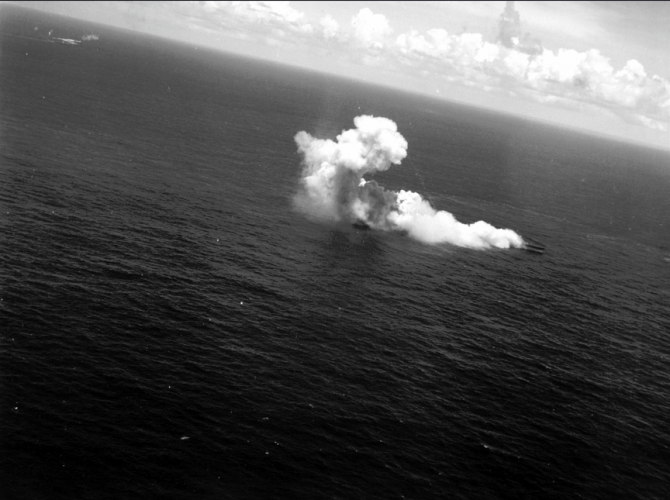
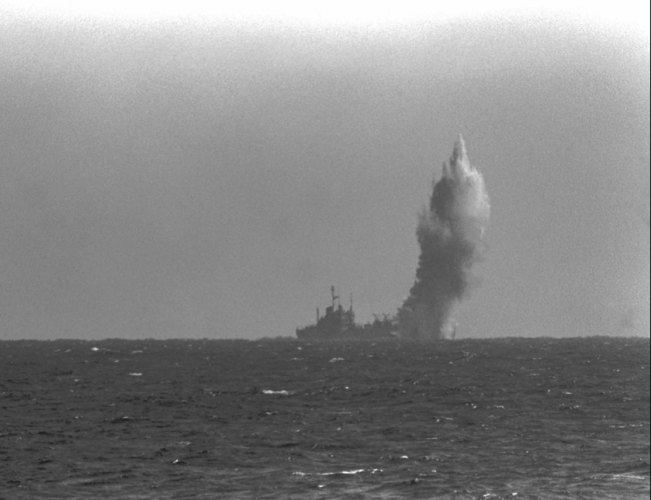
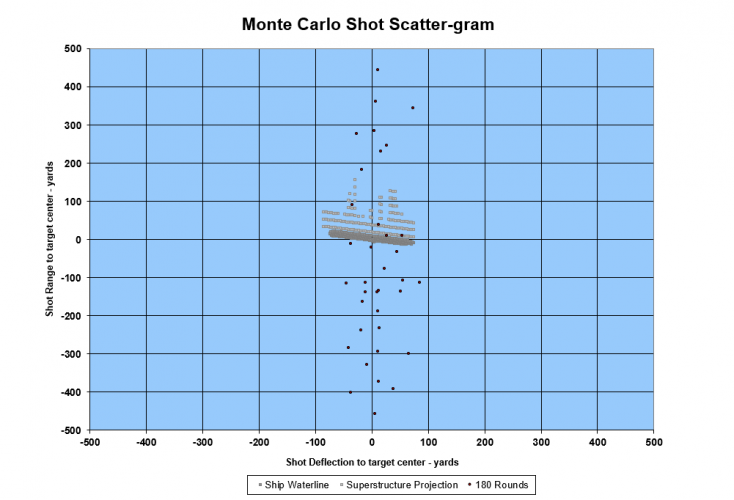
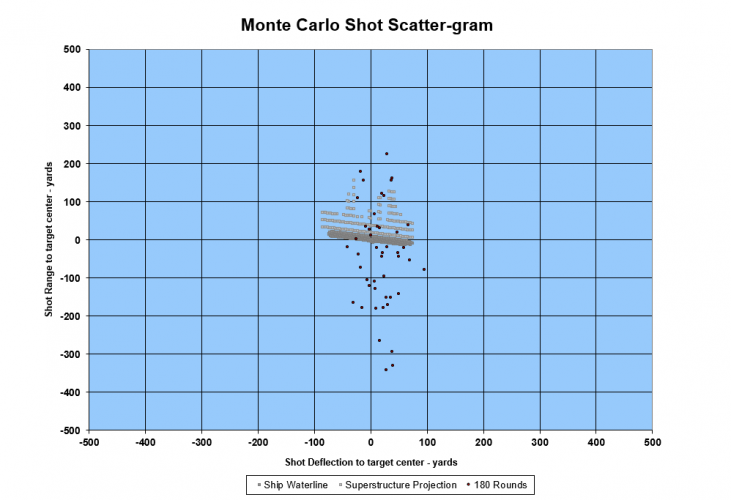
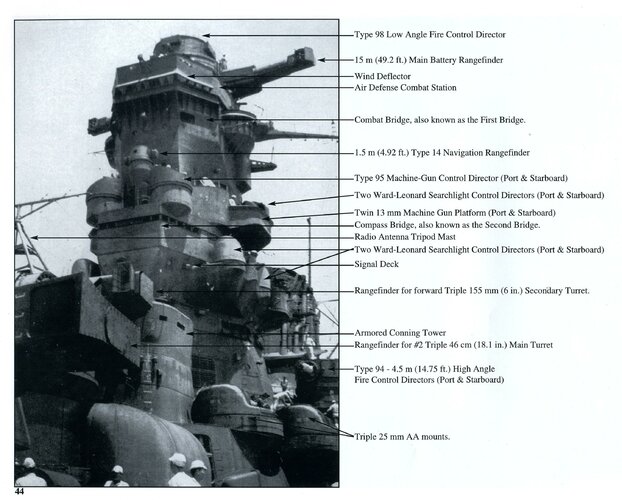
Yamato obtained three first- salvo 18.1" and three 6.1" hits on USS Johnston off Samar from over 20,000 yards. She also obtained a first- salvo hit on Gambier Bay) from just under 22,000 yards, aimed solely by the ship's Type 22 Mod 4 radar because of a lack of a visual to the target until about a minute after opening fire. In contrast, Iowa engaged Katori from an average range of less than 14,500 yards in clear visibility conditions during Operation Hailstone. Katori had already been hit by a torpedo, from 2- 7 bombs, numerous 8" and 5" hits from a U.S. heavy cruiser and a destroyer, was making no more than 1- 2 knots (one report recorded her as dead in the water) and was already sinking when Iowa opened fire. Iowa failed to hit Katori with eight salvoes (46 rounds) with her main battery during operation Hailstone. The reasons? High shell dispersion (among the highest of any navy in WW2) and a lack of main battery practice after arriving in the Pacific theater.
The high dispersion (or sometimes written as a main battery alignment issue) with the
Iowas has been a pervasive myth for decades and I have yet uncover any primary source documents that support this. For context, myself and Bill Jurens co-wrote a article in
Warship International in 2006 on the USN's fast battleship gunnery training in a two part article titled:
Fast Battleship Gunnery During WWII: A Gunnery Revolution. Our article is based entirely on primary documentation that I had duplicated from NARA in the previous years. This was supplemented with correspondence with several whom served on the
Iowas during the 1980s including the type's master chief gunner Stephen Skelley.
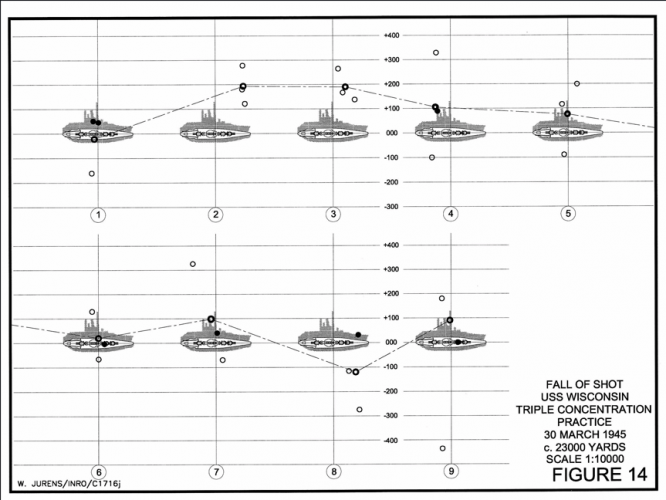
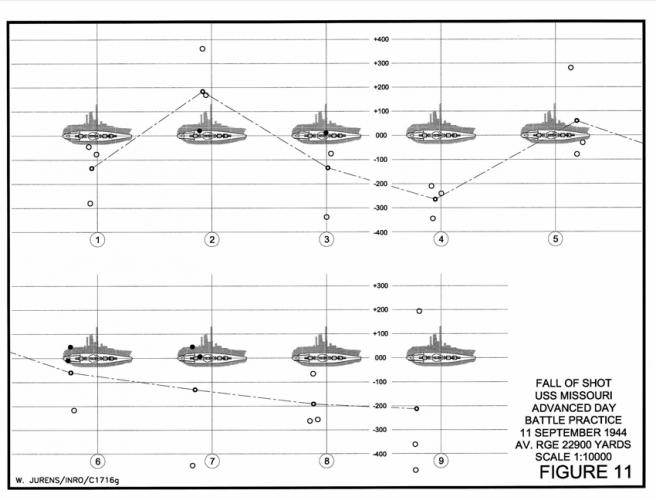
While we did not recover the entire catalogue of gunnery exercises for the battleships, we did recover a lot of data, including over 50 Day Battle Practice where the ships expended AP with Service velocity charges. From the observation of deck logs, it appears that op-tempo permitting, the fast battleships were typically exercising in Day Battle Practice every other month or so and often sprinkling in calibration and radar spotting practice in the intervening time. So basically every few weeks the main batteries were exercised with live fire in some way. The
Iowa's were no exception. BatDiv 7 (
Iowa and
New Jersey) in fact had conducted several Day Battle Practices during their workups prior to their deployment to the pacific. Additionally, they both had calibrated their main batteries after they cleared the canal and were a week out of Pearl Harbor. This was just weeks prior to HAILSTONE.
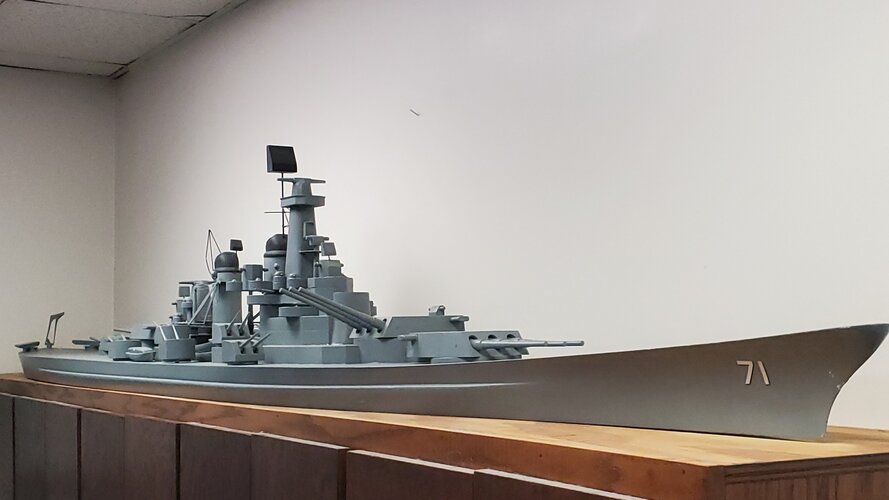
The idea that the
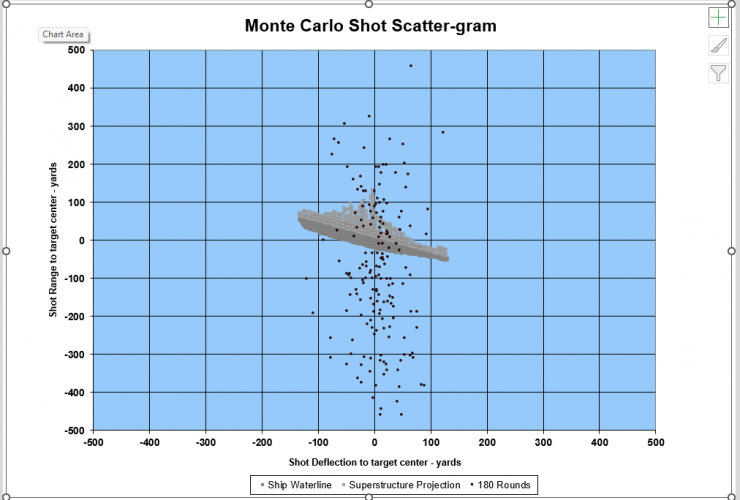
Iowa's had bad True Mean Dispersion is not supported in any of the data that we uncovered. Their average with AP-Service was ±0.43% of range which corresponds to a 9-gun range pattern of 1.72% of range which is very good. Now
Iowa used the Mark 13 High Capacity (HiCap) rounds with service velocity charges which does have a higher dispersion which is roughly 0.6% of range. It is true that
Iowa never directly observed hits on
Katori though in her action report she believed her gunfire was very effective having achieved a average MPI error of less 100yds according to radar spots. Radar spots during gunnery exercises were accurate to within ±60yds with large salvos such as what happened here so this is very likely quite accurate.
The lack of hits observed is interesting however I had discussed this on several occasions with Master Chief Skelley and he was not surprised. MC Skelley had personally controlled over 3,000 rounds of 16-inch gunfire (including combat in ODS) for context. He pointed out how colossal the HiCap splashes are: 300' high and around 45 feet wide.
Iowa's average MPI error was on the short side of
Katori which would place the majority of 16-inch splashes in front of their view of
Katori. Additionally, the secondary battery was firing which I was surprised to learn was very distracting, resulting in heavy virbration in the Mark 38 director optics. During the 1980s it was practice to withhold a 5-inch salvo if the main battery fall of shot was about to land.
It also appears that the DD and CA gunfire was not very accurate. I have the action reports of
New Orleans and
Minneapolis in my personal collection (somewhere) and it is worth noting that
New Orleans had a very bad tracking error (personnell error on the part of the rangekeeper operator) and had a difficult time maintaining the hitting deflection. Interestingly some additional detail from CAG 15's action report is highlighted below. He provided airspot for a time and his observations are below.
Some context:
New Orleans was firing orange projectile dye and
Minneapolis was firing blue. He notes a red dye but there was no red dye by any of the ships present and probably was the orange dye. What is interesting is his comment about black dye. Black dye was not used by the USN and in this case is almost certainly
Iowa. HiCap do tend to have a dirty blackish base of the splash when nose fused super quick fuze action was selected on those rounds as was the case here.
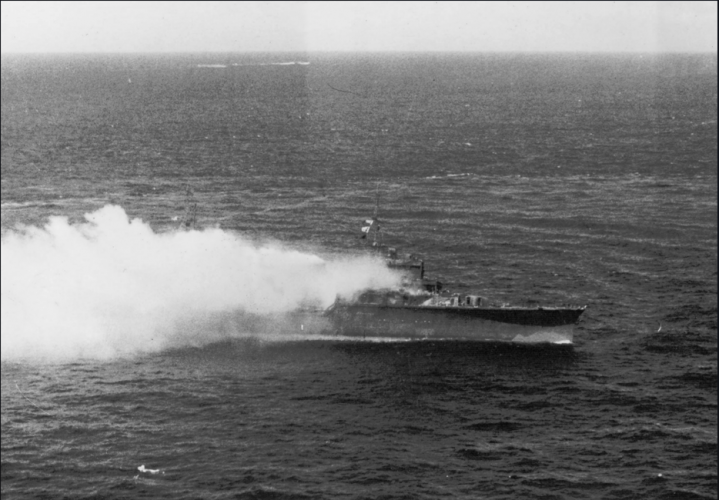
“At about 1515, the screen destroyers opened up on Cruiser "K" (KATORI). We took position at 1,000 feet altitude and about one mile to the southeast in order to observe results. The cruiser was lying helpless in the trough of the waves, bow to northwest (Tokyo). She had a slight list to port and a red flame could be seen amidships. Her after twin turret was trained amidships and she did not at any time fire her main battery or AA guns.
The shooting of the destroyers was poor. Not until the 5th or 6th salvo did any shots land within 25 yards of the target. About ninety percent were well over. I did not see any hits from the destroyer gunfire. The pattern had good density - at least one splash every 25 yards. There were a few wild shorts.
Shortly thereafter larger splashes appeared around Cruiser "K". These were apparently from the heavy cruisers. Some were close but no definite hits were observed….
The battleships then opened fire on cruiser "K", which now had a marked list to port. The red [sic] and blue colored splashes were not close. The blue straddled, but the pattern was about 100 yards between each splash. The red did not straddle. The first observed hit came about 1530 from a black splash. It was at the waterline under the bridge. Black got on the target the second salvo. The black pattern had good density, as did the orange.
The cruiser quickly listed to her port beam and lay for a few moments on her beams ends. I obtained a good sketch of her profile as she lay this way free from smoke. From this I am positive she was a CL of the KATORI class. She had two large shell holes about six feet in diameter in her starboard side, one under the bridge about six feet below the waterline and the other amidships about at the waterline, plus about six small holes.
In a few moments she rolled over on her back, exposed her red bottom, then sank stern first…..”
A comment on
Yamato's radar: The type 22 radar had
terrible resolution. 1,500m in range and 40° (!) in bearing. So at 22kyds you're looking at a resolution cell of 1,600 x 770 yds. That is nearly worthless for accurate tracking in any situation except perhaps a single ship with optics supplimenting it. It certainly was not a viable tool for radar spotting.
A final observation: If we are to take these hit claims at face value it really is not very indicative how effective a gunnery system is on average. That is because natural statistical effects hits can be seemingly random and given the very small sample sizes in general of battleships during WWII, it can skew the data. For example, I have seen many time in gunnery exercises where traditional measures of main battery aim, MPI and standard deviation of MPI error, are very good and even the TMD is good but no hits or a lower than expected hit percentage was obtained. Conversely I've seen exercises where fantastic results were acheived (
South Dakota obtained 22% hits at 35,000yds in 1943 in one exercise). This is simply because the engagements or exercises only expended a few dozen rounds at a given target and not a large slug fest such as the runs to the south and north during Jutland where much larger round expenditures evens things out.
So in my honest opinion, drawing conclusions from either of these examples if very problematic when trying to extrapolate to what a fleet engagement might look like from a gunnery perspective.





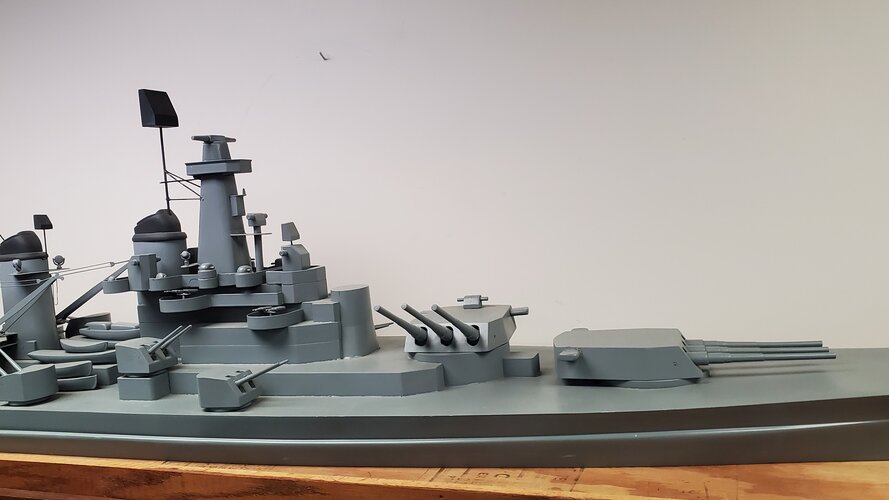
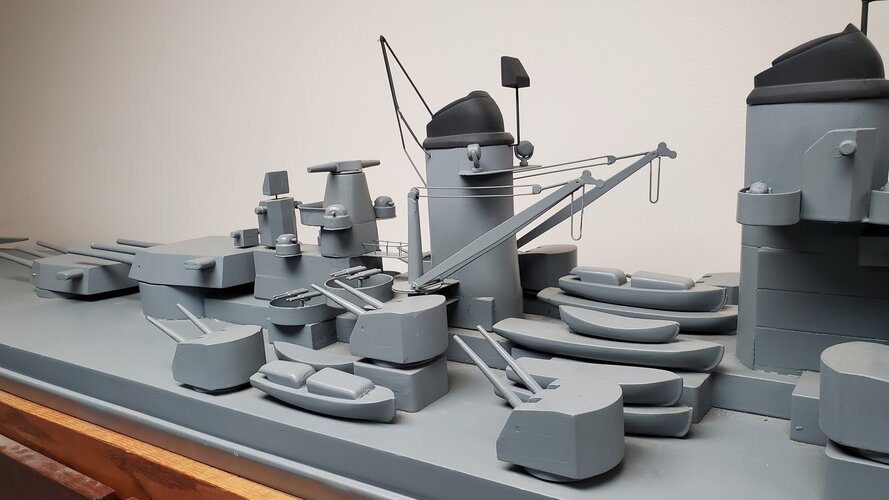
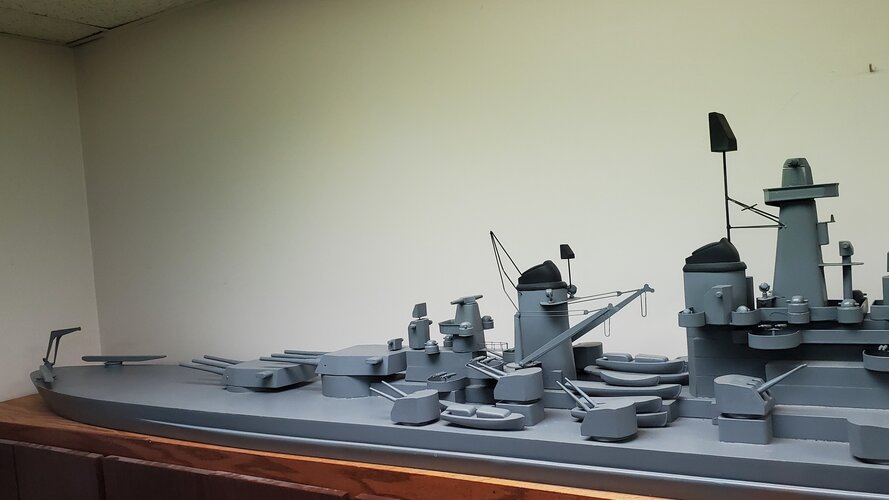

 ).
).