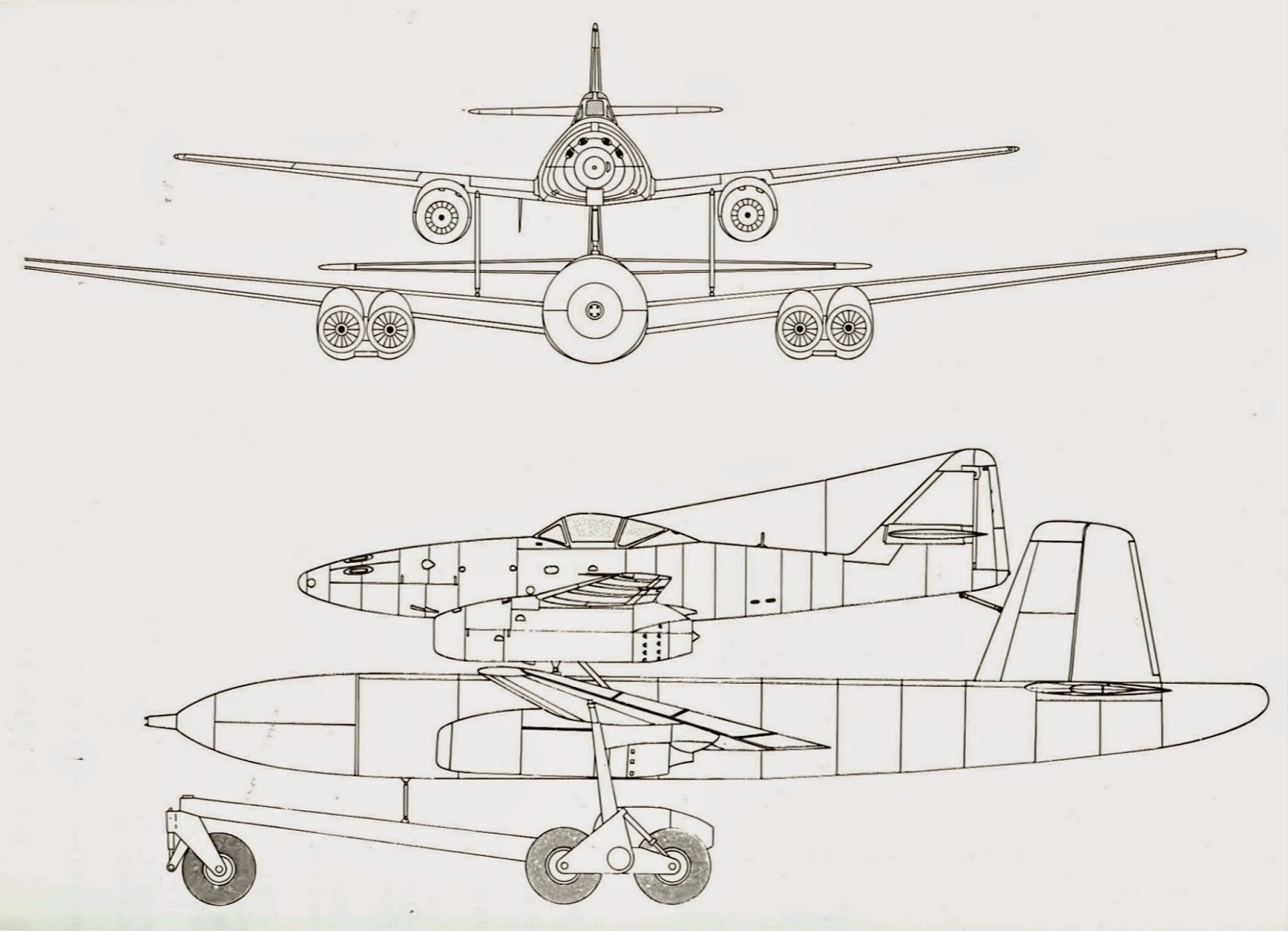
Justo Miranda Drawingsanything about the junkers 287 + me 262 mistel?


You are using an out of date browser. It may not display this or other websites correctly.
You should upgrade or use an alternative browser.
You should upgrade or use an alternative browser.
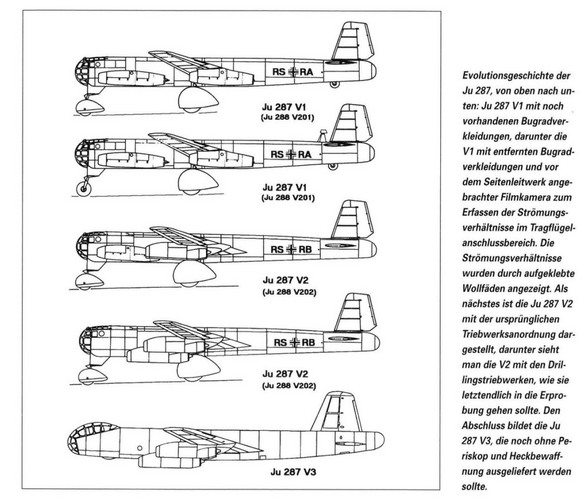
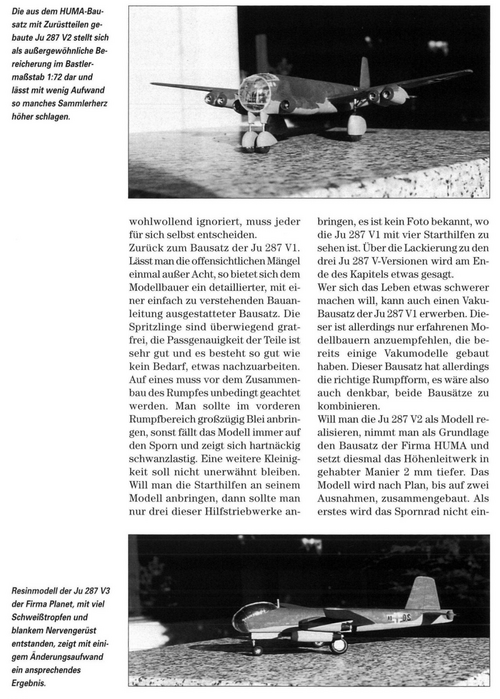
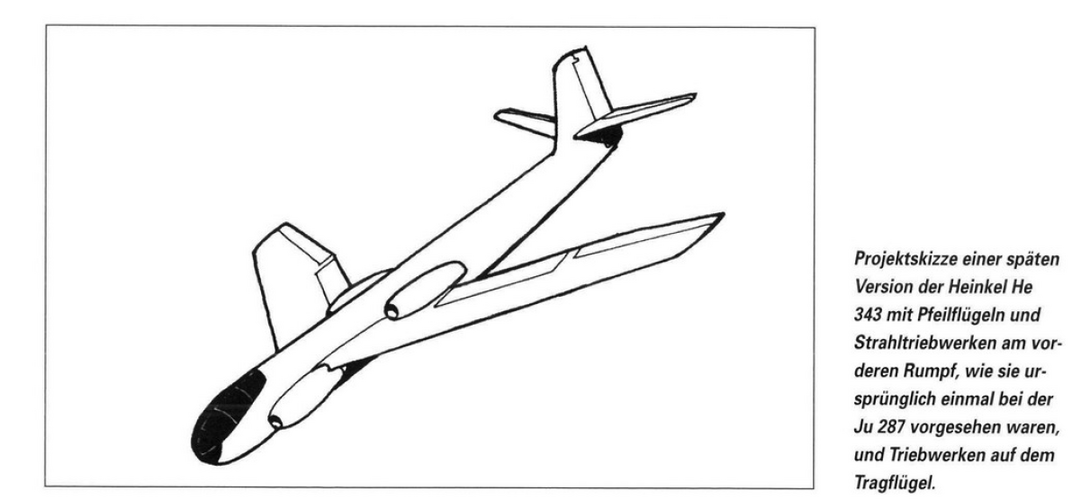
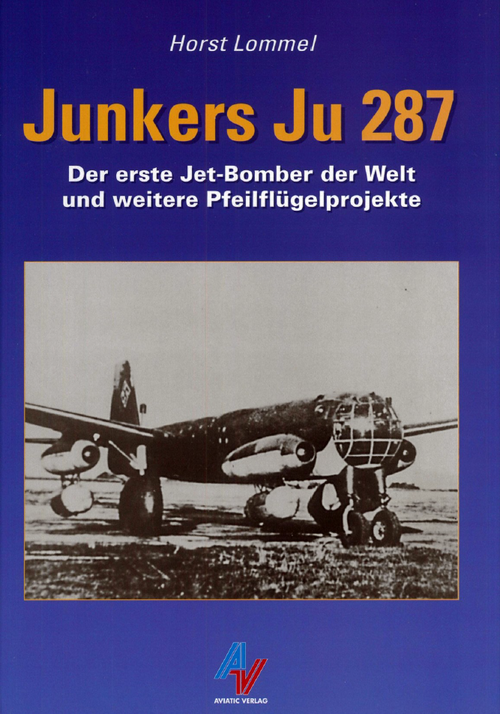
Junkers Ju 287, Developments, Projects and Prototypes

athpilot
Fly me to the moon...
- Joined
- 18 November 2012
- Messages
- 436
- Reaction score
- 555
Russian post-war drawings of Ef-132 and EF-140. From the website of Uwe W. Jack (and no, I´m not this person...)
http://www.aerospace-jack.com
http://www.aerospace-jack.com
Attachments


- Joined
- 26 May 2006
- Messages
- 38,285
- Reaction score
- 20,424
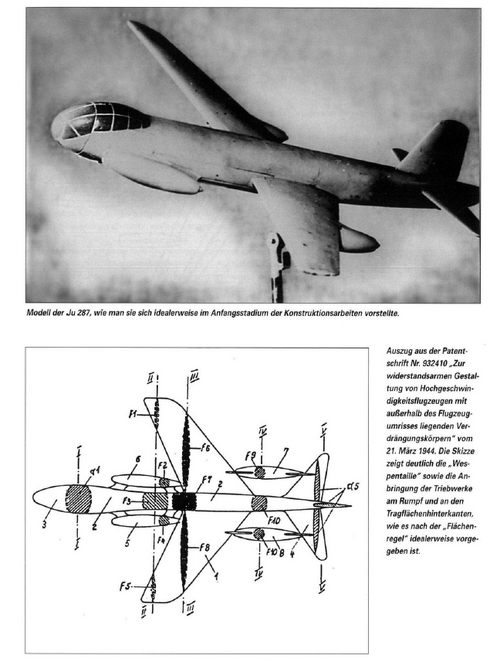
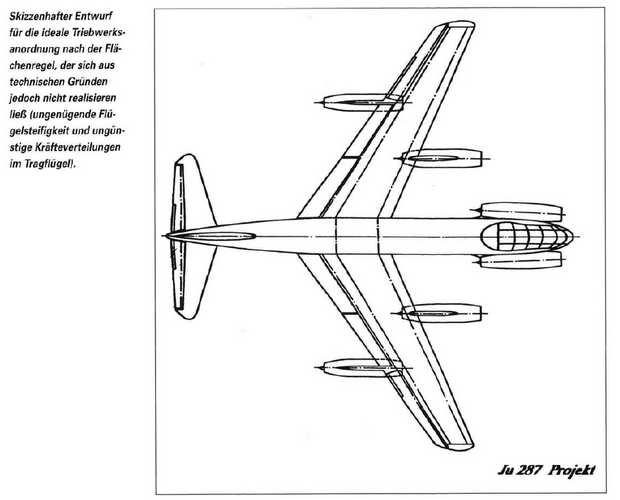
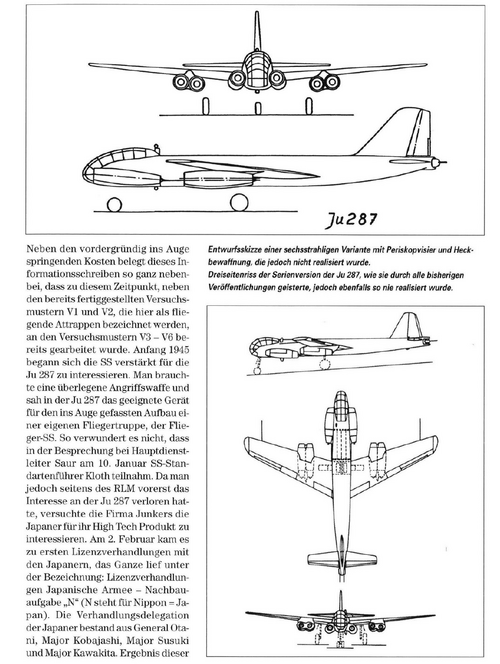
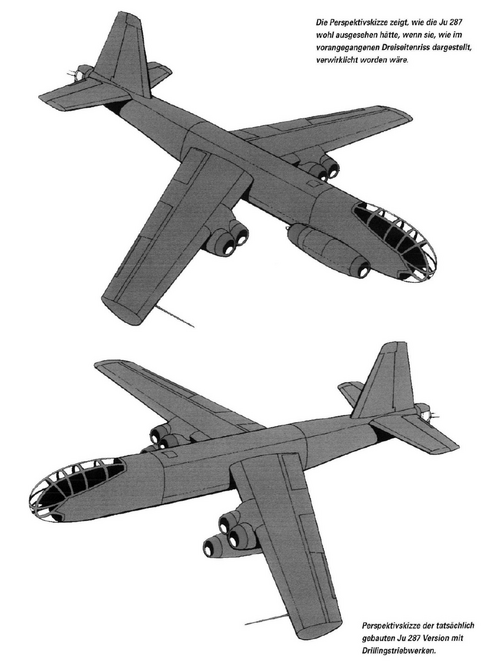

- Joined
- 26 May 2006
- Messages
- 38,285
- Reaction score
- 20,424
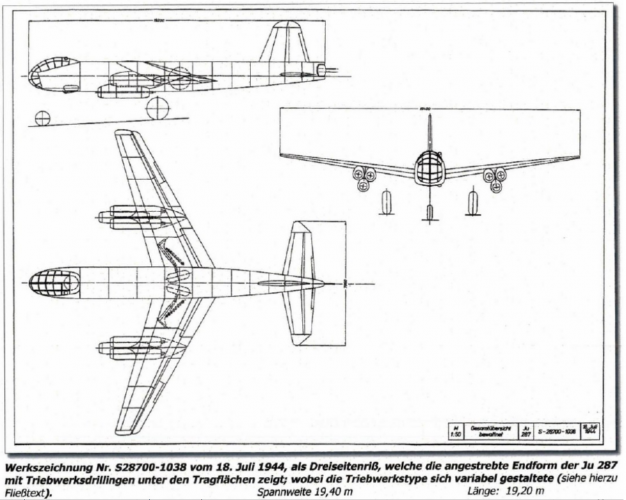
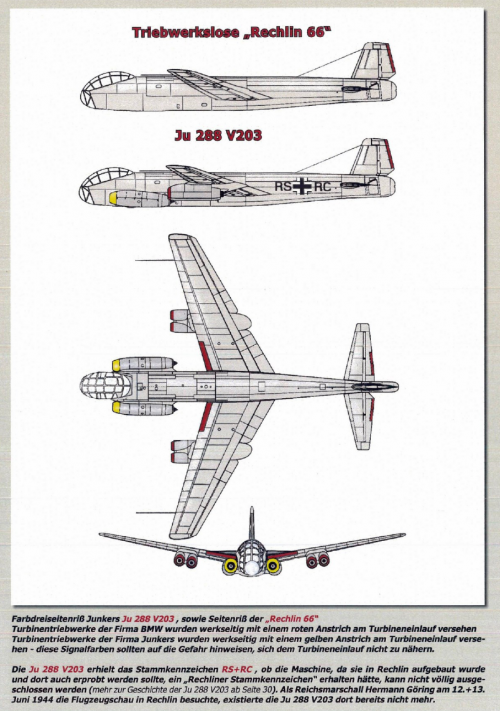
From Flieger Revue Extra 100.
Attachments

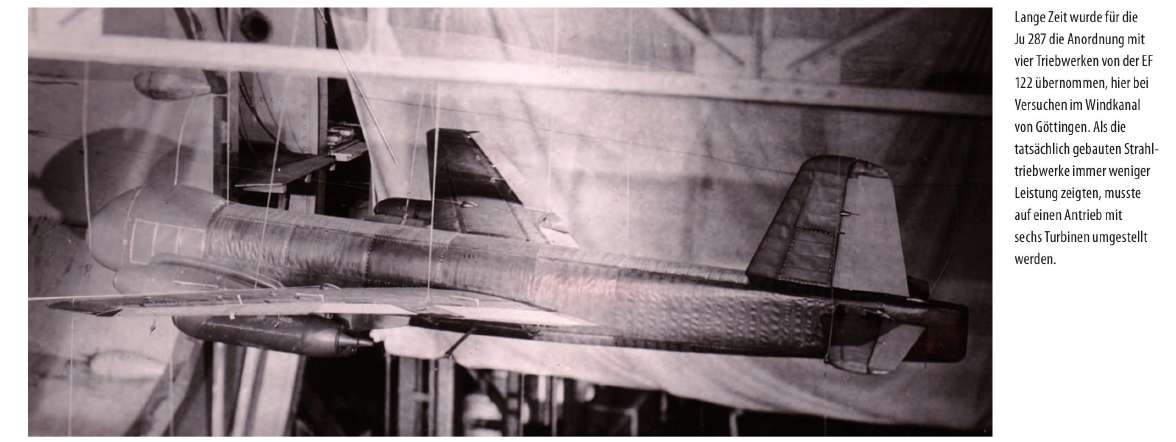
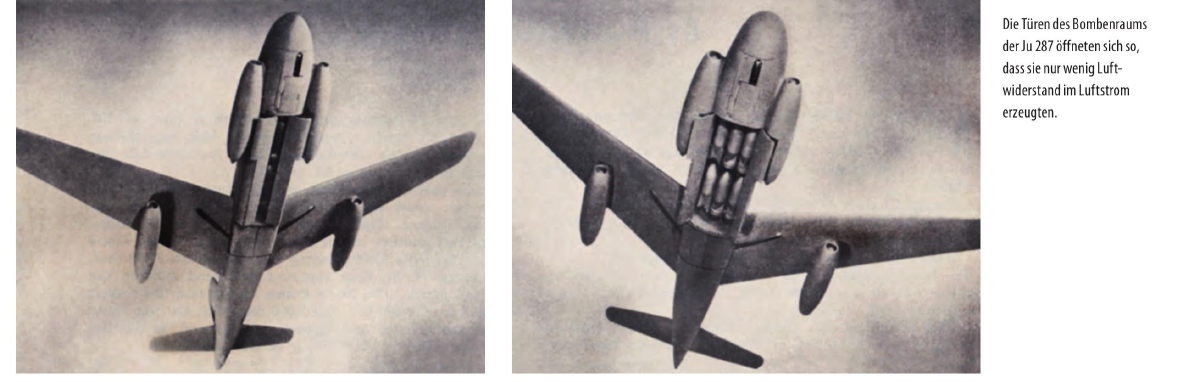
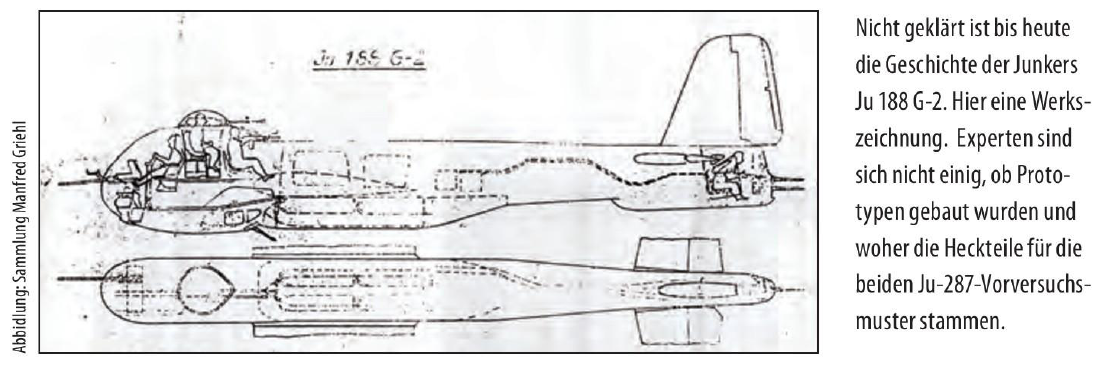
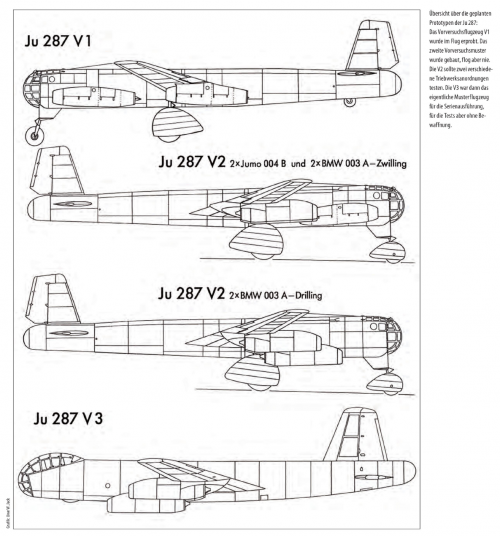
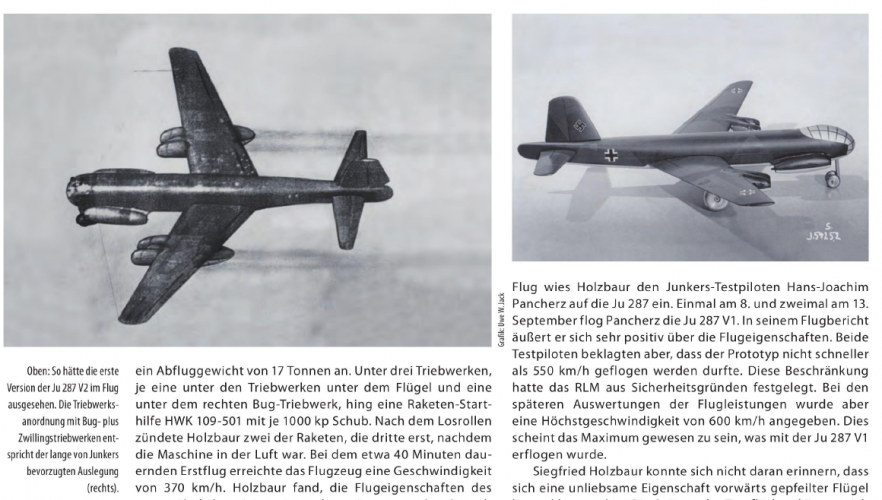
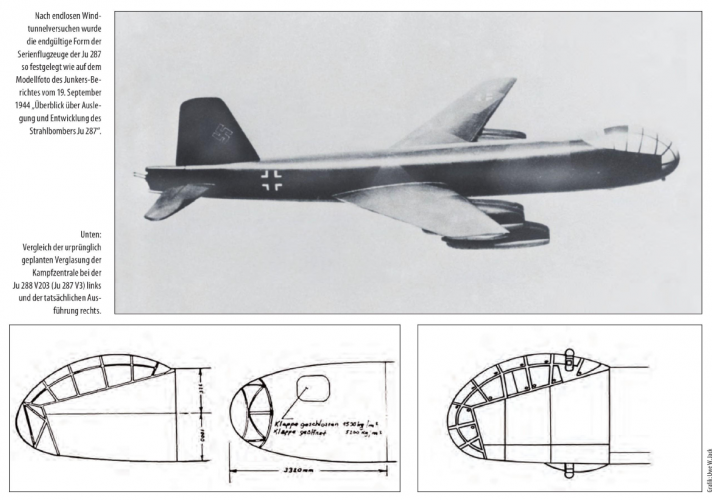
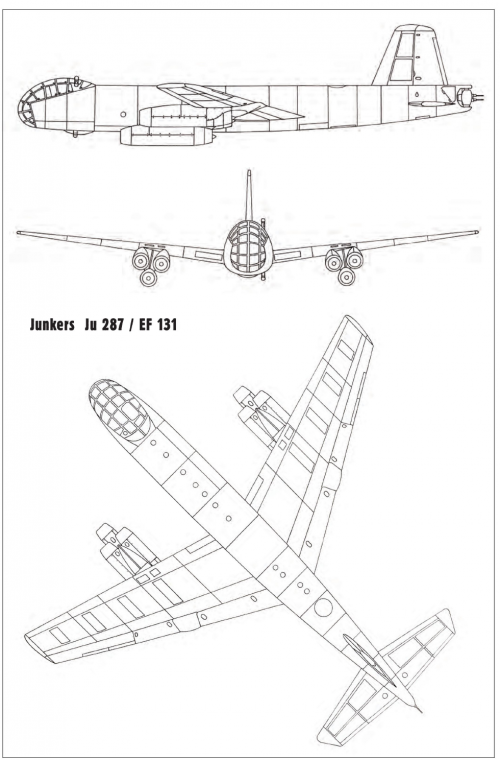

- Joined
- 3 June 2006
- Messages
- 3,543
- Reaction score
- 6,230
Source (German, and behind a paywall):
https://www.flugrevue.de/klassiker/junkers-bomber-ef-140-unterm-roten-stern/See also the following topic "OKB-1 Military Aircraft and Projects".
https://www.flugrevue.de/klassiker/junkers-bomber-ef-140-unterm-roten-stern/See also the following topic "OKB-1 Military Aircraft and Projects".
Attachments

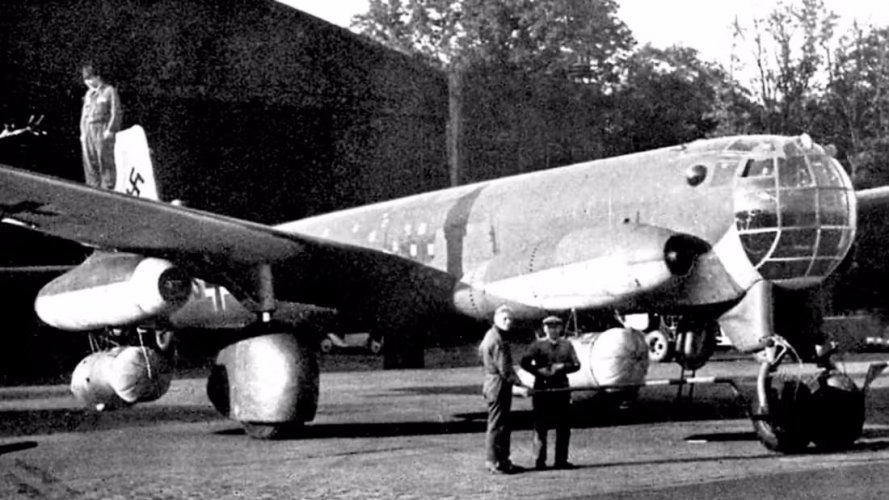
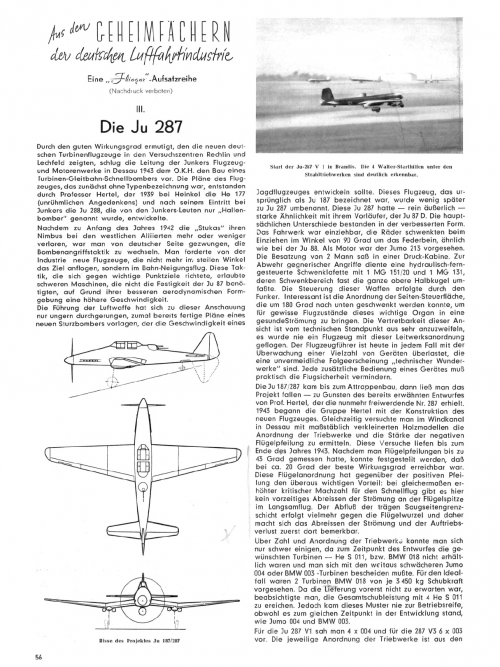
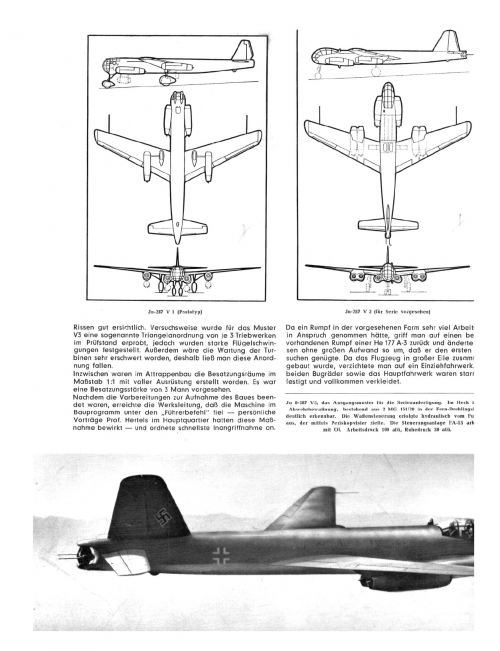
Until the mid-1930s, the interest of designers in forward swept wings consisted in their ability to delay stall at low speed and high angles of attack. Low speed controllability assured full aileron control until total loss of lift, and the wingtips remained unstalled to high angles of attack. In 1921, Willy Messerschmitt built the S.9 glider to study the behaviour of this type of wings and in 1936 Alexander Lippisch used the DFS 42 Kormoran for the same purpose.
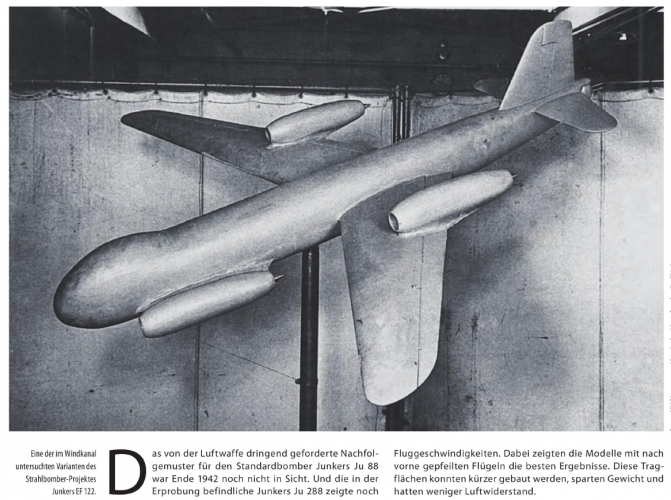
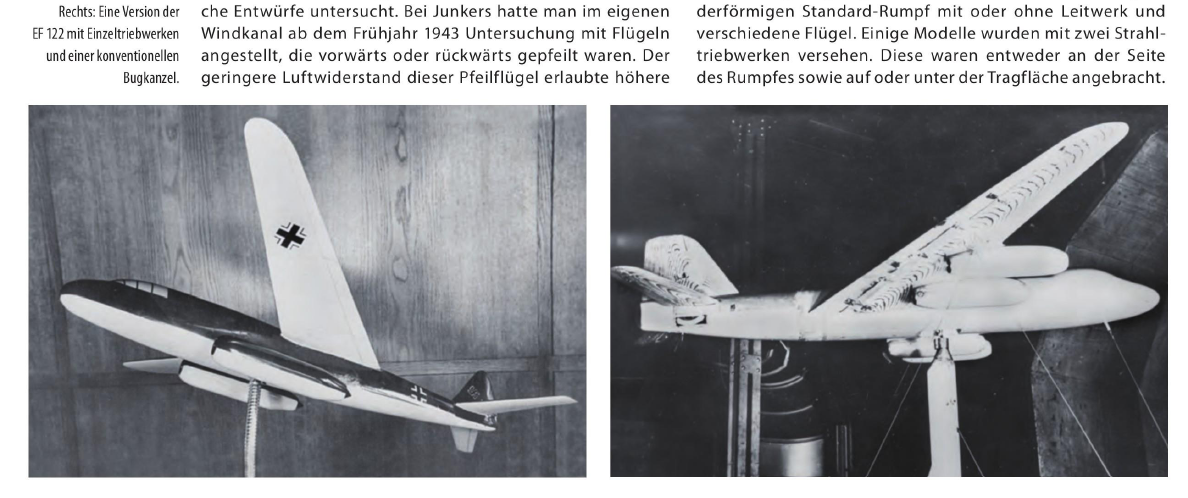
The appearance of turbojets during the 40s allowed the design of airplanes capable of flying at Mach 0.7, although only Germany had carried out theoretical studies on the behaviour of swept wings at high speeds. In 1942, the Dipl.-Ing. Hans Wocke, who carried out aerodynamic studies for the firm Junkers, concluded that the forward-swept wings generated less negative pressure on their upper surface and helped delay shock-wave formation to higher subsonic Mach numbers. In this type of wings, the aircraft drift towards the wing root and does not affect wingtips making the use of leading-edge slots unnecessary.
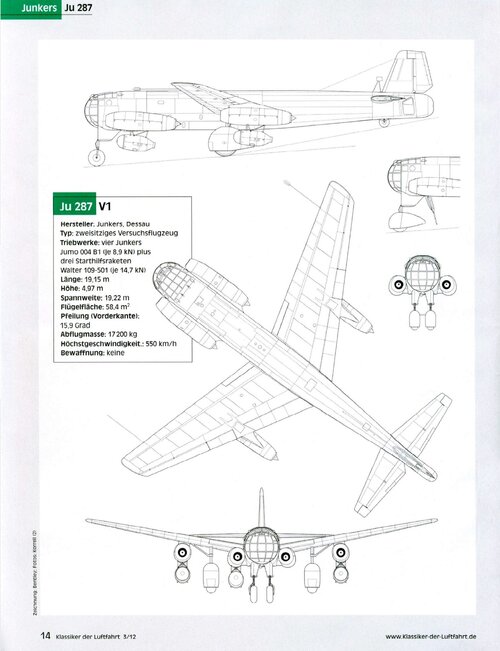
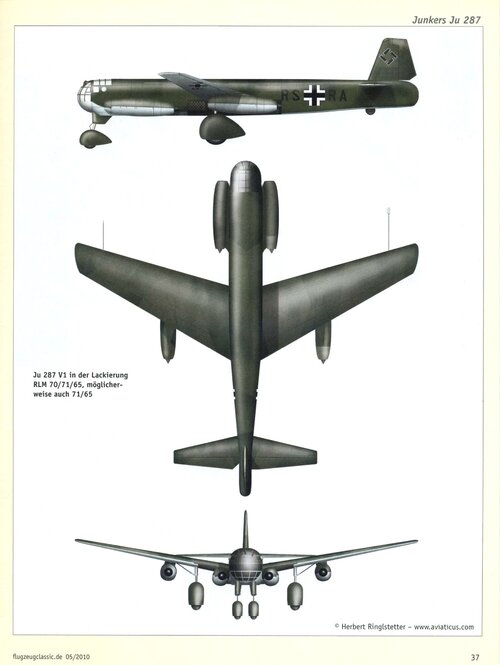
Unfortunately for the Germans, the scale models wind tunnel tests carried out in 1942 did not reveal the existence of two dangerous defects that would prevent their use in high speed fighters. Aircrafts with forward-swept wings suffered a pronounced tendency to Dutch roll during a turn with heavy g's loads. But much more serious was the appearance of aeroelastic divergence phenomena. When the dynamic pressure is greater than the structural elastic restoring forces, a change in lift caused by the wing deformation exceeds the structural limits and the wing fails. This phenomenon has limited the use of forward sweep to angles less than 15 degrees in the construction of the prototype Ju 287 bomber in Germany, the Cornelius XFG-1 glider in the USA and Romeo Ro.57 heavy fighter in Italy. None of these aircraft exceeded 550 kph.
Above a certain speed and degrees of forward sweep, the wing bent and twisted its leading-edge up. Increased forward sweep angle requires higher strength to resist the twisting and to delay the divergence phenomena. The wing needs to be extremely stiff, but the technology of the time and the available materials were inadequate to build such a wing. All-metall wings are effectively limited to 15 degrees, but a high-performance fighter requires a much greater degree of forward-swept.
After knowing the results of vibration tests carried out with the wing of a Ju 287 in July 1944 and the flight behaviour of the prototype Ju 287 V1, the OKL ordered the cancellation of two projects with forward-swept wings: Blohm und Voss P. 209-02 and Heinkel He 162 D, as well as the construction of the prototypes Ju 287 V3 and Ju 287 V4. Following the war, the state-of-art on materials technology was unable to resolve the wing rigidity problem and the forward-swept versions of the North American P-51, Bell XS-1, Douglas D-558-I and Convair XB- 53 did not come to be built.
The Soviets did not have much success with the information captured to the Germans in the archives of the DVL Institut. In 1948, they limited themselves to studying the aerodynamic behaviour of the forward-swept wings with the rocket research airplane Tsybin IL-3 up to 0.95 Mach. Until the appearance in the 1970s of the advanced composite structures Boron-Graphite, matrixed into epoxy resins, it was not possible to achieve sufficient stiffness to control the aeroelastic divergence at supersonic speeds.
The appearance of turbojets during the 40s allowed the design of airplanes capable of flying at Mach 0.7, although only Germany had carried out theoretical studies on the behaviour of swept wings at high speeds. In 1942, the Dipl.-Ing. Hans Wocke, who carried out aerodynamic studies for the firm Junkers, concluded that the forward-swept wings generated less negative pressure on their upper surface and helped delay shock-wave formation to higher subsonic Mach numbers. In this type of wings, the aircraft drift towards the wing root and does not affect wingtips making the use of leading-edge slots unnecessary.
Unfortunately for the Germans, the scale models wind tunnel tests carried out in 1942 did not reveal the existence of two dangerous defects that would prevent their use in high speed fighters. Aircrafts with forward-swept wings suffered a pronounced tendency to Dutch roll during a turn with heavy g's loads. But much more serious was the appearance of aeroelastic divergence phenomena. When the dynamic pressure is greater than the structural elastic restoring forces, a change in lift caused by the wing deformation exceeds the structural limits and the wing fails. This phenomenon has limited the use of forward sweep to angles less than 15 degrees in the construction of the prototype Ju 287 bomber in Germany, the Cornelius XFG-1 glider in the USA and Romeo Ro.57 heavy fighter in Italy. None of these aircraft exceeded 550 kph.
Above a certain speed and degrees of forward sweep, the wing bent and twisted its leading-edge up. Increased forward sweep angle requires higher strength to resist the twisting and to delay the divergence phenomena. The wing needs to be extremely stiff, but the technology of the time and the available materials were inadequate to build such a wing. All-metall wings are effectively limited to 15 degrees, but a high-performance fighter requires a much greater degree of forward-swept.
After knowing the results of vibration tests carried out with the wing of a Ju 287 in July 1944 and the flight behaviour of the prototype Ju 287 V1, the OKL ordered the cancellation of two projects with forward-swept wings: Blohm und Voss P. 209-02 and Heinkel He 162 D, as well as the construction of the prototypes Ju 287 V3 and Ju 287 V4. Following the war, the state-of-art on materials technology was unable to resolve the wing rigidity problem and the forward-swept versions of the North American P-51, Bell XS-1, Douglas D-558-I and Convair XB- 53 did not come to be built.
The Soviets did not have much success with the information captured to the Germans in the archives of the DVL Institut. In 1948, they limited themselves to studying the aerodynamic behaviour of the forward-swept wings with the rocket research airplane Tsybin IL-3 up to 0.95 Mach. Until the appearance in the 1970s of the advanced composite structures Boron-Graphite, matrixed into epoxy resins, it was not possible to achieve sufficient stiffness to control the aeroelastic divergence at supersonic speeds.
Ju 287 Drawings & Reports
https://aerospace-jack.com/docs001.htm
Proposed Testbeds
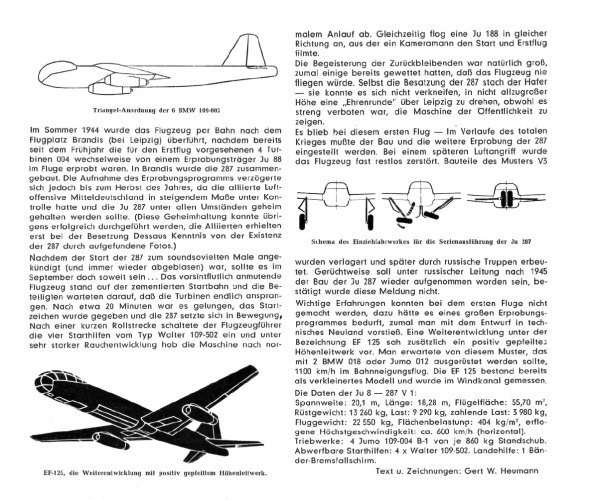
Junkers Report September 1944
- Ju 188 G-2 testbed with original Ju 287 empennage
- He 177 testbed with Ju 287 bomb bay
- He 177 testbed with original Ju 287 landing gear
https://aerospace-jack.com/op004.htm
Source:
Jack's Aerospace History Files by Uwe W. Jack
https://aerospace-jack.com/index.htm
Junkers 287 with PTL 021 turboprop
https://www.secretprojects.co.uk/threads/me-262-projects-pre-projects-and-variants.6994/post-533789
https://aerospace-jack.com/docs001.htm
Proposed Testbeds
Junkers Report September 1944
- Ju 188 G-2 testbed with original Ju 287 empennage
- He 177 testbed with Ju 287 bomb bay
- He 177 testbed with original Ju 287 landing gear
https://aerospace-jack.com/op004.htm
Source:
Jack's Aerospace History Files by Uwe W. Jack
https://aerospace-jack.com/index.htm
Junkers 287 with PTL 021 turboprop
https://www.secretprojects.co.uk/threads/me-262-projects-pre-projects-and-variants.6994/post-533789
Last edited:

blackkite
Don't laugh, don't cry, don't even curse, but.....
- Joined
- 31 May 2007
- Messages
- 9,515
- Reaction score
- 9,661
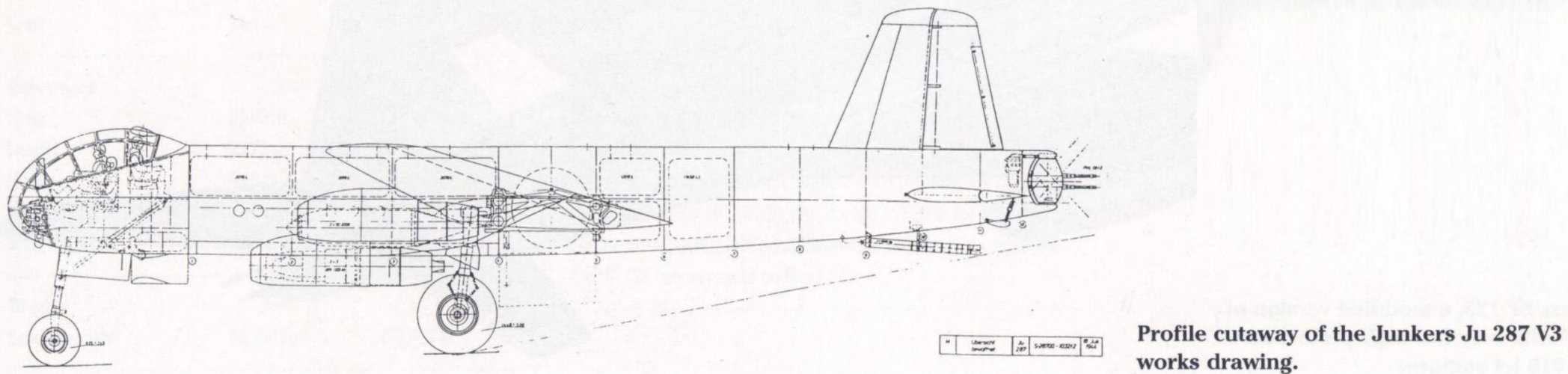
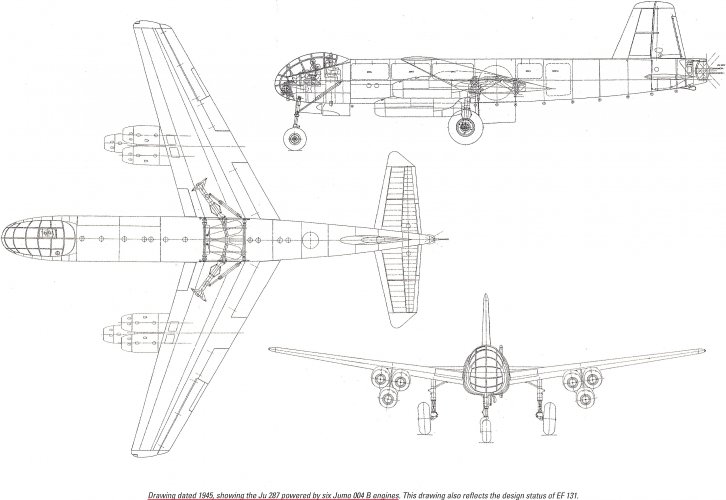
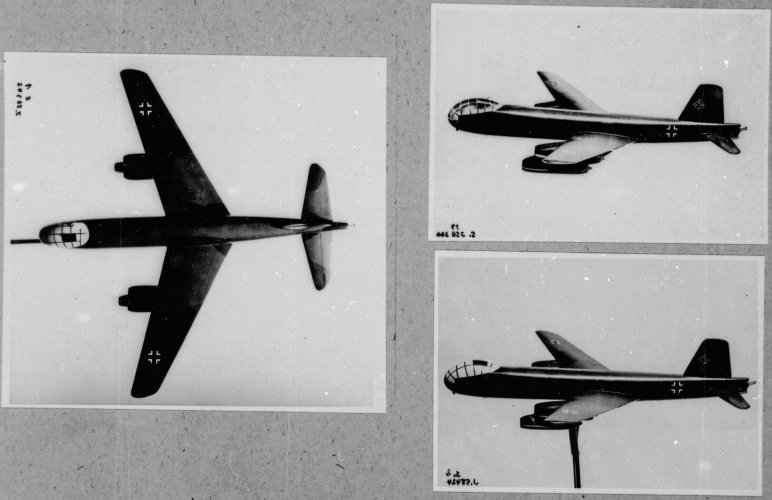
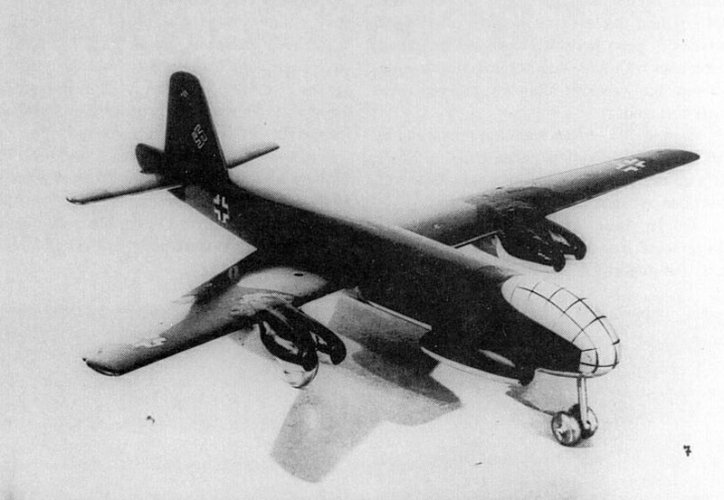
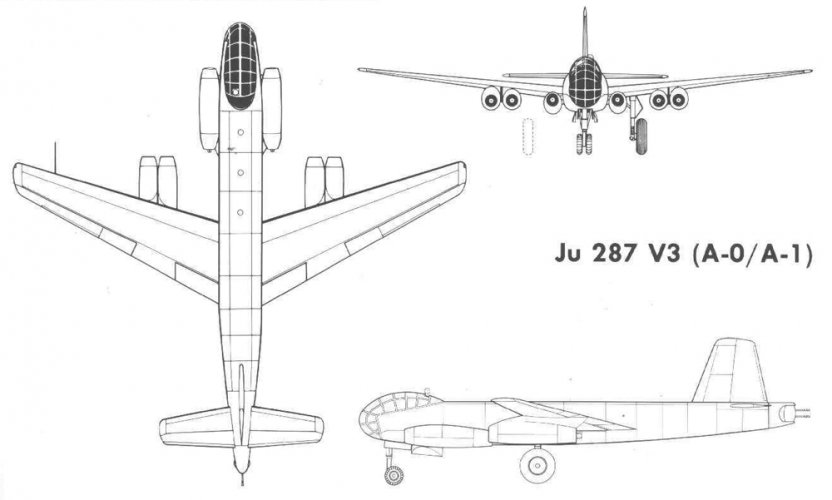
Hi! Unfinished Ju 287 V3 with six Jumo 004 engine and pressurized cabin, almost same as EF 131.
https://forum.warthunder.com/t/junkers-ju-287/59941/11
https://forum.warthunder.com/t/junkers-ju-287/59941/11
Attachments
Last edited:
blackkite
Don't laugh, don't cry, don't even curse, but.....
- Joined
- 31 May 2007
- Messages
- 9,515
- Reaction score
- 9,661
Hi! Unfinished Ju 287 V2 early plan. Sorry for some duplication.
https://www.albentley-drawings.com/drawings/german-aircraft/junkers-ju287/junkers-ju287-v2/
https://www.albentley-drawings.com/drawings/german-aircraft/junkers-ju287/junkers-ju287-v2/
Attachments
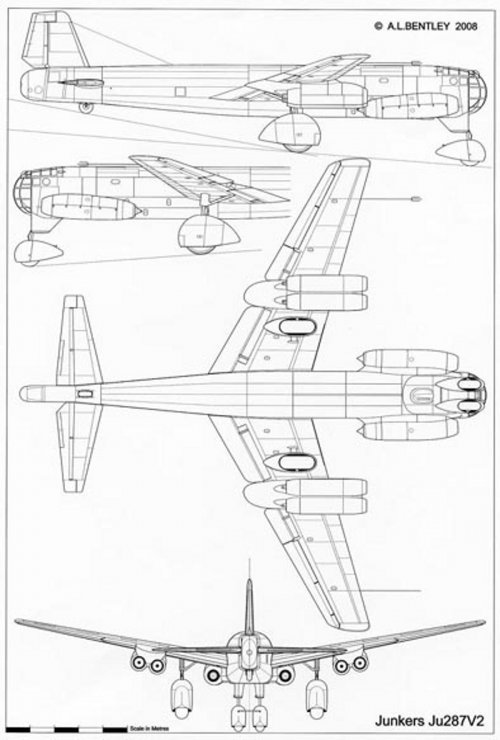
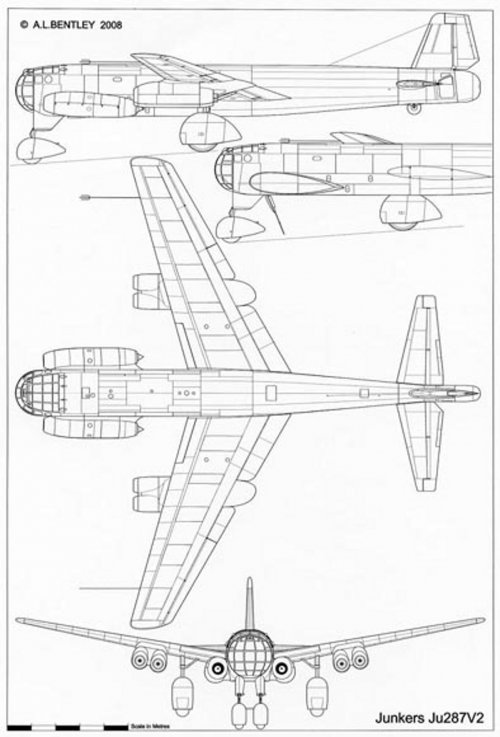
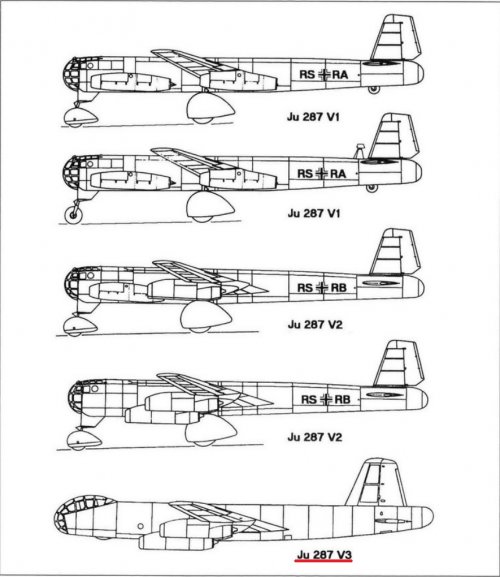
Last edited:
blackkite
Don't laugh, don't cry, don't even curse, but.....
- Joined
- 31 May 2007
- Messages
- 9,515
- Reaction score
- 9,661
Attachments
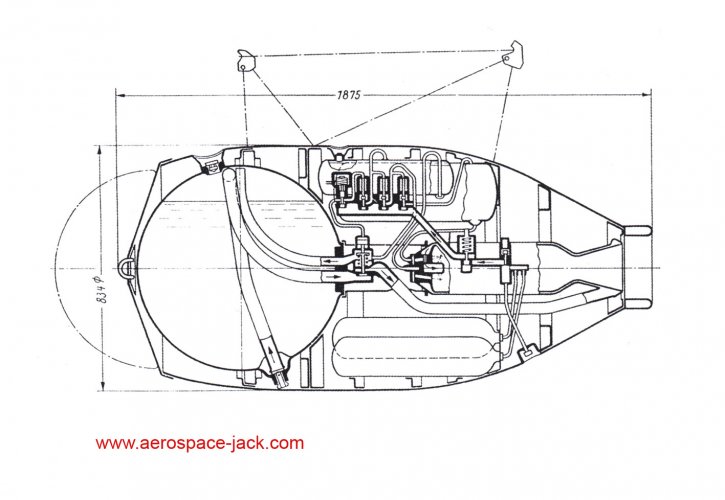
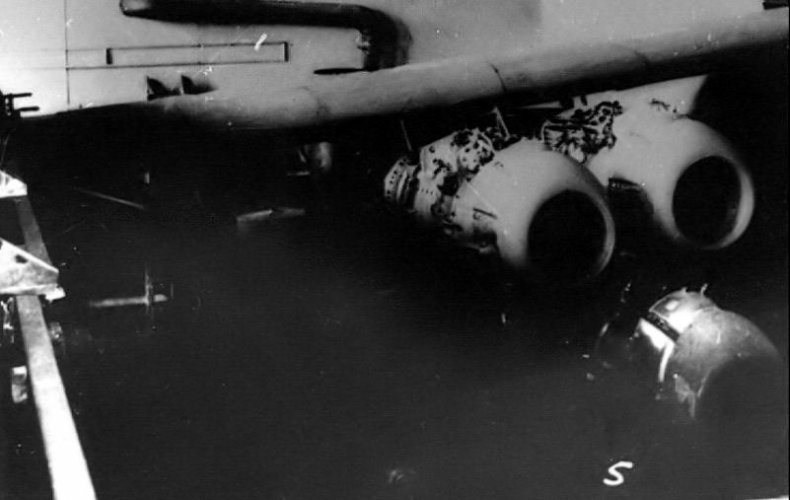
Last edited:
blackkite
Don't laugh, don't cry, don't even curse, but.....
- Joined
- 31 May 2007
- Messages
- 9,515
- Reaction score
- 9,661
Attachments
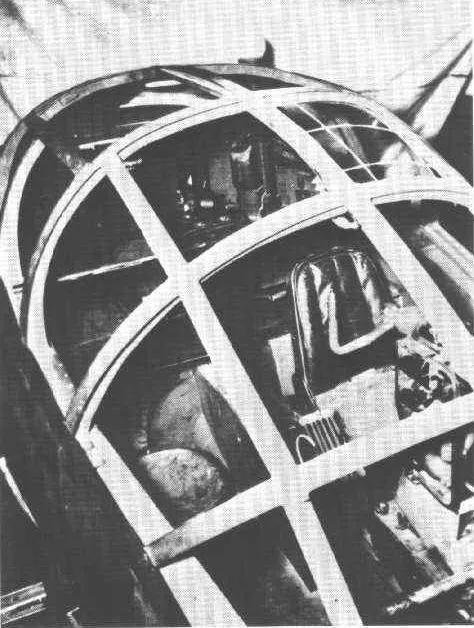
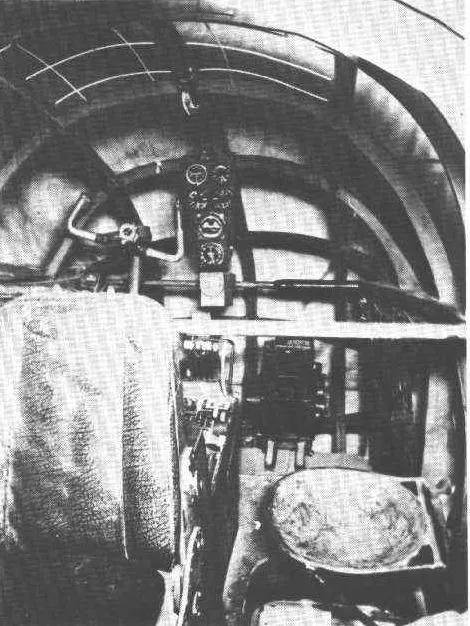
1945 - Ju 287 Langstreckenbomber - Großbomber
[1] February 5, 1945 - February 11, 1945
TL-Heavy Bomber:
Genst. 6. Abt. was tasked with formulating tactical requirements.
[2] March 14, 1945
The Ju 287 program is to be launched immediately as "Gewaltaktion", under the leadership of H. Thiedemann. The objective is to engage naval targets at long range. Additionally, the "optimal solution" is to be pursued with all available resources.
[3] March 16, 1945 - April 4, 1945
TL-Heavy Bomber:
March 17, 1945 Meeting at Gen.Qu.6.Abt. with Führungsstab and Waffengeneral;
In the first phase, 8-287s will be built; in the second phase, 8-287s with increased fuel capacity using "Starthilfen". No decision has yet been made regarding a new project. However, Gen.Qu.6.Abt. established the guidelines on which the tactical and technical requirements will be based in the coming days.
[4] March 16, 1945 - April 4, 1945
Horten Bomber Project:
Assessments and considerations can be found in the attached letter.
[5] March 16, 1945 - April 4, 1945
8-287:
The Ju 287 was reinstated into technical production support. V-3 prototype, V-4 prototype for series production.
[7] Report on the state of the Luftrüstung, March 1945
8-287:
The Ju 287 program is to be launched immediately. The objective is to engage naval targets at long range. An order has been placed for the production of 75 units. Planned delivery starting in July 1945 appears doubtful.
Source:
Bundesarchiv
Signatur: RL 3/2567
[1] Page: 169
[2] Page: 295
[3] Page: 301
[4] Page: 303
[5] Page: 329
Signatur: RL 3/2583
[7] Page: 70
Direct Link:
RL 3/2567
https://invenio.bundesarchiv.de/invenio/direktlink/ff268edd-8129-450a-b0e4-6a35d48fc287/RL 3/2583
https://invenio.bundesarchiv.de/invenio/direktlink/760e51f9-0854-4241-93e5-8831c9163bc9/
[1] February 5, 1945 - February 11, 1945
TL-Heavy Bomber:
Genst. 6. Abt. was tasked with formulating tactical requirements.
[2] March 14, 1945
The Ju 287 program is to be launched immediately as "Gewaltaktion", under the leadership of H. Thiedemann. The objective is to engage naval targets at long range. Additionally, the "optimal solution" is to be pursued with all available resources.
[3] March 16, 1945 - April 4, 1945
TL-Heavy Bomber:
March 17, 1945 Meeting at Gen.Qu.6.Abt. with Führungsstab and Waffengeneral;
In the first phase, 8-287s will be built; in the second phase, 8-287s with increased fuel capacity using "Starthilfen". No decision has yet been made regarding a new project. However, Gen.Qu.6.Abt. established the guidelines on which the tactical and technical requirements will be based in the coming days.
[4] March 16, 1945 - April 4, 1945
Horten Bomber Project:
Assessments and considerations can be found in the attached letter.
[5] March 16, 1945 - April 4, 1945
8-287:
The Ju 287 was reinstated into technical production support. V-3 prototype, V-4 prototype for series production.
[7] Report on the state of the Luftrüstung, March 1945
8-287:
The Ju 287 program is to be launched immediately. The objective is to engage naval targets at long range. An order has been placed for the production of 75 units. Planned delivery starting in July 1945 appears doubtful.
Source:
Bundesarchiv
Signatur: RL 3/2567
[1] Page: 169
[2] Page: 295
[3] Page: 301
[4] Page: 303
[5] Page: 329
Signatur: RL 3/2583
[7] Page: 70
Direct Link:
RL 3/2567
https://invenio.bundesarchiv.de/invenio/direktlink/ff268edd-8129-450a-b0e4-6a35d48fc287/RL 3/2583
https://invenio.bundesarchiv.de/invenio/direktlink/760e51f9-0854-4241-93e5-8831c9163bc9/
Last edited:
- Joined
- 26 May 2006
- Messages
- 38,285
- Reaction score
- 20,424
1945 - Ju 287 Langstreckenbomber - Großbomber
[1] February 5, 1945 - February 11, 1945
TL-Heavy Bomber:
Genst. 6. Abt. was tasked with formulating tactical requirements.
[2] March 14, 1945
The Ju 287 program is to be launched immediately as "Gewaltaktion", under the leadership of H. Thiedemann. The objective is to engage naval targets at long range. Additionally, the "optimal solution" is to be pursued with all available resources.
[3] March 16, 1945 - April 4, 1945
TL-Heavy Bomber:
March 17, 1945 Meeting at Gen.Qu.6.Abt. with Führungsstab and Waffengeneral;
In the first phase, 8-287s will be built; in the second phase, 8-287s with increased fuel capacity using "Starthilfen". No decision has yet been made regarding a new project. However, Gen.Qu.6.Abt. established the guidelines on which the tactical and technical requirements will be based in the coming days.
[4] March 16, 1945 - April 4, 1945
Horten Bomber Project:
Assessments and considerations can be found in the attached letter.
[5] March 16, 1945 - April 4, 1945
8-287:
The Ju 287 was reinstated into technical production support. V-3 prototype, V-4 prototype for series production.
[7] Report on the state of the Luftrüstung, March 1945
8-287:
The Ju 287 program is to be launched immediately. The objective is to engage naval targets at long range. An order has been placed for the production of 75 units. Planned delivery starting in July 1945 appears doubtful.
Source:
Bundesarchiv
Signatur: RL 3/2567
[1] Page: 169
[2] Page: 295
[3] Page: 301
[4] Page: 303
[5] Page: 329
Signatur: RL 3/2583
[7] Page: 70
My dear Moin,please please give us a direct link ?!.
1945 Langstreckenbomber Competition
Report of Meeting on March 14, 1945
Subject: Grosskampflugzeug
Decisions:
- The Ju 287 project is to be started immediately.
- Replacement of the Ju 287. Implementation of the "final" project by a joint design office. Optimal manufacturing options and the possibility of installing more powerful engines at a later date should be taken into account.
- Timely development, including engines, ordnance and equipment for weather-independent use, especially for anti-ship warfare.
- Comparison of submarines and bomber for anti-ship warfare.
Discussion:
- The mission of the heavy bomber, as ordered by the Führer on January 20, 1945, is long-range anti-ship warfare.
- Oberst Eschenauer points out that the enemy should be engaged as close as possible to their bases, including those in and around America.
- Professor Messerschmitt believes it is possible to develop an aircraft with a range of 7,000-7,500 km and a 4-ton payload for half the distance in 4-5 months.
- Oberst Knemeyer claims that 7500 km would not provide a decisive advantage over the Junkers 287. Alongside the Junkers 287, the “optimal” solution with the required new armament must be considered immediately. We cannot afford three different solutions.
- In further discussions, the Horten brothers particularly emphasize the long flight duration and good takeoff characteristics. Professor Messerschmitt places great importance on superior speed. HDL Saur underlines Messerschmitt's requirement and demands a minimum speed of 1000 km/h for the "final solution". Effective means of starting the aircraft must be found that do not place any additional stress on the aircraft's design.
- A limitation to the following four basic designs:
1.) 1-TL fighter
2.) 2-TL as a light bomber, reconnaissance aircraft, night fighter, and destroyer
3.) 4- or 6-TL as a heavy bomber and long-range reconnaissance aircraft
4.) Otto aircraft for special purposes, e.g. Bad-weather daytime fighter
A speed of 1400 km/h must be achieved for the final 1-TL fighter. Efforts to break the sound barrier must be pursued vigorously.
Regarding the question of the heavy bomber, HDL Saur emphasizes that the decision to build the Junkers 287 can only be made if the "final solution" involves a state-of-the-art aircraft of extreme design.
- HDL Saur demands the launch of the heavy bomber with the HeS 011 engine within 15 months at the latest.
- Attendance list:
Messerschmitt
Horten
Junkers
Gothaer Waggonfabrik
Arado
etc.
Source:
Bundesarchiv
Signatur: R 3/3113
Page: 15 - 18
Direct Link:
R 3/3113
https://invenio.bundesarchiv.de/invenio/direktlink/cb84fe45-fe41-4637-9e59-a81390f69d8d/
Report of Meeting on March 14, 1945
Subject: Grosskampflugzeug
Decisions:
- The Ju 287 project is to be started immediately.
- Replacement of the Ju 287. Implementation of the "final" project by a joint design office. Optimal manufacturing options and the possibility of installing more powerful engines at a later date should be taken into account.
- Timely development, including engines, ordnance and equipment for weather-independent use, especially for anti-ship warfare.
- Comparison of submarines and bomber for anti-ship warfare.
Discussion:
- The mission of the heavy bomber, as ordered by the Führer on January 20, 1945, is long-range anti-ship warfare.
- Oberst Eschenauer points out that the enemy should be engaged as close as possible to their bases, including those in and around America.
- Professor Messerschmitt believes it is possible to develop an aircraft with a range of 7,000-7,500 km and a 4-ton payload for half the distance in 4-5 months.
- Oberst Knemeyer claims that 7500 km would not provide a decisive advantage over the Junkers 287. Alongside the Junkers 287, the “optimal” solution with the required new armament must be considered immediately. We cannot afford three different solutions.
- In further discussions, the Horten brothers particularly emphasize the long flight duration and good takeoff characteristics. Professor Messerschmitt places great importance on superior speed. HDL Saur underlines Messerschmitt's requirement and demands a minimum speed of 1000 km/h for the "final solution". Effective means of starting the aircraft must be found that do not place any additional stress on the aircraft's design.
- A limitation to the following four basic designs:
1.) 1-TL fighter
2.) 2-TL as a light bomber, reconnaissance aircraft, night fighter, and destroyer
3.) 4- or 6-TL as a heavy bomber and long-range reconnaissance aircraft
4.) Otto aircraft for special purposes, e.g. Bad-weather daytime fighter
A speed of 1400 km/h must be achieved for the final 1-TL fighter. Efforts to break the sound barrier must be pursued vigorously.
Regarding the question of the heavy bomber, HDL Saur emphasizes that the decision to build the Junkers 287 can only be made if the "final solution" involves a state-of-the-art aircraft of extreme design.
- HDL Saur demands the launch of the heavy bomber with the HeS 011 engine within 15 months at the latest.
- Attendance list:
Messerschmitt
Horten
Junkers
Gothaer Waggonfabrik
Arado
etc.
Source:
Bundesarchiv
Signatur: R 3/3113
Page: 15 - 18
Direct Link:
R 3/3113
https://invenio.bundesarchiv.de/invenio/direktlink/cb84fe45-fe41-4637-9e59-a81390f69d8d/
Rail-launched Junkers 287
(Schienenfahrtanlage)
June 30, 1944
In addition to the development of a rail launch system for the Messerschmitt 163, there were apparently also plans to develop a rail launch system for heavy bombers with a takeoff weight of 20 to 30 tonnes, such as the Junkers 287.
Source: Bundesarchiv
Signatur: RL 3/29; Page 83
Direct Link:
https://invenio.bundesarchiv.de/invenio/direktlink/ca87df1a-d30b-41a8-a48a-40509b7c90e4/
(Schienenfahrtanlage)
June 30, 1944
In addition to the development of a rail launch system for the Messerschmitt 163, there were apparently also plans to develop a rail launch system for heavy bombers with a takeoff weight of 20 to 30 tonnes, such as the Junkers 287.
Source: Bundesarchiv
Signatur: RL 3/29; Page 83
Direct Link:
https://invenio.bundesarchiv.de/invenio/direktlink/ca87df1a-d30b-41a8-a48a-40509b7c90e4/
Similar threads
-
 Junkers Ju 85/88/188/388 & 488 - Projects, Prototypes and Variants
- Started by hesham
- Replies: 104
-
Aerospace History Files publication on the Junkers Ju 287
- Started by Vahe Demirjian
- Replies: 4
-

-
Junkers EF-130 speculative drawings
- Started by Justo Miranda
- Replies: 47
-