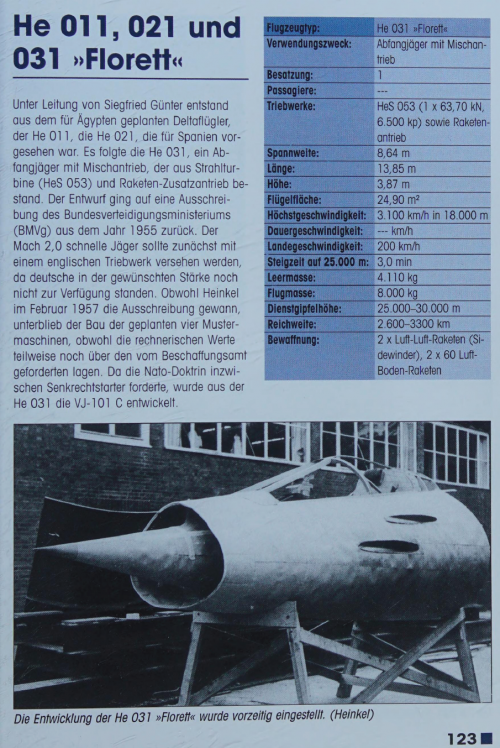
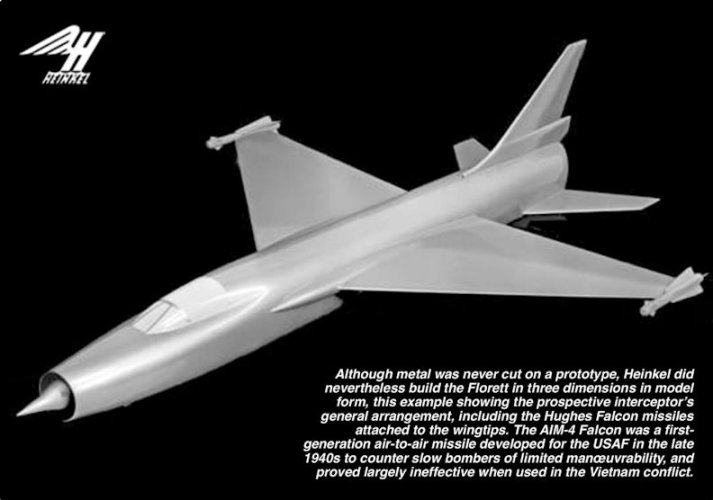
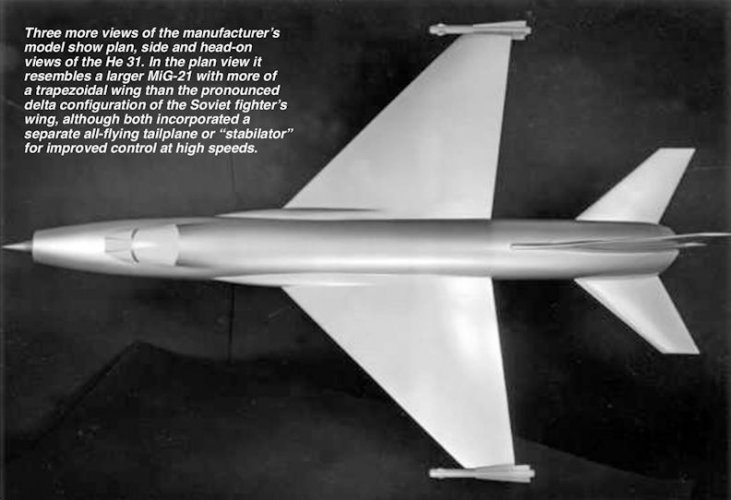
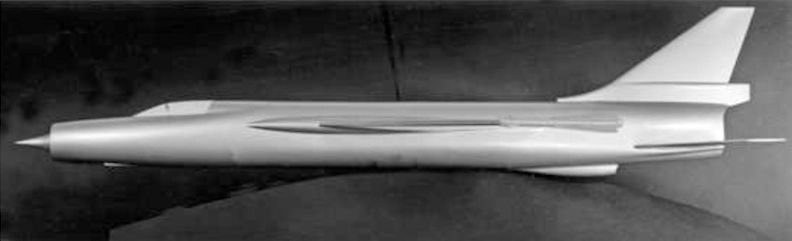
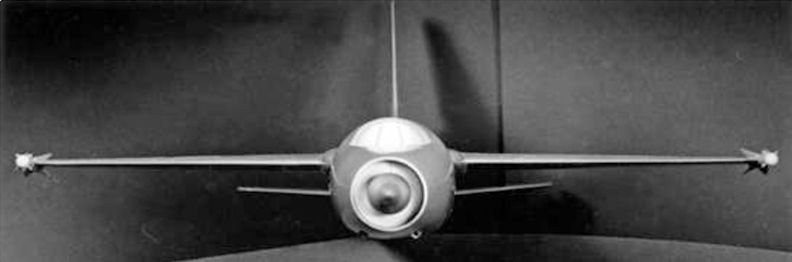
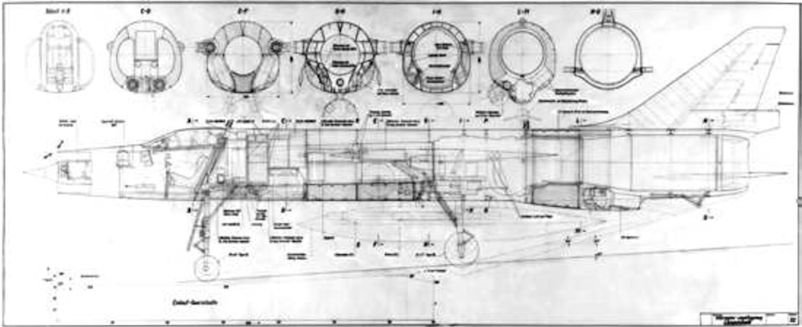
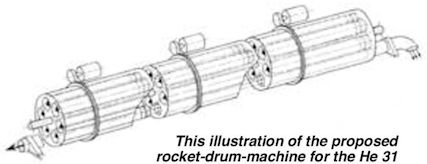
You may find it interesting that in German Wikipedia an article on the Heinkel He-031 Florett has recently appeared (http://de.wikipedia.org/wiki/Heinkel_He_031). It is obviously in German, but can be easily understood even without help of the Google Language Tools.

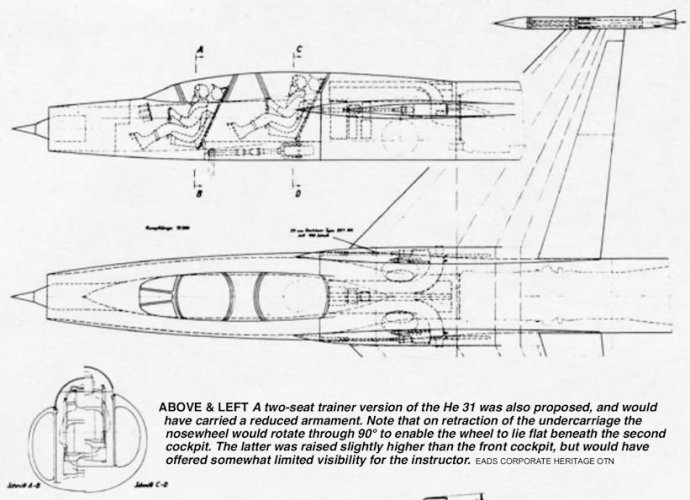
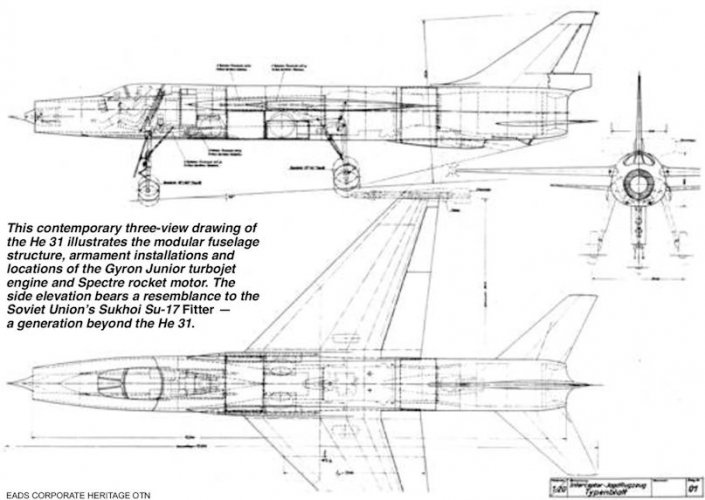
Anyway, the article says the Florett was to be armed, besides the wing-tip mounted missiles, with two batteries of unguided 50mm rockets. Personally I cannot see these batteries in drawings of the fighter that are being available here (albeit they are not of the highest quality). Could anybody clarify the issue?

Best regards,
Piotr
The Wikipedia article claims that the Florett was cancelled in the early 60s due to the Luftwaffe's desire to procure VTOL tactical aircraft, however, as far as I'm aware, those specifications didn't come until later in the decade. Considering the timeline of the He 031's development, I have to question whether this design was killed not by the Luftwaffe's desire to structure their air force around VTOL tech, but rather the F-104G. Are there any details pertaining to this? Was the Florett one of the designs considered alongside the F-104 for that procurement, or was the Florett intended as a domestic follow-on with a more specialized focus on the interceptor role to complement the F-104? (The latter scenario would explain it being passed over in favor of VTOL development). I'm aware such designs as the SR.177 were considered alongside the F-104, I'm curious if the Florett was among the contenders. Could it have been eliminated along with the 177 on the grounds of mixed propulsion being deemed unfavorable by the Luftwaffe? On the topic of propulsion, what of the HeS 053? The Wikipedia article claims that the British DeHavilland Gyron Jr. turbojet was being recommended for use as West Germany did not have a domestic engine available for the Florett. This would seem to contradict the existence of the Heinkel engine that was created on behalf of Egypt for the He 011 fighter. My question is, if the HeS 053 did indeed exist and was actually bench tested, why the hell did the Heinkel team not investigate the possibility of using it for the Florett? I'm aware it was a larger engine and the 011 a larger fighter. If it was too large for the Florett, why not scale it down like, ironically, the Gyron Jr.? Alternatively, why not scale up the airframe? Heinkel was apparently also studying an enlarged 'Florett B' to be powered by the Orenda Iroquois. The HeS 053 was similar to the Iroquois in terms of size, weight, and thrust output. Was the 053's existence being concealed so as to avoid scrutiny from the Western Allies? This would be plausible, I could understand how the prospect of Germany having an advanced domestic jet engine and an advanced, domestic supersonic fighter in the pipeline could have potentially been politically unpalatable for the West German govt in the mid/late 50s, but I want confirmation, I want to know for sure if:
A. The Florett was competing with the F-104 for the same contract
B. The HeS 053 actually existed and if so, why it wasn't considered for adaptation to the Florett
 

Attachments
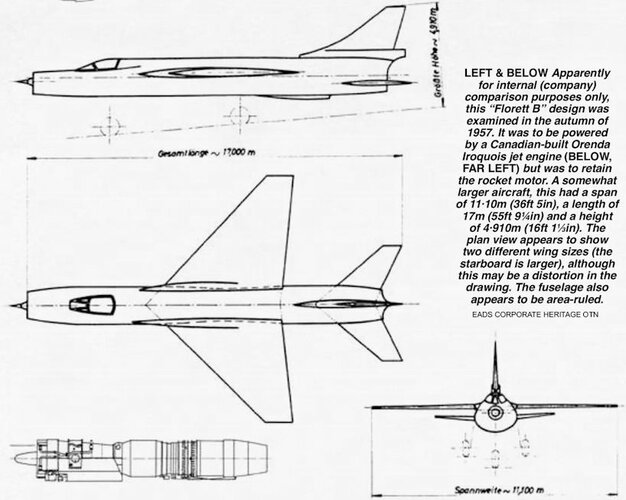
  • Florett B.jpg
    Florett B.jpg
    84.8 KB · Views: 271
Last edited:
The Wikipedia article claims that the Florett was cancelled in the early 60s due to the Luftwaffe's desire to procure VTOL tactical aircraft, however, as far as I'm aware, those specifications didn't come until later in the decade. Considering the timeline of the He 031's development, I have to question whether this design was killed not by the Luftwaffe's desire to structure their air force around VTOL tech, but rather the F-104G...

Florett B with the Orenda Iroquois is a cool find! Thanks for that.

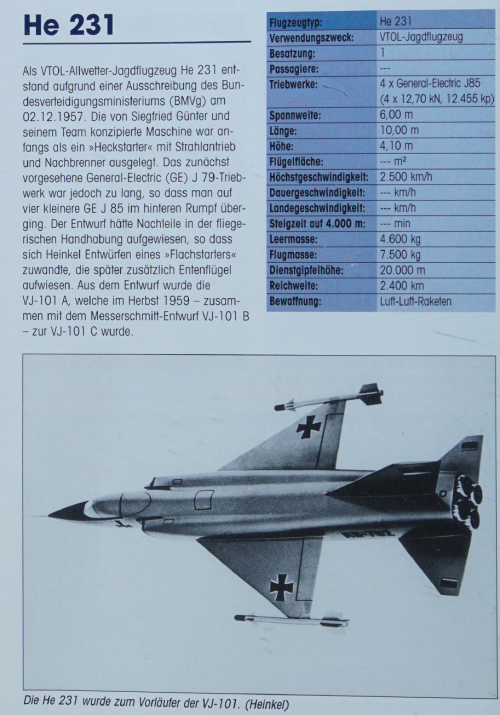
As for F-104G vs planned VTOL, dating works for both. The BMVg issued its tender for a VTOL all-weather fighter on 02 Dec 1957. By then, Heinkel had dropped the He 031 Florett interceptor project. Heinkel's design team led by Siegfried Günter were already exploring a J79-powered tail-sitter followed by what became the 1957-58 He 231 canard with nose- and tail-mounted J85s (prior to the shift to rotating engine concepts).
 
Florett B with the Orenda Iroquois is a cool find! Thanks for that.

As for F-104G vs planned VTOL, dating works for both. The BMVg issued its tender for a VTOL all-weather fighter on 02 Dec 1957. By then, Heinkel had dropped the He 031 Florett interceptor project. Heinkel's design team led by Siegfried Günter were already exploring a J79-powered tail-sitter followed by what became the 1957-58 He 231 canard with nose- and tail-mounted J85s (prior to the shift to rotating engine concepts).
I forgot that the West German Luftwaffe was rearming at a breakneck pace, also admittedly wasn't certain of the timeline on their VTOL requirements, I didn't realize they were put forward as early as 1957. I guess the combination of the F-104G procurement along with the coinciding requirement for a future aircraft to have VTOL capabilities left no reason for Heinkel to continue work on the Florett, abandoning it in favor of the 231 and further VTOL concepts. I do wonder about the timeline on the Florett B concept and again, why the in-house HeS 053 was never considered for this airframe.
 
Hi , Jemiba
After the War during the 50' Siegfried Günter of the Ernst Heinkel AG , Stuttgart-Zuffenhausen, designed some delta jet fighters :
- He o11 (1954) single jet for Egypt
- He 011 twin jets
- He S 7
- He 021 (or 012 ? ) (1955) for Spain ( Casa CH 101 in Spain )
- He 031 Florett (1957)
For all of them my knowledge is very scarce ,whith some ???? ; I have pics of them apart the He 021
Who have more info ?
Thanks
Richard

By the way,

it could be meaning that,they were Heinkel P.1111,P.1112,P.1107,P.1121 & P.1131,we know
he reached to P.1130 after the WWII ?.
 
In the attached photo there is a mock up of a fighter that was being developed by Hispano Aviacion. Was it the He-012?

By the way, the Heinkel He-011, also known as He C-101 (I think this was a manufacturer's designation) was to be designated the C.7 by the Spanish Air Force. The project of the HA-300 by the Messerschmitt's team was to be designated the C.6. Look at http://www.designation-systems.net/non-us/spain.html

Best regards,
Piot

I am about to begin a new interpretation of the Hispano H-101, now with more data, just as happened with the Dassault M.D. Delta Mystere
 

Attachments

  • 65-2.jpg
    65-2.jpg
    58.9 KB · Views: 79
  • 67-1.jpg
    67-1.jpg
    57.8 KB · Views: 70
  • 67-2.jpg
    67-2.jpg
    24.4 KB · Views: 69
  • 67-3.jpg
    67-3.jpg
    26.7 KB · Views: 71
  • 67-4.jpg
    67-4.jpg
    50.3 KB · Views: 72
  • 67-5.jpg
    67-5.jpg
    21.2 KB · Views: 66
  • 69-1.jpg
    69-1.jpg
    85 KB · Views: 70
  • 69-3.jpg
    69-3.jpg
    37.9 KB · Views: 73
  • 63-1.jpg
    63-1.jpg
    98.3 KB · Views: 79
  • 65-1.jpg
    65-1.jpg
    75 KB · Views: 84
Last edited:
Heinkel He 031 Florett(Wikipedia)
type Interceptor
Manufacturer Ernst Heinkel Aircraft Works
First flight project only

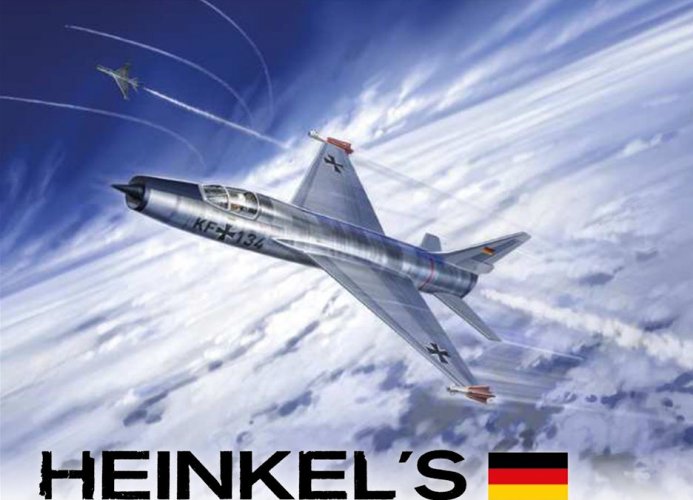
The Heinkel He 031 Florett was an interceptor design developed by the German manufacturer Ernst Heinkel Flugzeugwerke in the 1950s. A key feature of the design was its hybrid propulsion system (turbine and rocket engine), enabling it to quickly reach a sufficient altitude to intercept enemy bombers.

Story
The He 031 can be considered a precursor to the single-engine, delta-wing He 011 , which was developed by Heinkel between 1954 and 1956 for the Egyptian government. The development team was led by Siegfried Günter , who had already been responsible for many Heinkel designs during the war years.

The Heinkel HeS 053 engine, designed by Fritz Gosslau and developed to test stand readiness, was intended to power the aircraft. It delivered a thrust of 64.4 kN (6500 kp), featured an eleven-stage axial compressor, a two-stage axial turbine, and weighed 1565 kg.

A group of German engineers built a 1:1 scale mock- up of this so-called "Egypt fighter" in Helwan ; however, after the Egyptian government withdrew its order, further development was halted. A few months later, Egypt concluded a contract with the Soviet Union for the delivery of MiG-15 fighter jets.

However, as early as 1955, Heinkel developed a second delta-wing fighter, commissioned by Spain. Initially designated He 021 , later C-He 101 , this aircraft was a typical lightweight fighter with a takeoff weight of 4,000 kg. The design was conceived as a mid-wing monoplane with side air intakes for the intended Bristol Orpheus engine. The He 021, however, never progressed beyond the design stage.

Following the lifting of the occupation statutes in May 1955 and the restoration of full sovereignty to the Federal Republic of Germany, the Federal Ministry of Defense issued a competitive tender for the development of a German interceptor aircraft. The requirements were:

Flight services:
Top speed: Mach 2.0
Landing speed: 200 km/h
Ascent time: 3 minutes to 25,000 m altitude
Service ceiling: 25,000 m
Engine:
The De Havilland Gyron Jr. was recommended because a German engine was not yet available.
Additionally, the installation of a De Havilland Spectre Jr. was recommended to ensure that the required speeds could be achieved safely.

Navigation and FT equipment
Dual UHF system
Radar with ranges of 30 to 50 km
TACAN
IFF facility
Targeting device for jamming transmitters and onboard radar systems, sighting device with automatic firing trigger

Armament:
Two air-to-air missiles with infrared seeker or radar guidance
Batteries of unguided 2-inch air-to-air rockets

The required hybrid propulsion system was also used around the same time in the British Saunders-Roe SR.53 experimental aircraft and was intended to power the supersonic fighter design SR.177 . Heinkel participated in the competition and won with its He 031 design, submitted in February 1957, which partially exceeded the requirements in terms of calculations.

The initial plan was to design, manufacture, and test four prototype aircraft. Series production would then have been fully operational by 1962, and the Air Force could have taken delivery of the first aircraft in 1963.]

However, a prototype aircraft was never built, as NATO air force commands had meanwhile turned their attention to the vertical takeoff and landing (VTOL) aircraft as a promising new fighter category. On December 2, 1957, the German Federal Ministry of Defense issued a request for proposals for an all-weather fighter with VTOL capabilities. This led to the development of the Dassault Balzac V in France , the Hawker Kestrel (later the Harrier ) in England, and the EWR VJ 101 C in Germany .

construction
The He 031 was designed as a mid-wing monoplane with delta-shaped trapezoidal wings. The fuselage was divided into three sections. The forward section housed an adjustable multi-shock diffuser , which also contained the radar. Two armored launch tubes for 50 mm Oerlikon rockets were located below the nose of the fuselage.

The Gyron Jr. PS 50 jet engine was installed in front of the end bulkhead of the fuselage center section. The complete afterburner system and the Spectre Jr. rocket engine, on the other hand, were located in the rear fuselage.

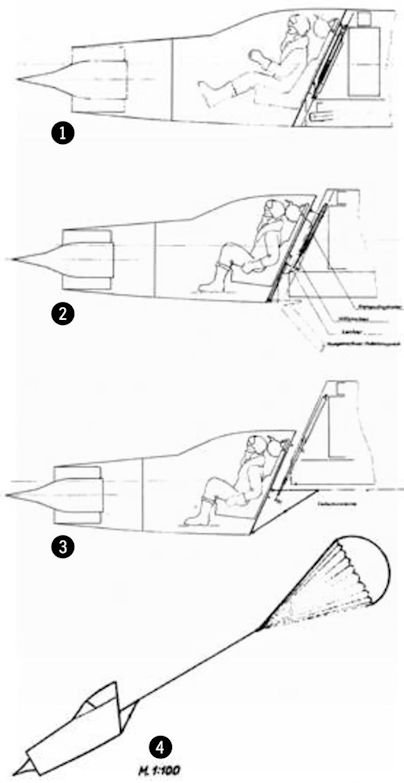
The delta-shaped trapezoidal wings had a leading edge sweep of 45° and a profile thickness of 5%. They were of three-spar construction, and the wing tanks had a volume of 1100 liters. To increase lift, 12% of the compressor air was diverted from the engine, piped to the wingtips, and expelled at high pressure at the hinges of the flaps and ailerons. A unique technical feature was the jettisonable forward fuselage section, similar in design to the later General Dynamics F-111 escape capsule .

Technical data
Key figure Data
crew 1
length 13.85 m
span 8.64 m
Height 3.87 m (in rolling position)
wing surface 24.90 m²
Empty weight 4110 kg
max. starting mass 8000 kg
Top speed Mach 2.6 with afterburner
At an altitude of 18,000
Service peak 30,000 m at G=6000 kg
reach 2600 km, 3300 km with external tank
Engines 1 × De Havilland Gyron Jr. PS 50
with 44.5 kN (4540 kp) thrust
1 × De Havilland Spectre Jr.
with 19.6 kN (2000 kp) thrust
Armament 60 × 50 mm air-to-air missiles (Oerlikon)
2 × air-to-air missiles (Falcon or Sidewinder)
 
Heinkel He 031 Florett(Wikipedia)
type Interceptor
Manufacturer Ernst Heinkel Aircraft Works
First flight project only

The Heinkel He 031 Florett was an interceptor design developed by the German manufacturer Ernst Heinkel Flugzeugwerke in the 1950s. A key feature of the design was its hybrid propulsion system (turbine and rocket engine), enabling it to quickly reach a sufficient altitude to intercept enemy bombers.

Story
The He 031 can be considered a precursor to the single-engine, delta-wing He 011 , which was developed by Heinkel between 1954 and 1956 for the Egyptian government. The development team was led by Siegfried Günter , who had already been responsible for many Heinkel designs during the war years.

The Heinkel HeS 053 engine, designed by Fritz Gosslau and developed to test stand readiness, was intended to power the aircraft. It delivered a thrust of 64.4 kN (6500 kp), featured an eleven-stage axial compressor, a two-stage axial turbine, and weighed 1565 kg.

A group of German engineers built a 1:1 scale mock- up of this so-called "Egypt fighter" in Helwan ; however, after the Egyptian government withdrew its order, further development was halted. A few months later, Egypt concluded a contract with the Soviet Union for the delivery of MiG-15 fighter jets.

However, as early as 1955, Heinkel developed a second delta-wing fighter, commissioned by Spain. Initially designated He 021 , later C-He 101 , this aircraft was a typical lightweight fighter with a takeoff weight of 4,000 kg. The design was conceived as a mid-wing monoplane with side air intakes for the intended Bristol Orpheus engine. The He 021, however, never progressed beyond the design stage.

Following the lifting of the occupation statutes in May 1955 and the restoration of full sovereignty to the Federal Republic of Germany, the Federal Ministry of Defense issued a competitive tender for the development of a German interceptor aircraft. The requirements were:

Flight services:
Top speed: Mach 2.0
Landing speed: 200 km/h
Ascent time: 3 minutes to 25,000 m altitude
Service ceiling: 25,000 m
Engine:
The De Havilland Gyron Jr. was recommended because a German engine was not yet available.
Additionally, the installation of a De Havilland Spectre Jr. was recommended to ensure that the required speeds could be achieved safely.

Navigation and FT equipment
Dual UHF system
Radar with ranges of 30 to 50 km
TACAN
IFF facility
Targeting device for jamming transmitters and onboard radar systems, sighting device with automatic firing trigger

Armament:
Two air-to-air missiles with infrared seeker or radar guidance
Batteries of unguided 2-inch air-to-air rockets

The required hybrid propulsion system was also used around the same time in the British Saunders-Roe SR.53 experimental aircraft and was intended to power the supersonic fighter design SR.177 . Heinkel participated in the competition and won with its He 031 design, submitted in February 1957, which partially exceeded the requirements in terms of calculations.

The initial plan was to design, manufacture, and test four prototype aircraft. Series production would then have been fully operational by 1962, and the Air Force could have taken delivery of the first aircraft in 1963.]

However, a prototype aircraft was never built, as NATO air force commands had meanwhile turned their attention to the vertical takeoff and landing (VTOL) aircraft as a promising new fighter category. On December 2, 1957, the German Federal Ministry of Defense issued a request for proposals for an all-weather fighter with VTOL capabilities. This led to the development of the Dassault Balzac V in France , the Hawker Kestrel (later the Harrier ) in England, and the EWR VJ 101 C in Germany .

construction
The He 031 was designed as a mid-wing monoplane with delta-shaped trapezoidal wings. The fuselage was divided into three sections. The forward section housed an adjustable multi-shock diffuser , which also contained the radar. Two armored launch tubes for 50 mm Oerlikon rockets were located below the nose of the fuselage.

The Gyron Jr. PS 50 jet engine was installed in front of the end bulkhead of the fuselage center section. The complete afterburner system and the Spectre Jr. rocket engine, on the other hand, were located in the rear fuselage.

The delta-shaped trapezoidal wings had a leading edge sweep of 45° and a profile thickness of 5%. They were of three-spar construction, and the wing tanks had a volume of 1100 liters. To increase lift, 12% of the compressor air was diverted from the engine, piped to the wingtips, and expelled at high pressure at the hinges of the flaps and ailerons. A unique technical feature was the jettisonable forward fuselage section, similar in design to the later General Dynamics F-111 escape capsule .

Technical data
Key figure Data
crew 1
length 13.85 m
span 8.64 m
Height 3.87 m (in rolling position)
wing surface 24.90 m²
Empty weight 4110 kg
max. starting mass 8000 kg
Top speed Mach 2.6 with afterburner
At an altitude of 18,000
Service peak 30,000 m at G=6000 kg
reach 2600 km, 3300 km with external tank
Engines 1 × De Havilland Gyron Jr. PS 50
with 44.5 kN (4540 kp) thrust
1 × De Havilland Spectre Jr.
with 19.6 kN (2000 kp) thrust
Armament 60 × 50 mm air-to-air missiles (Oerlikon)
2 × air-to-air missiles (Falcon or Sidewinder)
What happened to the HeS 053 after Egypt withdrew its tender in favor of MiG-15s? The Gyron Jr. was considered due to the lack of an available German engine, was the 053 not able to be rebuilt in West Germany for some reason?
 
Back
Top Bottom