- Joined
- 29 July 2009
- Messages
- 1,949
- Reaction score
- 3,298
Although the vast majority of the video is about ZEL, at 8:54 the catapult launch using the SATS system is shown.
View: https://www.youtube.com/watch?v=XCbegiIhLGg

Ground crew issued some large shoehorns?While packing for Mr. Butler, I assembled dozens of other custom wedge-shaped parachute containers to adapt a wide variety of second-owners to fit existing cockpits. Try to picture a "well-nourished Texan" trying to squeeze into a cockpit originally designed to accept a Yugoslav jockey.
Hah!
Hah!
The tail and nose look awesome. The rest looks like barf. A simple wing like the original and the original intakes would have been plausible. But this advancement in all aspects of the design was horrible. They could have had the F-16 of its day.Lockheed CL-1200 Lancer derivative of f-104 for
Lightweight Fighter program View attachment 660421

Yes, look higher up in the thread.Canards maybe?

Frack, even back in the day systems were 41% of airframe costs?!?Cost data for the austere F-104-17 proposed as Mutual Defence-funded fighter, from AvWeek 19 March 1962. A substantial saving:
"Northrop has said in the past that it can offer a day-fighter version of the N-156 for approximately $450,000 if assured of a production run for at least 1,000 aircraft.
Lockheed reportedly has placed a price tag of about $550,000 on the F-104-17. The F-104-17 is an F-104G with the all-weather fire control and navigation systems removed. These units, which cost $385,000 per aircraft, could be installed at a later date if the individual countries decided to build up their all-weather capabilities.

Yep.Frack, even back in the day systems were 41% of airframe costs?!?
F-104S-ASA
The F-104ASA (Aggiornamento Sistemi d'Arma, Weapon Systems Update), developed in 1986, introduced a FIAR R21G/M1 Setter radar,[9] with 'look-down' capability and compatibility with the Selenia Aspide missile. AIM-9Ls were then used as the main armament, replacing the previous "B" and "F" version of this missile, while the older AIM-7s were retained. One AIM-7 was usually carried under each wing. In total, 147 of the F-104S airframes were converted to ASA standard at an expense of around 600 billion lire, the last ASA model was delivered in the early 1990s.


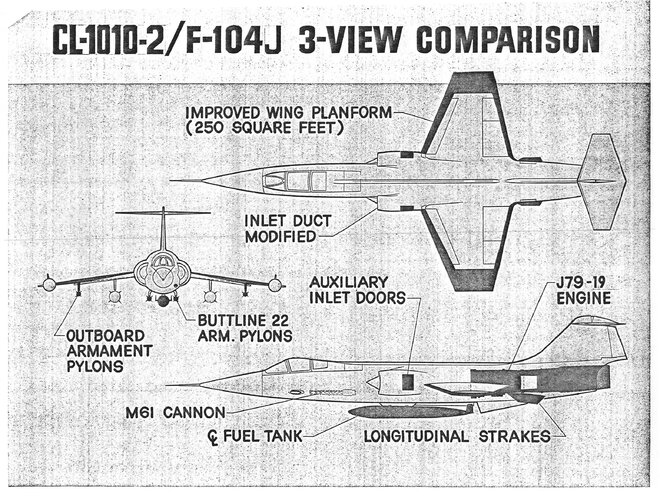
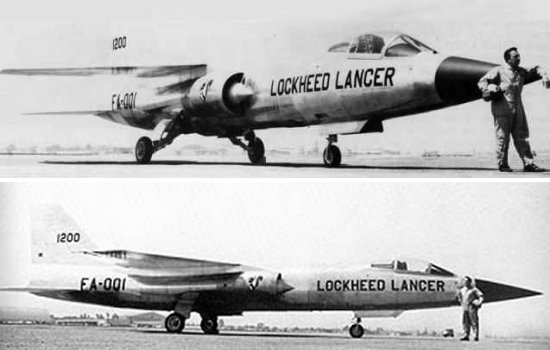
I'm surprised that no one has mentioned the CL-1200 Lancer, where Lockheed really wanted to take the F-104 design.

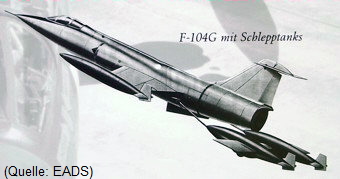
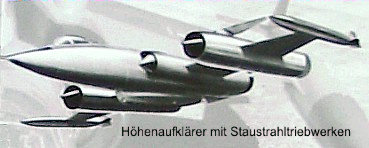
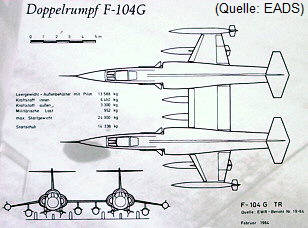
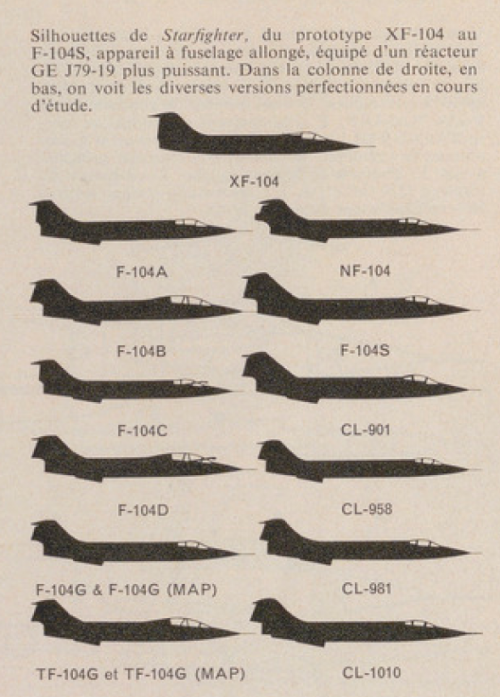
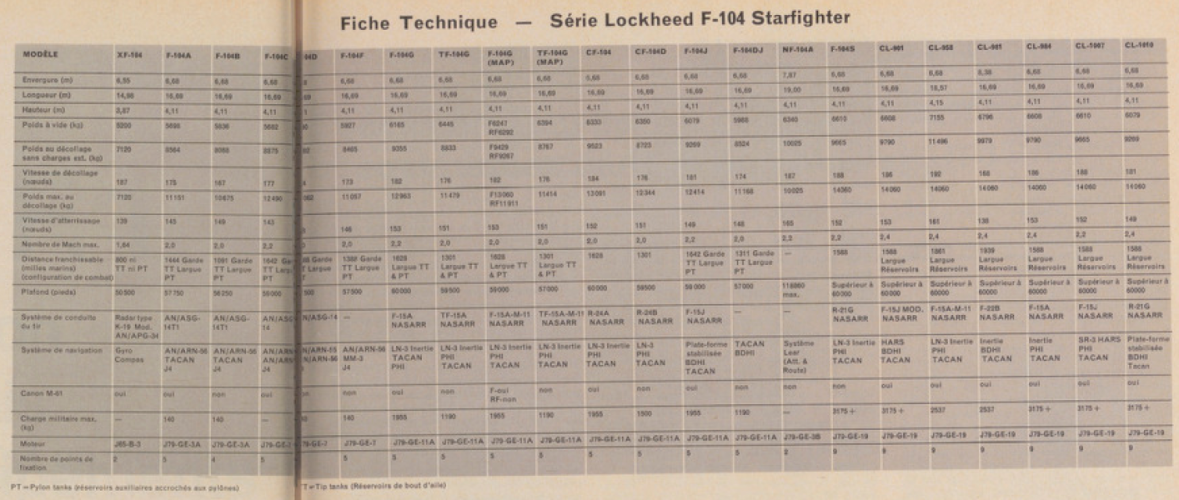
Then there are these unusual proposals I came across at webpage


I'm surprised that no one has mentioned the CL-1200 Lancer, where Lockheed really wanted to take the F-104 design.
Then there are these unusual proposals I came across at webpage
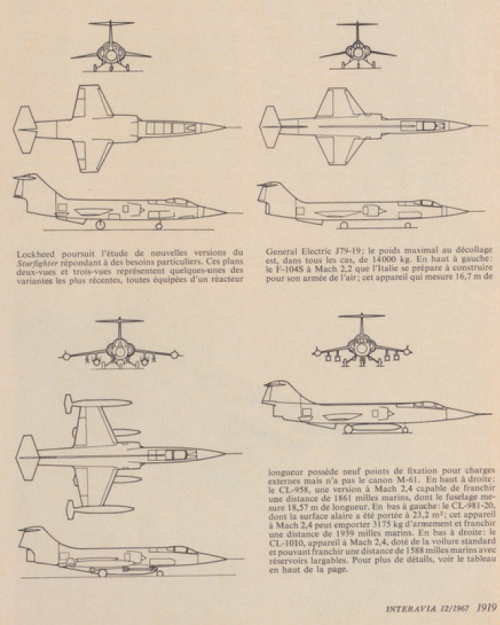
Image 8.png: The F-104S (upper left drawing) seems to have a more massive fuselage (from the front view) compared to the other versions. Was this really the case?From Interavia 1967/12

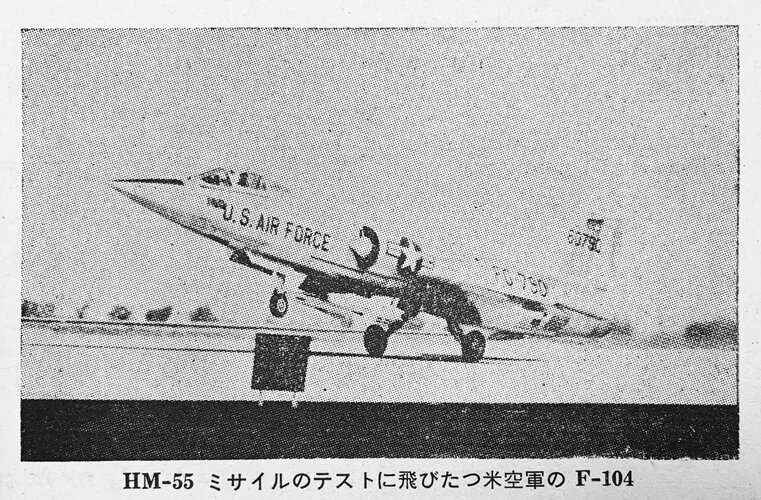
A F-104A with a HM-55 (AIM-26B) missile in the October 1966 issue of Air Review, a Japanese magazine.
View attachment 713629
Was there any radar retrofit proposal to go with this? Thanks.

Could you imagine what sort of sonic shockwaves a double F-104 would generate? I'd bet it'd tear itself apart.
Aoki Hideo, the author of that October 1966 article, argued that...
The F-104S did trade the Vulcan for the equipment to talk to Sparrows, so yes.Hum...... would the F-104 be able to accommodate some variant of TARAN-18 in place of ASG-14 (F-104A/C) and NASARR (F-104G/J), giving up the Vulcan cannon as required?
The US did have that whole Semi-Automatic Ground Environment system, though IIRC the F-104 wasn't set up for it.And then is there anything that GCI have to offer beyond voice-based vectoring to make the HM-55 missile work well?
The 104 could not use SAGE. The F-89J, F-94, F 102 and F 106 were used with it while the F-101B and F-4 had a data link for manual GCI. The BOMARC SAM also was guided to a terminal intercept point by SAGE.The US did have that whole Semi-Automatic Ground Environment system, though IIRC the F-104 wasn't set up for it.
The 104 could not use SAGE. The F-89J, F-94, F 102 and F 106 were used with it while the F-101B and F-4 had a data link for manual GCI. The BOMARC SAM also was guided to a terminal intercept point by SAGE.
SAGE was the first wide-area computer network ever operated.
"Could not", or "was not equipped to"? Because you can change equipment fits!The 104 could not use SAGE.
I know we are 20 years later, but where could those swing-wing and other "F-104" projects be seen? In a paper APR issue (I own all of them)?Wait till you see the swing-wing and three-engine/five-seater versions. Or the *really* big long range interceptor....
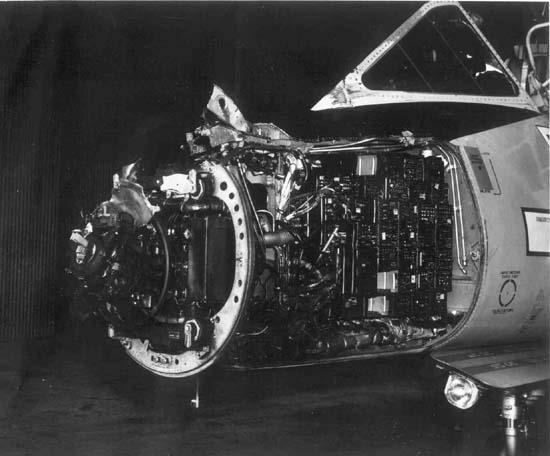
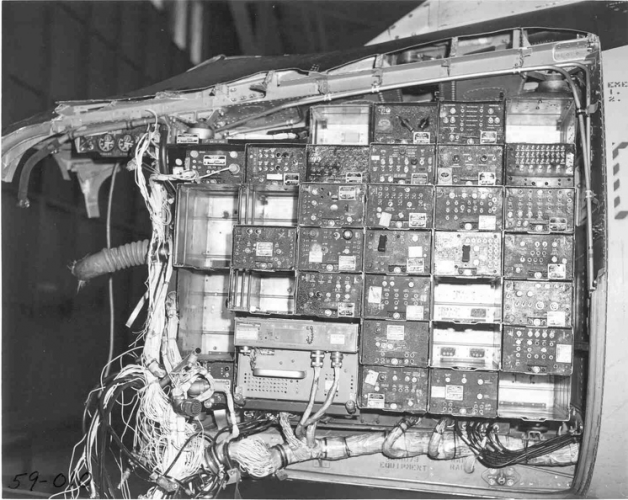
Could not. There was no room for even the data link that planes like the F-101 and F-4 were fitted with. ADC saw the F-104 as an interim aircraft 'better than nothing' sort of thing. Getting rid of the M61 on an early F-104 was to leave it virtually disarmed."Could not", or "was not equipped to"? Because you can change equipment fits!
How much space did the SAGE gear take? You say it fit into F-89s, so it should be able to be stuffed into the space of the M61 cannon.
At the very least the F-101B/F-4D/E datalink should be able to fit into that space.

"Could not", or "was not equipped to"? Because you can change equipment fits!
How much space did the SAGE gear take? You say it fit into F-89s, so it should be able to be stuffed into the space of the M61 cannon.
At the very least the F-101B/F-4D/E datalink should be able to fit into that space.