- Joined
- 12 October 2009
- Messages
- 557
- Reaction score
- 222
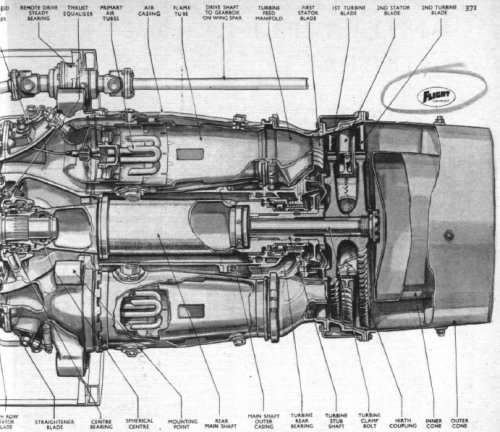
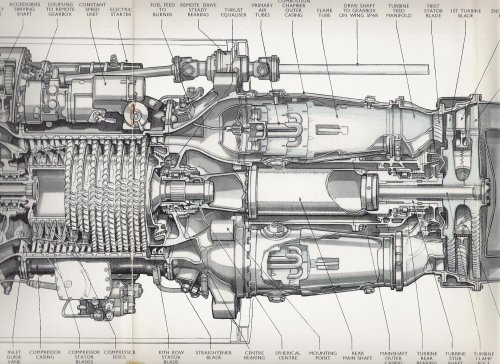
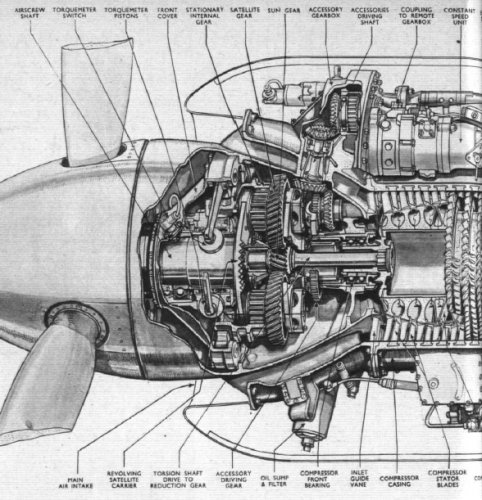
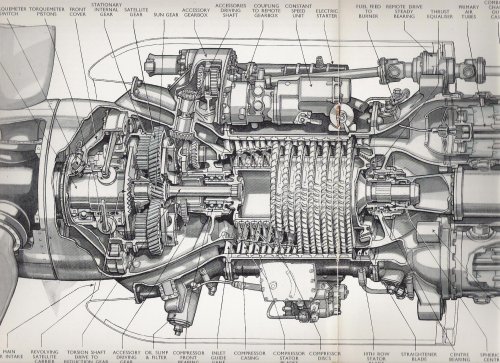
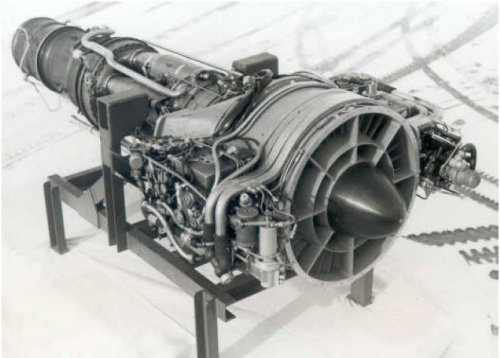
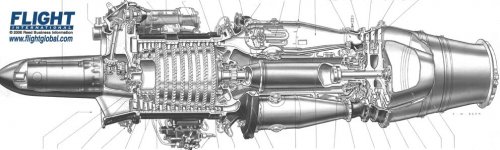
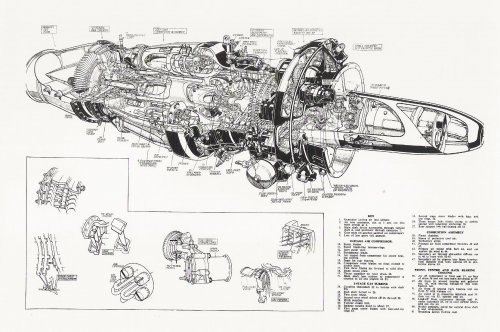
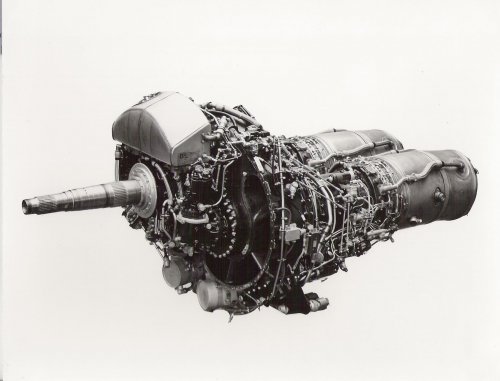
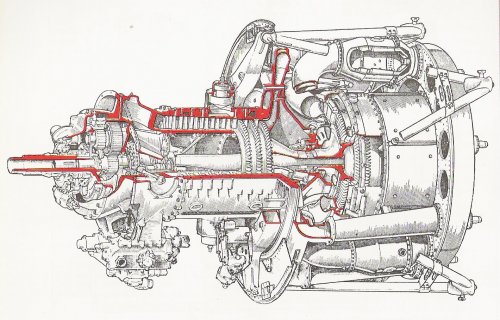
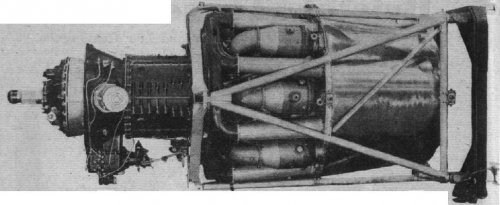
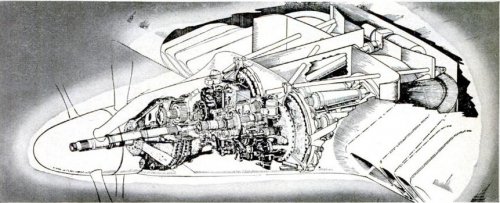
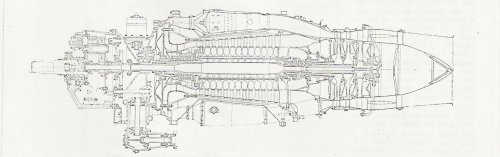
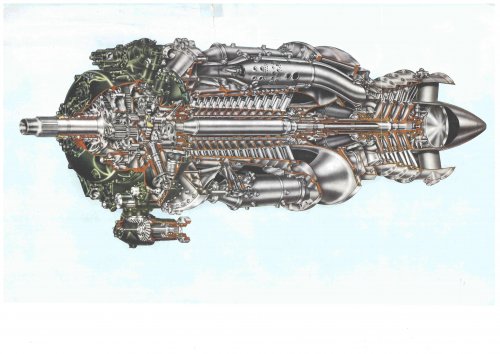
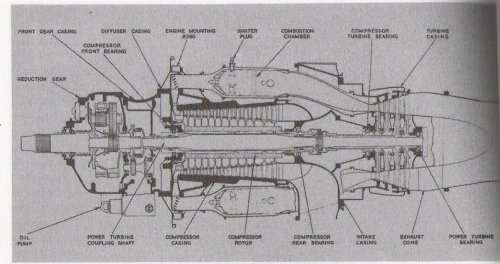
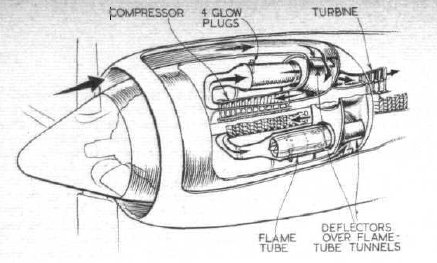
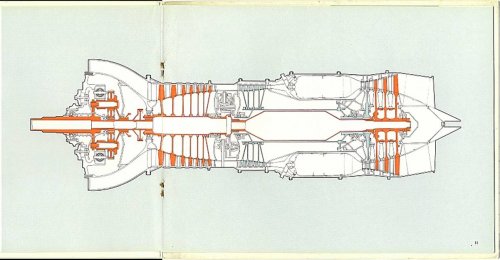
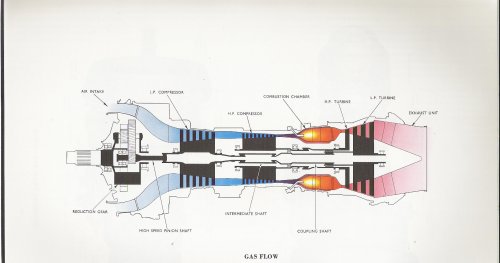
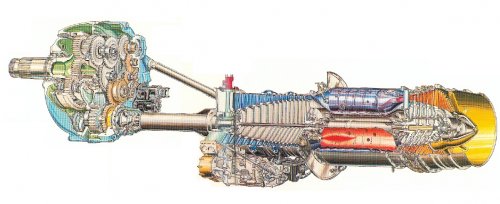
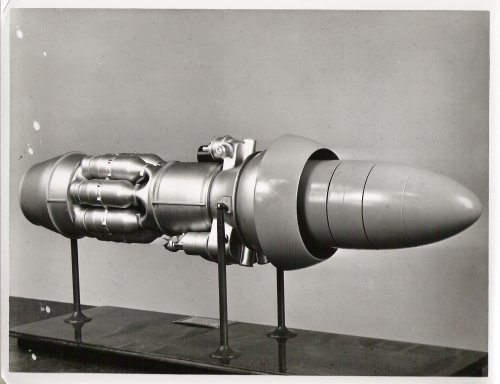
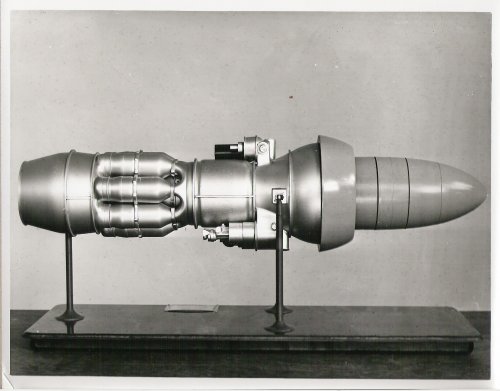
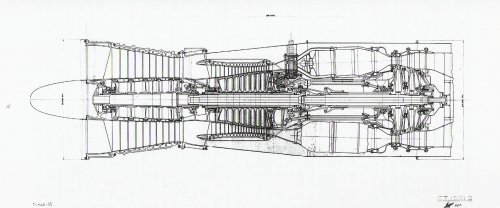
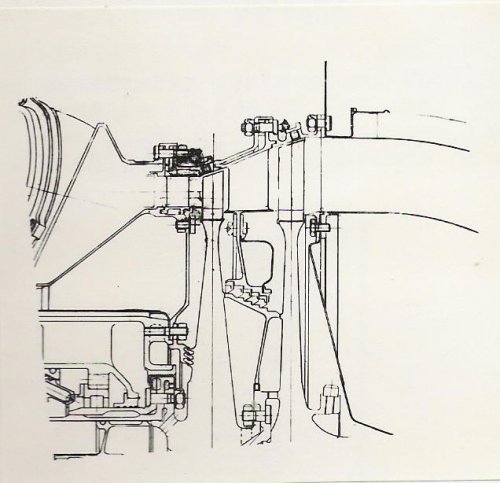
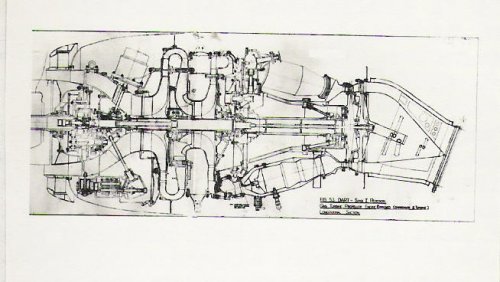
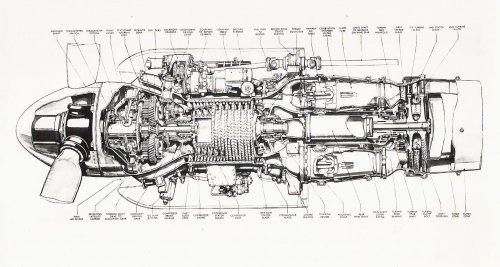
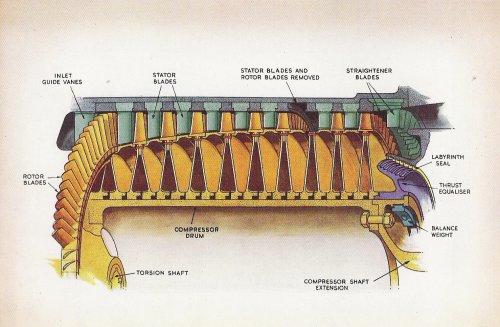
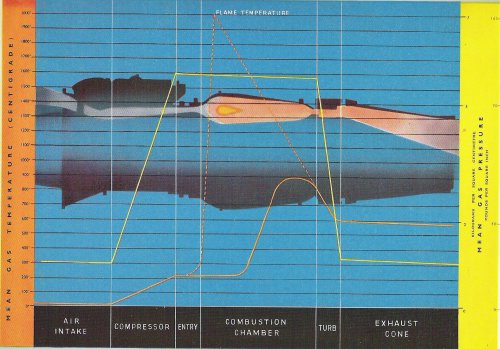
In 1945 it was becoming apparent to the A-S team that there was an opportunity to design a 1,000hp turboprop for one of the Brabazon Committee aircraft requirements so the engine that became the Mamba was proposed. A government contract followed and in towards the autumn of 1945 detail design began. As the understanding of combustion had increased after work on the Python and sharing the results of the wider work undertaken by Lucas, Rolls-Royce, etc. The first engine ran in April 1946 and delivered 800 hp. It was configured as a single-shaft engine with a gearbox drive on the front of the shaft. There was a 10-stage axial compressor driven by a two-stage turbine and six straight through combustion chambers. The Mamba prototype had spray burners supplied by a high-pressure fuel system and the single spool ran on two bearings. Issues with the combustion chambers and with differential thermal expansion of blades and casings that made close clearances impossible to maintain, possibly exaggerated by vibration of the main shaft meant a redesign was called for.
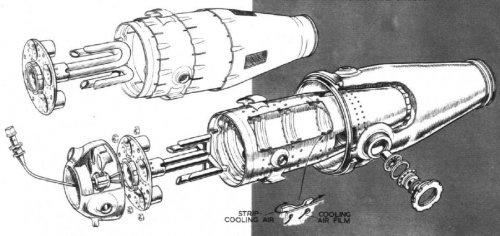
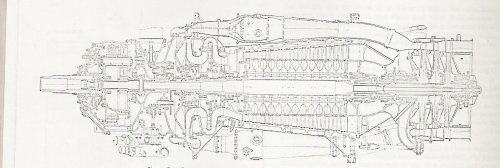
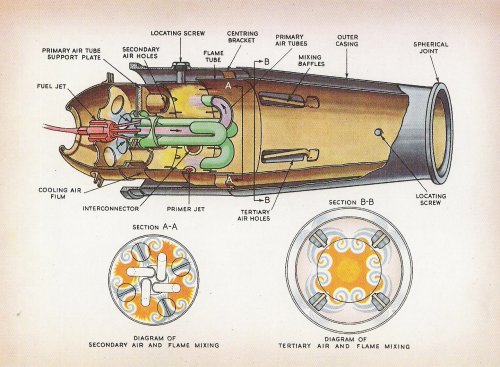
The layout was redesigned to incorporate a 3rd bearing and after the success of the Python vaporising combustion system this was incorporated too.
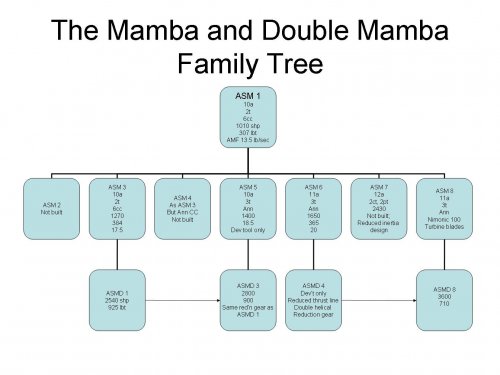
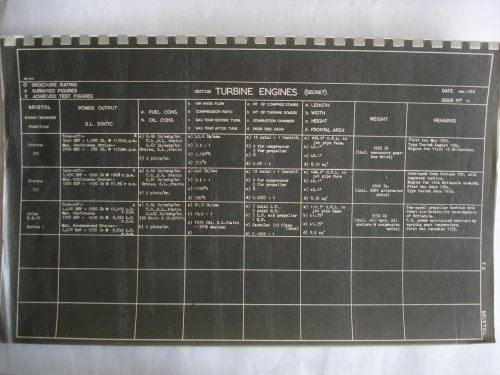
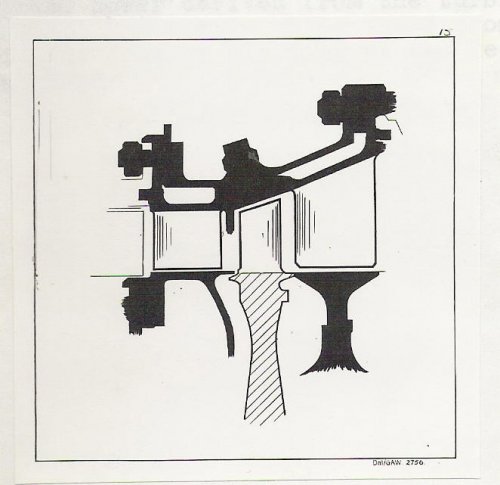
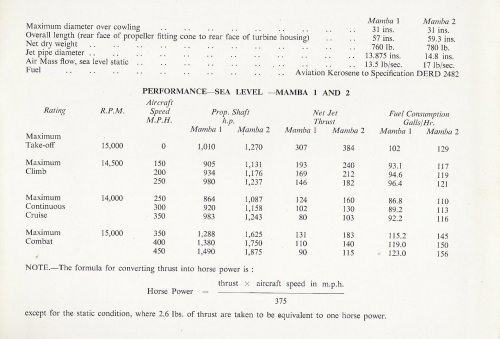
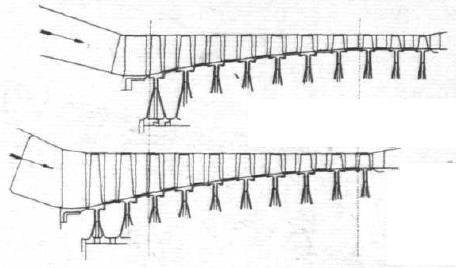
The Mamba 1 emerged from this redesign and successfully delivered the design rating of 1,010 shp for a weight of 760 lb. As the engine found possible airframes- Apollo, Athena, Balliol- it was realised that additional horsepower and development potential was needed and so the team decided to increase the AMF from 13.5 lb/sec to 17 lb/sec enabling an increase in power to 1,270 shp, which took until 1950 to achieve as a rated power. This power increase was delivered by removing two stages from the rear of the Mamba 1's compressor and adding two more at the front resulting in the Mamba 2, which as the ASM.3 went into limited small scale production.
....tbc
The layout was redesigned to incorporate a 3rd bearing and after the success of the Python vaporising combustion system this was incorporated too.
The Mamba 1 emerged from this redesign and successfully delivered the design rating of 1,010 shp for a weight of 760 lb. As the engine found possible airframes- Apollo, Athena, Balliol- it was realised that additional horsepower and development potential was needed and so the team decided to increase the AMF from 13.5 lb/sec to 17 lb/sec enabling an increase in power to 1,270 shp, which took until 1950 to achieve as a rated power. This power increase was delivered by removing two stages from the rear of the Mamba 1's compressor and adding two more at the front resulting in the Mamba 2, which as the ASM.3 went into limited small scale production.
....tbc
Attachments
-
 AS-Mamba-cutaway.jpg300.2 KB · Views: 225
 -
 AS-Mamba-compressor cutaway.jpg406.2 KB · Views: 187
 -
 AS-Mamba-vaporising cc cutaway.jpg421 KB · Views: 165
 -
 AS-Mamba-pressure and temperature diagram.jpg523.9 KB · Views: 147
 -
 AS-Mamba-data table- 1 and 2.jpg189 KB · Views: 117
 -
 ASM-compressor diag 2 off back-2 on front.jpg17.2 KB · Views: 123