I am intrigued by a
review of the thesis
The Development and Production of Turbojet Aero-engines in Britain, Germany and the United States by Hermione Giffard. Imperial College London, 2011. ... which leads me to think about how Rolls-Royce and Metrovick did not have the (gas turbine aero engine) field to themselves.
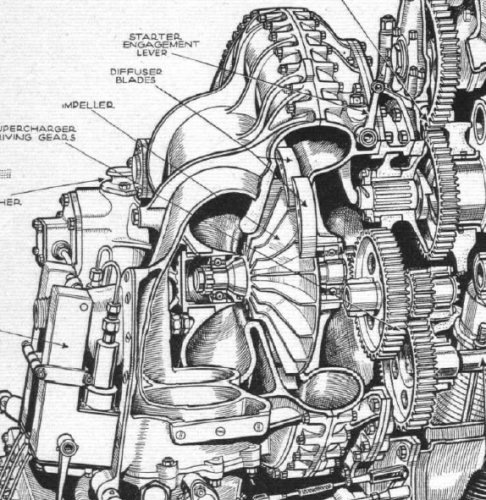
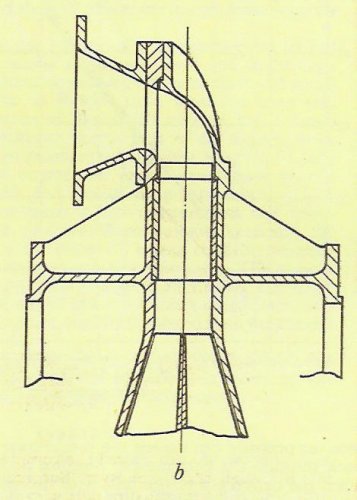
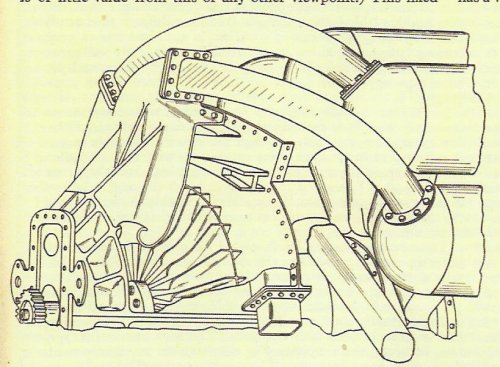
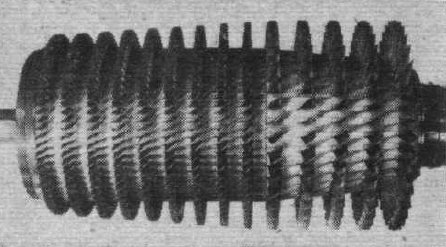
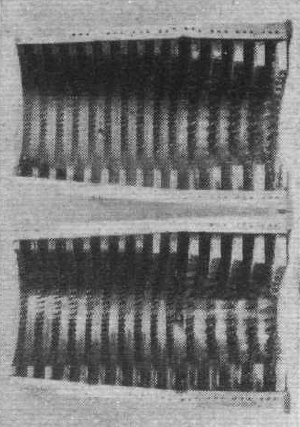
George Bulman who was DEngRD for aero engines up until his retirement in 1943 relates how Tizard, head of R&D at the MAP (until Lindeman got him removed in 1942... an old feud.. was there a war on?) became increasingly concerned with Whittle's erratic responses to concerns about the speed of development.. decided to involve Frank Halford and de Havilland in the jet engine programme. Frank Halford, aided by Moult and Brodie had produced ranges of piston engines for de Havilland and Napier, of varying degrees of success (often constrained by those two organisations) and was asked to think of the sort of jet engine they could design for dH. Given their expertise in superchargers, such as the elegant Gipsy Twelve engine (see
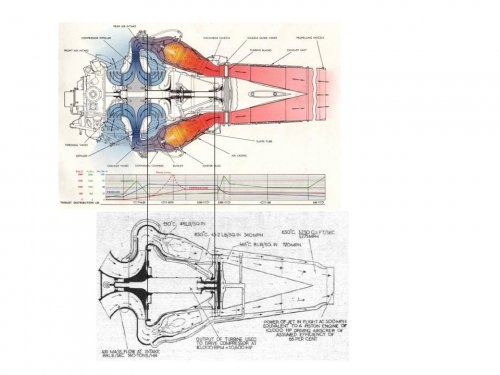
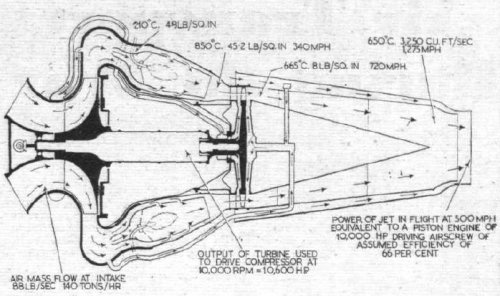
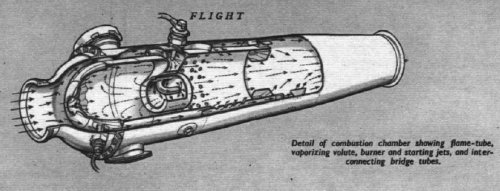
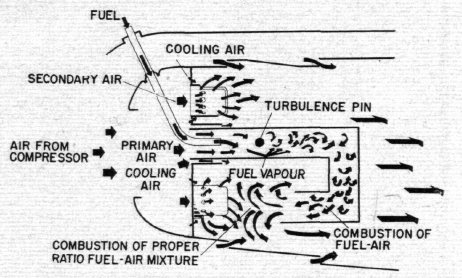
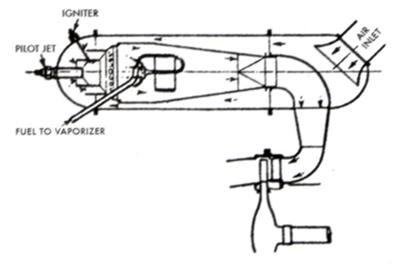
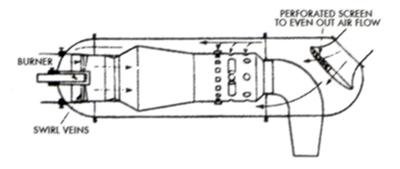
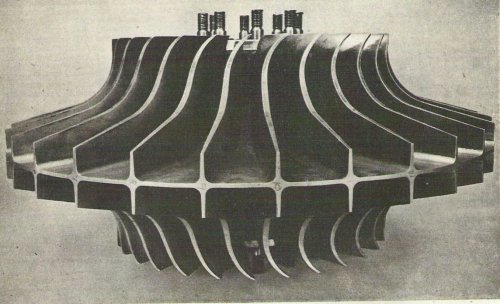
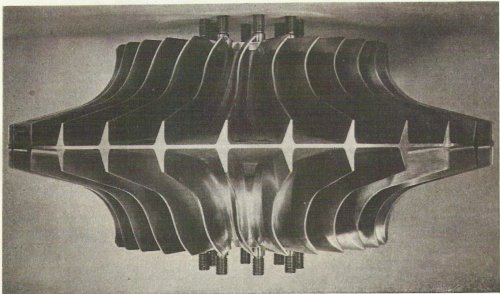
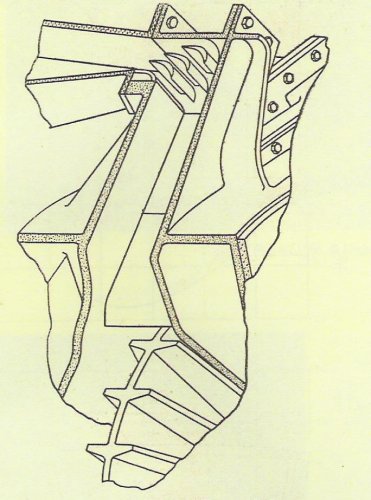
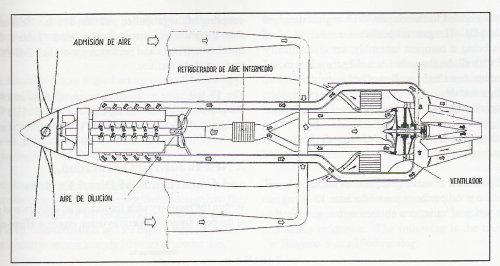
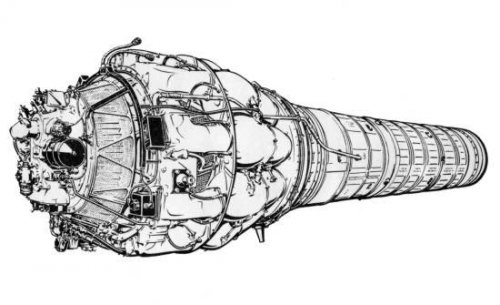
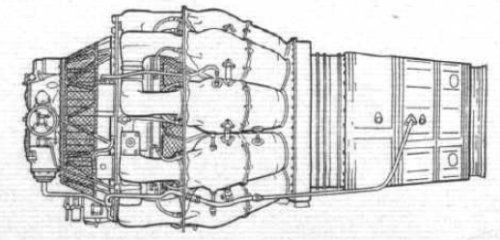
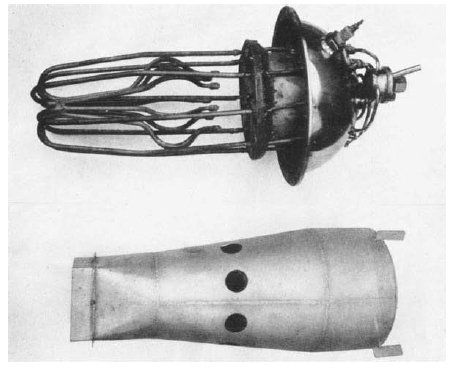
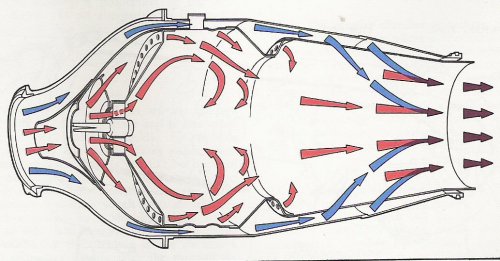
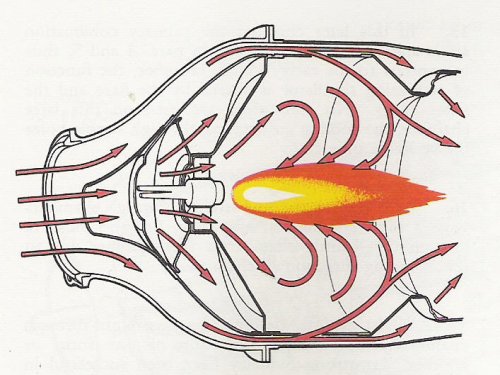
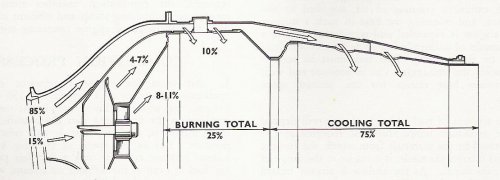
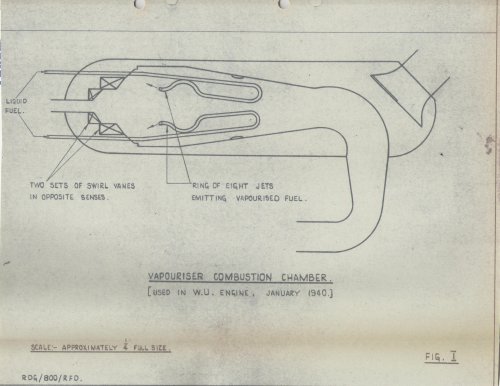
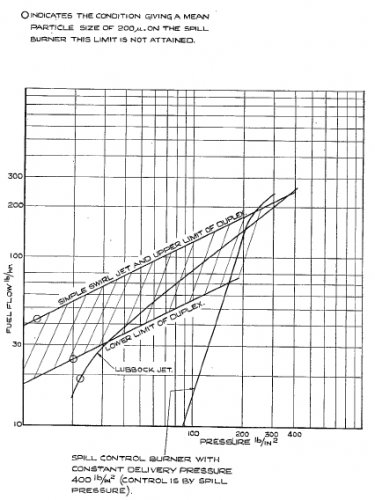
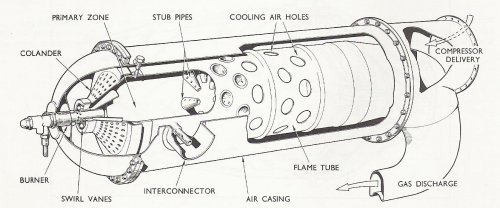
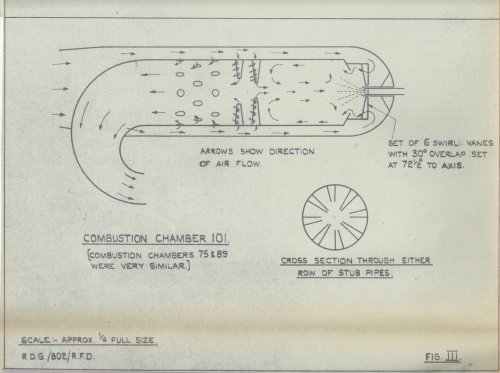
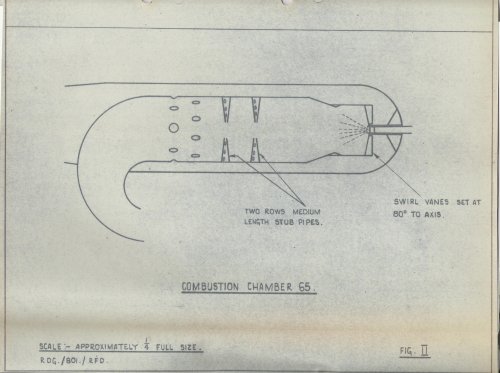
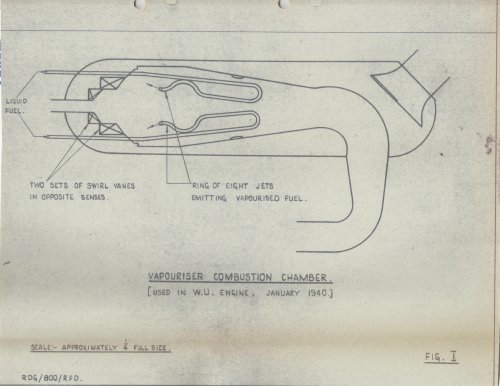
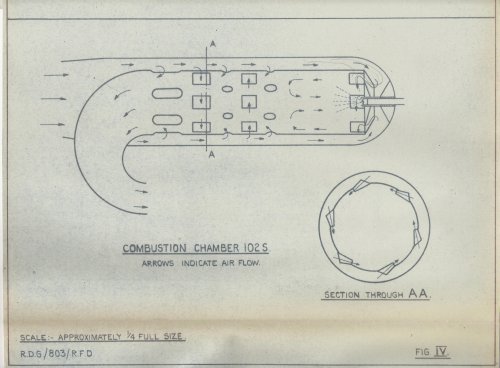
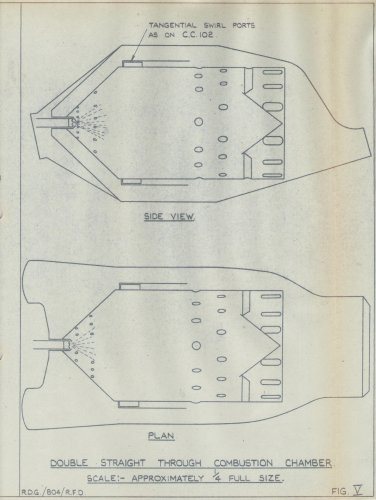
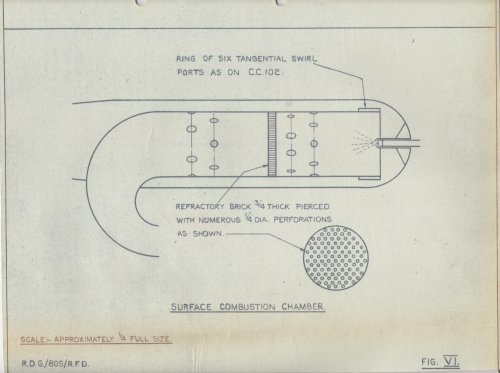
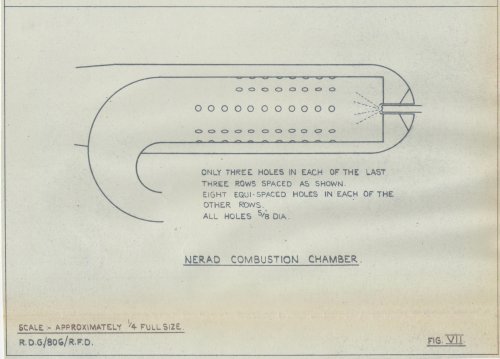
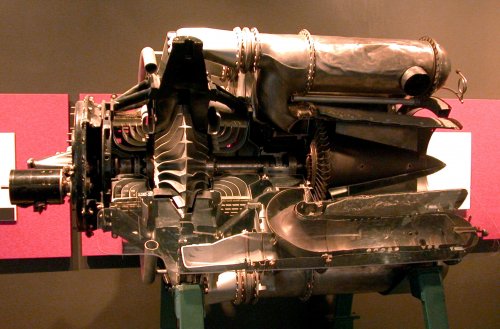
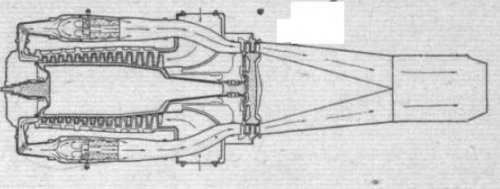
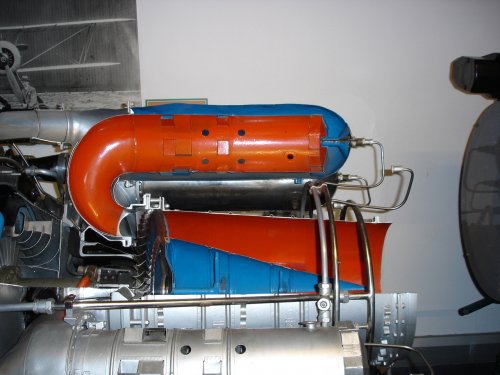
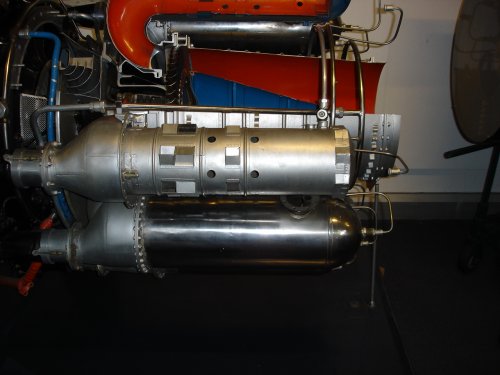
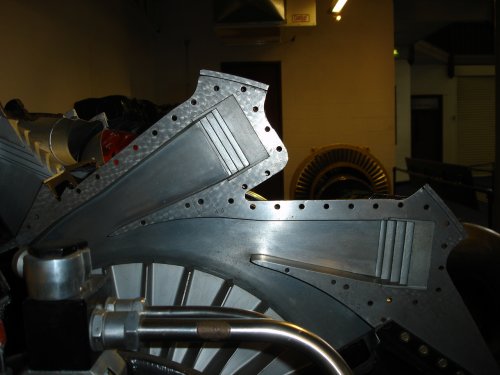
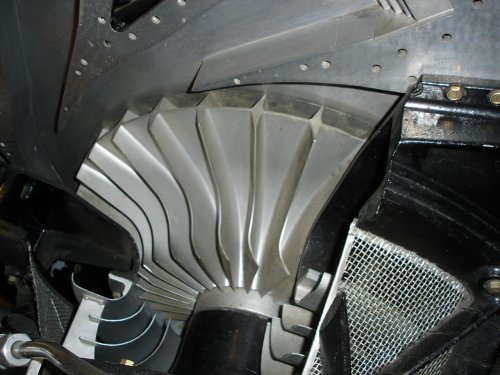
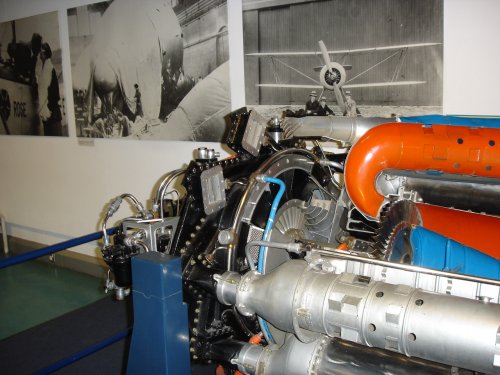
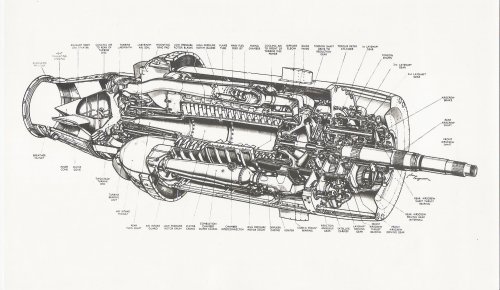
Flight article from which the supercharger drawing comes) and the Napier Sabre, it is not surprising this is where Halford started. With some, but limited access, to all the work then being sponsored the team went for an engine of 2,000 lbt and sized a supercharger impeller to suit. This was necessarily of larger diameter than Whittle's twin-sided design and alarmed the RAE who were aware of the failiures on Whittle's jets. However Halford's close relationship with Wallace Devereux at High Duty Alloys meant they were confident they could deliver a reliable impeller. Isaac Lubbock of Shell had been brought in to help Power Jets combustion challenges and this work was of great influence... Halford realised that two 180 degree bends in the Whittle reverse flow scheme increased the risk of uncertain combustion conditions as well as being a source of pressure loss so they opted for a straight through layout from day 1. They were not concerned about the shaft whirling issues as the single sided impeller design meant that no axial space was needed for the rear intake and so it was the diffuser elbow and combustion chamber length alone that determined the dimension from impeller to turbine, which could be linked by a simple shaft of appropriate (large) diameter. Also the straight through layout enabled the adoption of a larger diameter turbine (not constrained by the reverse-flow combustion chambers). Progress on turbine disc materials also helped in this respect... so all this thinking without constraints imposed on Whittle a few years before resulted in the H.1, later known as the Goblin engine. A basic section highlighting the features is included below.
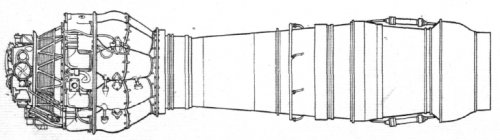
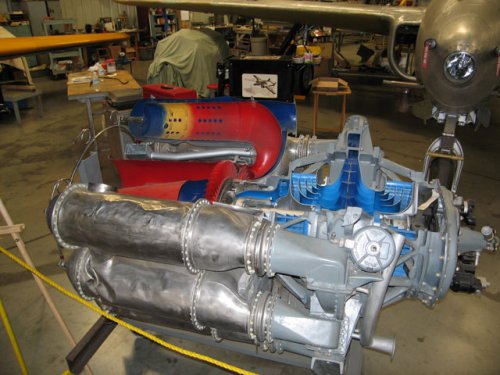
As the various claims made by engine designers are not always as clear cut in practice as they are in theory I thought I would make an unfair comparison by putting a section of the 49.5 inch diameter Nene alongside the 49.85 inch diameter Goblin... see below... it is a really unfair comparison as the thrusts and therefore mass flows are not the same but we can see the Nene is a bit longer in shaft dimension than the Goblin... but the Goblin shaft diameter is relatively large... i. e. much stiffer. But the complexity that goes with a three bearing system on the Nene is certainly more complex than that needed on the Goblin two bearing system.
The MAP and the Air Ministry noted the lack of paranoia as the aero firm just got on with the job... just a touch more challenging than a Gipsy Twelve but may be not as bad as a Napier Sabre?
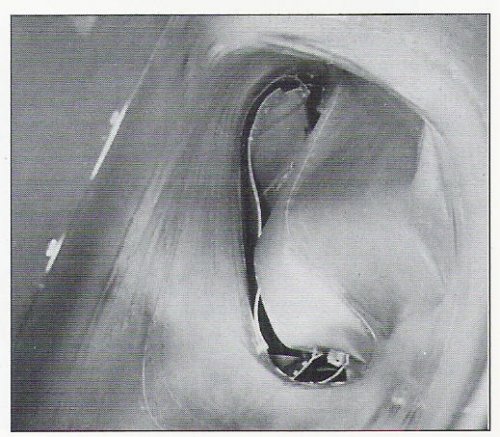
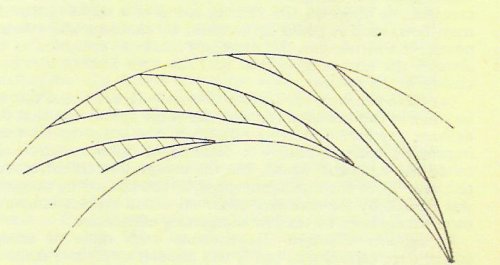
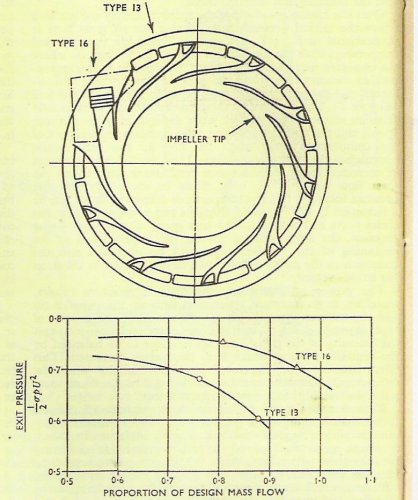
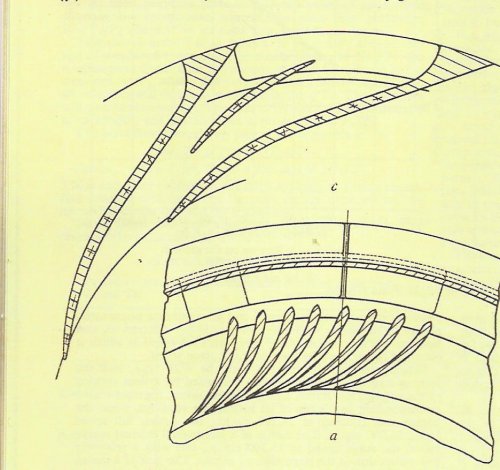
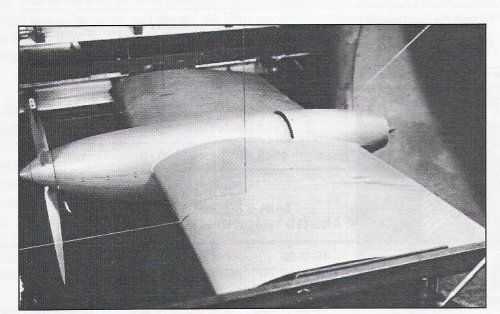
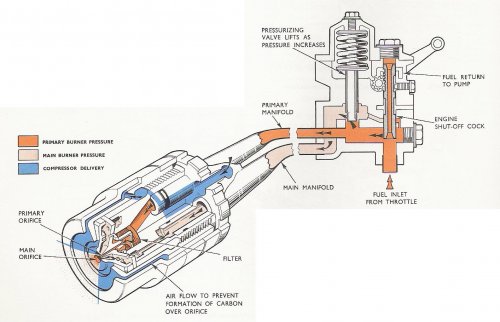
de Havilland had their challenges but this was to develop the rated power and sufficient longevity to make it a Serviceable engine for the military. The engine design started in April 1941 and as there was a closeness with the aircraft side of the business, the Spider Crab aeroplane design carried on in parallel... resulting in the engine featuring a bifurcated intake so that the ducting from the wing root air inlets was minimised. The first drawings were issued to the experimental shop on 8th August 1941 and a mere 248 days later the H1 made its first test run on 13th April 1942. Two days later the team were confident enough to carry out a half hour acceptance test at half design speed. On the 5th May the engine suddenly stopped- on investigation it was found that the intake had been sucked flat starving the engine of air and stalling the compressor. after stripping the engine little damage was found and soon it was rebuilt. Initial troubles involved difficulties in starting the engine, overcome by fitting two starter motors, and combustion issues leading to continuous improvements as the hours built up, as well as improving welding quality for longevity. The tailpipe was also liable to buckle so it was reinforced. Fuel supply difficulties were also experienced as the pump capacity was inadequate, so was increased. There were one or two impeller failures but the issues were diagnosed and fixed.. to be discussed later.
After the strip and rebuild after the incident of May 5th the engine was taken up to full speed on 2nd June reaching the design thrust of 3,000 lb. By the end of July the board of de Havilland were investigating how they were to put the engine into production. On 10th September they received an official Ministry request for a detailed manufacturing plan which was submitted on 18th. On 26th September the engine completed a 25 hour flight approval test; a total of around 120 hours had been achieved in the overall test programme. Two years after the engine programme began the Goblin was ready to fly. However its designated Spider Crab or Vampire as it was to become, was not. The Mosquito and Hornet had been the focus of DH's attention and so the programme slipped. Meanwhile the other British jet fighter was suffering just the opposite problem... the E1/44 (Meteor) was virtually ready but the Power Jets engine was not. It seemed a good idea to look at the feasibility of 'Goblining' the Meteor.
George Carter realised that if the Goblin intake was spun through 90 degrees the air inlet to the engine could be above and below the wing spar making the installation fairly straight forward. The Goblins were installed and cleared for flight at 2,300 lbt, 300 lb more than previously cleared by the simple expedient of increasing max rpm to 9,300 an increase of 300 rpm.So the Meteor and Goblin made their maiden flight on 20th Sept 1943.
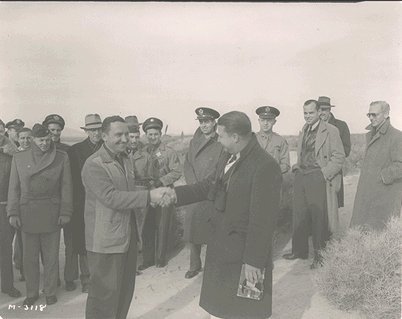
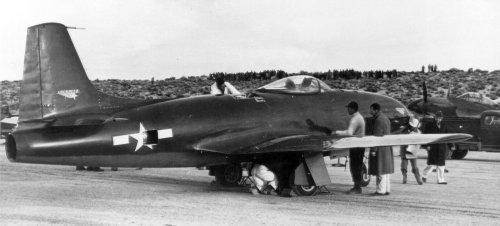
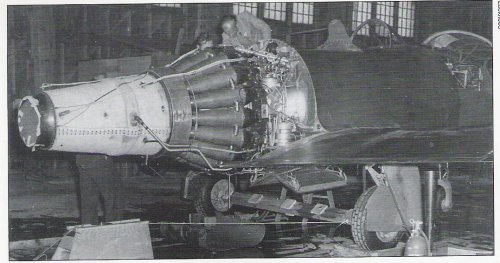
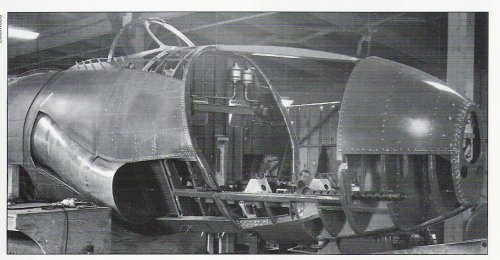
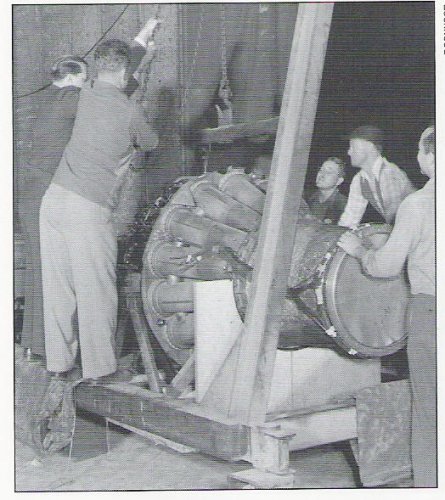
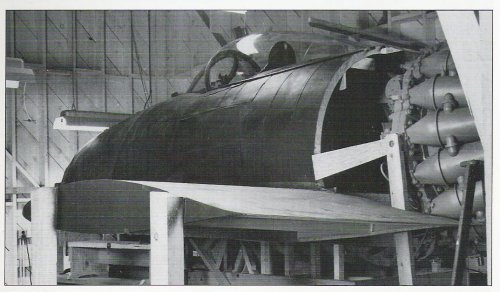
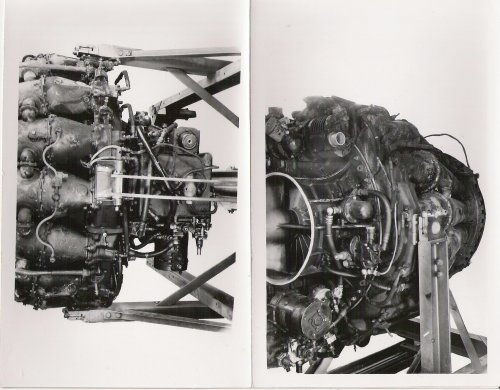
The British and Americans had been discussing the Goblin and the US Military decided to go ahead with Lockheed on an aircraft with one of these engines. The Lockheed XP-80 was the first product of Kelly Johnson's Skunkworks. June 23rd 1943 was the official start date and it was intended to fly 150 days later. he contract called for the aircraft to be completed in 180 days so the pressure was on! A crude mockup of the Goblin arrived on July 10th and it was the lack of engine which was the critical item for delivering the contractual timespan. August 24th saw the British Air Commission informing the Americans that a non-flyable engine was about to ship. A month later the engine was still in Britain as 'a part change necessitated by overheating the engine during a test run'. The engine was finslly delivered Nov 2nd 1943 and arrived on the Skunk Works shop floor on the 3rd. Everything was assembled and finally the aircraft headed off on a truck to Muroc arriving 14th Nov 1943.
On Nov 17th the Goblin was powered up for the first time. The installed, non-flyable Goblin delivered 2,460 lbt at 9,500 rpm.
....moved XP-80 stuff to #131.