Sure, but even the longest range Cold War fighters aren't getting out to the GIUK Gap from the Kola peninsula. Once the surface chips pass out of fighter range they're on their own, and vulnerable even to the Invincible class' Sea Harriers let alone the USN and earlier RN attack carriers
Well, yes, but its not like 1960s Soviet Navy plans involved sending massive surface force to GIUK gap.
 
Well, yes, but its not like 1960s Soviet Navy plans involved sending massive surface force to GIUK gap.

Yes, and that shows how little of a threat they were and why there was no drastic need to divert resources from elsewhere into AShMs significantly earlier than actually happened. Granted, the Soviets were ahead in this area and the West was caught somewhat flat footed. However, this was only by 3-5 years rather than a full decade.
 
Going down this rabbit hole, apparently the British looked at developing a surface-launched version of the Martel, the Ship Martel. Marconi won the contract for a cheap, single-axis radar seeker (unlike the 2-axis Adac of Exocet and RE576 of Kormoran & Otomat), but the RN adopted the Exocet.

The Ship Martel was then further developed into the Sub Martel, which was propsed but not pursued with the Exocet's 2-axis Adac seeker, but the RN adopted the sub-Harpoon.

Then Hawker Siddeley submitted a design based on the Martel, with a turbojet engine and the Marconi seeker, the P3T. This became the Sea Eagle. I presume the Marconi seeker is the single-axis one that the Ship Martel proposed when it lost to Exocet.

The Sea Eagle was then proposed to be fired from surface ships, the P5T, by adding rocket boosters, but the RN adopted the Harpoon. However, the Indian Navy used rocket booster to fire Sea Eagles from its Sea King helicopters, so the majority of the P5T system did actually enter service.

What a mess, however, I have a question. The TV guided, air-launched Martel had a data link; could this be retained if/when the cheap Marconi single-axis radar seeker was fitted in the Ship Martel? If so, would this be effective enough for the RN to adopt it over the Exocet?

I can't help but think that the British could have developed a continually evolving family of AShMs of ever-increasing effectiveness starting with the Martel.
 
Last edited:
Yeah, one problem - it was NOT done in early 1960s, since USN underestimated the capabilities of passive tracking. Only after facing the fact, that Soviet fleet could reliably track the USN carriers in real time, USN started to took the problem seriously.

At the time, the 1960's, the state of the art in Soviet sonar arrays were sets like Feniks, Artika, and Herkules all based on late WW 2 German GHG sonar technology. The longest range of the bunch was Feniks, based on the late war German Balkon array with a range of about 60 NM at most and usually much shorter for anything other than the coarsest detection of an enemy ship.
It took 4.5 minutes to ready launchers for the first missile, ten second pause between launches. The missile could be launched at 4-5 Beaufort; not great, but not bad also.

That's the "book" value. How long does it take a crew that has never actually launched the missiles and has only been trained by rote. After all, other than a few officers onboard, the crew has 3 or less years total of experience being conscripts and most have maybe a year or so of actual time on the boat.
Because of what? There were numerous times Soviet submarines & bombers were able to sneak to USN carriers. Of course, the opposite was true also.

Most of that is myth and conjecture rather than factual for both sides.
They weren't, but they were fast fighter-size targets, flying relatively low (especially on terminal run), and USN anti-air defense wasn't exactly great against such targets.

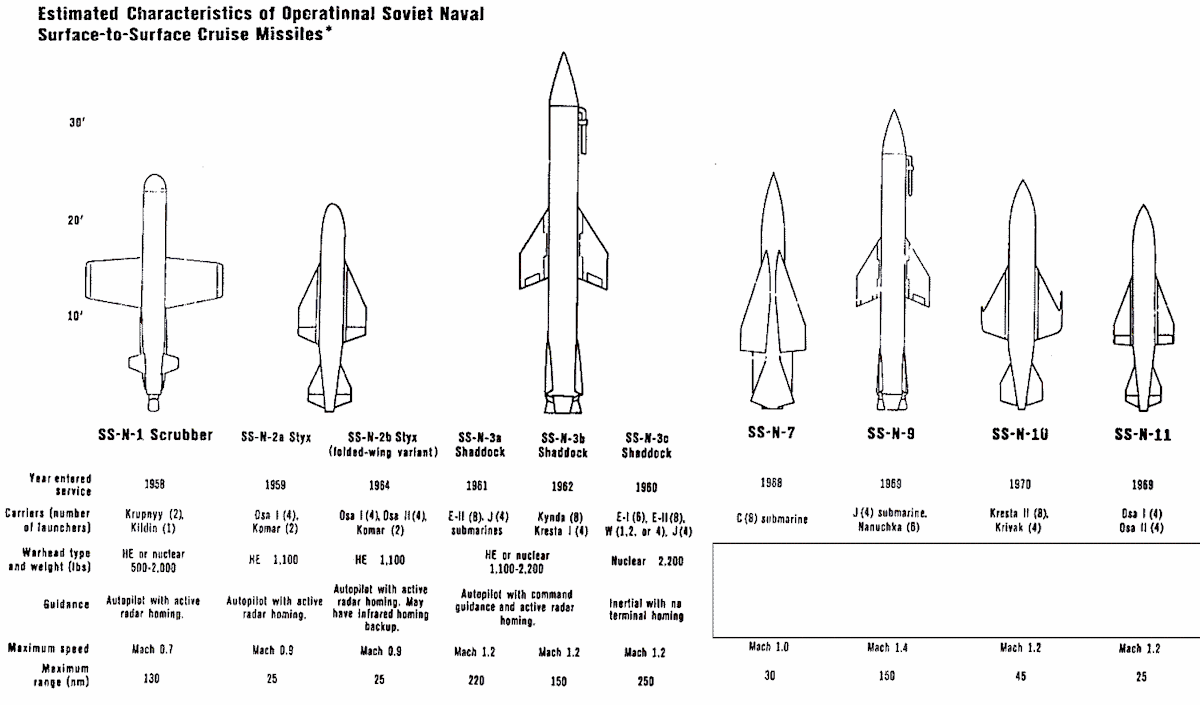
ss-n-1971.gif


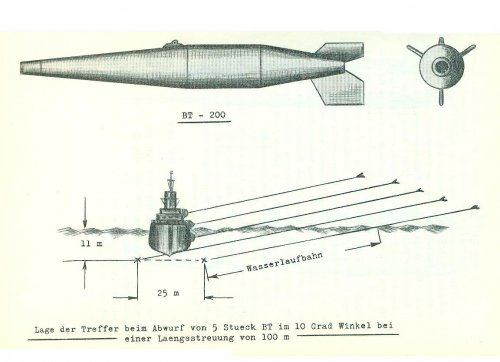
The SS-N-3, the one we're discussing here for the late 60's is huge. It is aircraft sized at nearly 40 feet long. The air launched ones are really no smaller. I've not discussed the SS-N-1 as it was really a bad design. It was boosted to flight using a RATO and then used a small (for the period) turbojet to take it to the target. For launch, you had to start the turbojet and get it up to speed the whole thing taking several minutes to accomplish. Then at the target it dropped something akin to a late war German BT series weapon meant to attack the ship below the waterline.

77401-1dfe557a70c07c3195adc0209d770ba7.jpg

Sure. As long as you warm up all the tubes in your fire control computer, lock the radar on small, not very reflective target, run through the missile warm-up, moving, finning (manual) and loading cycle, and your prayers that seeker is actually tracking are answered. Yes, it was possible; no, it wasn't guaranteed. The Talos was good, but slow-firing, and there were too few ships with it. The 1960s Terrier was still half a beam-rider, and wasn't exactly suited for fighter-size target. And the Tartar in early 1960s was basically unworkable due to technical issues.

As if the Russians don't have to do the same. But I'd put my money on the US defenses over a Russian sub with four AShM that have been sitting in their launch tubes since leaving port with ZERO maintenance on them.
Only the RIM-2F have a 75 km range. The majority of missiles in early 1960s were still RIM-2D (beam-rider) or RIM-2E (homing), limited by circa 40 km range.


There's everything you want to know about Talos. As for Terrier, it has both a good rate of fire and in the 60's could fire to about 30 to 40 NM.
Oh, how nice. Now a really fun thing; at 100 NM, the missiles is already flying, and it's less than 10 minutes till impact. If the carrier detected the attack at 100 NM, the carrier is very much dead.

Except, the Juliett class submarine doesn't have sensors that can accurately find a target at 100 NM. It's passive sensors (hydrophone / sonar) is good to about half that, and the search radar aboard is good to maybe a third of that.
For CAP to have any use, the detection must be made at least at 200-250 NM. So the F-4 would at least have time to react, not only observe in horror how their task group turns into burning hulks.

The F-4's don't do that. Either the E-1 or E-2 AEW aircraft aboard the carrier do. That's their job.
Then, four F-4 would be able to do how many attack runs with their Sparrow's? Which aren't exactly the most reliable missiles, and F-4 FCS would be forced to dealt with massive jamming, chaffs & other self defense measure.

It depends. If the US was really in a pinch versus an onslaught of missiles and such, in the '60's they'd have just nuked everything incoming.
Bear in mind, that AIM-7D/E have only about 30 km range. So in one attack run, four F-4 could destroy at most four Tu-16 (assuming that missiles would work perfectly and the FCS would actually track). After that, they would need to turn back, loop around, make a new attack pass, presumably from stern chase this time (avoiding being shredded by Tu-16 guns, if they went a bit too close).

Why? They could throttle down and just stay at range. They could also close and use Sidewinder.
Facepalm. It was PVO Strany that were tasked with fleet support. Not Red Air Force.


Meet Mig-23)
Whatever. It wasn't the Red Navy. In any case, the combat radius of a MiG 23 is pretty limited being, realistically, around 400 NM at most with some drop tanks. So, even in the Pacific, unless the carrier was in the Sea of Japan or just off the Kuril Islands it was out of their range in any case. In Europe they might cover part of the N. Sea at most and they might cover a small area of the Med. They are useless as escorts.
 
At the time, the 1960's, the state of the art in Soviet sonar arrays were sets like Feniks, Artika, and Herkules all based on late WW 2 German GHG sonar technology. The longest range of the bunch was Feniks, based on the late war German Balkon array with a range of about 60 NM at most and usually much shorter for anything other than the coarsest detection of an enemy ship.
Facepalm. We are talking about RADAR detection.

That's the "book" value. How long does it take a crew that has never actually launched the missiles and has only been trained by rote. After all, other than a few officers onboard, the crew has 3 or less years total of experience being conscripts and most have maybe a year or so of actual time on the boat.

Exactly the same thing, because Soviet engineers realized that and made P-35 encapsulated weapon, that did not require any assembly and was stored fully ready to launch. The only difference between practice drill & actual launch was, that with actual launch missile actually launched from the container.

The SS-N-3, the one we're discussing here for the late 60's is huge. It is aircraft sized at nearly 40 feet long. The air launched ones are really no smaller. I've not discussed the SS-N-1 as it was really a bad design. It was boosted to flight using a RATO and then used a small (for the period) turbojet to take it to the target. For launch, you had to start the turbojet and get it up to speed the whole thing taking several minutes to accomplish. Then at the target it dropped something akin to a late war German BT series weapon meant to attack the ship below the waterline.

First of all, please use Soviet designation. Because NATO one is simply wrong there; Americans failed to discriminate between P-5 (strategic cruiser missile), P-6 (sub-launched anti-ship missile) and P-35 (surface-launched anti-ship missile), wrongly assuming that they are different models of the same missile. They aren't.

Second - what are you trying to argue about? I said: "fast fighter-size targets". They are exactly those.

Third - the KSCh is actually based on American "Puffin" missile, which use a "diving" warhead also.

As if the Russians don't have to do the same. But I'd put my money on the US defenses over a Russian sub with four AShM that have been sitting in their launch tubes since leaving port with ZERO maintenance on them.
A bit of info for you; exactly in early 1960s, US Navy technicians found the interesting fact. The RIM-24 Tartar missile (notoriously unreliable at this time) actually performed much better if it was given ZERO maintenance while in sea and was just sitting in the launch cell since leaving port. Because diassembling and assembling a complex electronics in sea was a really bad idea. As soon as they dropped the maintenance and started to follow "sealed round" concept (i.e. missile sitting in tube without any maintenance all deployment, if it showed a malfunction during routine testing, it simply got switched off & labeled "dud") the reliability increased drastically.

USSR realized that already by this time)

There's everything you want to know about Talos. As for Terrier, it has both a good rate of fire and in the 60's could fire to about 30 to 40 NM.
We are talking about Terrier.

Except, the Juliett class submarine doesn't have sensors that can accurately find a target at 100 NM. It's passive sensors (hydrophone / sonar) is good to about half that, and the search radar aboard is good to maybe a third of that.
Facepalm. Could you PLEASE follow? We are talking about bomber attack!

The F-4's don't do that. Either the E-1 or E-2 AEW aircraft aboard the carrier do. That's their job.
Erm... You insist that E-1 and E-2 should be used as interceptors? Because that's what we are talking about.

It depends. If the US was really in a pinch versus an onslaught of missiles and such, in the '60's they'd have just nuked everything incoming.
Sigh. How? The only nuclear anti-air weapon USN have were nuclear-tipped Talos & nuclear-tipped Terrier. The only nuclear Terrier model, the RIM-2D, have 20 miles range. And since attacking missiles would not fly in tight cluster, the nuclear SAM's would still destroy only one missile per shot.

Why? They could throttle down and just stay at range. They could also close and use Sidewinder.
Because:

1) Even at stall speed, loaded F-4 is still moving at about 370-400 km/h. The Tu-16 is running at 1000 km/h. The closing velocity is about 1400 km/h, or 23 kilometers per minute. Considering that the range of AIM-7E launch is about 30 km, even assuming that F-4 is flying at stall speed, it would be less then a minute before distance would be zero.

2) The early 1960s Sidewinders are useless in head-on attack, so they would require tail chase (and considering their limited range, F-4 would be in danger of Tu-16 cannons)

Whatever. It wasn't the Red Navy. In any case, the combat radius of a MiG 23 is pretty limited being, realistically, around 400 NM at most with some drop tanks. So, even in the Pacific, unless the carrier was in the Sea of Japan or just off the Kuril Islands it was out of their range in any case. In Europe they might cover part of the N. Sea at most and they might cover a small area of the Med. They are useless as escorts.
That's why USSR used Tu-128 with more than 1000 miles range as part of fleet cover)

 
To summarise the discussion above - my point was, that "Carrier Strike Group vs Maritime Missile-carrying Aviation" engagement result was not pre-determined and depended on exact situation. There weren't any magical solutions, that could ensure one side suceess. For any new tactical or technical measure deployed by one side, the other soon deployed a countermeasure. And the most important question was, how accurately each side guessed the other side intentions.

For example, the AEW plane. If the main threat vector was predicted correctly, it could easily ensure carrier survival, by giving enough warning to scramble additional intercepors, making multiple attack passes, ect. But if the main threat vector was NOT predicted correctly (if Soviet commander detected the AEW plane position & launched mock attack alongside threat vector, while ths real attack force would swing around and come from different direction), the nit would be requiem of the carrier; at most crucial moment, its defenses would be all set in wrong direction. Of course the opposite would be true also.

So my point was, that there were no magic solution for either side. The carrier could defeat the MMcA attack, but could also be defeated. The MMcA regiment could turn the carrier into flaming wreck; or could be destroyed without even getting in range. The outcome depend on exact situation, intel and correct guessing.
 
The outcome depend on exact situation, intel and correct guessing.
Bluntly - if the outcome was so clearly in favour of the USN as some are claiming, the USN wouldn't have been trying so hard to improve its defensive systems! FWIW, there's a pretty good writeup here:

Broadly speaking, by the 1980s the Soviet reckoning was three bomber regiments (two Naval Aviation, one Long-Range Aviation) supported by a regiment of Su-15s to take down a carrier battle group - but taking heavy losses to do so.

The idea of the USN carrier battle group as a nigh-invulnerable force really feels like be an invention of the 1990s, when there wasn't really a credible enemy. As with so many things, that decade seems to have lulled people into a false sense of security.
 
Okean 70 seems to be a one-off according to that account and reading between the lines, did not totally go to plan and seems more connected with CAP over the fleet than escorting anti-NATO task force bomber groups.

I've never come across a photo from a US/RN/NATO pilot shadowing a Bear/Badger/Backfire with an escorting Fiddler. Even in the 1980s, encounters with PVO Flankers were often more connected with shooing away NATO snoopers from Soviet ships or A-50s. I wonder how widespread PVO cooperation really was in day-to-day patrolling beyond special exercises?
 
Here's the really big problem that the Soviets faced versus carrier groups in the 1960's-ish period. It was simply finding them. You send out say a Tu 95 and it finds a carrier group. If it stays on site, it's almost certain to be discovered and shot down. If it leaves after sighting it might survive but the surveillance ends.

That information is then passed to the chain of command and let's say a strike is plotted. The time between last sighting and the strike arriving is, let's say 6 hours. In 6 hours, the carrier has moved 200+ NM from where it was. The strike now has to find it again.

If the carrier wanted to strike a target on the mainland Soviet Union, it could dash in at night, launch at dawn, and once the strike was back, withdraw. Night still makes things harder.
 
Okean 70 seems to be a one-off according to that account and reading between the lines, did not totally go to plan and seems more connected with CAP over the fleet than escorting anti-NATO task force bomber groups.

I've never come across a photo from a US/RN/NATO pilot shadowing a Bear/Badger/Backfire with an escorting Fiddler. Even in the 1980s, encounters with PVO Flankers were often more connected with shooing away NATO snoopers from Soviet ships or A-50s. I wonder how widespread PVO cooperation really was in day-to-day patrolling beyond special exercises?
In all my time in the Navy it was always a Tu 95 or occasionally--very occasionally--a Tu 16 that showed up to snoop the carrier group. The only other thing would be a "spy" ship.

Something like this:

a-port-bow-view-of-a-soviet-balzam-class-intelligence-collection-ship-underway-065da0-640.jpg


It'd sit off one stern quarter at about 5 NM and follow the carrier. They knew better than to get in the way of flight ops. I have photos of these somewhere.
 
In all my time in the Navy it was always a Tu 95 or occasionally--very occasionally--a Tu 16 that showed up to snoop the carrier group. The only other thing would be a "spy" ship.

Something like this:
a-port-bow-view-of-a-soviet-balzam-class-intelligence-collection-ship-underway-065da0-640.jpg

It'd sit off one stern quarter at about 5 NM and follow the carrier. They knew better than to get in the way of flight ops. I have photos of these somewhere.
Just a typical Russian fishing boat. Nothing to worry about. :cool:
 
I've had a read of the relevant parts of the Tu-128 article @Dilandu provided, and it looks as if they did have some capability to provide 'fighter' cover for the fleet in the far North Atlantic and given the range of this aircraft the CAP could be mounted a long way out to sea. However, as usual, the devil is in the details and in this case, it is the severe limitations of the Tu-128 as a 'fighter'. While the aircraft is fast, it is still at heart a bomber converted to carry 4 giant AAMs, so has a 2.5g limit on manoeuvres and its weapons were optimised for attacking B52s. While it does add to a Soviet TFs capability and I suspect CAPs would be provided when practical during WW3 these aircraft only slightly increase the risk for USN carrier aircraft of the 70s like F4s, A6s, A7s and F14s which would likely be incoming in their dozens.
 
One Talos hitting any Russian surface combatant of that era and it's all she wrote. That ship is going to be wrecked.

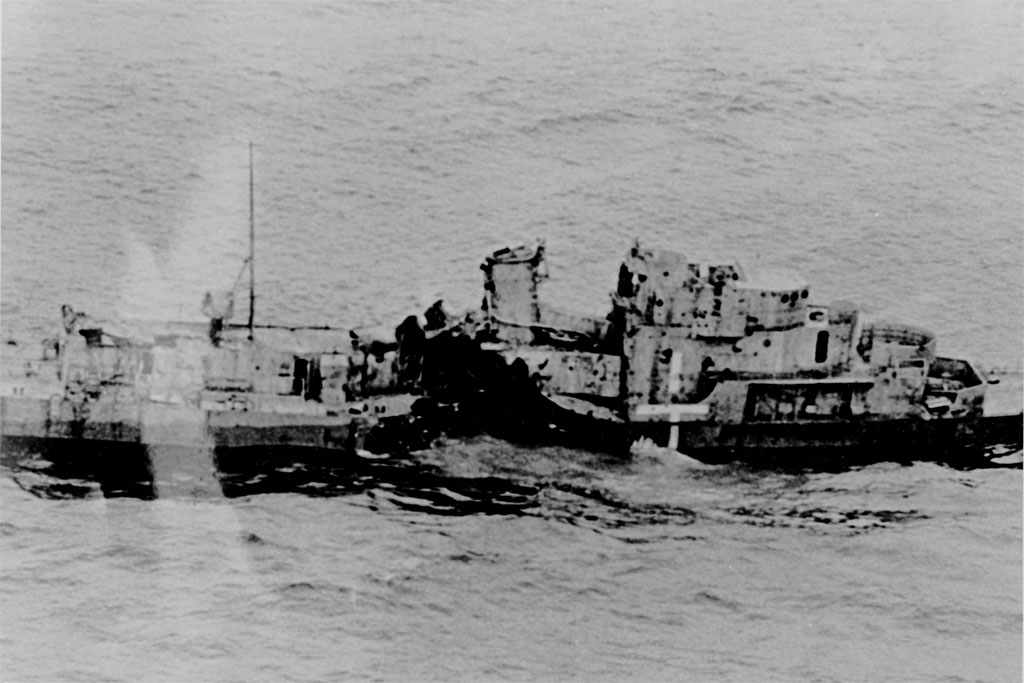
Talos%20surface%20target%201%201024.jpg


That's one Talos v. a WW 2 US DE without a live warhead! If one Talos no warhead and virtually tear a 1000-to-1500-ton warship in half, the Soviets have a problem.
Consider Talos was about the same size and speed as Brahmos. It had a 465lb CR warhead (or nuclear).

s-l1200.jpg

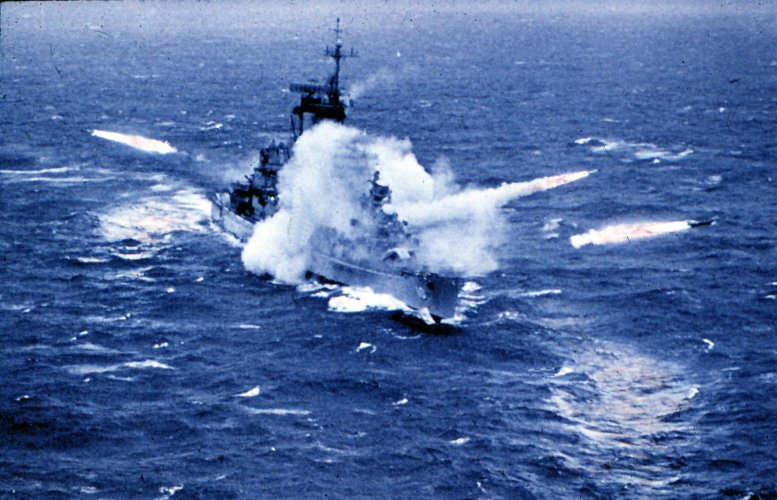
The Albany class had 104 Talos and 80 Tartar. Long Beach had 52 Talos and 120 Terrier (and almost got 8 Polaris amidship).

USS_Albany_(CG-10)_firing_missiles_1963_(colour).jpg
 
Last edited:
Just a point about AVMF multi-regiment attacks while it's being talked about. IIUC the AVMF had 4 regiments of Tu22Ms, 2 in the West and 2 in the East/Pacific and an OCU in Ukraine (129 aircraft in 1990) about the same for Tu16s (125 a/c in 1990) and 15 Tu22 in 1990.

As @T. A. Gardner said, a major strike takes hours both to arrange and conduct, and the Soviets generally only got a 55% availability rate from their combat aircraft. So, the AVMF could lay on maybe one Tu22M divisional strike every second day in the Atlantic and Pacific and maybe a regimental strike from the OCU into the Med. They could likely do the same with their Tu16s.

While these Tu22M strikes are formidable to the point of terrifying, they aren't going to be common, and I'd suggest every single one is a war winner/loser for both sides.
 
In all my time in the Navy it was always a Tu 95 or occasionally--very occasionally--a Tu 16 that showed up to snoop the carrier group. The only other thing would be a "spy" ship.

Something like this:
a-port-bow-view-of-a-soviet-balzam-class-intelligence-collection-ship-underway-065da0-640.jpg

It'd sit off one stern quarter at about 5 NM and follow the carrier. They knew better than to get in the way of flight ops. I have photos of these somewhere.
Sometimes they managed to sneak into the formation, then when caught there'd be a polite conversation that went more or less like this:

"Hey, Ivan, got any vodka?"
"Da, of course! Hey, Joe, got any porn?"

And then some lines would get sent over for an unofficial UNREP, trading the goods.

Of course, sometimes the US radar techs would "accidentally" trip the "rotate" power breaker while keeping the antenna radiating and pointed right at the Russian ship. Which usually resulted in smoking the ESM stack pretty severely.

Depends on just how tense the relationship was at that moment.
 
Sometimes they managed to sneak into the formation, then when caught there'd be a polite conversation that went more or less like this:

"Hey, Ivan, got any vodka?"
"Da, of course! Hey, Joe, got any porn?"

And then some lines would get sent over for an unofficial UNREP, trading the goods.

Of course, sometimes the US radar techs would "accidentally" trip the "rotate" power breaker while keeping the antenna radiating and pointed right at the Russian ship. Which usually resulted in smoking the ESM stack pretty severely.

Depends on just how tense the relationship was at that moment.
One time, the engineering technical library was getting rid of like way outdated manuals on things like some pump. Us sailors had the bright idea to stamp all of it with like "Secret" and "Confidential" and the like and then toss it overboard at trash call. The Soviet intelligence collector would be trailing us to pick up the trash... :D

I have photos somewhere of two Tu 16 that snuck in close before getting detected by squawking and IFF signal that made them look like civilian airliners and passing down our starboard side at like maybe 100 feet altitude at less than a mile out with two F-14's on their tails...
 
I'm warming to the idea of a ship having a datalink to its surface launched AShMs, but only to their line of sight of ~30-40km. Apparently the Sea Eagle's radar seeker had a 30km search range and the missile could do a pop-up to search for it's target for a mid-course update, all with late 70s-early 80s technology. If you added a datalink to the pop up and 30km search range you effectively double to range of a surface launched AShM from radar horizon to datalink range at pop up altitude plus the 30km search of the radar, the missile becomes an offboard sensor.
 
Last edited:
Just a point about AVMF multi-regiment attacks while it's being talked about. IIUC the AVMF had 4 regiments of Tu22Ms, 2 in the West and 2 in the East/Pacific and an OCU in Ukraine (129 aircraft in 1990) about the same for Tu16s (125 a/c in 1990) and 15 Tu22 in 1990.

As @T. A. Gardner said, a major strike takes hours both to arrange and conduct, and the Soviets generally only got a 55% availability rate from their combat aircraft. So, the AVMF could lay on maybe one Tu22M divisional strike every second day in the Atlantic and Pacific and maybe a regimental strike from the OCU into the Med. They could likely do the same with their Tu16s.

While these Tu22M strikes are formidable to the point of terrifying, they aren't going to be common, and I'd suggest every single one is a war winner/loser for both sides.
I think it's worth pointing out that this problem is part of the origin of the Reconnaissance-Strike-Complex, which Tokarev mentions briefly in Kamikazes: The Soviet Legacy, and Vego discussed in "Recce-strike Complexes In Theory and Practice" (available at ADA231900 on DTIC)
 
I found this interesting bit of info on the German Kormoran AShM.

The radar homing head is based on the Thomson-CSF R.E. 576 unit, and is capable of active search lock-on and tracking, as well as passive anti-radar or anti-jamming modes. If the radar is not operational or the pilot does not wish to employ it, the missile can also be guided in an optical mode, using the aircraft sight, with information transmitted from the aircraft to the target.

Apparently the Kormoran 2 from 1987 has a datalink capability.

This has been a fascinating topic, I've never really looked into AShMs before.
 
Would a sea launched version of the Fairey Sea Skimmer have been possible?
 
Here's the really big problem that the Soviets faced versus carrier groups in the 1960's-ish period. It was simply finding them. You send out say a Tu 95 and it finds a carrier group. If it stays on site, it's almost certain to be discovered and shot down. If it leaves after sighting it might survive but the surveillance ends.
The primary sensor that the Soviet used to find US CVBGs were Krug radio direction finders. Land-based airpower would be cued on the basis of those.
 
What's the capability of those spy ships? Could a CBG shake it if needed, if war looked imminent but they couldn't sink it yet?
 
A carrier and any nuclear escorts could.

I'm not sure how long conventional escorts could keep up with a carrier at flank speed.

Surely they wouldn't need to sustain flank speed once they broke line of sight? Would sustaining 20-25 knots would keep ahead of these spy ship once over the horizon?
 
What's the capability of those spy ships? Could a CBG shake it if needed, if war looked imminent but they couldn't sink it yet?
With a nuclear-powered carrier, yes, they could shake it. In fact, on a couple of occasions while I was on the 'prize we simply cranked up to about 25 + knots and ran them out of gas. Did that with a Krivak frigate too.

During one exercise where we had to evade sub attack, we were cranked up to 28+ knots for several days. All the engineering berthing was dead aft. That made sleeping nearly impossible due to the vibration and noise from the screws. I remember one watch officer on his pre-watch tour kicking me out of 1 AMR for sleeping in 2&3 switchgear behind the breaker panels. Nice, quiet place to sleep. I went to lower level #3 emergency diesel instead...
 
Surely they wouldn't need to sustain flank speed once they broke line of sight? Would sustaining 20-25 knots would keep ahead of these spy ship once over the horizon?
Drive a car 10mph faster than speed of traffic on the highway. See how long it takes you to get away from a random brightly-colored car, and then double that time.
 
The primary sensor that the Soviet used to find US CVBGs were Krug radio direction finders. Land-based airpower would be cued on the basis of those.
That's fine for coarse location, but it isn't going to be accurate enough for targeting purposes, particularly back in the 60's or 70's. The other problem is if the US is practicing EMCON of some sort and making some ship appear to be a carrier that isn't a carrier.
 
That's fine for coarse location, but it isn't going to be accurate enough for targeting purposes, particularly back in the 60's or 70's. The other problem is if the US is practicing EMCON of some sort and making some ship appear to be a carrier that isn't a carrier.
Yeah in the 60s it was also the role of MRSTs-1 "Uspekh" (Naval Reconnaissance and Target Designation System-1 "Success") which included BIG BULGE and a pretty solid ELINT/SIGINT package on Tu-95RTs / BEAR-D, as well as a mid-course datalink for SHADDOCK / P-6/P-35 anti-ship missiles.

The degree of US trickery was pretty well understood by the Soviets, which is why they often had tattle-tale ships, and sought visual identification, even when leveraging advanced concepts such as Reconnaissance-Strike Complexes and MRSTs-1's follow on (17K114 MKRTs Legenda).

As Tokarev notes:
To fool the FDO s, the incoming Backfires had to be able to saturate the air with chaff. Moreover, knowing the position of the carrier task force is not the same as knowing the position of the carrier itself. There were at least two cases when in the center of the formation there was, instead of the carrier, a large fleet oiler or replenishment vessel with an enhanced radar signature (making it look as large on the Backfires’ radar screens as a carrier) and a radiating tactical air navigation system. The carrier itself, contrary to routine procedures, was steaming completely alone, not even trailing the formation. To know for sure the carrier’s position, it was desirable to observe it visually. To do that, a special recce-attack group (razvedyvatel’no-udarnaya gruppa, RUG) could be detached from the MRA division formation. The RUG consisted of a pair of the Tu-16R reconnaissance Badgers and a squadron of Tu-22M Backfires. The former flew ahead of the latter and extremely low (not higher than two hundred meters, for as long as 300–350 kilometers) to penetrate the radar screen field of the carrier task force, while the latter were as high as possible, launching several missiles from maximum range, even without proper targeting, just to catch the attention of AEW crews and barrier CAP fighters. Meanwhile, those two reconnaissance Badgers, presumably undetected, made the dash into the center of the task force formation and found the carrier visually, their only task to send its exact position to the entire division by radio. Of course, nobody in those Badgers’ crews (six or seven officers and men per plane) counted on returning; it was 100 percent a suicide job.

After the RUG sent the position of the carrier and was shattered to debris, the main attack group (UG, udarnaya gruppa) launched the main missile salvo. The UG consisted of a demonstration group, an ECM group armed with anti-radar missiles of the K-11 model, two to three strike groups, and a post-strike reconnaissance group. Different groups approached from different directions and at different altitudes, but the main salvo had to be made simultaneously by all of the strike groups’ planes. The prescribed time slot for the entire salvo was just one minute for best results, no more than two minutes for satisfactory ones. If the timing became wider in an exercise, the entire main attack was considered unsuccessful.
-Tokarev: Kamikazes: The Soviet Legacy, p.77
Tokarev, Maksim Y. (2014) "Kamikazes: The Soviet Legacy," Naval War College Review: Vol. 67 : No. 1 , Article 7.Available at: https://digital-commons.usnwc.edu/nwc-review/vol67/iss1/7
This compares interestingly with the descriptions from Vego and Brisky (and basically every other Soviet source) but I think reflects some of the difference in perspective between Tokarev (a communications officer) and Vego (a former Yugoslav SWO and deeply engaged analyst of the Soviet Navy) — Tokarev understands some of the implementation, while Vego is more focused on the theory in his treatments of the concept (Chapter 16 of Soviet Naval Tactics and ADA231900).
 
But the guidance would need to be able to seek & lock on autonomously, since target would likely be beyond the horizon.

This seems to be the key problem of the first generation western ship-launched AShMs.

The Wiki page on the Otomat lays out the situation quite nicely.

A range of 50 km can be covered with the ship's own sensors and missiles like MM38 Exocet are at their optimum. Between 50 and 120 km is the range that weapons like Harpoon, which have over the horizon capabilities but no data-link updater, come into play. At ranges longer than that a target moving in unpredicted directions will give such weapons little or no chance to acquire their target. Finally, over 120 km is where the need for a long-range weapon, external targeting platforms and data-linked updates come into play as only with course and target position updating can any long-range missile have a chance of engaging a moving target at these ranges. >180 km is the typical capability of the (1978) Otomat (MkII), and long-range soviet missiles or (2022) French Exocet MM.40 Block 3.
 
The problem with those long-range missiles is that they've never been proven in combat. To date, there have been no uses of an AShM where it used targeting updates or intermediate data-link control to be guided to a target. It has been the firing platform getting a firing solution and launching on a target directly. While it may be possible to do, it seems to me that the odds, at this point, of it being done successfully are very low.
 
The very poorly cited but very specific Wiki Otomat page describes a system with a lot of moving parts.

The Italian version has a datalink channel for the ship to missile and another for AB212ASW helicopter to missile and the helicopter radar has a range of 60km. All this has to be strung together seamlessly for the Otomat to strike out to 120km+

Personally I'd think for these first generation missiles the best bet would be a ship to missile datalink for those 50-120km over the horizon missiles, to the limit of the datalink horizon to give these shorter range OTH missiles a greater chance of success. I like the idea of the Ship Martel keeping the TV Martel's datalink and adding the Marconi single axis radar seeker.

Complex kill chains using helicopters or MPA datalinks I think should wait until the 80s or so.
 
The problem with those long-range missiles is that they've never been proven in combat. To date, there have been no uses of an AShM where it used targeting updates or intermediate data-link control to be guided to a target. It has been the firing platform getting a firing solution and launching on a target directly. While it may be possible to do, it seems to me that the odds, at this point, of it being done successfully are very low.
Do cruise missiles also used as AShMs but attacking a land target count?

Because I'm pretty sure SLAM, SLAM-ER, and TacTom have all gotten midcourse updates and datalink stuff.
 
Do cruise missiles also used as AShMs but attacking a land target count?

Because I'm pretty sure SLAM, SLAM-ER, and TacTom have all gotten midcourse updates and datalink stuff.

Are they fixed targets, or mobile targets like the HQ of a military unit or a train?

I think this is the big problem, the final finding of a moving target that in addition can directly defend itself.

An Otomat test at 122km took 6 1/2 minutes, so a 500km Tomahawk attack would take the better part of half an hour and a ship might easily have moved 10nm. I don't know what the range of the Harpoon/Tomahawk radar seeker was, but the Sea Eagle's seeker had a range of 30km (16nm) with a pop-up maneuvre. A ship not even trying will put itself on the outside edge of an AShM's seeker range.
 
Are they fixed targets, or mobile targets like the HQ of a military unit or a train?
I believe most of the SLAMs were bunkers that needed final adjustments to hit a vulnerable spot, but TacToms were definitely chasing military HQs.


I think this is the big problem, the final finding of a moving target that in addition can directly defend itself.

An Otomat test at 122km took 6 1/2 minutes, so a 500km Tomahawk attack would take the better part of half an hour and a ship might easily have moved 10nm. I don't know what the range of the Harpoon/Tomahawk radar seeker was, but the Sea Eagle's seeker had a range of 30km (16nm) with a pop-up maneuvre. A ship not even trying will put itself on the outside edge of an AShM's seeker range.
Exactly.
 
I believe most of the SLAMs were bunkers that needed final adjustments to hit a vulnerable spot, but TacToms were definitely chasing military HQs.

So how does that work? HQs are mobile rather than moving, so does the missile get an update that the HQ is in the same place as it was when the missile was fired?
 
So how does that work? HQs are mobile rather than moving, so does the missile get an update that the HQ is in the same place as it was when the missile was fired?
I believe so. Not entirely sure how, though it could be SEAL team with eyes on target giving the updated GPS back to the launching unit.

Of course, TacToms also have cameras and if the target isn't too far inland have the fuel to do a search pattern to go find their target.
 

Similar threads

Back
Top Bottom