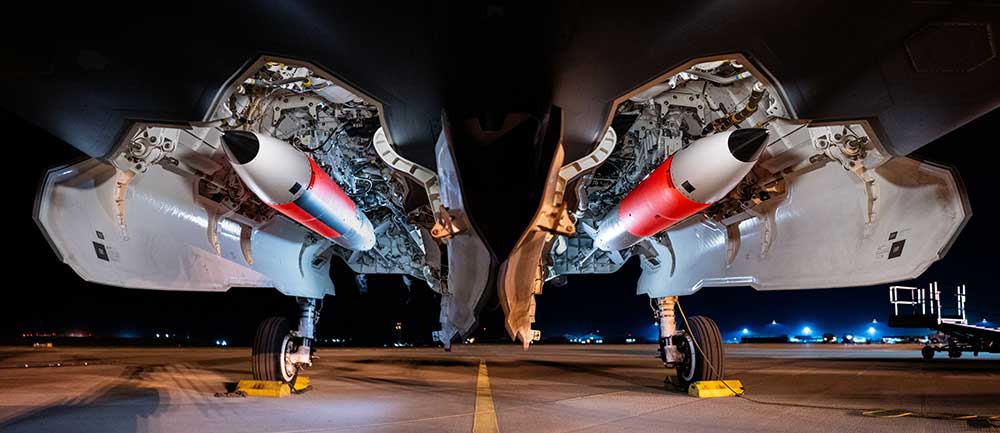
You could make the RV bigger to do it though. The Mk7 is probably smaller than the Mk5, so a MARV'd Mk7 (something like AMARV or HPMARV) might still fit as an 8x warhead load. At the moment though, US Tridents are only carry 4 W76 or W88s AFAIK.

View: https://x.com/masao_dahlgren/status/1182697351510745088?s=20


View attachment 790808View attachment 790809View attachment 790812View attachment 790810
Not to be pedantic but 2019 is not the first time I’ve seen these drawings. If I recall it was in the Nuclear Weapons Databook in the 80s. I could be mistaken but definitely before 2019.
 
At the latest meeting urging all countries to bring the Comprehensive Nuclear-Test-Ban Treaty into effect, the United States cast the sole opposing vote. The CTBTO is not a important international organization... but... it is still a signal?

View attachment 790217
The ban hurts the US the most. Russia and China have an active nuclear weapons industrial base. It's been almost half a century since a clean-sheet warhead design has rolled off the line in the US. As for trying to interpret intent from this vote:

Hysteria 3.jpg
 
The UK was essential to the development of accurate simulation and affordable testing regimes. Which was realised when the walls came down after '58. Much as a bunch of other elements now taken for granted.

In her excellent book, "Britain and the H-Bomb"*, Lorna Arnold goes into detail about this, the US nuclear-weaponeers where very impressed by how efficient the British were at utilising each test-shot extracting as much useable data as possible.

* If you haven't read this excellent book I highly recommend it, also you should read excellent book, Britain, Australia and the Bomb.
 
The ban hurts the US the most. Russia and China have an active nuclear weapons industrial base. It's been almost half a century since a clean-sheet warhead design has rolled off the line in the US. As for trying to interpret intent from this vote:

View attachment 790838
Sentinel started under Obama...

Having talked and worked with the people that actually know their shit, the ban hurts everyone else far more than it does us. The US knows what it's doing, getting rid of the ban will be a terrible decision.
 
There is zero excess room inside naval RBs. They are even more jam packed full of stuff than land RVs.

The Mk5/W88 has half the radar antennas vs the Mk21/W87. The Mk4/W76 and Mk5/W88 have ultra-miniaturized single-component AF&F/WES modules instead of separate and much less compact stacked AF&F and WES modules like on the W78/Mk12A or W87/Mk21. All naval RBs lack spin rockets, instead opting to install them on an external release assembly. They already use CHE and the W88 uses the tiniest possible primary, so there's no further room for improvement there either.

Bottom line, there is absolutely no spare space whatsoever inside these naval RBs, so if you want to add MARV-like capabilities to a naval RB, then you've gotta enlarge the RB significantly.

Fitting control flaps alone is a serious challenge. Fitting the GPS receivers, power supply, batteries, and control circuitry is even worse. The strapdown INS is probably the bulkiest component though, and presumably takes up most of the room.

The E2 is dead on arrival anyways because it inherently relies on GPS in order to achieve its design accuracy level.

As I have explained in previous comments, GPS fixes cannot be used on strategic missile systems.

It is not safe to assume the availability of GPS during a strategic missile exchange, during which GPS satellites are likely to be destroyed, jammed, and/or spoofed. For that reason, all strategic ballistic missile systems are designed to be capable of carrying out their mission with zero reliance on GPS or other GNSS sources. It would be exceptionally foolish to change this design approach, as if you did so, then in a strategic missile exchange, the enemy could cause unacceptable degradation to the accuracy of our missiles by interfering with GPS satellites. That would be an unacceptable vulnerability for our nuclear deterrent, and that is why the use of GPS in nuclear ballistic missiles has been strictly restricted.

A purely INS based solution would be possible, but it would either have markedly inferior accuracy (if it were to remain limited to the same space/weight budget), or would require substantially larger and heavier RBs.


I never claimed it was worthless, just that it was severe.

You are very incorrect about ballistic flight with INS and stellar reference not requiring this update. Let me explain:

BALPARs correct for errors induced by the effects of weather conditions over the target. They appear to have been introduced on naval SLBMs with the Trident I C4, and were refined with the Trident II D5 to include additional data in order to enhance their effect on accuracy even further, which was necessary to be able to achieve the much tighter accuracy spec for the D5.

There is a fallback mechanism for if up to date BALPARs are unavailable, which uses an onboard database of historical weather data and BALPAR algorithms in lieu of the externally computed BALPARs based on up to date weather condition/forecast data. However, relying on this fallback database results in accuracy degradation.

Weather effects during reentry are one of the single largest error sources. Yes, high beta RVs are slightly less susceptible to these effects vs the older low beta RVs, however they are still extremely susceptible to these effects. If you have inaccurate weather data, you can end up with massive deviations from the target.

This didn't matter as much back when CEPs were measured in kilometers, but now that CEPs are measured in hundreds of meters, it matters quite a lot.

The PBV adjusts the aiming conditions prior to RV release in order to attempt to correct for the effects of weather during reentry.

If it corrects based on a forecast created using current weather data, it can in theory eliminate most of the error from weather during reentry.

If it corrects based on a historical model, if that model deviates from current conditions (which is often the case), then it can do anything from only eliminating part of the error from weather during reentry (the best possible case scenario) all the way to creating extreme new error by sending the RV on a trajectory opposite of what is necessary based on current weather conditions (the worst case scenario).

This is why it is so crucial to have current BALPAR data available in order to mitigate these effects. Even the C4, with its far more lenient ~400m accuracy spec, was only able to attain that design accuracy spec with the aid of BALPAR updates.

AFAIK land based missiles use the same scheme as the Trident for introducing BALPAR updates, only because they have a hardwired connection at all times, there's never any issue of stale BALPAR data (with the exception of unfired silos that survive a incoming nuclear strike, but those would presumably rely on a local fallback model similar to the Tridents in that edge case scenario, and odds are they'd end up launching before their BALPAR data became stale anyways).


I thought that was obvious given that I literally linked to them in the same post, but oh well, that's what I get for making assumptions.

The group is: nuclearinfo.org


The star sighting can only correct for two major types of errors:
  • Errors in initial position and orientation in the horizontal plane
It does not (and cannot) correct for errors in knowledge of initial velocity, or for errors in the local vertical.

Let me just quote from Inventing Accuracy again here, as it directly addresses your question:


(quoted from page 291 of Inventing Accuracy: A Historical Sociology of Nuclear Missile Guidance by Donald MacKenzie)

By conducting detailed gravimetric and bathymetric surveys of SLBM patrol areas, you can pre-measure the local gravity field anomalies at high resolution. You then compile that into a huge database, and load that database onto every Trident submarine. Then when it's time to launch, you load up the correct local gravity field anomaly data for your exact location from said database, and use the anomaly data to correct for the errors in submarine velocity and in the local vertical induced by said gravitational anomalies.

Combine that with the Doppler sonar sensor to correct for errors in the initial velocity (both gravity survey data and Doppler sonar data are used to correct the initial velocity), and now you've largely eliminated most of the major error sources that are uncorrectable by star sighting.

The continuous BALPAR updates are to correct for the effects of weather over the target during reentry. This is a different category of error sources entirely, and one that cannot be corrected by the INS or star sighting. See my reply to zen two quotes above this one for more info on this and why it's important.

Do you get live weather data on SLBM when the surface to periscope depth for launching? If so is that just being broadcast continuously all the time or do they send out signals to request weather data? Giving a few minute window to sink the boomer?

Also are we certain the weather matters that much? As ICBM should punch through the weather layers in 2-3 seconds. With the amount of inertia in the RV, I would be skeptical the weather would have a significant effect.
 
With the amount of inertia in the RV, I would be skeptical the weather would have a significant effect.

The local weather definitely can effect the RV's terminal trajectory and as for inertia the RV is decelerate rapidly once it gets down below 50,000ft, RVs IIRC typically have a low supersonic terminal velocity (The Polaris A1 and A2 Mk-1/W-47 RVs had a terminal velocity of M1.2 for example).
 
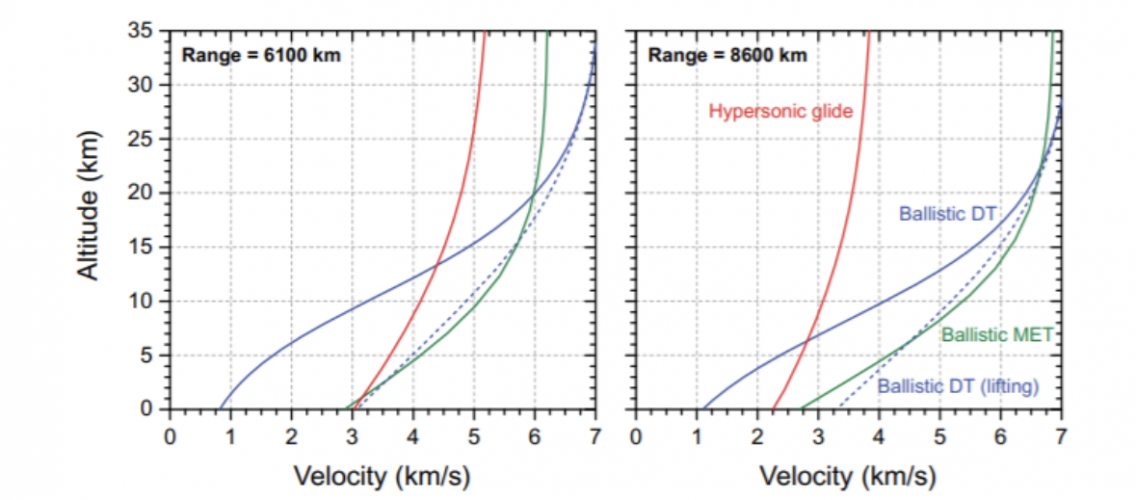
1762817132808.png

This is what I’ve seen of ICBM terminal velocities for modern systems. It’s still going quite fast, ignoring depressed trajectory. You can seem from the velocity plots the ballistic RV doesn’t his significant drag until 10-15km altitude and then it moves through that in 2ish seconds

I can totally believe CEP going increasing 20-30% from day 100-125m. But not CEP being dominated by weather effects.
 
Do you get live weather data on SLBM when the surface to periscope depth for launching? If so is that just being broadcast continuously all the time or do they send out signals to request weather data? Giving a few minute window to sink the boomer?
More or less continuous broadcast. Boomers rarely have to transmit anything.


Also are we certain the weather matters that much? As ICBM should punch through the weather layers in 2-3 seconds. With the amount of inertia in the RV, I would be skeptical the weather would have a significant effect.
When you're talking about a 100m CEP circle, 5 seconds at ~2800m/s is still enough to shift the impact clear off target.
 
More or less continuous broadcast. Boomers rarely have to transmit anything.


When you're talking about a 100m CEP circle, 5 seconds at ~2800m/s is still enough to shift the impact clear off target.

These systems were designed in the 70s. There was no real way to have real time weather measurements at hundreds to thousands of sites behind enemy lines. Weather satellites were still in their infancy too, even today you can only can't measure many of the weather parameters of interest from space.

Even if we assumed they could measure it, we would be able to pick up the weather data being transmitted (which we can't). Additionally it would have to be transmitting weather data for hundreds to thousands of locations at low data rates which would mean the boomer would have to wait for a few minutes with the periscope up to receive the data for their targets.


If we assume the CEP is MX is 50m RMS and if we accept that there was no point in making the AIRS in the MX any more accurate due to other factors dominating CEP at that point. Then we attribute all of the CEP to weather effects. Then if we assume ~100m CEP for Minuteman 3 and Trident D5, the 50m CEP contribution from weather (derived from the MX value) would only account for 6.25% of the total RMS error for M3 and D5 missiles. So weather effects are NOT large nor do they dominate CEP for the majority of ICBMs. Then most non-US ICBM are much closer to 200m CEP class than 50m.

There's no way weather is the largest source of inaccuracy for ICBMs.
 
These systems were designed in the 70s. There was no real way to have real time weather measurements at hundreds to thousands of sites behind enemy lines. Weather satellites were still in their infancy too, even today you can only can't measure many of the weather parameters of interest from space.

Even if we assumed they could measure it, we would be able to pick up the weather data being transmitted (which we can't). Additionally it would have to be transmitting weather data for hundreds to thousands of locations at low data rates which would mean the boomer would have to wait for a few minutes with the periscope up to receive the data for their targets.


If we assume the CEP is MX is 50m RMS and if we accept that there was no point in making the AIRS in the MX any more accurate due to other factors dominating CEP at that point. Then we attribute all of the CEP to weather effects. Then if we assume ~100m CEP for Minuteman 3 and Trident D5, the 50m CEP contribution from weather (derived from the MX value) would only account for 6.25% of the total RMS error for M3 and D5 missiles. So weather effects are NOT large nor do they dominate CEP for the majority of ICBMs. Then most non-US ICBM are much closer to 200m CEP class than 50m.

There's no way weather is the largest source of inaccuracy for ICBMs.

https://www.nuclearinfo.org/wp-cont...on_of_Ballistic_Parameters_for_SLBM_1997..pdf (this is a paper by the Naval Surface Warfare Center, nuclearinfo is just rehosting it)

Once released from the Submarine Launched Ballistic Missile (SLBM), the reentry body (RB) is ballistic and subject to the forces related to freefalling. To achieve the designated target, the effects of these forces encountered during reentry must be included within the RB release parameters. The onboard fire-control system contains a reentry model to approximate the effects of these forces and computes an offset to the target position used by the missile guidance system in its steering computations. Embedded within this model is the 1962 version of the U.S. Standard Atmosphere consisting of mean air density data. No wind data are contained within the model. Wind effects and the deviation of air density from the Standard Atmosphere values can be significant enough to cause a large effect on the RB performance. Because of this, air density deviation and wind effects must be included in the offset computations if system accuracy goals are to be achieved. Figure 1 shows an example of the effects that the weather data can have on the range of the RB. The effects shown are in addition to those encountered by using the U.S. Standard Atmosphere data.

In order to reduce target miss distance as much as possible, timely wind and density data should be used. The Fleet Numerical Meteorology and Oceanography Center (FNMOC) operates an atmospheric prediction model that produces a global grid of wind and density forecast data. For each grid point location, wind and density data, among other environmental parameters, are derived at various altitudes. The compilation of the vertical data for each location is called a profile, as seen in Figure 2

[...]

Broadcast time constraints restrict the length of the information sent to the SSBNs. Providing forecast profiles for the entire operational grid would consume an unacceptable amount of broadcast time. To compensate for this, the profile data for each grid point is reduced to BALPARs. These are constant values that, when applied throughout the trajectory, produce approximately the same effect on the RB as the vertical profile data. The method for deriving these BALPARs is described in the following sections. By utilizing BALPAR data, the message to the fleet (known as a BALPAR message) is of a more acceptable size and can be easily transmitted to the SSBNs.
 
Even if we assumed they could measure it, we would be able to pick up the weather data being transmitted (which we can't). Additionally it would have to be transmitting weather data for hundreds to thousands of locations at low data rates which would mean the boomer would have to wait for a few minutes with the periscope up to receive the data for their targets.
All submarine naval messages are broadcast on a continuous loop. BALPARS are merely one of many messages.
 
RV size is heavily constrained by the missile though. Even with fewer RVs, it's an annular bus, so RV diameter can be no larger than the distance between 3rd stage motor and the outer fairing. Likewise, length can be no longer than the distance available under the fairing. Outer diameter and missile length in turn are both constrained by tube size, which is for all intents and purposes going to be impossible to change.

View attachment 790835
There was a Mk600 PGRV proposed for Trident.
Post #1604
 
Last edited:

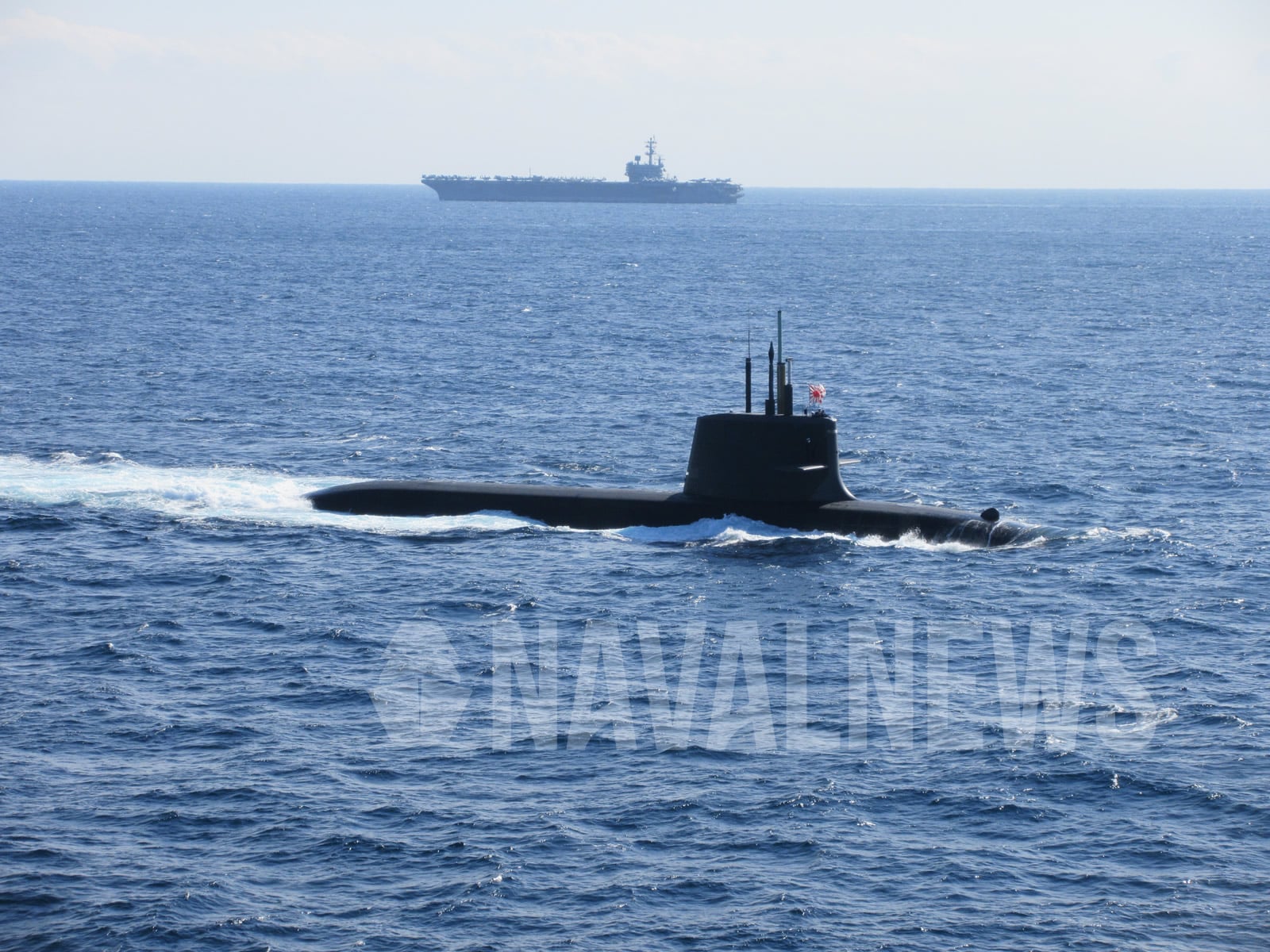
Japan Weighs Nuclear Submarines as New Defense Minister Koizumi Signals Break from Postwar Nuclear Taboo​


Realistically I think this would require US help. Japan has a huge nuclear industry but it would be a new comer to nuclear marine engineering. Though I think post AUKUS, such an arrangement is probably on the table. In a Sino-American war, Japanese hosting of U.S. platforms would practically decide the conflict; they can probably name their price if they are all in. And the new PM seems to be rather loudly signaling that they are.
 
Realistically I think this would require US help. Japan has a huge nuclear industry but it would be a new comer to nuclear marine engineering.
Disagree, it's just a PWR with HEU for fuel. If they follwed the USN concepts. But the French went with LEU and designed in a huge access hatch over the reactor to enable quick refuelings every 8-10 years.

And frankly, I think Japan would prefer to work with LEU to avoid nuclear weapons accusations.


Though I think post AUKUS, such an arrangement is probably on the table. In a Sino-American war, Japanese hosting of U.S. platforms would practically decide the conflict; they can probably name their price if they are all in. And the new PM seems to be rather loudly signaling that they are.
Agreed here.
 
but it would be a new comer to nuclear marine engineering.
Not quite, the Japanese already had a nuclear powered vessel

So a degree of experience exists, and the rest can be compensated for with research and simulations. Modern tools should make it quite easy for a country like Japan to roll out an SSN. Foreign assistance would just accelerate the process, albeit at the cost of increased dependency.

Ultimately the roadblocks are not technical in nature, but politically. The Japanese government might support such a move, I don't think the Japanese public does.
 
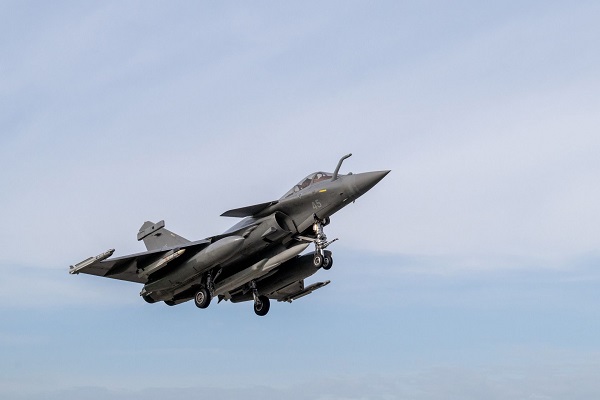
A Rafale M fired a renovated ASMP-A for the first time today.


Obviously without its warhead, this ASMPA-R was fired by "a Navy Rafale at the end of a flight representative of a nuclear raid, […] carried out over national territory in realistic opposition conditions,” the Ministry of the Armed Forces explained in a statement. It thus confirms “the very high level of expertise of the Naval Nuclear Air Force [FANu],” it emphasized.

“The entire trajectory of the Navy Rafale / ASMPA-R pair, followed by the missile’s free flight after launch, was monitored by the capabilities of the Directorate General of Armaments – Missile Testing [DGA-EM] from the sites of Biscarrosse, Hourtin and Quimper,” it added.

This is the second evaluation firing of a Renovated ASMPA, the first having been carried out by a Rafale B of the Strategic Air Forces [FAS] of the Air & Space Force [AAE], as part of Operation Durandal, in May 2024.

This second evaluation shot was carried out after the operational commissioning [MSO] of the ASMP-R within the FANu on November 10.
 
A Rafale M fired a renovated ASMP-A for the first time today.

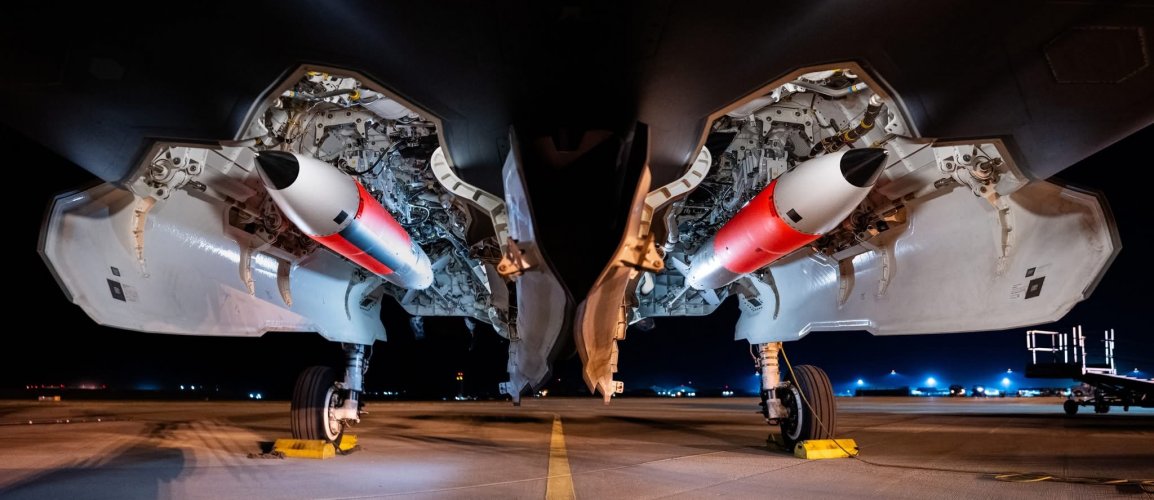
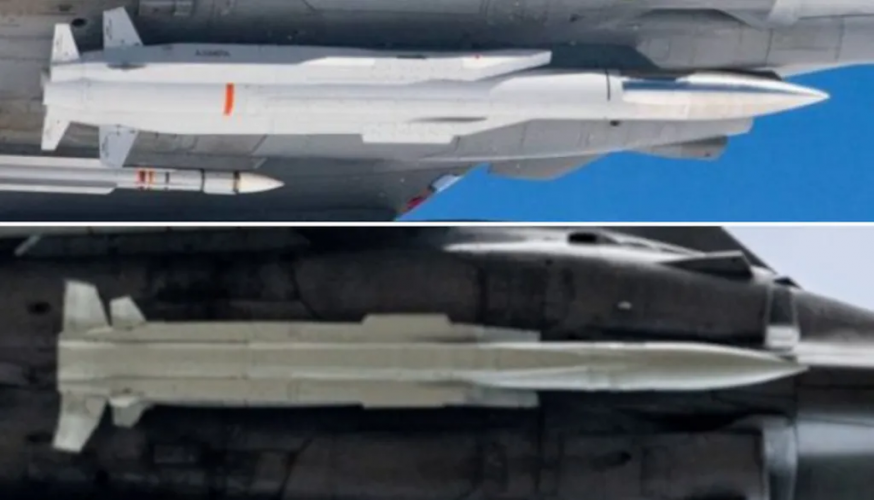
Closer images of missile:

France’s New Nuclear-Armed Supersonic Cruise Missile Seen Clearly For The First Time​


Note different tail fin configuration (ASMP-A top, ASMP-R bottom)
1763111424566.png

View: https://x.com/Casillic/status/1989046910519566367?s=20
 
Last edited:
Probably related to the hypersonic ASN4G missile planned for the mid-2030
ONERA (french aerospace lab)
The F4 high-enthalpy wind tunnel is unique in Europe. Inaugurated in 1990 and placed into standby in 2015, it will be returned to service in 2026, with its capabilities extended to rarefied flows. The duration of its test bursts (~0.4 s) is far longer than that of shock tunnels (5 ms), giving it the ability to measure aerodynamic forces using a balance. F4 reproduces many aerothermochemical phenomena representative of high altitudes (>50 km) and hypersonic regimes (Mach 8 to 20): chemical dissociation, vibrational relaxation, ionization, and rarefaction.
Page 36 https://www.calameo.com/read/004502068047de59878bc?page=1
 
The ban hurts the US the most. Russia and China have an active nuclear weapons industrial base. It's been almost half a century since a clean-sheet warhead design has rolled off the line in the US.

You assume that China/Russia are doing clean sheet warhead designs. This seems like a stretch. They are certainly modernizing the missiles, but I can't find anything that suggests they're also doing new clean sheet warhead design. Rather, it seems likely that at least for Russia, they are doing similar things to the US with maintenance/modernization/reconstruction of existing weapons.

Disagree, it's just a PWR with HEU for fuel.

Conceptually similar, but a marine nuclear plant has significant difference in many regards, and nuclear submarine design, construction, operator training, certification, maintenance, etc. has considerable differences vs conventional boat. Thresher for instance was lost not because she was a nuc boat, but because the overall enterprise failed to fully understand how much different a nuc boat really was.

On the flip side, it seems unclear what real benefit Japan would gain from nuclear submarines. Likewise ROK. In both cases, their naval defensive problems is generally in local water, which is where a diesel/AIP boat excels. Where nuclear power really becomes significant is strategic mobility. For the US this obviously important, and likewise countries like China or Russia where power projection is important both for offensive and defensive purposes. In the case of Australia, protection of length sea supply routes and the need project power to remote areas to secure this defense justifies nuc boats. In the case of ROK and Japan, it's less clear what benefit nuc boats would provide that AIP wouldn't given that the battlefield is in their backyard.
 
Conceptually similar, but a marine nuclear plant has significant difference in many regards, and nuclear submarine design, construction, operator training, certification, maintenance, etc. has considerable differences vs conventional boat. Thresher for instance was lost not because she was a nuc boat, but because the overall enterprise failed to fully understand how much different a nuc boat really was.
Thresher was lost because there was no fast-recovery startup process. She was super super heavy (well, not that it'd take more than ~500lbs heavy to slowly sink out), and there was no (approved) way to restart the reactor before she hit crush depth.

I don't think yall would believe how often the nukes drilled the fast recovery startup...


On the flip side, it seems unclear what real benefit Japan would gain from nuclear submarines. Likewise ROK. In both cases, their naval defensive problems is generally in local water, which is where a diesel/AIP boat excels. Where nuclear power really becomes significant is strategic mobility. For the US this obviously important, and likewise countries like China or Russia where power projection is important both for offensive and defensive purposes. In the case of Australia, protection of length sea supply routes and the need project power to remote areas to secure this defense justifies nuc boats. In the case of ROK and Japan, it's less clear what benefit nuc boats would provide that AIP wouldn't given that the battlefield is in their backyard.
You are aware of how big Japan is north to south, right?
 
You are aware of how big Japan is north to south, right?
There is a lot of coastline, but it could probably be better covered by more D/Es rather than fewer nukes having to quickly, loudly displace. The fact is a JMSDF boat is always in its AO even when it is tied up to a pier.

A better case might be made for Japan adoption nuclear submarines as nuclear deterrence platforms.
 
Japan might have a case for a fast SSN. Rather in the vein of the Swedish concept.

It does have a concern for SLOC and SSNs give it coercive power.
 
Japan might have a case for a fast SSN. Rather in the vein of the Swedish concept.

It does have a concern for SLOC and SSNs give it coercive power.
I'm not sure they'd have more of a case for a fast SSN vs just any SSN? I mean how fast do you need and what swedish SSN are we talking about?
 
I'm not sure they'd have more of a case for a fast SSN vs just any SSN? I mean how fast do you need
Even a "slow" 25-knot top speed will give you a 20kt speed of advance over time. While DE or AIP are stuck at about 6-10 knots sustained submerged speed. 20 knot SOA is basically 500nmi per day to redeploy.

A 35kt sub (688 speeds, at least as per the San Francisco grounding) should get you to about 30 knots speed of advance. That's 700-750nmi per day.

45 knots, rumored Seawolf speeds, is 1000nmi per day to redeploy. Rumors also have it that the Seawolves are just as quiet at top speed as a 688 idling at the pier.

But personally, 20 knots or so is about as fast as you want to go, because that's where flow noise starts to drown out contacts.
 
Thresher was lost because there was no fast-recovery startup process. She was super super heavy (well, not that it'd take more than ~500lbs heavy to slowly sink out), and there was no (approved) way to restart the reactor before she hit crush depth.

I don't think yall would believe how often the nukes drilled the fast recovery startup...


You are aware of how big Japan is north to south, right?

That's one of the proximal causes, yes. As is inadequate QA, failure to conduct integrated testing of the blow system in a realistic environment, poor design choices, conducting a test dive in water much deeper than collapse depth and various other factors.

The bigger picture though is that these factors all trace back to insufficient systematic consideration of the differences between historic submarines and a fast deep diving nuclear boat. Granted, modern diesel boats have fairly high speeds and can operate deep, but the point remains that a nuclear submarine fleet is far more than just slapping a reactor into an existing boat.
 
That's one of the proximal causes, yes. As is inadequate QA, failure to conduct integrated testing of the blow system in a realistic environment, poor design choices, conducting a test dive in water much deeper than collapse depth and various other factors.

The bigger picture though is that these factors all trace back to insufficient systematic consideration of the differences between historic submarines and a fast deep diving nuclear boat. Granted, modern diesel boats have fairly high speeds and can operate deep, but the point remains that a nuclear submarine fleet is far more than just slapping a reactor into an existing boat.
I'm not sure there's a place on the east coast that really is appropriate for testing nuclear subs.

The Continental shelf is only ~200-500ft down, and then the bottom drops out.

and ~200ft is too shallow to test a nuke boat.
 
I'm not sure there's a place on the east coast that really is appropriate for testing nuclear subs.

The Continental shelf is only ~200-500ft down, and then the bottom drops out.

and ~200ft is too shallow to test a nuke boat.

There most certainly are, as it's a SUBSAFE program requirement for newcon and post major overhaul sea trials. Initial tightness dive to a shallow depth in water not much deeper than the shallow dive depth, followed by a controlled deep dive in water between test and collapse depth, and in both cases a relatively soft smooth bottom.
 
There most certainly are, as it's a SUBSAFE program requirement for newcon and post major overhaul sea trials. Initial tightness dive to a shallow depth in water not much deeper than the shallow dive depth, followed by a controlled deep dive in water between test and collapse depth, and in both cases a relatively soft smooth bottom.
Right. The continental shelf works fine for the initial tightness dive. At worst you're looking at ~500ft for most of that (barring the occasional canyon).

The problem is the controlled deep dive. There's not a lot of places on the Atlantic Coast that are ~1000ft to the bottom. It's usually either less than 500ft or over 8000ft down.
 
South Korea’s nuclear debate is no longer taboo
Strongly disagree with that article's conclusion.

The events of 2022 have proven that if you get invaded by a nuclear-armed neighbor, the world won't do a damn thing to protect you.
 

Similar threads

Back
Top Bottom