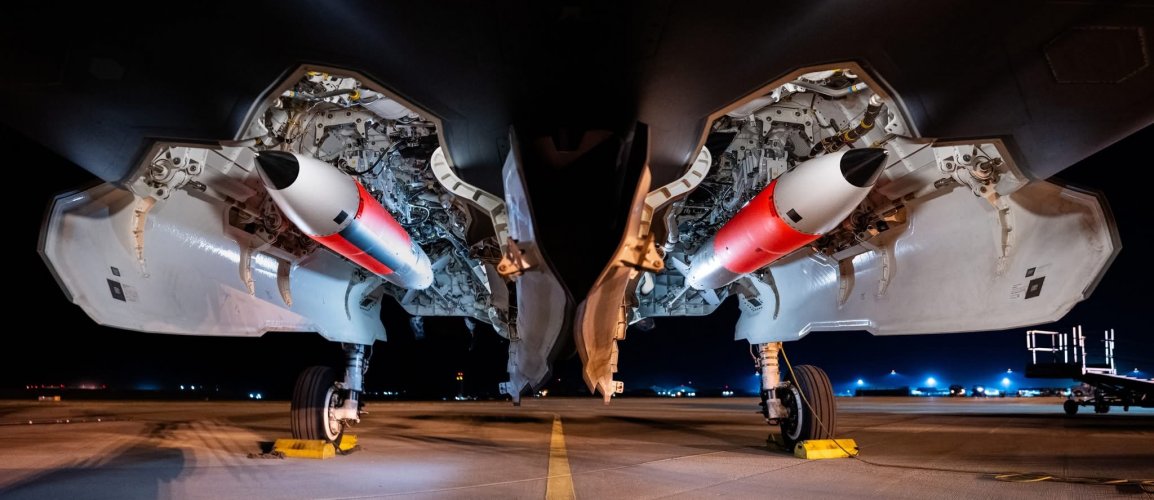
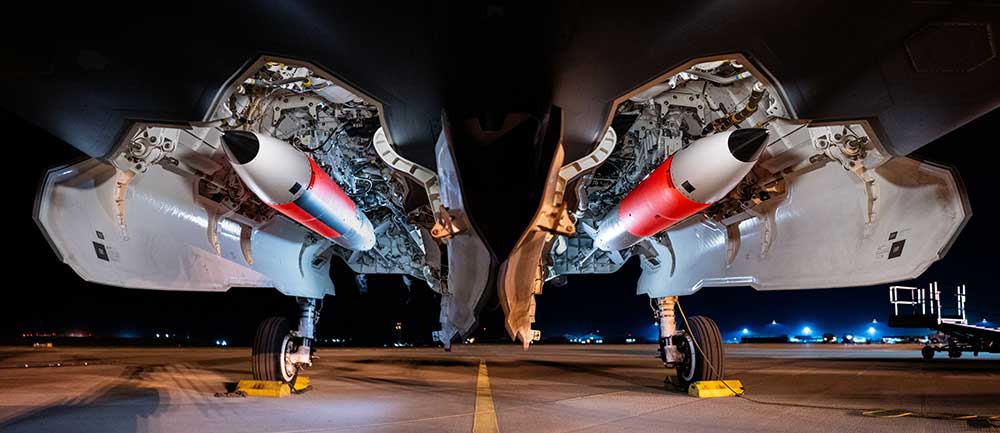
There is zero excess room inside naval RBs. They are even more jam packed full of stuff than land RVs.
The Mk5/W88 has half the radar antennas vs the Mk21/W87. The Mk4/W76 and Mk5/W88 have ultra-miniaturized single-component AF&F/WES modules instead of separate and much less compact stacked AF&F and WES modules like on the W78/Mk12A or W87/Mk21. All naval RBs lack spin rockets, instead opting to install them on an external release assembly. They already use CHE and the W88 uses the tiniest possible primary, so there's no further room for improvement there either.
Bottom line, there is absolutely no spare space whatsoever inside these naval RBs, so if you want to add MARV-like capabilities to a naval RB, then you've gotta enlarge the RB significantly.
Fitting control flaps alone is a serious challenge. Fitting the GPS receivers, power supply, batteries, and control circuitry is even worse. The strapdown INS is probably the bulkiest component though, and presumably takes up most of the room.
The E2 is dead on arrival anyways because it inherently relies on GPS in order to achieve its design accuracy level.
As I have explained in previous comments, GPS fixes cannot be used on strategic missile systems.
It is not safe to assume the availability of GPS during a strategic missile exchange, during which GPS satellites are likely to be destroyed, jammed, and/or spoofed. For that reason, all strategic ballistic missile systems are designed to be capable of carrying out their mission with zero reliance on GPS or other GNSS sources. It would be exceptionally foolish to change this design approach, as if you did so, then in a strategic missile exchange, the enemy could cause unacceptable degradation to the accuracy of our missiles by interfering with GPS satellites. That would be an unacceptable vulnerability for our nuclear deterrent, and that is why the use of GPS in nuclear ballistic missiles has been strictly restricted.
A purely INS based solution would be possible, but it would either have markedly inferior accuracy (if it were to remain limited to the same space/weight budget), or would require substantially larger and heavier RBs.
I never claimed it was worthless, just that it was severe.
You are
very incorrect about ballistic flight with INS and stellar reference not requiring this update. Let me explain:
BALPARs correct for errors induced by the effects of weather conditions over the target. They appear to have been introduced on naval SLBMs with the Trident I C4, and were refined with the Trident II D5 to include additional data in order to enhance their effect on accuracy even further, which was necessary to be able to achieve the much tighter accuracy spec for the D5.
There is a fallback mechanism for if up to date BALPARs are unavailable, which uses an onboard database of historical weather data and BALPAR algorithms in lieu of the externally computed BALPARs based on up to date weather condition/forecast data. However, relying on this fallback database results in accuracy degradation.
Weather effects during reentry are one of the single largest error sources. Yes, high beta RVs are slightly less susceptible to these effects vs the older low beta RVs, however they are still
extremely susceptible to these effects. If you have inaccurate weather data, you can end up with
massive deviations from the target.
This didn't matter as much back when CEPs were measured in kilometers, but now that CEPs are measured in hundreds of meters, it matters quite a lot.
The PBV adjusts the aiming conditions prior to RV release in order to attempt to correct for the effects of weather during reentry.
If it corrects based on a forecast created using current weather data, it can in theory eliminate most of the error from weather during reentry.
If it corrects based on a historical model, if that model deviates from current conditions (which is often the case), then it can do anything from only eliminating part of the error from weather during reentry (the best possible case scenario) all the way to creating extreme new error by sending the RV on a trajectory opposite of what is necessary based on current weather conditions (the worst case scenario).
This is why it is so crucial to have current BALPAR data available in order to mitigate these effects. Even the C4, with its far more lenient ~400m accuracy spec, was only able to attain that design accuracy spec with the aid of BALPAR updates.
AFAIK land based missiles use the same scheme as the Trident for introducing BALPAR updates, only because they have a hardwired connection at all times, there's never any issue of stale BALPAR data (with the exception of unfired silos that survive a incoming nuclear strike, but those would presumably rely on a local fallback model similar to the Tridents in that edge case scenario, and odds are they'd end up launching before their BALPAR data became stale anyways).
I thought that was obvious given that I literally linked to them in the same post, but oh well, that's what I get for making assumptions.
The group is: nuclearinfo.org
The star sighting can only correct for two major types of errors:
- Errors in initial position and orientation in the horizontal plane
It does not (and cannot) correct for errors in knowledge of initial velocity, or for errors in the local vertical.
Let me just quote from
Inventing Accuracy again here, as it directly addresses your question:
(quoted from page 291 of
Inventing Accuracy: A Historical Sociology of Nuclear Missile Guidance by Donald MacKenzie)
By conducting detailed gravimetric and bathymetric surveys of SLBM patrol areas, you can pre-measure the local gravity field anomalies at high resolution. You then compile that into a huge database, and load that database onto every Trident submarine. Then when it's time to launch, you load up the correct local gravity field anomaly data for your exact location from said database, and use the anomaly data to correct for the errors in submarine velocity and in the local vertical induced by said gravitational anomalies.
Combine that with the Doppler sonar sensor to correct for errors in the initial velocity (both gravity survey data and Doppler sonar data are used to correct the initial velocity), and now you've largely eliminated most of the major error sources that are uncorrectable by star sighting.
The continuous BALPAR updates are to correct for the effects of weather over the target during reentry. This is a different category of error sources entirely, and one that cannot be corrected by the INS or star sighting. See my reply to zen two quotes above this one for more info on this and why it's important.