- Joined
- 15 January 2021
- Messages
- 649
- Reaction score
- 2,859
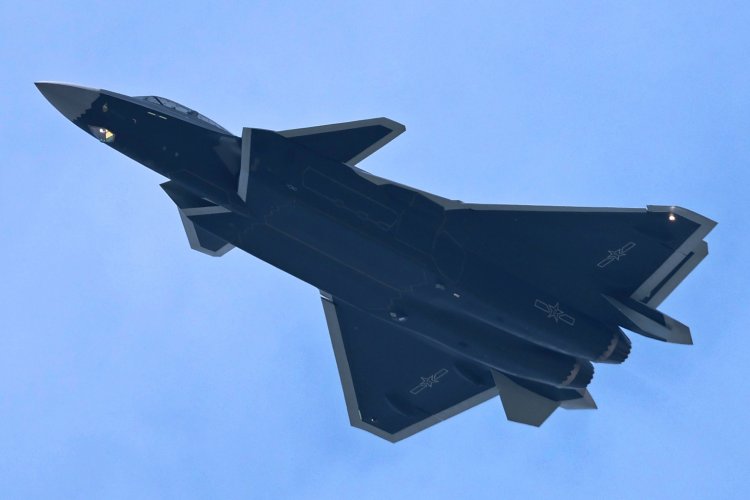
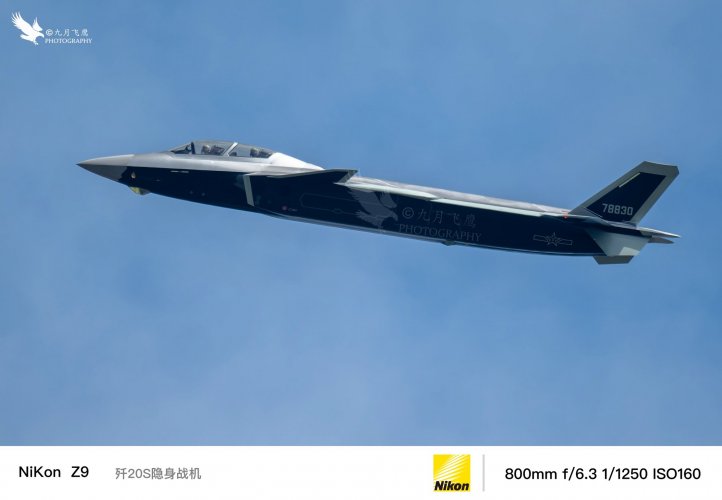
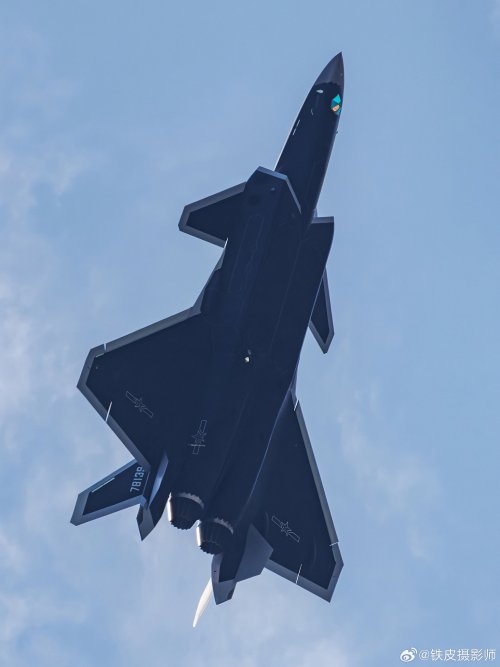
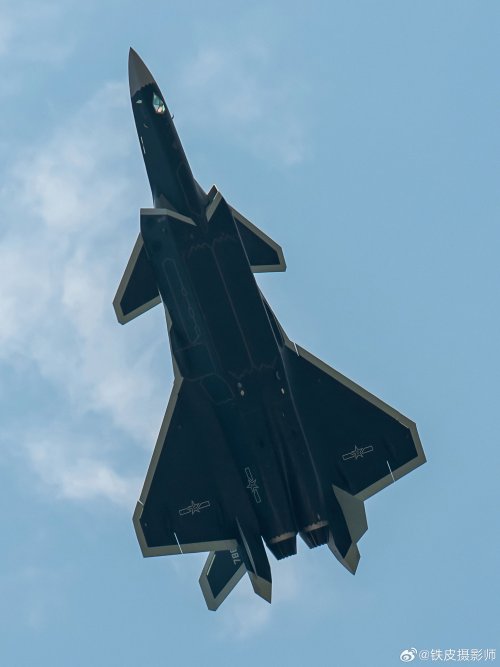
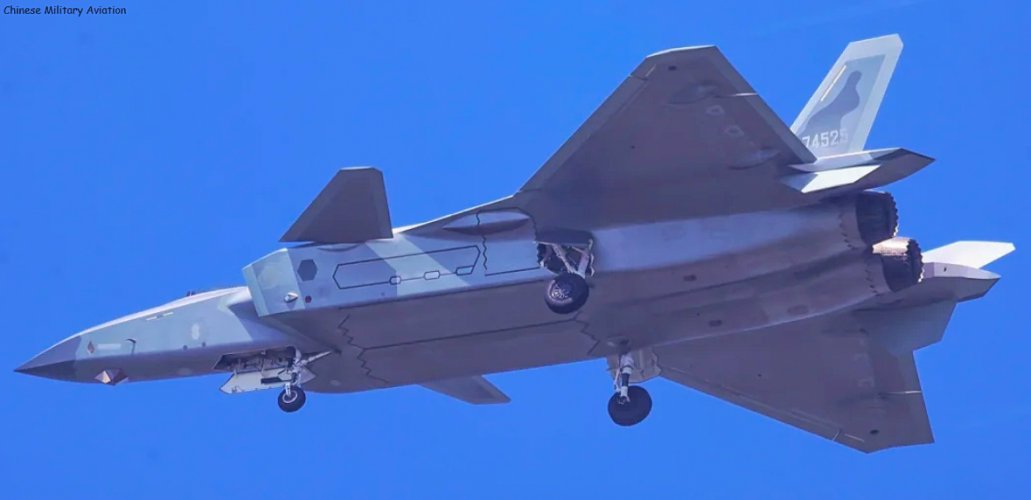
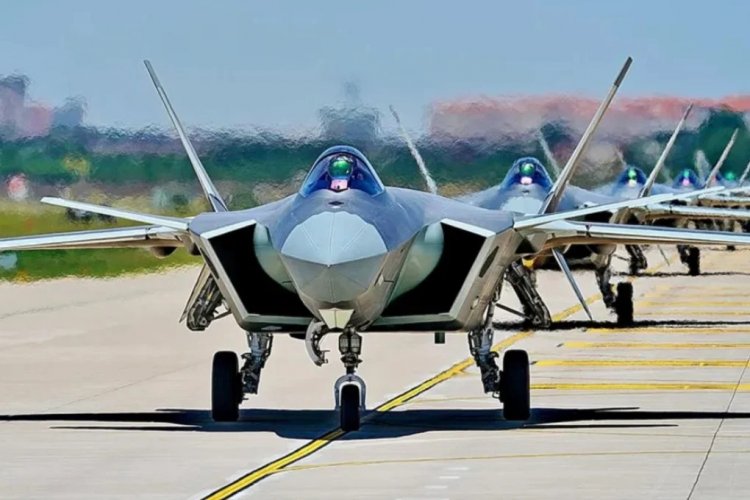
From this view, it is interesting that the edge alignment of the inlets, canard LE and TE, and wing LE and TE is quite variable, which is unusual for what is supposed to be an LO platform.

It's cross matching from the other side.From this view, it is interesting that the edge alignment of the inlets, canard LE and TE, and wing LE and TE is quite variable, which is unusual for what is supposed to be an LO platform.
But the even side to side, the canard LE doesn’t match the angle of the inlet sweep or the wing LE sweep. Close, but ~10 degrees different.

it will not affect it too much you are right, but from a frontal view, or head on, it will not affect it too much but compared to YF-23, of course it will have a less strict planform alignment, the compromises are made for better wing trailing edge effectiveness (elevons and Flaps effectiveness), wing area size, wing drag, and canard drag, that canard will have more area than X 36`s canards and less drag, but it pays a bit in LO treatment.But the even side to side, the canard LE doesn’t match the angle of the inlet sweep or the wing LE sweep. Close, but ~10 degrees different.

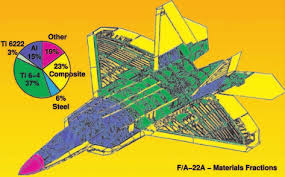
I'd guess it's much more complicated that just 'shaping'. Even back in the F-117 days they used special composites with a gradually transitioning permittivity in order to avoid sudden changes in impedance, which would've caused a reflection. I don't know much about the construction of the J-20, but I've found this diagram of the F-22, and there's something similar going on there as well.From this view, it is interesting that the edge alignment of the inlets, canard LE and TE, and wing LE and TE is quite variable, which is unusual for what is supposed to be an LO platform.
It should be a rule of thumb where "how did they make such a simple mistake/omission" should be automatically met by "I'm probably the one who's wrong".
Mistake/omission wasn't mentioned, just that they don't align. Which they don't.
Whether that's wrong or right is another question. It's likely some kind of compromise.

The trailing edges of the canards and wings do align to their contralateral counterpart.

What's the point of that?
Yeah, never mind. Didn't factor in the dihedral on the canard.The same way edge alignment works in any other manner.
At the overall level of the airframe, edge alignment remains consistent, to deflect RF in a more predictable and controlled manner.
Who would those be?
Not really. Could be they traded it for something else. Look at the tails of the F-22 and YF-23. Both met requirements but they made different choices in how to get there.Because the idea that this aircraft would not have appropriate edge alignment for its primary control surfaces should not pass the smell test,
Because the idea that this aircraft would not have appropriate edge alignment for its primary control surfaces should not pass the smell test, and if one did suspect it then I would think the natural path to take is to go and do some digging first, before suggesting the idea that the aircraft lacked one of the most basic tenets of LO design.
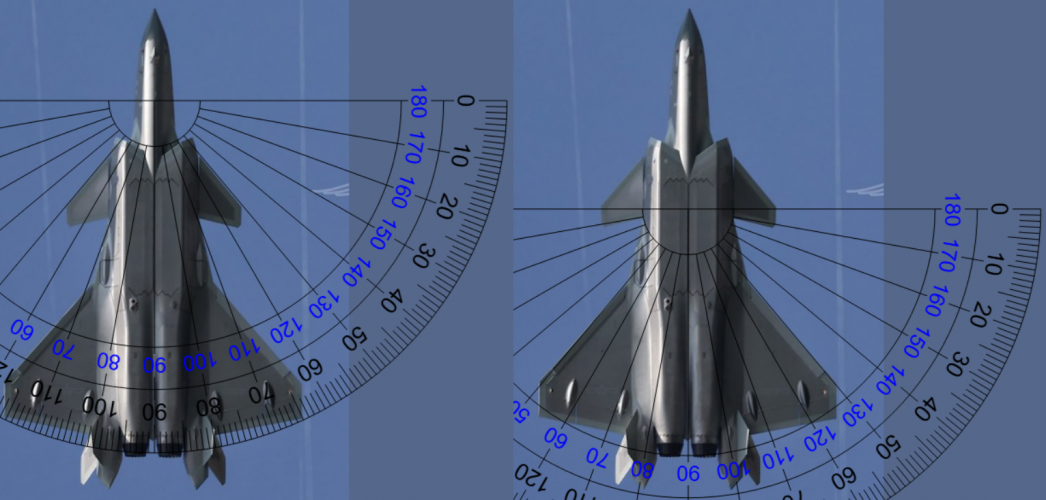
I have no issue having a constructive conversation, and in this case I'm very happy to find an appropriate picture and take out a literal protractor to demonstrate the edge alignments of the leading edges as I did above -- but at the very least shouldn't the skepticism be framed as a "guys this is weird, am I seeing this wrong" rather than "they don't have these features, therefore it doesn't seem LO to me".
The leading edges of the canards and wings do align.
The trailing edges of the canards and wings do align to their contralateral counterpart.

My personal issue is just that it's disrespectful to the designer and people involved, claiming their work to be subpar and not taking into account things that are considered "basic" in that regard. It's the same with people who think the engineers at UAC or Boeing just eyeball stuff, shrug and say it's good enough. I have a hard time to understand such a mindset.
But yes, the tone is definitely playing a part too.

Except Chengdu aren't claiming they 'invented stealth by themself'. In fact, virtually nothing about J-20 stealth capabilities have been said officially. Forum members and Chinese internet denizens might have a lot to say but that's mostly just speculation. Emobirb isn't even Chinese.You should grow thicker skin. Imagine being Lockheed or Northrop, and spending over half a century developing stealth to the point it's everyday tech, and then some newb comes along and says, "look what I invented all by myself". This, after it's common knowledge you committed historic levels of industrial espionage and intellectual property theft through numerous cyberhacks. Talk about a "lack of respect".
My personal issue is just that it's disrespectful to the designer and people involved, claiming their work to be subpar and not taking into account things that are considered "basic" in that regard. It's the same with people who think the engineers at UAC or Boeing just eyeball stuff, shrug and say it's good enough. I have a hard time to understand such a mindset.
without full understanding of stealth shaping at an early stage of development, and then subsequently revised to substantially reduce the RCS without deviating too much from the original design.
"look what I invented all by myself". This, after it's common knowledge you committed historic levels of industrial espionage and intellectual property theft through numerous cyberhacks. Talk about a "lack of respect".
Can you cite where CAC claimed to have invented stealth technology as a whole? Thanks in advance
As long as people here do not consider aircraft are designed with compromises, the endless and fruitless discussions will continue.Can you cite where CAC claimed to have invented stealth technology as a whole? Thanks in advance
As long as people here do not consider aircraft are designed with compromises, the endless and fruitless discussions will continue.
It appears to me that the basic layout was selected for primarily aerodynamic reasons without full understanding of stealth shaping at an early stage of development, and then subsequently revised to substantially reduce the RCS without deviating too much from the original design. It may be that due to lack of engine thrust, more attention had to be paid to optimising the aerodynamics at some cost to RCS for example. I don't have any substantive evidence of this theory however. I think the J-36/J-50 will be substantial improvements.
Every aircraft is a compromise between different competing priorities. I'm sure the engineers at Chengdu are perfectly competent people who built a plane that met its requirements. We don't know what that was.
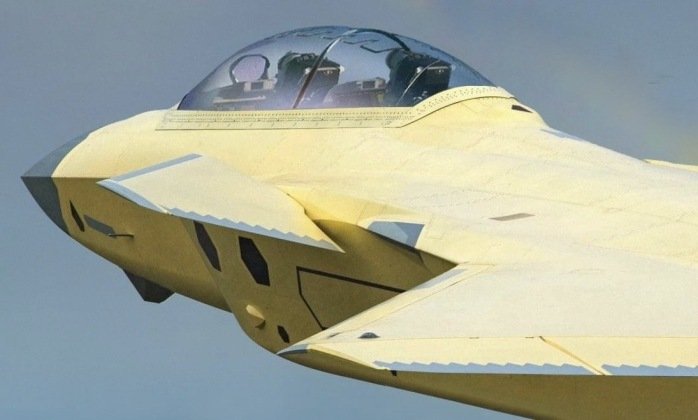
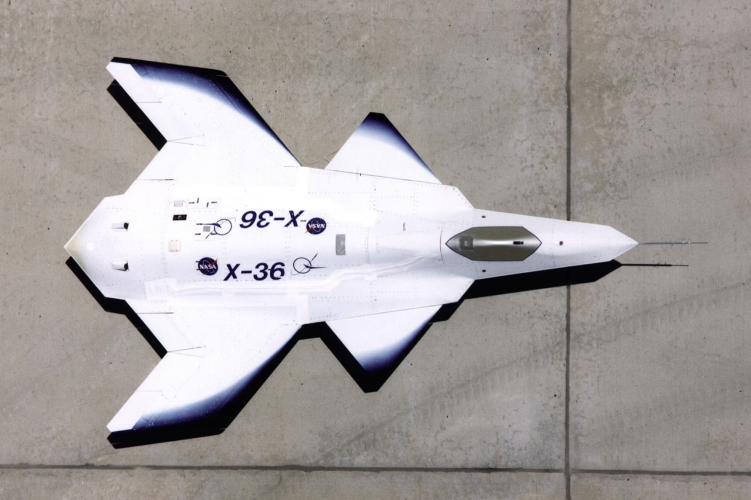
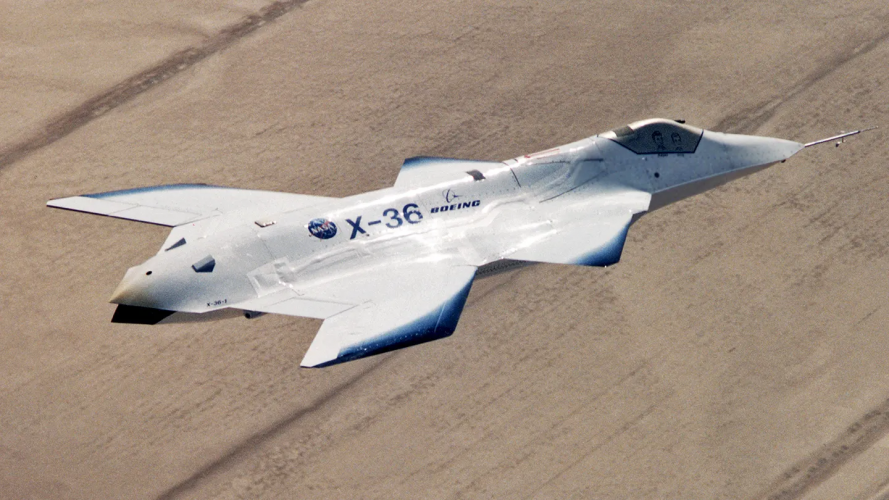
All aircraft compromise, all, J-20 is no exception, some of its features give more priority to aerodynamics than stealth, on X-36 both trailing edges and leading edges of both wings and canards are set at the same swept angle, that does not happen in J-20 plus X-36 does not have dihedral in the canards nor ventral fins and has a stealthier nozzle and lacks vertical tails basically a 6th generation concept.
View attachment 777524
View attachment 777525
The Solutions taken on J-20 are not inferior to X-36 in absolute terms, J-20 gave more importance to reduced R&D time and maneuverability, is not that they did not understand stealth in Chengdu but simply their design had other needs and priorities in few words they compromised, without understanding that this is a fruitless discussion to which I do not intend to continue, but I recommend you to see it as a real factor.
remember X-36 flew for the first time in 1997
As long as people here do not consider aircraft are designed with compromises, the endless and fruitless discussions will continue.
There is no need to go 200 pages saying the same.So, I think there is a difference between agreeing that an aircraft (or indeed, any aircraft, or vehicle, or engineering solution overall) is a "compromise" from an engineering point of view (due to
inherent competing demands of various requirements versus available technology) -- versus suggesting that the designers did not have an adequate mastery of XYZ domain due to an aircraft being a compromise from an engineering pov.
There is no need to go 200 pages saying the same.
All aircraft compromise, in fact in air combat air forces develop tactics, and weapons to fix them.
It is no a brainer to see X-36 has better stealth than J-20 and same F-22 or YF-23, however air combat is not only stealth, it is probable J-20 could surpass F-35 in BVR or WVR combat depending in weapons sensors and tactics.
in WWII smart P-51 pilots downed Me-262s, or less agile Hellcats could beat Zeros, in fact the MiG-29 was the most dangerous 1990s dogfighter but it was downed by F-16s and F-15s, so it is not only one factor but many what is important in air combat.
J-20 was designed upon compromises that the Chinese would fix upon weapons sensors, UCAVs etc etc as well further upgrades in avionics.
The best fighter can be beaten with better tactics, P-40s could do that against the Zeros, and same F-16s could down MiG-29s with better radars and AIM-120, so it is far more complex, but admit the reality, there are more stealthy fighters than J-20 and F-22 and F-35 have several advantages over J-20 in stealth, we like them or not.
There is no point argue a lot at the end of the day, real war says who has the better equipment and the better tactics so most of this theoretical debate has to do more with nationalism rather than technical knowledge, people choose sides upon the aircraft they like, I love Rafale so I am bias too, so do not worry I think we can leave it here.I was not debating the effectiveness of the respective aircraft as weapons systems here.
I am very specially addressing what is reasonable way of judging an aircraft's stealth shaping competency, and I am saying that it can only logically be done in context of the existing aerodynamic configuration/platform (and thus underlying aerodynamic requirements) behind them.
Comparing the X-36 or YF-23 with J-20 or with F-22 for that matter is nonsensical because those aircraft all have different aerodynamic requirements from each other.
If you agree with the above principle then I have no issue.
There is no point argue a lot at the end of the day, real war says who has the better equipment and the better tactics so most of this theoretical debate has to do more with nationalism rather than technical knowledge, people choose sides upon the aircraft they like, I love Rafale so I am bias too, so do not worry I think we can leave it here.
I will not debate it any more this, it will turn into a boring exercise.
regards
Well, I am judging two things here.
First we have the Song Wencong article from 2001 describing the layout of the future J-20.
Here I posted the original in Chinese: https://www.secretprojects.co.uk/th...nd-analysis-part-iii.28479/page-8#post-339547
English: https://defence.pk/threads/translation-of-j-20-article-by-dr-song-wencong.165231/
Obviously stealth shaping is considered at a gross feature level in this article, but it seems very much secondary to the aerodynamic features.
Mikoyan did something a little similar with MFI/1.44, assuming they could get the aerodynamics right first and 'stealth up' the basic aerodynamic design for production with adding RAM, internal bay etc.
I think Chengdu selected this basic configuration in 2001 (24 years ago!) first for primarily aerodynamic reasons under Song Wengcong's direction, and then his successor improved its stealth capabilities both during the detailed design phase and again after the prototype, within the limitations of a chosen basic layout.
That seems a better explanation for the mix of well-designed stealth features in some areas and more perplexing decisions elsewhere on the airframe than "China copied the stealth wrong". I may of course be wrong, it is my speculation.
More importantly, I am thinking of e.g. Dan Raymer's comments about Rockwell's ATF design. Rockwell thought they knew RCS and hence stealth as well as anyone. Their theoretical knowledge was pretty good, they'd reduced the B-1 RCS by a factor of 10, but they'd not designed a stealth aircraft before, and some of the hard lessons learned during the detail design of a real stealth aircraft weren't known to them. They just couldn't compete. Lockheed and Northrop were both on their third iteration of stealth aircraft when designing F-22/F-23.
It's a tall order to expect Chengdu to have got everything 100% right on their first try.
a hopelessly lost tourist asks an old man by the side of the road "Can you tell me how to get to Dublin?". After a few minutes thinking, the man replies "Well, you don't want to start from here".
"the forward aspect (+/-45 degrees) radar cross-sectional area is under 0.3m2, which is about 2 orders of magnitude smaller than fourth-generation fighters"