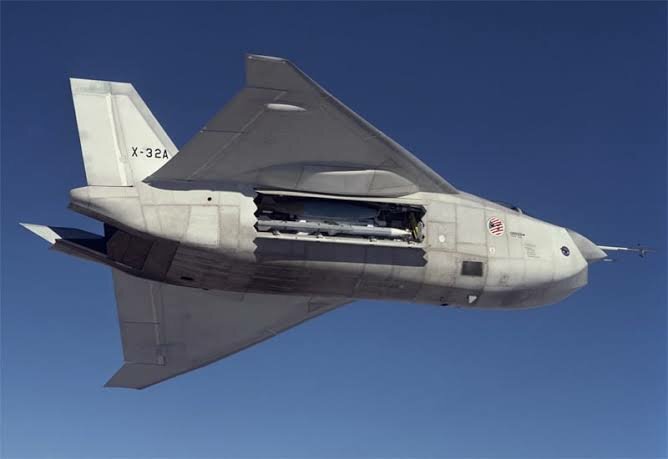
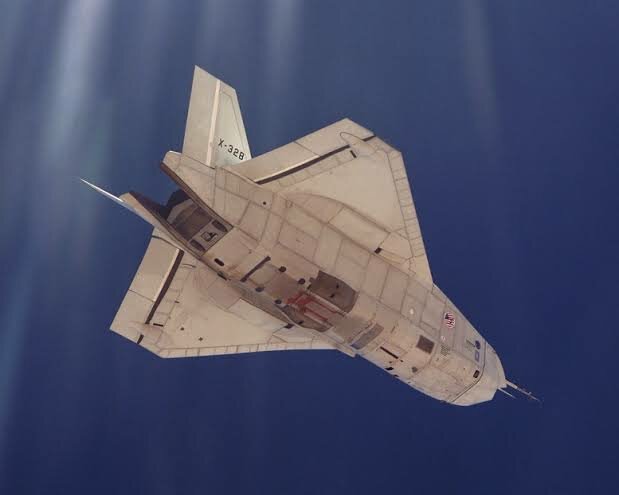
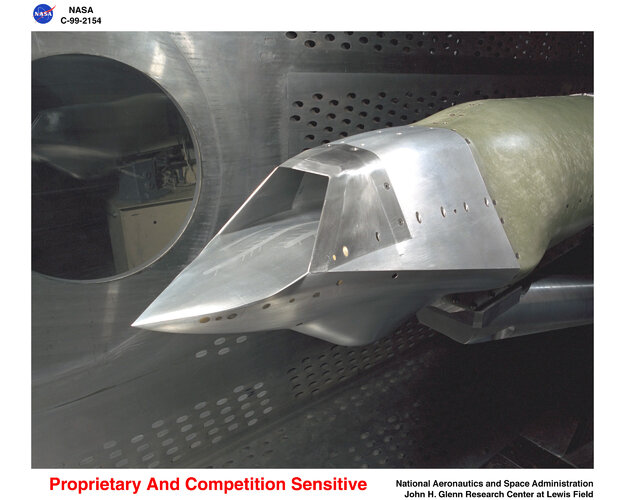
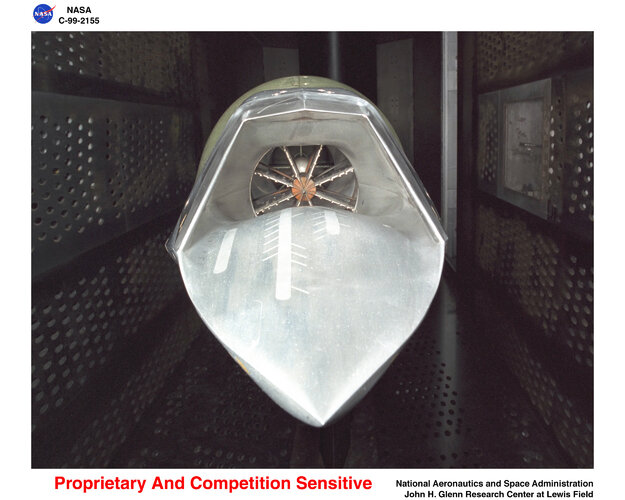
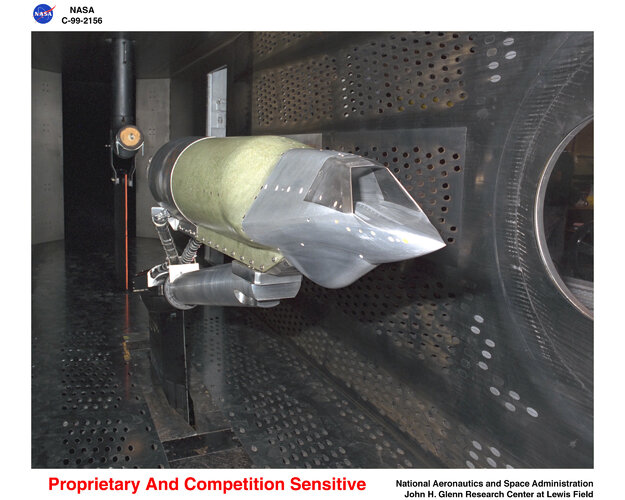
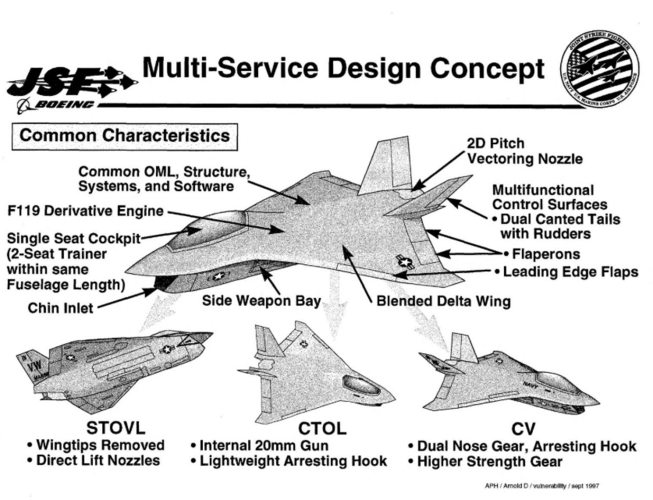
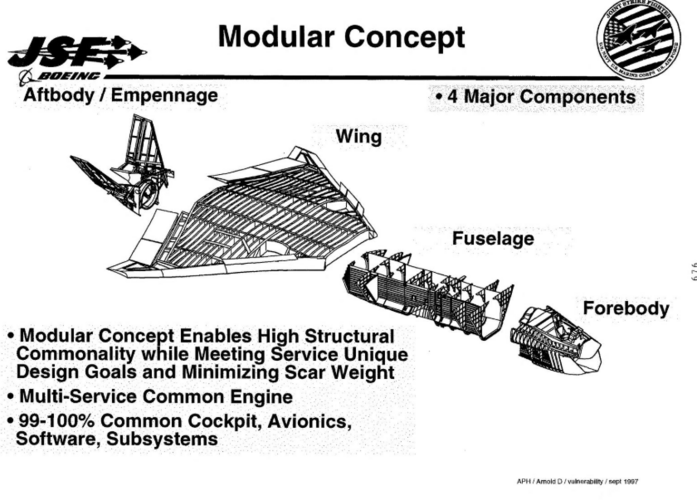
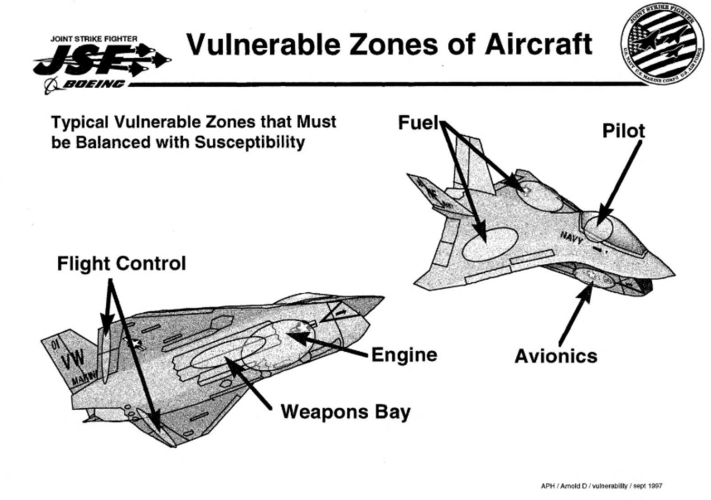
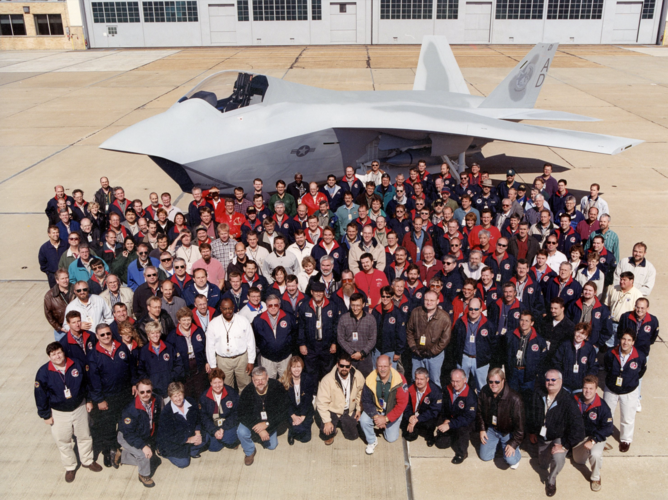
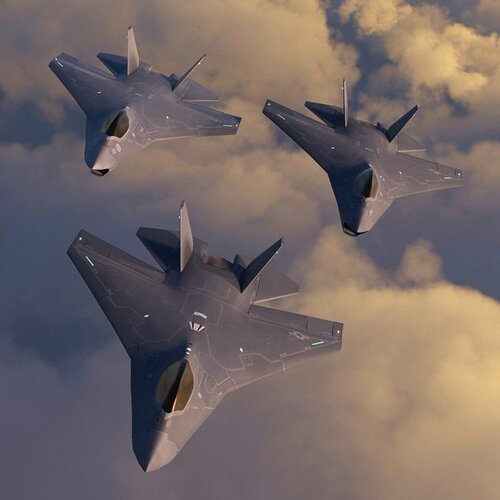
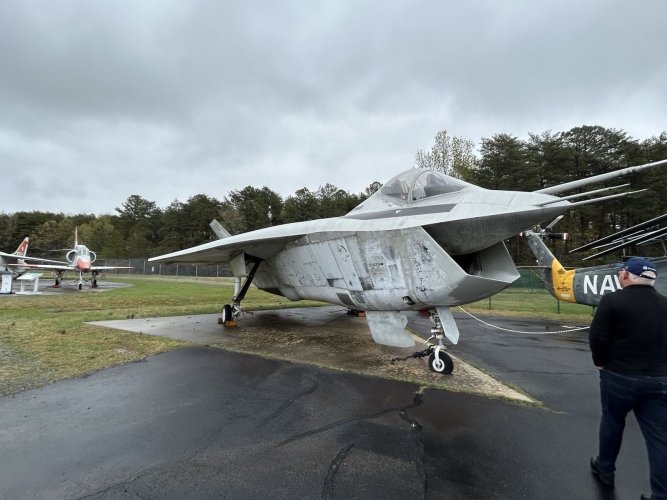
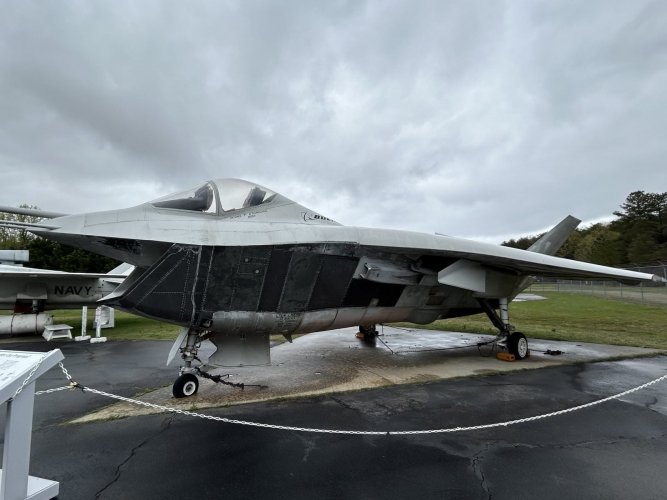
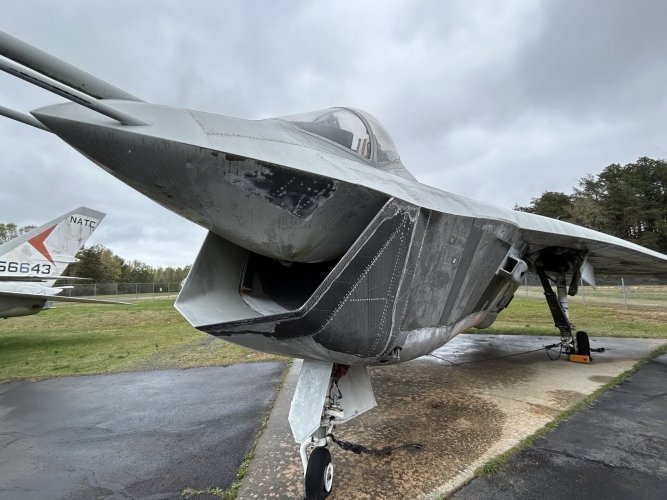
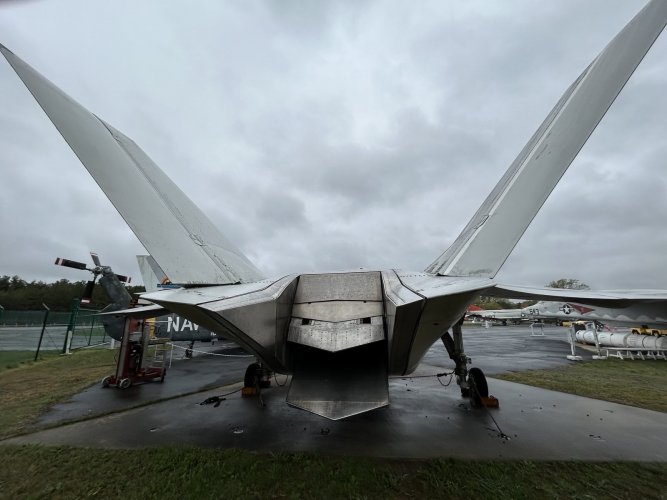
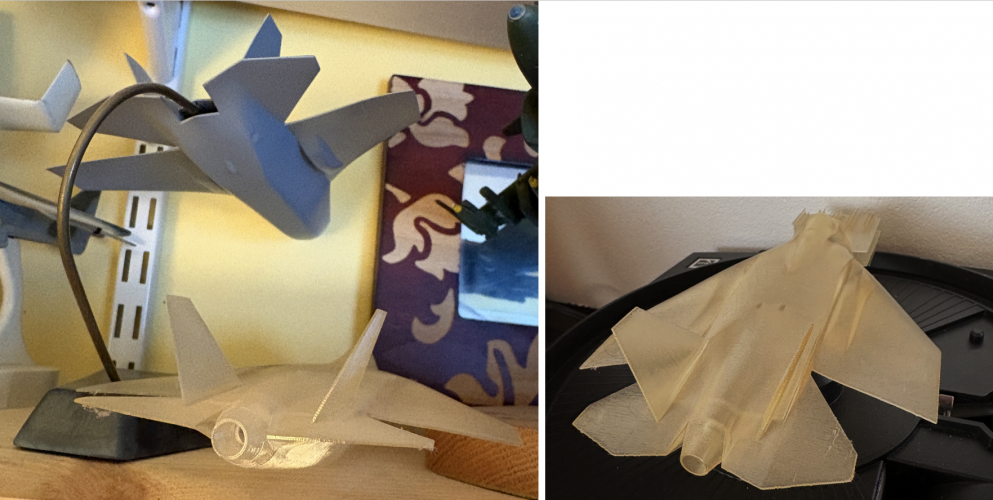
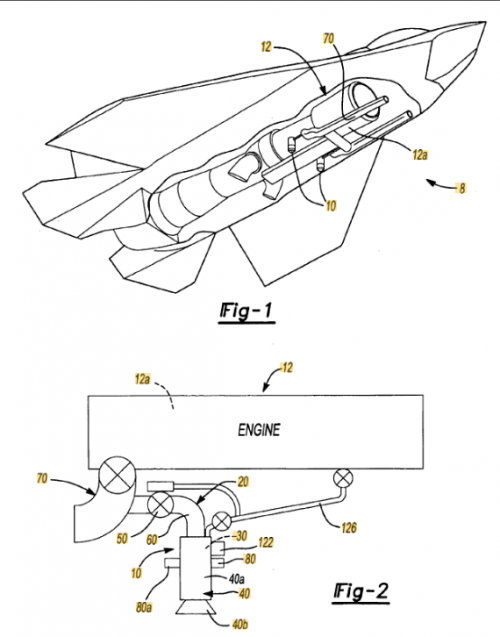
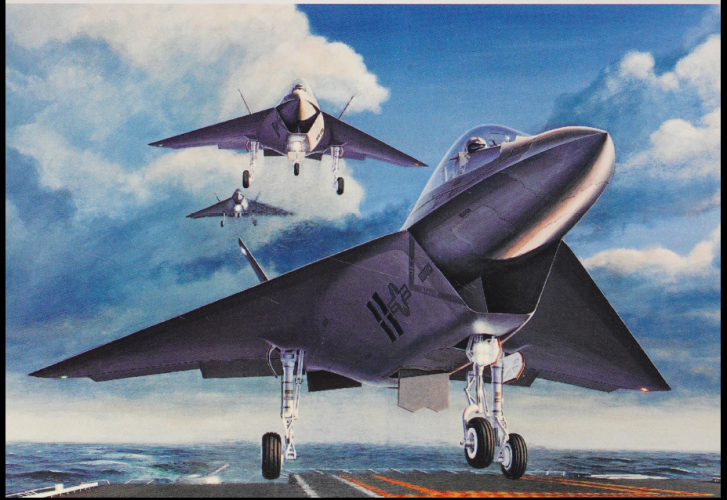
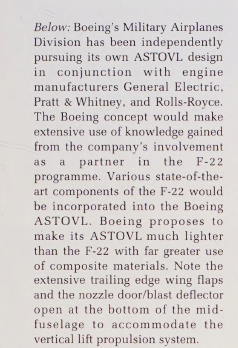
All speculations and opinions aside, the simple fact is that X-32 lost for two basic reasons. (My credentials: I worked on AV-8B, advanced Harrier variants, McDonnell Douglas's ASTOVL and JAST, then Boeing's JSF after the merger.) First, the years-long secret relationship between Lockheed and DARPA to develop and mature the shaft-driven lift fan gave Boeing no choice but to go with what they knew worked. Second, the design effort was going on from Day One of the merger between Boeing and MDC, so all sorts of organizational incompatibilities were having to be fixed, reaching from program control all the way down to the fact that MDC used Unigraphics to design parts while heritage Boeing used CATIA. There was an entire unit in each location whose only task was to take drawings from the other site and convert them from CATIA to UG or UG to CATIA, whichever was needed by that site. This introduced delays and was a significant drain on resources, but not nearly as much as the squabbling over who was in charge of what. The original ugly X-32 tailless delta was purely a Seattle idea, and I believe they had patented it. It wasn't capable of meeting the requirements, as I recall particularly for the USN variant, and it was only after a great deal of time-wasting struggle that a tail section was finally put on the basic design, which, along with the change away from the backward-facing inlet, (in my opinion) made it look 100% better. But it was always overweight, and the basic engine core had been stretched as far as it could be without spending billions to develop a whole new engine. In a very strange move, the St Louis site leadership brought back a senior exec from retirement to secretely form a small team whose charter was to find a way to get rid of the excess weight. I was on that team. It was found that replacing the 2D rear nozzle with an axisymmetric one would buy back the weight we needed. When the axi nozzle was sprung on Seattle, they reacted with vehement negativity to this unexpected and unasked-for St Louis idea. Instead, they revealed in one of our periodic coordination meetings that they were going to fix the weight problem by adding "lift thrust augmentors" (small jet engines) for vertical operations. I was on the conference call where that was announced, and there was consternation not only in St Louis (because we knew the Marines would never accept a multiengine VTOL solution) but also among the Seattle crowd, whose subsystem people objected that they hadn't been consulted about things like what would have to be relocated to make room for these LTAs and how the things were to be provided with fuel and air and electrical power. Whoever was in charge of that meeting told them that the decision had been made, and LTAs were going into the aircraft. I recall that we St Louis people knew the jig was up, and we muted our end of the call and filed back to our desks. We were right. None of this would have happened if the Harrier 21 had been allowed to go forward years earlier instead of being quashed by MDC's ASTOVL group, but that's a whole other story.
You should have 'quashed' the STOVL. Because STOVL (as remote/rough field operations) and stealth do not play well together.
Avionics heavy platforms cannot be made X-Jet downselects.
That X-Jet concept demonstrator is basically just a minimalist set of FLCS rules to make sure the pointy end goes forwards except in datasets A/B/C (STOVL, CATOBAR, Radius At Cruise Point X).
But the airframe is not going to perform to these metrics when you take the AMAD out of the weapons bay and push the engine about 10-12 inches back to allow for the dong and the swivel nozzle to not interact negatively with the ground.
Same deal, with the wide-stance gear. You have just gone from a 4ft gear strut, similar to an F-15 on the X-35, to a 7ft strut akin to the A-6, and from a no-weapons-bay box structure to a cut-to-hollow equivalent. Which means all your carry through for the lap joint is at the top of the airframe as the spars have no push because the side of the airframe box is weakened by the weapons bays cutout of the lower corners.
People forget all this when they 'overlook' the fact that the LM STOVL had a 3,400lb overage from PDR that was NOT solved (or even acknowledged) for CDR where 3.5-4.8% of the airframe weight became 4.8-6% by dint of those massive, forged steel, MLG tubes.
Why is this important for STOVL? Well, it shortened bay and reduced the munition weight which differentiated assembly even beyond the centerline cutout for the SDLF and the Aux tank. It also meant the jet, while nominally running on 14,600lbs of gas was actually going to be taking off on about 10-12,000lbs which meant that the IPP/PTMS had to work about twice as hard and risk getting gummed up by very hot JP as fuel for cooling was marginal.
And this was before they discovered the engine itself had structural rigidity and thermal issues which resulted in an airframe loss after a ridgerunning exercise to wear it the turbine stages.
Hot bay with limited cooling and now you have an avionics problem, like it or not. All of which should have come up up before the TR-1/2 and Blk3.1 switchover on software which 'brought the jet to life'.
It didn't, because SDD was not FSD but rather some kind of EMD as a mad rush to reach production. And so, together with the lingering weight issues and the refusal to decouple the tactically/operationally worthless STOVL, led to a second Nunn McCurdy breach which saw a 2012 F-35A become a 2016 F-35B IOC as the least capable variant became the production start lynch pin at a time when the USN/USMC TAMP 2001 agreement had already severely cut back the 620+580 numbers to something like 450 and 250, leaving the USAF stuck with the full meal deal ticket.
And a dead F-22 program.
Speaking of which, the F-22 spent 50% of its 60 billion R&D on the ICNIA/INEWS/URR combination.
MIRFS and the EO Turret on the X-32 needed proving as much as the DAS/EOTS on the X-35. Because when you push STOVL _and_ Stealth together to get the least useful, least produced (thanks Britain) airframe under the door, on a 460nm radius guarantee, that issue with using fuel to dump waste heat while having a hot weapons/engine bay (with the IPP right above the engine) is going to haunt you.
And all the while, your up and away performance is not even being considered. So when the numbers start looking bad, with a 8-16-43 second KPP acceleration lag and a you 'change the upper modl line just a little' (adding 6" to the spine and recontouring everything under it to get more gas _for cooling_) the already overweight STOVL jet now is at critical weight and environmentals which it can't even take advantage of because it's already below takeoff weight margin without the mandatory fuel offload and Golly Wally, the Corps doesn't have a tanker to make up the radius or the PTMS difference.
STOVL destroyed the F-35. For schedule, for weight, for systems function. For damn near everything.
Now look at the Boeing design. Drop the ten foot exhaust tube, push the engine to the back end of the jet where it belongs. Push a long weapons bay under a vertical serpentine with natural DSI on the nose to further plug the basking shark inlet mouth (zero speed mass flow is a STOVL problem) and finally give the radar the antenna face area it needs to have more than APG-68 performance and you are left with... An Su-75.
All of which only really becomes obvious when the PWSC configuration (of the X-32) adds the tail booms as suspension structure, hanging off the rear of a jet whose implicit weight issues are not configurational but material (thermoset vs. thermoplastic composites) in nature. And so have to go regardless, to eliminate the unobtanium problem.
I am not fond of the JSF. I think JAST should have been a missile and the targeting for that weapon should have been by a 20-30hr UCAV. But if you are going to wring out a horribly concurrent system, then _do it_. By making the CD/SDD (FSD) phase something like an iterative testing process for what is now, by far, the most critical platform element of system stuff, not moldline freeze.
Within that context, both manned jets should have been funded with the DARPA X-45A UDS/ODS phaseline acting as a 'technology relief' feeder so that when both the big bad union jets went over budget and under promise on the avionics side, the ORIGINAL INTENT of the JSF program, to be a receiver node, not a sensor node, could have been the means to offload the excesses implied.
Because you don't want a stealth platform which is also an RF (ROBE/BACN) lighthouse.
Unfortunately, dumb people just don't think past the pilots-vote-for-generals-who-become-chiefs-of-staff the political side of procurement. Those kinds of procurement officials are a contagion spread throughout the acquisition process.
On purpose.
Which is why we no longer see major improvements in performance or mission roles, consequential to maintaining the generational lead ahead of our enemies, real or imagined.
Because today's tripartite air forces are so busy ensuring the manned uber alles approach to $hared guilt that they never think about whether having yet another F-111 is a good idea.
Strange how people who were trained to fight Communism, a little over 30 years ago, now use group think as a circle-the-wagons weapon.