The AIM-9B and its' Soviet AA-2A Atoll derivative didn't use thermal-batteries, they were powered by hot-gas driven turbogenerators (The hot-gas was supplied by a solid-propellant gas-generator and also energised the control-fin servo-actuators).
Yes that is me using thermal battery as short hand for gas generator operating time. I do not know of a single Soviet missile that does not use turbo generators. Perhaps the Malyutka ATGM which uses compressed air.
You shouldn't use the terms interchangeably as they're two completely different means of generating electrical-power, the technical term for a thermal-battery is a molten-salt battery.
You shouldn't use the terms interchangeably as they're two completely different means of generating electrical-power, the technical term for a thermal-battery is a molten-salt battery.
Thermal batteries use an electrolyte that is solid and inactive at ambient temperatures. They can be stored indefinitely (over 50 years) yet provide full power in an instant when required. Once activated, they provide a burst of high power for a short period (a few tens of seconds to 60 minutes or more), with output ranging from watts to kilowatts. The high power is due to the high ionic conductivity of the molten salt (resulting in a low internal resistance), which is three orders of magnitude (or more) greater than that of the sulfuric acid in a lead–acid car battery.
One design uses a fuze strip (containing barium chromate and powdered zirconium metal in a ceramic paper) along the edge of the heat pellets to initiate the electrochemical reaction. The fuze strip is typically fired by an electrical igniter or squib which is activated with an electric current.
This says nothing about MiG-25P export. I don’t have to listen if you don’t provide a source or a good reason. And please list the source of the statement or it can never be trusted
Of course because MiG-25P was never exported at all. Do you ever heard for the LITER codes,LITER programmes and LITER working frequencies anyway? Do you know that those LITER .... are not the same for the Soviet/Russian AF and countries/AFs in which some fighters were exported. Also about that IFF codes was not the same for the VVS (WP) AF's and those non -WP AF's . So forgot that stupid story that MiG-25P was outside USSR except the case from 6 Sept. 1976 ( Hakodate airport in Japan).
In the meantime ,keep in mind what happened to about 30 MiG-29S/9.13S ,which were not acquired by the VVS in 1992. During 1990's and after 2000 they were exported as MiG-29SE(9.13SE) ,not as MiG-29S/9.13S of course.
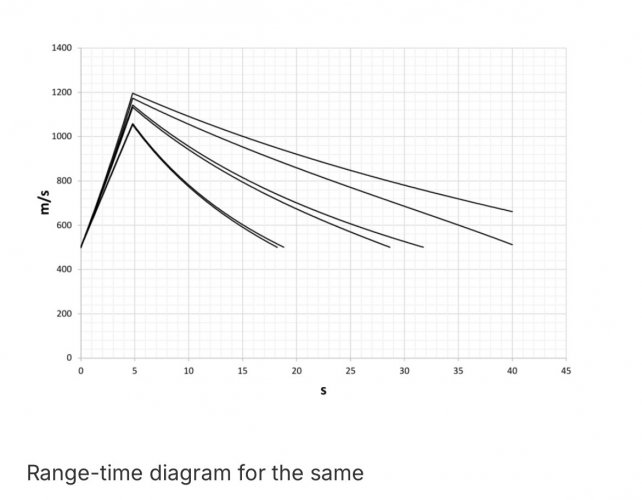
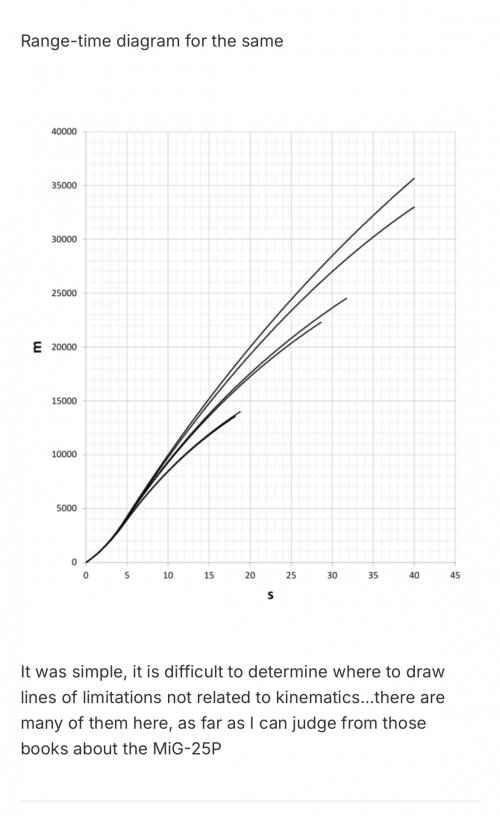
Just becuase it is ballistically possible does not mean the airplane can make it happen. Just like R-27ER could theoretically fly 200 km if it was not limited by battery.
Obviously you didn't understand.Yes,, it is possible and test version K-27E (w/o its guidance unit/seeker) flew about 100km ( not 200 km) , with the full aerodynamic controllability and stability.That practice test result enabled for R-27ER/EP to be used from 130 km away (as max authorised launch range against bigger incoming air target).
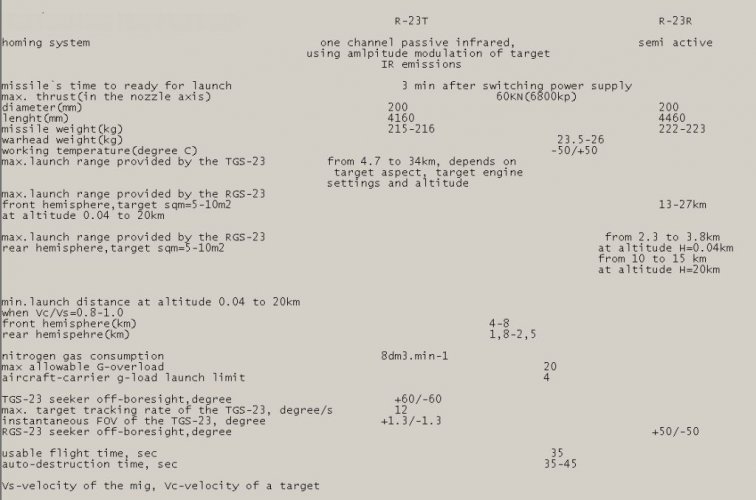
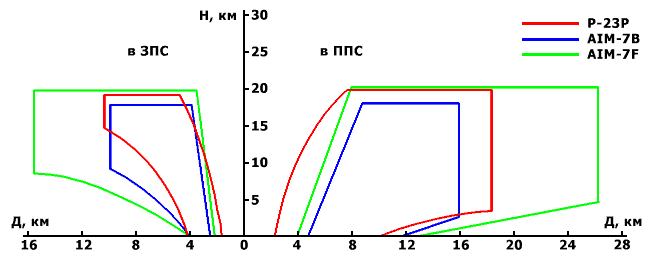
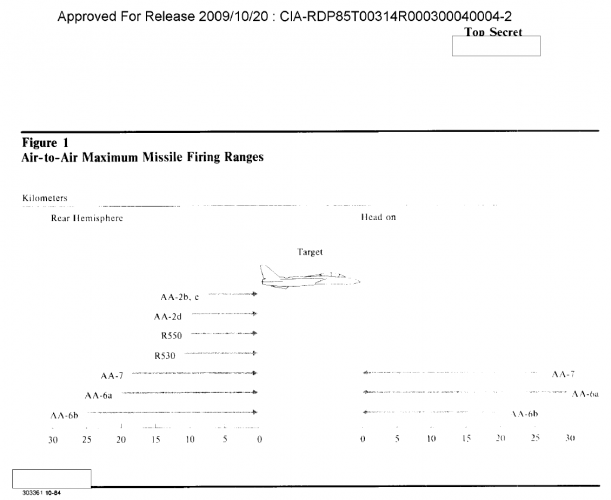
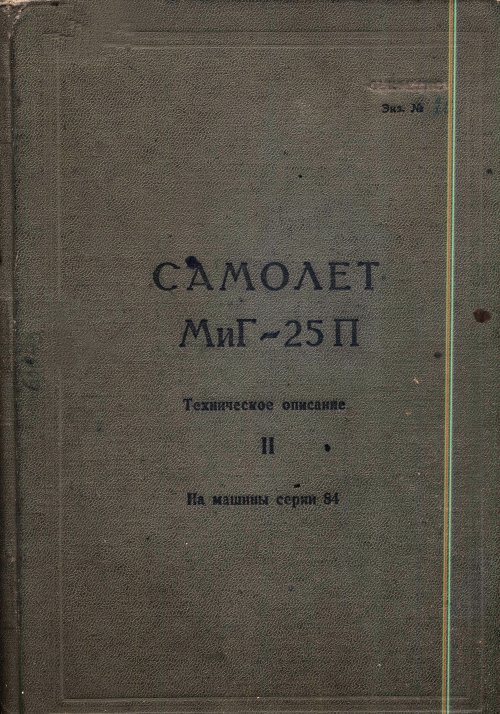
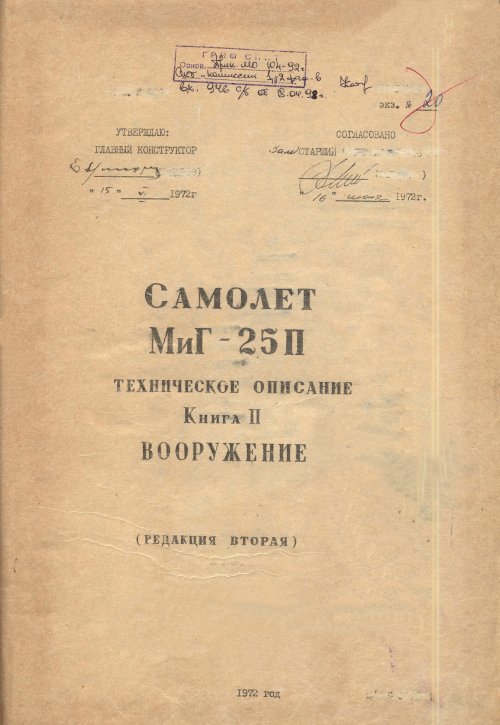
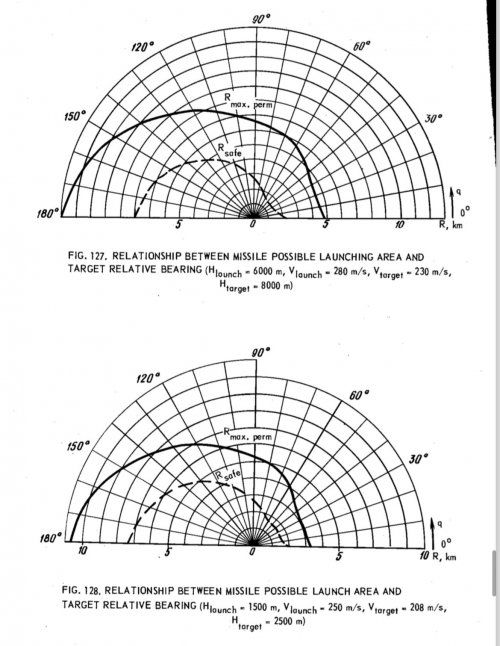
Read the manuals if you really want to learn about R-40 from a place that is unbiased and not trying to turn the missile into some 80-100 km missile. The example with the highest max launch range for R-40R you will find in the book is 35-40 km for good reason.
The “range” It says here of 62 km is for the beginning of the zoom climb/dive if you read the previous portion of the book with Rm. max is max missile range.
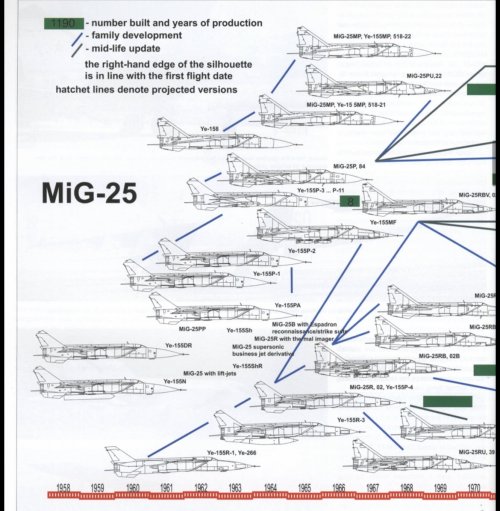
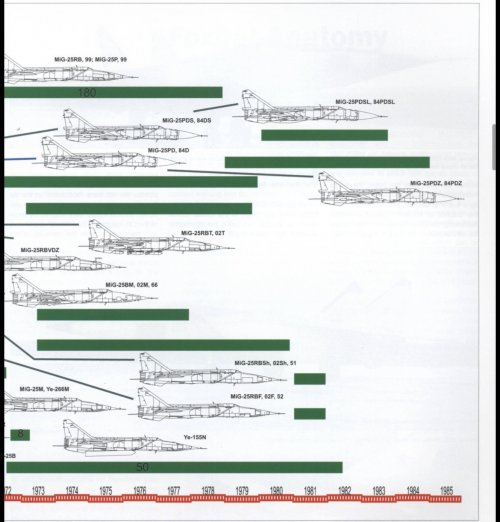
PDS is a P upgraded to PD standard. PDE is export PD. Anything that says otherwise is incorrect. Misinformation becuase of the lack of primary sources causing people to get this wrong occasionally does not make it incorrect. It just means they are not aware that Smerch is not plug and play with S-25 weapon complex and IRST is not plug and play with 25P weapon complex. One person got it wrong and parroted it to the next source.
There is no reason for Iraq to operate 3 different variants when the whole idea was to buy PD and upgrade all P models to PDS and unify them to one standard.
Exactly and PDE was the export version for the mentioned countries from 1978/79 .Iraqi AF in fact received some PDSG not PDS ( if you didn't know that ), with the SPS-161E 'Geran-E' active jammer stations.Besides PDE/PDSG ,many AF's have recce versions of the RB like RBV ( Virazh ), RBT ( Tangazh) or RBSh( Shompol) recce stations. Of course, they also received two-seaters, PU/RU.So they have PDE/PDSG/PU and RB (some subversions) and RU.
you ever heard for the LITER codes,LITER programmes and LITER working frequencies anyway? Do you know that those LITER .... are not the same for the Soviet/Russian AF and countries/AFs in which some fighters were exported. Also about that IFF codes was not the same for the VVS (WP) AF's and those non -WP AF's . So forgot that stupid story that MiG-25P was outside USSR except the case from 6 Sept. 1976 ( Hakodate airport in Japan).
How is this relevant? I’ve found multiple sources from dedicated aviation historians talking about Iraq having 25P in 1980. What source says 25P was never exported? You only showed me date of production last time this was asked.
According to the MiG bible published by MiG other countries got them as well. Thank Belelenko for making 25P no longer sensitive.
Yes becuase its turbo generator only lasts 60 seconds. What I mean was that if “R-40 can hit a target 50 km away so it can’t be limited to 35-40 km” is illogical statement of yours. If R-27 had a longer lasting turbo generator yes it could fly 200 km, your precious R-33 could fly 200 km also with a longer turbogenerator and go nearly as far as AIM-54 if it could loft.
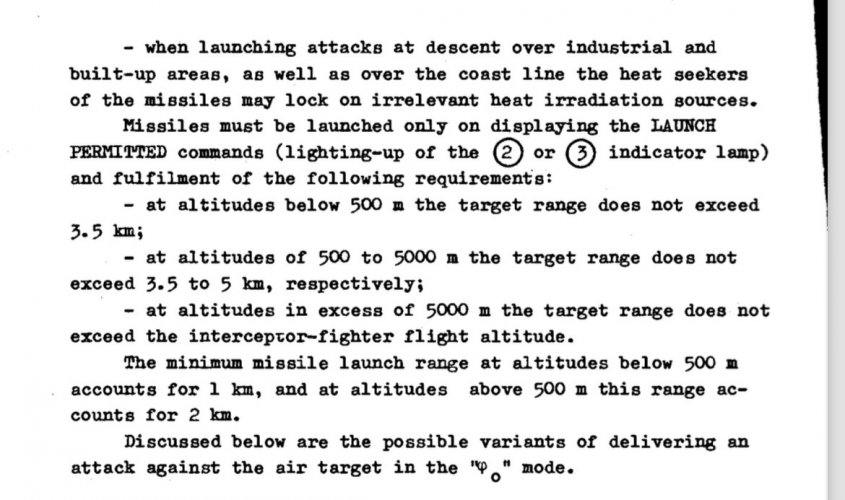
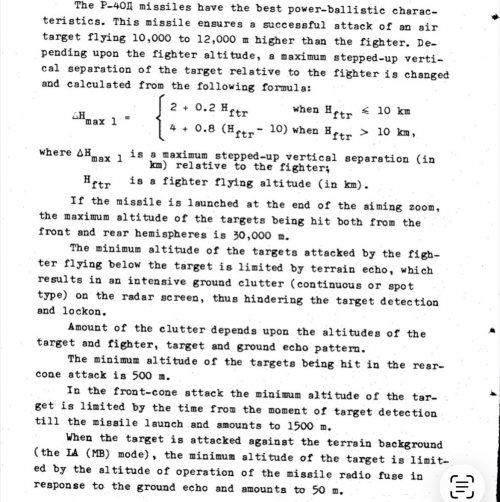
But they don’t. Missiles have limits that sometimes kick in before missile runs out of energy. Designers must think about all aspects and what if target maneuvers or turns around decreasing range. I am saying that “becuase the missile can hit farther range then 35-40 km it can’t be limited to this range by seeker” is an illlogical argument when we look at missile history. No missile is without limits. And 35-40 km is awesome for the time especially considering that Lazur will be often set up for side or rear aspect conversion or lower altitudes. Remember at 8-10 km the missile only goes 3-10 km. On the deck it goes no more then 3-6 km or so. Also since MiG-25 is slower then MiG-23 below 13 km altitude.
It would still be 35-40 km range max as manual states that is R.max for the missile and by no coincidence other sources put seeker range at 35-40 km and books say practical quoted max range was 30 km.
At 35-40 km the light showing seeker has lock will likely turn on telling you the missile will guide and may even hit target if inside range with LP.
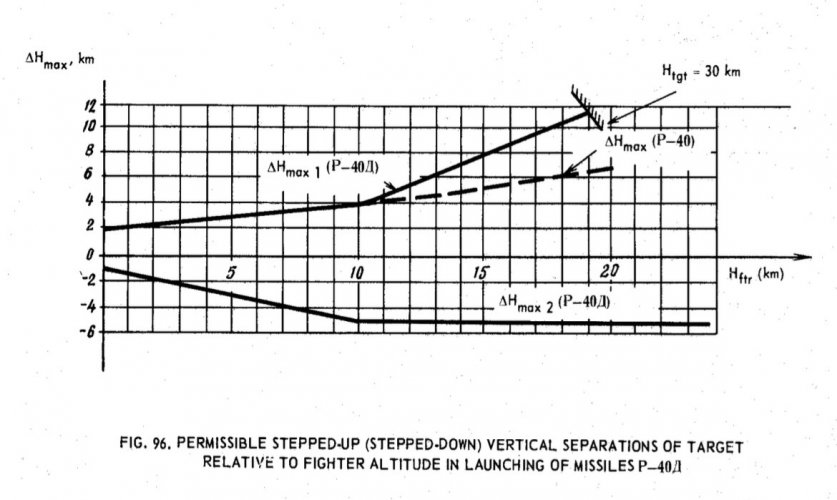
The missile will as a byproduct have extra energy in case the target maneuvers or goes cold as Dr.max2 is equal to rear aspect range. And pilots are instructed to fire once at Dr.max1 and again at Dr.max2.
Exactly and PDE was the export version for the mentioned countries from 1978/79 .Iraqi AF in fact received some PDSG not PDS ( if you didn't know that ), with the SPS-161E 'Geran-E' active jammer stations.Besides PDE/PDSG ,many AF's have recce versions of the RB like RBV ( Virazh ), RBT ( Tangazh) or RBSh( Shompol) recce stations. Of course, they also received two-seaters, PU/RU.So they have PDE/PDSG/PU and RB (some subversions) and RU.
Source? I only see data for one PDSG made. I know Iraqis loved their Beryoza SPO-15 and put it on everything.
And PDS program started in 1979 and was not complete until 1982 one year before Iraq had their P models updated to PDS and purchased PD. How did Iraq get the single PDSG in 78 when PDS program was not complete until 82 and the single PDSG did not fly until 1983?
I haven’t seen anything yet that says P wasn’t exported
you ever heard for the LITER codes,LITER programmes and LITER working frequencies anyway? Do you know that those LITER .... are not the same for the Soviet/Russian AF and countries/AFs in which some fighters were exported. Also about that IFF codes was not the same for the VVS (WP) AF's and those non -WP AF's . So forgot that stupid story that MiG-25P was outside USSR except the case from 6 Sept. 1976 ( Hakodate airport in Japan).
How is this relevant? I’ve found multiple sources from dedicated aviation historians talking about Iraq having 25P in 1980. What source says 25P was never exported? You only showed me date of production last time this was asked.
According to the MiG bible published by MiG other countries got them as well. Thank Belelenko for making 25P no longer sensitive.
Yes becuase its turbo generator only lasts 60 seconds. What I mean was that if “R-40 can hit a target 50 km away so it can’t be limited to 35-40 km” is illogical statement of yours. If R-27 had a longer lasting turbo generator yes it could fly 200 km, your precious R-33 could fly 200 km also with a longer turbogenerator and go nearly as far as AIM-54 if it could loft.
But they don’t. Missiles have limits that sometimes kick in before missile runs out of energy. Designers must think about all aspects and what if target maneuvers or turns around decreasing range. I am saying that “becuase the missile can hit farther range then 35-40 km it can’t be limited to this range by seeker” is an illlogical argument when we look at missile history. No missile is without limits. And 35-40 km is awesome for the time especially considering that Lazur will be often set up for side or rear aspect conversion or lower altitudes. Remember at 8-10 km the missile only goes 3-10 km. On the deck it goes no more then 3-6 km or so. Also since MiG-25 is slower then MiG-23 below 13 km altitude.
It would still be 35-40 km range max as manual states that is R.max for the missile and by no coincidence other sources put seeker range at 35-40 km and books say practical quoted max range was 30 km.
At 35-40 km the light showing seeker has lock will likely turn on telling you the missile will guide and may even hit target if inside range with LP.
The missile will as a byproduct have extra energy in case the target maneuvers or goes cold as Dr.max2 is equal to rear aspect range. And pilots are instructed to fire once at Dr.max1 and again at Dr.max2.
Exactly and PDE was the export version for the mentioned countries from 1978/79 .Iraqi AF in fact received some PDSG not PDS ( if you didn't know that ), with the SPS-161E 'Geran-E' active jammer stations.Besides PDE/PDSG ,many AF's have recce versions of the RB like RBV ( Virazh ), RBT ( Tangazh) or RBSh( Shompol) recce stations. Of course, they also received two-seaters, PU/RU.So they have PDE/PDSG/PU and RB (some subversions) and RU.
Source? I only see data for one PDSG made. I know Iraqis loved their Beryoza SPO-15 and put it on everything.
And PDS program started in 1979 and was not complete until 1982 one year before Iraq had their P models updated to PDS and purchased PD. How did Iraq get the single PDSG in 78 when PDS program was not complete until 82 and the single PDSG did not fly until 1983?
How is this relevant? I’ve found multiple sources from dedicated aviation historians talking about Iraq having 25P in 1980. What source says 25P was never exported? You only showed me date of production last time this was asked.
According to the MiG bible published by MiG other countries got them as well. Thank Belelenko for making 25P no longer sensitive.
It would still be 35-40 km range max as manual states that is R.max for the missile and by no coincidence other sources put seeker range at 35-40 km and books say practical quoted max range was 30 km.
No ,it will be not. Keep in mind that one Manual for one fighter stated that 'max range ' for one AAM is 50-60km in head-on. Than another book ( valuable and very interesting one) stated with that same AAM is possible to engage target from 90km. 50% more. Suppose that you know which Manual, which fighter and which other book is that.Manual is the not only kind of valuable book (of military origin).
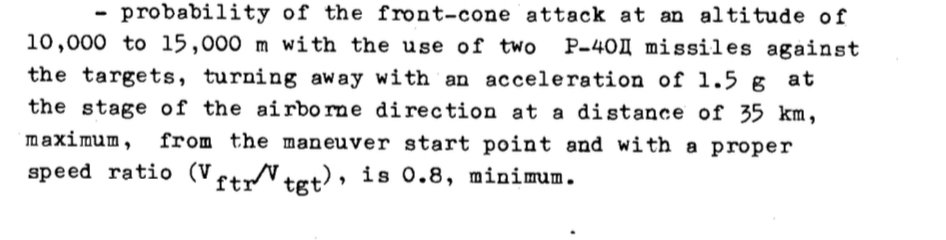
Again ,imagine, max possible flight/launch parameters : Vmax 3000km/h or about 900m/s,Hmax 20+km, Vclosure 2000m/s ,increasing of the speed of launched AAM by about 700m/s ,40sec controlable flight time etc etc...Launch distance? 35-40km, aha. Even your source mentioned 57-62km ( for the given case).
Source? I only see data for one PDSG made. I know Iraqis loved their Beryoza SPO-15 and put it on everything.
And PDS program started in 1979 and was not complete until 1982 one year before Iraq had their P models updated to PDS and purchased PD. How did Iraq get the single PDSG in 78 when PDS program was not complete until 82 and the single PDSG did not fly until 1983?
Find it. So Iraqis have next versions : P,PD,PDS and PDSG ? Where is the PDE btw ? As I can see ,you didn't know some details. During 1983, 97th fighter sqn got some 'Geran' equipped PDSG. In fact ,there was no some 'conversions' from PDE to PDSG.
PS
And finally to end this all rhapsody...What about that ''max scan rate of the airborne radar antenna'' ( of course in the case when R-40R is launched) . That is translation and it was very good tranls ,btw from the Manual which Mamoran posted .
So what did old ( pulse only,Low PRF only ) radar RP-25 Smerch-А (А1,А2/Е,А3) after SARH missile R-40R is /are launched? Very simple, it searched and tracked inside of the given radar envelope just as all other radars with mech. scanning did from the beggining of the 1970's ...
And yes ,I've read your comment on the MiG-29 avionics thread.Now think about your conclusion ....
38 PD models were exported in 1984 8 years after the defection. What’s your point? They wanted to give out P since it was no longer sensitive. PD production ended in 83-84 and PDS program finished in 83. I do not know why that means P wouldn’t be exported? Tell me, why are aviation historians wrong about P export? Becuase things took a couple years??
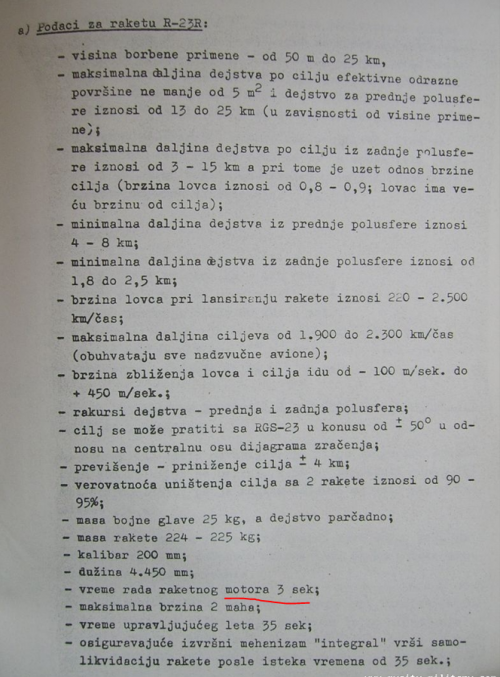
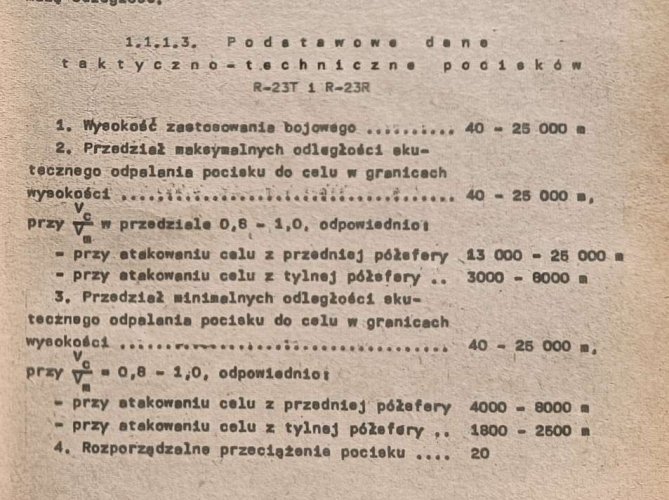
I’m sorry what manual? I attached a page of Yugoslavian evaluation showing 50-60 km for R-25 which was their name for R40RD and TD. Other specs on the same page show this such as warhead and guidance. No manual for R-40R is stating 50-60 km you are incorrect.
And tell me, what states 90 km??? I asked this a while ago and you send me quote about max lock on of Tu-16 at 90 km with Smerch. I hope you have a better source for this statement then Smerch range against bombers.
Again ,imagine, max possible flight/launch parameters : Vmax 3000km/h or about 900m/s,Hmax 20+km, Vclosure 2000m/s ,increasing of the speed of launched AAM by about 700m/s ,40sec controlable flight time etc etc...Launch distance? 35-40km, aha. Even your source mentioned 57-62km ( for the given case)
If you can’t comprehend that the designers had a seeker limit and did not let them stop making the missile having good range in side and rear aspect which was the norm at the time then you will not have good luck studying anything Soviet or old tech.
If we make it slower so it only has ballistics for 35-40 km launch range at high altitude then it will have much worse side and rear aspect range AND much worse range at any altitude from 12 km or less or even higher since it only goes 10 km MAX with 8 km launch altitude and only 3.5-5 km at low altitude.
Bisnovat had no obligation to make “max ballistic range able to be reached in front aspect Mach 2 fighter at max altitude.” You are ignoring side aspect. You are ignoring rear aspect. You are ignoring any altitude really below 12-15 km. And you are ignoring that Soviets were aware of this limitation and made the improved variant able to use its full abilities against non or minimally maneuvering targets.
Just becuase you want a missile to not be limited by seeker range in a max front aspect range condition and ignore side/rear aspect and lower altitudes and the improved version showing this limit was something they wished to improve does not mean that is the reality of when this seeker was designed in 60s. Can you make a seeker of the same size have 35-40 km range with no CW?
60s and 70s had technological limits. It’s okay. You Have no problem with R-27 or R-33 having a limitation on maximum range placed by turbo generator operating time and datalink distance. Why is “only 35-40 km range at high altitude in 60s/70s oh my god all these half dozen primary sources must be wrong becuase I think so” a big deal when turbogenerator and datalink is limit in other cases and you’re fine with it?
IR missiles are limited in front aspect detection. Yet R-27ET is still made despite having similar front aspect range as R-27T because there are more things in the world to use missiles for then only front aspect high speed high altitude planes.
Soviet Union accepted this limitation. It was very likely their requirement for original MiG-25 was 35-40 km range max and that bisnovat achieved this requirement. Pilots accepted this limit. The writers of all these sources accept this limit. Why can’t you? What rule is there saying max range has to equal ballistic range in all conditions?
If missile can always reach its full ballistic range with seeker lock front aspect, why does R-40RD get pseudo kinematic link? There is no reason otherwise……
If you wanted a missile that reaches ballistic limit at same time as seeker limit in front aspect you will have much worse rear aspect range then stated 16 km. You will have much worse side aspect range then 35-40 km. You will have much worse range at 0-12 km altitude then 3.5-10 km.
They were technologically limited, I do not see how that is surprising in 1960s Soviet Union. Even Markovsky’s missile book mentions the seeker limitation for R-40R.
Find it. So Iraqis have next versions : P,PD,PDS and PDSG ? Where is the PDE btw ? As I can see ,you didn't know some details. During 1983, 97th fighter sqn got some 'Geran' equipped PDSG. In fact ,there was no some 'conversions' from PDE to PDSG.
They had P PD and PDS according to Yefim Gordon and Piotr Butowski and Tom Cooper. PDE is a fake designation applied to export PD. MiG bible published by Mikoyan themselves also confirms this.
They also only mention one PDSG built which stayed in Soviet Union. Every source I see says this is a one off. What is your source for it being in Iraq? I keep asking for sources then you reply without sources, such statements can’t be trusted I hope you realize especially when you keep asking me for sources and I always oblige.
What about that ''max scan rate of the airborne radar antenna'' ( of course in the case when R-40R is launched) . That is translation and it was very good tranls ,btw from the Manual which Mamoran posted .
So what did old ( pulse only,Low PRF only ) radar RP-25 Smerch-А (А1,А2/Е,А3) after SARH missile R-40R is /are launched? Very simple, it searched and tracked inside of the given radar envelope just as all other radars with mech. scanning did from the beggining of the 1970's ...
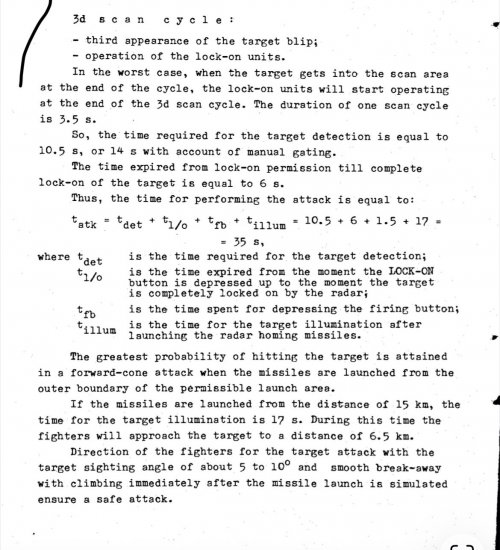
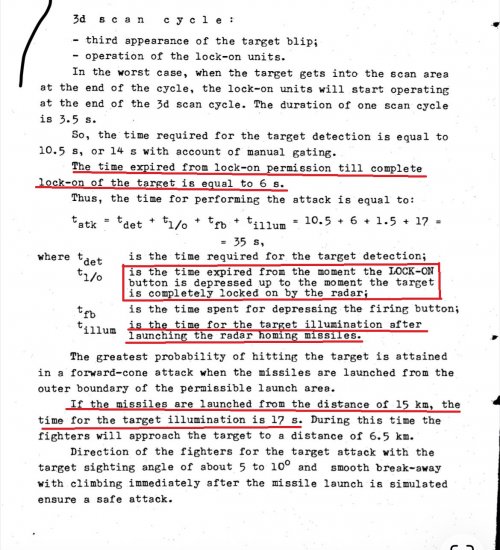
Oh my god not again. It locked. It kept lock on the single target. The manual says this if you read it and you should know where to find it. Gee I wonder why it says above the radar needs illuminate the target for 17s for a shot with precisely 17s flight time……
It has no CW and is just locking, and literally everyone else that has posted here agrees with this except you. You cannot put a topic to rest by saying “the radar continues to search while missile guides OKAY TOPIC OVER” lol. Just look at the pictures of the radar display during guidance in the manual. I said “this should put argument to rest” in other thread becuase I finally found definitive evidence of what we were discussing.
Please read the manual if you really are curious.
If radar searches during missile guidance I wonder why I press break lock to go back to search mode after impact…. Oh no let me just not read this P manual which has the truth and shows locked target throughout missile guidance phase with pretty pictures.its even less then 200 pages!
If you wish to talk to people about MiG-25P radar specifics during missile launch. Please read the manual atleast section on avionics and combat carefully then come back here instead of telling people who read the manual multiple times they are wrong.
“Why does Soviet Union not have the technical expertise in the 60s to make a missile with more range then its seeker in one highly situational aspect and altitude even though ballistic range is less then seeker range at any other aspect or low to medium altitude at any aspect? How can sources say SU had a technical limitation in 60s!” It’s easy to make a missile go far. Rocket motors are easy to make. Guidance is another issue. I’m sure the pseudo kinematic link was added to R-40RD for no reason……
Oh no my pretty front Aspect high Altitude target turned after I fired! I’m so glad my missile has extra energy and wasn’t engineered only for a front aspect high altitude target that flies straight and doesn’t maneuver!
“Manual says Rm.max is max missile range and equal to 35-40 km. What did they mean by this???”
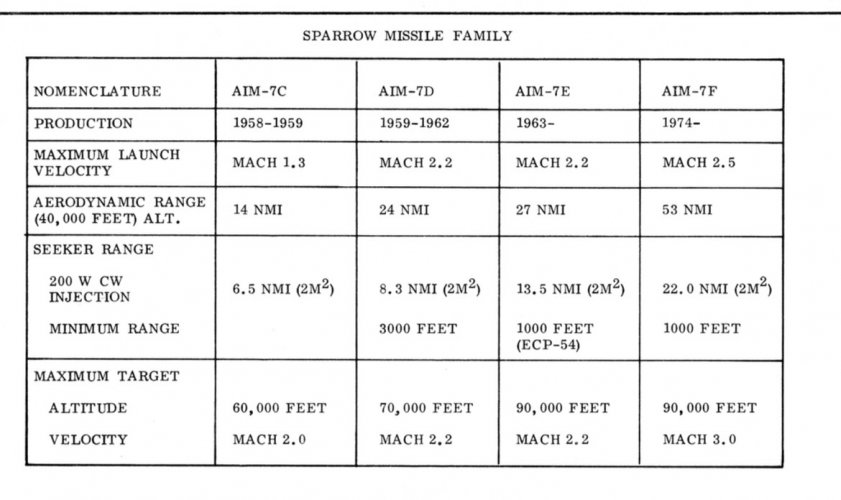
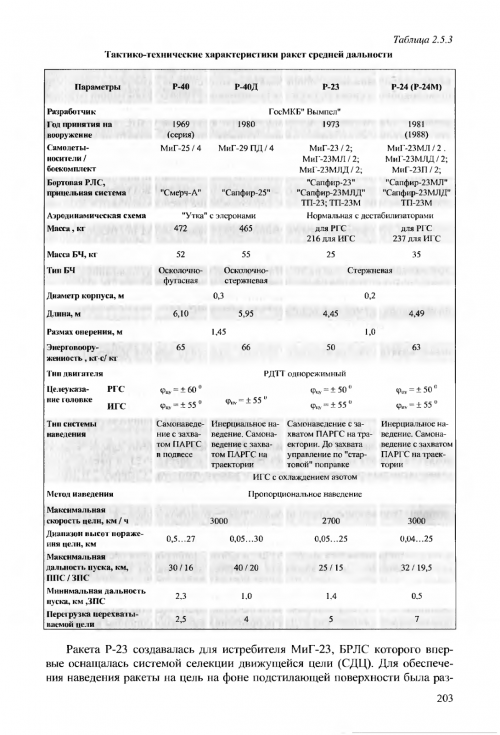
Even Sparrow is a very limited seeker range of 13.5 nm for E and 22 nm (and this is 1963-74 in America) using CW, (which R-40R isn’t using). R-23 was limited to seeker range of 15-27 km limiting its range a lot until R-24 introduced pseudo kinematic link. R-27 is even larger and wasn’t able to improve this except through datalink. R-24 is also 25 km seeker limit vs fighters and R-40RD uses the same seeker. The pseudo kinematic link also isn’t perfect solution since it has trouble with maneuvers of target before entering seeker range which we see fixed with radio correction for R-33/R-27, in 80s. Technology don’t always improve as fast as we want.
You will even find references in many Russian books about missiles and avionics admitting that SU had worse receiver sensitivity in their avionics then US and that radar avionics overall lagged behind the US.
As you see, ballistic AIM-7 range can also far exceed the seeker distance. So why is 35-40 km Rm.max wrong? AIM-7 did not get LOAL until AIM-7P. Using Pulse Doppler illumination instead of CW they were able to increase seeker range for F-14/15/16/18, and MiG-25P is not Pulse Doppler.
Raytheon and Americans were okay with this at the time. So why shouldn’t Soviet Union and pilots have understood perfectly well that limitations may limit max range before the missile runs out of speed in some cases?
R-23
They had P PD and PDS according to Yefim Gordon and Piotr Butowski and Tom Cooper.PDE is a fake designation applied to export PD. MiG bible published by Mikoyan themselves also confirms this.
''Самолет МиГ-25П, созданный в начале семидесятых годов и являвшийся частью наиболее совеpшенной системой пеpехвата в ПВО, поначалy не был пpедназначен для пpодажи на экспоpт. Hе оснащались им и полки, pазмещенные за пpеделами СССР - на теppитоpии госyдаpств ОВД. Положение изменилось после пеpелета В.Беленко. Раскpытие секpетов МиГ-25 позволило снять экспоpтные огpаничения и пеpедать самолеты МиГ-25 в стpаны, дpyжественные СССР. Специально для этого был pазpаботан ваpиант самолета МиГ-25ПД, МиГ-25ПДЭ. Hа нем yстановлена РЛС "Смеpч-А2Э", адаптиpованная к пpименению pакет Р-60М.''
''The MiG-25P, developed in the early 1970s and part of the most advanced air defense interception system, was initially not intended for export. Nor were regiments stationed outside the USSR, in the territories of Warsaw Pact countries, equipped with it. The situation changed after V. Belenko's flight. The disclosure of the MiG-25's secrets made it possible to lift export restrictions and transfer the aircraft to countries friendly to the USSR. A variant of the MiG-25PD, the MiG-25PDE, was developed specifically for this purpose. It is equipped with the Smerch-A2E radar, adapted for the use of R-60M missiles.''
Btw, only about 150 new PD's were serially produced in the Gorky aviation plant and some of them were in fact PDE for the export to Algeria,Syria,Iraq and Libya. Serial production of the MiG-25PD and PDE stoped in the time when MiG-31 serial production in the same plant began and it was during 1979.All 'P' as basic version produced earlier were overhauled and modernised to PD with designation PDS.It was done in the Rzhev aviation repair plant.They got radar N005 Sapfir-25 and TP-26Sh-1 with R-40RD/TD as we know.Aslo there was completely new IFF system because it was exposed thanks to V.Belenko.
Oh my god not again. It locked. It kept lock on the single target. The manual says this if you read it and you should know where to find it. Gee I wonder why it says above the radar needs illuminate the target for 17s for a shot with precisely 17s flight time……
Lock-on lasts 6sec, Illumination in the mentioned case lasts 17sec. Lock-on is one thing ,illumination ( during scan/search-track) is another thing. I'm done ,goodbye.
Again you quote without listing the source. What is it? Becuase I do not believe an export PD to ever have Smerch. PD/PDS required lengthening the nose for a reason.
All 'P' as basic version produced earlier were overhauled and modernised to PD with designation PDS.It was done in the Rzhev aviation repair plant.They got radar N005 Sapfir-25 and TP-26Sh-1 with R-40RD/TD as we know.Aslo there was completely new IFF system because it was exposed thanks to V.Belenko.
And how do you think it illuminates the target? Hint, by locking on to the target! It is locked, and this it how it illuminates the target, I.e they are basically the same mode to the pilot only one is the 40 seconds after R-40 launch. The radar display is the same. Everything seems the same to the pilot. The illumination is invisible to them and it just appears that while radar is locked the missile can guide because that’s the simple truth and how it appears on radar scope.
To the pilot, they are just maintaining a lock until missile impact like they would have before or will do after if target is not destroyed. The radar is using the exact same tracking method to stay centered on target. We don’t even know if it changes waveform at all becuase it isn’t CW.
Thus, there is no illumination during scan/search, only lock.
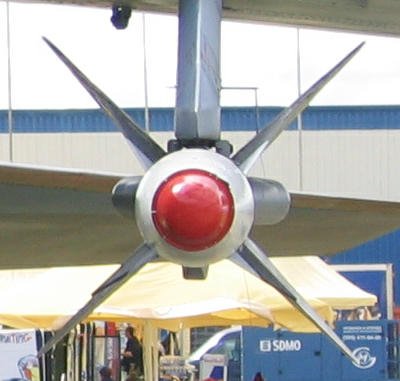
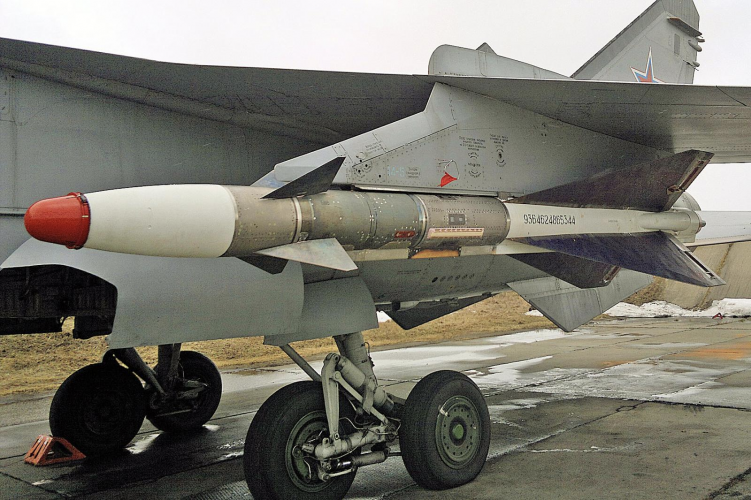
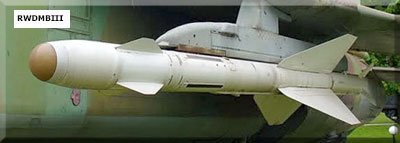
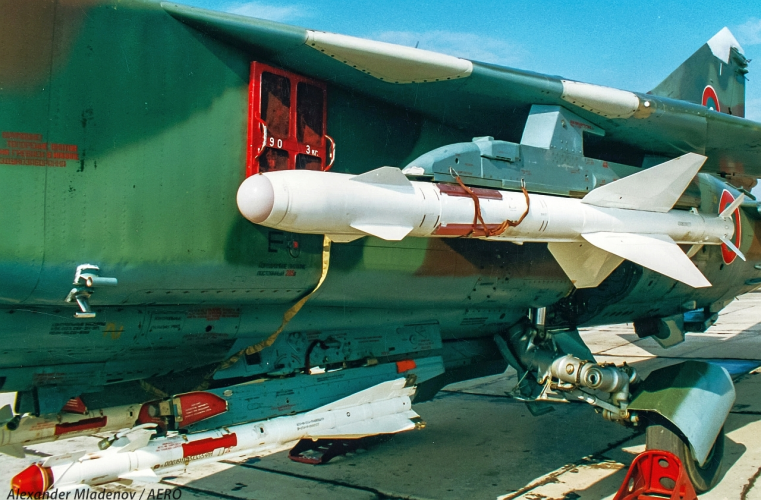
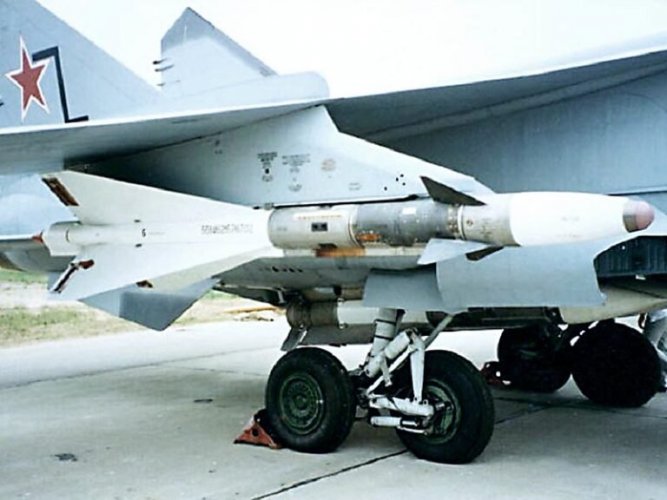
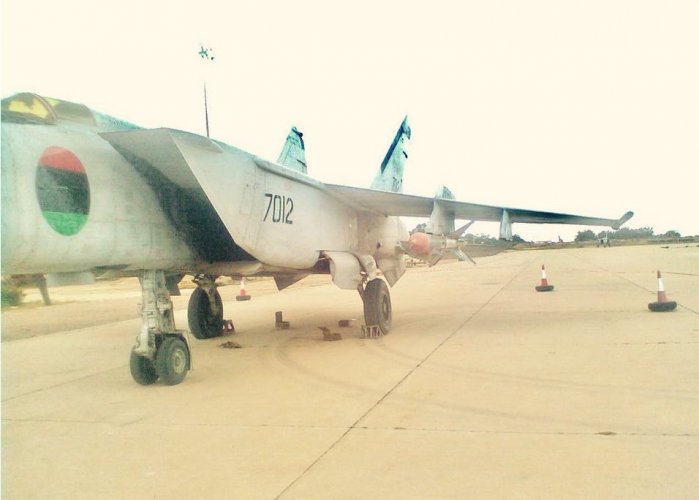
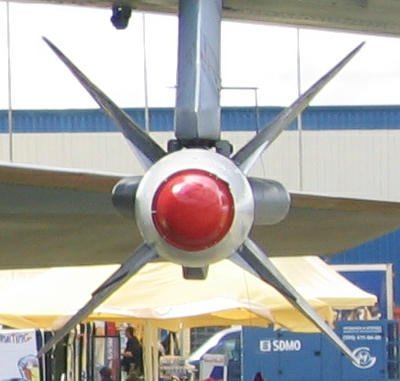
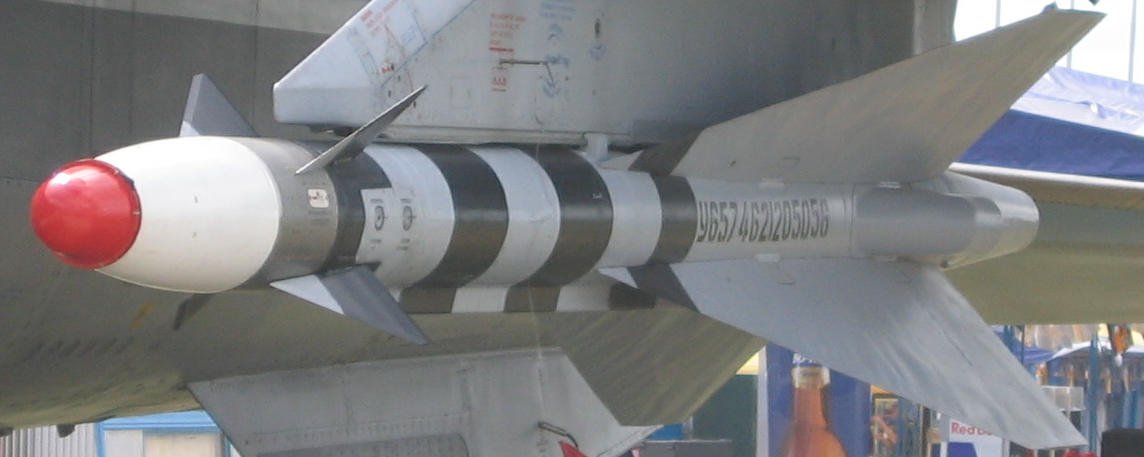
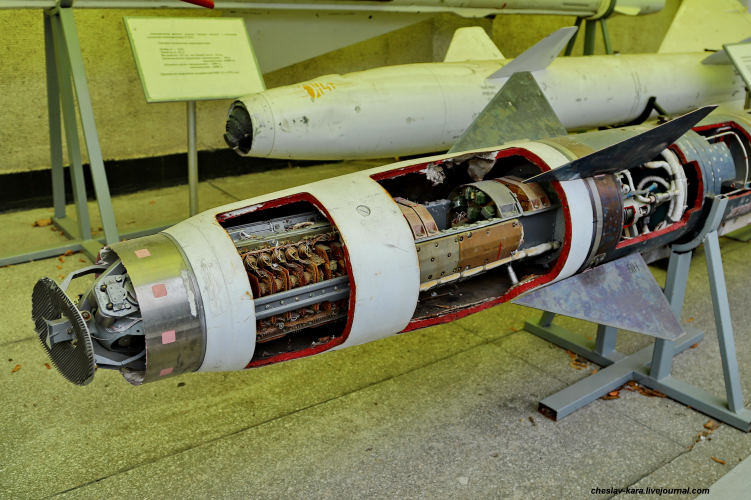
It looks to me like this is a photo of R-40 with the red protective cover on it.
The actual IR seeker appears to be white opaque for R-40T and an orange to greyish-light orange opaque for R-40TD as it uses the R-24T seeker.
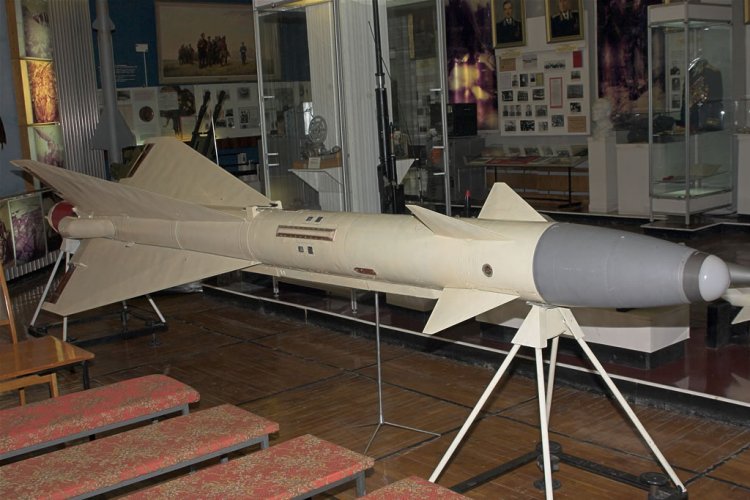
I believe this is R-40T. Notice that the seeker blends smoothly into the nose cone unlike R-40RD/TD which uses the smaller R-24 seeker where the diameter difference is rather obvious up close
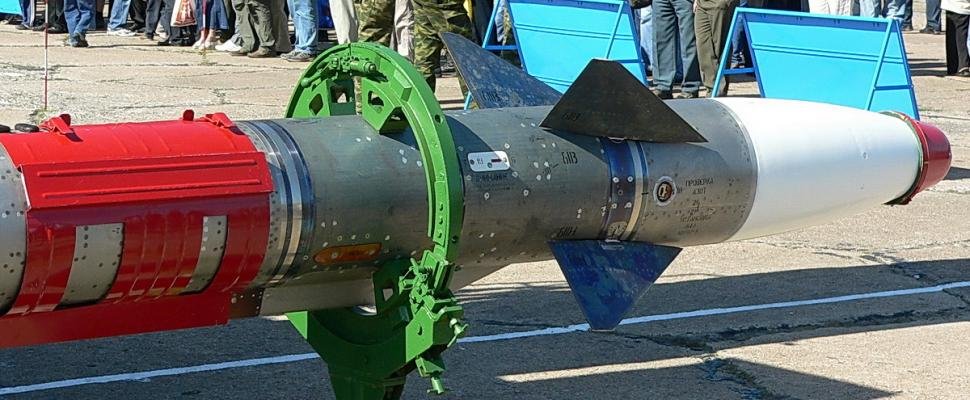
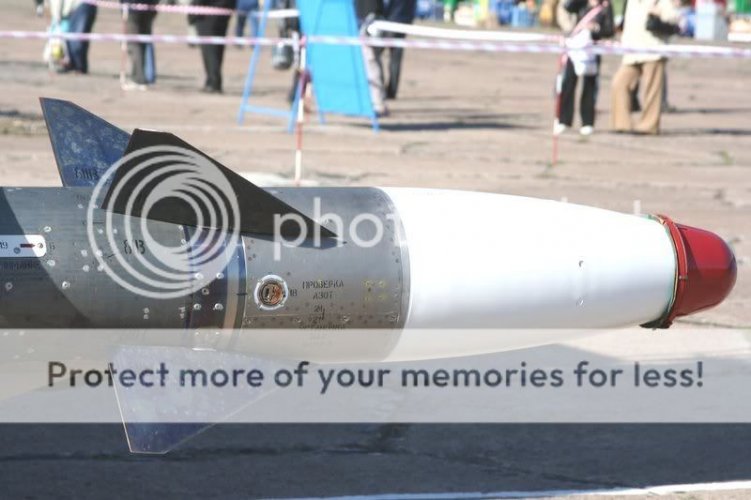
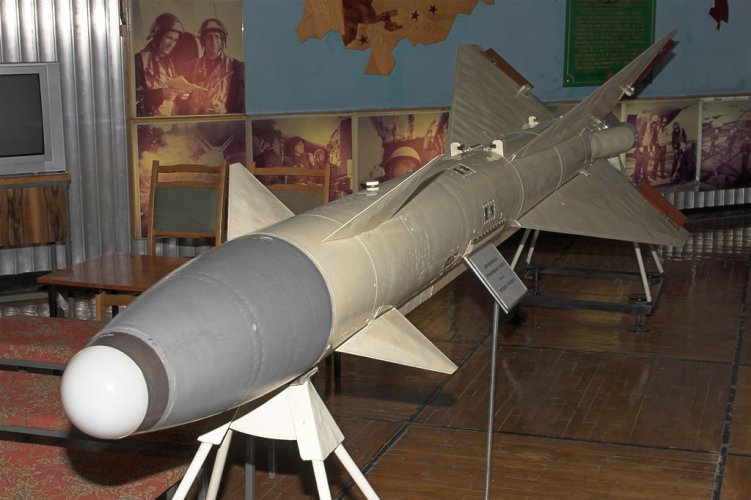
This is R-40TD, obviously not white seeker color. It is a bit far to see the diameter difference but the seeker does look a little small and less “blended” into the rest of nose cone.
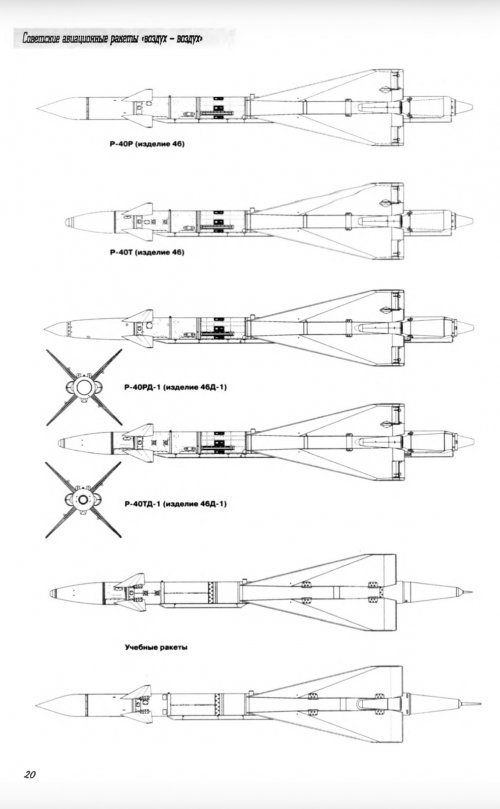
For example R-40RD here
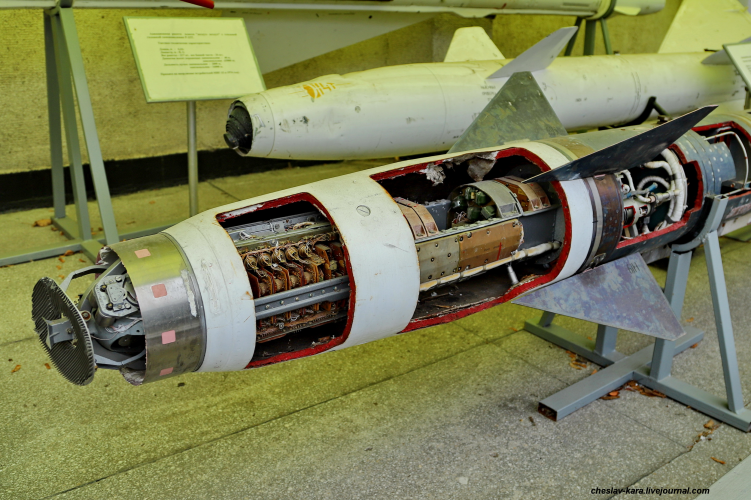
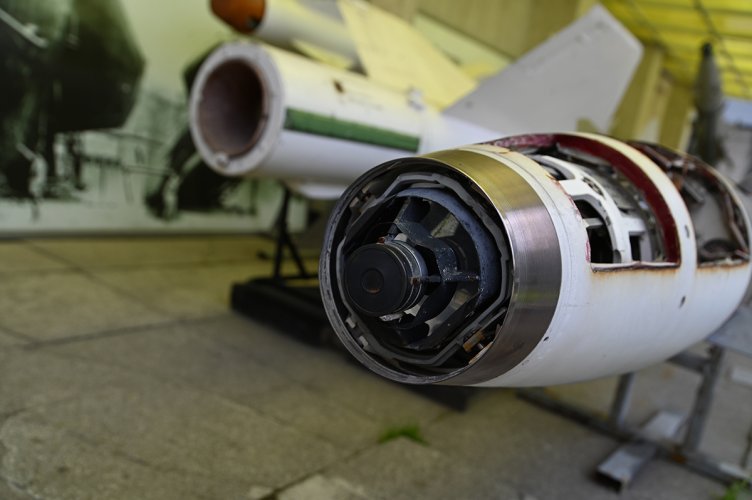
This below must be R-40TD without the glass. Notice the open space between the seeker and the skin of the missile behind the sensor just like we see above.
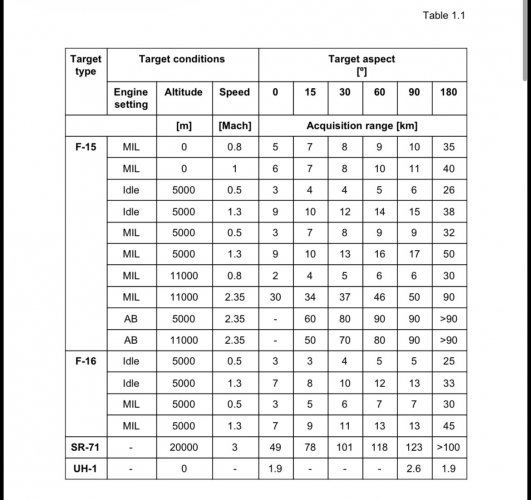
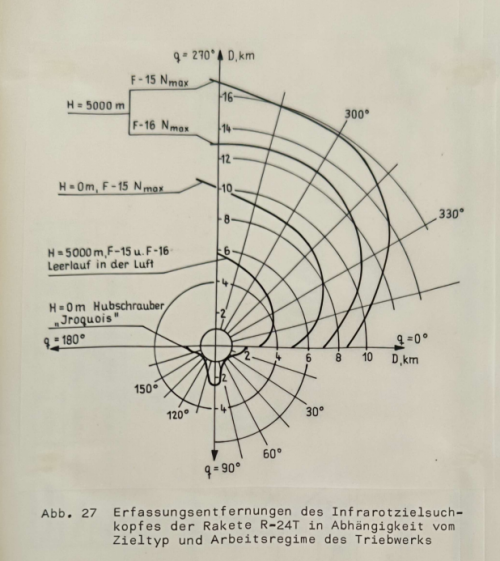
R-24T/40TD acquisition ranges for funsies
Also not sure if I have attached this here before
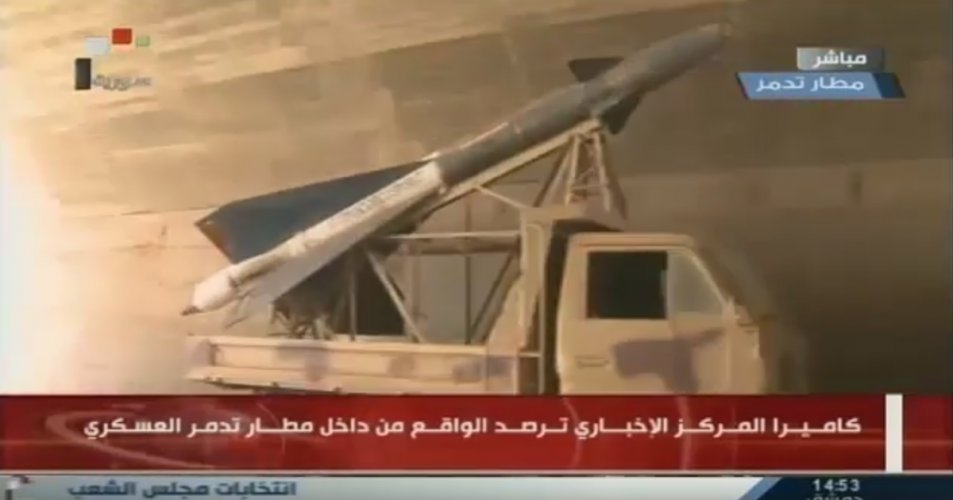
And here, we have homemade SAM with likely worse range then your average MANPAD!
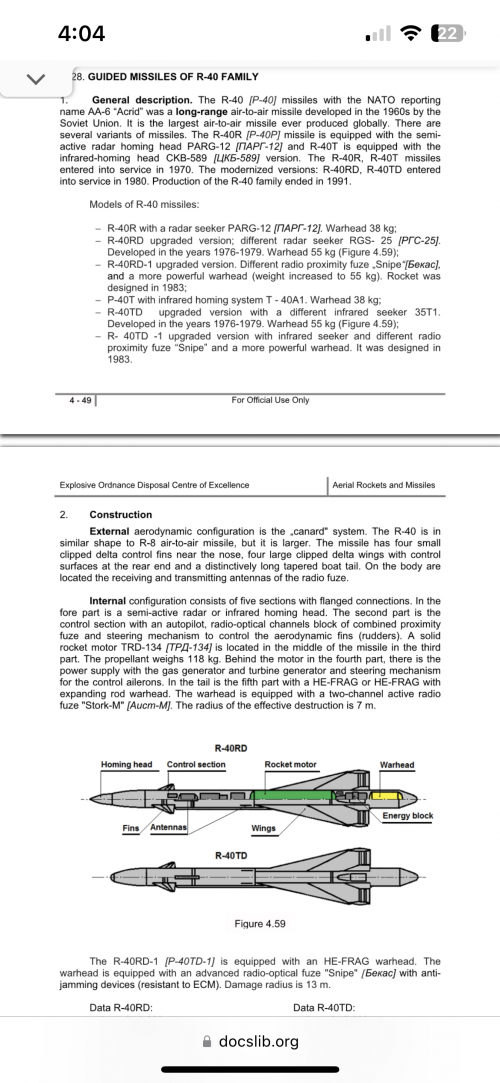
RD-1 and TD-1 are for sure export versions of the RD and TD ( Izdeliye 46D). Just like R-27R1/ER1 or T1/ET1 Number '1' or letter 'E' ( Э) are used for the designations of export variants e.g. ,for radars,missiles etc...
I’ll wait until I read about RD-1 or TD-1 in a book or a good source since you didn’t provide one instead of going “if R1/ER1 is export then RD-1/TD-1 must be also,” thanks. Just like K can be export or naval.
If the missile is attached under the wing of the MiG-31, than it is R-40TD not R-40T ,obviously .Btw, old R-40T on the MiG-25P was in use only during 1970's and during the beginning of the 1980's.
I’ll wait until I read about RD-1 or TD-1 in a book or a good source since you didn’t provide one instead of going “if R1/ER1 is export then RD-1/TD-1 must be also,” thanks. Just like K can be export or naval.
As it was mentioned , R-40R/T ( Izd. 46) had seekers PARG-12 and T-40A1.Also had 'Aist-M' combined proximity fuse.Modernised/D from Dorabotany , R-40RD/TD, RD-1/TD-1 ( Izd. 46D) had seekers RGS-25 and 35T1 with 'Bekas' combined proximity fuse. RD-1 and TD-1 were export versions. That's it. About that ''sources'' ,stop answering me anyway, please. It was enough and we 've gone to far.
Btw, letter 'K' is from Komerchesky, meaning some aircraft etc ,is exported under the comercial contract.One advice, if you want to learn about MiG-25 operational usage, oper. units, used missiles especially in some conflicts , then read Vladimir Babich and Vladimir Ilyin, not Y.Gordon,P.Butowsky, D.Komisarov ,T.Copper etc...
Vladimir Ilyin is a no better than average historian, and his accounts of e.g. Syrian operational use of MiG-23 are consistent with Soviet/Russian propaganda rather than with reality. God knows I have had issues with Tom Cooper's work, but he did at least work with an Iraqi fighter pilot when writing on Iraqi operational use of Soviet aeroplanes.
the missile is attached under the wing of the MiG-31, than it is R-40TD not R-40T ,obviously .Btw, old R-40T on the MiG-25P was in use only during 1970's and during the beginning of the 1980's.
Yes and I wish to read about in an an actual source rather then just believe someone on the internet. It’s not about you it’s about how I prefer to not believe things which may not be true. Yes K can mean commercial, it can also mean naval. Soviet suffixes aren’t always standardized or logical. R-13M1 isn’t export.
So many times I believed something becuase it made “sense.” Then realized it wasn’t true becuase it turns out, real life in weird. I don’t ask for sources to annoy you I ask for them because I am trying to learn about real life.
Vladimir Ilyin is a no better than average historian, and his accounts of e.g. Syrian operational use of MiG-23 are consistent with Soviet/Russian propaganda rather than with reality. God knows I have had issues with Tom Cooper's work, but he did at least work with an Iraqi fighter pilot when writing on Iraqi operational use of Soviet aeroplanes.
This is not appropriate thread but ... V.Ilyin ( died ten years ago) ,used Soviet intel data and SyAAF operational data from the 1982/83 air battles.You think it was Soviet /Russian propaganda, I don't think but that is only our opinions. The fact is that SyAAF was the first in the world to receive MiG-23MLD(E) Izd. 23-22 and that was not w/o the reason. Same story about MiG-29B,after IAF ,SyAAF was second in the world to received them.
From the authors there is also Victor Markovsky e.g....
Yes and since I don’t really care about training versions I didn’t notice. All R-40 RD photos I see have white engine body and nozzles so I wouldn’t have been able to notice. Are you saying that all training missiles of R-40 are painted gray?
It is such a cool missile but I wonder what could have been if they had the rocket nozzle actually behind the tail for less frontal area drag OR had the nozzle completely jettison after burn out.
They wanted engine in middle for less change of balance with fuel burn and likely to have proximity fuse in back for better fusing on high speed targets. The warhead in the back was not placed until R-40RD/TD I believe. All sources I see only mention the extra rear warhead as an upgrade option that R-40RD/TD customers could even have bought without.
The Russian website “corner of the sky” seems to be broken but I saved a copy of its R-40 page. It only mentions D-1 as an upgrade. The Russian missileer page, both these websites combine information from multiple Russian books and I find them reliable, only mentions D-1 as an upgrade and sent to MiG-31 units. This is why I ask for sources. We might see similar suffixes and prefixes but in end there was very little standardization of these terms in Soviet Union military.
Yes and since I don’t really care about training versions I didn’t notice. All R-40 RD photos I see have white engine body and nozzles so I wouldn’t have been able to notice. Are you saying that all training missiles of R-40 are painted gray?
OK ,you asked and it wouldn't be fair if I don't answer . Grey colored are usually 'UD' ( for the training of the ground personnel ) but very possible also 'UT' as the version for the pilot training during flight. Version 'UR' ( for the technical classrooms ) is white colored.
Now as I can see you really love to make some salad from all of those sources.This is joke of course.But this is one kind of super-salad .Take a look now .
About R-40D ( from the site which you mentioned ) .
http://www.airwar.ru/weapon/avv/k40d.html
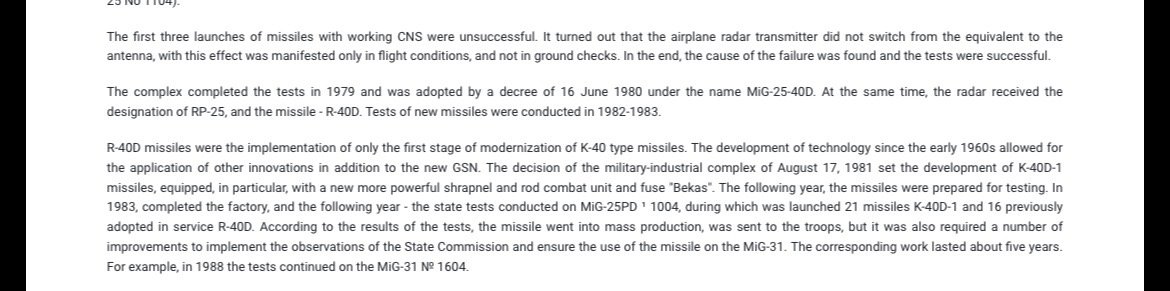
''К счастью, недостатки быстро устранили, и вскоре авиационно-ракетный комплекс успешно завершил испытания и под наименованием МиГ-25-40Д был принят на вооружение Постановлением от 30 июня 1979 г. При этом РЛС получила обозначение РП-25, а ракета - Р-40Д. Вновь выпущенные самолеты именовались МиГ-25ПД, а доработанные в войсках строевые - МиГ-25ПДС.''
''Fortunately, the deficiencies were quickly corrected, and the aircraft-missile system soon successfully completed testing and was accepted into service under the designation MiG-25-40D by a decree dated June 30, 1979. The radar was designated RP-25, and the missile, R-40D. Newly produced aircraft were designated MiG-25PD, while modified operational aircraft were designated MiG-25PDS.''
MiG-25PD got in fact N005 'Sapfire-25' as we know. Next about that R-40D-1.
http://www.airwar.ru/weapon/avv/k40d1.html
''Как и на Р-24, в начале полета "радийного" варианта ракеты реализовался участок программного наведения, продолжительность которого достигала 30% полетного времени, а затем осуществлялось самонаведение. Тепловая ГСН осуществляла захват цели до старта ракеты.''
"As with the R-24, the "radio" version of the missile began its flight with a program guidance phase, lasting up to 30% of the flight time, followed by homing. The thermal seeker acquired the target before the missile launched."
Exactly all of this was achieved with R-40D ( RD/TD ).
Next ...( from the ''Nevskiy Bastion ''site) ,what have we here ?
What is known is that we have so called ''aviation intercepting complex'' MiG-25-40 ( MiG-25P with RP-25 Smerch-A/A2/A3 ,R-40R/T) and the MiG-25-40D ( MiG-25PD with N005 Sapfire 25,TP-26Sh, R-40RD/TD) There was no such thing as MiG-25-40D-1 and that is confusing about the designation D-1.
Fact is that RGS-25 was part of the R-40RD .That was the point.
''Р-40РД — модификация Р-40Р, толчком к созданию которой послужил инцидент с угоном в Японию 6 сентября 1976 года самолёта МиГ-25П лётчиком ВВС СССР В. Беленко. В целях совместимости нового БРЭО МиГ-25ПД, ракета была оснащена ГСН РГС-25, созданной на базе РГС-24 ракеты Р-24. Ракета способна селектировать цели на фоне подстилающей поверхности.''
''The R-40RD is a modification of the R-40R, the impetus for its development was the hijacking of a MiG-25P aircraft to Japan on September 6, 1976, by Soviet Air Force pilot V. Belenko. To ensure compatibility with the new avionics of the MiG-25PD, the missile was equipped with an RGS-25 seeker, developed from the RGS-24 seeker of the R-24 missile. The missile is capable of selecting targets against the underlying terrain.''
It’s very possible it has both names. Afterall, it is literally identical to the R-24R seeker in every way. I wouldn’t be surprised that they slapped RGS-25 on it, and different people in different places called it RGS-24 or RGS-25 for different reasons. Just like the previous example of N-005/C-25/RP-25M or TP-23M/TP-26sh. Two things can be true.
Lots of examples in Soviet aviation of taking a part from one plane putting it in another with no changes and calling it a slightly different name.
''Задача доработки вооружения была решена простейшим образом - на ракетах установили новые ГСН РГС-25, созданные на базе РГС-24 ракет Р-24, предназначенных для на МиГ-23МЛ и МиГ-23П. Ракета Р-24 имела существенно меньший диаметр, что привело к сокращению длины на 0,165 м, характерному излому обводов передней части усовершенствованных ракет Р-40Р, получивших наименование Р-40РД. В принципе на Р-40РД имелась возможность увеличения диаметра антенны с соответствующим повышением точности пеленгации, но сужение диаграммы направленности затруднило бы захват цели. ''
The diameter of the antenna could have been bigger, but.... Don't think that differ AAM's had the seekers with the same designation.
''The task of upgrading the armament was solved in a simple way: the missiles were equipped with new RGS-25 seekers, developed from the RGS-24 on the R-24 missiles designed for the MiG-23ML and MiG-23P. The R-24 missile had a significantly smaller diameter, resulting in a 0.165-meter reduction in length, as well as the characteristic kink in the frontal contours of the upgraded R-40R missiles, designated R-40RD.
In principle, the R-40RD had the ability to increase the antenna diameter with a corresponding increase in direction finding accuracy, but narrowing the radiation pattern would have made target acquisition more difficult.''
That's OK. N005 'Sapfire-25' or RP-25M/MN or ... Exactly like N007,BRLS-8B,SBI-16,RP-31,S-800 as all designations for the radar( radar complex) of the MiG-31.
It is not notice empty space like I’ve shown here before including sorting it for TD
There is even a source that talked about it being explored to increase the size of the antenna, but it was shot down becuase with the pseudo kinematic link you want a wide enough seeker FOV that it can easily capture a target that maneuvers from launch until seeker activation. And a larger antenna has a smaller FOV and vice versa. This was what I was talking about using R-24T as the reference for the R-40TD seeker and how its seeker better blends into the nose cone if you also look at the drawing of different models a few posts back.
There is good reason R-40R has the giant conical radome and RD a more slim one.
And becuase of this, if you look even a few more posts back, I posted 2 charts for R-24T seeker acquisition ranges. Thus, these are both also charts for R-40TD seeker range charts!
2-9 km head on vs F-15 is pretty good for the time!
I think the TD-1 program was sort of a way to keep the missile modernized for MiG-31. Then when they ran out of R-40 stocks it was no biggie. So I don’t think there were any serious plans at any point. The missile is sort of aerodynamically hampered compared to R-33/37 and R-77 family.
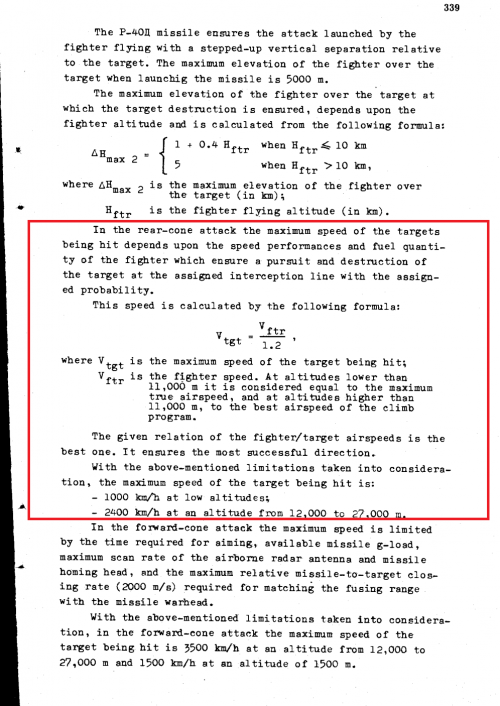
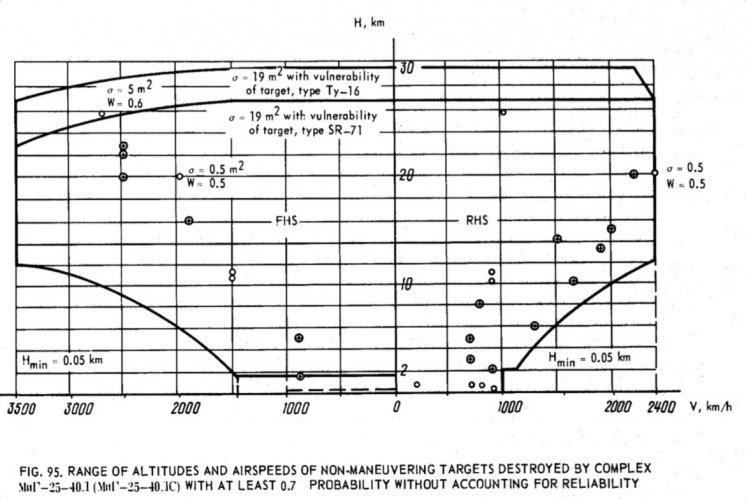
small question, given that R-40 were designed to intercept SR-71, how come the maximum target speed limited to around 2400 km/h (Mach 2.26)? View attachment 805854
Well 1, it’s not talking about the missile here but the “interception complex,” the whole package.
2, it’s only talking about rear aspect attacks. So it makes sense for a rear aspect attack you need a 20% speed advantage or the enemy will just fly away. MiG-25 goes 3,000 kmh so you can’t do a rear aspect interception on anyone faster then you.
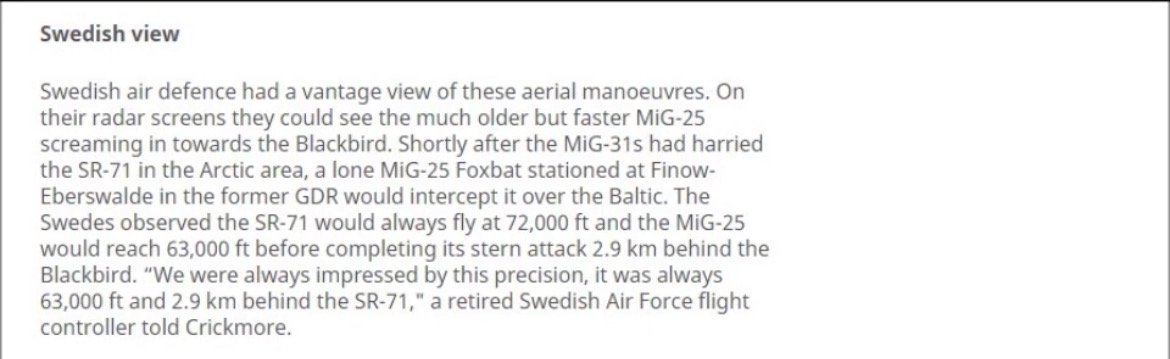
So since SR-71 is faster then MiG-25, is why historically Lazur would set up a front cone or side aspect conversion intercept where by the time they turn to the SR-71s rear aspect they are only 2.9 km behind it and within missile range while the SR-71 slowly speeds away.
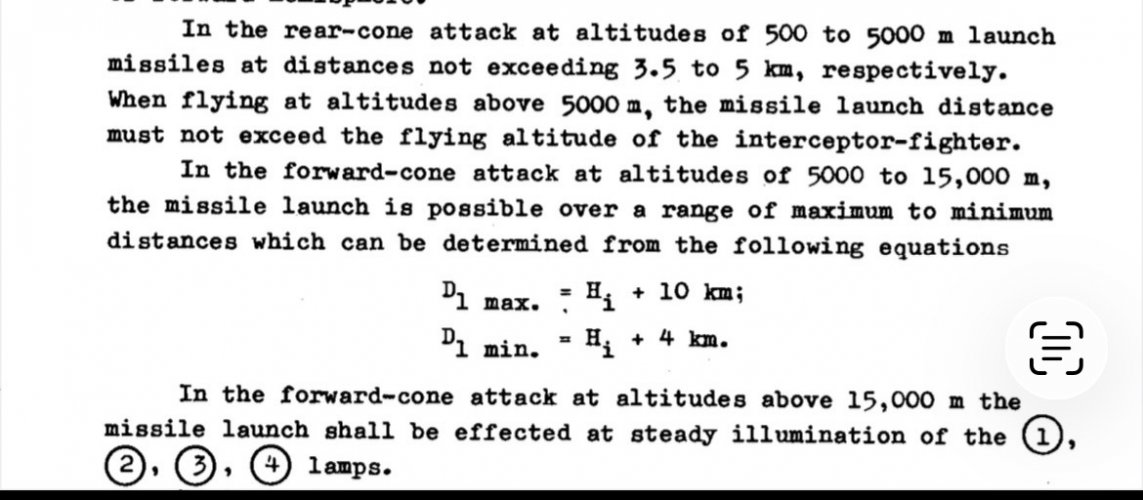
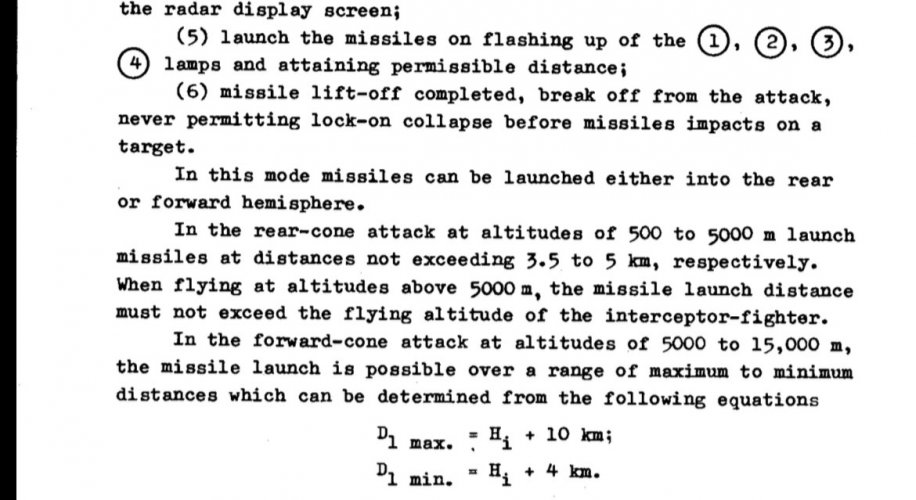
As it says later on that page, front aspect attack at high altitude has speed limit of 3500 kmh and 2,000 m/s missile to target closure.
Look at mentions of 1,000 kmh rear aspect speed at low altitude and 1500 kmh front aspect. At low altitude MiG-25 can barely go supersonic so it can’t intercept a faster rear aspect target. And no one is really going faster then 1500 kmh at 1500m alt.
In the rear hemisphere max target's speed =2400km/h ,in the forward hemisphere =3500km/h. What about possible launch ranges ,so distance between the fighter and its target than?
Well 1, it’s not talking about the missile here but the “interception complex,” the whole package.
2, it’s only talking about rear aspect attacks. So it makes sense for a rear aspect attack you need a 20% speed advantage or the enemy will just fly away. MiG-25 goes 3,000 kmh so you can’t do a rear aspect interception on anyone faster then you.
I understand that rear intercept would need the total missile speed to be faster than the target itself. What I don’t understand is that given Mig-25 top speed is already 3000 km/h (Mach 3.2) a R-40 launched from Mig-25 would be Mach 6.5 at least (I find it hard to believe that R-40 launched from Mig-25 would be slower than R-27 launched from Su-27, yet the chart for R-27 that we previously discussed showed it intercept target moving at Mach 2.5). So how come R-40 can’t intercept target moving at speed faster than Mach 2.26 from behind?
Yes, OK and I remade my previous comment ....Question was about possible launch range in that case, possible distance between the interceptor and its target.
Well it’s true. ER has more powerful motor and less drag. Much less drag. It does go faster and twice as far. The top speed of R-40 is Mach 5.27. This is close to average speed of R-27ER across its flight time at high altitude. On the deck, R-40 is doing no more then Mach 2.8. Its 540-720 m/s added velocity depending on altitude.
I’m sure R-40 can intercept that fast 2500+ kmh if you’re close and high, but you would have to very close and high, extenuating circumstances. It’s not a hard limit but more of a “recommendation” and “if you intercept someone faster you better know what you’re doing.”
Squirrel we talked about rear hemisphere before, some docs give ranges of like 17 km in rear aspect, which is very probably at high altitude. Medium altitude
Mach 1.5 launch. Add 392 m/s for Mach 2.83. …..
This site uses cookies to help personalise content, tailor your experience and to keep you logged in if you register.
By continuing to use this site, you are consenting to our use of cookies.