Gentleman,
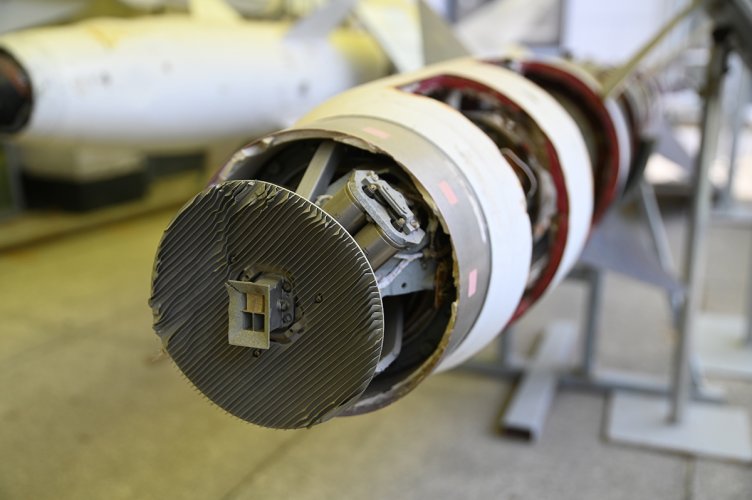
I had the opportunity to work on the R-40R missile. To study the missile one has to put it into its context. The time frame it was designed (early 1960s) and its intended target (B-70 and later B-52s, B-1). It was a great missile; a lot of experience was put into it. The Inverse Cassegrain antenna was one ECCM feature. Other features I can remember were: selection of the radar frequency (of the carrier aircraft), the radar frequency of the carrier aircraft is used to tune the local frequency generator of the missile receiver. Another feature was the selection of the pulse repetition frequency (PRF). Another feature was the selection by pulse duration. All of these operations would take place before the missile homing head locks on the received signal retarding from the target aircraft. It is now clear that there were no change in the radar mode of the carrier aircraft when the missile is launched. This would make the target unaware that a missile is launched towards it.
Gentleman,
I had the opportunity to work on the R-40R missile. To study the missile one has to put it into its context. The time frame it was designed (early 1960s) and its intended target (B-70 and later B-52s, B-1).
By all appearances, the Soviets were still working on a response to the high speed, high altitude bomber threat that no long existed in 1962. The Avro 730 had been cancelled in 1957 and the B-70 program was dying even before the Kennedy administation took power. The Skybolt air launched ballistic missile was still very much alive in 1962, and it should have been clear to the Soviets that the true threat was from standoff weapons delivered from low flying platforms.
Had the Soviet caught wind of the SLAB or Subsonic Low Altitude Bomber program that suddenly appeared in 1961? Apparently not?
It is equally important to note that the contemporary Lockheed YF-12 was intended primarily for the look down/shoot down role against low flying aircraft - quite a stark contrast to the MiG-25.
I dont think that we should view every armament development as action and reaction. The Soviet Union has developed a major weapon system, Mig-25/ R-40 combination with unique features. If the US threat dissappeared should the soviets throw the Mig-25 into the trash bin. The soviet threat to aircraft carriers dissapeared after 1991, should the US Navy throw its Aegis sytem into the wastepaper basket?
I think the Mig-25 has proved itself, look at the amount of the effort put by US/NATO to counter it
I dont think that we should view every armament development as action and reaction. The Soviet Union has developed a major weapon system, Mig-25/ R-40 combination with unique features. If the US threat dissappeared should the soviets throw the Mig-25 into the trash bin. The soviet threat to aircraft carriers dissapeared after 1991, should the US Navy throw its Aegis sytem into the wastepaper basket?
I think the Mig-25 has proved itself, look at the amount of the effort put by US/NATO to counter it
The United States did throw the YF-12/AIM-47 combination "into the wastepaper" basket, despite the relative success of the firing trials and successful development program? Why? Intelligence indicated - quite correctly - that the Soviets would not produce a low flying, supersonic bomber that would necessitate the YF-12/AIM-47 as a counter.
Open sourced intelligence available by 1962, in other words "public information," should have similarly indicated that the United States and Britain would not produce a high level, high speed bomber threat to the Soviet Union. Similarly, the low level operating doctrines practiced by the NATO powers from the mid-1950s - in response to the Soviet SAM threat - were public knowledge.
It is indeed true that the United States misinterpreted both the mission and the capabilites of the MiG-25/R-40, but I seriously doubt that Soviet intent was to produce this conceptually compromised or fundimentally flawed weapons system solely for purposes of misinformation and deception?
All of these operations would take place before the missile homing head locks on the received signal retarding from the target aircraft. It is now clear that there were no change in the radar mode of the carrier aircraft when the missile is launched. This would make the target unaware that a missile is launched towards it.
About radars, I am no expert, but AFAIK the launch of a SARH missile is detected by opponent's RWR gear because of the illumination signal. I saw on this forum that MiG-23M izd 323 radar have a separate illumination horn included in the combined irradiator. But later designs like N-019, -001 don't have this feature, they use the same irradiator sending one pulse for angle error/range/closure velocity, then one pulse for illumination and so on. Also the illumination pulses can be frequency-modulated in the case of R-27R/ER and in this way the radiocorrections are send to the missile.
Now here comes my question, I hope it doesn't sounds silly.
What about if the radar after achieving the lock immediately switches on the illumination, even if there is not yet any missile launched? Is it this how is actually done in reality? In this way the adversary will not know the precise moment of launch. Also in the before launch intercept phase false radiocorrection can be sent, to make everything look realistic, so when the missile is launched nothing will really change. Sure, the enemy knows from intelligence your Drmax1 and Drmax2, but not knowing precisely the moment can be important.
Precisely, how the mechanism actually works let's say when a F-15 detects that a SARH missile was launched towards it? Precisely how the RWR knows?
This is a good suggestion from the deception (EW) point of view, but the aircraft illuminating the target will have no idea about the general air situation because its radar has switched to a narrow illuminating pencil beam. This is pretty dangerous.
The Mig-25 P and PD/PDS didnt switch its radar to illumination mode , there were none. the radar kept on working in a pulse mode, the adversary had no idea that a missile was launched unless it was visually detected or using a MAWS.
... Other features I can remember were: selection of the radar frequency (of the carrier aircraft), the radar frequency of the carrier aircraft is used to tune the local frequency generator of the missile receiver. A
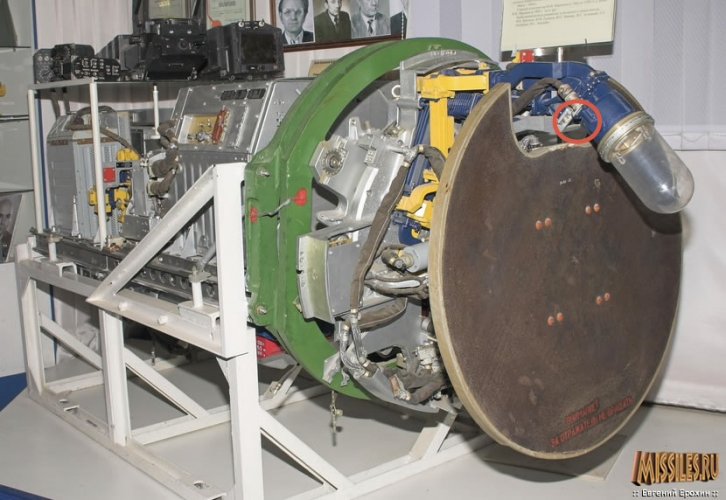
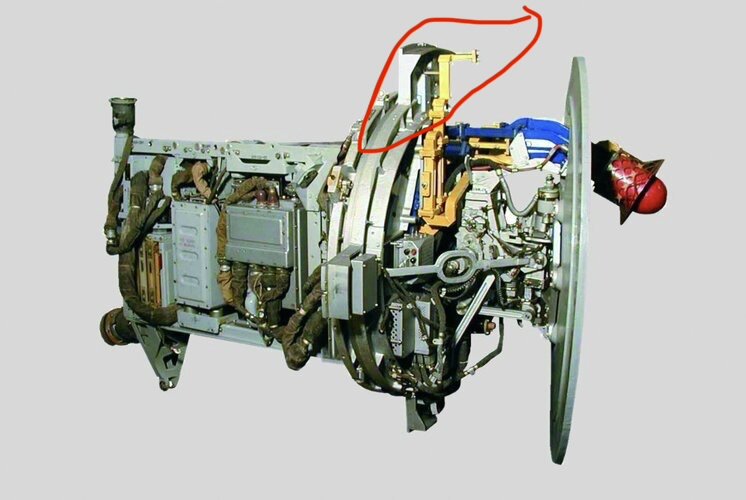
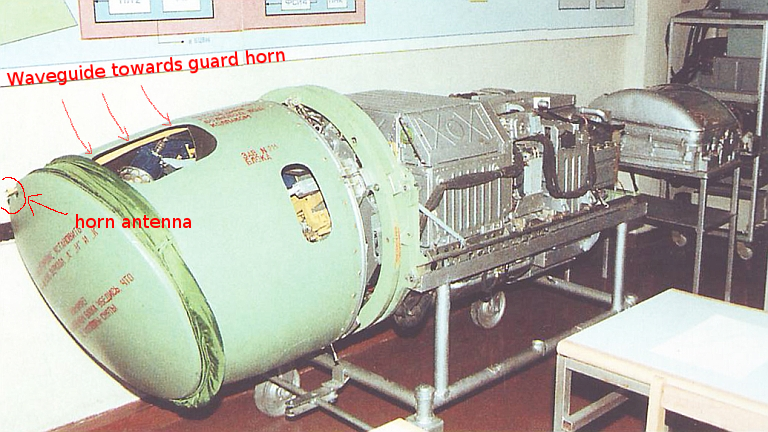
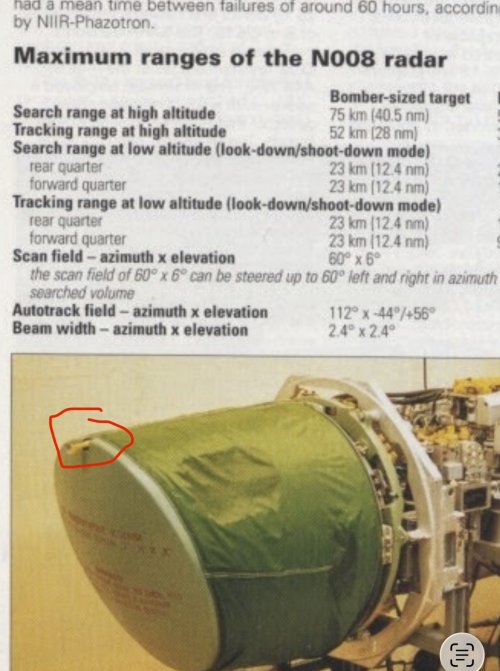
Where is the wave guide located which feeds the radar signal into the missile to tune the missile's frequency generator?
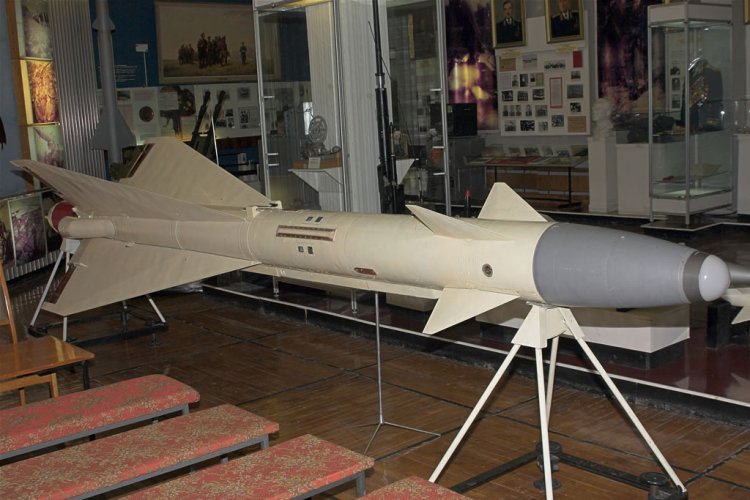
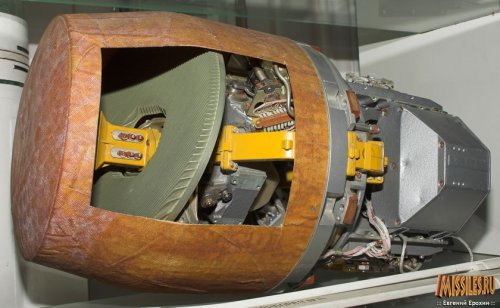
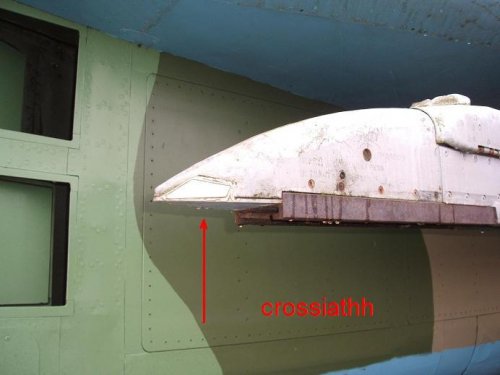
Just for the comparison the antenna at the tip of the APU-23M missile carrier of a MiG-23.
Do the R-40R and R-40RD have rear antennas like the R-23R/24R and do they doppler processing.
Furthermore, I thought the R-40RD seeker evolved from the RGS-24 seeker of the R-24R. This was using a continuous wave signal.
The United States did throw the YF-12/AIM-47 combination "into the wastepaper" basket, despite the relative success of the firing trials and successful development program? Why? Intelligence indicated - quite correctly - that the Soviets would not produce a low flying, supersonic bomber that would necessitate the YF-12/AIM-47 as a counter.
The real reason the F-12/AIM-47 was cancelled (Along with orders to destroy the F-12 production jigs and tooling) was that it was done out of petty spite by McNammara who thought Lockheed was getting too big for its boots and wanted to teach Kelly Johnson a lesson, IMO I think McNamara should've had his arse nailed to the wall for doing this (Along with cancelling the Skybolt programme).
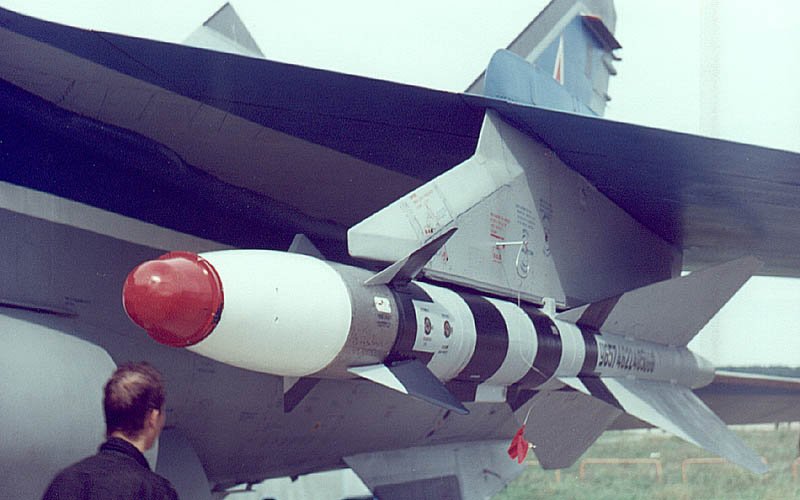
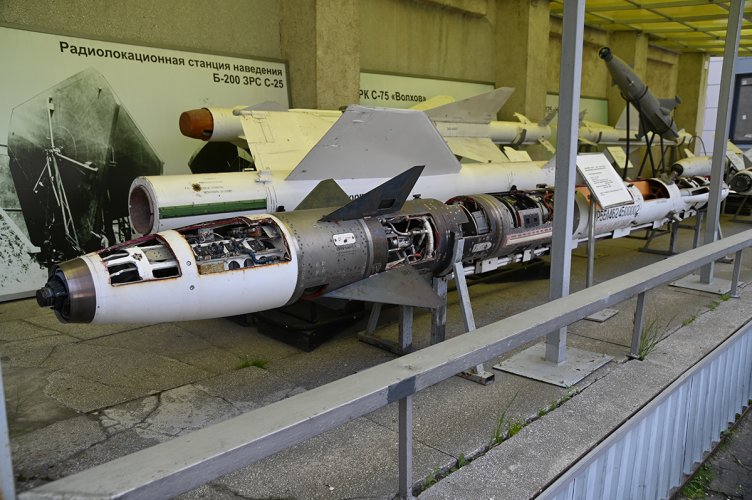
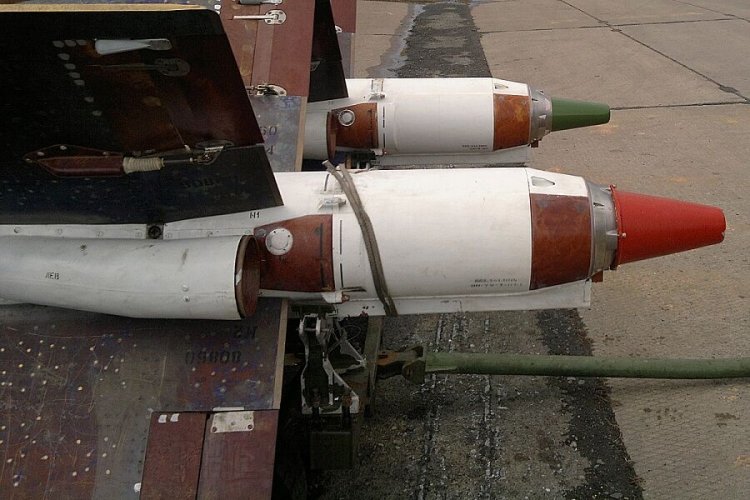
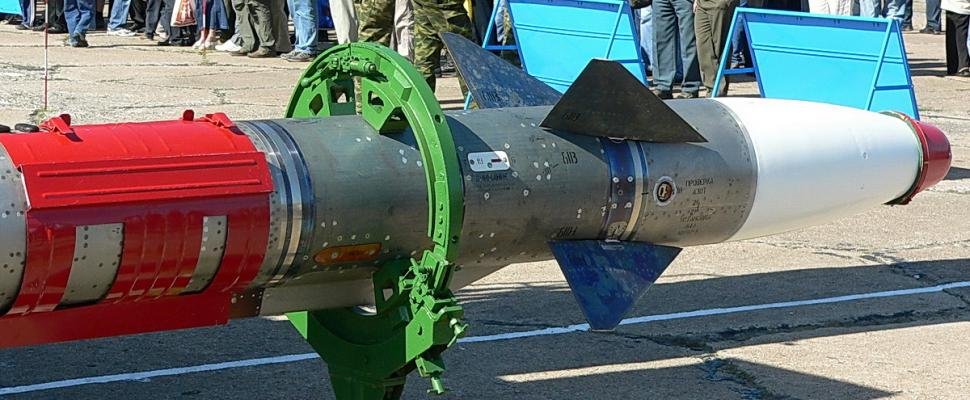
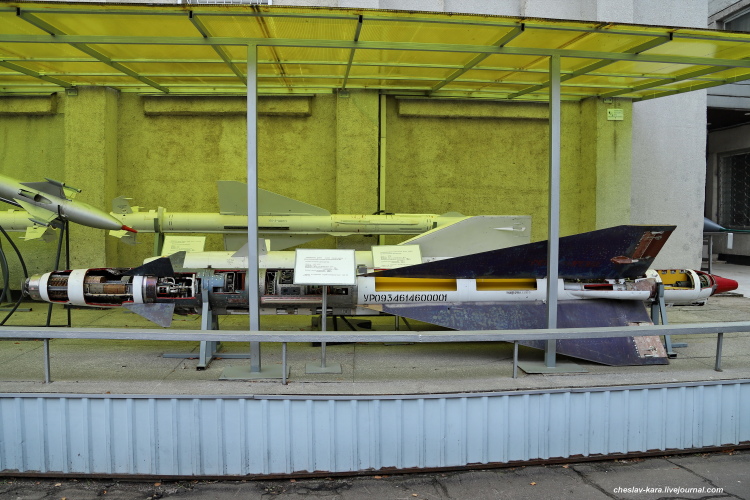
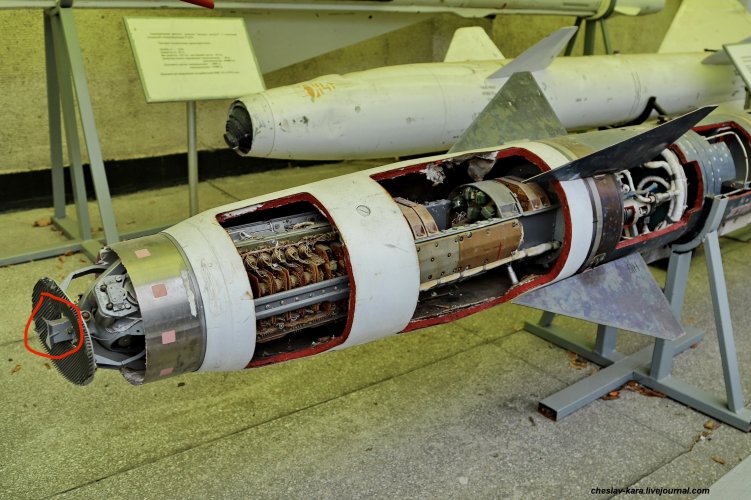
IR seeker type '35T1' for the R-40TD/TD-1 with the red cover's size enough to cover human head.
Была доработана и тепловая модификация ракеты, получившая обозначение Р-40ТД и оснащавшаяся усовершенствованной головкой самонаведения, обеспечивающей атаку как в переднюю, так и в заднюю полусферы цели. Азотная система охлаждения фотоприемника ГСН размещалась на ракете.
The missile's ''thermal modification'', designated R-40TD, was also upgraded and equipped with an improved homing head, enabling attacks on both the forward and rear hemispheres of the target. A nitrogen cooling system for the seeker's photodetector was housed within the missile.
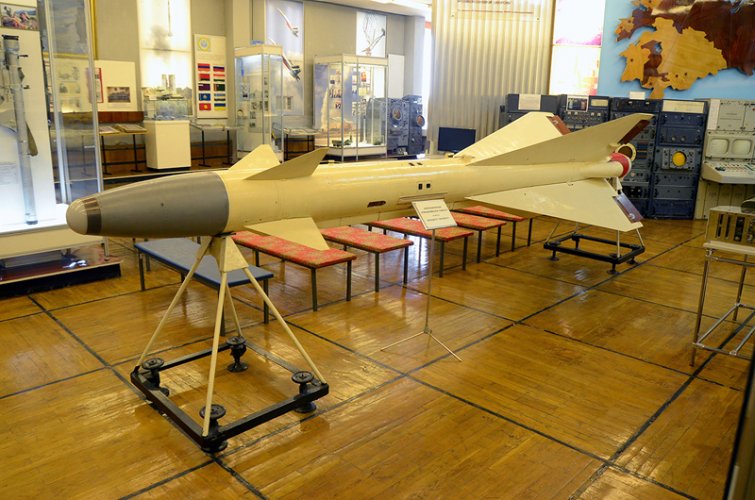
Авиационная ракета класса «воздух-воздух» средней дальности Р-40ТД (K-40ТД), модификация с ИК ГСН ТГС-35Т1.
R-40TD with the IR seeker '35T1' and with the combined radio-optical proximity fuse 'Bekas'.
Характерный серый цвет титана аэродинамических рулей ,крылья и планера ракеты. Высокие скорости полёта гиперзвуковой ракеты с числом Маха > 5 вынудили использовать этот замечательный металл. При этом элементы конструкции как носителя, так и размещенных на наружной подкрыльевой подвеске ракет нагревались до температур порядка 300 °С. Помимо, проблем, связанных с обеспечением прочности материалов, необходимо было решить задачи поддержания работоспособности аппаратуры, а также предотвращения прогрева заряда ракетного двигателя.Для поддержания нормальной температуры на подвеске аппаратура охлаждалась жидким фреоном из баллона, размещенного в АПУ.
The characteristic gray color of Titanium used in the missile's aerodynamic control surfaces, destabilizers ,wings, and airframe. The high flight speeds of hypersonic missiles, with Mach numbers greater than 5, necessitated the use of this remarkable metal.
At the same time, structural elements of both the launch vehicle and the missiles mounted on the external underwing mounts heated up to temperatures of approximately 300°C. In addition to the challenges associated with ensuring the strength of the materials, it was necessary to address the challenges of maintaining the operability of the equipment and preventing the rocket motor charge from overheating.
To maintain a normal temperature on the suspension, the equipment was cooled with liquid freon from a cylinder located in the APU (launch rail).
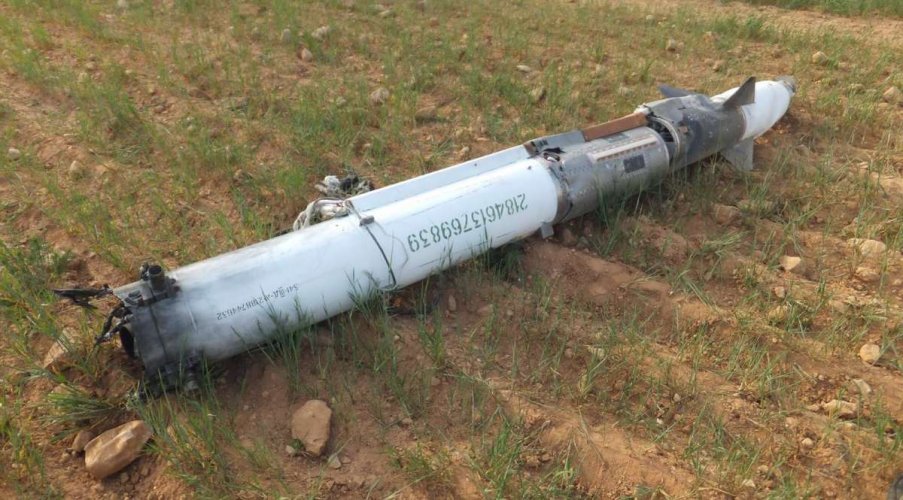
Famous photo and video where we can see SyAAF MiG-25PDE launching two R-40TD-1 against ground targets.
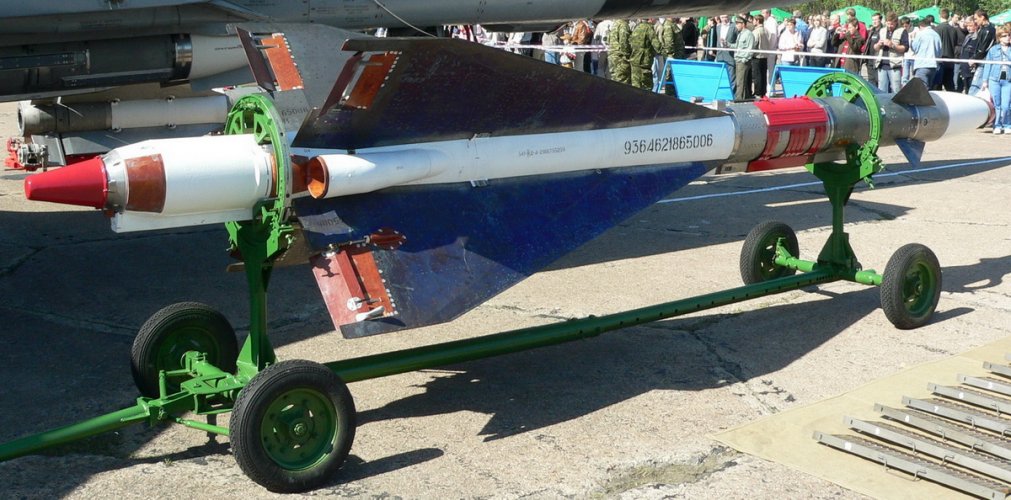
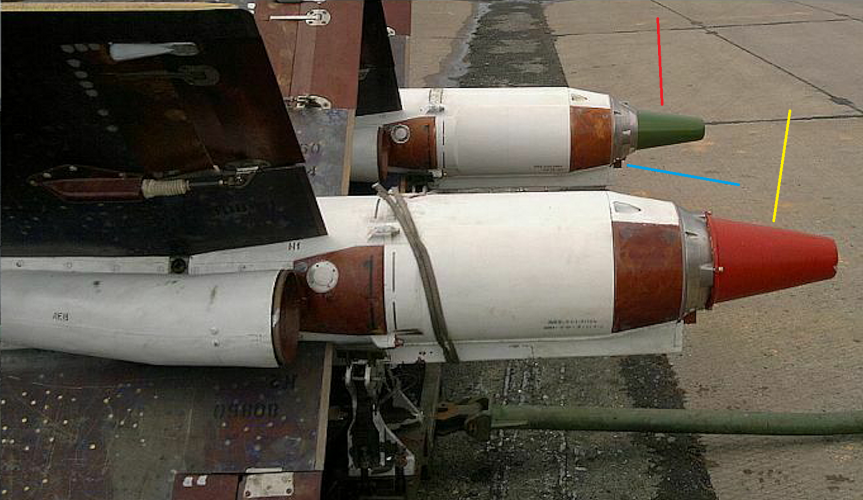
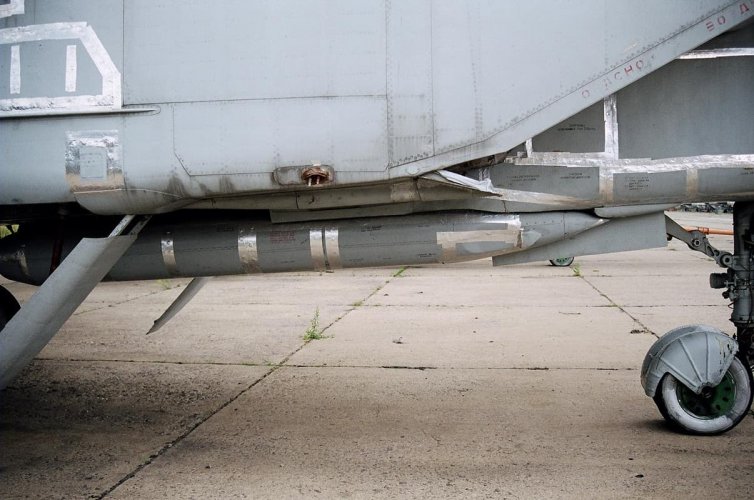
Question ,where can be those RC-channel antennas if they exist anyway? On this photo we can see that green antenna ( on the other missile it is covered by red cone cover). Is this antenna for the RC-channel ( MCGU) or maybe from the radio-proximity fuse?
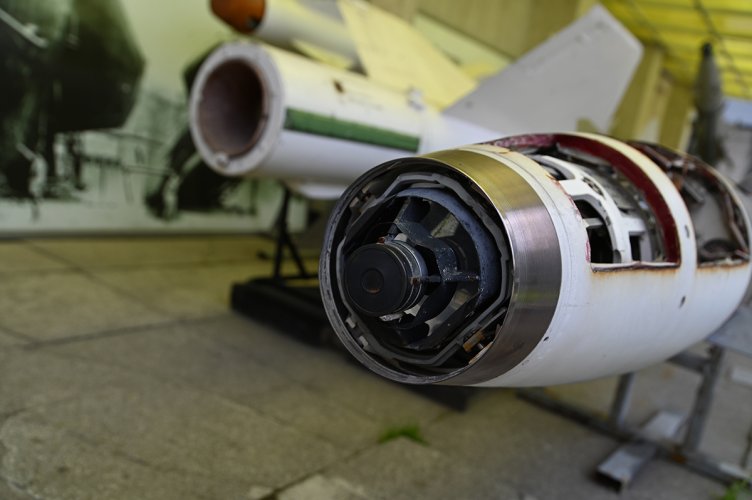
Though this will sound stupid: I never noticed the rocket motor of the R-40 until now. Honestly, it looks like it would have had good afterbody drag compared to most missiles.
Though this will sound stupid: I never noticed the rocket motor of the R-40 until now. Honestly, it looks like it would have had good afterbody drag compared to most missiles.
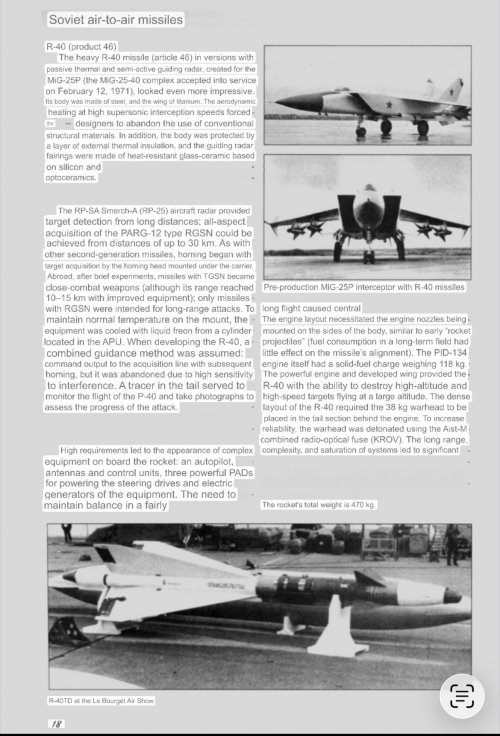
''The central location of the engine ensures that the balance is maintained as fuel is combusted during long flight. The PRD-134 engine is a two-nozzle engine with nozzles placed on the sides of the hull. The PD-134 engine weighs 118 kg and is made of high-energy mixed metal-containing fuel. For protection against heating, the titanium engine case has an external heat protection coating in addition to the internal one.''
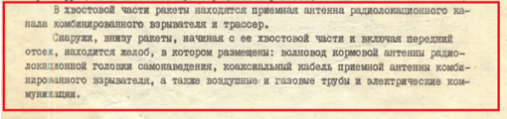
In the connection with the potential RC-channel used by R-40RD/TD ( RD-1/TD/1) ?
''Ракета Р-40 изготовлена из титана, который обеспечивает ей лёгкость и термоустойчивость (что немаловажно в условиях кинетического нагрева). Для повышения вероятности поражения цели ракета оснащалась двумя типами головок самонаведения: полуактивной радиолокационной и тепловой. Последняя была особенно важна, так как ракета предназначалась для поражения скоростных целей, имевших высокий тепловой контраст из-за скоростного нагрева. Обе ракеты оснащались системой автоматического управления, рулевыми электроприводами, генераторами. Силовая установка состояла из твердотопливного ракетного двигателя ПРД-134. Для защиты от нагрева на титановый корпус двигателя нанесено теплозащитное покрытие. Для управления и контроля полёта в хвостовой части устанавливались приёмные антенны и трассер, что обусловило установку сопел двигателя по бокам фюзеляжа. Боевая часть КУ-46 размещалась в хвостовом отсеке за двигателем.''
''The R-40 missile is made of titanium, which makes it lightweight and heat-resistant (important in kinetic heating conditions). To increase the probability of hitting its target, the missile was equipped with two types of homing heads: a semi-active radar seeker and a thermal seeker.The latter was particularly important, as the missile was designed to engage high-speed targets with high thermal contrast due to rapid heating. Both missiles were equipped with an automatic control system, electric steering drives, and generators.
The power plant consisted of a PRD-134 solid-fuel rocket engine. To protect against heat, the engine's titanium casing was coated with a heat-protective coating. For flight control and monitoring, receiving antennas and a tracer were installed in the tail section, which necessitated the installation of engine nozzles on the sides of the fuselage. The KU-46 warhead was located in the tail section behind the engine.''
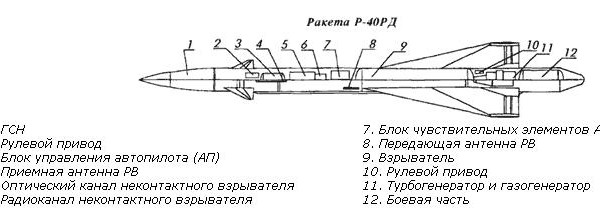
No 4 is receive antenna of the radio proximity fuse and No 8 is transmitt antenna of the radio proxomity fuse
But from the MiG-25P F.M. there is data that green antenna behind the warhead section is in fact receive antenna of the radio proximity fuse,hm.
So we have this ,yellow line shows red cone cover,blue line to that trasser and red line to RC-channel receive antenna or radio proximity fuse recevie antenna .
There was also that APP-46TD for the MiG-31 :
''АПП-46ТД - аппаратура подготовки и пуска ракет Р-40ТД (изделие 46ТД). Контейнер по форме напоминал ракету Р-33 и вешался на правую переднюю подфюзеляжную точку подвески.''
''The APP-46TD is a missile preparation and launch system for the R-40TD missile (product 46TD). The container resembled the R-33 missile and was mounted on the right front ventral hardpoint.''
Although ,these comments were written 20 years ago,there is so many interesting details in the connection with guidance system of the R-40R/RD(RD-1) and Low PRF pulse radars RP-25 Smerch and N005 Sapfir-25.
Gentleman,
I had the opportunity to work on the R-40R missile. To study the missile one has to put it into its context. The time frame it was designed (early 1960s) and its intended target (B-70 and later B-52s, B-1). It was a great missile; a lot of experience was put into it. The Inverse Cassegrain antenna was one ECCM feature. Other features I can remember were: selection of the radar frequency (of the carrier aircraft), the radar frequency of the carrier aircraft is used to tune the local frequency generator of the missile receiver. Another feature was the selection of the pulse repetition frequency (PRF). Another feature was the selection by pulse duration. All of these operations would take place before the missile homing head locks on the received signal retarding from the target aircraft. It is now clear that there were no change in the radar mode of the carrier aircraft when the missile is launched. This would make the target unaware that a missile is launched towards it.
This is a good suggestion from the deception (EW) point of view, but the aircraft illuminating the target will have no idea about the general air situation because its radar has switched to a narrow illuminating pencil beam. This is pretty dangerous. The Mig-25 P and PD/PDS didnt switch its radar to illumination mode , there were none. the radar kept on working in a pulse mode, the adversary had no idea that a missile was launched unless it was visually detected or using a MAWS.
Now some technical details about PARG-12 from the famous Russian site:
''В полуактивной импульсной радиолокационной головке самонаведения ПАРГ-12 ракеты Р-40Р впервые в отечественной и мировой практике использован моноимпульсный метод обработки информации и дальномер с двумя интеграторами, чем обеспечивалается большая устойчивость ГСН к воздействию амплитудных помех по сравнению с ранее созданными головками с коническим сканированием. В ГСН также нашли воплощение оригинальные схемы стабилизированного генератора СВЧ и приемника опорного сигнала. В отличие от ранее применявшихся схем с автоматическим регулированием усиления, реализованная в данной ГСН логарифмическая характеристика приемника исключала «ослепление» при резких перепадах мощности помехи. Неодинаковость логарифмических приемников вызывала возникновение колебаний на выходе угломера при так называемой череспериодной помехе. Это воздействие удалось значительно ослабить благодаря коммутации приемников по случайному закону.
Головка ПАРГ-12 обладает развитой логикой и высокой защищенностью от совмещенных с целью помех. Для формирования четырехлепестковой диаграммы направленности, необходимой для организации моноимпульсной обработки, а также обеспечения максимальных (±70°) отклонений равносигнального направления в РГС ПАРГ-12 применена двухзеркальная антенна Кассегрена. Подвижное зеркало антенны облучается потоком, неподвижным относительно ракеты. При этом равносигнальное направление диаграммы направленности поворачивается на удвоенный угол отворота зеркала. На базе синусно-косинусного вращающегося трансформатора был создан вычислитель, преобразующий заданные перегрузки в связанную систему координат с учетом разгона и торможения ракеты. Это позволило построить наведение по методу пропорциональной навигации в антенной системе координат, когда проекция полной перегрузки ракеты на плоскость, перпендикулярную линии дальности, пропорциональна произведению оценки угловой скорости линии дальности на скорость сближения. Рекордные пеленги сопровождаемой цели и наведение в антенной системе координат сделали возможным перехват скоростной цели при больших ракурсах.
При разработке системы управления ракеты Р-40 для ограничения перегрузки использована так называемая система переменной структуры, сопоставляющая с заданным порогом сумму текущей перегрузки и ее производных и при превышении порога обнуляющая команду. В связи с разработкой ракеты Р-40Р существенно обострился вопрос о синхронных ошибках обтекателя и антенной системы. Антенна Кассегрена оказалась весьма нестабильной по величине пеленгационной ошибки, градиент которой по пеленгу ограничивает высотность ракеты. Для контроля синхронных ошибок головок в производстве была разработана система измерений, основанная на использовании прокачного стенда, на который устанавливается головка, и корреляционного алгоритма выделения ее реакции на колебания основания. Внедрение этой системы способствовало совершенствованию антенных систем и обтекателей ракет средней дальности. ГСН ПАРГ-12 могла осуществлять всеракурсный захват цели с расстояния до 30 км.''
https://missilery.info/missile/r40
''The PARG-12 semi-active pulse radar homing head of the R-40R missile is the first in domestic and global practice to use a monopulse method of information processing and a rangefinder with two integrators, which ensures greater resistance of the homing head to the effects of amplitude interference compared to previously created heads with conical scanning.
The seeker also incorporated original designs for a stabilized microwave generator and a reference signal receiver. Unlike previously used designs with automatic gain control, the logarithmic receiver characteristic implemented in this seeker eliminated "blinding" from sudden changes in interference power.
The inconsistency of the logarithmic receivers caused oscillations in the protractor output, a phenomenon known as intermittent interference. This effect was significantly reduced by randomly switching the receivers.
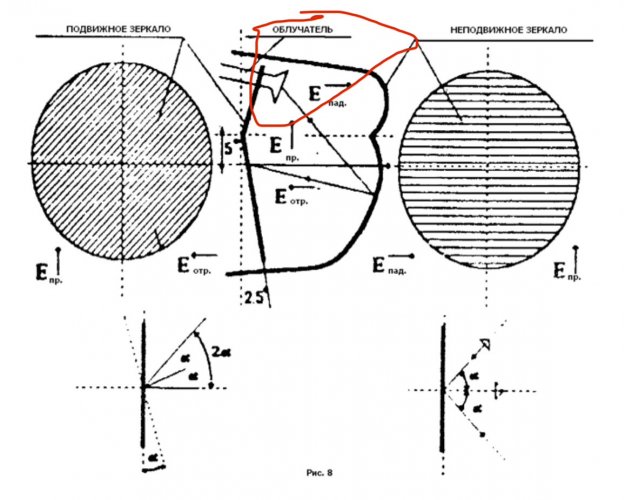
The PARG-12 head features sophisticated logic and high immunity to combined interference. A dual-reflector Inverse Cassegrain antenna is used to form a four-lobe radiation pattern, necessary for monopulse processing, and to ensure maximum (±70°) equal-signal direction deviations.
The antenna's movable mirror is illuminated by a beam that is stationary relative to the rocket. This causes the equisignal direction of the radiation pattern to rotate by twice the mirror's rotation angle.
A computer was created on the basis of a sine-cosine rotating transformer that transforms given overloads into a linked coordinate system taking into account the acceleration and deceleration of the rocket.
This made it possible to construct guidance using the method of proportional navigation in the antenna coordinate system, when the projection of the total overload of the missile onto a plane perpendicular to the range line is proportional to the product of the estimated angular velocity of the range line and the approach speed.
Record bearings of the tracked target and guidance in the antenna coordinate system made it possible to intercept a high-speed target at large angles.
When developing the R-40 missile control system, a so-called variable structure system was used to limit overload, which compares the sum of the current overload and its derivatives with a given threshold and resets the command when the threshold is exceeded.The development of the R-40R missile significantly exacerbated the issue of synchronization errors between the fairing and the antenna system. The Cassegrain antenna proved to be highly unstable in terms of direction-finding error, the gradient of which limits the missile's altitude.
To control the synchronous errors of heads in production, a measurement system was developed based on the use of a pumping stand on which the head is installed, and a correlation algorithm for identifying its response to vibrations of the base.
The introduction of this system contributed to the improvement of antenna systems and fairings for medium-range missiles. The PARG-12 seeker could achieve all-aspect target acquisition from a distance of up to 30 km.''
Another citation :
''Включение ПАРЛС ГСН происходит на дальности до цели 90 км.''
"The semi-active radar seeker is activated at range of 90 km."
So MiG-25P/PD/PDS and PDE radars have no Ill mode at all . Their radars in fact kept working in pulse mode ( search mode ??? ) after R-40R/RD(RD-1) are launched ? There was no RC-channel also.
What AHMAD decribed than ,does it mean that there was no lock-on mode ? In fact ,PARG-12 could lock-on target in the SARH mode before it was launched.
In the first citation I underlined last sentence and we must keep on mind what happened to one USMC F/A-18C pilot during the first night of the oper. Desert storm on 17 Jan 1991 when he was engaged by R-40RD-1 launched from IrAF MiG-25PDS.He didn't use any evasive maneuver.
So we have this ,yellow line shows red cone cover,blue line to that trasser and red line to RC-channel receive antenna or radio proximity fuse recevie antenna
Yes It does not have a datalink channel. Only flying towards target intercept point for seeker acquisition after launch.
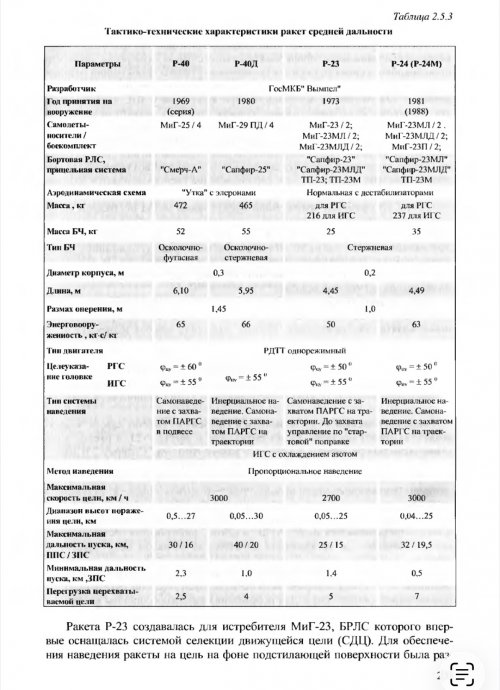
R-40RD uses exact same seeker at R-24R, R-40TD uses exact same seeker as R-24T, so processes are the same between them.
You quote someone “ The Mig-25 P and PD/PDS didnt switch its radar to illumination mode , there were none. the radar kept on working in a pulse mode, the adversary had no idea that a missile was launched unless it was visually detected or using a MAWS.”
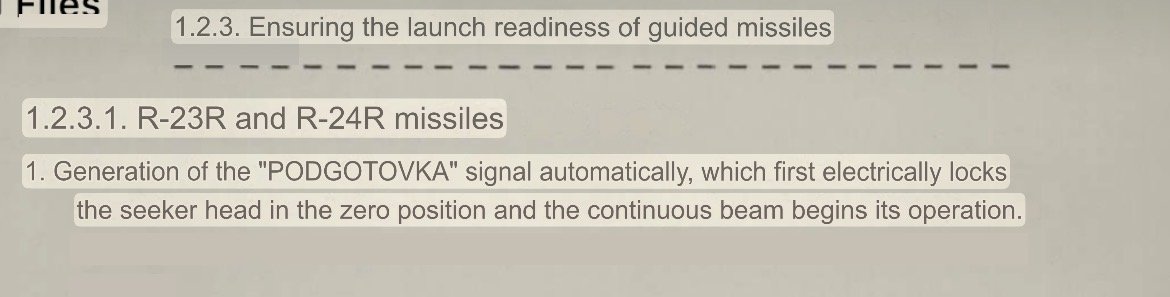
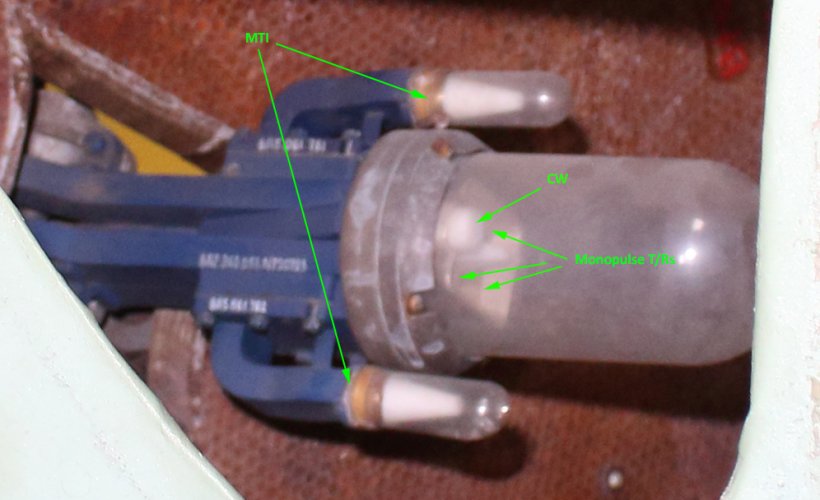
This is false. R-23R, R-24R/R-40RD, and R-40 all use CW illumination with inverse monopulse reception. This is why quasi continuous illumination was an innovation for Su-27/MiG-29 and likely MiG-31.
The radar does not switch mode becuase the monopulse illuminator and the CW illuminator are separate and can emit at the same time
If you read the threads here on MiG-23 radar, you will also find a continuous wave illuminator as part of its components.
Be careful who you trust Assumption is a weakness of mankind. Estimation a strength.
The radar is locked by using monopulse to center radar beam on target. The missile only looks for the CW reflections.
I will attach stuff I have attached before in other threads for the sake of organization as this is R-40 thread
There is chance quasi continuous illumination was not seen by western RWR as a launch, but I doubt it considering tolkachev leaks about N-019/001. I believe it was chosen because of simplicity being able to not install a CW emitter, and that the pulsed nature increases the ability of the R-27 to correctly see it and not ground reflections
This is false. R-23R, R-24R/R-40RD, and R-40 all use CW illumination with inverse monopulse reception. This is why quasi continuous illumination was an innovation for Su-27/MiG-29 and likely MiG-31.
R-23R, R-24R/R-40RD, and R-40 all use CW illumination with inverse monopulse reception. This is why quasi continuous illumination was an innovation for Su-27/MiG-29 and likely MiG-31.
Or maybe the pulse transmitter ( you know, Low PRF ,pulse radars in MiG-23 and 25) ? Why two separate illuminators ? No sense at all. Aha,yes, those so called horns .
Be careful who you trust Assumption is a weakness of mankind. Estimation a strength.The radar is locked by using monopulse to center radar beam on target. The missile only looks for the CW reflections.
Nice ,tnx, so radar is working after SARH missile is launched in that way where your ''monopulse illuminator'' keeps target locked (in lock-on mode) and in the same time 'CW illuminator' keeps him Illuminated all the time.May I ask,where is the sense,logic there anyway ?Of course you know what I mean. But no, there is pulse transmitter and the CWI transmiter/channel -KNP and after SARH AAM is launched ,pulse transmitter is doing what? We know what is KNP doing.Keep in mind ,we are talking about MiG-23 and 25.
But this is the R-40 thread and as I mentioned on the R-23,24 and 27 topic, there is one interesting detail about the R-40 wings .
Thanks appreciate it. I wasn’t sure and it was my mistake. It’s very interesting that R-23T from approximately same generation uses CW. I’m sure it has to do with the long lineage of Smerch.
You literally just agreed they are CWI. A pulse radar isn’t doing CWI. You need monopulse LPRF to track target and CW for missile guidance. Simple.
Horns? Question squirrel, why do you argue with me when it’s clear this is a specialty of mine I’ve spent many many years thoroughly researching? I’m not perfect but if you want to learn, there are easier ways to go about it then argument. Debate can be pleasant when done right
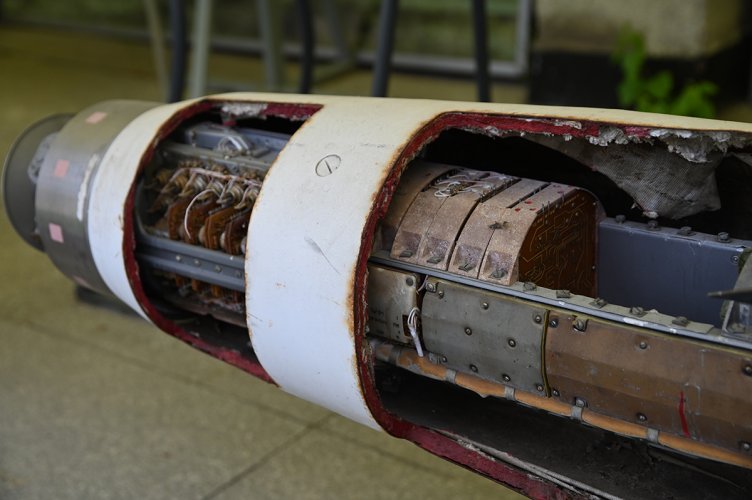
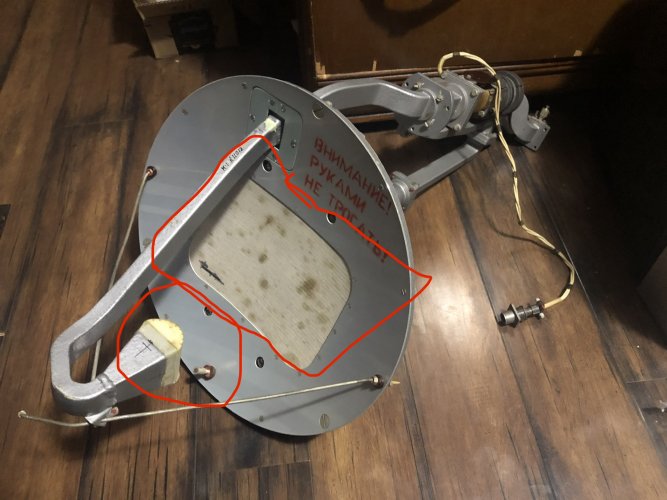
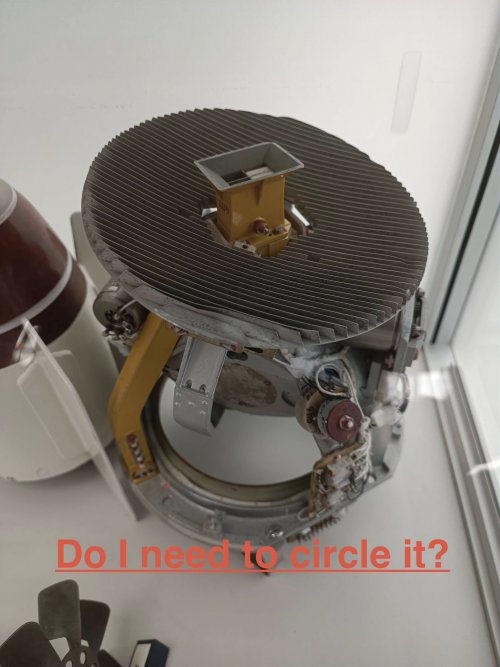
Horns are called so becuase they look and act like horns. They collect radiation and send it through wave guides ( yellow square tubing usually) to where the actual horn receiver receives the signal for processing. Or they emit the radiation needed.
The antenna on these twist cassegrain radars doesn’t radiate or receive. The horns bounce the signal off the reflector and then they bounce off the anntenna and then the signals come back bounce off the antenna then bounce off the reflector and into the horn.
Did you think the antenna in twit cassegrain radar was doing the reception of signals? It only reflects it into the horn
N-019
SRD-5 ranging radar, two horns one for 8 km missile ranging and one for 3.5 km gun/rocket ranging
May I ask,where is the sense,logic there anyway ?Of course you know what I mean. But no, there is pulse transmitter and the CWI transmiter/channel -KNP and after SARH AAM is launched ,pulse transmitter is doing what? We know what is KNP doing.Keep in mind ,we are talking about MiG-23 and 25.
CW is very high power, leaves no pulse complexity, gives a tight and accurate Doppler/range gate, making it more immune to ECM of the time. It gives very fast response and high SNR for the missile. Velocity info is also important for seeker to acquire correct target.
As you saw earlier, Smerch does not use CWI, so it’s likely for these reasons Soviets moved to it.
The quasi CW of N-019/N-001 required innovation and time. Attaching a CWI horn is a simple and reliable solution to a complex issue. Especially when these missiles are often limited by seeker range.
The pulse transmitter is continuing to lock and track target. CW is not able to lock and track, it has no CW receiver (Continuous wave, no time for reception). Or do you want every launch to be flood mode where you have no lock and just hope your CWI beam is on target?
Did you think HUD hallucinates target circle while CW guides target with LPRF off Don’t you as a pilot want to make sure you track the target in case more attacks are necessary especially since you have to point at them to illuminate in CW and thus need to know where they are? Or their range?
Horns? Question squirrel, why do you argue with me when it’s clear this is a specialty of mine I’ve spent many many years thoroughly researching? I’m not perfect but if you want to learn, there are easier ways to go about it then argument. Debate can be pleasant when done right
Horns are called so becuase they look and act like horns. They collect radiation and send it through wave guides ( yellow square tubing usually) to where the actual horn receiver receives the signal for processing. Or they emit the radiation needed.
The antenna on these twist cassegrain radars doesn’t radiate or receive. The horns bounce the signal off the reflector and then they bounce off the anntenna and then the signals come back bounce off the antenna then bounce off the reflector and into the horn.
Did you think the antenna in twit cassegrain radar was doing the reception of signals? It only reflects it into the horn
CW is very high power, leaves no pulse complexity, gives a tight and accurate Doppler/range gate, making it more immune to ECM of the time. It gives very fast response and high SNR for the missile. Velocity info is also important for seeker to acquire correct target.
As you saw earlier, Smerch does not use CWI, so it’s likely for these reasons Soviets moved to it.
The quasi CW of N-019/N-001 required innovation and time. Attaching a CWI horn is a simple and reliable solution to a complex issue. Especially when these missiles are often limited by seeker range.
The pulse transmitter is continuing to lock and track target. CW is not able to lock and track, it has no CW receiver (Continuous wave, no time for reception). Or do you want every launch to be flood mode where you have no lock and just hope your CWI beam is on target?
Did you think HUD hallucinates target circle while CW guides target with LPRF off Don’t you as a pilot want to make sure you track the target in case more attacks are necessary especially since you have to point at them to illuminate in CW and thus need to know where they are? Or their range?
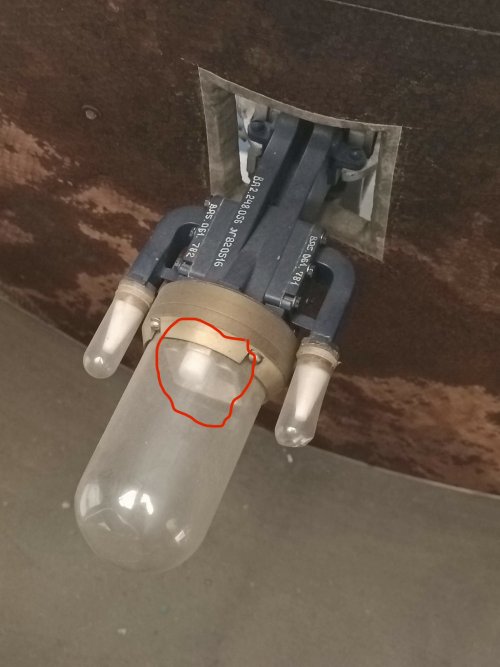
Yes, those horns,xenon lamps ,etc etc ... In the relation with the underlined and bolded ,keep reading, learning and researching and that is my benevolent message.
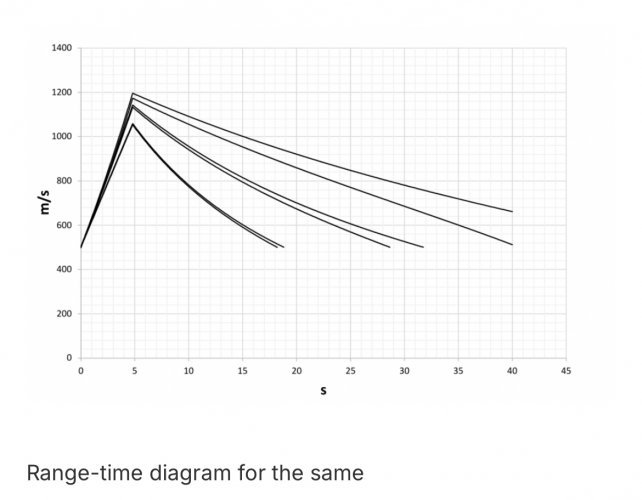
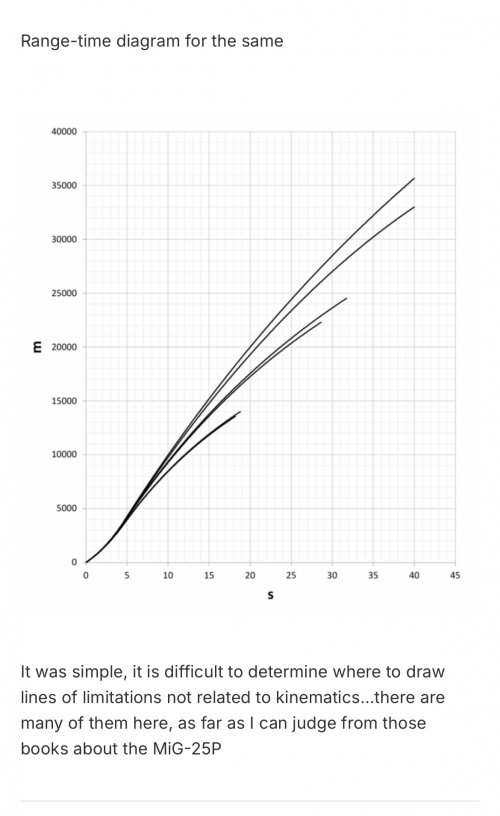
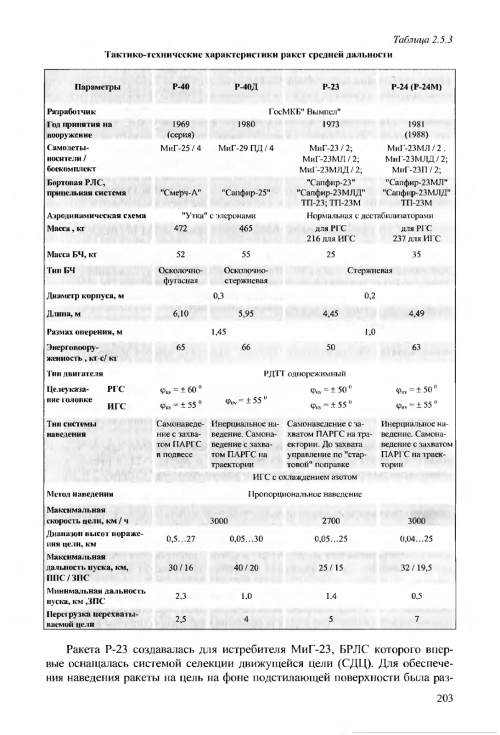
We talk about CFD in other thread, these are his results for R-40, I believe it’s for 0.1 km, 1 km, 5 km, 10 km, 15 km, and 20 km. I need to check. Of course not fastest launch either, but I’m sure you can add speak peak + deltav and chip off some for drag.
We talk about CFD in other thread, these are his results for R-40, I believe it’s for 0.1 km, 1 km, 5 km, 10 km, 15 km, and 20 km. I need to check. Of course not fastest launch either, but I’m sure you can add speak peak + deltav and chip off some for drag.
CFD ??? 35km as max launch range ? For which launch height ? Against which target? What about that PARG-12 can lock-on bigger incoming target from 90km.
CFD ??? 35km as max launch range ? For which launch height ? Against which target? What about that PARG-12 can lock-on bigger incoming target from 90km.
I have seen 30-35 km range for PARGS-12 seeker. Where do you see 90 for large target?
This not launch range but only missle speed vs time and missile distance flown vs time. You need to add target closure and correct for any difference in launch velocity to get max range with equation (missile to target closure) x (missile flight time).
Hm ,strange. Only 30km in the SARH mode for the AAM which don't have RC -channel receive antenna?
''Включение пА-РЛС ГСН происходит на дальности до цели 90 км.''
http://militaryrussia.ru/blog/topic-87.html
Also those max launch ranges of 30,40km for R/RD .Very queastionable. There is data for RD/RD-1 as 80km max launch range against bigger target like USAF bombers, SR-71 etc ( real possible targets for PD/PDS). We must keep on mind that Syrian and Iraqi AF MiG-25PDE/PDS engaged enemy fighters from about 30km with R-40RD-1.
“When launching at a range exceeding the range of GSN capture, radio correction of the missile's flight path is possible.”
It is almost certainly a slightly mistaken or badly explained description of R-40RD not R-40R, 40RD use pseudo kinematic link same as R-24R, it is just like R-27R/ER when launched at 1-1.5x seeker range, the missile gets target info through pylon feed, and when launched using INS only attempts to fly towards a point and aim for where the target will approximately be when the seeker is estimated to be in range.
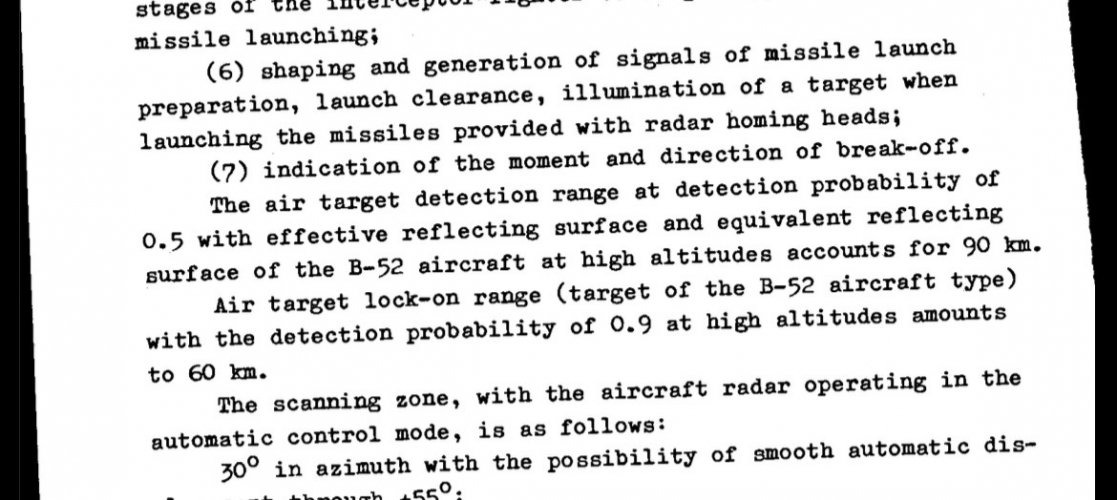
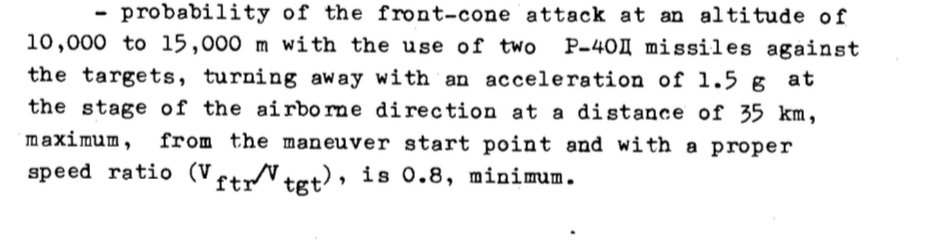
All the sources I see show 30-35 km range max. The 90 km figure likely comes from max range of Smerch radar against 20m squared RCS. 60 km lock range against same target. Same manual also mentions that whole process of search, lock, and missiles ready can take 36 seconds.
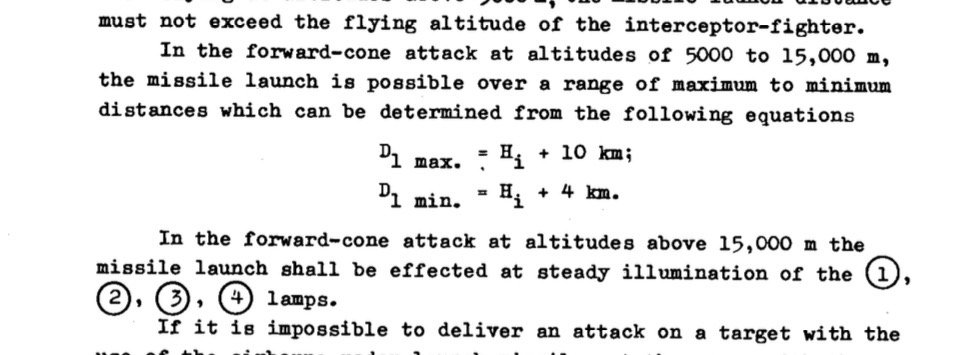
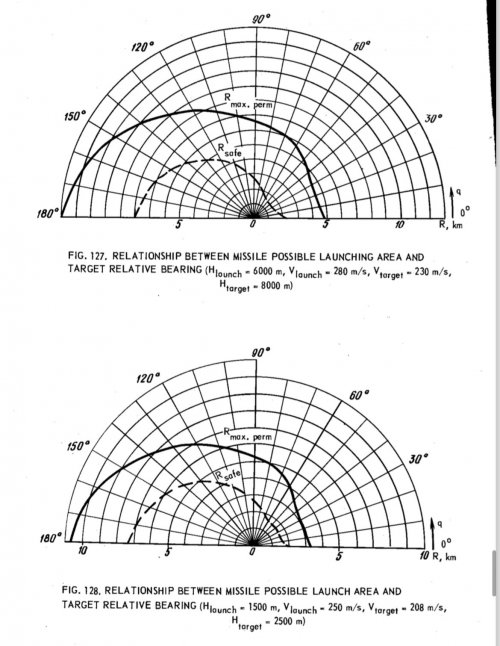
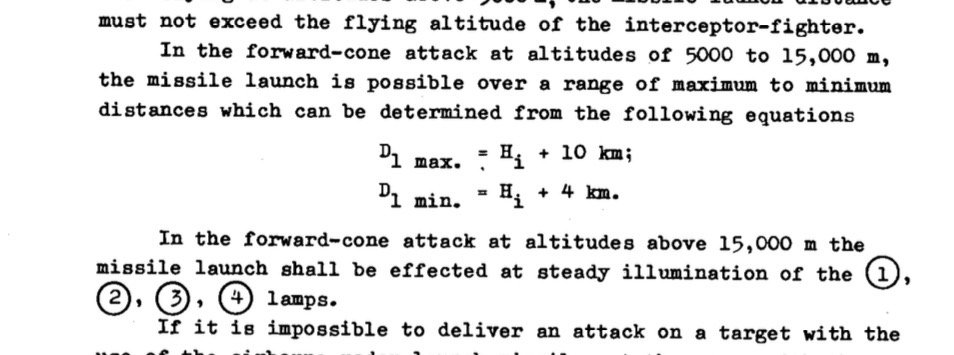
Also MiG-25P Iraqi manual you can read has this lovely advice about how to get a rough estimate of missile range. It makes sense as conservative advice as low altitude range of R-40 is 3-4.5 km in rear aspect.
There is data for RD/RD-1 as 80km max launch range against bigger target like USAF bombers, SR-71 etc ( real possible targets for PD/PDS). We must keep on mind that Syrian and Iraqi AF MiG-25PDE/PDS engaged enemy fighters from about 30km with R-40RD-1
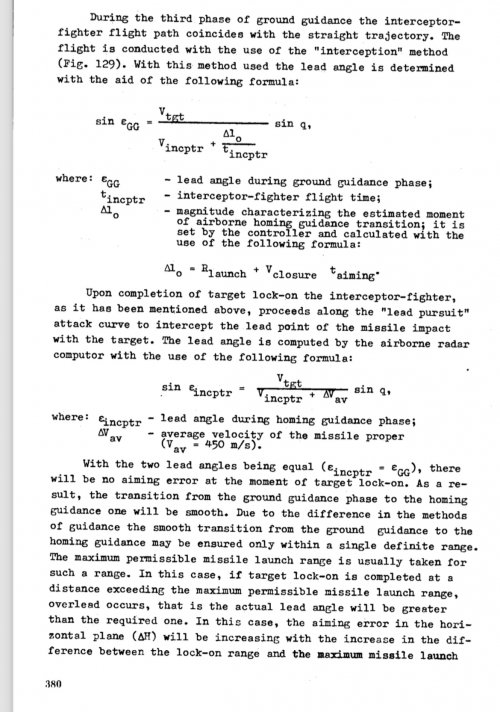
R-40RD is not R-40. Its pseudo kinematic link allows longer ranges against non maneuvering targets. I don’t really believe 80 km either, max I’ve seen is 50-60 km for R-40RD. MiG-25P computer uses 450 m/s as average missile velocity and it has 40 second flight time.
450m/s for the missile which can reach almost 2000m/s ,maybe even more ???
''Also MiG-25P Iraqi manual''
There can not be MiG-25P , only PDE manual for the IrAF pilots.
P.S.
''All the sources I see show 30-35 km range max.''
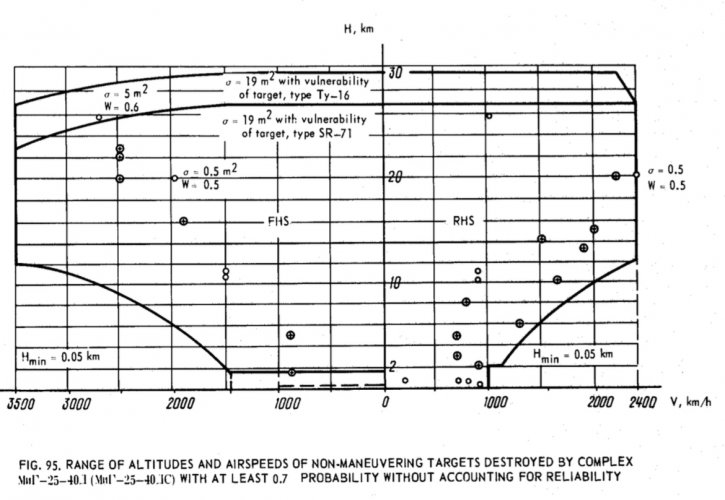
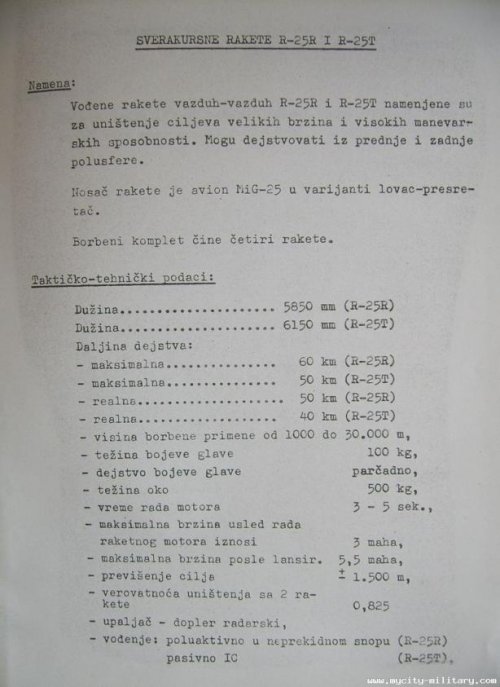
From MCM as I can see , R-25R /R-40R ( in fact ,it was intercepting complex ''MiG-25-40'', just like MiG-31-33), had max launch range 60km ? Against bigger incoming air target what was real and possible.
''Same manual also mentions that whole process of search, lock, and missiles ready can take 36 seconds.''
Not search but first detection than automatic tracking and than lock-on.
From your own source :
''Air target lock-on range ( target of the B-52 aircraft type) wih the detection probability of 0.9 at high altitutes amounts to 60kms. ''
Lock-on meaning ''PR'' ( Pusk Razreshon/Launch Authorised) ,meaning AAM, in this case R-40R can be launched. Am I right ?
Think about the AAM that could be launched at 20+kms with launch speed 3000 km/h ( keep in mind that MiG-25P had navigation system completely usable at true air speed 3.25M ! ), with OK, straight flight path but with speed after acceleration phase of 5M-6M or even more.
Yes. It’s what the manual says. If you read it it becomes clear that designers were very concerned to make sure it always underestimates rather then over estimate.
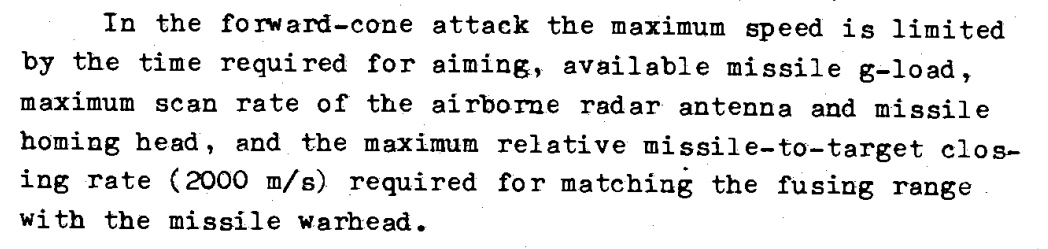
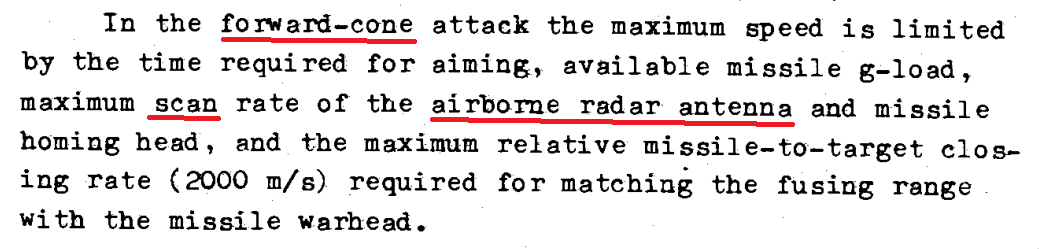
Where does 2,000 m/s come from? This is the closure limitation of the proximity fuse. If it went 2,000 m/s it wouldn’t be able use anything but impact fuse on anything flying towards it. CFD shows max velocity around 1200 m/s, closer to 1000 m/s at low altitude or less.
MCM as I can see , R-25R /R-40R ( in fact ,it was intercepting complex ''MiG-25-40'', just like MiG-31-33), had max launch range 60km ? Against bigger incoming air target what was real and possible.
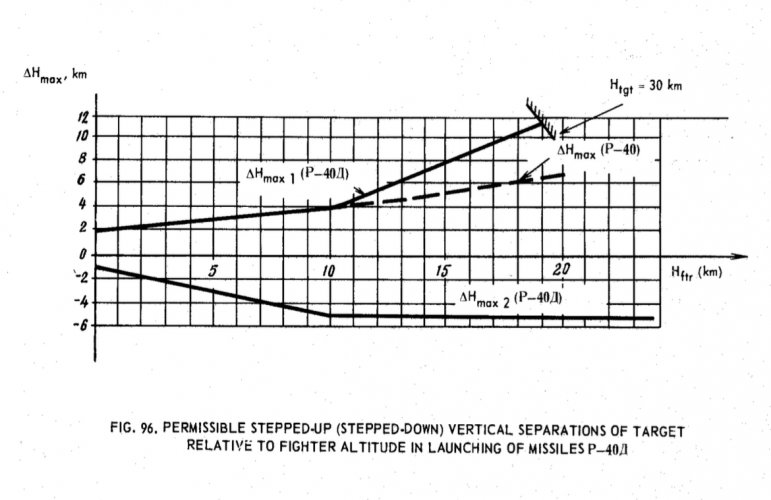
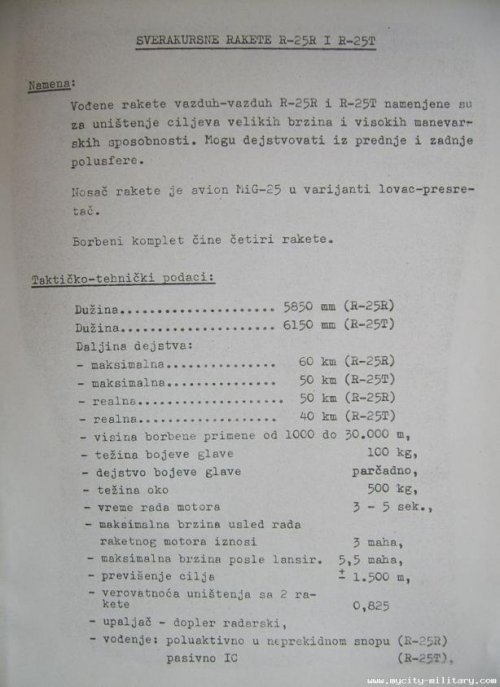
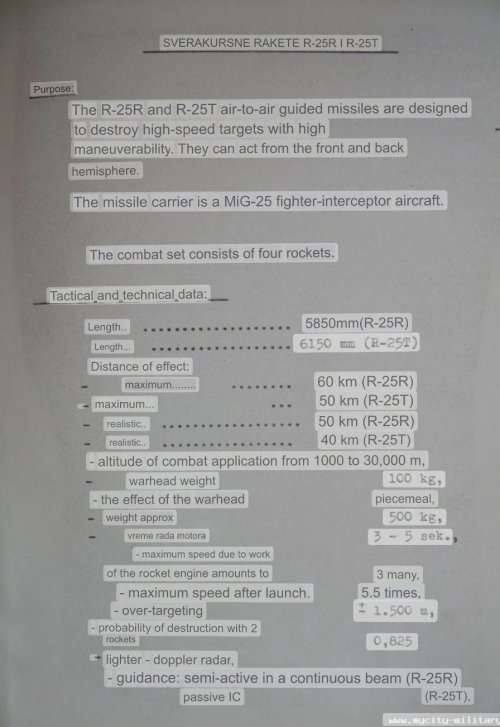
What is MCM? The paper I attached for “R-25” is for R-40RD and R-40TD and MiG-31 only ever carried 40TD. We can tell becuase it shows larger warhead then R-40 and that it’s using CW which R-40R doesn’t.
Literally says “add 10.5 seconds for 3x 3.5 search cycles which is the average before target detection and lock.” It is absolutely including The Whole search process.
All the sources I see show 30-35 km range max. The 90 km figure likely comes from max range of Smerch radar against 20m squared RCS. 60 km lock range against same target. Same manual also mentions that whole process of search, lock, and missiles ready can take 36 seconds.
From MCM as I can see , R-25R /R-40R ( in fact ,it was intercepting complex ''MiG-25-40'', just like MiG-31-33), had max launch range 60km ? Against bigger incoming air target what was real and possible.
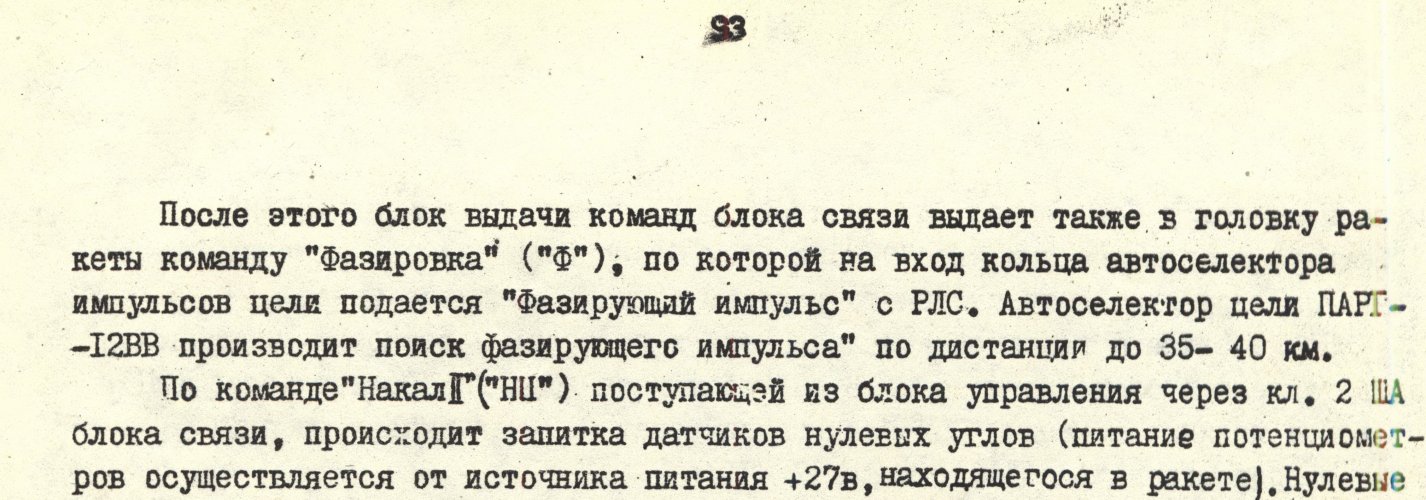
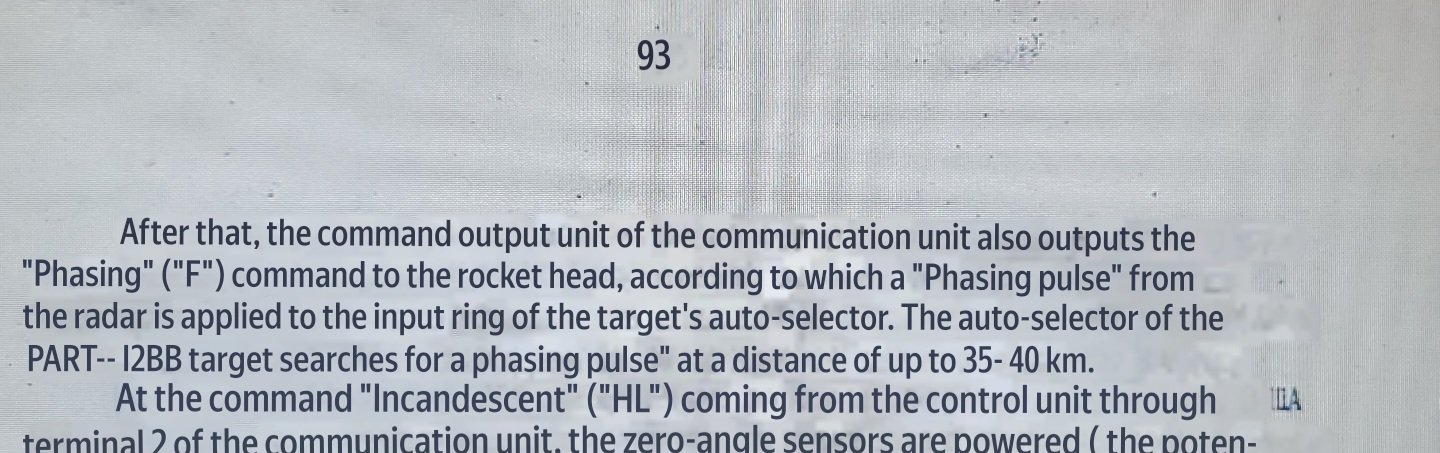
The max distance the R40R's seeker looks up at is 35-40km.
For the RD, dunno. It's CW and may not be FM'd so maybe till the plane's WCS puts it inside the engagement zone?
Yes. It’s what the manual says. If you read it it becomes clear that designers were very concerned to make sure it always underestimates rather then over estimate.
Where does 2,000 m/s come from? This is the closure limitation of the proximity fuse. If it went 2,000 m/s it wouldn’t be able use anything but impact fuse on anything flying towards it. CFD shows max velocity around 1200 m/s, closer to 1000 m/s at low altitude or less.
As mentioned, 2000m/s can be max speed of the R-40R after acceleration phase. So we have ,450m/s which is about 1600km/h. Max speed which R-40R can reach after acceleration phase is close to 7000km/h ( about 6 Mach at 20+km).
Now if it is that ''closure limitation of the proximity fuse'', calculate after how many kms or seconds of flight, one R-40R can reach speed ( so in the passive ,terminal phase of flight) ,were the speed is let as say, 1500-2000km/h. That 450m/s can only be in the terminal phase of flight.
There is one more important detail in the relation with the aerodynamic stability and controllability of the R-40/D during its flight through stratosphere. That detail is? Huge wings which possess this AAM.
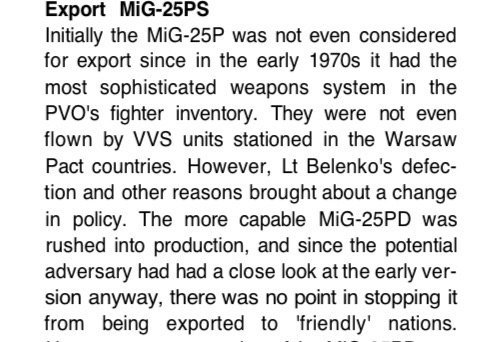
Again ,version P was never exported. That is mistake. PDE ( with RP-25E Smerch-A2E and TP-26Sh-E and with R-40RD-1/TD/1) were exported to Algeria, Syria,Libya and Iraq.
As mentioned, 2000m/s can be max speed of the R-40R after acceleration phase. So we have ,450m/s which is about 1600km/h. Max speed which R-40R can reach after acceleration phase is close to 7000km/h ( about 6 Mach at 20+km).
Now if it is that ''closure limitation of the proximity fuse'', calculate after how many kms or seconds of flight, one R-40R can reach speed ( so in the passive ,terminal phase of flight) ,were the speed is let as say, 1500-2000km/h. That 450m/s can only be in the terminal phase of flight.
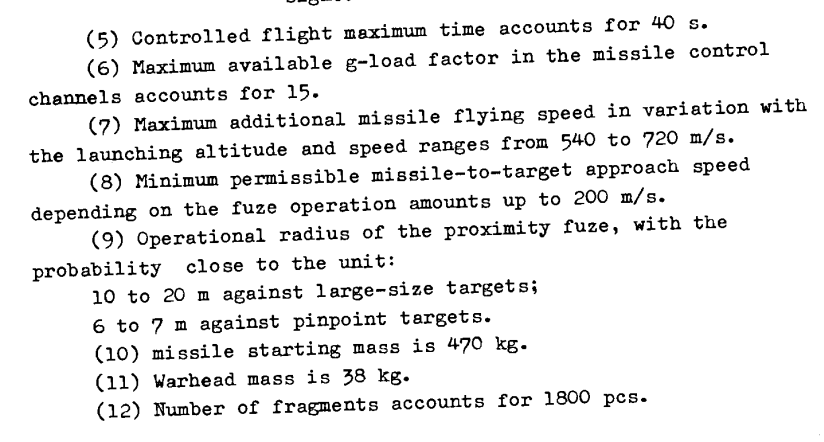
R40s add 720m/s at most(lowest total drag ==at high alt). Launched at mach 3(~900m/s)at 18km. You get an end of burn velocity of ~1600 m/s, not 2000m/s.
The 2000 m/s if the maximum missile-target closure velocity for the warhead's fusing range.
Again ,version P was never exported. That is mistake. PDE ( with RP-25E Smerch-A2E and TP-26Sh-E and with R-40RD-1/TD/1) were exported to Algeria, Syria,Libya and Iraq.
Source? According tom cooper and other sources they got 12 P models in 1980 which were upgraded to PDS standard in 83, which is why we have English MiG-25P manuals along with Syrians acquiring P models.
R40s add 720m/s at most(lowest total drag ==at high alt). Launched at mach 3(~900m/s)at 18km. You get an end of burn velocity of ~1600 m/s, not 2000m/s.
Forgot this. 35-40 km ,for which target ? Small,medium or bigger one ? Don't think that lock on range can be the same for the MiG-21 or e.g. B-52H ....
Source? According tom cooper and other sources they got 12 P models in 1980 which were upgraded to PDS standard in 83, which is why we have English MiG-25P manuals along with Syrians acquiring P models.
Which source ? Tom Cooper ? Uf... There could not be exported 'P' because it was version only for the Av -PVO. From 1979 there was PDE as the export version of the PD ( modified version of the P immediately after '6 Sep 1976' happened.All exported PDE as mentioned had RP-25E Smerch-A2E and that TP-26Sh-E which was not integrated on P.
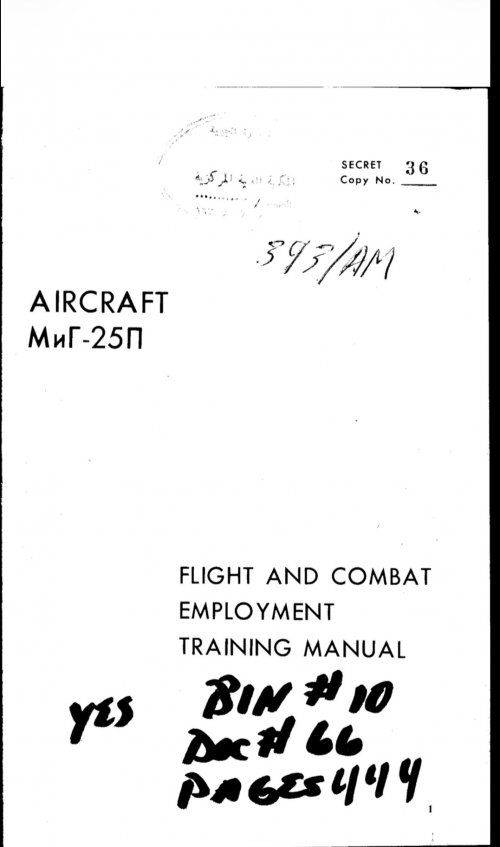
Iraqi MiG-25P manual. I already posted the front page. You can find it on aviation archives. It is a very real source and as I said this the average velocity the computer uses to under estimate the max range. Under estimate! As mentioned by someone else the increase of speed due to the rocket motor is 540-720 m/s; but it has poor aerodynamics at low altitude and only 40 second flight time.
What is 720 m/s plus 834 m/s (Mach 2.83 x 295 m/s)? 1550 m/s. If it’s launched on the deck this limits top speed to 870 m/s. There is no leg to stand on for 2,000 m/s when this is max closure proximity fuse can handle and its range is around interceptor height plus 4 km lol. This is the missile you are defending lol. It’s a great missile, but only at high altitude where it’s draggy body is less detriment
I’m sorry where does this come from? How is it even possible to use IRST on Smerch radar plane? What does cockpit look like becuase the two displays a CRT and a semi mechanical display are incompatible. It sounds like the bogus source that Mustard referenced which said Iraq was using PD with Smerch radar. So where does this info come from?
Yefim Gordon and Tom Cooper both mention MiG-25P in Iraqi Libyan and Syrian hands.
Iraqi MiG-25P manual. I already posted the front page. You can find it on aviation archives. It is a very real source and as I said this the average velocity the computer uses to under estimate the max range. Under estimate! As mentioned by someone else the increase of speed due to the rocket motor is 540-720 m/s; but it has poor aerodynamics at low altitude and only 40 second flight time.
Again, man there was no any MiG-25P in the Algerian,Libyan, Syrian or Iraqi AF at all.
''Серийный выпуск МиГ-25ПД (изд.84Д) на НГАЗ "Сокол" продолжался с 1978 по 1984 гг., было выпущено свыше 150 самолетов, часть из которых пошла на экспорт в Алжир, затем в Ирак, Сирию и в Ливию .На экспортных вариантах устанавливали РЛС "Смерч-А2Э ", позволяющую применять ракеты Р-60М.''
From the very beginning ,you didn't understand what I was described . I wrote about the max possible launch parameters and factors and that is the reason why I mentioned that 450m/s can not be the average velocity of the missile. Even that is not the point of this all story.
I wrote first , that max possible R-40R's speed is 'almost 2000m/s' ,than '2000m/s' but nevermind. MiG-25P ( PD,PDE or PDS) could launch R-40R/RD(RD-1) at 20+km with about 900 m/s as colleague Mamoran
mentioned. Now let us count on some real data,details. Max controlable flight time is 40 sec ? Yes ,OK. I already wrote that those huge wings are there for the long aerodynamic stability and controlability in the stratosphere.
You said that PARG-12 can lock-on some target only from 30-40 km, only ??? One question. If you launch R-40R from 30-40km away from the incoming target where is the target's speed ,where is the closure rate/speed in that formula? Mamoran mentioned even 2000m/s can be max closing rate . So that '450m/s case ' was only for the given fighter, launch/target parameters,nothing else which I never mentioned btw.
There was no INS,there was no data-link when we talk about R-40R. There was nothing at all.So what does it mean ? It means that R-40R was AAM with LOBL only capability just like R-40T. SARH only from the beginning of the launch. So if you launch R-40R from 30-40 km away against incoming ( especially supersonic flying target), it is logical that flight time will not be those 40sec. Now what ? It is logical that max possible launch range could be much more than 40km. ' 40 sec' of the time of full aerodynamic controllability and stability can be measured only in the situation when R-40R really flies those 40 sec from the launch until impact. As I mentioned ( must write this again ), with the max possible launch parameters /factors,that will mean launch distance much greater that those 30,35 or 40km. We must keep in mind max possible velocity of R-40R as about 1600m/s and many other parameters.
I’m sorry where does this come from? How is it even possible to use IRST on Smerch radar plane? What does cockpit look like becuase the two displays a CRT and a semi mechanical display are incompatible. It sounds like the bogus source that Mustard referenced which said Iraq was using PD with Smerch radar. So where does this info come from?
Yefim Gordon and Tom Cooper both mention MiG-25P in Iraqi Libyan and Syrian hands.
From the real sources. Of course , it was possible to use TP-26Sh-E with RP-25E. Do not read what Y.G. and T.C. wrote. If you find one but only one photo where we can see IrAF,Libyan AAF, or SyAAF MiG-25P ( so w/o IRST ) , than I will write ,OK ,you were wright,you are the boss.
P.S.
You mentioned T.Cooper.
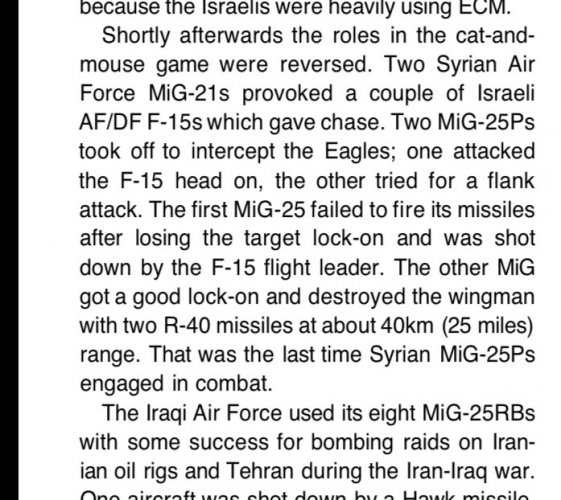
''That said, there are suggestions that the MiG-25 Foxbat/AA-6 combination can be lethal, or at least was lethal some decades ago. Journalist Tom Cooper reported that, “On February 13, 1981, Israeli F-15s ambushed a pair of Syrian MiG-25Ps and shot one down. In revenge, so the story goes, the Syrians set up an ambush on June 29, 1981. The Syrian MiG-25Ps destroyed one F-15 using two R-40/AA-6 Acrid air-to-air missiles fired from the range of 25 miles.” It is a noteworthy claim since some western sources boast that no F-15 Eagle has ever been lost in air-to-air combat.
Cooper, who filed his report in War Is Boring, went on to write, “There are problems with this [February 13, 1981] story. Neither the Syrians nor the Russians have ever provided any evidence, such as radar tapes or wreckage. Another issue is that the Syrian air force never actually received any MiG-25Ps. Syria acquired several batches of Foxbats, including two of MiG-25PDS interceptors, but no MiG-25Ps. While frequently described as a downgraded export variant of the Foxbat, the MiG-25PDS was actually much better-equipped than the early interceptor variant was. In addition to the powerful Smerch 2A radar of the MiG-25P, it had an infrared search-and-track system under the forward fuselage, radar warning receivers in blisters on the intakes and big chaff and flare dispensers in place of the wing fences. Any source citing ‘Syrian MiG-25Ps’ is of dubious quality.”
Don't understand ,I was defending R-40R/T ? Weird. The real task for one R-40R/T ( RD/TD, RD-1/TD-1 ) with MiG-25P,PD (PDE) ,PDS as high-flying /high- speed interceptor was to patrol at very high speed ( e.g. 2.35M for some period of time ) ,at height 20+kms and to intercept ,engage if that was needed, targets like SR-71, B-52H and other valuable targets of strategic importants.
In the meantime ,can you explain for all of us here ,what is going on after R-40R is launched, I mean on the words that are underlined red,tnx .
Серийный выпуск МиГ-25ПД (изд.84Д) на НГАЗ "Сокол" продолжался с 1978 по 1984 гг., было выпущено свыше 150 самолетов, часть из которых пошла на экспорт в Алжир, затем в Ирак, Сирию и в Ливию .На экспортных вариантах устанавливали РЛС "Смерч-А2Э ", позволяющую применять ракеты Р-60М.''
This says nothing about MiG-25P export. I don’t have to listen if you don’t provide a source or a good reason. And please list the source of the statement or it can never be trusted.
lock-on some target only from 30-40 km, only ??? One question. If you launch R-40R from 30-40km away from the incoming target where is the target's speed ,where is the closure rate/speed in that formula? Mamoran mentioned even 2000m/s can be max closing rate . So that '450m/s case ' was only for the given fighter, launch/target parameters,nothing else which I never mentioned btw.
You can do the calculations yourself with speed of target and 40 sec flight time. 2,000 m/s isn’t a speed limit it’s a closure limit. As in, speed of missile + target speed head on. A Mach 3 plane is going 885 m/s. Fire an R-40 close enough and it would be going too fast head on to even fuze.
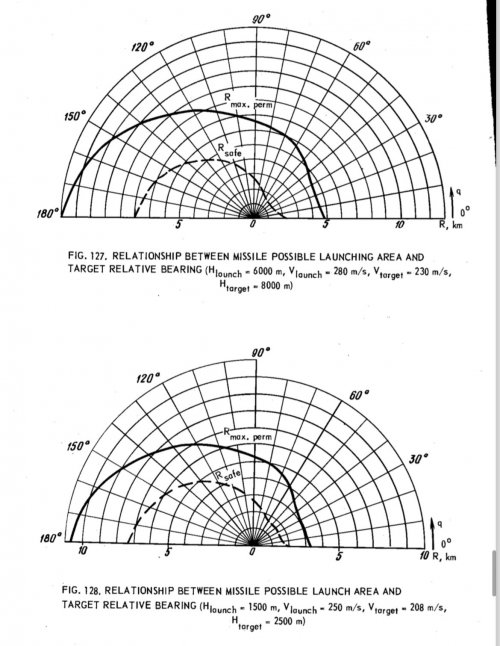
The computer states a 450 m/s average velocity to underestimate all cases. It says this. 30-40 km is below the max performance of the missile so it’s fine. The missile also slowed down very quickly becuase of the choice to put the nozzles on the sides and the big draggy wings. Did you not see the 3-10 km launch zones I posted above? It went like 3-10 km at best at that altitude and speed!
I and the manual is not saying the missile always has average speed of 450 m/s. But only at medium to low altitude and rear aspect is max range limited by ballistics and not seeker or battery. Here it’s best to underestimate and 450 m/s covers most low to medium altitude conditions. It is set this way to be SAFE and reliable not because this is actual average speed,
With max speed of 1550 m/s, and a minimum speed of Mach 1 (which is used by R-27), we get an average speed of over 900 m/s. Now let’s use the 540 m/s for low altitude where MiG-25 is only slightly faster then Mach 1, we get 600 m/s average speed. Actual average would be lower becuase it spends more time at lower speeds then high. Why do you think I keep saying “450 m/s is a deliberate UNDER ESTIMATE to increase reliability of pk.” It is a worst case scenario, that is why it uses this speed to help ensure kill (I hope you realize in real war no one is going to be launching missile at the absolute max range unless they are trying to scare an enemy.)
what ? It is logical that max possible launch range could be much more than 40km. ' 40 sec' of the time of full aerodynamic controllability and stability can be measured only in the situation when R-40R really flies those 40 sec from the launch until impact. As I mentioned ( must write this again ), with the max possible launch parameters /factors,that will mean launch distance much greater that those 30,35 or 40km.
Just becuase it is ballistically possible does not mean the airplane can make it happen. Just like R-27ER could theoretically fly 200 km if it was not limited by battery.
It is a limit, anyone with a brain would design a missile to go further then the batteries and seeker allow so that it can achieve a good range before these things hit their limit such as in rear aspect or low altitude. You need some room. You won’t always use the full 40 sec flight time but you will if your head on target reverses course.
You have sources on its 30-40 km max range. Deal with it instead of trying to find out why multiple primary sources are wrong. 30-40 km is very good for a 1960s-70s interceptor, far better then anything else Soviet Union had at the time. You only think it small becuase you want MiG-25 to be some super fighter it wasn’t. “Range is approximately interceptor height + 4 km” should tell you everything.
And guess what, ballisticslly R-40RD is basically same missile but fixes this 30-40 km range limit through a pseudo kinematic link. The Soviets were aware of this limit and made it better. What’s wrong with that? With pseudo kinematic link and better Sapfir radar with CW illuminator and it can much better take advantage of its full ballistic characteristics that it couldn’t use before.
AIM-9B/R-3S/R has 22 second battery’s r-60 has 22 second battery r-73 has 22 second battery and battery limits flight range in all cases at max range. R-24 is limited to 50 km becuase of its 45 s flight time. R-27 is limited by flight time in high altitude straight shot.
This is nothing new and learning about other missiles will show you that this is entirely normal for a missile to run out of battery before it runs out of energy or not have the LOBL range to match its ballistics.
. Do you wish they put in less rocket fuel so it does worse at altitude but better matches max front aspect at high altitude when it could be fired at any aspect?
The R-40R seeker range would exceed max missile range in any rear aspect condition. Do you want speed to be lower so it hits seeker and ballistic limit at time at high altitude front aspect? At sacrifice of side and rear aspect and maneuvering and low altitude shots?
You need to balance front aspect and rear aspect range at high and low altitudes. Having extra ballistic energy at high altitude front aspect makes this possible to have good rear aspect and front aspect performance. Or good performance when your front aspect target starts maneuvering instead of flying in a pretty straight line.
Or would you like your missile to fall out of the sky as soon as your front aspect target turns around and target speed decreases rather then increases closure?
Missile to target closure x flight time equals max range (within 35-40 km of course). Rear aspect range in same conditions is NEZ/Dr max 2.
I think these ranges are awesome for the time. At high altitude max ballistic range in 40 seconds is equal to side aspect for a max speed shot. For rear aspect I would bet the seeker range exceeds the shot distance at any altitude, as the max range we see quoted in contemporary material is around 16 km. The slower the target, the more equal is seeker distance and flight distance. Considering how MiG-25 can only achieve high speeds at high altitude, with 6-10 km charts we have maxing out at 10 km range I would bet max front aspect range only exceeds seeker range at very high altitudes. Side or rear aspect or any aspect at low to medium altitudes has flight range below seeker range.
I’m sure if the engineers could’ve gotten more they would have, but this is not really that bad of a limitation
He is not the only source to say that a F-15 was hit by R-40 and landed safely. Whether that’s victory from making them RTB or not is personal opinion.
I attached it becuase it shows he accepts that Iraq had MiG-25P.
Another issue is that the Syrian air force never actually received any MiG-25Ps. Syria acquired several batches of Foxbats, including two of MiG-25PDS interceptors, but no MiG-25Ps. While frequently described as a downgraded export variant of the Foxbat, the MiG-25PDS was actually much better-equipped than the early interceptor variant was. In addition to the powerful Smerch 2A radar of the MiG-25P, it had an infrared search-and-track system under the forward fuselage, radar warning receivers in blisters on the intakes and big chaff and flare dispensers in place of the wing fences. Any source citing ‘Syrian MiG-25Ps’ is of dubious quality.”
The question was about Iraq. And; I think he is mistaken about IRST on MiG-25P.
You find ME an image of ANY MiG-25P with IRST and I will concede.
You won’t because the two cockpits displays and weapon system are entirely incompatible which understandably he would not know unless he looked at the manual for MiG-25P/PD cockpit the way I have. And the fact that Middle East didn’t have many cameras back then…….and the small chance of any of those photos being uploaded to WWW.
I already dis credit the source as it claims PDS has Smerch which is incorrect. TP-26sh/23M requires the appropriate weapon complex. It is mistaken and mixing things up becuase the source does not know any better. PDS is a P built to PD standard, either in Soviet Union or after the customer bought MiG-25P.
“We installed one small part of the SUV-23MLA weapon system and left everything else that makes it work best off while not giving it anything from SUV-23MLA even though those PDS on the other side of the shop are getting the full weapon system that is designed to work together.”
It makes no sense, like I have said, we throw out sources when they are illogical or an outlier to all other sources. I am not surprised the Soviet aviation isn’t a rigorously scientific died as western.
Many websites talk about P with R-60 or IRST or PDS with Smerch and I just put it down to it being a slice of history with very few primary sources and people parroting incorrect sources.
There are three interceptor variants. P, PDS which is P upgraded to PD standard, and PD which is new built. Anything else to contrary is incorrect.
I wonder why MiG-25P manuals are in English if never exported and released along with manuals from Iraq…….i have yet to see anything from you saying Iraq did not have 25P. I had a source saying MiG-25P was purchased in 1980 by Iraq and upgraded to PDS in 83. Your source which you do not specify who said it does not override mine from Yefim Gordon and TC. Tom Cooper is often wrong about specific things becuase he focus on history, operational past, not technicalities of equipment, Yefim Gordon makes same mistake he is of course a great aviation historian but he will often mis name missiles, confuse SRO with SRZO, the amount of mistakes he makes is sometimes hilarious but understandable with his huge output of content and better focus on development stories. They are both more trustworthy than random websites and internet strangers.
The IRST requires a CRT with nothing on it and controls just for it. Smerch uses a semi mechanical display with crt behind it only showing a few things and entirely different controls. They are not compatible. It is not something you can just add for a weapon complex that was designed ground up from MiG-23MLA.For example, controls for TP-26 are on same dial as radar modes for S-25, which are not as same as Smerch radar modes.
You have been trying to argue that it’s max speed is same as the max closure of the proximity fuse, that it’s range exceeds 40 km, and all these things are in conflict with data from the missile manufacture and the MiG-25P/PD manuals which are available for your reading at any time and tell you exactly how the missile performs. Is it so improbable that the ballistic range of a missile may be designed to exceed the technology of the time? With PD/PDS you get CW and pseudo kinematic link making it a 50-60 km missile. This is the truth that all sources corroborate and if you can’t understand that then I’m sorry for you.
Just like I mentioned above, shortly after this the manual stipulates that average time to search and lock and get missiles ready is 36 seconds. So it’s saying if you detect them too late, it will limit the max range of the missile. And that if at time of missile reaching the target if closure is above 2,000 m/s the proximity fuse will not work. Fire head on on a SR-71 at minimum range and this might happen.
Read the manuals if you really want to learn about R-40 from a place that is unbiased and not trying to turn the missile into some 80-100 km missile. The example with the highest max launch range for R-40R you will find in the book is 35-40 km for good reason.
The “range” It says here of 62 km is for the beginning of the zoom climb/dive if you read the previous portion of the book with Rm. max is max missile range.
If I was in 60s/70s, I would think 30-40 km range at high altitude amazing. Idk why you are so disappointed with your pre conceived notion of the missile.
The entire thing was designed for high altitude and why it only does 3-10 km below 12 km. The missile nozzles poke out the side increasing frontal area and base drag and the giant wings produce a lot of drag at low altitudes (there is reason most missiles keep wings small and why AIM-120C has more range then 120B).
Yes missiles are often shorter ranged or vary more in performance according to conditions then we were led to believe growing up. It’s okay to realize our youthful dreams were naive.
Missiles have limits of ballistics or operating time or seeker limit. At low altitudes this is entirely a ballistic limit due to its draggy design. At high altitudes ( front aspect only) a seeker and operating time limit (for rear aspects). It’s exact same case
For R-23, R-24, R-27, R-33, etc. what is so strange that they didn’t engineer a pseudo kinematic link until PD model using the tech from MiG-23MLA? What is so strange about a small passive radar seeker from 60s and 70s having “only” 30-40 km as if that’s something to be ashamed of back then?
Even R-27 only has 25 km range of seeker vs fighters and 45 km for bombers. It is a 1980s missile two generations after R-40R. Why is it odd to design a 60s missile with 30-40 km range? Why?
I’ll give one more range example. Soviet Union did many interceptions of SR-71. And they were always a stern conversion or at the least side aspect. Not head on. Front aspect was not considered much in 60s. R-3R wasn’t even capable of hitting front aspect target and I bet most early SARH missiles from that era are the same. Not saying R-40R can’t, but that you think only in front aspect when Soviets and Bisnovat were thinking of all aspects especially side and rear and all altitudes.
I am using scientific method here best I can and we have very good evidence of the missiles performance from these sources.
It is a long and storied tradition of studying Soviet tech that we find limitations that were not commonly known and decrease effectiveness in some cases. I am no stranger to this. Are you? Is 30-40 km not respectable for 60s/70s? Why not? How well aware are you of Soviet technical abilities back then?
PDS is a P upgraded to PD standard. PDE is export PD. Anything that says otherwise is incorrect. Misinformation becuase of the lack of primary sources causing people to get this wrong occasionally does not make it incorrect. It just means they are not aware that Smerch is not plug and play with S-25 weapon complex and IRST is not plug and play with 25P weapon complex. One person got it wrong and parroted it to the next source.
There is no reason for Iraq to operate 3 different variants when the whole idea was to buy PD and upgrade all P models to PDS and unify them to one standard.
The AIM-9B and its' Soviet AA-2A Atoll derivative didn't use thermal-batteries, they were powered by hot-gas driven turbogenerators (The hot-gas was supplied by a solid-propellant gas-generator and also energised the control-fin servo-actuators).
This site uses cookies to help personalise content, tailor your experience and to keep you logged in if you register.
By continuing to use this site, you are consenting to our use of cookies.