It is particularly sad for Alan Bond, who started working on HOTOL 43 years ago - spring 1982, as old as my old self. And of course all the other "founding fathers" along him. They bounced off HOTOL demise in 1989, only to crash down again in 2023.

You are using an out of date browser. It may not display this or other websites correctly.
You should upgrade or use an alternative browser.
You should upgrade or use an alternative browser.
BAe HOTOL
- Thread starter flateric
- Start date
Putting brilliant people out to pasture is worse than death.
Die in battle, and sculpture artists have you atop a rearing horse. When a project dear to the lives of many is yanked away--- it is a silent form of saying "you're worthless to us."
I wouldn't blame them if they defected to China for spite.
Die in battle, and sculpture artists have you atop a rearing horse. When a project dear to the lives of many is yanked away--- it is a silent form of saying "you're worthless to us."
I wouldn't blame them if they defected to China for spite.

- Joined
- 3 September 2006
- Messages
- 1,548
- Reaction score
- 1,698
Hrm. No comments.I wouldn't blame them if they defected to China for spite.

red admiral
ACCESS: Top Secret
- Joined
- 16 September 2006
- Messages
- 2,199
- Reaction score
- 3,472
Spite because the government only gave them about £100m instead of £100bn?I wouldn't blame them if they defected to China for spite.
For a company without a viable concept or business plan they did pretty well.
It wasn't yanked. They never had firm footingjust don't like to see rugs yanked from under people's feet.
I just don't like to see rugs yanked from under people's feet.
IMO part of the problem was RE wasn't all that willing to 'compromise' short of Skylon being funded fully up front. A lot of suggestions on using the SABRE, (odd, for some reason I kept trying to type "Rapier"
 ) as propulsion for the booster on a TSTO but they'd have none of that and far to often rejecting anything that simply wasn't the full up Skylon.
I noted quite often in discussions that even the "SABRE" wasn't as "cutting edge" as it seemed given similar technology had been studied in the late 50s and early 60s. Really sad they didn't get to the flying prototype stage but that's kind of why they call it the "Valley of Death" isn't it?
Spite because the government only gave them about £100m instead of £100bn?
For a company without a viable concept or business plan they did pretty well.
I'd say they had a viable concept, aforementioned studies showed it wasn't anything really basic to arrive at just a lot of hard engineering needed, agree about the business "plan" though.
Randy
red admiral
ACCESS: Top Secret
- Joined
- 16 September 2006
- Messages
- 2,199
- Reaction score
- 3,472
Agree on the above. Too much focus on HX and Engine - doesn't really matter if these are individually viable but can't be viably integrated into a vehicle concept.I'd say they had a viable concept, aforementioned studies showed it wasn't anything really basic to arrive at just a lot of hard engineering needed, agree about the business "plan" though.
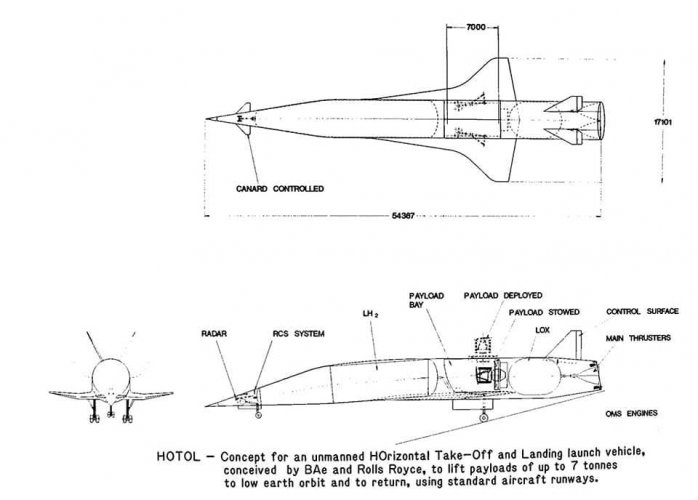
HOTOL and Skylon had similar issue - where to put the engine. HOTOL only had one in the rear, it caused CoG hassles. Skylon moved them to the "middle" but it meant the wingtips - and this eventually ruined the rear fuselage with heat, noise and vibrations.
By this point I wonder whether the best solution might have been a MiG-21 like configuration - just one SABRE in a barrel-shaped fuselage; as a TSTO, with an expendable upper stage.
Think they had plans for a SABRE demonstrator like that at some point ?
https://www.secretprojects.co.uk/th...ine-skylon-spaceplane.2455/page-6#post-315770
By this point I wonder whether the best solution might have been a MiG-21 like configuration - just one SABRE in a barrel-shaped fuselage; as a TSTO, with an expendable upper stage.
Think they had plans for a SABRE demonstrator like that at some point ?
https://www.secretprojects.co.uk/th...ine-skylon-spaceplane.2455/page-6#post-315770
Last edited:

- Joined
- 21 December 2006
- Messages
- 1,523
- Reaction score
- 2,290
Ironic that Richard Varvill was working on Harrier and P1216 engines before leaving Rolls Royce - balance and vibration were fundamental to getting an airframe wrapped around these to work.HOTOL and Skylon had similar issue - where to put the engine. HOTOL only had one in the rear, it caused CoG hassles. Skylon moved them to the "middle" but it meant the wingtips - and this eventually ruined the rear fuselage with heat, noise and vibrations.
red admiral
ACCESS: Top Secret
- Joined
- 16 September 2006
- Messages
- 2,199
- Reaction score
- 3,472
But the goal was to make a spaceplane, rather than a means of cost-effective space launch at reasonable risk. Dan Sharp's recent HOTOL book is pretty clear on the single mindedness to get a spaceplane using that sort of propulsion system, regardless of all the evidence along the way that there were better options.By this point I wonder whether the best solution might have been a MiG-21 like configuration - just one SABRE in a barrel-shaped fuselage; as a TSTO, with an expendable upper stage.
martinbayer
ACCESS: Above Top Secret
- Joined
- 6 January 2009
- Messages
- 5,081
- Reaction score
- 6,998
IMHO worth a try - that layout worked (somewhat) for the D-21.HOTOL and Skylon had similar issue - where to put the engine. HOTOL only had one in the rear, it caused CoG hassles. Skylon moved them to the "middle" but it meant the wingtips - and this eventually ruined the rear fuselage with heat, noise and vibrations.
By this point I wonder whether the best solution might have been a MiG-21 like configuration - just one SABRE in a barrel-shaped fuselage; as a TSTO, with an expendable upper stage.
Think they had plans for a SABRE demonstrator like that at some point ?
https://www.secretprojects.co.uk/th...ine-skylon-spaceplane.2455/page-6#post-315770
martinbayer
ACCESS: Above Top Secret
- Joined
- 6 January 2009
- Messages
- 5,081
- Reaction score
- 6,998
As luck/serendipity/coincidence/synchronicity would have it, I just started leafing through my shiny new HOTOL book copy, and the top drawing on page 103 shows *exactly* such an axisymmetric inlet arrangement for HOTOL, albeit with the nosecone and inlet slightly canted downward.HOTOL and Skylon had similar issue - where to put the engine. HOTOL only had one in the rear, it caused CoG hassles. Skylon moved them to the "middle" but it meant the wingtips - and this eventually ruined the rear fuselage with heat, noise and vibrations.
By this point I wonder whether the best solution might have been a MiG-21 like configuration - just one SABRE in a barrel-shaped fuselage; as a TSTO, with an expendable upper stage.
Think they had plans for a SABRE demonstrator like that at some point ?
https://www.secretprojects.co.uk/th...ine-skylon-spaceplane.2455/page-6#post-315770
I have the book on my desk, right hand, as I type this. (checks frantically) Ok... oh boy, I've just realized that it might have been the right shape as far as engine vs CoG is concerned; and thus might have salvaged 40 years of Alan bond research, 1983 - 2023 ...
General shape validated at least up to Mach 3.5, as all the members of the SR-71 extended family (even if REAL max speed was a touch lower).IMHO worth a try - that layout worked (somewhat) for the D-21.
And now I remember those 1999-2000 NASA papers about using the declassified, surviving D-21s at Davis Monthan AFB - to try and test a RBCC up to (almost) Mach 4. There are graphs in these papers about the D-21 airframe absolute limits, velocity and all.
red admiral
ACCESS: Top Secret
- Joined
- 16 September 2006
- Messages
- 2,199
- Reaction score
- 3,472
The key is solving multiple issues at once though e.g. nose intake and engine in the middle gives very long duct and exhaust which are lossy and heavy. And where do you put the payload bay? But minimising mass is really the key for SSTO.I have the book on my desk, right hand, as I type this. (checks frantically) Ok... oh boy, I've just realized that it might have been the right shape as far as engine vs CoG is concerned;

Brett Davidson
ACCESS: Top Secret
- Joined
- 26 September 2006
- Messages
- 4,451
- Reaction score
- 12,861
See also pp. 231-2 for discussion of alternatives.As luck/serendipity/coincidence/synchronicity would have it, I just started leafing through my shiny new HOTOL book copy, and the top drawing on page 103 shows *exactly* such an axisymmetric inlet arrangement for HOTOL, albeit with the nosecone and inlet slightly canted downward.
Illus:
https://www.secretprojects.co.uk/threads/hotol-britains-spaceplane-by-dan-sharp.43368/post-761757

Attachments
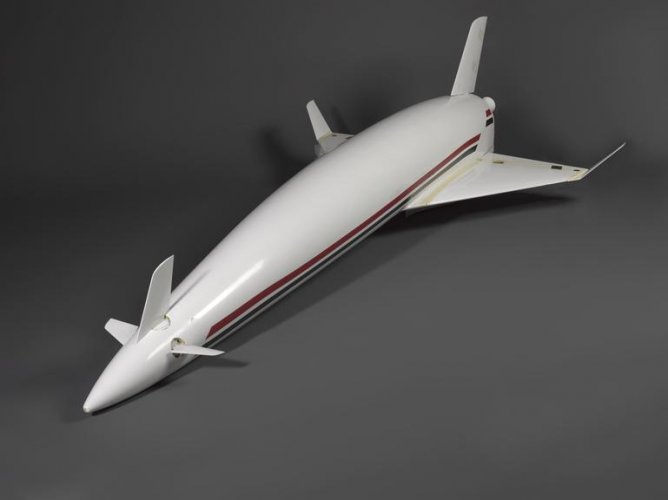
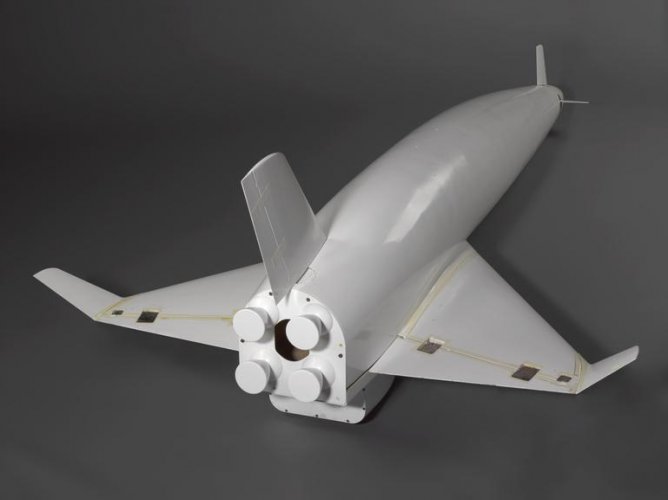
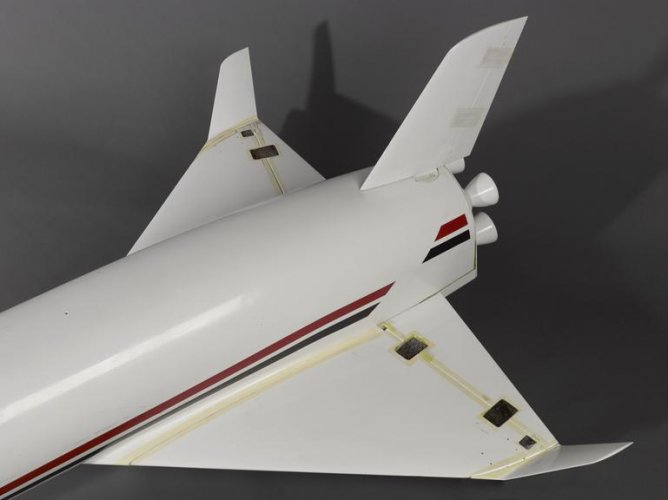
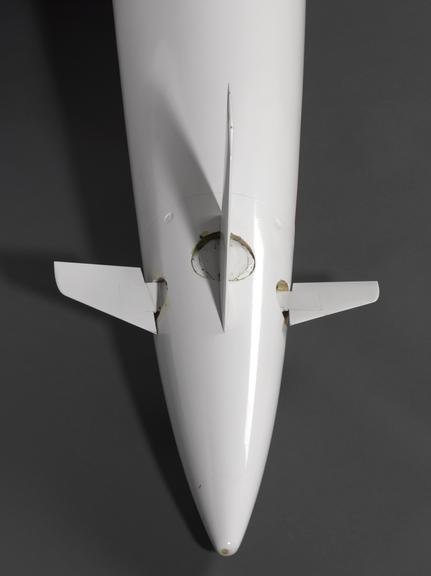
Attachments
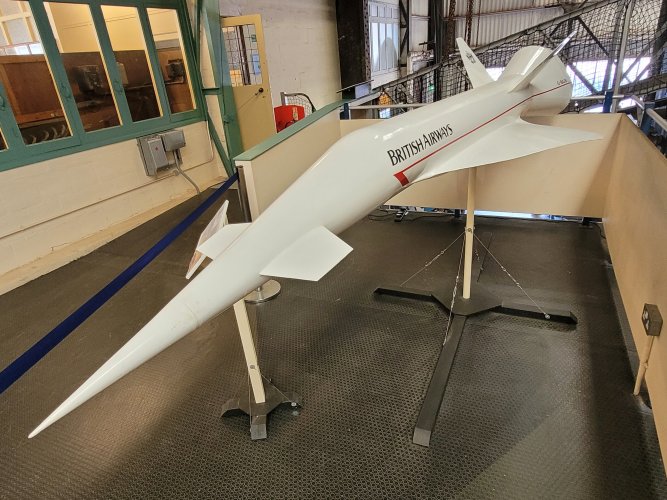
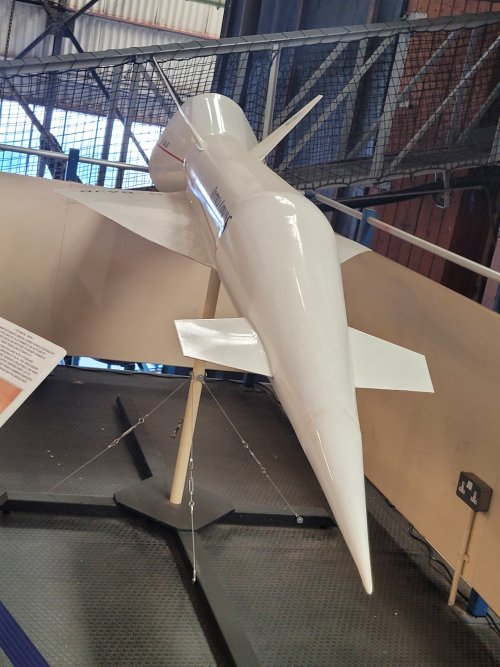
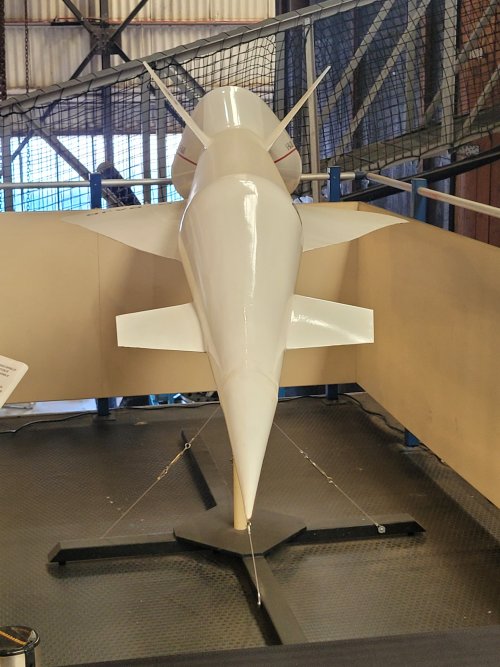
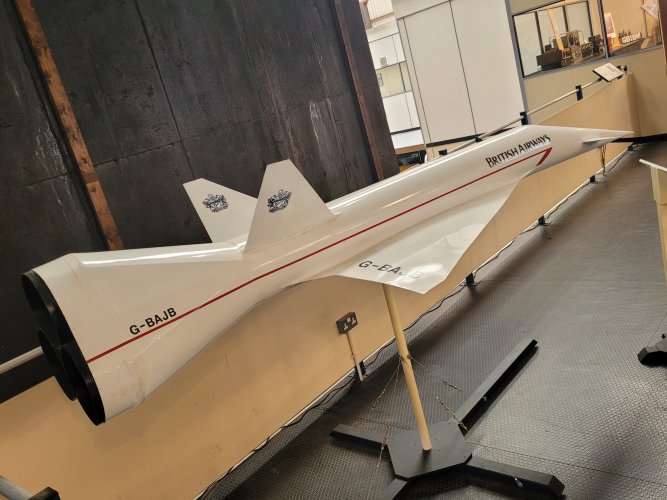
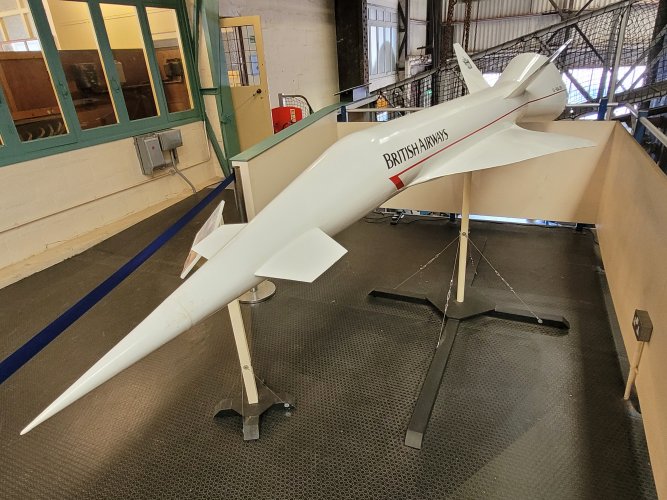
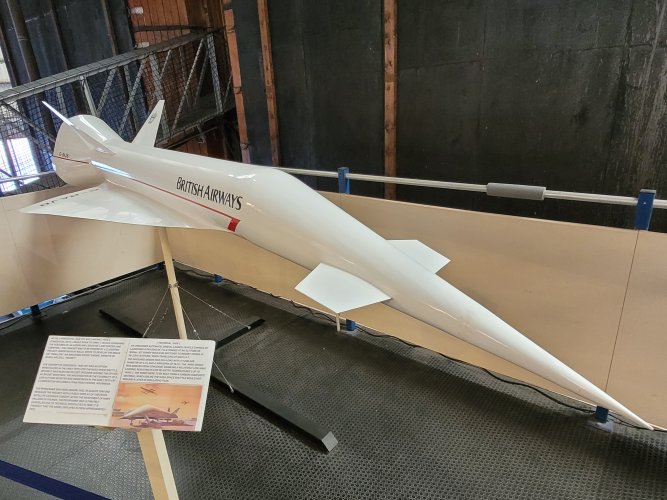
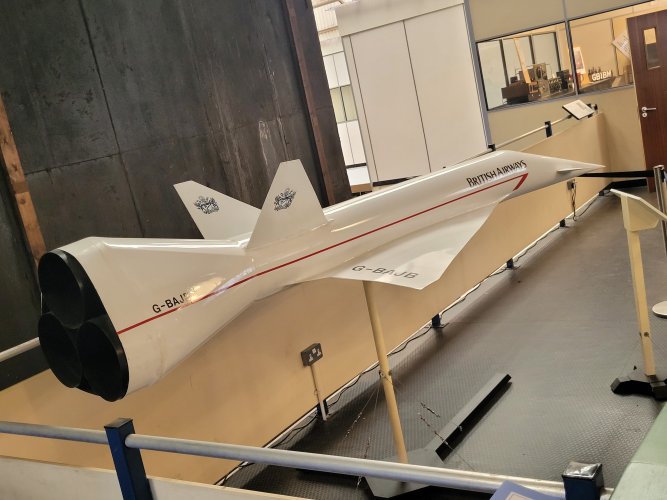
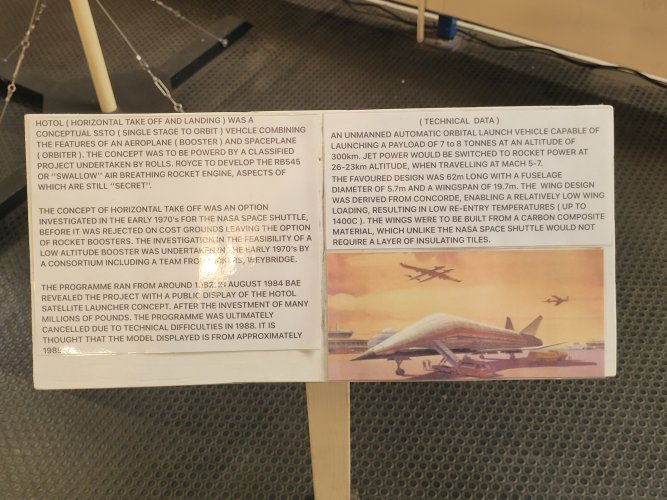
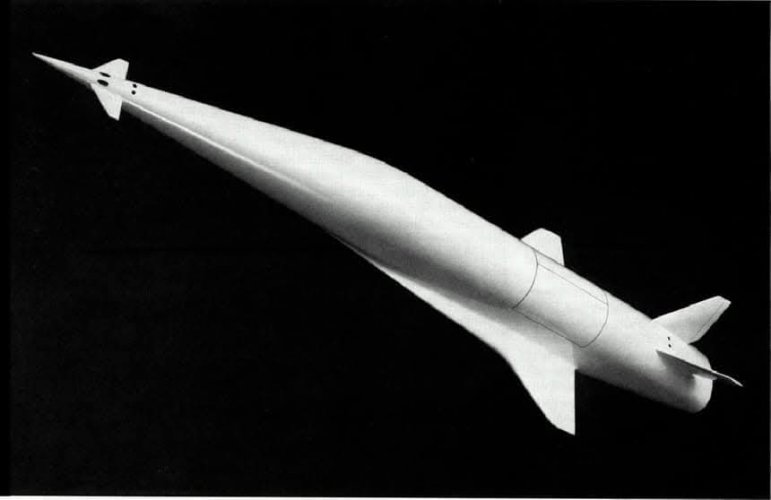
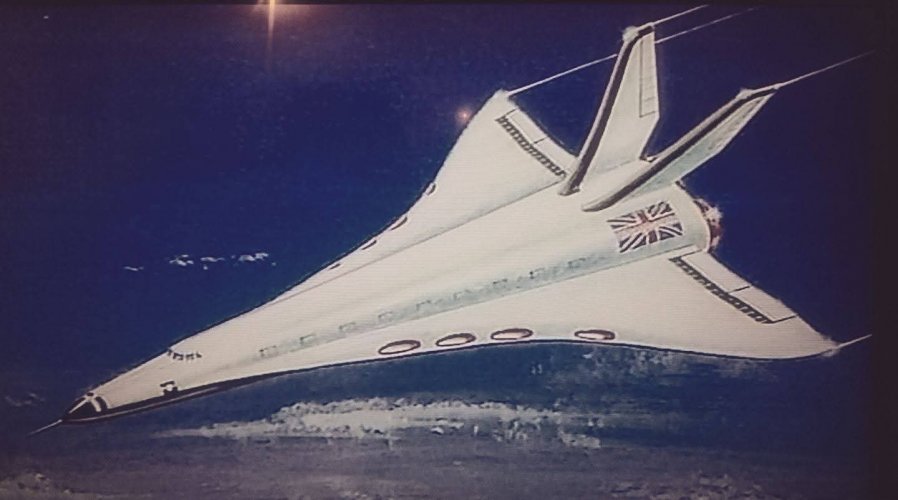
Brooklands Museum, July, 2025 (refinished tunnel model ? the flared back is intreguing hence thinking its there for a reason ?)
Attachments
-
 20250617_132219.jpg2.4 MB · Views: 67
 -
 20250617_132347.jpg1.2 MB · Views: 60
 -
 20250617_132336.jpg1.2 MB · Views: 72
 -
 20250617_132247.jpg2.5 MB · Views: 71
 -
 20250617_132217.jpg2.4 MB · Views: 69
 -
 20250617_132206.jpg2.1 MB · Views: 68
 -
 20250617_132142.jpg2.3 MB · Views: 75
 -
 20250617_132155.jpg1.9 MB · Views: 84
Last edited:

- Joined
- 11 June 2014
- Messages
- 1,641
- Reaction score
- 3,510
Brooklands Museum, July, 2025
I specifically asked the HOTOL deputy team leader at British Aerospace, Gerald Wilson, about this particular design and he said he didn't recognise it as being HOTOL-related.
Brooklands Museum, July, 2025
Anyone else getting "Angel Interceptor" vibes from this?
Randy
That's the first I have seen with two vertical stabilizers...I thought it only had one on the nose--any other tailfins on airframe noses?
- Joined
- 11 June 2014
- Messages
- 1,641
- Reaction score
- 3,510
That's the first I have seen with two vertical stabilizers...I thought it only had one on the nose--any other tailfins on airframe noses?
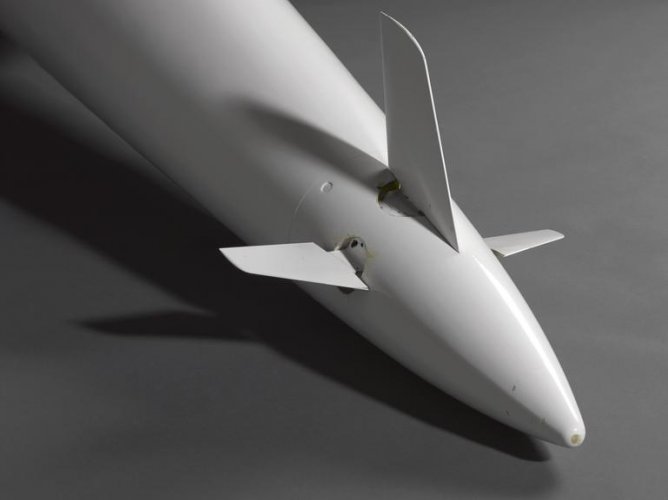
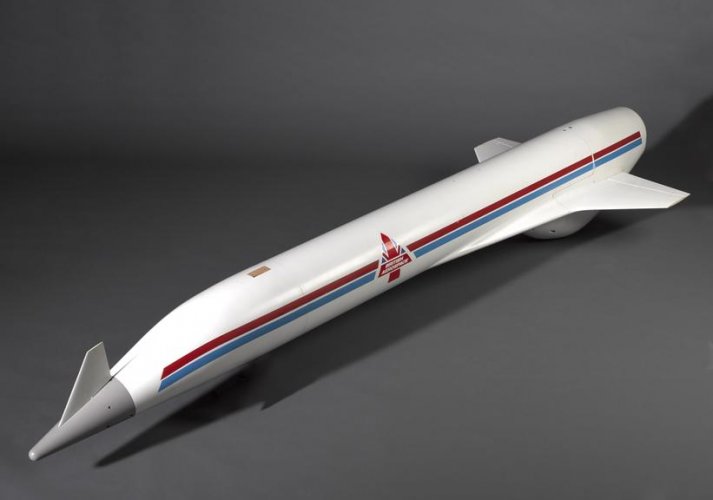
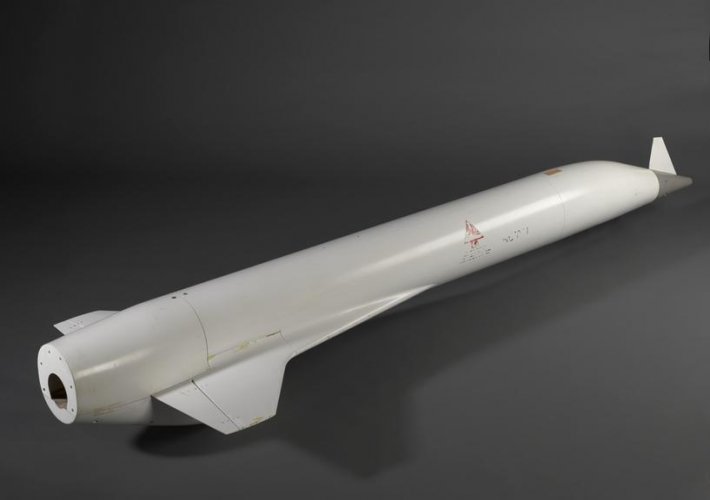
The model in the Science Museum photos is mislabelled. It's actually HOTOL wind tunnel model SC2 of January 1989, representing Configuration H. The reason it has both fore and aft fins, as well as wingtip surfaces, is because someone has just stuck all the different test parts together and given it a lick of paint to turn it into a display model. As tested, unpainted, it would have either the fore fin or the aft fin, but not both at once, and was tested with and without the tip fins.
It's like if you got a model kit that came with alternative parts to create different variants, but then just stuck everything on at once.
To be fair, a two-fin (fore and aft) HOTOL, based on Configuration F, was assessed in 1986 to determine what effect that arrangement would have on controllability but the layout wasn't adopted.
A fuller account of SC2 can be found on p273-275 of my book HOTOL: Britain's Spaceplane. There's a photo of SC2 against a red background on the back cover too.
Details of the two-fin Configuration F are on p122.
- Joined
- 11 June 2014
- Messages
- 1,641
- Reaction score
- 3,510
This model is SA1, representing Configuration C, from 1986. See pages 80 and 142 of my book for more details.
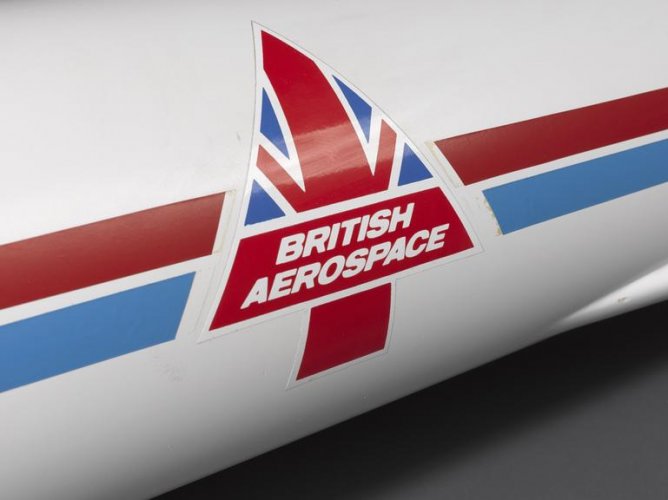
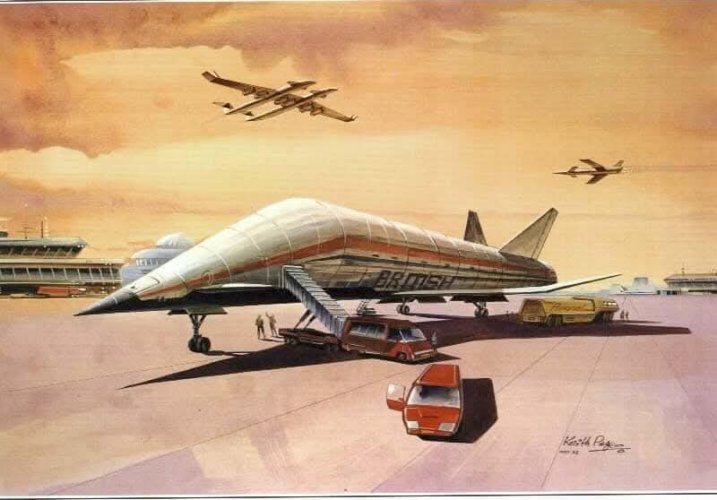
That model in Brooklands museum was actually made by British Airways (apprentices?) as just a futuristic aircraft for display at some sort of BA internal event. A bunch of volunteers who like shiny things found it in a load of junk and decided with museum management backing that it must be Hotol.Brooklands Museum, July, 2025
It doesn't look much like any version of Hotol, it has no connection with Brooklands and should go into the skip.
Why would British Airways have anything to do with Hotol? Was a passenger carrying version considered? I think not.
One of the now numerous examples of inaccurate guesswork and non-accredited information that is taking over this once brilliant museum.
Just looking at it, I can agree with that. The flared rear end is ridiculous, and so are the big engine nozzles there. Kind of aerodynamic bottleneck.That model in Brooklands museum was actually made by British Airways (apprentices?) as just a futuristic aircraft for display at some sort of BA internal event. A bunch of volunteers who like shiny things found it in a load of junk and decided with museum management backing that it must be Hotol.
It doesn't look much like any version of Hotol, it has no connection with Brooklands and should go into the skip.
Why would British Airways have anything to do with Hotol? Was a passenger carrying version considered? I think not.
One of the now numerous examples of inaccurate guesswork and non-accredited information that is taking over this once brilliant museum.
The very long pointy nose with the canards makes no sense either.
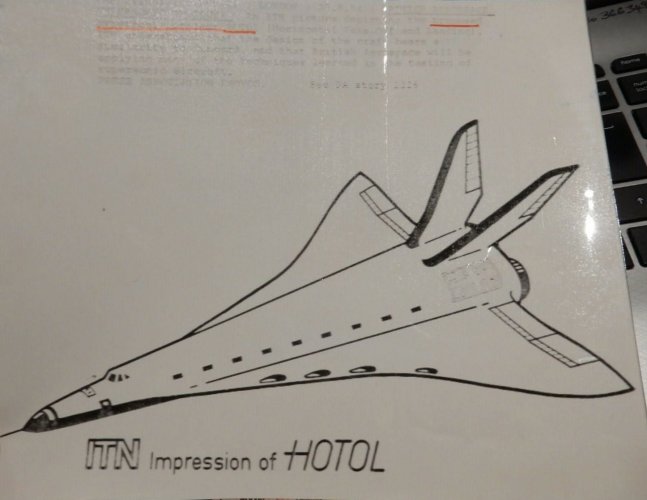
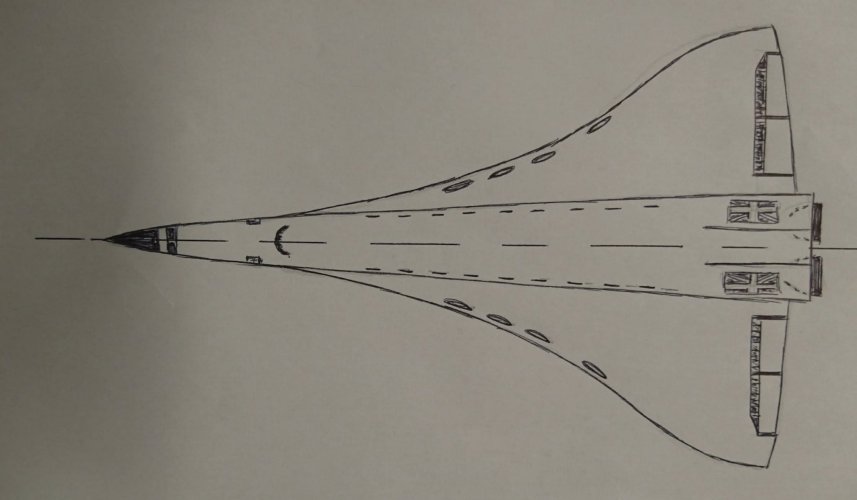
The Brooklands model looks like someone tried to do something notional for display purposes based upon a verbal description of the Keith Paige painting or a sketch of the early configuration studies
Attachments
Last edited:
Similar threads
-

-
-
 McDonnell Douglas X-33 SSTO Reusable Launch Vehicle
- Started by athpilot
- Replies: 10
-
-
