
You are using an out of date browser. It may not display this or other websites correctly.
You should upgrade or use an alternative browser.
You should upgrade or use an alternative browser.
BAe HOTOL
- Thread starter flateric
- Start date

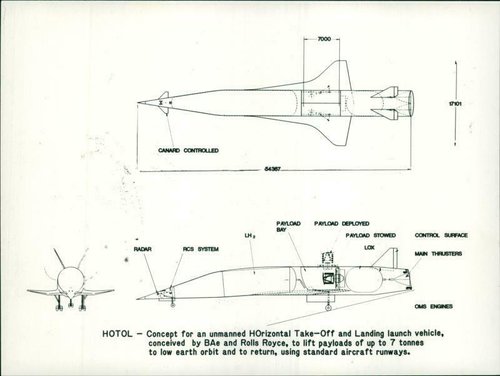
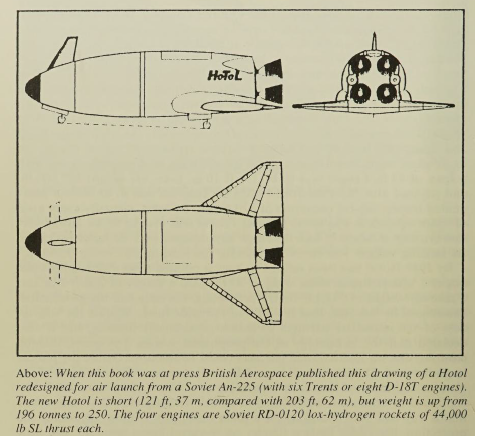
the one item I'm after is a good 3-view. Does the brochure contain that?
It does not. My copy comes from another researcher, so I'm hesitant to post high-rez, but this gets the idea across.

does anyone know of any ga drawings or dimensions for the initial HOTOL design
This'n?

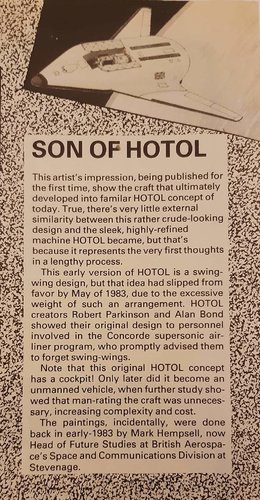
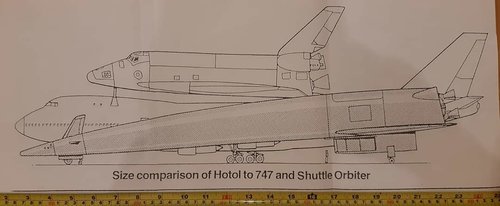

Thumblegudget
ACCESS: Restricted
- Joined
- 7 February 2021
- Messages
- 3
- Reaction score
- 33
Hi everyone.
I just wanted to say a big thanks as this thread has proved to be an amazing resource for finding some rare images for a couple of videos I made recently.
Links to the videos below if anybody is interested:
I just wanted to say a big thanks as this thread has proved to be an amazing resource for finding some rare images for a couple of videos I made recently.
Links to the videos below if anybody is interested:

asiscan
ACCESS: Confidential
- Joined
- 3 April 2014
- Messages
- 88
- Reaction score
- 94
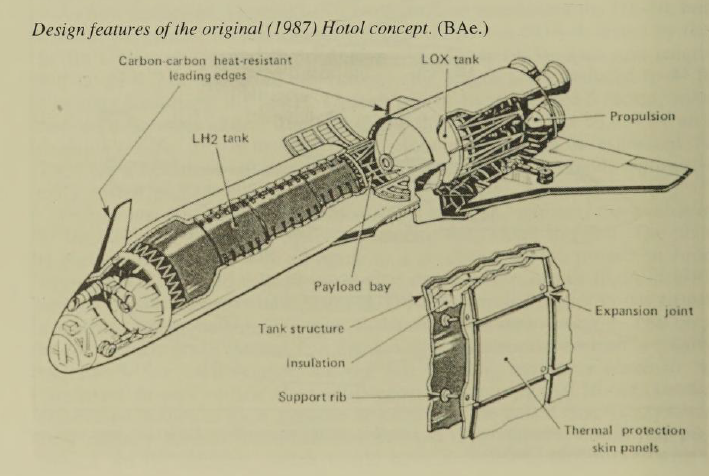
is that offer still open?I have an original of this if anyone wants scan copies

Thumblegudget
ACCESS: Restricted
- Joined
- 7 February 2021
- Messages
- 3
- Reaction score
- 33
Hi everyone. I've made another video about HOTOL, this time about the engine.

jrcgarry
Chartered physicist and tinkerer
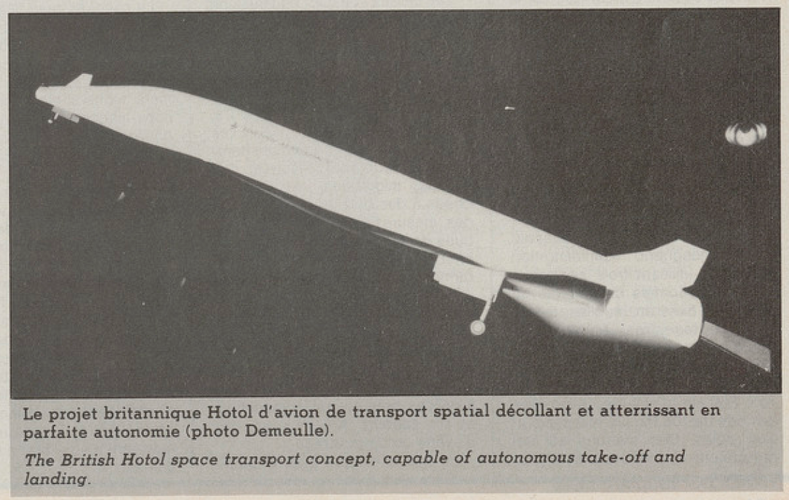
To steer it.What was the point of the small fin on the nose?
It was thought, at the time, that weight savings could be had by having a forward vertical stabilizer, rather an aft-mounted one.
However, shock-on-shock interactions made it less viable (modelling suggested it would burn off)
Which was a problem.
<I used to work on Interim-HOTOL>
Last edited:
jrcgarry
Chartered physicist and tinkerer
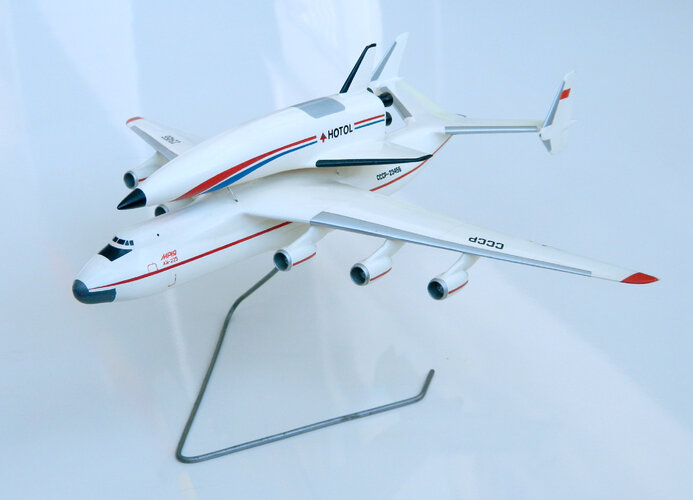
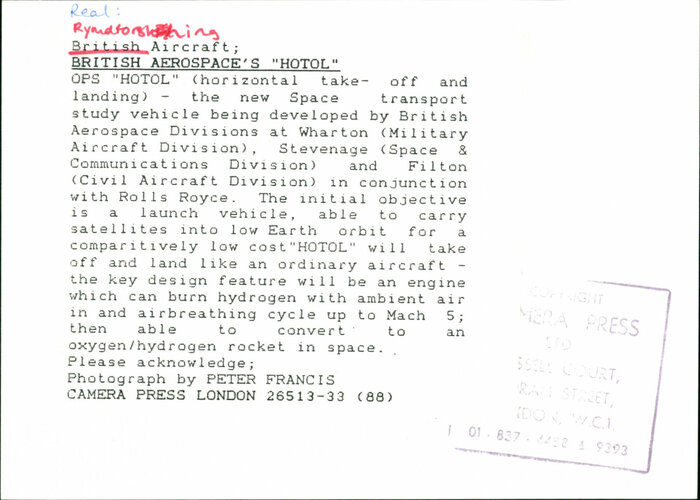
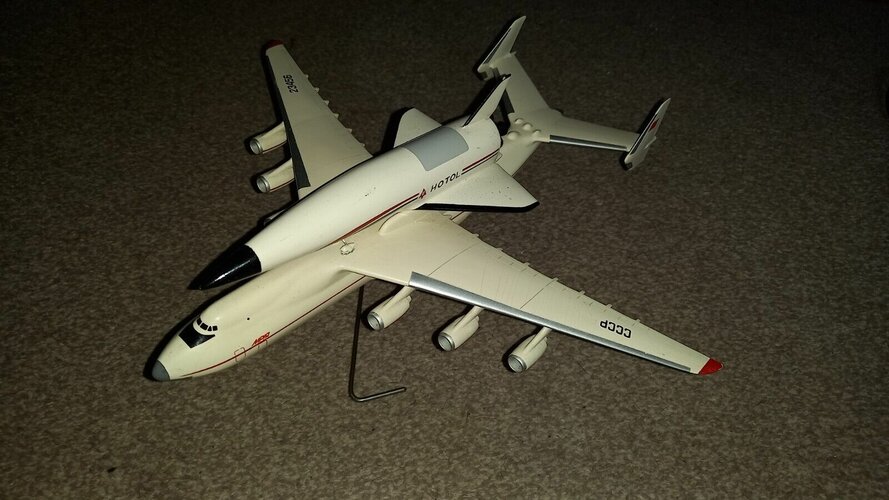
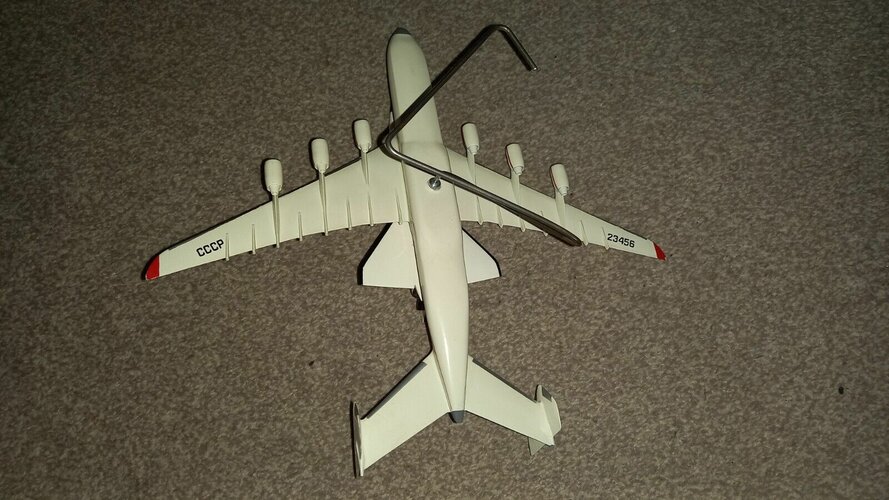
That third picture and the fifth is the Interim Hotol with the Antonov 225 first stage. I remember the day that a large wooden crate arrived at the Atrium of BAe Stevenage - we levered it open and were greeted by half a dozen of those models ensconced in shredded packing paper. I've still got mine and will post some details tonight.Images of HOTOL and the Antonov An-225 with HOTOL.
<fifth pic by Mark Hempsall who worked in Future Projects>
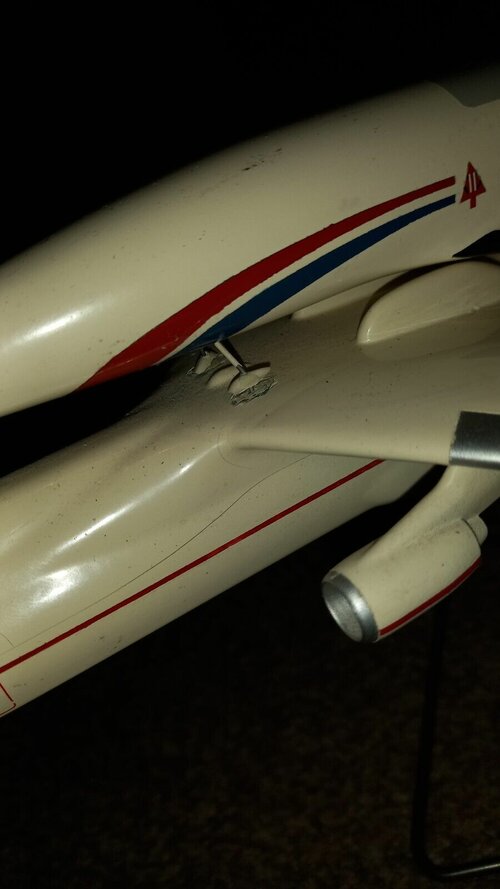
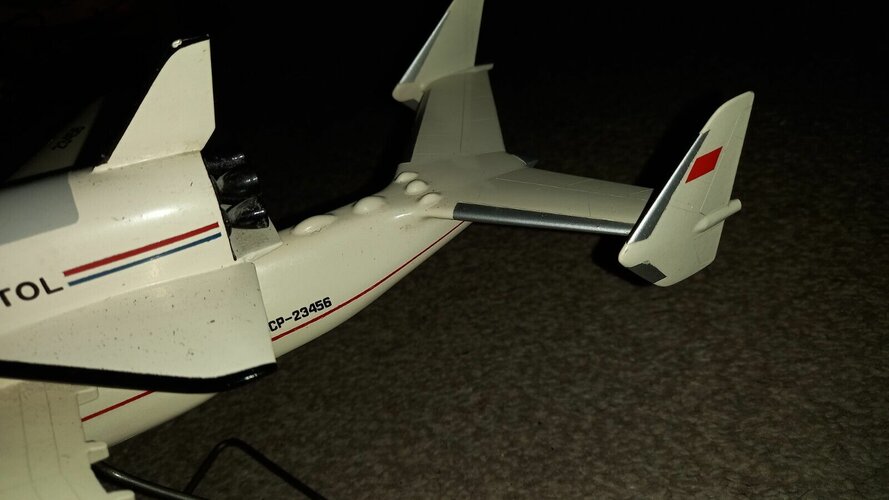
Those models are pretty sturdy, and apart from some of the decals peeling, are really well-made. Resin and odd lengths of metal for the struts between the AH-225 and the orbiter. The paint's doing well too. No recollection as to who made 'em and I've seen the odd one on eBay over the years.
Attachments
Last edited:
- Joined
- 27 May 2008
- Messages
- 1,247
- Reaction score
- 2,787
To steer it.What was the point of the small fin on the nose?
It was thought, at the time, that weight savings could be had by having a forward vertical stabilizer, rather an an aft-mounted one.
<I used to work on Interim-HOTOL>
[/QUOTE]
It was know that with the delta wing there was a significant Cp shift afterwards with increasing Mach number so a bit of leverage was required to counteract it;- hence some feathers upon the nose. However when they did the high speed wind tunnel work it was discovered the original estimates were wrong by, well, a lot. To address this a high lift system was proposed for the wing consisting of both flaps and droops. This put the weight up to such a degree there was no payload, apparently the comment was made that “HOTOL was a means to transport a complex wing high lift system into orbit”.
Ultimately this was the reason for the delta wing/aft engine being dropped and replaced by the Skylon’s short mid wing and tip mounted engines.
jrcgarry
Chartered physicist and tinkerer
Zero payload to orbit was a rather common situation.
I used to run a few thousand lines of FORTRAN (written mostly by Steve Kemble) on a MicroVAX II - and direct-descent optimization was *sloow*.
I used to run a few thousand lines of FORTRAN (written mostly by Steve Kemble) on a MicroVAX II - and direct-descent optimization was *sloow*.
jrcgarry
Chartered physicist and tinkerer
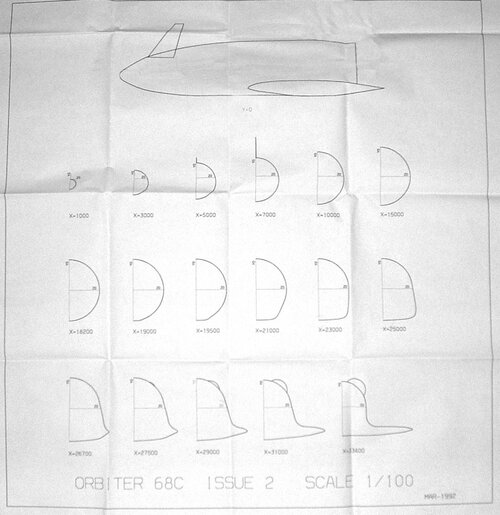
And for the truly dedicated, some cross-sections of Interim HOTOL (ie, carried aloft by dear old Mria: Antonov's modified AH-225), version 68c.
<yes, for they were legion in their numbering>
The dedicated might want to whizz this up into a modern CAD program.
The less dedicated might still appreciate that this was a 'chonky boi' (as the kids say these days).
<yes, for they were legion in their numbering>
The dedicated might want to whizz this up into a modern CAD program.
The less dedicated might still appreciate that this was a 'chonky boi' (as the kids say these days).
Attachments
Last edited by a moderator:
Thumblegudget
ACCESS: Restricted
- Joined
- 7 February 2021
- Messages
- 3
- Reaction score
- 33
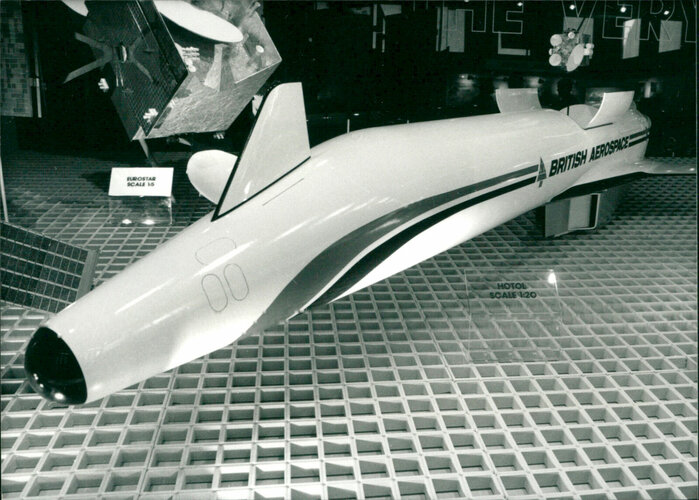
There's a model of HOTOL at the British Interplanetary Society. They let me film it.
Hazegrayart last masterpiece.
View: https://www.youtube.com/watch?v=bpdJtE4Sl7U&t=153s
Geez, now MUSTARD, HOTOL and Skylon can be flown side by side, split-screen style. God save the queen.
2:48 All hail the Union Jack drag chute ! It has James Bond or Austin Power vibes.
Geez, now MUSTARD, HOTOL and Skylon can be flown side by side, split-screen style. God save the queen.
2:48 All hail the Union Jack drag chute ! It has James Bond or Austin Power vibes.

- Joined
- 1 April 2006
- Messages
- 12,285
- Reaction score
- 15,111
Attachments
stevegilkes
ACCESS: Restricted
- Joined
- 18 August 2023
- Messages
- 3
- Reaction score
- 32
I am joining this incredibly late. At risk of breaking some law of other, I worked on HOTOL as the performance engineer in the later stages. I am dreadful with remembering names so I wonder if any here recall mine?
Steve Gilkes
Steve Gilkes
stevegilkes
ACCESS: Restricted
- Joined
- 18 August 2023
- Messages
- 3
- Reaction score
- 32
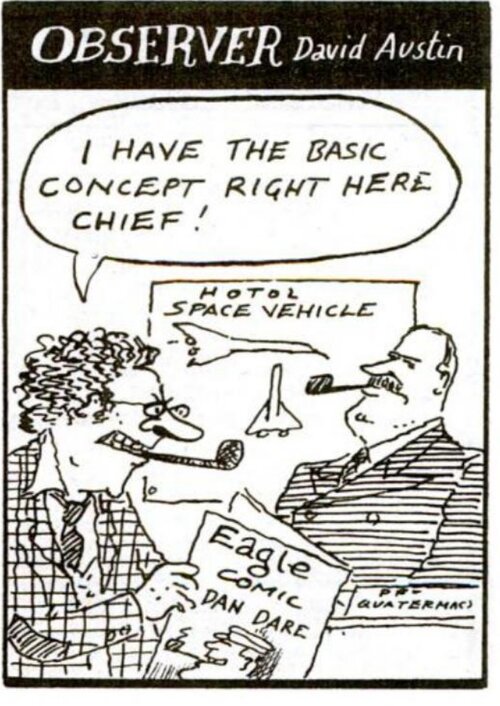
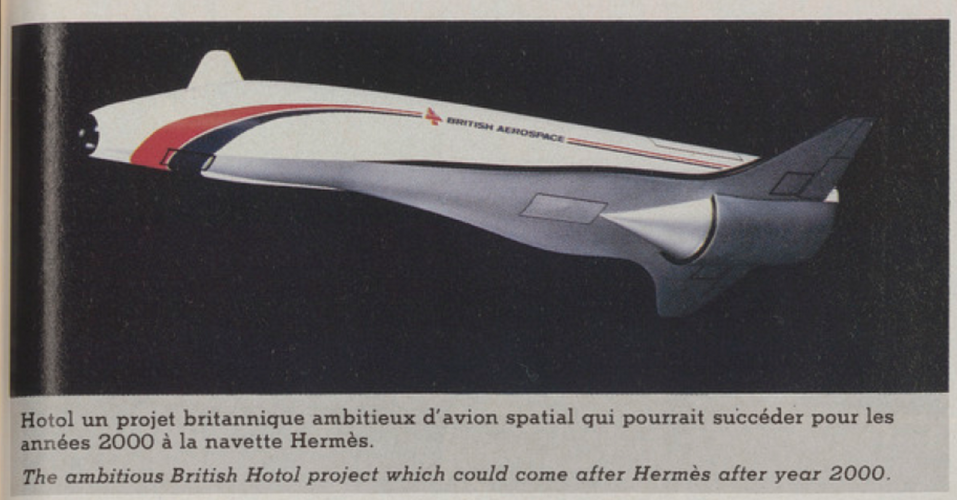
Earlier contributors to this thread may be interested to know that the final change of geometry, shown in the Flight International magazine with Bob's own painting, was the result of finding an error in the hypersonic drag calculation in the mission optimisation software. I found it when reviewing the software as part of my job as the performance engineer. The tapering shape was important in that calculation; it also shifted the hypersonic centre of lift back. I think I sketched the curve through the segments given by the software.
I have a copy of the painting signed by all the team members as a leaving gift. Somewhere.
I have a copy of the painting signed by all the team members as a leaving gift. Somewhere.
Most of us are not in the industry, just enthusiasts.I am joining this incredibly late. At risk of breaking some law of other, I worked on HOTOL as the performance engineer in the later stages. I am dreadful with remembering names so I wonder if any here recall mine?
Steve Gilkes
- Joined
- 1 April 2006
- Messages
- 12,285
- Reaction score
- 15,111
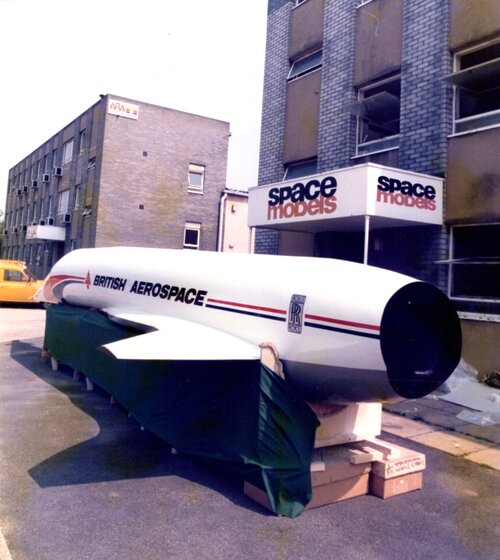
1:7 scale exhibit HOTOL model by Space Models Ltd from https://www.facebook.com/spacemodelsltdstory/
Attachments
-
 417892449_10226978301417385_2932923148857879542_n.jpg756.2 KB · Views: 65
 -
 432453341_122098305110250950_659967155191970448_n.jpg229.3 KB · Views: 49
 -
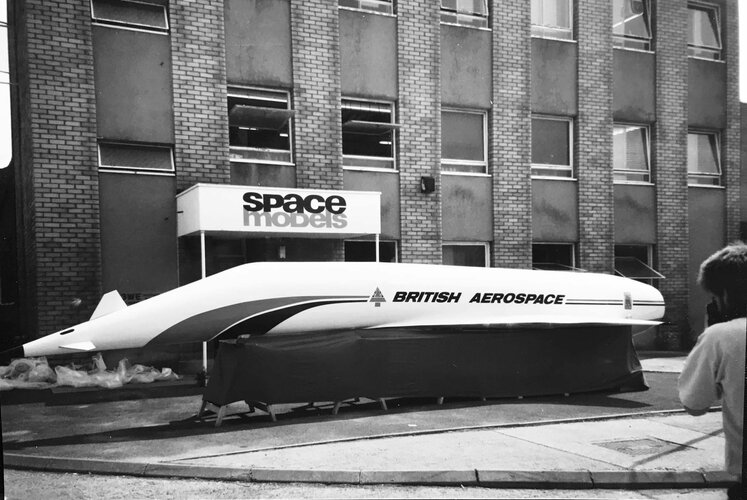 432455853_122098305038250950_4406779967048577950_n.jpg269.6 KB · Views: 50
 -
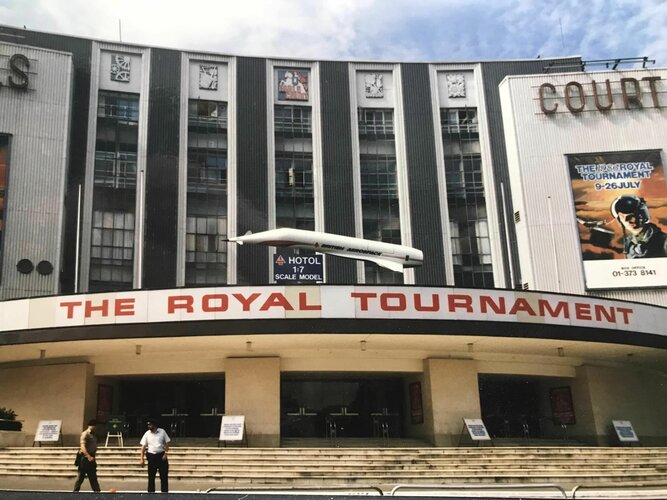 430662525_122098305026250950_6477585599082474268_n.jpg295.6 KB · Views: 51
 -
 432462108_122098304942250950_4051798349324208521_n.jpg263.1 KB · Views: 55
 -
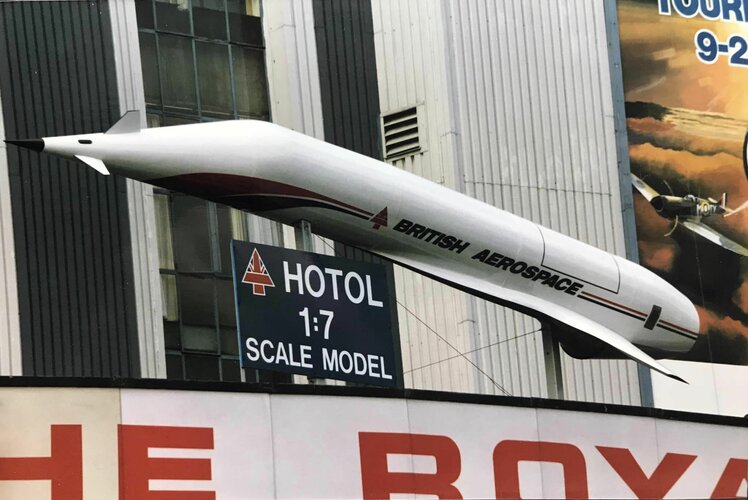 431107445_122098304930250950_4098713903819978091_n.jpg215.1 KB · Views: 65
Last edited:
- Joined
- 1 April 2006
- Messages
- 12,285
- Reaction score
- 15,111
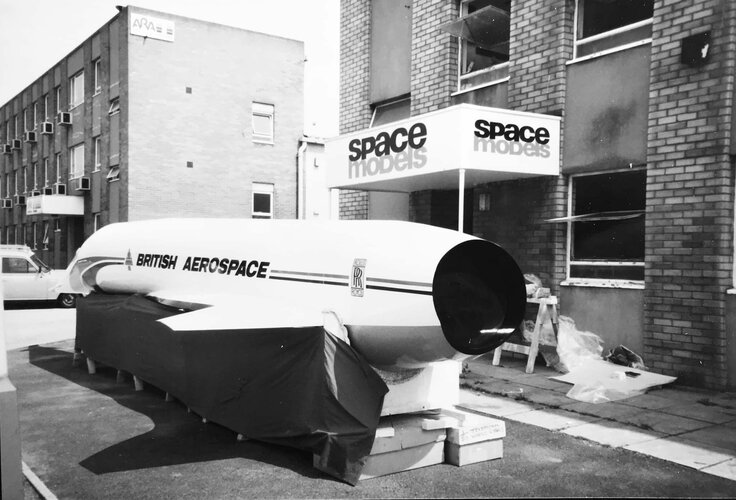
Later iteration HOTOL model from the Space Models in workshop
Source: https://www.facebook.com/spacemodelsltdstory/
Source: https://www.facebook.com/spacemodelsltdstory/
Attachments
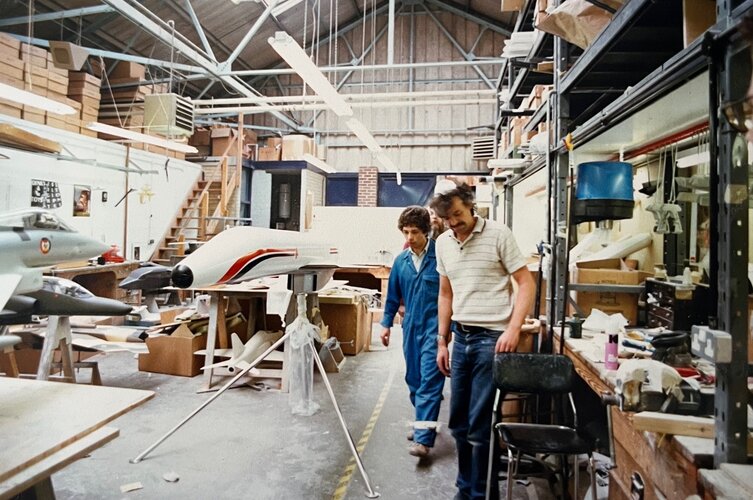
Last edited:

Owens Z
quaerimus scientiam
- Joined
- 6 October 2023
- Messages
- 553
- Reaction score
- 820
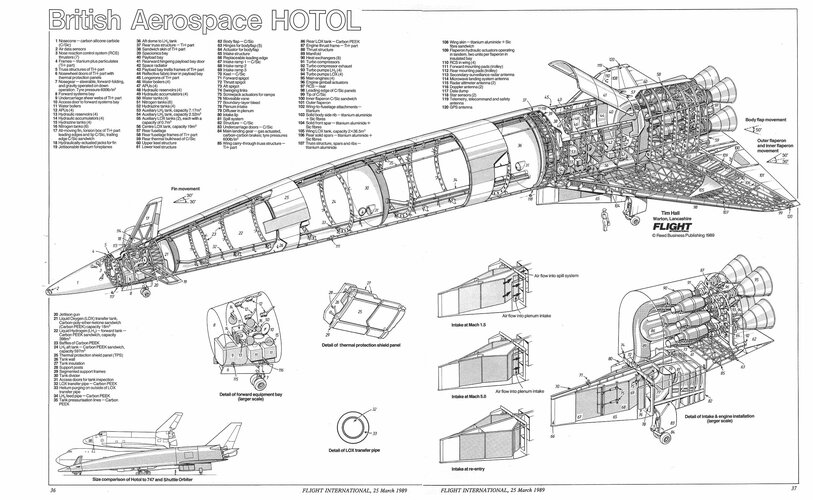
I don't know what particular iteration of HOTOL this masterful line drawing (see attached JPEG) shows, from a two-page spread in the 25 March 1989 issue of Flight International. Striking yet informative, it remains the best illustration of the vehicle that I have ever seen: true art. Perhaps a lost art in our computer-generated era. But maybe there will be even better figures inside Dan Sharp's imminently forthcoming book HOTOL: Britain's Spaceplane.
Attachments

- Joined
- 11 June 2014
- Messages
- 1,641
- Reaction score
- 3,510
I don't know what particular iteration of HOTOL this masterful line drawing (see attached JPEG) shows, from a two-page spread in the 25 March 1989 issue of Flight International. Striking yet informative, it remains the best illustration of the vehicle that I have ever seen: true art. Perhaps a lost art in our computer-generated era. But maybe there will be even better figures inside Dan Sharp's imminently forthcoming book HOTOL: Britain's Spaceplane.
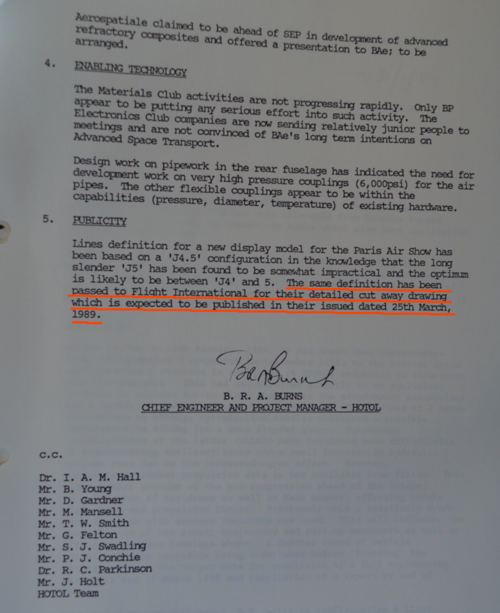
I have a gigantic full colour version of that image in my personal collection but sadly it wasn't possible to determine who the copyright holder was (not BAE Systems) and therefore it wasn't ultimately possible to include it in the book. However, I can tell you that it was based on Hotol Configuration J4.5 - see below (extract from Burns' monthly report, dated Feb 28, 1989).
I don't know what particular iteration of HOTOL this masterful line drawing (see attached JPEG) shows, from a two-page spread in the 25 March 1989 issue of Flight International. Striking yet informative, it remains the best illustration of the vehicle that I have ever seen: true art. Perhaps a lost art in our computer-generated era. But maybe there will be even better figures inside Dan Sharp's imminently forthcoming book HOTOL: Britain's Spaceplane.
Ok I did a good look at this one and I've got a couple of these on my hard drives but as I was scanning and suddenly came up on #10 and had to take a moment to realize that was NOT the lid of a toilet on-board

Randy
HOTOL CUTAWAY POSTER SIGNED BY HOTOL TEAM
https://collection.sciencemuseumgroup.org.uk/objects/co420766/hotol
https://collection.sciencemuseumgroup.org.uk/objects/co420766/hotol
HOTOL MODELS
https://collection.sciencemuseumgroup.org.uk/objects/co432210/hotol-wind-tunnel-model-sa1-c1985
https://collection.sciencemuseumgroup.org.uk/objects/co432213/hotol-wind-tunnel-model-sc1-c1985
https://collection.sciencemuseumgro...horizontal-take-off-and-landing-configuration
BRITISH AIRWAYS HOTOL, BROOKLANDS MUSEUM
https://www.alamy.com/hotol-horizon...ooklands-museum-surrey-uk-image501340068.html
https://collection.sciencemuseumgroup.org.uk/objects/co432210/hotol-wind-tunnel-model-sa1-c1985
https://collection.sciencemuseumgroup.org.uk/objects/co432213/hotol-wind-tunnel-model-sc1-c1985
https://collection.sciencemuseumgro...horizontal-take-off-and-landing-configuration
BRITISH AIRWAYS HOTOL, BROOKLANDS MUSEUM
https://www.alamy.com/hotol-horizon...ooklands-museum-surrey-uk-image501340068.html

- Joined
- 27 December 2005
- Messages
- 19,230
- Reaction score
- 35,692
On the face of it, it looks pretty straightforward. Cutaway is by Tim Hall, Technical Artist at Flight International 1977-1999. Copyright ought to reside with the current owners of Flight, DVV Media International Ltd who purchased Reed Business Information Ltd in 2019.
I assume it ISN'T that simple
I assume it ISN'T that simple
Nice copy of this from Nationaal Ruimtevaart Museum collection:
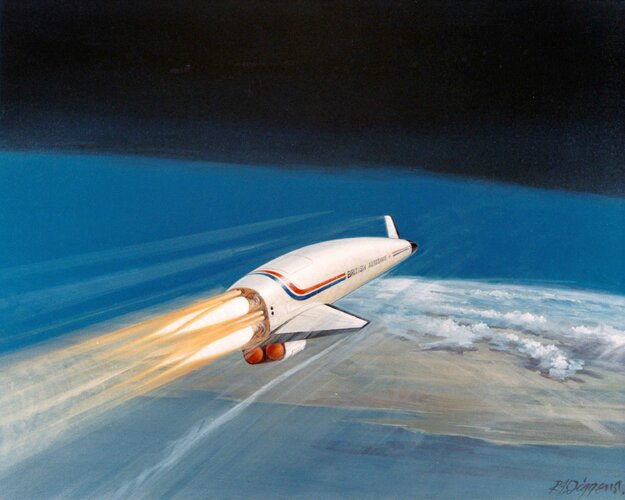
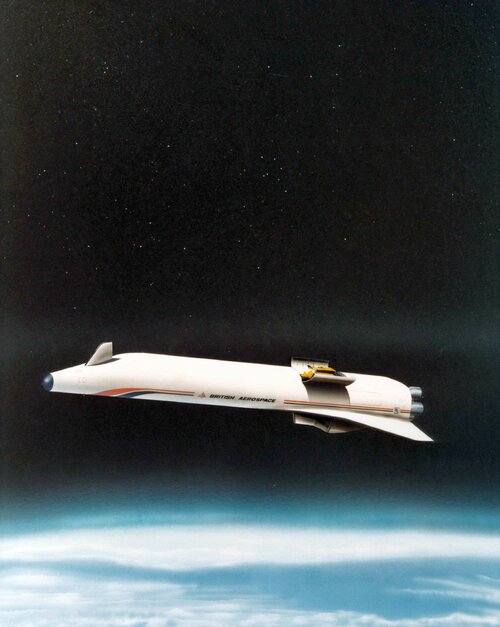
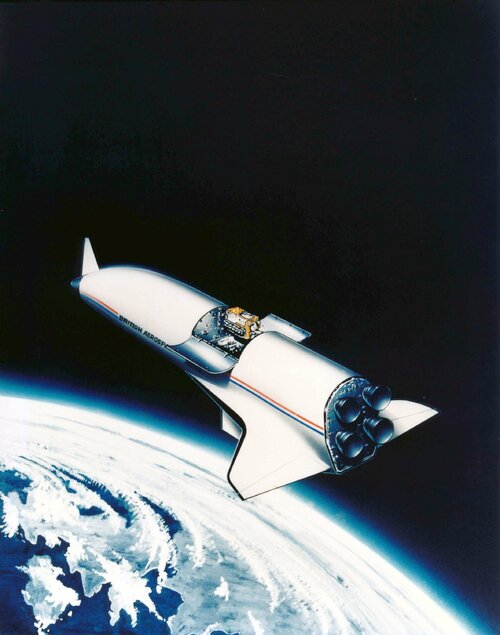
Photo shows an artist's impression of the HOTOL (HOrizontal Take-Off and Landing) vehicle propelling itself out of Earth's atmosphere. HOTOL was a British program, started in 1982 by British Aerospace, for a Single-Stage-To-Orbit (SSTO) spaceplane, which was to be propelled by an air-breathing rocket engine provided by Rolls-Royce. In 1985 a proof-of-concept study was started. The program was ended in 1989 as a result of mounting technical difficulties, lack of support from potential customers, lack of sufficient funding and the use of a vehicle design that offered no real advantages over the use of conventional expendable rockets.


phil gollin
ACCESS: Secret
- Joined
- 19 September 2007
- Messages
- 246
- Reaction score
- 111
.
This has just appeared on the BBC website ;
https://www.bbc.co.uk/news/articles/c5y5zg85wnlo
Michael Dempsey
Technology Reporter
The former chief technology officer speaks ruefully about his long career trying to bring a revolutionary aerospace engine to fruition at UK firm Reaction Engines.
The origins of Reaction Engines go back to the Hotol project in the 1980s. This was a futuristic space plane that caught the public imagination with the prospect of a British aircraft flying beyond the atmosphere.
The secret sauce of Hotol was heat exchanger technology, an attempt to cool the super-heated 1,000C air that enters an engine at hypersonic speeds.
Without cooling this will melt aluminium, and is, Mr Varvill says, "literally too hot to handle".
Fast forward three decades to October 2024 and Reaction Engines was bringing the heat exchanger to life at sites in the UK and US.
UK Ministry of Defence funding took the company into hypersonic research with Rolls-Royce for an unmanned aircraft. But that was not enough to keep the business afloat.
Rolls-Royce declines to go into details about Reaction's collapse, but Mr Varvill is more specific.
"Rolls-Royce said it had other priorities and the UK military has very little money."
Aviation is a business with a very long gestation time for a product. It can take 20 years to develop an aircraft. This unforgiving journey is known as crossing the Valley of Death.
Mr Varvill knew the business had to raise more funds towards the end of 2024 but big investors were reluctant to jump on board.
"The game was being played right to the very end, but to cross the Valley of Death in aerospace is very hard."
What was the atmosphere like in those last days as the administrators moved in?
"It was pretty grim, we were all called into the lecture theatre and the managing director gave a speech about how the board 'had tried everything'. Then came the unpleasant experience of handing over passes and getting personal items. It was definitely a bad day at the office."
This bad day was too much for some. "A few people were in tears. A lot of them were shocked and upset because they'd hoped we could pull it off right up to the end."
It was galling for Mr Varvill "because we were turning it around with an improved engine. Just as we were getting close to succeeding we failed. That's a uniquely British characteristic."
Did they follow the traditional path after a mass lay-off and head to the nearest pub? "We had a very large party at my house. Otherwise it would have been pretty awful to have put all that effort into the company and not mark it in some way."
His former colleague Kathryn Evans headed up the space effort, the work around hypersonic flight for the Ministry of Defence and opportunities to apply the technology in any other commercial areas.
When did she know the game was up? "It's tricky to say when I knew it was going wrong, I was very hopeful to the end. While there was a lot of uncertainty there was a strong pipeline of opportunities."
She remembers the moment the axe fell and she joined 200 colleagues in the HQ's auditorium.
"It was the 31st of October, a Thursday, I knew it was bad news but when you're made redundant with immediate effect there's no time to think about it. We'd all been fighting right to the end so then my adrenalin crashed."
And those final hours were recorded. One of her colleagues brought in a Polaroid camera. Portrait photos were taken and stuck on a board with message expressing what Reaction Engines meant to individuals.
What did Ms Evans write? "I will very much miss working with brilliant minds in a kind, supportive culture."
Since then she's been reflecting "on an unfinished mission and the technology's potential".
But her personal pride remains strong. "It was British engineering at its best and it's important for people to hold their heads up high."
Her boss Adam Dissel, president of Reaction Engines, ran the US arm of the business. He laments the unsuccessful struggle to wrest more funds from big names in aerospace.
"The technology consistently worked and was fairly mature. But some of our strategic investors weren't excited enough to put more money in and that put others off."
The main investors were Boeing, BAE Systems and Roll-Royce. He feels they could have done more to give the wider investment community confidence in Reaction Engines.
It would have avoided a lot of pain.
"My team had put heart and soul into the company and we had a good cry. "
Did they really shed tears? "Absolutely, I had my tears at our final meeting where we joined hands and stood up. I said 'We still did great, take a bow."
What lessons can we draw for other high-tech ventures? "You definitely have no choice but to be optimistic," says Mr Dissel.
The grim procedure of winding down the business took over as passwords and laptops were collected while servers were backed up in case "some future incarnation of the business can be preserved".
The company had been going in various guises for 35 years. "We didn't want it to go to rust. I expect the administrator will look for a buyer for the intellectual property assets," Mr Dissel adds.
Other former employees also hold out for a phoenix rising from the ashes. But the Valley of Death looms large.
"Reaction Engines was playing at the very edge of what was possible. We were working for the fastest engines and highest temperatures. We bit off the hard job," says Mr Dissel.
Despite all this Mr Varvill's own epitaph for the business overshadows technological milestones. "We failed because we ran out of money."
This has just appeared on the BBC website ;
https://www.bbc.co.uk/news/articles/c5y5zg85wnlo
The British jet engine that failed in the 'Valley of Death'
Michael Dempsey
Technology Reporter
- Published
3 June 2025, 00:04 BST
- Published
The former chief technology officer speaks ruefully about his long career trying to bring a revolutionary aerospace engine to fruition at UK firm Reaction Engines.
The origins of Reaction Engines go back to the Hotol project in the 1980s. This was a futuristic space plane that caught the public imagination with the prospect of a British aircraft flying beyond the atmosphere.
The secret sauce of Hotol was heat exchanger technology, an attempt to cool the super-heated 1,000C air that enters an engine at hypersonic speeds.
Without cooling this will melt aluminium, and is, Mr Varvill says, "literally too hot to handle".
Fast forward three decades to October 2024 and Reaction Engines was bringing the heat exchanger to life at sites in the UK and US.
UK Ministry of Defence funding took the company into hypersonic research with Rolls-Royce for an unmanned aircraft. But that was not enough to keep the business afloat.
Rolls-Royce declines to go into details about Reaction's collapse, but Mr Varvill is more specific.
"Rolls-Royce said it had other priorities and the UK military has very little money."
Aviation is a business with a very long gestation time for a product. It can take 20 years to develop an aircraft. This unforgiving journey is known as crossing the Valley of Death.
Mr Varvill knew the business had to raise more funds towards the end of 2024 but big investors were reluctant to jump on board.
"The game was being played right to the very end, but to cross the Valley of Death in aerospace is very hard."
What was the atmosphere like in those last days as the administrators moved in?
"It was pretty grim, we were all called into the lecture theatre and the managing director gave a speech about how the board 'had tried everything'. Then came the unpleasant experience of handing over passes and getting personal items. It was definitely a bad day at the office."
This bad day was too much for some. "A few people were in tears. A lot of them were shocked and upset because they'd hoped we could pull it off right up to the end."
It was galling for Mr Varvill "because we were turning it around with an improved engine. Just as we were getting close to succeeding we failed. That's a uniquely British characteristic."
Did they follow the traditional path after a mass lay-off and head to the nearest pub? "We had a very large party at my house. Otherwise it would have been pretty awful to have put all that effort into the company and not mark it in some way."
His former colleague Kathryn Evans headed up the space effort, the work around hypersonic flight for the Ministry of Defence and opportunities to apply the technology in any other commercial areas.
When did she know the game was up? "It's tricky to say when I knew it was going wrong, I was very hopeful to the end. While there was a lot of uncertainty there was a strong pipeline of opportunities."
She remembers the moment the axe fell and she joined 200 colleagues in the HQ's auditorium.
"It was the 31st of October, a Thursday, I knew it was bad news but when you're made redundant with immediate effect there's no time to think about it. We'd all been fighting right to the end so then my adrenalin crashed."
And those final hours were recorded. One of her colleagues brought in a Polaroid camera. Portrait photos were taken and stuck on a board with message expressing what Reaction Engines meant to individuals.
What did Ms Evans write? "I will very much miss working with brilliant minds in a kind, supportive culture."
Since then she's been reflecting "on an unfinished mission and the technology's potential".
But her personal pride remains strong. "It was British engineering at its best and it's important for people to hold their heads up high."
Her boss Adam Dissel, president of Reaction Engines, ran the US arm of the business. He laments the unsuccessful struggle to wrest more funds from big names in aerospace.
"The technology consistently worked and was fairly mature. But some of our strategic investors weren't excited enough to put more money in and that put others off."
The main investors were Boeing, BAE Systems and Roll-Royce. He feels they could have done more to give the wider investment community confidence in Reaction Engines.
It would have avoided a lot of pain.
"My team had put heart and soul into the company and we had a good cry. "
Did they really shed tears? "Absolutely, I had my tears at our final meeting where we joined hands and stood up. I said 'We still did great, take a bow."
What lessons can we draw for other high-tech ventures? "You definitely have no choice but to be optimistic," says Mr Dissel.
The grim procedure of winding down the business took over as passwords and laptops were collected while servers were backed up in case "some future incarnation of the business can be preserved".
The company had been going in various guises for 35 years. "We didn't want it to go to rust. I expect the administrator will look for a buyer for the intellectual property assets," Mr Dissel adds.
Other former employees also hold out for a phoenix rising from the ashes. But the Valley of Death looms large.
"Reaction Engines was playing at the very edge of what was possible. We were working for the fastest engines and highest temperatures. We bit off the hard job," says Mr Dissel.
Despite all this Mr Varvill's own epitaph for the business overshadows technological milestones. "We failed because we ran out of money."
Similar threads
-

-
-
 McDonnell Douglas X-33 SSTO Reusable Launch Vehicle
- Started by athpilot
- Replies: 10
-
-
