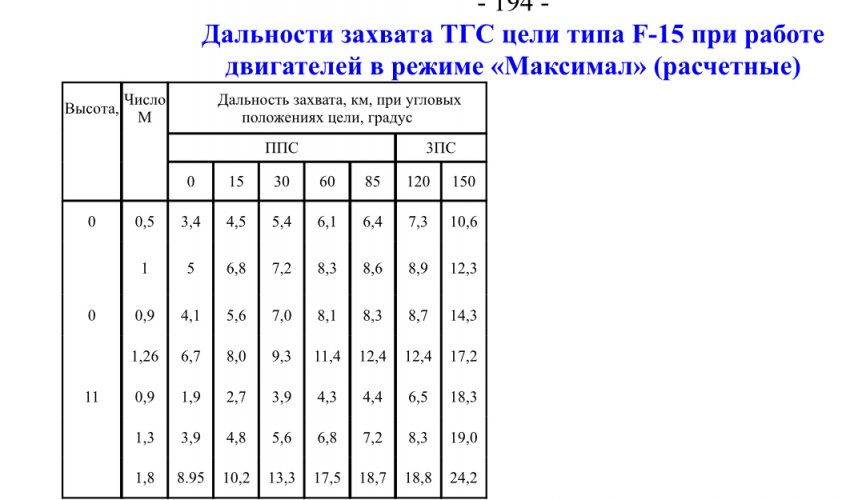
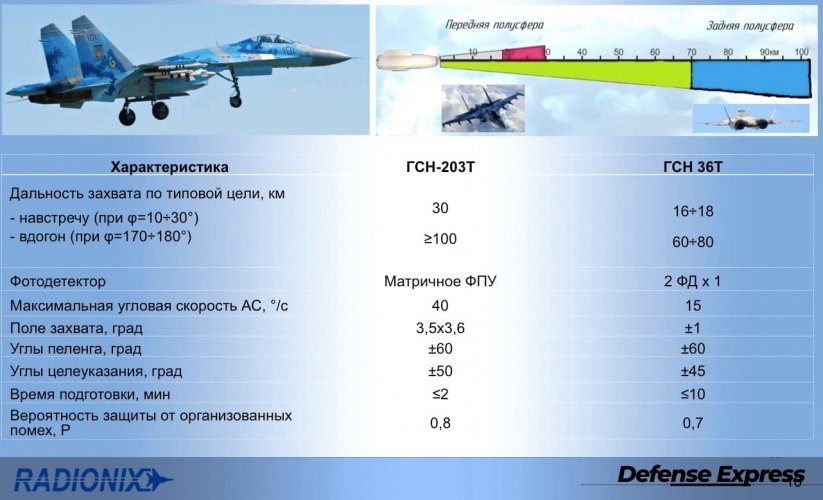
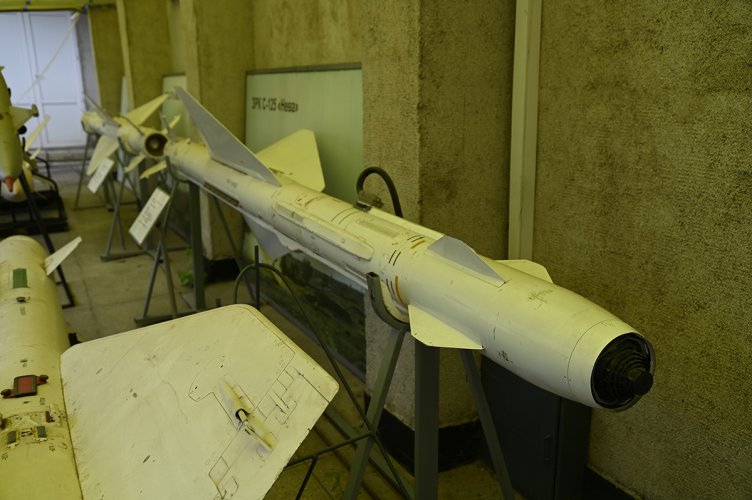
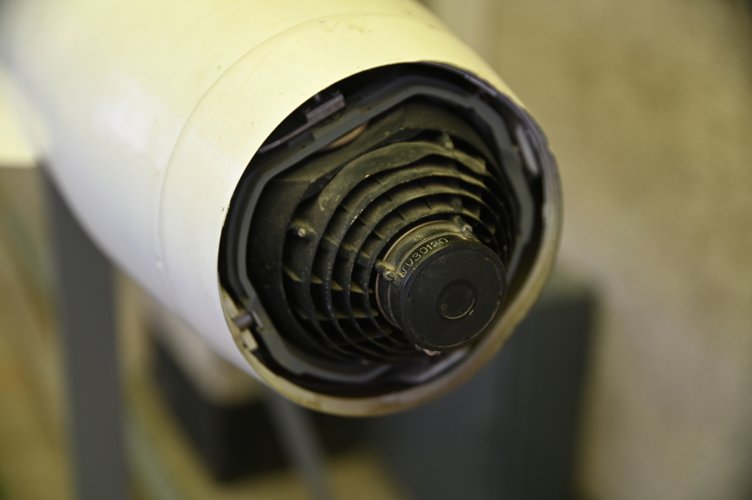
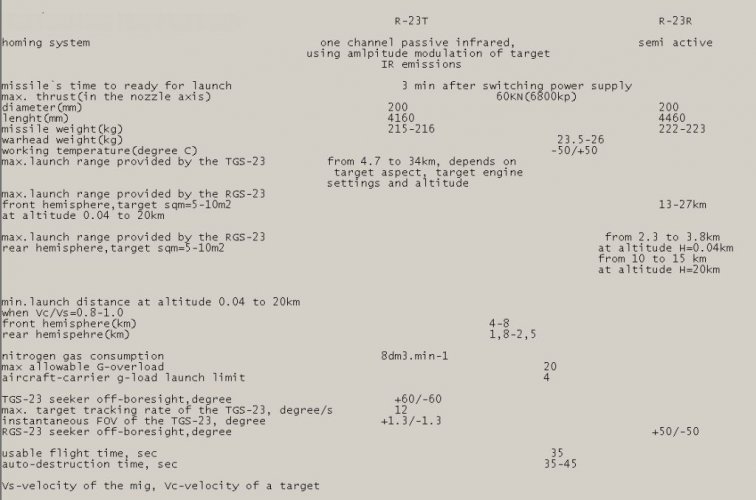
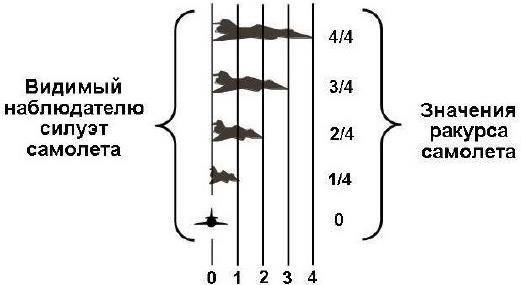
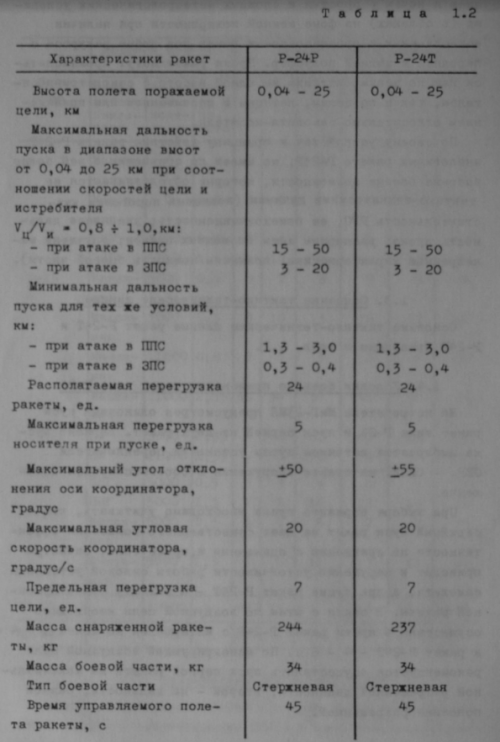
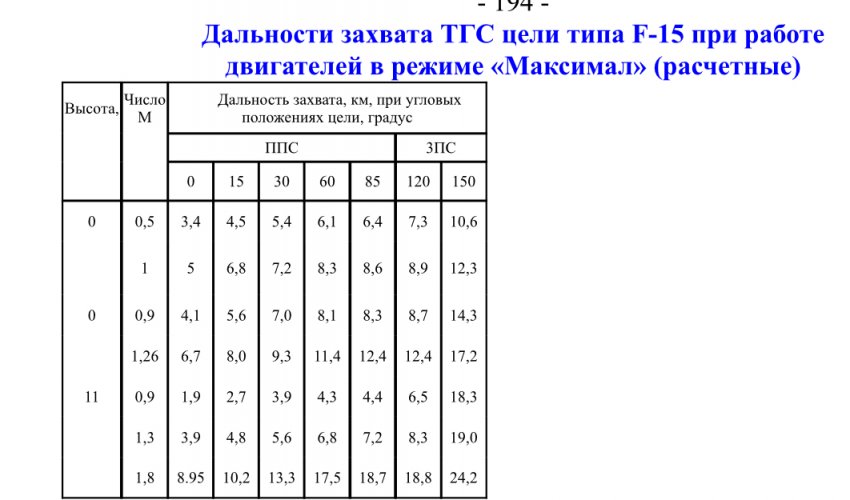
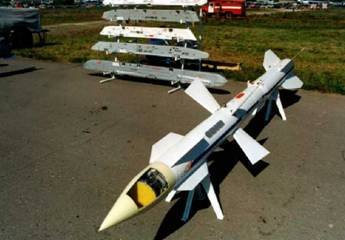
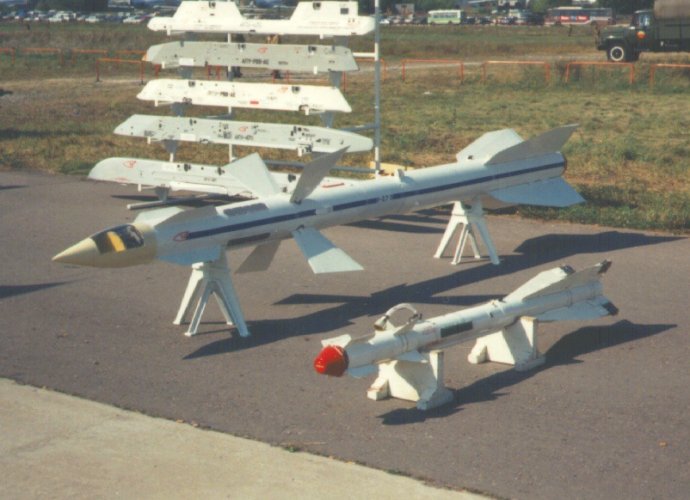
Hmm ,yes, maybe you're right, but but. There is more details and things we can discuss. Example and comparison :
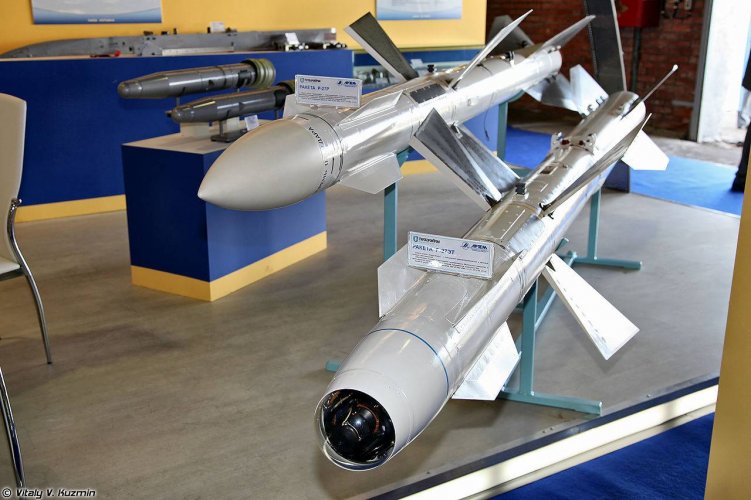
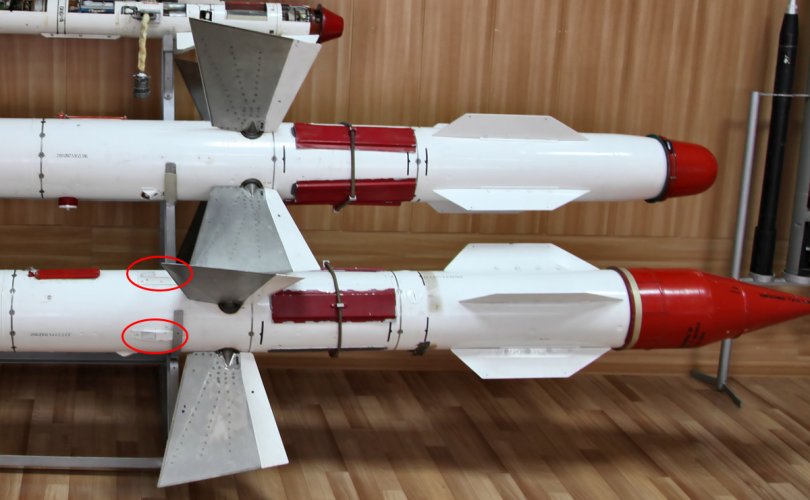
R-27R/R1 ,250kg heavy,with its single chamber ,single stage rocket engine ,so max controlable flight time is 60sec.From the book :
"Бортовой комплекс самолётовождения, прицеливания и управления вооружением самолёта МиГ-29Б (СУВ-29Э и сопрягаемые системы)"
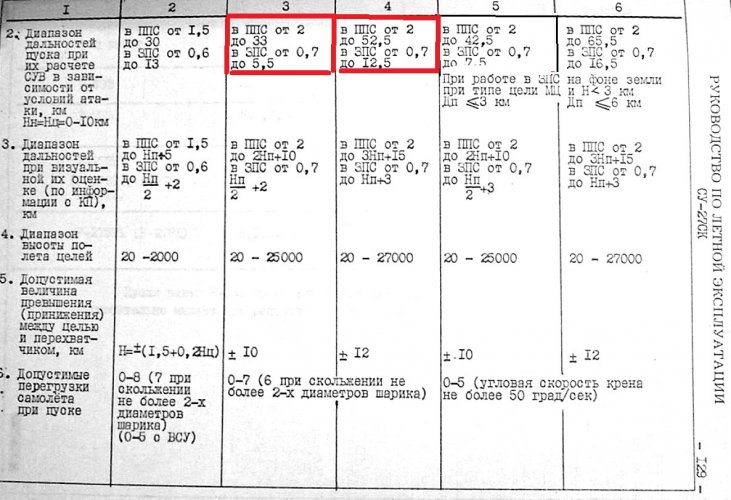
We can read that max launch distance can be 90km against incoming big air target ( supersonic-stratosferic launch from max 16km of alt with use of the 'Gorka'/climb to engage target which flies at max 26km .That is because R-27R/ER have no loft capabilities. So target in this case is also supersonic ,stratospheric height of course. Maybe in this case we have that 60sec of controlable flight time.We also know that N019/E has that DNP mode ( quasi continuous wave illumination ) for use of the R-27R/R1 which lasts exactly 60sec.
Also we have data for the N019/E and the R-27R/R1:
''Для обеспечения заданной вероятности поражения цели в различных условиях максимальная разрешенная дальность пуска ракеты в ППС, вычисляемая в БЦВМ РЛПК, ограничена до 90, 70 и 30 км соответственно для большой, средней и малой цели.''
''To ensure a given probability of hitting a target under various conditions, the maximum permitted missile launch range in the forward hemisphere , calculated in the radars's onboard computer, is limited to 90, 70 and 30 km, respectively, for large, medium and small targets.''
R-27ER/ER1, 350kg heavy,double chamber,dual stage rocket engine ( booster with 7500kgf of thrust lasting about 10sec). OK we have that 60sec .I think that R-27E is even faster than R-27R with greater Mach number after acceleration phase ended .
''За время работы двигатель при пуске ракеты обеспечивает приращение скорости ракеты к скорости полета истребителя для Р-27ЭР (ЭП) до 800—1000 м/с и для Р-27ЭТ до 700—1100 м/с.''
"During its operation, the engine during missile launch provides an increase in the missile's speed to the fighter's flight speed for the R-27ER (EP) up to 800-1000 m/s and for the R-27ET up to 700-1100 m/s."
We know that max ( possible,authorised or calculated whatever) ,launch range against some big incoming target can be 130km.That is almost 50% greater than in R-27R's case.
So the total flight time of the R-27ER can be those 60sec in the case of the launch range of 130km. Parameters are the same as previous : supersonic-stratosferic launch vs supersonic-stratospheric flying target.
Some interesting details and data about the R-27ER and that RC-channel :
'' Ракета Р-27ЭР с полуактивной РГС обеспечивает с достаточной вероятностью (Р=0,5—0,85) поражение воздушных целей днем и ночью в простых и сложных метеорологических условиях (в облаках) при атаке под различными ракурсами, в том числе и на фоне различных подстилающих поверхностей земли и моря, а также поражение целей, летящих на высотах от 30 м до 25— 27 км со скоростью до 3500 км/ч, при активном маневренном, помеховом и огневом противодействии противника.Мала вероятность поражения малоразмерных низколетящих целей при пуске ракет Р-27ЭР с максимальных дальностей (Р=0,1—0,2) из-за влияния переотражения сигнала от подстилающей поверхности (антипод) на систему управления ракетой и недостаточной точности выдачи целеуказания ракете от РЛПК-29. В связи с этим до устранения указанного недостатка пуск ракет Р-27ЭР на высотах 4 км и менее по низколетящим малоразмерным целям (тип цели — малая) целесообразно производить с дальности 2 км и менее в ЗПС и 12 км и менее в ППС.
Минимальная скорость поражаемых целей ограничена боевыми возможностями РЛПК.
На ракетах с полуактивной РГС применены комбинированная система инерциального наведения с радиокоррекцией и полуактивное радиолокационное самонаведение после захвата цели РГС, которое происходит в конце инерциального участка на разрешенных дальностях захвата. Разрешенные дальности захвата РГС составляют: при пуске по бомбардировщикам — 40 км, по истребителям — 25 км, по крылатым ракетам — 12 км. Тип атакуемой цели устанавливается летчиком вручную по информации с НАСУ с помощью рукоятки БАЗА (Б, С или М).
Радиокоррекция инерциального участка полета ракеты введена для повышения точности наведения в случае маневра цели после пуска, а также для исправления ошибок начальных условий пуска, что значительно увеличивает вероятность захвата цели РГС и позволяет полностью использовать баллистические характеристики ракеты (при радиокоррекции Др.max 1=2,5 Др. захв ргс, без радиокоррекции Др. max1= 1,3 Др. захв ргс ). Радиокоррекция инерциального участка полета ракеты включается на дальностях пуска, превышающих в 1,5 раза разрешенную дальность захвата цели РГС, и отключается при достижении разрешенной дальности захвата цели РГС.
В связи с тем что информация по крену при радиокоррекции обновляется с частотой 18—20 Гц, сигналы радиокоррекции правильно выдаются только при угловой скорости вращения истребителя не более 60°/с (при применении ракет выпуска до июля 1986 г. — не более 30°/с). По этой причине не обеспечивается наведение ракеты Р-27ЭР на цель в инерциально-корректируемом режиме при выполнении истребителем противоракетного маневра типа «кадушка».
Суть радиокоррекции заключается в следующем. До схода ракеты ее РГС отрабатывает углы целеуказания от РЛПК-29. В момент схода вычислитель РГС запоминает начальное положение и скорость цели в системе координат, связанной с антенной РГС, вычисленные БЦВМ системы управления вооружением и переданные на ракету. После схода антенна гиростабилизируется и вычислитель РГС, интегрируя показания датчика линейных ускорений и запомненную скорость цели, вычисляет взаимное положение цели и ракеты. Управление ракетой построено так, чтобы к моменту предполагаемого захвата РГС направление ее антенны совпадало с линией визирования на цель. При этом захват цели возможен, если она летит прямолинейно к не изменяет скорость полета. Если же цель выполняет маневр, захват ее без радиокоррекции невозможен.
При наличии радиокоррекции на борту самолета в БЦВМ вычисляется положение цели по алгоритму бортового вычислителя ракеты. Вычисленные координаты цели сравниваются с измеренными РЛПК-29 координатами цели. Полученные поправки по линии радиокоррекции передаются на ракету, по которым корректируется траектория ее полета. После захвата РГС цели осуществляется ее автоматическое сопровождение по углам и частоте и наведение ракеты по методу пропорционального сближения.''
''The R-27ER missile with a semi-active radar provides with a sufficient probability (P = 0.5-0.85) of hitting air targets day and night in simple and difficult meteorological conditions (in clouds) when attacking from various angles, including against the background of various underlying surfaces of the earth and sea, as well as hitting targets, flying at altitudes from 30 m
to 25-27 km at speeds
up to 3500 km/h, under active maneuvering, jamming and fire countermeasures from the enemy.
The probability of hitting small-sized low-flying targets when launching R-27ER missiles from maximum ranges (P=0.1–0.2) is low due to the influence of signal reflection from the underlying surface (antipode) on the missile control system and the insufficient accuracy of target designation to the missile from the RLPK-29.
In this regard, until the said deficiency is eliminated, it is advisable to launch R-27ER missiles at altitudes of 4 km or less against low-flying small-sized targets (target type - small) from a range of 2 km or less in the ZPS and 12 km or less in the PPS.
The minimum speed of targets hit is limited by the combat capabilities of the radar.
Missiles with a semi-active radar homing system use a combined inertial guidance system with radio correction and semi-active radar homing after the radar homing system has captured the target, which occurs at the end of the inertial section at the permitted acquisition ranges. The permitted target acquisition ranges for the radar are: 40 km against bombers, 25 km against fighters, and 12 km against cruise missiles. The pilot manually selects the target type based on information from the GCI using the BASE (B, M, or S) control.
Radio correction of the inertial phase of the missile's flight was introduced to improve the accuracy of guidance in the event of a target maneuver after launch, as well as to correct errors in the initial launch conditions, which significantly increases the probability of target acquisition by the radar and allows full use of the missile’s ballistic characteristics (with radio correction Dr.max 1=2.5 Dr. capture radar, without radio correction Dr.max1=1.3 Dr. capture radar).
The radio correction of the inertial section of the missile's flight is switched on at launch ranges exceeding the permitted target acquisition range of the radar by 1.5 times, and is switched off when the permitted target acquisition range of the radar is reached.Due to the fact that the roll information during radio correction is updated at a frequency of 18-20 Hz, radio correction signals are correctly issued only when the angular velocity of rotation of the fighter is no more than 60°/s (when using missiles manufactured before July 1986 - no more than 30°/s). For this reason, the R-27ER missile cannot be guided to the target in an inertial-corrected mode when the fighter performs a “bucket” type anti-missile maneuver.
The essence of radio correction is as follows. Before the missile's launch, its radar receiver processes targeting angles from the radar-guided targeting system (RLPK-29). At the moment of launch, the radar receiver's computer stores the target's initial position and velocity in the coordinate system linked to the radar receiver's antenna, calculated by the weapon control system's onboard computer and transmitted to the missile.
After launching, the antenna is gyrostabilized, and the radar computer, integrating the linear acceleration sensor readings and the stored target velocity, calculates the relative positions of the target and the missile. Missile control is designed so that by the time of expected acquisition, the radar's antenna's direction coincides with the target's line of sight.
Target acquisition is possible if it flies straight and maintains its speed. However, if the target maneuvers, acquisition is impossible without radio correction.
If radio correction is available onboard the aircraft, the onboard computer calculates the target's position using the missile's onboard computer algorithm. The calculated target coordinates are compared with those measured by the RLPK-29.The received corrections are transmitted to the missile via the radio correction line, which adjusts its flight trajectory. Once the radar acquires the target, it is automatically tracked by angles and frequency, and the missile is guided using the proportional approach method.''
I underlined '25-27km' as something questionable because Su-27S/SK can fly at 18km armed with four R-27ER/ER1 's with which is possible to engage target flying 12km above fighter. Value of 3500 km/h is suspicious because max speed of the aircraft detected and tracked in the V/PPS- HPRF mode of the N019/E and N001/E is 2500km/h.
This is also one interesting detail from the Su-27SK F.M.
''При пуске ракет с РГС в режиме НПО РЛПК переходит в режим ДНП на 60 сек, в течение которых необходимо продолжать отслеживать цель, если цель не будет поражена раньше.''
''When launching missiles with a radar in the NPO mode, the radar-guided missile system switches to the DNP mode for 60 seconds, during which it is necessary to continue tracking the target, unless the target is hit earlier.''
НПО (NPO) -неполное приборное обеспечение (incomplete instrumentation)
ППO (PPO) -полное приборное обеспечение ( full instrumentation)
Now ,for how long lasts DNP mode in the PPO?