Do you even need that? The B-58 had about 63,000lbs of thrust available but could fly extended periods of time at supersonic speed at well above 126,000lbs. Then there are things like the Concord and XB-70. Or the SR-71.
Notice how all those aircrafts are from an era where slim cylindrical bodies were used to optimize wave drag reduction. Something that isn't compatible with stealth aircraft of the modern era.

Also notice how these aircraft despite being able to cruise supersonically have absolutely garbage climb rates, something where TWR does have a huge impact on.

My argument at least, was never about high TWR = high supercruise. It was that high TWRs are generally characteristics of a maneuverable air superiority fighter. Not a tactical bomber. Super cruising is not something only prevalent in fighter aircraft after all.

The XB-70 could super cruise at mach 3.0 with only a TWR of 0.22. A simple TWR chart for sea level engine performance does not take into account the deliberate design choices that makes this possible.
 
Last edited:
After recent criticisms in my other spreadsheet I've compiled another one with consistent calculations across the board, with a wider variety of aircraft.

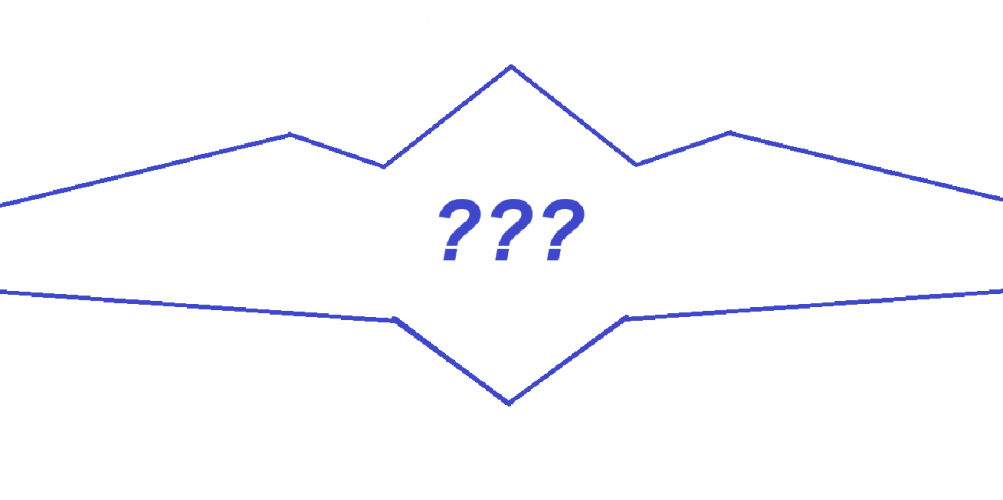
The J-36 particularly has a very high TWR, excess thrust as mentioned before. Does not appear similar kinematically to the other strike aircraft on the list at all. For the J-36 I went with a simple calculation with simple assumptions, such as a MTOW of 55T, a middle ground between 50 and 60T and Mass ratios of 0.5, and generally a conservative thrust estimate for the engines.
View attachment 790682
slightly off topic but this f-22 (f119) dry thrust has always been weird to me, the derivative engine (f135) is larger, has way more material (i.e. heavier), said material is newer (as is the whole f135) with better thermal performance and all of this results in only 9kn added dry thrust, some sources would even say 5kn as they have the f119 at 120kn dry, it's also a total outlier in the dry to wet thrust ratio (1:1.35~ while everything else is at 1:1.6+)
 
slightly off topic but this f-22 (f119) dry thrust has always been weird to me, the derivative engine (f135) is larger, has way more material (i.e. heavier), said material is newer (as is the whole f135) with better thermal performance and all of this results in only 9kn added dry thrust, some sources would even say 5kn as they have the f119 at 120kn dry, it's also a total outlier in the dry to wet thrust ratio (1:1.35~ while everything else is at 1:1.6+)
I'm not an expert on American engines, you should ask @F119Doctor for that information. I would assume it's because of a combination of thrust being under reported, there is more bleed air for cooling systems and electronics and that the F135 is focused more on efficiency.
 
Do you even need that? The B-58 had about 63,000lbs of thrust available but could fly extended periods of time at supersonic speed at well above 126,000lbs. Then there are things like the Concord and XB-70. Or the SR-71.
All of the aircraft listed are known to have the best fineness ratio around and also cruise at high altitudes 50-80k ft.
Almost all strike aircrafts don't fly anywhere near 40k ft, especially legacy aircraft and fully loaded. That said 5th & 5th gen having IWB can fly higher.
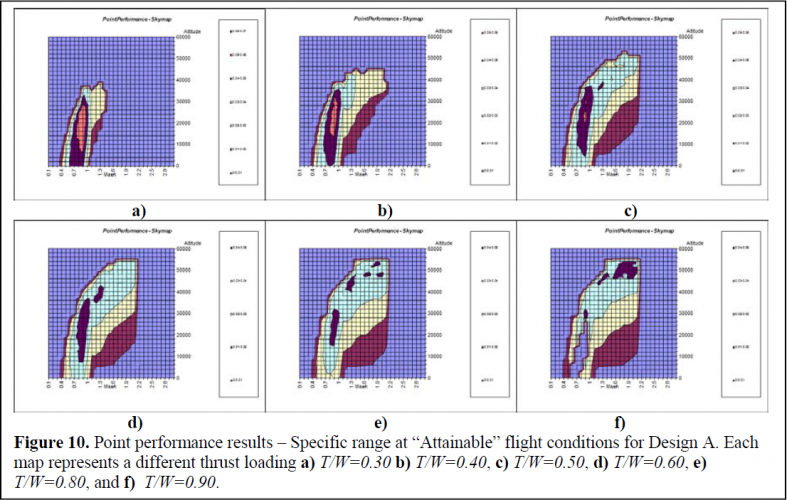
An example plot for a specific design with different TWR (note the effects on altitude & speed attainable):
TWR-range-alt-Mach-plot.png
 
Let me put an end to the misconception, misunderstanding and misrepresentation of Thrust to weight ratio (TWR).
TWR is primarily ralated to acceleration and maneuvering. But it does relate to cruising speed.
View attachment 790816
That said it's true that only 0.5 TWR is needed right after the transonic region, but you have to get past the sound barrier in the first place.
View attachment 790817
And that requires a lot more power to overcome the wing-, body-, and wave-drag. Here's where engine inlet and power come into play.
From 6th gen. forward adaptive/variable cycle engine drag will start to play a roll, too.
Naturally, for higher supersonic speeds higher TWR is needed.
While this is a typical drag coefficient curve, remember that total drag increases by the Cd x the square of velocity for a given flat plate area and altitude. The drag curve has a jump transonic, then levels off at low supersonic, then continues to climb rapidly with the square of the velocity increase.

A supercruise engine needs keep its net thrust curve above the drag curve. The exhaust velocity has to be higher than the aircraft speed to to achieve net thrust, which requires a high nozzle pressure ratio (NPR). NPR is the product of Engine Pressure Ratio x Inlet Pressure ratio (inlet recovery). Increasing speed results in increasing Inlet Pressure ratio (higher NPR), but also increasing inlet temperature. EPR starts dropping when you hit the engine rotor speed or turbine inlet temperature limits as the inlet temperature increases. At that point, NPR and thrust stop increasing, and the max supercruise speed is reached as the drag increases to match the available net thrust.

You need high EPR and elevated rotor speed results/TIT margins at high inlet temperatures to achieve supercruise thrust.

FYI - it is possible for a supercruise capable engine to be incapable of pushing thru the transonic drag rise, requiring either AB or a dive maneuver to get beyond that point.
 
slightly off topic but this f-22 (f119) dry thrust has always been weird to me, the derivative engine (f135) is larger, has way more material (i.e. heavier), said material is newer (as is the whole f135) with better thermal performance and all of this results in only 9kn added dry thrust, some sources would even say 5kn as they have the f119 at 120kn dry, it's also a total outlier in the dry to wet thrust ratio (1:1.35~ while everything else is at 1:1.6+)
The F135 has a significantly larger fan and low pressure turbine than the F119, increasing total airflow and increasing the bypass ratio. The core is basically the same, although the F135 has a higher TIT limit. The F135 core has to run hotter and faster than the F119 to provide the additional power to drive the bigger fan. The higher bypass will give the F135 a larger AB thrust increase and better non-AB specific fuel consumption. But it has less TIT and rotor speed margin to maintain thrust at high inlet temperature supercruise conditions.

Also, don’t believe everything you read on the internet regarding the F119 engine thrust levels. They have never been released publicly and there is a lot of inaccurate speculation.
 
Combined response:

F-111B, the side-by-side seating was a requirement from the Navy, not USAF.

First deployed, yes, but not first designed.


Agree here.

J-36 looks generally very much like I was expecting NGAD to look. Farking huge, ~105klbs+ MTOW, F-111 sized. Maybe heavier. 3x 35klb engines means it's got a ~1:1 TWR at 105klbs!


I wouldn't say never, but it'd take a very special target indeed to have the J-36 dropping bombs on it. Like nuclear targets where you're not trusting the recall or reliability of your CCAs.

Overall I think it's mostly a missileer-type and a major C&C node. Maybe they'll surprise us with the maneuverability of the beast, but I'm not really expecting such a big plane to be hanging with a bunch of F-16s or even Su27s in the dogfight.


Disagree here.

1) obviously FAXX is a strike by designation and by what it's replacing in the carrier group. The functional replacement for Super Bugs is a striker.

2) putting an "AQ-47C" into production would not have relieved the strike needs off the FAXX.
The USN was directed to adopt the USAF F-111 (as the F-111B), the side by side seating came with the aircraft. Remember, the USN wanted a new fighter and the F-111 was not that at all, too big, too heavy and not carrier suitable and was a strike platform. When the USN got the F-14, the compromise was the 14 using the F-111 TF30 engines (not good), also not designed for a fighter, can't handle rapid throttle transients, I know this from experience.

If you look at the J-36 configuration, again not a fighter. Anybody who has seen F-102, F-106 and Mirages (all delta wing configurations, no canards) in fighter-like turns, watch them bleed off energy, designed to be interceptors, not dog fighters. J-36 basically a large flying delta wing, side by side seating with three engines (need more three engine intent info). May be capable of supercruising (don't know at this point). The multiple control surfaces, good for supersonic trim (XB-70 like) All previous and current two-seat fighters, tandem seating, attack jets, side by side.

China keeps a very close eye regarding what the US does, whether its aircraft, ships, etc. US talks theater strike, has some concepts but China builds something and its unfortunate for the US, we are lagging potentially, or we may have a black world theater strike platform flying, US black world, very active.
 
FYI - it is possible for a supercruise capable engine to be incapable of pushing thru the transonic drag rise, requiring either AB or a dive maneuver to get beyond that point.
IIRC the Blackbirds could not break Mach without a dive. Even with their massive engines.


The USN was directed to adopt the USAF F-111 (as the F-111B), the side by side seating came with the aircraft.
No, USN and USAF programs were merged before a design was completed. The USAF would have been fine with tandem seating (see the B-58 and F-105). USN said side-by-side seating.
 
Anybody who has seen F-102, F-106 and Mirages (all delta wing configurations, no canards) in fighter-like turns, watch them bleed off energy, designed to be interceptors, not dog fighters.

Sorry to be picky, but Mirage most glorious hours were over Egypt and Israel shooting downs hundreds of aircraft with their... Canons; the epitome of Dogfighting. ;)
The Delta is a balanced choice that depends of the epoch. When the Mirage faced Swept wing Migs, the high AoA drag wall was not much of a problem as their opponents faced similar if not worst problems: pitch up and roll departure.

Similarly, the 1980 M2K fitted with refined FCS provided overmatch or parity over non FBW aircraft and crudely encoded competitor with their early FBW.

Using a delta is a choice to take by designers to provide a balance b/w many constraints. For a fighter jet, that means sometimes it would be a wise one when in other cases absolutely not. And in, some instances, you don´t have the luxury to take another path as your design toolbox and technological knowledge doesn´t allow you to do else.
 
Last edited:
If you look at the J-36 configuration, again not a fighter. Anybody who has seen F-102, F-106 and Mirages (all delta wing configurations, no canards) in fighter-like turns, watch them bleed off energy, designed to be interceptors, not dog fighters.

It is worth noting that the three delta winged aircraft you mentioned all had service entries 65 years ago (or more). These designs entered service at a point in time which is closer to the first flight (in 1904), than it is to the present day.

P.S. I appreciated your post overall.
 
IIRC the Blackbirds could not break Mach without a dive.
I believe the Blackbirds could accelerate thru the Mach in level flight, but routinely used the Rutkowski dive - climb maneuver to pass thru the transonic drag rise quicker and with less overall fuel consumption than a level acceleration. Of course, they were in Max AB for this acceleration. At M3+ cruise, the J58 was highly affected by the airflow turndown effect due to elevated inlet temperatures. At colder than standard temperature at 80k, the core engine performance (airflow - EPR) increased to the point where they could maintain M3.2 at minimum AB, and at hotter than standard they might not be able to reach 3.2 even at max AB.
 
It is worth noting that the three delta winged aircraft you mentioned all had service entries 65 years ago (or more). These designs entered service at a point in time which is closer to the first flight (in 1904), than it is to the present day.

P.S. I appreciated your post overall.
Mirage 2000 then.
 
Not sure how I missed this earlier:
If you look at the J-36 configuration, again not a fighter. Anybody who has seen F-102, F-106 and Mirages (all delta wing configurations, no canards) in fighter-like turns, watch them bleed off energy, designed to be interceptors, not dog fighters. J-36 basically a large flying delta wing, side by side seating with three engines (need more three engine intent info). May be capable of supercruising (don't know at this point). The multiple control surfaces, good for supersonic trim (XB-70 like) All previous and current two-seat fighters, tandem seating, attack jets, side by side.
3x 30-35klb engines would give the J-36 a TWR of about 1.27:1 at 50% fuel. (~105klb MTOW, ~82,500lbs at combat maneuvering weight. ~55k empty, 25k fuel, 2500lbs AAMs)

An F-16C-50/52 is looking at a TWR of about 1.18 in the same situation of 50% fuel and 4x AMRAAM+2x AIM9

The F-22 has a TWR of about 1.25 with 50% fuel and 6x AMRAAMs+2x AIM9

I don't think the J-36 is going to have any trouble at all regaining energy after a turn in a dogfight.
 
The USN was directed to adopt the USAF F-111 (as the F-111B), the side by side seating came with the aircraft. Remember, the USN wanted a new fighter and the F-111 was not that at all, too big, too heavy and not carrier suitable and was a strike platform. When the USN got the F-14, the compromise was the 14 using the F-111 TF30 engines (not good), also not designed for a fighter, can't handle rapid throttle transients, I know this from experience.

If you look at the J-36 configuration, again not a fighter. Anybody who has seen F-102, F-106 and Mirages (all delta wing configurations, no canards) in fighter-like turns, watch them bleed off energy, designed to be interceptors, not dog fighters. J-36 basically a large flying delta wing, side by side seating with three engines (need more three engine intent info). May be capable of supercruising (don't know at this point). The multiple control surfaces, good for supersonic trim (XB-70 like) All previous and current two-seat fighters, tandem seating, attack jets, side by side.

China keeps a very close eye regarding what the US does, whether its aircraft, ships, etc. US talks theater strike, has some concepts but China builds something and its unfortunate for the US, we are lagging potentially, or we may have a black world theater strike platform flying, US black world, very active.
Slight correction here. Originally the USN just wanted a missileer, which is what the F-111B was. They became annoyed with the USAF as the USAF kept getting the features they wanted in the TFX aircraft and the USN didn't and the USAF features kept driving the weight up. Mainly, the USN wanted tandem seating and the USAF side by side. But they never wanted a dog fighter when the program started. That came about as a result of experience in Viet Nam and wanting to kill the F-111B (Changing requirements). They did get a better fighter in the F-14, mainly due to Grumman's experience building the F-111B and realizing how they could get the swing wing weight down. It's a damned shame the USN abandoned development of the F-401 for it.
 
Not sure how I missed this earlier:

3x 30-35klb engines would give the J-36 a TWR of about 1.27:1 at 50% fuel. (~105klb MTOW, ~82,500lbs at combat maneuvering weight. ~55k empty, 25k fuel, 2500lbs AAMs)

An F-16C-50/52 is looking at a TWR of about 1.18 in the same situation of 50% fuel and 4x AMRAAM+2x AIM9

The F-22 has a TWR of about 1.25 with 50% fuel and 6x AMRAAMs+2x AIM9

I don't think the J-36 is going to have any trouble at all regaining energy after a turn in a dogfight.

For BVR fights the TWR and supersonic LD ratio are most important for kinematic defense. Also, it only requires moderate angles of attack (although the gee loading can get up there and we don't know what the structural strength of this design is).

As for WVR - I don't think any serious observer would claim this thing would be going in for a guns kill (both based on its size, and on trends in air-combat).
 
At colder than standard temperature at 80k, the core engine performance (airflow - EPR) increased to the point where they could maintain M3.2 at minimum AB, and at hotter than standard they might not be able to reach 3.2 even at max AB.

Air temperature at that altitude is -35°C to -70°C?
Compressor inlet temperature limit is +427°C.
The delta between the two barely shifts.
If the air is hotter, you hit the CIT earlier, thus reducing top speed slightly, but that should not require a vastly different AB setting.
The SR-71 did not seem to be thrust limited but rather temperature limited at design cruise speed.
 
The standard temp at 80k is around -54C, plus / minus 10C. The inlet temp limit is 427C, but that usually is not a speed limit at the regular cruise point of M3.2. On a cold day at altitude, the inlet could be well below the 427C level. At cruise, the J58 was a constant RPM machine, with the nozzle opening or closing to maintain the constant rotor speed. It also had an EGT trimmer that could increase core fuel flow to bring cold day EGT up to a target. More fuel flow increases RPM, nozzle closes to reduce the RPM which the raises EPR. Colder inlet air increases airflow at a constant RPM, which also increases EPR, and reduces the amount of forward inlet bleed bypass, which reduces drag. Higher EPR increases nozzle pressure ratio which increases exhaust velocity and thrust, reducing the level of AB fuel flow needed for cruise thrust. Forecast temperature aloft was a major mission planning factor for the Blackbirds, and big headache for the pilots when the forecast was wrong.
 
For BVR fights the TWR and supersonic LD ratio are most important for kinematic defense. Also, it only requires moderate angles of attack (although the gee loading can get up there and we don't know what the structural strength of this design is).
I would not expect over 7.5gees max, from sheer size.


As for WVR - I don't think any serious observer would claim this thing would be going in for a guns kill (both based on its size, and on trends in air-combat).
Trends in air combat alone make WVR dogfights highly unlikely. Not when people have HOBS IR seekers and EOTS. Even less likely when people have 360x360 DAS systems.
 
Trends in air combat alone make WVR dogfights highly unlikely.
Not only that, but also specifically Chinese design philosophy and evident features on the aircraft itself. The J-20 already ditched the gun, but kept dedicated side bays for short range missiles. The J-36 is looking to ditch even such side bays, instead relying on its stealth and other characteristics and equipment to simply avoid engagements that would require short range, high off-bore sight missile slinging, let alone guns. Furthermore it can effectively outsource this duty to unmanned aircraft which can be designed to be more nimble and suited for dynamic medium to close range air to air engagements.
 
Not only that, but also specifically Chinese design philosophy and evident features on the aircraft itself. The J-20 already ditched the gun, but kept dedicated side bays for short range missiles. The J-36 is looking to ditch even such side bays, instead relying on its stealth and other characteristics and equipment to simply avoid engagements that would require short range, high off-bore sight missile slinging, let alone guns. Furthermore it can effectively outsource this duty to unmanned aircraft which can be designed to be more nimble and suited for dynamic medium to close range air to air engagements.
I'm not totally disagreeing here, but in the event where a 6th gen aircraft with a 360x360 DAS and HOBS missiles were to somehow get caught WVR it would not need to maneuver much if at all to get said HOBS missiles locked on and ruin the attacker's day.
 
I think side bays should still be a thing for your defensive missiles, both AAMs and ARMs. A side bay means you can open a bay on the far side of the craft from the radars for minimal change in your RCS, while belly bays will always increase your RCS with a launch.

This also assumes a need for a relatively small ARM, roughly on the same size as the AAM. This could be made with a total seeker replacement like on the AGM-122 Sidearm, or adding a GPS guidance including home-on-GPS-jamming to the basic missiles and updating the guidance and fuzing system. Continuous rod or blast-frag warheads like on AAMs would be very effective if detonated ~1-3m off the ground!
 
I think side bays should still be a thing for your defensive missiles, both AAMs and ARMs. A side bay means you can open a bay on the far side of the craft from the radars for minimal change in your RCS, while belly bays will always increase your RCS with a launch.

This also assumes a need for a relatively small ARM, roughly on the same size as the AAM. This could be made with a total seeker replacement like on the AGM-122 Sidearm, or adding a GPS guidance including home-on-GPS-jamming to the basic missiles and updating the guidance and fuzing system. Continuous rod or blast-frag warheads like on AAMs would be very effective if detonated ~1-3m off the ground!

Wouldn't a missile sized to a medium ranged AAM make more sense? Faster flight time and longer range against SAMs?

If it is designed to intercept AAMs, than maybe two miniature missiles per rack? Either way, a side bay able to carry approximately 200 kg might be ideal.
 
Wouldn't a missile sized to a medium ranged AAM make more sense? Faster flight time and longer range against SAMs?

If it is designed to intercept AAMs, than maybe two miniature missiles per rack? Either way, a side bay able to carry approximately 200 kg might be ideal.
Yes, the defensive bays should be sized to hold full size BVRAAMs.
 
The zoom in and zoom out in this video are too frequent. Maybe fake?

Smartphone camera apps these days allow you to change zooms between presets by pressing on preset magnifications, so frequent zooming in/out is not particularly suspicious.


The tracking of the aircraft relative to the position of the person on the ground looks about right, with the details of the aircraft consistent with what's been photographed before from the varying angles in the video.
 

Similar threads

Back
Top Bottom