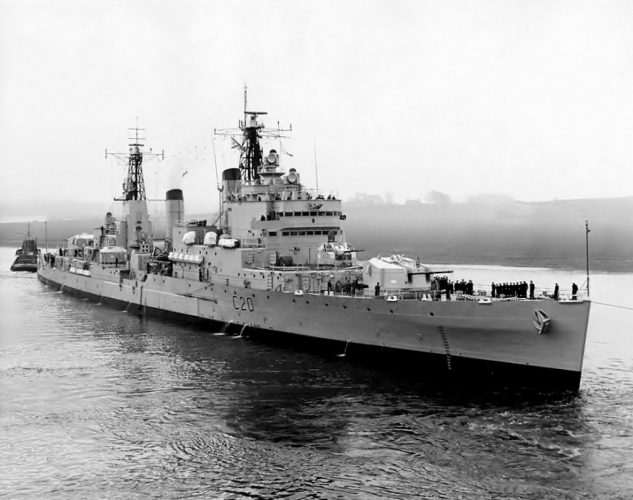
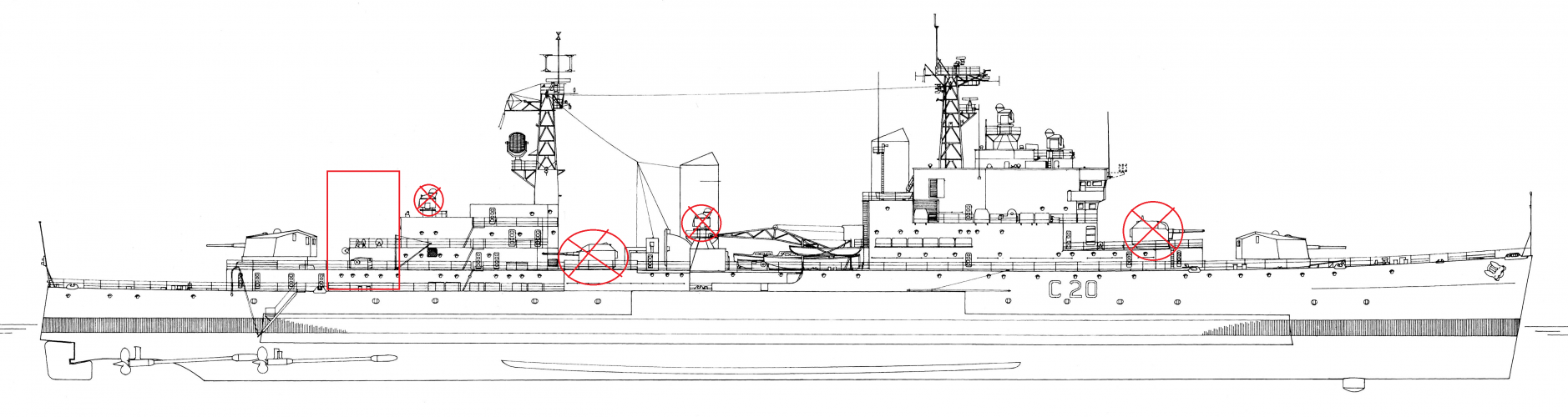
Without a doubt, but artillery support eats shells at a massive rate and not all of your reserve stock is going to be suitable for that.
They'd might burn through most of the 6" shells the RN has left, but the Tiger class are the only RN ships still using that caliber. Even in this scenario where they've been kept in a ready-enough state for the conflict, they have little future career ahead of them. So what better time to use up that inventory and give those ships a very notable last deployment?

It's unlikely but maybe their performance would convince the powers that be that is there some value in some of those larger caliber guns around. Against the air threat they don't seem any more vulnerable than either of the Type 21 frigates sunk. It's entirely possible the DP guns could take down an Argentinian Skyhawk or two.
 
Also the former RFA store support ships Lyness & Tarbatness, chartered to the USA in 1981and then sold to them as USNS Sirius & Spica on 1 March 1982.
 
I've been thinking about where the converted cruisers fit within the force structure of a RN that got CVA01 & 02, kept the Eagle until the early 80s, got 4+ Type 82s built and the like. Or Plan B where the Eagle and Ark were both Phantomsised and served out their refit lives.

As best I can work out in about 1963 the RN planned for 6 Counties, 4 Escort cruisers (helos & Sea Slugs), and some number of CVA01s.

From 1964 the RN dropped the Escort Cruisers to concentrate on the CVA01s, but also ordered another 2 Counties, planned to convert the 3 Tigers and started work on the Blake while putting the other 2 into reserve. This seemed to be the plan until early 1966 when CVA01 as cancelled.

From early 1966 the plan was to Phantomise the Ark and Eagle and only build Bristol, but the cruiser conversions seem to be kept in the plan.

The post devaluation 1968 plan to scrap the carriers saw the Tiger's conversion start, demonstrating the persistence of the idea if nothing else.

What happens with these ships if the RN gets or keeps attack carriers post 1966 and/or 1968? Does the Tiger still get converted from 1968? How long do they last in service when attack carriers exist?
 
They were apparently surveyed and found to be in quite good condition and suitable to be returned to service in a timely manner. Albion or Bulwark (whichever had been most recently in service was also surveyed and found to be in a poor material state.

It was however, determined that there were not enough suitably qualified stokers available to crew them.
Bulwark as it turns out.
Prior to the war the SBS had been using her to practice taking back oil rigs. They'd been a little over enthusiastic and blown out entire bulkheads as well as doors , hatches structural members etc. .
A couple of the surveyors marvelled that she was still afloat.
The SBS had really been enthusiastic.
 
Bulwark as it turns out.
Prior to the war the SBS had been using her to practice taking back oil rigs. They'd been a little over enthusiastic and blown out entire bulkheads as well as doors , hatches structural members etc. .
A couple of the surveyors marvelled that she was still afloat.
The SBS had really been enthusiastic.
"You're only supposed to blow the bloody doors off!"
 
What happens with these ships if the RN gets or keeps attack carriers post 1966 and/or 1968?
They don't get converted into helicopter ships, is my guess. In that case, how long they last depends on how worn out they are, since they will likely be at sea for most of the time they spent in rebuild. There will be no reprieve and no extra work done when they start getting weary.
 
They don't get converted into helicopter ships, is my guess. In that case, how long they last depends on how worn out they are, since they will likely be at sea for most of the time they spent in rebuild. There will be no reprieve and no extra work done when they start getting weary.
I think they’d be offered for sale and, bearing in mind that the so calked ‘A,B,C’ countries had an affinity for gun armed ships I can see possibly all going to one of them with two in service and the third (probably Lion as she had mixed power main turrets) kept for a spares source…
I can see them going to Chile.
 
Blake was taken in hand for conversion in 1965, so it is going to see service in both CVA01 & 02 and Eagle and the Ark and Eagle plans if they survived. However, Tiger wasn't started until after the devaluation and cutting short of the EoS commitment, which make her conversion vulnerable.

The command factor was important; I recall in Hobbs' carrier book about the need for multiple Type 82s due to the need for one to command the AAW task and another the ASW task within the Carrier Battle Group plus a spare. Hence, for the CVA01 & 02 plan the T82 requirement fluctuated between 6 and 8. I don't think those Type 82 numbers included any for Eagle which was expected to serve into the 80s.

At the very least the Blake conversion saves the RN buying at least 1 Type 82 and likely the Tiger conversion saves another although I think the Lion still misses out as time progresses. Given the Bristol cost 24 million pounds, the Blake conversion cost 5 million and Tiger cost 13 (which might have included helicopters) they might be a reasonably good deal in the short term.
 
I kinda suspect there were still thousands of 6-inch shells stored. The guns were finally commissioned only in 1959, and it's unlikely shells would be all gone in 20+ years.
I can confirm that there were 6” shells at RNAD Gosport in the late 70s/early 80s; I got to pick some up.

SRJ
 
Bristol is cancelled and Lion, instead of being used for spares, is used to prove Seadart, Seawolf, Ikara and maybe Broomstick?
 
You know HMS Bristol is a controversial ship when Tigers are considered instead...
 
You know HMS Bristol is a controversial ship when Tigers are considered instead...

I like Bristol and think that the RN needs at least 1 per fleet carrier to command the AAW task in the CBG. At least 3 in CVA01.02/Eagle scenario and 2 in Ark and Eagle scenario.

The plan was for CVA01 & 02 to each have 3 or 4 Type 82s, but I think that every Tiger class that gets converted the number of Type 82s per carrier drops by 1.

I think the best thing that HMS Tiger could do is not get converted from 1968 to free up funds for HMS Eagle's Phantom refit.
 
I like Bristol and think that the RN needs at least 1 per fleet carrier to command the AAW task in the CBG. At least 3 in CVA01.02/Eagle scenario and 2 in Ark and Eagle scenario.

The plan was for CVA01 & 02 to each have 3 or 4 Type 82s, but I think that every Tiger class that gets converted the number of Type 82s per carrier drops by 1.

I think the best thing that HMS Tiger could do is not get converted from 1968 to free up funds for HMS Eagle's Phantom refit.
Honestly, the money could have been better spent on many things.

If Eagle got her Phantomisation would that have been in addition to Ark, or instead of? The reason I ask is would it have been possible to retain both in service in the 70s without a hull to cannibalise for parts?

Realistically, the only efficient options are new ships and scrap, or sell the old ones.

That means a guided missile cruiser, escort cruiser and DDG, with or without new carriers. Maybe the CG could be combined with the escort cruiser, or maybe the escort cruiser could have been a larger through-deck design to replace the CLVs and Commando carriers. Maybe there could have been a family of evolved COGAG Bristols, including DDH or CGH variants to cover all roles.

My personal thoughts, Australia has kittens when Indonesia gets their Sverdlov and TU-22s, and panic buys the Tigers, Hermes Centaur and Victorious from the UK. The UK takes this money and funds CV01, the escort cruiser and Bristols with it.

Australia converts the Tigers to CGs by fitting Tartar, to be used as both an air defence and an anti-surface system. Initially, it is a single system per ship with a Mk-13 in B position and two fire control channels fitted above the bridge. The final configuration (under project Echidna) replaces each of the waist Mk-6 3" with a Mk-22 GMLS and an additional two fire control channels are installed aft with Tartar replaced by Standard MR, a new CMS installed, including 3D radar and NTDS, with Ikara and a sonar.


:cool:
 
If Eagle got her Phantomisation would that have been in addition to Ark, or instead of? The reason I ask is would it have been possible to retain both in service in the 70s without a hull to cannibalise for parts?

In addition to Ark.
IIUC Blake started conversion in 1965, Ark in 1967, devaluation occurred in Nov 1967, and the rapid withdrawal and Eagle conversion cancellation occurred in early 1968, Tiger conversion started in 1968. I'd cancel the Tiger conversion to keep the Eagle conversion.

If they had 2 carriers in service until about 1978 there'd be enough momentum to keep the spares supply chain going, and then Ark could be cannibalised from 1979 to keep the Eagle running for a few more years.

Realistically, the only efficient options are new ships and scrap, or sell the old ones.

That means a guided missile cruiser, escort cruiser and DDG, with or without new carriers. Maybe the CG could be combined with the escort cruiser, or maybe the escort cruiser could have been a larger through-deck design to replace the CLVs and Commando carriers. Maybe there could have been a family of evolved COGAG Bristols, including DDH or CGH variants to cover all roles.

100% correct.

Ideally the RN gets CVA01 & 02 with 2 Bristols each, plus keeps Eagle with a Bristol of its own plus Blake. But as we know when it comes to postwar Britain ideally rarely comes into it. It would be cool if Eagle and Blake were replaced by a pair of Invincibles.
 
Initially, it is a single system per ship with a Mk-13 in B position
Is that really a good place for it, in terms of volume for the underlying magazine, structure and blast effects? My gut feeling is that you're going to end up losing X turret.
 
You know HMS Bristol is a controversial ship when Tigers are considered instead...
How old are the hulls and machinery at this point? The line in the Bible about not putting new wine in old wineskins is more than just a religious allegory. Jesus said it because it helped the people he was talking to relate to practical, sensible things they knew from their own lives.
 
Australia converts the Tigers to CGs by fitting Tartar, to be used as both an air defence and an anti-surface system. Initially, it is a single system per ship with a Mk-13 in B position and two fire control channels fitted above the bridge. The final configuration (under project Echidna) replaces each of the waist Mk-6 3" with a Mk-22 GMLS and an additional two fire control channels are installed aft with Tartar replaced by Standard MR, a new CMS installed, including 3D radar and NTDS, with Ikara and a sonar.
Hm, I like the idea!
 
Is that really a good place for it, in terms of volume for the underlying magazine, structure and blast effects? My gut feeling is that you're going to end up losing X turret.
Remembering B position was originally intended for a triple 6" and that the Mk-6 3" was about the size and weight of a twin 4.5" or Mk-38 twin 5", which is precisely what the Tartar both in Mk-11 and Mk-13 configuration was designed to replace.

As for blast effect, check out the configuration of the Mk-11s used on the Albany Class CGs.
 
Remembering B position was originally intended for a triple 6" and that the Mk-6 3" was about the size and weight of a twin 4.5" or Mk-38 twin 5", which is precisely what the Tartar both in Mk-11 and Mk-13 configuration was designed to replace.
There is a bit of problem here; Mk-6 mount magazine is not deep enough for Mk-13 GMLS magazine to fit in its place underdeck. An abovedeck housing would be required to compensate. It's not exactly the unsurmountable problem, but it would require placing launcher higher, too. And this would affect the bridge both in terms of visibility and rocket motor blast.

IMHO it would be simpler to left the B position alone (or fit there something else, like anti-ship missile containers), and instead put Mk-13/Mk-22 GMLS into wing positions.
 
There is a bit of problem here; Mk-6 mount magazine is not deep enough for Mk-13 GMLS magazine to fit in its place underdeck. An abovedeck housing would be required to compensate. It's not exactly the unsurmountable problem, but it would require placing launcher higher, too. And this would affect the bridge both in terms of visibility and rocket motor blast.

IMHO it would be simpler to left the B position alone (or fit there something else, like anti-ship missile containers), and instead put Mk-13/Mk-22 GMLS into wing positions.
IIRC the Mk11/Mk13 launcher was a deck higher than the 5" turret it could replace. I'm not sure what that does to the weight and balance exactly, though I'm sure it does increase the center of balance of the install.
 
IIRC the Mk11/Mk13 launcher was a deck higher than the 5" turret it could replace. I'm not sure what that does to the weight and balance exactly, though I'm sure it does increase the center of balance of the install.
My main concern is that Mk-12 on B turret position would seriously affect the bridge behind, requiring massive rebuild of the superstructure.
 
Remembering B position was originally intended for a triple 6" and that the Mk-6 3" was about the size and weight of a twin 4.5" or Mk-38 twin 5", which is precisely what the Tartar both in Mk-11 and Mk-13 configuration was designed to replace.

As for blast effect, check out the configuration of the Mk-11s used on the Albany Class CGs.
1752062473954.png
Albany-class cruiser. The bridge windows are several levels above the Tartar launchers, and the Talos launchers are even lower and further away.

1752062574576.png
HMS Tiger. Crewmembers for scale in both cases. I'm not all that sure a Tartar launcher is going to fit in place of the twin 3"/70, and even if you can work a Mk13 in there, the launch efflux is going to be practically on the same level as the bridge windows, not well below them as on the Albany.
 
HMS Tiger. Crewmembers for scale in both cases. I'm not all that sure a Tartar launcher is going to fit in place of the twin 3"/70, and even if you can work a Mk13 in there, the launch efflux is going to be practically on the same level as the bridge windows, not well below them as on the Albany.
Agreed. It would be much more practical to replace the wing 3-inch mounts with Mk-13/Mk-22, and either leave bow 3-inch mount alone, or replace her with something like Exocet/Otomat boxes.
 
That would probably be the better setup.
Yep. By removing the adjusted MRS 3 director towers (which would be of no use for Tartar anyway) enough space could be freed to provide adequate bow firing arcs. I toyed with the idea of putting AN/SPG-51 radars on them, but they are so badly placed, that they would just block launchers fire arcs.
 
It would be much more practical to replace the wing 3-inch mounts with Mk-13/Mk-22
Does she have enough room for Mk13's under the decks?

IIRC the capacity of a Mk22 was just sixteen missiles. A pair of those is going to be a lot of topweight, for fewer missiles than a single Mk13. As I've already said, my gut says that if you're going to make her a Tartar/Standard-MR ship, she's going to lose the aft six-inch.

Hell, maybe make her a double ended Tartar ship. Lose both main gun turrets (the 3"/70 has a high rate of fire and is comparable with an OTO-Melara 76) for eighty missiles. As Harpoon matures, you can put four in each launcher.

But that takes money (specifically US dollars) that Britain doesn't have. And making her a double-ender removes her shore bombardment role. I think it's safe to say that her hull and machinery will be too old to wait for a Mk41 VLS retrofit.
 
On wing mounts it's not so important, you could just build a deck house over to provide enough height.
Technically yes, in volume terms, but pushing the launchers and their magazines up that high adversely affects the metacentric height. Does she have enough stability? (This is one of the things which did Talos in as a system - the Talos Clevelands had got to the point where they lacked the margin to accept any further upgrades. )
 
Technically yes, in volume terms, but pushing the launchers and their magazines up that high adversely affects the metacentric height. Does she have enough stability? (This is one of the things which did Talos in as a system - the Talos Clevelands had got to the point where they lacked the margin to accept any further upgrades. )

Hm. The whole Mk-13 GMLS weight is 61 tons empty, 85 tons loaded. The Mk-22 GMLS is about 42 tons empty, 51 tons loaded.

The 3-inch/70 Mark 6 mount weight is about 38 tons (counting ammo), and it's setting lower than launcher.

Seems that if we remove all three Mark 6 mounts (freeing 114 tons) we could install two Mk-22 GMLS on ship (102 tons total with missiles).
 
Hm. The whole Mk-13 GMLS weight is 61 tons empty, 85 tons loaded. The Mk-22 GMLS is about 42 tons empty, 51 tons loaded.

The 3-inch/70 Mark 6 mount weight is about 38 tons (counting ammo), and it's setting lower than launcher.

Seems that if we remove all three Mark 6 mounts (freeing 114 tons) we could install two Mk-22 GMLS on ship (102 tons total with missiles).
It's not just the weight; it's the degree to which it raises the centre of gravity compared to the centre of buoyancy... and the righting moment, since you will have a significant lump of steel outboard of the midline pulling down when the ship is heeled.
 
IIRC the capacity of a Mk22 was just sixteen missiles. A pair of those is going to be a lot of topweight, for fewer missiles than a single Mk13. As I've already said, my gut says that if you're going to make her a Tartar/Standard-MR ship, she's going to lose the aft six-inch.
Hm. Idea - what if we put a Mk-13 launcher into "Y" position? I.e. between the rear superstructure & rear 6-inch turret?

1752155041803.png

It would likely require the removal of rear MRS-3 director, but it's not that important - there would be still two directors on forward superstructure. And rear superstructure could be easier to adapt to missile blast (it's already made quite narrow to provide 6-inch turret with better fire arcs, and have only a small number of portholes therefore).

By removing two wing Mark 6 and their associated MRS-3 directors, we would free about 80 tons, which likely would be enough for Mk-13 launcher & two AN/SPG-51 radars to be installed. The cruiser would still have bow Mark 6 for short-range defense.

Another solution is to remove all three Mark 6 and three MRS-3 directors, freeing about 120 tons. It would allow us to install not only Mk-13 GMLS, but also some more modern defense artillery. For example, OTO Melara 76-mm cannons, when they would become available.
 
The Tiger class really don't have enough volume for missile armament as it is, they're pretty tight ships. If you're planning on keeping the 6-inch guns, don't get rid of the MRS-3 directors that control them, those are wired to the AFCB Mk 10s that control the main armament. The 3-inch mounting are relatively compact compared to the missile systems you're suggesting, their gun bays only take up the deck immediately below the mounting, on No.1 and No.2 decks respectively for the forward mounting and two wing mountings, and the magazines are another two decks down spread across two deck levels, on No.5 deck and the Hold. Most of the ship above No.3 deck is devoted to crew spaces, and that space immediately forward of Y mounting that you suggest for a Mk 13 is the officers quarters.
 
The Tiger class really don't have enough volume for missile armament as it is, they're pretty tight ships.
IIRC they looked at making a Fiji into a missile ship - Seaslug, I think - and found that it would cost her all her main guns except for A turret. Granted, Seaslug is the absolute worst option in terms of horizontal volume consumption because of the decisions made regarding magazines, but IIRC the Tiger hull evolved out of the Crown Colony Class anyway, with all of the compromises which that involved. The emphasis was on getting the minimum acceptable armament fit into the smallest size and least displacement, not on reserving space and weight for systems which hadn't even been dreamed of (outside of pulp SF magazines) when the ships were designed.
 
The Tiger class really don't have enough volume for missile armament as it is, they're pretty tight ships. If you're planning on keeping the 6-inch guns, don't get rid of the MRS-3 directors that control them, those are wired to the AFCB Mk 10s that control the main armament.
I was planning to remove the rear & both wings MRS-3 directors, leaving only two forward ones. Should be enough for two 6-inch turrets.

1752165583566.png
 
Z was chosen for development in 1964. The major change subsequently was to place the hangar at the forward end of the flight deck so eliminating the need for a lift and its associated weight. (So original plan mjust have been for hangar under the flight deck). Conversion cost then estimated at £2m plus £2m to refit the ships to serve into the 1970s.

I assume there are no details available on the hangar under flightdeck with lift design?
 
IIRC they looked at making a Fiji into a missile ship - Seaslug, I think - and found that it would cost her all her main guns except for A turret. Granted, Seaslug is the absolute worst option in terms of horizontal volume consumption because of the decisions made regarding magazines, but IIRC the Tiger hull evolved out of the Crown Colony Class anyway, with all of the compromises which that involved. The emphasis was on getting the minimum acceptable armament fit into the smallest size and least displacement, not on reserving space and weight for systems which hadn't even been dreamed of (outside of pulp SF magazines) when the ships were designed.
The main argument against a GM armed cruiser or battleship (for Seaslug) was that one ship would absorb most of the missiles being produced for operational use.

SRJ.
 
Back
Top Bottom