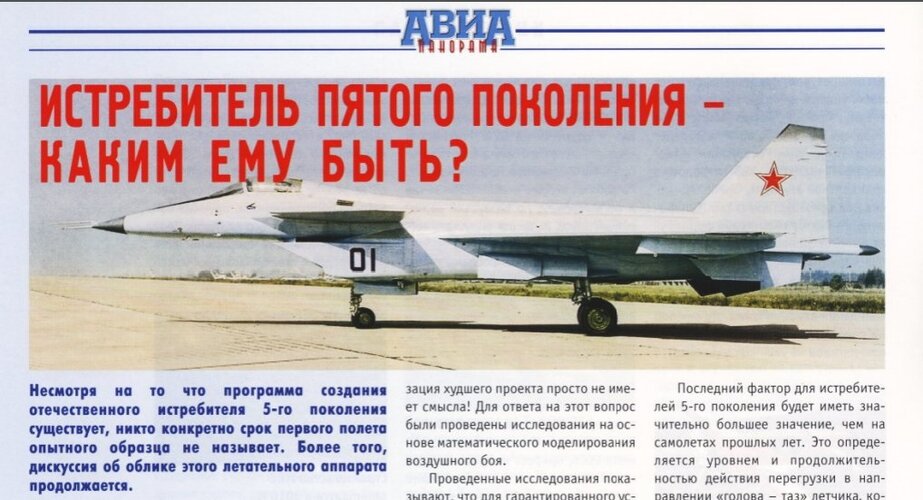
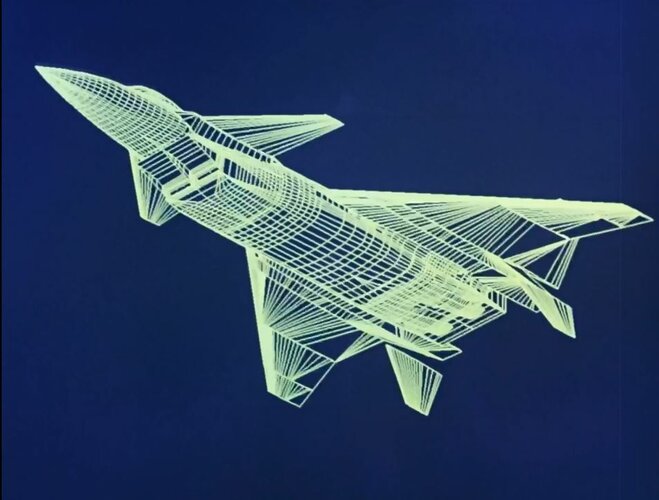
The preliminary design of the prospective fighter was developed by specialists of the Mikoyan Machine Building Plant under the supervision of General Designer R.A. Belyakov.
The peculiarity is that it was developed in two parts - for a multifunctional frontline fighter and air defense fighter (named MFI and code "512") and for a light frontline fighter (LFI, 412). At the same time, a high degree of unification between both aircraft was assumed.
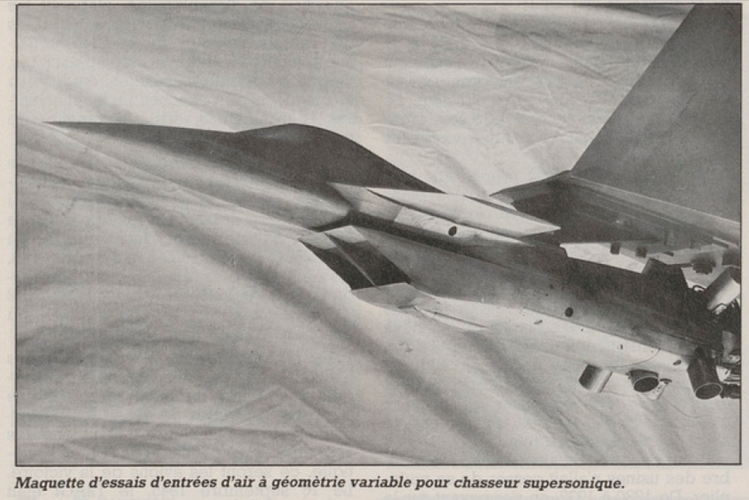
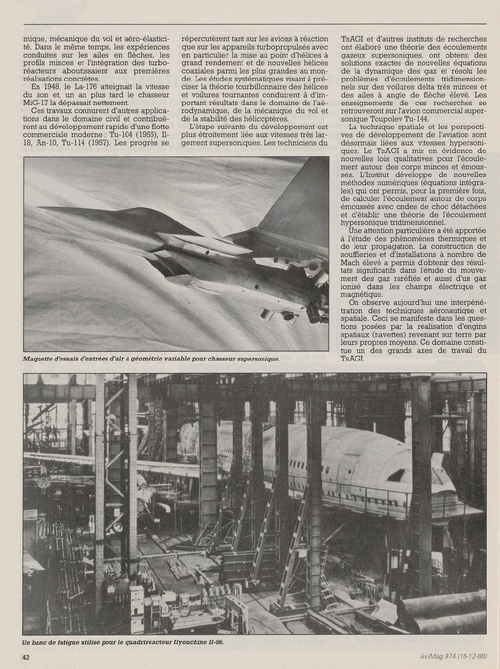
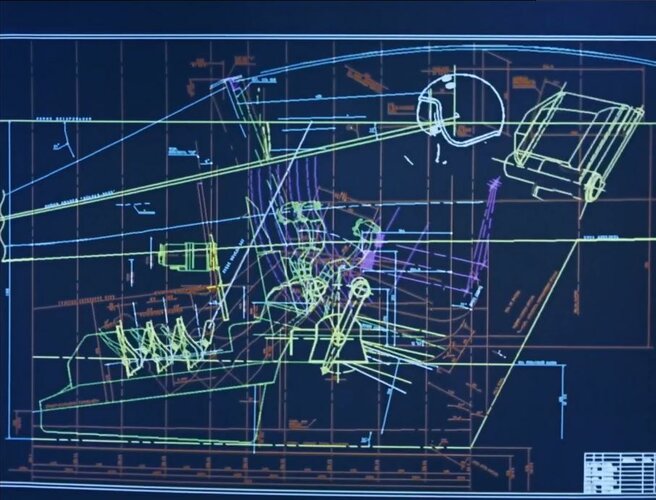
At the preliminary design stage, the results of model tests in TsAGI wind tunnels, preliminary data on engine and equipment characteristics, and studies on reducing radar visibility were taken into account. This made it possible to determine the rational dimensions of the MFI and LFI, choose the aerodynamic configuration of the aircraft, and make the main design and layout decisions, such as the fuselage layout, shape and placement of air intakes, tail unit layout, and parameters of the main fighter systems.
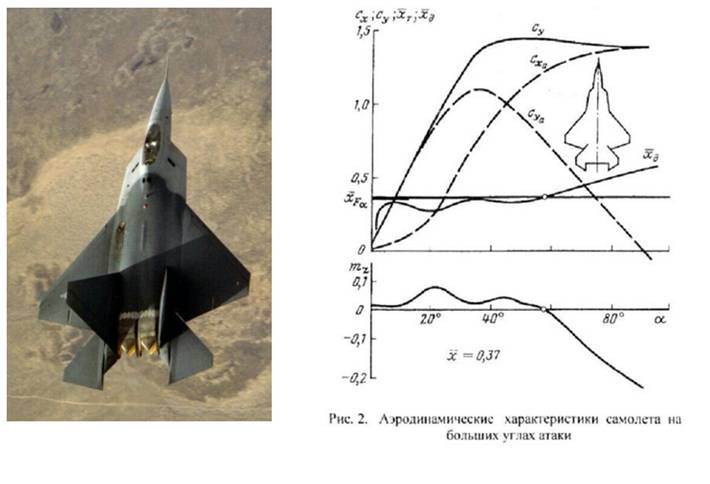
Another interesting work was the creation of dynamically similar flying models. After being dropped from a helicopter, the control system brought the models to high angles of attack, and the onboard KZA recorded all transient processes. It was difficult to conduct such studies in a wind tunnel.
In 1987, soon after the completion of the R&D cycle, the Mikoyan Machine Building Plant, together with other participants in the work, successfully defended the preliminary design for the MFI and LFI aircraft.
After this, the Mikoyan people began developing a preliminary design for the MFI, which received a new code "1-42".













![Видео от Объединенная авиастроительная корпорация.mp4_snapshot_00.57_[2024.12.27_22.51.55].jpg](/data/attachments/289/289634-d7c29a83ee888533642832753cec229b.jpg)