Not if they were diverted first...

IIRC the Shah wanted Iran to be a regional power, and the carriers would enable Iran to be a player in the Indian Ocean.I also never understood the Shah's reasoning for wanting such a vessel. Why would he need one, and how would he use it? And why so many?There are certainly such claims, but it's not clear how serious the Shah's enthusiasm was, and what exactly he wanted. In a lot of respects, he seems to have treated defence exhibitions the same way a child treats a sweet shop.Tzoli said:I also wonder if the Shah of Iran before the 1979 revolution would buy the original Invincible design (if I remember he too wanted 3-4 such ships) or this modified proposal?
Maybe to take the Iraqis per surprise over the Al-fao peninsula ? attacking them from the sea ?
That doesn't seem like it would require large helicopter carriers.
Most of the Shah era procurements can be seen more through the lens of Iran as a US ally in a global conflict with the Soviets than the Iran-Iraq conflict (though that was an issue). I haven't seen a specific mission for the carriers, but my guess would be that they anticipated providing ASW hunting groups in the Gulf of Oman or North Arabian Sea to protect oil tanker routes from Iran to the West and Far East.

I can see where you are going with this, three brand new ships in the water or under construction around the time of Australia's carrier competition and the Falklands, possibly outfitted with a mix of UK and US systems and to a higher standard than the RNs ships. I must confess I was thinking the same thing.It is interesting also to speculate what might have happened if the Shah's ships had been built and then not taken up or more likely, had been diverted from post revolutionary Iran.

METO, not SEATO.Yes, along with the fact that he wanted to revitalise the morbid SEATO alliance. For some more context, as the 1970s drew on 'Detente' was showing itself to be one of the great lies of history, the Soviet Union and it's allies were increasingly on the rampage, Great Britain was still firmly in the hands of the 'managed declinists', and the United States seemed doomed to terminal decline (not helped by throwing various allies under the bus starting with Vietnam, Taiwan, and the Tibetan government in exile), even more so after Carter became president.
In a bitter irony, SEATO's fate was sealed by the fall of the Shah, but Carter's betrayal did at least ensure his own demise, and hence a new dawn for the USA. Carter and the Democratic party were actually quite lucky that the full details of his treachery & incompetence didn't become public knowledge until the 21st Century (only a few years ago in fact). Otherwise the Democrats would have very likely spent the remainder of the 1980s (at the very least!) in the political wilderness.
pathology_doc said:Hmm. Yeah, I have to concede that point with regard to early model RAF Land Harriers. The later models are a very different matter, of course, but if Australia had bought "Land Harriers" in 1982-83, which model would it have been getting? Early RAF Harrier or AV-8B family?
The plan c. 1981 also called for a VSTOL aircraft to be selected in 1983, after the carrier selection in 1982. The only choice, I think, would have been between Sea Harrier (with radar) and Harrier II (with more payload).
The AV-8B wasn’t a “Land Harrier” it was a “Marine Harrier”. So fully speced for flat top operation. Just by sea soldiers rather than sailors. The advantage of the AV-8B is better range/payload and the cost to buy and sustain advantages of being tied into the US system. The Spaniards had gone into Harriers via the USMC’s AV-8A so stuck with what they knew.
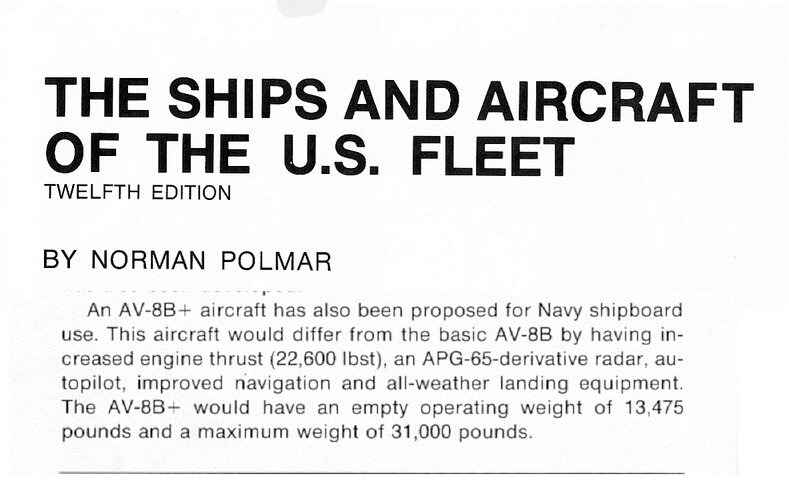
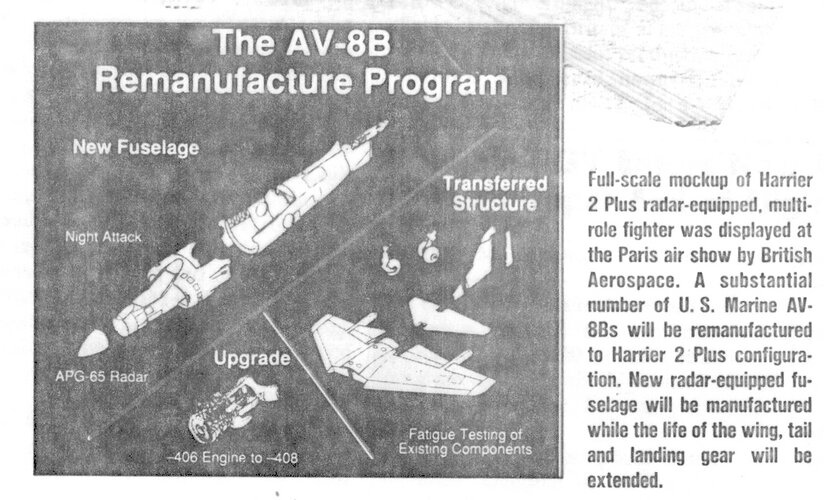
An update on this. In 1980-82 the RAN was actually looking closely at the AV-8B but at what was then called the Navalised AV-8B which was the version with the radar nose that later was, sort of, built as the AV-8B Plus from 1993. The reason being the RAN was unconvinced the Sea Harrier FRS.1 could fly effectively over the hot and dirty seas of South East Asia. The RAN was trying to arrange a lease of RN SHARs to go on-board HMAS Australia (ex Invincible) up until the Falklands War ended the chance of that happening.
 !
!
Hmmm...I would argue that it was the Soviets that heightened tensions by invading or are you criticising Carter for having the audacity to react? If so, how do you classify Ronald Reagan's subsequent supporting of the Mujahideen with arms etc and the support of the Pakistan forces...much of which provided the roots for the Taliban etc?Carter heightened tensions with the Soviets over the inconsequential Afghan invasion

Documents from the National Archives of Australia on the replacement for HMAS MELBOURNE:
https://recordsearch.naa.gov.au/SearchNRetrieve/Interface/ViewImage.aspx?B=9574726
It seems that by early 1982 the idea of buying INVINCIBLE was going out of favour in Australia in favour of P-3Cs and basing more capable helicopters on the FFGs. If a newbuild aircraft carrier had gone ahead, the shortlist had been narrowed to building one in the US, either to the SCS or a modified LPH design.
That's noted as being ruled out due to cost - building an SCS in the US was considered to be cheaper.Ironically, they might have been better off having Spain build them a second PdA, as the first (adapted from SCS) was starting at about the same time.
Strange, it's usually cheaper to build multiples of the same thing.That's noted as being ruled out due to cost - building an SCS in the US was considered to be cheaper.
That's noted as being ruled out due to cost - building an SCS in the US was considered to be cheaper.
I don't think it quite works when talking about things such as ships.Strange, it's usually cheaper to build multiples of the same thing.
Virginia class.I don't think it quite works when talking about things such as ships.
I don't think it quite works when talking about things such as ships.
Sorry for the thread necromancy but discussions on another site reminded me of this discussion and reading between the lines of Abes comment reminds me of an often-overlooked impact of Australia's failure to replace Melbourne, and that is the reduction in the number of squadrons available to the ADF as a whole.The Sea Dart seems to get a lot of intention when Invincible being sold to Australia is retrospectively looked at but it wasn't a big issue for the RAN. When they were looking at a carrier in the 1970s to build in Australia to replace the Melbourne an area air defence missile system was not a requirement. So when Vickers pitched a design based on the Invincible they didn't include one. Neither did G&C with their sea control ship nor Ingalls with their light carrier. The later was called a modified Iwo Jima but it only shared the hull with this ship.
When the offer came through to sell the actual HMS Invincible it was going to come with the Sea Darts. Removing the system was not part of the plan to Australianise the ship. Sea Dart was in a different class to the SM-1MR operated by the RAN on the DDG and FFG at the time. It was comparable to the SM-1ER and the two systems would have worked very well together providing a RAN task force layered air defence. It is also important to understand at the time the RAN had no program to buy Sea Harriers. Clearly they wanted and needed them but at first HMAS Australia (ex Invincible) was only going to operate Sea Kings with the Skyhawks and Trackers flying from shore until VTOL replacements for both types were acquired. A Sea Harrier, Sea Dart, Standard three layer air defence system would have been very effective at the time.

![USS Iwo Jima underway in 1984[U.S. Naval Institute Archive]](https://news.usni.org/wp-content/uploads/2012/06/webUSS-Iwo-Jima-LPH-2-19841.jpeg "USS Iwo Jima underway in 1984[U.S. Naval Institute Archive]")
![HMS Invincible in 1982[U.S. Naval Institute Archive]](https://news.usni.org/wp-content/uploads/2012/06/web3Baker-III-A.-D.jpeg "HMS Invincible in 1982[U.S. Naval Institute Archive]")
![HMS Hermes in 1982 [U.S. Naval Institute Archive]](https://news.usni.org/wp-content/uploads/2012/06/webFalklands-Combat-Vessels-Returning-21.jpeg "HMS Hermes in 1982 [U.S. Naval Institute Archive]")
Ummm - not "surplus" aircraft, and not just pilots:I know this threat is years old but here is the story with regards to the transfer of USS Iwo Jima:
.....
“We decided that the USS Iwo Jima would be the ship that would be the easiest for the British to operate and would make for a smooth transfer,” Lyons told the U.S. Naval Institute on June 26. “We also identified ‘contract advisors’ who would be on board to help the British with some of the systems.”
The contract advisors needed to help operate the USS Iwo Jimawould have likely been retired sailors with knowledge of the ship’s systems, said current Combat Fleets editor, Eric Wertheim on June 26.
“The arrangement would have probably been a similar operation to The Flying Tigers, when the U.S. sent surplus aircraft to China and then recruited former pilots to fly the planes,” Wertheim said.
“Once the British took over the ship, the crew would have likely been supplemented by privately contracted Americans familiar with the systems.”
Iwo Jima would have functioned well as a replacement for the Invincible as both ships were close in size and function. “Even though the Hermes was a larger ship with more capabilities, Iwo Jima could have filled the gap,” Wertheim said.


Looks like V/STOL Type AI found this on X.
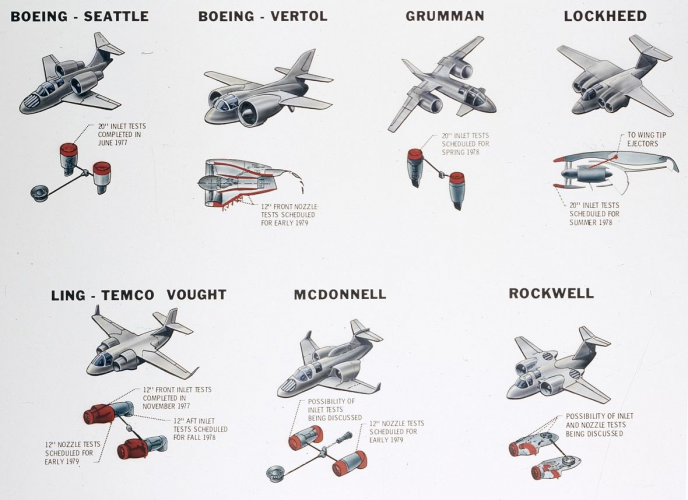
I loved the artists impression of a "1990s" vtol aircraft with its massive swiveling engines which look to have only one swiveling mounting point & god only knows what they`d do to the airflow over the wing as they began to swivel
It does look like it might well be based on the grumman concept.Looks like V/STOL Type A
A potential influence on the artist could be the US proposal for a Melbourne replacement? This was explored in the early '80s I believe but details haven't been easy to come by. Given the time period, perhaps V/STOL Type A was a part of this discussion? There are more details in the National Library of Australia but I try my best to avoid CanberraIt does look like it might well be based on the grumman concept.
That is rather surprising [To put it mildly]
I'd expect a mixed group of ~12-16 Harriers. Some ~8x SHARs for CAP and the anti-ship strike, the rest LMRTS for whichever land strikes happen.IOW a Big Call between an interceptor with secondary strike capability and a strike aircraft with dogfight capability but not necessarily optimised for the interceptor role. In the context of an ASW/escort group leader which is a nation's only carrier, and with a limited number of aircraft on the ship, I'd be biased towards the interceptor, quite frankly. That being said...
I suspect that number would be roughly 24 of each type in service.[1] There has to be a critical number beyond which having a mixture of types would start making sense, but one baby flat-top of the sort Australia would have been operating isn't enough to take that many to sea.
In my copy of Flying Stations it states that the RAN preferred the AV-8B (or rather what became the AV-8B as the platform was in development at the time) as the weapons fielded were more in line with Australian stocks (and planned procurement) and because of what the Harrier II Night Attack became (expanded payload particularly). The intention was not to operate a mixed fleet. Frankly it seems the British aircraft were not viewed favourably by the RAN as a whole, although the V/STOL technology itself was well regarded.Pardon me digging up ancient history.
I'd expect a mixed group of ~12-16 Harriers. Some ~8x SHARs for CAP and the anti-ship strike, the rest LMRTS for whichever land strikes happen.
With some creativity in terms of getting the LMRTS versions set up to be able to fire Sea Eagles and possibly with the Harrier 2 wing (either UK or US, my preference being the UK 8-hardpoint wing, not the US wing).
I suspect that number would be roughly 24 of each type in service.
Interesting.In my copy of Flying Stations it states that the RAN preferred the AV-8B (or rather what became the AV-8B as the platform was in development at the time) as the weapons fielded were more in line with Australian stocks (and planned procurement) and because of what the Harrier II Night Attack became (expanded payload particularly). The intention was not to operate a mixed fleet. Frankly it seems the British aircraft were not viewed favourably by the RAN as a whole, although the V/STOL technology itself was well regarded.

I wonder, how much a new Invincible-class carrier would cost in 1980s, assuming that RAN would munster political support to fund it? They would likely order one without Sea Dart system, so it wouls be a bit cheaper than RN ones.Ultimately the Falklands war, the Katter committee and various other political machinations sadly brought to a close the fixed wing naval aviation era. Even after the decommissioning of Melbourne Fleet Air Arm aircrew, air traffic controllers, and sailors continued supporting land based operations overseas, including in the Sinai until 1983 when the aircraft were completely withdrawn from service.
Far too much, the option was rejected outright in 1979. The selected options where:I wonder, how much a new Invincible-class carrier would cost in 1980s, assuming that RAN would munster political support to fund it? They would likely order one without Sea Dart system, so it wouls be a bit cheaper than RN ones.
I believe there was a Mk 13 armed Invincible discussed although this may have been for the Shah of Iran’s program and not the RANWith regards as to Sea Dart, I'm not so sure they would have deleted that system, despite the preference at the time for US systems.
It would increase the cost significantly, adding a unique system to buy ammo and spare parts for. Removing Sea Dart and installing Mk-13 GMLS (or even Mk-26) for SM-1MR would be much more practical.With regards as to Sea Dart, I'm not so sure they would have deleted that system, despite the preference at the time for US systems.
Yes, I could see the Mk 26 being possibly adopted there.It would increase the cost significantly, adding a unique system to buy ammo and spare parts for. Removing Sea Dart and installing Mk-13 GMLS (or even Mk-26) for SM-1MR would be much more practical.
Take all SHARs. Fit a laser ranger/seeker/designator pod on a hardpoint one side and a jamming pod on the other to balance it.Some ~8x SHARs for CAP and the anti-ship strike, the rest LMRTS for whichever land strikes happen.
(or even Mk-26)
I believe this is unlikely. At the time we operated three Mk 13 armed Perth class DDGs and we had planned to procure Mk 13 armed Light Destroyers. This program was subsequently replaced by the Mk 13 armed Adelaide class FFGs. Introducing a second launcher type would've been contrary to practice at the time, particularly given we did not require our launchers to fire ASROC (we used Ikara instead) and Mk13 had better magazine densityYes, I could see the Mk 26 being possibly adopted there.
Which laser targeting pod was integrated on the SHAR?Take all SHARs. Fit a laser ranger/seeker/designator pod on a hardpoint one side and a jamming pod on the other to balance it.
Agree with your assumption, it would be simpler & cheaper to install a pair of Mk-13 GMLS, than adapt Mk-26 (which is a new type, not standard for RAN).I believe this is unlikely. At the time we operated three Mk 13 armed Perth class DDGs and we had planned to procure Mk 13 armed Light Destroyers. This program was subsequently replaced by the Mk 13 armed Adelaide class FFGs. Introducing a second launcher type would've been contrary to practice at the time, particularly given we did not require our launchers to fire ASROC (we used Ikara instead) and Mk13 had better magazine density
IRL I don't know, but since we're already in alternative-history territory it can't be that hard to do.Which laser targeting pod was integrated on the SHAR?
Also, wasn't the Jammer pod integrated into a gun pod in place of the gun? I was contemplating sticking a Laser pod into one gun pod.
IIRC the Radar nose loses the built-in FLIR).