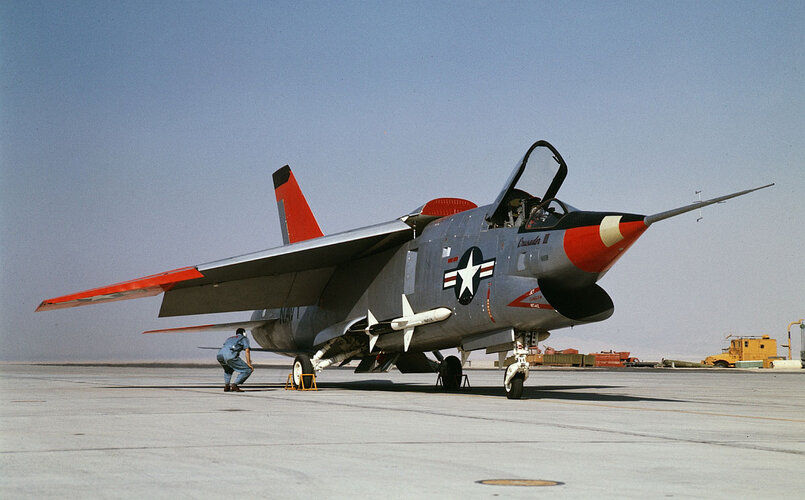
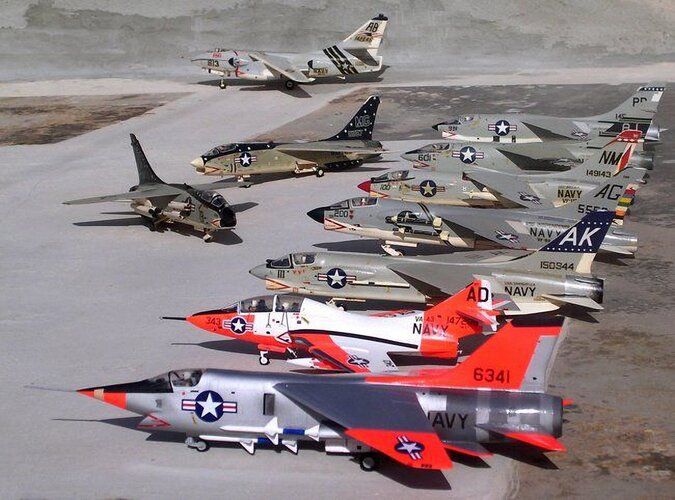
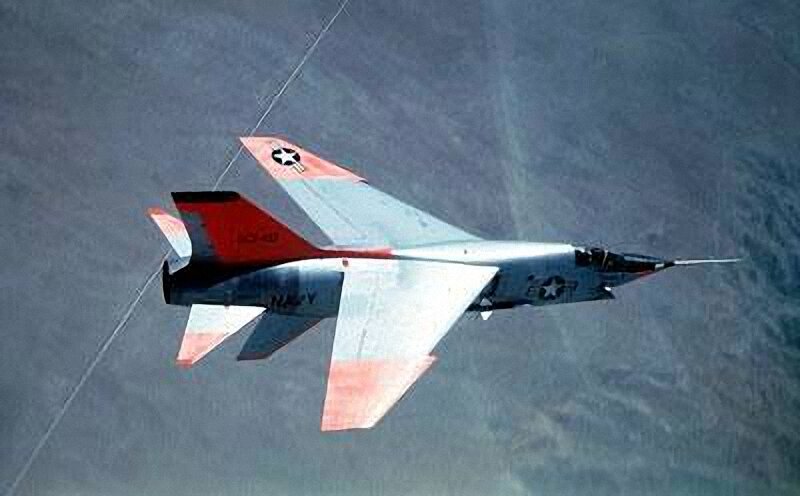
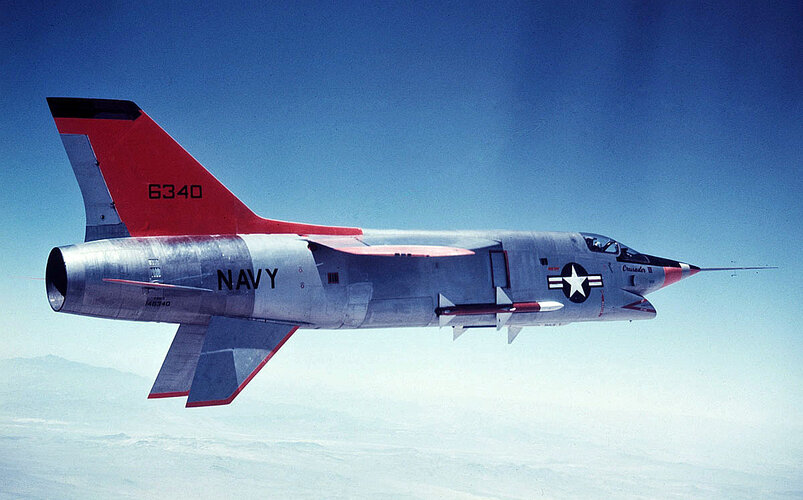
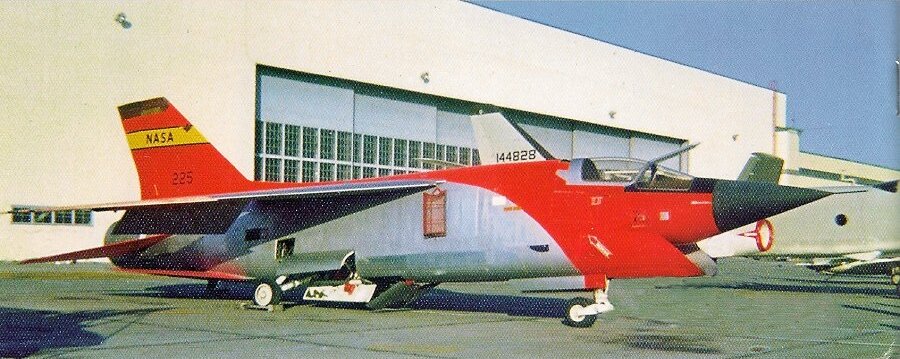
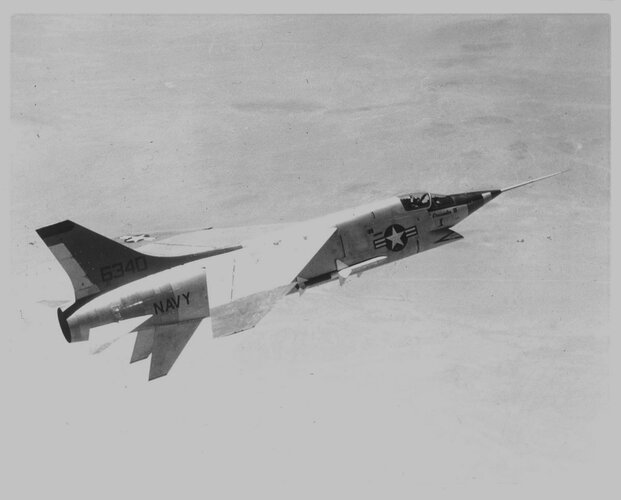
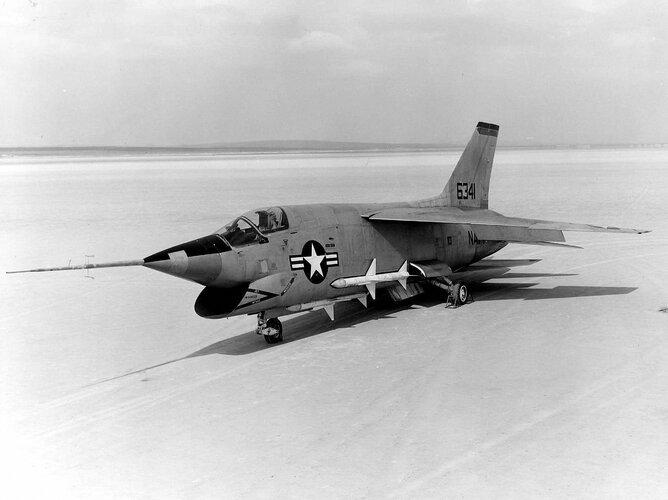
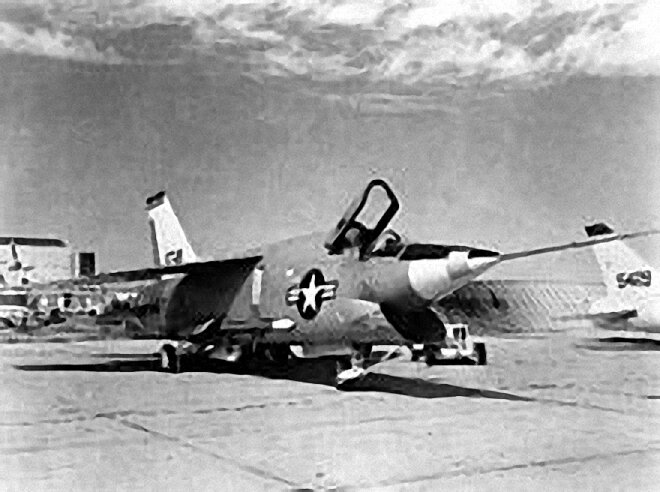
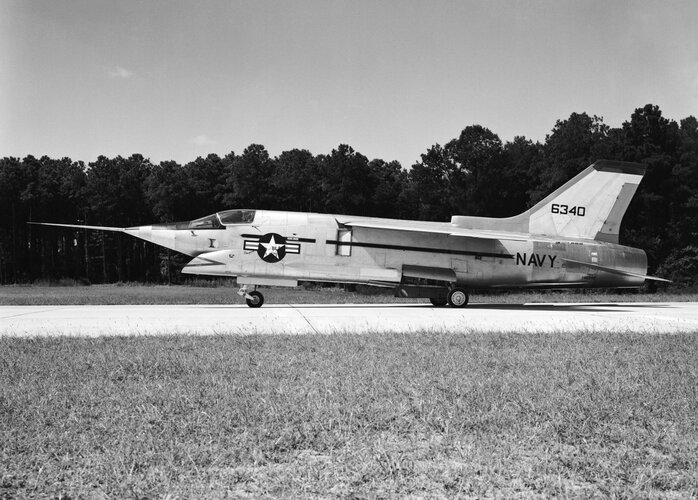
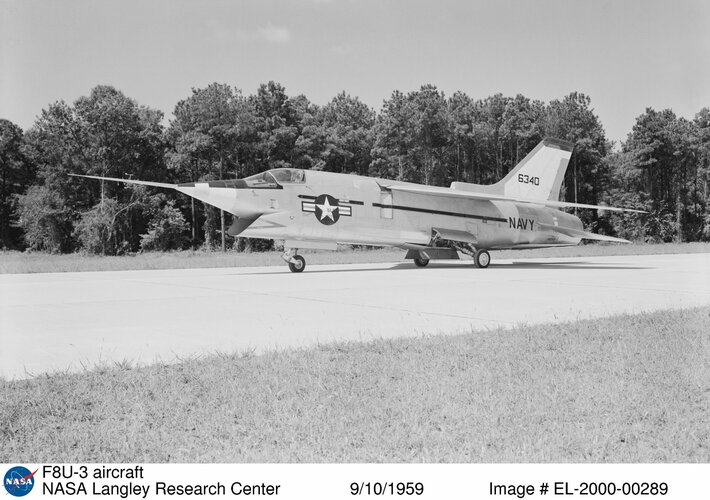
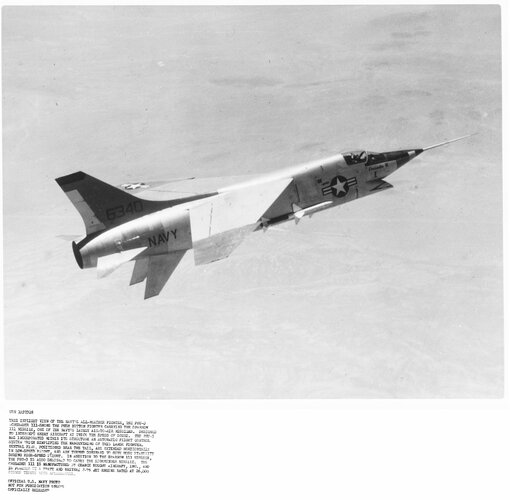
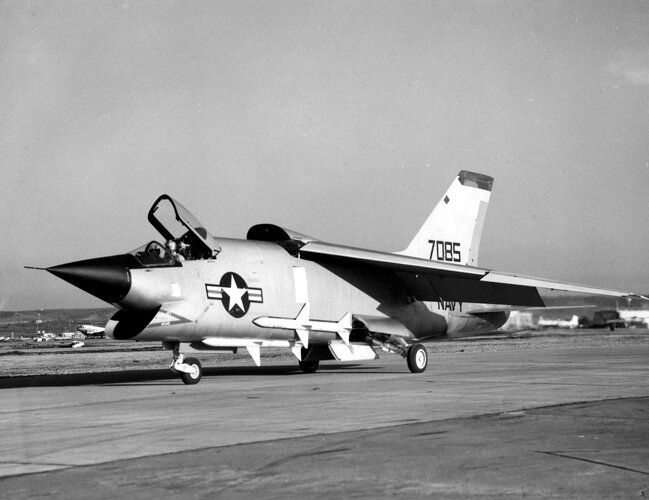
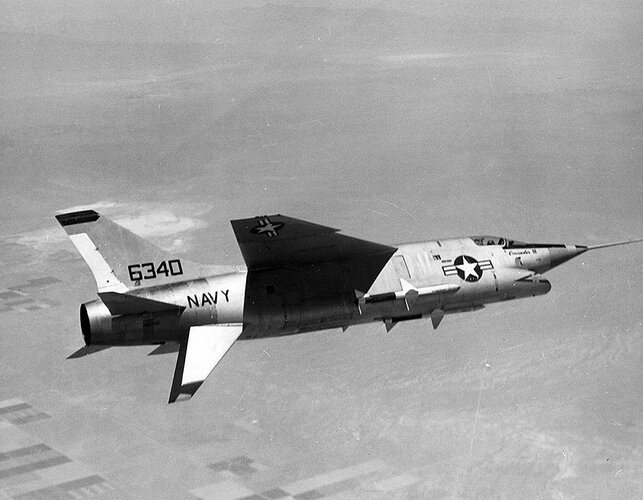
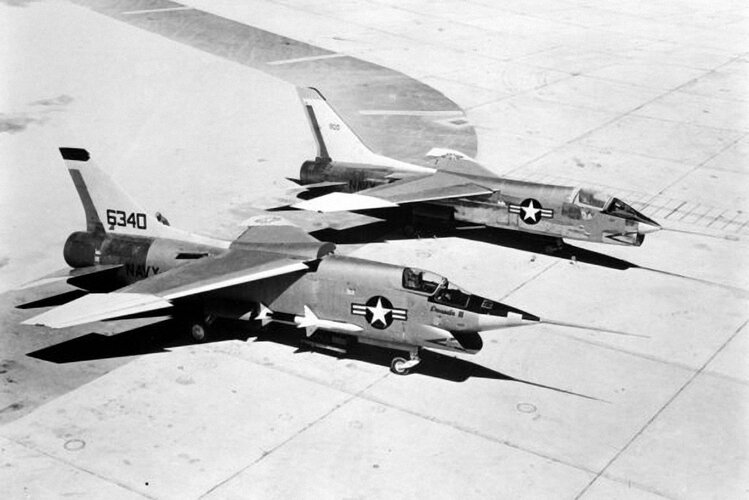
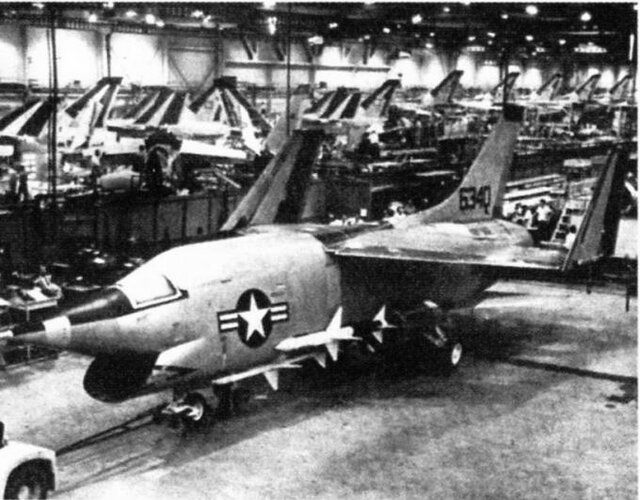
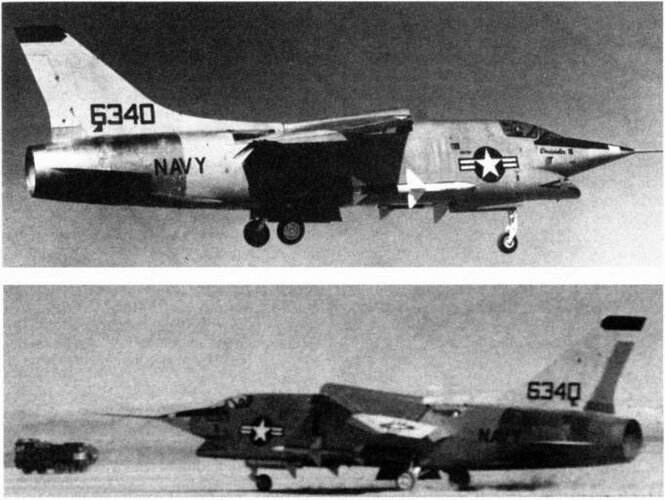
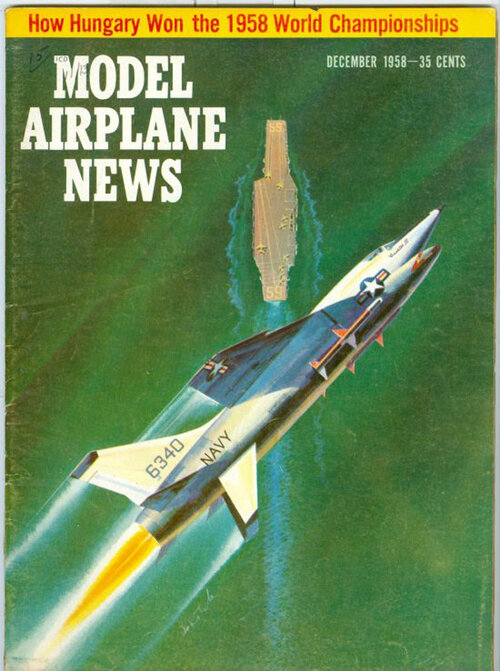
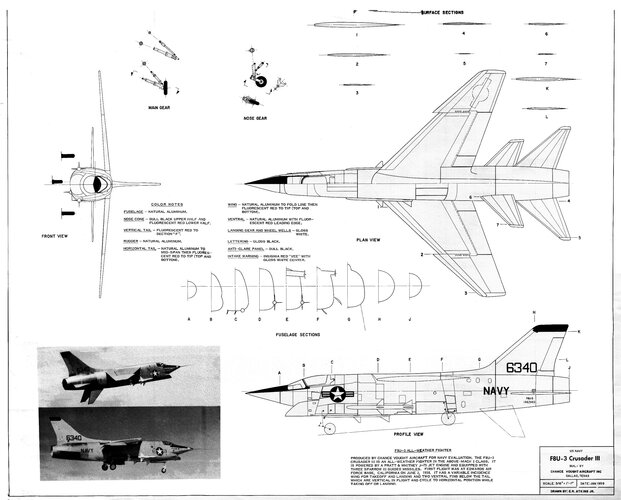
The F4H was intended to be flown from Essex-class carriers and was carrier-qualified for them. However, the support facility/spares requirements resulted in Phantoms only being assigned to Midway-class and larger carriers. Circa 1965, Crusader squadrons were only assigned to Essex-class air groups for basically the same reason.
 
Last edited:
Is there any artwork actually showing the proposed production nose, with IRST and the slightly larger radome?
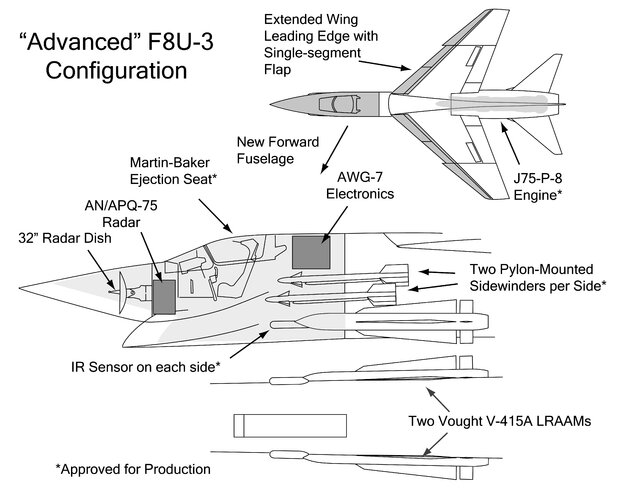
Note that the radome isn't actually larger. As explained in this book (one of my favorites, for what it's worth), the Advanced Crusader design moved the radars electronics behind the cockpit from in front of the cockpit. This allowed sliding the radar back in the radome, allowing for a larger radome.

By the way, the V-415A missiles were Vought's submission for the competition won by the Bendix Eagle, which was to arm the F6D Missileer. Which is why I think of this version of the F8U-3 as a proto-Tomcat* since it is a very capable dogfighter with a pair (or perhaps more with wing pylons) of Phoenix ranged missiles.

*Or more accurately, an F-15 Eagle with Phoenix, though the electronics probably aren't up to that kind of single crew capability yet.
 
The F4H was intended to be flown from Essex-class carriers and was carrier-qualified for them. However, the support facility/spares requirements resulted in Phantoms only being assigned to Midway-class and larger carriers. Circa 1965, Crusader squadrons were only assigned to Essex-class air groups for basically the same reason.
Do you have any idea if the F8U-3's support and spares requirements would also have precluded their use on Essex's?

I'm just wondering about alternative Essex Air Wings with some combination of Missileers, F8U-3's, and Super Tigers for the fighter components.
 
Last edited:
I'm a bit disappointed they couldn't squeeze in a fourth Sparrow. And how did they consciously abandon an F-8 trademark, the Y-rack? I also wonder what the two-seat model could have achieved with a dedicated RIO.

I kind of got the impression a single seater using SARH missiles was a bit too much to use without a largely automated weapons suite at the time. F-15A pulled if off, but not as well as either F-4 or F-14 with the RIO.
 
I'm a bit disappointed they couldn't squeeze in a fourth Sparrow. And how did they consciously abandon an F-8 trademark, the Y-rack? I also wonder what the two-seat model could have achieved with a dedicated RIO.

I kind of got the impression a single seater using SARH missiles was a bit too much to use without a largely automated weapons suite at the time. F-15A pulled if off, but not as well as either F-4 or F-14 with the RIO.

The F8U3 did have an amazingly automated fire control system for its day. There's a video linked here somewhere, I think.
 
The F8U3 did have an amazingly automated fire control system for its day. There's a video linked here somewhere, I think.
Yeah, IIRC, the Crusader III FCS was basically point and click. The pilot would select a target on his screen, and the computer would keep the radar locked on it as long as the pilot kept the targeted aircraft within 60° of the nose. I'm just not sure how well it would have functioned in practice given the reliability of the electronics of the day. Particularly when operating off of a carrier.

The autopilot was also highly advanced for its time. Once the pilot reached his patrol area, he could set the autopilot to maintain speed, heading and altitude while he went "heads down" in the cockpit to work the radar. In what was almost a novelty at the time, the autopilot could even turn the plane to a new heading just by adjusting the heading select knob in the cockpit. For reference, late 50s/early 60s autopilots, in general, couldn't turn. They could only hold the aircraft on the heading it was on when it the autopilot was engaged. To make turns, the pilot would have to manually turn the aircraft, then re-engage the autopilot once he was stable on his new course. So having an autopilot that could actually turn your plane for you was a game changer.

 
Yeah, IIRC, the Crusader III FCS was basically point and click. The pilot would select a target on his screen, and the computer would keep the radar locked on it as long as the pilot kept the targeted aircraft within 60° of the nose. I'm just not sure how well it would have functioned in practice given the reliability of the electronics of the day. Particularly when operating off of a carrier.

The autopilot was also highly advanced for its time. Once the pilot reached his patrol area, he could set the autopilot to maintain speed, heading and altitude while he went "heads down" in the cockpit to work the radar. In what was almost a novelty at the time, the autopilot could even turn the plane to a new heading just by adjusting the heading select knob in the cockpit. For reference, late 50s/early 60s autopilots, in general, couldn't turn. They could only hold the aircraft on the heading it was on when it the autopilot was engaged. To make turns, the pilot would have to manually turn the aircraft, then re-engage the autopilot once he was stable on his new course. So having an autopilot that could actually turn your plane for you was a game changer.
Still think the Navy would have been a LOT happier with a 2-seater, plus that fancy AWG-7 and autopilot.
 
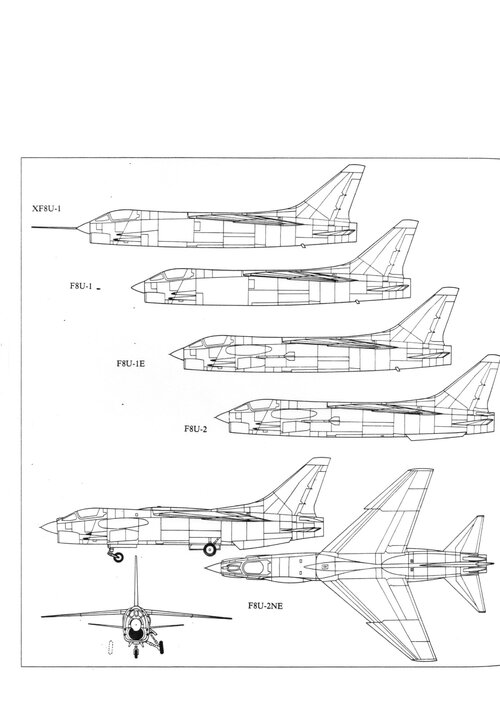
question
if the F-8 is the Crusader 1
and the XF8U-3 is the Crusader 3

what was the Crusader 2?
 
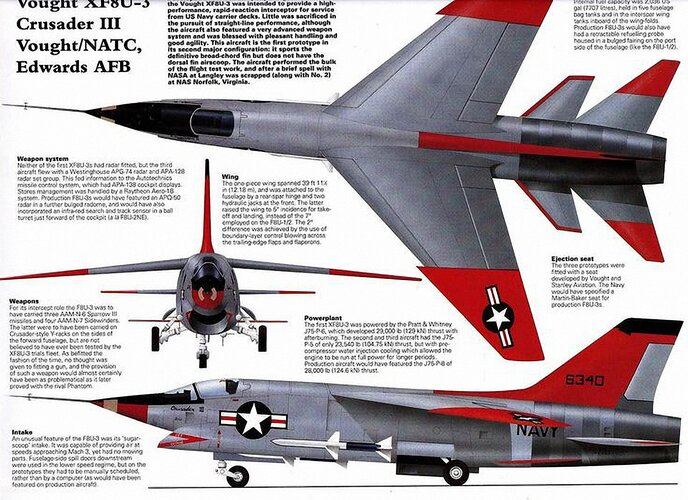
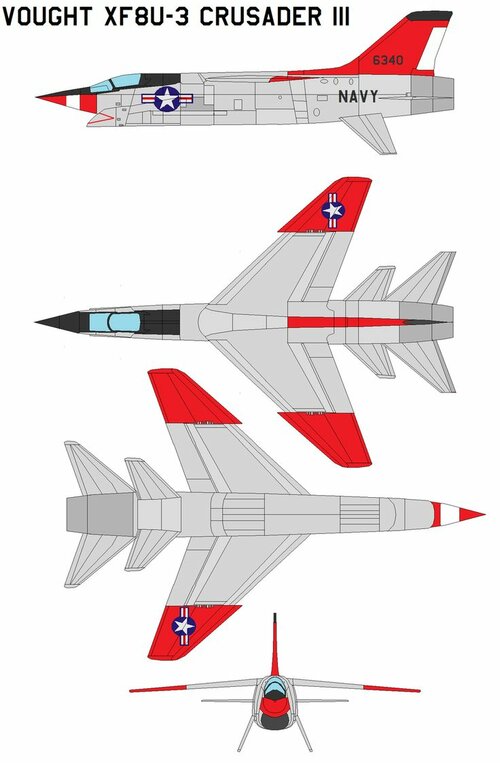
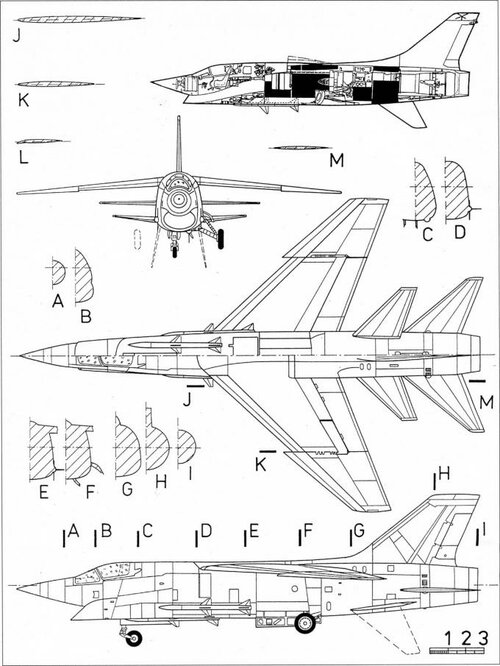
The line art implies the tilting wing was installed. I've yet to see a picture using it.

XF-8U was the pinnacle of Crusader development. I always felt it achieved what the British wanted from their EE Lightning program.
 
The line art implies the tilting wing was installed. I've yet to see a picture using it.

XF-8U was the pinnacle of Crusader development. I always felt it achieved what the British wanted from their EE Lightning program.
Sort of, if tied in the datalink, then GCI or CCI would direct the intercept automatically until the aircraft's radar could pick up the target.
 
Still think the Navy would have been a LOT happier with a 2-seater, plus that fancy AWG-7 and autopilot.
Yeah, no argument. Odds are, if the plane had been ordered, it almost certainly would have been reordered with a RIO almost immediately (or at least within a year after entering service and the FCS started getting beat up with carrier launches and traps
 
Hi
 

Attachments

  • img570.jpg
    img570.jpg
    159.8 KB · Views: 280
  • img583.jpg
    img583.jpg
    406.2 KB · Views: 290
  • img589.jpg
    img589.jpg
    803 KB · Views: 282
  • img590.jpg
    img590.jpg
    819.8 KB · Views: 214
  • img591.jpg
    img591.jpg
    881.3 KB · Views: 200
  • img593.jpg
    img593.jpg
    848.7 KB · Views: 205
  • img595.jpg
    img595.jpg
    752.6 KB · Views: 218
  • img597.jpg
    img597.jpg
    739.9 KB · Views: 228
  • img602.jpg
    img602.jpg
    883 KB · Views: 228
  • img603.jpg
    img603.jpg
    902.8 KB · Views: 309
Part of my moved comment was directly about the Crusader III, going to somewhat repost it (modified/paraphrased).

From post 175.
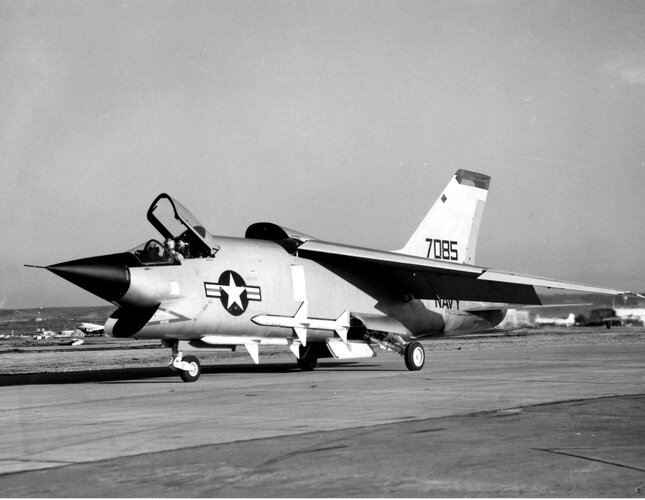
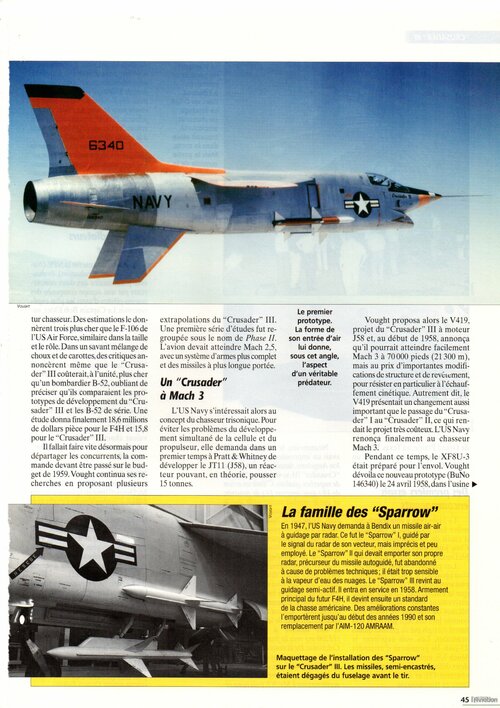
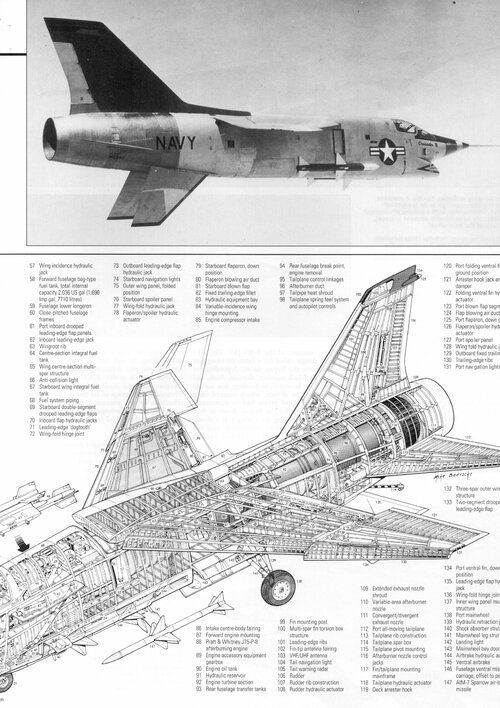
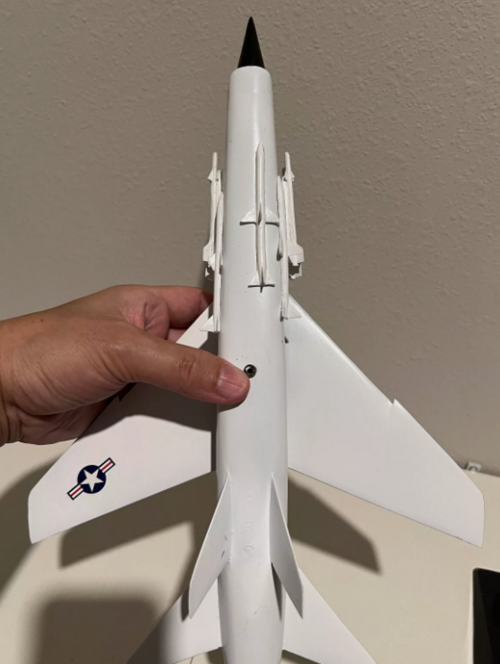
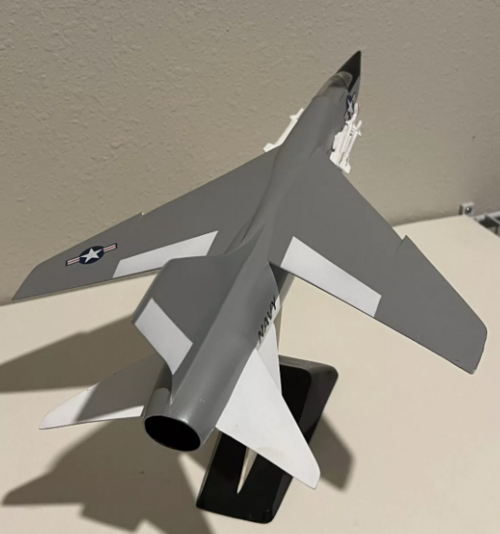
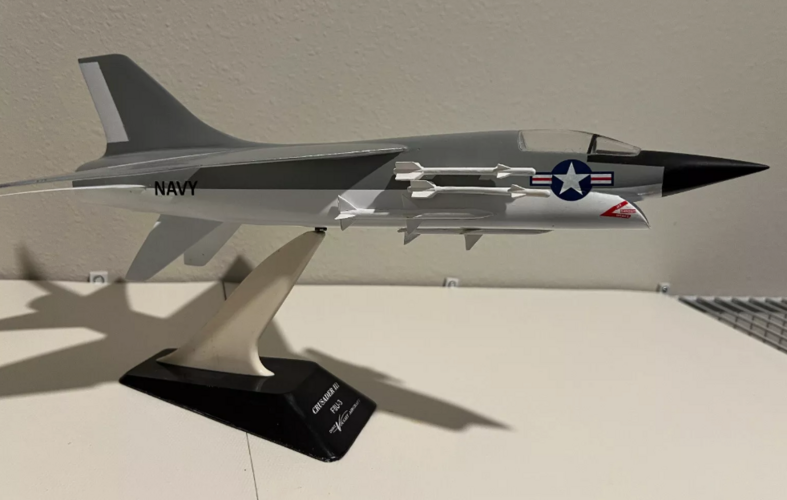
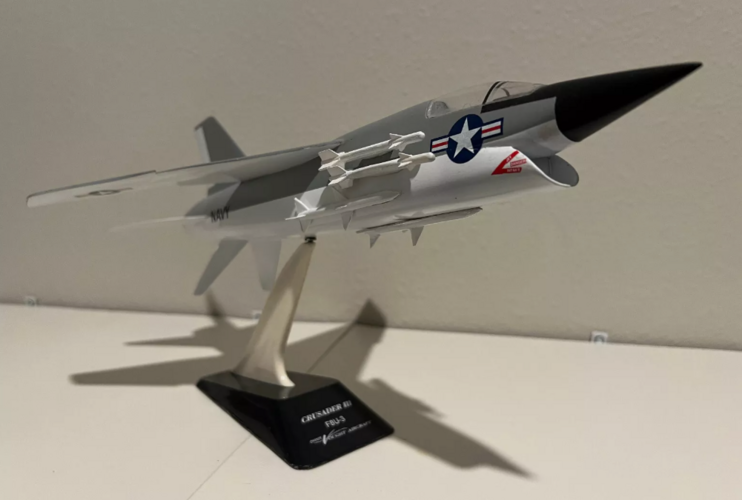
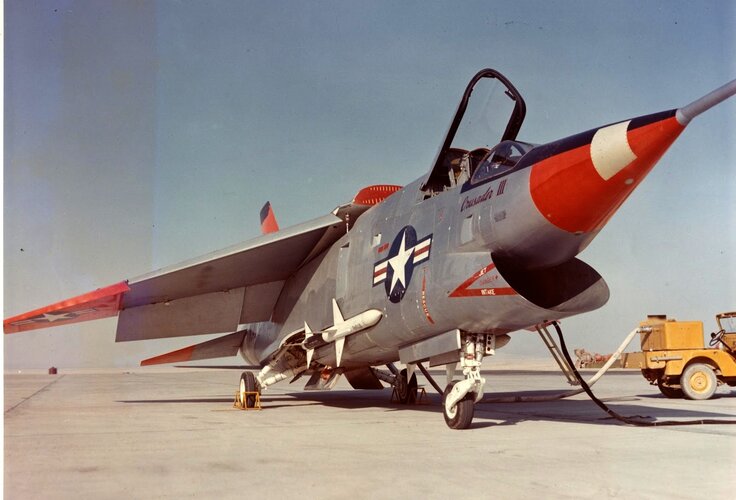
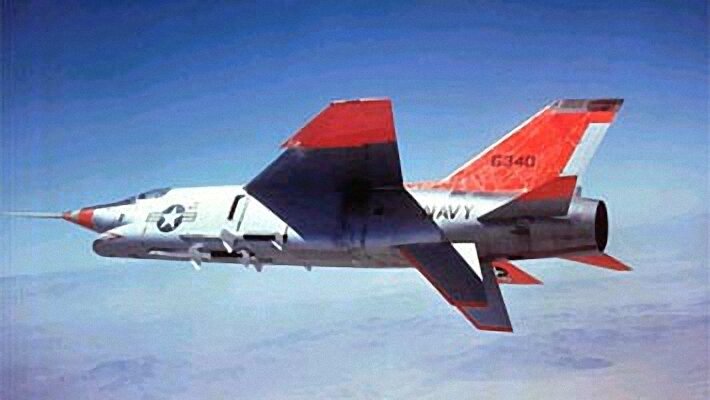
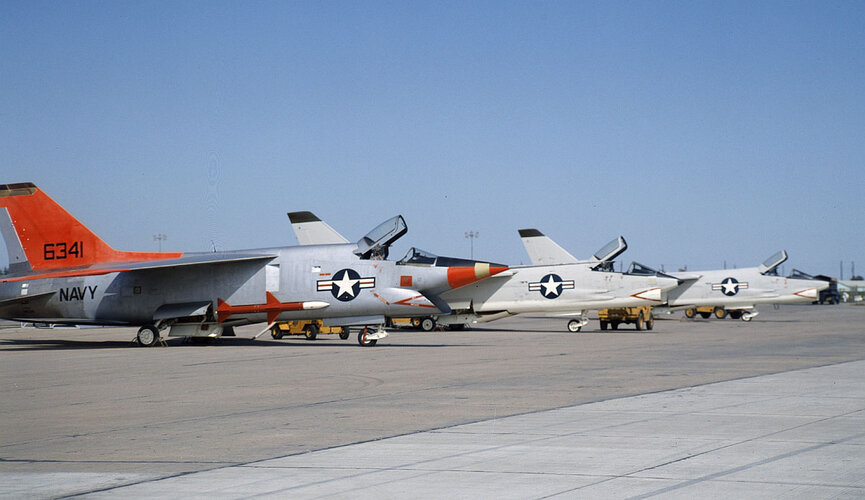
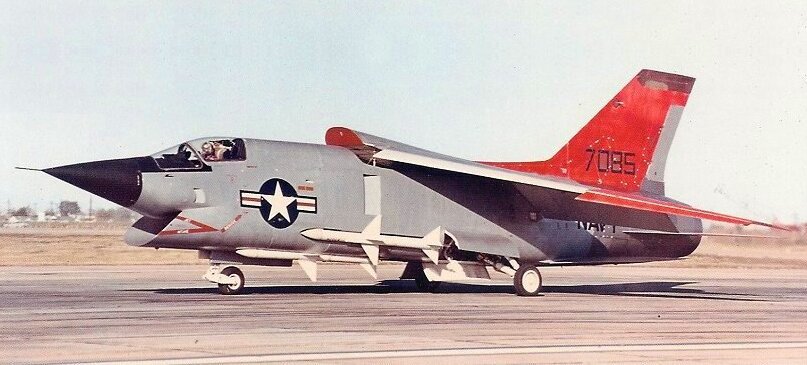
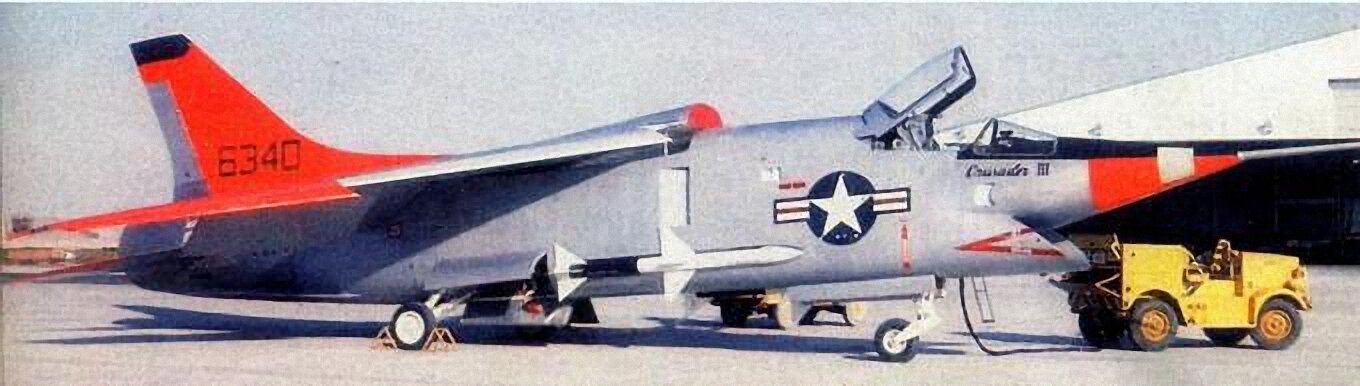
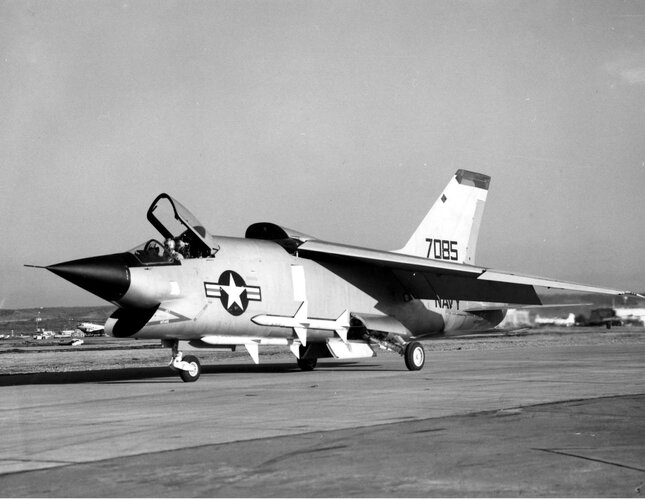
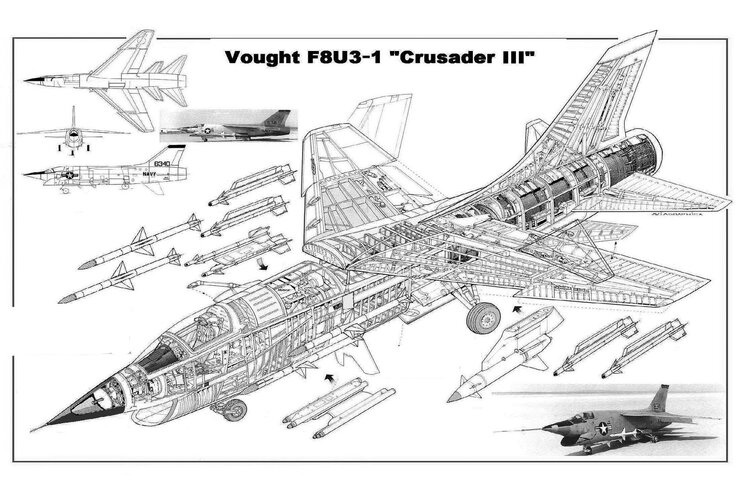
That looks like the belly AIM-7 is not on the centerline, so there could be space for a fourth Sparrow. So now it's conceivable that the Crusader III could actually carry the same missile load as a Phantom with Y-racks on the cheeks.

In that picture, there's a piece that looks like a second Sparrow nose on the belly. I'm wondering if that was an IRST or long-range camera system?
 
I'm a bit disappointed they couldn't squeeze in a fourth Sparrow. And how did they consciously abandon an F-8 trademark, the Y-rack? I also wonder what the two-seat model could have achieved with a dedicated RIO.

I kind of got the impression a single seater using SARH missiles was a bit too much to use without a largely automated weapons suite at the time. F-15A pulled if off, but not as well as either F-4 or F-14 with the RIO.
Well that air enthusiasts article posted previously says Vought did do engineering work on the fourth sparrow but it apparently hampered the plane so badly that vought went back and completely re did the navys Interceptor study inorder to show (aka justify) that plane's would only be able to launch 3 sparrows in any fight do to its semi active radar mode of operations (fire, track,fire, track, fire, track, out of fule according to vought ignoring the sparrows issues). Consdering this is the same article that clames the cursader 3 could make it to mock 2.9 once the cockpit windows were reinforced needless to say I am dubious on this explanation.
 
Well that air enthusiasts article posted previously says Vought did do engineering work on the fourth sparrow but it apparently hampered the plane so badly that vought went back and completely re did the navys Interceptor study inorder to show (aka justify) that plane's would only be able to launch 3 sparrows in any fight do to its semi active radar mode of operations (fire, track,fire, track, fire, track, out of fule according to vought ignoring the sparrows issues). Consdering this is the same article that clames the cursader 3 could make it to mock 2.9 once the cockpit windows were reinforced needless to say I am dubious on this explanation.
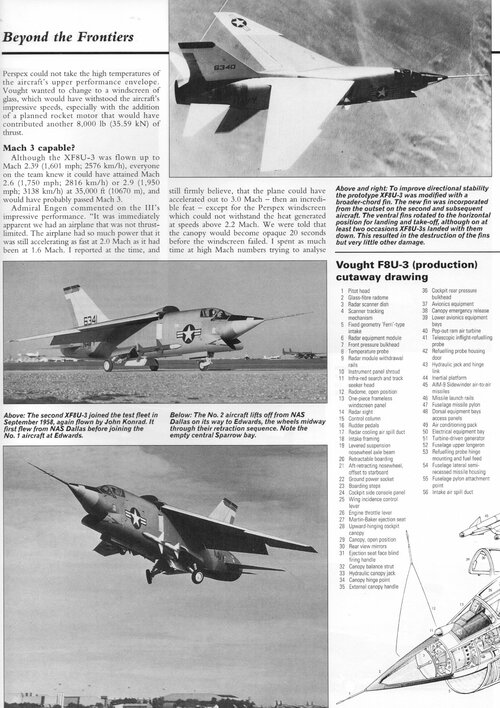
While I don't know about the rest of it, I don't doubt the speed claim in the slightest. During flight testing, the Crusader III reached, I believe, Mach 2.25 and it was still accelerating fairly rapidly. AIUI, Vought extrapolated those numbers out and determined that the aircraft would be, in theory anyway, able to reach between Mach 2.7 and 2.9 once a windshield that could withstand the extreme heat at those speeds was installed.
 
While I don't know about the rest of it, I don't doubt the speed claim in the slightest. During flight testing, the Crusader III reached, I believe, Mach 2.25 and it was still accelerating fairly rapidly. AIUI, Vought extrapolated those numbers out and determined that the aircraft would be, in theory anyway, able to reach between Mach 2.7 and 2.9 once a windshield that could withstand the extreme heat at those speeds was installed.
If that's the case then I don't know how the hell adding one missile (In an area that has a buch of other missiles to boot) could degrade a planes proformance so much that a company is welling to break the compition rules (I'm pretty sure the requirement was for 4 sparrows) inorder to avoid it. Hell I wouldn't be surprised if the redoing the study cost more then adding the stupid missile to the plane would have.
 
If that's the case then I don't know how the hell adding one missile (In an area that has a buch of other missiles to boot) could degrade a planes proformance so much that a company is welling to break the compition rules (I'm pretty sure the requirement was for 4 sparrows) inorder to avoid it. Hell I wouldn't be surprised if the redoing the study cost more then adding the stupid missile to the plane would have.

Accelerating to high speed in a straight line is quite different from getting to a patrol area, engaging in combat, breaking off combat, and returning to the ship. Lots more maneuvers in the latter, and a need for a fuel reserve for contingencies.
 

Attachments

  • Screenshot (12176).png
    Screenshot (12176).png
    155.3 KB · Views: 68
  • Screenshot (12175).png
    Screenshot (12175).png
    472.7 KB · Views: 51
  • Screenshot (12174).png
    Screenshot (12174).png
    339.3 KB · Views: 55
  • Screenshot (12173).png
    Screenshot (12173).png
    568.9 KB · Views: 59
  • Screenshot (12172).png
    Screenshot (12172).png
    589.4 KB · Views: 61
  • Screenshot (12171).png
    Screenshot (12171).png
    539.1 KB · Views: 59
  • Screenshot (12170).png
    Screenshot (12170).png
    508.8 KB · Views: 60
I like it much better than the A-7 and F-8, or X-32 or Su-75 for that matter whose intakes more closely resemble its. I'd rename it Barracuda, because that's what the mouth looks like to me.

I also think it looks hungry and if I were in a Vietnamese MiG and saw that maw chasing me I might just eject. :D
 
Last edited:

Attachments

  • XF8U-3-01.jpg
    XF8U-3-01.jpg
    190.4 KB · Views: 175
  • XF8U-3-02.jpg
    XF8U-3-02.jpg
    220.2 KB · Views: 156
  • XF8U-3-03.jpg
    XF8U-3-03.jpg
    875.4 KB · Views: 156
  • XF8U-3-04.jpg
    XF8U-3-04.jpg
    230.1 KB · Views: 145
  • XF8U-3-05.jpg
    XF8U-3-05.jpg
    245.7 KB · Views: 126
  • XF8U-3-06.jpg
    XF8U-3-06.jpg
    667.1 KB · Views: 127
  • XF8U-3-07.jpg
    XF8U-3-07.jpg
    183.4 KB · Views: 122
  • XF8U-3-08.jpg
    XF8U-3-08.jpg
    133.5 KB · Views: 115
  • XF8U-3-09.jpg
    XF8U-3-09.jpg
    202.9 KB · Views: 109
  • XF8U-3-10.jpg
    XF8U-3-10.jpg
    373.5 KB · Views: 105
  • XF8U-3-11.jpg
    XF8U-3-11.jpg
    115.1 KB · Views: 116
  • XF8U-3-12.jpg
    XF8U-3-12.jpg
    179.2 KB · Views: 126

Attachments

  • XF8U-3-14.jpg
    XF8U-3-14.jpg
    206.9 KB · Views: 106
  • XF8U-3-13.jpg
    XF8U-3-13.jpg
    316.1 KB · Views: 121
  • XF8U-3-15.jpg
    XF8U-3-15.jpg
    311.1 KB · Views: 93
  • XF8U-3-16.jpg
    XF8U-3-16.jpg
    2.5 MB · Views: 100
  • XF8U-3-17.jpg
    XF8U-3-17.jpg
    213.1 KB · Views: 89
  • XF8U-3-18.jpg
    XF8U-3-18.jpg
    11.2 MB · Views: 93
  • XF8U-3-19.jpg
    XF8U-3-19.jpg
    326.1 KB · Views: 88
  • XF8U-3-20.jpg
    XF8U-3-20.jpg
    3.7 MB · Views: 88
  • XF8U-3-21.jpg
    XF8U-3-21.jpg
    220.8 KB · Views: 87
  • XF8U-3-22.jpg
    XF8U-3-22.jpg
    1.1 MB · Views: 85
  • XF8U-3-23.jpg
    XF8U-3-23.jpg
    511.6 KB · Views: 96
  • XF8U-3-24.jpg
    XF8U-3-24.jpg
    177.4 KB · Views: 89

Attachments

  • XF8U-3-25.jpg
    XF8U-3-25.jpg
    148.2 KB · Views: 85
  • XF8U-3-26.jpg
    XF8U-3-26.jpg
    135 KB · Views: 82
  • XF8U-3-27.jpg
    XF8U-3-27.jpg
    446.4 KB · Views: 89
  • XF8U-3-28.jpg
    XF8U-3-28.jpg
    63.3 KB · Views: 99
  • XF8U-3-29.jpg
    XF8U-3-29.jpg
    424.5 KB · Views: 127
  • XF8U-3-30.jpg
    XF8U-3-30.jpg
    1.3 MB · Views: 129
  • XF8U-3-31.jpg
    XF8U-3-31.jpg
    76 KB · Views: 149
  • XF8U-3-32.jpg
    XF8U-3-32.jpg
    93.4 KB · Views: 161
  • XF8U-3-33.jpg
    XF8U-3-33.jpg
    1.2 MB · Views: 170
  • XF8U-3-34.jpg
    XF8U-3-34.jpg
    423.8 KB · Views: 191
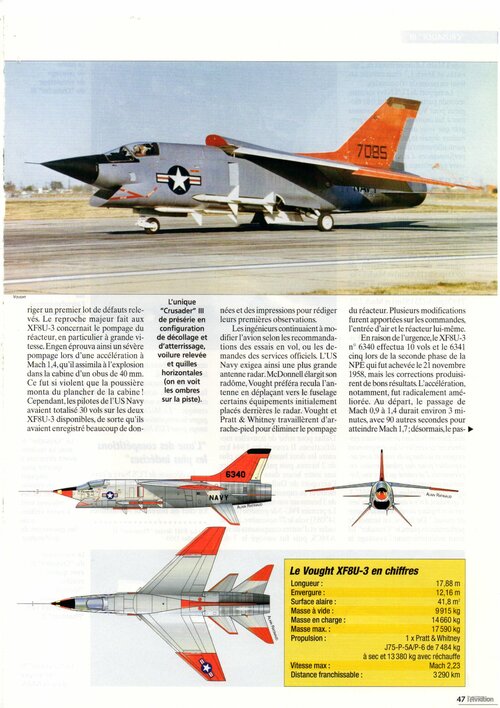
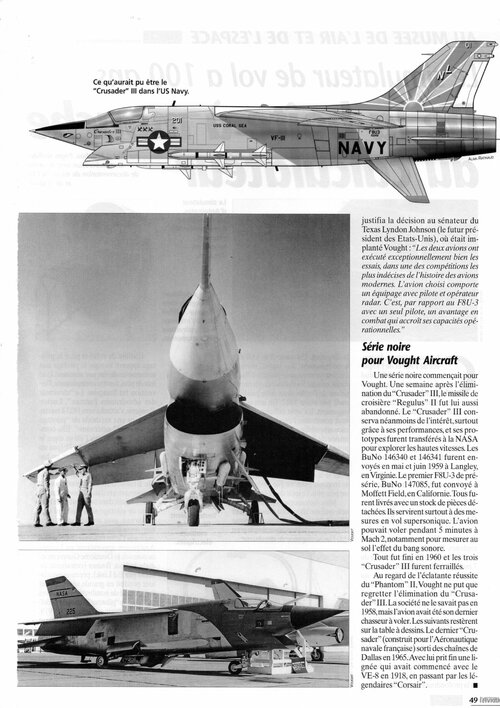
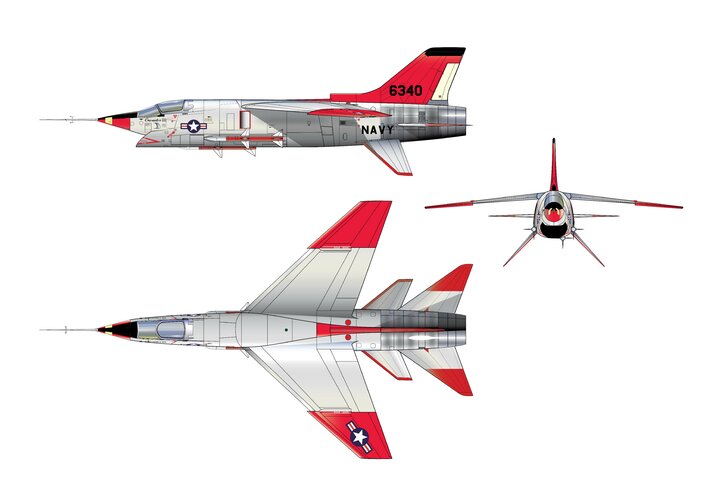
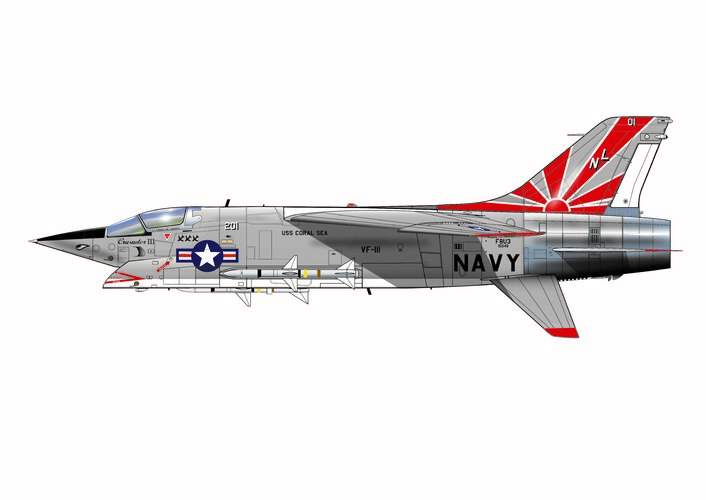
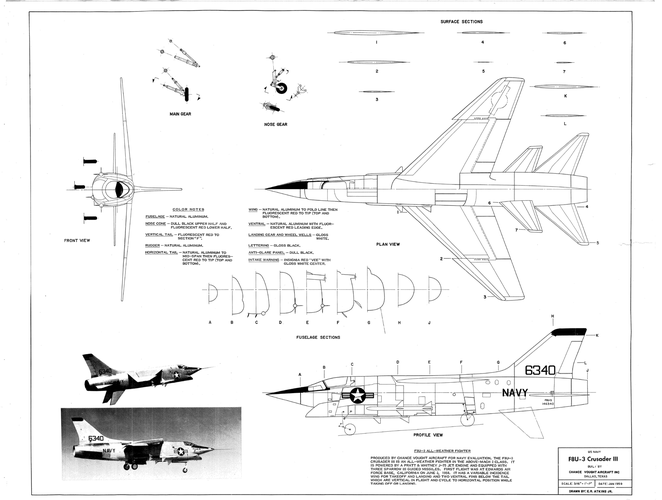
I post here the original files I made for this article (3 view plan and profile).
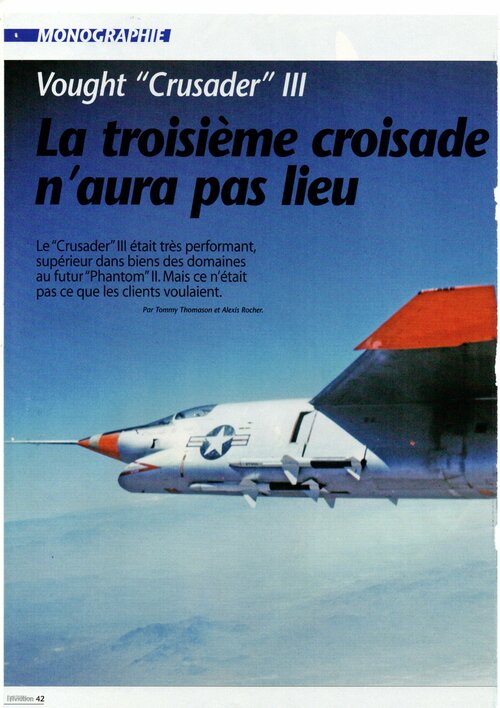
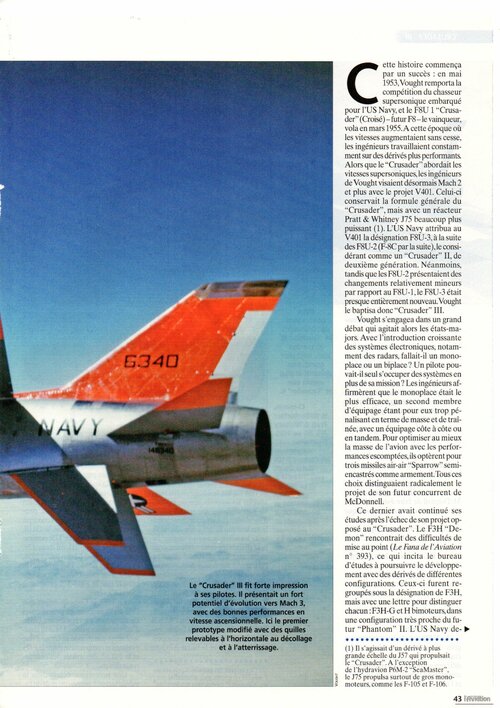
In case anyone asks, the article "Vought Crusader III - La troisième croisade n’aura pas lieu" by Tommy Thomason and Alexis Rocher was published in the French aviation magazine Le Fana de L'Aviation, January 2011 (494), on pages 42-49.
 
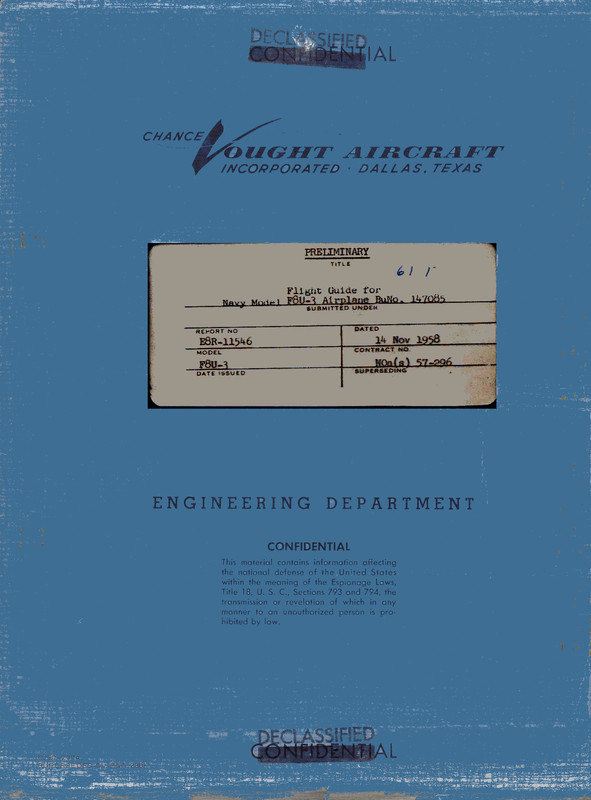
@Dew

Actually, I think I've read through that preliminary manual before. It's strange that some details don't seem to have been updated such as the landing weight was still listed as 26160 lb which was a figure cited in the Sept. 1957 program review, and that had creeped up to around 27650 lb. at the time of the Apr. 1958 program review (most of this data is courtesy of Tommy Thomason's book on the XF8U-3).
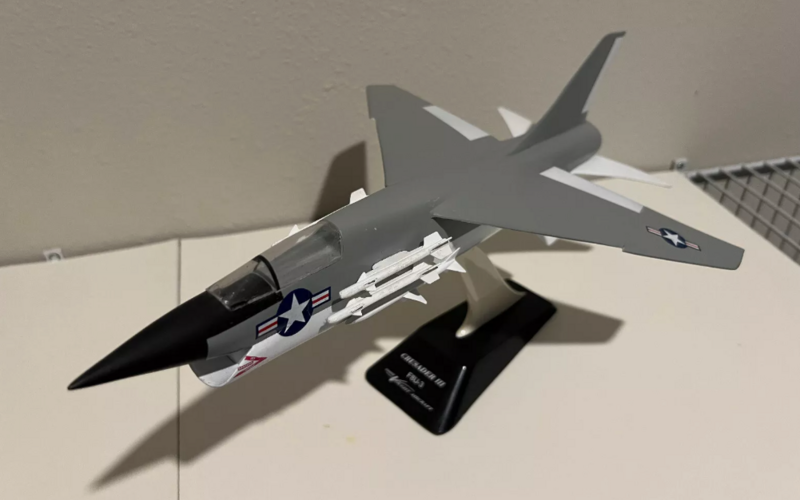
Provided I still have the data, I do remember extrapolating some rather rudimentary estimates of the plane's performance in comparison with the F-4 owing to data present on stall-speed. From what I remember: The first production models (BuNo. 147085) with the adjusted weights (39551 for design mission) was actually less maneuverable than the F-4B with the droops up and only someitmes moreso with them down (and part of this had to do with the fact that the F-4's performance was capped by nose-slicing motions owing to the tailfin being blanked by the fuselage at high AoA which didn't appear to affect the F8U-3).

The limitations I had were based around the fact that...
  1. I wasn't entirely able to figure out how the C/G would shift as fuel burned: So I just assumed a mid-CG estimate
  2. Peak turning rate was based on calculating stall-speeds: While not intrinsically unrealistic, the turning radius was based around the presumption that that peak-turning rate would be held throughout the whole turn which obviously is intrinsically unrealistic (it's unfortunately the result of being unable to figure out the rate at which speed would bleed off throughout the turn) but when I created the tables, I kind of assumed some useful information could be gained from it.
  3. I didn't have any real data to estimate how mach effects (i.e. around 0.85 to 0.95) would affect stall-speeds on the F8U-3: The F-4's would see stall-speeds go up by around 15 knots around 0.85, and I'm unsure how much that varies with supersonic aircraft in this speed-range.
  4. I don't really have any data on roll-rates for either aircraft, though I suspect the F8U-3 probably had a better roll-rate, which would have given it an advantage.
The F8U-3 could definitely do stuff the F-4B couldn't: It had a greater range on internal fuel, while it required an afterburner to get up to Mach 2, it could hold it without using afterburner, and it had a higher top-end speed.
 
Last edited:
The F8U-3 could definitely do stuff the F-4B couldn't: It had a greater range on internal fuel, while it required an afterburner to get up to Mach 2, it coudl hold it without using afterburner, and it hada higher top-end speed.
Mach 2 supercruise? Even the F-104 with the -19 couldn't do that. o_O
 

Similar threads

Back
Top Bottom