
You are using an out of date browser. It may not display this or other websites correctly.
You should upgrade or use an alternative browser.
You should upgrade or use an alternative browser.
Vought F-8 Projects

StraGen410
ACCESS: Restricted
That was an unusual modification beyond my understanding. Were they trying to develop tailess aircraft like B-2?I never saw like this before,F-8 Canard and addition features;

- Joined
- 17 May 2008
- Messages
- 702
- Reaction score
- 1,653
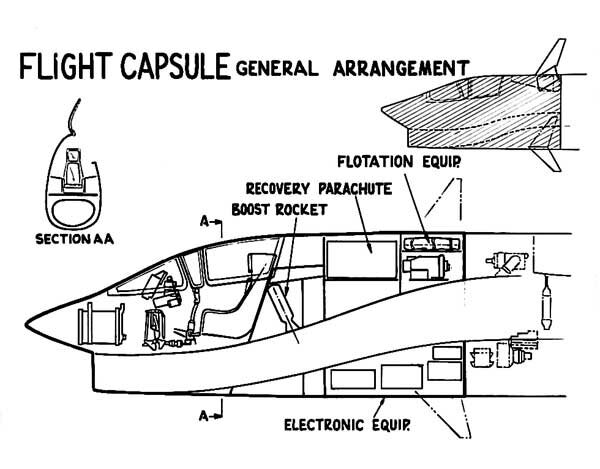
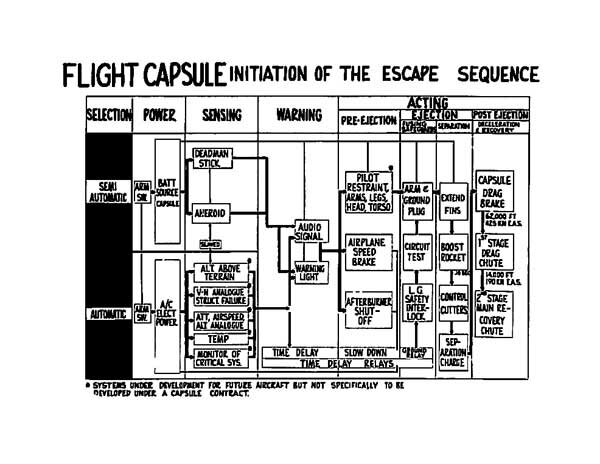
In a 1957 report, Vought engineers presented the problem as they saw it. "An urgent need, therefore exists for establishing a pilot environment escape and survival system compatible with the high performance ranges expected in the next era of manned flight. The performance rang to be considered requires speeds up to Mach 4.0, altitudes from sea level to 120,000 feet." In went on to state "...the pilot will be completely unburdened of such items as oxygen mask, survival gear, parachutes, "Mae Wests," exposure suits, associated fittings, tubing and couplings." ".... the full pressure suit and its attendance cumbersome, restrictive, sweat suit and claustrophobic effects will be eliminated." Attached are two illustrations I have not seen in this discussion. A general arrangement and the initiation sequence. Until I read the initiation sequence, I was unaware of an automatic function.
The testing would include:
1. Airdrops of the capsule from C-119 cargo aircraft
2. Three modified F8U-1 aircraft
3. Two of the three would be F8U-1KD drone configuration modified with the new canopy and non-eject able seat.
4. The first drone would be expended with an anthropomorphic dummy installed for the test
5. The second drone would be expended with a live chimpanzee
6. The third modified aircraft (F8U-1) would be expended with a live human occupant, only after all the other tests are successful!
bill
The testing would include:
1. Airdrops of the capsule from C-119 cargo aircraft
2. Three modified F8U-1 aircraft
3. Two of the three would be F8U-1KD drone configuration modified with the new canopy and non-eject able seat.
4. The first drone would be expended with an anthropomorphic dummy installed for the test
5. The second drone would be expended with a live chimpanzee
6. The third modified aircraft (F8U-1) would be expended with a live human occupant, only after all the other tests are successful!
bill
Attachments

alejandrogrossi
ACCESS: Secret
- Joined
- 20 September 2019
- Messages
- 298
- Reaction score
- 530
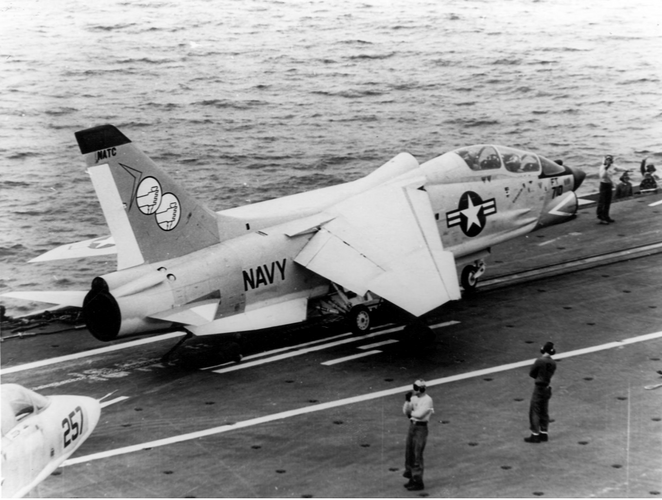
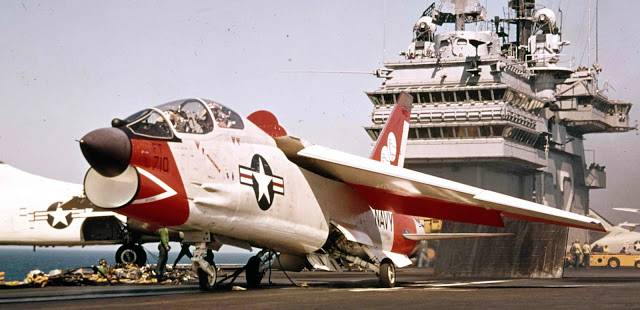
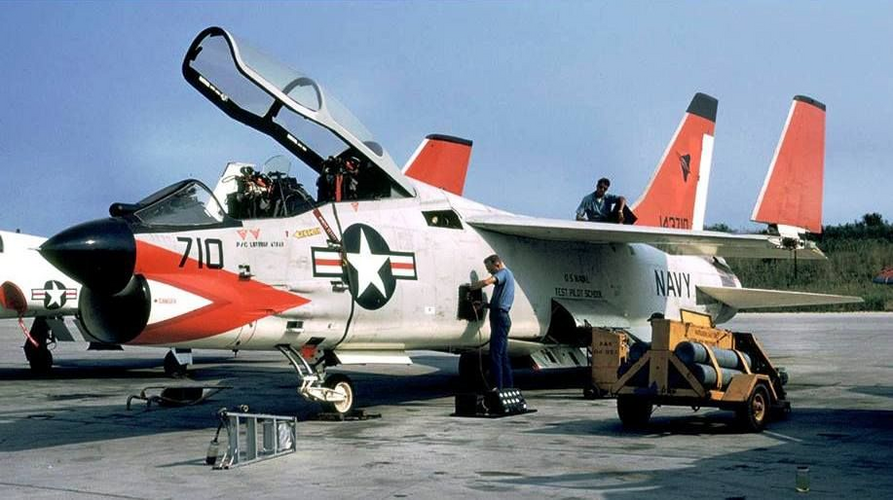
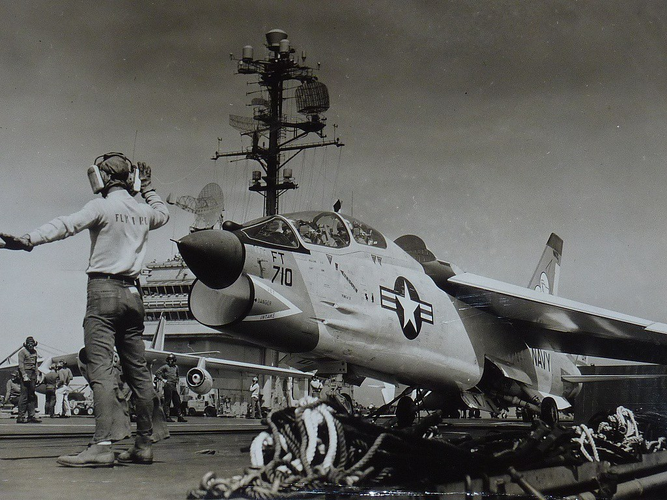
LTV "Crusader Versatility" two-seat trainer concept artwork lithograph found on eBay.
URL:


1635yankee
Recovering aeronautical engineer
- Joined
- 18 August 2020
- Messages
- 642
- Reaction score
- 966
Yes. See https://ntrs.nasa.gov/api/citations/19770084252/downloads/19770084252.pdfExcuse my ignorance, but did the Supercritical wing F-8 go supersonic or was it transonic?
Regards
Pioneer
So there were two proposals for a J-79 crusader (IF-8 / V-1000) ???
The Crusader is well known for its brilliant performances over Vietnam. At a time, it was the only valuable fighter in the american arsenal (the Phantom has its difficulties, the F-104 was a turkey. what else ?)
Now, this was achieved with the old and heavy J-57 engine...
I compared the J-57 with the J-79 some weeks ago (on the whatif forum) .
Just wanted to say that the J-57 was 2300 kg and 6.20 m long. Diameter in 1.15m
On the other hand, the J-79 was only 1600 kg and...5 m long. Diameter = 1.05 m !
For a roughly equal thrust(7800 kgp or so). Can you imagine the benefits of changing a J-57 for a J-79 ?
This plane would have been ideal for the Essex carriers, which were too small for Phantoms (I mean, J-79 powered variants. Americanised spey Phantoms were proposed for use on... small carriers. See what I mean ?
I red that in Vietnam air protection of smaller carrier was assumed by Skyhawks with AIM-9 ???
I thought, too that the V-1000 was a proposal from the late 50's. Hmmm there's a cool alternate world to imagine, in which Vought sell the Crusader III to USAF, the
IF-8 and V-1000 are produced until 1972 for USN and Foreign customers (including navies of countries such as Brazil, France, GB...).
Attachments

- Joined
- 3 June 2011
- Messages
- 20,030
- Reaction score
- 17,230
Looks like F-105 intakes.My first thought is that the intake is going to have some severe distortion due to the sharpness of the bends to get to the forward face of the engine.
- Joined
- 17 May 2008
- Messages
- 702
- Reaction score
- 1,653
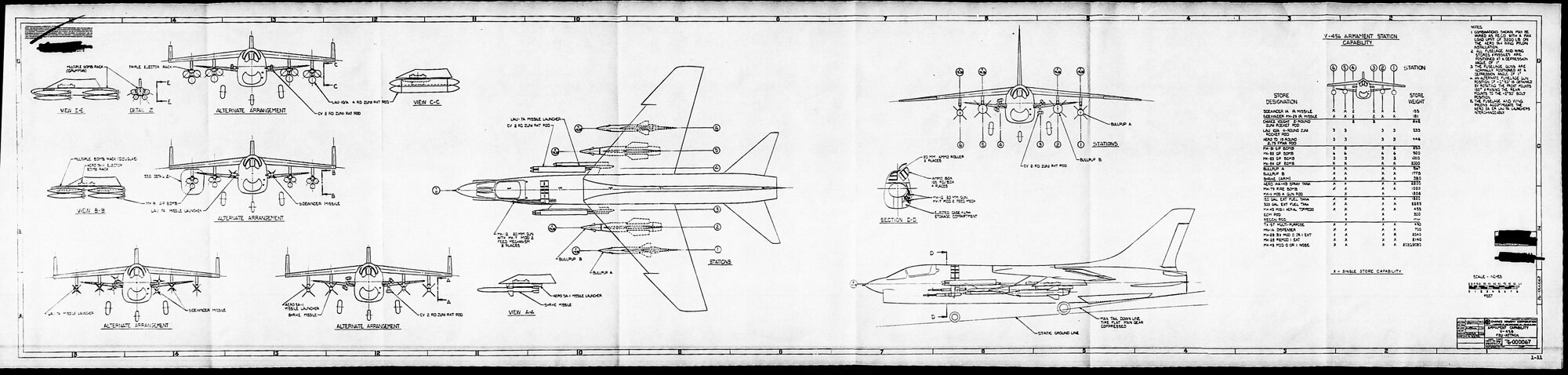
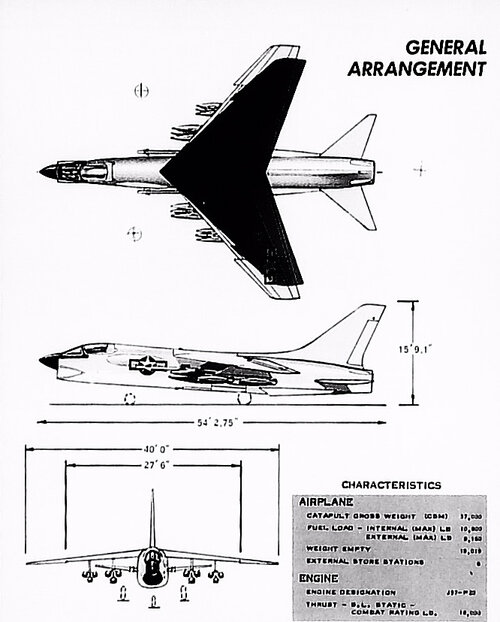
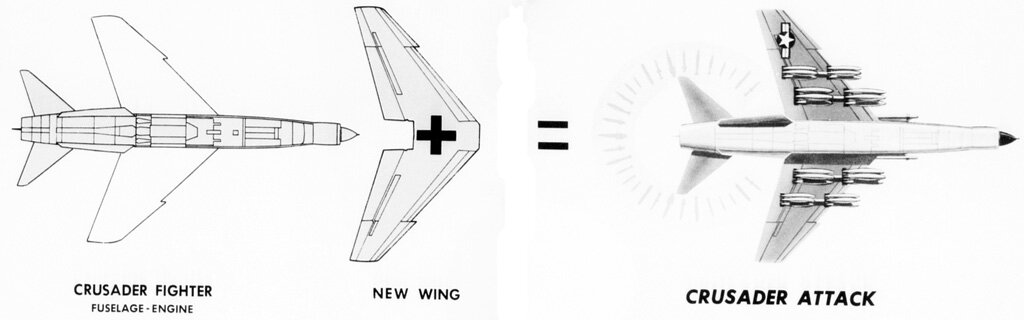
The V-456 Attack Crusader. Vought proposed this as "a versatile, high performance attack airplane" It was a result of Vought's internal limited war studies and the prospective VAX requirements. The vision was an aircraft that could be delivered to the fleet faster and cheaper. The base line aircraft was the F8U-2NE with a new wing capable of a wider variety of ordnance than carried by the F8U series. The attachments are photos of microfilm done with early generation equipment, so apologies for the quality.
Attachments

- Joined
- 18 October 2006
- Messages
- 4,623
- Reaction score
- 6,387
That seems almost as wrong as a "Bombcat".The V-456 Attack Crusader. Vought proposed this as "a versatile, high performance attack airplane" It was a result of Vought's internal limited war studies and the prospective VAX requirements. The vision was an aircraft that could be delivered to the fleet faster and cheaper. The base line aircraft was the F8U-2NE with a new wing capable of a wider variety of ordnance than carried by the F8U series. The attachments are photos of microfilm done with early generation equipment, so apologies for the quality.
But once you get past the emotion of it, I suspect it would have done well in the role given its superb handling qualities.

Temistocle
ACCESS: Secret
- Joined
- 9 December 2009
- Messages
- 297
- Reaction score
- 692
Triggered by another thread, I found on this NASA link:
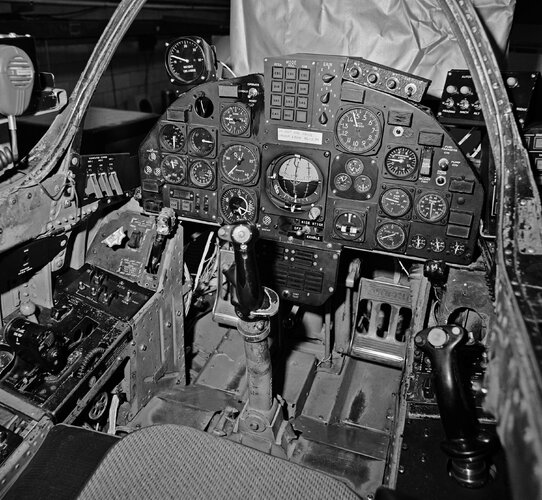
F-8 Digital Fly-By-Wire (DFBW) Iron Bird simulator cockpit. It was an F-8A 'retired' by the USN. The iron bird was a faithful reproduction of the F-8 DFBW aircraft (a "C" model). This cockpit tied to 6-degree-of-freedom digital simulation. The airframe had power actuators and FBW triplex secondary actuators that moved the power actuator valve.
Electrical power and hydraulics were from ground sources, and fed into the same locations as the engine-driven sources in the airplane.
The side stick was installed to allow the YF-16 Test Pilot (Phil Ostreicher) to evaluate a side stick FBW system prior to his first flight in the YF-16. It was connected only to the triplex analog system. Wilt Lock led the integration of this side stick with the Sperry analog FBW system.
The unique F-8 DFBW mode control panel:
CBS: Computer Bypass System
DIR: Direct (no feedback)
SAS: Stability Augmentation System -- basically pitch, roll, and (washed out) yaw rate feedback
CAS: Command Augmentation System close to C-Star (C*) system developed by Boeing.
MLC: Correct! Maneuver Load Control to move load inboard to attempt to reduce wing root bending in elevated g flight. Did not work as well as "hoped-for." Reason: the pitching moment from the flaps required pitch trim to higher AOA, increasing wing root bending, negating some of the bending load reduction from flap MLC control law.
Note the power control switches for the 3 IBM AP-101 digital computers on left.
Also note the round dials are simulator instruments 'closely' matching the faces of the flight instruments.
May 21, 1975
F-8 Digital Fly-By-Wire (DFBW) Iron Bird simulator cockpit. It was an F-8A 'retired' by the USN. The iron bird was a faithful reproduction of the F-8 DFBW aircraft (a "C" model). This cockpit tied to 6-degree-of-freedom digital simulation. The airframe had power actuators and FBW triplex secondary actuators that moved the power actuator valve.
Electrical power and hydraulics were from ground sources, and fed into the same locations as the engine-driven sources in the airplane.
The side stick was installed to allow the YF-16 Test Pilot (Phil Ostreicher) to evaluate a side stick FBW system prior to his first flight in the YF-16. It was connected only to the triplex analog system. Wilt Lock led the integration of this side stick with the Sperry analog FBW system.
The unique F-8 DFBW mode control panel:
CBS: Computer Bypass System
DIR: Direct (no feedback)
SAS: Stability Augmentation System -- basically pitch, roll, and (washed out) yaw rate feedback
CAS: Command Augmentation System close to C-Star (C*) system developed by Boeing.
MLC: Correct! Maneuver Load Control to move load inboard to attempt to reduce wing root bending in elevated g flight. Did not work as well as "hoped-for." Reason: the pitching moment from the flaps required pitch trim to higher AOA, increasing wing root bending, negating some of the bending load reduction from flap MLC control law.
Note the power control switches for the 3 IBM AP-101 digital computers on left.
Also note the round dials are simulator instruments 'closely' matching the faces of the flight instruments.
May 21, 1975
Attachments

- Joined
- 26 May 2006
- Messages
- 37,562
- Reaction score
- 19,607
Hey guys, lets keep this thread about Crusader projects. If I knew how to use my apprentice moderator powers, I would send all the scooter and blue thunder????? stuff somewhere else.
Vought did a feasibility study dated November 1975 on modifying the NTF-8A Two Seat Crusader with a rotating oblique wing for NASA. Attached are some scans from a poor microfilm copy of the report.
My dear Bill S,
there are more details about it (F-8 Oblique) here;
- Joined
- 17 May 2008
- Messages
- 702
- Reaction score
- 1,653
Sorry for the duplication and wrong place. Offending post deleted.Hey guys, lets keep this thread about Crusader projects. If I knew how to use my apprentice moderator powers, I would send all the scooter and blue thunder????? stuff somewhere else.
Vought did a feasibility study dated November 1975 on modifying the NTF-8A Two Seat Crusader with a rotating oblique wing for NASA. Attached are some scans from a poor microfilm copy of the report.
My dear Bill S,
there are more details about it (F-8 Oblique) here;
- Joined
- 26 May 2006
- Messages
- 37,562
- Reaction score
- 19,607
Sorry for the duplication and wrong place. Offending post deleted.
That's not what I meant,please keep the post here,no problem,I wanted
to explain the more Info about it in that topic.
bigredlancer
ACCESS: Restricted
- Joined
- 17 September 2008
- Messages
- 2
- Reaction score
- 3
No ventral fins on RF-8A...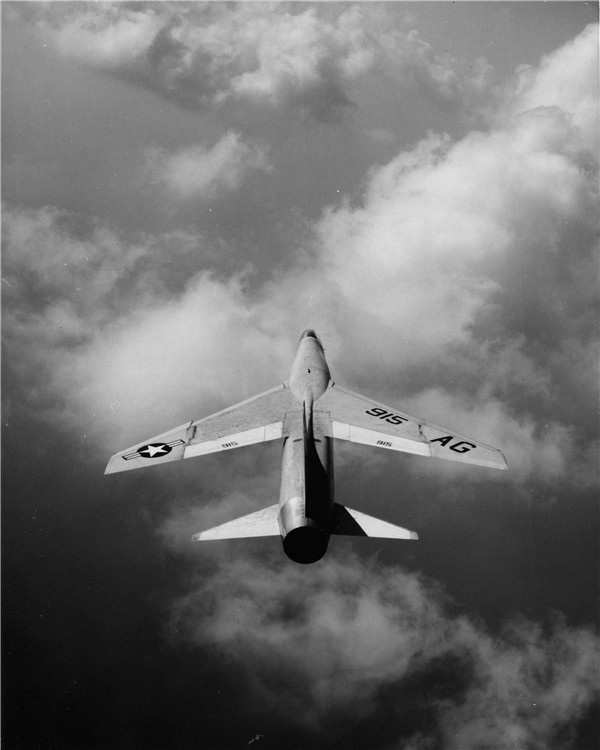
Vought RF-8A Crusader: Just Because (LVIII).
Astonishingly unusual photo angle for this unadulterated early recon Crusader of the VFP-62. Neither fins nor engine nozzle air intakes.elpoderdelasgalaxias.wordpress.com
bigredlancer
ACCESS: Restricted
- Joined
- 17 September 2008
- Messages
- 2
- Reaction score
- 3
VFP-62 Det. 62-63 RF-8A AG-915 USS Independence in flight via Lawrence Plourde.No ventral fins on RF-8A...Vought RF-8A Crusader: Just Because (LVIII).
Astonishingly unusual photo angle for this unadulterated early recon Crusader of the VFP-62. Neither fins nor engine nozzle air intakes.

F.L.
ACCESS: Top Secret
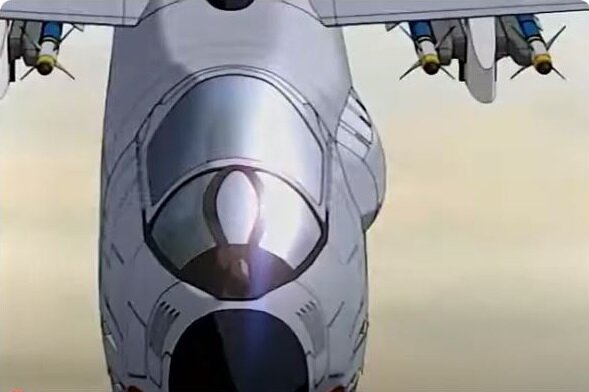
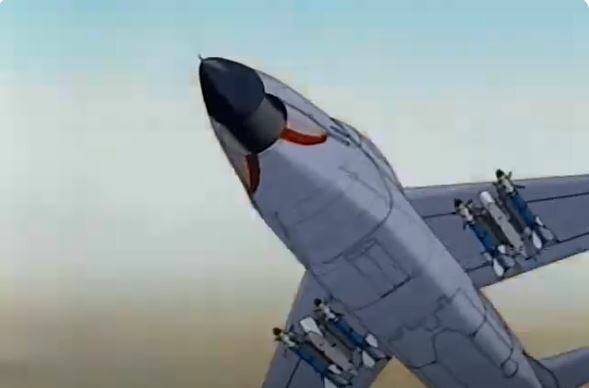
Could the Crusaders really carry AIM-9 Sidewinders under their wings, as seen in the Area 88 series ?



- Joined
- 16 April 2008
- Messages
- 10,318
- Reaction score
- 17,231
Could the Crusaders really carry AIM-9 Sidewinders under their wings, as seen in the Area 88 series ?
View attachment 709320View attachment 709321
Nope. Only the fuselage stations carried Sidewinder.
Scott Kenny
ACCESS: USAP
- Joined
- 15 May 2023
- Messages
- 16,977
- Reaction score
- 24,090
A quick google image search doesn't show anything.Could the Crusaders really carry AIM-9 Sidewinders under their wings, as seen in the Area 88 series ?
View attachment 709320View attachment 709321
Not that the scrounging mercenaries couldn't have made a rack like that, but the Crusaders carried their sidewinders on the cheeks of the fuselage.

kaiserd
I really should change my personal text
- Joined
- 25 October 2013
- Messages
- 1,656
- Reaction score
- 1,788
Given the apparent proportions that looks more like a A-7. Clearly a degree of artist license involved.Could the Crusaders really carry AIM-9 Sidewinders under their wings, as seen in the Area 88 series ?
View attachment 709320View attachment 709321
F.L.
ACCESS: Top Secret
No, it's really a F-8 Crusader.Given the apparent proportions that looks more like a A-7. Clearly a degree of artist license involved.
Scott Kenny
ACCESS: USAP
- Joined
- 15 May 2023
- Messages
- 16,977
- Reaction score
- 24,090
Watch the anime, it's very clearly an F-8. Variable incidence wing, fuselage length, flying with the wings folded once...Given the apparent proportions that looks more like a A-7. Clearly a degree of artist license involved.
Wonder how that would have performed with a Spey...The V-456 Attack Crusader. Vought proposed this as "a versatile, high performance attack airplane" It was a result of Vought's internal limited war studies and the prospective VAX requirements. The vision was an aircraft that could be delivered to the fleet faster and cheaper. The base line aircraft was the F8U-2NE with a new wing capable of a wider variety of ordnance than carried by the F8U series. The attachments are photos of microfilm done with early generation equipment, so apologies for the quality.
An X wing canard? Probably to early to be CCV in 3D. If they did that then presumably no y-racks. If the result was a smaller tail then imagine what the possibilities were with J75 (XF8U) or the F100 engines. The USN probably just wanted to kill off F-8 no matter what could have been possible.I stumbled across this while doing an image search on "B-58 ejection capsule brochure" The site listed was "combatreform.org" but I had trouble looking at the site.
...Or the escape capsule just had fins.

- Joined
- 22 April 2012
- Messages
- 2,268
- Reaction score
- 2,738
Vought V-395, taken from a Vought report, dated 1 June 1956, on external stores in relation to the TX-28 Class D (to be Mk.28) nuclear bomb on the F8U-1. This report describes the V-395 as an "Attack Type F8U Airplane" and states the basic changes between it and the F8U-1 were a greater weight and internal fuel, all-weather capabilities, a semi-submerged store cavity in the fuselage and an "advanced" J57 - specifically the JT3C-20. Actual specifications given are:
Gross take-off weight without store: 29,695lbs
Usable internal load: 10,374lbs
JT3C-20 engine: 17,200lb static thrust at Sea Level
There is a very basic general arrangement drawing but it is split over two pages, I have tried to stitch it together but not wholly successfully.
Volume I, the report with details of the V-395 is here.
Volume II, a longer appendix with data from the studies is here.
Gross take-off weight without store: 29,695lbs
Usable internal load: 10,374lbs
JT3C-20 engine: 17,200lb static thrust at Sea Level
There is a very basic general arrangement drawing but it is split over two pages, I have tried to stitch it together but not wholly successfully.
Volume I, the report with details of the V-395 is here.
Volume II, a longer appendix with data from the studies is here.
Attachments

Last edited:
- Joined
- 17 May 2008
- Messages
- 702
- Reaction score
- 1,653
"During discussions following the presentation of the V-395 all-weather fighter-attack airplane, personnel of the Evaluation Division of BuAer recommended that a design study of a two-seat version of the V-395 be conducted and presented to BuAer. The desirability of providing for eventual "completely all-weather" bomb delivery was being considered, and it was believed that for such delivery a crew of two would be desirable. In addition, a crew of two might be desirable, although not so strongly, for the all-weather fighter function." Vought report 9671
Attachments

- Joined
- 17 May 2008
- Messages
- 702
- Reaction score
- 1,653
"The Chance Vought V-395 is a carrier-based VFA class aircraft. The fuselage cavity for submerged or semi submerged stores and the four wing pylons permit great versatility of loading arrangements for both the attack and fighter missions. The cavity may be used to carry special stores, special-purpose tanks, fuel tanks, rocket packs, logistic service kits, or photographic kits." Vought Report 9289
Attachments


Scott Kenny
ACCESS: USAP
- Joined
- 15 May 2023
- Messages
- 16,977
- Reaction score
- 24,090
Given how little wiring is needed for Sidewinders, I'd say it's completely possible to mount Sidewinders on the wings.Could the wing pylons on the existing F-8 versions have been used for sidewinders or other AAMs? I've only seen fuel tanks and bombs in the SACs.
But the F-8 didn't have the radar/FCS to carry Sparrows.
And when you're already carrying 4x Sidewinders on the cheek pylons, additional fuel is more valuable than another missile or two.
orlovsky
I really should change my personal text
- Joined
- 28 May 2016
- Messages
- 395
- Reaction score
- 786
Seems even the fuel tanks have not been used on the carriers. Guess the USN had no interest in increasing the F-8 capabilities, that could have got in the way of shiny new toys.
But I'm wondering about the french crusaders. They had some basic bvr with the matra, but carriage was limited to
- 4 sidewinders, or
- 2 Matras, or
- 1 Matra, 2 sidewinders.
With wing pylons, 2 matras+2sidewinders would have been possible; maybe even 2+4, but that may have been too much drag....
But I'm wondering about the french crusaders. They had some basic bvr with the matra, but carriage was limited to
- 4 sidewinders, or
- 2 Matras, or
- 1 Matra, 2 sidewinders.
With wing pylons, 2 matras+2sidewinders would have been possible; maybe even 2+4, but that may have been too much drag....

orlovsky
I really should change my personal text
- Joined
- 28 May 2016
- Messages
- 395
- Reaction score
- 786
Reading up in Friedman, there was a design with 2 Sparrows + 4 Sidewinders, just probably the Sparrows on the wing stations:
"In May 1957 Vought submitted a proposal for an all-weather version of the current production version of the Crusader, the F8U (its V-413 design). ... Armament would be two Sparrow III and four Sidewinders, the aircraft being fitted with an APG-51B with CW injection."
"... proposed aircraft was an F8U-2 with the same P-16 engine and retaining the internal [?] Sidewinder stowage. It would have a larger nose cone to accommodate the larger radar and a 30-gallon tank was added just forward of the engine feed fuel tank to extend time on station."
Friedman, Norman. Fighters Over the Fleet: Naval Air Defence from Biplanes to the Cold War (p.778). Kindle version.
Did the french Crusaders being F-8E derivatives have the wing stations?
"In May 1957 Vought submitted a proposal for an all-weather version of the current production version of the Crusader, the F8U (its V-413 design). ... Armament would be two Sparrow III and four Sidewinders, the aircraft being fitted with an APG-51B with CW injection."
"... proposed aircraft was an F8U-2 with the same P-16 engine and retaining the internal [?] Sidewinder stowage. It would have a larger nose cone to accommodate the larger radar and a 30-gallon tank was added just forward of the engine feed fuel tank to extend time on station."
Friedman, Norman. Fighters Over the Fleet: Naval Air Defence from Biplanes to the Cold War (p.778). Kindle version.
Did the french Crusaders being F-8E derivatives have the wing stations?
Last edited:

BlackBat242
OK, I changed my personal text ;)
- Joined
- 10 April 2013
- Messages
- 1,622
- Reaction score
- 5,000
I've read comments from persons involved with the USN and USMC F-8 communities (including pilots) who state that the added drag of the drop tanks (and the added weight of the full tanks during take-off and climb to cruise altitude requiring more thrust) actually used up 75% (or more, depending on cruise speed and altitude) of the added fuel - making them not really useful.Seems even the fuel tanks have not been used on the carriers. Guess the USN had no interest in increasing the F-8 capabilities, that could have got in the way of shiny new toys.
Considering its range on internal fuel was as good as or better than most other carrier-capable jet aircraft of the day, the drop tanks were a solution in search of a problem.
Last edited:
BlackBat242
OK, I changed my personal text ;)
- Joined
- 10 April 2013
- Messages
- 1,622
- Reaction score
- 5,000
Yes, they did.Did the french Crusaders being F-8E derivatives have the wing stations?
orlovsky
I really should change my personal text
- Joined
- 28 May 2016
- Messages
- 395
- Reaction score
- 786
I've read comments from persons involved with the USN and USMC F-8 communities (including pilots) who state that the added drag of the drop tanks (and the added weight of the full tanks during take-off and climb to cruise altitude requiring more thrust) actually used up 75% (or more, depending on cruise speed and altitude) of the added fuel - making them not really useful.
Considering its range on internal fuel was as good as or better than most other carrier-capable jet aircraft of the day, the drop tanks were a solution in search of a problem.
The SACs may have been overly optimistic, but for what it's worth: F-8J, 2 sidewinders, mission time from 1.45 to 2.27; CAP station from 0.73 to 1.53. But what's odd, there is no inflight refueling time given with the drop tanks. May they have been incompatible with IFR?
Internal sidewinder is mentioned in the China Lake sidewinder documentary and the sidewinder thread (link) and also in the WS-300 thread and for AP-77 in the WS-300 threadReading up in Friedman, there was a design with 2 Sparrows + 4 Sidewinders, just probably the Sparrows on the wing stations:
"In May 1957 Vought submitted a proposal for an all-weather version of the current production version of the Crusader, the F8U (its V-413 design). ... Armament would be two Sparrow III and four Sidewinders, the aircraft being fitted with an APG-51B with CW injection."
"... proposed aircraft was an F8U-2 with the same P-16 engine and retaining the internal [?] Sidewinder stowage. It would have a larger nose cone to accommodate the larger radar and a 30-gallon tank was added just forward of the engine feed fuel tank to extend time on station."
Friedman, Norman. Fighters Over the Fleet: Naval Air Defence from Biplanes to the Cold War (p.778). Kindle version.
Did the french Crusaders being F-8E derivatives have the wing stations?
Last edited:
orlovsky
I really should change my personal text
- Joined
- 28 May 2016
- Messages
- 395
- Reaction score
- 786
Very interesting, but was this ever considered for the Crusader? Friedman sounds like it was in place for the original F-8, so I think he just meant the fuselage stations.Internal sidewinder is mentioned in the China Lake sidewinder documentary and the sidewinder thread (link) and also in the WS-300 thread and for AP-77 in the WS-300 thread
I'm not sure, but I suspect if it was, it was for the rocket tray, which (eyeballing it) might have the clearance to work.Very interesting, but was this ever considered for the Crusader? Friedman sounds like it was in place for the original F-8, so I think he just meant the fuselage stations.
Similar threads
-
 Vought F-8 Crusader: Development & Operational Use of the Navy’s First Supersonic Jet Fighter
- Started by bercr
- Replies: 29
-
 Royal Navy with F-8 Crusader instead of F-4 Phantom II
- Started by uk 75
- Replies: 321
-
 North American F-100 Projects & Developments
- Started by boxkite
- Replies: 40
-
 Ryan Model 38, 84, 112, 115: VATOL Fighters for the USAF and USN
- Started by overscan (PaulMM)
- Replies: 27
-