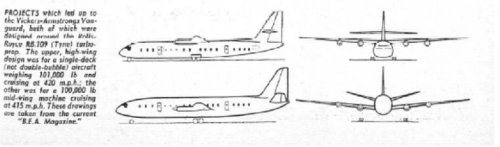
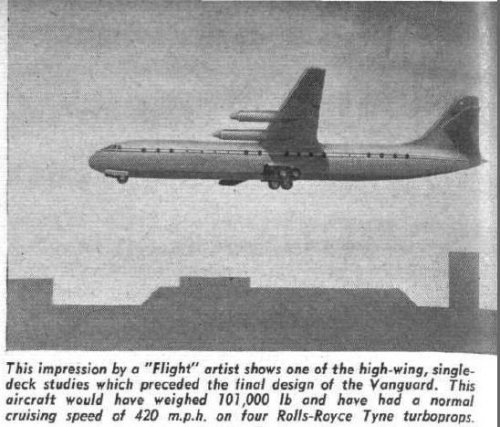
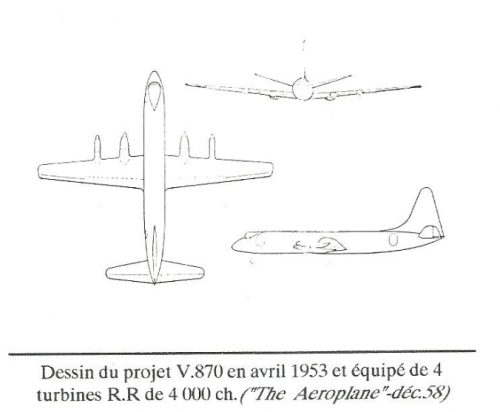
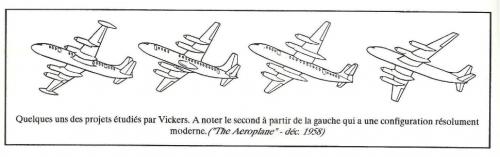
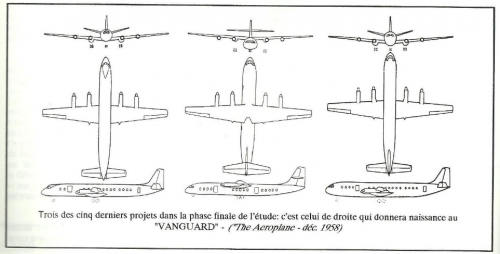
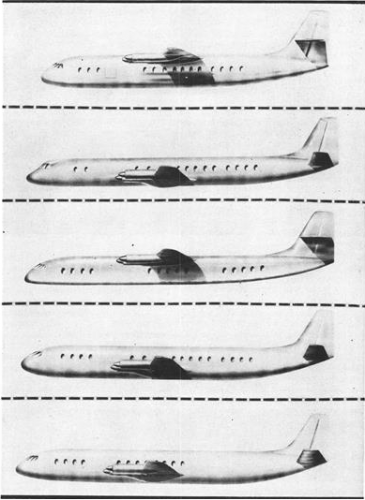
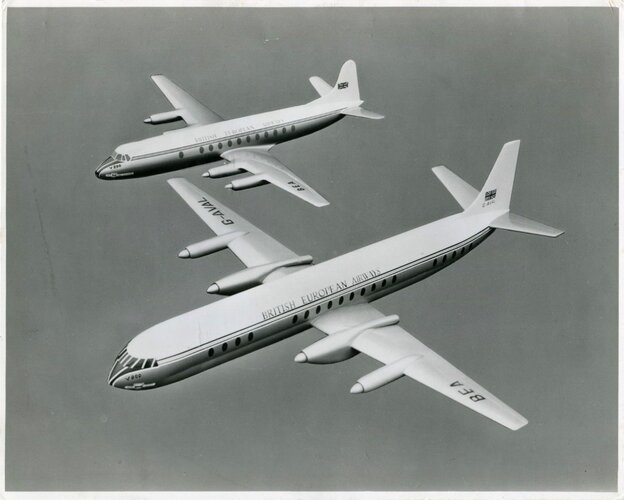
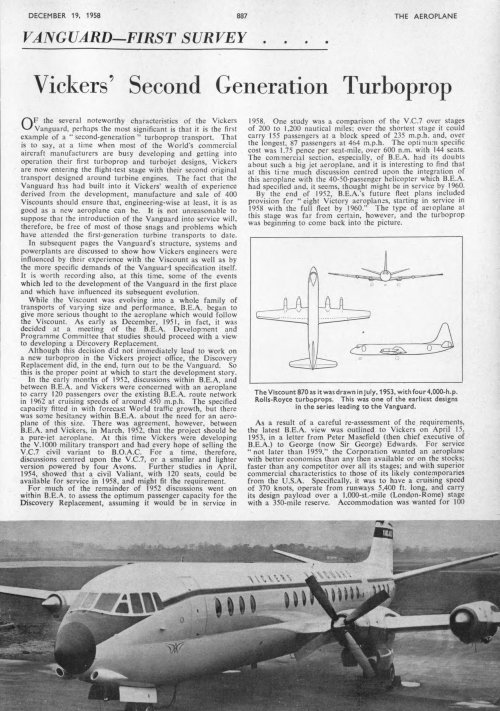
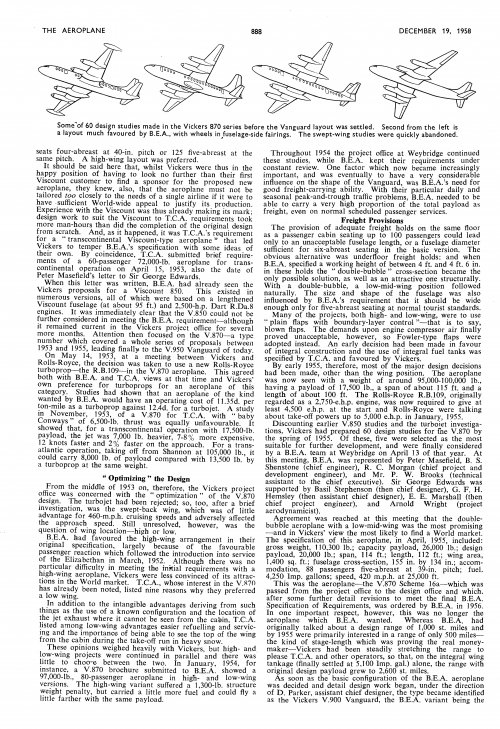
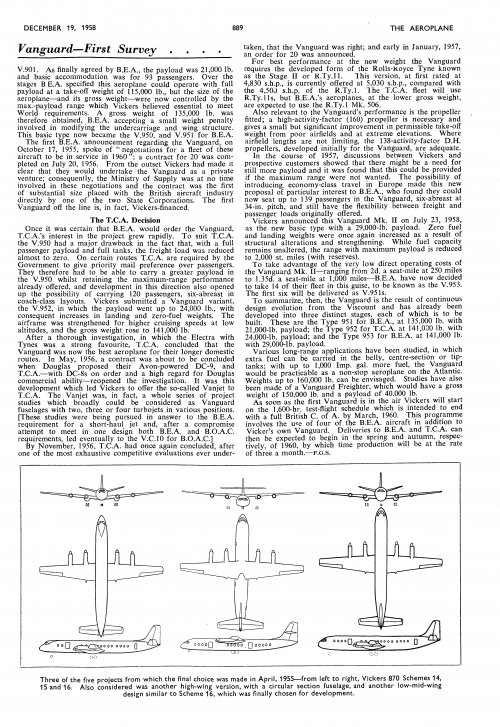
It was at this point that it became apparent that, whatever form the new airliner took, it would have to have a new powerplant designed for it; and this has, of course, proved to be the case. In place of the V.850 there came a design derived along an entirely different track—a medium-range Viscount replacement powered by four "baby Conways." These by-pass turbojets, of what might be termed medium thrust, promised to be exceptionally small and efficient, and various aircraft and powerplant configurations were examined, the majority having the engines mounted in nacelles either on the wing or fuselage. Such an aircraft would have been considerably faster than any existing medium-range transport (excluding the Comet) and would easily have exceeded the stipulation of a 370-knot cruising speed asked for by Mr. Peter Masefield, then the Corporation's chief executive. Nevertheless, it was aiso found practicable to meet this speed requirement with an advanced turboprop aircraft, and a study of the by-pass and turboprop projects proceeded in parallel over an intensive period, with the close co-operation of Rolls-Royce. Many factors had to be considered but, as the work progressed, it became increasingly evident that the by-pass aircraft was not an entirely happy solution. In particular, it could be faulted on the grounds of inadequate flexibility of operation, rather high airport noise, and a rather poorer operating specific fuel consumption than that of the airscrew-driven machine. It also posed a rather difficult take-off problem. Consequently the Weybridge designers hardened on a turbo-prop aircraft.