- Joined
- 27 December 2005
- Messages
- 19,230
- Reaction score
- 35,696



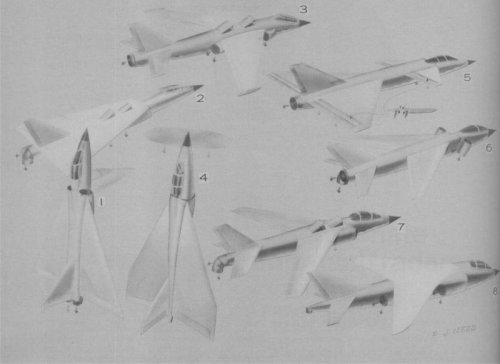
AeroFranz said:LTV V-X1X (unreadable number)
AeroFranz said:LTV V320 or 520, looks like some sort of RALS
AeroFranz said:Boeing Vertol something something

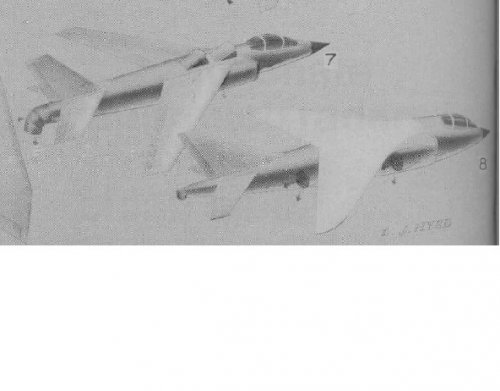
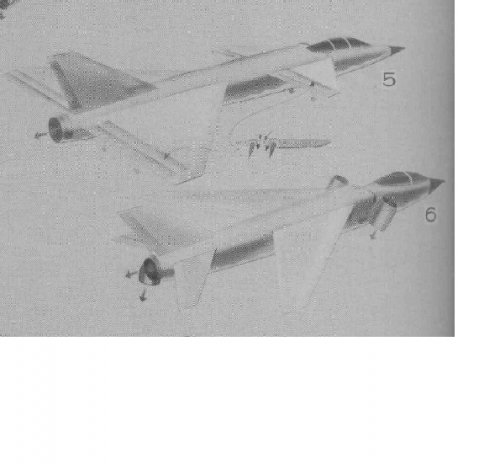
Jemiba said:I think, we had several of the fighter designs here:
http://www.secretprojects.co.uk/forum/index.php/topic,559.15.html
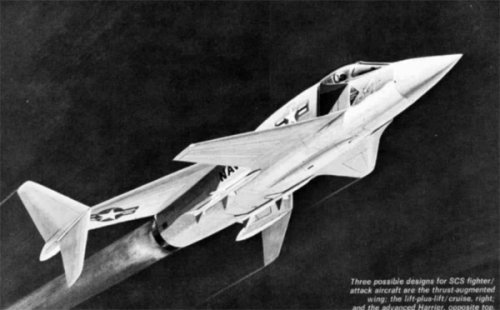
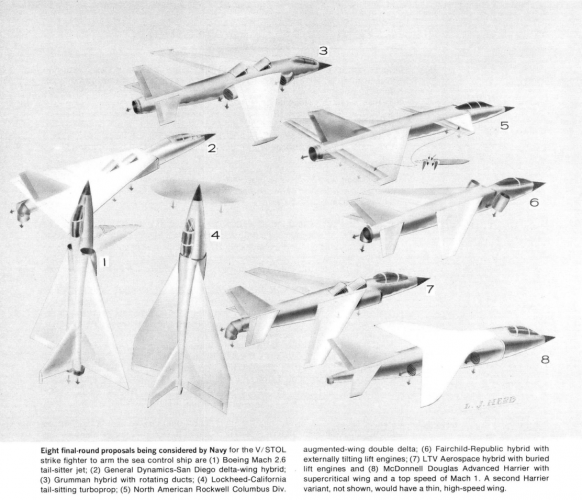
I had the picture from Aviation Week, March 1972 cut into pieces then, here it is
in all again, with the caption. Perhaps it rings a bell for someone.
2.2 PROGRAM GROUND RULES
- Two prototype airplanes to be produced
- Budgetary quality cost estimates
- Assumed contract go-ahead - mid-February 1972
- Engineering Design 95% complete - March 1973
- First flight - June 1974
- All Navy/contractor flight testing to be performed at VAC facility - No off-site operations
- Navy production decision - February 1975
- Minimum cost and minimum time approaches are essential - prototype to be oriented towards technology rather than full compliance with the many requirements essential to a full engineering development
- No engineering required for mock-ups


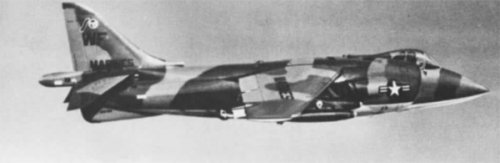
ZacYates said:Please forgive my ignorance/laziness: what's the deal with the AV-16 Advanced Harrier? What makes it different to the AV-8?

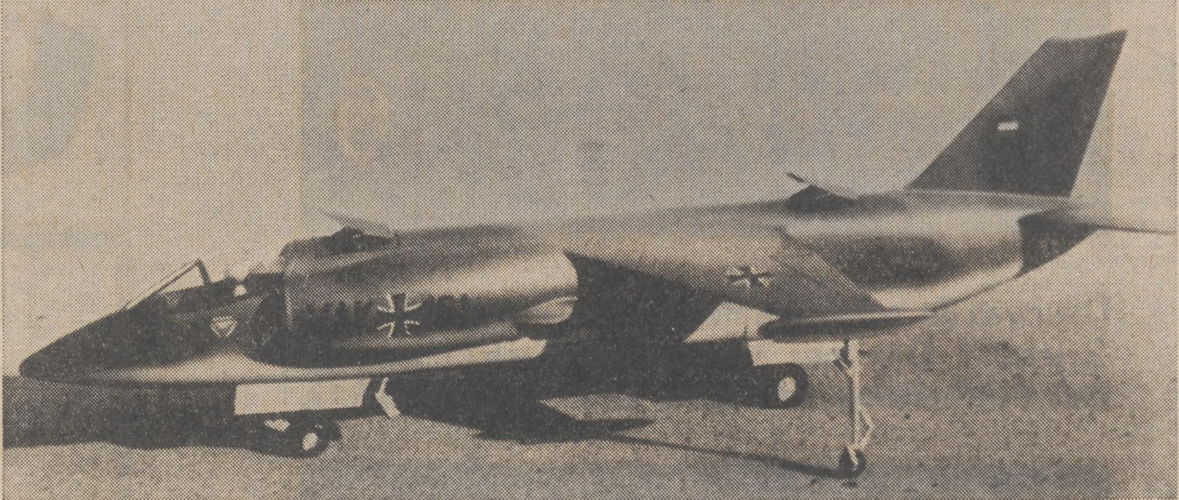
VFW Fokker VAK.191 Mk.3 (A VAK 191B derivative, bigger and more powerful)

We've discussed this program elsewhere but I wanted to bring all posts into one topic start again with information from "The Pentagon Paradox" added to information presented previously.
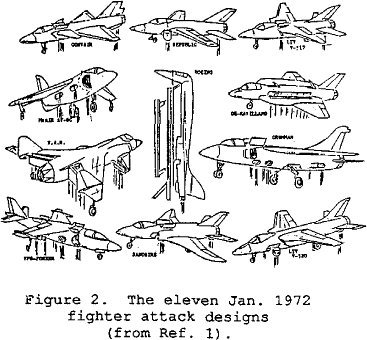
11 designs submitted.
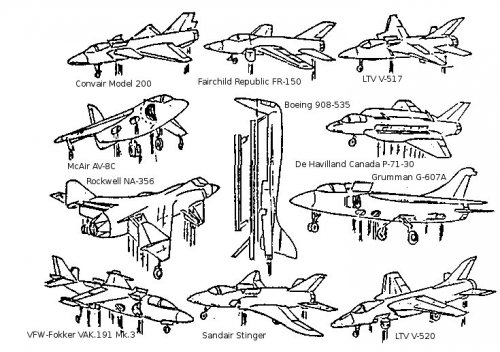
Convair Model 200 F100 engine, paired XJ99 liftjets ejecting through the bottom of the fuselage (1st ranked design)
Fairchild FR-150, F100 engine, rotating XJ99 lift engines, 27,000lbs (STO) and 21,000lbs (VTO) (2nd ranked design)
LTV V-517 19,950lb, TF30 engine, paired XJ99 liftjets ejecting through the bottom of the fuselage (3rd ranked design)
Rockwell NR-356: Mach 2.7: "not recommended" but idea merited further research
Boeing 908-535 Twin YJ101 tailsitter/VATOL, 17,000lbs, Mach 2.6-2.8 (also known as D-180)
San Diego Aircraft Engineering (Sandaire) "Stinger", 17,377lb. Lightest design.
Grumman Model 607: 37,353lb, Mach 2.0, F401 engine, 2 XJ99 liftjets ducted to rotating nozzles, no vertical takeoff.
Lockheed 24,000lb turboprop-powered tail sitter derived from XFV-1, Allison T56 engine. Perhaps CL-1290??
VFW Fokker VAK.191 Mk.3 (A VAK 191B derivative, bigger and more powerful)
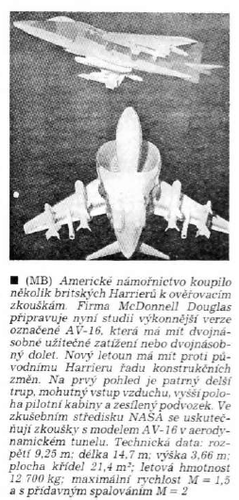
McDonnell Douglas Advanced Harrier AV-16
McDonnell Douglas Model 258-52
de Havilland Canada DHC P-71-30 lift augmentation design
(Note there are 12 designs listed here, not 11. Most sources agree on most candidates but not all)
A second informal competition was held in 1972, the next year. Vought moved from V-517 to V-520 (?) while McDonnell-Douglas had Model 262 (AV-8C), Grumman 607A.
American Secret Projects has illustrations of 909-535, Model 200, G-607A, V-517, V-520, NR-356.
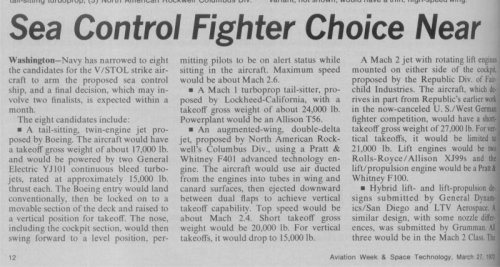
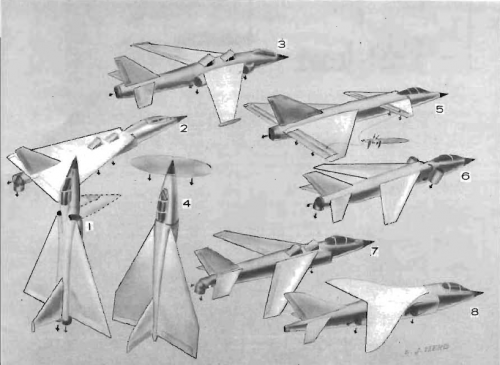
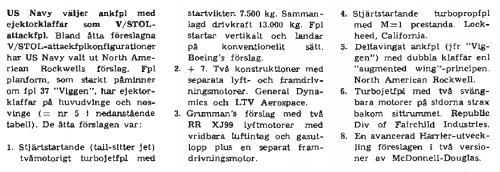
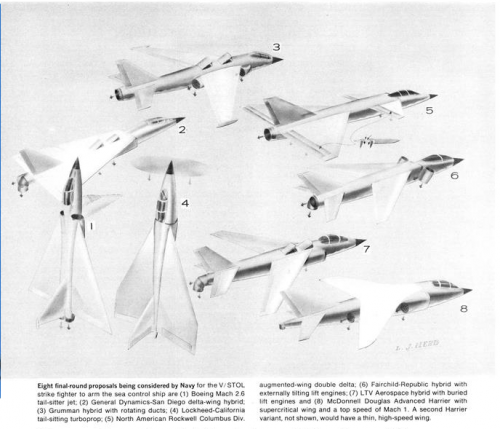
Source: Aviation Week & Space Technology, 27 March 1972Washington—Navy has narrowed to eight the candidates for the V/STOL strike aircraft to arm the proposed sea control ship, and a final decision, which may involve two finalists, is expected within a month.

The eight candidates include:
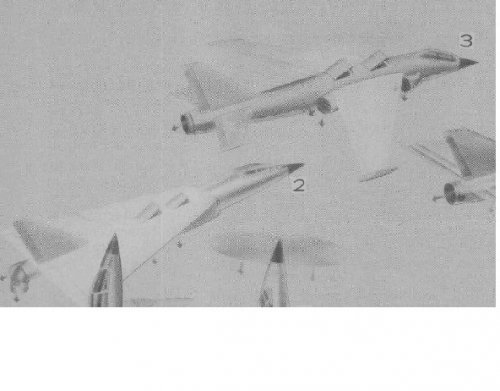
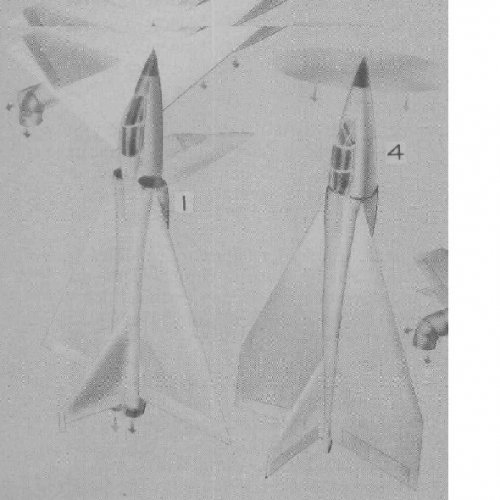
- A tail-sitting, twin-engine jet proposed by Boeing. The aircraft would have a takeoff gross weight of about 17,000 lb. and would be powered by two General Electric YJ101 continuous bleed turbojets, rated at approximately 15,000 lb. thrust each. The Boeing entry would land conventionally, then be locked on to a movable section of the deck and raised to a vertical position for takeoff. The nose. including the cockpit section. would then swing forward to a level position, permitting pilots to be on alert status while sitting in the aircraft, Maximum speed would be about Mach 2.6.
- A Mach 1 turboprop tail-sitter, proposed by Lockheed-California, with a takeoff gross weight of about 24,000 lb. Powerplant would be an Allison T56.
- An augmented-wing, double-delta jet, proposed by North American Rockwell’s Columbus Div., using a Pratt & Whitney F401 advanced technology engine. The aircraft would use air ducted from the engines into tubes in wing and canard surfaces, then ejected downward between dual flaps to achieve vertical takeoff capability. Top speed would be about Mach 2.4. Short takeoff gross weight would be 20,000 lb. For vertical takeoffs, it would drop to 15,000 lb.
- A Mach 2 jet with rotating lift engines mounted on either side of the cockpit, proposed by the Republic Div. of Fairchild Industries. The aircraft, which derives in part from Republic’s earlier work in the now-canceled U. S./West German fighter competition, would have a short takeoff gross weight of 27,000 lb. For vertical takeoffs, it would be limited to 21,000 lb. Lift engines would be two Rolls-Royce/Allison XJ99s and the lift/propulsion engine would be a Pratt & Whitney F 100.
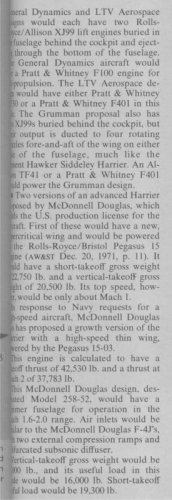
- Hybrid lift- and lift-propulsion designs submitted by General Dynamics/San Diego and LTV Aerospace. A similar design, with some nozzle differences, was submitted by Grumman. All three would be in the Mach 2 Class. The General Dynamics and LTV Aerospace designs would each have two Rolls-
- Royce/Allison XJ99 lift engines buried in the fuselage behind the cockpit and ejecting through the bottom of the fuselage. The General Dynamics aircraft would use a Pratt & Whitney F100 engine for lift-propulsion. The LTV Aerospace design would have either Pratt & Whitney TF30 or a Pratt & Whitney F401 in this role. The Grumman proposal also has two XJ99s buried behind the cockpit, but their output is ducted to four rotating nozzles fore-and-aft of the wing on either side of the fuselage, much like the present Hawker Siddeley Harrier. An Allison TF41 or a Pratt & Whitney F401 would power the Grumman design.
- Two versions of an advanced Harrier proposed by McDonnell Douglas, which holds the U.S. production license for the aircraft. First of these would have a new, supercritical wing and would be powered by the Rolls-Royce/Bristol Pegasus 15 engine (AW&ST Dec. 20, 1971, p. 11). It would have a short-takeoff gross weight of 22,750 lb. and a vertical-takeoff gross weight of 20,500 lb. Its top speed, however, would be only about Mach 1. In response to Navy requests for a high-speed aircraft, McDonnell Douglas also has proposed a growth version of the Harrier with a high-speed thin wing, powered by the Pegasus 15-03. This engine is calculated to have a takeoff thrust of 42,530 lb. and a thrust at Mach 2 of 37,783 lb. This McDonnell Douglas design, designated Model 258-52, would have a slimmer fuselage for operation in the Mach 1.6-2.0 range. Air inlets would be similar to the McDonnell Douglas F-4J’s, with two external compression ramps and a bifurcated subsonic diffuser. Vertical-takeoff gross weight would be 28,000 lb., and its useful load in this mode would be 16,000 lb. Short-takeoff useful load would be 19,300 lb.
The only thing I've seen is in the Spangenberg papers which I reached from this site. There are a couple threads you can search for. As I recall, the main criteria was VTOL range. The Convair 200 had enough range to do something useful, the others did not.
Incidentally, I really like the look of the G-607. It looks like a variation on the F-11, and I wonder if those wings (and probably tail as well) would work on an F-11 Super Tiger.
Spangenberg Exhibit V-3 said:4. The lack of firm "requirements" is obvious in the Navy's V/STOL program, where three very dissimilar vehicles are being considered as competitors despite widely varying capabilities. The Navy's excellent record in producing aircraft for the fleet was based on the establishment of a firm requirement by the "operators", and fulfillment of that requirement by the "material" portion of the organization. There may be some way to produce fleet hardware without having "requirements", but the current material organization is without experience in such an exercise. The design engineers in NAVAIR and in industry must be told with a fair degree of specificity what the design requirements are. Needed are at least minimum levels of speed, payload, range, and operating environment. Two of the V/STOL projects are supersonic and designed primarily for a fighter mission while the other is a subsonic attack aircraft intended for Marine use. It is clear that the advanced Harrier, AV-16, cannot accomplish the mission for which the Convair Model 200 was designed, although the converse is not necessarily true. The FV-12, on the basis of NAVAIR estimates, is incapable of performing either mission. These three projects may be competitive from a budgetary standpoint, but are certainly not from a mission viewpoint.
Source: Aviation Week & Space Technology, 27 March 1972
Yes, absolutely.It appears that the Air Progress and Aviation Week clippings you posted in the other thread that mentioned the Convair Model 200 using the F401 were published later so maybe the initial Convair proposal specified a F100 variant which was changed to a variant of the F401 the Navy was planning to use on the F-14B as the proposal was refined.