Thank you, very interesting. I know AFEE Beaulieu tested captured German helicopters etc. Don't think they launched this one! Your feedback really interesting. AFEE worked closely with Farnborough and A&AEE.
 
Last edited:
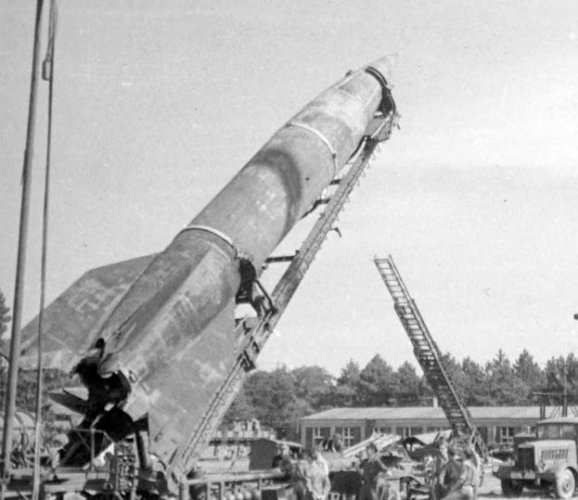
Picture was taken at Beaulieu for sure, one of a batch dad took. He never went abroad during the war serving with AFEE and MAEE before that. However, it could be captured German ground support equipment as Beaulieu would not have such equipment of its own.
 
Following feedback the location of the photograph may not be Beaulieu. Apparently, the type of buildings in the background don't fit in. Any ideas of where it could be? The photograph was first published in Top Secret War Bird of WW11 in 1999 shortly after dad's death when I discovered his wartime and post war (press ) photographs. Dad worked as a photographer of secret aircraft trials by both AFEE and MAEE on behalf of the Ministry of Production. Many I have since traced to National Archives, Kew. If the location is not Beaulieu it would have been in that 'neck of woods' for that is where he was after Ringway until 1947. Thanks again for the interest.
 
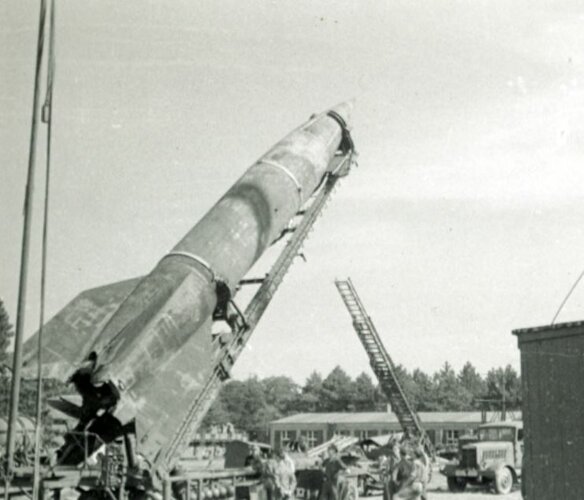
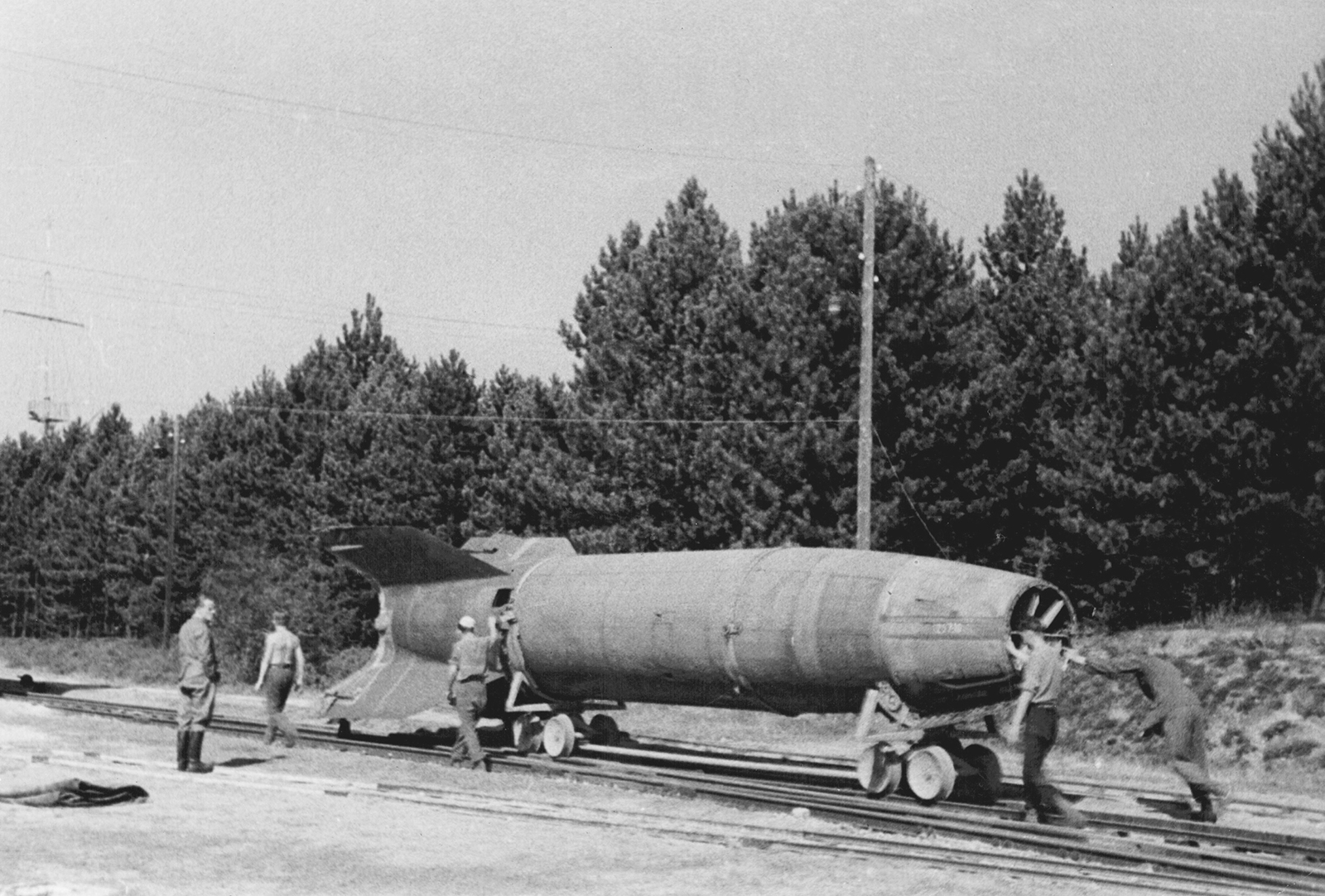
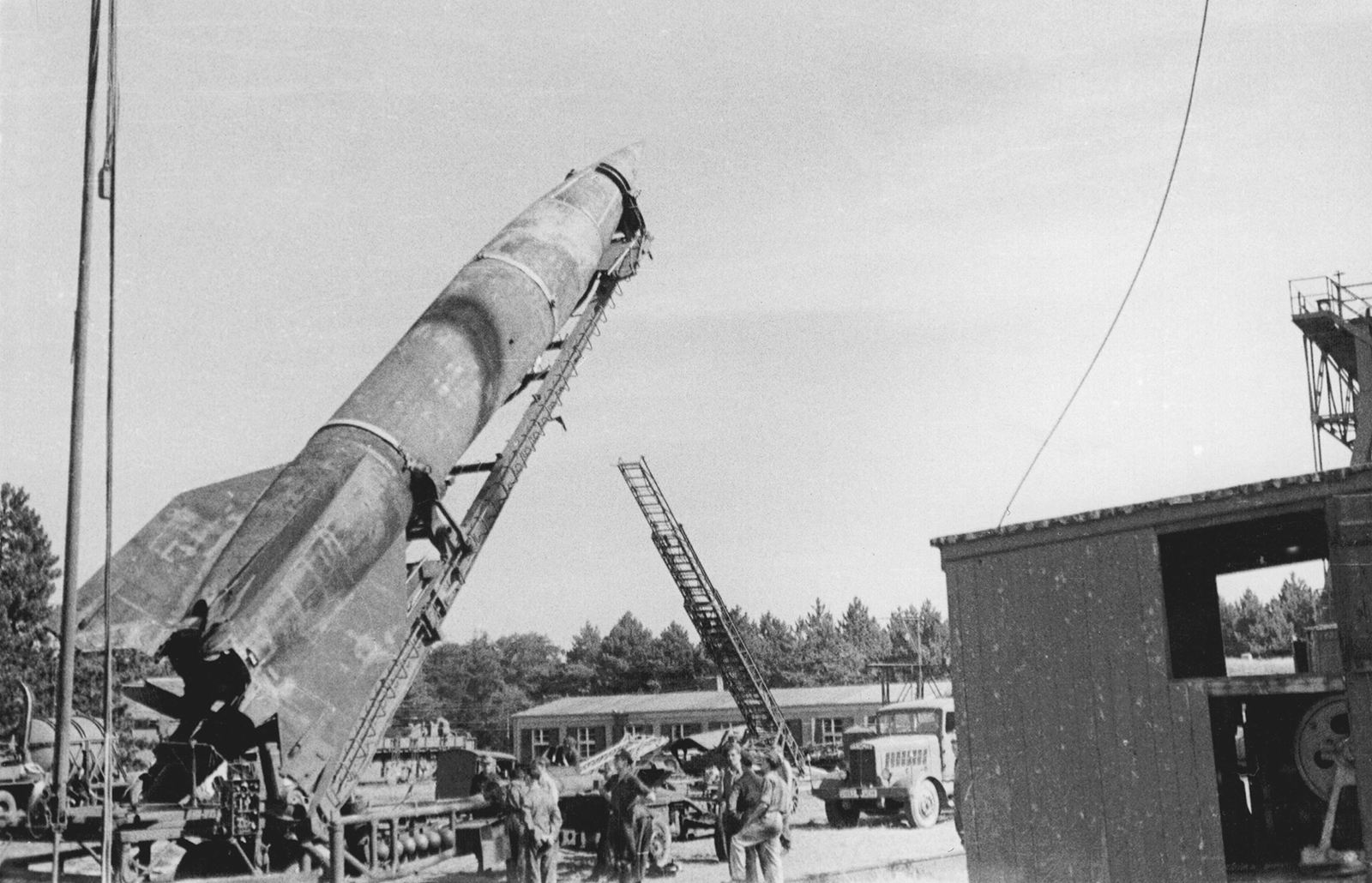
Found another V2 picture among dad's wartime photographs. He was a Government photographer at the Airborne Forces Experimental Establishment, Beaulieu 1945/47. It tested the captured the German Drache helicopter and German autogiro. As a child he told me he also photographed V2s but where? I know now it was not at Beaulieu and to my knowledge he did not go abroad. The V2 pictures I have are printed on the same MoD paper as his other photographs. The quality of this V2 image is, not good because of age. Where in the UK were V2s sited and examined before going on public display? Any suggestions? I posted, in this forum, a few years ago the larger photo. V2PHOTO.JPG v2rocket.JPG
 
These appear to be from Operation Backfire in 1945 at Cuxhaven.

black093.jpg


black108.jpg


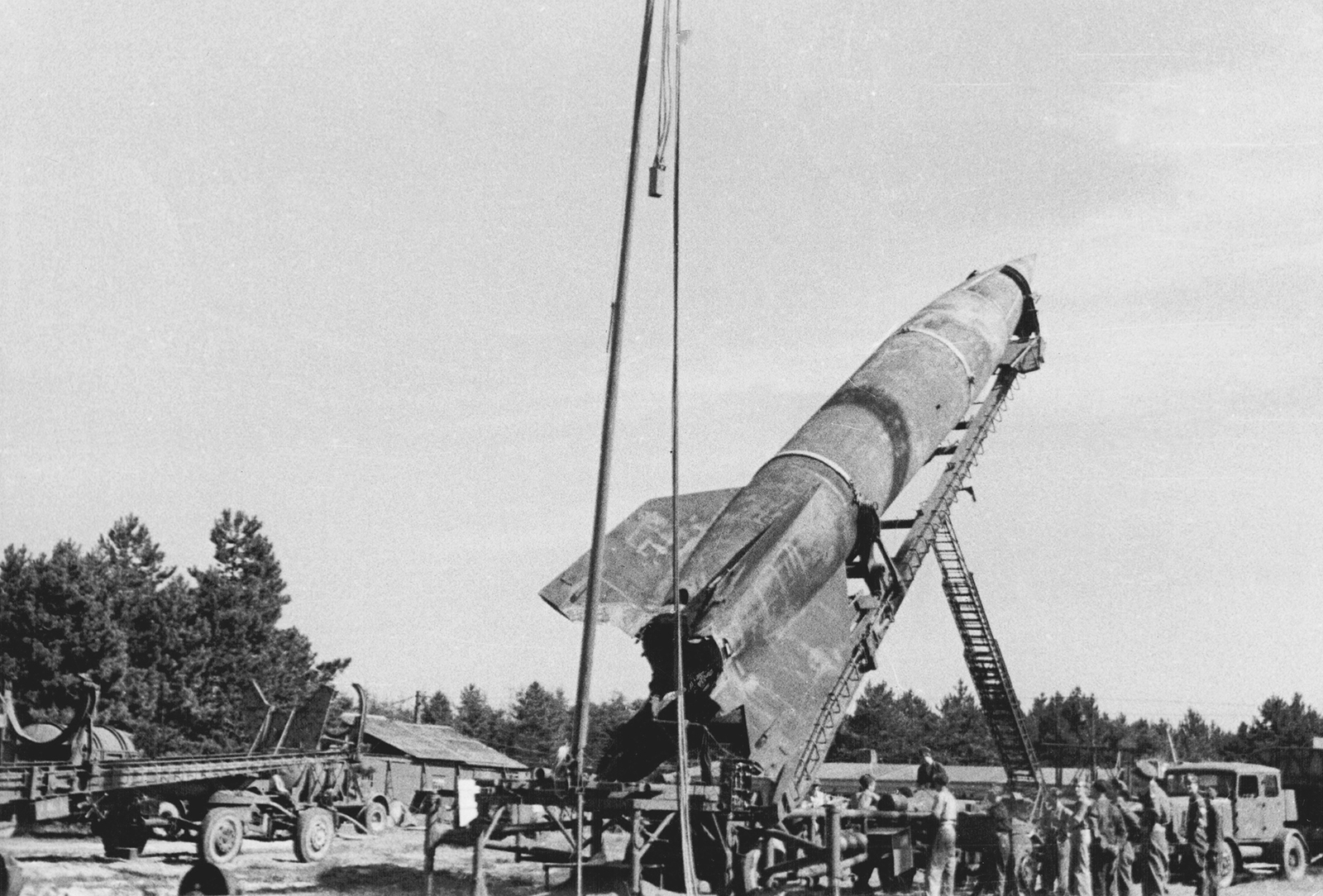
The above almost identical pictures (the second one is almost indistinguishable) are taken from the Charles Black Collection at the very interesting site V2Rocket.com.
It appears your father either travelled to Germany or possibly developed someone elses film ?

edit: your first picture appears to be a crop from the image below. I would say your father developed Charles Black's film?

black109.jpg
 
Thank you Forum for the feedback and for clearing things up. Dad did not go to Germany but must have copied Black's photographs for the Ministry. Dad had signed the Official Secrets Act and did not speak much about his war. After his death I found his K20 and camera case, plus pictures, wartime letters to mother, etc.
 
Last edited:
Well, it is a Mark Fenton production. He gratuitously overstates things in it.

In Britain, the mechanical television was invented. By 1930 it had been surpassed by the electronic television of Farnsworth and RCA in the US and abandoned entirely. So, while an early invention in that field, it failed to work sufficiently well to be considered a progenitor of modern television as it was mechanical.

The computer is another dubious claim. In the early 20th century, many nations in Europe, and the US too, were producing various types of electro-mechanical analog computers. These could be quite sophisticated, but ultimately too slow and bulky to compete with digital, all-electronic computers that would follow. The revolution in electronic, digital, computers came from MIT's Lincoln and Rad Labs in the form of Whirlwind, the progenitor of the SAGE system.

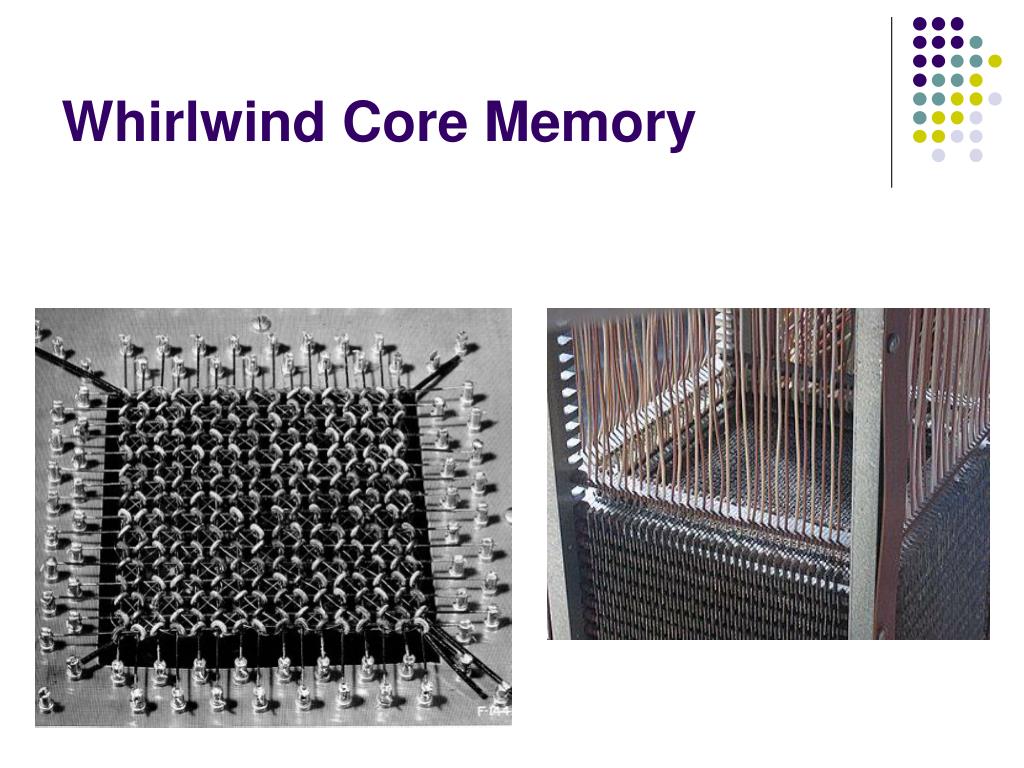
The major breakthrough that made fast electronic data storage and processing possible was magnetic core storage as shown here.

whirlwind-core-memory-l.jpg


As for the WorldWide Web, that came out of CERN in Switzerland almost entirely.

So, Felton gets that wrong in part and overstates things in part. He gets more wrong or simply over-generalizes elsewhere. It's like watching the History Channel...

 
Last edited:
No the theory of a universal computer is known correctly as the Church-Turing thesis.
Devised independently of each other Alan Turing and the Reverend William Church.
Though we tend to focus on Turing because his was the more pragmatic and utilitarian mathematics.

Stored programmable computer was realised by the TRE led by Tommy Flowers and Colossus was the result.

Though ironically Ada Lovelace (daughter of Lord Byron) had been developing along these lines when working with Charles Babage. But that was forgotten by Turing's time.
 
No the theory of a universal computer is known correctly as the Church-Turing thesis.
Devised independently of each other Alan Turing and the Reverend William Church.
Though we tend to focus on Turing because his was the more pragmatic and utilitarian mathematics.

Stored programmable computer was realised by the TRE led by Tommy Flowers and Colossus was the result.

Though ironically Ada Lovelace (daughter of Lord Byron) had been developing along these lines when working with Charles Babage. But that was forgotten by Turing's time.
That's a bit myopic. Turing's universal computer was theoretical only and others devised how to actually make something along those lines work.

Colossus was not a "universal" computer by any stretch and its storable memory was largely single-purpose (code breaking). SAGE (Semi-Automatic Ground Environment) and it's half sister, Missile Master, were two of the earliest, digital, storable memory, computer systems. They also represent the first WAN in history as the two were tied into a network that crossed the United States providing real-time data from remote sensors and computers across the network.

https://www.ll.mit.edu/about/history/sage-semi-automatic-ground-environment-air-defense-system
https://www.ibm.com/history/sage
 
I can see Britain not being able to afford this project postwar. Money was tight. It was more available in the US, and in the USSR Stalin could pretty much force things to go whichever way he demanded.

In the US postwar, the priority was on nuclear delivery systems--bombers, then ballistic and cruise missiles, and on air-defense using SAMs and interceptor aircraft. In fact, SAM development had one of the highest priorities for money.

In the USSR, getting a nuclear bomb and delivery systems was the top priority followed by air defense. The Soviet Union was woefully behind in the later area with much of their territory wide open to penetration by Western bomber forces.

The pattern in Britain was much the same, and air defense continued to be a top priority.

Manned flight going into space was way down every nation's "to do" list in the late 40's and through the 50's, at a minimum.
 
Getting off topic but this deserves it.
https://en.wikipedia.org/wiki/Colossus_computer
This Wikipedia piece seem at first skim in order. The links to ACE and via Manchester to Manchester Baby.
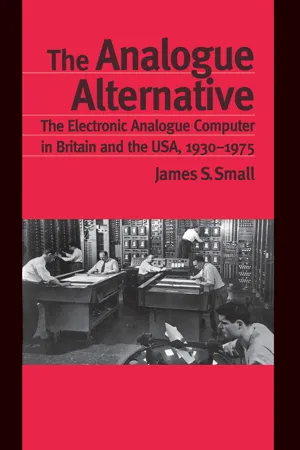
9781134699094_300_450.webp


Far better depth on the subject.

Air defense, not codebreaking, was the big driver for faster, more capable computers. Air defense systems required being able to handle multiple inputs from distant stations, like radar, while cranking out intercept solutions in real-time then passing these to missile batteries and aircraft.
 
Last edited:
No in theory and practical application the UK is the originator of the 'electronic computer'.

Layers of sophistication and complexity and specific tasks, much as great achievements they be. Do not obscure hard reality or fundamental theory.

No amount of chest beating or engaging in doing the UK down can achieve anything in this bar attempts at gaslighting as some form of Ministery of Truth style revision of history.

At no point does that imply others might have spent more and achieved much in both furthering the theory and practical design of such technology.
Great titans exist in America's efforts in computing and America's achievements in the field be legion. There is no need to play this game.
 

Similar threads

Back
Top Bottom