Life of Tyo
ACCESS: Confidential
- Joined
- 23 January 2022
- Messages
- 139
- Reaction score
- 553
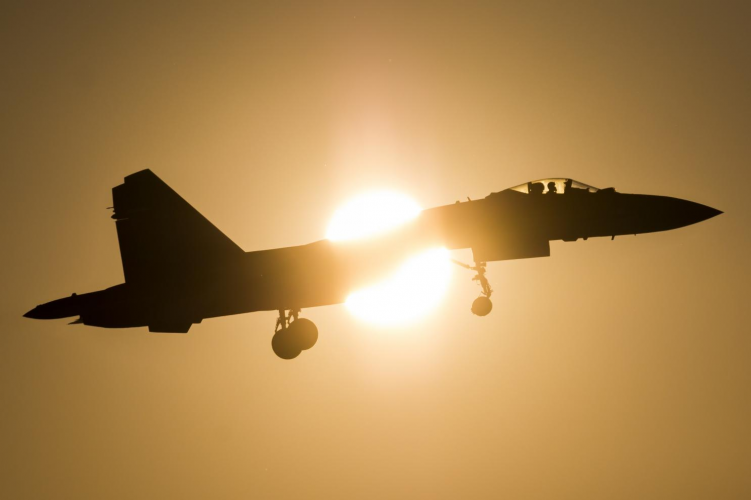
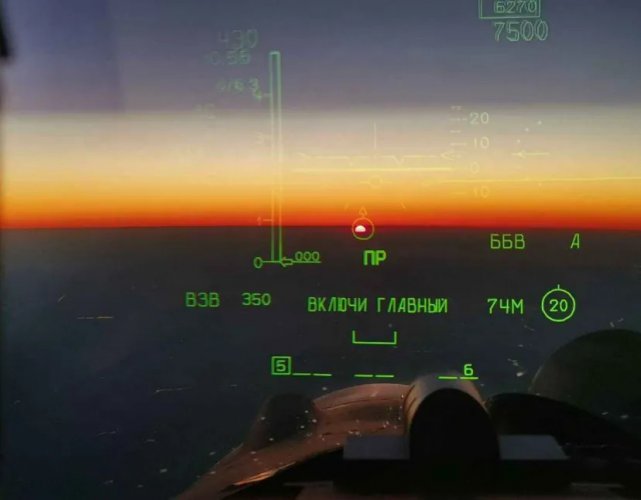
Time to warm up R-74M with sunset



There is no such thing as AN/APQ-65. You have instead a AN/APG-65 radar which is installed on old F-18 Hornets, and you have the AN/MPQ-65 which is a radar used for the Patriot missile system, replacement for the older AN-MPQ-53 radar. The version AN/MPQ-65A is a newer version which was presented in 2017, with AESA antenna array and improved beam and frequency agility, but it was not confirmed to be present in Ukraine.What happened on 13 May 2023 was very intrigued.That day as we know in the Russian air space ( over Bryansk area) were shot down one Su-34 and one Su-35S. All three crew members were KIA.Some serious Russian sources ( from TG channels) mentioned that Ukrainians used MIM-104 with newer AN/APQ-65A with its LPI signals (very high frequency agility).Sources also mentioned that they flew in the radio-silence mode and even with no RWR activated.
Some open sources mention that LPI radar signals ( using a technique called 'spread spectrum transmission') can not be registered by any RWR, hm,hm ...
There is no such thing as AN/APQ-65. You have instead a AN/APG-65 radar which is installed on old F-18 Hornets, and you have the AN/MPQ-65 which is a radar used for the Patriot missile system, replacement for the older AN-MPQ-53 radar. The version AN/MPQ-65A is a newer version which was presented in 2017, with AESA antenna array and improved beam and frequency agility, but it was not confirmed to be present in Ukraine.
https://www.radartutorial.eu/19.kartei/06.missile/karte007.en.html
What is specific for the Patriot is the track-via-missile system. A receiver for the reflected signal is placed on the missile and thus has increased accuracy as it approaches the target. Instead of processing it locally, the signal is instead rebroadcast on another frequency and received by the launcher. The launcher then compares the signal it sent to the one received by the missile, and through this comparison can perform the determination of the target location relative to the missile. But because the ground station knows the rough location of the target, and details of the original signal it sent, it does not require the signal to be continual and thus does not demand a separate illumination radar. So it is hard both to know that a missile is coming at you and also to jam the missile.
I'm kinda curious about this, is Track via missile on Patriot basically the same thing as 2 way data link on AIM-120DOf course AN/MPQ-65A ,little mistake. TVM technique is used also by the SAM-10 e.g. and even by the new AAM type R-37M.
RWR would aways be active since it doesn't affect your radio silent capability because it doesn't transmit anythingthey flew in the radio-silence mode and even with no RWR activated.
I'm kinda curious about this, is Track via missile on Patriot basically the same thing as 2 way data link on AIM-120D
RWR would aways be active since it doesn't affect your radio silent capability because it doesn't transmit anything
there would be no advantage in switch off your RWR, I don't think you can even switch it off to be honestYes if it is activated of course.... RWR/ESM is based on the passive radio-location as we know.
What is ''two way data-link'' in fact ?
I'm kinda curious about this, is Track via missile on Patriot basically the same thing as 2 way data link on AIM-120D
RWR would aways be active since it doesn't affect your radio silent capability because it doesn't transmit anything
In a two-way data link both the launching station or aircraft talk one with another. In a one-way data link only the launcher talks with the missile. For example, in previous versions of AIM-120 AMRAAM up to the C variant the firing aircraft continues to track the target, periodic updates, e.g. changes in the target's direction and speed, are sent from the launch aircraft to the missile, allowing the missile to adjust its course so that it is able to close to a self-homing distance where it will be close enough to "catch" the target aircraft when the missile activates its own radar.
For the AIM-120D mid-course updates are transmitted to the missile over a networked data link system and any system with sensor contact on the target can contribute track data to the missile. This means the launching aircraft, another aircraft in the same flight, an airborne early warning aircraft, or a ship are all equally capable of providing mid-course updates at any time during flight. For this the missile should be able to "talk back" to these suppliers of data, so that they know to which the missile listens.
There is of course new 'TVM channel' and keep in mind that all RC channel signals work in the centimetric X band so that story about AWACS can provide 'mid course update' for the launched AAM's are nothing than joke. AWACS radars work in the decimetric L band or centimetric S band together with decimetric L band for the IFF.
Btw , AAM's can not send any kind of signals to the own launch platform or another one.
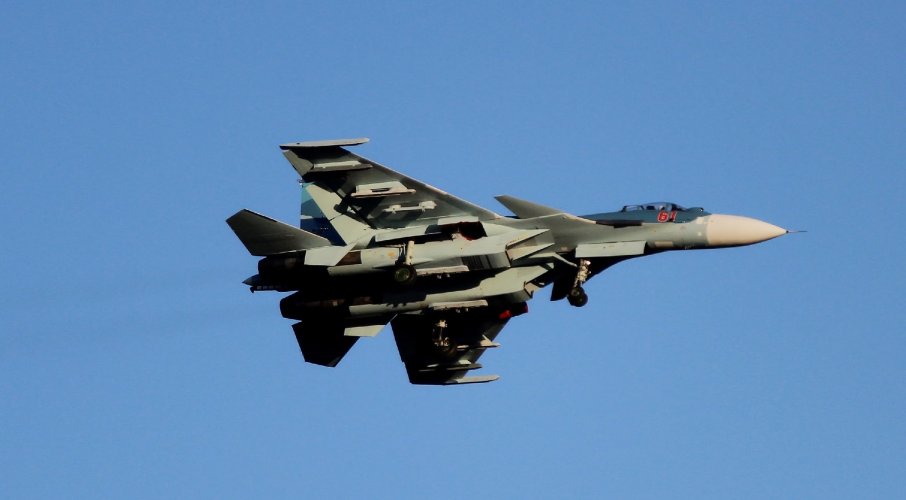


Plenty of Su-57, Su-35 and Su-34 deliveries, very little Su-30s. I presume the type has fallen out of favor with the VKS?Another Su-35 lot delivered to VKS, sixth of this year.
View: https://x.com/La_souris_DA/status/1984489234862866925
https://t.me/uac_ru/3779
Likely because Irkut is too busy with civilian aviation.Plenty of Su-57, Su-35 and Su-34 deliveries, very little Su-30s. I presume the type has fallen out of favor with the VKS?
Well, the VMF still need probably a few dozens Su-30SM2s to replace the remaining Su-24 and if they really take Kuznetsov out of service, the old Su-33s too. Plus there are i think still export orders to complete (Belarus? Kazakhstan? others?) but i guess it's another subject. But yeah i would be disappointed if VKS doesn't take another few dozens Su-30SM2s over the immediate period, they need numbers and SM2 is still a capable bird especially with R-37M and hopefully R-77M/R-74M2 too.Plenty of Su-57, Su-35 and Su-34 deliveries, very little Su-30s. I presume the type has fallen out of favor with the VKS?
I can't say i entirely disagree with this argument at least for RK, probably was better to just use some Su-27SMs/Su-30/30M2s instead, though i guess acro-groups are about showing the flag and all that. But i do see the need for conversion/training units to have them, afterall the pilots need to be exposed and train with the new birds first, can't argue with that.^
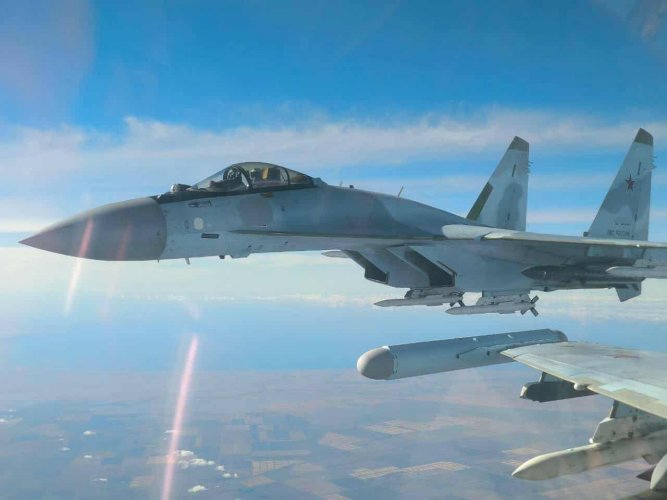
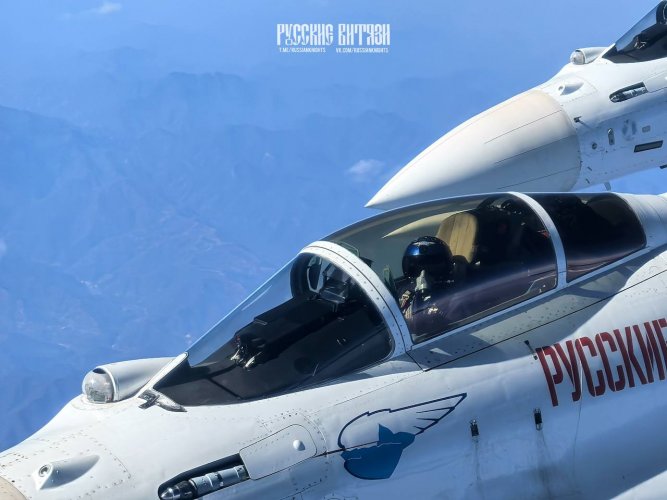
Although it is nice photo but I must mention my personal opinion.For me it is more important to have such a capable and modern fighter like the Su-35S in the front line combat( or first-line) VKS units than in the one aerobatic team.Especially when we talk about the fighter with so capable radar ,AAM's and engines with TVC nozzles.
When we count all of that Su-35S ,from the 'Russian Knights' (8pcs) ,then those in Akhtubinsk ,Lipetsk and Zhukovsky air bases ,there would be enough fighters for one complete fighter sqn (12 pcs ) ,maybe not for the complete regiment. Of course ,Su-35S must be stationed in the Lipetsk air base (4th CBP i PLS) but for me it is very important to have such a capable fighter in the units like 689 GvIAP in the Chkalovsk air base in the Kaliningrad Oblast or 38 IAP in the Belbek air base on Krimea.
I suppose that they are filling operational units with the new fighters, i.e. fighter regiments located along the western borders ,close to NATO countries, because just last year and until now with this sixth delivery, close to 30 new Su-35S were delivered to the VKS ( 16 last year in the four batches and until today complete sqn or more).
They don't offer much of an advantage over Su-35S thoughBut yeah i would be disappointed if VKS doesn't take another few dozens Su-30SM2s over the immediate period, they need numbers and SM2 is still a capable bird especially with R-37M and hopefully R-77M/R-74M2 too.
Plenty of Su-57, Su-35 and Su-34 deliveries, very little Su-30s. I presume the type has fallen out of favor with the VKS?
Su-34 is the most used type, which has its niche. As bad as the type is, it's hard to displace it in current context.Well, the VMF still need probably a few dozens Su-30SM2s to replace the remaining Su-24 and if they really take Kuznetsov out of service, the old Su-33s too. Plus there are i think still export orders to complete (Belarus? Kazakhstan? others?) but i guess it's another subject. But yeah i would be disappointed if VKS doesn't take another few dozens Su-30SM2s over the immediate period, they need numbers and SM2 is still a capable bird especially with R-37M and hopefully R-77M/R-74M2 too.
200 have been produced, FB recently dedicated a post to the fact, but not all of these are VKS aircraft and not all of the produced aircraft are still flying due to airframe losses from accidents and opposing (and sometimes their own) AD systems in the war in Ukraine.VKS has more than 200 Su-34/M
200 have been produced, FB recently dedicated a post to the fact, but not all of these are VKS aircraft and not all of the produced aircraft are still flying due to airframe losses from accidents and opposing (and sometimes their own) AD systems in the war in Ukraine.

"FB", you mean that «Z-блогер» Russian Telegram user "Fighterbomber" ? Well, if you take such things as reliable information, I understand better...200 have been produced, FB recently dedicated a post to the fact, but not all of these are VKS aircraft and not all of the produced aircraft are still flying due to airframe losses from accidents and opposing (and sometimes their own) AD systems in the war in Ukraine.

So refreshing to read something sensible at last.This is 'FFF' thread ....
Yes,Su-34's as modern and capable frontal/tactical bomber were downed by S-300PS,Buk-M1,MIM-104 etc .It happens ,shit happens as 'FB' ( former Su-24/34 pilot) described once. Nothing new, USAF super modern tactical bomber F-15E was shot down in 1991 by then 30 years old S-75 Dvina .In 1999 as we know, modern and very capable stealth tactical bomber F-117A was shot down by 25 years old S-125M Neva-M.There is no combat aircraft that can not be shot down. There will be always a battle between SAM's and the fighters/ bombers.
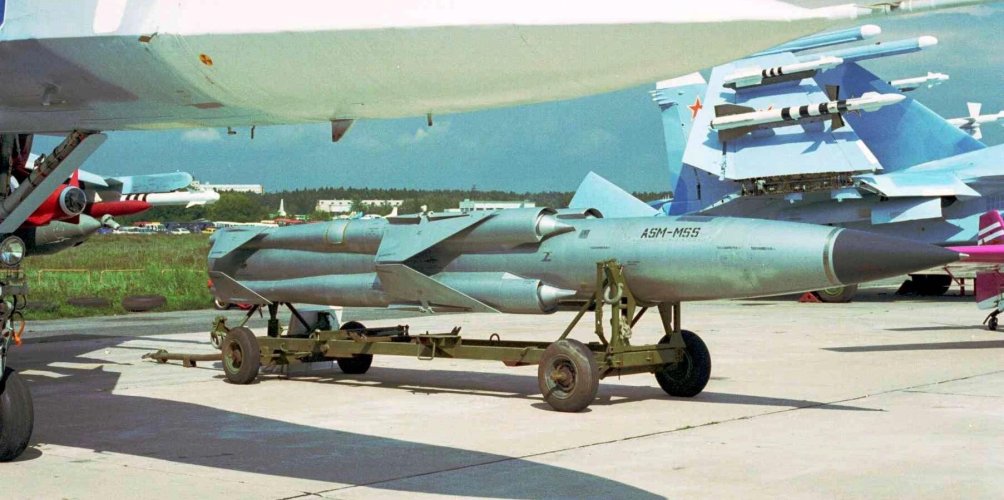
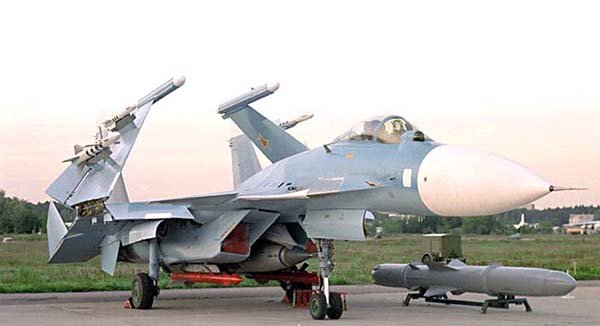
As per fighterbomber, su-34 can't do automatic terrain following and can't do obstacle detection; features removed in 2000s to save on costs. As such, su-34 can't do very low altitude flight in adverse visual conditions, over populated area it can do low altitude (several hundred m), to be safely away from power lines and microterrain.What??? You do realize that none of the aircraft you mentioned can strike anything in the rear of any nation with a half decent IADS network, right? Do we seriously have to go through how Saudi F-15s and other Arab coalition F-16s were shot down by some of the least sophisticated air defense systems the Houthis brought to bear in Yemen?
It isn't a matter of belief. Please refer to description from OEM. This is basic, i.e. your arrogance is suprisingly uninformed.If you seriously believe that this is the role of a tactical bomber
Criteria of succesful dismantling AD is freedom of achieving missions.Ukrainian AD is dismantled far more effectively and with less risk through Iskander-M and Tornado-S
Yes, that's the way it's done by non-lo aircraft; furthermore, Su-34 was, by large, an update to basic flanker airframe to let it do viable low altitude flight. As you may have noticed that Su-34s early in the war did exactly that. And this is exactly what it turned out it can't do.Let me guess, you believe that flying low and slow with sweepy swoopy wings does the trick, right? Lol
Why? Can you tell about it more? In your opinion what in prolonged conflict can destroy love of Chinese military for J-16.J-16 may crush into an abrupt ending