It is a development of the BARS family radar, family which started its life in the soviet times, not a completly new product.

The use of PESA instead of AESA technology shows its true age.


Irbis has a max ( calibrated, instrumental ) range in air to air mode for High PRF regime of 400kms . In medium PRF mode max range is 150kms . In the so called DO-regime ( dalnye obnaruzhenye or further detection mode ), it is said to be able to detect and automatically track fighter MiG-21 from 400kms. This mode has 10x10 degrees scanning zone, so you really need to know before where to look in order to detect the target. Like for example the information relayed from an AEW radar. No own AEW radar, no detection.

It is not N135 but N035 and N035 Irbis has nothing to do with N011M Bars-M. N035 Irbis has completely new TWT's ,even the reflector of the antenna with waveguide unit is much similar to those one from N036 Belka. Take a look.


Here is a history of the Flanker radars family. Including the latest in the family, the Irbis. ;)

Yes of course but by the Carlo Kopp....

''The follow on to the BARS is the new Irbis-E (Snow Leopard) hybrid phased array, in development since 2004 and planned for the Su-35BM block upgrade, and as a block upgrade or new build radar for other Flanker variants, such as the Su-35-1. It will enter production before the end of this decade.

The Irbis-E is a direct evolution of the BARS design, but significantly more powerful. While the hybrid phased array antenna is retained, the noise figure is slightly worse at 3.5 dB, but the receiver has four rather than three discrete channels. The biggest change is in the EGSP-27 transmitter, where the single 7 kiloWatt peak power rated Chelnok TWT is replaced with a pair of 10 kiloWatt peak power rated Chelnok tubes, ganged to provide a total peak power rating of 20 kiloWatts.The radar is cited at an average power rating of 5 kiloWatts, with 2 kiloWatts CW rating for illumination. NIIP claim twice the bandwidth and improved frequency agility over the BARS, and better ECCM capability. The Irbis-E has new Solo-35.01 digital signal processor hardware and Solo-35.02 data processor, but retains receiver hardware, the master oscillator and exciter of the BARS. A prototype has been in flight test since late 2005. ''

As I wrote earlier ,it is not Irbis-E but Irbis ( remember, Irbis-E is export version only). From the antenna design to the radar-electronics blocks, it is completely different from the older N011M Bars-M. Another detail which I mentioned earlier. N035 Irbis has two TWT's, yes but one the main, with average power in the HPRF mode of 5kW ( max output pulse power is 20kW) and the second one with average power of 2kW. Test version of the N035 Irbis in 2005 had main TWT with average power in the HPRF mode of 1kW .After that they increase average power of it to 5kW. He even did not know some details for the Bars-M where 'peak power' as max output pulse power is not 7kW ,of course it is much higher .Older N001 Myech and N019 Rubin have max output pulse power in the HPRF mode of 8kW.

Of course all of that one Carlo Kopp could't know. If you had read the interviews with Yuri Bely, these details would have been familiar to you.
I think this is appropriate thread for the last several comments.
 
This photo shows one of the highest speeds of the Su-35S firing an R-77-1 missile at a target head-to-head position.

It's quite difficult to find an uncensored version.

View attachment 787681


Target speed was 965 km/h,height 1370m.Distance to target ,over 40kms.Target was small,that circle with letter 'M' beneath the number 8350. I think that triangle in the upper corner of the circle( target angle aspect) means that it was receding so the combat mode was ZPS ,not PPS. That was the reason why pilot of Su-35S accelerated to the real speed of Mach 1.34 . Target used ECM ( АП-активная помеха).

In the moment when pilot got 'launch authorised' or 'ПР' command ,he was in climb.That arrow with half a circle beneath the target angle aspect and target size symbol shows vertical speed. He than was recommended to descend ( letter 'Г' with the arrow beneath the distance to target scale).
 
Target speed was 965 km/h,height 1370m.Distance to target ,over 40kms.Target was small,that circle with letter 'M' beneath the number 8350. I think that triangle in the upper corner of the circle( target angle aspect) means that it was receding so the combat mode was ZPS ,not PPS. That was the reason why pilot of Su-35S accelerated to the real speed of Mach 1.34 . Target used ECM ( АП-активная помеха).

In the moment when pilot got 'launch authorised' or 'ПР' command ,he was in climb.That arrow with half a circle beneath the target angle aspect and target size symbol shows vertical speed. He than was recommended to descend ( letter 'Г' with the arrow beneath the distance to target scale).
i not sure it,s ZPS ( pursuit ) because Target mark on to Aircraft , how to know is ZPS mode
 
i not sure it,s ZPS ( pursuit ) because Target mark on to Aircraft , how to know is ZPS mode

Yes I saw that 'target mark' but if I see well there was two aircraft in fact. There is two target marks in the bottom corner where we can see that 'FIRST FLIGHT' .It seems that upper one was marked with the cross and we can't see its heading so well.So for me only way to know if it was incoming or receding is that target angle aspect triangle.
 
Yes of course but by the Carlo Kopp....

''The follow on to the BARS is the new Irbis-E (Snow Leopard) hybrid phased array, in development since 2004 and planned for the Su-35BM block upgrade, and as a block upgrade or new build radar for other Flanker variants, such as the Su-35-1. It will enter production before the end of this decade.

The Irbis-E is a direct evolution of the BARS design, but significantly more powerful. While the hybrid phased array antenna is retained, the noise figure is slightly worse at 3.5 dB, but the receiver has four rather than three discrete channels. The biggest change is in the EGSP-27 transmitter, where the single 7 kiloWatt peak power rated Chelnok TWT is replaced with a pair of 10 kiloWatt peak power rated Chelnok tubes, ganged to provide a total peak power rating of 20 kiloWatts.The radar is cited at an average power rating of 5 kiloWatts, with 2 kiloWatts CW rating for illumination. NIIP claim twice the bandwidth and improved frequency agility over the BARS, and better ECCM capability. The Irbis-E has new Solo-35.01 digital signal processor hardware and Solo-35.02 data processor, but retains receiver hardware, the master oscillator and exciter of the BARS. A prototype has been in flight test since late 2005. ''

As I wrote earlier ,it is not Irbis-E but Irbis ( remember, Irbis-E is export version only). From the antenna design to the radar-electronics blocks, it is completely different from the older N011M Bars-M. Another detail which I mentioned earlier. N035 Irbis has two TWT's, yes but one the main, with average power in the HPRF mode of 5kW ( max output pulse power is 20kW) and the second one with average power of 2kW. Test version of the N035 Irbis in 2005 had main TWT with average power in the HPRF mode of 1kW .After that they increase average power of it to 5kW. He even did not know some details for the Bars-M where 'peak power' as max output pulse power is not 7kW ,of course it is much higher .Older N001 Myech and N019 Rubin have max output pulse power in the HPRF mode of 8kW.

Of course all of that one Carlo Kopp could't know. If you had read the interviews with Yuri Bely, these details would have been familiar to you.
I think this is appropriate thread for the last several comments.
It is a evolutionary evolution of the BARS family. Heavily modernised, significantly more powerfull, but still a PESA radar equiped with travelling tubes. High frequency agility and Low Probability of Interception operation are out of discussion. It is very vulnerable to jamming, which would seriously degrade its performance and range of detection. It would be maybe on par with a F-16 A retrofitted with AN/APG-83 SABR radars, but against fifth-generation fighters it has no chance.

Frontline NATO members like Poland and Romania are receiving their F-35 fighters, Poland already next year and Romania by 2030. The Su-35 would be basically obsolete after this moment. Even the french Rafale, although technically not a fifth-generation fighter, is able to dominate an engagement with its stealth features, AESA radar and the METEOR missile.

It makes no sense for Russia to continue to build new SU-35 fighters, at least not if they intend to be on par with Europe and USA.
 
It is a evolutionary evolution of the BARS family. Heavily modernised, significantly more powerfull, but still a PESA radar equiped with travelling tubes. High frequency agility and Low Probability of Interception operation are out of discussion. It is very vulnerable to jamming, which would seriously degrade its performance and range of detection. It would be maybe on par with a F-16 A retrofitted with AN/APG-83 SABR radars, but against fifth-generation fighters it has no chance.

Frontline NATO members like Poland and Romania are receiving their F-35 fighters, Poland already next year and Romania by 2030. The Su-35 would be basically obsolete after this moment. Even the french Rafale, although technically not a fifth-generation fighter, is able to dominate an engagement with its stealth features, AESA radar and the METEOR missile.

It makes no sense for Russia to continue to build new SU-35 fighters, at least not if they intend to be on par with Europe and USA.

That is your opinion, but only opinion. That's it. Read more about radar N035, IRST OLS-35 and especially about the combat system known as BOSES-TU 'Duel'.

In the meantime, keep on mind that Su-35S shot down 4th gen 9G -capable MiG-29 from 213 km away with R-37M.
 
Today the F-15 is still in production, widespread service and in use across the world.

A major factor as to why the F-15 is still in production is no doubt due to the very shortsighted decision to terminate the F-22's production run around 2010 (The last F-22 rolled off the production line in 2012).
 
A major factor as to why the F-15 is still in production is no doubt due to the very shortsighted decision to terminate the F-22's production run around 2010 (The last F-22 rolled off the production line in 2012).
To be fair, most major is simply export. Arabs who paid for key updates to F-15 frame (most crucially, FbW, enabling it as an oversized payloads carrier) wouldn't get access to raptor anyway.

I.e. F-15EX is American variant of Su-30 story.
 
it looks like F-16.net landed its elite fanboy troops on SP soil

lion-king-scar.gif
 
Confirmed as friendly fire incident.

The russians could have a deficiency in IFF recognition and target discrimination.
 
Confirmed as friendly fire incident.

The russians could have a deficiency in IFF recognition and target discrimination.

IFF systems are rarely used in the real combat situations especially in the fighter aviation and missile AD systems.On the night of 28 Feb 2022 one UkrAF MiG-29 pilot shot down and killed his colleague in the Su-27.Of course he didn't use IFF. Many RuA&SF and UkrAF combat aircraft were shot down by FF ( SAM's) were IFF systems were not used of course.
 
apparently new VKS units labeled "M" don't have it, some also pointed to the lack of RWR but Khibiny works basically as a better RWR so it's fine, why the new ones don't have MAWS is a mistery
 
Are there Su-34M? Because IIRC NVO variant still retains the original index, which is sensible, as the changes are not significant to achieve -M suffix.
 
Any info on how the radar warning receiver works on these aircraft? The su-35 seems to have a more advanced system given the su-34 patriot evasion video.
 
Any info on how the radar warning receiver works on these aircraft? The su-35 seems to have a more advanced system given the su-34 patriot evasion video.
Patriot IIRC launches silent, and CW (or whatever the equivalent) switches on only at terminal stage. I doubt Su-35 can detect command guidance emissions, especially since both have same L-150 RWR.
 
anything that emits a radio wave from a radar can get picked up by an RWR, however no one knows how good the noise to background ratio is in terms of receiver quality.
 
Last edited:
the su-35s rwr (L-150-35) is indeed a newer, more advanced and more complete defensive system it claims capacity of geoloc and identify emissions with <1° precision and more, the su-34 either comes with the standard L-150 or a tailored L-150-NU34 which the vague information I could find says it's more optimized to attack the emitting source, both claim 1,2-18ghz and effectiveness against LPI signals, only the su-35 has been spotted with milimeter wave sensors
 
Last edited:
Patriot IIRC launches silent, and CW (or whatever the equivalent) switches on only at terminal stage. I doubt Su-35 can detect command guidance emissions, especially since both have same L-150 RWR.

What happened on 13 May 2023 was very intrigued.That day as we know in the Russian air space ( over Bryansk area) were shot down one Su-34 and one Su-35S. All three crew members were KIA.Some serious Russian sources ( from TG channels) mentioned that Ukrainians used MIM-104 with newer AN/APQ-65A with its LPI signals (very high frequency agility).Sources also mentioned that they flew in the radio-silence mode and even with no RWR activated.

anything that emits a radio wave from a radar can get picked up by an RWR, however no one knows how good the noise to background ratio is in terms of receiver quality.

Some open sources mention that LPI radar signals ( using a technique called 'spread spectrum transmission') can not be registered by any RWR, hm,hm ...

the su-35s rwr (L-150-35) is indeed a newer, more advanced and more complete defensive system it claims capacity of geoloc and identify emissions with <1° precision and more, the su-34 either comes with the standard L-150 or a tailored L-150-NU34 which the vague information I could find says it's more optimized to attack the emitting source, both claim 1,2-18ghz and effectiveness against LPI signals, only the su-35 has been spotted with milimeter wave sensors.

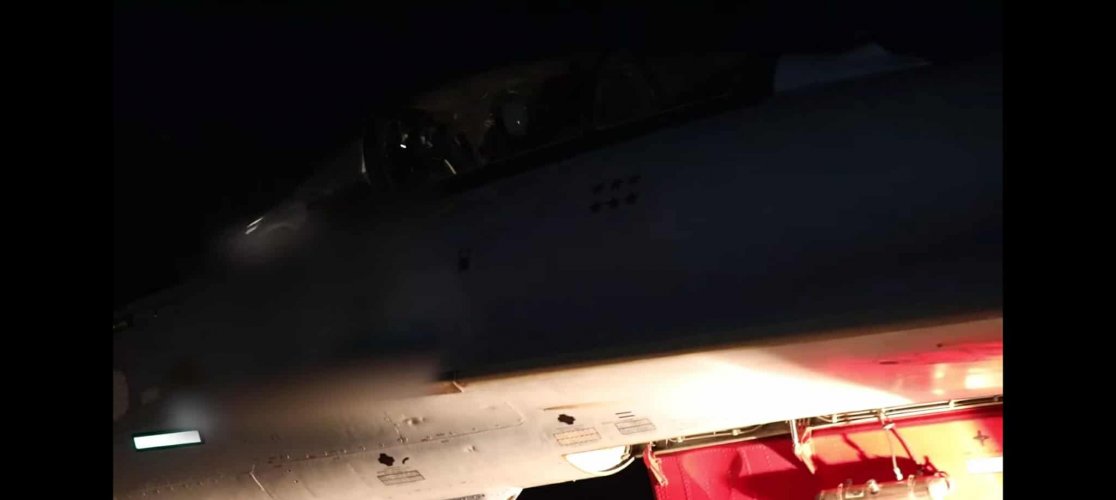
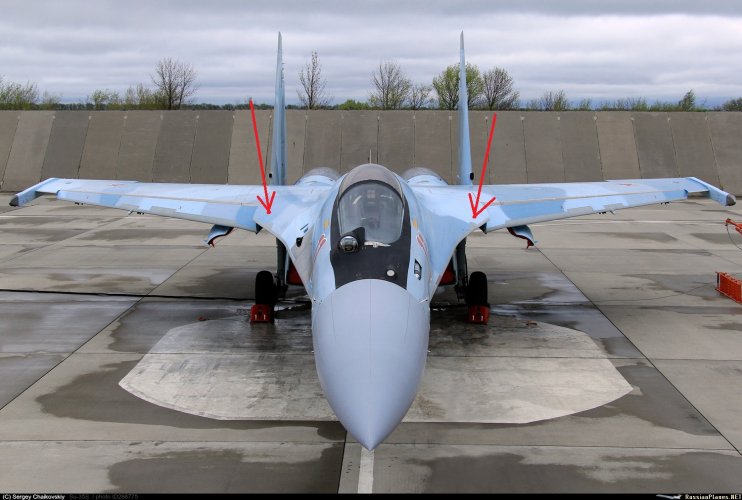
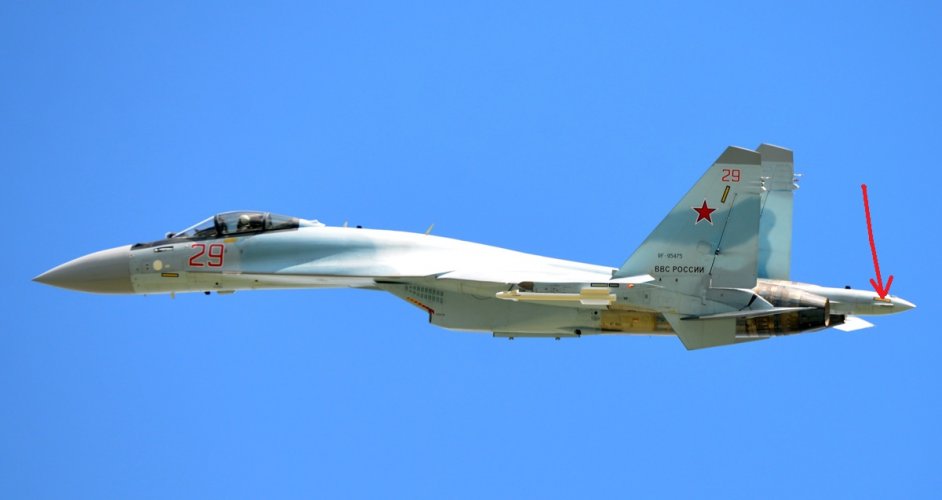
Red arrows show us L150-35 'Pastel' receive antennas for the milimetric radar band ( Ka band ,f=27-40GHz,λ=11.1mm–7.5mm) for the front and the rear hemisphere.


Su-35S na stajanci.jpg

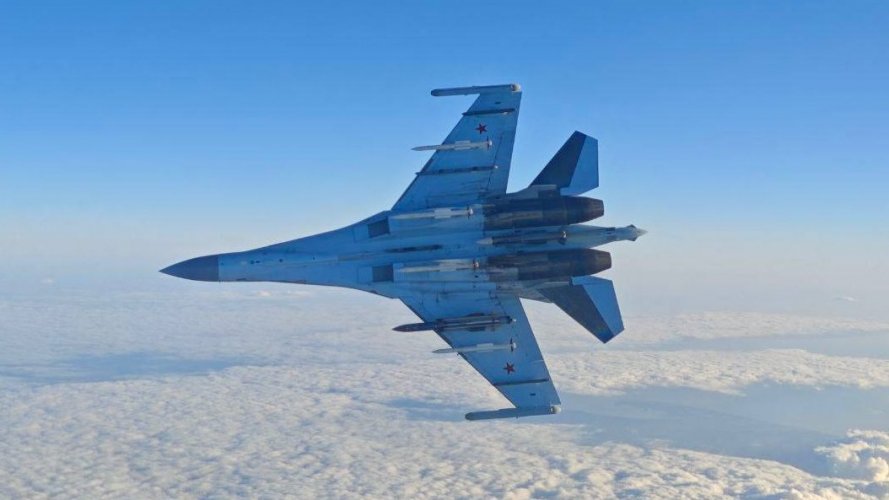
Su-35S u letu.jpg

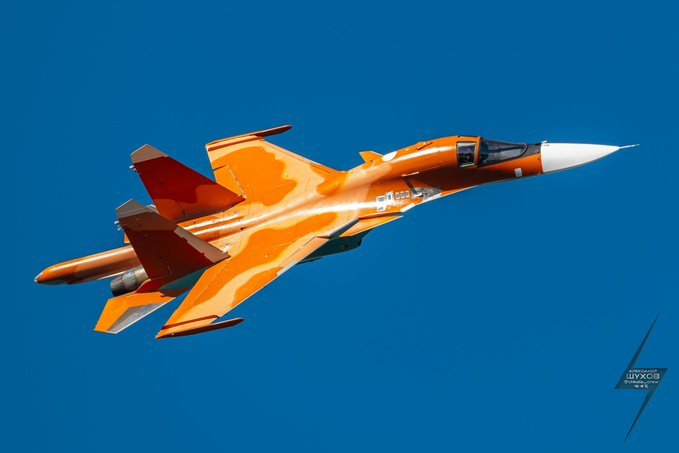
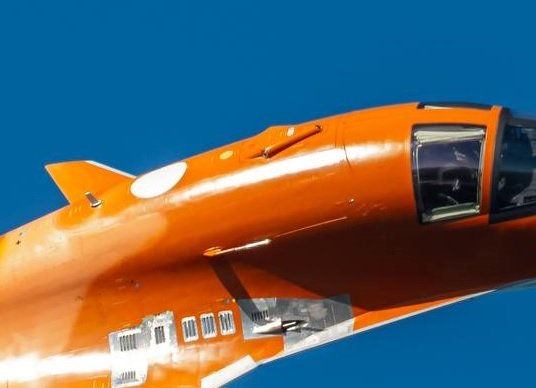
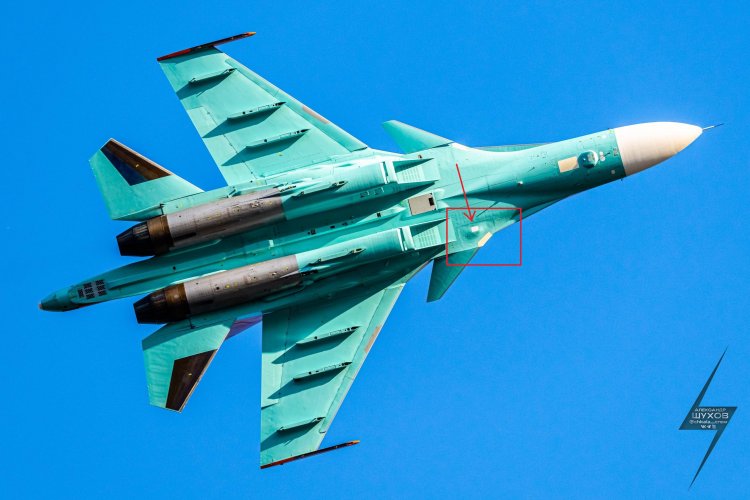
One new detail on the Su-34ME for the Algerian AF.

Su-34ME RWR mod.jpg

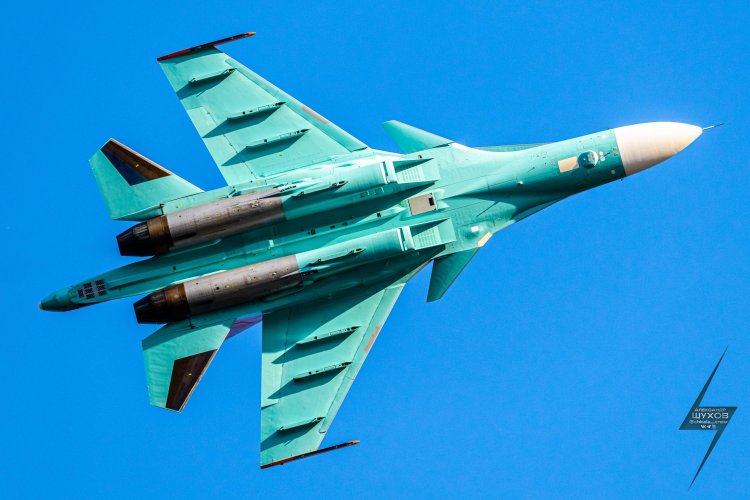
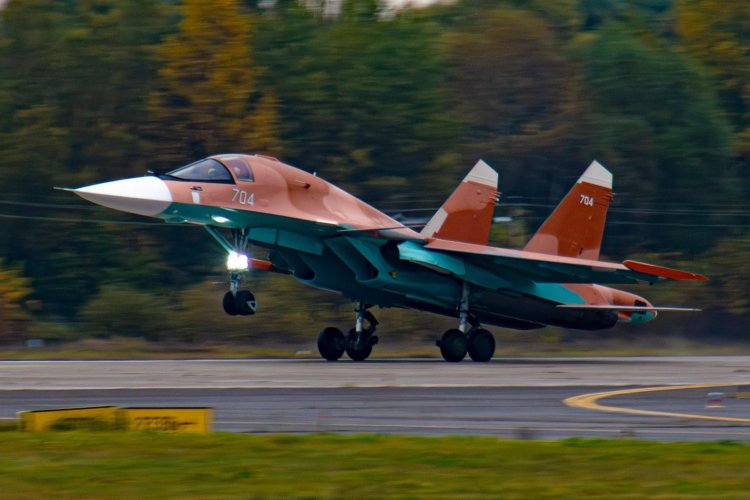
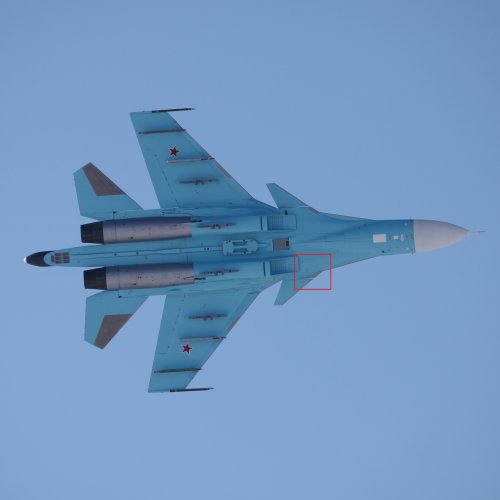
Su-34 from VKS.

Su-34 RWR mod.jpg

RWR L150 'Pastel' has several receive antennas: for the fine ,crude and angular bearing (passive radio location).


Similar threads

Back
Top Bottom