Fencer
ACCESS: Restricted
- Joined
- 3 April 2025
- Messages
- 33
- Reaction score
- 105
The crew ejected and were rescued by civilian sailors.Apparently crew ejected safely.

The crew ejected and were rescued by civilian sailors.Apparently crew ejected safely.

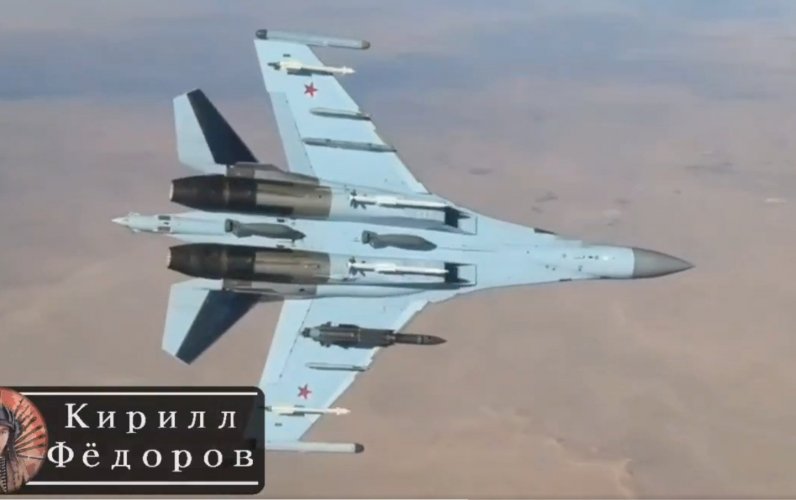
Could someone explain why the Russian naval aviation prefers/uses the Su-30SM rather than utilizing the Su-35S like the VKS does?
Probably because the Su-30SM is a better multirole fighter (two pilots), in VMF land based tactical units it will replace all Su-24s, so it will do both air defence of VMF bases as well as the strike missions the Su-24 was doing in support of naval operations.Could someone explain why the Russian naval aviation prefers/uses the Su-30SM rather than utilizing the Su-35S like the VKS does?

But given that the Su-35S is overall more modern and also capable of launching A2G (and thus probably with a bit of tweaking A2S) munitions I think that the Su-35S could probably do most of the stuff the Su-30SM does. I suppose the WSO is the biggest upside? Given that it means less load on the pilot who has to process lots of info. And as the SM2 is supposedly an SM but brought up to the Su-35 standard, it seems like they want that second crewmember per plane really badly. Because I doubt the Su-30SM2 will be much cheaper if at all cheaper than the Su-35S of which like 130 have already been produced I think.I am guessing because the SM (which is similar to the MKI) is a more multi-role aircraft and has more capability to do various strike/maritime strike roles. VKS use of the Su-35S may be more strictly focused on air superiority.
Being half as cheap probably helps ;pCould someone explain why the Russian naval aviation prefers/uses the Su-30SM rather than utilizing the Su-35S like the VKS does?
Those ecm pods are big!
But given that the Su-35S is overall more modern and also capable of launching A2G (and thus probably with a bit of tweaking A2S) munitions I think that the Su-35S could probably do most of the stuff the Su-30SM does. I suppose the WSO is the biggest upside? Given that it means less load on the pilot who has to process lots of info. And as the SM2 is supposedly an SM but brought up to the Su-35 standard, it seems like they want that second crewmember per plane really badly. Because I doubt the Su-30SM2 will be much cheaper if at all cheaper than the Su-35S of which like 130 have already been produced I think.
Fair question, but lets put it in this way
the Su-30SM is basically a "Russianized" version of the Su-30MKI. When you combine all of them (the SM, MKI, MKM, MKA, etc). That's about 600 ish? combined. India is likely to continue using the MKI for a long time, producing spare parts for it and continuing to integrate it with various weapons.
In the 2000s, Russia basically piggybacked off the Russian designed equipment for India (the 30MKI, Mig-29K, etc), because they are a large and stable operator. This series also has more done to make it capable for strike.
While the Su-35 can do strike, the MKI/SM can do it better. Although there are intentions to make the 35 more multi-role, there's less motivation by its operators do commit to that path. The Russian Air Force has the Su-34s, and China has the J-16 among many other options.
If you had to look at another analogy, you can compare the Rafale and Typhoon. The Typhoon is strike capable, but a2g integration has been much slower. Its primary operators aren't strongly pushing it as they have the F-35 and Tornado to do those roles.
The Typhoon is strike capable, but a2g integration has been much slower.
Don't want to derail the thread, but Scalp-EG was the first weapon integrated with F2 standard Rafales, the first of which were delivered in December of 2004. FOC in October 2006. Then GBU-12/22 in late 2006 and SBU-38 in 2008. The only thing that arrived in time for Libya was the Damocles LDP and by that time also ASMP-A, GBU-24 and AM.39 Exocet had been integrated. SBU-64 and eventually -54 followed, along with GBU-49 EPW II, RECO-NG. Meteor was available with F3R from 2018 onwards, much like on Typhoon (not much earlier). Many of the other AG munitions you list aren't there yet. Truth is Rafale is clearly ahead in this respect and more suitable in AG roles than Typhoon. MARTE-ER, AARGM, TAURUS etc. aren't integrated at all and it will still take some years before they arrive.Yes and No. There has been some myth making over time around that...truth is its a bit of a mixed bag...
Rafale - Entered service in 2001, A2A only. 6 Rafale received LGB capability in 2007...6 years from service entry
Typhoon - Entered service in 2005, A2A only. Tranche 1 received LGB capability in 2008....3 years from service entry
So the premise starts out as utterly false.... Rafale then added SCALP and AASM in time for Libya in 2011 (9 years from service entry for SCALP and AASM), Typhoon went on to add PWIV in 2014 (9 years), and had better Designation Pods available (better by a margin as well, continues to have better as well) but then took another 4 years under Project Centurion to get Storm Shadow and Brimstone (13 years from service entry, as the RAF Tornado were hastily withdrawn). At the same time Typhoon got Meteor far earlier...
So in short, Typhoon actually got Air to Ground quicker than Rafale, was slower on integration of more complex air to ground munitions. Typhoon then expanded its (already more capable) air to air capabilities with Meteor well ahead of Rafale, caught up with PWIV (2014) and Storm Shadow/Brimstone (2018, remember Rafale still doesn't have anything like Brimstone) and is moving well ahead with additional weapons like JDAM, SDB1, Spear, Taurus and AARGM arriving or in an imminent pipeline...Right now Typhoon has far more weapons available than Rafale, in air to air and air to ground and in the main more relevant/capable ones too (for example Marte-ER is a far better AShm than AM.39 Exocet).....Rafale's weapon integration has, in contrast, significantly slowed and now seems reliant of UAE funding SmartGlider at some vague point in the future and integrating a new nuclear missile.
And for that matter, Typhoon entered service in 2003, not 2005.
I am guessing because the SM (which is similar to the MKI) is a more multi-role aircraft and has more capability to do various strike/maritime strike roles. VKS use of the Su-35S may be more strictly focused on air superiority.
Probably because the Su-30SM is a better multirole fighter (two pilots), in VMF land based tactical units it will replace all Su-24s, so it will do both air defence of VMF bases as well as the strike missions the Su-24 was doing in support of naval operations.
Being half as cheap probably helps ;p
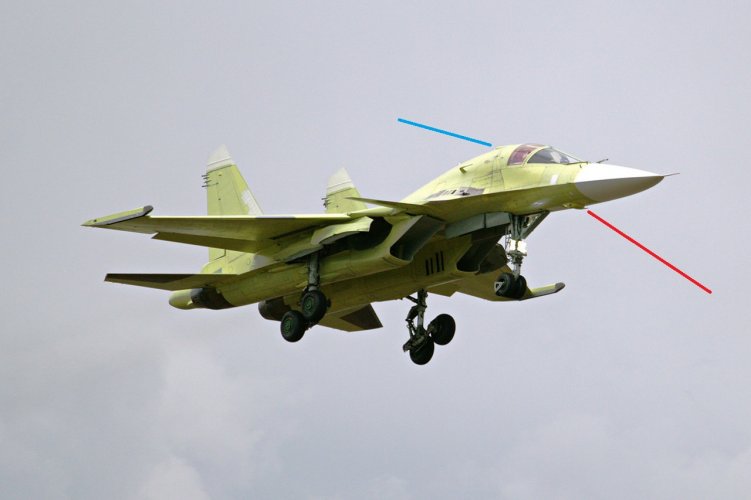
Are two sensors under the nose enough?
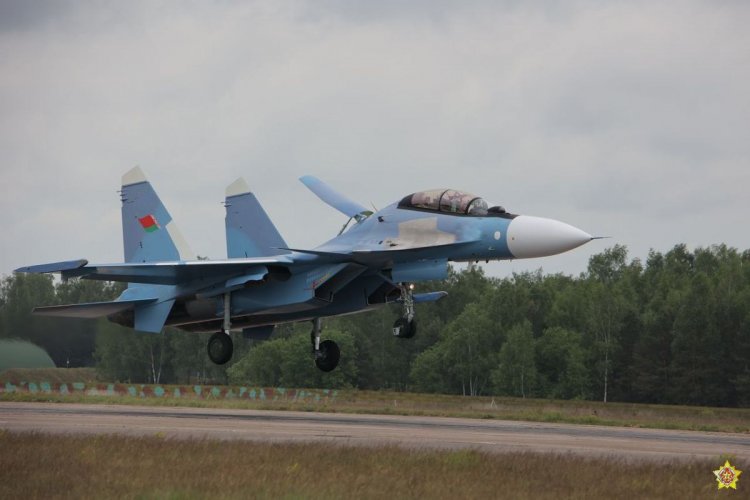
Su-30SM is less modern than SU-35, and is actually an "russianized" MKM (India uses different HUD and other systems.
Su-35 has better avionics than 30SM, ergo, it's a better multirole.
I think that transition to Su-30SM is more due to ease to crew switch and retraining, as it's a transition from 2-seat to two seat; you don't need to re-educate WSO to be proper fighter pilot as it would be the case with Su-24->Su-35 switch.

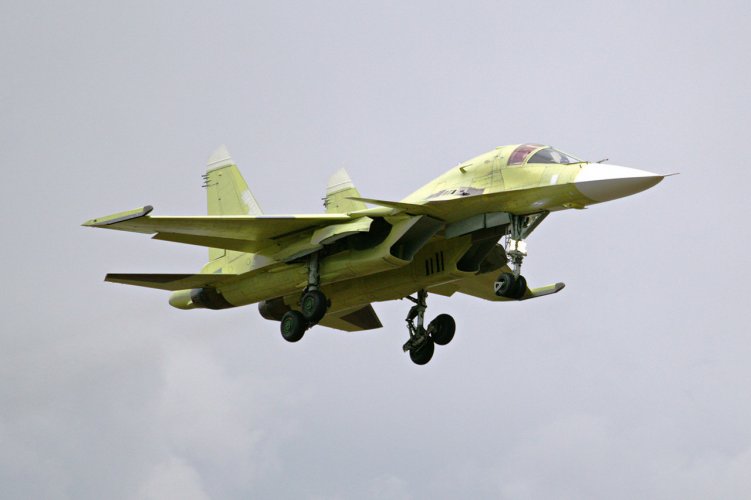
Slightly better video of the desert cammo Su-34. Can't see any visible markings though. Algeria still remains the most likely customer, though i saw Iran mentioned too, however that atm seems very unlikely as they don't seem to have received the Su-35s yet, unless they've hidden that so far.
Probably for Algeria but the darker brown camo blotches look more similar to Iranian camo. Looks really good minus the weird blue lower and bright white nose.

The Export Su-34 is better than the VKS Hellducks?Plot thickens re the possible export Su-34 (possibly Algeria), a bird in what looks like desert cammo was spotted somewhere.
View: https://x.com/notyassine900/status/1923384776859226570
Export equipment, especially from Russia, is like a new car. You can configure it with all the goodies you could want, but the price will increase accordingly. The VKS operates well over 130 Su-34s, so they operate a cost effective baseline configuration. Now if you have the necessary spare change and purchase like 8-12 Su-34s as your genuine tactical bomber fleet to rough up your neighbors with ALCMs and stand off munitions, then you can possibly afford to increase the individual unit cost by ticking a couple more boxes with regards to options.The Export Su-34 is better than the VKS Hellducks?
Often they are because customers chose some addons that VKS does not ,SU30 that VKS now has was basically derived from IndianThe Export Su-34 is better than the VKS Hellducks?
U.S. has never been in the habit of purchasing "lower spec" aircraft than what U.S. defense contractors sell overseas. Export sales generally come after the bulk of deliveries to U.S. military (with exceptions of course) and later production F-15s or F-16s, for example, have bells and whistles that were not available when American designs were frozen.Often they are because customers chose some addons that VKS does not ,SU30 that VKS now has was basically derived from Indian
exports
*used to be only cash straped Russian practice , but now it seems USAF F16 and F15 are also at lower spec that some exports