F-14ATomcat
ACCESS: Top Secret
- Joined
- 26 May 2024
- Messages
- 785
- Reaction score
- 1,694
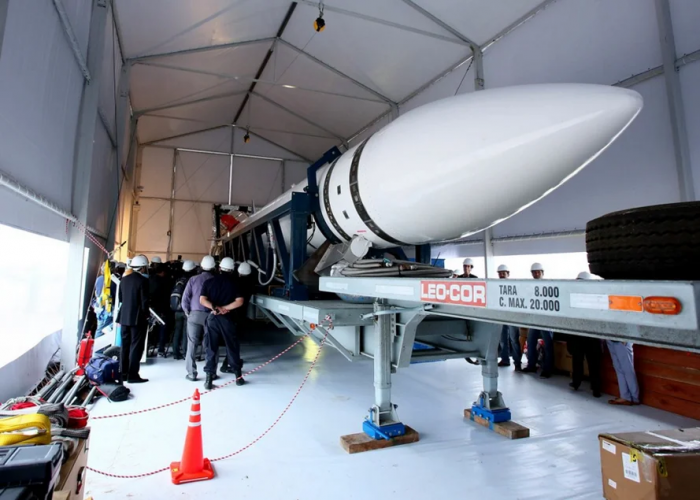
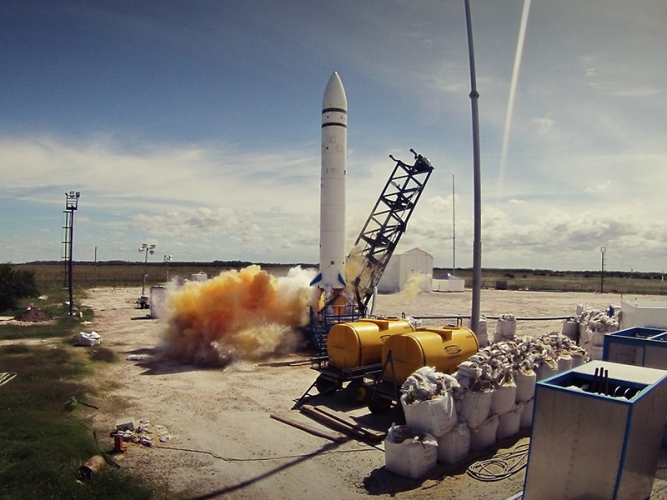
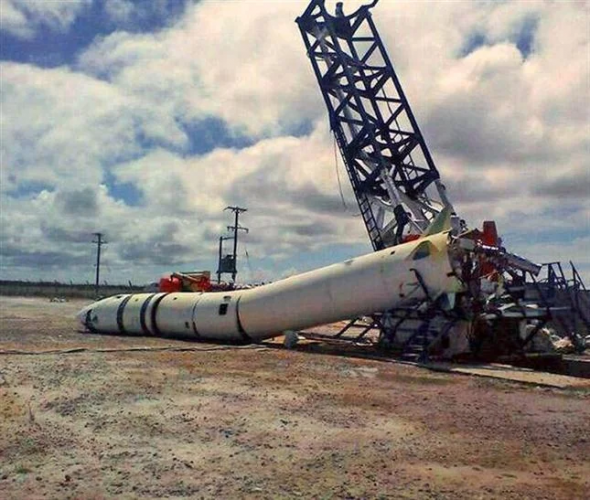
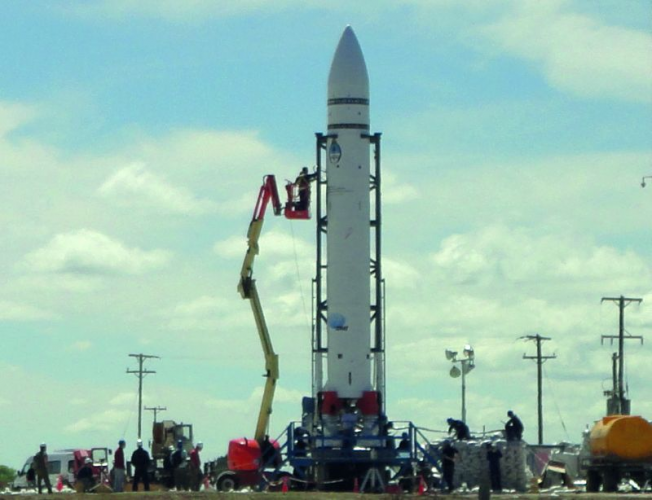
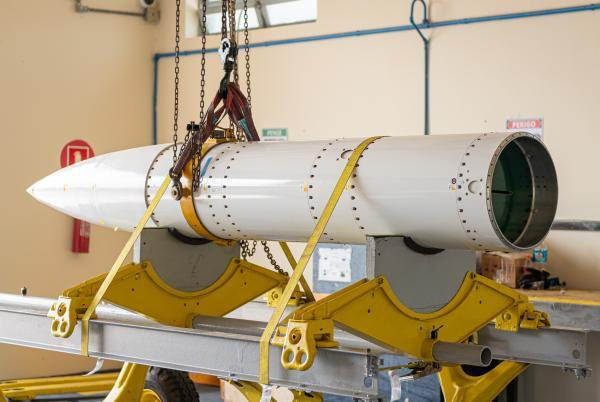
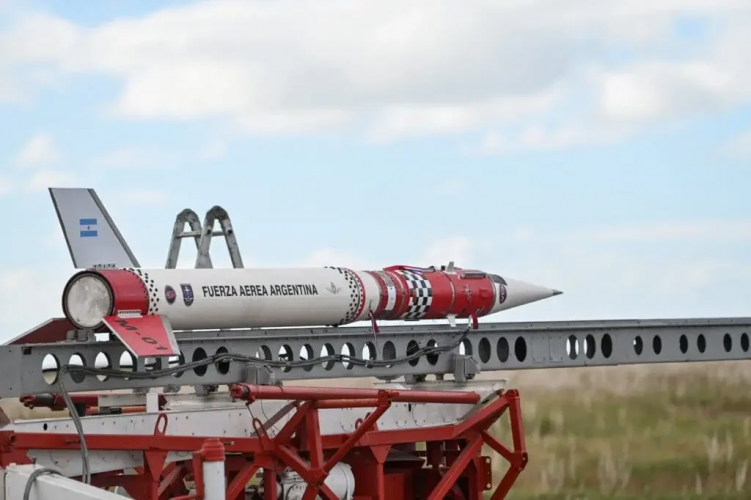
In a significant advance for Argentine aerospace development, the Argentine Air Force successfully completed the experimental launch of the MET 1-SO "Escorpio" sounding rocket, a domestically developed suborbital platform. The test took place on Thursday, May 22, 2025, at the CELPA II ATLÁNTICO Self-Propelled Projectile Experimentation and Launch Center, located in Mar Chiquita, Buenos Aires province, and marked a new milestone in the country's ability to design, operate, and recover suborbital flight vehicles.

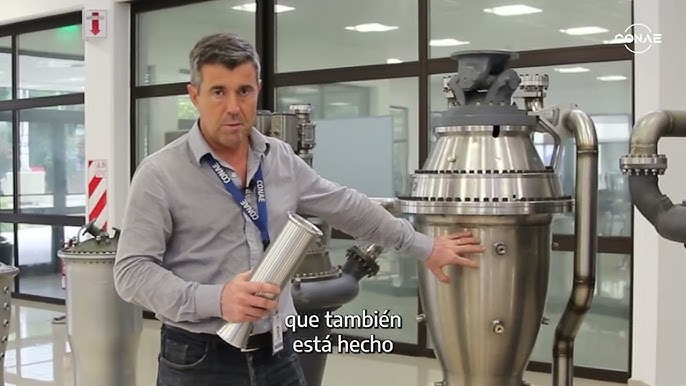
The main objective of this mission was to validate under real-world conditions a series of technologies developed in Argentina, in conjunction with the Institute of Scientific and Technical Research for Defense (CITEDEF). Among the milestones achieved were the flight qualification of the solid-fuel propulsion system, as well as the testing of telemetry and encrypted transmission systems, and the incorporation of artificial intelligence for search and rescue tasks at sea.

One of the biggest highlights of the test was the successful recovery of the payload capsule over the waters of the South Atlantic, an unprecedented achievement for the Argentine aerospace industry. The capsule, undocked after reaching the peak of its ballistic trajectory, was located and recovered by Argentine Navy personnel, with the support of drones and specialized sensors.
In this regard, the Minister of Defense, Luis Petri, stated, "The launch of MET 1-SO represents a historic event. It marks how, in the air and at sea, we continue to recover our defense and technological capabilities with developments unique to the Argentine Air Force."
The development and execution of the mission was carried out by the personnel of the General Directorate of Research and Development (DGID), with the participation of CITEDEF and other state agencies linked to the scientific and technological sector. MET 1-SO was designed as a single-stage sounding rocket for suborbital flights, capable of reaching altitudes close to the Kármán line, the conventional limit of space at 100 km altitude. However, on this initial mission, the flight profile was limited to evaluate the launcher's critical subsystems.
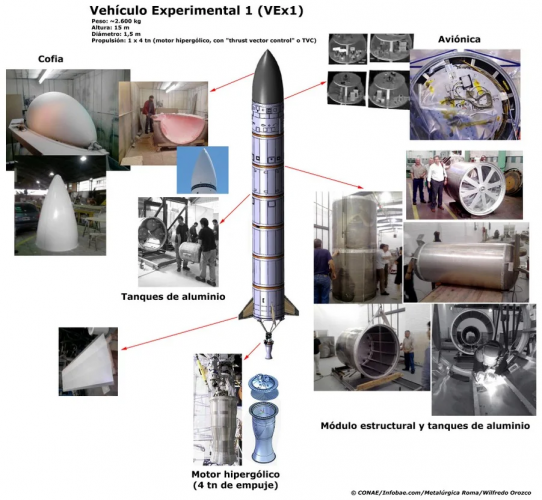
According to the specialized portal EspacioTech, the vehicle features domestically developed avionics, high-precision inertial navigation, passive guidance using aerodynamic design and fixed stabilizers, and high-frequency telemetry that enables real-time monitoring even during high acceleration phases. Furthermore, its modular and scalable architecture allows it to be adapted to more complex future missions.
The MET 1-SO also incorporates an artificial intelligence system onboard its payload capsule, which assists in locating it after splashdown. This technology was key to Argentina's first successful recovery of a capsule launched from land to sea.
This successful test positions the country among the few nations capable of designing, building, launching, and recovering suborbital vehicles. For the Argentine Air Force, this is a strategic step toward strengthening its technological capabilities, within the framework of a forward-looking national project, with sovereignty and autonomy in the aerospace field.
View: https://www.youtube.com/watch?v=z77yE8acHHY
https://www.zona-militar.com/2025/0...erimental-del-cohete-sonda-met-1-so-escorpio/
Argentina has successfully launched its cutting-edge MET 1-SO 'Escorpio' rocket, a groundbreaking step in Latin America’s aerospace industry. What are the implications for global defense and innovation? Could this rocket pave the way for military applications or redefine South America’s technological standing? Explore how this development might shift regional dynamics and why the UK should keep an eye on this rising power.
View: https://www.youtube.com/watch?v=Xu7ETMexQe4
The AS-25K is an Argentine air-to-surface missile (ASM) under development by the CITEFA ("Instituto de Investigaciones Científicas y Técnicas de las FFAA" - Armed Forces Scientific and Technical Research Institute) in 2 versions: air-sea and air-land. The main user is the COAN (COmando Aviación Naval - Naval Aviation Command) of the Argentine Navy.
It is propelled by a booster rocket and a solid propergol sustainer rocket, with a range of 25 km at a speed of Mach-2. Its total weight is less than 240 kg, and its warhead is composed by approximately 60 kg of Hexolite 50.50.
Variants
Four variants are being considered, differing basically in the guidance system:
AS-25K-RC - Radio Commanded
AS-25K-IR - Passive Infra-Red
AS-25K-LS - Laser
AS-25K-TV - Television
It has been reported that the IR version is already developed and ready for testing. Work is being done in a laser guidance system for the LS version. Research for the TV version is being commenced.


Relation with Martin Pescador
The AS-25K is a development of the Martin Pescador MP-1000 Argentine air-to-surface missile, currently in use also by the Argentine Navy. The main differences are:
Enhanced speed and range (thanks to the booster acceleration)
Improved guidance on height/range and azimuth (the MP-1000 can only be guided in height/range)
Fire-and-forget guidance system (thanks to the IR seeker, the MP-1000 has only manual radioelectric guidance).
Greater range (estimated at 25 km, that's why the "25K" missile denomination).
Technical specifications
Type: Anti-ship missile
Manufacturer: CITEFA
Diameter: 22 cm
Length: 295 m
Wingspan:295 cm
Standard warhead weight: 60 kg
Warhead type: HE
Maximum range: 25 km
Guidance: IR or TV


https://www.machtres.com/lang1/argentineweap.html
The main objective of this mission was to validate under real-world conditions a series of technologies developed in Argentina, in conjunction with the Institute of Scientific and Technical Research for Defense (CITEDEF). Among the milestones achieved were the flight qualification of the solid-fuel propulsion system, as well as the testing of telemetry and encrypted transmission systems, and the incorporation of artificial intelligence for search and rescue tasks at sea.
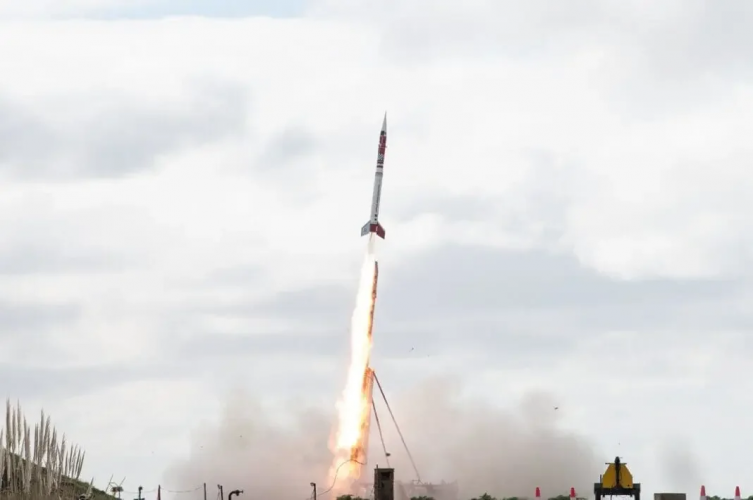
One of the biggest highlights of the test was the successful recovery of the payload capsule over the waters of the South Atlantic, an unprecedented achievement for the Argentine aerospace industry. The capsule, undocked after reaching the peak of its ballistic trajectory, was located and recovered by Argentine Navy personnel, with the support of drones and specialized sensors.
In this regard, the Minister of Defense, Luis Petri, stated, "The launch of MET 1-SO represents a historic event. It marks how, in the air and at sea, we continue to recover our defense and technological capabilities with developments unique to the Argentine Air Force."
The development and execution of the mission was carried out by the personnel of the General Directorate of Research and Development (DGID), with the participation of CITEDEF and other state agencies linked to the scientific and technological sector. MET 1-SO was designed as a single-stage sounding rocket for suborbital flights, capable of reaching altitudes close to the Kármán line, the conventional limit of space at 100 km altitude. However, on this initial mission, the flight profile was limited to evaluate the launcher's critical subsystems.
According to the specialized portal EspacioTech, the vehicle features domestically developed avionics, high-precision inertial navigation, passive guidance using aerodynamic design and fixed stabilizers, and high-frequency telemetry that enables real-time monitoring even during high acceleration phases. Furthermore, its modular and scalable architecture allows it to be adapted to more complex future missions.
The MET 1-SO also incorporates an artificial intelligence system onboard its payload capsule, which assists in locating it after splashdown. This technology was key to Argentina's first successful recovery of a capsule launched from land to sea.
This successful test positions the country among the few nations capable of designing, building, launching, and recovering suborbital vehicles. For the Argentine Air Force, this is a strategic step toward strengthening its technological capabilities, within the framework of a forward-looking national project, with sovereignty and autonomy in the aerospace field.
https://www.zona-militar.com/2025/0...erimental-del-cohete-sonda-met-1-so-escorpio/
Argentina has successfully launched its cutting-edge MET 1-SO 'Escorpio' rocket, a groundbreaking step in Latin America’s aerospace industry. What are the implications for global defense and innovation? Could this rocket pave the way for military applications or redefine South America’s technological standing? Explore how this development might shift regional dynamics and why the UK should keep an eye on this rising power.
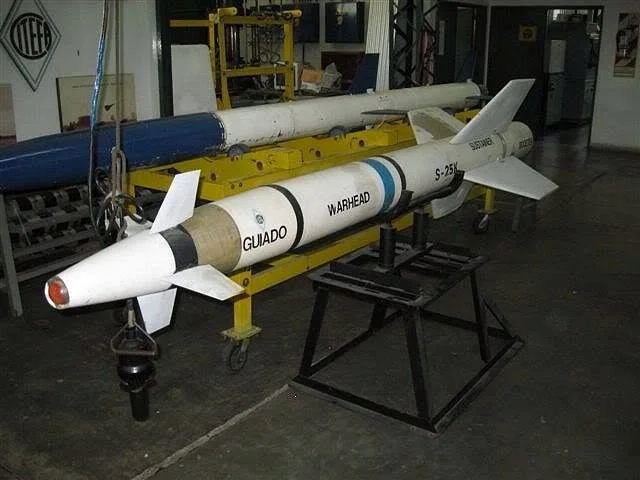
The AS-25K is an Argentine air-to-surface missile (ASM) under development by the CITEFA ("Instituto de Investigaciones Científicas y Técnicas de las FFAA" - Armed Forces Scientific and Technical Research Institute) in 2 versions: air-sea and air-land. The main user is the COAN (COmando Aviación Naval - Naval Aviation Command) of the Argentine Navy.
It is propelled by a booster rocket and a solid propergol sustainer rocket, with a range of 25 km at a speed of Mach-2. Its total weight is less than 240 kg, and its warhead is composed by approximately 60 kg of Hexolite 50.50.
Variants
Four variants are being considered, differing basically in the guidance system:
AS-25K-RC - Radio Commanded
AS-25K-IR - Passive Infra-Red
AS-25K-LS - Laser
AS-25K-TV - Television
It has been reported that the IR version is already developed and ready for testing. Work is being done in a laser guidance system for the LS version. Research for the TV version is being commenced.
Relation with Martin Pescador
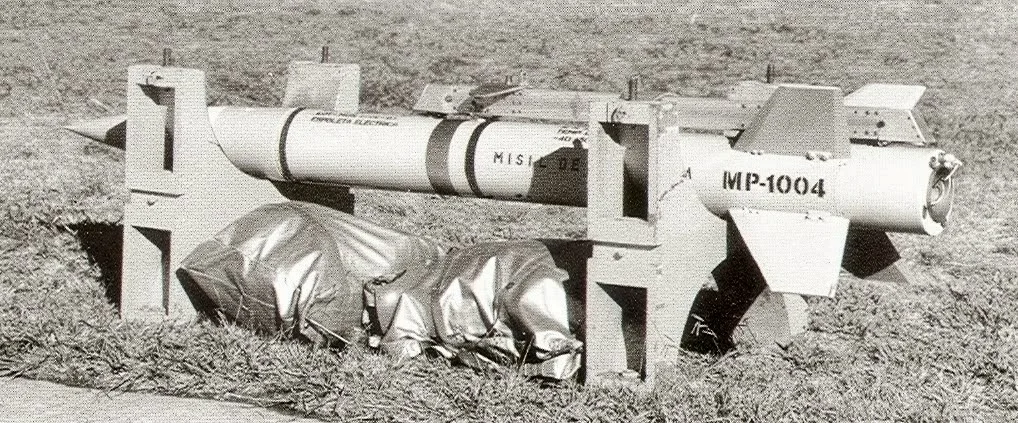
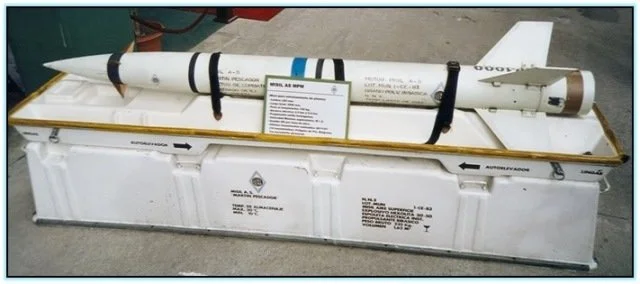
The AS-25K is a development of the Martin Pescador MP-1000 Argentine air-to-surface missile, currently in use also by the Argentine Navy. The main differences are:
Enhanced speed and range (thanks to the booster acceleration)
Improved guidance on height/range and azimuth (the MP-1000 can only be guided in height/range)
Fire-and-forget guidance system (thanks to the IR seeker, the MP-1000 has only manual radioelectric guidance).
Greater range (estimated at 25 km, that's why the "25K" missile denomination).
Technical specifications
Type: Anti-ship missile
Manufacturer: CITEFA
Diameter: 22 cm
Length: 295 m
Wingspan:295 cm
Standard warhead weight: 60 kg
Warhead type: HE
Maximum range: 25 km
Guidance: IR or TV

https://www.machtres.com/lang1/argentineweap.html
Last edited: