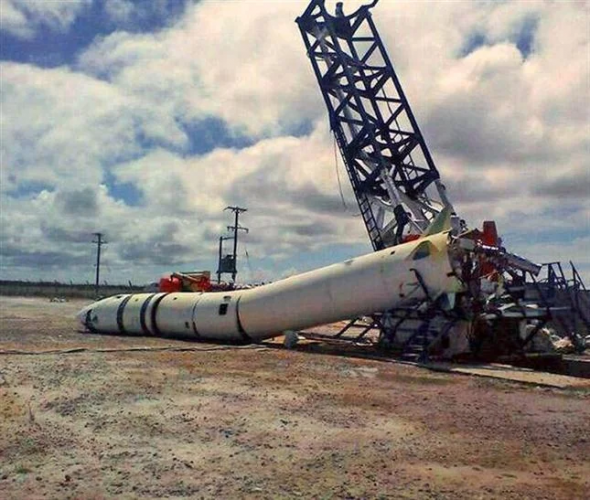
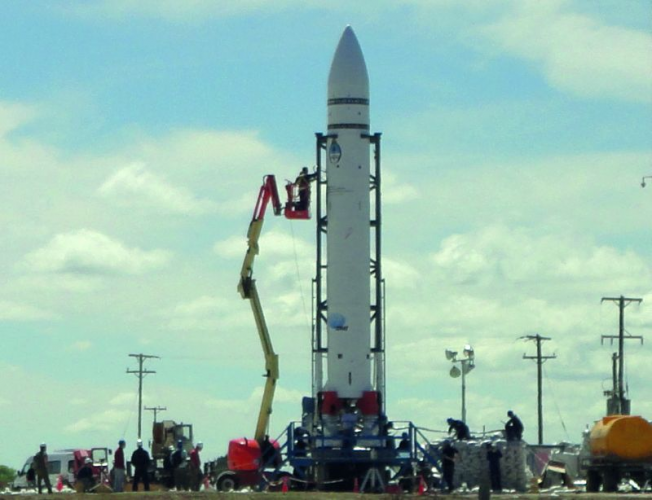
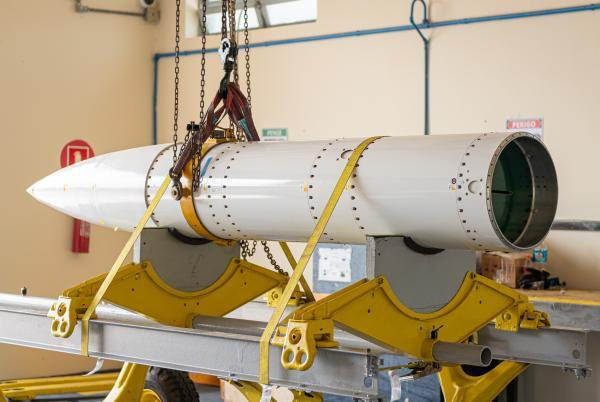
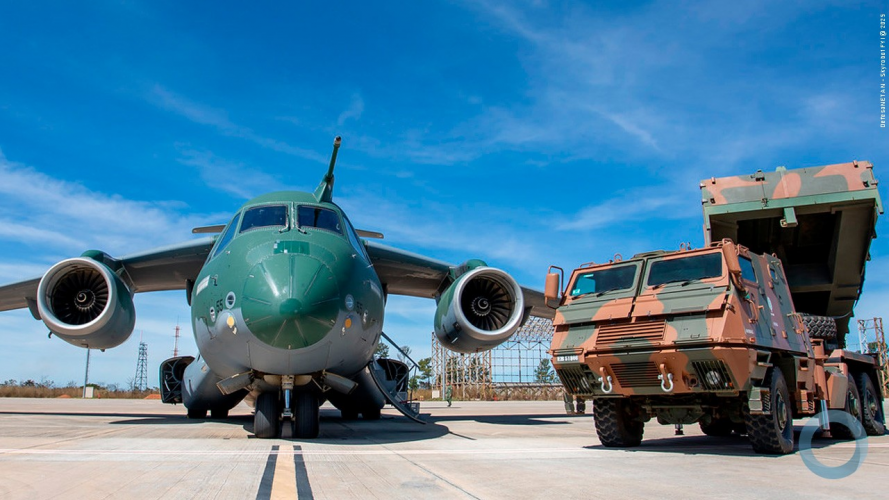
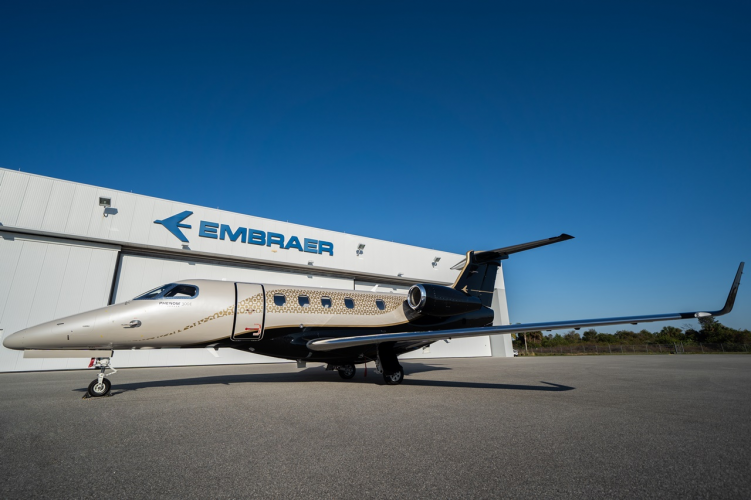
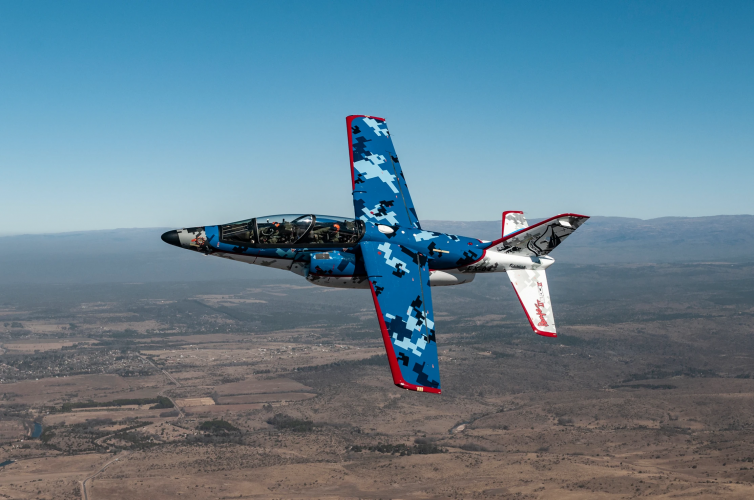
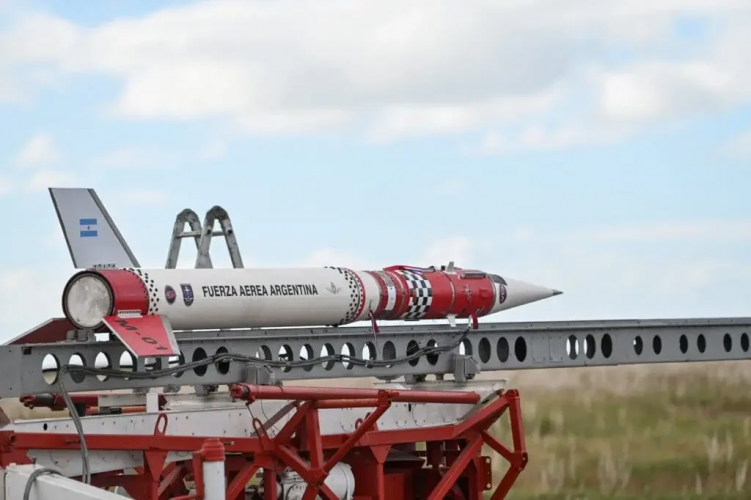
In a significant advance for Argentine aerospace development, the Argentine Air Force successfully completed the experimental launch of the MET 1-SO "Escorpio" sounding rocket, a domestically developed suborbital platform. The test took place on Thursday, May 22, 2025, at the CELPA II ATLÁNTICO Self-Propelled Projectile Experimentation and Launch Center, located in Mar Chiquita, Buenos Aires province, and marked a new milestone in the country's ability to design, operate, and recover suborbital flight vehicles.

1748642916973.png
The main objective of this mission was to validate under real-world conditions a series of technologies developed in Argentina, in conjunction with the Institute of Scientific and Technical Research for Defense (CITEDEF). Among the milestones achieved were the flight qualification of the solid-fuel propulsion system, as well as the testing of telemetry and encrypted transmission systems, and the incorporation of artificial intelligence for search and rescue tasks at sea.

1748642955177.png

One of the biggest highlights of the test was the successful recovery of the payload capsule over the waters of the South Atlantic, an unprecedented achievement for the Argentine aerospace industry. The capsule, undocked after reaching the peak of its ballistic trajectory, was located and recovered by Argentine Navy personnel, with the support of drones and specialized sensors.


In this regard, the Minister of Defense, Luis Petri, stated, "The launch of MET 1-SO represents a historic event. It marks how, in the air and at sea, we continue to recover our defense and technological capabilities with developments unique to the Argentine Air Force."

The development and execution of the mission was carried out by the personnel of the General Directorate of Research and Development (DGID), with the participation of CITEDEF and other state agencies linked to the scientific and technological sector. MET 1-SO was designed as a single-stage sounding rocket for suborbital flights, capable of reaching altitudes close to the Kármán line, the conventional limit of space at 100 km altitude. However, on this initial mission, the flight profile was limited to evaluate the launcher's critical subsystems.

According to the specialized portal EspacioTech, the vehicle features domestically developed avionics, high-precision inertial navigation, passive guidance using aerodynamic design and fixed stabilizers, and high-frequency telemetry that enables real-time monitoring even during high acceleration phases. Furthermore, its modular and scalable architecture allows it to be adapted to more complex future missions.

The MET 1-SO also incorporates an artificial intelligence system onboard its payload capsule, which assists in locating it after splashdown. This technology was key to Argentina's first successful recovery of a capsule launched from land to sea.

This successful test positions the country among the few nations capable of designing, building, launching, and recovering suborbital vehicles. For the Argentine Air Force, this is a strategic step toward strengthening its technological capabilities, within the framework of a forward-looking national project, with sovereignty and autonomy in the aerospace field.

View: https://www.youtube.com/watch?v=z77yE8acHHY

https://www.zona-militar.com/2025/0...erimental-del-cohete-sonda-met-1-so-escorpio/
Argentina has successfully launched its cutting-edge MET 1-SO 'Escorpio' rocket, a groundbreaking step in Latin America’s aerospace industry. What are the implications for global defense and innovation? Could this rocket pave the way for military applications or redefine South America’s technological standing? Explore how this development might shift regional dynamics and why the UK should keep an eye on this rising power.


View: https://www.youtube.com/watch?v=Xu7ETMexQe4

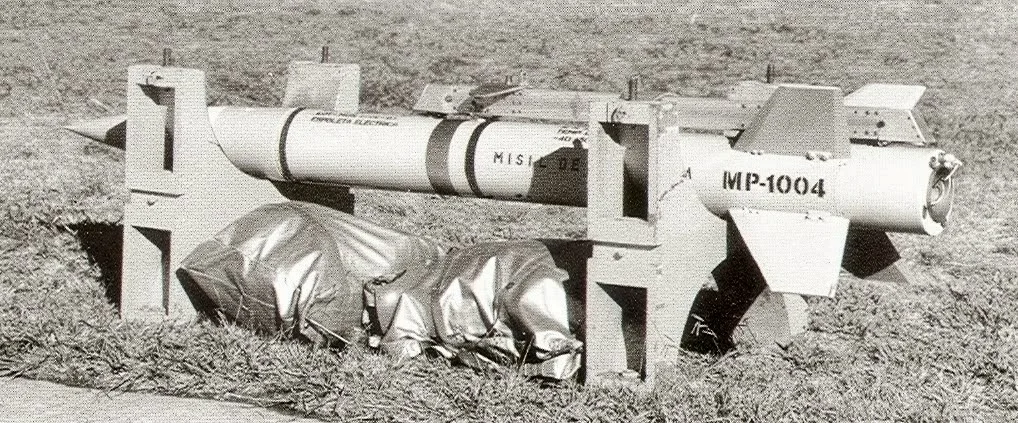
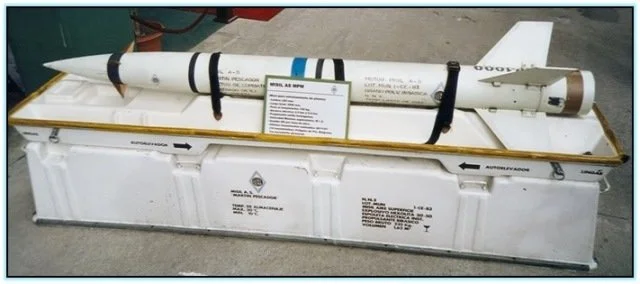
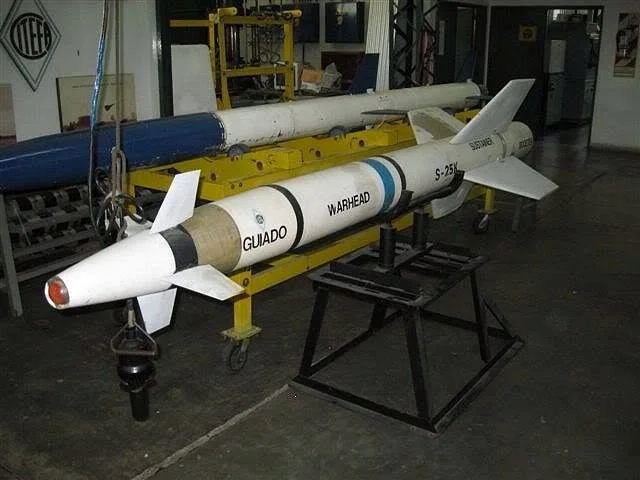
The AS-25K is an Argentine air-to-surface missile (ASM) under development by the CITEFA ("Instituto de Investigaciones Científicas y Técnicas de las FFAA" - Armed Forces Scientific and Technical Research Institute) in 2 versions: air-sea and air-land. The main user is the COAN (COmando Aviación Naval - Naval Aviation Command) of the Argentine Navy.

It is propelled by a booster rocket and a solid propergol sustainer rocket, with a range of 25 km at a speed of Mach-2. Its total weight is less than 240 kg, and its warhead is composed by approximately 60 kg of Hexolite 50.50.

Variants
Four variants are being considered, differing basically in the guidance system:

AS-25K-RC - Radio Commanded
AS-25K-IR - Passive Infra-Red
AS-25K-LS - Laser
AS-25K-TV - Television
It has been reported that the IR version is already developed and ready for testing. Work is being done in a laser guidance system for the LS version. Research for the TV version is being commenced.
1748645620064.png

1748645636329.png
Relation with Martin Pescador
The AS-25K is a development of the Martin Pescador MP-1000 Argentine air-to-surface missile, currently in use also by the Argentine Navy. The main differences are:
Enhanced speed and range (thanks to the booster acceleration)
Improved guidance on height/range and azimuth (the MP-1000 can only be guided in height/range)
Fire-and-forget guidance system (thanks to the IR seeker, the MP-1000 has only manual radioelectric guidance).
Greater range (estimated at 25 km, that's why the "25K" missile denomination).

Technical specifications
Type:
Anti-ship missile
Manufacturer: CITEFA
Diameter: 22 cm
Length: 295 m
Wingspan:295 cm
Standard warhead weight: 60 kg
Warhead type: HE
Maximum range: 25 km
Guidance: IR or TV

1748645652709.png

1748645668973.png

https://www.machtres.com/lang1/argentineweap.html
 
Last edited:
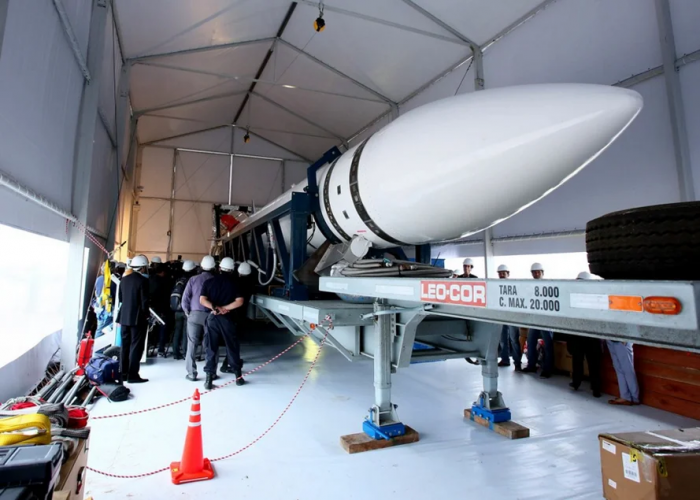
VEX1A
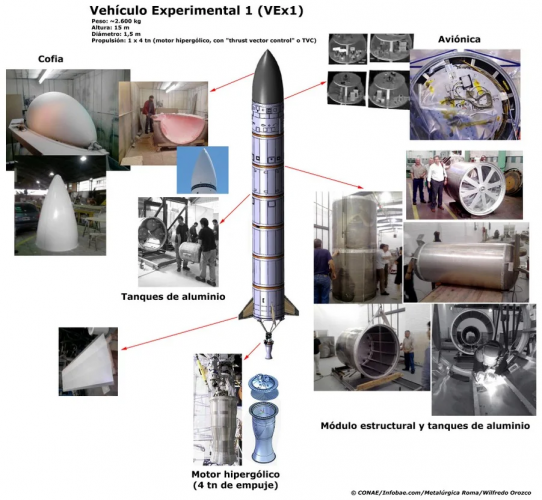
The first test of the prototype launcher Satellite Tronador, denominado VEX1A, was held on 26 February 2014 in a launch pad located in Punta Piedras, against River Plate, a few miles Lighthouse Bay Samborombón. The test vehicle was the first of a total of 6 laCONAE provides experimental vehicles used throughout the project. For reasons that are still not finished determining takeoff materialize although the CONAE was responsible for clarification in a press conference after the launch, what “at any time the vehicle exploded, simply dropped without affecting the launch structure and parts have already been recovered almost completely, to conduct a thorough analysis will provide valuable information to make the necessary corrections in the next trials”.

VEX1B
The second vector launched this time with ultimate success, was held on 15 August 2014. The launch of the vector called VEX1B, was confirmed by the Ministry of Federal Planning, Public Investment and Services to report that on that evening at 19.25 He was successful in Pipinas, Province of Buenos Aires, a new trial testing future satellite launcher hundred percent Argentine Tronador, with the launch of Experimental Vehicle VEX 1B. This trial aimed to test in flight propulsion system and navigation, guidance and control, all developed in Argentina, which served to verify technological maturity Project. 1B vehicle VEX, is the second in a series of 3 a 6 experimental rocket launch as prototypes to perfect the satellite launcher Tronador, and has a height of 14,5 meters, equivalent to a building 5 homes, weigh station 2,8 tons and reaches a top speed 828 mph. According to results, more tests will be done to move to the next stage, el grows 5 then move to Tronador itself, and will be released from Puerto Belgrano, in the south of the province of Buenos Aires.

1748724241423.png

1748724279841.png

1748724299309.png

1748724330309.png
2014
VEx1B Launch

The vehicle was launched on August 15 from the Punta Indio Space Center. It was the first liquid-fueled vehicle in Latin America to be launched with automatic navigation, guidance, and control.


1748724995026.png
VEx1B experimental vehicle test.

VEx1B experimental vehicle test. CONAE Launch Services Area. La Capetina, Buenos Aires.
https://www.argentina.gob.ar/cienci...to se,Prueba del vehículo experimental VEx1B.
1748724347980.png
Argentine VEx 5A Rocket Test Failure
By Daniel Marín, April 30, 2017. Category(ies): Astronautics • Rockets ✎ 99
On April 20, 2017,
the suborbital test of the Argentine VEx 5A rocket was carried out. Unfortunately, the engine shut down six seconds after takeoff, having reached an altitude of two hundred meters. The vehicle plummeted and exploded a short distance from the launch pad, located at the Punta Indio Space Center. The VEx 5A was a test as part of the development program for the Tronador II orbital launcher. This Argentine rocket will be a two-stage orbital launcher (originally three) capable of placing up to 250 kg into a 600-kilometer-high polar orbit, launched from Puerto Belgrano. After many years of delays with the program, CONAE (National Commission for Space Activities) decided to test the launcher in successive stages before building the orbital launcher version.
https://danielmarin.naukas.com/2017/04/30/fallo-en-la-prueba-del-cohete-argentino-vex-5a/ 1748724535819.png


View: https://www.youtube.com/watch?v=wwFQXDDZgf4

Toward Space Sovereignty: The Tronador II Satellite Launcher Will Be Ready in 2029
By Luciana Mazzini Puga | June 9, 2023 | Space Race, Space Sovereignty, Tronador II
It will allow satellites weighing up to 750 kg to be launched into orbit at a distance of 600 km from Earth. Argentina will thus become one of the ten countries in the world that dominate the complete space cycle.
https://agencia.unq.edu.ar/?p=12795
The National Commission for Space Activities (CONAE), with the participation of the company VENG, advanced a new milestone in the development of the Tronador II project, the Argentine launcher that will allow 500-kilogram satellites to be launched into orbit at a distance of 600 kilometers from Earth. The production of the RS-2 engine thrust chamber was recently completed, a first in the country using cutting-edge technology, combining additive manufacturing, in line with the world's leading space agencies.
1748725903354.png
1748726357383.png

View: https://www.youtube.com/watch?v=OuyiOW7VIS0
 
Last edited:
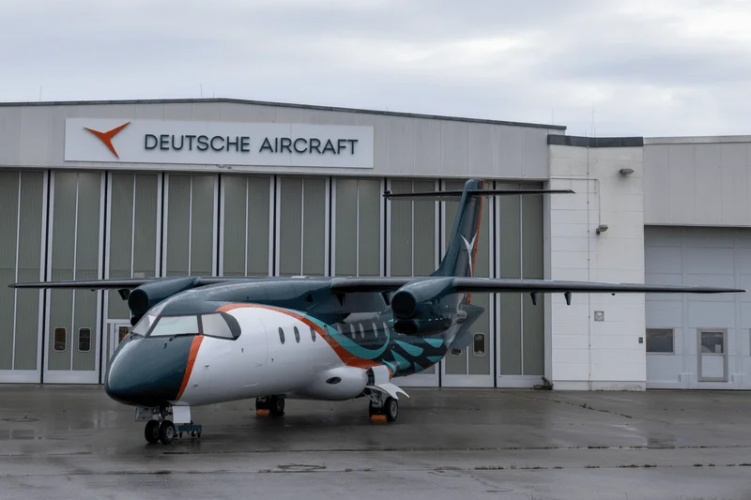
Akaer, a Brazilian company that is a leader in technology and innovation in the aerospace sector, was present at the first presentation of the D328eco test aircraft. The rollout, as the event is known in English, took place this Wednesday (28), at the Oberpfaffenhoven Airfield, Germany.

The rollout represents a step forward for the program of the sustainable 40-seat turboprop aircraft, in which Akaer plays a fundamental role as the company responsible for the mass production of the front fuselage — including industrialization, tooling, prototypes and associated studies.

The presentation of the first test aircraft, incorporating new technologies — including updated engines and avionics — aimed to validate the flight characteristics before the first official flight.

This milestone precedes the start of production of the front fuselage at the Akaer factory in São José dos Campos (SP).

“The rollout of the D328eco is a step forward for a significant project in regional aviation, with a focus on sustainability and efficiency. For Akaer, participating in this moment and being responsible for a critical component, such as the forward fuselage, reinforces our position as the first Brazilian company in the aerospace sector recognized as a Tier 1 Global Supplier. We are ready and eager to start production and contribute to the success of this innovative aircraft”, said Cesar Silva, CEO of Akaer, present at the event alongside Senior Advisor, Marco Tulio Pellegrini.

Sustainable aviation

The D328eco was designed to operate with up to 100% Sustainable Aviation Fuel (SAF), aiming to reduce carbon emissions and set a new standard for regional aviation.

With a capacity for 40 passengers, state-of-the-art avionics and capable of operating on short, unpaved runways, the model combines operational efficiency with versatility, and can be adapted for passenger transport, rescue missions, military operations and firefighting.

The strategic partnership with Deutsche Aircraft, which began in 2023, consolidates Akaer's expertise in the development and supply of complex aerostructures and systems for the global market.

Expertise

With over 33 years of experience, Akaer has accumulated a portfolio of over 10 million engineering hours dedicated to the development of aeronautical systems and structures. Throughout its history, it has been involved in over 50 prominent projects on the world stage.

The company has played an essential role in major aerospace programs, including collaboration with Embraer on the E-Jets family, the KC-390 military freighter and with Saab, in the development of the Gripen E fighters for the Brazilian Air Force. It also participated in the Hürjet supersonic fighter project, in partnership with Turkish Aerospace Industries (TAI).

AKAER is a leading company, highly specialized in the development of cutting-edge technological solutions and products for the Space, Aeronautics and Defense industries. Our commitment to innovation and integration allows us to offer a comprehensive portfolio of solutions adapted to the most demanding demands.

Headquartered in São José dos Campos (SP), Akaer maintains offices in Portugal and Turkey.
1748822974804.png
https://www.defesaaereanaval.com.br...egica-no-rollout-do-aviao-sustentavel-d328eco
https://avitrader.com/2025/05/29/deutsche-aircraft-unveils-first-d328eco-test-plane/
 
Akaer advances the project of the VLN AKR satellite launch vehicle
Stage marks the progress of Brazil towards sovereignty in the launch of satellites
By MundoGEO

01/06/25 10h45 - Updated: 01/06/25 11h08


Akaer concluded with the success of Phase A of the Small Launch Vehicle (VLN AKR) project. This stage marks an advance in Brazil towards sovereignty in the launch of satellites.

On December 18, the Preliminary Review of Requirements officially closed this initial stage, confirming that the deadlines and objectives have been met.

The VLN AKR program is divided into seven Phases: 0, A, B, C, D, E and F. The initial phases 0, A and B are focused on the elaboration of the operational concept, two system requirements and the identification of technical solutions that comply with the miss declaration. Phases C and D comprise the detailing and qualification activities of two space and terrestrial segments, and phase E, the activities related to the launch of the vehicle. Finally, in the F phase we run the enclosure and project documentation.


During Phase A, the conceptual project and the technical requirements are validated. Now, the project is advancing to Phase B, dedicated to preliminary definitions, which will culminate with a Preliminary Design Review (PDR).

"The conclusion of Phase A marks an important advance in the development of this project that will transform the Brazilian aerospace sector. We are committed to developing technological solutions that will consolidate Brazil as a strategic player in the global aerospace sector,"

said Wilson Toyama, director of Akaer's Launchers and Weapons Systems Business Unit.
Innovations
The VLN AKR is the result of a partnership between Akaer and the companies Acrux, BRENG and EMSISTI, with financing from Finep. The vehicle is being designed to be light and compact, being capable of inserting useful loads into an equatorial circular orbit of up to 450 km.

His project stands out for its use of advanced technologies, such as:

Lightweight propellers and engines manufactured with compostable materials, which offer greater efficiency and significant weight reduction.
Control vehicle thrust for greater precision – ensures that the vehicle follows exactly the planned trajectory.
Compact electronic architecture – guarantees the operation and control of the launch vehicle with minimized weight and volume.
These technologies, all developed by national technicians, reduce manufacturing and operating costs, making the VLN AKR more accessible and sustainable.

"We close the options phase, in which we validate the conceptual project and review technical and functional requirements. Now, we continue to phase B, focused on the preliminary definitions and the Preliminary Project Review",

explains Wilson Toyama.
Space legacy
Headquartered in Maranhão, Acrux will produce propellants and manufacture VLN AKR engines in its facilities. This initiative, unprecedented in the region, boosts the local economy, creates qualified jobs and transforms the state into a strategic aerospace hub for the country.

BRENG Engineering and Technology is responsible for the Stage Separation System, Coifa Opening System, Satellite Deployer and Voice Termination System, all essential for the safety and efficiency of operations. The company's work is focused on critical solutions that guarantee the precise functioning of the launching vehicle.

EMSISTI is already developing the on-board computer and the voice management software. The company works with advanced technologies, focused on on-board hardware and software and stands out for its work on small satellites (Cubesats, Nanosatellites and Microsatellites).

The project also counts on the collaboration of Scientific and Technological Institutions (ICTs) and highly qualified professionals, including specialists who participate in historical programs of the Brazilian space sector.

It is anticipated that the first launch of the VLN AKR will occur in the first half of 2027. Brazil seeks to join the select group of just 13 countries around the world capable of carrying out orbital launches independently.

1748900676952.png
https://mundogeo.com/2025/01/06/akaer-avanca-no-projeto-do-veiculo-lancador-de-satelites-vln-akr/ 1748901229133.png
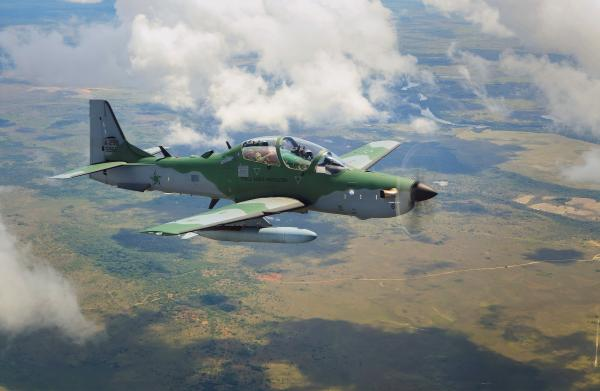
One of the greatest symbols of the Brazilian aerospace industry, the A-29 Super Tucano is now part of the select group of systems recognized by the North Atlantic Treaty Organization (NATO) with its own cataloging code. The approval by the AC/135 committee consolidates the technical and logistical performance of the aircraft and highlights the export potential of the national Defense Industrial Base (IDB), paving the way for new international partnerships and fostering the country's defense economy.

What is NATO cataloging and its importance for the IDB
The integration of the A-29 into the NATO cataloging system ensures that the aircraft has a NATO Stock Number (NSN), enabling its use in multinational operations with standardized logistics, integrated maintenance and facilitated acquisition by the alliance's member countries and partners. This positions the A-29 as an interoperable, reliable and adaptable solution to the demands of the international security and defense scenario.

This process, led by the Defense Logistics Systems Support Center (Caslode) in partnership with the IDB, strengthens Brazil in the global strategic environment. According to Capt. (RM1-IM) Alessander de Paiva Nunes, head of the Cataloging Section at Caslode, “NATO’s recognition is a reflection of the excellence of national engineering and an incentive for job creation, innovation and economic development.”

The role of Embraer and the FAB in the success of the A-29
Developed in the 1990s by Embraer, with support from the Brazilian Air Force (FAB), the A-29 Super Tucano stood out as a versatile platform for advanced training of fighter pilots and light attack missions. With more than 260 units delivered to 15 countries, including the United States, Colombia, Afghanistan and the Philippines, the A-29 has proven its effectiveness in real operations to combat drug trafficking, insurgency and border security.

Its robust performance, low operating costs and high operational capacity in hostile terrain have made it a global reference. NATO's acceptance confirms its quality and reaffirms the FAB's role as an operator of excellence and a strategic partner in the development of defense systems.

Prospects for the future and new defense markets
Following the recognition of the KC-390 Millennium, the A-29 is the second major Brazilian project to be cataloged by NATO, opening doors for the entry of new national systems into international markets. This type of recognition strengthens the credibility of the Brazilian BID and can boost contracts with NATO-allied nations or those interested in products compatible with their logistics standards.

The success of these programs is a demonstration that Brazil can occupy a relevant space in the global security and defense chain, with high added value products, customization capacity and potential to generate technological partnerships. By integrating the A-29 into the NATO system, Brazil reaffirms its ambition to position itself as a reliable, innovative and strategic supplier on the international scene.
https://www.defesaemfoco.com.br/a-2...a-logistico-da-otan-e-reforca-bid-brasileira/
 
Last edited:
Embraer presents Phenom 300E and Praetor 600 at Catarina Aviation Show
Luiz Padilha by LUIZ PADILHA 02/06/2025 - 15:32 in Aviation 0


São José dos Campos (SP), June 2, 2025 – Embraer returns to the Catarina Aviation Show, from June 5 to 7, in São Roque (SP). The company will bring to the event the Phenom 300E, the world's best-selling light jet for 13 consecutive years, and the Praetor 600, the most disruptive and technologically advanced super-midsize jet. With a strong sales and deliveries pace, Embraer continues to accelerate the growth of its market share and explore new ways to offer the best experience in executive aviation.

The Phenom 300E is the fastest light jet in production, with a cruise speed of Mach 0.8 and capable of flying nonstop between São Paulo and Manaus. The aircraft has the best climb performance and the lowest operating cost in its category. The Phenom 300E is capable of flying to 45,000 feet (13,716 meters), powered by two Pratt & Whitney Canada PW535E1 engines with 3,478 pounds of thrust each. The enhanced cockpit allows for single-pilot operation and features the advanced Prodigy Touch Flight Deck, based on the acclaimed Garmin 3000 avionics suite. The jet features Embraer’s Runway Overrun and Awareness Alerting System (ROAAS) and autothrottle, which make the pilots’ job easier. The aircraft offers features normally found only in higher classes, such as single-point refueling, an external lavatory and the largest entry ladder in its class. Additionally, the Phenom 300E offers a spacious cabin featuring Embraer DNA Design, an industry-leading interior design philosophy, and its baggage compartment is among the largest in its class. The largest windows in the class provide abundant natural light in the cabin, as well as in the private lavatory. The comfort of the reclining, full-motion seats is enhanced by the best pressurization among light jets (maximum cabin altitude of 6,600 feet). The Phenom 300E features distinct temperature zones for pilots and passengers, a wardrobe, a refreshment center, voice and data communication options, and an entertainment system.

The Praetor 600 is the longest-range business jet in the super-midsize category, capable of flying nonstop from London to New York or from São Paulo to Miami. It is the most technologically advanced aircraft in its category, and the only one to offer fully digital flight controls (full fly-by-wire) and active turbulence reduction, as well as the segment-exclusive upper tech panel and Ka-band internet connection, with connectivity similar to that used at home.

1749000312859.png

The Embraer DNA Design makes excellent use of all dimensions of the interior, including a 1.83-meter-high, flat-floor cabin, fully reclining seats that convert into beds measuring over 2 meters in length, and a vacuum lavatory. The 5,800-foot cabin altitude, complemented by a whisper-quiet interior, sets the highest standard in customer experience in the segment.
View: https://www.youtube.com/watch?v=giwzzOUvl3g

https://www.defesaaereanaval.com.br...-300e-e-praetor-600-no-catarina-aviation-show
 
ALADA, CLBI and CLA drive sovereignty, innovation and partnerships in the Brazilian aerospace sector

Agência Força Aérea, by Lieutenant Mônica Lopes

Brazil has made significant progress in its space activities, consolidating itself as one of the emerging players in the aerospace sector in Latin America. This progress is the result of the integration of strategic institutions, consolidated infrastructure and continuous investments in technological innovation — with emphasis on the work of the Brazilian Aerospace Projects Company S.A. (ALADA), the Barreira do Inferno Launch Center (CLBI) and the Alcântara Launch Center (CLA).

ALADA
ALADA is a public company linked to the Air Force Command (COMAER), conceived as a catalyst for the Brazilian Space Program (PEB). Its mission is to promote, coordinate and execute projects focused on the aerospace sector, strengthening the Defense Industrial Base and expanding Brazil's autonomy in the space domain.

The company will work on initiatives to develop launch vehicles, satellites, onboard systems, and monitoring and security solutions for areas of strategic interest. By integrating efforts from public and private institutions and research centers, ALADA positions Brazil more competitively in the global space services market.

ALADA's strategic role in the Brazilian Space Program
The creation of ALADA marks a new stage for the Brazilian Space Program. Since the 1960s, the PEB has provided advances in infrastructure and technology, such as launch centers and space vehicles. In this new context, ALADA's mission is to boost the sector, promote partnerships with various industries and institutions, and attract financial resources for reinvestment in the national space program.

Barreira do Inferno Launch Center and suborbital launches
Inaugurated in 1965 and located in Parnamirim (RN), the Barreira do Inferno Launch Center (CLBI) was the first Brazilian center dedicated to rocket launches. Linked to the Brazilian Air Force, CLBI plays a fundamental role in supporting launch campaigns, tracking and collecting meteorological data, in addition to orbital observation activities.

In 2024, CLBI resumed its operations with the Potiguar Operation, which involved the launch of the VS30 V15 sounding rocket. The mission aimed to qualify the recovery system of the Microgravity Suborbital Platform (PSM), strengthening the country's technological and scientific capabilities in the space sector.

Alcântara Launch Center and orbital launches
Located on the coast of Maranhão, the Alcântara Launch Center (CLA) is considered one of the most advantageous locations in the world for orbital launches, thanks to its proximity to the Equator. This geographical advantage significantly reduces fuel consumption, allowing for more efficient launches with larger payloads.

The CLA has demonstrated growing operational capacity, as evidenced by the completion of Operation Falcão I in 2025, which involved the launch of a Basic Training Rocket (BTF). The mission contributed to the formation and training of specialized technical teams.

In addition, the first commercial launch of the South Korean HANBIT-Nano rocket, from the company INNOSPACE, is scheduled for the second half of 2025. The operation represents a milestone in Brazil's efforts to transform Alcântara into a global orbital launch hub, attracting international companies in the sector.

Integration for Brazil's future in space
The integrated work of ALADA, CLBI and CLA strengthens Brazil's presence in space and contributes directly to the country's scientific, technological and economic development. With a focus on sovereignty, innovation and sustainability, Brazil is making strategic progress to consolidate its position in the international aerospace scenario.

The future points to an increasingly active Brazil in the peaceful exploration of space, with public policies focused on the development of national technologies and competitive insertion in the international market for space launches and services.
1749187360738.png
Photos: FAB

https://www.defesanet.com.br/aviaca...om-centros-modernos-e-integracao-estrategica/
 
FAB realiza transporte do sistema ASTROS II no KC-390 Millennium
Ricardo Fan
June 6, 2025
Astros 2020, Aviação, Aviação de Transporte, KC-390

A operação representou um importante avanço na avaliação da aerotransportabilidade de viaturas blindadas

Agência Força Aérea, por Tenente Wanessa Liz

A Força Aérea Brasileira (FAB) realizou, nesta quarta-feira (04/06), o transporte do sistema de lançadores múltiplos de foguetes ASTROS II, utilizando a aeronave KC-390 Millennium, durante o Exercício Operacional AIRLIFT COMAO 2025, que acontece na Base Aérea de Anápolis (BAAN) até o dia 06/06.

A operação representou um importante avanço na avaliação da aerotransportabilidade de viaturas blindadas, em um cenário de atuação conjunta com o Exército Brasileiro (EB). O objetivo foi testar, de forma prática, a eficiência e a segurança no transporte aéreo do ASTROS II, considerado um dos sistemas mais modernos de sua categoria.

Projetado no Brasil, o ASTROS II é um veículo de artilharia autopropulsada, capaz de disparar foguetes de diferentes calibres com alta precisão. Conta com sistemas de comando e controle, comunicação e apoio logístico, sendo fundamental em missões de apoio de fogo e interdição de áreas estratégicas. A viatura utilizada pertence ao 16º Grupo de Mísseis e Foguetes (16º GMF) – Grupo Visconde de São Leopoldo –, sediado em Formosa (GO).

A missão foi conduzida pelo Primeiro Grupo de Transporte de Tropa (1º GTT) – Esquadrão Zeus –, responsável pela operação com a aeronave KC-390. Com peso aproximado de 24 toneladas, o veículo foi embarcado após os procedimentos de preparação, ancoragem e testes em solo, como o taxiamento da aeronave.

"Dentro do exercício AIRLIFT COMAO, a aeronave KC-390 Millennium executou diversas missões, como lançamentos, infiltração e evacuação aeromédica. Com a mobilização da viatura ASTROS II do Exército Brasileiro, reforçamos não apenas a interoperabilidade entre a FAB e o EB, mas também evidenciamos a alta capacidade de carga e a versatilidade do KC-390. missões cada vez mais complexas e estratégicas”, explicou o Oficial de Operações do 1º GTT, Major Aviador Anderson Dias Santiago.
1749274478519.png


Em seguida, foi realizado um voo com o ASTROS II a bordo e em espaço aéreo previamente designado. A operação foi encerrada com um pouso de máximo desempenho e o desembarque seguro da viatura, consolidando os objetivos da missão.

A atividade também avaliou a capacidade de mobilização do ASTROS II em missões diurnas e noturnas, reforçando a doutrina de pronta resposta da FAB e a integração logística com o Exército em operações de alta complexidade.

Photos: Sargento Müller Marim / CECOMSAER

https://www.defesanet.com.br/astros...te-do-sistema-astros-ii-no-kc-390-millennium/
 
São Paulo, June 5, 2025 – Embraer will begin offering the Gogo Galileo HDX connectivity solution to its Phenom 300 aftermarket customers through a Supplemental Type Certificate (STC) developed in partnership with Gogo. The installation of the compact half-duplex antenna and a Line Replaceable Unit will allow owners of the manufacturer’s executive jets to benefit from in-flight connectivity, with performance comparable to the best solutions on the ground.
1749342532416.png
Passengers using Gogo’s in-flight connectivity can enjoy the same level of performance they enjoy at home or in the office, as well as 4K video streaming, high-definition video calls, online gaming, and large file transfers. Using Eutelsat OneWeb’s low-earth orbit (LEO) satellite network, the Gogo Galileo HDX system offers a unique, reliable, and fast connectivity solution.

“We are pleased to partner with Gogo to provide our customers with next-generation, high-speed internet connectivity. Our goal is to continue enhancing the in-flight experience with industry-leading capabilities,” said Marsha Woelber, Vice President, Customer Support and Aftersales, Executive Jets, Embraer Services & Support.

“We admire Embraer for its focus on technology and are pleased to support Gogo with Galileo, which encompasses our advanced connectivity solutions. The HDX antenna was purpose-built for use in business aviation and is ushering in a new era of connectivity. We are pleased to work with Embraer to provide high-speed connectivity to one of the world’s most successful aircraft platforms,” said Michael Skou-Christensen, CCO of Gogo.

Embraer will provide the solution for the Phenom 300, ahead of other jet models. Availability of the new connectivity solution will vary by region. The company expects FAA certification in the third quarter of 2025; ANAC in the fourth quarter of 2025; and EASA in the first quarter of 2026. Availability for the Phenom 300E models will be announced in the future, along with the expected dates. Embraer’s Own Service Center Network and Authorized Service Network will be available and prepared to support customers who wish to install the STC. Customer requests should be directed to Embraer Aftermarket Representatives.

https://www.defesaaereanaval.com.br...mo-solucao-de-pos-venda-para-jatos-phenom-300
 
Details of the contract between FAdeA and the Argentine Air Force
Photo by: Santiago Rivas
Santiago Rivas


Ten days ago, the Argentine Air Force and FAdeA signed a contract to resume work on the Pampa and C-130 Hercules lines, as well as to recover the operational capabilities of various aircraft. This contract, which still needs to be approved by the Ministry of Defense, is a very important step for the present and near future of FAdeA, a company that is experiencing a difficult situation due to a lack of income.

The situation also resolves the renegotiation that was underway with the Argentine Air Force due to the company's failure to comply with the contracts signed between 2020 and 2023. Most of the payments made by the force were to cover current expenses and not to purchase the supplies to provide the contracted services.
1749515512252.png
The contract is for a total of $110 million and covers the years 2025 to 2027.

According to our findings, the new contract consists of three areas: one is the performance of major inspections (PDM) on the Lockheed KC-130H Hercules, registered TC-70, and the C-130H, registered TC-60. The future of the C-130H, registered TC-61, and the L-100-30, registered TC-100, are expected to be resolved later. If the inspections are carried out, a separate contract will be required.

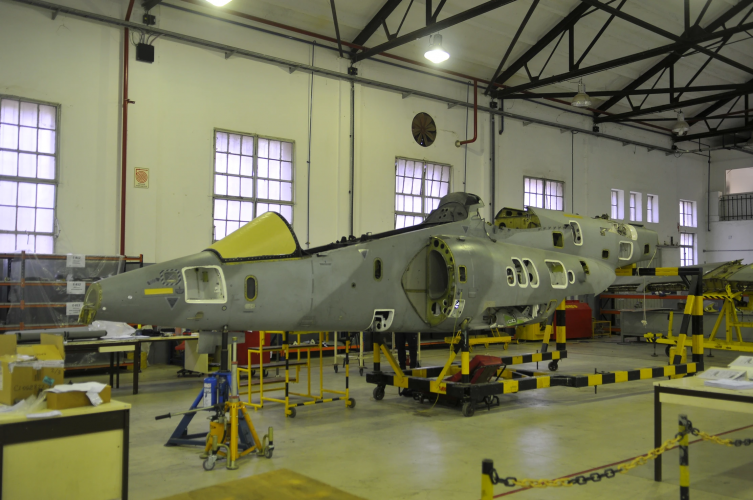
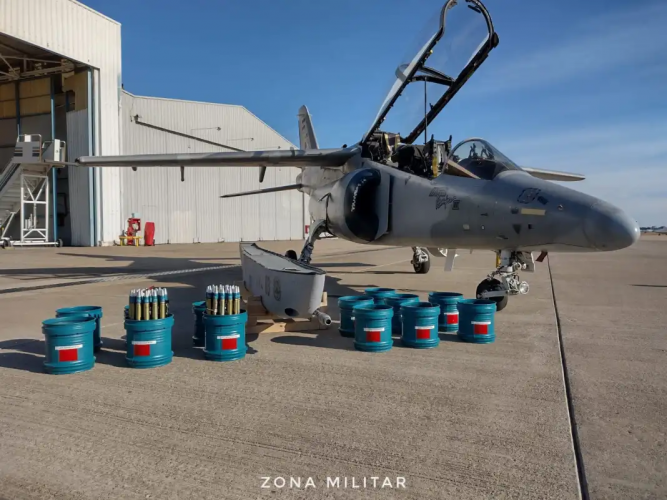
The second area includes the IA-63 Pampa, which encompasses three main points: First, the modernization of six Pampa IIs to the Pampa III Block 2 standard. This will include the E-812 aircraft that remained to be delivered under the previous contract and whose work had been halted, and five more, leaving eight Pampa IIs already modernized to Pampa III. The Argentine Air Force currently has 15 Pampa IIs, one Pampa I (out of service for more than 25 years), as well as twelve Pampa IIIs and one in the process of modernization.

Furthermore, the contract includes the upgrade of the initial six Pampa IIIs to standardize them on Block 2, as the other six already do.

It is important to note that, although some media reported that the contract completes the delivery of new aircraft (there are two on the assembly line, six partially assembled, and two of which only have components), this is not included, and for now, the Argentine Air Force does not plan to incorporate more units, prioritizing the recovery and standardization of the fleet.

Under construction, the contract only provides for the provision of underwing weapons pylons and 30 mm ventral pods.

The third part of the contract is for the restoration of operational capabilities, with the goal of returning non-operational aircraft to service, especially those from the Pampa fleet, but also other aircraft models that the Air Force may require. This point of the contract is generic and will address the Air Force's needs during the period included and for the amount included in that section.
1749515483565.png

https://www.pucara.org/post/detalles-del-contrato-entre-fadea-y-la-fuerza-aérea-argentinaThis is the first Airbus A320 aircraft simulator developed in Colombia
It is designed to accurately replicate the real-life operational functions of a pilot in the various conditions they may experience in an airplane cockpit. Furthermore, the Airbus 320 is one of the most widely used in the commercial sector worldwide.
Juan Carlos Becerra

September 20, 2024 - 6:00 a.m.


The Indoamericana equipment is designed to accurately replicate the real-life operational functions of a pilot in the various conditions they may experience in an airplane cockpit. Furthermore, the Airbus 320 is one of the most widely used in the commercial sector worldwide.


On September 28th, the Airbus simulator will be presented in Colombia, a significant milestone for aviation in the country as it is the first developed in the country. This advanced technology allows pilots to train in real-life scenarios, such as extreme weather conditions, turbulence, aircraft freezing, or any other possible situation.


The development by Kirvit, a Colombian technology company, represents a considerable advance for the aeronautical industry and positions the country at the forefront of component manufacturing for future professionals. Now, the Indoamericana Educational Corporation of Bogotá will make it available to aviation students.

The Kirvit-manufactured model was unveiled in 2015, and while there are other Airbus A320 simulators in the country, such as the one developed by the Spanish company Indra, it is important to note that this is the first simulator of the model built by Colombian professionals. Through the partnership between the technology company and the educational institution, the aim is to improve the quality of the simulator experience.

The Airbus A320 simulator recreates the cockpit of a twin-engine turbine aircraft with a capacity for 180 passengers. This almost exact replica allows pilots to experience all the controls and systems just as they would during a real flight. It is a key tool for both pilots familiarizing themselves with the Airbus A320 and for experienced professionals looking to maintain or improve their skills.

Why is the Airbus A320 simulator relevant? This aircraft model is one of the most popular in the commercial sector for several reasons. According to several specialized aviation websites, its popularity is highlighted by four main characteristics: modern, efficient, safe, and versatile.

It was the first commercial aircraft to introduce the Fly-by-Wire system, which replaces traditional mechanical controls with electronic signals to generate greater precision and safety in flight. Furthermore, thanks to its aerodynamic design and engine type, the A320 is known for its low fuel consumption, making it a major cost advantage for airlines.

“The Airbus A320 is an aircraft with excellent technology that allows for very safe travel on short and medium-haul flights for passengers, so Indoamericana opted for this type of simulator to offer the best experience to its students, its own and other institutions' graduates, and to experienced pilots who wish to use it as a training and practice tool,” Captain Juan José Hernández, Indoamericana's simulator instructor, told El Espectador.

https://www.elespectador.com/tecnol...320-desarrollado-en-colombia/#google_vignette
 
Last edited:
Budgetary Problems at FAdeA Complicate IA-63 Pampa III Production and K/C-130H Hercules Modernization for the Argentine Air Force
By Editorial Staff - June 7, 2025


In recent days, the signing of a new contract was confirmed between the Argentine Aircraft Factory "Brigadier San Martín" (FAdeA) and the Argentine Air Force for the production of the IA-63 Pampa III advanced training aircraft and the modernization and maintenance of the Argentine Air Force's K/C-130H Hercules transport aircraft. The agreement, which still requires final administrative approval from the Ministry of Defense and the Chief of Staff, contemplates an investment of approximately $112 million. However, the history of unfulfilled contracts and the critical situation facing FAdeA raise doubts about the program's execution.

The contract provides for the completion of three new IA-63 Pampa III aircraft, the modernization of three units to Block II standards, and the maintenance of three C-130 Hercules. A 30% advance payment is included for the purchase of supplies and spare parts, with an estimated execution period of three years.

Since 2015, FAdeA has maintained a constant relationship with the Air Force regarding the Pampa III, although marked by interruptions, delays, and successive renegotiations. Among the factors affecting production are political changes, budgetary restrictions, and logistical problems. Within this framework, a dozen aircraft were delivered between 2015 and 2024, including both new and modernized units.

The current administration faces a particularly delicate situation. FAdeA is under a Preventive Crisis Procedure, with an 80% salary reduction and rotating 90-day suspensions. This situation compromises its operational capacity and puts pressure on compliance with the new contract, signed at the end of May. For the Ministry of Defense, the agreement also represents a political measure to stabilize the situation in the face of a visible conflict with the state-owned company.
1749608968835.png

Credits: Nicolas Ramírez
At the same time, uncertainty persists over the future of the IA-100B Malvina. The aircraft, whose prototype was developed with funding from previous administrations and which recently completed its first flight, is conducting its first test flights with a view to its certification process. However, the Argentine Air Force has not yet made a decision regarding its acquisition. This situation calls into question the commercial viability of the system, as it will be difficult for an external user to incorporate it without validation from its own Air Force.

Finally, another critical point is the situation of the C-130 Hercules aircraft, a FAdeA line whose activity is currently reduced to a minimum. The three units located at the Cordoba factory raise questions about their availability for the upcoming 2025-2026 Antarctic Campaign, a strategic logistical event for Argentina's presence on the White Continent, which demands considerable effort from the FAA's C-130 fleet.

The new contract signed with FAdeA appears to be an opportunity to reactivate stalled programs, but its effectiveness will depend on the resolution of the structural problems affecting the factory and the political and administrative support received by the current agreement.


https://www.zona-militar.com/2025/0...n-de-hercules-para-la-fuerza-aerea-argentina/
View: https://www.youtube.com/watch?v=htDPGm3QxYE

The little-known Chilean figure is José Luis Sánchez Besa, a global pioneer of aviation, a visionary who invented airplanes. He had factories that produced thousands of aircraft and also improved their safety by inventing mechanisms that are now essential for passenger well-being. He was the forerunner of military aviation in Chile and is virtually unknown today
 
Last edited:

Embraer showcases E195-E2, KC-390, and eVTOL advances at Paris Air Show 2025​


Embraer will present a strong lineup at the 2025 Paris Air Show (June 16–22), reflecting its positive sales momentum and solid presence in Europe. The E195-E2 narrowbody jet and the KC-390 Millennium airlifter will be featured in both static and flight displays, while the A-29 Super Tucano will be on static display.
Embraer’s Urban Air Mobility subsidiary, Eve, will provide updates on its eVTOL aircraft and related services.
CEO Francisco Gomes Neto emphasised Embraer’s 40-year relationship with Le Bourget and reaffirmed the company’s commitment to civil aviation, defence, innovation, and industrial partnerships in Europe.
Key scheduled events:
  • June 16: Airline contract signing (12:30 PM); Flight displays begin
  • June 17: Defence contract announcement (11:15 AM); Press conference (2:00 PM)
  • June 16–19: Static aircraft media tours daily at 3:00 PM (Chalet #300)
With over 700 Embraer aircraft operating in Europe, and ongoing collaboration in technology, manufacturing, and support, the company continues to play a key role in European aerospace development


https://www.aviation24.be/air-shows...90-and-evtol-advances-at-paris-air-show-2025/
 
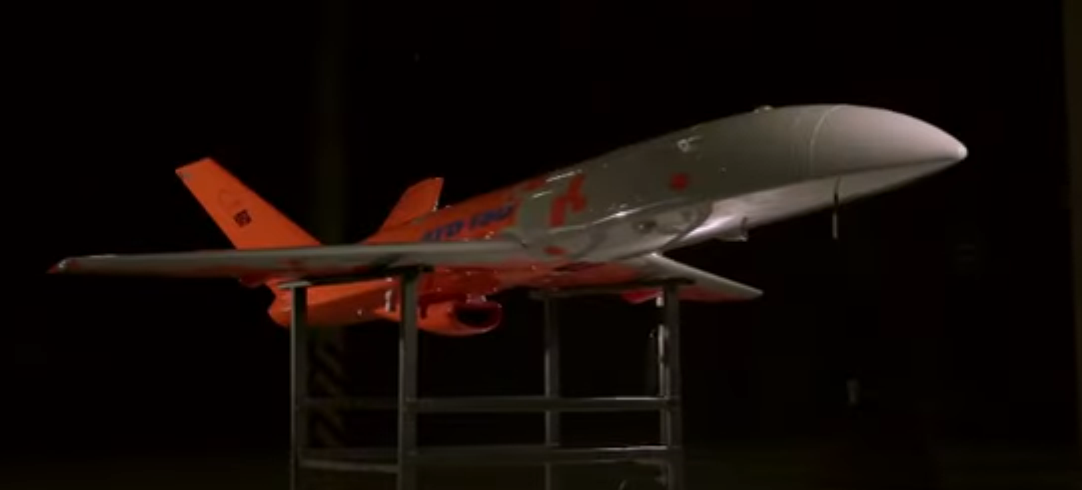
Brazil's first 100% domestic jet aircraft is closer than ever to taking to the skies!

Equipped with a jet engine developed by the Brazilian company Turbomachine, the ATD-150 represents a milestone in national aviation.
1749765346876.png


1749765272972.png
View: https://www.youtube.com/watch?v=Tv_5is6iwd8


https://www.defesaaereanaval.com.br/aviacao/atd-150-1-alvo-aereo-a-jato-nacional 1749765088647.png

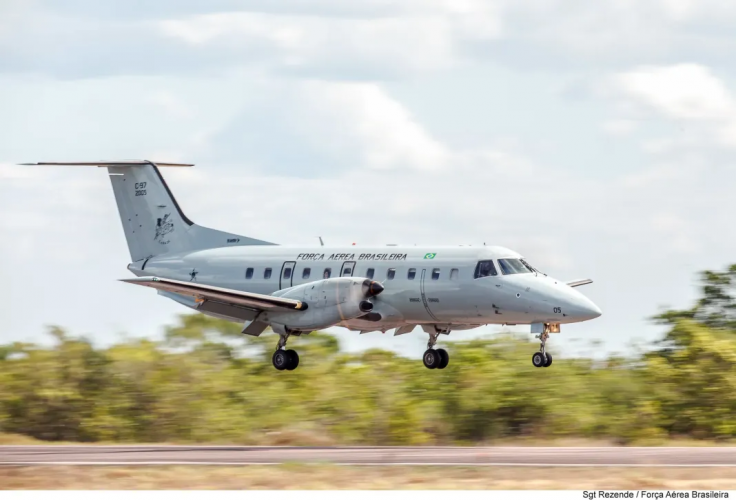
With the goal of modernizing its transport fleet, the Brazilian Air Force (FAB) has begun the modernization process of its Embraer C-97 Brasília aircraft. The project includes the incorporation of a new avionics package that will improve navigation precision, increase reliability, and facilitate integration with other advanced systems.

The first aircraft to begin this process belongs to the Sixth Air Transport Group (6º ETA), known as the Guará Squadron, which was transferred on June 9 from Brasília to the United States. There, at the facilities of Worldwide Aircraft Services Inc. (WASI), technical personnel from the Lagoa Santa Aeronautical Material Park (PAMA-LS) will carry out the modernization tasks under the supervision of local specialists. The first three units in the fleet will be serviced in Brazil, while the remaining ones will be upgraded later in Brazil, at PAMA-LS.

In this regard, Airman Colonel Claudomiro Feltran Junior, Director of the Logistics Park, stated, "The modernization of this aircraft represents an important step for our Force and is the result of a collective effort. The entire process, from planning and contracting to equipment preparation, was carried out with great dedication by PAMA-LS." It is also worth noting that this strategy also includes the transfer of knowledge, given that the technicians sent to the United States will return trained to replicate the work in the country.

The new avionics system incorporates state-of-the-art technologies in navigation, communications, and surveillance. Among the most notable improvements is the installation of EFIS (Electronic Flight Instrument System) systems, with PFD (Primary Flight Display) and MFD (Multi-Function Display) displays. These displays allow the display of key parameters such as altitude, speed, and attitude of the aircraft, as well as information on navigation and system status. They can also function as a mutual backup in the event of failures. One of the main capabilities that will be incorporated is the ability to perform RNP (Required Navigation Performance) navigation procedures, which allow for highly precise operation on specific routes and during the approach, takeoff, and landing phases.
1749765058096.png
Designed by Embraer in the 1980s, the C-120 "Brasília"—military designation C-97 at the FAB—is a medium-sized transport aircraft, renowned for its safety, speed, and comfort. Equipped with two Pratt & Whitney PW118 turboprop engines, each with 1,800 horsepower, it reaches a maximum speed of 550 km/h (300 knots) and an operating altitude of 32,000 feet (10,500 meters), giving it a flight range of up to six hours. Its internal configuration allows for the transport of 30 passengers or adaptation for medical missions with stretchers.

In parallel, the FAB began feasibility studies in 2024 to replace the Embraer EMB-110 Bandeirante, an aircraft designed for transport and liaison missions. This evaluation is being conducted through a Request for Information (RFI) sent to the aeronautical industry, with the goal of identifying suppliers that can meet the FAB's requirements in the medium term.

https://www.zona-militar.com/2025/0...de-la-fuerza-aerea-brasilena/#google_vignette
 
Last edited:
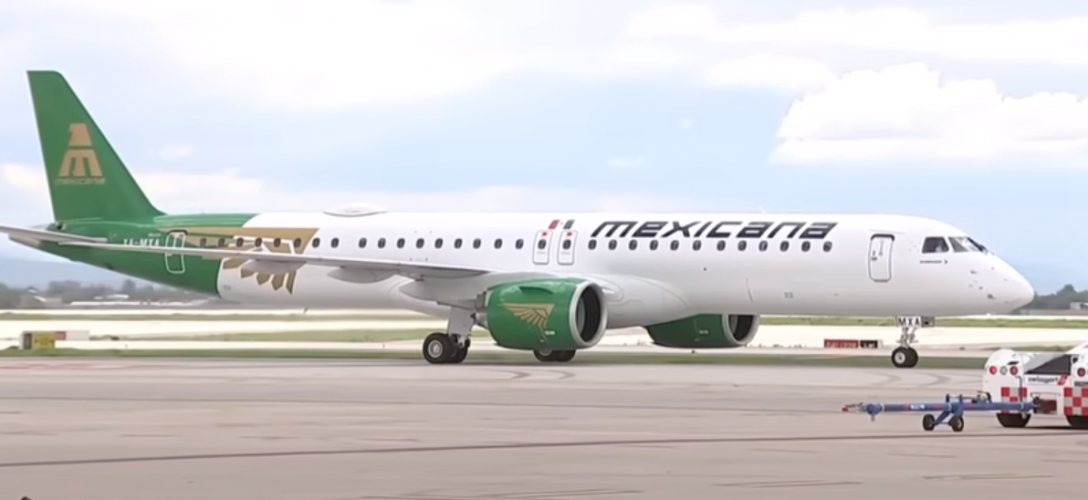
Mexicana de Aviación will add the first of its 20 Embraer E190-E2 aircraft into its fleet on June 24, 2025 — a full month later than initially planned. The delay reflects a recurring issue for the state-owned airline, which had originally announced the first delivery for May, according to General Director Leobardo Ávila during the public presentation of the aircraft model in November 2024.
1749854365686.png
Documents reviewed by El Financiero attribute the delay to an extended final assembly process that began in early May and may take up to six weeks. Following assembly, the aircraft must complete a series of test flights and obtain certification from Mexican aviation authorities before entering national airspace.

“Only the first aircraft has a confirmed delivery date of June 24, 2025; the others remain subject to confirmation,” the airline stated. According to its internal delivery schedule, the second aircraft is expected in August, followed by two more in November and a fifth in December.

The purchase of the 20 Embraer aircraft, valued at MX$21.7 billion (US$1.17 million), forms part of a fleet renewal and expansion program set to run through 2027. Mexicana de Aviación currently operates three aircraft, though only two are typically active, limiting its operational capacity. The new aircraft aim to bolster domestic routes, including Tulum, Ixtepec, and Monterrey, with plans to launch international flights to Colombia and the Dominican Republic as the fleet grows.

Despite its expansion efforts, Mexicana de Aviación continues to post financial losses. In 1Q25, the airline reported a net loss of MX$180 million (US$9.73 million), adding to cumulative losses since its launch, now totaling MX$1.43 billion (US$77.5 million).

Financial records obtained by El Financiero show that from January to March 2025, Mexicana generated MX$91.24 million (US$4.93 million) in revenue, compared to over MX$270 million (US$14.6 million) spent on payroll and aircraft operations. During this period, Mexicana de Aviación transported 81,300 passengers, averaging 90 passengers per flight, according to the Federal Civil Aviation Agency (AFAC).

The airline still depends on TAR Aerolíneas to operate several routes under an intermediation agreement. While some improvements in occupancy rates have been noted, Mexicana de Aviacón’s business model remains financially unsustainable. On average, the airline lost MX$3.42 million (US$185,000) per day in 1Q25 due to high operational costs and insufficient revenue.

In its first year of operations, Mexicana de Aviación earned MX$385 million (US$20.89 million) in ticket sales but required MX$1.64 billion (US$88.65 million) to remain operational, resulting in operating losses of MX$1.25 billion (US$67.57 million), according to reviewed financial statements.

Internal financial documents also reveal that Mexicana has yet to establish fixed operational targets and is awaiting further aircraft deliveries to implement its full business model. The airline estimates the total cost of the 20 Embraer aircraft at MX$21.76 billion (US$1.17 billion). The Ministry of Defense, via transparency channels, disclosed that Mexicana de Aviacón does not anticipate profitability until 2029.
https://mexicobusiness.news/aerospa...mbraer-e190-e2-delivery-affecting-small-fleet
EMBRAER PROJECTS DEMAND FOR 10,500 REGIONAL AIRCRAFT BY 2044
It estimated that the market for aircraft with up to 150 seats will reach a value of $680 billion, driven by demand for regional connectivity and mixed fleets.
A21 Editorial Team A21 Editorial Team June 13, 2025


Embraer published its Market Outlook 2025, a 20-year annual forecast in which it estimates 10,500 orders for new jets and turboprops with a maximum of 150 seats by 2044, which will have a value of $680 billion.

The projection, presented ahead of next week's Paris Air Show, is virtually unchanged from the manufacturer's previous estimate, which Arjan Meijer, President and CEO of Embraer Commercial Aviation, attributes to the continued social, supply chain, and geopolitical trends identified during the pandemic.

“Five years after the start of the pandemic, many of the structural changes it brought about have proven to be lasting. In our first post-pandemic forecast, we highlighted the transition of globalization toward a more polarized geopolitical outlook. Today, as countries and regions seek greater strategic autonomy, demand for regional connectivity will continue to grow,” explained Arjan Meijer.

“We believe that mixed fleets, combining smaller aircraft and larger-capacity single-aisle aircraft, will be essential for that long-term growth. They offer the versatility to better match capacity to demand, expand networks, and support regional and national development goals,” he added.

Embraer added in its report that of the 10,500 new aircraft in the segment with up to 150 seats by 2044, 8,720 will be jets and 1,780 turboprops.

The report also forecasts sustained growth in passenger traffic. Globally, revenue passenger kilometers (RPKs) will increase at an annual rate of 3.9% over the next 20 years.

China will lead regional growth with an annual rate of 5.7%, followed by Latin America (4.7%) and Africa and the Middle East (4.4% each).

https://a21.com.mx/aeronautica/2025...manda-de-10500-aviones-regionales-hacia-2044/
 
Last edited:
Company Highlights Strategic Milestones and Strengthens Urban Air Mobility Ecosystem with Full eVTOL Service Portfolio

São José dos Campos – Eve Air Mobility (Eve), a global leader in electric vertical takeoff and landing (eVTOL) aircraft, is presenting the latest developments in its eVTOL program at the Paris Air Show, including aircraft enhancements, advances in testing, and the continued development of its integrated service solution, TechCare.

“At Eve, our commitment is to go beyond pioneering certification. We strive to deliver the most efficient, safe, and appropriate solution for our customers’ needs,” says Johann Bordais, CEO of Eve. “Our testing program is conducted with technical rigor and attention to every detail, building a solid foundation for the future of urban air mobility.”

Ground Testing and First Flight Preparation

Eve takes a meticulous approach to its testing program, prioritizing full ground validations to ensure operational safety and regulatory compliance.

“Our philosophy is ‘certify to fly, not fly to certify’,” highlights Luiz Valentini, Chief Technology Officer at Eve. “We are aware of the responsibility of leading a new era in aviation and, therefore, we invested in exhaustive ground tests, taking advantage of all of Embraer’s expertise in aeronautical certification processes to validate performance and compliance with standards before the start of test flights.”

Several system and component tests have already been completed. The company is now moving forward with systems integration and complete ground tests, with the expectation of carrying out the first experimental flight in the middle of this year. The plan foresees the use of five to six prototypes in final configuration for thousands of development and certification flights between 2025 and 2026.

Project Evolves for Greater Safety, Operational Efficiency and Passenger Experience

Eve presents relevant updates to the design of its eVTOL, always focusing on safety, operational efficiency, user experience and logistical ease. The main innovations include:

Wheeled Landing Gear: Available as an option from the moment it entered service, the wheeled landing gear provides greater agility in maneuvers on the ground, reduces energy consumption during taxiing and increases operational flexibility.

Optimized Modular Cabin: The interior has been redesigned with lightweight seats for more efficient operations and a modular cabin concept, allowing rapid conversion between passenger transport (up to four passengers) and cargo, maximizing the versatility and use of the aircraft.

Innovative Lift and Propulsion System: The set of fixed rotors for lift and a rear propeller rotor, combined with a patented four-propeller design, allows the blades to automatically align with the supports during cruise flight, reducing drag and noise. The system also incorporates redundancy to raise safety standards.

High-Efficiency Modular Wings: The wings, optimized by Embraer, have a wingspan of 15 meters and can be disassembled for transportation in a standard container, facilitating international logistics. The simplified design, with only one actuator and aileron per side and no flaps, ensures high performance and operational availability.
Intuitive Cockpit: Developed in partnership with Garmin and Crouzet, the cockpit uses a four-axis sidestick control and Embraer's fifth-generation fly-by-wire system, providing intuitive operation and reducing pilot workload.
Vector Integrates the TechCare portfolio of solutions to maximize efficiency and data integration


One of Eve's major differentiators is the offer of integrated solutions for the entire operational life cycle of eVTOLs. TechCare, Eve's complete portfolio of services, connects operators to the global network of service providers, suppliers and the entire OEM (or manufacturer) support structure, ensuring 24/7 support and coverage, delivering maximum aircraft performance.

Vector, an urban air traffic management solution designed for easy integration, is now part of the TechCare portfolio, expanding the range of after-sales services. This platform covers everything from fleet planning to operations control and landing and takeoff times, with the possibility of being used by other eVTOL manufacturers, reinforcing Eve's commitment to the development of the Urban Air Mobility (UAM) ecosystem.
1749973219044.png
The main services that make up the TechCare portfolio include:

Pilot and Mechanic Training: In partnership with Embraer-CAE Training Services (ECTS), Eve provides training centers with specialized instructors, meeting the growing demand for training in the UAM sector.

Maintenance: In addition to access to Embraer's worldwide network of service centers, Eve has developed local partners and a structure
to support this network by connecting data and integrating with the spare parts logistics chain.
Battery Management: Eve selected BAE Systems, a leader in aerospace innovation, to supply the aircraft battery system. The solutions range from battery life management and integration with the supply chain to second-life coverage, promoting efficiency and reliability in daily operations.
Spare Parts: A robust portfolio of solutions and special programs for the material chain and connected to digital solutions for parts management ensures 24/7 and optimized service to operators and maintenance workshops worldwide.
“TechCare’s integrated model offers operators cost predictability, process simplification and maximum operational availability,” emphasizes Luiz Mauad, Vice President of Customer Services. “With TechCare, we ensure that aircraft are always ready to operate, delivering maximum performance to operators, minimizing risks and ensuring an excellent operational experience.”

https://www.defesanet.com.br/aviaca...e-solucoes-integradas-no-paris-air-show-2025/
 
The Peruvian Air Force (FAP) confirmed the discovery of wreckage from the KT-1P training aircraft, which disappeared on May 20 during a training mission off the coast of Ica. The aircraft, registered FAP 446, was located between the Zárate and Zaratillo islands, near the Paracas Peninsula. However, there is no concrete information yet on the whereabouts of its sole crew member, Second Lieutenant Ashley Vargas Mendoza, who was performing training maneuvers.

The 24-year-old officer was conducting flight practice at the Military Aviation School in Pisco, the main base of operations for the KT-1Ps. Her disappearance has prompted an intense search operation involving helicopters, Navy vessels, drones, specialized divers, and ground rescue personnel. The Pisco Provincial Prosecutor's Office is also participating and has opened a preliminary investigation.

A training aircraft with a binational seal

According to information from Peru 21, the KT-1P is a turboprop aircraft designed by Korea Aerospace Industries (KAI), developed as part of a cooperation agreement between Peru and South Korea. This model is primarily used for basic training and acrobatic maneuvers, featuring modern navigation systems, digital avionics, and ejection seats. It has capacity for two crew members—an instructor and a cadet—and can reach speeds of up to 574 km/h (356 mph), with a flight range of four hours.

In 2012, the Peruvian government, under President Ollanta Humala, signed a contract for more than $200 million for the acquisition of 20 of these aircraft. Four were built in South Korea, while the remaining 16 were assembled in Lima by Peruvian technicians from the FAP Maintenance Service (SEMAN), who had previously received training in the Asian country.
1750022680503.png

Advances in Defense and Technology During Humala's Administration

The presentation of the first KT-1Ps manufactured in Peru took place on October 21, 2014, in a ceremony presided over by Humala and his then-Defense Minister, Pedro Cateriano. The event, held at Las Palmas Air Base in Lima, marked a milestone in the modernization of the FAP and the implementation of technology transfer processes in the military sphere.

The KT-1Ps, nicknamed "Torito" in honor of the historic aircraft of national hero José Quiñones, replaced obsolete units such as the Tucano and SF-260. Their incorporation has been key in the training of new military pilots, such as Ashley Vargas, whose disappearance has shocked the military and the entire country.
https://panamericana.pe/locales/443...nstruccion-pilotaba-ashley-vargas-desaparecer
 
View: https://www.youtube.com/watch?v=mbIYIMWHUJs


Eve Air Mobility Scores Firm Order for 50 eVTOLs with Brazil's Revo at Paris Airshow – FutureFlight

The first deal of the 2025 Paris Air Show was sealed on Sunday June 15, when Brazil’s Revo signed a binding contract that will see it operate air taxi services in São Paulo with 50 Eve Air Mobility four-passenger eVTOL aircraft. The spinoff from helicopter group Omni intends to take delivery of the first 10 vehicles in late 2027, with the others to follow as it scales up the operation.
 
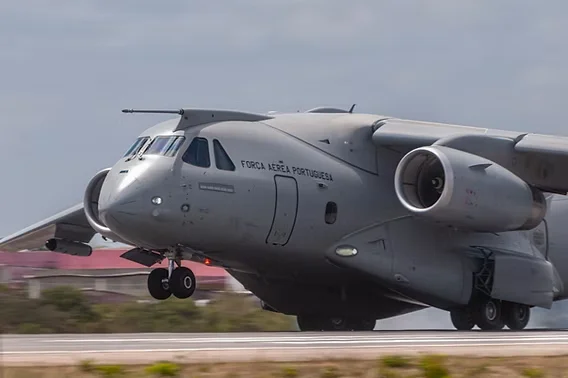
The Portuguese government will purchase a sixth KC-390 Millennium aircraft, Embraer, the aircraft manufacturer, announced on the first day of the Paris Air Show.
1750196599017.png

In 2019, both parties had already agreed to purchase five of these multi-mission aircraft, which will reinforce the Portuguese Air Force (FAP) fleet.

In addition to this news, Embraer also announced that, together with the FAP, they intend to include ten purchase options in the current contract for possible future acquisitions by European nations or NATO (North Atlantic Treaty Organization) members through the Portuguese government.

“We are deeply honored by the opportunity to expand our partnership with the Portuguese Air Force and the Portuguese State. The acquisition of the sixth KC-390 by the Portuguese Air Force, which has been operating the aircraft since 2023, will be the first additional purchase by an operator, demonstrating the recognition of the quality and operational results this aircraft has achieved.

“The interest in including additional options in the contract is confirmation that more Western countries could soon join this group of operators, all benefiting from economic synergies throughout the KC-390’s lifecycle,” said Bosco da Costa Junior, President and CEO of Embraer’s Defense and Security Division.

The KC-390 Millennium can perform missions such as cargo and troop transport and airdrop, aeromedical evacuation, search and rescue (SAR), humanitarian aid and disaster response (HADR), firefighting, and aerial refueling (AAR), both as a tanker and receiver aircraft.

Other roles include providing support to maritime surveillance and SAR operations, increasing its range and flight time through mid-air refueling.

According to Embraer, the aircraft has achieved a 99% mission completion rate with low operating costs.

https://a21.com.mx/aeronautica/2025...-kc-390-y-abre-puerta-a-mas-compras-europeas/
Embraer's Flight Display | Paris Air Show 2025
View: https://www.youtube.com/watch?v=Z10IVGoVPK0
 
Last edited:
FAdeA completed the first test flight of the new IA-100B basic trainer.

https://www.zona-militar.com/2025/0...vo-entrenador-basico-ia-100b/#google_vignette
GrZhvFRW8AAKVCq-scaled.jpeg


GrZh-i9WsAAyc1O-jpeg.webp
 
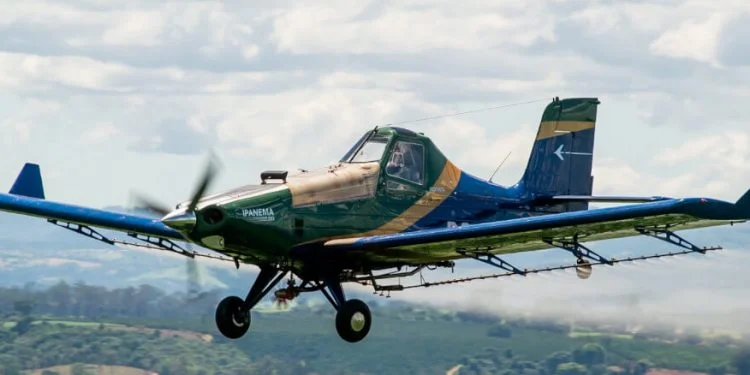
Embraer exhibits its Ipanema 203 crop duster at the Bahia Agricultural Show
06/09/2025 in Industry
Embraer exhibits its Ipanema 203 crop duster at the Bahia Agricultural Show

Embraer will exhibit the Ipanema 203, the best-selling crop duster in the Brazilian agricultural aviation market, during the 19th edition of the Bahia Agricultural Show, which is being held from today until June 14 in Luís Eduardo Magalhães (BA). With over 20 years of operation powered by 100% ethanol, the aircraft combines technology with robustness, high productivity with precision, and low operating costs.

“The Bahia Farm Show, one of Brazil's leading agricultural fairs, is a great opportunity to strengthen the presence of our aircraft in a region known for its diverse crop varieties, where producers seek the best solutions to achieve maximum productivity at the lowest production cost,” says Sany Onofre, Embraer's Agricultural Aviation leader.

With more than 180 units sold in the last three years, the aircraft continues to be the preferred choice of rural producers and offers a wide range of equipment designed to boost productivity and precision with sustainability. With an efficiency equivalent to four large ground sprayers operating simultaneously, the ethanol-powered aircraft sprays more than 200 hectares per hour, delivering high-quality application without kneading the soil or spreading pests through contact, generating a yield of up to 15 additional bags per hectare.

In addition to participating in the Bahia Agricultural Show with the Ipanema 203, Embraer has also promoted operational safety during the events, with an intense agenda of field initiatives addressing topics such as preventive inspections, a safe environment, and best practices for pilots, mechanics, and operators. Currently, 100% of agricultural pilot training courses in Brazil include a presentation by the Ipanema customer service team, ensuring a strong safety culture is instilled from the beginning of an agricultural pilot's professional career.
1750313156044.png
https://actualidadaeroespacial.com/...cola-de-bahia-su-avion-fumigador-ipanema-203/
 
FADEA IA-100B: Crashworthy seat for light aircraft

View attachment 775129
I am a big fan of Argentina, according to my mother one of her grand fathers came to Mexico from the Vasque country and his brother stayed in Argentina, so technically we have family in Argentina, my father`s brother lived in Mendoza in the 1980s for several years.
I hope the best to your country, but I feel in Latin America we should cooperate more in the aerospace industry.

Now Argentina makes pieces for KC-390, but I feel we should make more aircraft program that are truly Latin American, I hope that is the future.
 
Last edited:

Akaer signs contract with American company RADIA to design cabin for the world's largest aircraft
Ricardo Fan
June 17, 2025
Aviation, Le Bourget, Paris Air Show

Akaer signs contract with American company RADIA to design cabin for the world's largest aircraft
Akaer, a leading Brazilian company in innovation in the Defense and Aerospace sectors, has been selected to develop the pressurized cabin for the largest cargo aircraft ever produced in the world. The partnership with RADIA, a US energy company responsible for the WindRunner project, was consolidated this Tuesday, June 17, during the Paris Air Show.
1750368199849.png

“It is a source of pride to be part of this important project that will be a milestone for global aviation. The development of the WindRunner is challenging and complex, and Akaer's participation is the result of recognition of the excellence and experience we have built over the years,” said Cesar Silva, CEO of Akaer.

“We are proud to have highly qualified partners like Akaer who share our vision for the future and are actively helping us shape a new era of sustainable and integrated logistics,” said Mark Lundstrom, founder and CEO of Radia.

The Project
The aircraft’s pressurized cabin (Cabin Pressure Vessel) is designed to provide a safe and controlled environment for both crew members and critical onboard systems during flight operations.

The project will be developed at Akaer’s facilities in São José dos Campos (SP), Brazil.

The world’s largest freighter
Developed by Radia, the WindRunner is an aircraft created to serve strategic missions in the areas of energy, defense, aerospace and disaster response. With the largest cargo volume ever designed for an aircraft — an impressive 7,700 m³ — and the capacity to carry a payload of up to 80 tons, the WindRunner redefines the limits of air mobility.

Designed to operate autonomously on unpaved runways as short as 1,800 meters, the WindRunner does not require specialized airport infrastructure, allowing point-to-point deliveries in remote and difficult-to-access regions.

With this unprecedented capacity, the WindRunner makes it possible to directly transport wind turbine blades measuring over 100 meters, satellites, armored vehicles and other large cargo, drastically reducing logistics costs and operational times..
https://www.defesanet.com.br/parisa...para-projetar-cabine-do-maior-aviao-do-mundo/
 
Saab delivers 10th Gripen fighter to Brazil
Ricardo Fan
June 18, 2025

Aviation, Fighter Aviation, Gripen, Gripen BR, Gripen F39E/F, Gripen NG Brazil
Saab delivers 10th Gripen fighter to Brazil
The aircraft arrived in Brazil on June 12, by sea. After land transfer, preparations and ground tests, it took off today from Navegantes International Airport bound for Anápolis Air Base

São Paulo (SP) – This morning, June 17, 2025, another F-39E Gripen took off from Navegantes International Airport (SC) bound for Anápolis Air Base (GO), headquarters of the 1st Air Defense Group (1st GDA) of the Brazilian Air Force (FAB).

The flight of the fighter, registration number FAB 4110, piloted by Lieutenant Colonel Cristiano de Oliveira Peres, landed at 12:42 p.m. (Brasília time) and lasted approximately 1 hour and 17 minutes.

“The delivery of the 10th Gripen fighter represents another important milestone in the strategic partnership we have built with Brazil,” said Peter Dölling, CEO of Saab Brazil. “Through the technology transfer program, Brazilian pilots are now fully qualified to operate the Gripen, engineers and technicians are equipped to perform their duties with excellence, and the Brazilian Defense Industrial Base is even stronger.”

The aircraft was manufactured in Linköping and loaded onto a cargo ship from a port in Sweden for a trip to Brazil, where it arrived in June. After unloading, it was transported by land from the port to the airport, where it was prepared and subjected to tests before its first takeoff in Brazilian airspace.

“More than just the 10th aircraft of the 36 to be delivered, the arrival of the new Gripen represents the first unit with new capabilities developed for the FAB. With this, the first air defense group will be able to perform a new range of missions, in addition to increasing the availability of aircraft for pilot training and contributing to the sovereignty of the airspace”, says Air Force Colonel Claudio Oliveira Marques, Coordinator of Operation Navegantes.

“The arrival of the new Gripen is the result of a relatively complex operation that, despite involving a large number of players, was very well executed in coordination with Saab and the FAB so that everything went as planned”, he states.

With this delivery, the FAB now has nine Gripen fighters in the 1st GDA and one used in flight test and development campaigns at the Gripen Flight Test Center, based in Gavião Peixoto, in the interior of the state of São Paulo.

Since the Gripen entered service in Brazil in December 2022, the FAB has successfully participated in several exercises with the aircraft, including CRUZEX, a large-scale multinational exercise in November 2024.

The Gripen program

The Brazilian Gripen program was announced in 2013, when the fighter was chosen to replace the Brazilian Air Force's fighter aircraft fleet, as well as benefit the national defense industry. In 2014, a contract was signed for the development of 36 aircraft, 28 Gripen E (single-seat) and 8 Gripen F (two-seat). And in 2015, the contract came into effect, starting the largest technology transfer program ever undertaken by Saab.

1750457482289.png
In addition to the aircraft, the contract includes logistical support, support systems and related equipment, training, weapons and the industrial cooperation agreement.

Through the technology transfer program, Saab has trained more than 350 Brazilians, including engineers, technicians and pilots, with theoretical and practical training for the development, testing, production and maintenance of the world's most advanced multi-mission fighter, in Brazil.

The country currently has some vital infrastructure for the Gripen program, such as the Gripen Design and Development Center (or GDDN), the Gripen Flight Test Center (or GFTC) and the aircraft production line, all in Gavião Peixoto (SP). In addition, the Saab unit in São Bernardo do Campo (SP), responsible for the production of Gripen aerostructures and maintenance of the fighter's AESA radar and electronic warfare sensors.
https://www.defesanet.com.br/aviacao/saab-entrega-10o-caca-gripen-para-o-brasil/
 
Akaer, a leader in engineering and technology in the Defense and Aerospace sectors, will be present at the 55th edition of the Paris Air Show — one of the most prestigious events in the global industry — with a portfolio that highlights its performance in highly complex technological programs and consolidated international partnerships.

The event will be held between June 16 and 22 at Le Bourget airport, in France, bringing together the main players in global aviation.

During the fair, Akaer will present solutions developed for military aviation, space systems and optronic products, reflecting more than three decades of experience in strategic projects. The participation also reinforces its position as a Global Tier 1 Supplier, a recognition achieved in 2024.

“Our presence at the Paris Air Show 2025 is an opportunity to strengthen existing partnerships and explore new fronts of technological collaboration and international expansion”, says Cesar Silva, CEO of Akaer.

Global Event
Held since 1909, the Paris Air Show stands out as the largest and oldest aeronautical event in the world. The fair is recognized as one of the main landmarks in the aviation calendar and serves as a stage for the entire sector, ranging from civil aviation, including manufacturers and airlines, to the defense and space exploration segments.

The 2025 edition is expected to bring together exhibitors from 48 countries, hundreds of official delegations and around 300,000 visitors. The event is the stage for launches, aerial demonstrations and cutting-edge technological solutions, reinforcing the leading role of participating companies in the evolution of aviation and space exploration.

“The Paris Air Show is a space that fosters strategic discussions about the future of the aerospace and defense segment, directly influencing the trends and advances in the sector”, concluded the CEO of Akaer.

Aerospace solutions
Akaer's portfolio highlights include the modernization of the wings of the P-3AM Orion, a maritime patrol aircraft of the Brazilian Air Force (FAB), in addition to participating in the development of the HÜRJET, working on the structural detailing and installation of systems in the fuselage of the advanced trainer fighter of Turkish Aerospace Industries (TAI).

Akaer also contributes to international regional aviation programs. The company signed a contract with the German company Deutsche Aircraft and took over the production of the front fuselage of the D328eco, a sustainable 40-seat turboprop aircraft designed for regional transport, rescue missions, military operations and firefighting.

Another important project is the LUS-222, the first aircraft designed in Portugal. Akaer was contracted by EEA Aircraft and Maintenance to produce the fuselage, complete wing, horizontal stabilizers and all control surfaces for the aircraft.
1750560420106.png

Technology
In the space and optical systems segment, Akaer will showcase system solutions such as the OLHAR high-precision thermal imaging monocular, designed to meet the operational needs of the Brazilian Army, with applications ranging from tactical operations to surveillance missions in adverse conditions.

The company is also responsible for developing the ST30CAM camera for the SatVHR, an Earth observation satellite. The equipment offers high-resolution monitoring in multiple spectral bands between 400 and 800 km in altitude, with applications in cartography, security and response to natural disasters.

https://www.defesanet.com.br/parisa...portfolio-estrategico-no-paris-air-show-2025/
 
Last edited:
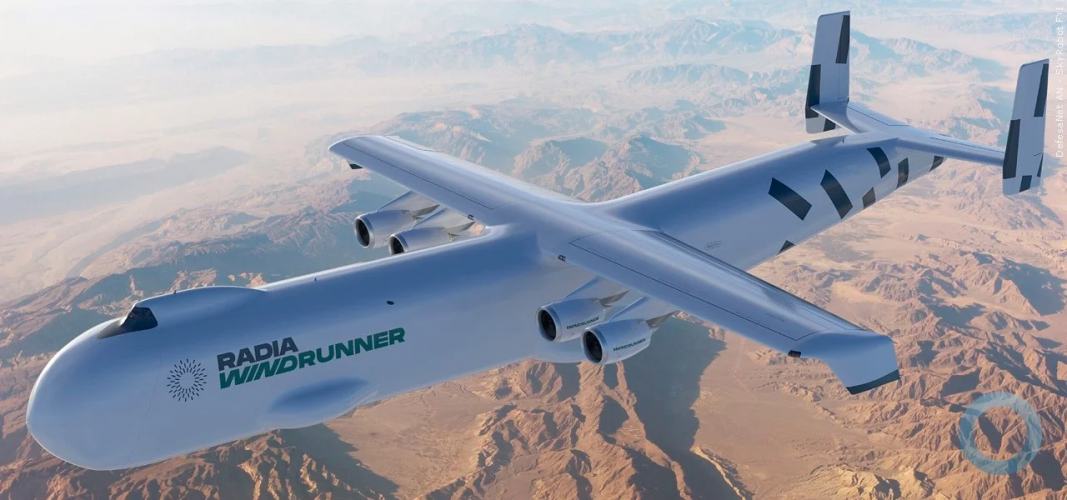
EMBRAER BOASTS MORE THAN 100 ORDERS ON THE THIRD DAY OF THE PARIS AIR SHOW
The agreements cover commercial aircraft, cargo conversions, eVTOLs, and defense, with SkyWest, Airlink, and Lithuania on a key day for the Brazilian manufacturer.
A21 Editorial Team A21 Editorial Team June 19, 2025
1750560648616.png

Embraer chose the third day of the Paris Air Show to announce a series of new commercial agreements, including nearly 120 aircraft orders, including firm orders, passenger-to-cargo conversions, and preliminary commitments.

The most important agreement was signed with SkyWest Airlines, a global operator of E-Jets, which includes a firm order for 60 aircraft with options for an additional 50, a contract valued at approximately $3.6 billion at list prices.

It will be integrated into Embraer's second-quarter backlog, with deliveries scheduled for 2027.

For its part, South Africa's Airlink announced the leasing of 10 new E195-E2s through the US firm Azorra. These aircraft, which will provide fuel savings of up to 29% compared to previous models, are expected to be added to its fleet of 68 units over the next two years.

Through its subsidiary, Eve Air Mobility, Embraer signed a letter of intent with Future Flight Global for the potential sale of up to 54 electric vertical takeoff and landing (eVTOL) aircraft for the Brazilian and US markets.

In terms of cargo, leasing company Regional One doubled its initial order for E190 P2F (passenger-to-freighter) conversions, increasing from two to four. The launch operator will be Bridges Air Cargo, whose first modified E190F will enter service in the third quarter of 2025.

In the defense segment, the Lithuanian Ministry of National Defense selected the C-390 Millennium as its next military transport aircraft, joining Portugal, Sweden, and the Netherlands as European states, among others worldwide, in opting for this multi-mission aircraft.

Embraer's Pool Program, which provides logistics and components support for more than 60 airlines worldwide, added Air Montenegro to its customer base with a multi-year contract for its three E195s, while France's Amelia renewed and extended its agreement for its fleet of ERJs and new E190s.

Hunnu Air of Mongolia also joined the program with support for two E195-E2s, and Virgin Australia contracted Air Montenegro for its next fleet of eight E190-E2s.
https://a21.com.mx/aeronautica/2025...-pedidos-en-el-tercer-dia-del-paris-air-show/
 
Paris Le Bourget, France, June 18, 2025 – Embraer has received a firm order from SkyWest for 60 aircraft, with purchase rights for an additional 50 jets. Deliveries of the aircraft will begin in 2027. The list price of the firm order contract for 60 aircraft, which will be included in Embraer’s second-quarter backlog, is US$3.6 billion.

With a fleet of 263 aircraft and a backlog of 16 jets, SkyWest Airlines is the largest owner and operator of E-Jets in the world. This order advances that position even further.

“As the largest owner and operator of E175s worldwide, we are pleased to continue to expand our E175 fleet and enhance our presence in both segments. This order allows us to advance our long-term fleet strategy and continue to deliver the industry’s leading regional product,” said Chip Childs, President and CEO of SkyWest.

1750630703346.png
“We are excited to continue our long-standing partnership with SkyWest Airlines with this major order. The E175 is a cornerstone of regional aviation in North America, and this order reinforces SkyWest’s confidence in the performance, reliability and passenger comfort of our aircraft. We look forward to supporting SkyWest’s growth and success for years to come,” said Arjan Meijer, President and CEO, Embraer Commercial Aviation.

Embraer and SkyWest have worked closely together for nearly 40 years, beginning in 1986 when the U.S. carrier purchased five EMB-120 Brasilias. In late 1997, SkyWest celebrated its 25th anniversary, while already operating more than 40 EMB-120 aircraft. In 2013, the partnership was renewed with the purchase of 100 E175s. Today, SkyWest is the largest operator of the E175, with more than 260 Embraer aircraft.
https://www.defesaaereanaval.com.br/aviacao/skywest-faz-pedido-firme-de-60-aeronaves-embraer
As part of the development of the new Pillán II training aircraft, the Chilean Air Force took a key step in the training of specialized personnel with the completion, by one of its future test pilots, of the course taught by the International Test Pilot School (ITPS) in Canada.

Captain (A) Paris Villavecchia, a recent graduate of the program, will participate in the testing, certification, and validation phase of the new basic trainer being developed by ENAER, with the goal of upgrading the training capabilities of the Chilean Air Force. Villavecchia graduated on May 28 in London, Ontario, after five months of theoretical and practical training that included topics such as performance, stability, avionics, aircraft certification, and flight control mechanics.

During the practical phase, he flew ten types of aircraft, including the Aero L-29 Delfín and L-39 Albatros jets, the T.7A Hawker Hunter fighter, as well as the Sukhoi-29 aerobatic aircraft and advanced simulators for the Boeing 737-800 NG and Boeing 787. Regarding this, he stated, "It was a very professional, very demanding course. Without a doubt, one of the most challenging courses I have ever faced," also highlighting the caliber of the international instructors and the collaborative environment with test pilots from companies such as Airbus, Gulfstream, and Honda.

The Chilean officer's participation is directly linked to the Pillán II Project, a strategic initiative promoted by ENAER (National Aeronautical Commission for Chilean Air Force) that seeks to replace the veteran T-35 Pillán aircraft, incorporated into the FACh since 1985, with a new primary training aircraft with cutting-edge technology. The new trainer will feature a larger fuselage, redesigned domestically manufactured wings, a new engine, and a modern full-glass digital cockpit equipped with multifunction displays and a Head-Up Display (HUD). The project also includes a comprehensive training ecosystem that includes mixed reality simulators, planning stations, debriefing systems, and logistics and maintenance support platforms.

During FIDAE 2024, Alberto Alfaro, ENAER's press officer, explained in an interview with Zona Militar: "The simulator is a mixed reality simulator, where the pilot, in a small area, puts on his virtual reality headset and views a virtual outside world... but when he looks at the cockpit and touches it, it's real. Even when he performs a maneuver, it's synaptic; he feels the flight resistance, therefore, creating a highly immersive experience in the simulator that saves flight hours."
1750630828049.png
With a planned investment of $142 million to be executed over eight years, the program will position ENAER among the few countries capable of developing and manufacturing its own military trainer. At the end of 2024, the Chilean company announced the completion of the first structural piece of the Pillán II, marking a key milestone in the project's progress.

https://www.zona-militar.com/2025/0...-completo-el-importante-curso-itps-en-canada/
 
Lithuania Selects Embraer’s C-390 Millennium to Strengthen Military Readiness
Ricardo Fan
June 20, 2025

Aviation, Embraer, EMBRAER, KC-390, Le Bourget , Paris Air Show
Lithuania Selects Embraer’s C-390 Millennium to Strengthen Military Readiness
The strategic decision, which paves the way for the acquisition of three C-390s, marks a significant step in enhancing Lithuania’s operational readiness and interoperability with other NATO members. The agreement will include industrial cooperation that will provide MRO (Maintenance, Repair and Overhaul) capabilities, co-production of parts and partnerships with research institutes.

Paris, Le Bourget — The Lithuanian Ministry of National Defense has announced the selection of the Embraer C-390 Millennium as the country’s next-generation military transport aircraft.

This selection marks a significant step in enhancing Lithuania’s operational readiness and interoperability within NATO (North Atlantic Treaty Organization) and paves the way for the procurement process that will follow all legal procedures in accordance with Lithuanian law.

“We have carefully studied several models of military transport aircraft available on the market and our evaluation clearly showed that the C-390 Millennium is the ideal platform to meet our military operational requirements.

Therefore, Lithuania has selected Embraer to advance the negotiations and we expect to finalize the procurement contract in the coming months,” said Loreta Maskaliovienė, Deputy Minister of National Defense, Lithuania.

“We are honored to have been selected by the Lithuanian authorities. This selection reflects Embraer’s commitment to strengthening the defense capabilities of its partners in Europe. In this sense, the C-390, with its versatility, performance and NATO interoperability, is the ideal platform — readily available to perform the most demanding missions,” said Bosco Da Costa Junior, President and CEO of Embraer Defense & Security.

The C-390 Millennium is a state-of-the-art aircraft designed to operate in austere environments and under demanding conditions, offering superior speed, payload capacity and mission flexibility.

This agreement positions Lithuania among the growing number of European and NATO allies, including Portugal, Hungary, the Netherlands, Austria, the Czech Republic, Sweden and Slovakia, who have also selected the C-390 to modernize their air forces. By adopting the C-390 Millennium, Lithuania will significantly enhance its operational capabilities while benefiting from the ecosystem and synergies present in Europe in terms of support and training.

Since entering service with the Brazilian Air Force in 2019, the Portuguese Air Force in 2023 and, most recently, the Hungarian Air Force in 2024, the C-390 Millennium has proven its capability, reliability and performance. The current fleet in operation has demonstrated a mission capability rate of 93% and mission completion rates above 99%.

The C-390 Millennium can carry more payload (26 tons) compared to other medium-lift military transport aircraft and flies faster (470 knots) and further, being able to perform a wide range of missions, such as cargo and troop transport and airdrop, medical evacuation, search and rescue (SAR), firefighting and humanitarian missions, operating from temporary or unpaved runways such as dirt, soil and gravel.

1750729065220.png
The aircraft configured with aerial refueling (AAR) equipment, designated C-390, has already proven its capability both as a refueler and as a receiver, in this case receiving fuel from another C-390, using pods installed under the wings.
https://www.defesanet.com.br/parisa...mbraer-para-fortalecer-sua-prontidao-militar/
 
Le Bourget, Paris, June 18, 2025 – Embraer, a global leader in the aerospace industry, announced that Bridges Air Cargo will be the launch customer for the new passenger-to-freighter (P2F) E-Freighter E190F. The announcement was made jointly with Regional One, the aircraft’s lessor. This jet is the first of two converted jets, scheduled to enter service in the third quarter of 2025.

Bridges Air Cargo is part of Bridges Worldwide, a leading provider of solutions to the international logistics, express and express shipping community. The company partners with global logistics leaders – such as FedEx, DHL and UPS – to support their high-performance network needs at critical times.

“The announcement of Bridges as the launch customer for the E-Freighter comes at an exciting time as we celebrate 35 years of operations and over one billion pounds moved for the express freight market. The size of the aircraft fills a unique and underserved space in the cargo segment. The jet also strengthens our operational capabilities and paves the way for the development of promising new routes. We are excited to partner with Embraer and Regional One, which is a fundamental step forward for regional air cargo transportation,” said Guy Bridges, CEO of Bridges Air Cargo.

“This milestone represents Regional One’s dedication to innovation in the regional aviation market, as well as the first E190 freighter conversion. Together with Embraer and our valued partners, we are setting a new standard for regional cargo transportation – transforming one of the world’s most efficient regional jets into the next-generation freighter. Today, we are delighted to welcome Bridges Air Cargo as our newest partner in this transformative journey, reinforcing our shared vision for the future of regional logistics,” said Hank Gibson, President of Regional One.
1750851275795.png
“We are thrilled to announce Bridges Air Cargo as the launch customer for the E190F on the heels of the announcement of triple certification with the FAA, EASA and ANAC. We look forward to supporting a smooth entry into service for the first E-Freighter, and we wish Bridges every success,” said Arjan Meijer, President and CEO, Embraer Commercial Aviation.

The E190F was launched to meet the dynamic demands of e-commerce and modern commerce, which require agile deliveries and decentralized operations, driving demand for faster shipment deliveries to secondary and tertiary markets. The jet was developed to fill a gap in the air cargo market and replace older, less efficient models.

The converted E-Jets will have 40% more volume capacity, three times the range of large turboprop freighters and up to 30% lower operating costs than larger narrowbodies. If the underfloor and main deck capacity are combined, the maximum structural load is 13,500 kg.

https://www.defesaaereanaval.com.br...-primeira-operadora-do-e-freighter-da-embraer
 
By Teresa De Alba | Jr Journalist & Industry Analyst - Tue, 06/24/2025 - 18:12


After reporting losses of up to MX$1.4 billion, government-owned Mexicana de Aviación is set for a major revival with the acquisition of 20 Embraer aircraft. The new fleet will include 10 E190-E2 jets seating 108 passengers and 10 E195-E2 jets seating 132. The first five aircraft are scheduled to arrive in Mexico on June 26, 2025, with the remainder expected by 2027.

The purchase, announced in September 2024, is valued at MX$21 billion. Grupo Mexicana Seguros secured the contract to insure the initial five aircraft for MX$1.094 billion, outbidding Banorte Seguros and Seguros Atlas, as revealed in documents reviewed by El Financiero. The Federal Civil Aviation Agency (AFAC) traveled to Brazil to oversee certification and regulatory compliance.
Mexicana de Aviación plans to expand its routes and destinations significantly with the new fleet. Currently, the airline operates three aircraft and offers limited service. Since its repurchase by the Mexican government in 2023, Mexicana de Aviación initially served eight destinations. However, operations were disrupted in January 2025 after the termination of its alliance with TAR, the company leasing planes to the carrier, reducing its fleet to two aircraft before increasing to three.
Founded in 1921, Mexicana de Aviación is Mexico’s oldest airline but ceased operations in 2010. It remained inactive for over a decade until President López Obrador acquired it for MX$815 million in a state-led initiative to offer affordable air travel. Mexicana resumed service on Dec. 26, 2023.
The airline has made strides in offering competitive fares. For instance, a round-trip flight from Mexico City to Los Cabos between June 26 and June 30 costs MX$2,842 with Mexicana de Aviación. In comparison, Aeroméxico charges MX$7,173, and Volaris offers the route for MX$3,462.
In 1Q25, Mexicana de Aviación transported 81,000 passengers, a 50% increase compared to the same period in 2024. Despite this growth, its limited fleet restricts route expansion. In 2024, Mexicana de Aviación carried 384,000 passengers, operated 19 daily flights, and received MX$2 billion in government funding.
However, challenges persist. Mexicana de Aviación operates with a 48% occupancy rate, well below the 85% industry average in Mexico. While passengers praise its high-quality service, issues such as limited destinations, rigid flight schedules, exclusive operations out of Felipe Ángeles International Airport, and a legal dispute filed by SAT Aero for breach of contract have hampered its growth.

https://mexicobusiness.news/aerospa...-plans-comeback-20-embraer-jets?tag=aerospace
 
Russia’s United Aircraft Corporation (UAC) is taking bold steps to assemble its aircraft like the MC-21 and SSJ-100 in countries such as India and those in Latin America. With tech transfer, joint ventures, and geopolitical strategy in play, UAC aims to bypass Western sanctions, expand its market, and foster deep industrial ties with partners ready to localize aviation production.

View: https://www.youtube.com/watch?v=oUUddqEcQqI
 
Last edited:
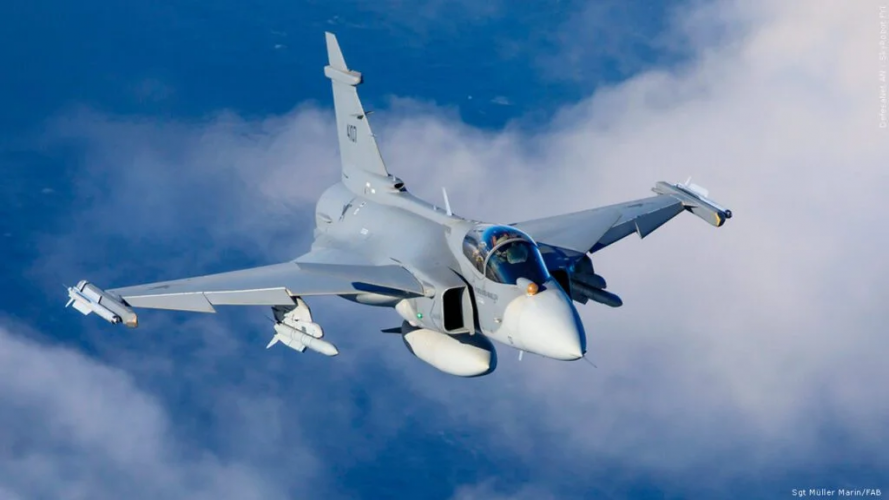
Operations begin today in an existing hangar, construction of a second hangar is scheduled for completion in 2027

Fort Worth – Embraer, a global leader in the aerospace industry, today opened its new commercial aviation maintenance, repair and overhaul (MRO) facility at Perot Field Alliance Airport in Fort Worth, Texas.
1751070401543.png

In partnership with the City of Fort Worth and the State of Texas, Embraer will begin operations in an existing hangar while building a second hangar that is scheduled for completion in 2027.

With the new facility, Embraer’s capacity to serve customers in the United States will increase significantly, with a 53% increase nationwide. The investment is approximately US$70 million and is expected to create approximately 250 new aviation jobs in Texas.

“We are thrilled to join Embraer in celebrating the launch of its expanded operations at Perot Field Fort Worth Alliance Airport. Hillwood’s mission at AllianceTexas is to attract world-class companies while creating new jobs in our region – and Embraer is doing just that.

This gradual expansion and investment in Fort Worth underscores the strength of our partnerships and Fort Worth’s position as a center of aerospace excellence,” said Bill Burton, Executive Vice President of Hillwood.

“The opening of Embraer’s new facility is just the latest example of how Fort Worth is an ideal place to start, build or grow a business,” said Robert Allen, President and CEO of the Fort Worth Economic Development Partnership. “Fort Worth has been declared the Aviation Capital of Texas by the Governor, and this announcement is proof of that.

This new facility at Alliance Airport will allow Embraer to expand its aviation operations and create hundreds of new jobs for our region. It’s time for Embraer and Fort Worth to take flight!”

“We are very excited to begin operations at our new MRO facility in Fort Worth. The support of the City of Fort Worth, Denton County and the State of Texas has been essential to the launch of this operation. We will continue to work to expand Embraer’s capacity and presence in the U.S.,” said Frank Stevens, Vice President, Global MRO Centers, Embraer Services & Support.

The new Fort Worth service center is Embraer’s 13th company-owned service center, out of more than 80 authorized service centers worldwide.

https://www.defesanet.com.br/aviaca...dos-unidos-e-outros-mercados/#google_vignette
 

EMBRAER DELIVERS FOUR A-29 SUPER TUCANO TO PARAGUAY​

30. June 2025
1751323339279.png
The Brazilian aviation company Embraer has handed over four A-29 Super Tucano light combat aircraft to the Paraguayan Air Force (FAP). The handover ceremony took place at the Silvio Pettirossi airbase near the capital Asunción.

Among those present were President Santiago Peña, Vice President Pedro Alliana, Defense Minister General Óscar González and Air Force General Júlio Fullaondo, commander of the Paraguayan Air Force, as well as other civilian and military representatives.
1751407710830.png
https://militaeraktuell.at/en/embraer-delivers-four-a-29-super-tucano-to-paraguay/
 
Last edited:
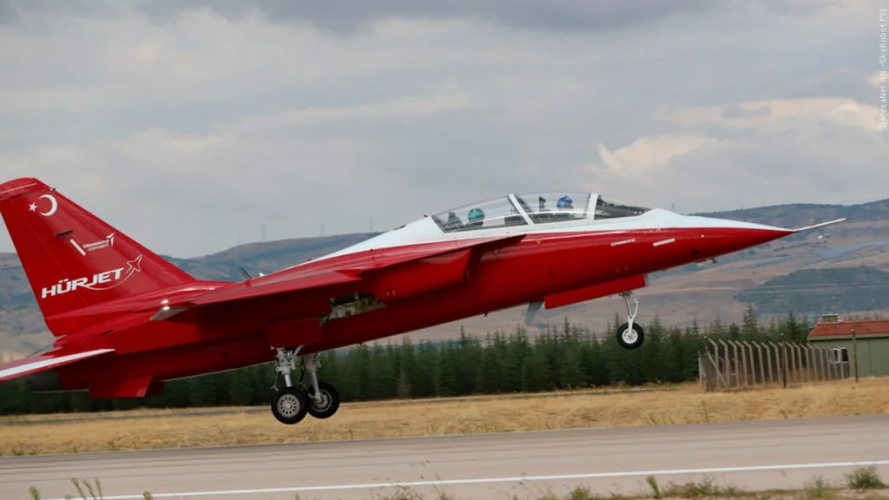
Jul 1, 2025
On June 25, 2025, Arturo Merino Benítez International Airport in Santiago was the scene of a milestone for the Chilean aeronautical industry and the Paraguayan Air Force. The T-35 Pillán, identified as FAP 0104, took flight en route to the 1st Air Brigade in Paraguay, marking a key step in the modernization project of Paraguay's fleet of basic trainers
. This takeoff not only represented the delivery of a completely refurbished aircraft, but also the strengthening of ties between Chile and Paraguay in the fields of technology and air defense. The event, full of symbolism, highlights the role of the National Aeronautics Company (ENAER) as a benchmark in the region, consolidating a contract that has allowed T-35 Pillán aircraft equipped with modern technology to return to Paraguayan skies. The agreement between ENAER and the Paraguayan Air Force included an ambitious technical plan to modernize six T-35 Pillán aircraft. This project included maintenance, major repairs, advanced pilot training systems, and the integration of the Garmin GTN-650xi GPS, a state-of-the-art navigation device that improves precision and safety in aerial maneuvers. This consolidates the modernization process of the Paraguayan fleet, an effort that not only extends the operational life of these aircraft but also ensures that Paraguayan cadets receive excellent training aligned with international standards. The T-35 Pillán, created by ENAER, is an icon of Latin American aeronautics, used by various air forces to train pilots thanks to its robust and adaptable design. This milestone is a source of pride, as it demonstrates ENAER's ability to compete in international markets and contribute to the development of strategic capabilities in the region.

View: https://www.youtube.com/watch?v=2pLHzqwCLcQ
 
This Tuesday, July 1, 2025, the Embraer E195-E2 aircraft, registration XA-MXA, arrived. This is the first of 20 E2-type aircraft to join Mexicana's fleet as part of its modernization process. This marks a new stage in its history by becoming the first and only operator of this type of aircraft in Mexico.The Embraer E195-E2 is recognized worldwide for its 2-in-2 cabin design, larger overhead compartments, and a quiet, comfortable, and modern, single-class cabin configuration, which enhances the passenger experience.These features allow Mexicana to operate with greater flexibility, lower costs, and high energy efficiency, aligning with global air transport sustainability goals.
View: https://www.youtube.com/watch?v=KNftzNgYK-s

1751497009300.png
 
Last edited:
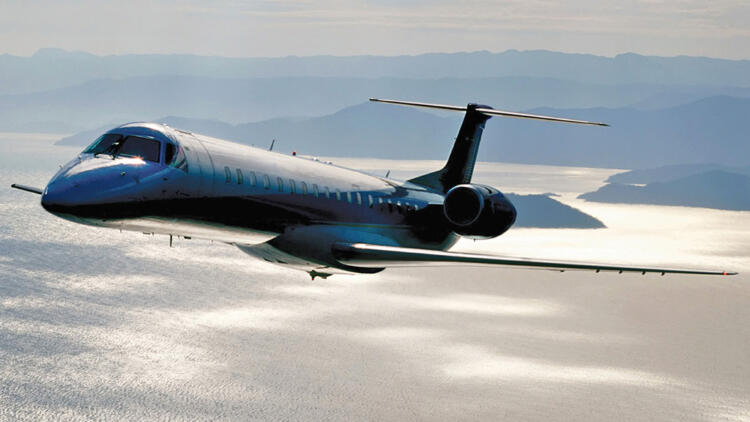
Embraer has strengthened its strategic commitment to India by creating a new, wholly-owned subsidiary with its corporate headquarters in AeroCity, the business hub adjacent to New Delhi's Indira Gandhi International Airport. This decision marks a decisive step in the Brazilian company's roadmap to consolidate its long-term presence in a country with a rapidly expanding aerospace and defense sector, presenting significant opportunities for industrial development, technological collaboration, and skills transfer.

The new subsidiary will operate as a comprehensive platform for all Embraer business lines in India, including defense and security, commercial aviation, executive aviation, aftermarket services, and the emerging urban air mobility sector. The company is in the process of building local teams specialized in corporate functions, procurement, supply chain, and engineering, with the goal of capitalizing on the synergies offered by the Indian market and actively contributing to the government's "Make in India" initiative, aimed at boosting industrial self-sufficiency in strategic sectors.

Francisco Gomes Neto, President and CEO of Embraer, underscored the importance of this move within the company's global vision, highlighting that India is a key market and that the new subsidiary represents a tangible demonstration of Embraer's commitment to the country. According to him, there is high potential for collaboration in all segments where the company operates, and the direct presence will allow it to consolidate alliances, develop local capabilities, and adapt technological solutions to the specific needs of Indian customers.

In the defense sector, Embraer already has a significant presence in India. Currently, nearly 50 aircraft of 11 different models operate in the country, including the Legacy 600 aircraft used by the Indian Air Force (IAF) and the Border Patrol (BSF) for the transport of authorities and government missions, as well as the "Netra" AEW&C platforms developed based on the ERJ145 and operated by the IAF as part of its early warning system. Adding to this consolidated presence is the collaboration agreement signed in February 2024 with Mahindra Defense Systems, through which Embraer and its Indian partner will jointly evaluate the possibility of competing for the Medium Transport Aircraft (MTA) program promoted by the Indian Air Force. The candidate presented is the C-390 Millennium, a next-generation military transport aircraft distinguished by its versatility, cruising speed of 470 knots, and capacity to carry up to 26 tons of cargo. The C-390 has already achieved full operational capability and has demonstrated its performance in transport missions, troop drops, medical evacuation, search and rescue, humanitarian missions, firefighting, and in-flight refueling, both as a tanker and receiver aircraft.

1751673539718.png

On the commercial front, Embraer emphasizes the strategic role of its E-Jets family regional aircraft in boosting air connectivity in second- and third-tier cities in India. These aircraft, which operate in the country through companies such as Star Air (the only operator in India that operates exclusively with Embraer aircraft, including the E175 and ERJ145), allow for the development of low-density routes, beyond the operational reach of turboprops and at a lower cost than 180-seat narrowbodies. Embraer's value proposition in this segment aligns with the Indian government's vision of positioning the country as a central hub in the global aviation network, optimizing the balance between capacity and demand on lower-volume routes.

The opening of this subsidiary also strengthens institutional ties between Brazil and India and is part of Embraer's strategy for greater involvement in the Indian market, as demonstrated by its planned participation in the upcoming IATA General Assembly (IATA AGM 2025), to be held in New Delhi. The company thereby seeks to strengthen its relationship with key players in the Indian aviation ecosystem, both at the institutional and business levels.

With this expansion, Embraer not only expands its physical presence in one of the fastest-growing regions on the planet, but also positions itself as a key player in the transformation of the Indian aerospace industry's industrial and operational model. Its commitment to establishing local capabilities, adapting its products to the country's requirements, and fostering strategic alliances reflects a long-term vision based on technological collaboration, shared industrialization, and an active contribution to the development of an increasingly competitive and autonomous aeronautical environment.

https://actualidadaeroespacial.com/embraer-crea-una-filial-en-la-india/
 
Quetzaltenango 1, the first airplane built in Guatemala
1751673743425.png
1751673761250.png

This is the story of Quetzaltenango 1, the first airplane built in Guatemala and Central America, created by Quetzaltenango native Miguel Ángel Castroconde and his son.

This was a great achievement for the country and Central America, as it marked a turning point in the creation of similar inventions.
1751673832081.png
Quetzaltenango 1, the first airplane built in Guatemala
In the 1970s, Miguel Ángel Castro Conde worked as a private pilot after graduating from the capital in this profession.

Photo description for the visually impaired: The Guatemalan-built airplane inside a warehouse. (Credits: Quetzaltenango History Museum).
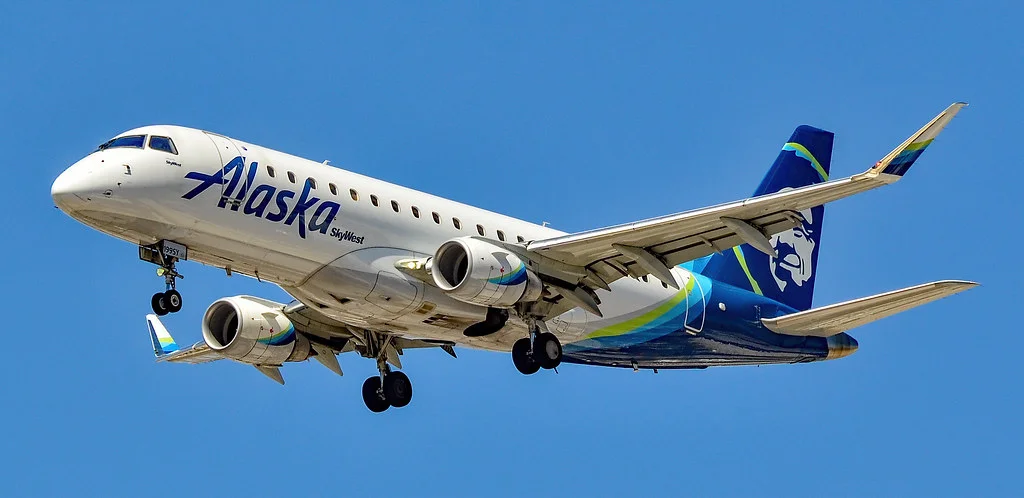
He passed on his love of airplanes to his son, also named Miguel Ángel. This passion led them to attend the Experimental Aviation Association Convention in the United States, and during this trip, the idea of building their own airplane, based on plans and instructions, came to them.

The lectures at this convention were the only training they received for such an ambitious project, and in 1992 they returned to the United States with the intention of purchasing all the materials, but the money wasn't enough, so they continued saving for six years until they managed to raise the required amount.

Thus began the construction of the airplane
In 1999, Mr. and Mrs. Castro Conde began building the airplane, taking care of every last detail.

Photo description for the visually impaired: Miguel Ángel Castro Conde Jr. in the workshop where they built the airplane. (Credits: Quetzaltenango History Museum).
According to his son, the main material for this airplane was aluminum, purchased entirely in the United States. It was built inside their home, where they made all the necessary modifications to make it the perfect place to work.

Continue reading: History of the Atanasio Tzul Causeway in Guatemala City
This aircraft was a single-wing monoplane with seating for two people and a single engine. It measured 27 feet from wingtip to wingtip and 23 feet across the wing. The controls included a compass, fuel gauges, and a speedometer, among other things. It soared to 15,500 feet above sea level and reached a speed of 105 miles per hour.

The First Flight of the Quetzaltenango 1
Both men worked for three and a half years, until they completed construction on May 23, 2003, and the plane's first flight took place. According to them, it was a very significant moment, as it marked the 100th anniversary of the Wright brothers' first flight, recognized as the fathers of aviation. Both father and son presented the Quetzaltenango 1 to the Civil Aeronautics, where they expressed little surprise at their achievement.

Photo description for the visually impaired: An airplane created by Guatemalans on a grass runway, prior to takeoff. (Credits: Quetzaltenango History Museum).
Miguel Ángel Castro Conde, Sr., once spoke of the first flight of the Quetzaltenango 1: "I always pray, but this time I did even more. I brought an image of the Virgin of Los Lagos that someone gave me and placed it near the controls. I also took a medallion of the Virgin of the Rosary, and in the passenger seat were all the saints I knew... they were my first traveling companions."

Continue reading: History of "Don't Tempt Us," a newspaper from the USAC (United States Air Force).
However, the fear of the first flight soon dissipated. The Quetzaltenango 1 functioned perfectly during its 125 cumulative flight hours, thanks to the care and periodic checks that were performed without fail.

Miguel Ángel Castro Conde (father) passed away in December 2018, and the plane he painstakingly created still exists, housed in a private hangar in Quetzaltenango.

https://aprende.guatemala.com/histo...l-primer-avion-que-se-construyo-en-guatemala/
 
Embraer delivered 61 aircraft in the second quarter, 30% more than in the same period of 2024
03/07/2025 in Industry

Embraer delivers the first modernized E-99 jet to the Brazilian Air Force
Embraer delivered 61 aircraft in the second quarter of 2025, representing a 30% increase compared to the same period last year, when 47 aircraft were delivered, and more than double (103%) the volume recorded in the first quarter of 2025.
1751755740422.png
Commercial Aviation deliveries remained at the same volume as in the second quarter of 2024, with a total of 19 aircraft. Compared to the first quarter of 2025, deliveries increased by 171%.

In Business Aviation, deliveries reached 38 aircraft, exceeding the previous year's figure by 41% and a 65% increase compared to the first quarter of 2025. The company also delivered four A-29 Super Tucano aircraft in the Defense and Security segment, bringing the total number of aircraft in the quarter to 61.
View: https://www.youtube.com/watch?v=gq01v8LYhzQ

Embraer's delivery estimates for the year are between 77 and 85 in Business Aviation in 2025 (10% above the previous year), and between 145 and 155 aircraft in Business Aviation (15% above the previous year).
View: https://www.youtube.com/watch?v=zwjuPpmUHoo

https://actualidadaeroespacial.com/...re-un-30-mas-que-en-el-mismo-periodo-de-2024/
 
Last edited:

Similar threads

Back
Top Bottom