
You are using an out of date browser. It may not display this or other websites correctly.
You should upgrade or use an alternative browser.
You should upgrade or use an alternative browser.
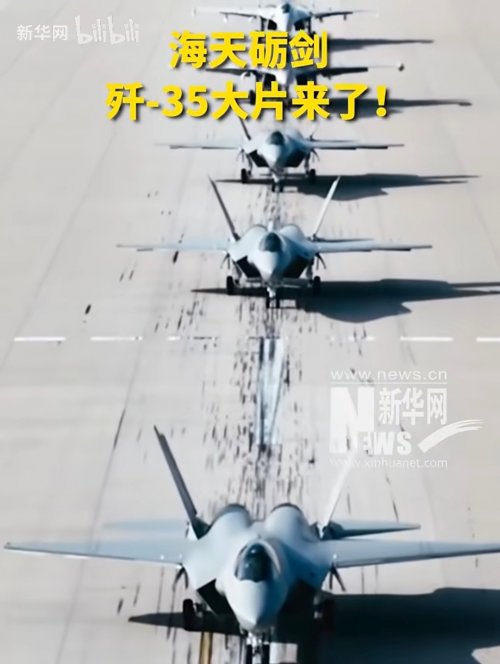
Shenyang FC-31 demonstrators / J-35 naval fighter / J-35A land-based version
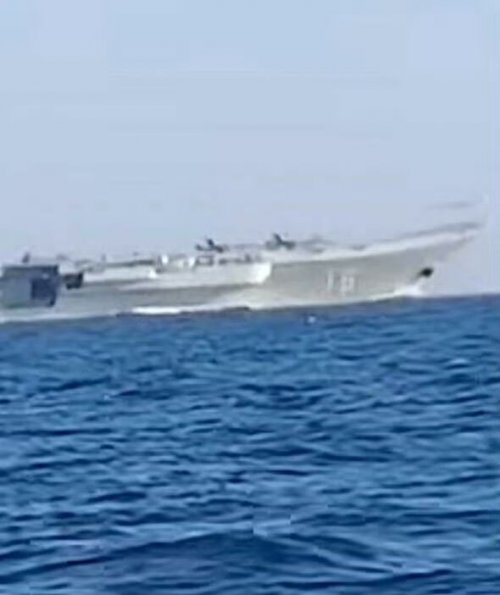
This is a truly 'great' aircraft
Especially considering that under a wider fuselage width,
it is equipped with two engines of similar thrust to the RD-33
Furthermore, the J-35 lacks the side weapon bays found on the X-32、SU-75.
Especially considering that under a wider fuselage width,
it is equipped with two engines of similar thrust to the RD-33
Furthermore, the J-35 lacks the side weapon bays found on the X-32、SU-75.
Attachments
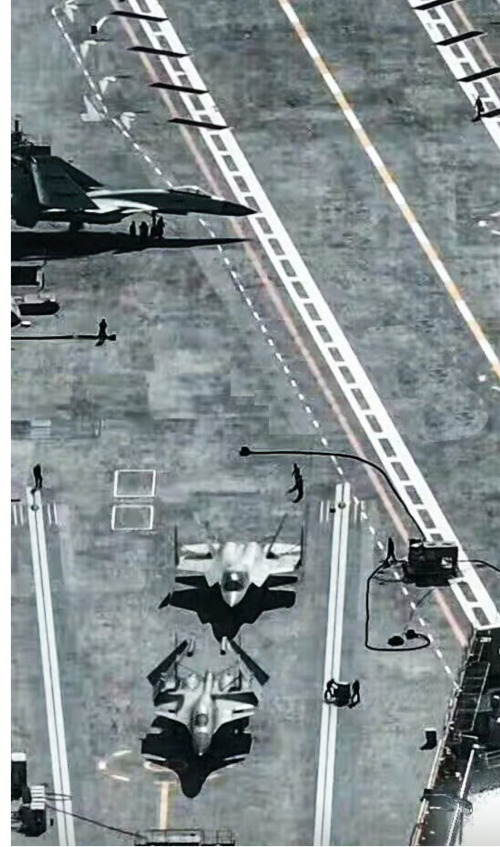
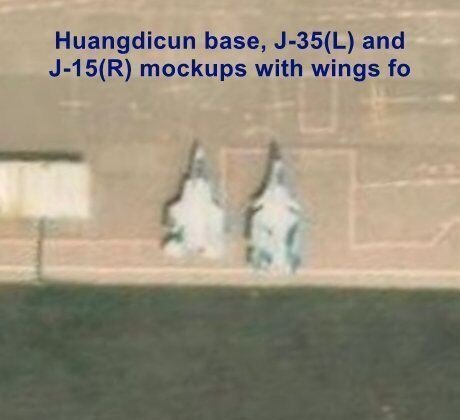
Last edited:

Tomboy
ACCESS: Top Secret
- Joined
- 4 January 2025
- Messages
- 543
- Reaction score
- 1,967
F-35 doesn't have side bays...This is a truly 'great' aircraft
Especially considering that under a wider fuselage width,
it is equipped with two engines of similar thrust to the RD-33
Furthermore, the J-35 lacks the side weapon bays found on the F-35.
My apologies, that was a slip of the tongue; I was actually thinking of the X-32.F-35 doesn't have side bays...
However, the J-20's internal weapons payload capacity is already considered inferior to that of the F-35, let alone the J-35. There is currently no verifiable public record of a J-20 carrying six missiles in its main internal bay alongside two short-range missiles in the side bays.The six-PL-15 configuration has only ever been seen in promotional slideshows.
In contrast, the F-35 is capable of being configured to carry six AIM-120 missiles internally. It seems highly improbable that the J-35 would possess a larger payload capacity than the J-20.
Furthermore, the J-35 and J-20 appear to be the only two platforms among the so-called 'fifth-generation' fighters that lack both thrust-vectoring nozzles and an internal or podded cannon. This raises the question of whether the Chinese Air Force operates on a unique set of combat experience and operational doctrines not shared by other nations.
Last edited:

SUPER=BUG
ACCESS: Top Secret
- Joined
- 25 September 2024
- Messages
- 884
- Reaction score
- 2,424
It's really an interesting viewpoint. From your perspective, it's still uncertain whether the J35 currently has a weapons bay, and whether the bay can carry missiles is also hard to say, because the official source has never shown a scene of the J35 opening its bay to load PL-15 missiles. So, it's possible that the J35 can only carry four PL-12 missiles using external mounts. 
SUPER=BUG
ACCESS: Top Secret
- Joined
- 25 September 2024
- Messages
- 884
- Reaction score
- 2,424
It's not just that the angle of the photo is strange; combined with the design of the J35 cockpit, it just makes it look very wide.Side-by-side seating?
If the J-35 proves capable of carrying an internal payload comparable to the F-35—such as six AIM-120 missiles or two JDAMs—it would arguably highlight a design shortcoming in the J-20. Despite its massive airframe, the J-20 is limited to four medium-range missiles and two short-range missiles internally, while lacking the capacity for internal air-to-ground or anti-ship munitions.It's really an interesting viewpoint. From your perspective, it's still uncertain whether the J35 currently has a weapons bay, and whether the bay can carry missiles is also hard to say, because the official source has never shown a scene of the J35 opening its bay to load PL-15 missiles. So, it's possible that the J35 can only carry four PL-12 missiles using external mounts.
Conversely, if the J-35 fails to match the internal payload capacity of the F-35, it could indicate an even greater design limitation. It would mean that despite possessing a wider fuselage than the Su-33 and overall dimensions exceeding the F-35, it was developed purely as an air-superiority fighter. Furthermore, it lacks an internal cannon and does not possess short takeoff and vertical landing (STOVL) capabilities.
SUPER=BUG
ACCESS: Top Secret
- Joined
- 25 September 2024
- Messages
- 884
- Reaction score
- 2,424
Sorry, sir, but I don't understand the sentence that J35 can expose the design flaws of the J20. Also, why does the J35 need short takeoff capability? Doesn't China have electromagnetic catapult technology?
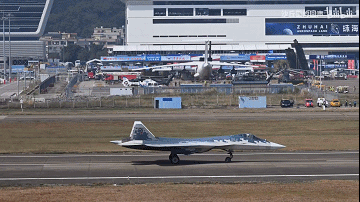
Short-takeoff capability has served as a foundational requirement in the baseline design specifications of the American ATF and JSF programs, as well as the Soviet I-90 and Russian I-21 projects. It remains to be seen whether the Chinese military has formulated air combat doctrines and design philosophies that fundamentally diverge from American, Soviet, or Russian precedents, potentially rendering short-takeoff capabilities unnecessary for the J-35.Sorry, sir, but I don't understand the sentence that J35 can expose the design flaws of the J20. Also, why does the J35 need short takeoff capability? Doesn't China have electromagnetic catapult technology?
Attachments
Scott Kenny
ACCESS: USAP
- Joined
- 15 May 2023
- Messages
- 19,517
- Reaction score
- 27,966
STOL was only required early on in ATF, the requirement for thrust reversers was deleted by the fly-off. IIRC YF-23 AV-1 had the larger engine bumps for thrust-reversers while AV-2 did not.Short-takeoff capability has served as a foundational requirement in the baseline design specifications of the American ATF and JSF programs, as well as the Soviet I-90 and Russian I-21 projects. It remains to be seen whether the Chinese military has formulated air combat doctrines and design philosophies that fundamentally diverge from American, Soviet, or Russian precedents, potentially rendering short-takeoff capabilities unnecessary for the J-35.
As for JSF, the reason for the requirement was to enable F-35Bs to fly off LHDs.
So we can make a decent argument that there's no reason for a fighter to have STOL capabilities as a general requirement. And unless China is planning on flying their J-35s off their LHDs, there's no reason to expect that the J-35 will have STOL capabilities.
Also, because the J-35 has twin engines, it is less likely to have STOL capabilities.
Short-takeoff capability is an inherent requirement; looking at the Russia-Ukraine War, future aircraft that remain entirely dependent on conventional airbases have no future. Vertical takeoff, on the other hand, is a completely different matter. After all, even the F-35 variants deployed on U.S. nuclear-powered aircraft carriers do not require vertical takeoff capabilities. In a worst-case design scenario, the J-35 could have at least been equipped with 2D thrust-vectoring nozzles to significantly expand its takeoff performance, drawing a parallel to the F-22 and Su-57. Yet the reality remains that regardless of whether it is configured for naval or land-based aviation, the J-35 entirely lacks this feature.STOL was only required early on in ATF, the requirement for thrust reversers was deleted by the fly-off. IIRC YF-23 AV-1 had the larger engine bumps for thrust-reversers while AV-2 did not.
As for JSF, the reason for the requirement was to enable F-35Bs to fly off LHDs.
So we can make a decent argument that there's no reason for a fighter to have STOL capabilities as a general requirement. And unless China is planning on flying their J-35s off their LHDs, there's no reason to expect that the J-35 will have STOL capabilities.
Also, because the J-35 has twin engines, it is less likely to have STOL capabilities.
This is ultimately far too secondary of an issue. From a macro perspective, both amphibious landings and airborne operations are rapidly becoming obsolete forms of warfare—as evidenced by the Russia-Ukraine War and past US-Iran conflicts. Currently, land power has significantly eclipsed sea power and even air power. It is highly improbable for aircraft operating out of the severely constrained space of a 300-meter-long, 40-meter-waterline beam hull to play a decisive role in modern conflict, making the utility of amphibious assault ships themselves highly questionable.Oh, China's 076 amphibious assault ship has an electromagnetic catapult and electromagnetic damping device, so the J-35 and J-15 can definitely take off from the amphibious assault ship.
This skepticism is particularly acute in China's case. The sensitive regions involved do not suffer from a deficit of land-based aviation or missile coverage; rather, the critical shortfall lies in the capacity for boots-on-the-ground power projection. Consequently, for a platform like China's Type 076, the overriding priority should be maximizing troop transport—squeezing in 3,000 personnel rather than 2,000—rather than wasting space on fixed-wing aircraft and catapult systems.
SUPER=BUG
ACCESS: Top Secret
- Joined
- 25 September 2024
- Messages
- 884
- Reaction score
- 2,424
If I understand correctly, you are saying that you think the Chinese military has weaknesses in its delivery capability, and that amphibious assault ships should be more focused on transporting ground forces rather than fighter jets, right? In fact, China currently has three main types of amphibious assault ships: one is the Type 071, which focuses on transporting armored vehicles; one is the Type 075, which focuses on transporting some armored troops and operating armed helicopters; and the other is the Type 076 amphibious assault ship, which has emerged in recent years, retaining the capability to transport armored vehicles but placing more emphasis on transporting drones or some manned aircraft. Moreover, different amphibious assault ships can form certain combinations, such as one Type 075 coordinating operations with four Type 071 ships. I believe operating some carrier-based aircraft such as the J-35 on the Type 076 is completely feasible.
In my view, the Type 071, 075, and 076 are entirely redundant—the products of blindly copying American operational doctrines without accounting for china geographic realities or the evolution of modern weaponry. Given China's specific geopolitical environment and regional precision-strike densities, assets of this class would likely be neutralized on day one of a conflict. If three U.S. nuclear-powered aircraft carriers backed by regional military bases could not guarantee the success of an amphibious assault in the Persian Gulf, China cannot achieve it either.If I understand correctly, you are saying that you think the Chinese military has weaknesses in its delivery capability, and that amphibious assault ships should be more focused on transporting ground forces rather than fighter jets, right? In fact, China currently has three main types of amphibious assault ships: one is the Type 071, which focuses on transporting armored vehicles; one is the Type 075, which focuses on transporting some armored troops and operating armed helicopters; and the other is the Type 076 amphibious assault ship, which has emerged in recent years, retaining the capability to transport armored vehicles but placing more emphasis on transporting drones or some manned aircraft. Moreover, different amphibious assault ships can form certain combinations, such as one Type 075 coordinating operations with four Type 071 ships. I believe operating some carrier-based aircraft such as the J-35 on the Type 076 is completely feasible.
The most pragmatic approach would be to build a navy centered on submarines and commerce raiding, utilizing a new generation of protected light cruisers (reminiscent of the concepts from a century ago) to maintain a naval presence. Amphibious projection should be completely handed over to heavy-lift helicopters—ideally with the dimensions of a CH-47 and amphibious water-landing capabilities—to execute direct land-to-land power projection.
Last edited:
In contrast, the F-35 is capable of being configured to carry six AIM-120 missiles internally.
Well... there is currently no verifiable public record of an F-35 carrying six AAMs internally. The sidekick configuration has only ever been seen in promotional slideshows..
You're quite right. I went out of my way to find picturesWell... there is currently no verifiable public record of an F-35 carrying six AAMs internally. The sidekick configuration has only ever been seen in promotional slideshows..
and count them: 1, 2, 3, 4, 4, 4... a grand total of four Aim-xxx missiles.
Attachments
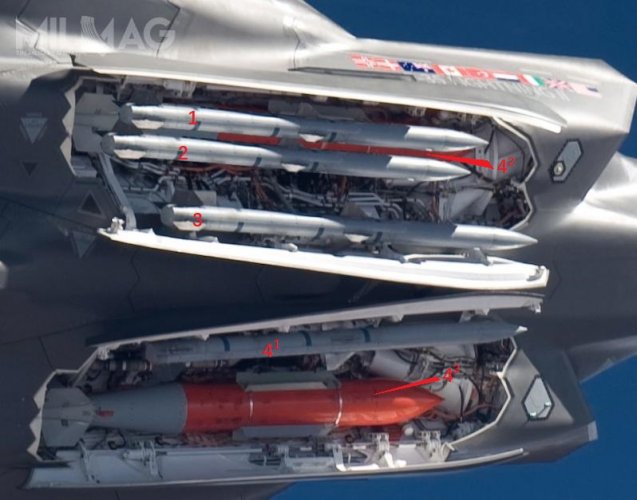
You're quite right. I went out of my way to find pictures
and count them: 1, 2, 3, 4, 4, 4... a grand total of four Aim-xxx missiles.
Are you doing a bit?
You realize that isn't a real picture right? It's doctored to show what a notional loadout of three AMRAAMs in each bay would look like.
This below, being the original, undoctored photo:
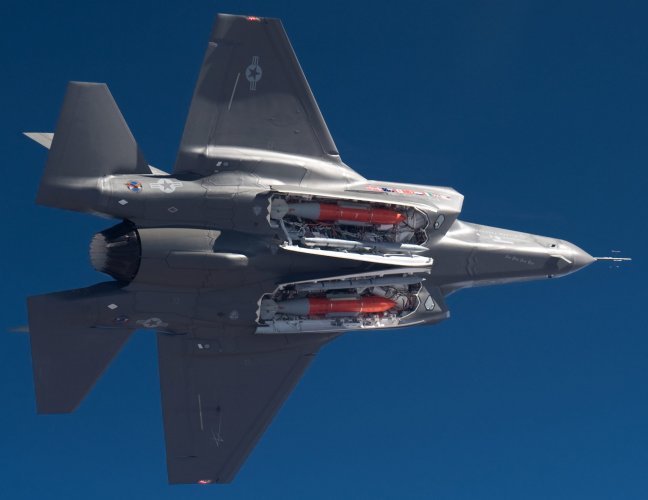
According to your standard talking points, the J-20's payload capacity is as follows: four PL-12s with an effective range of under 100 kilometers, and it has never once carried the PL-15. As for the FC-31 and J-35, they are completely incapable of carrying any missiles because their weapons bays have never even been openedAre you doing a bit?
You realize that isn't a real picture right? It's doctored to show what a notional loadout of three AMRAAMs in each bay would look like.
This below, being the original, undoctored photo:
View attachment 814006
Compare combat-proven with combat-proven;
compare what actually exists with what actually exists;
compare PowerPoint slides with PowerPoint slides;
and compare fantasies with fantasies.
You must use the same metric across the board.
According to your standard talking points, the J-20's payload capacity is as follows: four PL-12s with an effective range of under 100 kilometers, and it has never once carried the PL-15. As for the FC-31 and J-35, they are completely incapable of carrying any missiles because their weapons bays have never even been opened
Compare combat-proven with combat-proven;
compare what actually exists with what actually exists;
compare PowerPoint slides with PowerPoint slides;
and compare fantasies with fantasies.
You must use the same metric across the board.
I will gladly use the same metrics across the board.
If we are comparing maximal BVRAAM loadouts...
J-20's primary ventral internal weapons bay can accommodate:
- 4x PL-15s (standard non-folding fin version) -- until recently, this has been the standard BVR loadout of J-20, or
- 6x PL-16s (which is the new generation BVRAAM to succeed PL-15, which has a smaller footprint enabling carriage of two additional missiles for a total of six in the same weapons bay size, while also offering enhanced range and capability)
- it cannot accommodate PL-12s at all, because J-20's internal weapons bay has never been shown to be able to fit PL-12
F-35's primary weapons bays in total can accommodate:
- 4x AIM-120D variants (or late model C variants), or
- 4x AIM-260 (which is the new generation BVRAAM to succeed AIM-120D family with the same footprint as it, while offering enhanced range and capability)
- The "6x AIM-120D"/BVRAAM loadout you are talking about relies on the "sidekick" upgrade, which Lockheed Martin has promoted in the past but was never actively developed and is not on the future list of developmental upgrades (Lockheed has their hands full with Block 4 as it is).
I have no idea what you mean by "J-20 has never carried PL-15". Surely you know that PL-15 is the only BVRAAM that has been integrated with J-20, right?
SUPER=BUG
ACCESS: Top Secret
- Joined
- 25 September 2024
- Messages
- 884
- Reaction score
- 2,424
To be honest, I've rambled a bit too much and, to some extent, have already strayed from the topic. In fact, the J-35 cannot be compared to the J-20 at all. This is my view because the J-20 was designed from the start to gain air superiority and did not take a carrier-based version into account. On the other hand, the J-35 was originally born to be a stealth carrier-based aircraft, and the J-35A is merely an additional, cheaper option to supplement fifth-generation fighters. Their operational requirements are not the same, so comparing them naturally is unreasonable. Additionally, China does not need any so-called short takeoff capability. This capability is not necessary. Carrier-based aircraft need short takeoff ability because planes must operate on limited deck space. Moreover, vertical takeoff and landing aircraft consume a lot of fuel, have a shorter combat radius, require significant structural modifications, and more importantly, China currently has no single-engine carrier-based aircraft. Dual-engine vertical takeoff and landing planes are technically more challenging, offer fewer benefits, and are not worth developing—better to keep them just as a technological reserve. Honestly, I can't see a reason why short takeoff capability is a necessary requirement.
Oh, sorry about that—English isn't my native language. I used translation software to translate it into English, but it made a mistake.I will gladly use the same metrics across the board.
If we are comparing maximal BVRAAM loadouts...
J-20's primary ventral internal weapons bay can accommodate:
- 4x PL-15s (standard non-folding fin version) -- until recently, this has been the standard BVR loadout of J-20, or
- 6x PL-16s (which is the new generation BVRAAM to succeed PL-15, which has a smaller footprint enabling carriage of two additional missiles for a total of six in the same weapons bay size, while also offering enhanced range and capability)
- it cannot accommodate PL-12s at all, because J-20's internal weapons bay has never been shown to be able to fit PL-12
F-35's primary weapons bays in total can accommodate:
- 4x AIM-120D variants (or late model C variants), or
- 4x AIM-260 (which is the new generation BVRAAM to succeed AIM-120D family with the same footprint as it, while offering enhanced range and capability)
- The "6x AIM-120D"/BVRAAM loadout you are talking about relies on the "sidekick" upgrade, which Lockheed Martin has promoted in the past but was never actively developed and is not on the future list of developmental upgrades (Lockheed has their hands full with Block 4 as it is).
I have no idea what you mean by "J-20 has never carried PL-15". Surely you know that PL-15 is the only BVRAAM that has been integrated with J-20, right?
My point is that despite its larger physical dimensions, the J-20 can only carry four air-to-air missiles, and its weapons bay depth is the shallowest of any aircraft.
As for the J-35, because it utilizes a twin-engine configuration(the same), its weapons bay volume is even more constrained compared to the F-35, making it much harder to accommodate a larger weapon bay. When you factor in catapult-assisted takeoffs and the higher fuel consumption rate of twin engines, the J-35's payload capacity will inevitably be even weaker.
Oh, sorry about that—English isn't my native language. I used translation software to translate it into English, but it made a mistake.
If you are using a translation software to write here, I advise you to simply stop posting because the rest of the forum will not be able to engage you in any sort of coherent discussion when everyone has to contend with whether what you're writing is a reflection of intent or a fault of the translation software.
My point is that despite its larger physical dimensions, the J-20 can only carry four air-to-air missiles, and its weapons bay depth is the shallowest of any aircraft.
J-20's main ventral weapons bay is about the same dimensions as F-22 (probably slightly deeper), and the fact that it carries 4x PL-15s is a reflection of PL-15 being slightly larger than say, an AIM-120D (especially in terms of missile diameter), not a reflection of some sort of inherent flaw with the J-20's weapons bay dimensions.
The fact that J-20 has a similar weapons bay dimension as F-22, while being a larger aircraft, is a reflection that it carries the same overall air superiority role as F-22 but is intended to operate at longer combat radii/distance.
Naturally, one of the main benefits of the PL-16 which succeeds PL-15, is that it will allow J-20 to carry six BVRAAM weapons rather than four.
As for the J-35, because it utilizes a twin-engine configuration(the same), its weapons bay volume is even more constrained compared to the F-35, making it much harder to accommodate a larger weapon bay.
J-35/A has a similar overall weapons bay to J-20 family (it might be slightly deeper).
Compared to F-35A/C, the J-35/A will likely not be capable of internally carrying very large diameter weapons like a 1ton JDAM, however it does mean that J-35/A will still likely be able to accommodate regular sized A2G PGMs and missiles, as well as to carry six PL-16s internally (while F-35 family will be limited to four AIM-120D/AIM-260 unless Lockheed actually chooses to develop Sidekick).
When you factor in catapult-assisted takeoffs and the higher fuel consumption rate of twin engines, the J-35's payload capacity will inevitably be even weaker.
Not how it works. Even though J-35/A has two engines rather than F-35's one engine, they are also of deliberately different thrust classes with different engine goals, and the overall aerodynamic performance goals of J-35/A and F-35 also differ.
Neither aircraft is categorically "better" than one or the other in terms of airframe/propulsion/weapons bay configuration, because they were ultimately designed around slightly different priorities.
The J-20 was designed for maritime interception, modeled after the MiG-1.46 concept,
whereas the F-22 was designed to seize air superiority over an area the size of a medium European nation. The two are clearly not meant for the same mission profile.
For the J-20's primary role, its insufficient speed and small missile caliber are clear drawbacks. Of course, the F-22's shortcomings are its limited fuel capacity and, due to the technological constraints of its era, its lack of ground-attack capabilities. As for the JSF (Joint Strike Fighter), it stands as another 'brilliant' post-Cold War masterpiece of the US military—shining in perfect harmony alongside the Littoral Combat Ship (LCS), the electromagnetic railgun destroyers, and those oversized 'light tanks.' By comparison, the Virginia-class submarine looks absolutely beautiful
I have nothing to say in response to this.
Our underlying bases of knowledge are just too far apart to be able to have any sort of constructive conversation. I feel like I'm in 2015 again.

Alfa_Particle
In Your Atmosphere
- Joined
- 15 April 2024
- Messages
- 68
- Reaction score
- 371
We should just get the mods to ban this guy. Nothing of value will be lost anyways.I have nothing to say in response to this.
Our underlying bases of knowledge are just too far apart to be able to have any sort of constructive conversation. I feel like I'm in 2015 again.
My friend, back in 2015, the J-20 should have been entering its production definition phase—given that it was officially announced to have entered service in 2017. At that time, Yang Wei hadn't been 'investigated' yet(Hardly any full generals have been arrested, either), and the outlook was incredibly bright. I really don't see how there could have been any issues back then.I have nothing to say in response to this.
Our underlying bases of knowledge are just too far apart to be able to have any sort of constructive conversation. I feel like I'm in 2015 again.
2015 really wasn't a bad year at all.
Last edited:
SUPER=BUG
ACCESS: Top Secret
- Joined
- 25 September 2024
- Messages
- 884
- Reaction score
- 2,424
He hasn't been arrested now either; he is still staying in his position. Is there a problem? Moreover, in China, a suspended death sentence does not equal the death penalty, but is roughly equivalent to life imprisonment, eventually being confined for several decades before being released.My friend, back in 2015, the J-20 should have been entering its production definition phase—given that it was officially announced to have entered service in 2017. At that time, Yang Wei hadn't been 'investigated' yet(Hardly any full generals have been arrested, either), and the outlook was incredibly bright. I really don't see how there could have been any issues back then.
2015 really wasn't a bad year at all.
Tomboy
ACCESS: Top Secret
- Joined
- 4 January 2025
- Messages
- 543
- Reaction score
- 1,967
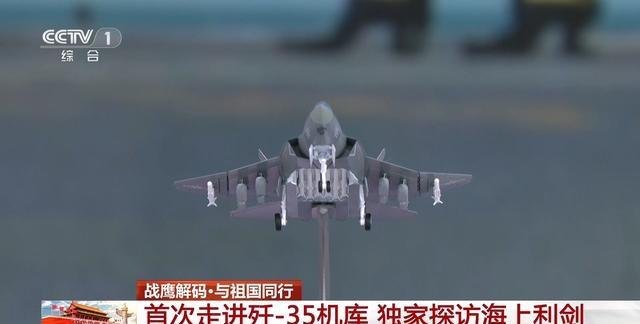
There isn't any point tho, the elevators are too small for manned fixed wings while 076 also doesn't have visual landing systems. While it is probably possible for a carrier fixed wing to land, stored on deck and then takeoff again, I really don't see the point of that outside of emergencies.Oh, China's 076 amphibious assault ship has an electromagnetic catapult and electromagnetic damping device, so the J-35 and J-15 can definitely take off from the amphibious assault ship.

- Joined
- 27 December 2005
- Messages
- 19,225
- Reaction score
- 35,636
Use mfewc is gone. I return you to our normal scheduled service.
View: https://x.com/Flanker30MKI/status/2062179135213191537
The X blogger found several interesting pictures, though he might have mistakenly thought they were directly related to the F - 35.
The translation of the abstract:
Abstract:
Taking a certain Bump (bulge-type) inlet as the research object, CFD numerical simulation technology is adopted to calculate its internal andfree-stream Mach number M=1.60 inlet aerodynamic performance and flow field characteristics; according to the internal and external flowsuction and jet flow control devices are designed respectively to improve inlet total pressure recovery and reduce outlet flow distortion under M=1.60 free-stream and inlet-engine matching point condition;CFD technology is used to calculate the performance of ea control device and flow control mechanism of typical devices are analyzed. Research shows that vortex spoiler have uobvious effect under measures are effective for improving inlet total pressure recovery. The research results can provide certain technical references for flow cont
inlets for stealth fighters similar to F-35.
Keywords:
inlet; flow control; total pressure recovery; flow field distortion; mechanism
Several pictures about the optimization of the bump inlet for Mach 1.6 speed. I think this may indicate that the typical supercruise speed of the J-35 is Mach 1.6.
The X blogger found several interesting pictures, though he might have mistakenly thought they were directly related to the F - 35.
The translation of the abstract:
Abstract:
Taking a certain Bump (bulge-type) inlet as the research object, CFD numerical simulation technology is adopted to calculate its internal andfree-stream Mach number M=1.60 inlet aerodynamic performance and flow field characteristics; according to the internal and external flowsuction and jet flow control devices are designed respectively to improve inlet total pressure recovery and reduce outlet flow distortion under M=1.60 free-stream and inlet-engine matching point condition;CFD technology is used to calculate the performance of ea control device and flow control mechanism of typical devices are analyzed. Research shows that vortex spoiler have uobvious effect under measures are effective for improving inlet total pressure recovery. The research results can provide certain technical references for flow cont
inlets for stealth fighters similar to F-35.
Keywords:
inlet; flow control; total pressure recovery; flow field distortion; mechanism
Several pictures about the optimization of the bump inlet for Mach 1.6 speed. I think this may indicate that the typical supercruise speed of the J-35 is Mach 1.6.
Tomboy
ACCESS: Top Secret
- Joined
- 4 January 2025
- Messages
- 543
- Reaction score
- 1,967
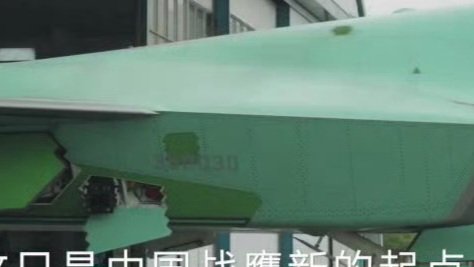
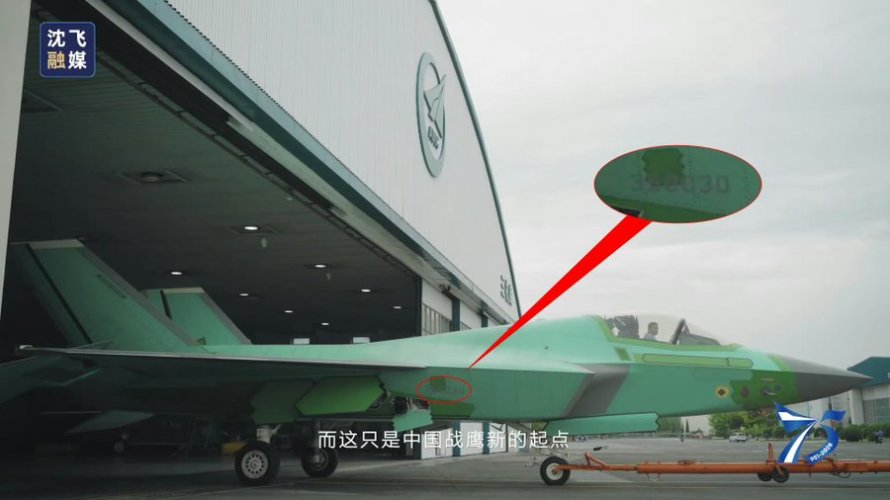
30th aircraft of the 0th batch(?) for J-35. Typically for serial XXDD, XX would be the batch number while DD would be the aircraft no. within that batch. I suppose 0th batch would be the LRIP batch after prototypes.
Attachments
Last edited by a moderator:

- Joined
- 2 January 2006
- Messages
- 4,235
- Reaction score
- 8,279
30th aircraft of the 0th batch(?) for J-35. Typically for serial XXDD, XX would be the batch number while DD would be the aircraft no. within that batch. I suppose 0th batch would be the LRIP batch after prototypes.
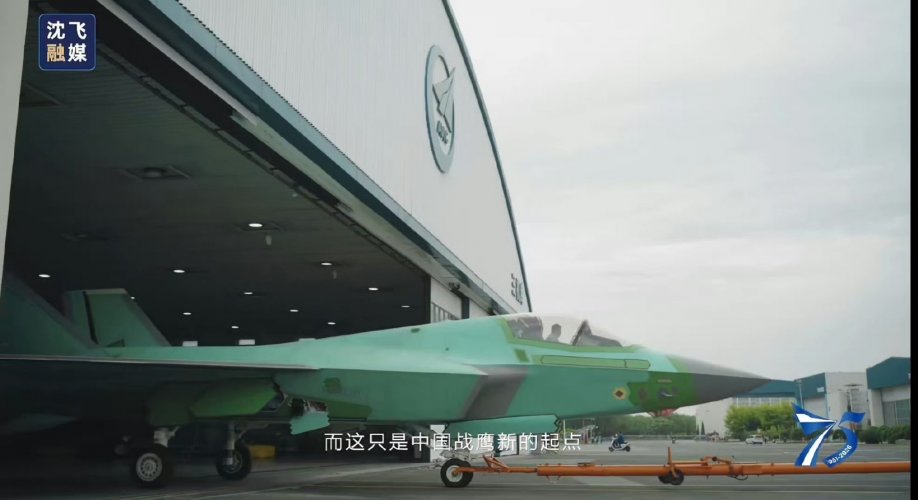
Indeed, You all know my passion for numbers and today is once again a special day, because on this at first glance inconspicuous photo of a naval J-35 its construction number 350030 is visible, which I would interpret as the 30th aircraft of the Batch 00 (likely LRIP ?).
Attachments
Last edited by a moderator:

snne
ACCESS: Top Secret
- Joined
- 3 July 2022
- Messages
- 2,408
- Reaction score
- 8,848
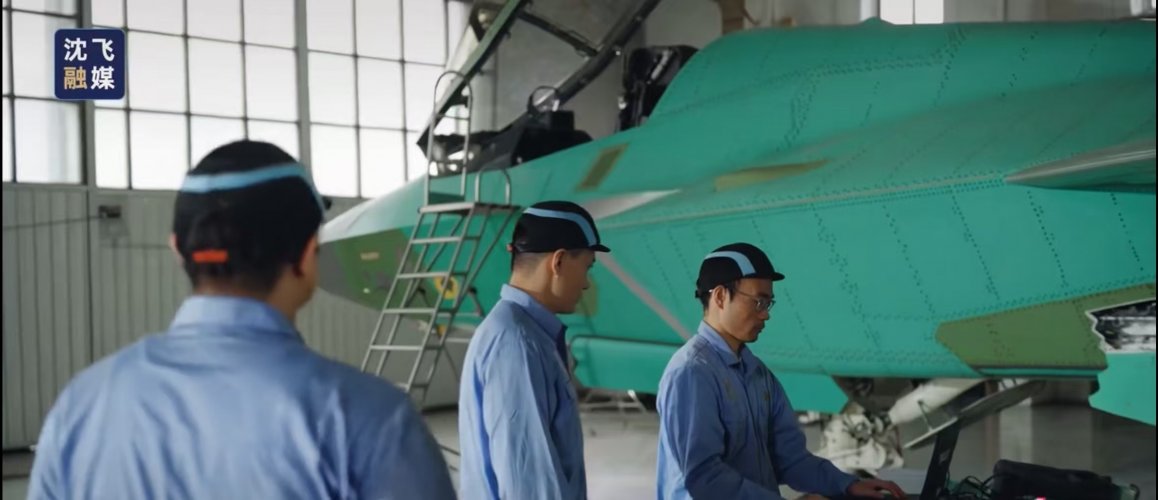
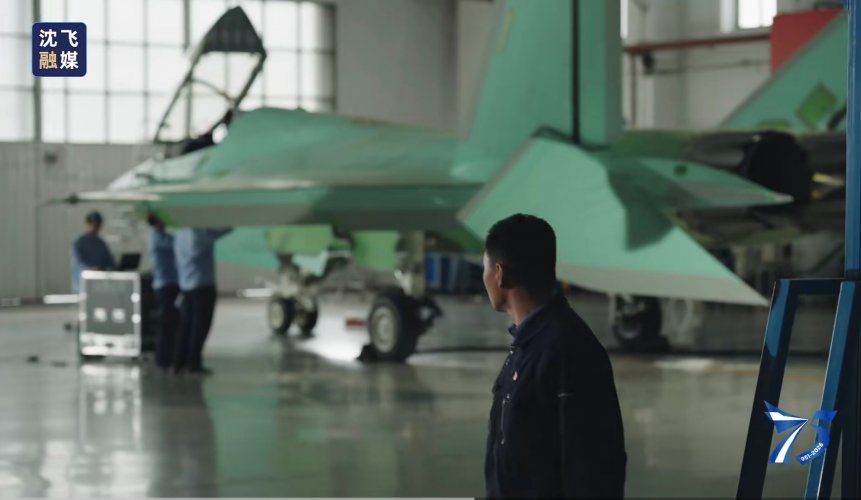
Via ACuriousPLAFan/SDF:
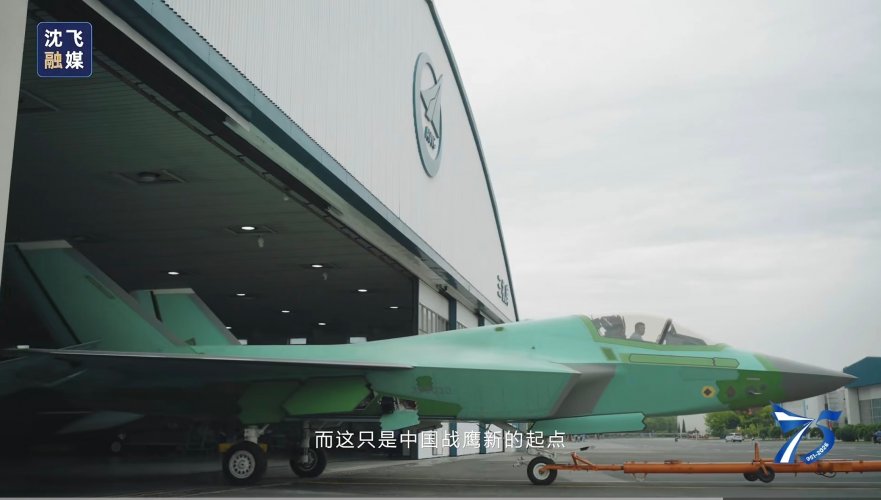
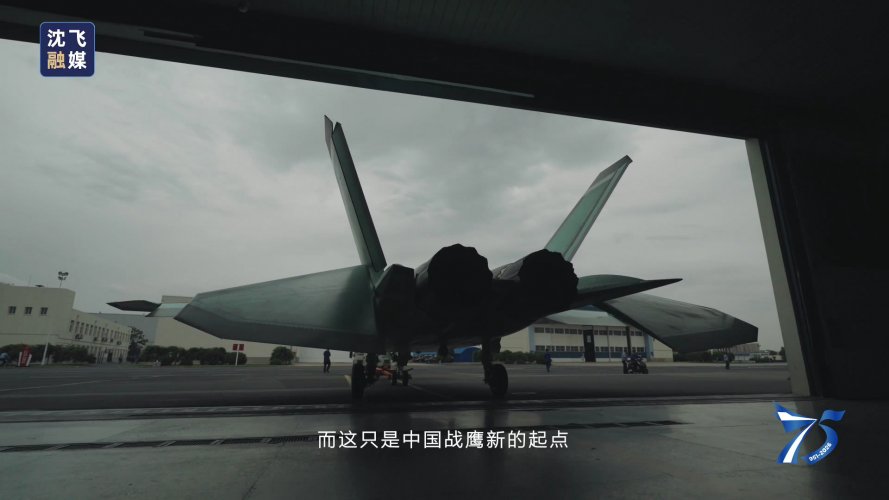
A few more shots of the J-35 on the production line at Shenyang AC. Posted by @鼎盛沙龙 on Weibo.
|
|
|
|
Last edited:
Came across this, hope it's real and not AI.
View: https://x.com/WenJian0922/status/2077043640791351589
View: https://x.com/WenJian0922/status/2077043640791351589
Attachments
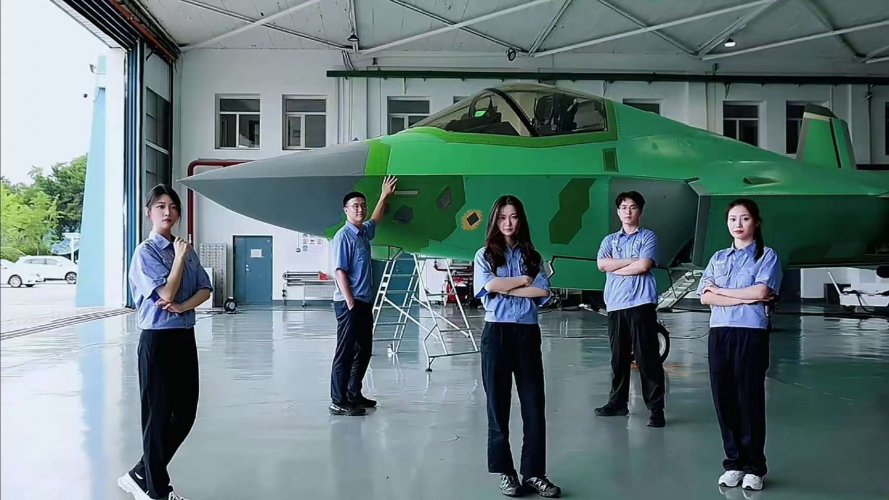
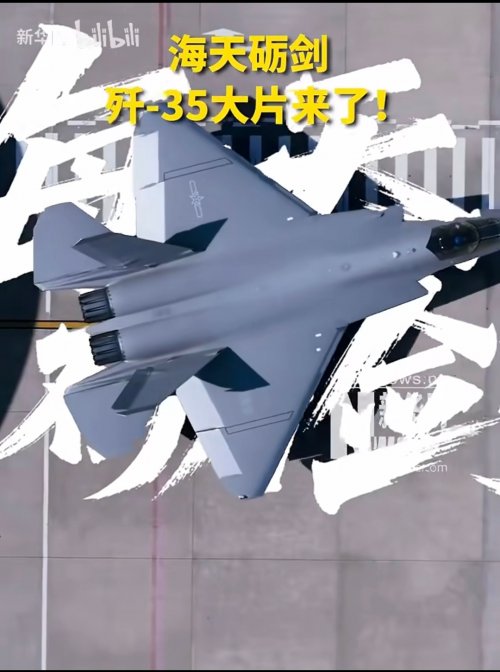
View: https://x.com/DavidWangPLA/status/2077035581604065496Came across this, hope it's real and not AI.

This is AI generated
Similar threads
-

-

-
Chengdu J-10 "Vigorous Dragon" fighter - News only
- Started by overscan (PaulMM)
- Replies: 939
-

-
 Shenyang Jianjiji-11 / J-11 Lightweight Fighter
- Started by Deino
- Replies: 11