The original F100 design had the entire HPC built from Ti, as was everything else besides the combustor and turbines. It worked until a HPC blade broke during altitude test cell operation. I didn’t see it, but I was told the only remaining parts of the engine were the motor mounts.
Yeah similar story with the Oly 593. The transition between Ti and steel in the compressor was moved forwards after a few events.I saw the pictures;- the engine was cut in two, Tubes (poles) had to be welded along the length of the engine to hold the two ends together so it could be lowered out.
 
Last edited:
The TF30 had a fan blade libration problem on the F-14. In addition to the fan blade flying thru the fan case, the resulting vibration would cause a Ti fan spacer to rub against a Ti fan stator inner shroud initiating a Ti fire. The fix for this was to make the inner shroud out of steel. The Ti spacer would still rub, but the steel would melt below the Ti ignition temperature, acting like a molten steel lubricated journal bearing to hold the fan rotor on center until the engine spooled down, preventing the fire.

Of course, they also improved the fan disk and blades to prevent blade liberation and put steel containment bands around the fan cases
 
Depends how much protection is left….. Patents are inherently perishable.
Fair point - I thought REL's strategy was to patent as little as possible though in order to keep it out of the public domain. So I'd expect most value to be in the "trade secrets" category above.
 
Fair point - I thought REL's strategy was to patent as little as possible though in order to keep it out of the public domain. So I'd expect most value to be in the "trade secrets" category above.
I believe their patent strategy was to keep the main invention secret but protect everything that could be a supporting or an enabling invention.

Of course this creates a problem when it comes to company valuation….. your Ip isn’t your major asset.
 
https://www.flightglobal.com/aerosp...-sale-of-hypersonic-technology/163287.article
A very low valuation for supposedly revolutionary / world-beating / etc. technology
Depends how much protection is left….. Patents are inherently perishable.
Fair point - I thought REL's strategy was to patent as little as possible though in order to keep it out of the public domain. So I'd expect most value to be in the "trade secrets" category above.
I believe their patent strategy was to keep the main invention secret but protect everything that could be a supporting or an enabling invention.
Of course this creates a problem when it comes to company valuation….. your Ip isn’t your major asset.

Thanks for the notice, red admiral. In his article, Dominic Perry does not identify the 'preferred exclusive bidder' for Reaction Engines Ltd's tech. I suppose Dagger would say that a relative pittance fits the value purchased. For the general goal of space achievement, I hope something can be made of this tech someday.
 
IIRC, the notion / application / de-icing etc of the capillary heat exchanger belong(ed) to RE, but the proprietary manufacturing process for reliably assembling, bonding said capillary filaments still belong to their sub-contractor.
 
It is unclear wether this patents have any real value for other applications. I doubt, anyone will pay for an untested patent which might have no relevance in the real world. Selling patents usually doesnt work at all, instead you have to sell a license for a relative mature design which implies the patents.
 
Maybe a smart buyer could start from scratch by focusing on two REL interesting concepts they wasted
-cracking ammonia into hydrogen onboard airliners (NH3 storage + LH2 pure energy = WIN )
-a hypersonic SABRE aircraft with a barrel shaped fuselage and nose intake (broadly : a MiG-21 shaped airframe)
 
Last edited:
View: https://x.com/RAeSTimR/status/1945026544272883732


Ahh - another rainbow cavitation bubble system design (IYKYK)...
 
A titbit from UKDJ.


Although Reaction Engines ceased operations in 2024 after failing to secure a financial lifeline, their legacy lives on. Frazer-Nash has absorbed a team of REL experts into its ranks, retaining vital knowledge from a decade of propulsion R&D and experimental testing.

Even if Invictus turns out to be vapour, the precooler technology may continue, which could save programmes like HVX or something similar that follows.


Frazer-Nash itself is a consultancy, not a manufacturer, so any work that proceeds towards real products would be as part of a consortium, as they say.


Attachments

  • Reaction-Engines-Revolutionising-the-Future-of-Hypersonics.pdf
    1.1 MB · Views: 17
  • fia-hypersonic.jpg
    fia-hypersonic.jpg
    170.6 KB · Views: 44
  • gORxHNU.jpg
    gORxHNU.jpg
    887.3 KB · Views: 25
  • Rigel-Banner-322.jpg
    Rigel-Banner-322.jpg
    363.1 KB · Views: 32
Just imagine, that you could spent your whole working live and career in a company which worked on one single product without ever going close to realisation...
At this point, I *truly* continue to wish the creators/makers of this technology all the best of luck for getting an opportunity to demonstrate its merits, but I am quite literally not holding my breath (see what I did there???).
 
Last edited:
View: https://twitter.com/esa/status/1945437859487404421


INVICTUS – Europe’s new hypersonic test platform [Jul 16]

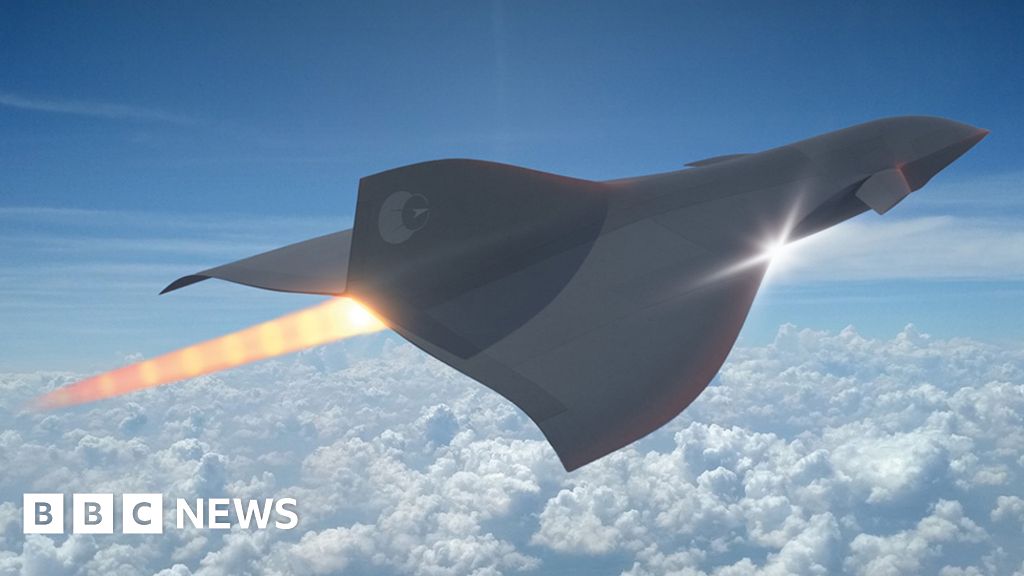
The European Space Agency (ESA) and UK-based Frazer-Nash have kicked off INVICTUS, a research programme with the goal of developing hypersonic technologies applicable to future reusable vehicles capable of horizontal launch.

INVICTUS is funded through ESA’s General Support Technology Programme (GSTP) and Technology Development Element (TDE) and is a fully reusable experimental aerospace vehicle capable of flying at Mach 5 (five times the speed of sound).

The vehicle will demonstrate key technologies for sustained hypersonic flight in the atmosphere and will be upgradable, allowing for the exchange of materials, software and propulsion systems between flight test campaigns.

INVICTUS builds on previous technology developments managed by ESA and will offer industry, agencies and academia an opportunity to test future hypersonic technologies in a relevant environment.

One of the main challenges of operating a hypersonic vehicle is that at high speed, due to shock heating and surface friction, the outer surface of the aircraft and the air entering the engines are extremely hot. These conditions call for specialised technologies as well as unique propulsion systems to power the vehicle through the high speed ranges.

David Perigo, ESA’s chemical propulsion engineer and the programme’s technical lead, explains: “The INVICTUS programme will prove the suitability of a hydrogen-fuelled precooled air-breathing propulsion system for horizontal take-off and hypersonic flight. It will provide an invaluable opportunity to test the complete engine flow path, from intake to afterburner, at full scale in an integrated aircraft.”

The precooler system, building on technology developed through ESA's SABRE study, was designed by UK-based Reaction Engines Ltd and funded through ESA’s GSTP in its initial stages.

This innovative technology, able to chill superheated air in a fraction of a second, has already been successfully demonstrated through integration with conventional jet engines.

In addition to providing a cooling system, the lightweight architecture of a SABRE-like engine paves the way for true spaceplanes, able to take off horizontally from a runway, taking us a step closer to widespread access to space.

Mark Ford, Head of ESA's Chemical Propulsion Section, comments: “INVICTUS is an important next step in developing the technologies required for future spaceplanes and will give Europe a unique asset for exploring this type of flight.”

Sarah Wilkes, Managing Director at Frazer-Nash, said: “INVICTUS is an exciting opportunity to provide advanced technology for space and realise dual-use capabilities. With strong industry support and deep engineering and aerospace expertise – including Frazer-Nash colleagues with a decade of propulsion experience – we have all the right ingredients to make this ambitious vision a reality.”

Tommaso Ghidini, Head of ESA’s Mechanical Department, adds: “Hypersonic flight is not just the next frontier of aerospace – it is the gateway to a new paradigm of mobility, defence, and space access. With INVICTUS, Europe is seizing the opportunity to lead in technologies that will redefine how we move across the planet and reach beyond it.

“By mastering reusable, air-breathing propulsion, we are laying the foundation for aircraft that take off like planes and reach orbit like rockets – revolutionising both terrestrial and orbital transportation. This is where dual-use innovation meets strategic autonomy.”

Tony Forsythe, Head of Space technology at the UK Space Agency, said: “This exciting project, made possible by our investments in the European Space Agency, has significant potential to build on advanced cooling and hypersonic propulsion technology developed by UK engineers over many years. We look forward to seeing how the work develops and the opportunity it presents for boosting economic growth and national security.”

Over the next 12 months, the INVICTUS consortium, led by Frazer-Nash and including Spirit AeroSystems and Cranfield University, will deliver the preliminary design of the full flight system.

 
A definition of insanity is doing the same thing over and over again and expecting a different result.

What's changed that justifies UK government spending another £7m on this?
Other than the fact that KBR appear to be involved in this who seemingly have large amounts of money. Your hot take on this desiring to be first to reply has been proved erroneous being you don’t seem to have actually bothered looking at the actual facts.
 
Other than the fact that KBR appear to be involved in this who seemingly have large amounts of money. Your hot take on this desiring to be first to reply has been proved erroneous being you don’t seem to have actually bothered looking at the actual facts.
What do you think is erroneous? I read that PR statement

Previously REL had the backing of BAES, RR and others who have very much larger amounts of money than KBR.
 
........ looking at the actual facts.
Which "facts" do you mean?

That PR statement sounds exactly like the REL propaganda that we had to endure in the past decade when MT was CEO.
A quote: "The precooler system......... This innovative technology, able to chill superheated air in a fraction of a second, has already been successfully demonstrated through integration with conventional jet engines.
In addition to providing a cooling system, the lightweight architecture of a SABRE-like engine paves the way for true spaceplanes..........
"

The precooler is merely a tubular heat exchanger with a large heat exchange area due to use of microtubes. Anybody familiar with heat transfer calculations knows that time does not come into that. The "fraction of a second" statement that REL also used in the past decades is irrelevant.
Moreover it has never been "successfully demonstrated through integration with conventional jet engines".

And then of course also all that talk about the SABRE engine although that still only exists on paper.

How many parties are already involved in this, that we know of? Let's see:
- KBR
- ESA
- UK Space Agency
- Frazer-Nash
- Spirit AeroSystems
- Cranfield University

What could possibly go wrong.....
 
Just imagine, that you could spent your whole working live and career in a company which worked on one single product without ever going close to realisation...
There is an old joke about aerospace engineers working for 5 different companies during their careers and never having to move desks….
 
Possibly due to the changed political land-scape ?

Russia boasting about hypersonic missiles
China boasting about hypersonic missiles.
US apparently tested some over W. Pacific
Plus, they tested the filament intercooler...

The prospect of Rus / Chin having to contend with hypersonic drones that can be test-flown, studied back on ground rather than by mere telemetry must unsettle air-defence operators...

Plus, perhaps, lets NATO_EU raise finger to TrumPOTUS, saying, "See ? See ? We can make nice stuff, too !!"
--
Interesting choice of names, must wonder 'WTF'.
'Lightning III' might be more appropriate, although Mach 5 would better suit 'Greased Lightning'...
 
One thing I noticed, assuming that the renders of Invictus are accurate, is that the engine exhausts are placed much further back. Heating of the aft fuselage from exhaust plumes was found to be a problem with Skylon.

The exhaust nozzles are proportionally very small and less complicated compared with those for Skylon, suggesting that the engines are not SABRE... or just that the renders aren't accurate.

Take with a grain of salt.
 

Attachments

  • Skylon plan view.jpg
    Skylon plan view.jpg
    964.9 KB · Views: 38
  • Screenshot 2025-07-25 at 2.57.35 PM.png
    Screenshot 2025-07-25 at 2.57.35 PM.png
    766.7 KB · Views: 40
ESA funding = UK gov funding contracted via ESA
I suppose €7m buys some more paper studies
Just imagine, that you could spent your whole working live and career in a company which worked on one single product without ever going close to realisation...
At this point, I *truly* continue to wish the creators/makers of this technology all the best of luck for getting an opportunity to demonstrate its merits, but I am quite literally not holding my breath (see what I did there???).
Which "facts" do you mean? That PR statement sounds exactly like the REL propaganda that we had to endure in the past decade when MT was CEO.
A quote: "The precooler system......... This innovative technology, able to chill superheated air in a fraction of a second, has already been successfully demonstrated through integration with conventional jet engines. In addition to providing a cooling system, the lightweight architecture of a SABRE-like engine paves the way for true spaceplanes.........." The precooler is merely a tubular heat exchanger with a large heat exchange area due to use of microtubes. Anybody familiar with heat transfer calculations knows that time does not come into that. The "fraction of a second" statement that REL also used in the past decades is irrelevant. Moreover it has never been "successfully demonstrated through integration with conventional jet engines". And then of course also all that talk about the SABRE engine although that still only exists on paper. How many parties are already involved in this, that we know of? Let's see:
- KBR
- ESA
- UK Space Agency
- Frazer-Nash
- Spirit AeroSystems
- Cranfield University
What could possibly go wrong.....

I desired European space success in the 1980s when I excitedly followed the progress of spaceplane Hermès (even after its payload was reduced to "two Frenchmen and a ham sandwich", as was complained back then), the sinuously fang-like Sänger II, and HOTOL. And I desire Europe's success now, both for your benefit and the benefit of world space achievement. Unlike Dagger, I think there is something in TSTO and SSTO applications, as I expect the future will prove. But I must reluctantly join Dagger, red admiral, and others here in shaking my head at the breathless announcement of this new Mach 5 testbed to demonstrate Reaction Engines Ltd tech. In principle, this too is exciting. But based on past experience, the probability of a European vehicle actually flying within six ten years is 1%. And in one matter I am even more pessimistic than you—I believe that rather than paying European engineers to sit at their desks producing cubic meters of never-to-be-read paperwork, most of the monies spent will go to European bureaucrats who 'manage' those engineers. That the real space advancement resulting from this announced program will be the same as would burning the equivalent amount of cash in a bonfire at Cranfield University makes me sad.
 
One thing I noticed, assuming that the renders of Invictus are accurate, is that the engine exhausts are placed much further back. Heating of the aft fuselage from exhaust plumes was found to be a problem with Skylon.

The exhaust nozzles are proportionally very small and less complicated compared with those for Skylon, suggesting that the engines are not SABRE... or just that the renders aren't accurate.

Take with a grain of salt.

That Skylon plan view is a lovely picture. Oh wait, it's one of my Photoshop efforts!

I used a plan that was part of a multi-view rendering that I thought was published by Reaction Engines about 4 or 5 years ago.

Let me know if I've got it all wrong. ;)
 
https://www.esa.int/Enabling_Suppor...listed_for_INVICTUS_hypersonic_test_programme

Two UK sites shortlisted for INVICTUS hypersonic test programme
24/11/2025

The European Space Agency (ESA) has shortlisted Spaceport Cornwall and Machrihanish in the UK as testing locations for INVICTUS, a research programme with the goal of developing Europe’s new hypersonic test platform.

INVICTUS – Europe’s new hypersonic test platform

INVICTUS will deliver a hypersonic flight test capability unlike anything currently available in Europe, enabling technologies that make future reusable spaceplanes possible.

The programme is designed to de-risk critical innovations such as advanced propulsion, thermal protection, and guidance systems by testing them under real-world conditions, accelerating Europe’s progress toward aircraft-like access to space.

ESA’s Director of Technology Dietmar Pilz said: “INVICTUS has all the potential to become a cornerstone for Europe’s future in space access. By successfully demonstrating reusable horizontal launch technologies, this programme ensures Europe remains competitive and strengthens collaboration across member states.”

Tony Forsythe, Head of Space Technology at the UK Space Agency, said: “The shortlisting of Spaceport Cornwall and Machrihanish demonstrates the UK’s infrastructure and expertise in advancing cutting-edge aerospace technologies. INVICTUS represents exactly the kind of ambitious, collaborative programme that could cement the UK’s position as a European leader in space innovation.

“By pioneering reusable spaceplane technologies and hypersonic flight capabilities, we’re potentially not only opening new frontiers for space access but also creating high-value jobs, driving regional growth, and developing skills that will benefit the UK for generations to come.”

Frazer-Nash Consultancy, prime contractor and systems integrator for INVICTUS, supported ESA in undertaking various site visits to assess possible UK launch sites against the needs of INVICTUS and to elicit requirements for the future programme.

Sarah Wilkes, Managing Director at Frazer-Nash Consultancy: “We’re excited to collaborate with Spaceport Cornwall and Machrihanish to establish a European hypersonic test capability here in the UK. INVICTUS harnesses the exceptional expertise and innovation found across our UK regions.”

Michael J Ryan, European Space and Defence and Government Affairs, Spirit AeroSystems, supporting the INVICTUS airframe development added: “It’s fantastic to see UK regions leading the way in delivering INVICTUS. Our Belfast facility is already a recognised center of excellence for aerospace, and this program is vital to ensuring we continue to push boundaries, supporting innovative space access and strengthening national security.”

The benefits extend far beyond space. INVICTUS will create hundreds of highly-skilled jobs in UK regions, attract inward investment, and anchor advanced aerospace capability. At the same time, the programme provides a dual-use platform for defense innovation, accelerating the development of hypersonic technologies vital to national and allied security. It will also support Jet Zero, the UK’s commitment to net-zero aviation, by advancing hydrogen propulsion systems.

Noah Law, Member of Parliament for St Austell and Newquay commented:
“INVICTUS would be an immensely welcome, long-term partner for and the kind that such a fine aerospace asset as Spaceport Cornwall - with one of the longest runways in the country and dedicated airspace - deserves.”

Richard Lochhead, Minister of Business for Scotland, said: “Machrihanish offers a unique opportunity to host hypersonic test operations and an exciting new platform to continue driving growth in Scotland’s burgeoning space sector whilst reinforcing our commitment to innovation and sustainability.”

INVICTUS is more than a test programme; it is a strategic investment in European collaboration. By bringing together expertise across member states, the initiative will deliver uniquely competitive space access systems that enhance strategic autonomy and reinforce security for Europe.

INVICTUS is funded through ESA’s General Support Technology Programme (GSTP) and Technology Development Element (TDE).


Spaceport Cornwall:
b3e45600-6235-11f0-a990-2d25b54d63aa.jpg.webp

https://www.bbc.co.uk/news/articles/c3w4y51yev1o
Spaceport Cornwall has been selected by the government to help develop hypersonic defence technology for the UK.

The site based at Cornwall Newquay Airport is one of 90 organisations chosen to be part of the Ministry of Defence's £1bn Hypersonic Technologies and Capability Development Framework.

The seven-year programme aims to research and develop hypersonic technology - such as guidance systems, warheads and liquid propellants - as part of the government's Strategic Defence Review.
 
View: https://x.com/RAeSTimR/status/1945026544272883732


Having just joined this forum I was surprised to see this post after discovering Reaction Engines had gone. Wondered where the technology went. It is obvious that progress into space will not (so many potential puns!) progress with the current crop of large fireworks.
 
Machrihanish would be a great choice for a testing location for INVICTUS.
Originally a military base where the personnel could be ordered too. Not sure it is an attractive location economically. Certainly fine physically. Really needs a stop off on a Glasgow - Belfast tunnel route to be attractive as a space port. ;);)
 

Similar threads

Back
Top Bottom