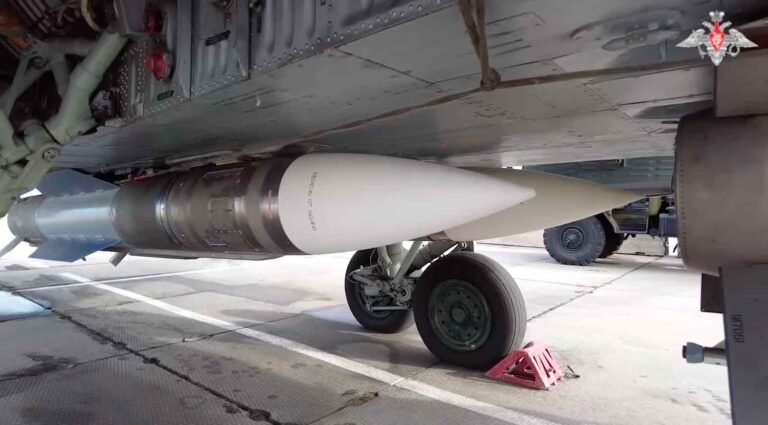
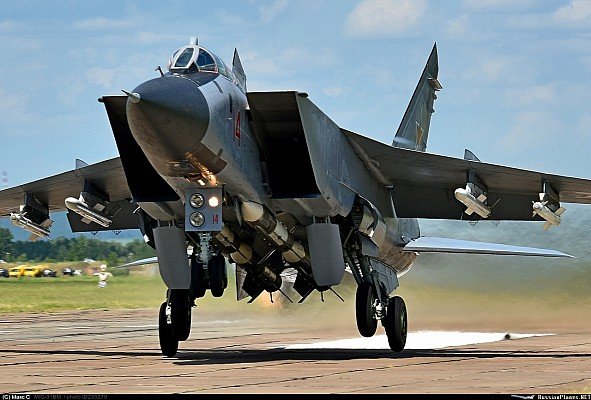
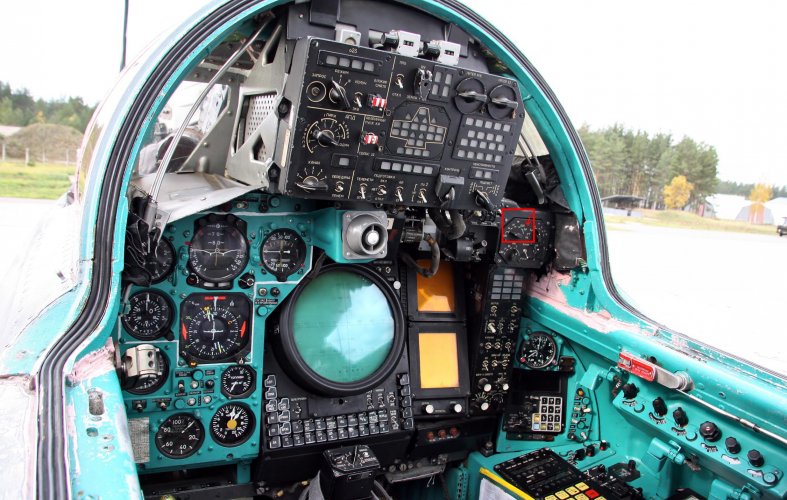
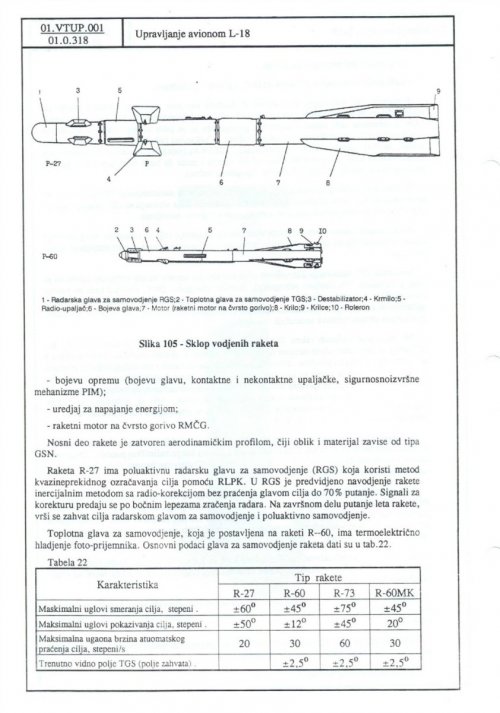
R-33, R-37 and R-72/KS-172S-1 ALRAAM missiles

the case of the R-27ER and R-33 it does ,both have single chamber dual-stage rocket engines and with the same flight profiles.
No it does not.

R-33 has 50% more inertia, 60% more fuel, and 250% the drag! And still can only fly 60 seconds.

Aerodynamics is no joke. The missile is the worse shape for a straight flight profiles, which is understandable and completely fine because 120 km is still farther then it would probably ever be fired on a Cold War gone hot.

There is no precise data for the detection ranges of N007A 'Zaslon-A 'on MiG-31B/BS which btw exist no more 'cause all of them were overhauled and modernised to the BM level with its N007AM Zaslon-AM.
There are multitudes of sources that agree. Only a fool would think “all these sources are underestimating it.”

Yes ,with the same body diameter of 380mm ,Kh-58 was 150kg heavier, 650kg vs 500kg ( warhead was even three times heavier ,150kg vs ~ 50kg).Kh-58 was much slower 3.5M-4M vs 5M-6M.With version Kh-58U ,MiG-25BM achieved launch ranges 300km with launch parameters : Vmax 2500km/h ,Hmax 21km. Almost the same parameters as MiG-31BM can achieve with older R-33/S and newer R-37M. Btw ,Kh-58/U had loft trajectory option.
Air to ground missiles need more battery time, it is different requirements, so of course designers make space.

Just becuase one air to ground missile has more battery then a somewhat smaller air to air missile does not mean anything. It is again flawed logic.

And where did you get 300 km? Designers advertise Kh-58U as 250 km max,

Btw ,Kh-58/U had loft trajectory option.

Do you know how it lofts? It is not like an AIM-7 or AIM-120 loft. It is entirely different

Don't know who is the original source of this graph but what we can see here ?
It is from a book which you doubted earlier as a reliable source
Launch height 16-18 km.R-33 than climbs to 28km, than descents and achieve about 150 km ( something as possible launch distance)

This shows you do not know how to read these graphs. It is not showing a loft trajectory.

The shape is showing the ranges for front or rear aspect that a shot is allowed vs altitude. It is only showing straight shots, no loft.

Let’s take the top at 18 km, it does not show a loft, it says I can shoot about 10 km up, but only until about 80 km.

It shows that max launch range is achieved at 15 km

And shows that on the deck it has a 20-25 km front aspect range

And rear aspect range anywhere from 10-40 km depending on altitude.

You pick an altitude for launch altitude, and move your finger in a straight line to the edge of the shape to find the range for that speed and altitude. The shape on top is merely showing what shots can be achieved in a look up scenario, I.e, a 10 km look up means range is 80 km or less.

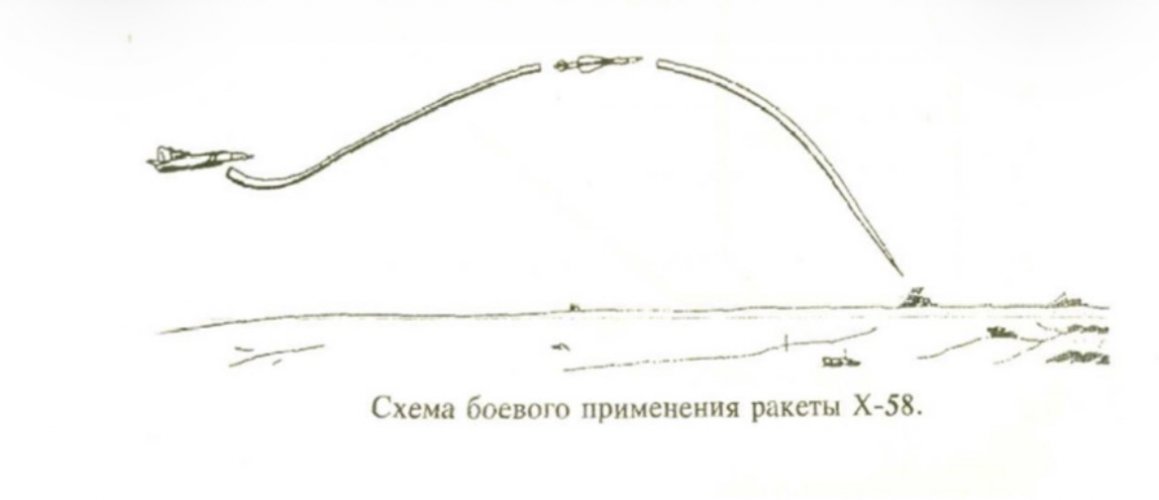
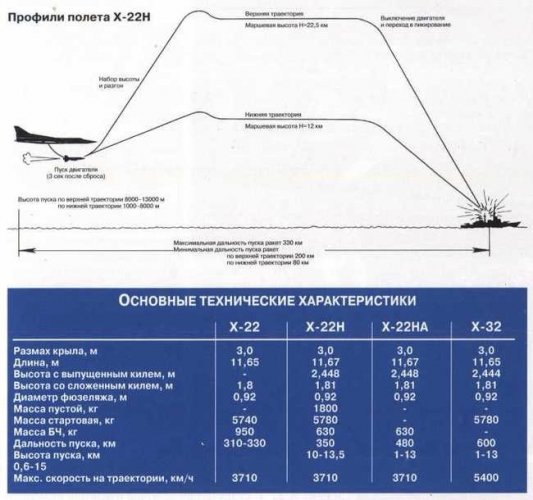
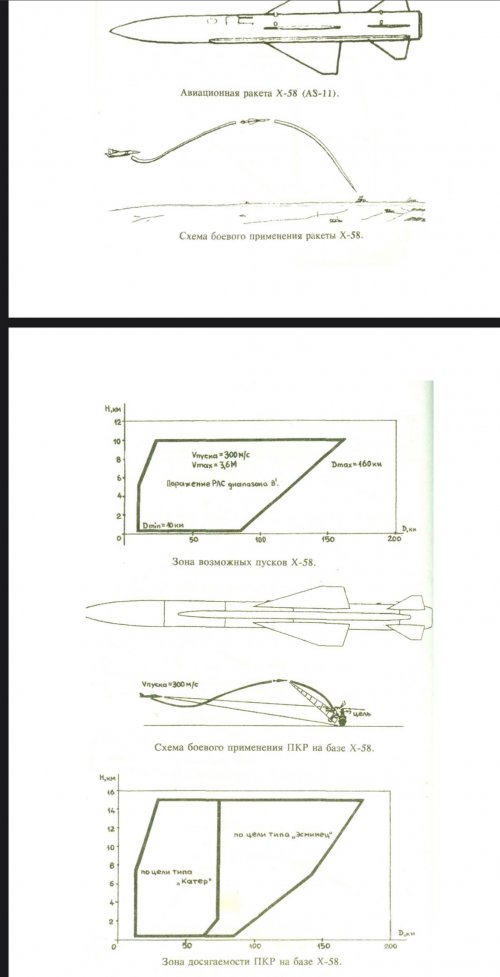
As for Kh-58 loft, I will tell you. It is same loft as basically every Soviet air to ground missile. The missile either flies level or climbs until a certain altitude.

Once it flies far enough that the look down angle to the target increases to 6-30 degrees (depending which missile we talk about), it then activates proportional guidance to curve down on target.
IMG_9417.jpeg

You could use this air to air; but it is optimized for air to ground for a reason. Loft profile of an air to air missile is much more dynamic and gentle with fluid transitions.
 

Attachments
  • IMG_9415.jpeg
    IMG_9415.jpeg
    625.6 KB · Views: 12
  • IMG_9416.jpeg
    IMG_9416.jpeg
    35.2 KB · Views: 11
Last edited:
R-33 has 50% more inertia, 60% more fuel, and 250% the drag! And still can only fly 60 seconds.Aerodynamics is no joke.

You forgot to count max possible speed of the launcher and max speed of the AAM's after acceleration phase.

There are multitudes of sources that agree. Only a fool would think “all these sources are underestimating it.”

There is no publicly available real military source yet even for the N007 and not to mention N007A.

And where did you get 300 km? Designers advertise Kh-58U as 250 km max,

''Also, takeoffs and landings were protected by fighter aircraft. Following a reconnaissance mission over the potential targets, relevant data were entered into the different systems of the MiG-25BM such as the Peleng navigation complex. The transit flight to the target area was achieved at high altitude to a range of 200 to 60 km from the target (200 km was considered the maximum acceptable operational range, although successful firing were achieved at a range of 300 km from the target during tests with the Kh-58U variant. However, there was the risk that the missiles' nickel-cadmium batteries would run down before reaching the target when firing from such a long range). The target could be locked on from ranges up to 400 km.''


It is from a book which you doubted earlier as a reliable source

Of course because it was not real Flight or Combat Manual for the MiG-31 pilots /RIO's.

This shows you do not know how to read these graphs. It is not showing a loft trajectory.

The shape is showing the ranges for front or rear aspect that a shot is allowed vs altitude. It is only showing straight shots, no loft.

Aha, and we can see that 150 km range can be achieved if R-33 is launched from about 15km height. What would be then 'max range' if R-33 would be launched from 21 km height ? Btw ,on that graph ,where you see the case for 20+ km height launch anyway ???

It shows that max launch range is achieved at 15 km

Yes of course and that is 150 km what Ronny stated earlier. Now calculate that ''max range'' if R-33 would be launched from 20+km ...

Now if that graph is right like you mentioned ,that where is your ''120km'' as max range for the R-33??? As we can see, there is even 150km as max range ( Ronny noticed that ) of course for the given launch/height case. Launch range cannot be the same for certain in the cases for 15 km and 20+km of height.
 
Now if that graph is right like you mentioned ,that where is your ''120km'' as max range for the R-33???
Perhaps max ranges are built with some margin ;) Usually they also take into account a small 3-5 G maneuver by the target before impact and for R-27 in rear aspect a requirement of 150 m/s closure for the proximity fuse to function.
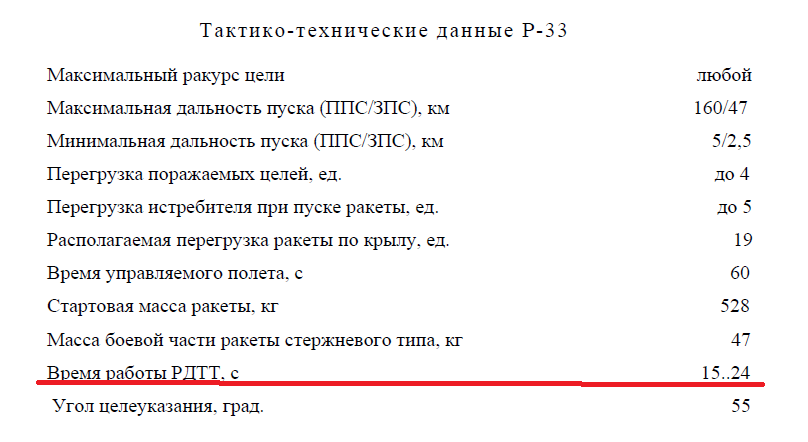
However, there was the risk that the missiles' nickel-cadmium batteries would run down before reaching the target when firin

Exactly, it’s possible, but better to advertise as 250 km and tell this to pilots and computer DLZ rather then 300 km.
You forgot to count max possible speed of the launcher and max speed of the AAM's after acceleration phase.
You have no evidence that R-33 is faster as burn out then R-27ER.

As for the carrier being able to go 0.48 Mach faster, is that enough to counteract 60 seconds of having 2.5x drag? 120 km is a very reasonable figure in my opinion.

Of course because it was not real Flight or Combat Manual for the MiG-31 pilots /RIO's.
It doesn’t need to be from military for me to believe Yefim Gordon, Markovsky, and other aviation historians
 
More details in the ''R-33 vs R-27ER subtopic''.

So ,as we know, R-33 is 150 kg heavier, as Aeria Gloria wrote has even 60% more solid rocket fuel. If I remember well, R-27ER has dual-stage rocket engine which burns about 10 sec in total (both stages) ??? Booster ( weighs about 100kg) and produces 7500kgf. In the case of R-33 ,acceleration phase ( both stages) lasts 30-40sec? One table shows us 15+24sec but but ...

About the aerodynamic drag ,I think that R-27ER has the 'issue' with so called ''babochkas'' or butterflies, in fact those forward positioned stabilizers with span almost 1000mm.Wingspan : 900mm vs ~800mm.

Now about the stabilizers of the R-33 as the aerodynamic control surfaces.

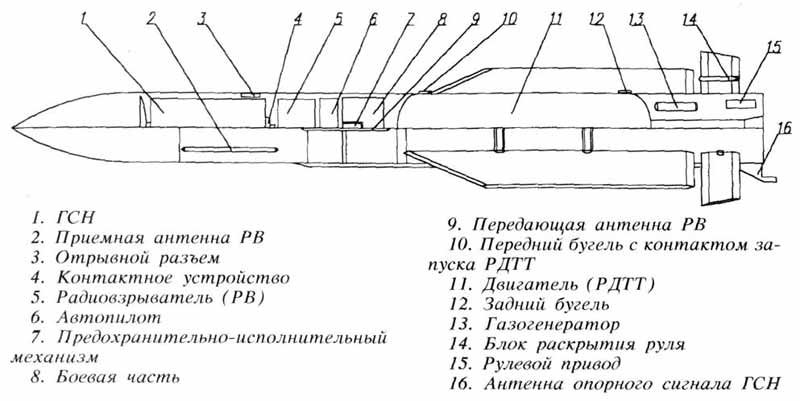
R-33 SKICA.jpg

Very important details : No 13 the gas generator and No 15 the steering gear.
''четвертый отсек (вокруг газовода РДТТ) - газогенераторы, турбогенератор с блоком регулирования и рулевые машины, работающие на горячем газе, вырабатываемом газогенераторами.''
''the fourth compartment (around the solid propellant rocket motor chamber) - gas generators, a turbogenerator with a control unit and steering machines operating on hot gas produced by the gas generators.''

Source: http://militaryrussia.ru/blog/topic-102.html

It seems that there is no batteries at all ?

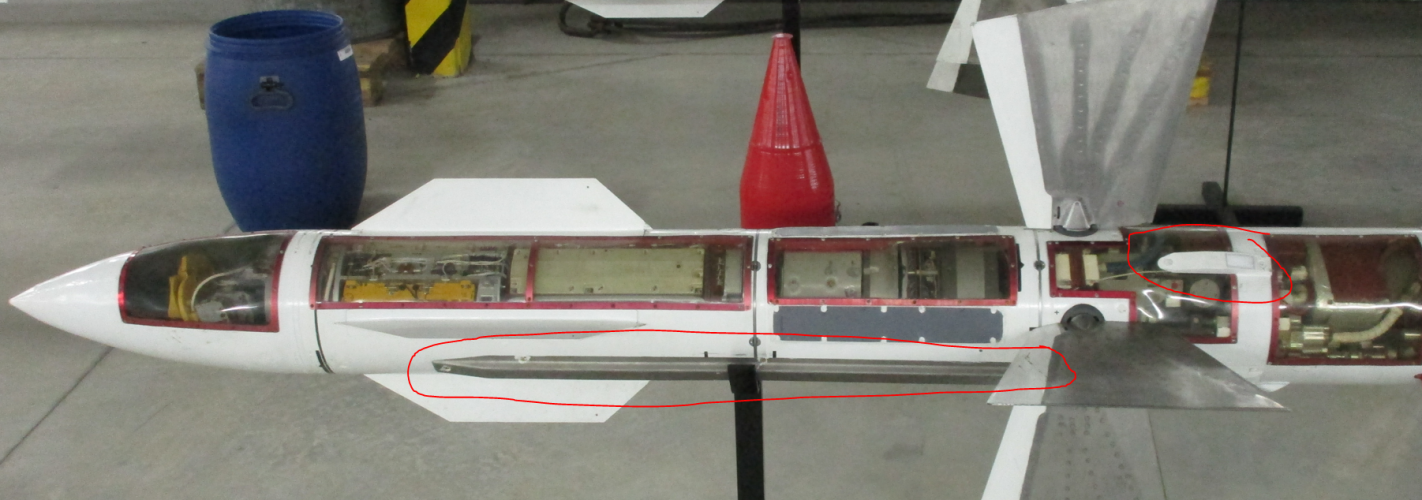
Also number 16 ,the RC-channel receive antenna with question ,what can be the range of the RC -channel of N007AM ? N007 and N007A are no more in use.


R-33 one way data link.jpg
 
seems that there is no batteries at all ?
Turbo generators are completely normal power source for almost all Soviet missiles, any book on them will mention this, you are just beginning to become familiar with them. In this case, it only has the fuel to last 60 seconds. This is one reason it’s a hard limit.

The whole point of butterfly wings on R-27 is to eliminate the babochka effect of reverse lift from turning the airflow on the rear stabilizers. The butterfly shape and distance between trailing edge of wing and leading edge of tail fins solves this issue.

It dos affect Sparrow missile
 
Last edited:
You have no evidence that R-33 is faster as burn out then R-27ER.

As for the carrier being able to go 0.48 Mach faster, is that enough to counteract 60 seconds of having 2.5x drag? 120 km is a very reasonable figure in my opinion.

Pls, R-33 is made from Titanium ( almost completely ) ,R-27ER from the Steel Alloys. R-33 is much faster than R-27ER.

For R-27ER we have this :

''За время работы двигатель при пуске ракеты обеспечивает приращение скорости ракеты к скорости полета истребителя для Р-27ЭР (ЭП) до 800—1000 м/с и для Р-27ЭТ до 700—1100 м/с.''
''During operation of the engine while missile launch ,provides an increase in the missile speed to the fighter's flight speed for the R-27ER (EP) up to 800-1000 m/s and for the R-27ET up to 700-1100 m/s.''

For the R-33 we have nothing so far.

Turbo generators are completely normal power source for almost all Soviet missiles, any book on them will mention this. In this case, it only has the fuel to last 60 seconds. This is one reason it’s a hard limit.

60 sec ?

IMG_7731 mod.png
 
R-33 is made from Titanium ( almost completely ) ,R-27ER from the Steel Alloys. R-33 is much faster than R-27ER.
Please. That proves nothing. R-33 was designed to stay under the plane at Mach 2.83 for sustained periods of time so of course it’s designed for higher temperatures.

Also, R-27 is titanium alloy. Only rocket engine body is steel. This is visually noticeable on the wings and tail.
I said the turbo generator only has enough fuel to last 60 seconds not the motor.

A turbo generator is not a battery, it has essentially rocket fuel which is burned to spin a turbine and thus generate electricity. And well, you can only put such a large amount of fuel for the turbo generator in a missile.

I don’t know a single Soviet Cold War missile that does not use a turbogenerator
 
Last edited:
Please. That proves nothing. R-33 was designed to stay under the plane at Mach 2.83 for sustained periods of time so of course it’s designed for higher temperatures.

What ? R-33 are part of the MiG-31's fuselage ( we can litteraly say that ) in comparison with R-40 which were carried under the MiG-25P/PD ( PDE/PDS) wings.

Titanium is used for higher speed during flight and that was the reason why R-40 could reach more than 5 Mach or more during acceleration phase.Same is for the R-33,R-33S and newer R-37M .

I said the turbo generator only has enough fuel to last 60 seconds not the motor.

Or the gas generator ?

Now some details about the new R-37M from the amous video .

View: https://www.youtube.com/watch?v=ZxAGVMTtQb0


From 1:12 until 1:30 we can see green spot on the right screen .The right screen is in fact LCD for the IRST 8TK. So that would be 18 sec .We must count on the launch moment, so there is some more seconds of the burn time because it happened beyond the visibility of the IRST.
 
Titanium is used for higher speed during flight and that was the reason why R-40 could reach more than 5 Mach or more during acceleration phase.Same is for the R-33,R-33S and newer R-37M .
As is true for R-27 main body and wing surfaces. Only engine body is steel.

Do the unpainted fin areas look like steel to you ;)

IMG_9435.jpeg IMG_9436.jpeg IMG_9437.png

Or the gas generator ?
Not quite, gas generator + turbine = turbo generator

Also is there any evidence the right side is 8TK? You can tell it’s 8TK related as the orange clutter only sweeps left to right. Just feel like something else might be involved with the top and bottom sections.

Here is a collection of pages from a Polish doc on R-27, there is much information on its construction, turbo generator, etc https://drive.google.com/drive/folders/1kddoj-di2hPvDOiSEALmXY2ElAqKe2ci
 
Last edited:
Not quite, gas generator + turbine = turbo generator

We have both 'gas gen' and 'turbo gen' mentioned here :

''четвертый отсек (вокруг газовода РДТТ) - газогенераторы, турбогенератор с блоком регулирования и рулевые машины, работающие на горячем газе, вырабатываемом газогенераторами.''
''the fourth compartment (around the solid propellant rocket motor chamber) - gas generators, a turbogenerator with a control unit and steering machines operating on hot gas produced by the gas generators.''

When we talk about that high temp which can affect on the AAM's during interceptor's flight we have very intereresting info here :

''Помимо новой схемы функционирования, Р-33 отличалась от ракет предыдущего поколения (типа Р-40) применением пассивной схемы теплозащиты с использованием термоматов. Эксплуатация МиГ-25 позволила уточнить реальные высотно-скоростные профили полетов и характер воздействующих на ракету тепловых потоков и, в результате, на ракете К-33 отказаться от усложняющей конструкцию носителя и ракеты системы подачи хладагента на ракету.''

''In addition to the new operating scheme, the R-33 differed from the previous generation of missiles (such as the R-40) by the use of a passive thermal protection scheme using thermal mats.
The operation of the MiG-25 made it possible to refine the actual altitude-speed profiles of flights and the nature of the thermal flows affecting the missile, and, as a result, the K-33 missile was able to abandon the coolant supply system, which complicates the design of the carrier and the missile.''

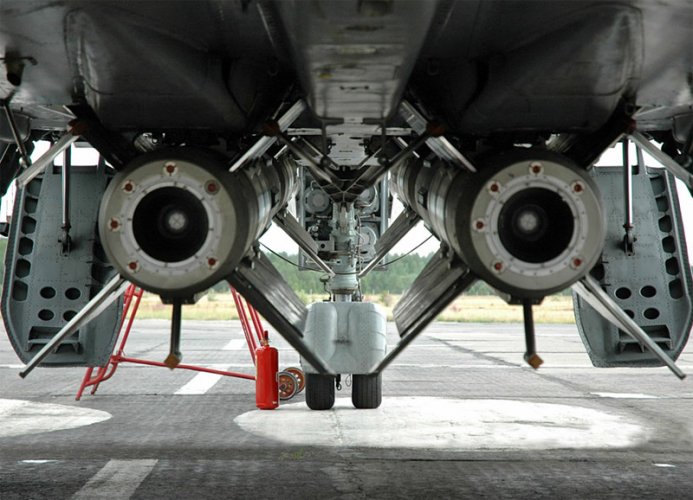
As I wrote, R-33's (R-33S and newer R-37M ) are practically semi retracted ,in fact those two in front,so there is no drag for the carrier ( of course MiG-31BM) and those attached AAM's are not affected by the air flow like it is case of the older R-40 attached under the wings of MiG-25 interceptor.

Also is there any evidence the right side is 8TK? You can tell it’s 8TK related as the orange clutter only sweeps left to right. Just feel like something else might be involved with the top and bottom sections.

Exactly at 15:26 min we can see simulator of the RIO in the rear cabine. Left LCD is for the radar N007AM and right LCD is for the IRST 8TK.

View: https://www.youtube.com/watch?v=4R0gRGvFJUk


So that green spot was in fact R-37M in flight ,of course during active phase of the flight ( acceleration ,burn phase).

Again when we talk about max ( possible, authorised,calculated etc ) ,launch ranges of the old R-33 , first to consider is RC-channel during initial phase range.My assumption is it can be even 100km 'cause RC-channel for the R-37M has that range ( data for the old K/R-37 and N007M radar).

Also important is this:

''До захвата наведение ракеты осуществляется инерциальной системой. Протяженность участка полета до перехода на самонаведение составляет 10-20% всей протяженности траектории.''

''Before the lock on , the missile is guided by an inertial system. The flight segment before transitioning to homing accounts for 10-20% of the entire trajectory.''

It is interesting that semi-active radar seeker MFBU-410 can lock-on bigger target from about 100km.

Also known citation :


ГСН МФБУ-410. Р-33
В головке используется индикаторный гиростабилизатор, построенный на базе датчиков угловой скорости. Захват цели головкой самонаведения может происходить спустя треть полетного времени ракеты. Это достигается, в частности, благодаря высокой точности оценивания угловой скорости линии визирования БРЛС носителя (ошибки составляют 0,01...0,03 град/с).
Доплеровская головка самонаведения отличается строгим согласованием всех протекающих в ней процессов с интервалами подсвета назначенной для нее цели, равными 20 мс. В течение указанного времени производится поиск цели по частоте, а в процессе сопровождения выполняется измерение частотной расстройки и углового рассогласования. Все остальное время до следующего интервала подсвета головка "заперта" для приема и сигналы, формируемые ею, вычисляются в результате прогноза по предыдущим измерениям.
В головке реализован способ пеленгации с обработкой сигнала двухканальным приемником, реализующим метод так называемого скрытного конического сканирования с компенсацией. В каждом канале независимо от других в качестве нормирующих устройств используются схемы АРУ. Точность измерения угловых координат цели головкой, в том числе и при амплитудных помехах, приближается к точности моноимпульсной системы.
Дальность захвата головкой цели типа Ту-16 составляет около 90 км, (19кв.м) что с учетом инерциального наведения до захвата обеспечивает возможность пуска с дальности порядка 120...130 км.
Система самонаведения после захвата последовательно имеет две структуры:
• с момента захвата на большей части пути используется модель кинематических соотношений в качестве фильтра измерений угловой скорости (вместо ускорения цели на вход модели подается разность измерения угловой скорости и ее оценки);
• затем она строится как стационарная (замкнутый контур углового сопровождения головки формирует измерения угловой скорости линии визирования, которые пропускаются через стационарный фильтр и после умножения на измеренную скорость сближения образуют заданную перегрузку).
Некоторое уменьшение требований к величине градиента синхронной ошибки достигнуто благодаря применению отрицательной обратной связи по скорости изменения угла отклонения антенны.


One comment : По цели с ЭПР 3-4кв м ПАРЛГСН Р-33 отработает на дальности 60км.
Against a target with an RCS of 3-4 sq. m, the R-33 semi-active radar seeker will operate/lock on at a range of 60 km.

Now this :

''Дальность захвата головкой цели типа Ту-16 составляет около 90 км, (19кв.м) что с учетом инерциального наведения до захвата обеспечивает возможность пуска с дальности порядка 120...130 км.''

''The target's lock on range of the Tu-16 type by seeker is approximately 90 km (19 sq.m), which, taking into account inertial guidance before acquisition, provides the possibility of launching from a range of approximately 120...130 km.''

So MiG-31 can launch R-33 against incoming Tu-16 from 120/130km where inertial phase will be only 30/40km??? Inertial phase with potential use of the RC-channel which might have max range of 100km.

Against fighters,MFBU-410 can lock on them from 60km + 10%-20% of inertial phase ,than launch range is about 70km. Hm, all of this is in theory and in the practice ,they engaged low flying 0.5 sqm Kh-55 from 90km away with R-33. Theory vs practice....

Need more digging to find appropriate info and data about RC channel ranges from N007 to N007A/AM . R-33 and R-33S have that L-shape receiving antenna under the nozzle.
 
Last edited:
fourth compartment (around the solid propellant rocket motor chamber) - gas generators, a turbogenerator with a control unit and steering machines operating on hot gas produced by the gas generators.''
Of course, a turbo generator is turbine + generator. But you need something to spin the turbine, this is where gas generator comes in.

For some reason it is not letting me attach quotes. You say “flow of air under the aircraft has no effect on missile.”

What are you trying to say here? Are you honestly expecting me to believe that becuase the missile top is attached by the pylon that it is immune to all atmospheric heating and friction at up to Mach 2.83? It’s ridiculous. You have seen MiG-31 pictures, that missile is less conformally placed then even F-14.

You honestly think “THIS” is immune to the atmosphere friction?

IMG_9474.jpeg
IMG_9473.jpeg

As I mentioned in other thread, R-27 also has thermal padding under skin.

Range of datalink on R-27 is no more then 50 km.
 
What are you trying to say here? Are you honestly expecting me to believe that becuase the missile top is attached by the pylon that it is immune to all atmospheric heating and friction at up to Mach 2.83? It’s ridiculous. You have seen MiG-31 pictures, that missile is less conformally placed then even F-14.

First two are semi-retracted ( already wrote) ,those two behind them are only attached .

View: https://www.reddit.com/r/WarplanePorn/comments/yfhoq1/its_foxhound_friday_say_hello_to_the_speed_lady/#lightbox


Even with four heavy AAM's like R-33/S,R-37M under its fuselage ,MiG-31BM can fly several mins with M 2.83 at 20+km and if it is needed can launch all of them with that launch parameters.So it is not ridiculous ,it is reality.

RIO has even special control panel for the adjusting of launch speed in Mach number : 0.85,1.4,1.9, 2.35 and 2.8 .

Cockpit_of_Mikoyan-Gurevich_MiG-31_(7) (1)mod.JPG
 
irst two are semi-retracted ( already wrote) ,those two behind them are only attached .
Do you want to design your missile to only handle the heat of 1/2 the MiG-32 stations? No, you make it handle any. And even then “oh 1/4th of the missile is covered by the body so it doesn’t experience heating” is preposterous. Much has been written about the temperatures the skin of the MiG-25/31 reaches. It was even forbidden from exceeding like Mach 2 for years and years and years due to canopy issues.

MiG-25RB/RBT needed special bombs to handle the heat even at Mach 2.35. R-40 is not the fastest missile yet still needed heat shielding. There is no need to pretend that things don’t experience heating on MiG-31 becuase they are slightly covered.

Even with four heavy AAM's like R-33/S,R-37M under its fuselage ,MiG-31BM can fly several mins with M 2.83 at 20+km and if it is needed can launch all of them with that launch parameters.So it is not ridiculous ,it is reality.
What’s not ridiculous?

RIO has even special control panel for the adjusting of launch speed in Mach number : 0.85,1.4,1.9, 2.35 and 2.8 .


And how sure are you that that switch controls Mach number for DLZ? MiG-25P already has DLZ that corrects for speed and altitude automatically. It must be something else. You are assuming.
 
Do you want to design your missile to only handle the heat of 1/2 the MiG-32 stations? No, you make it handle any. And even then “oh 1/4th of the missile is covered by the body so it doesn’t experience heating” is preposterous. Much has been written about the temperatures the skin of the MiG-25/31 reaches. It was even forbidden from exceeding like Mach 2 for years and years and years due to canopy issues.

MiG-25RB/RBT needed special bombs to handle the heat even at Mach 2.35. R-40 is not the fastest missile yet still needed heat shielding. There is no need to pretend that things don’t experience heating on MiG-31 becuase they are slightly covered.

As I wrote, it was not the same case with the MiG-25P(PD,PDS) with two or all four R-40/D under the wings and MiG-31 with all four R-33 under the fuselage,that 's it.

What’s not ridiculous?

Exactly what I mentioned in that citation .

And how sure are you that that switch controls Mach number for DLZ? MiG-25P already has DLZ that corrects for speed and altitude automatically. It must be something else. You are assuming.

Keep in mind one detail,R-40's are launched from the rail launcher ,from under the wings. R-33(R-33S,R-37M) are launched from the catapult launcher under the fuselage.For the catapult launcher it is not the same to launch AAM at 0.85, 1.4, 1.9, 2.35 or even at 2.8 Mach. So it is not in the relation with some Drmax/DLZ but with the AKU-410/-1.
 
For the catapult launcher it is not the same to launch AAM at 0.85, 1.4, 1.9, 2.35 or even at 2.8 Mach. So it is not in the relation with some Drmax/DLZ but with the AKU-410/-1
Are you saying that because it’s a catapult launcher the carrier speed doesn’t factor into launch range? The catapult launcher pushes the missile down towards the earth.
 
Range of datalink on R-27 is no more then 50 km.

Yes ,max RC channel range of the N001/N019 is 50km. Btw, 70% of the R-27R(R1) flight path is inertial guidance with use of that channel. 30% is SARH phase.

On the other side,we don't know exactly what is the max range of the RC-channel of the N007AM . Btw, 20% of the R-33's flight path is inertial guidance and even 80% is SARH mode.

Are you saying that because it’s a catapult launcher the carrier speed doesn’t factor into launch range? The catapult launcher pushes the missile down towards the earth.

No of course ,launch speed/range will be calculated ,control panel has the relation with catapult launcher only.
 
Btw, 70% of the R-27R(R1) flight path is inertial guidance with use of that channel. 30% is SARH phase.
Not “is,” more like “can be.” If
You launch at less then 1.5x the range of the seeker for selected target size, the missile only goes for target velocity vector to lock when in seeker range using only the coordinates given at launch (using INS and similar to how R-24R/R-40RD) is used at any range beyond seeker lock

So 3 launch cases
1. Range below seeker range, LOBL
2. 1.1-1.5x seeker range, INS guessing then hopefully seeker lock when in range
3. Datalink if fired above 1.5x seeker range.

In such a case it is possible for the target to maneuver enough to not be detected if the TOF is long enough.

I bet R-33 is similar.

control panel has the relation with catapult launcher only.
How do you know this?
 
As long as your aware there is no datalink for launches from over 1x seeker range and under 1.5x seeker range. I’m sure this is inherited partly from r-33.
 
As long as your aware there is no datalink for launches from over 1x seeker range and under 1.5x seeker range. I’m sure this is inherited partly from r-33.

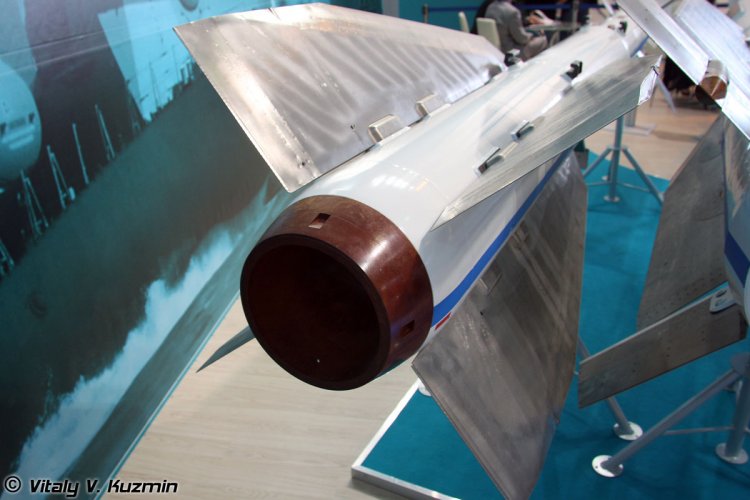
We have no yet any precise data about RC-channel range of the N007AM. What is obvious is that RC -channel receive antenna of the old R-33/S is not small.Does it mean that data link has great range or not ,I hope we will find that.
 
We have no yet any precise data about RC-channel range of the N007AM. What is obvious is that RC -channel receive antenna of the old R-33/S is not small.Does it mean that data link has great range or not ,I hope we will find that.
I mentioned that small target range limit is likely 2.5x max seeker range becuase of INS drift and the seeker field of view.

R-33 likely has even older INS or atleast similar if larger. I would not be surprised at all that it uses similar or identical concept. It doesn’t matter range you can datalink always, it also matters how accurately when you put INS in a missile when you can barely put them in planes, and commands use increments of 50 m/s.
 
R-33 likely has even older INS or atleast similar if larger. I would not be surprised at all that it uses similar or identical concept. It doesn’t matter range you can datalink always, it also matters how accurately when you put INS in a missile when you can barely put them in planes, and commands use increments of 50 m/s.

Yes but keep in mind, R-33 was the first with digit comp onboard.
 
It doesn’t change that R-27 also has digital computing and is limited to datalink for 70% of trajectory and max 2.5x seeker range due to most likely INS accuracy and discreetness of commands being in increments of 50 m/s along with a 6 degree sensor that does not do a scan pattern.,
 
As long as your aware there is no datalink for launches from over 1x seeker range and under 1.5x seeker range. I’m sure this is inherited partly from r-33.


It doesn’t change that R-27 also has digital computing and is limited to datalink for 70% of trajectory and max 2.5x seeker range due to most likely INS accuracy and discreetness of commands being in increments of 50 m/s along with a 6 degree sensor that does not do a scan pattern.,

Some details :

''ГСН МФБУ-410 с инерциальной система управления с радиокоррекцией на маршевом участке и всеракурсныи полуактивным радиолокационным наведением на конечном участке траектории. В ГСН применяется индикаторный гиростабилизатор с использованием датчика угловых скоростей, что обеспечивает возможность захвата цели в полете по завершении первой трети траектории.''

''The MFBU-410 seeker features an inertial guidance system with radio correction during the cruise phase and all-aspect semi-active radar guidance during the terminal phase of the trajectory. The seeker utilizes an indicator gyrostabilizer with an angular rate sensor, enabling target acquisition after the first third of the trajectory has been completed.''

Practically 1/3 is INS phase ,2/3 is SARH phase. Some sources mentioned only 10%-20% for INS .

''Протяженность участка полета до перехода на самонаведение составляет 10-20% всей протяженности траектории''

''The length of the flight segment before switching to semi active homing is 10-20% of the entire trajectory.''

What we know is that MFBU-410 can lock- on target like bomber Tu-16 ( about 20sqm) from 90km away. What we don't know is the max possible range of the RC-channel MCGU or data-link.
 
What we don't know is the max possible range of the RC-channel MCGU or data-link.
I think you still underestimate how much INS is a factor in limiting datalink range. Against small or rear aspect targets at low altitude there will be much greater load on INS. R-27 has seeker range as 40% max range even if that’s below max datalink range for a reason.
 
I think you still underestimate how much INS is a factor in limiting datalink range. Against small or rear aspect targets at low altitude there will be much greater load on INS. R-27 has seeker range as 40% max range even if that’s below max datalink range for a reason.

As I wrote ,INS is INS and data-link will be used or not,depends on the combat situation. In the case of R-33 , for me is interesting that in SARH mode one Tu-16 bomber can be locked on from 90 km away and launch range is 120,130km only . So INS/data -link phase is only 30/40km.Very suspicious that's why I mentioned digging and searching for more info about RC -channel range.Yes and they engaged with R-33 one low flying small target like cruise missile from 90 km.
 
Did you also know that it’s seeker isn’t monopulse but con-pulse, it is conical scan with two monopulse antennas. By rotating the two antennas it achieves the ability of full monopulse to find direction to target in elevation and azimuth, but of course since it needs to rotate this requires more then a single pulse and more time.

Conical scan is often weak to jamming due to its predictable rotation time, this is why we see R-24/27 with monopulse antennas.

I’m sure that 90 km was locked far enough away by the missile to not need fail the lock from edited INS. INS will still cause drift in datalink phase. Either its seeker FOV is smaller then R-27 of 6 degrees also or is achieved larger FOV then reality via conical scan.

What was the exact wording of the source of for 90 km?
As I wrote ,INS is INS and data-link will be used or not,depends on the combat situation. In the case of R-33 , for me is interesting that in SARH mode one Tu-16 bomber can be locked on from 90 km away and launch range is 120,130km only . So INS/data -link phase is only 30/40km.Very suspicious that's why I mentioned digging and searching for more info about RC -channel range.Yes and they engaged with R-33 one low flying small target like cruise missile from 90 km.

Oh I see, the 90 km shot against cruise missiles is from 2013 with a radar likely far more powerful then Zaslon-A. In such case it’s almost certainly not original R-33 but R-33S or more.

Doesn’t really matter though when MiG-31 was limited to like Mach 1.5 for the first 10-15 years of its life due to canopy issues.
 
Last edited:
Did you also know that it’s seeker isn’t monopulse but con-pulse,

Of course,knew that ....

Oh I see, the 90 km shot against cruise missiles is from 2013 with a radar likely far more powerful then Zaslon-A. In such case it’s almost certainly not original R-33 but R-33S or more.

It was R-33 ( not R-33S ) on the two MiG-31DZ and two MiG-31BM ( there is video of course).

Doesn’t really matter though when MiG-31 was limited to like Mach 1.5 for the first 10-15 years of its life due to canopy issues.

What ? Problem with the 1.5 Mach limitation was occurred some 10-15 years ago and was quickly solved with the new silicate glass. From one article dated back to 2016.

''Модернизация МиГ-31 в Нижнем Новгороде

Модернизированные в Нижнем Новгороде истребители защитят российские интересы на севере
Машиностроение, Военная авиация, 21 Апрель 2016''

"Органическое стекло, из которого изготавливались раньше фонари, больше не выпускается, а срок их службы уже истек и было введено ограничение скорости в 1.5 Маха. Стекло разрушается, желтеет, из-за чего серьезно ухудшается видимость, и оно уже не обладает своими первоначальными свойствами. Сегодня мы устанавливаем новые фонари из силикатного триплекса.

Это настоящее стекло, оно дороже, но зато прочнее и обладает лучшими свойствами по сравнению с органическим стеклом. Такие стекла раньше ставились только на космические корабли. Теперь, после их установки на самолет, МиГ-31 вновь способен летать на любой скорости, заложенной при проектировании".


''MiG-31 modernization in Nizhny Novgorod

Fighters modernized in Nizhny Novgorod will protect Russian interests in the north.

Mechanical Engineering, Military Aviation, April 21, 2016''

"The organic glass used to make the canopy is no longer in production, and their lifespan has already expired and speed limit of Mach 1.5 was introduced.The glass deteriorates and yellows, significantly reducing visibility, and it no longer retains its original properties. Today, we are installing new canopy made of silicate laminated glass.

This is real glass; it's more expensive, but it's stronger and has better properties than organic glass. This type of glass was previously only used on spacecraft. Now, after installing it on the aircraft, the MiG-31 is once again capable of flying at any speed it was designed for."
 
Last edited:
It was R-33 ( not R-33S ) on the two MiG-31DZ and two MiG-31BM ( there is video of course).
And how sure are you they didn’t just use R-33 as shorthand without saying the suffix? This happens VERY OFTEN that an improved model is mistaken as original becuase someone just doesn’t add the suffix at the end. You have made this mistake before. And it wasn’t original radar anyways.

What ? Problem with the 1.5 Mach limitation was occurred some 10-15 years ago and was quickly solved with the new silicate glass. From one article dated back to 2016.
I never said it wasn’t fixed. Only that it was an issue for a long long time before being fixed

Being limited to Mach 1.5 is a big issue when your cruise speed is Mach 2.35. Atleast it allowed them to carry old R-73 without worry of over speed lmao.
 
And how sure are you they didn’t just use R-33 as shorthand without saying the suffix? This happens VERY OFTEN that an improved model is mistaken as original becuase someone just doesn’t add the suffix at the end. You have made this mistake before. And it wasn’t original radar anyways.

You didn't see the video yet ? R-33 ( not R-33S )....

I never said it wasn’t fixed. Only that it was an issue for a long long time before being fixed

No and again, the problem was solved very soon as it was occurred on some aircraft that windscreen and cockpit canopy got yellowish color after high-speed flights.Problem was with the oldest aircraft Izd 01, the main version ,produced in the first half of the 1980's.Versions DZ,B,BS had no such a problem.Versions B and BS were overhauled and modernised to the BM level,total 113 pcs. First contract for 60 BM from version B and that was 15 years ago .Problems with the original organic plexiglass occured only after that on the Izd 01.
 
BM's, either modernized from B or BS "base form" were limited to Mach 1,5 or so as well for a good while. To be clear - yes, even post modernization.
 
The speed limits were related to the outdated cockpit glazing, not the engines

Of course tnx. Btw, this is not the MiG-31 thread but I 've found something interesting from one interview with MiG-31 pilot .


Интервью с летчиком. Нашим собеседником является летчик первого класса самолета МиГ-31.

-До какой максимальной скорости эту птичку разгоняли ? способен ли —--МиГ 31 догнать ср 71 ?

-Раньше было ограничение до 1.5М из за "износа фонарей",сейчас таких ограничений нет. Лично я разгонялся до 2.3М. SR-71 снят с вооружения,насколько мне известно.


An interview with a pilot. Our interviewee is a first-class pilot of a MiG-31.

"What was the maximum speed of this bird? Is the MiG-31 capable of catching the SR-71?"

"Previously, there was a limit of Mach 1.5 due to canopy wear, but there are no such restrictions now.

Personally, I've reached Mach 2.3. The SR-71 has been decommissioned, as far as I know."


So the interview was from 2018 and new silicate glasses were in production from 2016. First 'BM' as overhauled and modernise version 'B' dated back to 2012.
 
You didn't see the video yet ? R-33 ( not R-33S )....
I have not seen it posted so no

No and again, the problem was solved very soon
I guess for Russians anywhere from 1981-2016 is considered “very soon,” from my memory it was atleast a 10-15 year period. I don’t really care but it definitly wasn’t a year or two.
 
I have not seen it posted so no

Check the previous page and my comment started with ''Finally''.


I guess for Russians anywhere from 1981-2016 is considered “very soon,” from my memory it was atleast a 10-15 year period. I don’t really care but it definitly wasn’t a year or two.

Problems in fact started in the time during Crimea crisis. Viktor Bondarev as the first man of the VVS then ,knew for that problem and in one interview in I think 2014, he was asked is there a chance to start serial production of MiG-31 again. He answered as no. Yes, they waited 10-15 years to solve the problems with organic plexiglass of the windscreen and canopies,for sure....

Btw ,interview with the MiG-31 pilot was from 2017,not 2018.
 
Thank you it is good video. But still has no information on variant of R-33, range, or other things other then “MiG-31 shot a Kh-55.”

Aha , yes for sure....

Four MiG-31's ( two DZ and two BM ) with clearly visible and recognizable R-33's which were part of that excercise, from May 2013 on Pemboy test range...


MiG-31 pilot said, lock-on range was 90km. When your radar especially PESA ,so radar with the electronic beam steering and with two separate TWT 's ,locks some target there is no need for 'light year' to launch some AAM's . In fact , MiG-31 with its N007 Zaslon was capable to lock-on and engage four differ target within less than 10 sec.
 
MiG-31 pilot said, lock-on range was 90km
Yes lock on range, not the distance of the shot. The missile would take 3-4 seconds to get ready after lock. Then atleast wait for Dr.max1. Lock does not mean “we shot at this time.”

locks some target there is no need for 'light year' to launch some AAM's . In fact , MiG-31 with its N007 Zaslon was capable to lock-on and engage four differ target within less than 10 sec.
Yes. But just becuase the radar is locked and missile ready 4 seconds later does not mean they shot at that distance. It is faulty logic.

They did not shoot a cruise missile 90 km away on the deck. And it was locked with an upgraded Zaslon.

There is nothing to conclude from this video except “a lock with 2013 era Zaslon can happen 90 km away for cruise missiles at low altitude.”

That’s it. Nothing about missile performance is mentioned in the video except that they were shot at the Kh-55 at some point In time after the lock.
 
Yes lock on range, not the distance of the shot. The missile would take 3-4 seconds to get ready after lock. Then atleast wait for Dr.max1. Lock does not mean “we shot at this time.”

Even for the R-27R/ER it takes only 1 sec during lock-on mode to be launched. Only 1 sec for the transitioning of data between radar comp and that comp in the missile. Will repeat, all four R-33's can be launched in under 10 sec.

You forgot one thing. N007/AM has two TWT's ,one for the constant search ( detect-track) mode ,another for the lock -on and illumination mode only. All that with fast electronic beam stearing ( el. scanning).Old RP-25 with mech. scanning needed 6 sec for lock -on without maintaining of the search mode.

There is nothing to conclude from this video except “a lock with 2013 era Zaslon can happen 90 km away for cruise missiles at low altitude.”

That’s it. Nothing about missile performance is mentioned in the video except that they were shot at the Kh-55 at some point In time after the lock.

It was MiG-31DZ with N007 besides MiG-31BM with N007AM ( what about mentioned pics) and yes, they engaged low- flying cruise missile from about 90km. So think about your '' max 120km range'', think about that some time....
 

Similar threads

Back
Top Bottom