
You are using an out of date browser. It may not display this or other websites correctly.
You should upgrade or use an alternative browser.
You should upgrade or use an alternative browser.
R-23, R-24 (AA-7 APEX) & R-27 (AA-10 ALAMO) AAMs
- Thread starter overscan (PaulMM)
- Start date
i have no idea thats i askHow much, if any, success has the Ukrainian aircraft had with their AA-10 Alamos in combat so far?
You can read the On-Board Complex Aircraft Navigation, Aiming and Armament Control of the MiG 29b Aircraft.Source:
Section IV
"Operation and repair of radio-electronic equipment of airplanes, helicopters and air missiles"
Topic 14. "Radio technical missile control systems"
Associate professor of the department candidate of technical sciences, associate professor V. A. Voychuk
Kyiv 2012
(Its from a Ukrainian course on the MiG-29 and Su-27 avionics systems)
It explains with great detail the R27R. I cut the so it goes directly to the chapter. It actually uses a 7 bit barker code rather than a 5 bit one.
The seeker is actually locked into place just before launch to the angle where the target will be when it turns its switched to SAHR. Now I'm not sure if it will remain in place after it gets a correction or it will change to the new position
This is how I understand the corrections( it's not explained or I can't understand from yandex). Because a full correction takes 358ms, you'll be getting the new position/velocity of the target by 358ms. <if the target maneuvered, how much did the target changed from the expected position and velocity vector> If target is at position P(0,0,0) and has a velocity vector V(Vx, Vy, Vz), if the target doesn't change anything. The conditions above remain the same. But if there's a difference in P(t)=Vt, t=358m/s, and the targets current position P', the information sent to the target is the difference of P'-P( in 100, 200, 300) and V'-V by (50, 100, 150). The missile maneuvers or does it thing, then both missile and radar reset P at (0,0,0) and use the new V. And this is repeated every 358m/s. Now with 2 missiles in the air, the correction is done every 716ms. This might give some inaccurate info. 4 in the air and you'll get info every 1.432s
Attachments

Colonial-Marine
UAVs are now friend, drones are the real enemy.
- Joined
- 5 October 2009
- Messages
- 1,714
- Reaction score
- 1,819
Is there a basic explanation for why the Soviets so quickly moved from the general design of the R-23/24 to the R-27? It seems to me like an upgraded variant of the R-24 could have probably done everything the R-27 did.
Why did the Soviets elect to use those trapezoidal control fins that get wider further from the missile on the R-27?
Why did the Soviets elect to use those trapezoidal control fins that get wider further from the missile on the R-27?
take a screenshot of the screen, paste to Yandex(better than google translate imo) and voilà. That's how I've managed to read it, cumbersome but does the job.I'd love to read that document but unfortunately it's in Russian.

- Joined
- 27 December 2005
- Messages
- 19,225
- Reaction score
- 35,635
K-23/R-23 and K-25 (reverse engineered AIM-7E Sparrow clone) were designed by two different teams led by V.A. Pustovoytov and V.T. Korsakov.
Lyapin, the chief designer, was convinced K-25 was going to be the right solution.
K-25 test rounds did not demonstrate expected advantages over R-23 and production was abandoned.
While V A Pustovoytov worked on improving R-23 into R-24, the K-25 team under V.T. Korsakov got to work on R-27 as an R-23/R-24 replacement incorporating some Sparrow derived technology (e.g. hydraulic drives, wing controls instead of tail controls) as a modularised, general missile family. While the all moving wing controls were from Sparrow, reverse taper on these was an adopted TsAGI idea (early R-27 drawings don't have it) which didn't entirely work out - IIRC it increased drag when manouvering and led to the adoption of tail controls and lattice wings on the K-77/R-77.
Lyapin, the chief designer, was convinced K-25 was going to be the right solution.
K-25 test rounds did not demonstrate expected advantages over R-23 and production was abandoned.
While V A Pustovoytov worked on improving R-23 into R-24, the K-25 team under V.T. Korsakov got to work on R-27 as an R-23/R-24 replacement incorporating some Sparrow derived technology (e.g. hydraulic drives, wing controls instead of tail controls) as a modularised, general missile family. While the all moving wing controls were from Sparrow, reverse taper on these was an adopted TsAGI idea (early R-27 drawings don't have it) which didn't entirely work out - IIRC it increased drag when manouvering and led to the adoption of tail controls and lattice wings on the K-77/R-77.
Last edited:
goldmastersims
ACCESS: Restricted
- Joined
- 21 March 2023
- Messages
- 9
- Reaction score
- 27
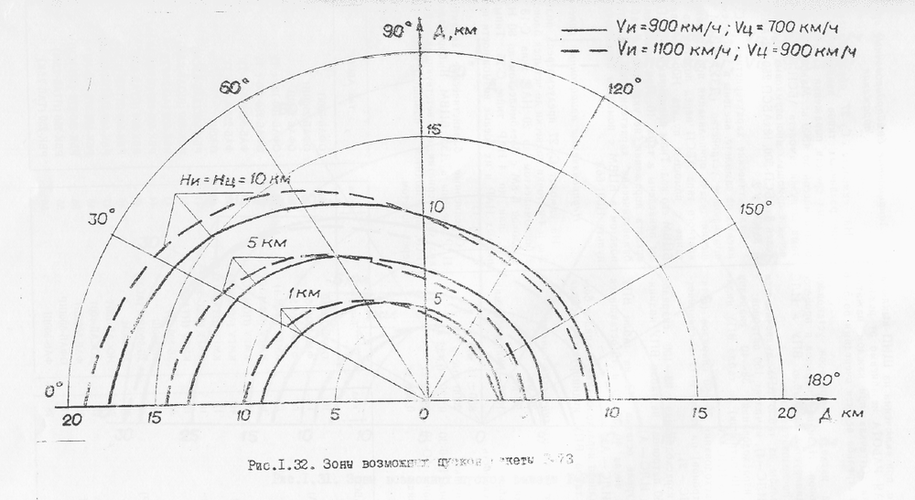
I need some speed vs time and dynamic launch zone charts for original R-27R and R-27T. I can only find R-27ER speed vs time charts in all my internet searches on ED forums, War Thunder forums, and multiple Discords. I'd like to know how different the top speeds would differ between the R-27R and ER at different points in time. As well as how much difference in km to hit a fighter with these given conditions. I don't have access to the Moscow Aerodynamics Institute paper. For reference, this is what I've found below.
1 and 2 are DLZ of R-27ER against moving aircraft from 0-800m/s at 1, 5 and 10km altitudes.
3 is the speed vs time of the R-27ER at 5, 10, 15, and 20km altitudes.
4 is the War Thunder R-27ER chart when launched at Mach 2 based on the MAI data.
I can't do the math myself, so if anyone can perform the calculations, it would be much appreciated!
1 and 2 are DLZ of R-27ER against moving aircraft from 0-800m/s at 1, 5 and 10km altitudes.
3 is the speed vs time of the R-27ER at 5, 10, 15, and 20km altitudes.
4 is the War Thunder R-27ER chart when launched at Mach 2 based on the MAI data.
I can't do the math myself, so if anyone can perform the calculations, it would be much appreciated!
Attachments
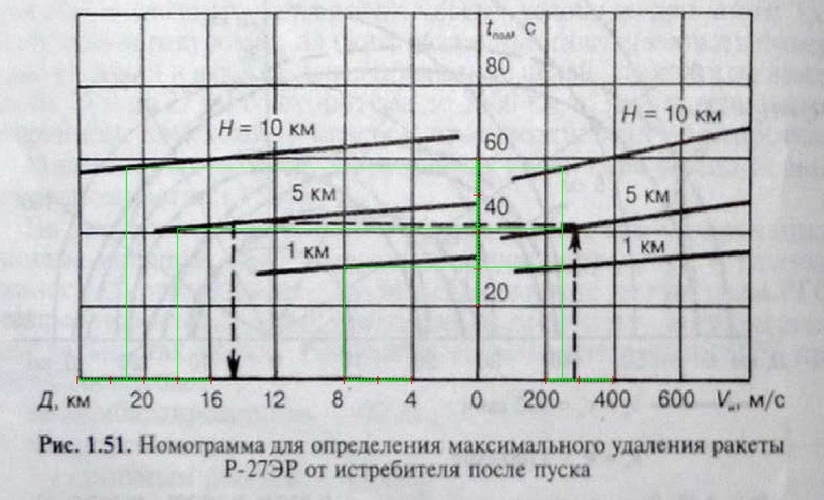
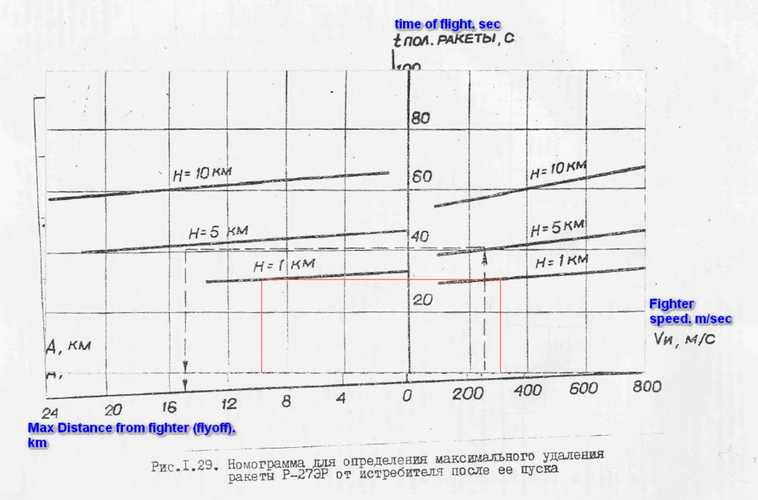
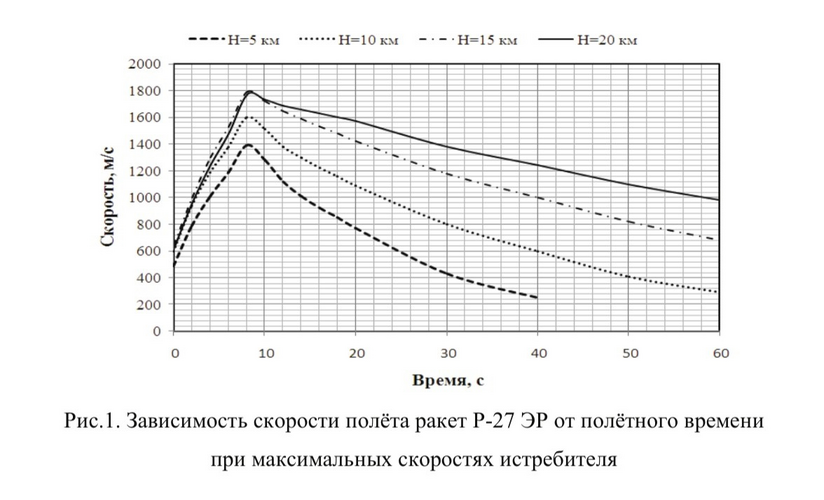
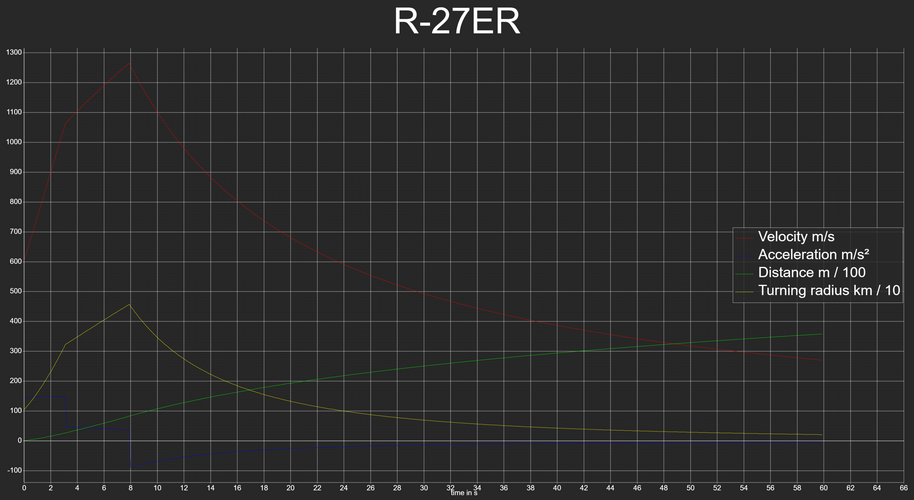
There you goI need some speed vs time and dynamic launch zone charts for original R-27R and R-27T. I can only find R-27ER speed vs time charts in all my internet searches on ED forums, War Thunder forums, and multiple Discords. I'd like to know how different the top speeds would differ between the R-27R and ER at different points in time. As well as how much difference in km to hit a fighter with these given conditions. I don't have access to the Moscow Aerodynamics Institute paper. For reference, this is what I've found below.
1 and 2 are DLZ of R-27ER against moving aircraft from 0-800m/s at 1, 5 and 10km altitudes.
3 is the speed vs time of the R-27ER at 5, 10, 15, and 20km altitudes.
4 is the War Thunder R-27ER chart when launched at Mach 2 based on the MAI data.
I can't do the math myself, so if anyone can perform the calculations, it would be much appreciated!
Attachments
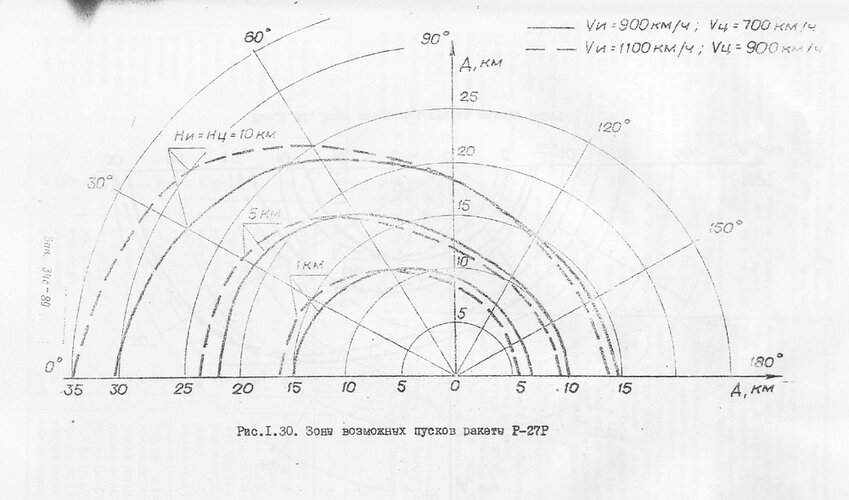
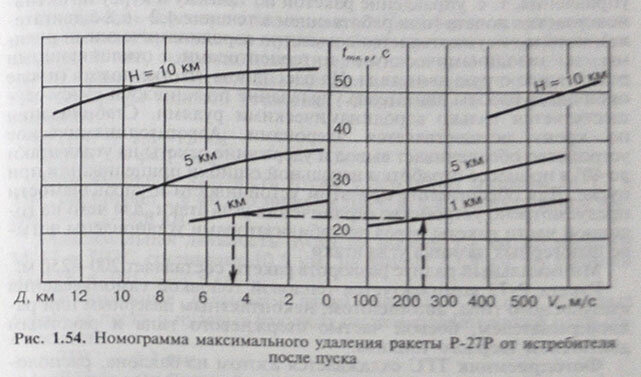
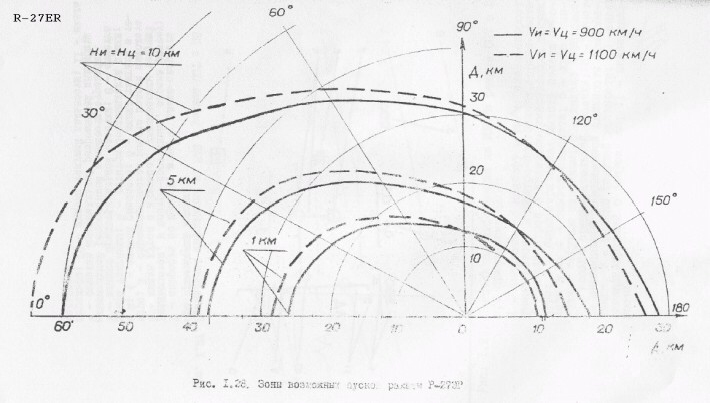
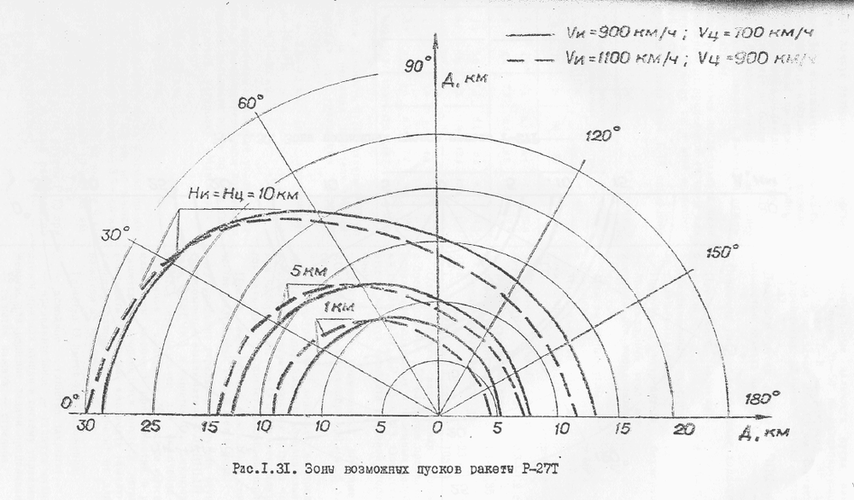
I need some speed vs time and dynamic launch zone charts for original R-27R and R-27T. I can only find R-27ER speed vs time charts in all my internet searches on ED forums, War Thunder forums, and multiple Discords. I'd like to know how different the top speeds would differ between the R-27R and ER at different points in time. As well as how much difference in km to hit a fighter with these given conditions. I don't have access to the Moscow Aerodynamics Institute paper. For reference, this is what I've found below.
1 and 2 are DLZ of R-27ER against moving aircraft from 0-800m/s at 1, 5 and 10km altitudes.
3 is the speed vs time of the R-27ER at 5, 10, 15, and 20km altitudes.
4 is the War Thunder R-27ER chart when launched at Mach 2 based on the MAI data.
I can't do the math myself, so if anyone can perform the calculations, it would be much appreciated!
Thanks for sharing your findings. Have a few questions:
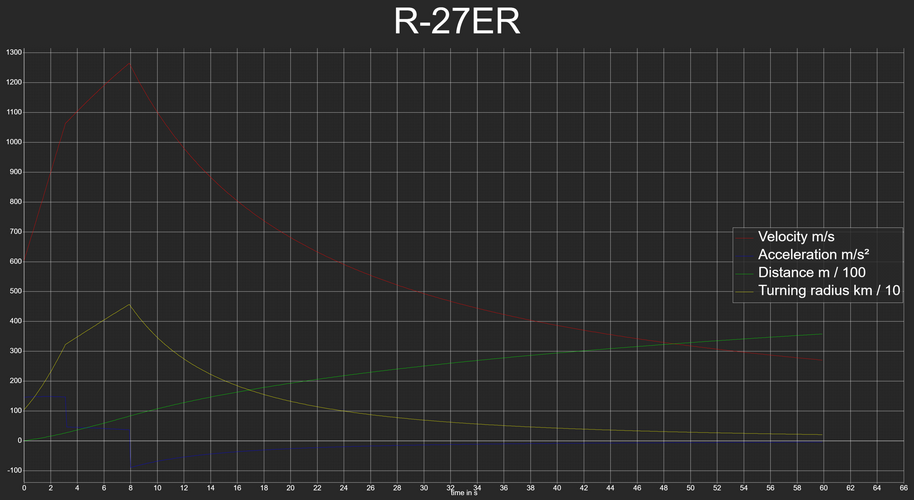
1) Can you please change its background color to white? Hard to see acceleration line here.
2) Is it correct that velocity here is the sum of three velocity vectors Vx, Vy, Vz?
3) Does the R-27ER do loft - climb and then dive on to the target - maneuver? If so, is it correct that Vz in the first half would be positive (climb) and the latter half would be negative (dive)?
Many thanks in advance.
goldmastersims
ACCESS: Restricted
- Joined
- 21 March 2023
- Messages
- 9
- Reaction score
- 27
Thanks for sharing your findings. Have a few questions:
View attachment 715998
1) Can you please change its background color to white? Hard to see acceleration line here.
2) Is it correct that velocity here is the sum of three velocity vectors Vx, Vy, Vz?
3) Does the R-27ER do loft - climb and then dive on to the target - maneuver? If so, is it correct that Vz in the first half would be positive (climb) and the latter half would be negative (dive)?
Many thanks in advance.
1. No, I cannot. The author of this chart is a user named "MiG-23M" on the War Thunder forums.
2. Yes, this is the sum of all velocity vectors.
3. No, R-27ER does not automatically loft. Any lofts would have to be manually performed.
can you share your cumbersome job here pleasetake a screenshot of the screen, paste to Yandex(better than google translate imo) and voilà. That's how I've managed to read it, cumbersome but does the job.

F-2
ACCESS: Top Secret
- Joined
- 22 May 2020
- Messages
- 1,189
- Reaction score
- 2,571
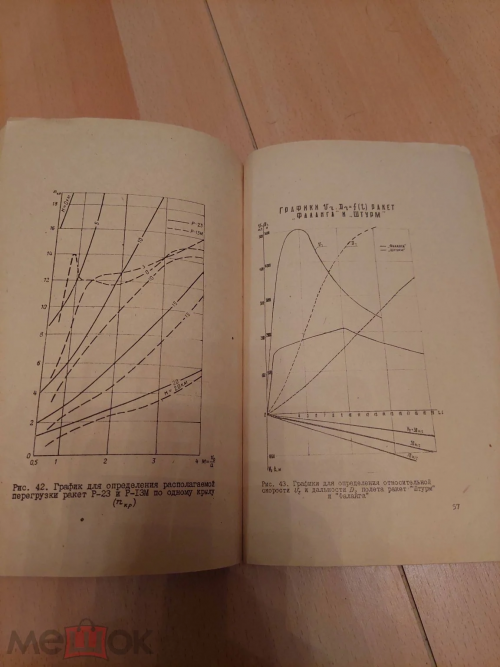
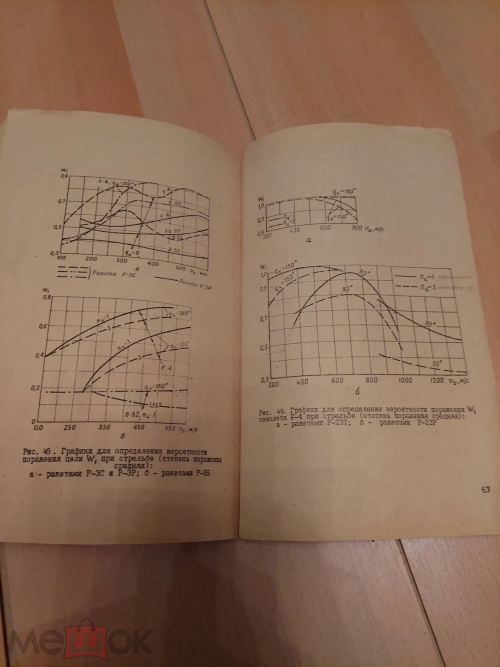
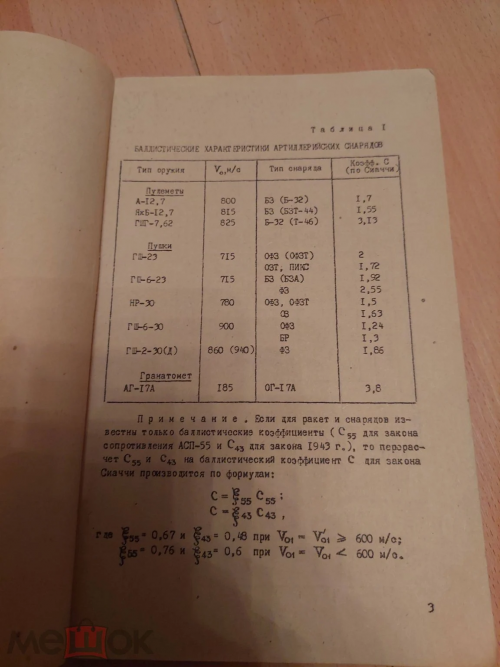
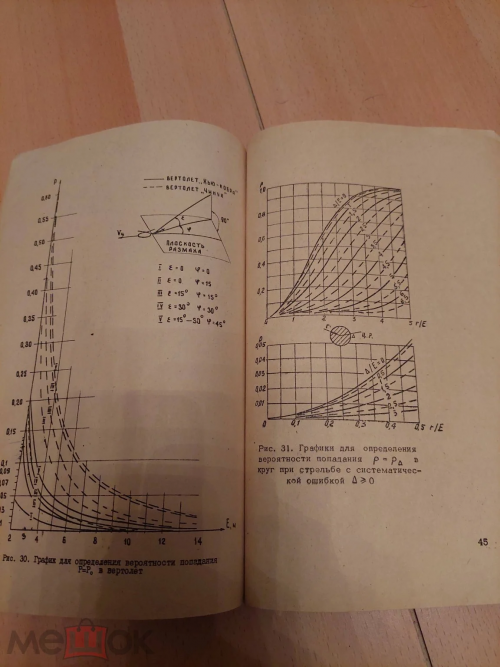
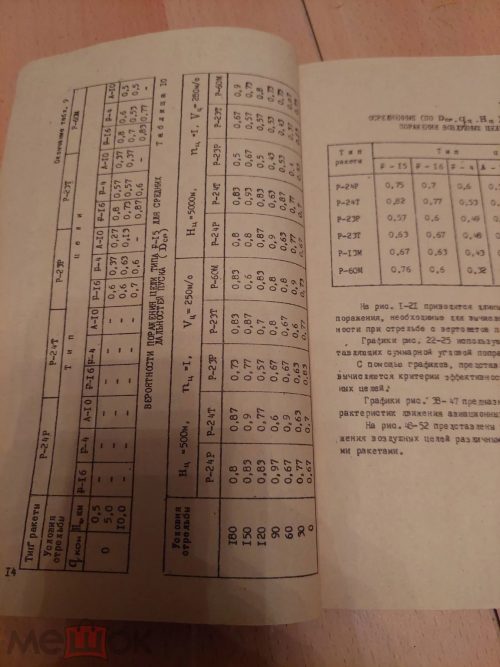
User “Mig-23m” from the warthunder brought this to my attention. To expensive for me.
https://meshok.net/en/item/330005391_Справочные_материалы_для_расчетов_по_боевому_применению_АСП
https://meshok.net/en/item/330005391_Справочные_материалы_для_расчетов_по_боевому_применению_АСП
Attachments

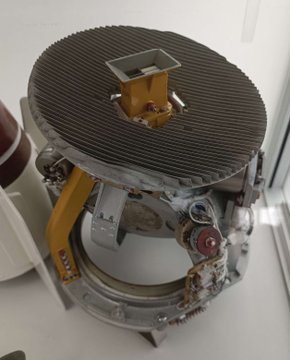
Came across these R-23R seeker pictures, not sure if they show anything new that hasn't been shown on previous seeker pictures.


View: https://x.com/Kubojd/status/1916124864521666990
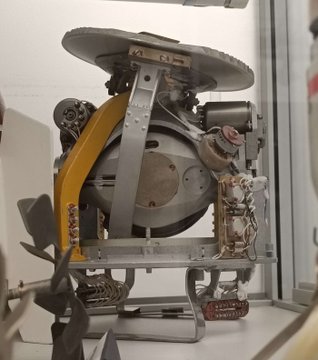
View: https://x.com/Kubojd/status/1916124864521666990

0minutes
ACCESS: Restricted
- Joined
- 13 January 2025
- Messages
- 17
- Reaction score
- 11
Can the MiG-29 9.12(A) using the N019 radar & the Ts100.02.06 computer carry the R27ER/ET? I know it can carry the R27R but from viewing many souces its uniformally agreed that the N019 radar & the Ts100.02.06 computer were either not powerful enough or incompatible with the Extended Range Family of the R27 AAM as well as manuals only starting to mention the R27ER on the MiG-29s with the upgraded radars N019M and the new Ts101M computer.


Can the MiG-29 9.12(A) using the N019 radar & the Ts100.02.06 computer carry the R27ER/ET? I know it can carry the R27R but from viewing many souces its uniformally agreed that the N019 radar & the Ts100.02.06 computer were either not powerful enough or incompatible with the Extended Range Family of the R27 AAM as well as manuals only starting to mention the R27ER on the MiG-29s with the upgraded radars N019M and the new Ts101M computer.
View attachment 770722
No, it can not. Btw, MiG-29A/B ( 9.12A/B ) as export versions of the MiG-29 Izd. 9.12 ( for ex-WP countries or non-WP countries) have N019E ( EA/EB) 'Rubin-E' and can only use R-27R1 ( of course export version of the R-27R).
In fact ,MiG-29S ( 9.13S) with N019M 'Topaz'and with Ts101M can carry long-range AAM's type R-27ER/ET. As we could see, UkrAF MiG-29 ( 9.13) also can carry R-27ER.
0minutes
ACCESS: Restricted
- Joined
- 13 January 2025
- Messages
- 17
- Reaction score
- 11
Thanks. I just wanted to know if there was a specific reason, even with the N019. I've read that it was because they changed the seeker frequency after the N019 radar got compramised, just wanted to fact check it. Thank you though.No, it can not. Btw, MiG-29A/B ( 9.12A/B ) as export versions of the MiG-29 Izd. 9.12 ( for ex-WP countries or non-WP countries) have N019E ( EA/EB) 'Rubin-E' and can only use R-27R1 ( of course export version of the R-27R).
In fact ,MiG-29S ( 9.13S) with N019M 'Topaz'and with Ts101M can carry long-range AAM's type R-27ER/ET. As we could see, UkrAF MiG-29 ( 9.13) also can carry R-27ER.
Thanks. I just wanted to know if there was a specific reason, even with the N019. I've read that it was because they changed the seeker frequency after the N019 radar got compramised, just wanted to fact check it. Thank you though.
You are welcome.
You must know that N019 ( for the Soviet MiG-29 9.12/9.13) and N019E (in the exported MiG-29A/B) have many differences ,from the working frequencies in the search/lock-on/CWI ( on Russian: SNP-RNP-DNP) combat modes, to the number of possible working frequencies in them. Also what is little known,N019 had/has almost 20 different Bulletins for the upgrading,modifications etc... ( especially when it comes to the degree of the jamming resistance) , N019E had only 5 or 6 ,no more then that.
0minutes
ACCESS: Restricted
- Joined
- 13 January 2025
- Messages
- 17
- Reaction score
- 11
So the R27ER woud not be compatible with the N019 radar? Since its seeker operated on a different frequency as the N019MYou are welcome.
You must know that N019 ( for the Soviet MiG-29 9.12/9.13) and N019E (in the exported MiG-29A/B) have many differences ,from the working frequencies in the search/lock-on/CWI ( on Russian: SNP-RNP-DNP) combat modes, to the number of possible working frequencies in them. Also what is little known,N019 had/has almost 20 different Bulletins for the upgrading,modifications etc... ( especially when it comes to the degree of the jamming resistance) , N019E had only 5 or 6 ,no more then that.
So the R27ER woud not be compatible with the N019 radar? Since its seeker operated on a different frequency as the N019M
As I wrote earlier, long-range R-27ER can be used with N019 in the MiG-29 ,9.13 e.g. ( we could see that from the ukr. example).Of course, there was some modifications.
https://www.twz.com/ukrainian-mig-29-blasts-russian-drone-in-new-cockpit-video
0minutes
ACCESS: Restricted
- Joined
- 13 January 2025
- Messages
- 17
- Reaction score
- 11
Well, im interested in the non-modified ones, as ukraine tweaked their radars to be compatible with the ER.As I wrote earlier, long-range R-27ER can be used with N019 in the MiG-29 ,9.13 e.g. ( we could see that from the ukr. example).Of course, there was some modifications.
https://www.twz.com/ukrainian-mig-29-blasts-russian-drone-in-new-cockpit-video
Well, im interested in the non-modified ones, as ukraine tweaked their radars to be compatible with the ER.
MiG-29 ( 9.12/9.13) with N019 can not use R-27ER w/o some modifications. That's for sure.

Aeria Gloria
ACCESS: Secret
- Joined
- 8 February 2024
- Messages
- 413
- Reaction score
- 479
I found this mention of a software update in a MiG-29 manual for 9.12/9.13 that sounds like it adds R-27ER use. What do you think?MiG-29 ( 9.12/9.13) with N019 can not use R-27ER w/o some modifications. That's for sure.
“
FEATURES OF USING SUV WITH BZPP-4 AND BZPP-4A BLOCKS Or
BZPP-4D
1. The MIG-29 aircraft, which has a control system with the BZPP-4 permanent memory storage units in the RLPK and BZPP-4A in the OEPRNK, has the following main differences from the MIG-29 aircraft, which has a control system with the BZPP-ZD units in the V RLPK and BZPP-4 in the OEPRNK:
additionally provides generation of target designation parameters and one-time commands for R-27ER missiles (ET, EP)
accelerated adjustment of R-27R (ER) missiles to the radar illumination letter by the pilot on the ground in the air is possible in a time of no more than 70 s
-symbols 27ER and 73U were introduced (the presence of R-27ER missiles and R-73U training missiles)”
This software update also includes things like KMOD and many radar figures that we see present in many MiG-29 manuals by atleast 1989
https://www.secretprojects.co.uk/threads/mig-29-avionics.102/page-5#post-790410
Aeria Gloria
ACCESS: Secret
- Joined
- 8 February 2024
- Messages
- 413
- Reaction score
- 479
I don’t know about the change, but I suspect their desires for a modular missile override the success of R-24, which would not work for modularity with its control section attached to the rocket motor.Is there a basic explanation for why the Soviets so quickly moved from the general design of the R-23/24 to the R-27? It seems to me like an upgraded variant of the R-24 could have probably done everything the R-27 did.
Why did the Soviets elect to use those trapezoidal control fins that get wider further from the missile on the R-27?
The butterfly wings are there because when testing sparrow and sparrow derivatives they found a design flaw. The fact that any wing or lifting surface curves and deflects the air behind it. So if the wing on sparrow would deflect, it would curve the air around the tail causing a lift force that partially negated the turning force. Same aerodynamics of why lowering flaps often causes a pitch up because of the down wash of Curved air onto the elevator/stabilizer.
So with the butterfly wings and HIGHLY sweet tail, you maximize the distance between the trailing edge of the wing and the leading edge of the tail portion directly behind it. This way you minimize this aerodynamic effect, allowing it to turn more efficiently.
Which is one advantage of R-27 over R-24, and-24 needs to produce a force opposite lift to turn. The R-27 wings are producing lift only in the direction of turn and complementing the lift of the tail and destabilizers.
The only thing I don’t get about R-27 is why increase the diameter so much. Unless it was about trying to fit 2x the E variant into the tunnel of the Su-27. The E variant is already just barely fitting onto the main wing pylon of the MiG-29, with the flap stopping right above the tail.
I found this mention of a software update in a MiG-29 manual for 9.12/9.13 that sounds like it adds R-27ER use. What do you think?
“
FEATURES OF USING SUV WITH BZPP-4 AND BZPP-4A BLOCKS Or
BZPP-4D
1. The MIG-29 aircraft, which has a control system with the BZPP-4 permanent memory storage units in the RLPK and BZPP-4A in the OEPRNK, has the following main differences from the MIG-29 aircraft, which has a control system with the BZPP-ZD units in the V RLPK and BZPP-4 in the OEPRNK:
additionally provides generation of target designation parameters and one-time commands for R-27ER missiles (ET, EP)
accelerated adjustment of R-27R (ER) missiles to the radar illumination letter by the pilot on the ground in the air is possible in a time of no more than 70 s
-symbols 27ER and 73U were introduced (the presence of R-27ER missiles and R-73U training missiles)”
This software update also includes things like KMOD and many radar figures that we see present in many MiG-29 manuals by atleast 1989
https://www.secretprojects.co.uk/threads/mig-29-avionics.102/page-5#post-790410
That is right but we must keep on mind that there is very important to know some details about so called 'Liter' codes/programs. So called ''ЛИТЕР РЛС'' and ''ЛИТЕР 27'' for the 'ER' version only existed in the N001 Myech radar for the Su-27S,P and UB (UBP) and also for the exported SK/UBK versions. 'Original' N019 did not have something like this.
Btw ,what does bolded mean anywhy? Combat mode DNP (CWI) lasts for max 60/70 sec ,depending on
in/complete instrument indication.
KMOD is btw ''кинематическо определения дальности (КМОД)'' ( kinematic range determination).
Aeria Gloria
ACCESS: Secret
- Joined
- 8 February 2024
- Messages
- 413
- Reaction score
- 479
I do not know why it is 70 seconds, that is just what it says. What do you mean by ЛИТЕР?That is right but we must keep on mind that there is very important to know some details about so called 'Liter' codes/programs. So called ''ЛИТЕР РЛС'' and ''ЛИТЕР 27'' for the 'ER' version only existed in the N001 Myech radar for the Su-27S,P and UB (UBP) and also for the exported SK/UBK versions. 'Original' N019 did not have something like this.
Btw ,what does bolded mean anywhy? Combat mode DNP (CWI) lasts for max 60/70 sec ,depending on
in/complete instrument indication.
KMOD is btw ''кинематическо определения дальности (КМОД)'' ( kinematic range determination).
I do not know why it is 70 seconds, that is just what it says. What do you mean by ЛИТЕР?
I will check the detail about using so called 'НПО' and 'ППО' modes.
'ЛИТЕР' means using special codes and programes for pairing on-board radar and missile with radar seekers only. 'Pairing' them that can be used working frequencies in DNP ( CWI ) mode.
Last edited:

Шурави1983
ACCESS: Confidential
- Joined
- 12 May 2025
- Messages
- 64
- Reaction score
- 64
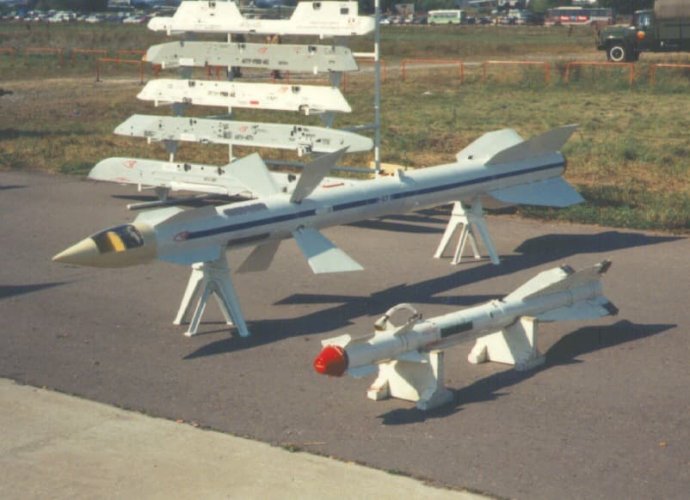
First, RVV-AE is with a planar array antenna.Re: R-27 AAM
I saw one source that said RVV-AE seeker was monopulse and another (Military Parade!) that said it was conical scan. I think this is another one of those situations where some authors don't know what they are saying. I agree with overscan, they are both almost certainly monopulse.
Usually, the tracking is done by scanning with a single beam and sampling 2 angular positions ,simulating the monopulse method.
But, still, the planar-array antenna can be divided into 4 sub-antenna, with every array with a fixed phase/path difference, each sub-antenna with a fixed direction, similar to phase-ESA.
Everything is similar after that.


Шурави1983
ACCESS: Confidential
- Joined
- 12 May 2025
- Messages
- 64
- Reaction score
- 64
Yep, phase difference does exist but negligibleRe: R-27 AAM
I think it wouldn`t work when all four antennas were passive. There has to be at least one transmitter on the board. The phase mono-pulse principle assumes that you have transmitter/receiver on the same place. If the aircraft radar was used for illuminating the target, those four antennas on the missile would receive "incorrect" phase signals to track the target.
Aeria Gloria
ACCESS: Secret
- Joined
- 8 February 2024
- Messages
- 413
- Reaction score
- 479
R-77 was considered enough, and we need to realize even R-77 was not adopted by RuAF until 2015 when R-77-1 was. It was just seen as not important enough apparently.
We have range graphs for it so it was apparently tested, but it must’ve been the case that MOD did not want to purchase/finance production or that it would have been more profitable for export then R-27ER/ET. In 90s R-27ER/ET were still relatively new on export market and I assume anyone that would’ve bought AE was already buying ER/ET.
We have range graphs for it so it was apparently tested, but it must’ve been the case that MOD did not want to purchase/finance production or that it would have been more profitable for export then R-27ER/ET. In 90s R-27ER/ET were still relatively new on export market and I assume anyone that would’ve bought AE was already buying ER/ET.
F-2
ACCESS: Top Secret
- Joined
- 22 May 2020
- Messages
- 1,189
- Reaction score
- 2,571
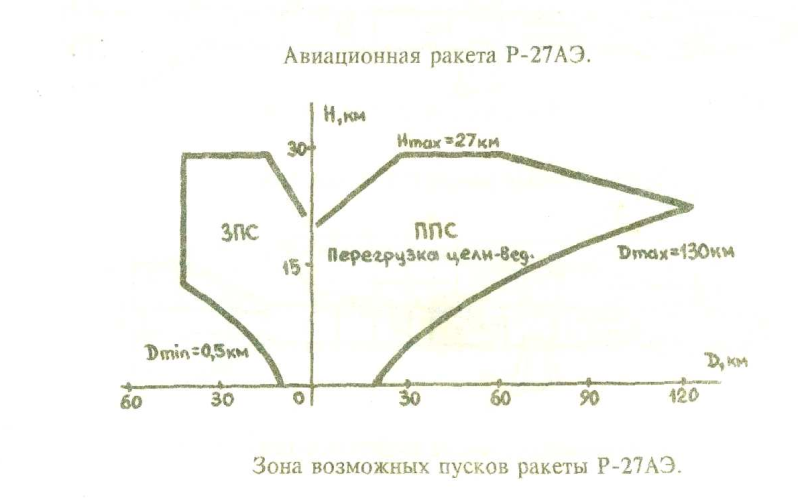
Can I see the graphs?R-77 was considered enough, and we need to realize even R-77 was not adopted by RuAF until 2015 when R-77-1 was. It was just seen as not important enough apparently.
We have range graphs for it so it was apparently tested, but it must’ve been the case that MOD did not want to purchase/finance production or that it would have been more profitable for export then R-27ER/ET. In 90s R-27ER/ET were still relatively new on export market and I assume anyone that would’ve bought AE was already buying ER/ET.
Aeria Gloria
ACCESS: Secret
- Joined
- 8 February 2024
- Messages
- 413
- Reaction score
- 479
In terms of range and shape it’s either equal to an imperfectly hand drawn 27ER graph, or slightly different. Either way, 27ER has the same absolute maximum rangeCan I see the graphs?
Attachments
Ainen
I really should change my personal text
- Joined
- 25 August 2011
- Messages
- 2,819
- Reaction score
- 4,924
Same as dozens of similar late Soviet projects: money and dissolution of the Soviet Union.Anyone know why the R-27EA never materialized?
Note that Ukrainian part was important for seekers, as R-27AE didn't truly die there until late 2010s(Ukraine tried to make it into SAM together with Poland).
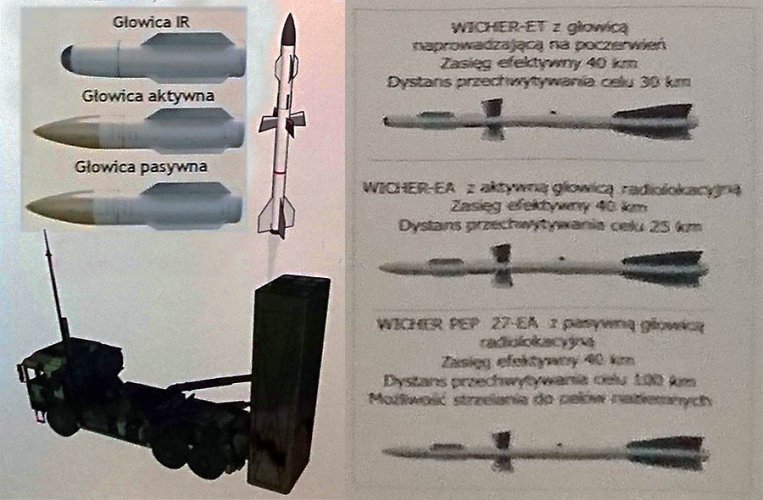
Furthermore, at least until 2000s 3(6 including E) R-27s were seen as good enough for the sorry state of economy.
In terms of range and shape it’s either equal to an imperfectly hand drawn 27ER graph, or slightly different. Either way, 27ER has the same absolute maximum range
There is one catch in that story about 130 km as the max launch distance for the 350 kg heavy R-27ER. Yes but when you launch her from MiG-29 or Su-27 which radars have max detect/track distance in the HPRF mode of 150km.
Example and comparison, MiG-29 can launch R-27R from the max launch range of 90km ,launch parameters H=16km ,Vtrue > 1 M. Now dual-stage engine R-300E in the R-27ER is 100% heavier then single-stage engine R-300 in the R-27R. Launch distances for the R-27ER attached on Su-30SM/SM2 and Su-35S can be much greater ( much greater detect/track distances in HPRF mode e.g. ,stronger signals in DNP mode etc ).
Aeria Gloria
ACCESS: Secret
- Joined
- 8 February 2024
- Messages
- 413
- Reaction score
- 479
As far as i know the 130 km launch is for 16-17 k and Mach 2 speed against Mach 2 target. So speed would need to exceed this to exceed 130 km within the 60 second battery of 27ER
As far as i know the 130 km launch is for 16-17 k and Mach 2 speed against Mach 2 target. So speed would need to exceed this to exceed 130 km within the 60 second battery of 27ER
E.g. one Su-27S can launch R-27ER from 18km of height and with max Mach number 2.2. As we know ,N001 Myech has max detect/track distance in the HPRF working mode of its TWT or PPS combat mode of 150km. That can be max detect range/distance. Lock-on distance can be 70-80% of the detection distance.Speed of the target is not so important here ,something else is and that is height.
You have about 350kg heavy AAM with the great kinematic/energetic potential where only booster weighs 100kg and with max thrust of 7500 kgf, awesome.
But what are limiting factors in this story? First ,it is radar itself with only 150km of max detection distance in the HPRF mode. Then it is its RC-channel with only 50km of max distance from the antenna with the signals via the sidelobe. Then it is that DNP mode which is limited to 60 sec for illumination of the engaged target. There is no limitation of 60sec from batteries.
With the more powerful radars like N011M Bars-M and especially with the N035 Irbis ,R-27ER has much greater launch distances 'cause those radars have much greater detection distances ,RC-channels have 100km range and DNP mode lasts more. But why R-27ER then do not have any or very little perspective? Reasons are: it is AAM with analogue connections, it hasn't newer BINS ( as strapdown INS), have older SARH ,today easier to jamm. For comparison, newer R-37M and R-77-1 have also SARH or combined ARH-SARH in the terminal phase but much more advanced.
Last edited:
- Joined
- 27 December 2005
- Messages
- 19,225
- Reaction score
- 35,635
The main reason the initial MiG-29 didn't use R-27ER was it rarely acquired the target far enough away to make use of the longer range. However, the improved kinematics of the R-27ER in a tailchase for example are still beneficial.
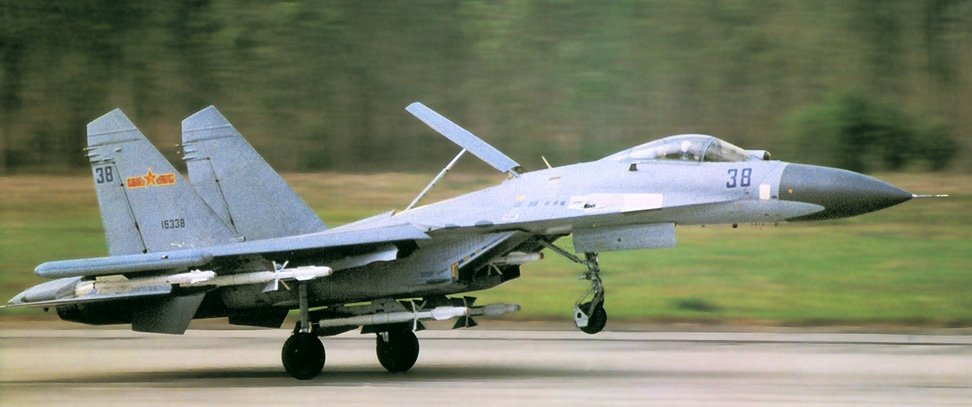
The main reason the initial MiG-29 didn't use R-27ER was it rarely acquired the target far enough away to make use of the longer range. However, the improved kinematics of the R-27ER in a tailchase for example are still beneficial.
Exactly first tnx to radar N019 Rubin with smaller twist Cassegrain antennas in comparison with antennas of N001 Myech. Comparison , incoming MiG-21 with 3sqm of frontal RCS, N019 can detect it from 60km and N001 from 90km, so it has 50% greater detection distance.
Then that was because of the demands of the 'Frontal aviation' where MiG-29 was to be and it was light fighter with much smaller tactical/combat range in comparison with Su-27S which was of course heavy FA-fighter. So for the MiG-29 it was planned to fly low ,in the troposphere ,lower than Su-27.
When we look now from the 35 years of time distance ,MiG-29 were positioned in the front-line units in the former East Germany ( 8 regiments in the 16 VA VVS-FA) with the main tasks to protect light tactical bombers and assault aircraft where only two R-27R would be used for medium range BVR but the main weapon would be of course that deadly 'HMS+R-73 combo' in WVR combat together with the excellent maneuverability and agility.
That was only for the VVS-FA but what about the air forces which acquired export versions of the MiG-29 ( 9.12A/B) ? For most of them, practically MiG-29 became the premier,main fighter-interceptor. With only two medium range AAM's that was not so good solution.We know that Iraqies e.g. tried to integrate additional two R-27R1. Russians tried to export its version which could carry max four R-27R1 ...
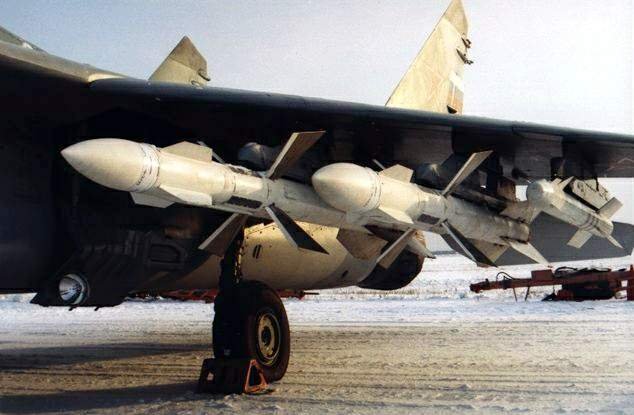
On the other side, Su-27's served in two regiments in Poland ( 4 VA VVS-FA) with the main task to cover and protect heavy frontal/tactical bomber and recce aircraft and for the long range BVR flying in stratosphere.Thus, K/R-27E was from the beginning developed and constructed only for the heavy long range VVS-FA fighter Su-27S and UB also 'cause its double seater has radar .In contrary MiG-29UB never had it. It's simple ,higher flight alt-greater launch distances. If Su-27S would be in situation for the WVR,like lighter MiG-29,he also has excellent maneuverability and agility together with HMS+R-73 combo.Same thing is for Su-27P/UBP in the Av-PVO .
As light VVS-FA fighter MiG-29 ( 9.12/9/13) never had all aspect IRST/KOLS,Izd 13S , btw which can detect/track only receding aircraft ,so in the rear hemisphere with max detect distance 25 km.MiG-29 also never had tactical fighter to fighter data-link. That was the reason why basic MiG-29 never carried IR guided R-27T.
I've found several pics of the Algerian AF MiG-29SE with R-27T1.Question is ,which version of KOLS they got? Izd 13SM or all aspect SM-1? If their SE have basic KOLS Izd 13S ,R-27T1 can be launched by radar N019ME ,by KOLS only in the rear hemisphere and in the combat mode known as 'φ0' .
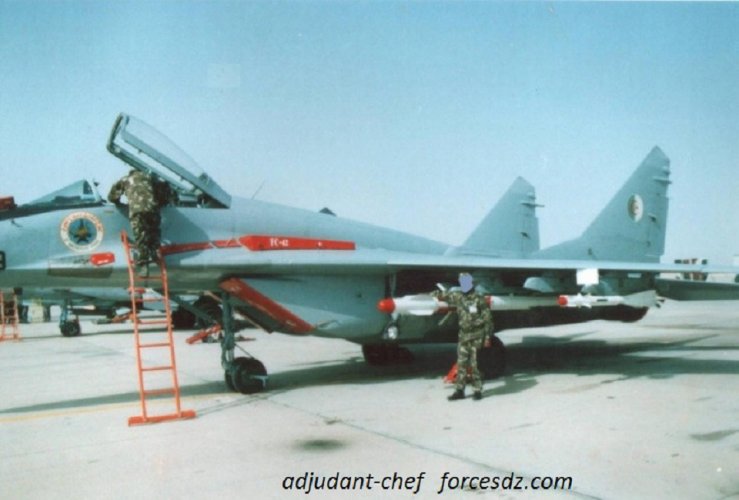
Su-27S/P/UB/UBP of course had/have all aspect IRST OLS-27 ( max detection distance for the receding fighter flying on MP mode in the rear hemisphere in the clear sky and medium/high alt with angle aspect 0/4-2/4=50km, max detection distance for the incoming fighter flying in Full AB mode in the front hemispere with angle aspect 1/4=100km).They have tactical fighter to fighter data-link etc.
Interestingly ,with IR guided R-27T ,Su-27 can achieve launch distances max 30-50km (troposphere-stratosphere) and with R-27ET max 50-70km (troposphere-stratosphere), in the front hemisphere during BVR combat.
In the rear hemisphere : R-27T =5km max ( troposphere ) ,10km max ( stratosphere), R-27ET= 10-15km (tropo...) ,20-25 km (strato...). Inertial-radar guided R-27ER = 15-17 km ( tropo...) in the rear hemi...
As we can see, UkrAF MiG-29 ( 9.13) can also carry R-27ER.
Last edited:
Similar threads
-

-
 Vladimir Sergeevich Ilyushin 31-03-1927 - 01-03-2010
- Started by flateric
- Replies: 4
-
Alternate uses of PVO interceptors
- Started by Monk78
- Replies: 19
-

-
Article Related to Some of Russian Air Launched Missile Programme
- Started by ocay
- Replies: 4