Mars reconnasisance
First helicopter on another planet could
glow in the dark
Jonathan O'Callaghan
Nasa is about to fly a helicopter on Mars, and it turns
out that its rotors could glow in the dark.
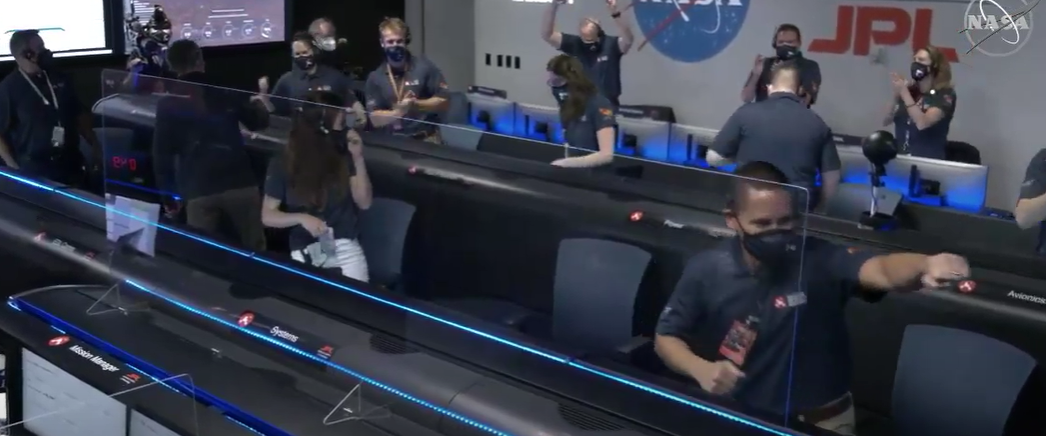
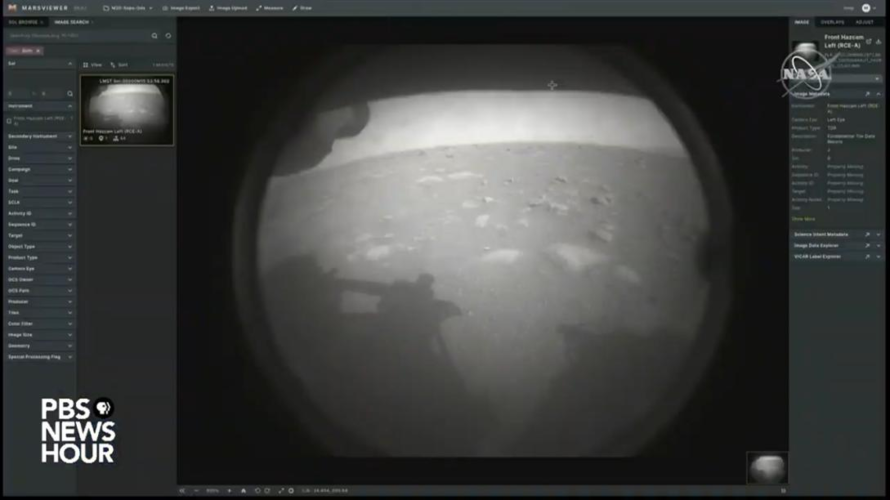
A few weeks after the Perseverance rover lands on Mars
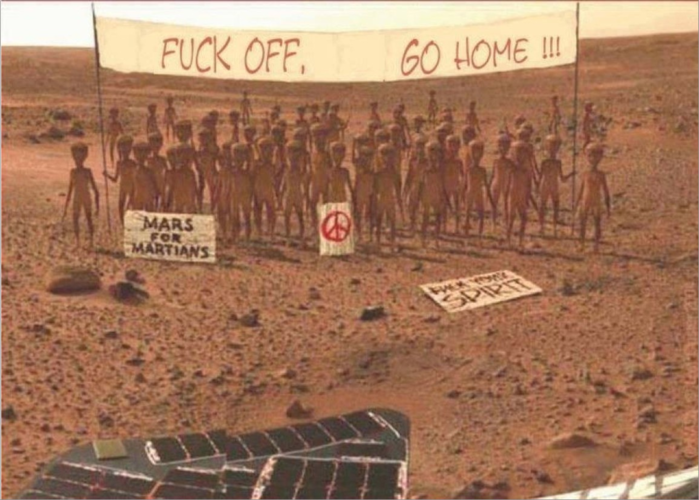
(see "Martian Invasion", left) it will deploy a 0.5-metre-
high drone called Ingenuity.
The drone will conduct up to five flights in a 30 day
window. Each will increase in duration, to a maximum
of about 90 seconds.
William Farrell at NASA's Goddard Space Flight Center
in Maryland and his colleagues say the flights, which
are a technical demonstration, also afford a unique
scientific opportunity. The low atmospheric pressure
on Mars, coupled with its dusty environment and carbon
dioxide-rich atmosphere, could produce an electric
charge on the blades strong enough to break down
atmospheric moecules, says the team (arxiv.org/abs/2102.
04181).
Modelling this breakdown in the lab showed that it is
unlikely to damage Ingenuity, but could be visible at
take-off and landing in low light, producing a soft glow
or "corona" on the blades. Something similar, known
as the Kopp-Etchells effect, can happen to helicopters
on Earth.
"We suggest that operations occur once at twilight so
that any corona-like glow [can] be observed by
Perseverance in the low light environment," the team
writes.
Perseverance will use its cameras to record Ingenuity's
flights, so might be able to see this effect. Joshua Ravich
at NASA's Jet Propulsion Laboratory in California, the
helicopter's mechanical engineering lead, says the team
hasn't yet decided whether to attempt a flight at twilight.
"We think that would be pretty interesting to see," he says.
"Unfortunately, we are mostly planning to fly mid-morning
because of better wind conditions and thermal conditions."
Even if a twilight flight was tried, Perseverance's cameras
might not be sensitive enough to see the effect. "But it
would be pretty cool," says Ravich.
New Scientist, Special Issue, 20th February 2021