Germany cant do it alone cuz cant build a new engine and other lack of experience. France can build a 6 gen fighter alone but lack $$$$ to do so.. so they will do it together.

Neither has particularly more or less experience than the other (Neuron, LOUT, Mako etc). All things considered they're pretty equal due to Dassault, Airbus, Safran and MTU among others. Both couldn't fund such a program alone, which is the actual reason they committed to a joint development. Together with Franco-German political cooperation in general tbh.
 
Last edited:
Neither has particularly more or less experience than the other. All things considered they're pretty equal due to Dassault, Airbus, Safran and MTU among others.
France built Mirage series and Rafale "in house" with all the critical parts developed/built in France. Germany have not built a fighter in house since ww2. Especially engines are critical.. just ask the Chinese and russians.. Safran can build a modern jet engine. MTU? Dont think they can build a modern engine from scratch.
 
Last edited:
Germany cant do it alone cuz cant build a new engine and other lack of experience. France can build a 6 gen fighter alone but lack $$$$ to do so.. so they will do it together.
Sure France can build a 6th gen the problem is the money , Germany have the money but the man who pay want to be the leader And at the end Germany wil buy F-35 and may be the enhanced F-35 instead of FCAS , you will see.... Keep my words realy. France will never buy F-35 so the French Air Force will stay with 4th gen fighters for decade. Germany have no problem to buy F-35 and they have reason.
 
Sure France can build a 6th gen the problem is the money , Germany have the money but the man who pay want to be the leader And at the end Germany wil buy F-35 and may be the enhanced F-35 instead of FCAS , you will see.... Keep my words realy. France will never buy F-35 so the French Air Force will stay with 4th gen fighters for decade. Germany have no problem to buy F-35 and they have reason.
Source: Trust me bro....
 
France built Mirage series and Rafale "in house" with all the critical parts built in France. Germany have not built a fighter in house since ww2. Especially engines are critical.. just ask the Chinese and russians.. Safran can build a modern jet engine. MTU? Dont think they can build a modern engine from scratch.
Germany participated fundamentally in the developments of several aircraft, like the Tornado or Eurofighter for example. MTU has played a big role in the development of the Eurojet, together with RR. Germany also had some very fascinating technology demonstrators and studies, lik like VJ101 or other VTOL efforts, the Lampyridae or TDEFS in the direction of stealth aviation. France usually went on their own for political reasons. As Europe is emblematic with regards to joint developments France has participated and dropped out of many such developments. They tend to drop out if the workshare distribution isn't satisfactory for them. If they are satisfied, they're more than happy to participate in joint development to cut costs. Sixth generation fighters are projected to be so complex, expensive and cutting edge, France couldn't hope to fund it on their own. Especially not with several other high profile programs eating into their budget. The cost and timetables aircraft development have fundamentally changed. And docile European economies cannot handle this individually.

So no, France couldn't develop FCAS on their own. Neither can Germany however. If France were to develop something on their own that cost and timeline restrictions would result in a 5th generation aircraft with extra steps. That would be a tough sell in a world filled with F-47, GCAP, J-36, you name them.

If the UK couldn't develop GCAP on their own, I don't see how anyone could believe France could pull off FCAS on their own. Especially given that the UK at least participated in JSF and thus has some experience with genuine stealth aircraft.
 
Germany participated fundamentally in the developments of several aircraft, like the Tornado or Eurofighter for example. Germany also had some very fascinating technology demonstrators and studies, lik like VJ101 or other VTOL efforts, the Lampyridae or TDEFS in the direction of stealth aviation. France usually went on their own for political reasons. As Europe is emblematic with regards to joint developments France has participated and dropped out of many such developments. They tend to drop out if the workshare distribution isn't satisfactory for them. If they are satisfied, they're more than happy to participate in joint development to cut costs. Sixth generation fighters are projected to be so complex, expensive and cutting edge, France couldn't hope to fund it on their own. Especially not with several other high profile programs eating into their budget. The cost and timetables aircraft development have fundamentally changed. And docile European economies cannot handle this individually.

So no, France couldn't develop FCAS on their own. Neither can Germany however. If France were to develop something on their own that cost and timeline restrictions would result in a 5th generation aircraft with extra steps. That would be a tough sell in a world filled with F-47, GCAP, J-36, you name them.

If the UK couldn't develop GCAP on their own, I don't see how anyone could believe France could pull off FCAS on their own. Especially given that the UK at least participated in JSF and thus has some experience with genuine stealth aircraft.
100% agree with you.
 
Sure France can build a 6th gen the problem is the money , Germany have the money but the man who pay want to be the leader And at the end Germany wil buy F-35 and may be the enhanced F-35 instead of FCAS , you will see.... Keep my words realy. France will never buy F-35 so the French Air Force will stay with 4th gen fighters for decade. Germany have no problem to buy F-35 and they have reason.

Not even F-35. Germany has the money to buy GCAP or F-47 (export version) if the need would arise.

That should be a fundamental driving factor for France to keep Germany involved and happy. Bullish attitudes and the drama induced by Dassault isn't helping the program whatsoever. And without Germany the program is buried and dead. Cooperation and fairness is the key to success in every joint development.
 
Germany participated fundamentally in the developments of several aircraft, like the Tornado or Eurofighter for example. Germany also had some very fascinating technology demonstrators and studies, lik like VJ101 or other VTOL efforts, the Lampyridae or TDEFS in the direction of stealth aviation. France usually went on their own for political reasons. As Europe is emblematic with regards to joint developments France has participated and dropped out of many such developments. They tend to drop out if the workshare distribution isn't satisfactory for them. If they are satisfied, they're more than happy to participate in joint development to cut costs. Sixth generation fighters are projected to be so complex, expensive and cutting edge, France couldn't hope to fund it on their own. Especially not with several other high profile programs eating into their budget. The cost and timetables aircraft development have fundamentally changed. And docile European economies cannot handle this individually.

So no, France couldn't develop FCAS on their own. Neither can Germany however. If France were to develop something on their own that cost and timeline restrictions would result in a 5th generation aircraft with extra steps. That would be a tough sell in a world filled with F-47, GCAP, J-36, you name them.

If the UK couldn't develop GCAP on their own, I don't see how anyone could believe France could pull off FCAS on their own. Especially given that the UK at least participated in JSF and thus has some experience with genuine stealth aircraft.
Impossible for France to build the FCAS alone , budget are millions years away.
 
Germany participated fundamentally in the developments of several aircraft, like the Tornado or Eurofighter for example. Germany also had some very fascinating technology demonstrators and studies, lik like VJ101 or other VTOL efforts, the Lampyridae or TDEFS in the direction of stealth aviation. France usually went on their own for political reasons. As Europe is emblematic with regards to joint developments France has participated and dropped out of many such developments. They tend to drop out if the workshare distribution isn't satisfactory for them. If they are satisfied, they're more than happy to participate in joint development to cut costs. Sixth generation fighters are projected to be so complex, expensive and cutting edge, France couldn't hope to fund it on their own. Especially not with several other high profile programs eating into their budget. The cost and timetables aircraft development have fundamentally changed. And docile European economies cannot handle this individually.

So no, France couldn't develop FCAS on their own. Neither can Germany however. If France were to develop something on their own that cost and timeline restrictions would result in a 5th generation aircraft with extra steps. That would be a tough sell in a world filled with F-47, GCAP, J-36, you name them.

If the UK couldn't develop GCAP on their own, I don't see how anyone could believe France could pull off FCAS on their own. Especially given that the UK at least participated in JSF and thus has some nu experience with genuine stealth aircraft.
France can but lack resources.. Germany got resources but lack experience in building modern jet engines, so they would be dependent on somebody else to provide a modern engine.. just like the Swedes.
 
Not even F-35. Germany has the money to buy GCAP or F-47 (export version) if the need would arise.

That should be a fundamental driving factor for France to keep Germany involved and happy. Bullish attitudes and the drama induced by Dassault isn't helping the program whatsoever. And without Germany the program is buried and dead. Cooperation and fairness is the key to success in every joint development.
Correct
 
France can but lack resources.. Germany got resources but lack experience in building modern jet engines, so they would be dependent on somebody else to provide a modern engine.. just like the Swedes.
And at the end Germany will buy in USA , F-35 and may be if a F-47 export version exist sure they will buy it. The Rafale F-5 and UCAV is an emergency program.FCAS will go in the same story than the Eurofighter France and Germany will be unable to be agree on this program it is sad but it is true. There is only two country on earth today able to build high capacity 6th gen Fighters , USA and China the others alone can't do that.
 
Last edited:
Germany got resources but lack experience in building modern jet engines

Which is something I fundamentally disagree with or would say is arguably outright wrong. Given that MTU and RR jointly developed the engine that powers the Eurofighter. So not only did they bring expertise into that development, they gained further experience and insights during their cooperation with RR (known for world-class engines).

France and Germany offer fundamentally the same things, with Germany having arguably dabbled more in low observable designs tbh. Combining the existing resources and budgets of both to create something bigger than the sum of it's parts is the goal of FCAS. Germany isn't paying for the French Air Force and Naval Aviations next jet. That was the initial attitude of the French side, but that was dropped through the course of the program, as soon as Germany showed willingness to look for other options, be it GCAP or more F-35s.
 

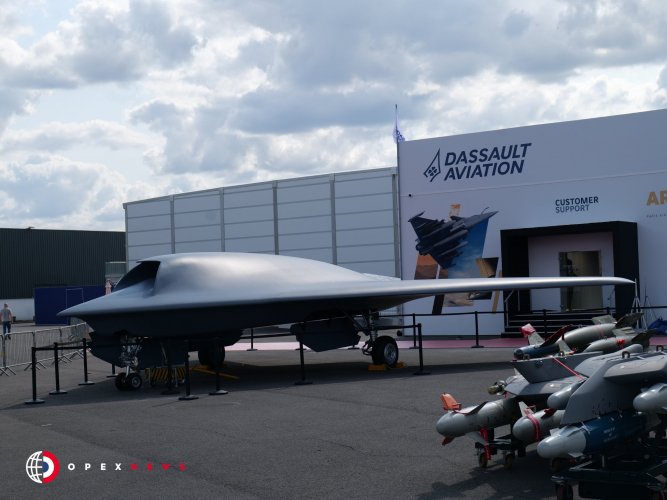
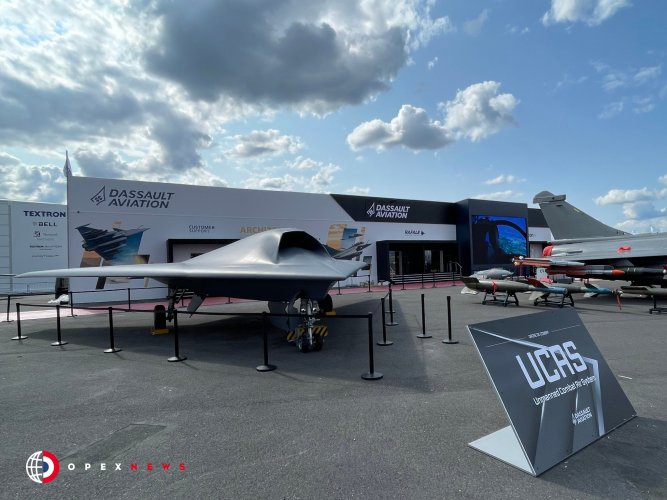
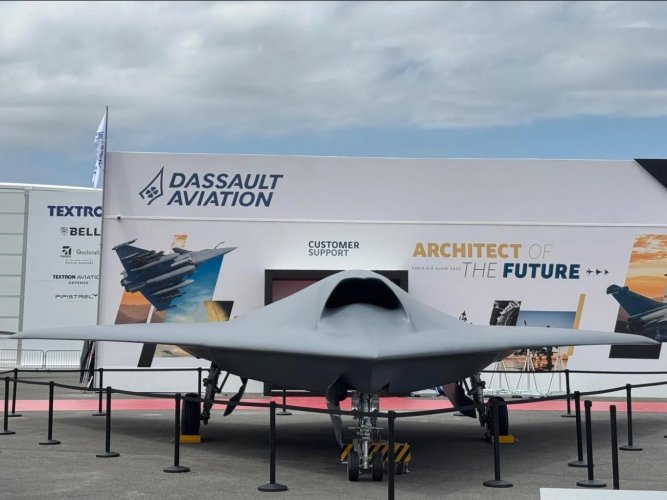
The uncrewed combat air system draws on the experience France gained with the Neuron UCAS and should be ready for fielding around 2033 or a few years earlier, a program official for the French defense procurement agency DGA said in an interview at the Paris Air Show.

French officials are coy about revealing details of the stealthy system which is designed to operate alongside the Rafale in highly contested air space to take down an adversary’s air defenses. The UCAS will carry a mix of weapons internally, the DGA official says, including air-to-air weapons. “We will have quite a broad panel of weapons,” he adds.

The operational concept calls for a single Rafale F5 pilot to be able to control one UCAS, though its possible that could be expanded to control of multiple drones.


The UCAS is being designed to be roughly the size of the Dassault Mirage 2000 fighter, which sports a maximum takeoff weight of around 38,500 lb. The drone will be powered by a single Safran M88 engine, the same powerplant used on the twin-engine Rafale.

Like Rafale, the drone is being designed to also be able to operate from aircraft carriers.

France also plans for the system to be refuelable. Designers are still assessing, though, whether it will employ a hose-and-drogue refueling mechanism like the Rafale or a probe-and-drogue approach. France’s Airbus A330-based tanker fleet can support both mechanisms.

 

Attachments

  • IMG_2729.jpeg
    IMG_2729.jpeg
    373.4 KB · Views: 60
  • IMG_2728.jpeg
    IMG_2728.jpeg
    476.9 KB · Views: 54
  • IMG_2752.jpeg
    IMG_2752.jpeg
    785.5 KB · Views: 59
This discussion is wandering off course a bit, I think ... :rolleyes:
The capabilities of the Turkish or German aviation industry are interesting to be discussed, but not really appropriate for this thread.
So, back to topic, please !
;)
 
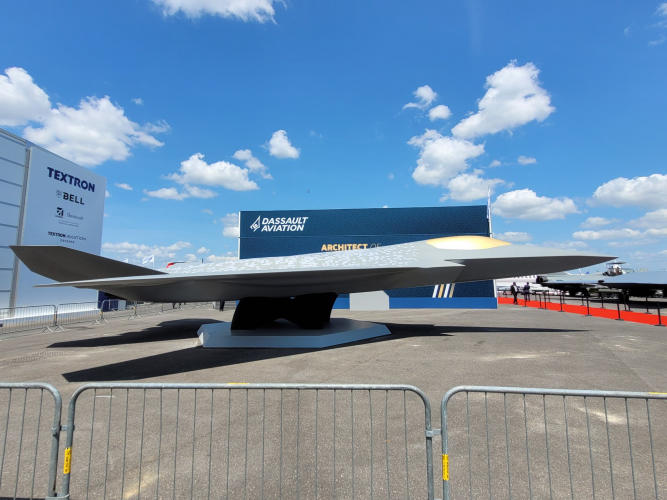
I don't know why it's a surprise to some people that shiny new stuff gets the spotlight while old stuff doesn't? If anything, FCAS will be all the buzz again in 2027 in PAS once the demonstration Phase 2 work begins by late 2026.
Isn't the statement being made that FCAS, which should be the shiny new stuff, isn't getting that treatment? Paris is just sales so no surprise the French have placed Rafale to get the most exposure compared to the FCAS which won't see service for at least ten more years.
 
Isn't the statement being made that FCAS, which should be the shiny new stuff, isn't getting that treatment? Paris is just sales so no surprise the French have placed Rafale to get the most exposure compared to the FCAS which won't see service for at least ten more years.
What's newer between the new UCAV that has just been announced and FCAS that has been known for years?
 
There was a clear UK requirement for a higher performance fighter that resulted in the larger Eurofighter with higher thrust larger engines. A smaller aircraft was viewed as an unacceptable loss in capability.

https://www.raf.mod.uk/what-we-do/our-history/air-historical-branch/post-coldwar-studies/eurofightertyphoonpart1coldwarorigins1
Indeed. But between a EF2000 and a Rafale, the differences in AD are low : some more climbing rate, best top speed (but is it used?) but shorter range.
 
Conformal carriage is good for low drag.

It is terrible for RCS.
Why? It is better in RCS than external tanks. And it is possible to shape it so as to be LO or VLO (maybe with a capacity reduction).

The ones seen on Rafale was studied 25 years ago, when stealth was not so in the mood. For F5 std they may be modified so as to be stealthier but smaller...
 
What's newer between the new UCAV that has just been announced and FCAS that has been known for years?
Sure but why not show the UCAV next to FCAS given they are more likely to be together and both highlight the future for Dassault? In the end it is sales related, the UCAV yes is newer and possibly will see service before FCAS while Rafael is still making hay so an easy decision to put it in a more prominent position.
 
Sure but why not show the UCAV next to FCAS given they are more likely to be together and both highlight the future for Dassault? In the end it is sales related, the UCAV yes is newer and possibly will see service before FCAS while Rafael is still making hay so an easy decision to put it in a more prominent position.
Stealth flying wing Ucav will first see service with rafale, almost a decade before scaf enters service.
 
Why? It is better in RCS than external tanks. And it is possible to shape it so as to be LO or VLO (maybe with a capacity reduction).

The ones seen on Rafale was studied 25 years ago, when stealth was not so in the mood. For F5 std they may be modified so as to be stealthier but smaller...
Conformal carriage doesn't eliminate all the corner reflectors.
 
Not seen any pics of it from there, but doesn't mean it isn't there...
They were punting it for Typhoon AND GCAP as well...
In the absence of a programme of record anywhere in Europe (outside of France) for a big fighter-sized UCAV, Airbus DS's loyal wingman is probably going nowhere.

For a number of reasons... 1) The F-35 users don't have the same urgent need for VLO capability and/or 2) Their limited budgets are already sucked up by F-35 purchases, and/or 3) They don't feel the need for a "Plan B" in the event their respective 6th gen fighter partnerships fail.

It's a shame IMHO that the original UK-FR FCAS partnership 10 years ago didn't move forward with just the kind of UCAV that Dassault are proposing... never quite understood why the RAF/UK MoD seemed to lose interest in VLO UCAVs.
 
@H_K Doing a UCAS programme like this properly is many billions of euros and many hundreds of engineers for over a decade. It's difficult to see how this can be fitted in for any country alongside the 4th Gen MLUs and "6th Gen" new crewed fighters, not to mention loyal wingmen etc

UK loss of interest is easy to explain - chose GCAP instead.
 
Doing a UCAS programme like this properly is many billions of euros and many hundreds of engineers for over a decade. It's difficult to see how this can be fitted in for any country alongside the 4th Gen MLUs and "6th Gen" new crewed fighters, not to mention loyal wingmen etc
Well it seems like the Armee de l'Air and Dassault don't agree as they're pursuing Rafale F4/F5, UCAS and NGF all in parallel!

There's a counter argument that you can drive costs down by leveraging families of systems to maximize commonality (engines, sensors, electronic warfare suites, comms, weapons, even down to physical bits and pieces like actuators, landing gears, parts of the flight control software etc) and to focus on a more incremental/spiral development approach. That leaves the fuselage design/build and flight sciences as the main area of extra R&D cost.

The family of systems argument was also used by USAF when it talked about a "digital Century series", and to a large extent by Saab for Gripen and now by Korea for KF-21 (which leverages many proven bits of kit in a new stealth platform, and which is a good candidate for developing a UCAS similar to Dassault, leveraging FA-50 and KF-21 systems).

A company like Dassault with decades of experience with its Mirage and Falcon bizjet families is obviously uniquely positioned to have a go at this.
 
Last edited:
In the absence of a programme of record anywhere in Europe (outside of France) for a big fighter-sized UCAV, Airbus DS's loyal wingman is probably going nowhere.

For a number of reasons... 1) The F-35 users don't have the same urgent need for VLO capability and/or 2) Their limited budgets are already sucked up by F-35 purchases, and/or 3) They don't feel the need for a "Plan B" in the event their respective 6th gen fighter partnerships fail.

I don't think I necessarily agree. Especially with regards to Germany in particular it would be a welcome force multiplier for the Eurofighters until FCAS enters service, with which the UCAV could also be integrated, seperate from the French effort and with more industrial opportunities for Germany itself. It could also possibly be integrated into the F-35s framework in Germany, something Dassault might be averse towards with their UCAV. It would also be a low observable platform that's cheaper than the F-35, and thus brings some benefits with it with regards to operational cost etc. It would also mean that certain duties can be carried out by a Eurofighter with CCAs, so it may render additional costly F-35 orders beyond the initial 35 redundant.

So I think it's too early to write it off for now. Or maybe it's just me constructing something out of wishful thinking lol.
 
Lot of media covering the FCAS tension at the Paris Air Show after Dassault CEO Eric Trappier did an interview with Bloomberg where he said France should be the sole developer of the manned element rather than it being a partnership because only France could do it alone. Airbus has been doing the media rounds trying to smooth tensions by calling working with Dassault a 'difficult marriage', but one where you have to put the effort in to work together.

 
Well it seems like the Armee de l'Air and Dassault don't agree as they're pursuing Rafale F4/F5, UCAS and NGF all in parallel!

There's a counter argument that you can drive costs down by leveraging families of systems to maximize commonality (engines, sensors, electronic warfare suites, comms, weapons, even down to physical bits and pieces like actuators, landing gears, parts of the flight control software etc) and to focus on a more incremental/spiral development approach. That leaves the fuselage design/build and flight sciences as the main area of extra R&D cost.
We'll see how long pursuing all of those concurrently lasts, or whether this is plan b in action.

I think the main reuse element is actually software modules and computing hardware. When you start to get into the detail then its incredibly limiting to force common hardware across aircraft of very different size, flight envelope and use. e.g. a subsonic UCAS thats half the mass of Rafale has very different actuation requirements. e.g. you can't just shove a fighter radar onto the nose of a UCAS and expect it to integrate fine. You can definitely pursue commonality at the technology level, but there's a lot of effort/time/cost to develop specific products for specific applications.
 

Similar threads

Back
Top Bottom