- Joined
- 27 March 2006
- Messages
- 1,992
- Reaction score
- 2,148
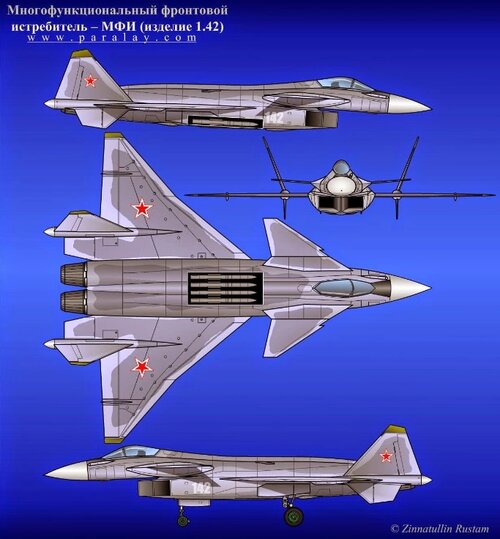
The operational version (1.42) was to have the different, wedge shaped ventral intake, as shown earlier in this thread.
Last edited:

Knowing how to lower RCS in principle doesn't take spies - it simply takes professionals in this field, supported with necessary level of fundamental science and computing power. Soviet Union (hence early Russian Federation) easily had all 3.I mean the soviets had many spies in the West German aerospace industry in the 80's and 90's they probably had the information on how to lower the RCS of the intake if they already didn't know how to do it themselves.
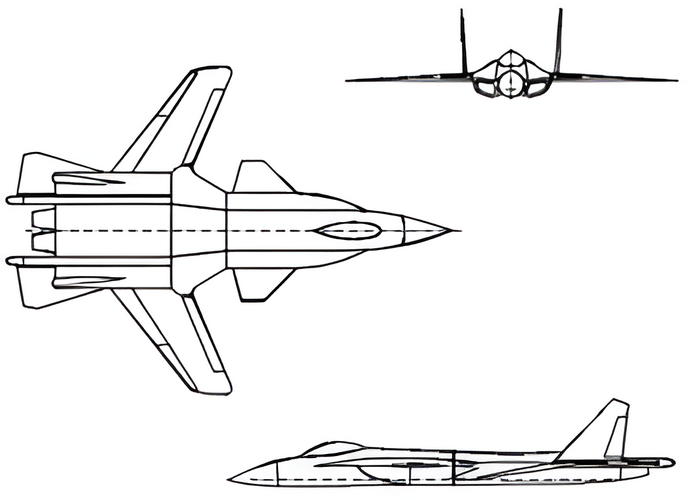
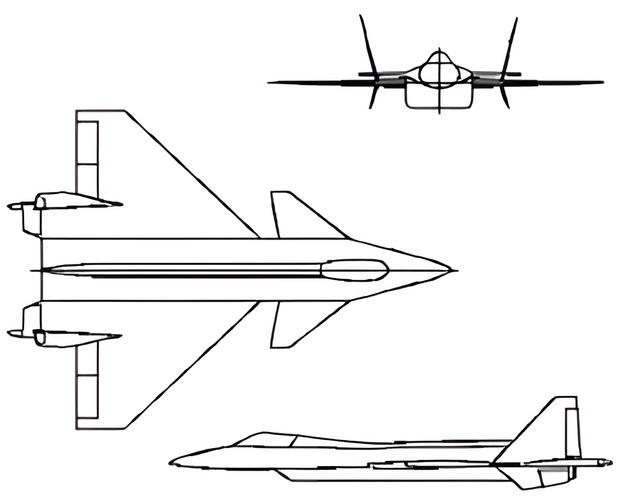
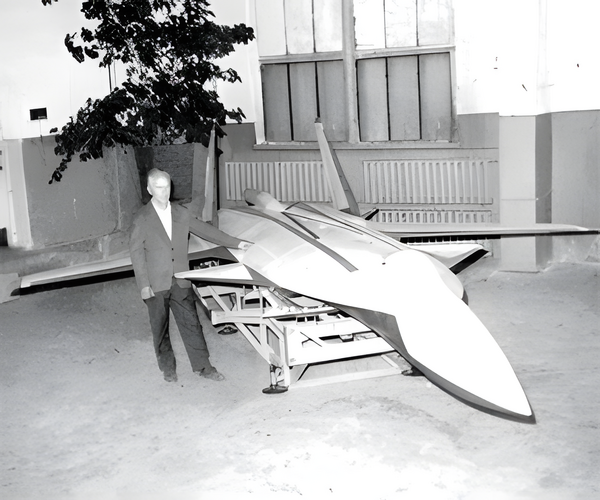
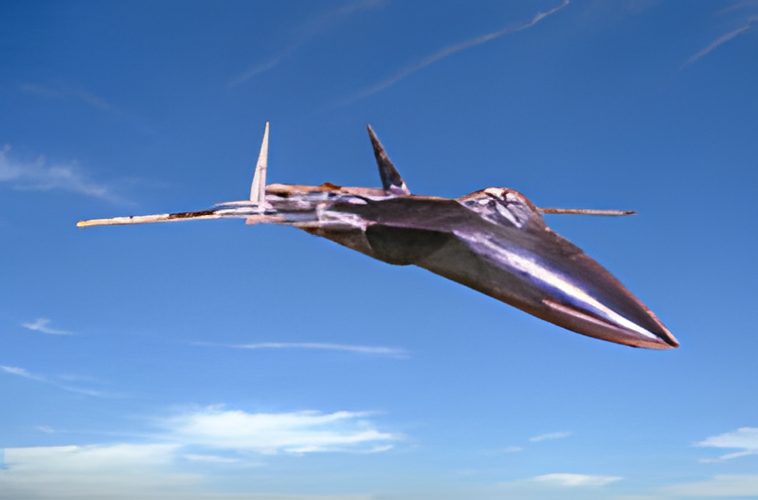
While 1.42 was intended operational variant, it wasn't where this design ended. This model matches rumors on 1.46 pretty well, for example.The operational version (1.42) was to have the different, wedge shaped ventral intake, as shown earlier in this thread.
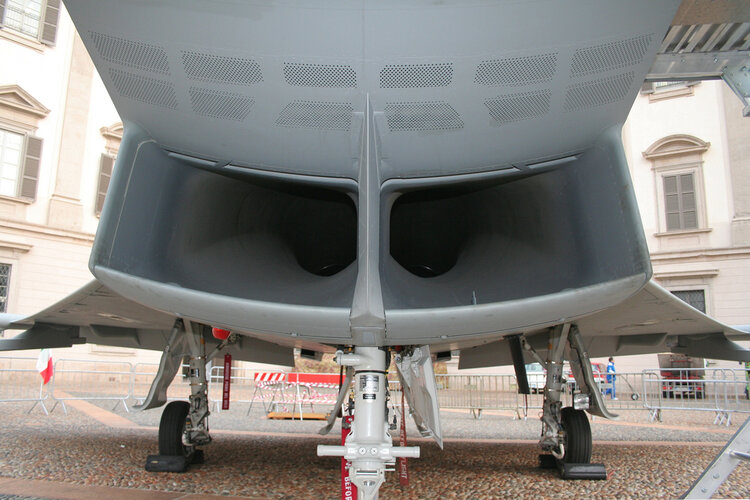
Yes the euro fighter intake has a wedge shaped ventral in the intake. picture #1The operational version (1.42) was to have the different, wedge shaped ventral intake, as shown earlier in this thread.


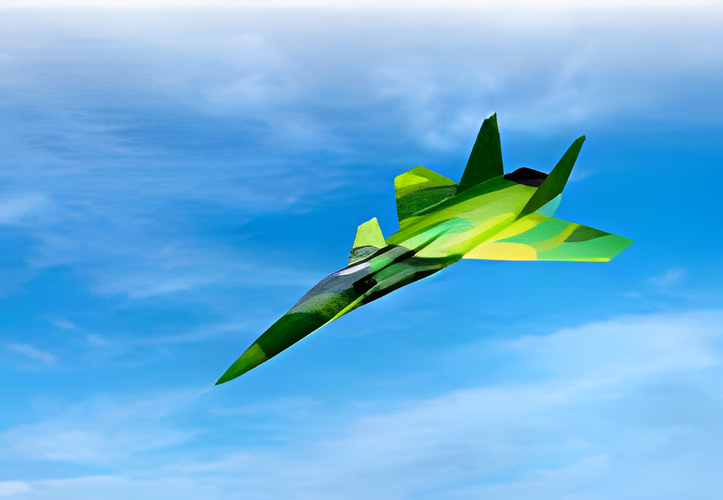
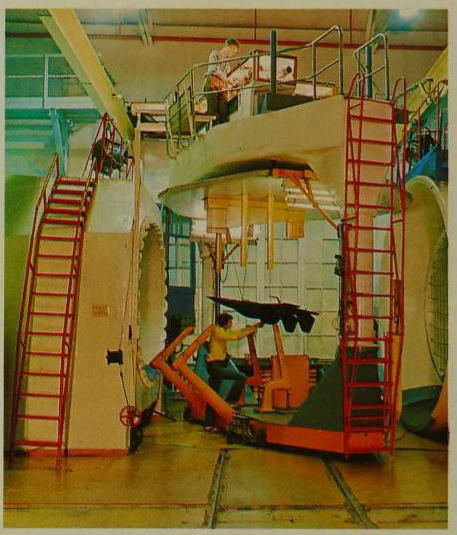
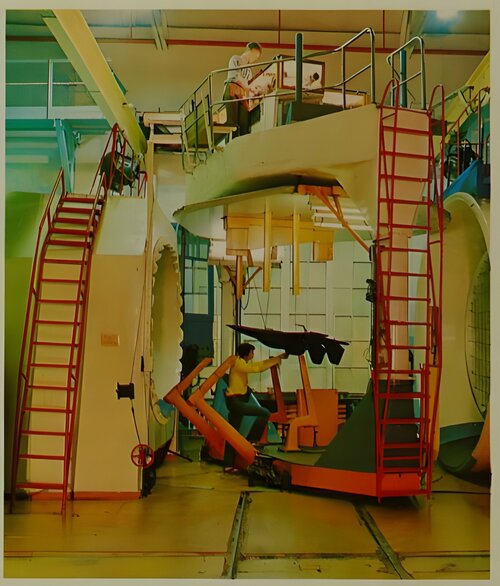
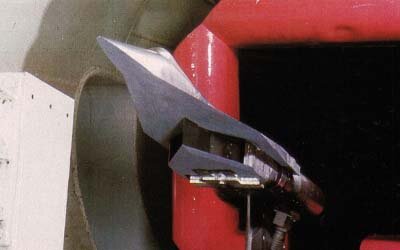
01/16/1989 By the decree of the Central Committee of the CPSU and the Council of Ministers of the USSR, on the basis of the branch research laboratories of the Kharkov Aviation Institute AGD-3 and ONIL-3, the Research Institute for the Problems of Physical Modeling of Aircraft Flight Modes (NII PFM KhAI) was established. Before the creation of the scientific research institute, the collectives of the KhAI laboratories had to go through a long and difficult path of recognition and proof of the relevance of the methodology they had mastered for researching new aviation technology using dynamically similar large-scale flying models. The first flights on the LL-17 flying laboratory in 1973 should be considered the beginning of work on the study of non-stationary flight regimes of aircraft on flying models.A report on their results was sent to the USSR Ministry of Aviation Industry and the country's aviation design bureaus with a proposal to use physical modeling on models of new aircraft created by them. Interested in the proposal of the OKB im. ON. Sukhoi and OKB im. A.I. Mikoyan, but if the first is active, then the second, at first, in the role of an observer. OKB im. ON. Sukhoi handed over to KhAI a model of the Su-7B aircraft on a scale of 1: 5 as a surface standard and, on an initiative basis, the KhAI began to work on the design and construction of a dynamically similar model of this aircraft. The general management was headed by O.R. Cheranovsky, and for the implementation of the project several groups were organized, led by S.A. Yashin, V.D. Bely and N.G. Shirt. The model project was based on S.A. Yashin. Customers helped with some materials and components. In the process of work, new materials, technologies, approaches were developed and introduced. For 1974-75. two models of the Su-7B aircraft were built, on which the Su-7B aircraft performed 12 flights. The characteristics of the model obtained in these flights completely coincided with the aerodynamic characteristics of the aircraft, which made it possible to proceed to research on models of new aircraft created in the country. At the end of 1978, the branch laboratory ONIL-3 was created at the KhAI to study combat fighters created by the OKB im. ON. Sukhoi and OKB im. A.I. Mikoyan. The head of work for the OKB im. ON. Sukhoi was appointed S.A. Yashin, according to the OKB them. A.I. Mikoyan - V.D. White. Intensive work began on researching the Su-27 and MiG-29 aircraft, fine-tuning the structure in order to obtain the best aerodynamic characteristics. When creating the Su-27 and Su-35 aircraft, 55 were performed on large-scale flying models! design changes and improvements with subsequent verification of their feasibility and effectiveness in the flight experiment. You can imagine what a huge amount of money would have to be invested if all these improvements were carried out on the plane, and not on the models. The MiG-29 aircraft and its flying model This is a joint work of specialists from the OKB im. ON. Sukhoi, OKB im. A.I. Mikoyan, Kharkiv Aviation Institute, TsAGI and Flight Research Institute. MM. Gromova gave the country the world's best Su-27 and MiG-29 fighters. By the way, the famous aerobatics figure "Pugachev's Cobra" was first performed on the MiG-29 model in the study of the super-maneuverability of the aircraft, and then performed on the Su-27 aircraft by test pilot V.G. Pugachev. Under the leadership of A.I. Ryzhenko, on the Su-7B models, work was carried out to study the flutter, as well as the survivability of the aircraft during combat damage. In 1986, the staff of the laboratory was increased, and the KhAI received an order to work with the EMZ named after V.I. V.M. Myasishchev on the M-55 high-altitude aircraft, these works The start of the Su-27 aircraft model was headed by V.A. Yatsenko. In 1987, a model of the M-55 aircraft was built, on which flight tests were carried out until 1993. On the model, the modes of stall and spin of the aircraft were investigated with the provision of similar deformations of the bearing surfaces. As a result of flight studies, the boundaries of the beginning of the stall of the aircraft were determined, the values of the angle of attack of the M-55 "Geophysics" aircraft permissible in operation were clarified, and the methods for getting the aircraft out of a spin were worked out. One of the models of this aircraft was built using the "Stealth" technology with a special coating to reflect the beams of ground surveillance equipment, it was called the EPR LM-55. 1986-1987 our team has started building large-scale flying models of the aircraft of the future, i.e. to the 5th generation fighter aircraft. Models SLM22, SLM32, DM5.12 were built, on which flight tests were successfully performed. The elimination of the risk to the life of the test pilot, the reduction in the development time of new aircraft and the relative cheapness of the research method using dynamically similar models played a role in determining a leading role in the creation of research institutes. In the future, it was planned to widely introduce this method into the aviation industry and use it in the creation of all types of new aircraft created in the Soviet Union. Giproaviaprom has started designing research and production buildings for the Research Institute of PFM KhAI. All relevant building permits for the buildings have been obtained. Using large-scale flying models, the aerodynamic characteristics of aircraft were investigated: Su-7B, T-10, Su-27, Su27UB, Su-47 (Berkut), KhAI-70, Su-35, MiG-29, MiG-29UB, MiG- 29C, 4 January 2014 1.42, M-55 (Geophysics). In some years, up to 150 people worked at the institute, which indicates the scale of the work being done. And each of the employees made his contribution to our common cause, wherever he worked: design engineer, production worker, laboratory assistant, builder, supplier. They all deserve thanks. For their personal contribution to the development and implementation of research methods for new aviation technology, they were awarded the State Prize of Ukraine: V.D. Bely, A.V. Betin, A.I. Ryzhenko, V.I. Ryabkov, S.N. Sadovnichy, O.R. Cheranovsky, V.A. Yatsenko, S.A. Yashin. Many employees of the institute were awarded with certificates of honor of the USSR Ministry of Aviation Industry. t Unfortunately, due to the collapse of the Soviet Union, all work on the further development of this unique method of researching aviation technology was curtailed. The last tests of the SLM32 model were carrout in 1997. ied It should be said that a similar method of researching new technology in those years was used only in the United States.

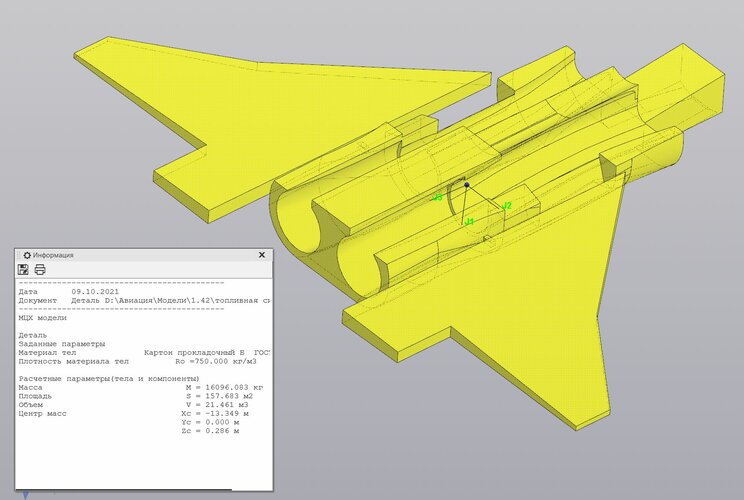
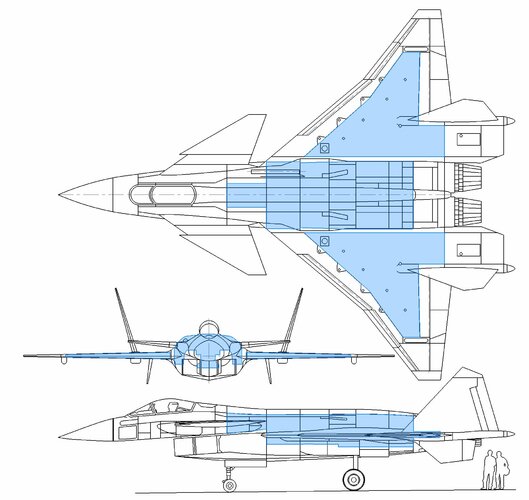
Is that an authentic cad modelFuel system MiG 1.42
volume 21.5 m3
mass of fuel 21.5 m3 * 785 kg/m3 = 16800 kg (40% of the maximum take-off weight)

3D model for 3D printing? Or only rendered pictureMy dream of a 3D model of this aircraft is 34 years old
If it’s a real cad model and you have the whole aircraft, and aerospace engineer could do a CFD study on it. It would be awesome to build a flight model for a flight simulator.In 1987, 3D printing did not exist yet


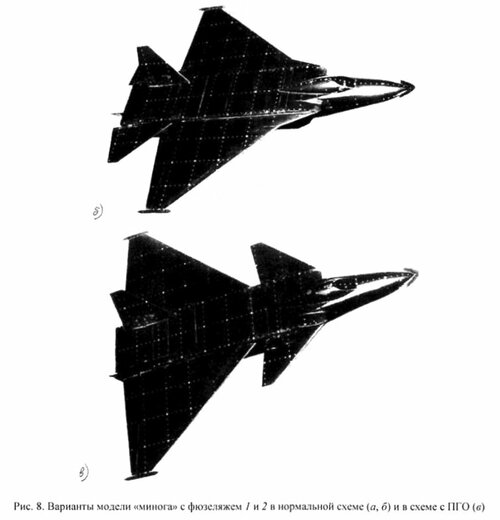
Thank you for your answer!The multiparametric "Lamprey" model was made in TsAGI in the early nineties. The MFI MiG 1.42 was already put into production in 1992 - 1994

The multiparametric "Lamprey" model was made in TsAGI in the early nineties. The MFI MiG 1.42 was already put into production in 1992 - 1994

source please
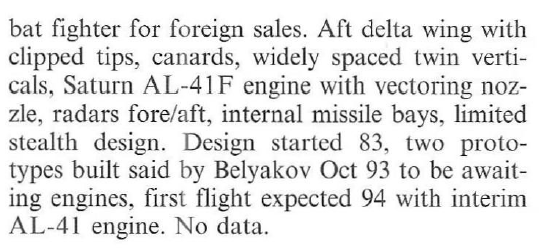
actually the development of this beast began in 1989.
source please
actually the development of this beast began in 1989.
Seems that you are mixing 1.44 with 1.42
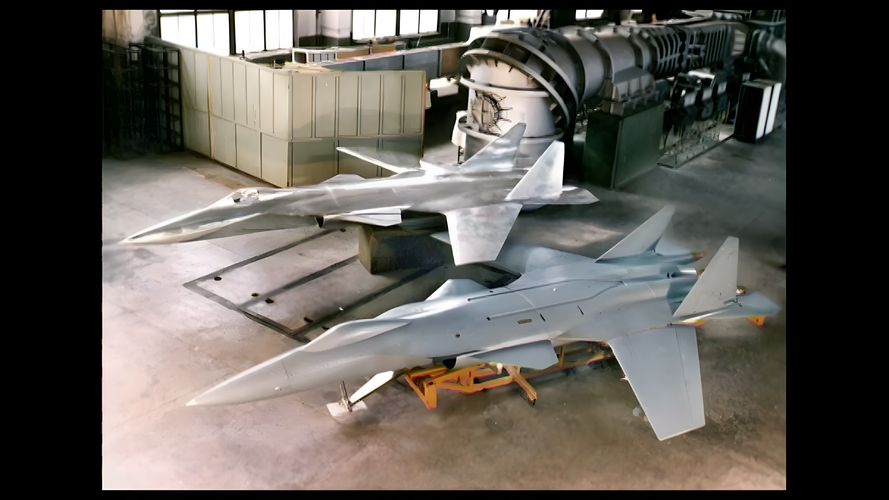
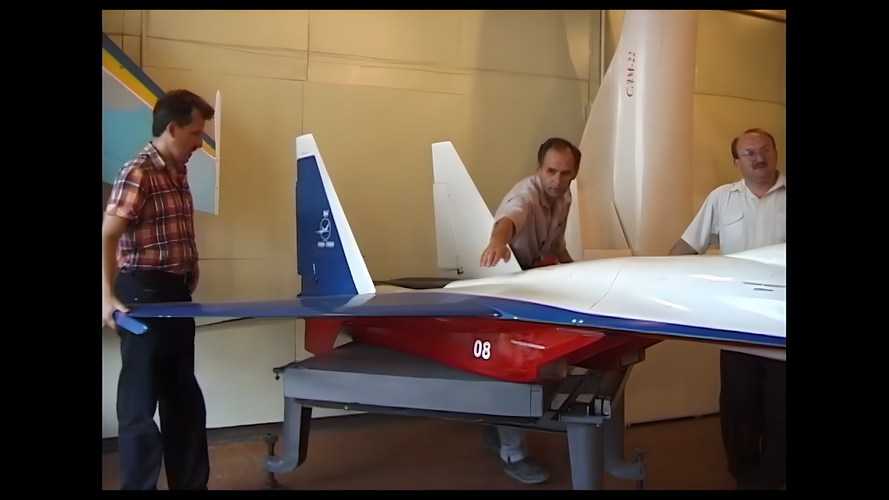
No, this is not 1.42.Also thus is the mig 1.42 with serpentine intakes and internal bay not the aerodynamic demonstrator mig 1.44 that most pictures are of.

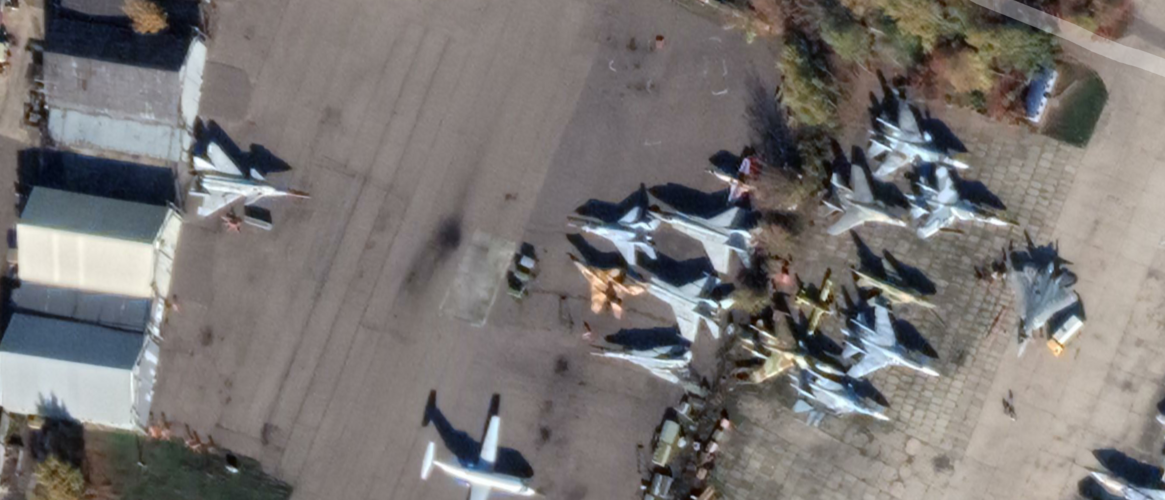
Thought it was interesting with the Su-57 in the same shot.It's been sitting there for years now. Surprised it hasn't gone to Monino. The Berkut is around as well, sitting in an overflow area about 420 m southeast of the 1.44.