
You are using an out of date browser. It may not display this or other websites correctly.
You should upgrade or use an alternative browser.
You should upgrade or use an alternative browser.
MiG MFI / I-90 - MiG 1.44 / MiG 1.42
- Thread starter overscan (PaulMM)
- Start date
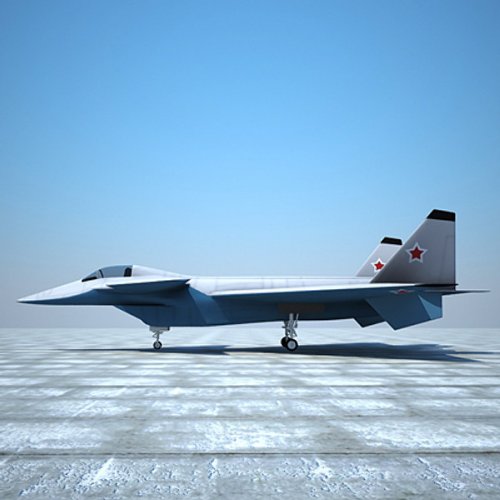

Some photographs of the MiG 1.44 on static display at MAKS 2015
Source:
http://igor113.livejournal.com/632681.html
Source:
http://igor113.livejournal.com/632681.html

- Joined
- 27 December 2005
- Messages
- 19,229
- Reaction score
- 35,676
There are photos (I have them) but I was asked not to share yet. Triton's link has some great shots.
- Joined
- 27 March 2006
- Messages
- 1,992
- Reaction score
- 2,148
PaulMM (Overscan) said:There are photos (I have them) but I was asked not to share yet. Triton's link has some great shots.
Great pics!
I've seen pics from the rear on another forum, with a person standing close by, and the engine cans on the rear are massive.
You get a distinct impression of the power and speed intended for this big but sleek beast.

Grey Havoc
ACCESS: USAP
- Joined
- 9 October 2009
- Messages
- 24,500
- Reaction score
- 18,175
Empire said:Nice link Triton!! Look forward to your pictures PaulMM,
Seconded.

RadicalDisconnect
Tony F.
- Joined
- 28 April 2014
- Messages
- 240
- Reaction score
- 202
Some of the performance numbers given during MAKS 2015. I'm a bit skeptical about the claims though. 3180 km/h (roughly Mach 3) max speed?
- Joined
- 27 December 2005
- Messages
- 19,229
- Reaction score
- 35,676
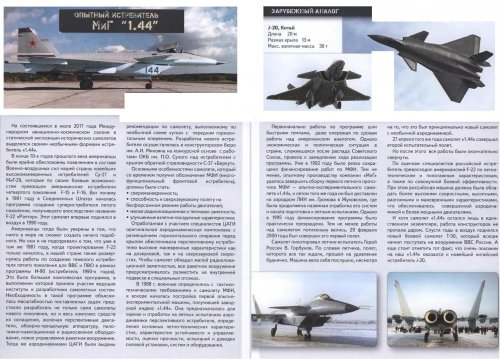
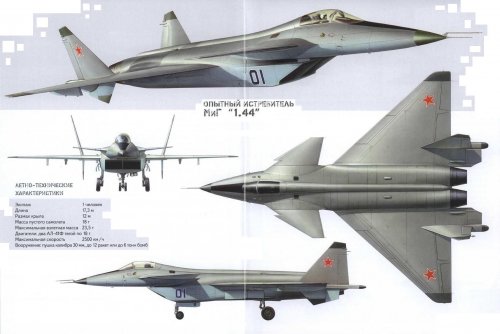
More interesting to me is the dimensions - 11.9m wingspan, 17.3m length? Thats MiG-29 size. Seems... wrong?


- Joined
- 3 June 2011
- Messages
- 20,946
- Reaction score
- 19,184
RadicalDisconnect said:https://youtu.be/BBB33mzgwfk?t=4m30s
Some of the performance numbers given during MAKS 2015. I'm a bit skeptical about the claims though. 3180 km/h (roughly Mach 3) max speed?
When one doesn't have to prove claims they can say anything.
- Joined
- 27 December 2005
- Messages
- 19,229
- Reaction score
- 35,676
I think you are missing that much of the data on the board is certainly wrong. 1.44 is not 17.3m in length. If they can't get the physical size correct, everything else can be discarded.

- Joined
- 2 August 2006
- Messages
- 3,335
- Reaction score
- 1,848
JohnR said:I would have expected such experimental aircraft to be stored more carefully, in case money becomes available at a later date.
Money for what? It's replacement (The T-50) is already getting ready to enter production.
RadicalDisconnect
Tony F.
- Joined
- 28 April 2014
- Messages
- 240
- Reaction score
- 202
What was the target max speed of the MFI? Was it ever released? I've got conflicting sources stating Mach 2.35 and Mach 2.6.

thefrecklepuny
ACCESS: Confidential
- Joined
- 19 January 2008
- Messages
- 131
- Reaction score
- 124
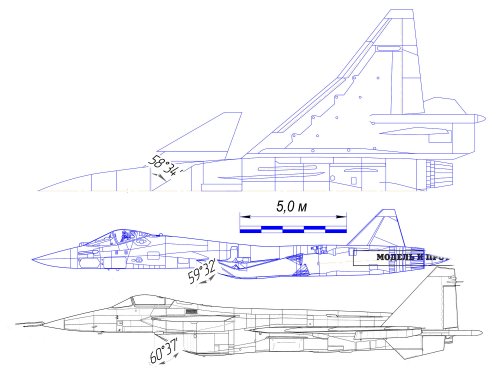
This the actual size then? Seems a real brute in the MiG-31 class!
Yes, the two aircraft on the same scalethefrecklepuny said:This the actual size then? Seems a real brute in the MiG-31 class!
Attachments
thefrecklepuny
ACCESS: Confidential
- Joined
- 19 January 2008
- Messages
- 131
- Reaction score
- 124
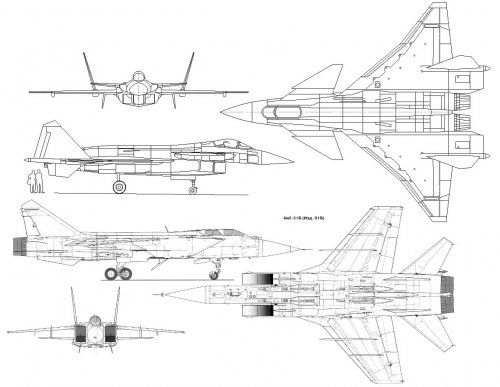
Thanks for the MiG-31 comparison. I had no idea the MiG I.44 was quite so 'butch'. I have always liked the design mind you.

- Joined
- 2 January 2006
- Messages
- 4,240
- Reaction score
- 8,307
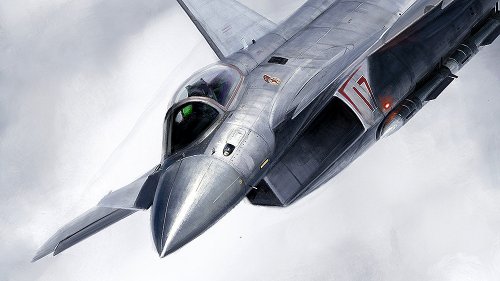
Probably one if the best Whif-designs I've seen since some time ...
http://www.weibo.com/ttarticle/p/show?id=2309404059835590130642#_0
Deino
http://www.weibo.com/ttarticle/p/show?id=2309404059835590130642#_0
Deino
Attachments


gollevainen
ACCESS: Confidential
- Joined
- 2 May 2007
- Messages
- 165
- Reaction score
- 400
Is there more pics in that article? The link directs me just to the weibo mainsite and its bit difficoult to navigate on there as everything is in chinese.
- Joined
- 2 January 2006
- Messages
- 4,240
- Reaction score
- 8,307
gollevainen said:Is there more pics in that article? The link directs me just to the weibo mainsite and its bit difficoult to navigate on there as everything is in chinese.
For me not to the weibo-main page but to Songbird's page and how he drew that artwork based on Paralay's 3-side drawing ...
Attachments
-
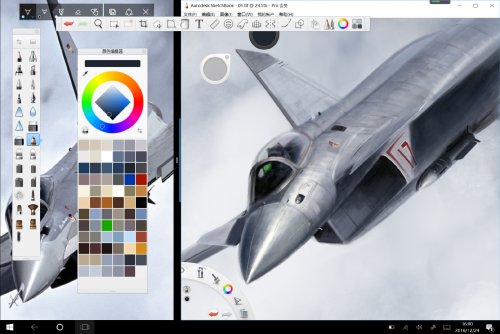 RuAF MiG MFI 1.44 what if operational - by Songbird 10.jpg584.4 KB · Views: 818
 -
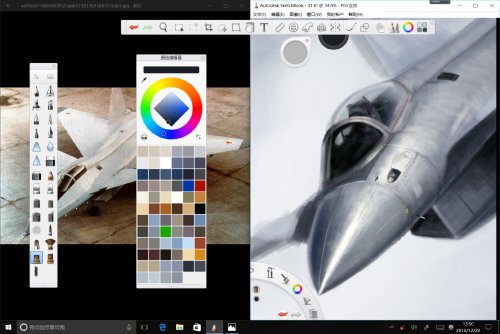 RuAF MiG MFI 1.44 what if operational - by Songbird 9.jpg626.4 KB · Views: 585
 -
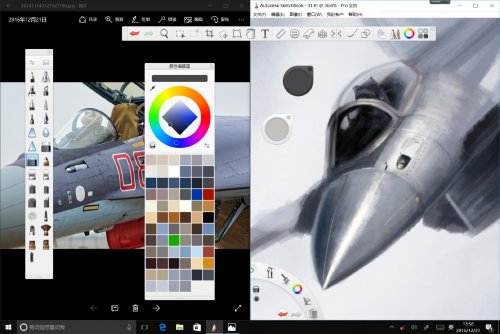 RuAF MiG MFI 1.44 what if operational - by Songbird 8.jpg224.1 KB · Views: 936
 -
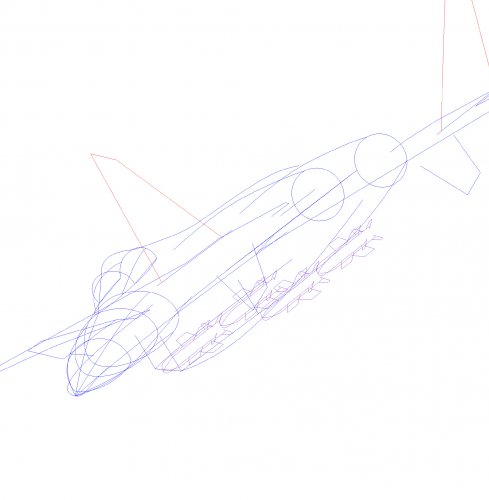 RuAF MiG MFI 1.44 what if operational - by Songbird 7.jpg560.5 KB · Views: 1,142
 -
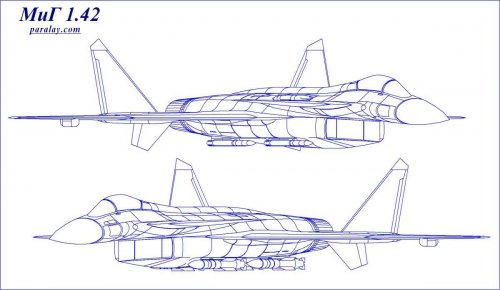 RuAF MiG MFI 1.44 what if operational - by Songbird 6.jpg62.2 KB · Views: 1,178
 -
 RuAF MiG MFI 1.44 what if operational - by Songbird 4.jpg481.6 KB · Views: 1,168
 -
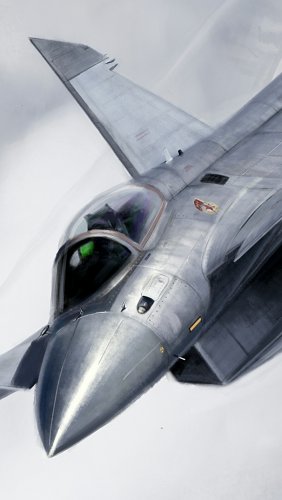 RuAF MiG MFI 1.44 what if operational - by Songbird 3.jpg441 KB · Views: 1,191

P
pavel
Guest

Lascaris
ACCESS: Secret
- Joined
- 14 November 2008
- Messages
- 357
- Reaction score
- 460
A probably belated question but how accurate is the 5th generation description being tossed around for the MiG MFI? I could be wrong but the design doesn't look particularly stealthy to me, much closer to the European 4.5 gen fighters or Silent Eagle probably?
Nice pics in that link.
A question....are the engine intakes and exhausts covered on static displays as a matter of routine/for health and safety reasons?
I assumed that it was there to protect the aircraft and its engines.
The 1.44 in the photos linked by Lancer21 above has all the covers...were the engines left in the aircraft after its two (reported) flights?
Wouldn't that be surprising, considering the advanced nature of the original AL41?
Standard practice (airlines, military and commercial) is to plug pitot tubes, intakes, exhausts, etc. when parked to prevent foreign object debris, birds’ nests, etc. Canopy covers are commonly used on aircraft parked outside.
g0229
I really should change my personal text
- Joined
- 4 February 2017
- Messages
- 13
- Reaction score
- 49
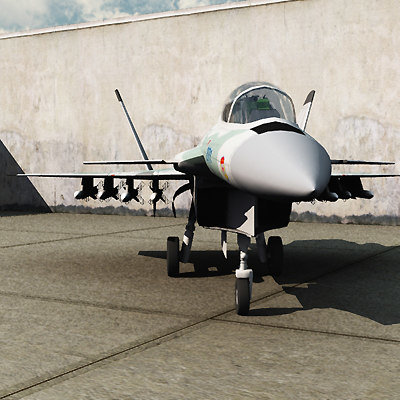
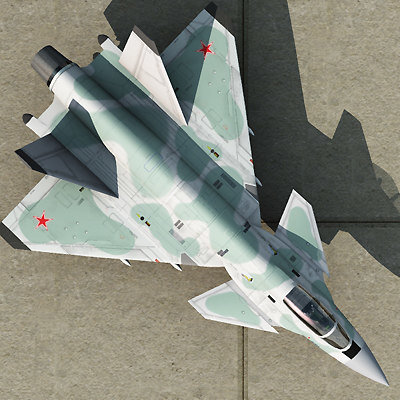
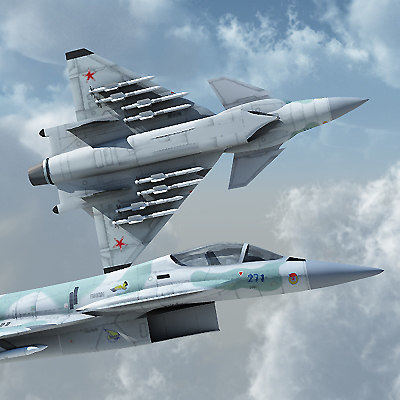
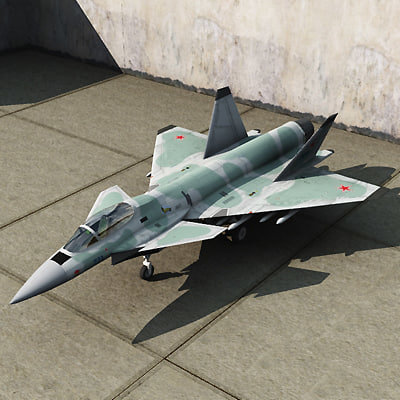
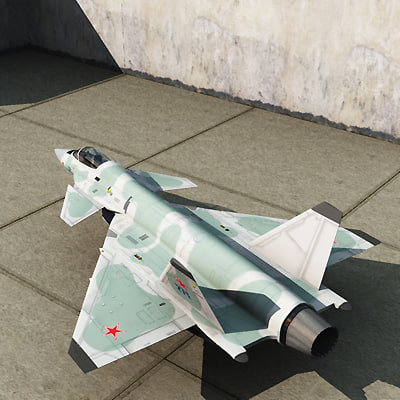
I found some Pictures in the Internet. No idea what for a Typ this is.
Attachments

- Joined
- 22 January 2006
- Messages
- 4,436
- Reaction score
- 2,798
I found some Pictures in the Internet. No idea what for a Typ this is.
https://www.secretprojects.co.uk/threads/mikoyan-lfi-4-12.464/
3D art from Jozef Gatial aka "planespictures"

blackkite
Don't laugh, don't cry, don't even curse, but.....
- Joined
- 31 May 2007
- Messages
- 9,515
- Reaction score
- 9,657
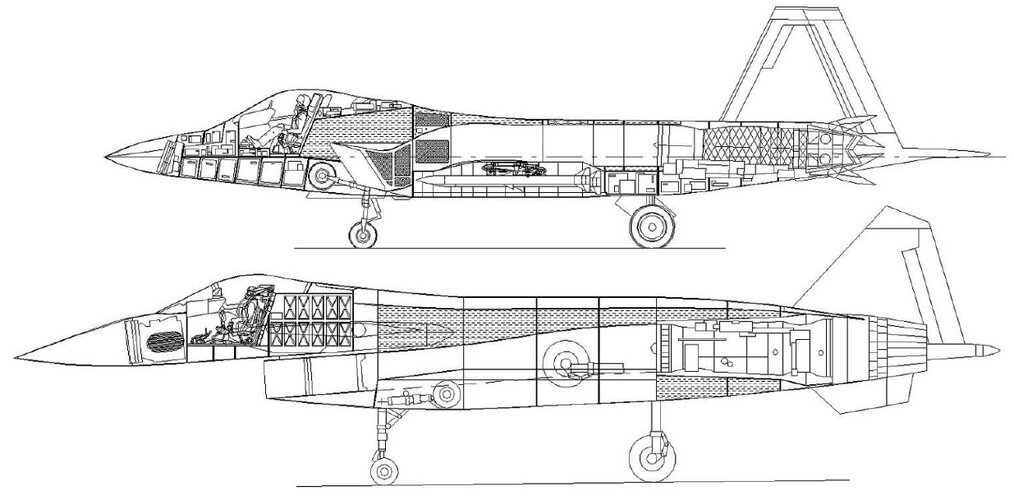
Attachments
-
 mikoyan_gurevich_mig_1_42_multifunctional_fighter_project-22823.jpg26.3 KB · Views: 799
 -
 MiG-1_42-3-Vistas-1.jpg126 KB · Views: 816
 -
 MiG-1_42_04.jpg36 KB · Views: 744
 -
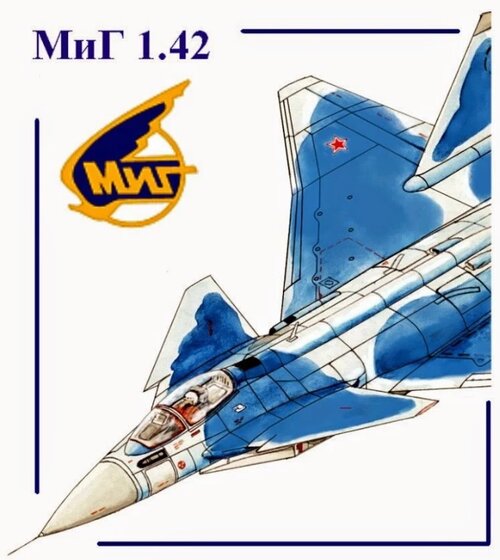 MiG-1_42_03.jpg104.7 KB · Views: 724
 -
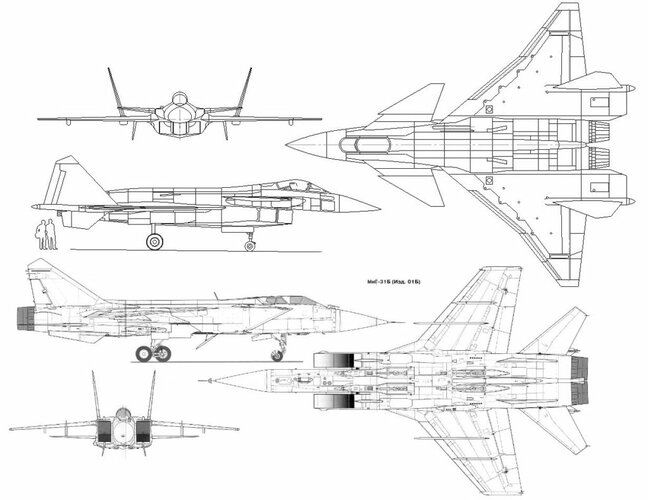 142vsMiG-31-1024x791.jpg89.2 KB · Views: 753
 -
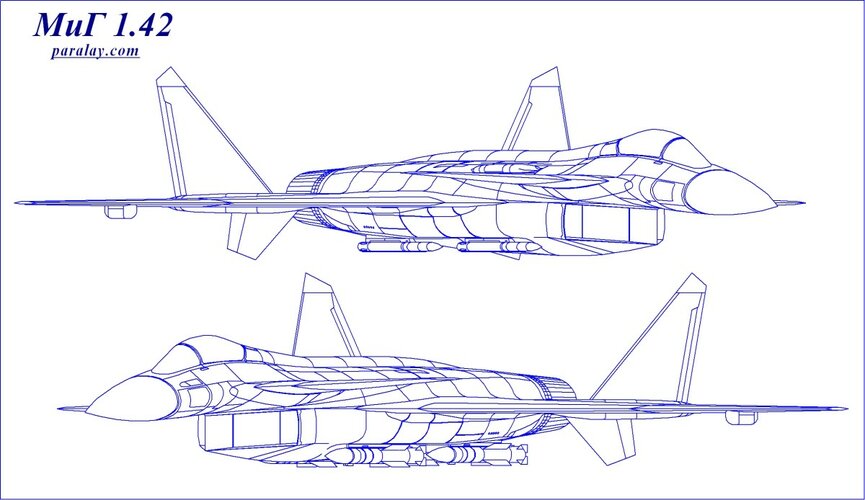 MiG-1_42_07.jpg143.7 KB · Views: 722
 -
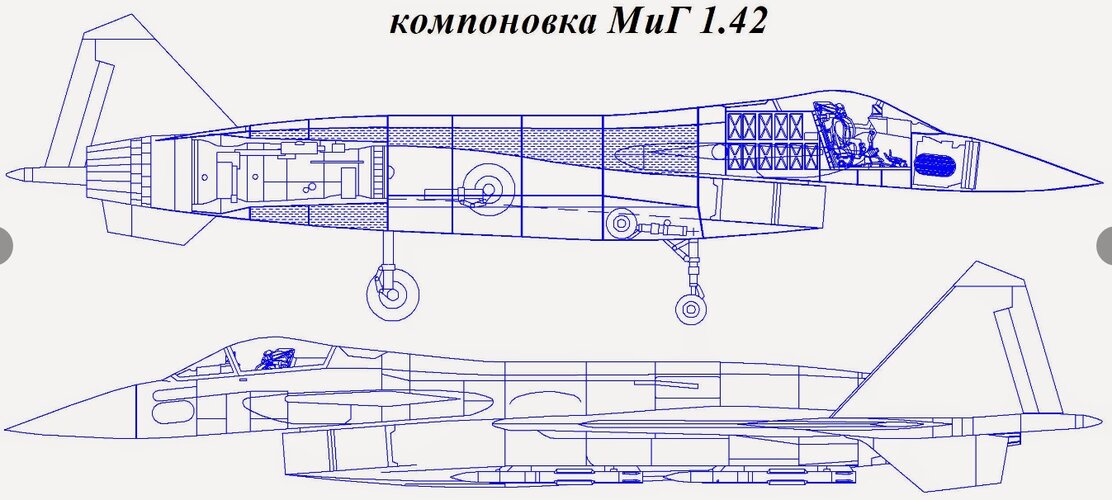 MiG-1_42_06.jpg221 KB · Views: 722
 -
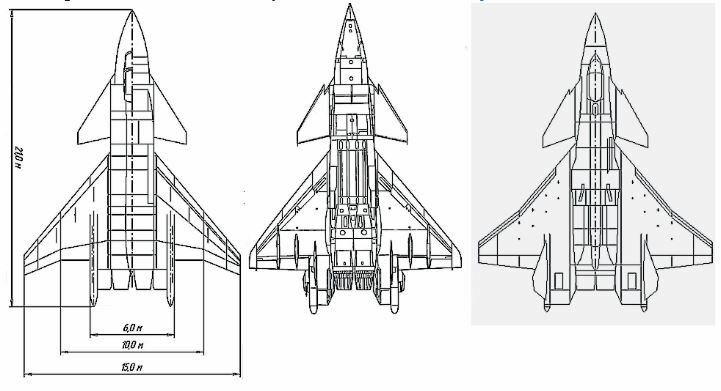 I-42 initial design, I-44 and I-42.JPG52.3 KB · Views: 702
 -
 MiG-1_42-y-F-22A.jpg171.3 KB · Views: 736
 -
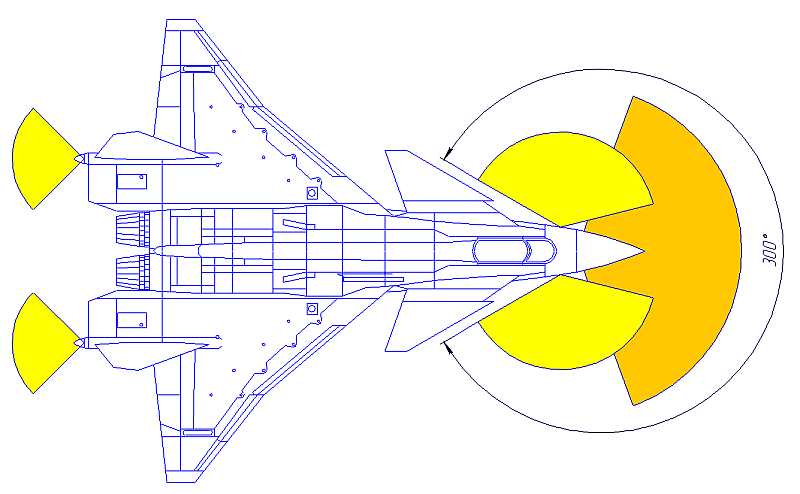 MiG-1_42-Radares-.png40.4 KB · Views: 714
 -
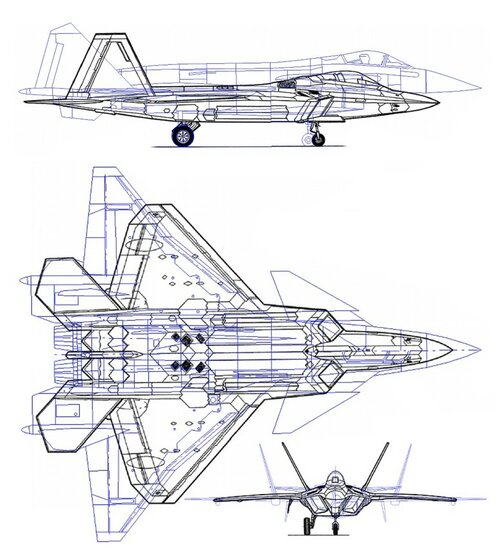 MiG-1_42-vs-F-22.jpg195.1 KB · Views: 706
Last edited:
Serge Moroz
ACCESS: Restricted
- Joined
- 3 November 2020
- Messages
- 2
- Reaction score
- 5
blackkite
Don't laugh, don't cry, don't even curse, but.....
- Joined
- 31 May 2007
- Messages
- 9,515
- Reaction score
- 9,657
Attachments
blackkite
Don't laugh, don't cry, don't even curse, but.....
- Joined
- 31 May 2007
- Messages
- 9,515
- Reaction score
- 9,657
blackkite
Don't laugh, don't cry, don't even curse, but.....
- Joined
- 31 May 2007
- Messages
- 9,515
- Reaction score
- 9,657
Hi!
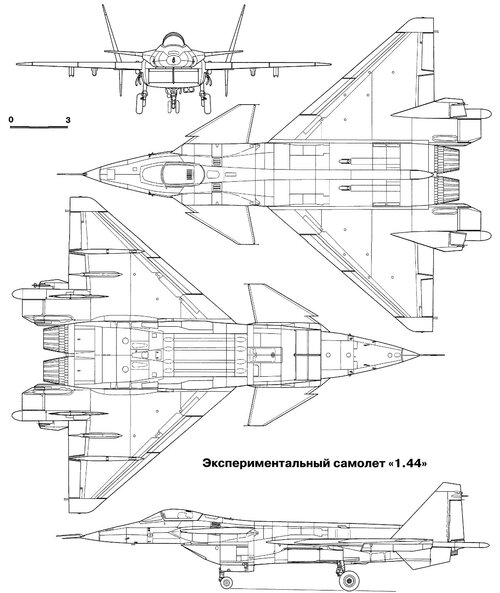
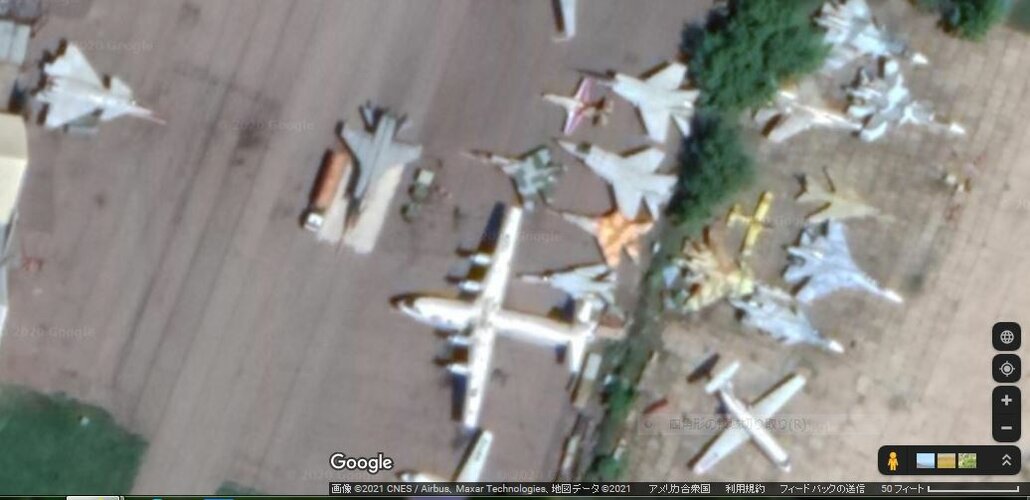
Mikoyan 1.44 specification.(Wikipedia).
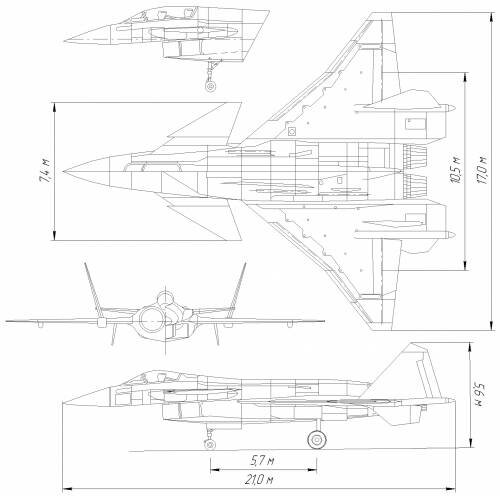
Span : 15m, Length : 19m, Height : 4.5m, Wing Area : 90.5 square meter, Empty Weight : 18ton, MTOW : 35ton, Vmax : Mach 2.6,
Range : 4000km, Engine : two AL-41F (39680lb each), Ceiling : 17000m
I calculated wing span as 15m from this picture. (50 フィート= 50 feet)
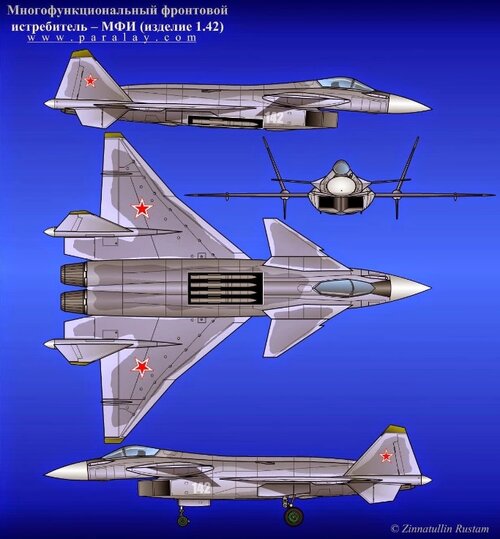
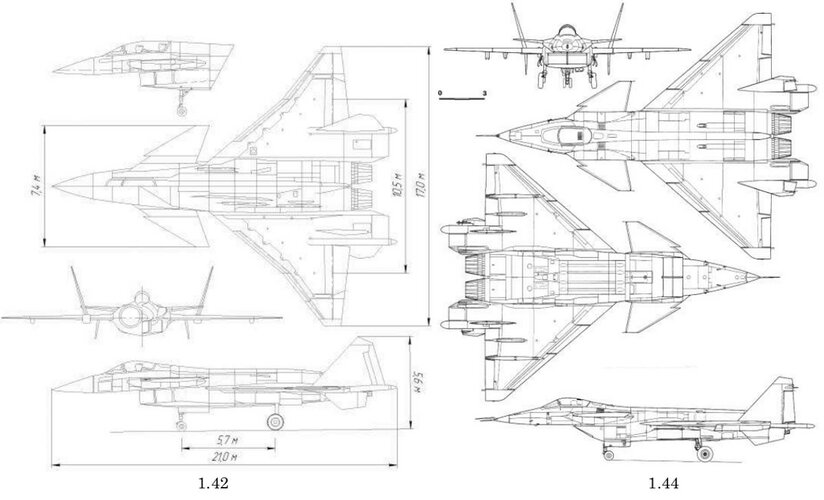
1.44 is a aerodynamic demonstrator for 1.42 multi-role frontline fighter main prototype.
Mikoyan 1.44 specification.(Wikipedia).
Span : 15m, Length : 19m, Height : 4.5m, Wing Area : 90.5 square meter, Empty Weight : 18ton, MTOW : 35ton, Vmax : Mach 2.6,
Range : 4000km, Engine : two AL-41F (39680lb each), Ceiling : 17000m
I calculated wing span as 15m from this picture. (50 フィート= 50 feet)
1.44 is a aerodynamic demonstrator for 1.42 multi-role frontline fighter main prototype.
Attachments
Last edited:
blackkite
Don't laugh, don't cry, don't even curse, but.....
- Joined
- 31 May 2007
- Messages
- 9,515
- Reaction score
- 9,657
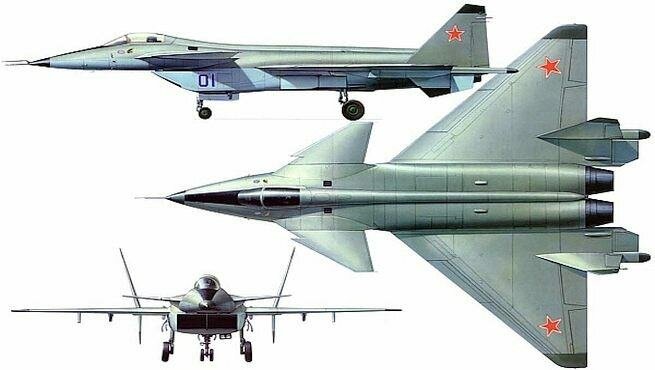
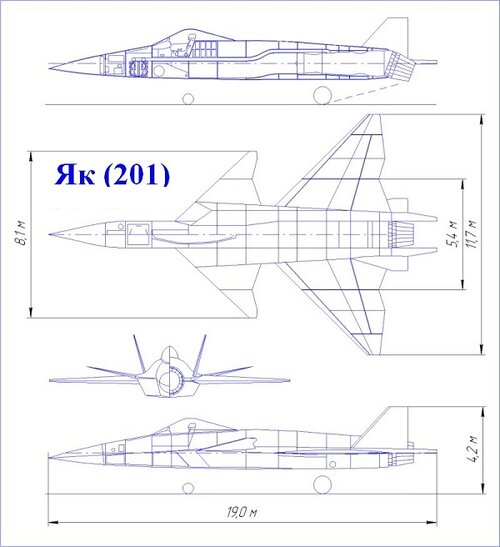
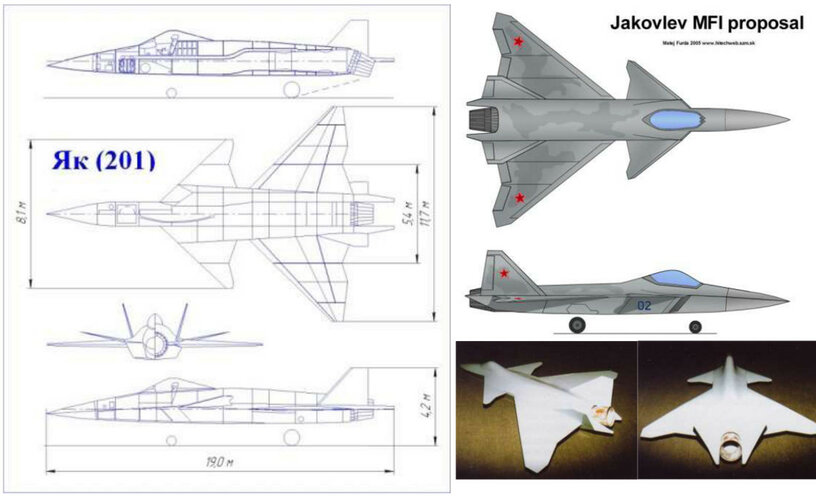
Hi! Yakovlev proposal three side view.
https://www.globalsecurity.org/military/world/russia/yak-201.htm
https://www.globalsecurity.org/military/world/russia/yak-201.htm
Attachments
Last edited:

Resister1976
ACCESS: Confidential
- Joined
- 9 April 2021
- Messages
- 87
- Reaction score
- 76
It‘s interesting.However,where is its weapon bay?Hi! Yakovlev proposal three side view.
https://www.globalsecurity.org/military/world/russia/yak-201.htm
This was posted to ausairpower net back in 1998 on how to make the i-44/42 stealthier.
A curious aspect of the various Russian reports are statements in which the aircraft is claimed to have RCS performance competitive with the F-22A. Even cursory analysis of the MFI design indicates that this cannot be the case. In particular the inlet and nose layout will be a major source of broadband wide angle RCS which the application of radar absorbers is unlikely to remedy. The beam aspect RCS will also be problematic, due to the vertical tails and keel surfaces, ventral wing stations and upper fuselage geometry. The absence of chining altogether on the nose will also contribute to beam and forward sector RCS.
The conclusion which can be drawn is that the MFI may outperform the Eurocanards for RCS performance if radar absorbent materials are used generously, the nose chined, the fuselage wing interface and spine blended, and internal weapons carried. It will never be competitive with the edge aligned, faceted, and chined F-22A design (or the chined and blended YF-23 ATF demonstrator).
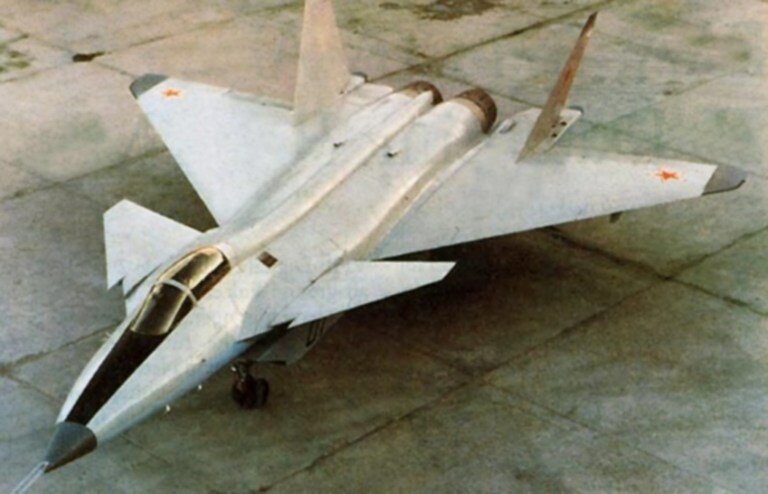
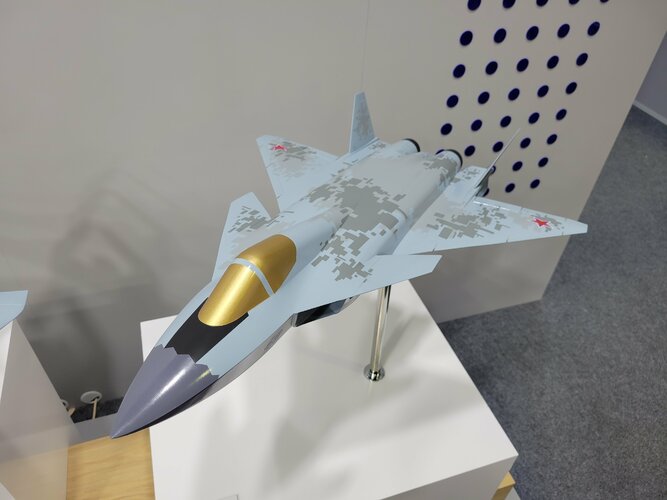
1, The first picture is of the i-44 technology test aircraft.
2 The second picture is of the aircraft carrier fighter just shown in model form at MAKS it looks like mig had those particular RCS upgrades in mind already possibly for the i-42 production fighter from the 90's. Big question is do you think Mig would have stuck to the euro style air intake of the i-44? The new intakes look like they give more room for internal weapons bay. I see nose chines, better upper fuselage geometry, spine blending on the new design model .
A curious aspect of the various Russian reports are statements in which the aircraft is claimed to have RCS performance competitive with the F-22A. Even cursory analysis of the MFI design indicates that this cannot be the case. In particular the inlet and nose layout will be a major source of broadband wide angle RCS which the application of radar absorbers is unlikely to remedy. The beam aspect RCS will also be problematic, due to the vertical tails and keel surfaces, ventral wing stations and upper fuselage geometry. The absence of chining altogether on the nose will also contribute to beam and forward sector RCS.
The conclusion which can be drawn is that the MFI may outperform the Eurocanards for RCS performance if radar absorbent materials are used generously, the nose chined, the fuselage wing interface and spine blended, and internal weapons carried. It will never be competitive with the edge aligned, faceted, and chined F-22A design (or the chined and blended YF-23 ATF demonstrator).
1, The first picture is of the i-44 technology test aircraft.
2 The second picture is of the aircraft carrier fighter just shown in model form at MAKS it looks like mig had those particular RCS upgrades in mind already possibly for the i-42 production fighter from the 90's. Big question is do you think Mig would have stuck to the euro style air intake of the i-44? The new intakes look like they give more room for internal weapons bay. I see nose chines, better upper fuselage geometry, spine blending on the new design model .
Attachments

Dreamflyer
'Senior Something'
- Joined
- 13 July 2008
- Messages
- 555
- Reaction score
- 919
If it ever gets on a flight-line (or flight-deck): I would suggest 'Facelift' as NATO-reporting name.
My take on the Mig I.42 Foxglove is they would have cleaned up the fuselage as they did with the model at MAKS to lower the RCS. Add a stealthier radome that is a chine for the nose (same as the model). I think they would keep the euro fighter style air intake even though it would impinge the internal weapons bay but they could add a stealthy smiley face to it just like the Typhoon. I mean the soviets had many spies in the West German aerospace industry in the 80's and 90's they probably had the information on how to lower the RCS of the intake if they already didn't know how to do it themselves.
Similar threads
-
 Anti-F-15: The Soviet PFI Program
- Started by overscan (PaulMM)
- Replies: 56
-
 Various Mikoyan-Gurevich (MiG) Projects
- Started by hesham
- Replies: 166
-

-
 MDP program - the Mikoyan Product 701
- Started by Tuomasn
- Replies: 31
-
 The early MiG's in China - MiG-9, MiG-15 and MiG-15UTI
- Started by Deino
- Replies: 11