Definitely voltages and frequencies. USA uses 120VAC/60hz while Europe uses 220VAC/50hz.
In regards to electrical power I thought that the NATO standard was 28V for DC power and 110V@400Hz for AC power?

Definitely voltages and frequencies. USA uses 120VAC/60hz while Europe uses 220VAC/50hz.

The SYLVER must use thinner canisters then?The missiles themselves are packed in canisters, which are sized to fit to the interior diameter of the VLS cell itself. These canisters have a degree of thickness themselves, which likewise costs you effective interior volume. In Mk.41, this has effectively set a limit of 21" (53.3cm) for the maximum booster diameter viable.
At least for the USN, only a few systems are 400Hz. All the regular stuff runs on 60hz.In regards to electrical power I thought that the NATO standard was 28V for DC power and 110V@400Hz for AC power?
The SYLVER must use thinner canisters then?
I don't have sufficient data on that to really make a judgement, But given its widest payload (MdCN) has a diameter of 50cm (19.69"), the canister thickness may not be too different? As we are talking about a full 3.3cm (1.3") vs the maximum diameter of the Mk.41 payloads.

Torpedo tube compatibility, if I'm not mistaken.Any idea why MdCN uses a cylindrical container compared to the Aster square cross section ones?
Could also be shape. The new missile looks very square whereas the old one was 0.48x0.63m with slightly sloped sides. Geometerically I think the need to make it fit a VLS has made it less stealthy.
Is it not encapsulated in a different form though?Torpedo tube compatibility, if I'm not mistaken.
I think you are right. I had thought the surface VLS container was derived from the submarine capsule, but I was probably in error.Is it not encapsulated in a different form though?

It is the same missile 'SCALP NAVAL' abroad subs and frigates.Is it not encapsulated in a different form though?
Still has to fit inside a launch capsule that fits inside a 53cm diameter tube. So to make maximum use of the volume inside the launch capsule you end up with a roughly hexagonal missile.Is it not encapsulated in a different form though?

A future Sylver launcher with larger cells
The VL Mica hypothesis, or rather now the VL Mica NG, should be considered in light of the future Sylver launcher project, which is being studied to accommodate the next anti-ship missiles and cruise missiles developed as part of the Franco-British FMAN/FMC (FC/ASW) program, as well as the successor to the Aster B1NT (Aquila project).
This future vertical launcher is expected to have larger cells (25 inches instead of 22), which could not only accommodate larger missiles, but also potentially several lighter surface-to-air missiles.
I think CAMM is a better solution than MICA VL as It is cold fired, and is smaller.There might actually be a larger Sylver VLS in the works for Stratus and Aquila
May also be able to quad-pack CAMM / CAMM-ER
From 2024
https://www.meretmarine.com/fr/defe...liorer-l-autodefense-des-batiments-de-surface

Which roughly translates to:Assolutamente sì. Stiamo studiando varie ipotesi, incluso il missile a lungo raggio, e stiamo chiedendo all’industria di sviluppare un lanciatore multi-missile universale, che ci offrirebbe maggiore flessibilità e versatilità operativa.
Absolutely. We are studying various options, including a long-range missile, and we are asking industry to develop a universal multi-missile launcher, which would offer us greater flexibility and operational versatility.
Which is roughly:Tuttavia, a quanto risulta a RID, sulle navi potrebbe in prospettiva anche “comparire” il nuovo lanciatore multi-missile A-70 NG (Next Generation), i cui studi sono già partiti, che sarà in grado di impiegare RJ-10 (la versione antinave supersonica del FC/ASW), ASTER e l’intercettore anti-ieprsonico AQUILA.
It's a shame it's not been ready sooner. I think it would've been a better fit long-term for the RN than the Mk41.However, according to RID, the new A-70 NG (Next Generation) multi-missile launcher, studies for which have already begun, could also “appear” on the ships in the future. This launcher will be capable of using RJ-10 (the supersonic anti-ship version of the FC/ASW), ASTER and the AQUILA anti-sea interceptor.
Yeah, 'A70 NG' has been floating around as a semi-confirmed project for a while.
“The legislative bill is already ready and will be submitted today to the Hellenic Parliament. Themistocles, I want to explain, is not simply a 4th Frigate. The main type of frigate, as agreed in 2020, was Belharra Standard 2. Themistocles is Belharra Standard 2++. It has 1 + 10 enhanced capabilities. The first is the ballistic missiles, the new type from the European Long-Range Strike Approach (ELSA) program, which is currently in the development stage. In addition, within the same framework, the previous three Frigates will also be upgraded to the ultimate Standard 2++ level.”
Any idea why MdCN uses a cylindrical container compared to the Aster square cross section ones?
As for Stratus, is the MM expected to order both ship-launched versions or only the RS ?
MDCN is not in production anymore, the last batches were the tubes launched variants ...The Marina Militare intends to adopt the MdCN for the deep strike role, and is is unclear at this point if this is now only an interim solution for ships on order at present (like the FREMM EVO) or a long-term one.
In its basic version, the missile will be launched from wheeled vehicles with a range between 1,000 and 2,000 kilometers.
However, Greece is expected to put on the table the development of a naval version. In fact, according to what was stated by Chief of the General Staff, Athens' rationale is for the four new frigates to acquire the ability to launch deep-sea missiles. Since the production of Scalp Naval has stopped and at this time the purchase of a single missile can reach 10 million euros, participation in the ELSA program, which is the evolution of Scalp Naval, is a one-way street.
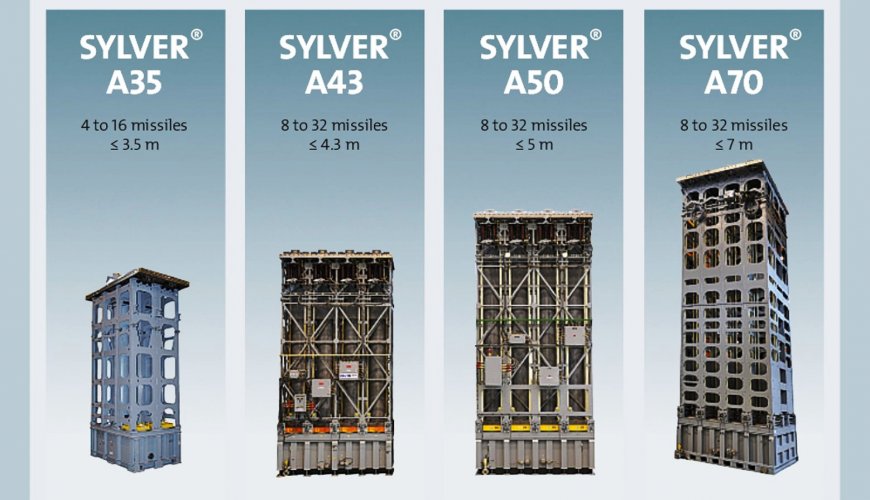
However, with the modifications that will be made within the framework of the Standard 2++ version, that is, with the installation of a Sylver A70 launcher on each FDI, the Greek frigates will have the ability to launch ELSA as well as Scalp Naval, in the event that the program does not work out and MBDA returns to the production of the previous missile.
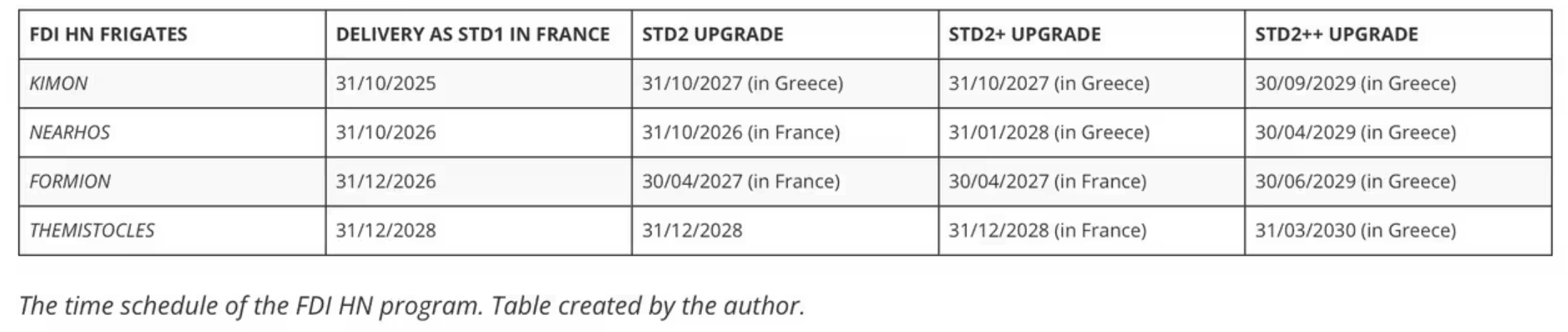
According to the shipbuilding schedule, the 4th frigate, "Themistocles", will be built to the Standard 2++ standard, while the remaining three will be "upgraded" from Standard 2 and Standard 2+ by 2030, with all work taking place in Greece.
The “Plus-Plus” version carries the “Aster 70,” (he means Sylver A70"NG") which can be launch the “Aster 30,” the “Aster 50,” the “Aster 70,” the “Scalp Naval,” and the “ELSA.” All of these, dear colleagues, had to be studied. And the other side, in a time of increasing demand, first had to accept to study our own requirements for the ship. And they did so not because they were good and philanthropic, but because they realized that we possess a certain expertise—the Hellenic Navy has expertise born of its proximity to danger, an expertise that others do not necessarily have.

Why not use STRATUS?MDCN is not in production anymore, the last batches were the tubes launched variants ...
It's being replaced by a naval variant of the European ELSA cruise missile adapted to sylver A70(NG?)
Its likely a cost reduction initiave loosely based on the MDCN and it's new land based variant
https://www.kathimerini.gr/politics...sa-kai-tis-nees-dynatotites-ton-fregaton-fdi/
Aster 70?The “Plus-Plus” version carries the “Aster 70,” (he means Sylver A70"NG") which can be launch the “Aster 30,” the “Aster 50,” the “Aster 70,” the “Scalp Naval,” and the “ELSA.”
the tools are not dismantled. MBDA can produce it at any moment. There's only one missing thing : an order.MDCN is not in production anymore, the last batches were the tubes launched variants ...
new anti ballistic missiles ???Aster 70?
Aster 50?
Translation error?
Apparently, when DCNS and MBDA were asked to create a vertically launched version of SCALP (MdCN) and a VLS to launch it, they were only asked for a VLS to launch MdCN. This is what they created with Sylver A70, and they opted to stick with a cylindrical canister and circular interior VLS shape. They were never asked to create a universal VLS in the style of Mk.41 strike length by the French MoD
I doubt it. Maybe (assuming they aren't translation or dictation errors -'Aster 50' sounds a lot like 'Aster 15'), they're synonyms for the Block 1 and Block 1NT. Or for the Aquila.new anti ballistic missiles ???
Think they've got Aster and Sylver (i.e. Sylver A50) mixed up throughout to be honest.I doubt it. Maybe (assuming they aren't translation or dictation errors -'Aster 50' sounds a lot like 'Aster 15'), they're synonyms for the Block 1 and Block 1NT. Or for the Aquila.
I'm not sure about how it is in Greece, but in the UK, defence ministers aren't always the most accurate in their statements. With an added element of translation, who knows?
Yes it's technically possible ...the tools are not dismantled. MBDA can produce it at any moment. There's only one missing thing : an order.
The ELSA missile is not yet in production. The one that existed in production, but whose manufacture was stopped to make way for a new model, was the "Scalp Naval".
With the production of the Scalp Naval stopped and the purchase of a single missile currently up to 10 million euros, participation in the ELSA program, which represents the evolution of the Naval Scalp, is one-way.

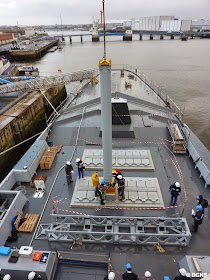
This is what they created with Sylver A70, and they opted to stick with a cylindrical canister and circular interior VLS shape.
The top looks square, but the bottom seems to be mostly round with 4 supports to fit the VLS cell.Are we sure about the VLS shape part? Photos of Sylver A70 are a bit scarce, but from the ones I can find, it looks like the framework around the canister is the usual square shape.
The top looks square, but the bottom seems to be round
View attachment 786095
It is the same than the new production of SCALP EG.Yes it's technically possible ...
But we've now heard from multiple greek sources (including defence minister), that restarting that assembly line costs an arm and a leg ... think in the ball park of 500 million for a small order of 50 missiles.
Sorry to be pedantic, but there is no "SCALP Naval", it's called MdCN / NCMIt is the same than the new production of SCALP EG.
And between the french SCALP NAVAL order and now, the tensions in Europe rise
The production of SCALP missiles to equip our forces will resume this year, 15 years after our last order.
At the @MBDA_UK site in Stevenage with my counterpart @JohnHealey_MP, where part of these missiles are manufactured.
Supplied to Ukraine, the Franco-British SCALP/Storm Shadow missile has proven its effectiveness in modern high-intensity warfare, in decisive situations.
A symbol of Europe’s leading defense industry, MBDA being a joint venture between France, the United Kingdom, Italy, and Germany.
We are almost off topic, but they are in fact not ordering MdCN/NCM, but the new ELSA missileand the greek need it for FDI
Sorry to be pedantic, but there is no "SCALP Naval", it's called MdCN / NCM
MBDA makes it pretty clear --> https://www.mbda-systems.com/products/deep-strike/mdcn-ncm
Sure MdCN builds on MBDA experience with SCALP, but that seems to be it... Shape, Engine, Booster, Warhead are all different for exeample.
Lecornu announced that a new order of SCALP/Storm Shadow missiles has been placed to replenish the stocks reduced by deliveries to Ukraine, not MdCN's.
As stated by Lecornu, this is a franco-british effort, another proof that it has nothing to do with MdCN which is 100% french.
--> View: https://x.com/SebLecornu/status/1943011932140962139
We are almost off topic, but they are in fact not ordering MdCN/NCM, but the new ELSA missile
I posted the quote from their defence minister right above ...
Yeah, I think that's what's going on.Though MBDA apparently has proposed its Land Cruise Missile, a development of MdCN, as an interim ELSA solution. Putting that back on a ship does sort of sound like just an updated MdCN.
I think the Mk57 would have been a better choice for Type 26s the way things are moving. That would have allowed for a less square STRATUS LO missile, but seen as the UK is sticking with Mk41s isn't there already an anti-ship capability Tomahawk and if they want a collab with the French couldn't they develop the MdCN to have anti-ship capability and maybe a turbofan and tie in with ELSA efforts? That would still fit in the Mk41 too.Are we sure about the VLS shape part? Photos of Sylver A70 are a bit scarce, but from the ones I can find, it looks like the framework around the canister is the usual square shape.
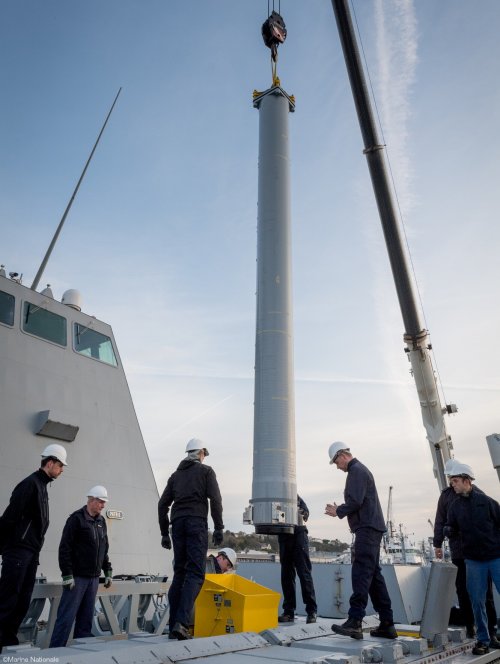
In the second shot here you can see the round canister being guided down through a square chute into the cell guides.
Sadly 57 is an orphan system and the next gen larger diameter VLS (such as G-VLS) have yet to mature. You're left with the virginia payload tube based VLS they're putting on Zumwalts or building your own. On the other hand, one could reasonably imagine that if the USN goes to a new VLS it will be able to replace Mk.41 aboard ships (or at least intend to).think the Mk57 would have been a better choice for Type 26s the way things are moving.
Connectors certainly. Sylver and Mk 41 use fundamentally different canister/launcher interfaces - one puts the connectors at the top, the other at the bottom.Connectors and voltage issues perhaps?
There are other ways to change frequency. But they involve complicated electronics, and my brain is better suited to problems solved by welding bits of metal together. I say we go back to sailormatic power, personallyDefinitely voltages and frequencies. USA uses 120VAC/60hz while Europe uses 220VAC/50hz.
Edit: voltages are easy to change, frequency changes require motor-generator pairs.
Wow, 34 inches for G-VLS. Can't see how that's an easy swap?Sadly 57 is an orphan system and the next gen larger diameter VLS (such as G-VLS) have yet to mature. You're left with the virginia payload tube based VLS they're putting on Zumwalts or building your own. On the other hand, one could reasonably imagine that if the USN goes to a new VLS it will be able to replace Mk.41 aboard ships (or at least intend to).
Lockheed apparently are designing it to fit 4 cells if G-VLS in the footprint of an 8 cell Mk.41 module with the ability to quad pack Mk.41 cannisters/munitions, which would double magazine density.Wow, 34 inches for G-VLS. Can't see how that's an easy swap?
https://www.navalnews.com/event-new...rovides-updates-on-naval-pac-3-mse-and-g-vls/
“But as part of being able to do a larger diameter missile, you could say take an eight-cell Mk.41 out, put what would be a four-cell with an exhaust on it. But those four cells would be able to handle quad packs of traditional missile canister-sized, or potentially larger missiles that will be coming in the future. So that’s part of one of the things we’re investing in that will help us maximize what you can do from your loadout perspectives and potentially even increase. Because if you think about it, with a four-cell quad pack that’s sixteen and more than the eight that were originally there, just because we changed the structure.”
Okay but I don't see how 2x2x34inches fits into 2x4x25inches.Lockheed apparently are designing it to fit 4 cells if G-VLS in the footprint of an 8 cell Mk.41 module with the ability to quad pack Mk.41 cannisters/munitions, which would double magazine density.
https://www.navalnews.com/event-new...ed-martin-developing-new-larger-vls-for-ddgx/