Michel Van

ACCESS: Above Top Secret
Senior Member
Joined
13 August 2007
Messages
9,834
Reaction score
16,302
better know as
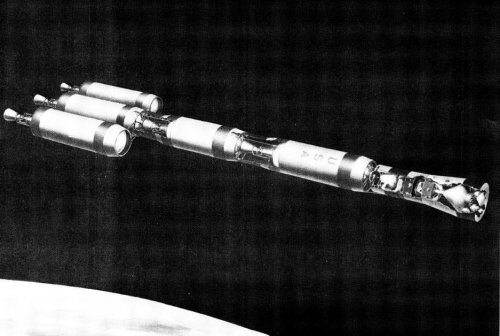
Mission Engineering Study of Electrically Propelled Manned Planetary Vehicles

GE began the study for MSFC in July 1966.
they proposed to uses both nuclear-thermal and nuclear-electric propulsion.
Nuclear ionengine give mission flexibility also for unfavorable opportunities
and reduce mission duration 800-1000 day to 450 day !

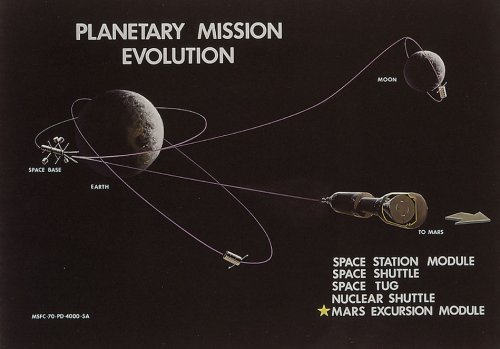
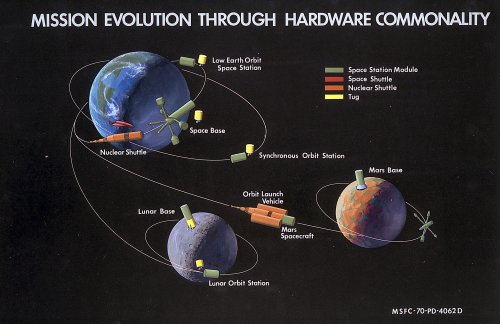
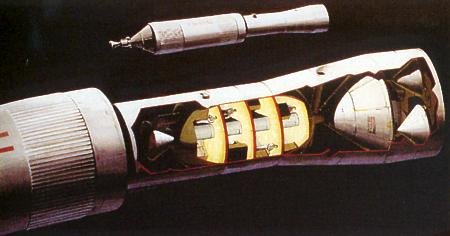
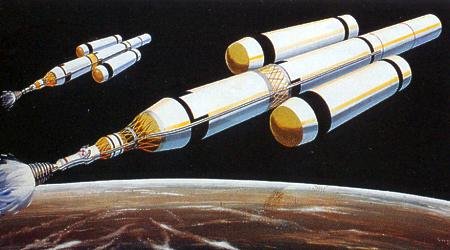
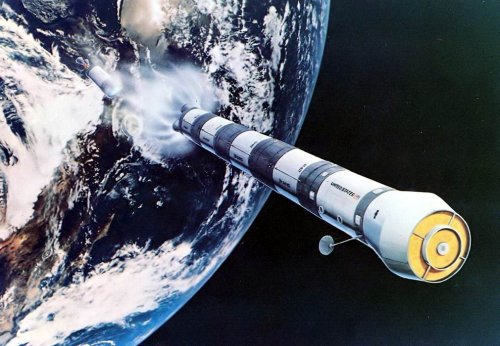
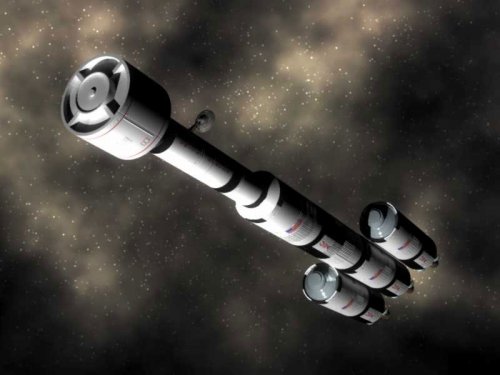
the GE Mars spaceship is build of 12 Modules

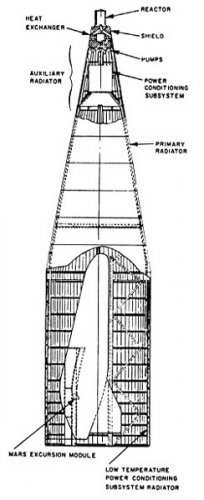
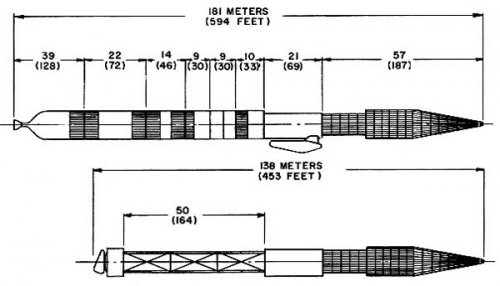
1. Powerplant module (36.3 tons, 56,99 meter (187 feet) long)
with 3.6 tons nuclear fission reactor (3MW), 13,4 tons radiation Shadow shield
and 2 stage cooling radiator with sodium potassium loop.
Launch together Mars Excursion Module (MEM)
2. Electric Propulsion Module (65,5 tons 21 meter (69 feet) long 10 meter (33 feet) ø)
has array of 126 electron bombardment thrusters mounted in six rows of 21 units each (15 are reserve)
thrusters or array is 21 meter (69 feet) long and 3,2 meter (10.5 feet) wide
trust of array is only 7,71 kg (17 pounds ) trust but it works for months
Fourteen 1,5 meter (5 feet) ø tanks inside the module with a total of 45.1 tons
of dense cesium propellant for the thrusters. the cesium is solid frozen during launch.
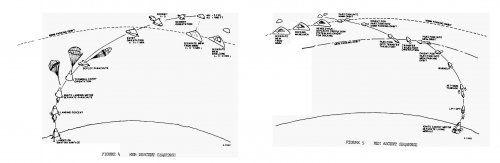
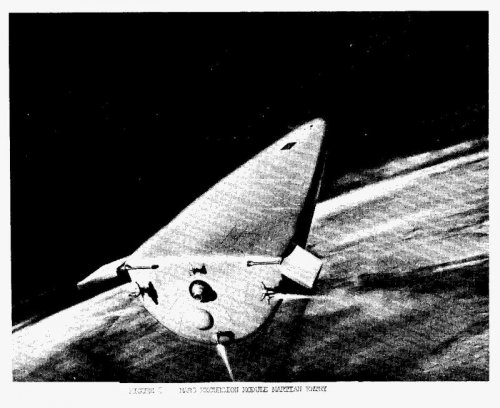
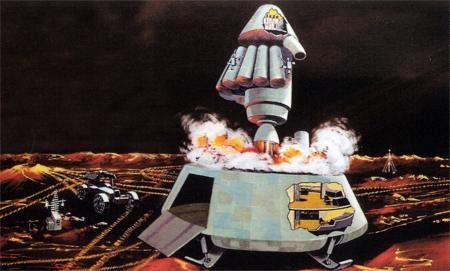
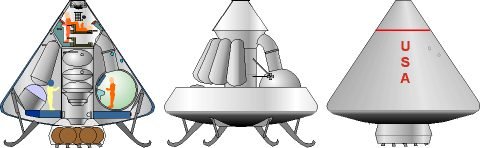
3. Mars Excursion Module is a lifting body like (or is?) the Philco D9-I MEM
17,67 meter (58 feet) long, 8,6 meter (28.5 feet) wide and 5,79 meter (19 feet) deep
4 men crew for 30 day on Mars.
the MEM is dock on Electric Propulsion Module during flight to Mars
4. Expansion boom (49,98 meter (164 feet) unfolded)
After Mars departure some Module are separate changing the center of gravity of the space ship
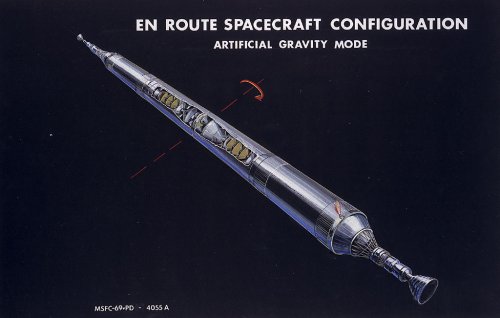
for balance the ship for artificial gravity by rotation,
Expansion boom is unfolded from Electric Propulsion Module
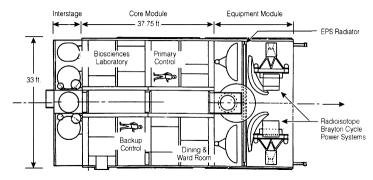
5. Mission Module (33,3 tons - 6 meter (20 feet) long, 10 meter(33 feet) ø )
1690 cubic feet (515 cubic meter?) living space for 8 men crew.
during flight they have artificial gravity by rotation of spacecraft.
the 2 deck MM include a radiation shelter. labs, "health room", bedrooms, 2 spacecraft control center
6. Earth Entry Module is a Lifting body
9,5 Tons. 8,99 meter (29.5 feet) long 5,36 meter (17.6 feet) wide and 3,99 meter (13.1 feet) deep
during flight the EEM is store in adapter between MM and the MDS
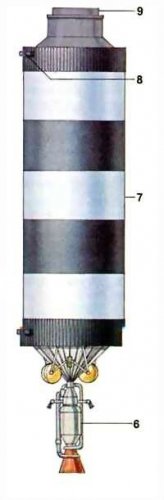
7. Mars Departure Stage (8,99 meter (29.5 feet) long, 10 meter(33 feet) ø )
24 tons LOX/LH2 fuel and 2 engine with 6,8 tons (15000 pound) trust each
8. Mars Arrival Stage (8,99 meter (29.5 feet) long, 10 meter(33 feet) ø )
the stage weighs 61.9 tons. 2 engine with 6,8 tons (15000 pound) trust each
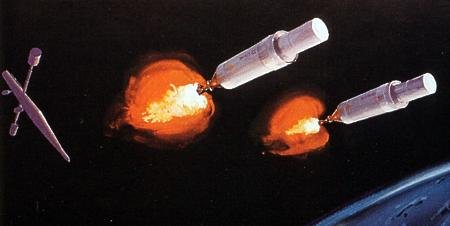
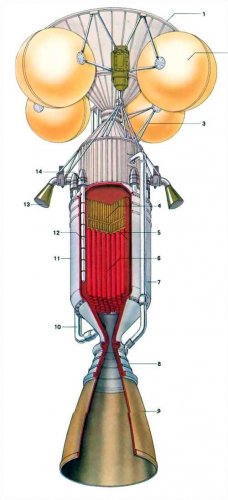
10.Earth Departure propellant Module 1
14 meter (46 feet) long, 10 meter(33 feet) ø. 72,6 tons of Lh2 and 1,5 tons of meteoroid protection panels
11.Earth Departure propellant Module 2
12,8 meter (72 feet) long, 10 meter(33 feet) ø. 127 tons of Lh2 and 2,4 tons of meteoroid protection panels
12.Earth Departure propulsion module
39 meter (128 feet) long, 10 meter(33 feet) ø. 160 tons (19,4 tons NERVA II engine, 120 tons of Lh2 and
3,75 tons of meteoroid protection panels )
the complet Earth Departure propulsion system weight 325 tons and is 74,9 meter (246 feet) long
the meteoroid protection panels of three modules are ejected before orbital launch

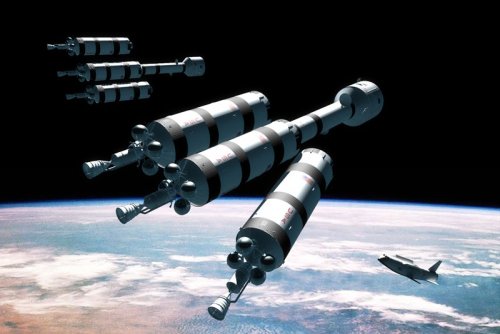
the GE Mars ship is assembly during 32 day in 482 km orbit, before launch to mars,
by 5 "improved" Saturn V with 160 tons payload
Launch 1 (T-32 days) Powerplant module & MEM
Launch 2 (T-27 days) Electric Propulsion Module+EB+MM+EEM with 8 men crew for assembly in orbit.
the crew move MEM out Powerplant module and dock sideway on Electric Propulsion Module which dock with rest.
Launch 3 (T-21 days) Mars departure stage, Mars arrival stage and first nuclear propellant module.
Launch 4 (T-12 days) the Mars mission crew in an emergency reentry vehicle and the second nuclear propellant module. Total weight is 152.1 tons.
Launch 5 (T-4 days) the Earth Departure propulsion module docks complets the Marsship
the assembly crew left the Mars ship with emergency reentry vehicle
the mission crew goes in radiation shelter and start up the Reactor for test

more on the mission later

source:
Romance to Reality homepage (offline)
now reborn as Altair VI http://altairvi.blogspot.com/

P.S.
strange on Altair IV and Astronautix
were article on GE Marsship but they disappeared...
 

Attachments

  • GEmscomplet.jpg
    GEmscomplet.jpg
    46.4 KB · Views: 209
  • GEmsretour.jpg
    GEmsretour.jpg
    32.3 KB · Views: 194
  • GEmsPM.jpg
    GEmsPM.jpg
    42.4 KB · Views: 219
Michel Van said:
P.S.
strange on Altair IV and Astronautix
were article on GE Marsship but they disappeared...
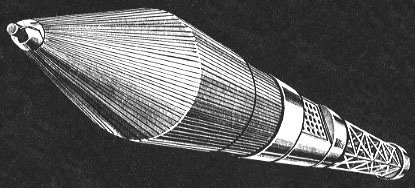
Well, Astronautix is a bit hard to navigate - I'm sure the Mars ship is still there somewhere...
In the case of Altair IV I guess the Mars ship is going into some of the books Mr Portree is writing.
 
to the mission

the Crew are:
Mission commander, system engineer, navigator, communications specialist,
MEM pilot, scientist-geophysics, scientist-biology, and an electronics specialist

the 4 of them are MEM crew:
MEM pilot/commander, navigator/engineer, scientist-geophysics, scientist-biology.
The MEM astronauts are thoroughly cross-trained
the scientist/astronaut is responsible for biology and geophysics studies, but the commander/pilot and navigator/engineer are trained as biology aide and geophysics aide, respectively.
The scientist/astronaut is also the MEM's doctor, while the navigator/engineer is responsible for the Mars rover.
NOTE: intresting not the Mission Commander, but the MEM Pilot is Commander for Landing team
likely the MEM pilot is first human who walk on Mars


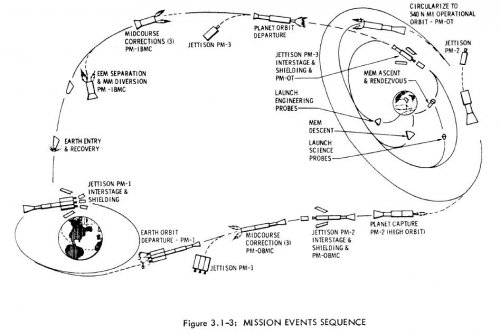
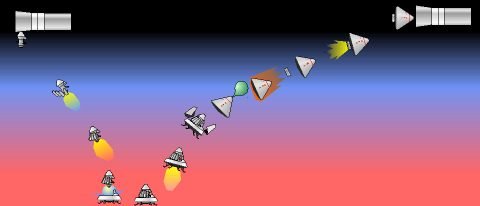
T-0 on may 17, 1986 Launch to Mars
the ship is 181 meter (594 feet) long and weight of 682 tons
the Meteoroid protection panels on the Earth Departure propulsion module are eject before ignition
the NERVA II runs for 30-45 minute then the EDPM then separate
the rest of now 330.2 tons ship turns sideways with the array thrusters pointing backwards
with small rockets the ship start to slow rotation (6/minute)
for artificial gravity equal to 0.6 Earth in the mission module.
then the crew activate the array thrusters. (the array thrusters are close in Center of the Marsship.)

NOTE: for next 90 day the crew has the chance to abandoning the mission
by eject PM, EPM, MEM, expansion boom. using the Mars Arrival/Departure Stages for Earth return.


T-30 Day the the array thrusters are shot down, the Ship coast until
T-58 Day Ship turns the array thrusters in direction of Mars and start up again for deceleration.

T-158 day space ship spin is stop and Mars Arrival Stages points to Mars and ignite
for 26 minute and bring the ship in Mars geostationary orbit 17000 km (9200 miles)
so the Ship remains all time above MEM landing site.
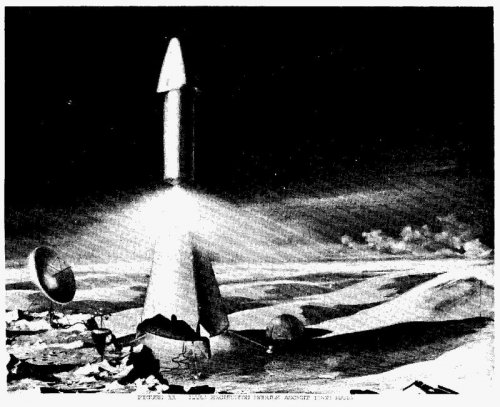
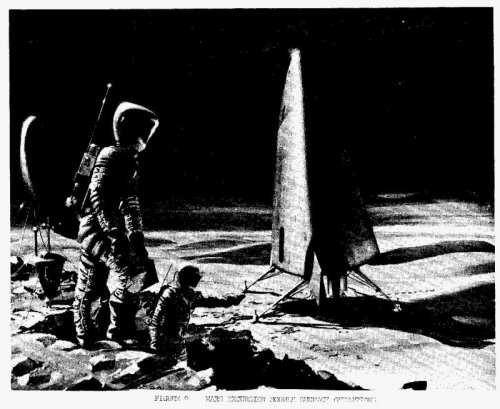
T-160 day MEM manned with 4 men and descent to Mars. after 2 hours and 50 minute MEM lands on Mars
T-160 -> 190 Mars surface exploration.
the MEM crew unpacks and inflate Lab/Garage and lower a Rover from MEM.
T-190 -> 195 day during next 5 day the MEM crew make preparation and checkout befor ascent.
T-196 MEM ascent stage liftoff from descent stage 11 hours later MEM dock with Marsship.
T-198 the Crew discard the MEM and Mars Arrival Stage, ignition of Mars Departure Stage
after leaving Mars orbit the MDS is separate, the Expansion boom is deploy
the rest of now 103.4 tons ship turns sideways with the array thrusters pointing backwards
with small rockets the ship start to slow rotation, for artificial gravity equal to 0.28 Earth in the mission module.
7 hours after leaving Mars orbit the array thrusters are activated
NOTE: GE explane if Ionn engines fails at this point of mission the ship can not return to Earth.

T-390 day the the array thrusters are shot down finally, the ship coasts the rest of way
T-450 day the Ship nears Earth, the crew enter the Earth entry Module with Data and Mars Samples.
they ondock 8 hours befor landing, the renaming ship swing past Earth, enters in a solar disposal orbit.
in same time the Crew returns with 15.24 km/s (50000 feet/sec) in Earth atmosphere over pacific
18 minute later extens Parawings and glide over US west coast to land on Edwards AFB California
 
archipeppe said:
Excellent infos, many thanks Michel!!! :D

thanks ;D

I like the GE Proposal, because it got allot development opportunities
with Ion thruster this ship can make Manned Mission to Mercury or Jupiter and Saturn

Speculation:
for a Jupiter Mission would take 2 years with Ion thruster.
landing on moon Callisto , 6 day surface exploration
however the crew as to spend most time around Jupiter in the radiation shelter
due Jupiter's magnetosphere
http://en.wikipedia.org/wiki/Jupiter_(planet)#Magnetosphere

a Saturn Mission (landing on Titan) would be easier with Saturn less dangerous magnetosphere
but the round trip take over 5 years !
 
I am looking for information on the Mars spacecraft that would have carried men to mars as planned for the post Apollo period. The MEM was to have been the Aeronuetronic lifting body from a 1964 paper presented at the AIAA/NASA 3rd Manned Spaceflight Meeting at Houston. The author was Temple W. Newman of Philco Ford.

This design of MEM was to be used on the Orion Nuclear Pulse spacecraft as well as other designs. The Mission Module/spacecraft I am interested in was, I believe, a North American Aviation proposal.

If anyone could help furnish me with illustrations I would be very grateful.

I have attached the only diagram that I have, along with the MEM diagram
 

Attachments

  • MMM.JPG
    MMM.JPG
    137.1 KB · Views: 710
  • MEM.pdf
    382.2 KB · Views: 118
Is this what you are looking for?
 

Attachments

  • MEM_04.jpg
    MEM_04.jpg
    44.9 KB · Views: 139
  • MEM_05.jpg
    MEM_05.jpg
    52 KB · Views: 123
  • MEM_06.jpg
    MEM_06.jpg
    173.3 KB · Views: 224
  • MEM_03art.jpg
    MEM_03art.jpg
    122.9 KB · Views: 222
  • MEM_02art.jpg
    MEM_02art.jpg
    114.5 KB · Views: 215
  • MEM_01art.jpg
    MEM_01art.jpg
    109.1 KB · Views: 259
thanks for PDF

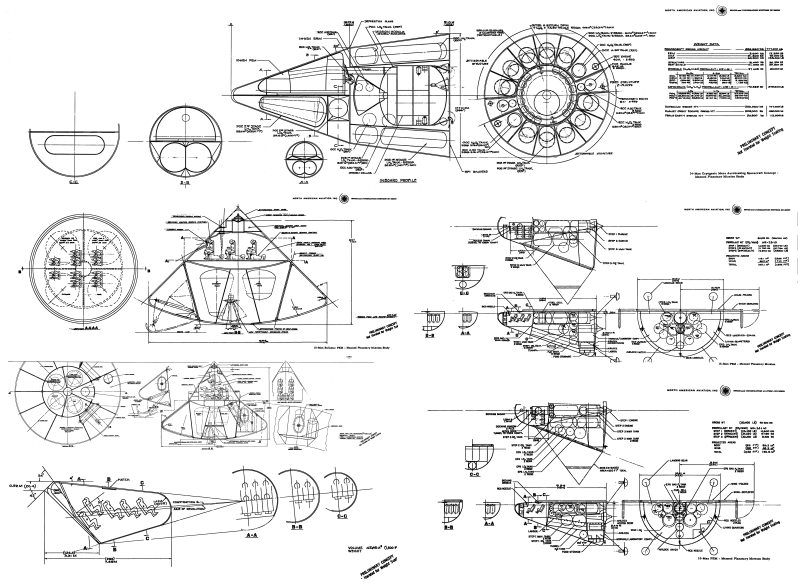
the MMM is from NAA

Philco MEM is also used for the General Electric Mars Mission Study
http://www.secretprojects.co.uk/forum/index.php/topic,5107.0.html
 
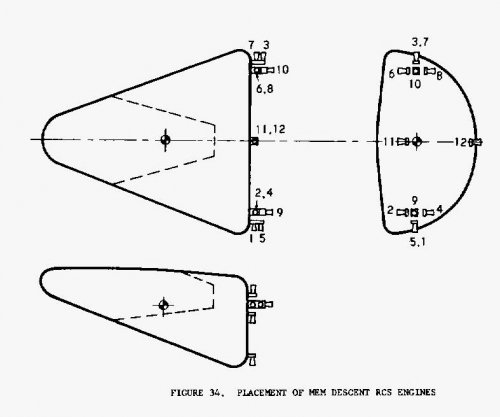
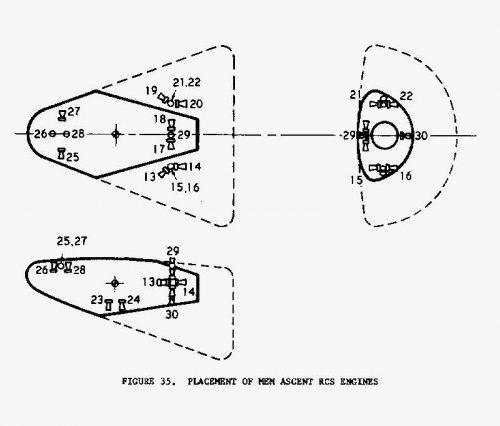
Thank you Michel Van and Flateric for your replies, especially the RCS layout for the MEM. It is the NAA mission module that I really need information on. The trouble is with the passing years, archives are destroyed or are not available electronically. Thanks again.
 
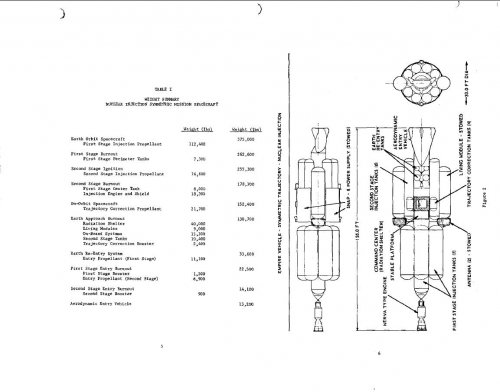
Well, in 1965 paper from (sic!) Newman we see Philco Aeronutronic Mars fly-by vehicle from EMPIRE study...utilising nuclear injection propulsion and looking very familiar MEM...
 

Attachments

  • Aeronutronic EMPIRE Mars fly-by.jpg
    Aeronutronic EMPIRE Mars fly-by.jpg
    93.8 KB · Views: 250
DarkLord, can you draw some NAA Mission Module project timeframe? Late 60s?
 
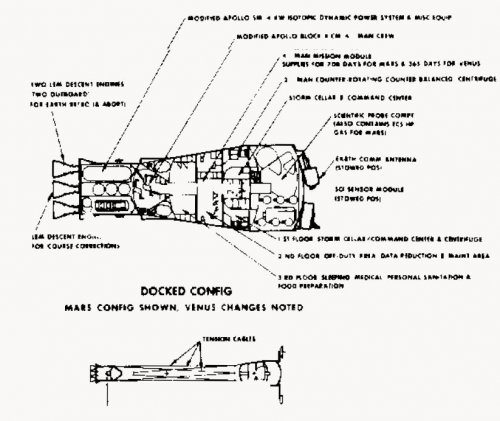
back to that NAA Mission Module (see picture MMM.jpg)
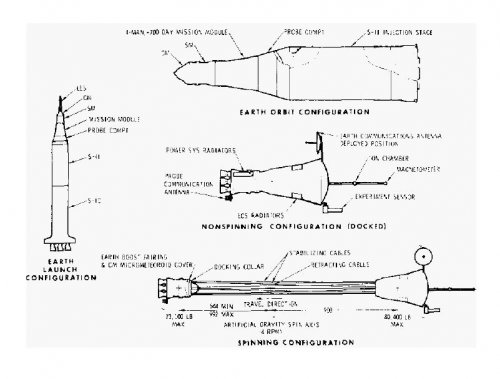
the Mission module is almost same of a Flyby Mission proposal by NAA

Manned Mars and/or Venus Flyby Vehicle Systems Study Final Briefing Brochure,
SID 65-761-6, A. L. Jones, North American Aviation, Vol. 6 of 6, June 18, 1965.
planned mission
Saturn V launch modified CSM atop MM in low orbit
rendezvous and dock with a separately launched North American Aviation-built S-IIB stage
(also launch in tow parts Tank LOX and Tank Lh2 with engine rendezvous and dock)

after launch to Mars flyby the empty S-IIB stage is separate
crew dock the CSM to MM and move in it
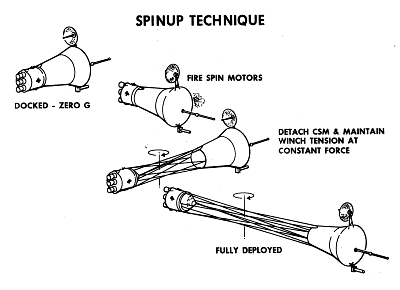
then the CSM is move reeled out by (tethers) to a distance of approximately 150 feet.
The flyby craft and CSM revolve about their center of mass four times per minute to produce one terrestrial gravity.
note that in MMM they use centrifuge like MORL instat

near mars they despin and face aft end of Spacecraft to Mars
and relace allot of probes !
-five Parachuted Atmospheric Probes
-one Soft Landing Probe-1 containing an automated biological laboratory
-one Soft Landing Probe-2 containing three dart-projectile probes, 3 balloon probes, and one television probe
-one Orbiting Astronomical Telescope satellite with a two-stage target planet orbit injection propulsion system
-six Hard Landing Probes
-one Orbiting Environment Monitor probe with a two-stage target planet orbit injection propulsion system
(all probe are stored in docking structure MM and S-IIB)

after fly by they start rotate the spacecraft again
At expedition's end the crew reels in and enters the CSM, and separates the flyby craft.
They then cast off the CSM's drum-shaped Service Module
and enter Earth's atmosphere in the conical Command Module.

modified CSM
Three LM descent engines replace the single Service Propulsion System engine
used in the Apollo CSM.
and carries a radioisotope power system, source of the flyby craft's electricity.
 

Attachments

  • flyspin.gif
    flyspin.gif
    8.5 KB · Views: 207
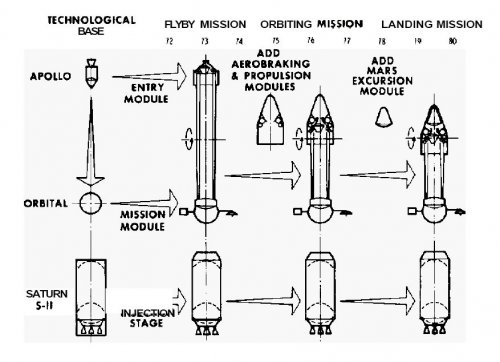
Well, Michel, 'almost the same' feels rather overmuch...
 

Attachments

  • NAA_1965_Evolutiomary_program_Mars_Venus_flyby.jpg
    NAA_1965_Evolutiomary_program_Mars_Venus_flyby.jpg
    61.4 KB · Views: 217
  • NAA_1965_Evolutiomary_program_0.jpg
    NAA_1965_Evolutiomary_program_0.jpg
    77.4 KB · Views: 211
  • NAA_1965_Evolutiomary_program_MM.jpg
    NAA_1965_Evolutiomary_program_MM.jpg
    80.5 KB · Views: 246
flateric said:
Well, Michel, 'almost the same' feels rather overmuch...
This may be of interest.
Mars Symposium - NEW DATE

BIS
Speaker(s): Bob Parkinson, Mark Hempsell, Alan Bond
Venue: BIS 27/29 South London Rd, London SW8 1SZ
Start Date: 19/Nov/2008
End Date: 19/Nov/2008
9.30 am 4.30 pm

You have some top people speaking
 
The six volumes of reports for the Boeing Integrated Manned Interplanetary Spacecraft (IMIS) for a manned mission to Mars are available on the NASA Technical Reports Server.

Boeing, Integrated Manned Interplanetary Spacecraft Concept Definition, Final Report Vol.1, Summary, January, 1968
http://ntrs.nasa.gov/archive/nasa/casi.ntrs.nasa.gov/19680009769_1968009769.pdf

Boeing, Integrated Manned Interplanetary Spacecraft Concept Definition, Final Report Vol.2, System Assessment & Sensitivities, January, 1968
http://ntrs.nasa.gov/archive/nasa/casi.ntrs.nasa.gov/19680009673_1968009673.pdf

Boeing, Integrated Manned Interplanetary Spacecraft Concept Definition, Final Report Vol.3(a), Systems Analysis (Missions & Operations), January, 1968
http://ntrs.nasa.gov/archive/nasa/casi.ntrs.nasa.gov/19680009770_1968009770.pdf

Boeing, Integrated Manned Interplanetary Spacecraft Concept Definition, Final Report Vol.3(b), Systems Analysis (Experiment Program), January, 1968
http://ntrs.nasa.gov/archive/nasa/casi.ntrs.nasa.gov/19680009780_1968009780.pdf

Boeing, Integrated Manned Interplanetary Spacecraft Concept Definition, Final Report Vol.4, System Definition, January, 1968
http://ntrs.nasa.gov/archive/nasa/casi.ntrs.nasa.gov/19680009779_1968009779.pdf

Boeing, Integrated Manned Interplanetary Spacecraft Concept Definition, Final Report Vol.5, Plans & Costs, January, 1968
http://ntrs.nasa.gov/archive/nasa/casi.ntrs.nasa.gov/19680010368_1968010368.pdf

Boeing, Integrated Manned Interplanetary Spacecraft Concept Definition, Final Report Vol.6, Cost Effective Subsystem Selection & Evolutionary Development, January, 1968
http://ntrs.nasa.gov/archive/nasa/casi.ntrs.nasa.gov/19680009778_1968009778.pdf
 

Attachments

  • BoeingIMIS.JPG
    BoeingIMIS.JPG
    93.9 KB · Views: 1,335
  • IMIS2.JPG
    IMIS2.JPG
    72 KB · Views: 1,336
Last edited by a moderator:
Hi,

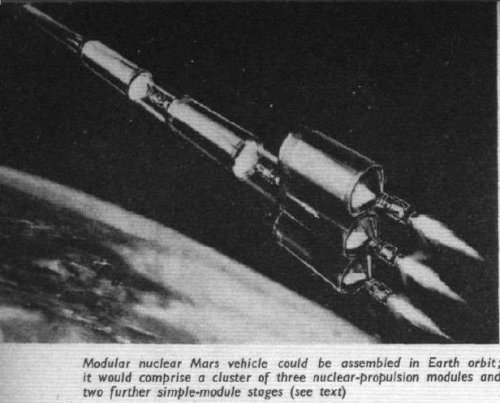
and here is a Modular nuclear Mars vehicle.
http://www.flightglobal.com/pdfarchive/view/1967/1967%20-%200504.html
 

Attachments

  • 1.JPG
    1.JPG
    44.3 KB · Views: 148
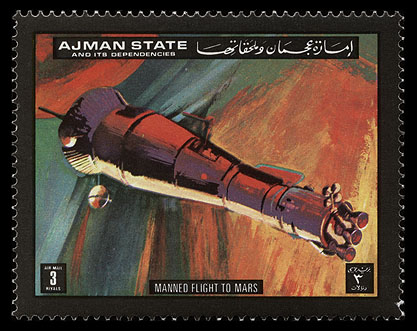
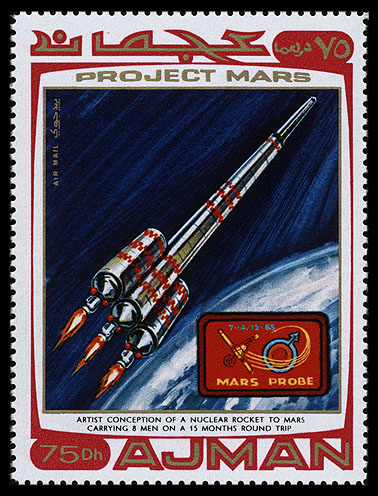
index.php


ajman_1972_futurespace_mi_1303a.jpg
 
i got more info on this NAA Mars Mission proposal in 1967
index.php


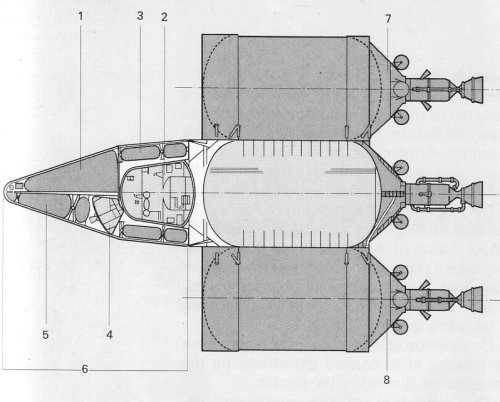
the Ship launch mass is around 400 tons
the biggest mass are the three S-IIN (point 7&8 on picture) they launch the Ship to Mars
after that the S-IIN are dropped
at Mars the bi-conical Space ship (point 6) made a Aerodynamic braking into Mars Orbit
with around 7-10 G for Crew of 6 men (sorry this 1960's no woman on board ::) )

the MEM (point 1) are several Proposals
like the Philco MEM or NAA PEM on basis of a Lifting body.
PEM = Planetary Excursion Module
3-4 men land on Mars while 2-3 remain on board
on end of Mars mission PEM ascent stage dock on Mars ship
after the PEM crew and Mars sample transfer, PEM is dropped

The Mars ship use Lh2/lox Engine (not show on Picture)
push them back to Earth
the fuel is stored in 10 tanks (point 3) around Crew module (point 2)

they got 2 men centrifuge on board for artificial gravity, around Solar stormshelter

near Earth the Crew goes in 6 men Apollo capsule (point 4)
they separate with Earthbreaking stage ( point 5) from Space ship
with use Lh2/lox Engine to reduce reentry speed on that of a Apollo mission.

a Little note on the Crew Module
NAA try to Sell it As Mulit use module begin as Space Station and end
as Crew Module for interplanetary mission

more on this here
Extended Mission Apollo Study
http://www.up-ship.com/drawndoc/sdoc64ani.jpg
to get here
http://www.up-ship.com/drawndoc/drawndocspacesaturn.htm
 
OM said:
...Reminding me more and more of MPC's "Pilgrim/Observer" for some reason.
that idea is from Krafft Ehricke
i think was even Convair Proposal

back to NAA 1967 Mars mission Proposal
here form Scott Lowther Homepage (an to buy there)
sdwg15ani.jpg


while first design is 10 meter ø for Saturn V launch
need this 17 meter ø Spaceship NOVA launcher
an i don't have Idea why the need 14 Astronauts for Mission
of 10 men land on Mars, is this for Mars Surface base personnel ?

and had NAA even a Nova Launcher proposal ?
 
an i don't have Idea why the need 14 Astronauts for Mission
of 10 men land on Mars, is this for Mars Surface base personnel ?

...This one's pretty simple. Most, if not all of the big Mars landing proposals called for nearly 24/7 surface activities, with crews divided into anywhere from four to eight-hour shifts. The lower the number of crew, the longer the EVAs. IIRC, with a 4-man crew on one of the uprated Apollo to Mars concepts, a four-man crew would be doing 8-9 hour shifts that were staggered so that there were three crew awake - one or two on EVA - while one slept, Note that these small-crew rotations were intended to be heavily choreographed, with practically every minute of their stay planned in advance with very little initial leeway for the unexpected and/or crew fatigue causing slowdowns and delays. These plans also were, IIRC, worked out in theory before the Skylab 4 "mutiny", which changed the way NASA looks at mission planning.
 
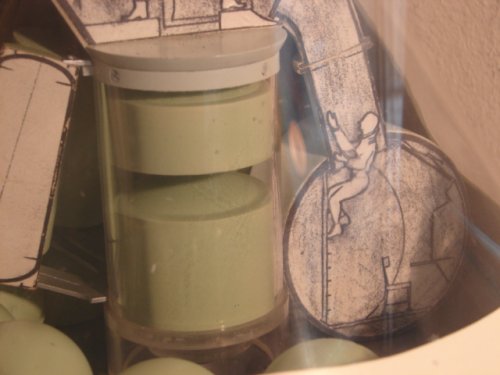
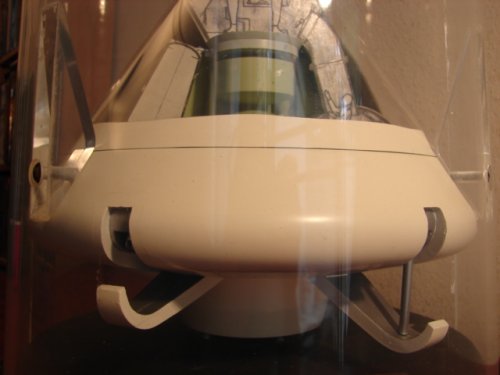
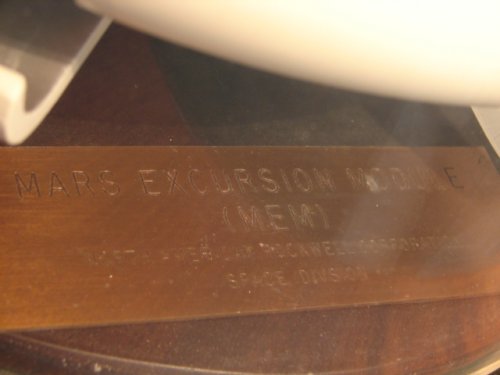
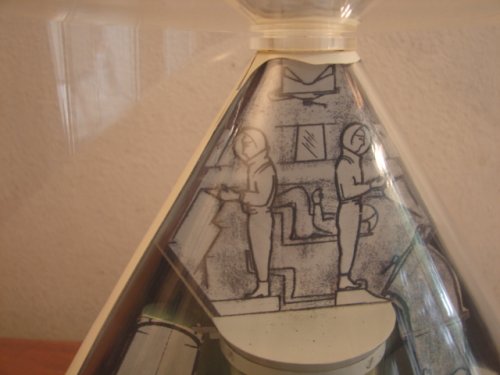
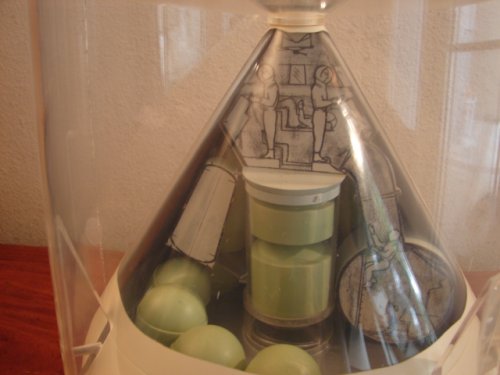
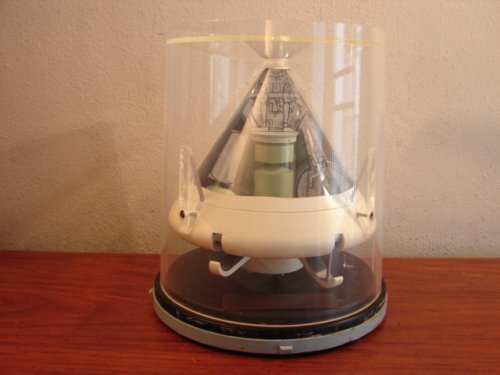
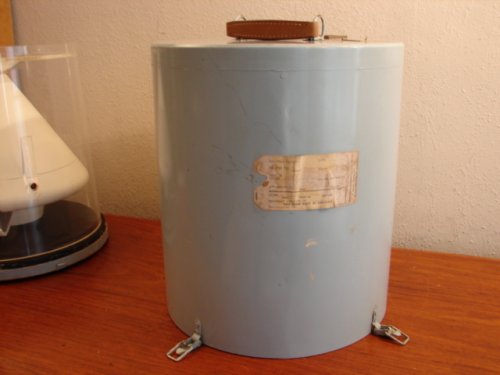
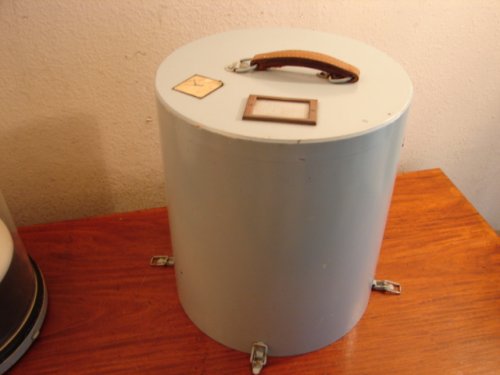
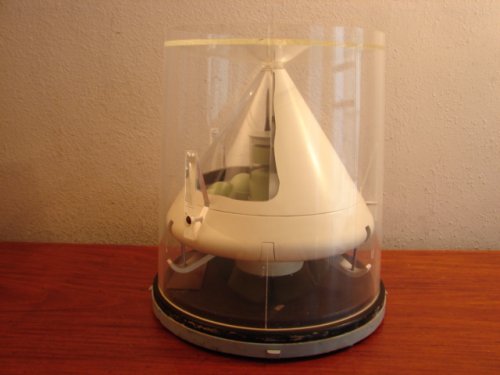
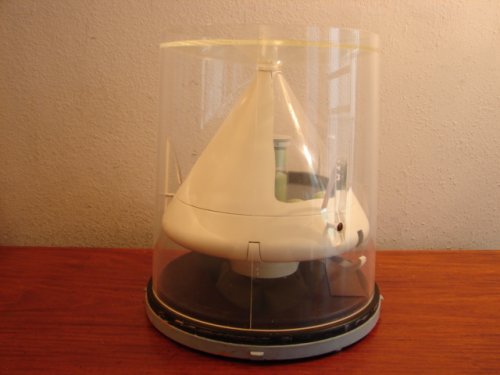
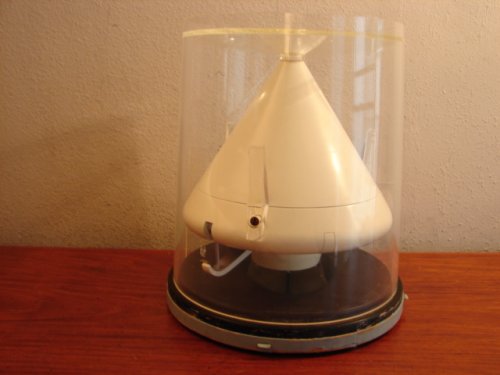
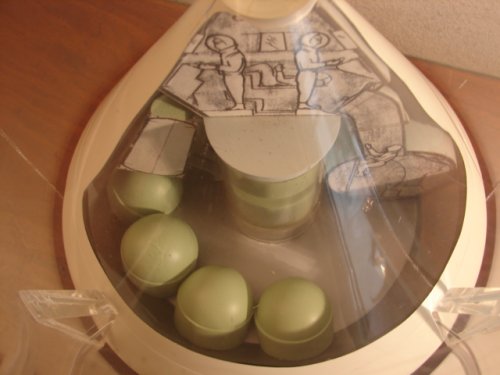
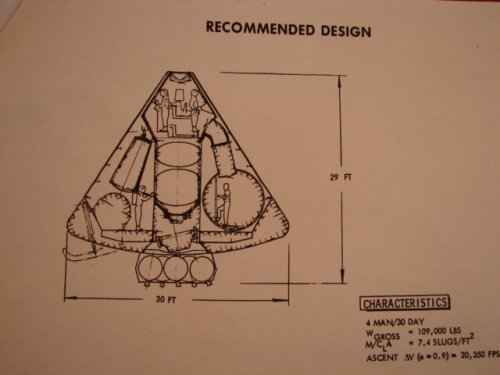
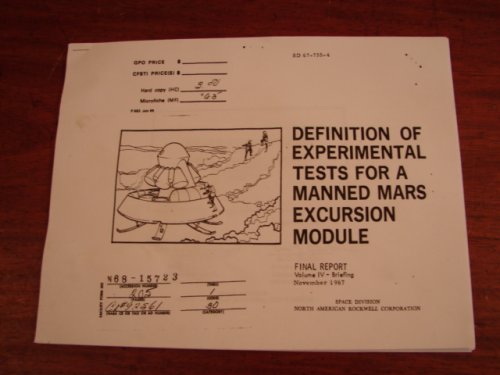
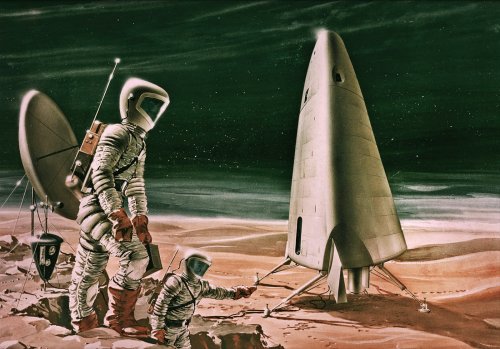
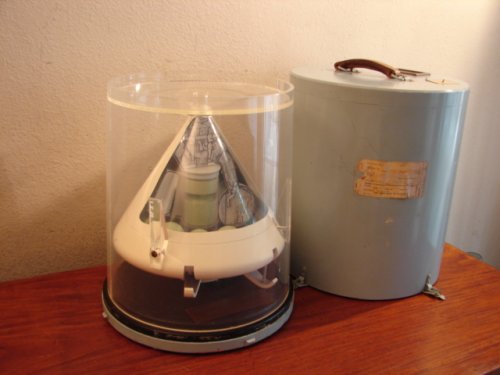
North American Rockwell Mars Excursion Module (MEM) model found on eBay.

URL: http://cgi.ebay.com/1967-ROCKWELL-NASA-MARS-PROTOTYPE-MODEL-SPACESHIP-RARE-/350404751800?pt=LH_DefaultDomain_0&hash=item5195c031b8

Seller's description:
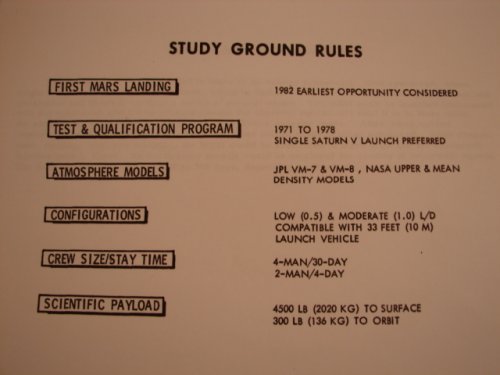
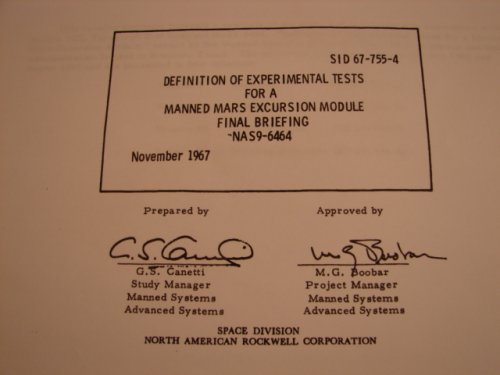
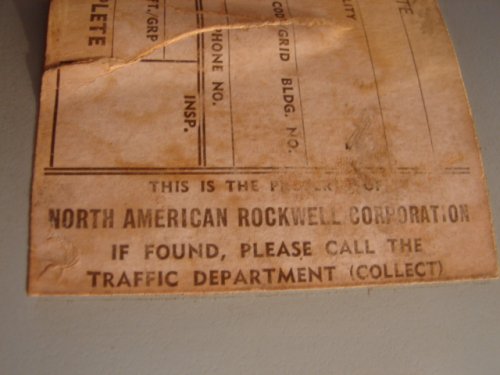
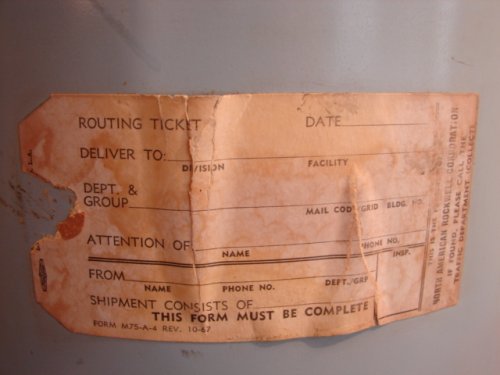
This is an original concept display piece from North American Rockwell Corporation. It is the 'Mars Excursion Module (MEM)', and was a project developed in 1967 for a manned landing on Mars. The project spaceship was to be tested and qualified between the years of 1971-1978, and a landing on Mars was scheduled for 1982. There are documents on the internet that describe the entire project, and give the history of the program. The case still has the Rockwell label on it that is dated 10/67. The spaceship is mounted behind a heavy duty type plexiglass type display, and has the conceptual type drawings on it of the occupants and how they would travel. The piece is in great condition, with no type of damage to it, and the blue metal display cover is in great condition as well, with only a few small marks on it. I have taken a number of photos. It is a good size piece, and the case stands 17" high, and is 14" in diameter, and it weighs in at 29pds.
 

Attachments

  • 297_038.JPG
    297_038.JPG
    159.2 KB · Views: 89
  • 293_052.JPG
    293_052.JPG
    133.9 KB · Views: 69
  • 287_059.JPG
    287_059.JPG
    140.2 KB · Views: 129
  • 273_040.JPG
    273_040.JPG
    150.3 KB · Views: 140
  • 267_047.JPG
    267_047.JPG
    160.2 KB · Views: 141
  • 266_051.JPG
    266_051.JPG
    145.7 KB · Views: 136
  • 261_042.JPG
    261_042.JPG
    138.6 KB · Views: 145
North American Rockwell Mars Excursion Module (MEM) model found on eBay.
 

Attachments

  • 333.JPG
    333.JPG
    141 KB · Views: 65
  • 329_036.JPG
    329_036.JPG
    161.6 KB · Views: 63
  • 326_037.JPG
    326_037.JPG
    146.4 KB · Views: 56
  • 322_033.JPG
    322_033.JPG
    148 KB · Views: 58
  • 316_030.JPG
    316_030.JPG
    134.5 KB · Views: 57
  • 314.JPG
    314.JPG
    136.6 KB · Views: 55
  • 311.JPG
    311.JPG
    154.2 KB · Views: 57
  • 303_044.JPG
    303_044.JPG
    151 KB · Views: 64
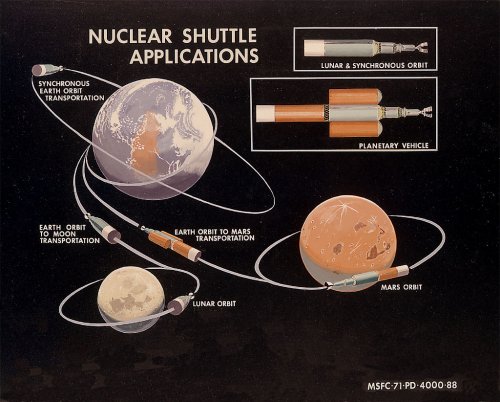
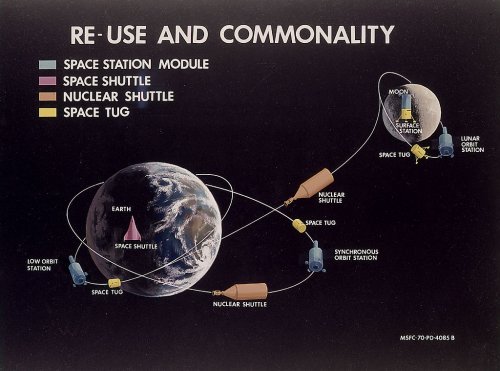
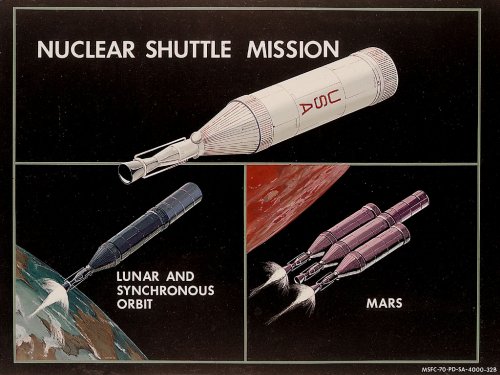
While this thread here deals with the nuclear shuttle technology http://www.secretprojects.co.uk/forum/index.php/topic,6177.0/all.html I thought of using this thread for the proposed Mars missions themselves for the early 1980's
 

Attachments

  • (Marshall Image Exchange) 9902063.jpg
    (Marshall Image Exchange) 9902063.jpg
    240 KB · Views: 101
  • (Marshall Image Exchange) 9902062.jpg
    (Marshall Image Exchange) 9902062.jpg
    110.2 KB · Views: 175
  • (Marshall Image Exchange) 9902060.jpg
    (Marshall Image Exchange) 9902060.jpg
    192.6 KB · Views: 144
  • (Marshall Image Exchange) 9902052.jpg
    (Marshall Image Exchange) 9902052.jpg
    219.6 KB · Views: 162
  • (Marshall Image Exchange) 9902048.jpg
    (Marshall Image Exchange) 9902048.jpg
    111.6 KB · Views: 157
  • (Marshall Image Exchange) 9902017.jpg
    (Marshall Image Exchange) 9902017.jpg
    673.6 KB · Views: 170
Images of MEM (Mars excursion module) and 1969 mission concepts
 

Attachments

  • (www.astronautix.com) zmem69.jpg
    (www.astronautix.com) zmem69.jpg
    18.6 KB · Views: 93
  • (www.astronautix.com) zmars69b.jpg
    (www.astronautix.com) zmars69b.jpg
    13.2 KB · Views: 81
  • (www.astronautix.com) zmars69a.jpg
    (www.astronautix.com) zmars69a.jpg
    22.9 KB · Views: 85
  • (www.astronautix.com) mars69mm.jpg
    (www.astronautix.com) mars69mm.jpg
    15.3 KB · Views: 81
  • (www.astronautix.com) zmemprof.jpg
    (www.astronautix.com) zmemprof.jpg
    10.2 KB · Views: 84
  • (www.astronautix.com) zmem69b.jpg
    (www.astronautix.com) zmem69b.jpg
    23.7 KB · Views: 92
  • (www.astronautix.com) zmem3vw.jpg
    (www.astronautix.com) zmem3vw.jpg
    17.2 KB · Views: 95
Boeing variation on nuclear shuttle and 2 cut-away diagrams
 

Attachments

  • nerva_08.jpg
    nerva_08.jpg
    127 KB · Views: 82
  • nerva_16.jpg
    nerva_16.jpg
    48.2 KB · Views: 71
  • nerva_17.jpg
    nerva_17.jpg
    15 KB · Views: 70
From http://www.bisbos.com/rocketscience/spacecraft/nerva/nerva.html
 

Attachments

  • nerva_inflight1l.jpg
    nerva_inflight1l.jpg
    38.5 KB · Views: 82
  • nerva-construct_l.jpg
    nerva-construct_l.jpg
    68.8 KB · Views: 108
Re: Philco Aeronutronic Mars Excursion Module (MEM) project......

Dear Boys and Girls, here is an article in French about the Philco Aeronutronic Division Mars Excursion Module "project" made for NASA and AIAA......

The article comes from the 15th January 1965 issue of Aviation Magazine International......

Terry (Caravellarella)
 
There's actually a report on this proposal somewhere, or at least an AIAA paper. I always thought that they had the coolest artwork--all those black and white images you see in the magazine are actually color paintings (but why the green skies?), and the artwork was so good that it later showed up in a National Geographic book on space in the mid-1970s. But it's also not a workable design--that spacecraft could not have made it to the surface of Mars intact.
 
blackstar said:
But it's also not a workable design--that spacecraft could not have made it to the surface of Mars intact.

It would have made it to the surface of a pre-Mariner 4 Mars just fine. Sadly, the Martian atmosphere mostly fluttered away just before Mariner 4 got there, wiping out the thoats, green fighting men, naked orange hotties and hopes of straightforward aerodynamic braking and lifting landings.

In any event, it *would* make it to the surface of a post-Mariner 4 Mars intact. It would remain intact for a few microseconds of contact, at which point it would become progressively less intact over a span of milliseconds, at the end of which it would be a decidedly non-intact version of itself buried beneath the bottom of a small crater.
 
Re: Philco Aeronutronic Mars Excursion Module (MEM) 1964 - SPLAT

A very surprised sperm whale and a bowl of petunias come to mind.
 
IIRC, consensus was the UK's Mars Lander ultimately expired due too-thin atmosphere...

AFAIR, situation resembles that near summit of Everest: If jet-stream zags instead of zigs, local pressure drops by ~10% and the fatalities mount...

Wasn't the next NASA lander redesigned as a result ??
 

Similar threads

Back
Top Bottom