F-47, I think yes. And once the AUKUS subs fail to materialize, Australia will buy B-21s instead.Does this expand? Maybe? Do some CCAs or even NGAD or F/A-XX fly with RAAF livery at some point? That’s a more interesting question….

You are using an out of date browser. It may not display this or other websites correctly.
You should upgrade or use an alternative browser.
You should upgrade or use an alternative browser.
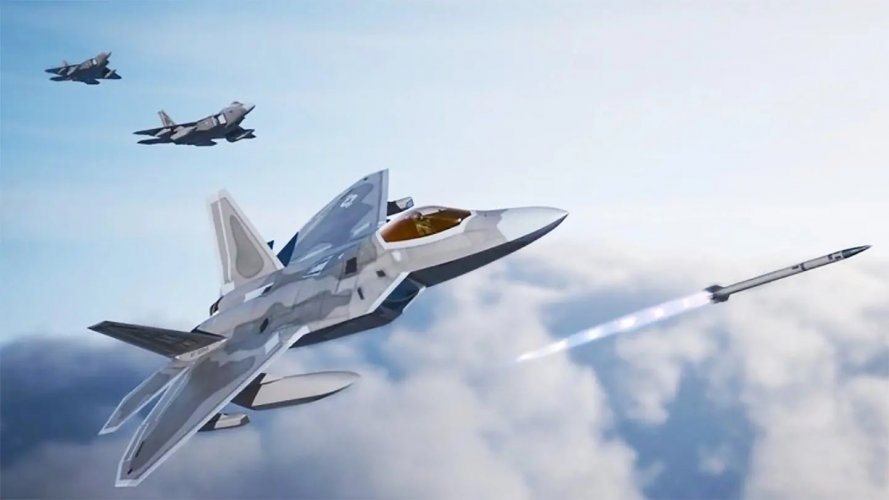
Lockheed Martin AIM-260 Joint Advanced Tactical Missile (JATM)
- Thread starter Jeb
- Start date
id imagine the two missiles would be comparable in range with the AIM-260 being more advanced in some way or another and i believe more expensive so maybe a high low mix kinda how the US is using amraams and AIM260's as a high low mix could be wrong thoughAlso interesting that the UK is included in the export for the AIM-260A considering that we have the ramjet powered Meteor as the missile of choice, we have the Meteor already lined up for the F-35Bs. So I take it that the AIM-260 will be partnered with the Meteor?

FighterJock
ACCESS: Above Top Secret
- Joined
- 29 October 2007
- Messages
- 7,227
- Reaction score
- 8,538
A high low mix would be an interesting solution especially for the upcoming GCAP/Tempest and the F-47 JPET.

BonPlan2
ACCESS: Top Secret
- Joined
- 5 June 2025
- Messages
- 577
- Reaction score
- 737
I think Meteor on F-35 is not for tomorrow...Also interesting that the UK is included in the export for the AIM-260A considering that we have the ramjet powered Meteor as the missile of choice, we have the Meteor already lined up for the F-35Bs. So I take it that the AIM-260 will be partnered with the Meteor?
FighterJock
ACCESS: Above Top Secret
- Joined
- 29 October 2007
- Messages
- 7,227
- Reaction score
- 8,538
I had thought that the Meteor was delayed somehow BonPlan2, but I do not know for how long.
Ainen
I really should change my personal text
- Joined
- 25 August 2011
- Messages
- 2,819
- Reaction score
- 4,926
~2032 per current plans. And only for late batches(minority of current order).I had thought that the Meteor was delayed somehow BonPlan2, but I do not know for how long.
Honestly, at this pace it may end up as "never". Shiny AIM-260 and GBU-56 are almost here, just ask!
id imagine the two missiles would be comparable in range with the AIM-260 being more advanced in some way or another and i believe more expensive so maybe a high low mix kinda how the US is using amraams and AIM260's as a high low mix could be wrong though
For the U.S., AIM-120 is already the low. Additionally, an effort for reduced price BVR AAMs is also underway. I doubt there is any interest in Meteor.
The U.S. Air Force has confirmed that the AIM-260A#JATM is not a new procurement project for FY26.
FY26 marks the first time the U.S. Air Force and Navy have publicly disclosed AIM-260A funding in their budgets.
Previously, Low-Range Initial Production (LRIP) batches were not reported in previous budget materials.
Furthermore, the budget allocates $376.9 million… but reveals that 104 missiles will be purchased in fiscal year 2024 and 40 more in fiscal year 2025… Does this mean the latest missile costs approximately $3.36 million per missile, a decrease from $4.14 million in FY24?
~According to ASForcesMag… Additionally, the U.S. Navy has requested an additional $301 million for procurement (quantity not disclosed).
This includes JATM, which was scaled back into production in 2023/2024 and appears poised to transition from low-rate initial production to full-rate production in FY26.
In contrast, AMRAAM saw its 30th annual production batch order in FY26.
FY26 marks the first time the U.S. Air Force and Navy have publicly disclosed AIM-260A funding in their budgets.
Previously, Low-Range Initial Production (LRIP) batches were not reported in previous budget materials.
Furthermore, the budget allocates $376.9 million… but reveals that 104 missiles will be purchased in fiscal year 2024 and 40 more in fiscal year 2025… Does this mean the latest missile costs approximately $3.36 million per missile, a decrease from $4.14 million in FY24?
~According to ASForcesMag… Additionally, the U.S. Navy has requested an additional $301 million for procurement (quantity not disclosed).
This includes JATM, which was scaled back into production in 2023/2024 and appears poised to transition from low-rate initial production to full-rate production in FY26.
In contrast, AMRAAM saw its 30th annual production batch order in FY26.
Attachments

Scott Kenny
ACCESS: USAP
- Joined
- 15 May 2023
- Messages
- 19,516
- Reaction score
- 27,964
That would track with getting the production streamlined and simplified.Furthermore, the budget allocates $376.9 million… but reveals that 104 missiles will be purchased in fiscal year 2024 and 40 more in fiscal year 2025… Does this mean the latest missile costs approximately $3.36 million per missile, a decrease from $4.14 million in FY24?

Forest Green
ACCESS: USAP
- Joined
- 11 June 2019
- Messages
- 14,501
- Reaction score
- 31,532
View: https://x.com/AirPowerNEW1/status/2017196484832223465?s=20This includes JATM, which was scaled back into production in 2023/2024 and appears poised to transition from low-rate initial production to full-rate production in FY26.

- Joined
- 6 August 2007
- Messages
- 4,530
- Reaction score
- 10,227
From the Congressional Record:
TRANSMITTAL NO. 26–03
Notice of Proposed Issuance of Letter of Offer Pursuant to Section 36(b)(1) of the Arms Export Control Act, as amended
(i) Prospective Purchaser: Government of Australia.
(ii) Total Estimated Value: Major Defense Equipment* $2.61 billion.
Other $.55 billion.
Total $3.16 billion.
Funding Source: National Funds.
(iii) Description and Quantity or Quantities of Articles or Services under Consideration for Purchase:
Major Defense Equipment (MDE):
Up to four hundred fifty (450) AIM–260 Joint Advanced Tactical Missiles (JATM).
Up to five (5) AIM–260 JATM Integration Test Vehicles (ITV).
Up to thirty (30) AIM–260 JATM Guided Test Vehicles (GTV).
Non-Major Defense Equipment:
The following non-MDE items will also be included: ammunition containers; shoe jet- tison assemblies; KGV–135A embedded com- munications security devices; spare parts, consumables, and accessories; repair and re- turn support; component parts and spare equipment; training aids, devices, and spare parts; weapon system support and test equip- ment; classified and unclassified software de- livery and support; classified and unclassi- fied publications and technical documenta- tion; personnel training and training equip- ment; transportation support; site surveys; warranties; U.S. Government and contractor engineering, technical, and logistics support services; and other related elements of logis- tics and program support.
(iv) Military Department: Air Force (AT–D–YAO).
(v) Prior Related Cases, if any: None.
(vi) Sales Commission, Fee, etc., Paid, Offered, or Agreed to be Paid: None known at this time.
(vii) Sensitivity of Technology Contained in the Defense Article or Defense Services Proposed to be Sold: See Attached Annex.
(viii) Date Report Delivered to Congress:
January 23, 2026.
* As defined in Section 47(6) of the Arms Export Control Act.
POLICY JUSTIFICATION
Australia—AIM–260 Joint Advanced Tactical Missiles
The Government of Australia has re- quested to buy up to four hundred fifty (450) AIM–260 Joint Advanced Tactical Missiles (JATM); up to five (5) AIM–260 JATM Inte- gration Test Vehicles (ITV); and up to thirty (30) AIM–260 JATM Guided Test Vehicles (GTV). The following nonMDE items will also be included: ammunition containers; shoe jettison assemblies; KGV–135 A embed- ded communications security devices; spare parts, consumables, and accessories; repair and return support; component parts and spare equipment; training aids, devices, and spare parts; weapon system support and test equipment; classified and unclassified soft- ware delivery and support; classified and un- classified publications and technical docu- mentation; personnel training and training equipment; transportation support; site sur- veys; warranties; U.S. Government and con- tractor engineering, technical, and logistics support services; and other related elements of logistics and program support. The esti- mated total cost is $3.16 billion. This proposed sale will support the foreign policy and national security objectives of the United States. Australia is one of our most important allies in the Western Pa- cific. The strategic location of this political and economic power contributes signifi- cantly to ensuring peace and economic sta- bility in the Western Pacific. It is vital to the U.S. national interest to assist our ally in developing and maintaining a strong and ready self-defense capability.
The proposed sale will improve Australia’s capability to meet current and future threats by ensuring Australia has modern, capable air-to-air munitions that improve interoperability between the United States and the Royal Australian Air Force (RAAF). Australia will have no difficulty absorbing these articles into its armed forces. The proposed sale of this equipment and support will not alter the basic military bal- ance in the region.
The principal contractor will be Lockheed Martin Missiles and Fire Control, located in Orlando, FL. At this time, the U.S. Govern- ment is not aware of any offset agreement proposed in connection with this potential sale. Any offset agreement will be defined in negotiations between the purchaser and the contractor.
Implementation of this proposed sale will not require the assignment of any additional U.S. Government or contractor representa- tives to Australia.
There will be no adverse impact on U.S. defense readiness as a result of this proposed sale.
TRANSMITTAL NO. 26–03
Notice of Proposed Issuance of Letter of Offer Pursuant to Section 36(b)(1) of the Arms Export Control Act
Annex Item No. vii
(vii) Sensitivity of Technology:
1. The AIM–260 Joint Advanced Tactical Missile (JATM) is a GPS-aided air superi- ority missile with increased range and effec- tiveness over existing air-to-air weapons with Precise Positioning Services provided by Selective Availability Anti-Spoofing Mod- ule or M–Code. Anti-tampering security measures have been incorporated into the AIM–260 to prevent exploitation of the soft- ware.
2. The AIM–260 Guided Test Vehicle (GTV) is an instrumented version of the missile where the warhead is replaced with a telem- etry unit to capture missile data parameters during live-fire flight testing.
3. The AIM–260 Integration Test Vehicle (ITV) is a modified AIM–260 missile used for captive test purposes.
4. The KGV–135 A is a high-speed, general purpose encryptor/decryptor module used for wideband data encryption.
5. The highest level of classification of de- fense articles, components, and services in- cluded in this potential sale is SECRET.
6. If a technologically advanced adversary were to obtain knowledge of the specific hardware and software elements, the infor- mation could be used to develop counter- measures that might reduce system effec- tiveness or be used in the development of a system with similar or advanced capabili- ties.
7. A determination has been made that Australia can provide substantially the same degree of protection for the sensitive tech- nology being released as the U.S. Govern- ment. This sale is necessary in furtherance of the U.S. foreign policy and national secu- rity objectives outlined in the Policy Jus- tification.
8. All defense articles and services listed in this transmittal have been authorized for re- lease and export to the Government of Aus- tralia.
Attachments
Scott Kenny
ACCESS: USAP
- Joined
- 15 May 2023
- Messages
- 19,516
- Reaction score
- 27,964
450 JATMs?
That's only 4 missiles per fighter in their fleet plus some extras. 24x Super Bugs and 72x F-35s means that 450 JATMs is only enough for 4x per F-35 and 6x per Super Bug, with NOT A SINGLE MISSILE IN STOCKPILE.
Super bug probably just use AIM-174 if they want long range shot450 JATMs?
That's only 4 missiles per fighter in their fleet plus some extras.24x Super Bugs and 72x F-35s means that 450 JATMs is only enough for 4x per F-35 and 6x per Super Bug, with NOT A SINGLE MISSILE IN STOCKPILE.
Scott Kenny
ACCESS: USAP
- Joined
- 15 May 2023
- Messages
- 19,516
- Reaction score
- 27,964
Oz is/has bought AIM-174?Super bug probably just use AIM-174 if they want long range shot
Out of a fleet of 96 aircraft, some are always under maintenance. Mission available rates might be like 70 percent, suggesting 70 or fewer planes actually doing missions.
Further, not all missions would be air combat. F35 on a strike mission would fly with just 2 AA missiles, for example.
Finally, even a super hornet with a pure AA load would likely have a mixed load of 3 missile types. A pair of aim260 for long range work. 2-4 more amraams for medium range and finally 2 aim9 for close range.
Even in modern air combat there aren't many situations where one has to fire off all of their missiles at once, at max range. more likely is staggered use, where a few missiles are fired at long range, then after a further assessment, minutes later, more missiles may be fired at medium range. Or maybe assessment becomes that it's better to turn around and disengage, thus not firing any missiles at any of the stages of the missile exchange. (Before long range missiles, before medium range ones, etc)
Further, not all missions would be air combat. F35 on a strike mission would fly with just 2 AA missiles, for example.
Finally, even a super hornet with a pure AA load would likely have a mixed load of 3 missile types. A pair of aim260 for long range work. 2-4 more amraams for medium range and finally 2 aim9 for close range.
Even in modern air combat there aren't many situations where one has to fire off all of their missiles at once, at max range. more likely is staggered use, where a few missiles are fired at long range, then after a further assessment, minutes later, more missiles may be fired at medium range. Or maybe assessment becomes that it's better to turn around and disengage, thus not firing any missiles at any of the stages of the missile exchange. (Before long range missiles, before medium range ones, etc)

- Joined
- 16 April 2008
- Messages
- 10,588
- Reaction score
- 18,127
450 JATMs?
That's only 4 missiles per fighter in their fleet plus some extras.24x Super Bugs and 72x F-35s means that 450 JATMs is only enough for 4x per F-35 and 6x per Super Bug, with NOT A SINGLE MISSILE IN STOCKPILE.
Or maybe it's only for the F-18s, which gives them about 18-19 per airframe.
- Joined
- 6 August 2007
- Messages
- 4,530
- Reaction score
- 10,227
450 JATMs?
That's only 4 missiles per fighter in their fleet plus some extras.24x Super Bugs and 72x F-35s means that 450 JATMs is only enough for 4x per F-35 and 6x per Super Bug, with NOT A SINGLE MISSILE IN STOCKPILE.
Huh?
The AIM-260s are for their Super Hornets, not F-35. F-35 cannot yet carry AIM-260 and there are no funded programs to do so.
Scott Kenny
ACCESS: USAP
- Joined
- 15 May 2023
- Messages
- 19,516
- Reaction score
- 27,964
Dafuq?!?Huh?
The AIM-260s are for their Super Hornets, not F-35. F-35 cannot yet carry AIM-260 and there are no funded programs to do so.
If that's the case, objection withdrawn.
- Joined
- 6 August 2007
- Messages
- 4,530
- Reaction score
- 10,227
Dafuq?!?
If that's the case, objection withdrawn.
Aircraft that can carry AIM-260:
F-22
F-18E.
Other aircraft planned to carry AIM-260:
Possibly QF-16 for testing.
...and that's it. They have not even done an LOE for using it with the F-35.

- Joined
- 3 June 2011
- Messages
- 20,895
- Reaction score
- 19,084
Why?Seems like this kind of align with my fitting assumption the AIM-260 might need foldable wings.
It's a wider body and the wings might clip for drop clearance. See https://www.secretprojects.co.uk/threads/possible-configuration-of-the-boeing-f-47-ngad.45793
If that was the only missile they acquired that might be a problem. In 2025 Australia also requested 200 AIM-120C8 and 200 D3 missiles on top of the 450 AIM-120Ds ordered in 2016. Noting that some Ds are being provided to the UAE and the 200 C8s ordered in 2025 are for NASAMS. Add in another 400 or so AM-9X as well over that same period.450 JATMs?
That's only 4 missiles per fighter in their fleet plus some extras.24x Super Bugs and 72x F-35s means that 450 JATMs is only enough for 4x per F-35 and 6x per Super Bug, with NOT A SINGLE MISSILE IN STOCKPILE.
Scott Kenny
ACCESS: USAP
- Joined
- 15 May 2023
- Messages
- 19,516
- Reaction score
- 27,964
What the hell is wrong with the F-35 team?Aircraft that can carry AIM-260:
F-22
F-18E.
Other aircraft planned to carry AIM-260:
Possibly QF-16 for testing.
...and that's it. They have not even done an LOE for using it with the F-35.
Funding? Has anyone actually waved around a stack of Benjamins and told them to get it done?What the hell is wrong with the F-35 team?

Colonial-Marine
UAVs are now friend, drones are the real enemy.
- Joined
- 5 October 2009
- Messages
- 1,714
- Reaction score
- 1,820
It would be insanity for the AIM-260 to not be integrated on other aircraft later. The F-35 and F-15EX are obvious candidates. It might even be a useful armament for late model F-16s with AESA radars.
yeetmahboi
ACCESS: Top Secret
- Joined
- 6 April 2022
- Messages
- 1,025
- Reaction score
- 1,434
It's concerning the current budget. There are needs more pressing and present than others.
Amen.
Amen.
i wonder how the MAKO hypersonic would compare to aim260. i imagine its like a aim120 vs meteor situation with the meteor having a worse TTK within 20 miles but anywhere past that it has much more energy and can hit longer ranged shots. being mako is designed for taking down targets quickly and aim260 designed to hit targets at range

- Joined
- 30 May 2023
- Messages
- 664
- Reaction score
- 1,436
- JATM appears to be a classic US high demand low density asset. This may or may not change based on the impact of many seismic shifts due to factors like CCAs, very long kill webs, and even unsexy efforts from both the USN and USAF for AMRAAM-ish alternatives that explore cost, range and volume trades, amongst others.
- for the USN: Every CVN can fight a Super Hornet; this is not true of F-35C.
- for the USAF: F-35 is in transition. It would be questionable to go all in before Block IV ships are widely operational.
- F-35 weapons integration is costly and slow, even when it appears straightforward (UK weapons people chime in).
- as for the F-15EX and ADF oriented Vipers, I just don’t see the juice being the worth the squeeze on many levels at this point in time, although i will certainly grant the EX is a far more interesting platform for JATM than the Super Hornet in the air.
- for the USN: Every CVN can fight a Super Hornet; this is not true of F-35C.
- for the USAF: F-35 is in transition. It would be questionable to go all in before Block IV ships are widely operational.
- F-35 weapons integration is costly and slow, even when it appears straightforward (UK weapons people chime in).
- as for the F-15EX and ADF oriented Vipers, I just don’t see the juice being the worth the squeeze on many levels at this point in time, although i will certainly grant the EX is a far more interesting platform for JATM than the Super Hornet in the air.
- Joined
- 30 May 2023
- Messages
- 664
- Reaction score
- 1,436
i wonder how the MAKO hypersonic would compare to aim260. i imagine its like a aim120 vs meteor situation with the meteor having a worse TTK within 20 miles but anywhere past that it has much more energy and can hit longer ranged shots. being mako is designed for taking down targets quickly and aim260 designed to hit targets at range
MAKO is an air to ground system; there is no comparison.
BonPlan2
ACCESS: Top Secret
- Joined
- 5 June 2025
- Messages
- 577
- Reaction score
- 737
Stealth will vanished with low band radars, satellites, new optronic.Probably that F-35 doesn´t need a long range expensive missile to score a kill.
the sword evolve, and the armor will not remain as potent.
- Joined
- 3 June 2011
- Messages
- 20,895
- Reaction score
- 19,084
How's that workin' out so far?Stealth will vanished with low band radars, satellites, new optronic.
the sword evolve, and the armor will not remain as potent.

Claudiovict
ACCESS: Restricted
- Joined
- 13 March 2026
- Messages
- 19
- Reaction score
- 33
thats at least the 50th time that they killed stealthStealth will vanished with low band radars, satellites, new optronic.
the sword evolve, and the armor will not remain as potent.
BonPlan2
ACCESS: Top Secret
- Joined
- 5 June 2025
- Messages
- 577
- Reaction score
- 737
A F35 seems to have been fired over Iran these very last days.thats at least the 50th time that they killed stealth
And an F117 was shot down over Serbia.A F35 seems to have been fired over Iran these very last days.
Stealth makes you harder to detect, it does not make you invisible or invulnerable.
But being harder to detect is still a boon. Which should be obvious.
Scott Kenny
ACCESS: USAP
- Joined
- 15 May 2023
- Messages
- 19,516
- Reaction score
- 27,964
Because the mission planners got super lazy and never varied their routes!And an F117 was shot down over Serbia.
Especially if the range they can detect you is inside your weapons range.Stealth makes you harder to detect, it does not make you invisible or invulnerable.
But being harder to detect is still a boon. Which should be obvious.
Forest Green
ACCESS: USAP
- Joined
- 11 June 2019
- Messages
- 14,501
- Reaction score
- 31,532
Why would anyone expect a stealth jet to be invulnerable to IIR? Stealth increase the gaps in air defences, it does not make you invulnerable.
Similar threads
-

-

-
Lockheed Martin F-16 Fighting Falcon News and Developments
- Started by seruriermarshal
- Replies: 882
-
-
 The (rigged?) ACEVAL/AIMEVAL air combat evaluations 1975 -1978
- Started by overscan (PaulMM)
- Replies: 53