Junkers lays the foundations for Russian heavy bombers with the JU/EF-132
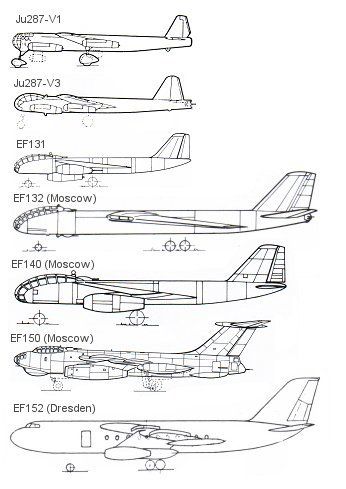
Even during the design of the Ju 287, the question of the most effective size for a jet-powered aircraft arose quite naturally. Initially, Dr. Kurt Cramer's project group, for well-known reasons, stuck with the size of the Ju 288. However, the more than doubled fuel consumption of the jet engines forced a rethink of larger aircraft to create more space for fuel. The parallel project group led by Hans Wocke, together with the Performance Calculation Department under Edgar Dannecker, therefore investigated the possibility of a geometric enlargement based on the Ju 287's design data as early as spring 1944. The main goal was, of course, a significant increase in range, since the Ju 287's 1,700 km range only provided an operational radius of 800 km. If the aircraft was to be of any real effect, it had to be able to carry four tons of bombs over 3,600 km.
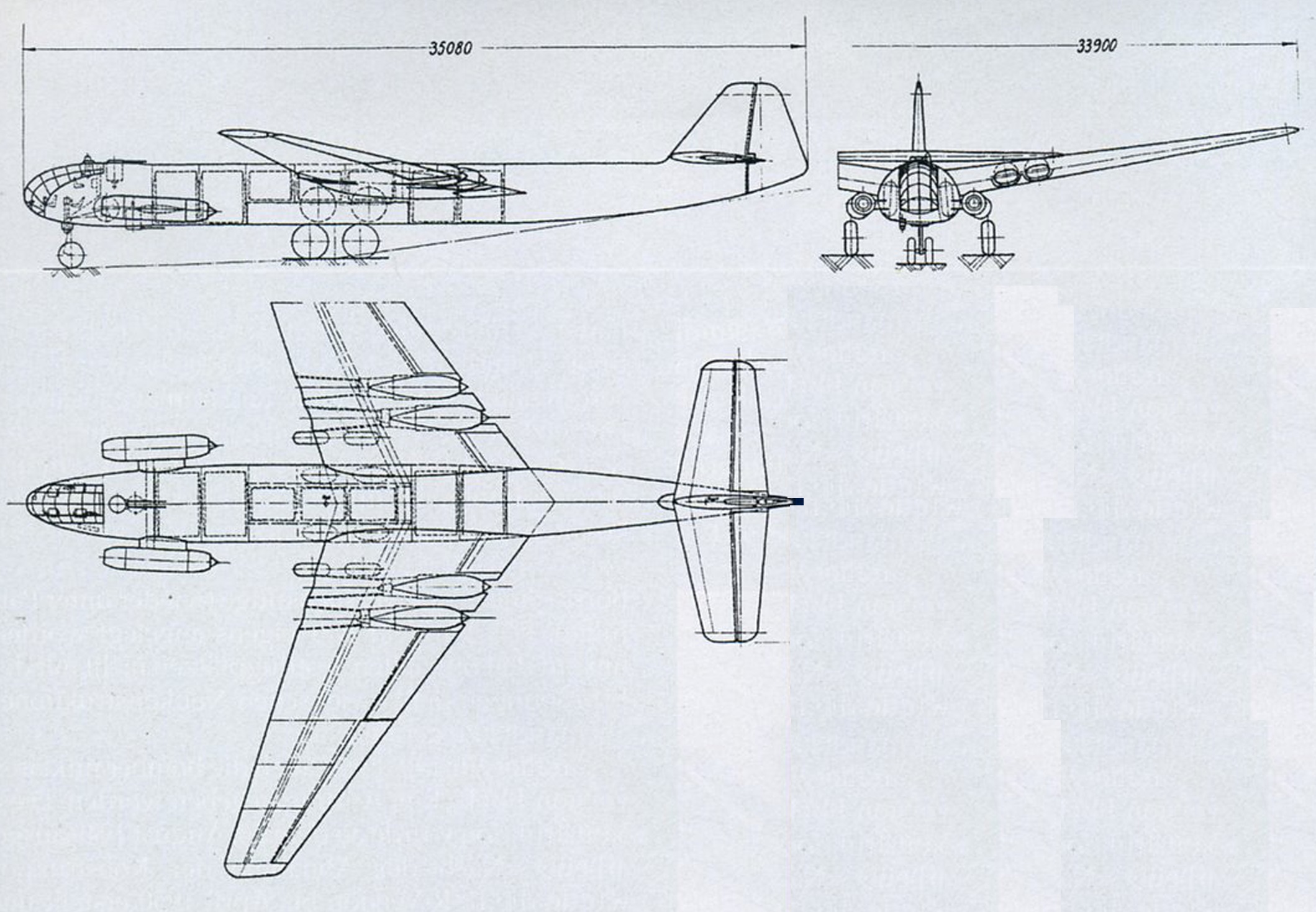
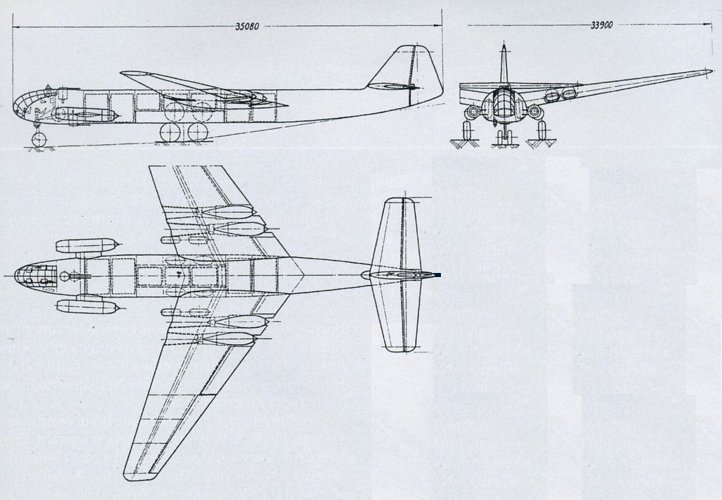
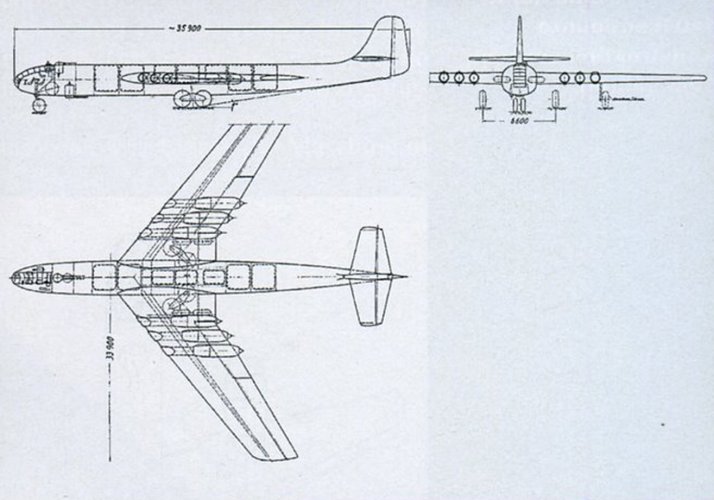
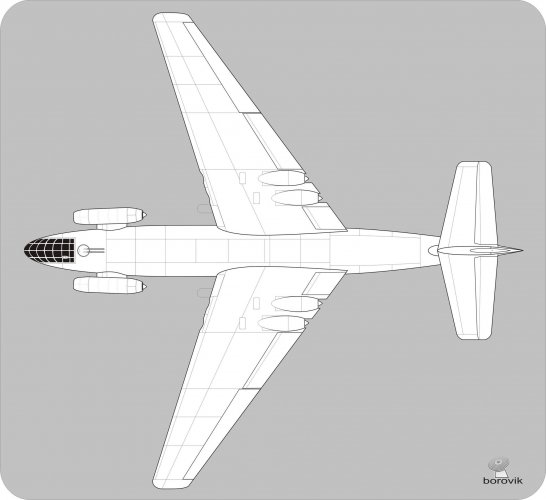
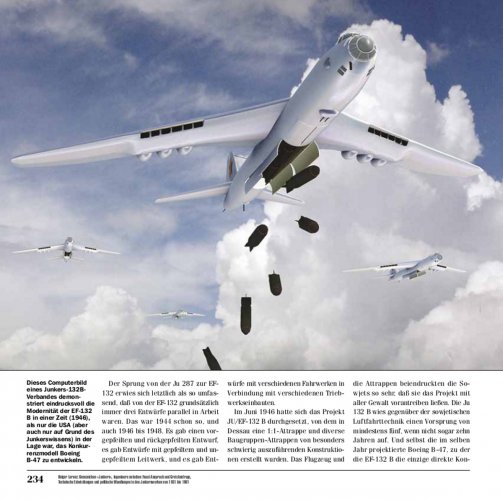
In August 1944, Wokke presented a Ju 287 design that was three times larger, with a significantly increased relative fuel payload. The enlarged airframe not only provided more space for fuel but also room to accommodate the engines within the wing. This project, dated August 14, 1944, and based on the Jumo 004 engines (also initially scaled up), differed from the Ju 287 in that the wing's aspect ratio was reduced for greater torsional stiffness and lower wing loading (the dihedral angle of 8.5° was retained). However, the wing was designed as a shoulder-wing monoplane. It was also possible to lighten the empennage, though likely at the expense of aerodynamics. Crucially, the fuselage cross-section was modified, resulting in reduced drag within the larger interior space.
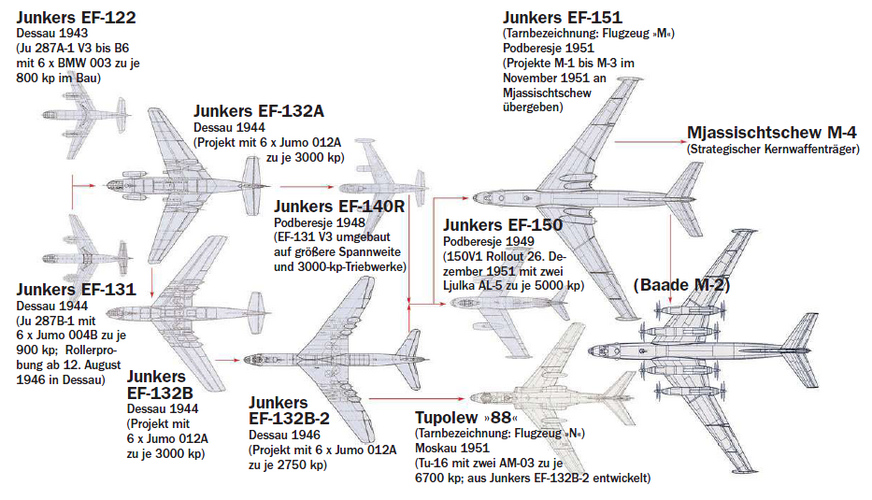
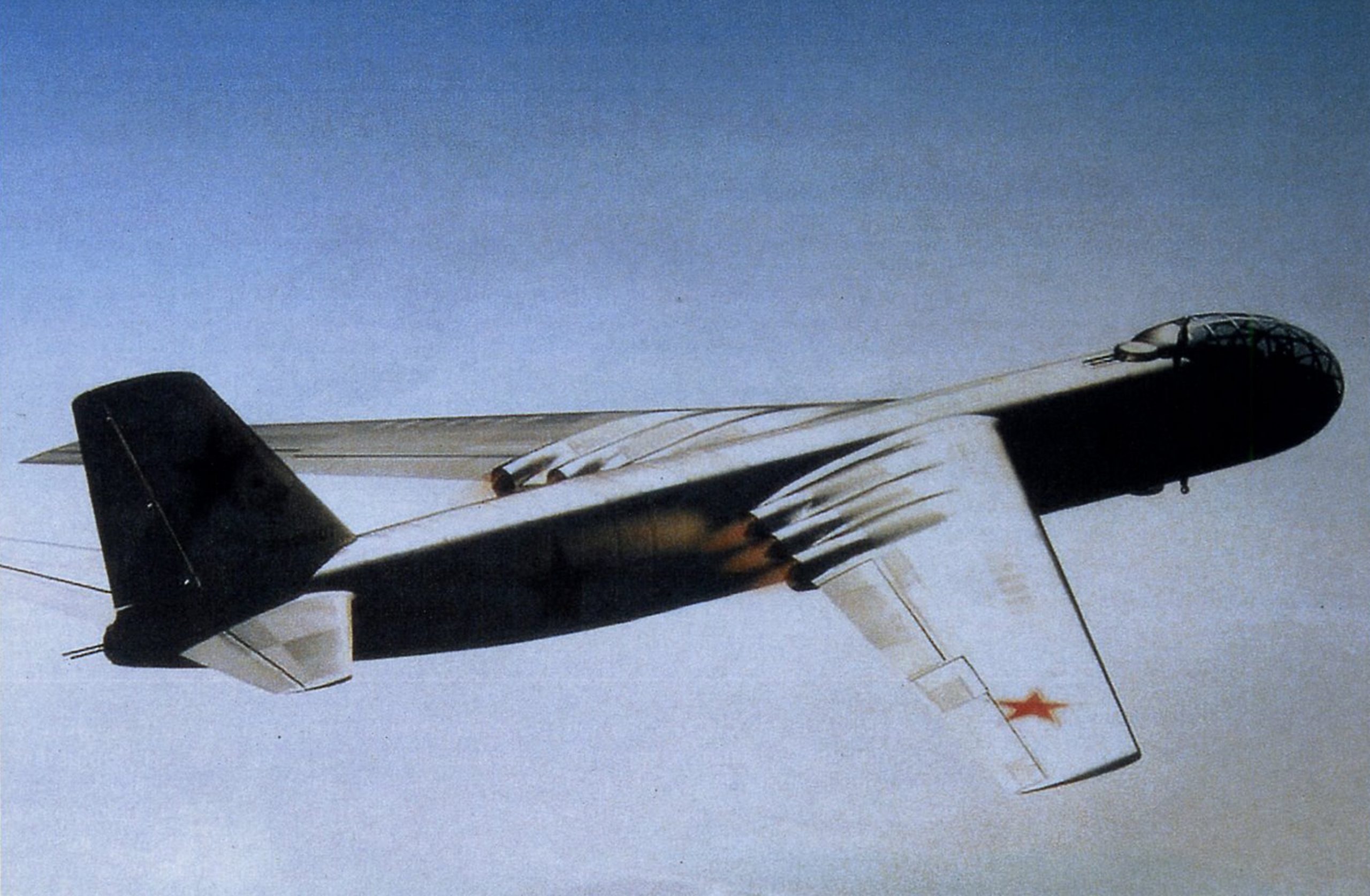
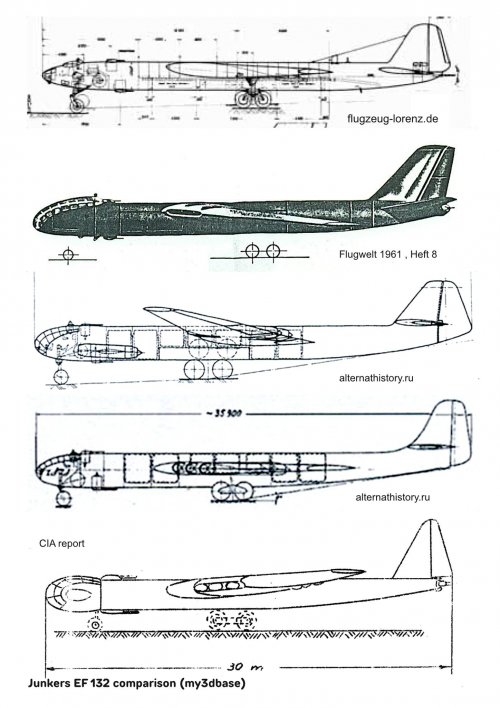
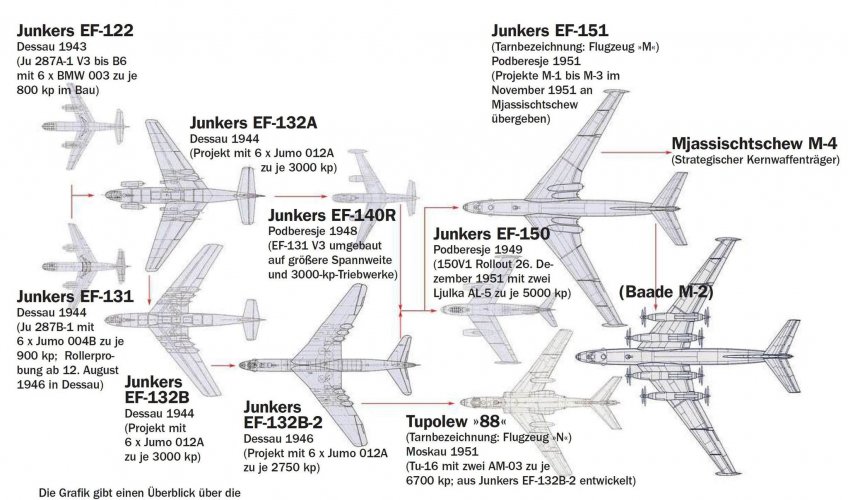
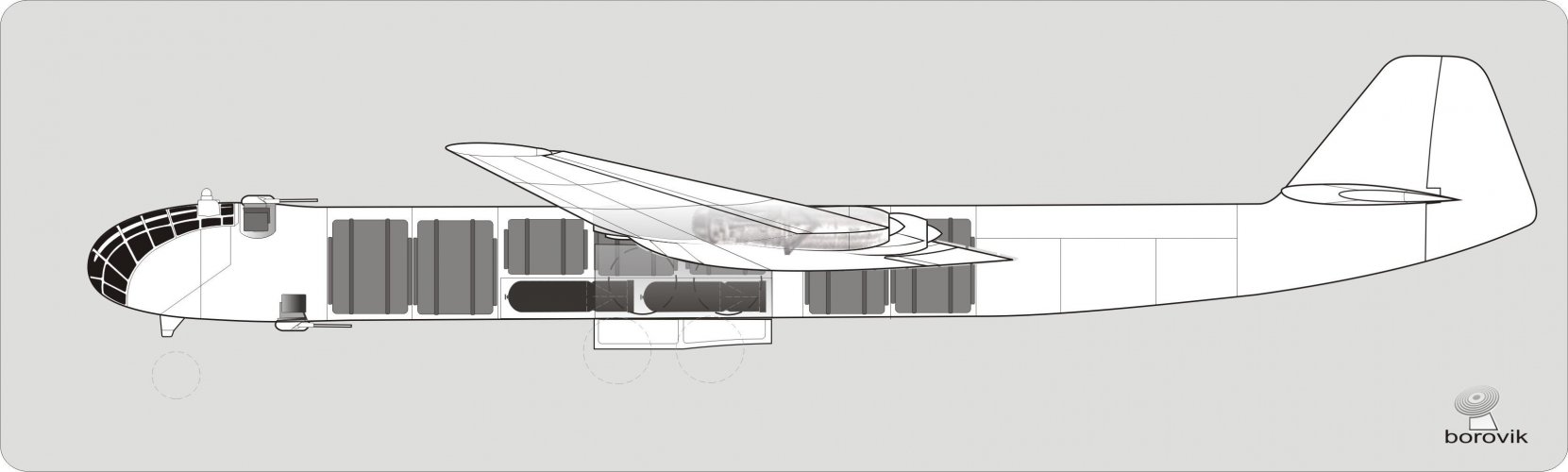
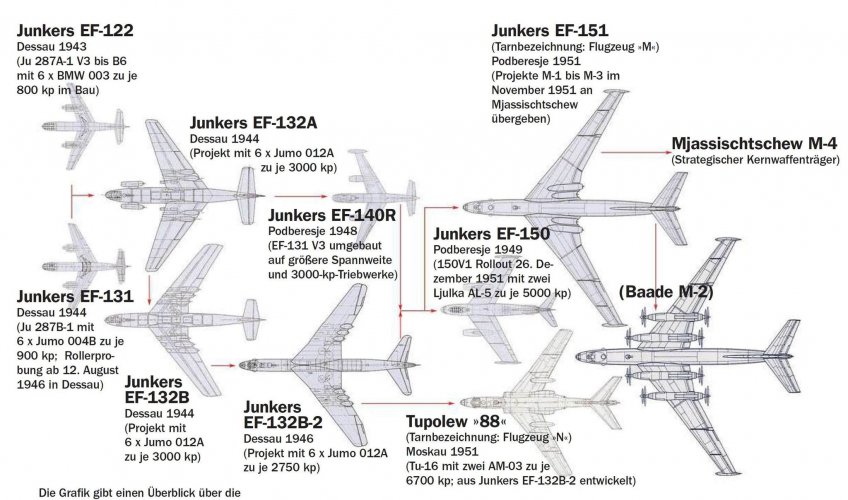
The aircraft was fitted with a nose landing gear with twin tires and two bicycle-style landing gears as main landing gear, as well as a fully glazed cockpit. However, after flight testing of the original Ju 287 wing starting on August 16, 1944, during pull-up maneuvers and turns, it became clear that the forward-swept wing was becoming increasingly disadvantageous in heavier aircraft with regard to weight, torsion, and the associated rudder reversal. In principle, it was clear that the successor to the Ju 287 would have a takeoff weight of approximately 80 tons, significantly exceeding that of the Boeing B-29 (52-60 tons), and only then could it meet the range requirement. The leap from the Ju 287 to the EF 132 ultimately proved so extensive that, in principle, three EF 132 designs were always under development simultaneously.
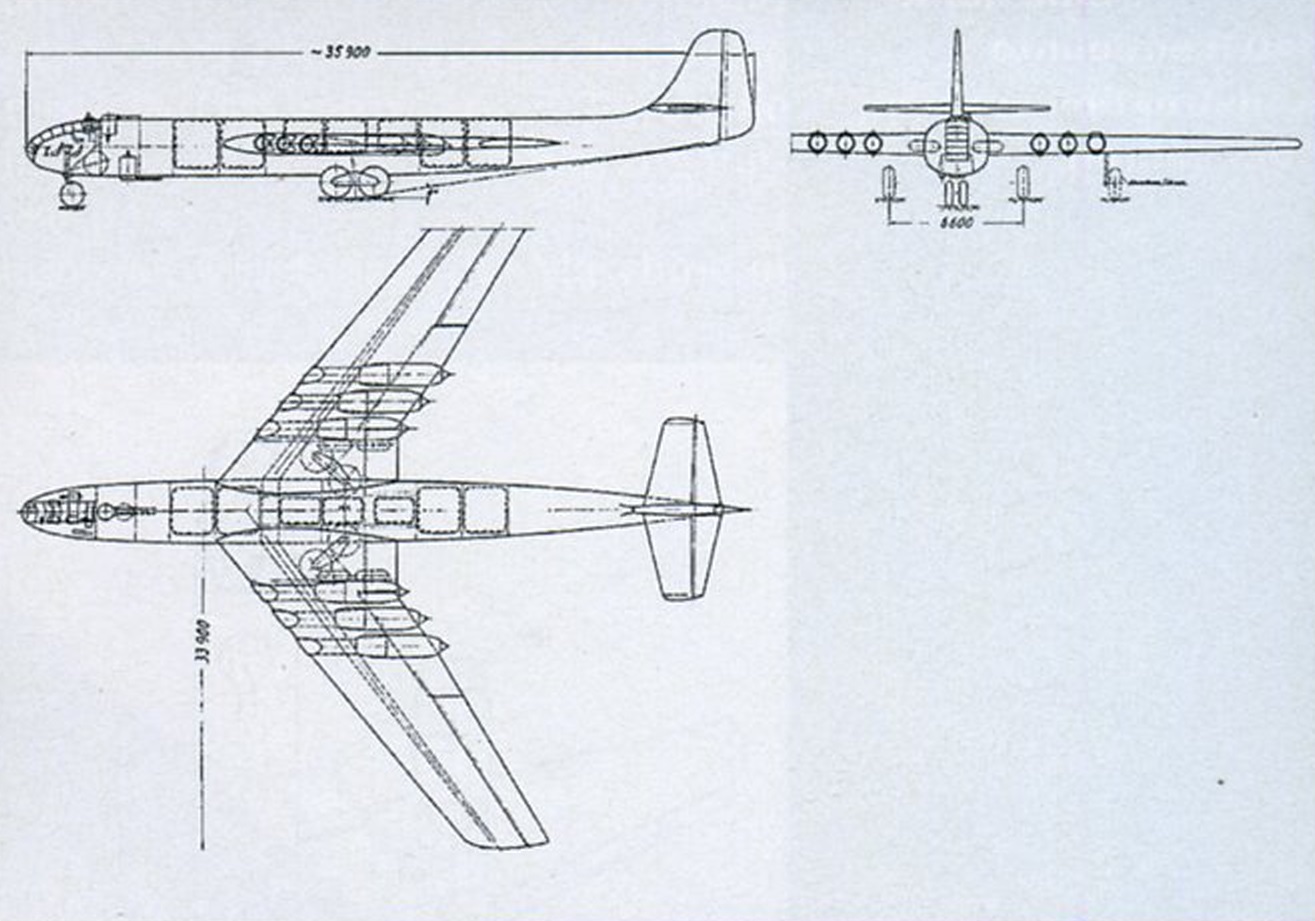
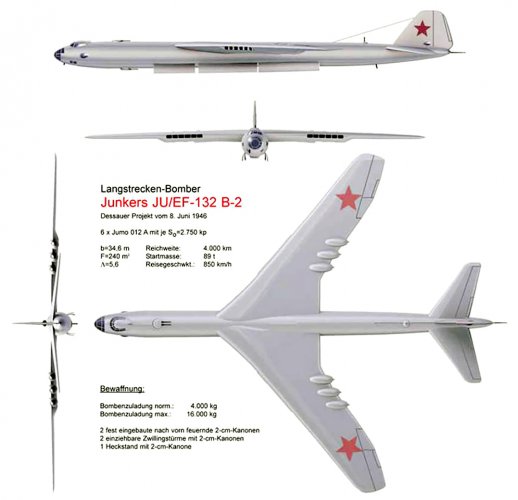
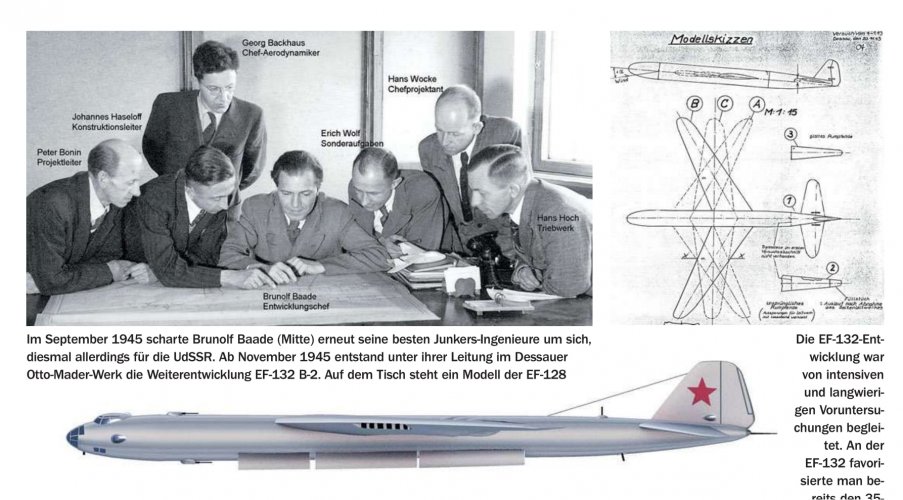
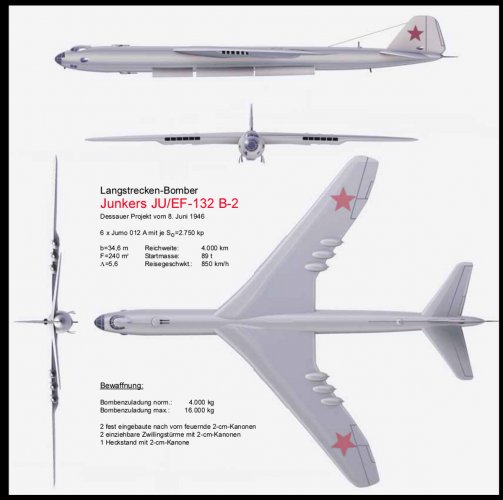
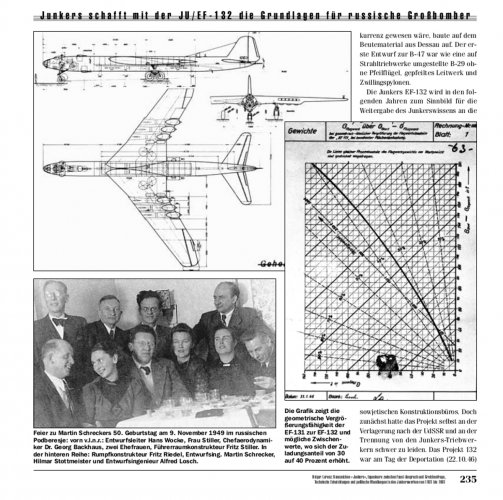
This was already the case in 1944, and again from 1946 to 1948. There were forward-swept and swept-back designs, designs with swept and unswept tail fins, and designs with various landing gears in conjunction with different engine configurations. In June 1946, the JU/EF-132 B project prevailed, and a 1:1 scale mock-up and various component mock-ups of particularly difficult-to-execute designs were built in Dessau. The aircraft and the mock-ups impressed the Soviets so much that they forced the project forward with all available resources. The Ju 132 B had a lead of at least five, if not ten, years over Soviet aviation technology. And even the Boeing B-47, designed in the same year and the only direct competitor to which the EF-132 B would have been, was based on captured material from Dessau. The initial design for the B-47 was like a B-29 converted to jet engines, without swept wings, a swept tail, and twin pylons. In the following years, the Junkers EF-132 became a symbol of the transfer of Junkers expertise to Soviet design bureaus. However, the project itself initially suffered greatly from its relocation to the USSR and its separation from the Junkers engine specialists. Project 132 was deported on October 22, 1946.