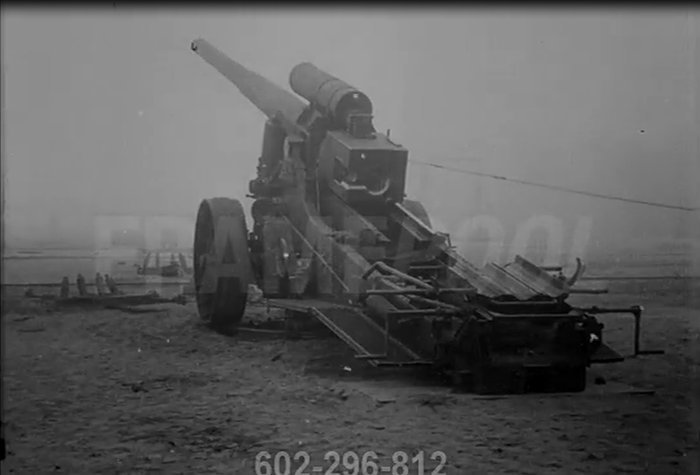
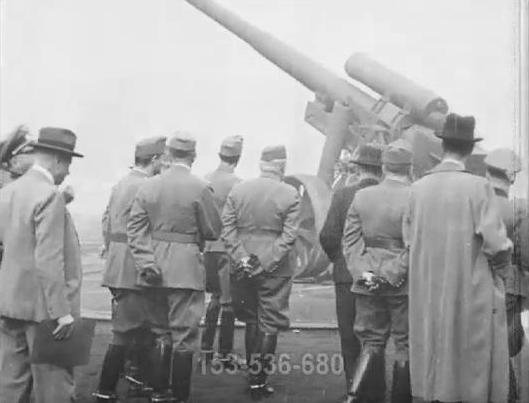
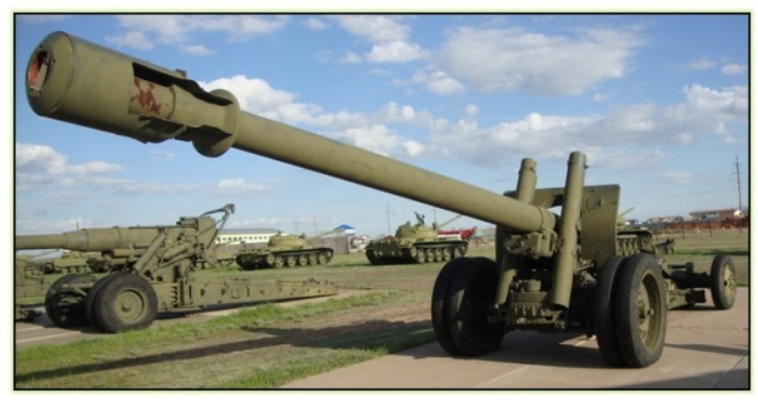
Interbellum and WW2 period (1918-1945) experimental and small-known artillery

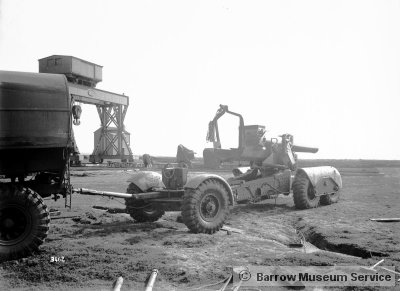
Hrm. Yes, I'm 99% sure that the dude in the hat is an American (mom's Dad was issued that hat...)
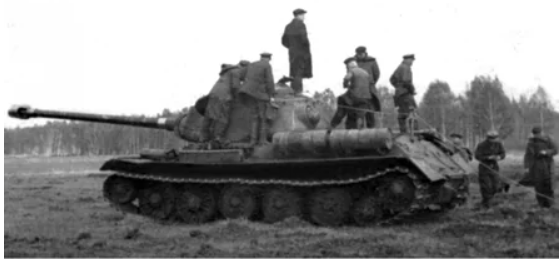
That was an experimental lashup using the Holt 55-1 tractor with an 8inch howitzer barrel with wooden planks. The idea was to determine whether the tractor chassis could withstand the recoil forces from the howitzer - it did - and lead to the development of the Holt Mark 1 Gun Motor Carriage wiht 8inch howitzer, the Mark II with 155mm GPF gun and Mark III with 240mm howitzer.
There's more information on Landships II (landships.info)
 
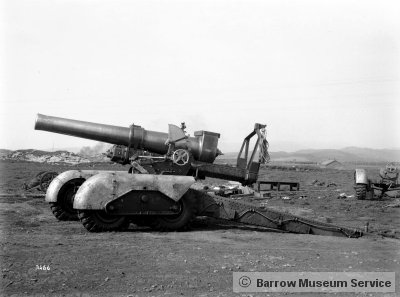
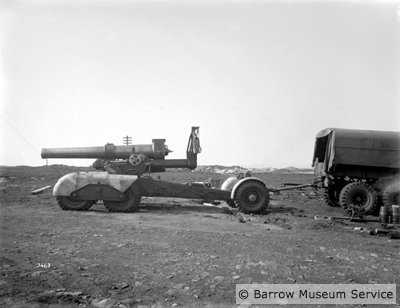
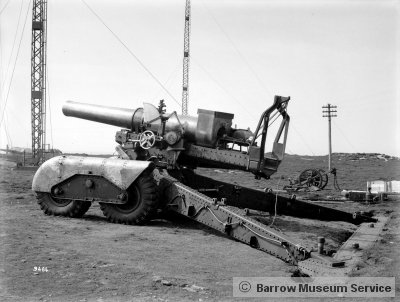
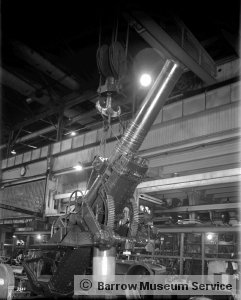
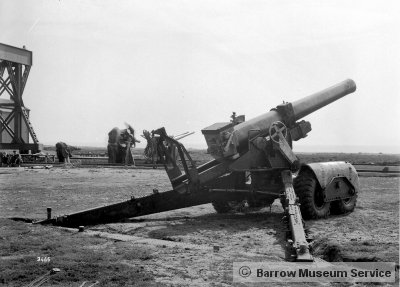
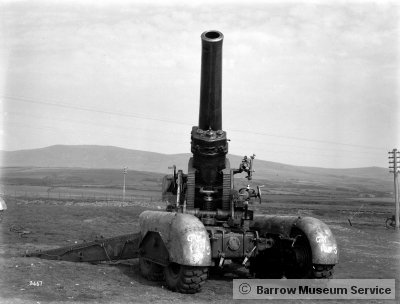
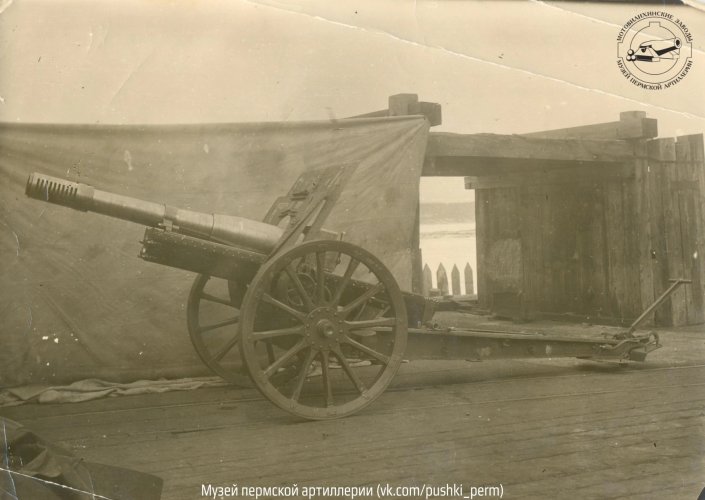
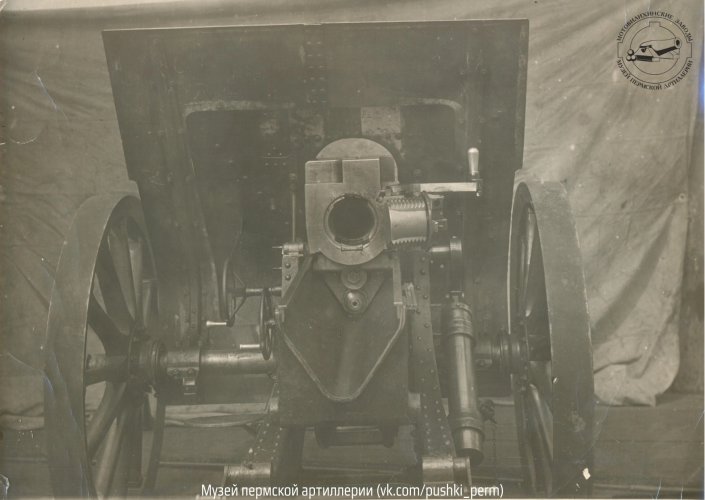
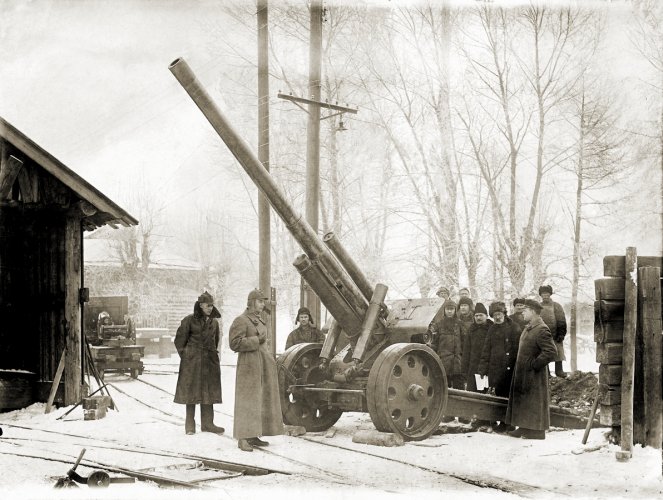
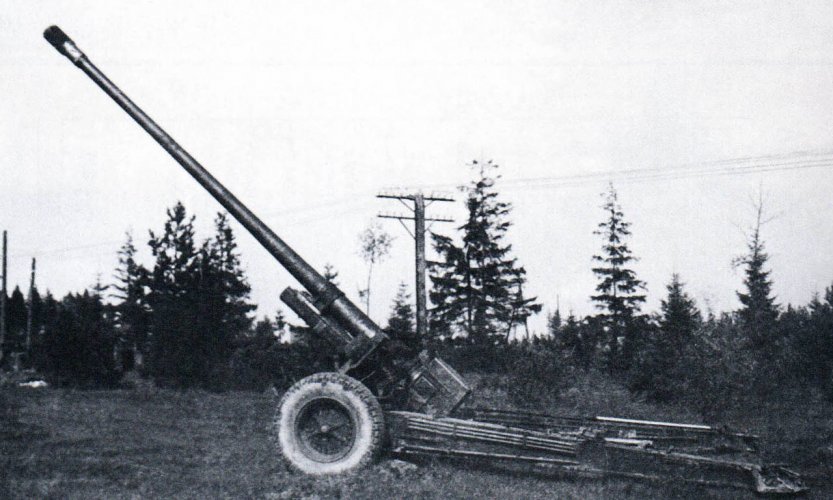
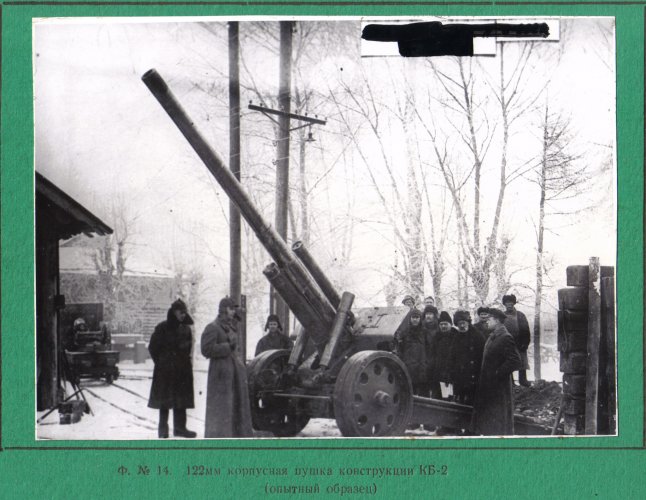
Soviet experimental 203 mm M-33 howitzer and 152 mm M-23 gun, in Permian artillery plant. Maybe, WW2 period, or early post-war (1945-1955).View attachment 784644
View attachment 784645
Looks like a ML-20 152 mm gun-howitzer carriage. I know about different 152 mm guns with Br-2 ballistics (49 kg, 880 mps) on ML-20 carriage (original ballistic - 43.56 kg, 670 mps), and heard about suggestions - 203 mm B-4 howitzer (100 kg, 607 mps) and 280 mm Br-5 mortar* (200/245.7/286 kg, 420/356/290 mps) ballistics on ML-20 carriage. Maybe, 203 mm M-33 was realisation of B-4 ballistics on ML-20 carriage. And I think there must have been a 280mm mortar of a similar type.
thats friggen sick. people say the Germans were obsessed with gigantomania but i think theyre s*** wrong lol i say it was the soviets with their mega sized towed artillery and the US with its massive superbombers before there was any risk of a war ( B19..etc) lol

but anyway those are cool, i love learning about new soviet artillery esp the hodge podge stuff they made such as the 152.4mm D-1 (M-10 type barrel on M30 type carriage)or the 122mm D-2 ( A19 type barrel on M30 type carriage)
do you have any more pics like these ones you posted i am especially interested in the probable "280mm mortar of Br-5 ballistics on the 52-L-504A ( ML20/ A-19) carriage"
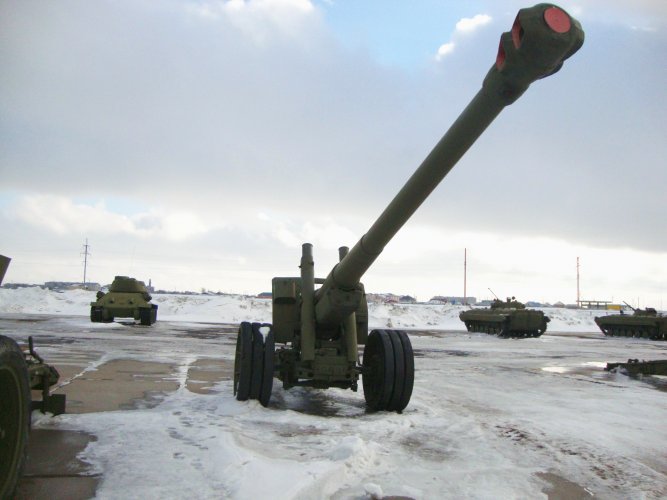
that would be one hell of a "scheunentor" lol. i bet in typical cult of personality form the commis wouldve nammed it like "Stalinskiy Botinok" lol
 
The 203mm B-4, 152mm Br-2 and 280mm Br-5 originally shared a tracked carriage (the Br-2 had equilibrator cylinders). The tracked carriage idea originally was a US development for the 1918 7inch gun and later the 155mm M-1 (GPF) gun. Notionally tracked carriages could be towed over soft ground but in reality the greater weight of the tracks and the power required to get the tracks moving in mud meant it didn't turn out as expected. The images look, to me, like experimental designs to replace the tracked carriages with wheeled carriages.
As it turned out the B-4 and the few Br-5s built stayed on tracked carriages but the Br-2 guns were mounted on wheeled carriages after WW2 until they were taken out of service in the 1960s(?).
The 280mm Br-5 was a modified Schneider 280mm which the Russians fielded in WW1 - the original siege gun was designed to broken down into sub-units for transport so it wasn't too difficult to convert to a new carriage.
 
The 203mm B-4, 152mm Br-2 and 280mm Br-5 originally shared a tracked carriage (the Br-2 had equilibrator cylinders). The tracked carriage idea originally was a US development for the 1918 7inch gun and later the 155mm M-1 (GPF) gun. Notionally tracked carriages could be towed over soft ground but in reality the greater weight of the tracks and the power required to get the tracks moving in mud meant it didn't turn out as expected. The images look, to me, like experimental designs to replace the tracked carriages with wheeled carriages.
As it turned out the B-4 and the few Br-5s built stayed on tracked carriages but the Br-2 guns were mounted on wheeled carriages after WW2 until they were taken out of service in the 1960s(?).
The 280mm Br-5 was a modified Schneider 280mm which the Russians fielded in WW1 - the original siege gun was designed to broken down into sub-units for transport so it wasn't too difficult to convert to a new carriage.
not entirely true
yes you are 100% correct about the Tracked undercarriage but youre incorrect about the B-4 and few Br-5s built staying on tracks

they were all modernized and most of them placed on wheels
Br-2 became Br-2M
B-4 became B-4M
Br-5 became Br-5M

also while the Imperial Russias Putilov plant came to an agreement with the French manufacturer Schneider to priduce several artillery types one of which was ta 279.4mm siege howitzer with a range of 6km to replace aging weapons of similar calibers

this became the Schneider "Mortier de 280 TR Modele 1914 Schneider"

this Mortar became an inspiration and was the father of multiple upgrades culminating in the 280mm Br-5 Siege howitzer
but the Schneider Mortar was an L/12 barrel
the Barrikady was an L/17 Barrel

the Br-5 no doubt could fire all the ammo the 280 TR could fire
 
not entirely true
yes you are 100% correct about the Tracked undercarriage but youre incorrect about the B-4 and few Br-5s built staying on tracks

they were all modernized and most of them placed on wheels
Br-2 became Br-2M
B-4 became B-4M
Br-5 became Br-5M

also while the Imperial Russias Putilov plant came to an agreement with the French manufacturer Schneider to priduce several artillery types one of which was ta 279.4mm siege howitzer with a range of 6km to replace aging weapons of similar calibers

this became the Schneider "Mortier de 280 TR Modele 1914 Schneider"

this Mortar became an inspiration and was the father of multiple upgrades culminating in the 280mm Br-5 Siege howitzer
but the Schneider Mortar was an L/12 barrel
the Barrikady was an L/17 Barrel

the Br-5 no doubt could fire all the ammo the 280 TR could fire
Thanks for the correction

The Schneider 279.4mm Mortier was produced for the Russians first. The first prototype was built at Schneider's Le Havre plant in 1912, tested then sent to Russia. After extensive trials the Russians accepted it although there were some reservations about the Mortier's ability to penetrate fortifications. The initial Russian order was for 16 howitzers with delivery in 1915 with a total of 26 howitzers delivered to the Russian Army by 1917. The French Army expressed interest then dithered until late late 1913 when they ordered 18 howitzers - a total of 126 was delivered during WW1. The US Army adopted a modified 280mm howitzer in 1918 in 240mm calibre - these remained in service until WW2 - they were never popular since the amount of work required to assemble the howitzers was thought excessive. The 280mm howitzers were deployed in WW2 by both Russia and France - a number were captured by the Germans and deployed against the Russians. The WW2 action the 280mm howitzers were notably employed on was the destruction of the Italian fortress of Chaberton on the French-Italian frontier. The only surviving part of the 280mm howitzer is a Putilov built barrel and its transport vehicle at the Military Musuem in Warsaw.
 
Thanks for the correction

The Schneider 279.4mm Mortier was produced for the Russians first. The first prototype was built at Schneider's Le Havre plant in 1912, tested then sent to Russia. After extensive trials the Russians accepted it although there were some reservations about the Mortier's ability to penetrate fortifications. The initial Russian order was for 16 howitzers with delivery in 1915 with a total of 26 howitzers delivered to the Russian Army by 1917. The French Army expressed interest then dithered until late late 1913 when they ordered 18 howitzers - a total of 126 was delivered during WW1. The US Army adopted a modified 280mm howitzer in 1918 in 240mm calibre - these remained in service until WW2 - they were never popular since the amount of work required to assemble the howitzers was thought excessive. The 280mm howitzers were deployed in WW2 by both Russia and France - a number were captured by the Germans and deployed against the Russians. The WW2 action the 280mm howitzers were notably employed on was the destruction of the Italian fortress of Chaberton on the French-Italian frontier. The only surviving part of the 280mm howitzer is a Putilov built barrel and its transport vehicle at the Military Musuem in Warsaw.
Personally I find it quite sad that all these war machines arent preserved today in at least 1 specimin. i mean aqlot of the advanced stuff made by the Japanese and Germans was outright destroyed by the all-lies as if they were hiding something as there is no other reason to destroy such things
 
I should have checked - there is a single surviving 240mm Howitzer Model 1918. This was the Schneider 280mm with a longer reduced calibre barrel. The single example is at the US Army Artillery Museum, Fort Sill, Oklahoma.
 
I should have checked - there is a single surviving 240mm Howitzer Model 1918. This was the Schneider 280mm with a longer reduced calibre barrel. The single example is at the US Army Artillery Museum, Fort Sill, Oklahoma.
what is funny is how the soviets are the ones who saved a vast majority of their prototypes. at least their AFV Ob'Yekts. idk about the artillery. and i really dont think they saved many of their experimental planes of the Interwar/WW2 period like the Polikarpov I-180/185/190/195..etc BUT thats a different topic


I wish there was any more images of these prototypical Soviet artillery pieces like for instance the
203mm B4 with muzzle brake
152.4mm B-30
180mm Br-21
152.4mm Br-19
162/100mm Br-2 variant
152/107mm Br-2 Variant
the improved T-117 or M-50 carriages for Br-2/B-4/Br5
152.4mm B-10-2-30
152.4mm B-10
152.4mm Br-2 with L/55 barrel

I bet there is a full comprehensive GRAU list, GAU list, Ob'Yekt list, Istrebitel list, Barrikady "Br" list, Bolsheivik plant "B" list, list of "S" guns and list of the BL guns as well
BL1- BL-6= ??
BL7= 152.4mm gun on 52-L-504A carriage
BL8= 152.4mm used in ISU-152-1 (Ob-246)
BL9= 122mm used in ISU-122-1 ( Ob-243)
BL10= 152.4mm used in ISU-152-2 ( Ob-247)
BL11=- BL-99???

EDIT;
BL-13 is/ was the long barreled 122mm tank gun fitted to the Ob'yekt 244 which was also the testbed for the roadwheels of the abortive Ob'yekt 252 ( it had 5 big IS-6 wheels and one regular IS-2 wheel due to the hull being too short for the full 6, it also had the turret of an KV-122 installed at one point before being mounted as a memorial in St.Petersberg )
 

Attachments

  • Ob'-244 122mm BL13 Ob' 252 roadwheel testbed.png
    Ob'-244 122mm BL13 Ob' 252 roadwheel testbed.png
    104.1 KB · Views: 98
Last edited by a moderator:
S-69 130mm Gun
1945/47 gun designed by NII-58 to replace the 122mm A-19 gun family ( perhaps a predecessor to the 130mm M-46 of 1957 by the Motovilikha Plant)

built in typical soviet/ Russian fashion of Duplexes or Triplexes (multiple guns/ howitzers/ mortars or a sharded carriage i.e. think the Br-2/ B-4/ Br-5 family triplex or the A-19/ ML-20 family, D-20/ D-74 or M-46/ M-47 family duplexes ) in this case it was built in a duplex with an associated 152.4mm S-69-1 Gun/Howitzer

to date i have had little luck finding any pictures of the 152.4mm S-69-1 partner piece or the design of the self-propelled variant of the 130mm S-69 made in 1947.

if anyone hasd pics of these it would be GREATLY APPRECIATED!!
 

Attachments

  • S-69 130mm S-69.jpg
    S-69 130mm S-69.jpg
    169.5 KB · Views: 71
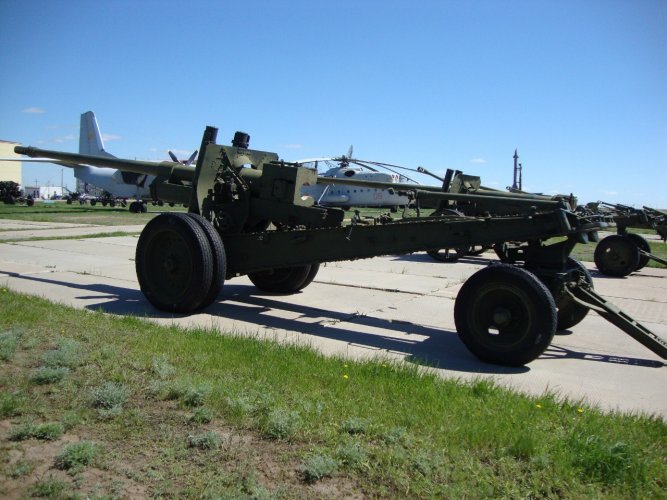
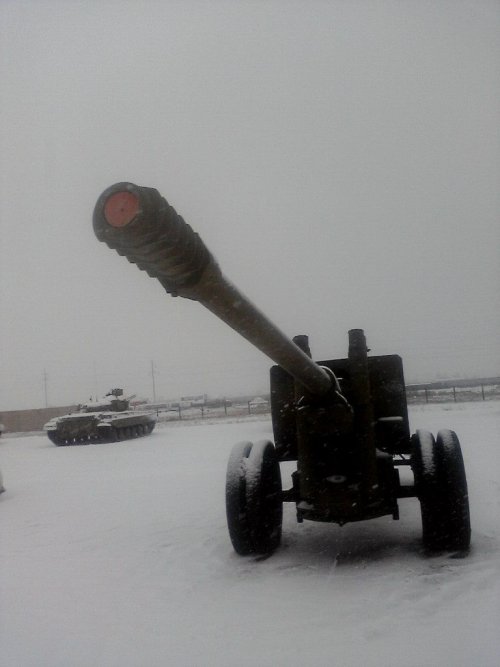
107mm D-46 or 107mm M-75
107mm of the 52- L-504A carriage
confusions comes from the following Russian sources who have pics labeled as these are but never mention a 107mm D-46 ( i believe D-46 is a 100mm tank gun trialed in the Ob'yekt 416)
tankarchives.com
DZEN.ru
and
Alternathistory.ru

***I HABITUALLY DUBIOUS OF ANYTHING ON THE TANKARCHIVES SITE AS ITS OWNER OR CHIEF CONTRIBUTOR YURI PASHLOK TENDS TO PROMOTE PROPAGANDA AS "FACT" EVEN WITH CLAIMS OF THE "ISU-122 AND ISU-152S ABILITY TO TAKE OUT GERMANYS HEAVIES WHEN CAREFUL RESEARCH SHOWS NEITHER WERE REALLY CAPABLE OF THE TAST AS BOTH HAD TO BE WELL WITH THE LETHAT KILLING RANGE OF THE GUNS OF TIGER, PANTHER OR TIGER 2 HELL AT THE RANGE THEY WERE REQUIRED TO ENSURE AN ACCURATE HIT ( 500M FOR 152 AND 750M FOR 122) THE Pz.IV Ausf. F/G/H/J COULD KNOCK THEM OUT EFFORTLESSLY) besides IF THE 122/152 were capable of killing the German "Zoo" then there would never be any reason for the 107mm, 130mm guns as well as the "ISUs of high power" which had freakishly long guns on then in order to gain sufficient muzzle velocity to take out said ZOO
IN FACT ANYTHING FROM SOVIET RECORDS/ ARCHIVES SHOULD BE TAKEN WITH SKEPTICISM AS THEY LIE ABOUT EVERYTHING FROM PEOPLE KILLED IN WW2 ( CLAIM 22+ MILLION IN WAR BUT THE GERMANS AND ITALINS ONLY ACCOUNT FOR AROUND 9 MIL AND THE SOVIET GULAGS MURDERD AREOUN 14 MILLION ) TO HOW MANY NUKES THEY HAD OR HOW GOOD THEIR SOLDIERS/ EQUIPMENT IS ( FACT IS THE CURRENT WAR PROVES THEYRE STILL PULLING THE SAME B.S)

sorry for the rant but being told soviets were honest is irritating especially due to the "iron curtain" which literally disproves the honesty/ truth components
 

Attachments

  • D46 107mm on 52-L-504A carriage 2.jpg
    D46 107mm on 52-L-504A carriage 2.jpg
    390 KB · Views: 54
  • D46 107mm on 52-L-504A carriage.jpg
    D46 107mm on 52-L-504A carriage.jpg
    140 KB · Views: 52
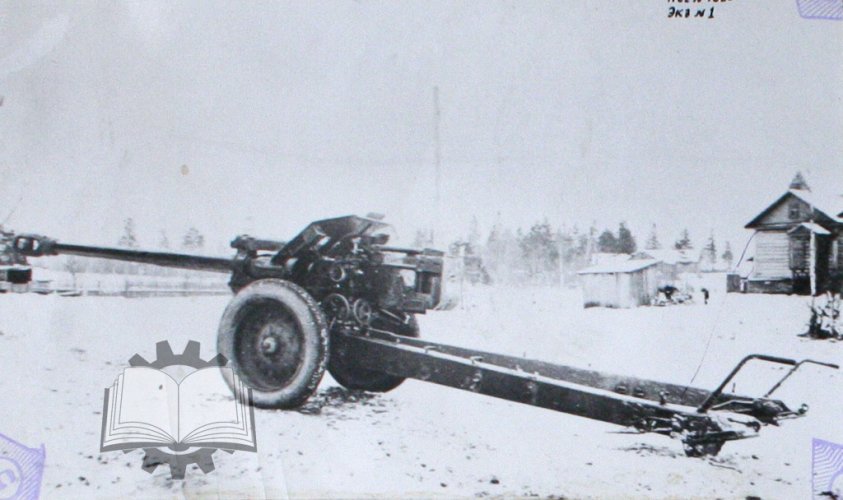
122mm D-2
UZTM plant used a D prefix for its guns
now it gets confusing but is simple as most of the double digit designators are from a contraction of the guns/ mounts numbers the most famous of which is the 122mm D25T of the IS-2- T-10 or D25S of ISI-122-2
which is;
the barrel of the 122mm D-2 towed gun ( Trialed not accepted)
the cradle/ mount of the 85mm D-5T/ D-5S gun of T-34/85 and SU-85 fame
thus it becomes D-25

now for years the D-2 was illusive at lest in pictoral forms in the west but it was along the same concept of the 152.4mm D-1 which was a barrel of "M-10 ballistics" on the carriage of the 122mm M-30 howitzer ( 122mm D-2 would've been the "lighter companion" of the 122mm A-19 just as the 152.4mm D-1 was the lighter companion to the 152.4mm ML-20)

here is an ending excerpt from the alternathistory.ru site

"Of the four guns, one prototype equipped with a sliding breech (barrel #7, installed during modernization) has survived to this day. In the 1990s, this gun, along with some other historical systems in storage, was transported to Kazakhstan. This happened as part of the agreement on the reduction of conventional weapons. Anything with a caliber of less than 100 mm was sent to Poklonka. It's insane, but yes, such things happened. So, you can see the experimental prototype of the heavy anti-tank gun near Astana. Incidentally, its counterpart, the 122 mm S-4 gun, is also stationed there. As you can see, the Soviet Pak 43 never came to fruition, which may be for the better. Still, 4.5 tons is a lot for an anti-tank gun. And separate aiming is not a plus for an anti-tank gun."

link= https://dzen.ru/a/aGJn8APfxxvM3PYz

P.S. does anyone have pics of the 122mm S-4 gun mentioned as well as its 152.4mm companion piece the S-3??
 

Attachments

  • 122mm D-2 flat.jpg
    122mm D-2 flat.jpg
    200.3 KB · Views: 55
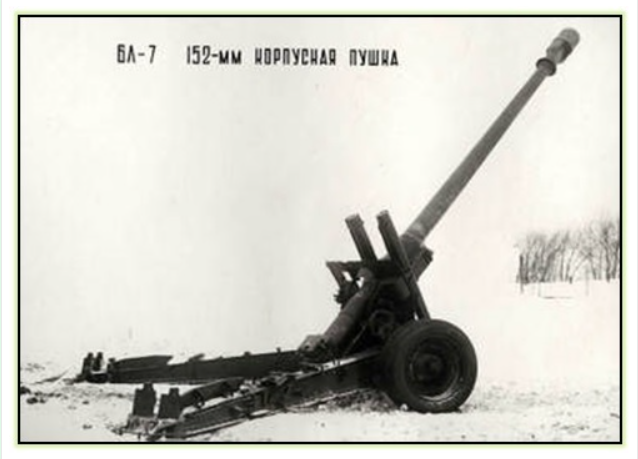
152.4mm BL-7

towed companion to the 152.4mm BL-8 of the ISU-152-1 ( Ob'yekt 246)
 

Attachments

  • Screenshot 2026-03-03 192053.png
    Screenshot 2026-03-03 192053.png
    255.4 KB · Views: 54
  • Screenshot 2026-03-03 192131.png
    Screenshot 2026-03-03 192131.png
    410.8 KB · Views: 46
German guns:
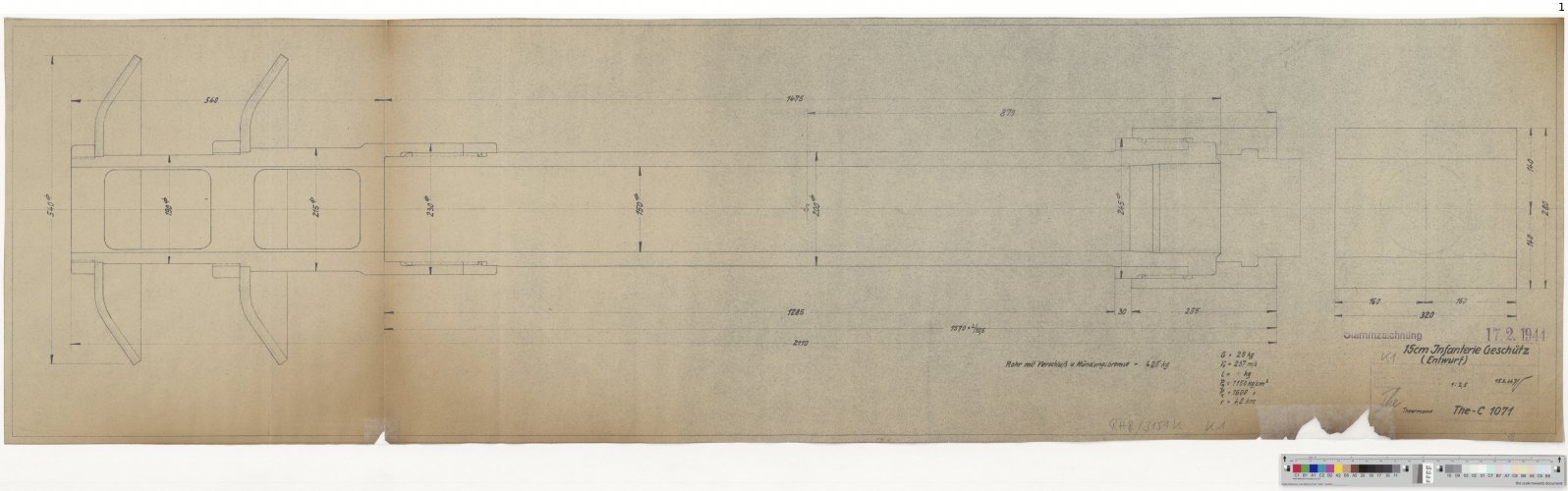
15 cm infanteriegeschutz with large muzzle device, 425 kg, 25 kg shell, 237 mps, 4.2 kg range:
RH_8_3151_K_0001.jpg

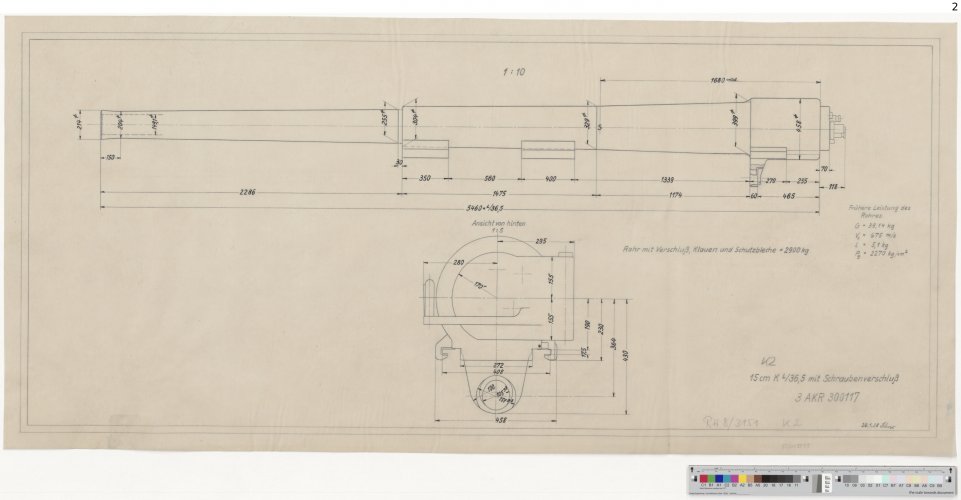
15 cm Kanone L/36,5 barrel, 2900 kg, 39.14 kg shell, 675 mps:
RH_8_3151_K_0002.jpg

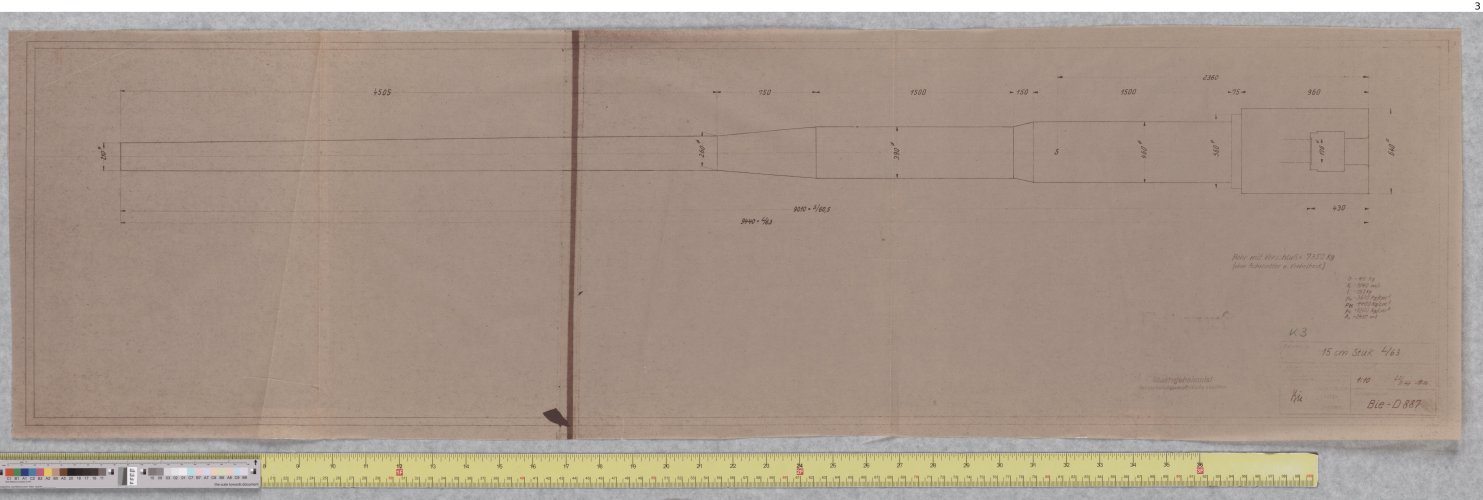
And two plans of 15 cm short howitzer (looks like a Sturmpanzer IV / "Brummbär" gun), 870 kg, 43 kg, 320 mps
 

Attachments

  • RH_8_3151_K_0005.jpg
    3.7 MB · Views: 29
  • RH_8_3151_K_0006.jpg
    3.7 MB · Views: 28
Last edited:
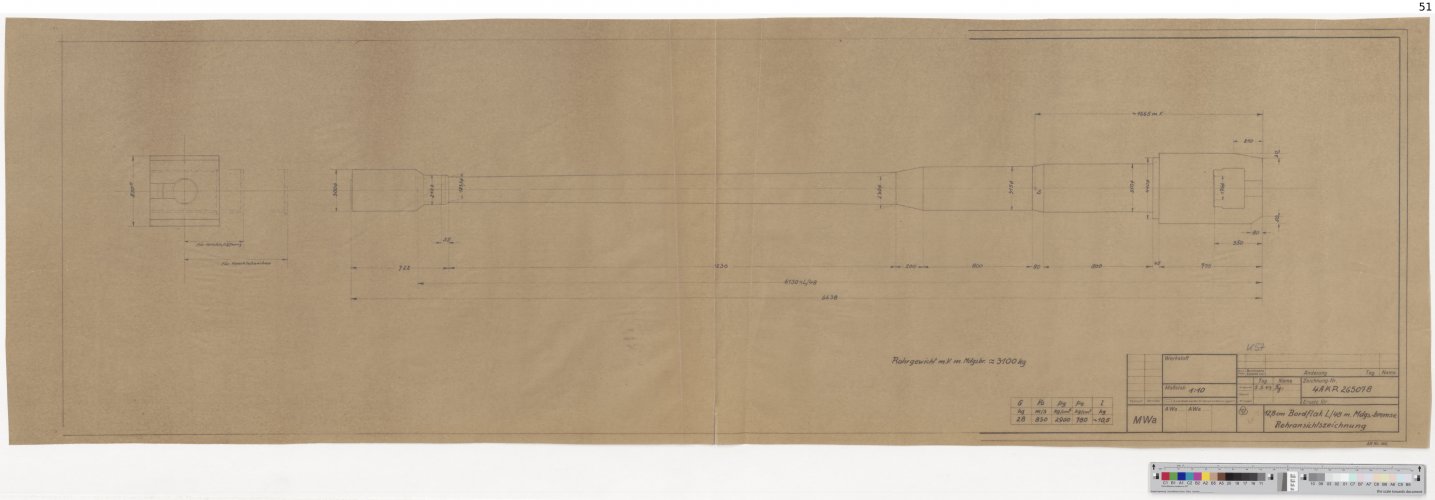
12.8 cm BordFlak L/48 barrel, 3100 kg, 28.3 kg, 830 mps:
RH_8_3151_K_0051.jpg
There is also a sketch of a 12.8 cm L/41 gun on a carriage from a 15 cm sFH 18, with ~2050 kg (?) barrel, 28.3 kg shell and muzzle velocity 760 mps (German analog of Soviet 122 mm A-19 with 26 kg shell and 800 mps?)
 
Last edited:
what is funny is how the soviets are the ones who saved a vast majority of their prototypes. at least their AFV Ob'Yekts. idk about the artillery. and i really dont think they saved many of their experimental planes of the Interwar/WW2 period like the Polikarpov I-180/185/190/195..etc BUT thats a different topic


I wish there was any more images of these prototypical Soviet artillery pieces like for instance the
203mm B4 with muzzle brake
152.4mm B-30
180mm Br-21
152.4mm Br-19
162/100mm Br-2 variant
152/107mm Br-2 Variant
the improved T-117 or M-50 carriages for Br-2/B-4/Br5
152.4mm B-10-2-30
152.4mm B-10
152.4mm Br-2 with L/55 barrel

I bet there is a full comprehensive GRAU list, GAU list, Ob'Yekt list, Istrebitel list, Barrikady "Br" list, Bolsheivik plant "B" list, list of "S" guns and list of the BL guns as well
BL1- BL-6= ??
BL7= 152.4mm gun on 52-L-504A carriage
BL8= 152.4mm used in ISU-152-1 (Ob-246)
BL9= 122mm used in ISU-122-1 ( Ob-243)
BL10= 152.4mm used in ISU-152-2 ( Ob-247)
BL11=- BL-99???

EDIT;
BL-13 is/ was the long barreled 122mm tank gun fitted to the Ob'yekt 244 which was also the testbed for the roadwheels of the abortive Ob'yekt 252 ( it had 5 big IS-6 wheels and one regular IS-2 wheel due to the hull being too short for the full 6, it also had the turret of an KV-122 installed at one point before being mounted as a memorial in St.Petersberg )
Do you have "M", "ML", "LP" & "MZ" lists of the Motovilikha (Perm) plant? I have it on russian.
 
Hi everybody!
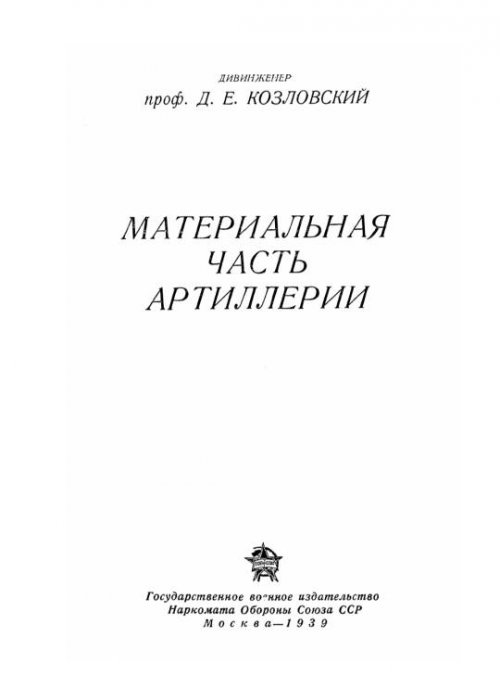
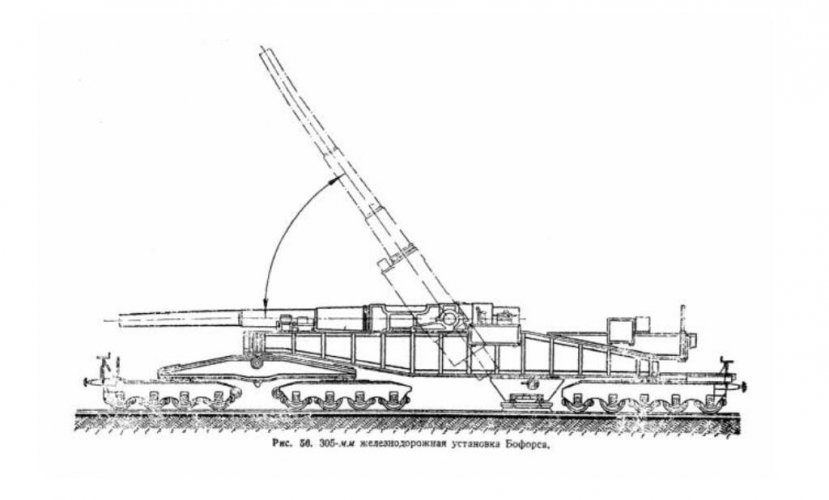
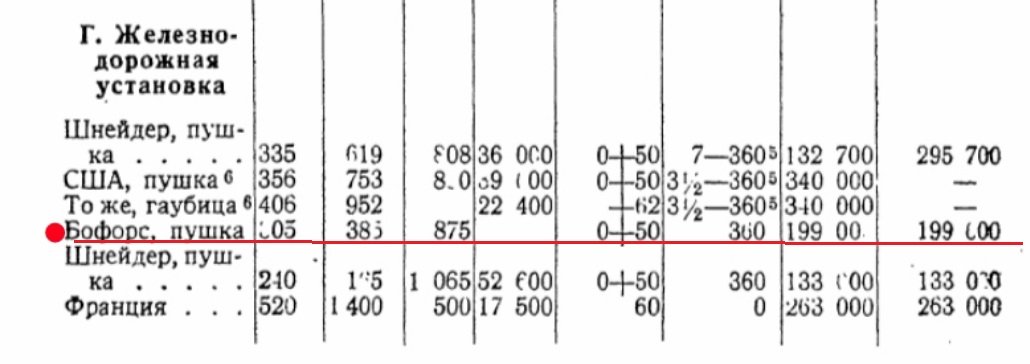
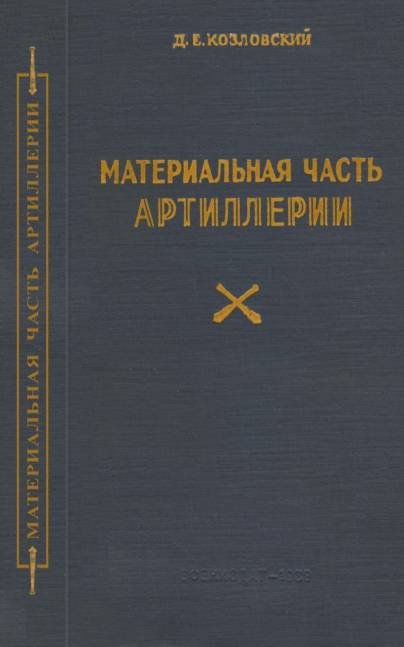
In russian book "The material part of artillery" of the year 1939 there is a scheme of 305-mm Bofors railway gun (p. 107, Fig. 56).
On the next page we have some specifications of the gun:
Caliber, mm 305
Weight of shell, kg 385
Muzzle velocity, m/sec 875
Length, m n/d
Elevation, grad. 0...+50
Traverse, grad. 360
Mass of the mount, kg 199000

Maybe, someone knows anything more about this gun project. 12inchBoforsRG.jpg 12inchBRGsp.jpg Kozlovsky_0.jpg Kozlovsky_1.jpg
 
Last edited:
Soviet 1937 book, "Modern artillery", by Kirillov-Gubetsky, in Russian. This book contains some interesting information about the Interbellum guns, prototypes, and small-scale production versions, both in Europe and the United States—from light infantry systems to super-heavy siege and railway guns, from page 64 to 149. There are illustrations at the end of the book, from 149 to 198; on pages 194-197, the captions are mixed up. The data on the First World War is quite strange, as in many other Soviet books.
 

Attachments

  • Современная артиллерия (Кириллов-Губецкий И.М.).pdf
    4.5 MB · Views: 32
Last edited:
Soviet 1937 book, "Modern artillery", by Kirillov-Gubetsky, in Russian. This book contains some interesting information about the Interbellum guns, prototypes, and small-scale production versions, both in Europe and the United States—from light infantry systems to super-heavy siege and railway guns, from page 64 to 149. There are illustrations at the end of the book, from 149 to 198; on pages 194-197, the captions are mixed up. The data on the First World War is quite strange, as in many other Soviet books.
Thank you very much for your answer!
But Kirillov-Gubetsky didn't write anything about Bofors 305-mm railroad gun, as well on Bofors 220-mm & 240-mm ones, which are mentioned in the corresponding table.
It seems to me, the Bofors company itself didn't know about its projects of this kind!
Or were they purely promotional offers?
At least for some reason, the Swedes themselves do not recall such railway mountings at all, although the history of Bofors artillery production seems to be well studied in Sweden itself.
 
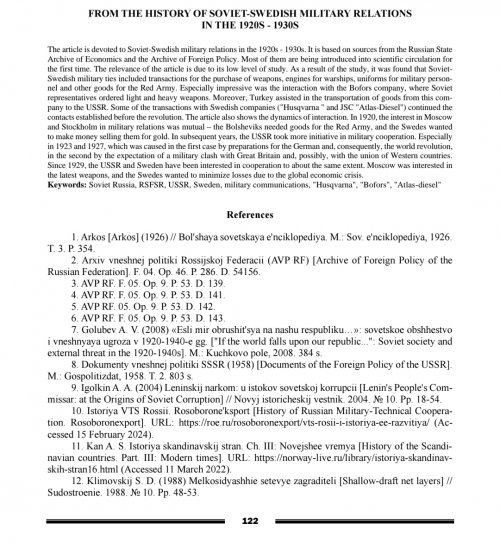
So, I did find a mention of 240-mm railway artillery guns in a russian article on the history of military cooperation between the USSR and Sweden in the 1920s and 1930s. But this applies to Turkey, which tried to order them from Bofors! This proves that such systems existed, at least on paper!
Further quote: Chapter on cooperation with Bofors. Page 117. …The combination of involving Turkey in the operation to maintain secrecy seemed logical. Here, Moscow's order was easier to "dissolve" among Ankara's other military purchases, including from Bofors. And Turkey's arms purchases were significant. Thus, at a meeting on February 22, 1929, German Ambassador [to Turkey] R. Nadolny showed the USSR's a Authorized Representative in Ankara, J. Z. Surits, "a copy of an appeal" from the Ankara government "to a certain foreign firm" regarding the desire to acquire a large consignment of arms. The discussion mainly concerned artillery pieces of various calibers - from 75 mm caliber mountain guns, 10.5 and 15 mm caliber howitzers to 240 mm caliber railway guns (Archive of Foreign Policy of the Russian Federation. F. 04. Inv. 46. Fold. 286. File 54156. S. 3).
 

Attachments

  • СССР_Швеция.jpg
    СССР_Швеция.jpg
    550.9 KB · Views: 29
I think it's important to clarify the situation with Russian 152mm howitzers and guns from the first half of the 20th century, as they are constantly confused.

The following guns were adopted in the Russian Empire between 1909 and 1910:

The M1910 field howitzer was a light weapon that replaced the older 152mm M1883/M1885 mortar. It was part of the heavy field artillery. The 107mm M1910 gun, which weighed almost as much as the 152mm M1910 howitzer, was adopted alongside it. Heavy field artillery battalions* typically had two batteries with four 152mm howitzers and one battery with four 107mm guns.

The M1909 siege and fortress howitzer is a heavier gun that replaced the older 152mm M1877 120 pood** siege gun. Formally, it was part of the fortress and siege artillery.

The M1910 siege and fortress gun is a heavy, long-range weapon that was intended to replace the older M1904 gun, which lacked a recuperator (although the Russians initially intended to use a spring recuperator, like the 120mm Canet naval gun), was very heavy, and lacked horizontal traverse (the M1904, in turn, was intended to replace the older 152mm M1877 190 pood** guns).

All four of these systems, as well as the 107mm M1910 gun and the light 122mm M1910 howitzer, were, as far as I know, developed in cooperation between the French company Schneider and the Russian Putilov factory in St. Petersburg. It's difficult to say what the actual contributions of the various engineers were, but all of these systems had similar solutions. The 107mm M1910 gun, according to some sources, was developed independently by the Putilov factory even before contracts with Schneider. Later, Schneider ordered documentation for the 122mm M1910 howitzer from Russia to fulfill an order for 120mm howitzers for Bulgaria. From what I know, the Russians had major problems mastering new lightweight steel alloys for gun barrels in the late 1890s and 1900s, and possibly also with recuperators. It's possible that Schneider helped the Putilov factory and other Russian factories with these issues. These are just my guesses.

The Russian army's supply situation with 152-mm guns and howitzers at the start of World War I was approximately as follows:

The 152-mm M1910 howitzer was used not only by field artillery but also by siege and fortress artillery. The actual number of these howitzers is unknown. Many Soviet books on World War I claim that Russia had only 240 heavy guns, including 164 152-mm M1910 howitzers and 76 107-mm M1910 guns in 19 battalions*, although there were other battalions* in the field artillery equipped with these howitzers and guns.

The 152-mm M1909 howitzer was, in fact, a more powerful variant of the M1910 howitzer; these howitzers were also used in field artillery. At least 122 of these were used by siege artillery and 154 by field artillery. While the light 152mm howitzer M1910 had a similarly sized 107mm gun, the heavy 152mm howitzer M1909 was also expected to have a similarly sized 107mm gun, which would have been more powerful and had a longer range than the standard 107mm M1910. According to some sources, the Russians produced two of these heavier 107mm guns.

There were approximately 200 old 152mm M1904 guns in service; the new M1910s only began to enter service in the fall or winter of 1914, and only a few dozen were produced in Russia between 1910 and 1917.

France produced its own versions of the Schneider-Putilov guns:
- 120mm howitzer - based on the Russian 122mm howitzer. Very few were produced; in fact, France had no light field howitzers in its army.
- 105mm gun M1913 - based on the Russian 107mm gun.
- 155mm howitzers M1915 and M1917 - based on the Russian M1909. The French slightly increased the weight of the system and significantly increased the projectile velocity (from 381 to 450 m/s) and increased its range. It is sometimes claimed that the French 155mm Schneider howitzer was based on the Russian 152mm howitzer M1910 or the M1910 gun, although these were different weapons. - 155mm M1877/14 gun - carriage similar to the 152mm M1910 gun, barrel similar to the 155mm Bange M1877 gun, 120 produced
- 155mm M1917 gun - similar to the 152mm M1910 gun, with enhanced ballistics
- 155mm M1918 gun - essentially a replacement for the M1877/14

In the USSR, various cannons and howitzers were modernized in the late 1920s and 1930s. The more common systems—the 76mm M1902 cannon, 122mm M1910 howitzer, 152mm M1909 howitzer, 107mm M1910 cannon, and 152mm M1910 cannon—received a modernized version in 1930. Less common cannons—the 122mm M1909 (Krupp) howitzer and 152mm M1910 howitzer—received a modernized version in 1937.

The 122mm and 152mm howitzers had minor modifications: the chamber was enlarged to accommodate longer, longer-range projectiles and a slightly larger charge, and metal wheels with tires could be installed instead of wooden ones.

The 76mm and 107mm guns received much longer and heavier L/40 and L/38 barrels instead of L/30 and L/28. It's possible that existing Russian designs for the lengthened M1902 and heavy 107mm guns were utilized.

The 152mm M1910 guns underwent several modernizations. The first was carried out in 1930, enlarging the chamber to accommodate new shells and more powerful propellants. The second modernization was carried out in 1934, when a new carriage similar to the 122mm M1931 gun was used. Then, in 1937, the 152mm ML-20 gun-howitzer, essentially a development of the M1910/34, was adopted.

Meanwhile, the USSR mass-produced modernized guns, in addition to converting older guns.

There were modernization variants of the 122mm and 152mm M1910 and M1909 howitzers, known as "KM" (Capital Modernization). These guns were heavier and had a much longer range than the original guns.

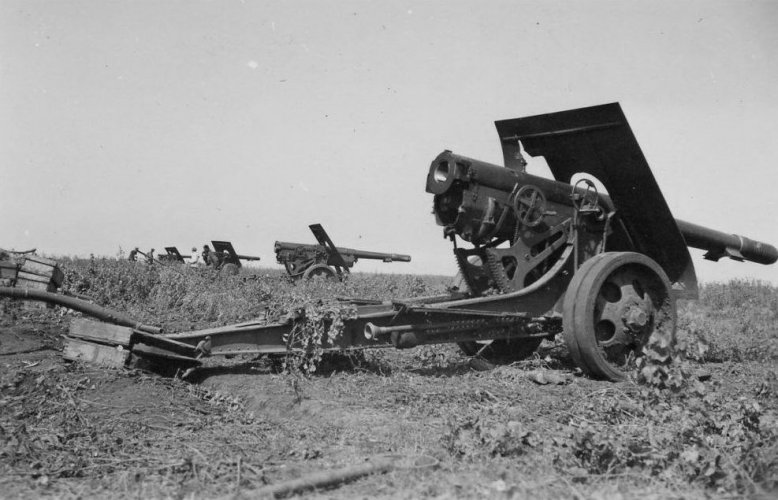
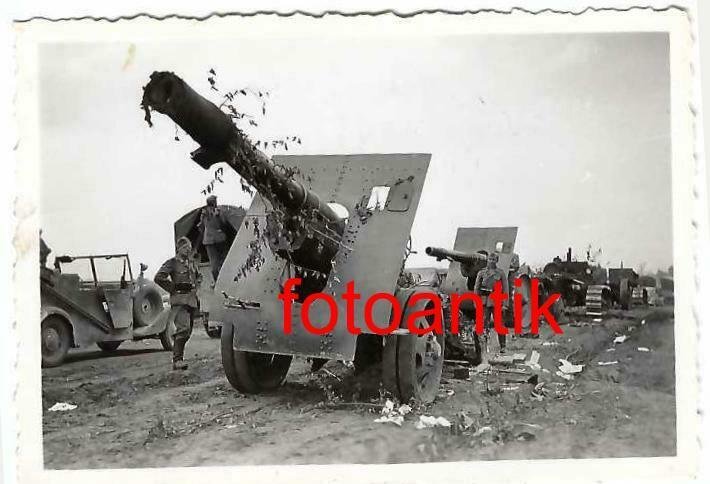
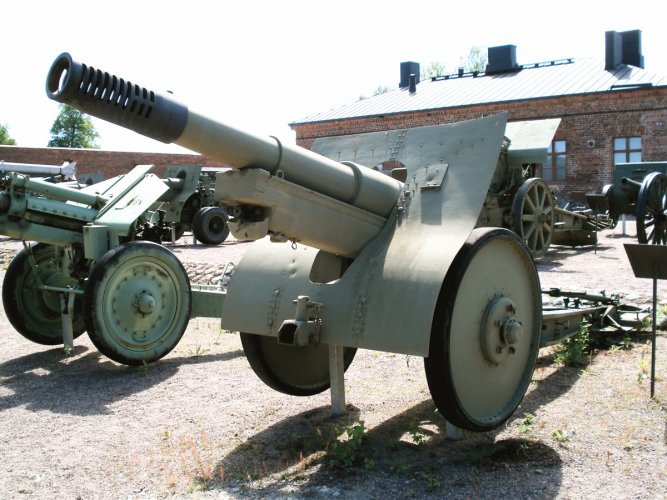
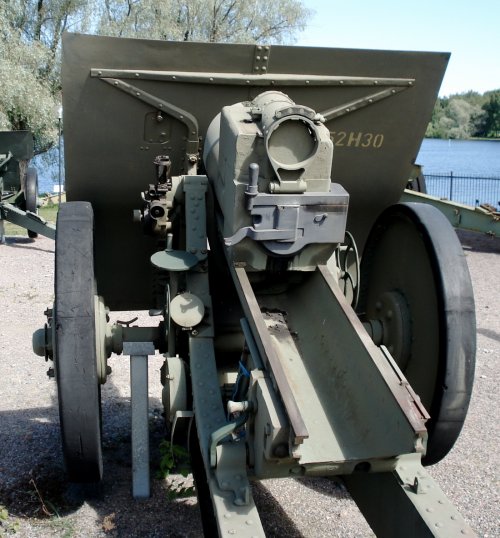
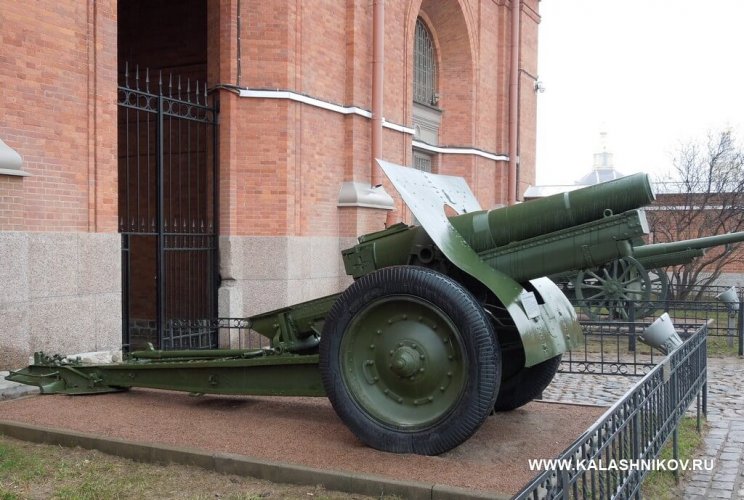
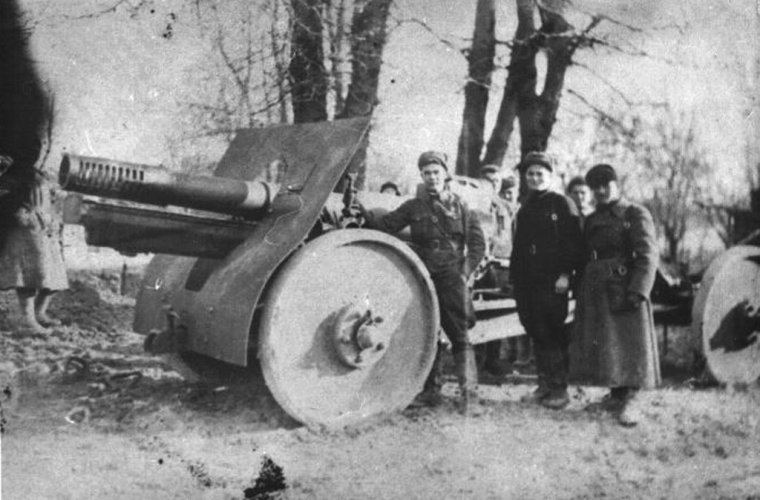
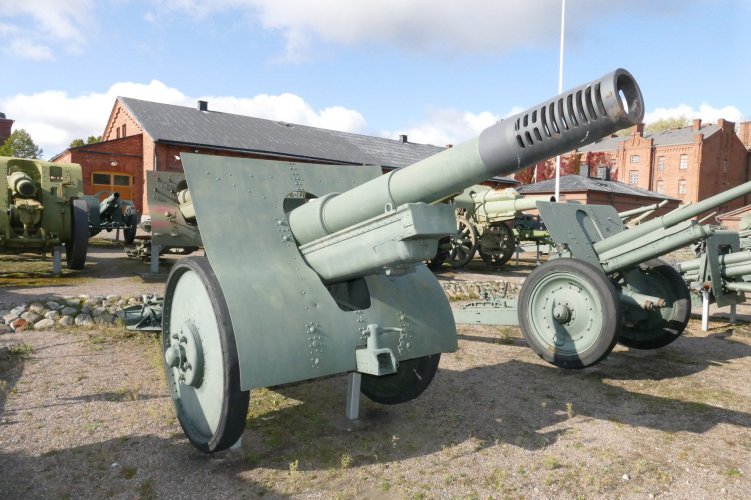
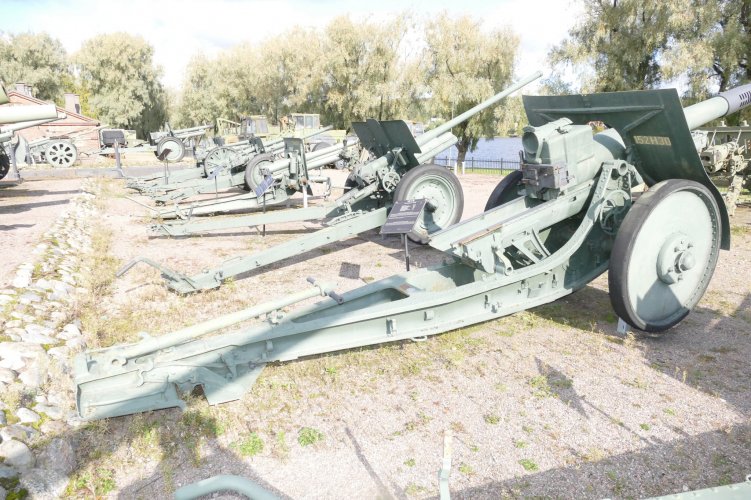
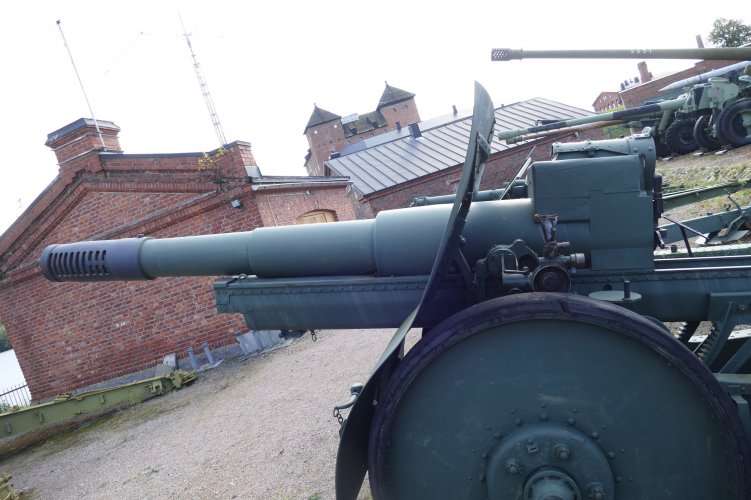
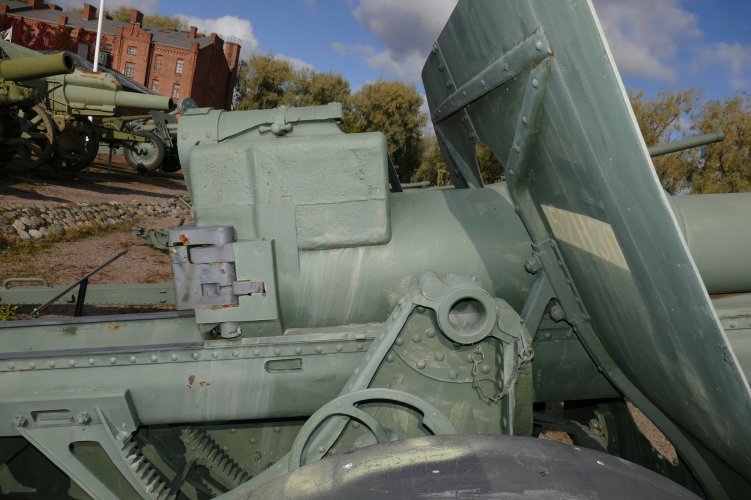
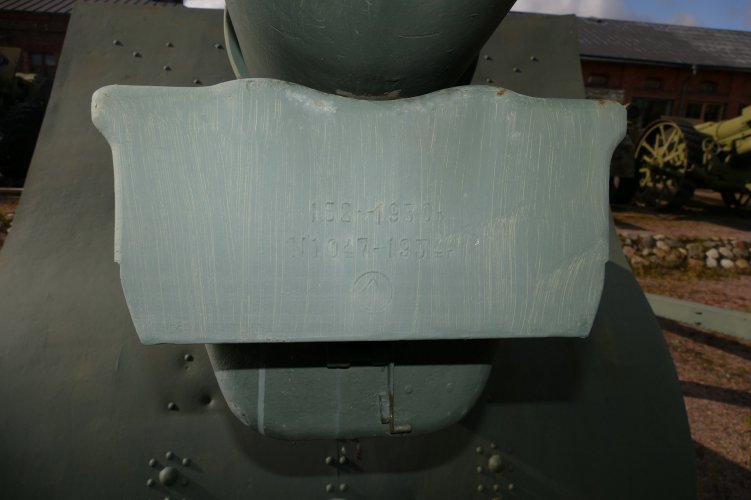
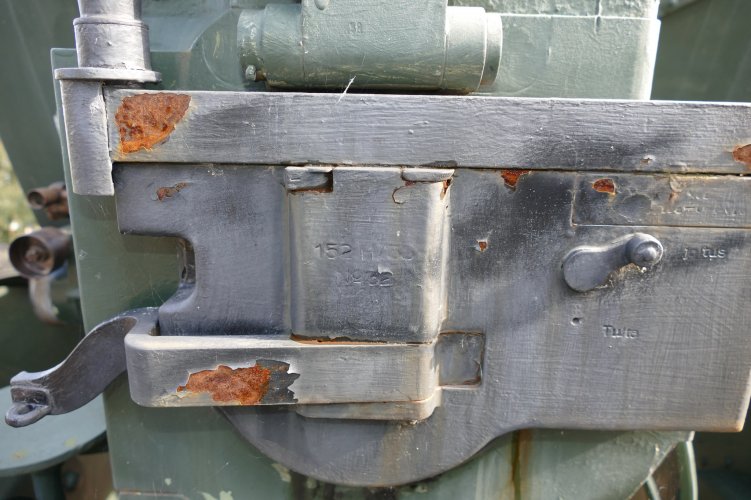
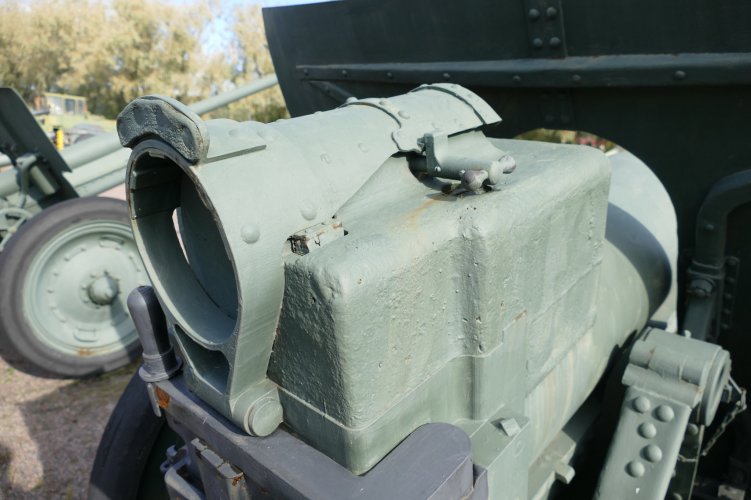
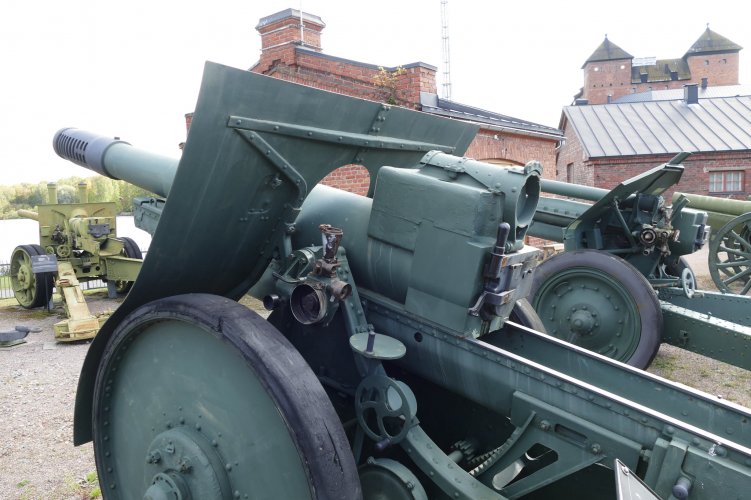
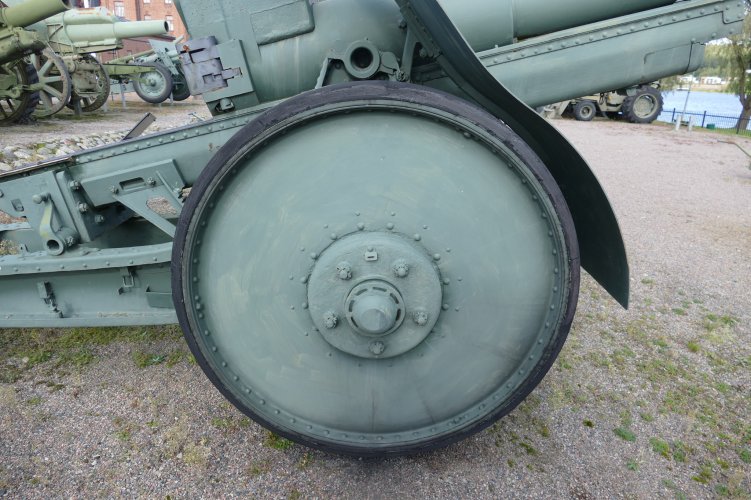
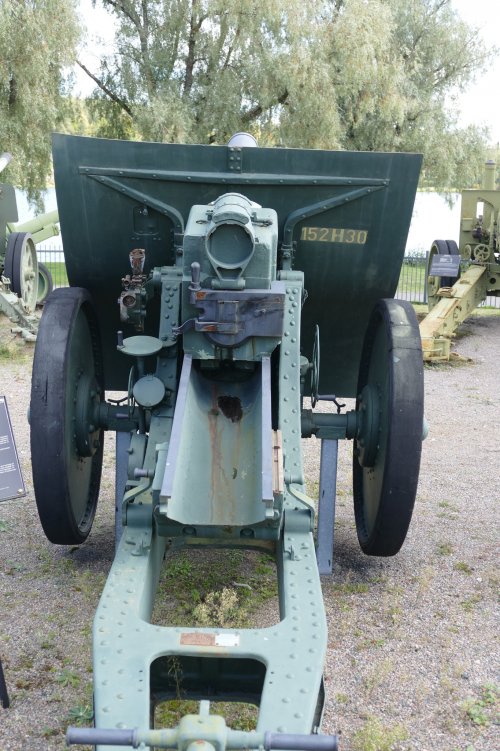
152-mm M1909 "KM" howitzers appear in photographs from World War II, and one howitzer remains in Finland. These howitzers are sometimes incorrectly identified as 152-mm M1910/30 guns, 152-mm M1909/30 howitzers, or other weapons.

*In Russian, there are various concepts:
- Infantry, cavalry, tank, or other conventional division (Russian: "diviziya")
- Artillery division (Russian: "artillerijskaya diviziya") - a large unit the size of a cavalry, tank, or infantry division, with a large number of different artillery pieces
- Artillery battalion in English (Russian: "artillerijskij divizion") - a unit of several batteries, which could be part of artillery regiments, infantry regiments, divisions, etc.
**pood = 16.38 kg, 120 pood and 190 pood is barrel weight, 1966 and 3112 kg.

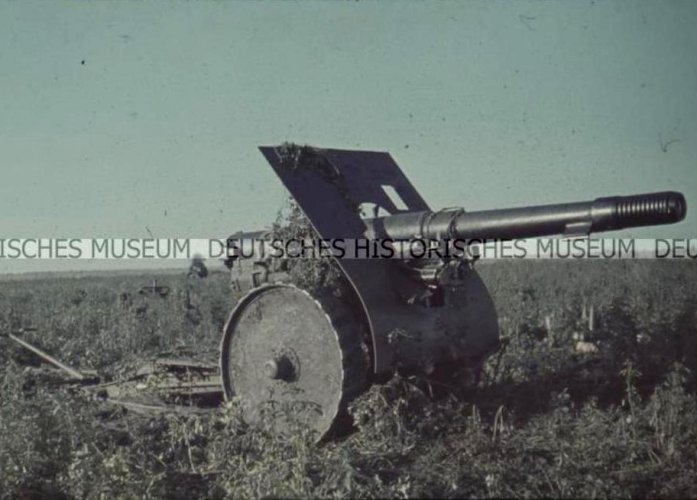
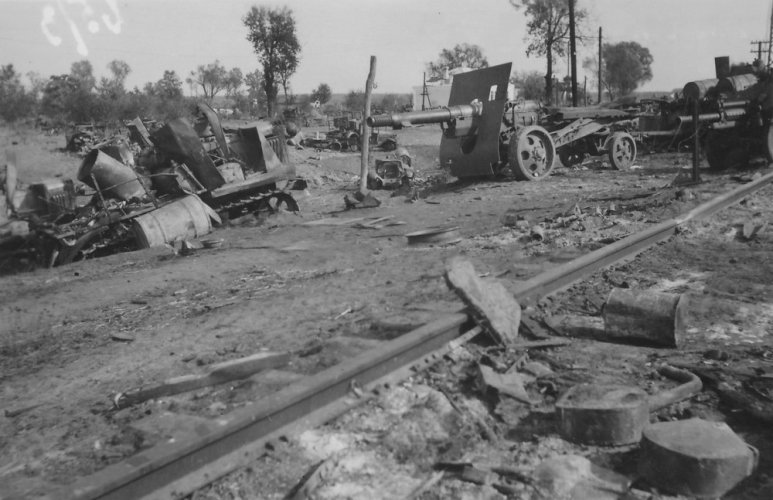
Photos of Soviet 152 mm M1910/30 guns, captured by Germans:
IMG-20180201-095755.jpg
271222_1000.jpg
269774_1000.jpg
270368_1000.jpg
152 mm M1910 "KM" howitzer:
scale_1200 (7).jpeg
152mm_m1930_hameenlinna_1.jpg
152mm_m1930_hameenlinna_2.jpg
And, standart Soviet M1909/30 howitzer:
Risunok-1.jpg
 
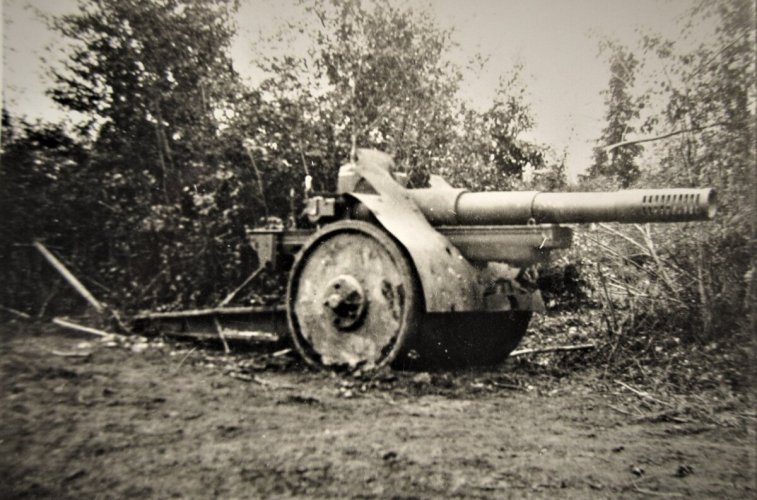
Is this photo real? According to the information I obtained from Wikipedia, no photographic records of this artillery piece have been preserved.
Wikipedia is wrong.
 
Wikipedia is wrong.
thank you very much,and then,i have anohter question,Was the 240 mm L/46 gun mounted on the same gun carriage as the Mrs 210? these two artilleries look like same.
 
Is this photo real? According to the information I obtained from Wikipedia, no photographic records of this artillery piece have been preserved.
Gonna be honest, It looks exactly like a 17cm K18, with solid tyres without any rubber.
I'm 90% sure that the guy who posted it misidentified it.
 
thank you very much,and then,i have anohter question,Was the 240 mm L/46 gun mounted on the same gun carriage as the Mrs 210? these two artilleries look like same.
Its not the same mount, as this is fixed. Mind that the L/46, despite having the hability to be towed using it`s wheels, was to be installed in a circular baseplate, and had follow-the-pointer dials, run by a dedicated fire control director.
 
Last edited:
Its not the same mount, as this is fixed. Mind that the L/46, despite having the hability to be towed using it`s wheels, was to be installed in a circular baseplate, and had follow-the-pointer dials, run by a dedicated fire control director.
Thanks a lot. The primary issue with this image lies in its inaccurate proportions. I have come across claims identifying the depicted weapon as the 17cm K18 fixed gun mount. Additionally, I would like to inquire whether there are any available images of the L46 240mm cannon.
 
what is funny is how the soviets are the ones who saved a vast majority of their prototypes. at least their AFV Ob'Yekts. idk about the artillery. and i really dont think they saved many of their experimental planes of the Interwar/WW2 period like the Polikarpov I-180/185/190/195..etc BUT thats a different topic


I wish there was any more images of these prototypical Soviet artillery pieces like for instance the
203mm B4 with muzzle brake
152.4mm B-30
180mm Br-21
152.4mm Br-19
162/100mm Br-2 variant
152/107mm Br-2 Variant
the improved T-117 or M-50 carriages for Br-2/B-4/Br5
152.4mm B-10-2-30
152.4mm B-10
152.4mm Br-2 with L/55 barrel

I bet there is a full comprehensive GRAU list, GAU list, Ob'Yekt list, Istrebitel list, Barrikady "Br" list, Bolsheivik plant "B" list, list of "S" guns and list of the BL guns as well
BL1- BL-6= ??
BL7= 152.4mm gun on 52-L-504A carriage
BL8= 152.4mm used in ISU-152-1 (Ob-246)
BL9= 122mm used in ISU-122-1 ( Ob-243)
BL10= 152.4mm used in ISU-152-2 ( Ob-247)
BL11=- BL-99???

EDIT;
BL-13 is/ was the long barreled 122mm tank gun fitted to the Ob'yekt 244 which was also the testbed for the roadwheels of the abortive Ob'yekt 252 ( it had 5 big IS-6 wheels and one regular IS-2 wheel due to the hull being too short for the full 6, it also had the turret of an KV-122 installed at one point before being mounted as a memorial in St.Petersberg )
may i ask you a question? 152.4mm Br-2 with L/55 barrel is real? Do you have a picture of this artillery?
 
Back
Top Bottom