Great Jacky, that’s such a well sourced and explained piece which explores the significant nuances in surface ship procurement. Like yeah, duh, anyone and their dog can see that NAVSEA needs more in house design capability but you can’t just snap ur fingers and it appearsThe DDG51's hull design is outdated and no longer suitable for the needs of modern warfare. Private contractors are currently useless; the outcome can be seen from the domestic manufacturers' proposals during the Constellation-class corvette bidding process. If the Navy wants to maintain its fleet size and improve its quality, it must restore its own design capabilities and the shipyards' construction capacity.

You are using an out of date browser. It may not display this or other websites correctly.
You should upgrade or use an alternative browser.
You should upgrade or use an alternative browser.
FFG(X) - NEWS Only
D
Deleted member 29851
Guest
Alright I'll bite on this.Private contractors are currently useless; the outcome can be seen from the domestic manufacturers' proposals during the Constellation-class corvette bidding process.
Given OPNAV's mandate of delivering in 2026, and the Congressional requirement to modify a pre-existing design, what could defense yards in the US have done differently? What did they get right? Where were their shortcomings? I think the BIW submission is a perfect example of trade offs in surface combatant design, why even something already designed to American standards would yield a suboptimal result, and therefore just how hamstringed design firms were.
Would suggest you read my post on the cost efficiencies of NSC and the nuances of the F100 and FREMM submissions for added reference and context. See links.
https://www.secretprojects.co.uk/threads/ffg-x.33649/page-36#post-855311https://www.secretprojects.co.uk/threads/ffg-x.33649/post-857076
Last edited by a moderator:
The DDG51's hull design is outdated and no longer suitable for the needs of modern warfare. Private contractors are currently useless; the outcome can be seen from the domestic manufacturers' proposals during the Constellation-class corvette bidding process. If the Navy wants to maintain its fleet size and improve its quality, it must restore its own design capabilities and the shipyards' construction capacity.
Absolutely, but in the meantime, build Burkes. It's the best we can actually build outside of PowerPoint.
Thank you, but you provided a specific case. Returning to FFGX, the NSC is not the SCB. The latter could design corresponding warship plans based on strategic needs and act as a coordinator between fleet users and the design from BuShips. The NSC can only provide suggestions; whether they are ultimately implemented is unknown. The US is currently facing a systemic problem across its entire shipbuilding industry. It's all over when the industrial field adopts the logic of the financial fieldAlright I'll bite on this.
Given OPNAV's mandate of delivering in 2026, and the Congressional requirement to modify a pre-existing design, what could defense yards in the US have done differently? What did they get right? Where were their shortcomings? I think the BIW submission is a perfect example of trade offs in surface combatant design, why even something already designed to American standards would yield a suboptimal result, and therefore just how hamstringed design firms were.
Would suggest you read my post on the cost efficiencies of NSC and the nuances of the F100 and FREMM submissions for added reference and context. See links.
https://www.secretprojects.co.uk/threads/ffg-x.33649/page-36#post-855311https://www.secretprojects.co.uk/threads/ffg-x.33649/post-857076
The case is literally the procurement of FFG(X), you would know that if you read it.Thank you, but you provided a specific case
What on earth does the National Security Cutter have to do with the Ship Characteristic Board??? Last I checked NAVSEA is the current body for warship procurementReturning to FFGX, the NSC is not the SCB. The latter could design corresponding warship plans based on strategic needs and act as a coordinator between fleet users and the design from BuShips.
I have no fucking clue what you’re even trying to say here. I’ve seen the inner workings of the financial field at the very highest echelons and it has absolutely no bearing whatsoever on warship procurementThe US is currently facing a systemic problem across its entire shipbuilding industry. It's all over when the industrial field adopts the logic of the financial field
D
Deleted member 29851
Guest
At a complete loss as to what any of this has to do with FFG(X).Thank you, but you provided a specific case. Returning to FFGX, the NSC is not the SCB. The latter could design corresponding warship plans based on strategic needs and act as a coordinator between fleet users and the design from BuShips. The NSC can only provide suggestions; whether they are ultimately implemented is unknown. The US is currently facing a systemic problem across its entire shipbuilding industry. It's all over when the industrial field adopts the logic of the financial field
BuShips and SCB (and SCIB) haven’t existed for decades.
I was clearly referring to the National Security Cutter, not the National Security Council.
Nor does your response satisfy any of the questions I posed in my previous message.
If domestic yards failed so miserably during FFG(X) conception, please, show us. I’m sure it will be enlightening. I think my previous posts effectively demonstrate just how limited American yards were with their options, and the trade offs in the design process.
What the Navy needs is a slightly up gunned NSC with NSC level requirements as a peacetime OPV. The goal would be not to bump up the wartime fleet but to take over 90% of peacetime missions the Burkes have to do. That way the Burkes can be saved for wartime missions. If you are facing Huthis, send a Burke, otherwise send a NSC.
Then you can afford to do a clean sheet FFG and DDG as the Burkes can last longer.
Then you can afford to do a clean sheet FFG and DDG as the Burkes can last longer.
D
Deleted member 29851
Guest
While I agree in principle, NSC is not a cost-effective platform for this mission. The 10th NSC (last hull to be completed), was purchased for $600M in FY25 dollars, or roughly half the cost of a series production Constellation. It delivers maybe a quarter of the capability at best.What the Navy needs is a slightly up gunned NSC with NSC level requirements as a peacetime OPV.
An uparmed NSC, mirroring the 2014 Sea Control Frigate concepts, would take 2-3 years of redesign and deliver only modest capability improvements for much higher cost. I ballpark $800M.
We already have 27 ships that can fulfill this role; the LCSs. They’re good for anti-piracy, anti-smuggling, FONOPs, showing the flag, forward presence in the Middle East, minesweeping, etc.The goal would be not to bump up the wartime fleet but to take over 90% of peacetime missions the Burkes have to do.
Wartime missions would be MCM, maintaining station in the Middle East, operations in the Baltics, anti-commerce, hunting the Maritime Militia, etc.
About the only thing they can’t do that an NSC maybe can is ASW. And even then they can still fly helicopters and operate with UxVs.
An NSC will never deliver meaningful AAW capability beyond ESSM and a handful of SM-2MRs, which would be trivial to integrate with LCS versus designing a patrol frigate off the NSC hull.
I can't understate how poorly this would meet requirements and how done to death this idea is. It just doesn't do what the USN needsWhat the Navy needs is a slightly up gunned NSC with NSC level requirements as a peacetime OPV. The goal would be not to bump up the wartime fleet but to take over 90% of peacetime missions the Burkes have to do. That way the Burkes can be saved for wartime missions. If you are facing Huthis, send a Burke, otherwise send a NSC.
Then you can afford to do a clean sheet FFG and DDG as the Burkes can last longer.
What the USN needs is to stop running the Burkes into the ground.
If an upgunned LCS can do it, sure go that route, but the LCS have terrible range and endurance and unnecessary speed. Fixing those would run into the same redesign problems.
But the USN desperately needs hulls so anything that gets the numbers up is probably worth it. Including more LCS and getting the CG more ships. Oh and not starting a war with Venezuela.
If an upgunned LCS can do it, sure go that route, but the LCS have terrible range and endurance and unnecessary speed. Fixing those would run into the same redesign problems.
But the USN desperately needs hulls so anything that gets the numbers up is probably worth it. Including more LCS and getting the CG more ships. Oh and not starting a war with Venezuela.
D
Deleted member 29851
Guest
Hard to do that when we’ve been operating at GWOT tempo for the past 25 years.What the USN needs is to stop running the Burkes into the ground.
According to the LCS SAR, Independence has an endurance of 6040nm @ 14 knots. That’s plenty for general patrol duties.If an upgunned LCS can do it, sure go that route, but the LCS have terrible range and endurance and unnecessary speed. Fixing those would run into the same redesign problems.
https://www.esd.whs.mil/Portals/54/...ports/FY_2021_SARS/22-F-0762_LCS_SAR_2021.pdf
However, you are right about the Freedoms being short-legged, even if they met the program’s range requirement of 3500nm. There’s not a whole lot to be done there, but as the manning situation with MSC improves, and we move towards a more distributed Combat Logistics Force with T-AOL, I don’t think this will be a huge deal, and there’s potential to forward deploy them.
If we’re interested in exploring physical changes to the ships, we can always install fuel blisters. Not sure how that would effect drag or speed, might increase buoyancy and thus lowering draft, but you’d have a larger slenderness ratio and more weight.

Dilandu
I'm dissatisfied, which means, I exist.
The problem is, that modern-type democracies are very poor in long-term planning. Anything that is beyond next election cycle is "less relevant" at best. Such paradigm basically promote populism and short-term thinking.And some things never change. There has been a major upturn in planned ship procurements just outside the FYDP in every SCN budget since I became aware of defense budgets. So, 30+ years now. The "bow wave" is real, and yet is never actually real.
P.S. IMHO, but a fourth branch of government should be created - a long-term planning bureau. Which would be given the authority over several specificl long-term goals, deemed (by the decisive majority in parliament) to be vital for the nation. And would have the power to block any legislative or executive efforts that could sabotage said goal. Like "nation want 300+ ships navy? Okay, no reduction in naval budgets is allowed. Nation want universal healthcare? Sorry, mister libertarian-leaned president, all your attempts to reduce healthcare funds are blocked by definition".
(sorry for the political rant, this is the idea I carried for quite a long time)
Dilandu
I'm dissatisfied, which means, I exist.
It's likely could be increased, if 40+ knots demands are reduced to a 25-30 knots (frigate hardly would need more) max speed, and additional volumes used for diesel fuel.According to the LCS SAR, Independence has an endurance of 6040nm @ 14 knots. That’s plenty for general patrol duties.
Scott Kenny
ACCESS: USAP
- Joined
- 15 May 2023
- Messages
- 19,805
- Reaction score
- 28,420
Yes, Burke IIAs would need a VDS for filling the role of the Sprucan. So do that in a refit, install a VDS instead of updating the radars to top of the line and installing the top end SEWIP.A Constellation will always be a better ASW combatant than the Burke. Burke’s gas turbines and direct drive make it loud, and it lacks VDS to see below the thermal layer.
Possibly. But we have all those old Burke Is, IIs, and IIAs available.I think Constellation is the dedicated ASW ship, cheap enough to mass produce and put on second line duty, but capable enough to operate with the CSGs as needed. You’d get very minimal return going larger.
Dilandu
I'm dissatisfied, which means, I exist.
IMHO, upgunned LCS would be better for frigate role. One important reason - it would NOT affect Burke's production, and LCS hulls could be produced in significant quantity.Yes, Burke IIAs would need a VDS for filling the role of the Sprucan. So do that in a refit, install a VDS instead of updating the radars to top of the line and installing the top end SEWIP.
Dilandu
I'm dissatisfied, which means, I exist.
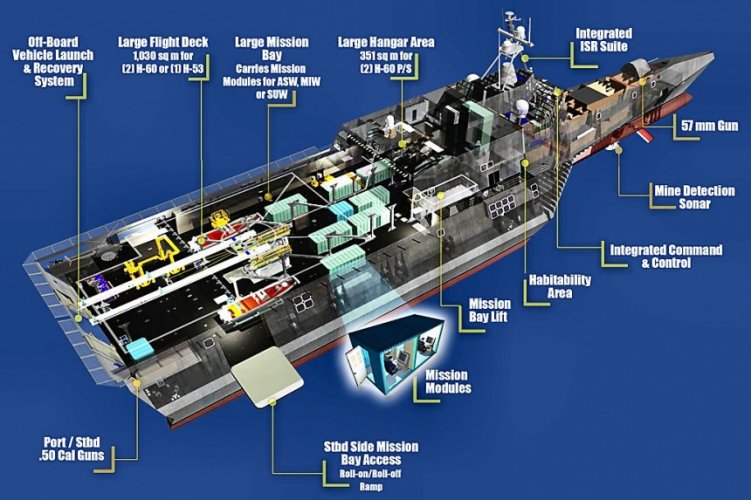
Okay, let's try to see what we could figure out of Independence-class hull:

* I don't see much reason to change the powerplant; while it's clearly more powerful than what escort frigate might need, it's also based on common GE turbines, widely used by USN. Perhaps it might be possible to left only one gas turbine, thus cutting max power in half? But I'm not sure, how much reconstruction would such alteration require - and would it be practical at all;
* A full anti-submarine suit with VDS and torpedo mounts should be installed using the rear part of internal docking bay;
* By reconstructing the area of mission bay - which for single-purpose frigate is not relevant - we could free the space for Mark-57 peripheral vertical launchers at the sides on helicopter pad. It MAY reduce the useful width of the helipad, but not critically. Two Mk-57 modules per broadside would provide 16 VLC - which are compatible with ESSM, SM-2 and VL-ASROC, thus basically filling all the niches the frigate might require;
* The Saab Sea Giraffe search/track radar seems to be fine - especially consdiering that it's optimized for small boats & low-flying targets (like drones). A switch for AESA Sea Giraffe 4A might be reasonable to increase performance. A fire control radar (better a pair) would be required, replacing the RAM launcher on the top of hangar;
* The forward Hellfire VLS module should be replaced with Coyote/Roadrunner interceptor drones;
* Still think that Mk-101 57-mm gun is suboptimal (IRRC its main advantage was "less crew-demanding"), and 76-mm OTO Melara in Sovraponte mount should be used instead - provided with Volcano guided munition. Preferrably a pair of such mounts or at least with a "fit for but not with" capability to install addition;
* I don't see much reason to change the powerplant; while it's clearly more powerful than what escort frigate might need, it's also based on common GE turbines, widely used by USN. Perhaps it might be possible to left only one gas turbine, thus cutting max power in half? But I'm not sure, how much reconstruction would such alteration require - and would it be practical at all;
* A full anti-submarine suit with VDS and torpedo mounts should be installed using the rear part of internal docking bay;
* By reconstructing the area of mission bay - which for single-purpose frigate is not relevant - we could free the space for Mark-57 peripheral vertical launchers at the sides on helicopter pad. It MAY reduce the useful width of the helipad, but not critically. Two Mk-57 modules per broadside would provide 16 VLC - which are compatible with ESSM, SM-2 and VL-ASROC, thus basically filling all the niches the frigate might require;
* The Saab Sea Giraffe search/track radar seems to be fine - especially consdiering that it's optimized for small boats & low-flying targets (like drones). A switch for AESA Sea Giraffe 4A might be reasonable to increase performance. A fire control radar (better a pair) would be required, replacing the RAM launcher on the top of hangar;
* The forward Hellfire VLS module should be replaced with Coyote/Roadrunner interceptor drones;
* Still think that Mk-101 57-mm gun is suboptimal (IRRC its main advantage was "less crew-demanding"), and 76-mm OTO Melara in Sovraponte mount should be used instead - provided with Volcano guided munition. Preferrably a pair of such mounts or at least with a "fit for but not with" capability to install addition;
* Still think that Mk-101 57-mm gun is suboptimal (IRRC its main advantage was "less crew-demanding"), and 76-mm OTO Melara in Sovraponte mount should be used instead - provided with Volcano guided munition. Preferrably a pair of such mounts or at least with a "fit for but not with" capability to install addition;
I used to think the same thing, but I've talked to Coasties who are very confident in the capabilities of their 57s (including the new guided ammo) and wouldn't want to switch to a 76mm OTO Melara
D
Deleted member 29851
Guest
That’s tearing the ship’s innards open to completely redo and the powerplant. Is there any historical precedent for that? What makes you think it would be possible?It's likely could be increased, if 40+ knots demands are reduced to a 25-30 knots (frigate hardly would need more) max speed, and additional volumes used for diesel fuel.
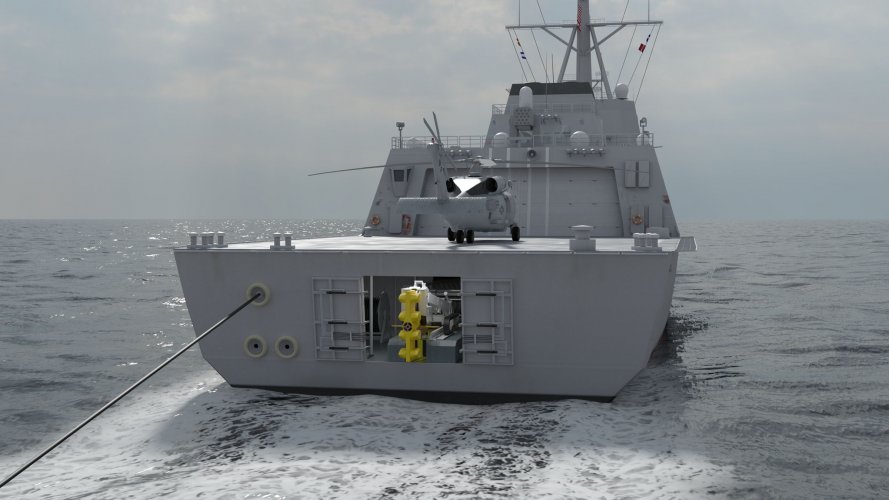
Take a look at how much space Constellation’s VDS required. It requires a dedicated garage door and a fair bit of internal space in the stern. It’s not merely a cable on a winch like a TA. Only way to install it would be to put it on the helipad.Yes, Burke IIAs would need a VDS for filling the role of the Sprucan. So do that in a refit, install a VDS instead of updating the radars to top of the line and installing the top end SEWIP.
An LCS has absolutely no silencing, and id as loud as an aircraft carrier. The ship would deafen any sonar system you put on it. And tests of the ASW module showed the waterjets kept sucki no in the towed array. There’s a reason the ASW module was cancelled.A full anti-submarine suit with VDS and torpedo mounts should be installed using the rear part of internal docking bay
Again, I greatly question the feasibility of this, given Mk57s associated weight and the fact that the Mk57 production line closed a decade and a half ago. Increased sustainment costs too.By reconstructing the area of mission bay - which for single-purpose frigate is not relevant - we could free the space for Mark-57 peripheral vertical launchers at the sides on helicopter pad. It MAY reduce the useful width of the helipad, but not critically. Two Mk-57 modules per broadside would provide 16 VLC - which are compatible with ESSM, SM-2 and VL-ASROC, thus basically filling all the niches the frigate might require;
Why are we removing PD weaponry to install fire control radars? We’re in the transition to ARH missiles which makes those redundant. Constellation didn’t have any fire control radars.A switch for AESA Sea Giraffe 4A might be reasonable to increase performance. A fire control radar (better a pair) would be required, replacing the RAM launcher on the top of hangar;
More weight, less ammunition capacity, not worth the refit and introducing yet another caliber of weapon.Still think that Mk-101 57-mm gun is suboptimal (IRRC its main advantage was "less crew-demanding"), and 76-mm OTO Melara in Sovraponte mount should be used instead - provided with Volcano guided munition. Preferrably a pair of such mounts or at least with a "fit for but not with" capability to install addition;
Dilandu
I'm dissatisfied, which means, I exist.
I was talking about redesigning the design, not rebuilding the existing units.That’s tearing the ship’s innards open to completely redo and the powerplant. Is there any historical precedent for that? What makes you think it would be possible?
Again: I was talking about changing the design, not rebuilding existing units.Take a look at how much space Constellation’s VDS required. It requires a dedicated garage door and a fair bit of internal space in the stern. It’s not merely a cable on a winch like a TA. Only way to install it would be to put it on the helipad.
P.S.
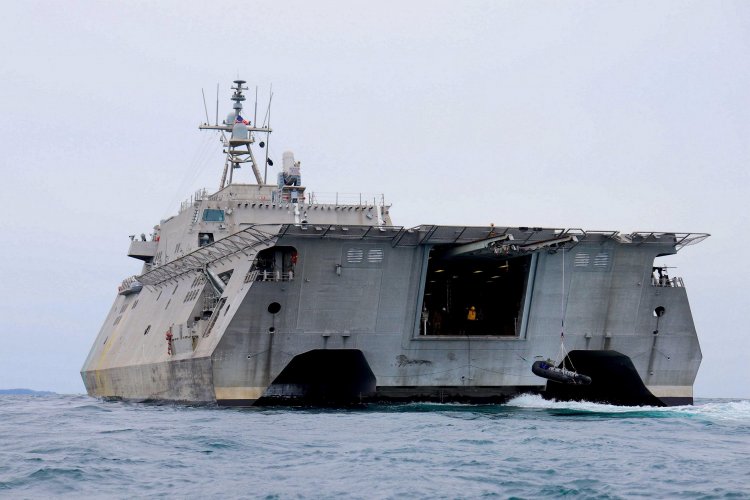
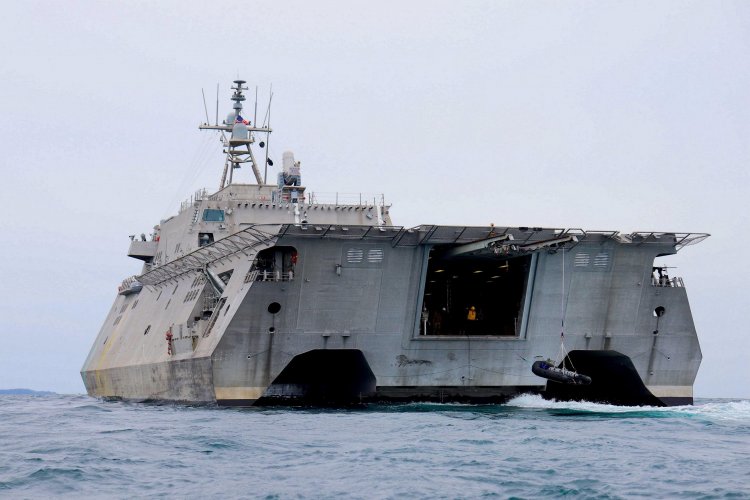
Do you thing there aren't enough space?
Hmmmm. So the change in poweplant would still be required. Thanks for the data.An LCS has absolutely no silencing, and id as loud as an aircraft carrier. The ship would deafen any sonar system you put on it. And tests of the ASW module showed the waterjets kept sucki no in the towed array. There’s a reason the ASW module was cancelled.
Well, the Mk-57 core design isn't that different from Mk-41 to be impossible to re-start the production.Again, I greatly question the feasibility of this, given Mk57s associated weight and the fact that the Mk57 production line closed a decade and a half ago. Increased sustainment costs too.
Why are we removing PD weaponry to install fire control radars? We’re in the transition to ARH missiles which makes those redundant. Constellation didn’t have any fire control radars.
Because ARH missiles aren't magic solution, and the ability to illuminate the target detected by ship's sensors - much more powerful - could be essential in jamming-heavy environment.
Much more capable shells, more range, could actually do some damage to surface enemy warship & coastal targets.More weight, less ammunition capacity, not worth the refit and introducing yet another caliber of weapon.
Attachments
Dilandu
I'm dissatisfied, which means, I exist.
Well, my general point is that 76-mm OTO could throw three times heavier shell with twice as heavy bursting charge at 2.5 greater range (with Volcano). Also, it proven itself in Red Sea as efficient anti-drone weapon.I used to think the same thing, but I've talked to Coasties who are very confident in the capabilities of their 57s (including the new guided ammo) and wouldn't want to switch to a 76mm OTO Melara
D
Deleted member 29851
Guest
Was referring to the Burkes, there’s obviously enough volume on the LCSs.Do you thing there aren't enough space?
While I broadly agree, there currently isn’t a Standard Missile illuminator that doesn’t require a full Aegis installation. And again, you’re proposing removing PD weaponry for this.Because ARH missiles aren't magic solution, and the ability to illuminate the target detected by ship's sensors - much more powerful - could be essential in jamming-heavy environment.
If you absolutely had to have a director, speed FXR development.
The NGFS argument is null, even AGS lacks the range to provide effective sustained fire support. Look at how quickly coalition forces moved beyond 40 miles of the coast in 2003.Much more capable shells, more range, could actually do some damage to surface enemy warship & coastal targets.
57mm is enough to deal with boghammers and small combatants, about all you can really expect a PF to need to deal with.
Regarding ammunition variety, 76mm is still small enough that you’re trading a guidance system for a warhead and vise-versa. You’d be better off trying to expand 57mm ammunition types for wider deployment across the fleet.
This is what LCS should’ve been in hindsight; halving the powerplant would save a ton on procurement cost, better self-defense suite to not be reliant on Burkes, and some silencing. But hindsight is 20/20, and the extensive redesign time associated with a project like this kind of defeats the point.
But that said, what can this really do that an LCS can’t? ASW and a sling a few Standards? Granted a LCS refit could fire both ESSM and SM-2MR, just not at the volume you’re talking about.
But MMSC integrates most of these capabilities. Better yet, work with BAE on the Adaptable Strike Frigate, then you’re adding workshop space for drones and retaining the mission modules.
Last edited by a moderator:
Dilandu
I'm dissatisfied, which means, I exist.
Well, the AN/SPG-62 is perfectly workable without full Aegis, AFAIK. There might be problems with midcourse guidance, but the same would be for active-homing missiles too.While I broadly agree, there currently isn’t a Standard Missile illuminator that doesn’t require a full Aegis installation.
Okay, those arguments are persuasive!The NGFS argument is null, even AGS lacks the range to provide effective sustained fire support. Look at how quickly coalition forces moved beyond 40 miles of the coast in 2003.
57mm is enough to deal with boghammers and small combatants, about all you can really expect a PF to need to deal with.
Regarding ammunition variety, 76mm is still small enough that you’re trading a guidance system for a warhead and vise-versa. You’d be better off trying to expand 57mm ammunition types for wider deployment across the fleet.
Basically my idea was to create an escort frigate, capable of anti-submarine warfare/convoy escorts in ocean.But that said, what can this really do that an LCS can’t? ASW and a sling a few Standards? Granted a LCS refit could fire both ESSM and SM-2MR, just not at the volume you’re talking about.
But MMSC integrates most of these capabilities. Better yet, work with BAE on the Adaptable Strike Frigate, then you’re adding workshop space for drones and retaining the mission modules.

- Joined
- 11 February 2007
- Messages
- 4,173
- Reaction score
- 8,959
Oh, we comprehend the _intent_, it's the _implementation_ we question. Multiple incidents point to the US having major issues with crew training, particularly in the depth of skills, while, as I've just pointed out, these supposedly higher survivability standards don't actually seem to work better in practise, if they're not seriously questionable in the first place - counter-flooding has a place in DC procedures, but surely it should be as a _controlled_ process, freely cross-flooding a berthing space deep in the ship where sailors may be deeply asleep, or trapped, when the incident starts strikes me as a recipe for disaster.Why? For the billionth time, because numerous people on here fail to comprehend it, the USN builds a fleet of warships to very high standards. These standards are not arbitrary, nor are they over the top. They have proven themselves in both combat and in peacetime accidents. The crew are trained to a high standard, production is held to a high standard.
The USN itself doesn't disagree with this, look at the inquiry into the Bonhomme Richard loss. The entire capability of a major naval base at their hands and they couldn't stop a fire that shouldn't have resulted in the loss of the ship.
"The training and readiness of Ship’s Force was marked by a pattern of failed drills, minimal crew participation, an absence of basic knowledge on firefighting in an industrial environment, and unfamiliarity on how to integrate supporting civilian firefighters. To illustrate this point, the crew had failed to meet the time standard for applying firefighting agent on the seat of the fire on 14 consecutive occasions leading up to 12 July 2020. "
"An example of how these focus areas combined to result in unacceptable levels of risk is the status of the ship’s Aqueous Film Forming Foam sprinkling system. At no point in the firefighting effort was it used – in part because maintenance was not properly performed to keep it ready and in part because the crew lacked familiarity with capability and availability."
The USN's supposed higher design standards have produced a generation of failures, it's 35 years since a new combatant class was introduced without critical problems. Standards so strict they can't be met are not fit for purpose, just as much as ones that are too slack.
If you are looking for an ASW-focused ship, you are not going to get there with the LCS.
It is loud and it's water jets are incompatible with towed array sonars.
The Navy tried and tried to make it work but eventually walked away.
It is loud and it's water jets are incompatible with towed array sonars.
The Navy tried and tried to make it work but eventually walked away.
If you are looking for an ASW-focused ship, you are not going to get there with the LCS.
It is loud and it's water jets are incompatible with towed array sonars.
The Navy tried and tried to make it work but eventually walked away.
It is loud and it's water jets are incompatible with towed array sonars.
The Navy tried and tried to make it work but eventually walked away.
D
Deleted member 29851
Guest
I’m struggling to think of any non-Aegis SPG-62 installations, but maybe I’m missing something.Well, the AN/SPG-62 is perfectly workable without full Aegis, AFAIK. There might be problems with midcourse guidance, but the same would be for active-homing missiles too.
Regardless, ARH should be fine. Missile stockpile is expanding in the coming years, and it’s good enough for Constellation, which is expected to operate with frontline CSGs. With that in mind, the jamming argument mind of falls apart. And it’s not like a PF would be operating in high-intensity EW situations either.
I understand, and I agree with you, I’m just not sure procuring a new ship of that variety makes sense in the context of 2025. Better to wait a decade when we start looking for LCS replacements.Basically my idea was to create an escort frigate, capable of anti-submarine warfare/convoy escorts in ocean.
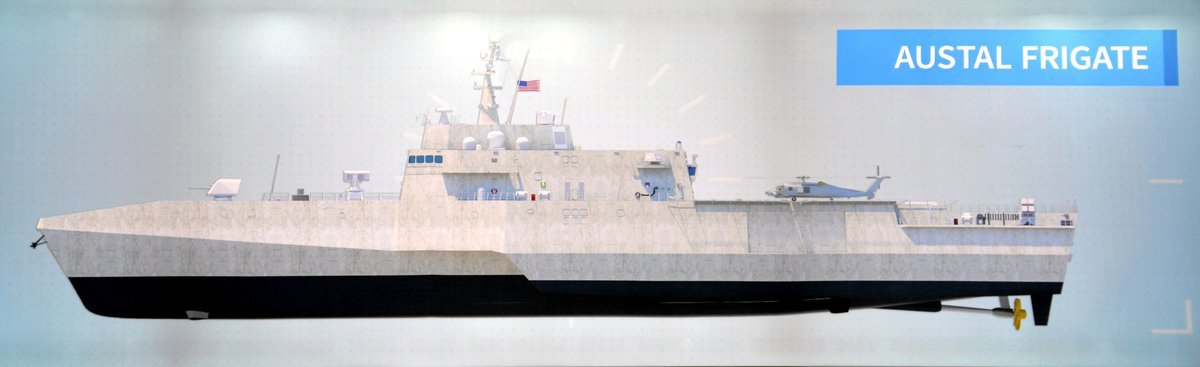
While I agree it doesn’t work for the base LCS, Austal’s FFG(X) proposal reverted to traditional shafts, probably for the reasons you mentioned. If we are absolutely dead set on building an uparmed PF variant of Independence, it’s a fixable issue.It is loud and it's water jets are incompatible with towed array sonars.
Correlation is not causation. Ford is built to utterly absurd Level III survivability standards, and all the criticism surrounding her was EMALS, AAG, and the AWEs don’t work. All of which are now fully functional. AWEs are actually a simplified way to meet the survivability standards.The USN's supposed higher design standards have produced a generation of failures, it's 35 years since a new combatant class was introduced without critical problems. Standards so strict they can't be met are not fit for purpose, just as much as ones that are too slack.
Same goes for Zumwalt, which ultimately delivered 3 perfectly workable ships. All the criticism surrounding them is cost based, which fails to account for the limited production run and revolutionary vs revolutionary approach.
It’s objectively wrong to say these programs failed from a technical perspective, or that heightened standards caused more than minor headaches. FFG(X) is the only exception, but it ultimately promises much greater capability compared to all other submissions.
- Joined
- 11 February 2007
- Messages
- 4,173
- Reaction score
- 8,959
Lots. There's examples to both decrease the available power and to increase the available power.That’s tearing the ship’s innards open to completely redo and the powerplant. Is there any historical precedent for that?
Lots of US 4-Stackers had boiler rooms removed to free up space for long-range tankage. The RN definitely did this, ISTR the USN did as well. Other RN destroyers were similarly adapted.
Pretty much every class of interwar battleship had at least some of the class completely reboilered, cutting as many as 28 boilers down to 6 or so, given advances in boiler technology that allowed modern boilers to produce far more power in less space. Some of them even swapped out the engines to take advantage of the new power, even using engines built for a different class entirely.
Meanwhile several escort classes ended up with multiple engine variants - six across the US DEs - through adapting the design to whatever was available.
More recently the RNs Type 45 have effectively been switched from gas turbines as the primary power source for their IEP to diesel electric as primary, to work around the absolute fiasco of the Northrop Grumman intercoolers being unable to handle warm water.
- Joined
- 11 February 2007
- Messages
- 4,173
- Reaction score
- 8,959
If their technical design makes them unaffordable, then that's as much a technical design related failure as if their technology fails to work.It’s objectively wrong to say these programs failed from a technical perspective
Dilandu
I'm dissatisfied, which means, I exist.
I strongly suspect that USN underestimated the level of jamming encoutered in modern warfare (as basically everyone before 2022)Regardless, ARH should be fine. Missile stockpile is expanding in the coming years, and it’s good enough for Constellation, which is expected to operate with frontline CSGs. With that in mind, the jamming argument mind of falls apart. And it’s not like a PF would be operating in high-intensity EW situations either.
I'm not sure USN could afford to wait a decade. In a decade, more ships would be requiring replacement, putting even more strain on already-limited shipbuilding resources. A line of not-perfect-but-workable frigates would lessen the problem significantly - and at least leave USN with something buildable, in case another large-scale project would meet a failure.I understand, and I agree with you, I’m just not sure procuring a new ship of that variety makes sense in the context of 2025. Better to wait a decade when we start looking for LCS replacements.
Seems like that. And in case of such redesign, the powerplant could also be reduced.While I agree it doesn’t work for the base LCS, Austal’s FFG(X) proposal reverted to traditional shafts, probably for the reasons you mentioned. If we are absolutely dead set on building an uparmed PF variant of Independence, it’s a fixable issue.
I’m struggling to think of any non-Aegis SPG-62 installations, but maybe I’m missing something.
Regardless, ARH should be fine. Missile stockpile is expanding in the coming years, and it’s good enough for Constellation, which is expected to operate with frontline CSGs. With that in mind, the jamming argument mind of falls apart. And it’s not like a PF would be operating in high-intensity EW situations either.
I understand, and I agree with you, I’m just not sure procuring a new ship of that variety makes sense in the context of 2025. Better to wait a decade when we start looking for LCS replacements.
While I agree it doesn’t work for the base LCS, Austal’s FFG(X) proposal reverted to traditional shafts, probably for the reasons you mentioned. If we are absolutely dead set on building an uparmed PF variant of Independence, it’s a fixable issue. View attachment 793942
Correlation is not causation. Ford is built to utterly absurd Level III survivability standards, and all the criticism surrounding her was EMALS, AAG, and the AWEs don’t work. All of which are now fully functional. AWEs are actually a simplified way to meet the survivability standards.
Same goes for Zumwalt, which ultimately delivered 3 perfectly workable ships. All the criticism surrounding them is cost based, which fails to account for the limited production run and revolutionary vs revolutionary approach.
It’s objectively wrong to say these programs failed from a technical perspective, or that heightened standards caused more than minor headaches. FFG(X) is the only exception, but it ultimately promises much greater capability compared to all
I’m struggling to think of any non-Aegis SPG-62 installations, but maybe I’m missing something.
Regardless, ARH should be fine. Missile stockpile is expanding in the coming years, and it’s good enough for Constellation, which is expected to operate with frontline CSGs. With that in mind, the jamming argument mind of falls apart. And it’s not like a PF would be operating in high-intensity EW situations either.
I understand, and I agree with you, I’m just not sure procuring a new ship of that variety makes sense in the context of 2025. Better to wait a decade when we start looking for LCS replacements.
While I agree it doesn’t work for the base LCS, Austal’s FFG(X) proposal reverted to traditional shafts, probably for the reasons you mentioned. If we are absolutely dead set on building an uparmed PF variant of Independence, it’s a fixable issue. View attachment 793942
Correlation is not causation. Ford is built to utterly absurd Level III survivability standards, and all the criticism surrounding her was EMALS, AAG, and the AWEs don’t work. All of which are now fully functional. AWEs are actually a simplified way to meet the survivability standards.
Same goes for Zumwalt, which ultimately delivered 3 perfectly workable ships. All the criticism surrounding them is cost based, which fails to account for the limited production run and revolutionary vs revolutionary approach.
It’s objectively wrong to say these programs failed from a technical perspective, or that heightened standards caused more than minor headaches. FFG(X) is the only exception, but it ultimately promises much greater capability compared to all other submissions.
The MMSCs built for Saudi Arabia have done away with water jets.
They are probably better suited to ASW than LCS as built for the US Navy.
I can't see the MMSC as ideal but we are well past the realm of the ideal.
Another take on the frigate debacle:
https://www.realcleardefense.com/ar..._to_buy_small_surface_combatants_1150834.html
https://www.realcleardefense.com/ar..._to_buy_small_surface_combatants_1150834.html

Kat Tsun
eeeeeeeeeeeeeee
- Joined
- 16 June 2013
- Messages
- 1,887
- Reaction score
- 2,669
Here's your DDG production* time comparison for the USA, China, and Japan. I equalized the production time per tonnage. Japan builds it's DDG's far faster than both China and the US.
View attachment 793828
Chinese ships are not built massively faster than American ones. It only appears to be that way due to large batches being built simultaneously which allows commissions to stagger and appear at a fast rate.
Per ton, the 052D is actually built slower than the flight III. Which to be fair could just be a coincidence as the data only includes a single flight III.
You can't analyze this at a macro level tbf.
You're going to be looking at certifications of yards, training of workers, the methodologies and human factors going into the assembly work, and the general dispositions of the quality assurance team. There was a recent incredible scandal where a large portion of the 688 and 774 force was built out of spec for SUBSAFE and has cost the Navy a huge amount of money in further monitoring of half the fast attack fleet. The difference is that the USN has that capacity innately, because it already has intensive quality assurance at every other point of the supply chain, and it might be the last thing it'll surrender.
The last major wartime condition faced by the United States Navy were in 2000 with the USS Cole. 25 years later and every Sailor, except the oldest saltiest SCPO and MCPOs, have completed training based on this event so we know the DDG-51s are fairly sturdy ships. At least we can assume that because the initial two dozen or so were produced to standard.
Nobody knows what the PLAN looks like.
It's a young country, though. When America was still young, and had the exuberance of imperial youth, it sailed the Great White Fleet around the world after rending the Spanish Empire limb from limb. It also didn't have safe food or good destroyers. The four stackers sucked compared to the stuff the Royal Navy was building at the same time. We can expect much the same from the PRC simply because that is how economics works. They have a lot of ships. They're probably not the best in the world, they may be second-rate like Spanish or French ships, and this may not matter much or it may matter a lot.
While it's possible the PRC has figured out how to go from being rural peasants of the 1980s and 1990s to the United States of 201X, skipping entirely the need for development of regulatory agencies and quality assurance because they have based themselves entirely on Confucian values tempered with Legalism, this is unlikely. It's more likely their ships are built to some standard but it's inconsistent or it's not adequate given the maritime battle experience of the PLA is genuinely non-existent.
It's ultimately going to be something for missile impacts to reveal. Either the PLAN, as most would suspect, is trailing the USN and some Allied countries in survivability (i.e. their ships will behave less like the Cole or Stark and more like the Sheffield or Fridtjof Nansen) or they are actually robust little goblins that need multiple torpedoes or LRASMs to take down. The former is the safe bet. The latter is the weapons production schedule.
Good thing the Air Force basically stopped buying JSMs entirely.
Why?
There aren't enough escorts to do all the jobs being asked. There will never be enough escorts, unless they compromise on safety, by building ships to auxiliary standard. This is lethal for a blockade running operation needing escort. The only part of the USN that can do anything in a second Pacific War is the SUBPAC and that's going to be real bad in about 10-15 years when they get hit with the same hull issues afflicting the surface navy.
At this point it's a bit of a Catch-22. Any shipbuilding done in the last five years is going to be for after the next war, and it's impossible to predict mission requirements if the U.S. loses in the Pacific, since it's impossible to predict the political fallout from that. The good news is the war will probably come before we fall off the submarine cliff.
Another W for the silent service which will probably win Taiwan and finally sink the surface navy's budget battle for good.
And in and case, since you've brought the Spanish - Spain, back in it's glory days, lost Maritime superiority exactly by building excellent quality artisan ships from precious woods, to a Dutch shitboat conveyor. Which soon enough wasn't all that shit either.
This is the general trajectory of such things, yes, or rather it was. There are ways to win without matching conventional firepower.
The U.S. has a weaker navy, so if it has to engage in a multi-year, conventional, industrial slugfest with the PLAN, it will potentially lose without support of major regional allies like Japan, France, Australia, UK and South Korea. Like the IJN did with the U.S., the immense quality of Japanese sailors and pilots didn't matter against the industrial output of America, but it also doesn't have to engage in that anymore. It hasn't needed to since 1946.
America, if it decides it's lost enough carriers, can simply bombard Chinese industrial centers until they surrender or until they cease to be a threat. The U.S. retains advantages at the highest levels of escalation that the PLA can't match yet. They may not match it before the U.S. renders itself practically immune to China's nuclear arsenal with a functional ABM system, either. There are clocks ticking on both sides there. The 1,000 warhead goal of 2029 of the PLA's simply isn't very big in the grand scheme of things.
It's rather opaque as to how much the potential threat of general nuclear war looms in the PLA's planning. It may be getting discounted entirely, but it's a very serious discussion inside DOD, and it usually waffles between "we'll keep it peri-theater and low yield" or "come into work but make sure your life insurance policy is updated, hard copied, and stored somewhere out of state in a fireproof safe".
Regardless, the U.S. would come out on top, if diminished, in a major nuclear exchange between itself and the PRC. It obviously can't make this commitment openly, because Taiwan would never shut up about it, but it's the general thought in the minds of the admirals.
Great Jacky, that’s such a well sourced and explained piece which explores the significant nuances in surface ship procurement. Like yeah, duh, anyone and their dog can see that NAVSEA needs more in house design capability but you can’t just snap ur fingers and it appears
Nationalize G&C and it appears within a few months once you've migrated everyone's corporate HR files to the BUPERS database.
I'm not sure USN could afford to wait a decade. In a decade, more ships would be requiring replacement, putting even more strain on already-limited shipbuilding resources. A line of not-perfect-but-workable frigates would lessen the problem significantly - and at least leave USN with something buildable, in case another large-scale project would meet a failure.
With immense regret, we must announce that the United States Navy has joined the Global Combat Ship program.
If their technical design makes them unaffordable, then that's as much a technical design related failure as if their technology fails to work.
The forbidden knowledge that "design to cost" is just design.
Last edited:

kqcke for you
PUMA PUMA PUMA
- Joined
- 3 November 2022
- Messages
- 1,868
- Reaction score
- 2,708
And silencing. Atleast as mutch as possible should be done as we don't need to be the loudest in the seaOkay, let's try to see what we could figure out of Independence-class hull:
View attachment 793935
* I don't see much reason to change the powerplant; while it's clearly more powerful than what escort frigate might need, it's also based on common GE turbines, widely used by USN. Perhaps it might be possible to left only one gas turbine, thus cutting max power in half? But I'm not sure, how much reconstruction would such alteration require - and would it be practical at all;
* A full anti-submarine suit with VDS and torpedo mounts should be installed using the rear part of internal docking bay;
Very right fit with little clearence for the helicopter. Where talking 1.5m to each side atmost (tho the hull is angled so likely a bit less). But what would be more interresting would be the influence of the asymetrical load. Afterall we have one bigger and one smaller hangar door.* By reconstructing the area of mission bay - which for single-purpose frigate is not relevant - we could free the space for Mark-57 peripheral vertical launchers at the sides on helicopter pad. It MAY reduce the useful width of the helipad, but not critically.
So we delete its best self defense AA capability? Why not putting the FCS on the side like it was planed for Freedom?Two Mk-57 modules per broadside would provide 16 VLC - which are compatible with ESSM, SM-2 and VL-ASROC, thus basically filling all the niches the frigate might require;
* The Saab Sea Giraffe search/track radar seems to be fine - especially consdiering that it's optimized for small boats & low-flying targets (like drones). A switch for AESA Sea Giraffe 4A might be reasonable to increase performance. A fire control radar (better a pair) would be required, replacing the RAM launcher on the top of hangar;
Tho didn't hellfire also do well enough as an anti drone system?* The forward Hellfire VLS module should be replaced with Coyote/Roadrunner interceptor drones;
You mean DART right? Because DART is the guided AA projectile while Vulcano is a dedicated ARtillery round....* Still think that Mk-101 57-mm gun is suboptimal (IRRC its main advantage was "less crew-demanding"), and 76-mm OTO Melara in Sovraponte mount should be used instead - provided with Volcano guided munition. Preferrably a pair of such mounts or at least with a "fit for but not with" capability to install addition;
D
Deleted member 29851
Guest
The fact we did it a century ago with steam plants is practically irrelevant when we consider the advancements made between Burke Flight I and Flight III, the latter of which kept the same prime movers but ripped the entire electrical grid apart, and is is still inadequate.Lots of US 4-Stackers had boiler rooms removed to free up space for long-range tankage. The RN definitely did this, ISTR the USN did as well. Other RN destroyers were similarly adapted.
Pretty much every class of interwar battleship had at least some of the class completely reboilered, cutting as many as 28 boilers down to 6 or so, given advances in boiler technology that allowed modern boilers to produce far more power in less space. Some of them even swapped out the engines to take advantage of the new power, even using engines built for a different class entirely.
Meanwhile several escort classes ended up with multiple engine variants - six across the US DEs - through adapting the design to whatever was available.
Isn’t this also years behind schedule and experiencing massive cost overruns? Probably not worth it for ships with a 25 year service life.More recently the RNs Type 45 have effectively been switched from gas turbines as the primary power source for their IEP to diesel electric as primary, to work around the absolute fiasco of the Northrop Grumman intercoolers being unable to handle warm water.
Correct, but that wasn’t the cause of cancellations either. Both Zumwalt and LCS saw reduced procurement because we didn’t want more of those vessels, we didn’t need more, and they didn’t fit DMO without politically untenable modernizations.If their technical design makes them unaffordable, then that's as much a technical design related failure as if their technology fails to work.
But even then, I think we’re starting to see the sheer flexibility something like Zumwalt offers, and why we should’ve procured more of a modified design instead of Flight III.
Also regarding the idea that the USN hasn’t had a successful surface ship procurement program outside of Burke in the past 30 years,
America-class LHAs, San Antonio-class LPDs, LPD Flight IIs, Flight III, Ford, T-AKE, T-AO-205, LMSRs, and T-AO-205s, ESD/ESB, and T-ARS all say hello.
The more you know. Do you have any info on the powerplant?The MMSCs built for Saudi Arabia have done away with water jets.
A decade from now we’ll begin to see retirement of the first Burke Flight Is and LCSs. But according to current schedule, DDG(X) will be in production, and we should have several Constellation’s in the water.I'm not sure USN could afford to wait a decade. In a decade, more ships would be requiring replacement, putting even more strain on already-limited shipbuilding resources. A line of not-perfect-but-workable frigates would lessen the problem significantly - and at least leave USN with something buildable, in case another large-scale project would meet a failure.
Numerically procuring an LCS replacement around that timeframe makes sense.
This also does not consider use of UxVs to take pressure off the existing escort fleet. I don’t think the situation is as dire as you make it out to be.
Dilandu
I'm dissatisfied, which means, I exist.
Apparently, it would be simpler to just replace her waterjets with traditional screws; Austal actually proposed such idea.And silencing. Atleast as mutch as possible should be done as we don't need to be the loudest in the sea
Hm. I admit, I didn't think about that!So we delete its best self defense AA capability? Why not putting the FCS on the side like it was planed for Freedom?
kqcke for you
PUMA PUMA PUMA
- Joined
- 3 November 2022
- Messages
- 1,868
- Reaction score
- 2,708
There is more to it like silencing the powerplant and more...Apparently, it would be simpler to just replace her waterjets with traditional screws; Austal actually proposed such idea.
Crazier idea... Make an ASW version of the San Antonios. The well deck can be used for ASW drones, and the vehicle deck replaced with a hangar deck for more helos (6-8). Towed arrays can be deployed on the drones. Make a new quad box (Harpoon-syle) launcher for ASROC and strap a couple on the deck. Twice the cost of a Constellation but far greater ASW capability.
VishnuOsiris
ACCESS: Confidential
- Joined
- 1 December 2024
- Messages
- 166
- Reaction score
- 292
I know the LCS is evil, and it's against the law to admire them, but ma goodness... it still looks like something from the future to me. Perhaps a Star Trek episode about poor starship procurement. I'm still in love.
Dilandu
I'm dissatisfied, which means, I exist.
It would be close to helicopter cruiser, IMHO. For that money you could also add Aegis & Mk-41.Crazier idea... Make an ASW version of the San Antonios. The well deck can be used for ASW drones, and the vehicle deck replaced with a hangar deck for more helos (6-8). Towed arrays can be deployed on the drones. Make a new quad box (Harpoon-syle) launcher for ASROC and strap a couple on the deck. Twice the cost of a Constellation but far greater ASW capability.
I know the LCS is evil, and it's against the law to admire them, but ma goodness... it still looks like something from the future to me. Perhaps a Star Trek episode about poor starship procurement. I'm still in love.
If looks could kill...but they can't.
Similar threads
-
 Royal Navy frigates in the 70s
- Started by uk 75
- Replies: 45
-
-

-