
You are using an out of date browser. It may not display this or other websites correctly.
You should upgrade or use an alternative browser.
You should upgrade or use an alternative browser.
Farman-related Projects
- Thread starter hesham
- Start date

blackkite
Don't laugh, don't cry, don't even curse, but.....
- Joined
- 31 May 2007
- Messages
- 9,515
- Reaction score
- 9,661
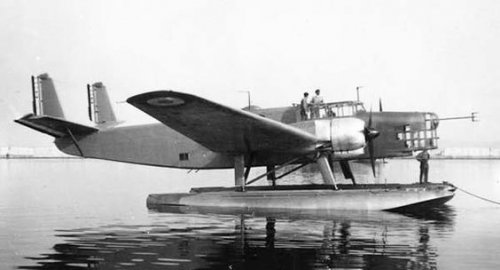
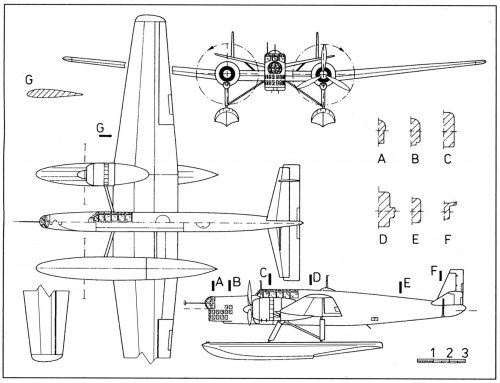
SNCAC NC.4-10(Farman F410).
https://en.wikipedia.org/wiki/SNCAC_NC.4-10
The SNCAC NC.4-10 was a twin-engine floatplane torpedo bomber built in France in the late 1930s. It was one of several prototypes competing for an Admiralty specification but no contracts were awarded after the military lost interest in the type.
https://forum.warthunder.com/index.php?/topic/388652-sncac-farman-nc410/
https://en.wikipedia.org/wiki/SNCAC_NC.4-10
The SNCAC NC.4-10 was a twin-engine floatplane torpedo bomber built in France in the late 1930s. It was one of several prototypes competing for an Admiralty specification but no contracts were awarded after the military lost interest in the type.
https://forum.warthunder.com/index.php?/topic/388652-sncac-farman-nc410/
Attachments
blackkite
Don't laugh, don't cry, don't even curse, but.....
- Joined
- 31 May 2007
- Messages
- 9,515
- Reaction score
- 9,661
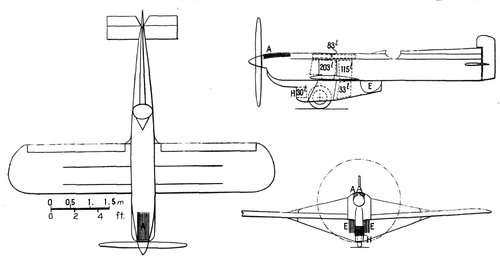
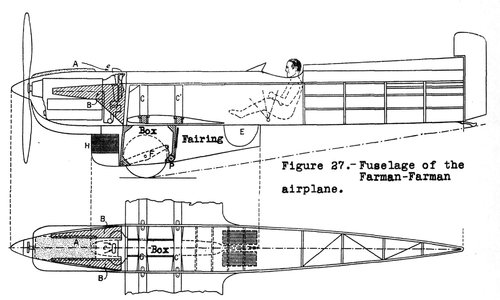
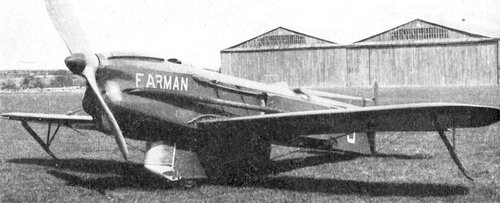
Hi! Farman F.370 racer.
http://www.airwar.ru/enc/law1/f370.html
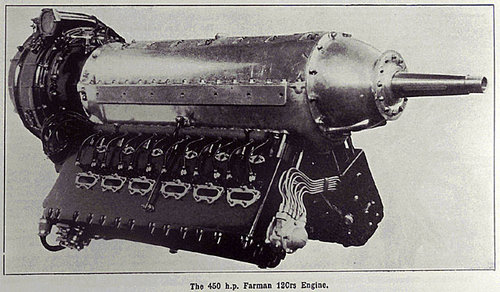
As a propulsion system, the aircraft was equipped with a twelve-cylinder V-shaped inverted gearbox Farman 12 Brs. The gearbox with intermediate conical gears had a transmission number of 1:2.25, and the centrifugal compressor increased the pressure of the supercharged when flying off the ground by 60%. The engine with a working volume of 7,892 liters and weighing 257 kg at 3200 rpm developed a capacity of 326 hp, and at 4020 rpm developed 438 hp. The cooling of the power plant was mixed: the upper part of the cylinders was cooled by the circulation of water, and their lower parts - the flow of air. Four radiators - for water, air and oil - were located next to the fuselage and on the snouts of the chassis handlebar fairing. Some of them were changed before the races.
Finally, the f 370's stability on the ground was provided by two crutches placed on the wing ends.
https://en.wikipedia.org/wiki/Farman_F.370http://aviation-ancienne.forumactif.com/t5660-moteur


http://www.airwar.ru/enc/law1/f370.html
As a propulsion system, the aircraft was equipped with a twelve-cylinder V-shaped inverted gearbox Farman 12 Brs. The gearbox with intermediate conical gears had a transmission number of 1:2.25, and the centrifugal compressor increased the pressure of the supercharged when flying off the ground by 60%. The engine with a working volume of 7,892 liters and weighing 257 kg at 3200 rpm developed a capacity of 326 hp, and at 4020 rpm developed 438 hp. The cooling of the power plant was mixed: the upper part of the cylinders was cooled by the circulation of water, and their lower parts - the flow of air. Four radiators - for water, air and oil - were located next to the fuselage and on the snouts of the chassis handlebar fairing. Some of them were changed before the races.
Finally, the f 370's stability on the ground was provided by two crutches placed on the wing ends.
https://en.wikipedia.org/wiki/Farman_F.370http://aviation-ancienne.forumactif.com/t5660-moteur
Last edited:
blackkite
Don't laugh, don't cry, don't even curse, but.....
- Joined
- 31 May 2007
- Messages
- 9,515
- Reaction score
- 9,661
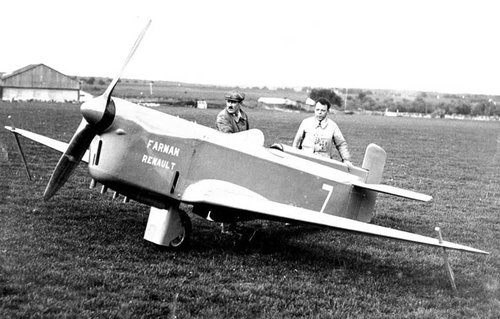
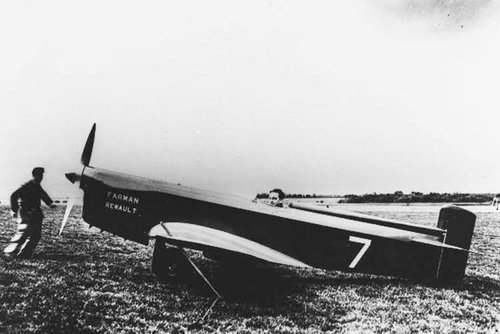
Hi! Farman F.380 racer.
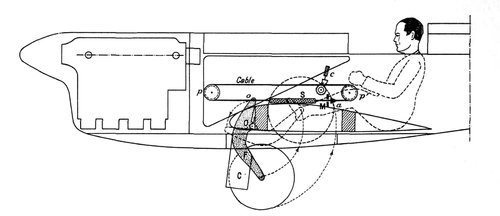
http://www.airwar.ru/enc/law1/f380.htmlThe second Farman aircraft, the F 380 with the racing number " 7" - had thinner and slimmer lines than the F 370 and was equipped with a 6.26 m2 free-carrier trapezoidal wing and a small cross-country V. The chassis rack was removed into the space between the two fuselage spars and the pilot's legs. The aircraft, weighing 616 kg, carrying 219 litres of fuel in three fuselage tanks.
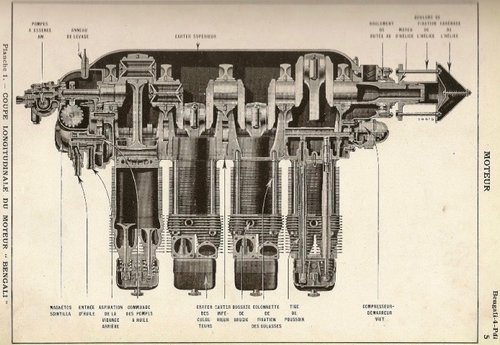
The F 380 powerplant was a 135-kilogram four-cylinder Renault "Bengali" sp'cial engine(air cooling engine), which, thanks to the new cams and increased from 5.6 to 8 degrees of compression, was able to increase the power developed at 2500 rpm from 120 hp to 170 hp.
The first flight F 380 took place on Wednesday 10 May 1933 and completed its qualifying tests two days later. On 22 May 1933, a plane operated by Maurice Arnoux set a record in its class by passing a distance of 100 km at a speed of 303.387 km/h.
https://en.wikipedia.org/wiki/Farman_F.380
Perhaps this aircraft's engine was this engine or variant.
https://www.thisdayinaviation.com/tag/renault-bengali-4pei/an air-cooled, normally-aspirated 6.333 liter (386.463 cubic inch) Renault Bengali 4Pei inverted four-cylinder overhead-valve (OHV) engine with a compression ratio of 5.75:1, rated at 130 cheval-vapeur (128.3 horsepower) at 2,300 r.p.m., and 150 cheval-vapeur 148.0 horsepower) for takeoff. This was a direct-drive engine, turning a two-bladed, metal Hélices Ratier variable-pitch propeller. The 4Pdi was 1.28 meters (4 feet, 2.4 inches) long, 0.93 meters (3 feet, 0.6 inches) high and 0.52 meters (1 foot, 8.5 inches) wide. It weighed 135 kilograms (298 pounds).


Proportion of F.370 three side view drawing is strange. (Length : 6.91m, Span : 8.1m.)
http://www.airwar.ru/enc/law1/f380.htmlThe second Farman aircraft, the F 380 with the racing number " 7" - had thinner and slimmer lines than the F 370 and was equipped with a 6.26 m2 free-carrier trapezoidal wing and a small cross-country V. The chassis rack was removed into the space between the two fuselage spars and the pilot's legs. The aircraft, weighing 616 kg, carrying 219 litres of fuel in three fuselage tanks.
The F 380 powerplant was a 135-kilogram four-cylinder Renault "Bengali" sp'cial engine(air cooling engine), which, thanks to the new cams and increased from 5.6 to 8 degrees of compression, was able to increase the power developed at 2500 rpm from 120 hp to 170 hp.
The first flight F 380 took place on Wednesday 10 May 1933 and completed its qualifying tests two days later. On 22 May 1933, a plane operated by Maurice Arnoux set a record in its class by passing a distance of 100 km at a speed of 303.387 km/h.
https://en.wikipedia.org/wiki/Farman_F.380
Perhaps this aircraft's engine was this engine or variant.
https://www.thisdayinaviation.com/tag/renault-bengali-4pei/an air-cooled, normally-aspirated 6.333 liter (386.463 cubic inch) Renault Bengali 4Pei inverted four-cylinder overhead-valve (OHV) engine with a compression ratio of 5.75:1, rated at 130 cheval-vapeur (128.3 horsepower) at 2,300 r.p.m., and 150 cheval-vapeur 148.0 horsepower) for takeoff. This was a direct-drive engine, turning a two-bladed, metal Hélices Ratier variable-pitch propeller. The 4Pdi was 1.28 meters (4 feet, 2.4 inches) long, 0.93 meters (3 feet, 0.6 inches) high and 0.52 meters (1 foot, 8.5 inches) wide. It weighed 135 kilograms (298 pounds).
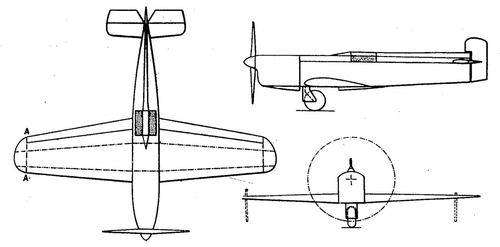
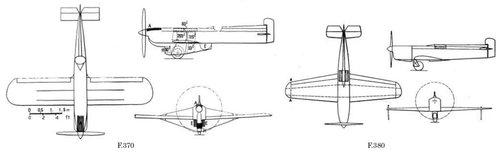
Proportion of F.370 three side view drawing is strange. (Length : 6.91m, Span : 8.1m.)
Last edited:

- Joined
- 25 July 2007
- Messages
- 4,916
- Reaction score
- 5,538
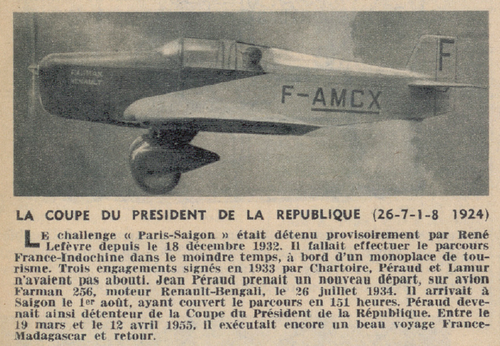
what was this airplane,a Farman design ?.
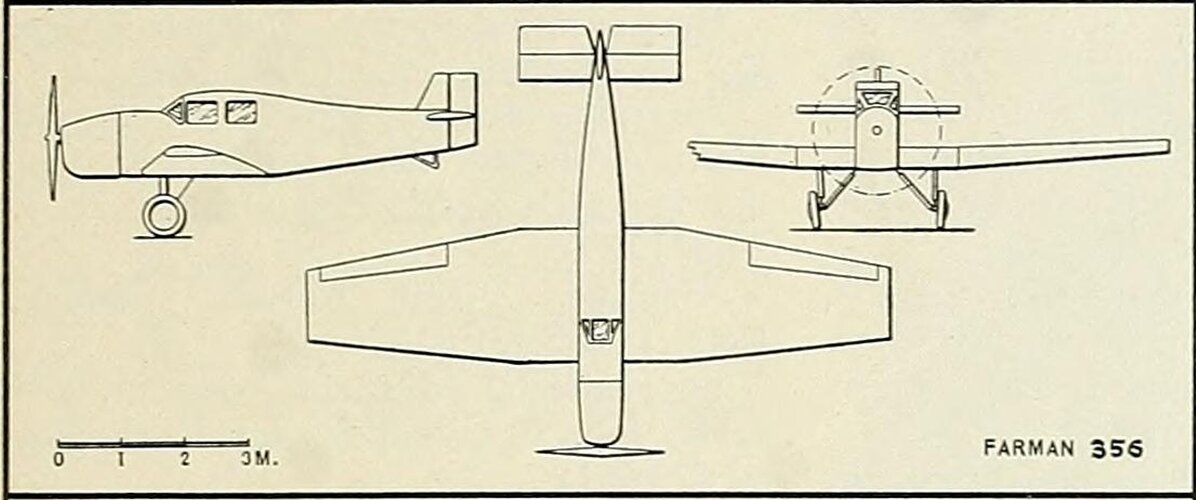
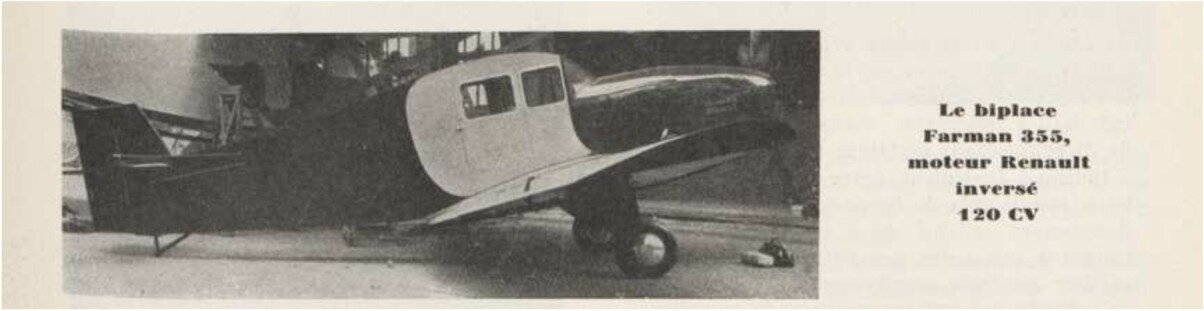
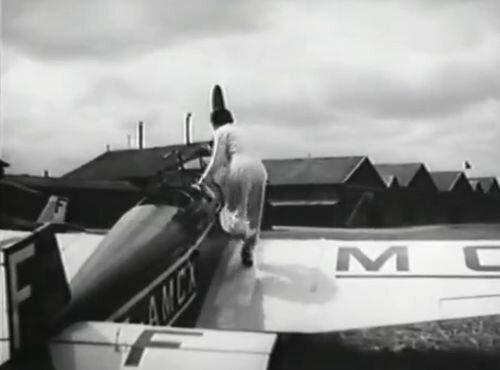
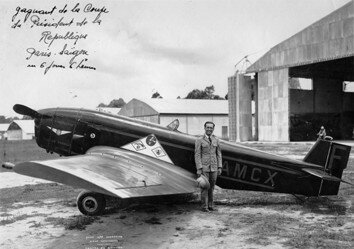
There is a designation typo. Actually this is Jean Péraud's one-off Farman 356 (F-AMCX, n° 1/7347) which arrived in Saigon on 01 August 1934. A flight of 151 hours secured the Coupe du Président de la République (President of the Republic's Cup aka the «Paris-Saïgon») for Péraud.
http://saigon-vietnam.fr/saigon_en13.phphttps://www.aviafrance.com/aviafrance1.php?ID=4550&ID_CONSTRUCTEUR=501&ANNEE=&ID_MISSION=&MOTCLEF=

- Joined
- 26 May 2006
- Messages
- 38,288
- Reaction score
- 20,425
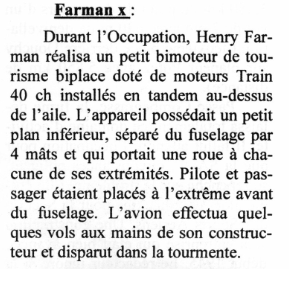
From TU 202;
Farman X:
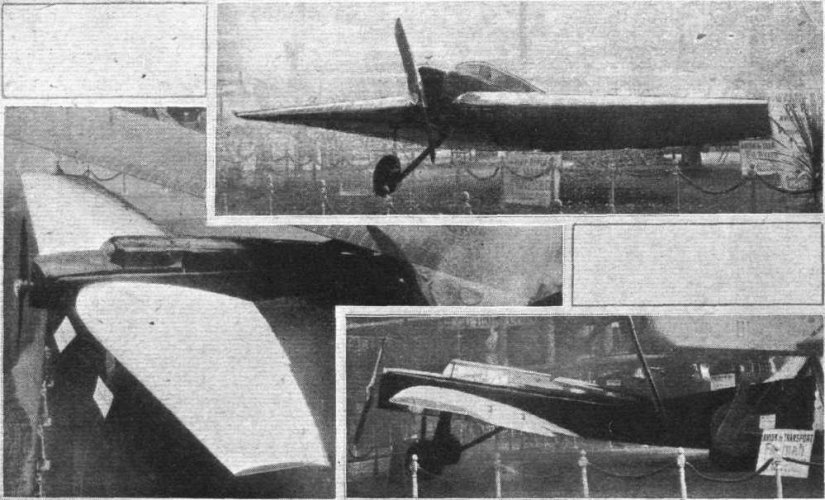
during the Occupation, Henry Farman realesed a small two-seater twin-engine tourism with tractor engines,40 hp,installed in tandem above the wing. The aircraft had a small lower plane, separated from the fuselage by 4 masts and which carried a each wheel one of its ends. Pilot and passenger were positioned at the far forward end of the fuselage. The plane made a few flights at the hands of its manufacturer and disappeared in the turmoil.
Does anyone hear about it before ?.
Farman X:
during the Occupation, Henry Farman realesed a small two-seater twin-engine tourism with tractor engines,40 hp,installed in tandem above the wing. The aircraft had a small lower plane, separated from the fuselage by 4 masts and which carried a each wheel one of its ends. Pilot and passenger were positioned at the far forward end of the fuselage. The plane made a few flights at the hands of its manufacturer and disappeared in the turmoil.
Does anyone hear about it before ?.
Attachments

- Joined
- 16 January 2015
- Messages
- 885
- Reaction score
- 4,846
Adding the source of the images would have made things a bit easier.
It appears to be a Converted Type Mo (Maurice Farman Type) Aeroplane.

It appears to be a Converted Type Mo (Maurice Farman Type) Aeroplane.
Army Type Mo (Maurice Farman Type) 1913 Aeroplane
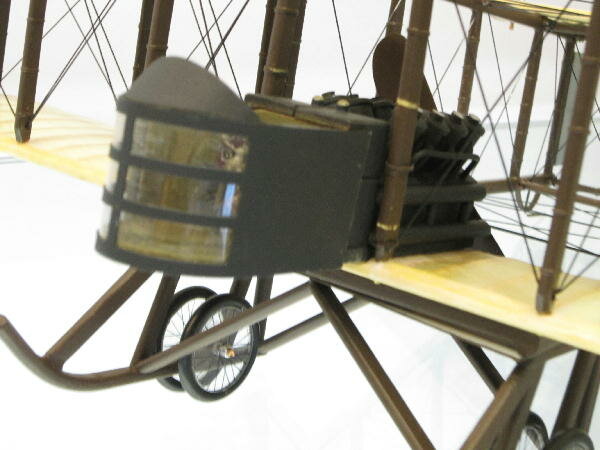
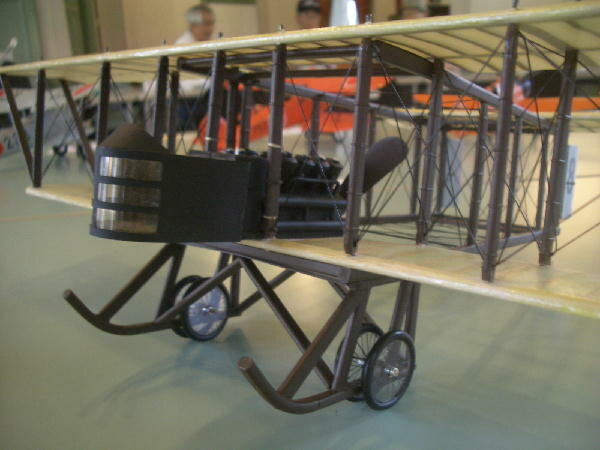
Army Lt Kenjiro Nagasawa and Lt Shigeru Sawada were sent to France to study aviation during the period july 1912 to Februry 1913. At the end of their stay in Europe, they bought a Maurice Farman 1912 aeroplane which arrived in Japan by ship in May 1913. This new aeroplane proved superior to all other imported aeroplanes and japanese-made Kaishiki types in stability, control and reliability. This prompted the purchase of four more of this type, which by then, a year later, had been improved and were referred to as the Maurice Farman 1913 models.
When these disassembled parts arrived they were studied by the PMBRA with the idea of manufacturing them in Japan. Under the guidance of Nagasawa and Sawada of the PMBRA, the Tokyo Army Artillery Arsenal in Koishigawa, Tokyo, built the airframes and the 70hp Renault rotary engines under the supervision of Army Capt Haruhiko Uemura of the Arsenal. Aeroplane number five in this Type Mo 1913 series was completed in September 1913. Eight additional aircraft were built in 1914, and beginning with No.7, steel spring heels were attached to the rear of the undercarriage skids. These could be made to dig-in and reduce the landing run. Also quite noticeable with the Type Mo 1913 was the raised seat behind the student, giving the instructor better visibility. When required, a third person could sit on the fuel tank behind the instructor. These became the first production aircraft in Japan.
In response to Japan's participation in the First World War with action against the Germans in Tsingtao, China, the Provisional Air Corps was organized and used the Mo Type 1913 aircraft as its primary equipment. Of the five aeroplanes sent to the Tsingtao campaign in September and October 1914, four were of this type, the other being a Nieuport NG. Of these four, three were imported, and the fourth japanese-built. During this campaign, these aircraft undertook reconnaissance and bombing missions, dropping 15kg (33lb) from six bomb racks, and occasionally their crews firing pistols against rifle fire from a German Taube in air-to-air combat. This experience brought later improvements to what then became the Type Mo 1913 Armed Aeroplane with one automatic rifle and provision for six 10kg (22lb) bombs. By having a 'wireless' communication system on board one of the aerocraft, in july 1913 they effectively directed artillery fire from the air for evaluation purposes.
These Type Mo aeroplanes were continually used for distance records, connecting major cities on flights punctuated with frequent emergency landings along the way, and experiencing other delays due to weather. But they held the spotlight in news coverage and were popular topics of conversation. In March 1915, the most distinguished combat aircraft of the Tsingtao campaign, the third Type Mo 1913, was put on display in the Yushukan Military Museum in Kudan, Tokyo, perhaps the world's first exhibit of an aeroplane with a combat record.
Single-engine pusher sesquiplane trainer with crew nacelle. Wooden structure with fabric covering. Elevators at nose and tail. Skid-type undercarriage with dual wheels. Crew of two in open cockpit.
70-80hp Renault eight-cylinder vee air-cooled engine, driving a Chauviere two-bladed wooden propeller.
Span 15.54m (50ft 11 3/4in); length 11.28m (37ft); height 3.45m (11ft 3 3/4in); wing area 53.8sq m (589.117sq ft)
Empty weight 580.6kg (1,280lb); loaded weight 855kg (1,885Ib); wing loading 15.9kg/sqm 3.25Ib/sq ft); power loading 12.21kg/hp (26.91lb/hp).
Maximum speed 51 kt (59mph); cruising speed 38kt (44mph); service ceiling 3,000m (9,843ft); endurance 4hr.
Four imported, twenty-two built by Army Arsenal and four built by PMBRA and others.
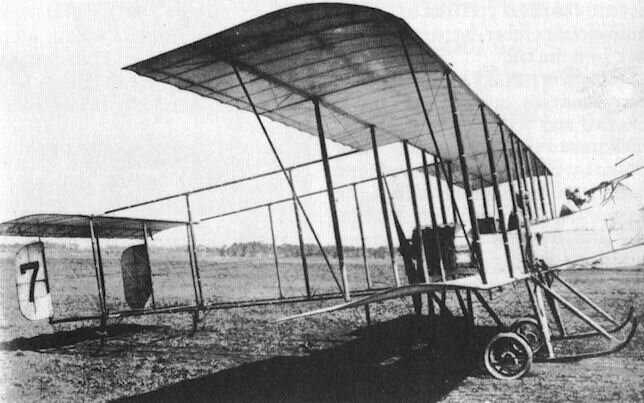
Converted Type Mo (Maurice Farman Type) Aeroplane
When originally built as the seventh aeroplane in May 1914 in the hangar of Tokorozawa Airfield this aeroplane was like all the other Type Mo 1913 aircraft. Flown by 2-Lt Jiro Takeda in the newsworthy flight to Tokyo on 22 May, 1914, it also established an altitude record of 2,200m on 9 june flown by 2-Lt Morikichi Sakamoto. It was then exhibited to the Crown Prince (later Emperor Showa) after landing at the Komazawa Parade Grounds. At the time Lt Sawada converted this aeroplane he had felt that it was a very lucky aeroplane, and since it was the seventh of the Type Mo, again the auspicious number, he painted number 7 on the tail.
However, on 26 July, 1914, the aeroplane ran out of luck, for it crashed and was badly damaged at Tokorozawa Airfield while being flown by Capt Tokugawa, and for a while, its remains sat idle in a hangar. At a time when much of the military strength at Tokorozawa was participating in the Tsingtao campaign in September 1914, Lt Sawada remained behind and was put in charge of pilot training and aircraft maintenance. Taking the initiative, he reassembled what he called the lucky aeroplane from its unbroken parts and replaced many others, only this time eliminating the front elevator. When completed on 19 January, 1915,this 7th Type Mo 1913 became known as the Sawada Type No.7, or more officially because of this radical modification, Kaishiki the 3rd Year Model. This change demonstrated improvements in reconnaissance capability, an increase in stability, improved maneouvrability and higher speed. By placing a machine-gun in the front-seat location no longer restricted by the front elevator, this became the first Japanese Army aircraft to be so armed.
This aeroplane was used extensively at Tokorozawaa for flight testing, until 26 May, 1915, when, being flown by Capt Naranosuke Oka, it crashed in a wheat field at Kitada, Tomioka Village, 4km north of the airfield, and the aeroplane was destroyed. However, because of the proven success of Sawada's modifications it introduced radical design changes in future Japanese aeroplanes.
Single-engined pusher sesquiplane trainer with crew nacelle. Wooden structure with fabric covering. Rear elevator only. Skid-type undercarriage with dual wheels. Crew of two in open cockpit.
70-80hp Renault eight-cylinder vee air-cooled engine, driving a Chauviere two-bladed wooden propeller.
One nose-mounted flexible machinegun.
Span 15.50m (50ft 10 1/4in); length 9.35m (30ft 8in); height 3.66m (12ft); wing area 60sq m (645.85sq ft).
Empty weight 485kg (1,069Ib); loaded weight 765kg (1,686lb); wing loading 12.7kg/sq m (2.6Ib/sq ft); power loading 9.45kg/hp (20.8Ib/hp).
Maximum speed 58kt (67mph); endurance 4hr.
One conversion in January 1915
Last edited:

- Joined
- 25 June 2009
- Messages
- 15,515
- Reaction score
- 9,447
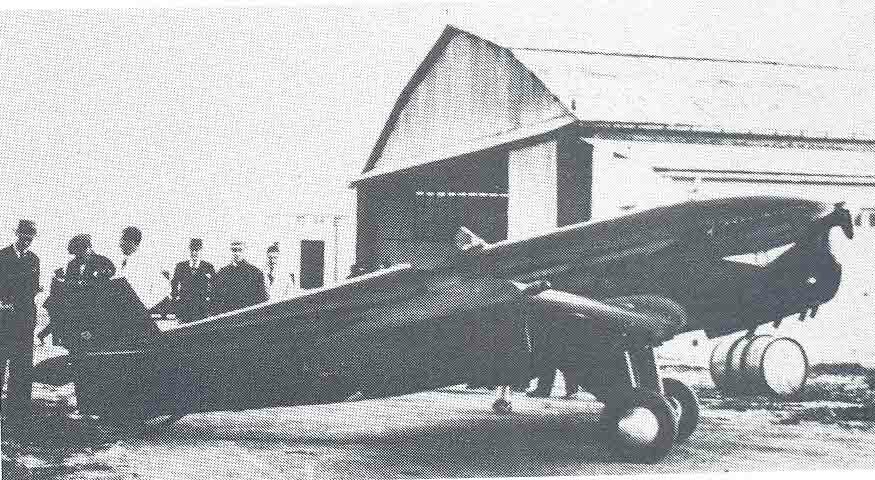
The image shared by hesham contains more than one typo. It also gives "1924" as the year in the title, instead of 1934... and the photo is NOT of the single-seat, open-cockpit aircraft used for the Paris-Saigon flight, but of the same aircraft [F-AMCX] when it was still a tandem-seating enclosed cockpit aircraft. Even the web page you linked, which is dedicated to that event, couldn't provide anything else than the same erroneous photo... I'm attaching three photos of Péraud's modified F 356 airplane, christened "Cité d'Angoulème II":There is a designation typo. Actually this is Jean Péraud's one-off Farman 356 (F-AMCX, n° 1/7347) which arrived in Saigon on 01 August 1934. A flight of 151 hours secured the Coupe du Président de la République (President of the Republic's Cup aka the «Paris-Saïgon») for Péraud.
http://saigon-vietnam.fr/saigon_en13.phphttps://www.aviafrance.com/aviafrance1.php?ID=4550&ID_CONSTRUCTEUR=501&ANNEE=&ID_MISSION=&MOTCLEF=
Attachments
- Joined
- 25 June 2009
- Messages
- 15,515
- Reaction score
- 9,447
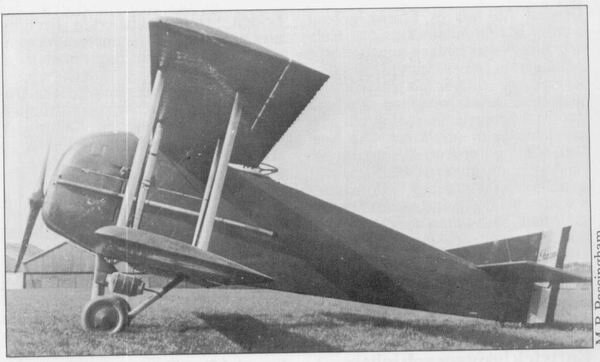
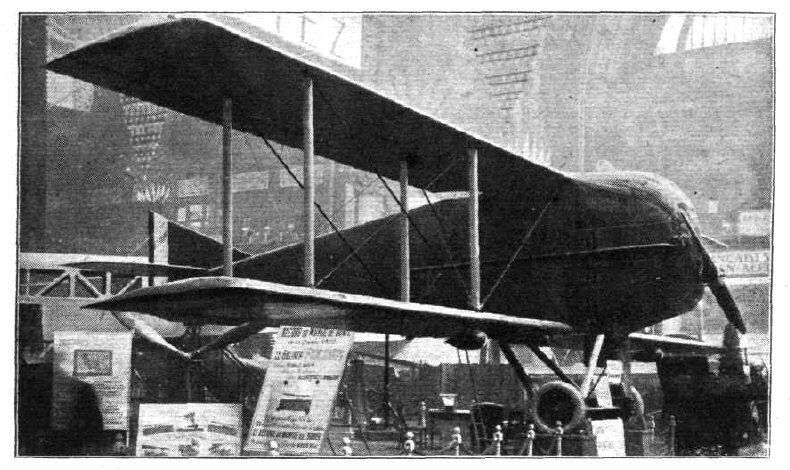
The single-engined bomber often refered to by just its Army suffix "B.2" was actually designated the F 120. Two examples were built, one as a day bomber, the second one in sanitary evacuation configuration. Both used a single 370 hp Lorraine 12 Da engine.And yes, if you think the "120" designation rings a bell, it's because it was subsequently reused for the Jabiru transport, as the F 120 T.
Attachments
Silencer1
That now I am the Ruler of the Queen's Navee!
- Joined
- 3 August 2009
- Messages
- 943
- Reaction score
- 703
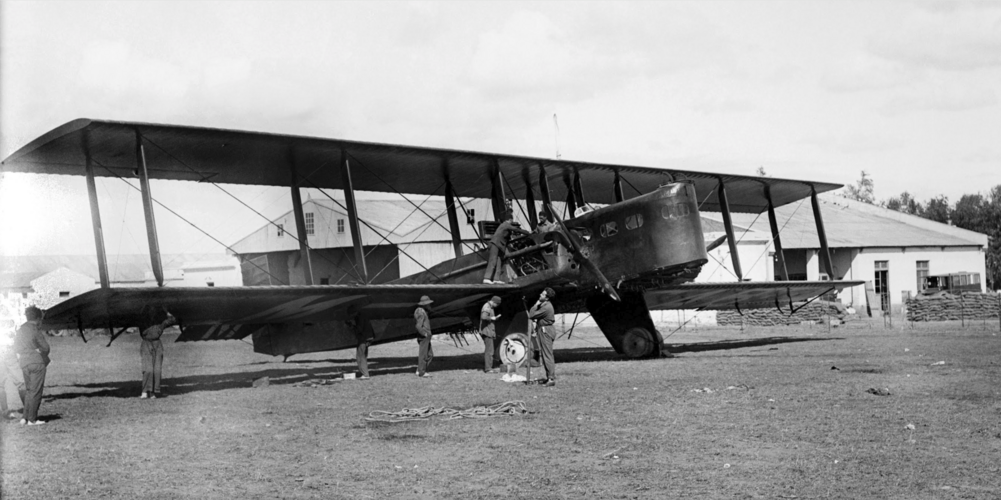
I found excellent picture of the Spanish Farman "Goliath" (probably M-MMCAB).
The source of image is here
Translation from the source:
Multy-engined Farman F.60 Goliath, the first chemical bomber of the Spanish Air Force. The first example was acquired in 1923, the year in which the Melilla gas factory came into operation. It was capable of dropping 4 or 6 bombs of 100 kilos of Yperite gas. Chemical bombing raids over northern Morocco continued until July 1925.
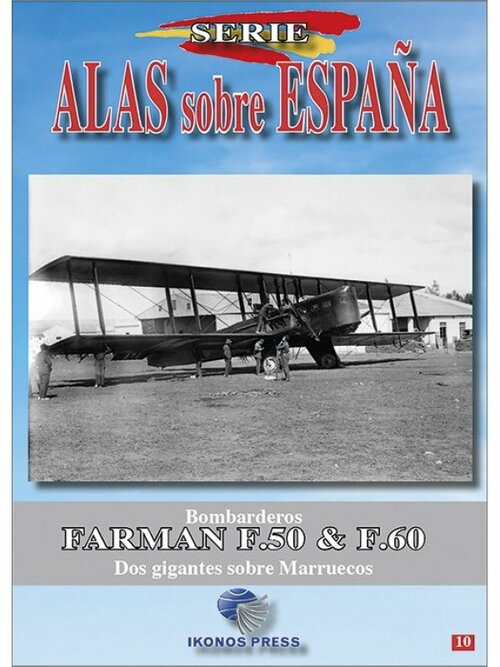
Seems, that this illustration is used for the cover of book
Farman F.50 & F.60, Alas Sobre Espana No 10

The source of image is here
Translation from the source:
Multy-engined Farman F.60 Goliath, the first chemical bomber of the Spanish Air Force. The first example was acquired in 1923, the year in which the Melilla gas factory came into operation. It was capable of dropping 4 or 6 bombs of 100 kilos of Yperite gas. Chemical bombing raids over northern Morocco continued until July 1925.
Seems, that this illustration is used for the cover of book
Farman F.50 & F.60, Alas Sobre Espana No 10
Attachments
Last edited:
D
Deleted member 4286
Guest
Why "...CHEMICAL bomber..."? The first plane bomber with gasoline engines?I found excellent picture of the Spanish Farman "Goliath" (probably M-MMCAB).
The source of image is here
Translation from the source:
Multy-engined Farman F.60 Goliath, the first chemical bomber of the Spanish Air Force. The first example was acquired in 1923, the year in which the Melilla gas factory came into operation. It was capable of dropping 4 or 6 bombs of 100 kilos of Yperite gas. Chemical bombing raids over northern Morocco continued until July 1925.
Seems, that this illustration is used for the cover of book
Farman F.50 & F.60, Alas Sobre Espana No 10
View attachment 722159
Anachronus
I really should change my personal text
- Joined
- 5 June 2013
- Messages
- 15
- Reaction score
- 14
I would imagine that its payload would have been poison gas.Why "...CHEMICAL bomber..."? The first plane bomber with gasoline engines?
Silencer1
That now I am the Ruler of the Queen's Navee!
- Joined
- 3 August 2009
- Messages
- 943
- Reaction score
- 703
Spain armed forces actively used chemical weapons in the "Rif War" in MoroccoWhy "...CHEMICAL bomber..."? The first plane bomber with gasoline engines?
https://en.wikipedia.org/wiki/Spanish_use_of_chemical_weapons_in_the_Rif_War
D
Deleted member 4286
Guest
As Italy in the war against Ethiopia in 1936, around 15 years later.Spain armed forces actively used chemical weapons in the "Rif War" in Morocco
https://en.wikipedia.org/wiki/Spanish_use_of_chemical_weapons_in_the_Rif_War
- Joined
- 25 June 2009
- Messages
- 15,515
- Reaction score
- 9,447
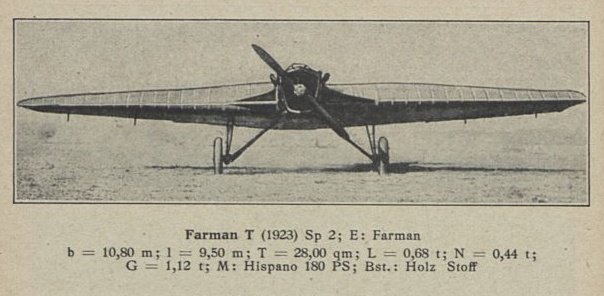
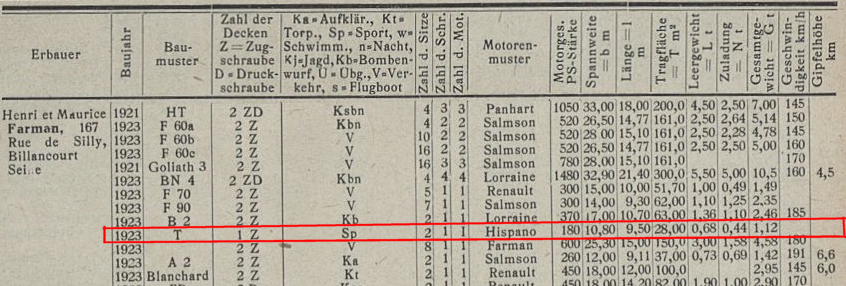
Reusing this topic to ask a question about this Farman type, found in the 1924-1925 edition of Taschenbuch der Luftflotten.
They call it the Farman T. The table that recapitulates all current Farman types describes it as a 1923 two-seater tractor sportsplane with a 180 hp Hispano engine. I don't think I have never come across this type before, and the designation itself does not correspond to any know designation system. Any help will be appreciated.


They call it the Farman T. The table that recapitulates all current Farman types describes it as a 1923 two-seater tractor sportsplane with a 180 hp Hispano engine. I don't think I have never come across this type before, and the designation itself does not correspond to any know designation system. Any help will be appreciated.
Last edited:

- Joined
- 25 June 2009
- Messages
- 15,515
- Reaction score
- 9,447
You're right! Somehow the front view didn't register with me. I even flipped through the Farman book by Jean Liron without success...Thanks for your help here!Looks like the Farman F.200 T.2 from 1923
Last edited:
- Joined
- 25 June 2009
- Messages
- 15,515
- Reaction score
- 9,447
Topic title changed from Farman and SNCAC Projects to Farman-related projects.
The reasons are simple:
The reasons are simple:
- Farman existed in one form or another over a period of nearly five decades... Farman-related SNCAC designs only constitute a very small fragment of their projects (F.410, F.470 becoming NC.4-10 and NC.4-70).
- SNCAC was an artificial regrouping under one header of several design bureaus by the French government—not just Farman, but also Hanriot and others. To have one topic for "Farman and SNCAC" is kind of an apples and oranges thing: you can't really add them up! It's more logical to have a "Farman-related projects" topic and a "Hanriot-related projects" topic, and perhaps a third one specifically for SNCAC projects not involving these two companies.
- SNCAC spanned both the pre-war and post-war eras, so it's outside the scope of this topic's section.
- Joined
- 25 June 2009
- Messages
- 15,515
- Reaction score
- 9,447
- The Farman 220/NC 2220 series of bombers/transports were production types.
They have been moved to a new topic in the Aviation & Space section:
https://www.secretprojects.co.uk/threads/farman-220-nc-2220-series.49743/
- There was more than enough material about the F.180 to grant that prototype its own a dedicated topic:
https://www.secretprojects.co.uk/threads/the-farman-f-180-oiseau-bleu-push-pull-transport.49744/
- The weird Couzinet-like design from 1922 that Flugsport identified as a "Farman" was moved to a new topic, at least until the mystery of its real identity can finally be solved:
https://www.secretprojects.co.uk/threads/couzinet-like-design-from-1922.49745/
- Pre-war SNCAC projects and prototypes not specifically related to Farman or Hanriot have been moved to a new topic:
https://www.secretprojects.co.uk/threads/pre-war-sncac-aircraft-not-farman-or-hanriot.49742/
Similar threads
-
 The diminutive F 65 "Sport Farman" (a.k.a. "David")
- Started by Stargazer
- Replies: 0
-

-

-
-