hesham

ACCESS: USAP
Senior Member
Joined
26 May 2006
Messages
37,591
Reaction score
19,653
Dear Jemiba,
I don't know the MS.60 was still alive after WW II or not.
some little known aircraft:


Farman A.2 :two seat high wing reconnaissance and observation monoplane of 1924.

Farman B.2 :two seat light day bomber of 1921.

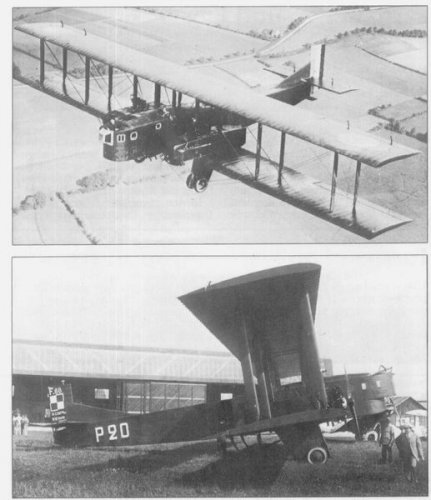
Farman BN.4: was long range four engined three-bay four
seat biplane bomber of 1921.

Farman-Levy :three engined maritime reconnaissance flying
boat of 1922.

Farman-Levy 450: flying boat.
 
Last edited:
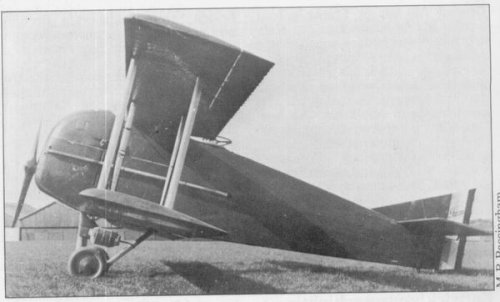
Not much to offer, you know, I'm keen to have 3-views, or at least photos/artist's
impressions (to make 3-views !), but I've found just the Farman B.2 and the BN.4,
the last perhaps better known as F.68 .
Aircraft of an era, when french types really were famed ... for their ugliness !

My source was "Flugzeuge von A-Z" gives the F.68 as a version of the Farman F.60 series,
which started as a civil airliner, named Goliath. You are right in so far, that the additional
designation BN.4 was used for some other bomber variants ofbthis series, too. But, I think,
all were based on the F.60.
 

Attachments

  • Farman_B2.JPG
    Farman_B2.JPG
    27.3 KB · Views: 1,158
  • Farman_BN4.JPG
    Farman_BN4.JPG
    44.8 KB · Views: 1,094
Hallo,
dear Jemiba, I check from Farman F.60 to F.68 and its derivative F.140;F.141
and F.160 to F.169, the BN.4 of 1921 was not related to them at all.
 
Jemiba said:
Not much to offer, you know, I'm keen to have 3-views, or at least photos/artist's
impressions (to make 3-views !), but I've found just the Farman B.2 and the BN.4,
the last perhaps better known as F.68 .
Aircraft of an era, when french types really were famed ... for their ugliness !

Thanks Jemiba,

but the BN.4 was not related to F.68,it was a design without number.


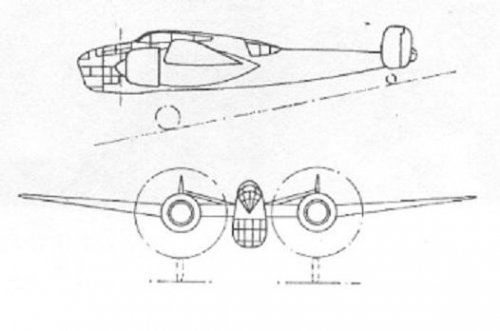
The SNCAC NC.540 was drived from NC.510,511,513 & 530
as twin engined multi-purpose aircraft and NC.550 was twin
engined day and night recce monoplane project,powereb by
Gnome-Rhone engines and had estimated speed 554 km/h;
it also a different from NC.540 with a retractable langing gear.
 

Attachments

  • SNCAC NC.550.JPG
    SNCAC NC.550.JPG
    17.4 KB · Views: 1,025
Thank you my dear Jemiba,

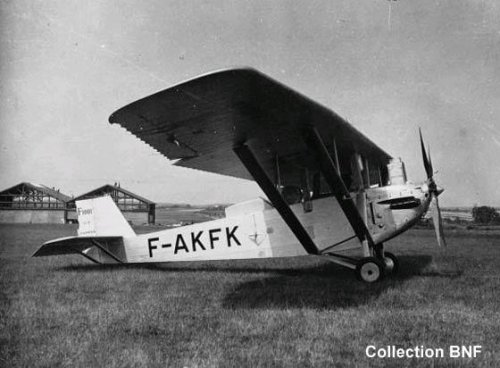
but the Farman F.200 was first flown in 1930 as in my source.
 
dear Hesham.
You have TWO Farman 200.
The one above and another derived from the Farman 190
It is this second one you are speaking....
Bye
 
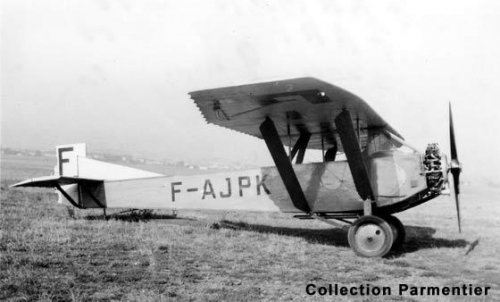
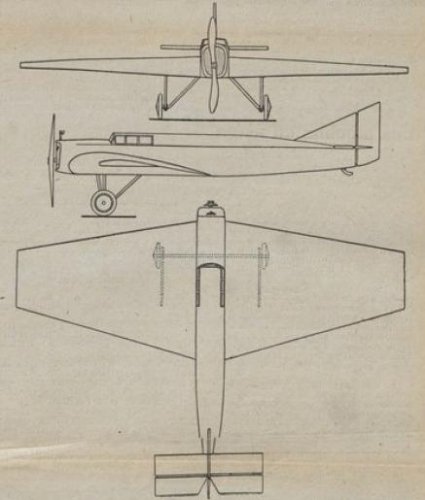
The "1930 F.200" was a parasol winged aircraft, powered by a 120hp radial engine
and 20 examples were built (photo from Bruno Parmentieres site AviaFrance).
The first F.200 had an 8 cylinder Hispano-Suiza inline engine and the example shown
on the aerosalon 1922 was the only one ever built.
 

Attachments

  • F-200.jpg
    F-200.jpg
    27.6 KB · Views: 178
Thank you my dears,

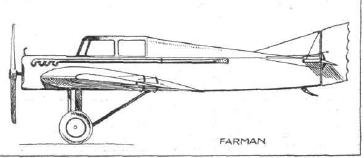
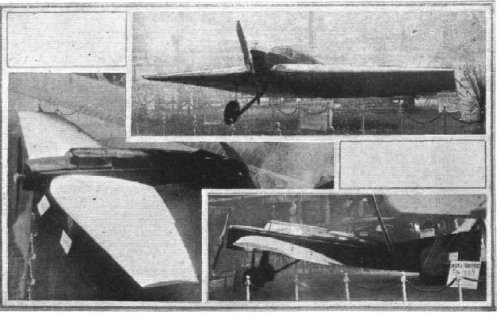
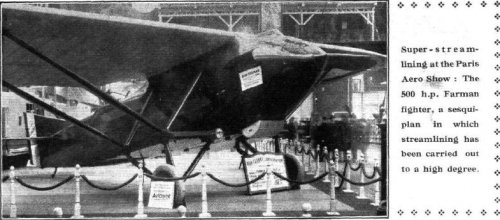
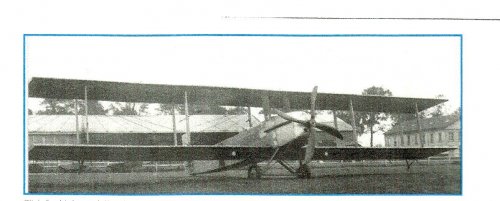
and here is the Farman cabin aircraft.
 

Attachments

  • Farman.JPG
    Farman.JPG
    49.1 KB · Views: 203
Very good, hesham, where did you find it ?
The photos show, that the fuselage isn't that sleek, I thought it to be.
The nose section could have a square cross-section,I had associated
a standing rectangle with the inline engine ... ::)
 
Thank you my dear Jemiba,

and I forgot the source.
http://www.flightglobal.com/pdfarchive/view/1923/1923%20-%200007.html
 
Both Google and Wiki fails me to give specifications on both offensive and defensive armaments if the 1920's Farman F.160 series Goliath bombers and naval bombers. Can you guys help me?
I assume these variants equipped with similar armaments:
Farman F.160, F.165 F.166 F.167 F.168 F.268 and F.368 Goliath
 
hesham said:
hesham said:
hesham said:
By the way,


that aircraft was submitted to A.2 1923 competition for two seat recce aircraft,
which the main tenders were; Farman A.2,Tampiet T.4,Descamps DB-16 and
Potez-24 & Potez-27.


Also the Wibault Wib.10 was submitted to this contender.
 
It seems that F.200 reference number was given twice : http://en.wikipedia.org/wiki/Farman_F.200 is a different plane (parasol wing and 1929). Can anyone give more info ?
 
Thank you my dear Toura,


and can you ID the project in Reply # 20.
 
Bonjour Hasan

A better answer, I thing
 

Attachments

  • test.2jpg.jpg
    test.2jpg.jpg
    154.1 KB · Views: 429
  • test.jpg
    test.jpg
    114.2 KB · Views: 459
Yes my dear Toura,


that's it,many thanks.
 
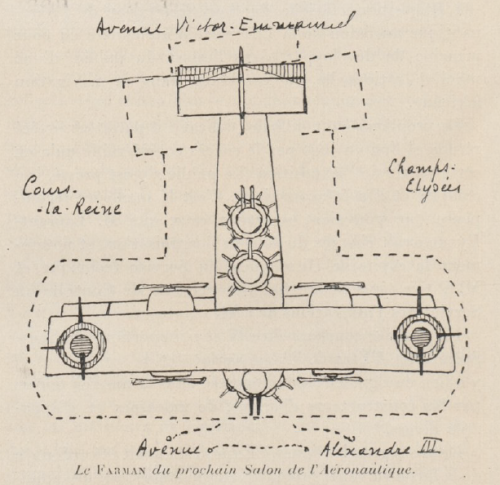
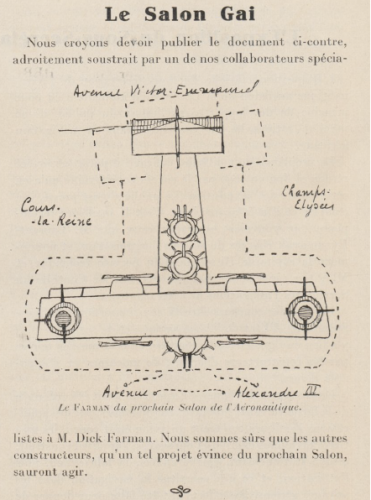
From l'Aeronautique journal of 1921,


it was not aircraft,but consider a strange idea.
 

Attachments

  • Farman.png
    Farman.png
    553.3 KB · Views: 361
  • 1.png
    1.png
    402.5 KB · Views: 138
hesham said:
From l'Aeronautique journal of 1921,
it was not aircraft,but consider a strange idea.

It's a joke ("Le salon gai" meaning the "The fun side of the show") but I'd need to see the rest of the item to really understand it.
 
Oh yea,thank you my dear Skyblazr,


my dear Jemiba can transfer it to Humorous aircraft;
http://www.secretprojects.co.uk/forum/index.php/topic,21471.msg229207.html#msg229207


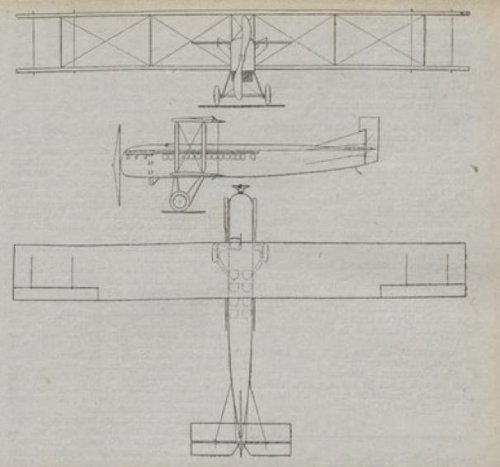
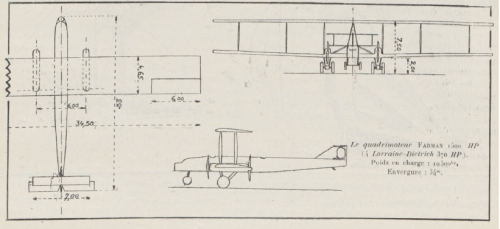
and here is Farman four engined aircraft drawing,called Farman BN.4 of 1921.
 

Attachments

  • BN.4.png
    BN.4.png
    442.3 KB · Views: 198
Hi,

the Farman F.210 was a twin engined float torpedo bomber monoplane Project,intended
to compete in 1930 contest with those tenders;

-"TOR.2/3" two/three seat torpedo bomber seaplane; CAMS-60,Denhaut design
 
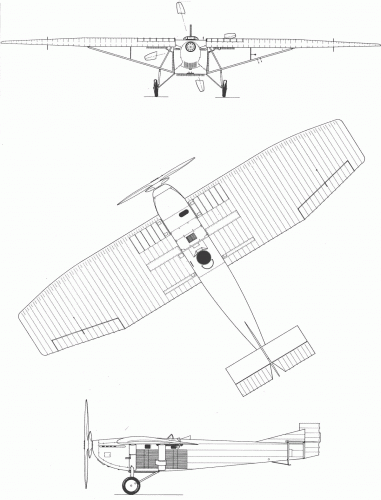
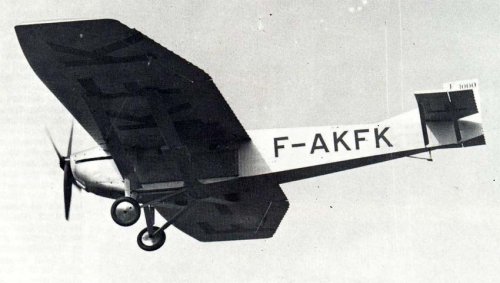
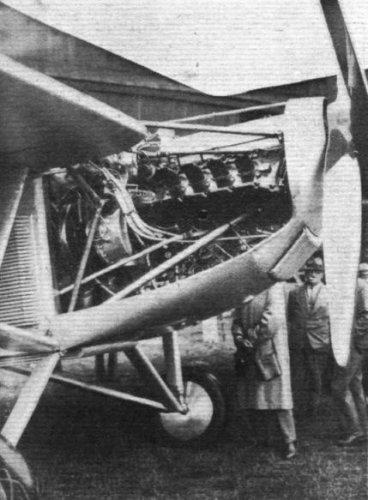
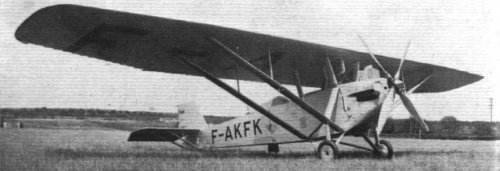
Hi! Farman F.1000. With skin cooler?

https://en.wikipedia.org/wiki/Farman_F.1000

"The Farman F.1000 was a 1930s French monoplane designed by Farman to break the world altitude record."

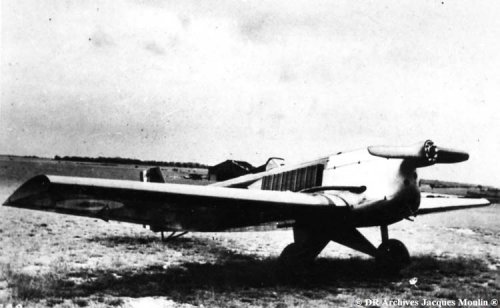
"The F.1000 was a high-wing strut-braced monoplane with a large wing area. It had a conventional fixed landing gear and was powered by a 350 hp (261 kW) Farman 8Vi engine. The aircraft first flew on the 25 June 1932, piloted by Lucien Coupet.

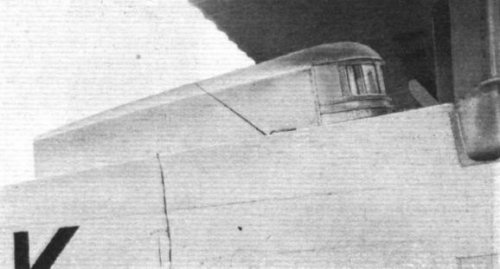
The pilot had a restricted view on landing and take-off and the aircraft was modified with a raised seat mounted on top of the aircraft's fuselage leaving just the pilot's legs in the original cockpit. For landing the pilot opened the pressurized hatch above his head, moved the sliding rudder bar to the up position, strapped into the fuselage seat and attached a removable stick to control the aircraft. During the rest of the flight the pilot had a pressurised cabin with just two small windows on each side.

The F.1000 only reached 5000 m (16,405 ft) during tests, so Farman redesigned the aircraft as the Farman F.1001 which had a parasol wing and an improved view for the pilot.Powered by a Farman Wirs engine it first flew in June 1935.[1] On 5 August 1935 the aircraft, with pilot Marcel Cagnot, took off on what would be a fatal attempt at the world record. The barograph recovered showed the aircraft had reached 10,000 m (32,810 ft) but a failure of one of the cupola windows had led to a rapid decompression and death of the pilot.

A more developed version appeared later as the Farman F.1002, although it made several flights over 8,000 m (26,425 ft) little is known about the aircraft."

"General characteristics
Crew: 1
Length: 11.50 m (37 ft 8¾ in)
Wingspan: 18.5 m (60 ft 8¼ in)
Height: 3.50 m (11 ft 5¾ in)
Wing area: 72.50 m2 (780.41 ft2)
Gross weight: 2,535 kg (5,589 lb)
Powerplant: 1 × Farman 8Vi inverted V-8 water-cooled piston engine with turbosupercharger??, 261 kW (350 hp)

Performance
Maximum speed: 289 km/h (179 mph)
Service ceiling: (estimated) 20,000 m (65,615 ft)"

"F.1000 Original 350 hp (260 kW) Farman 8Vi powered aircraft, one built.

F.1001 Improved version, powered by a 540 hp (400 kW) Farman 12 Wiars, one built. First flown in May 1935, on 4 August 1935, the bursting of a window at 10,400 m (34,100 ft) led to the death of the pilot.

F.1002 Further improved variant, powered by a 540 hp (400 kW) Farman 12 Wiars, first flown in July 1936.

http://www.airwar.ru/enc/law1/f1000.html

http://aviadejavu.ru/Site/Crafts/Craft31654.htm

 

Attachments

  • Farman-F_1000.gif
    Farman-F_1000.gif
    58.5 KB · Views: 450
  • f1000-2.jpg
    f1000-2.jpg
    57.4 KB · Views: 407
F.1001 and F.1002.
https://www.aviafrance.com/farman-f-1001-aviation-france-9222.htm

https://en.wikipedia.org/wiki/Farman_F.1000

"Farman F.1001 which had a parasol wing and an improved view for the pilot."

"A more developed version appeared later as the Farman F.1002, although it made several flights over 8,000 m (26,425 ft) little is known about the aircraft."
 

Attachments

  • The inverted twelve-cylinder water-cooled Farman engine of the Farman stratosphere monoplane.jpg
    The inverted twelve-cylinder water-cooled Farman engine of the Farman stratosphere monoplane.jpg
    63.3 KB · Views: 121
  • F.1001 (2).jpg
    F.1001 (2).jpg
    54.3 KB · Views: 360
  • The airtight compartment for the pilot of the F1001.jpg
    The airtight compartment for the pilot of the F1001.jpg
    38.7 KB · Views: 359
  • f.1001.jpg
    f.1001.jpg
    36.1 KB · Views: 384
https://www.hydroretro.net/etudegh/moteursfarman.pdf

What is written about F.1000, F.1001 and F.1002? ???
 
blackkite said:
https://www.hydroretro.net/etudegh/moteursfarman.pdf

What is written about F.1000, F.1001 and F.1002? ???

Nothing very new.

They were planes to study stratospheric flights.

-F.1000, a secret derivative of the F.190. The 8 Vi engine, supercharger with two speeds, was not enough powerful. It could only reach 5000 m. After that, the study of a three speeds supercharger failed. It's why Farman needed to improve the F.1000 with a 12 Wiars engine, with two speeds supercharger too, and a new wing with 3 m more wingspan (the F.1001).
-F.1001, it reached more than 10 000 m, but crashed during this flight because of the bursting of the window.
-F.1002, a secret plane too. The cabin is strengthened and equipped with a parachute. The pilot flew with an inhaler and a dog (for quick reaction in case of depressurization). It could only reach 8000 m. After an explosion of the engine (April 1937), the pilot must landing and this was the end of the flights.
 
Thanks a lot. Very interesting. So F.1000 with turbocharger is mistake?
Do you have more information about F.1002? Almost same as F.1001?
 
In the book Les avions Farman (Liron, Docavia/Larivière N°21, page) there are three pages on the F.1000, 1001 and 1002.

They confirm that there was no turbocharger in the three planes (only superchargers with two speeds).

The engines of the 1001 and 1002 were the 12 Wiars.

In the book, it's said too that the 1002 had one metre more length than the 1001.

As the 1002 had the same engine and was heavier than the 1001 (strengthened cabin, parachute, length, dog, inhaler) it seems logical that it could not reach the same altitude.
 
Thank you very much for correct information.
 
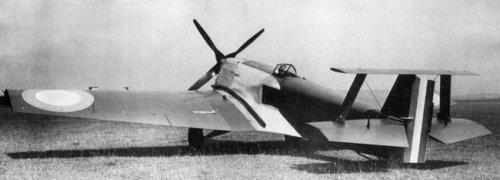
Hi! Farman F.1010.

https://en.wikipedia.org/wiki/Farman_F.1010
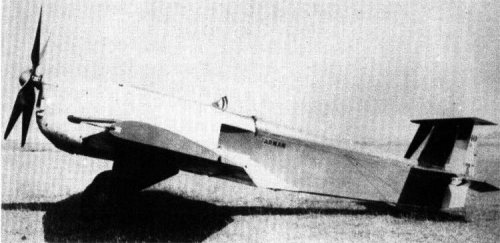
"The Farman F.1010 was a small, low-wing, single-seat monoplane ordered by the French government in 1931 to test in flight a large-calibre cannon. This was mounted between the cylinder banks of an inverted V-8 engine."

"The F.1010 was first flown by Lucien Coupet in August 1932, then by other Farman test-pilots Burtin and André Salel. It was tested by a military test pilot, lieutenant Francois Polart in tests beginning that December at Villacoublay. He found it heavy (the cannon accounted for 10% of the total loaded weight) and unmanoeuvrable. Significant modifications were made during these test, which extended into 1933. Manoeuvrability was addressed by the addition of a second horizontal tail surface at the top of the fin, braced to the original one below with wide chord struts. The lateral radiators were moved to the wings. The original two-bladed propeller was replaced by a four bladed, metal one. Polart also reported strong vibrations at low speeds and a tendency to drop the nose when the engine was at full power. The F.1010 was taken to Cazaux for gun testing; the aircraft probably returned to be abandoned at Villacoublay at the end of these firing tests."

"General characteristics
Crew: 1
Length: 8.24 m (27 ft 0 in)
Wingspan: 11.50 m (37 ft 9 in)
Height: 2.60 m (8 ft 6 in)
Wing area: 26.25 m2 (282.6 sq ft)
Gross weight: 1,900 kg (4,189 lb)
Powerplant: 1 × Farman 8 Vi 8-cylinder 90° inverted V, watercooled, 260 kW (350 hp)
Propellers: 2-bladed wooden for first flights, later replaced by a 4-bladed metal propeller

Performance
Maximum speed: 320 km/h (199 mph; 173 kn)

Armament
Guns: 1x 33 mm Ateliers des Puteaux cannon mounted between piston banks, firing through propeller at 120 rounds per minute"

Picture source.
http://www.airwar.ru/enc/xplane/f1010.html

farman-aircrafts-and-automobiles
https://myntransportblog.com/2016/09/07/farman-aircrafts-and-automobiles/
 

Attachments

  • f1010-1.jpg
    f1010-1.jpg
    55.1 KB · Views: 154
  • f1010-2.jpg
    f1010-2.jpg
    68.3 KB · Views: 165
  • f1010-3.jpg
    f1010-3.jpg
    44.6 KB · Views: 174
Hi,

the F.1011 was a longer version of F.1010,later redesigned as F.1020.
 

Similar threads

Back
Top Bottom