Potential Space Data Centers Attract Interest From State and Commercial Enterprises
Few plans currently exist, but significant computing power could be placed in orbit.
Jack C.
Feb 04, 2026


Phazzee | 中国航天 | ️‍⚧️️‍
@PhazzeeYeehaw
·
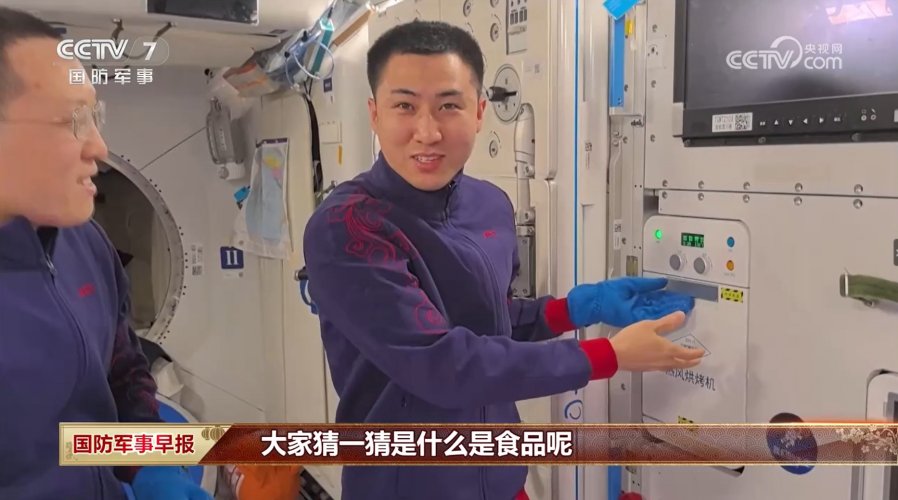
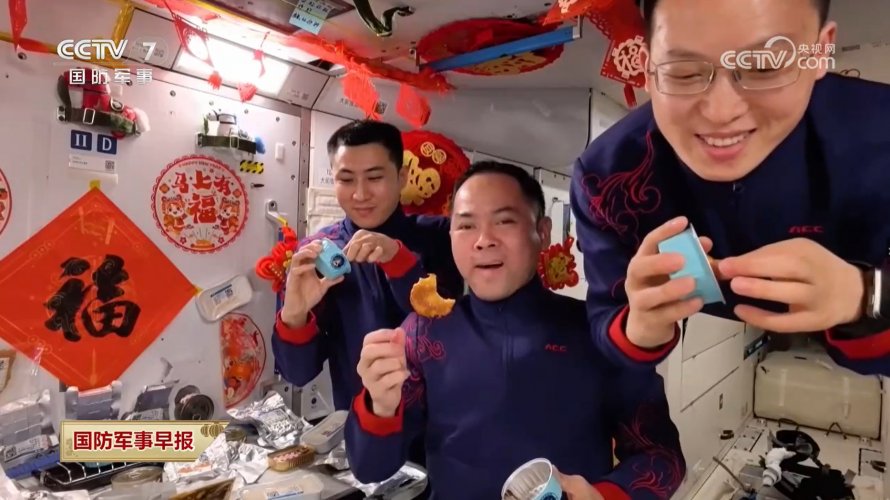
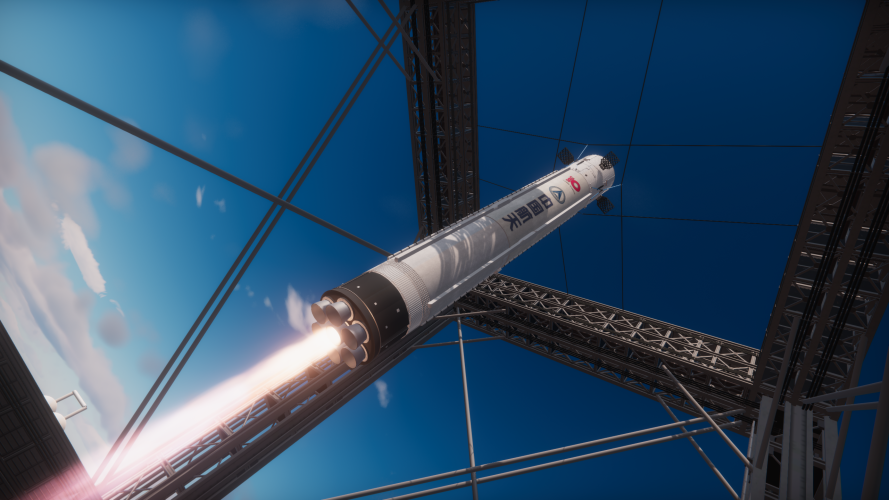
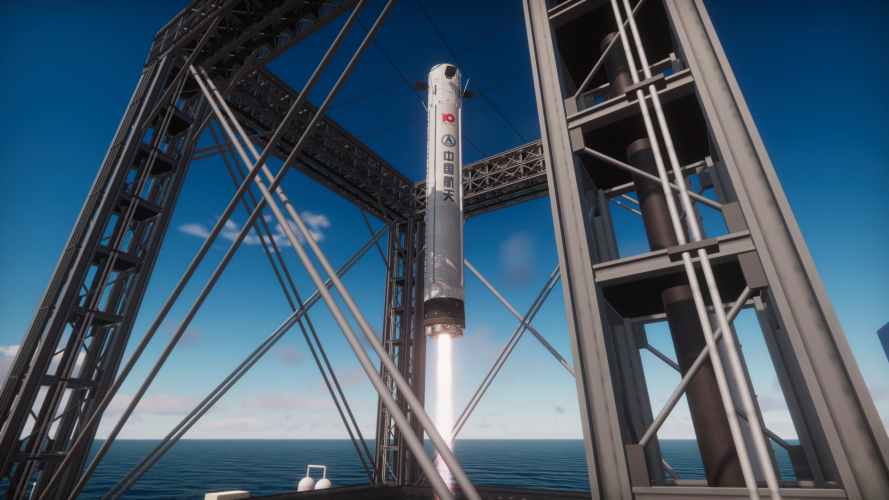
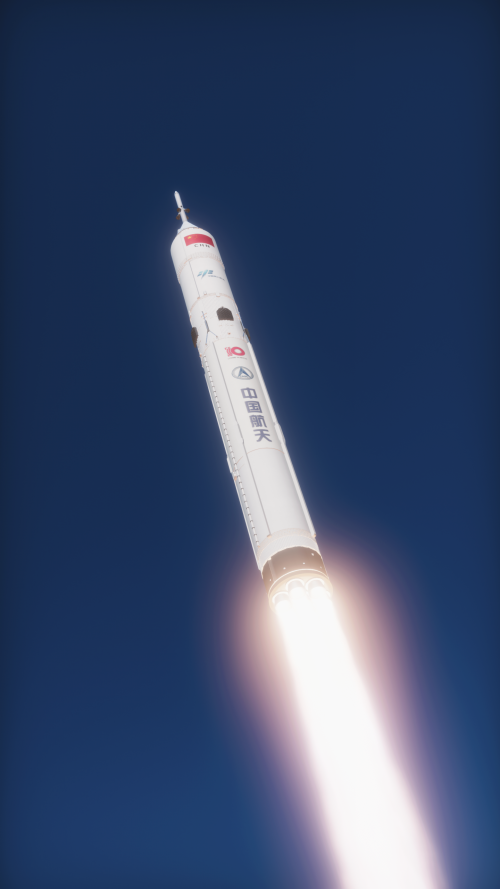
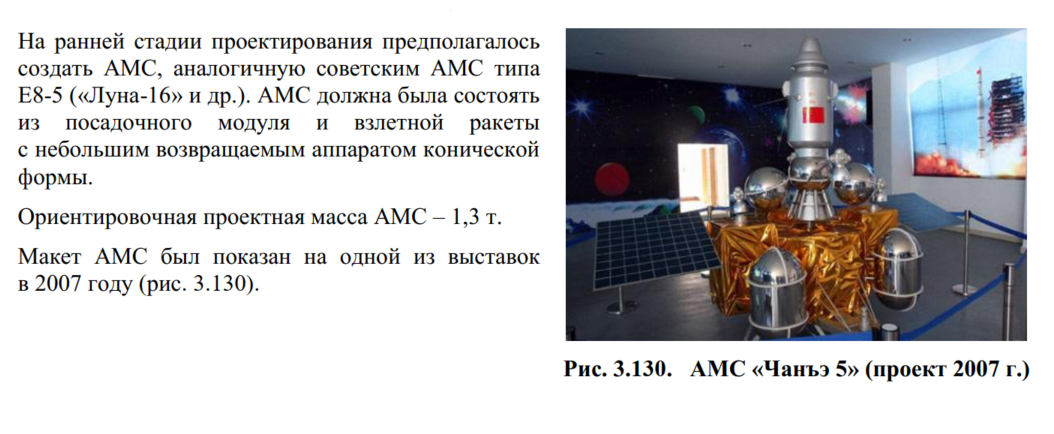
Chinese enterprises are exploring putting data centers in orbit, with the Qwen3 LLM already running on in-space compute

Image translation provided below

View: https://twitter.com/PhazzeeYeehaw/status/2019154843047456862
 
From Weibo 天羽BA7NRP
 

Attachments

  • 008vogGGgy1ia6pqqza6tj31900u00w7.jpg
    008vogGGgy1ia6pqqza6tj31900u00w7.jpg
    135 KB · Views: 237
  • 008vogGGgy1ia6pqq7biwj318z0u0765.jpg
    008vogGGgy1ia6pqq7biwj318z0u0765.jpg
    77.3 KB · Views: 225
  • 008vogGGgy1ia6ppr98yaj318z0u0gow.jpg
    008vogGGgy1ia6ppr98yaj318z0u0gow.jpg
    128.5 KB · Views: 233
  • 008vogGGgy1ia6pppl3soj30u0190dhn.jpg
    008vogGGgy1ia6pppl3soj30u0190dhn.jpg
    75.4 KB · Views: 229
Last edited by a moderator:
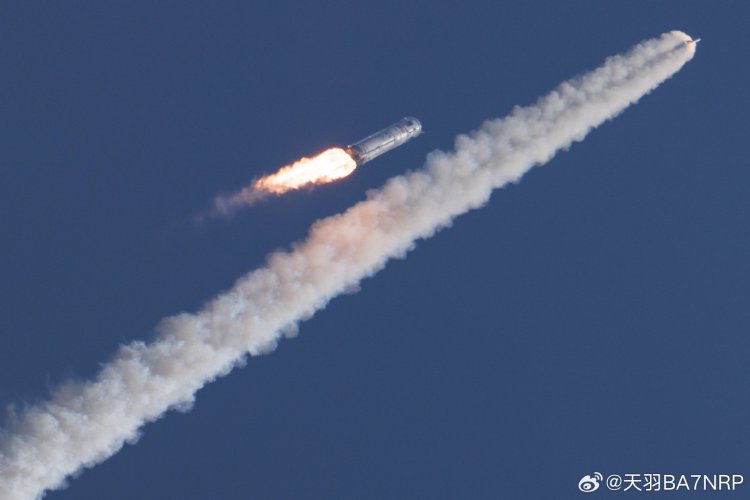
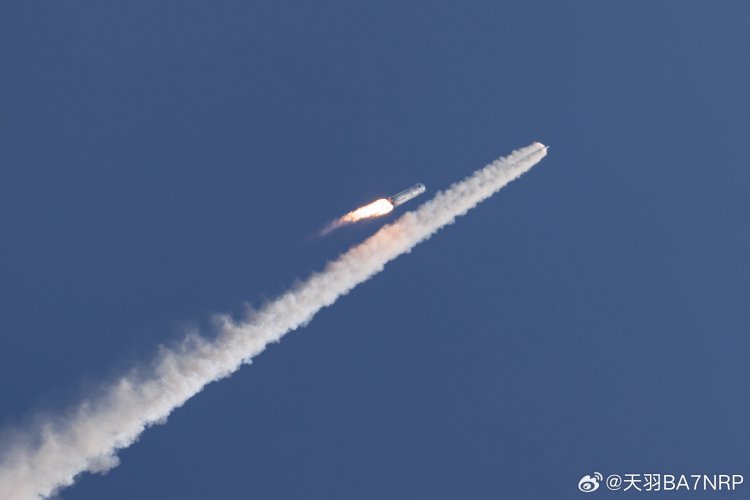
had the Booster so posted to land in catch structure ?

EDIT:
Long March 10 landed with only TWO grid fins, one of them failed to deploy
so the opposite side fin was disabled before entry.
lead to not so accurate control for catch
 
Last edited by a moderator:
At the Wenchang Space Launch Site, a brand-new white launch tower is rising from the ground. It is my country's second manned rocket launch tower and a "lunar gateway" custom-designed for the Long March 10 series rockets. What is the progress of the construction of this highly anticipated new tower? How does it differ in design from the existing manned rocket launch tower at Jiuquan Satellite Launch Center?

CCTV reporter Tian Ruonan: Looking at the three launch towers at the Wenchang Space Launch Site, from left to right, they are: the launch pad for the Long March 7 series rockets, the launch pad for the Long March 5 series rockets, and the new dedicated launch pad for my country's new generation of manned launch vehicles. It can be clearly seen that the new launch pad is more elongated.

The new launch pad, adapted for the Long March 10 rocket, is approximately 120 meters tall and 90% complete.

As the "dedicated home" for the Long March 10 series rockets, the main tower of the new launch pad is not only the largest steel structure launch pad of its type in my country, but also the tallest manned launch pad in the country, standing at approximately 120 meters tall. Like a ladder to heaven, it precisely matches the size of the Long March 10 series rockets and the requirements of manned lunar landing missions. Currently, the overall construction progress of the launch pad has reached 90%, and all systems are progressing steadily according to plan.

The rotating platform has been eliminated; docking operations will be completed using the umbilical arm.

The new rocket launch pad eliminates the rotating platform. This is not a simplification of function, but rather an innovation in design concept—all docking operations will be completed using the umbilical arm on the mobile launch platform, making the tower structure simpler and more efficient. So, without traditional enclosed protection, how will astronauts safely enter and exit the capsule? How will emergency support be provided?

Zhang Bo, Wenchang Space Launch Site: There are three protrusions on both sides of the launch tower. These are transition sections providing access for astronauts to the spacecraft. We will install a rotating corridor for astronauts to use in the forward launch module. This rotating corridor is similar to an airport jet bridge, with two heights. The lower corridor is mainly for ensuring near-ground transport of astronauts to the space station; the upper two corridors are for astronauts entering the spacecraft during lunar landing, one for rocket maneuvers, and the other for pre-launch operations.

Astronaut Emergency Escape Changed to Zipline Design for Faster Evacuation

Manned spaceflight prioritizes life. The flexible hose escape slide used on the Jiuquan launch tower is being upgraded at the new launch site in Wenchang. To accommodate the higher launch tower, the emergency escape system has been changed to a zipline design. This escape system is currently under construction.

Zhang Bo, Wenchang Space Launch Site: The advantage of the zipline is its faster speed, allowing astronauts to slide to the ground and evacuate to a safe location more quickly. Our current design provides each astronaut with their own independent zipline.

Optimized Expansion and Deflection Channels, Coupled with a High-Flow Water Spray System

During the ignition of the Long March 10, 21 engines operate simultaneously, significantly increasing impact force, heat flow, and noise. To address this, the new launch site features an optimized expansion and deflection channel, coupled with a high-flow water spray system, effectively achieving cooling, noise reduction, and airflow diversion. Simultaneously, considering Wenchang's high humidity, high salinity, and high fog coastal climate, the new launch site utilizes new anti-corrosion materials and processes to withstand the natural challenges of this mountainous and sea-adjacent environment.

Liao Guorui, Wenchang Space Launch Site: We have achieved significant breakthroughs in tackling key corrosion prevention technologies, innovatively proposing a step-by-step salt spray purification method for coastal environments. This has overcome the challenge of precise environmental control in a large, 100-meter-high space aerospace test facility, enabling the safe and reliable launch of my country's new generation of carrier rockets.

Aiming for a Manned Lunar Landing Launch System by 2030

The vertical assembly facilitywith the new launch pad adopts the standard dual-workshop layout for manned spaceflight, meeting the "one main, one backup" launch requirements for the Long March 10A near-Earth mission, and also adapting to the short-cycle consecutive launch requirements of two Long March 10 lunar landing missions. According to the plan, the Wenchang Space Launch Site will complete a full manned lunar landing launch system by 2030.

Future Astronauts Will Depart from Here to Realize Their Lunar Dreams

From the millennia-old dream of Chang'e flying to the moon to the firm steps taken to pursue deep space today, the rise of the new Long March 10 launch pad is a concrete testament to China's manned lunar landing program. This lunar landing ladder, tailor-made for the Long March 10 series, safeguards flight safety with innovative design and carries the mission of our time with its robust capabilities. In the near future, Chinese astronauts will set sail from here, heading to the vast expanse of the moon, realizing their dreams, personally touching the moonlight they have gazed upon for millennia, and writing a new chapter in China's deep space exploration.

https://content-static.cctvnews.cctv.com/snow-book/index.html
 
Ace of Razgriz
@razz_liu
·
45m
According to the chief designer Rongyi of CZ-10A. Next vehicle will soon be transported to Wenchang after Spring Festival. Possible for the first VTVL (cable catch) test of an actual CZ-10A. The test may be planned earlier than the CZ-10B's launch at April.

View: https://twitter.com/raz_liu/status/2022556525898895491


Ace of Razgriz
@raz_liu
·
43m
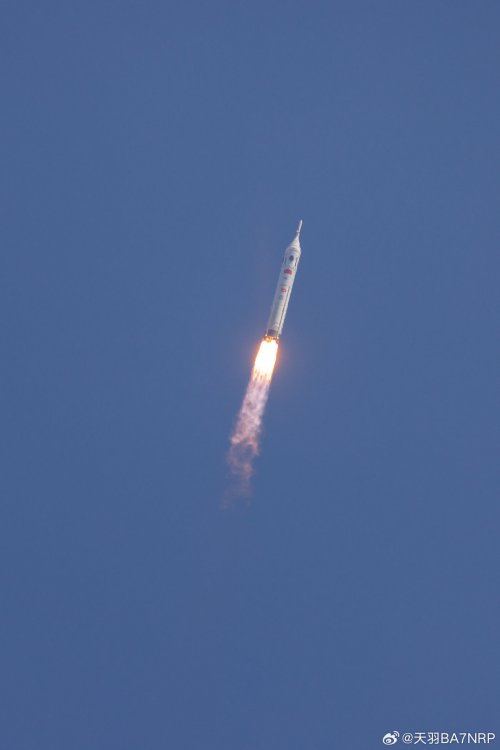
High res pics of the CZ-10 + Mengzhou test vehicle. Shot by 翼下地球-chenxiao/Matthew鑫等

View: https://twitter.com/raz_liu/status/2022557625637015892


Ace of Razgriz
@raz_liu
·
44m
High res pics of the CZ-10 + Mengzhou test vehicle. Shot by 翼下地球-chenxiao/Matthew鑫等

View: https://twitter.com/raz_liu/status/2022557309680161204
 
https://mp.weixin.qq.com/s/IBHa5o2cwc3VNkTUtYbF9A?spm_id_from=333.1387.0.0
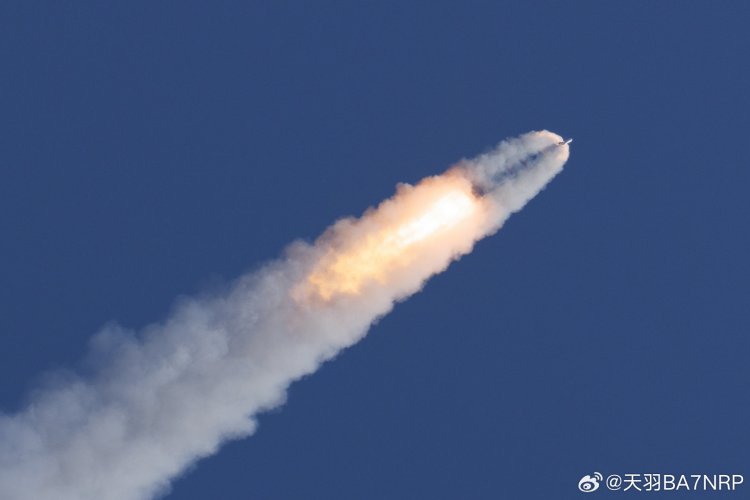
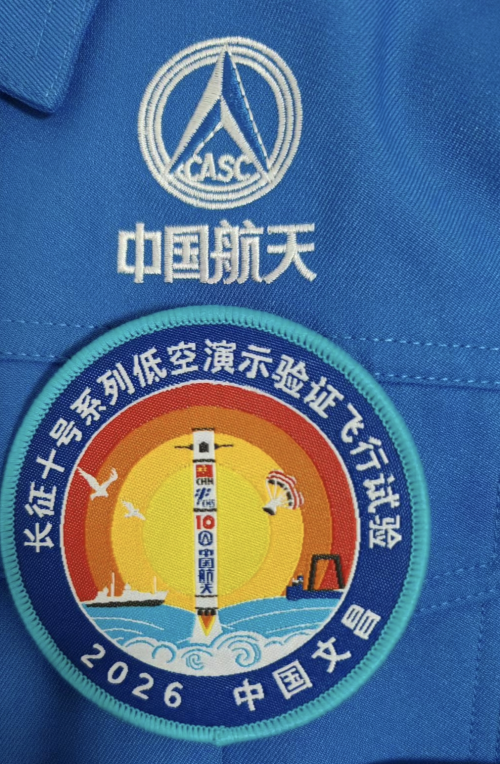
At 11:00 AM on February 11th, at the beginning of midday, under the clear, bright sunlight, the low-altitude demonstration and verification of the Long March 10 carrier rocket system and the maximum dynamic pressure escape flight test of the Mengzhou manned spacecraft system were successfully completed. This marks a crucial step forward in my country's manned lunar exploration program and the development of reusable rockets. China's dream of a manned lunar landing is taking increasingly solid steps towards the celestial galaxy under this clear sky.

The Sixth Academy of China Aerospace Science and Technology Corporation provided the first-stage reusable engine and the return capsule propulsion system for this test, and successfully completed the fuel loading and support work for the rocket body, contributing to my country's first successful vertical takeoff and landing recovery mission.

This test mission was not only a research and development flight test for the Long March 10 series manned carrier rocket, but also the debut of the 130-ton-class liquid oxygen-kerosene staged combustion cycle engine. This engine became my country's first rocket engine to complete the full mission profile and successfully achieve vertical landing and recovery. The Sixth Academy, with its robust power, is providing a solid foundation and steady escort for China's manned lunar landing journey.

Delivering a Solid "Answer Sheet" in an "Open-Air Examination"

To ensure a perfect engine flight, every step must be flawless.

The rocket used in this test mission employed a single-stage core stage configuration. Five 130-ton-class liquid oxygen-kerosene staged combustion cycle reusable engines from the Sixth Academy had already successfully completed two tethered ignition tests, demonstrating excellent performance and stability. This was their third use, successfully completing the entire ascent phase before undergoing a second vacuum ignition and a second high dynamic pressure ignition. Through a wide range of thrust variations, all aspects of the mission profile were successfully completed, ensuring a precise, stable, and controlled splashdown of the rocket in the designated sea area. This marks a crucial leap for the first stage of the Long March 10 series carrier rocket, transitioning from "static ignition" to "reusable recovery."

[Image caption: At the outset of the development of the 130-ton-class reusable liquid oxygen-kerosene staged combustion cycle engine, the team completed the entire process from design to demonstration and verification in just one year. On November 26, 2022, the engine successfully completed its first two-stage ignition test.] In the short span of three years that followed, this engine completed hundreds of ignitions and tens of thousands of seconds of testing, achieving the integration of generalization, integration, and digital intelligence technologies for this series of engines. With its short development cycle, IPT collaborative design, and the application of 3D printing technology, the Sixth Academy has continuously pioneered new fields in liquid propulsion with its performance-leading "national heavyweights."

As the main propulsion system for my country's reusable launch vehicles, the 130-ton-class reusable engine features high comprehensive performance, strong expandability, and high reliability. The Sixth Academy's research and development team overcame several core key technologies, including multiple ignitions, wide-range inlet pressure start-up, and large-range thrust variation; they also broke through difficulties such as rapid and simple maintenance and condition inspection and evaluation. Through in-depth analysis of mechanisms, continuous structural optimization, and thorough experimental verification, they comprehensively strengthened the management of the engine's weak points, significantly improving the engine's inherent reliability.

On August 15, 2025, the Long March 10 rocket team completed its first tethered ignition test at the Wenchang Space Launch Site in Hainan. The Long March 10 series tethered ignition test was the largest full-system test in my country in terms of thrust, reaching nearly 1,000 tons. Facing multiple challenges including a "new rocket, new team, new environment, and new mode," the research and development team successfully reduced the engine's after-processing cycle by 50% while ensuring safe operation. This is of great significance for the application of reusable liquid oxygen-kerosene engines in my country.

During the tethered ignition test, the research and development team encountered multiple challenges. Besides the high temperature and humidity and torrential rain during the typhoon season in Wenchang, Hainan, team members also had to overcome unfavorable factors such as the simple after-processing platform and the limited operating space after entering the cabin. Faced with these adverse conditions, the research and development team formulated detailed work plans and emergency plans, and accelerated the after-processing work through scientific scheduling, ultimately allowing the engine to deliver a solid "answer" in the "open-air test." To ensure the engine's perfect flight, every step must be flawless.

In addition, the test team overcame the influence of the field environment, completed the field handling of the product after tethered ignition, identified risks for this test, and worked closely with the overall team to complete on-site operations such as nozzle protection and heat insulation coating.

Previously, the Sixth Academy also undertook and successfully completed the first, second, and third stage propulsion system tests of the Long March 10 series rockets, as well as the propulsion system and liquid oxygen/liquid nitrogen refueling system support for the tethered ignition test, providing crucial support for the reliable launch of the rockets.

Building a "Lifeline" for Astronauts with "Perfectionism"

At noon in February, in Wenchang, Hainan, the sunlight suddenly became intense. The sticky heat, carrying the salty smell of the sea breeze, offered no relief from the heat. This was Zhao Pengcheng, a post-00s engineer from the Sixth Academy's test team, spending his 79th day in Wenchang.

Images show Zhao Pengcheng and his teammates meticulously reviewed and repeatedly verified every step of the pre-launch process, from assembly and product confirmation to data interpretation and report writing. They precisely analyzed the product status against flight requirements and optimized the launch site testing procedures, all in pursuit of a "perfect process and a satisfactory result."

Images show that although the delivered product had already passed rigorous testing and the development team was confident in the system's performance, at the launch site, no deviation was overlooked. These young aerospace professionals deeply understood the meaning of "striving for excellence."

Since entering the launch site in November 2025, the test team has successfully completed electrical performance testing, integrated testing, propellant loading, and gas cylinder filling of the propulsion subsystem. They have also continuously monitored and ensured propellant concentration after loading.

Images show that the Mengzhou spacecraft, my country's newly developed next-generation reusable manned spacecraft, successfully completed its first critical test—the maximum dynamic pressure escape flight test—during this test.

Images show that the Mengzhou spacecraft's return capsule propulsion system also successfully completed its first major test. Unlike the Shenzhou spacecraft's escape and rescue mode, the Mengzhou spacecraft's escape function is handled entirely by the spacecraft system, which is fully responsible for both escape and rescue missions. During the test, the Mengzhou spacecraft's return capsule propulsion subsystem functioned normally, successfully completing the attitude control mission. The success of this test verified the reliability of the 400N engine's room-temperature start-up under emergency escape conditions and the rationality of the propulsion system's in-flight purging procedure during recovery, fully demonstrating the reliability of the Mengzhou spacecraft's escape system and adding another layer of protection for astronauts' lives.

Furthermore, the Sixth Academy provided HAN-based green single-component propellant for the Mengzhou manned spacecraft's return capsule attitude control propulsion system. This attitude control propulsion system, currently the most powerful HAN-based propulsion system in international engineering applications, boasts internationally leading technology. The test team also undertook the construction and commissioning of the gas supply system in the technical area and provided pre-launch testing facilities for products such as the escape tower.

A Battle of ±1℃: Ensuring Reliable Fuel for the Rocket

Besides the propulsion system products, the Sixth Academy also undertook the design, installation, and commissioning of the kerosene storage area refueling system for this mission, providing self-developed coal-based aerospace kerosene and completing refueling support work, ensuring reliable fuel for the rocket.

The real test arrived on the eve of the mission. On the afternoon of February 10th, kerosene temperature adjustment was initiated. Everyone carried a heavy responsibility. Team members worked through the night, their eyes glued to the monitoring screens, intently watching every fluctuating parameter, adjusting the heat flow of kerosene and liquid nitrogen, precisely controlling the temperature until the early morning of the 11th, when the refueling was successfully completed. However, the mission was not over. Without a moment's rest, everyone quickly switched gears, transforming into a rescue team, continuing to stand guard at their posts, ensuring the rocket's safe flight throughout.

Image

▲ On November 26, 2022, the first 130-ton reusable liquid oxygen/kerosene staged combustion cycle engine successfully completed two start-up tests.

"The on-site conditions for this mission placed extremely stringent requirements on the kerosene temperature, needing to be controlled with an accuracy of ±1℃," said Li Luhao, a member of the test team, with a firm tone. "We must ensure the mission's absolute success." Achieving precise temperature control in a temporary storage area composed of multiple tank trucks was a significant technical challenge.

Image
The test team innovatively proposed a "non-pressurized tank nitrogen priming structure" scheme. Through repeated simulations and experiments, they overcame key technologies such as kerosene temperature stratification control and pump cavitation prevention, ultimately achieving precise control of kerosene temperature rise under tropical climate conditions. This coal-based aerospace kerosene has undergone multiple flight tests with my country's new generation of high-thrust liquid oxygen/kerosene engines, and its mature reliability instilled "steady" confidence in this launch mission.

From the official launch of the manned lunar exploration program in 2023, to the full-scale entry of the Mengzhou spacecraft into the prototype development stage in 2024, to the completion of the comprehensive verification test of the lunar lander's landing and takeoff in 2025, and now to this breakthrough test, each success and achievement represents a solid and steady technological breakthrough and record-breaking achievement. These successes have also collectively built confidence and strength to achieve the goal of the manned lunar landing mission on schedule.

The Sixth Academy will adhere to the development philosophy of "user first, power first," and implement the research and development policy of "exploring the limits of technology, rapid iteration of R&D, and ultimate product improvement." It will accelerate the development of two major series of reusable engines: liquid oxygen/kerosene and liquid oxygen/methane. This will strongly support the development of reusable space launch vehicles in my country, comprehensively enhance my country's large-scale, low-cost space access capabilities, and propel China's aerospace industry to take solid steps into deep space.

 
Images show that the Mengzhou spacecraft's return capsule propulsion system also successfully completed its first major test. Unlike the Shenzhou spacecraft's escape and rescue mode, the Mengzhou spacecraft's escape function is handled entirely by the spacecraft system, which is fully responsible for both escape and rescue missions. During the test, the Mengzhou spacecraft's return capsule propulsion subsystem functioned normally, successfully completing the attitude control mission. The success of this test verified the reliability of the 400N engine's room-temperature start-up under emergency escape conditions and the rationality of the propulsion system's in-flight purging procedure during recovery, fully demonstrating the reliability of the Mengzhou spacecraft's escape system and adding another layer of protection for astronauts' lives.

Furthermore, the Sixth Academy provided HAN-based green single-component propellant for the Mengzhou manned spacecraft's return capsule attitude control propulsion system. This attitude control propulsion system, currently the most powerful HAN-based propulsion system in international engineering applications, boasts internationally leading technology. The test team also undertook the construction and commissioning of the gas supply system in the technical area and provided pre-launch testing facilities for products such as the escape tower.
As far as I can tell Mengzhou is the first capsule to use Hydroxylammonium nitrate (HAN) based thrusters, which are significantly less toxic than Hydrazine-based one, and the propellant is denser; it was originally considered for Orion but abandonned for the better known and more conservative Hydrazine. They also can be stored at colder temperatures, which doesn't matter much for a crewed capssule , but does for deep space probes.


"Previously, the Sixth Academy also undertook and successfully completed the first, second, and third stage propulsion system tests of the Long March 10 series rockets, as well as the propulsion system and liquid oxygen/liquid nitrogen refueling system support for the tethered ignition test, providing crucial support for the reliable launch of the rockets."


The upper two stages were tested on the AALPT 101st Institute 500tf test stand, so these are static fires, so each individual stage of the Long March 10 have been static fired.
Which is necessary since the tricore version is expected to launch next year.
 
[New Year's Visit to Grassroots Levels: One Step Closer to the Moon Landing! They are the Dream Chasers Behind the Successful Test of the Mengzhou Spacecraft] On February 11, the core stage of the Long March 10 rocket, carrying the Mengzhou spacecraft, successfully completed its first low-altitude flight, maximum dynamic pressure escape, and sea recovery mission, verifying key technologies for rocket reusability. This successful test marks another milestone breakthrough in my country's manned lunar exploration program. CCTV reporters were dispatched to various locations to document this aerospace feat as it journeys towards the stars.

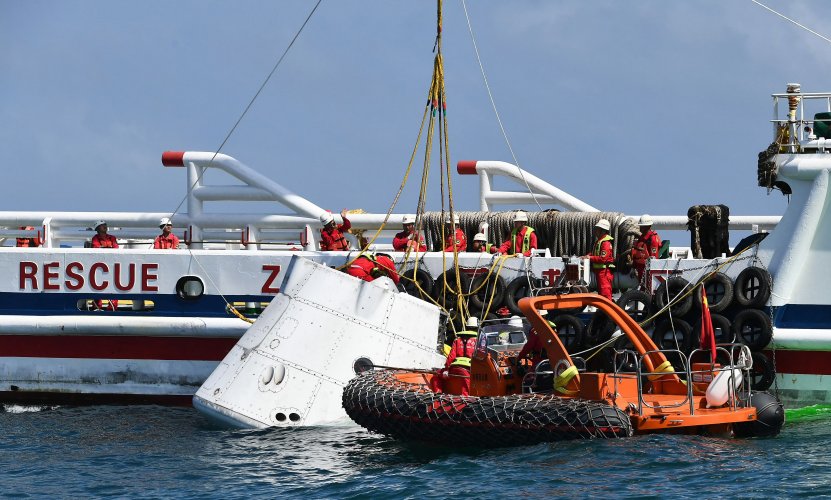
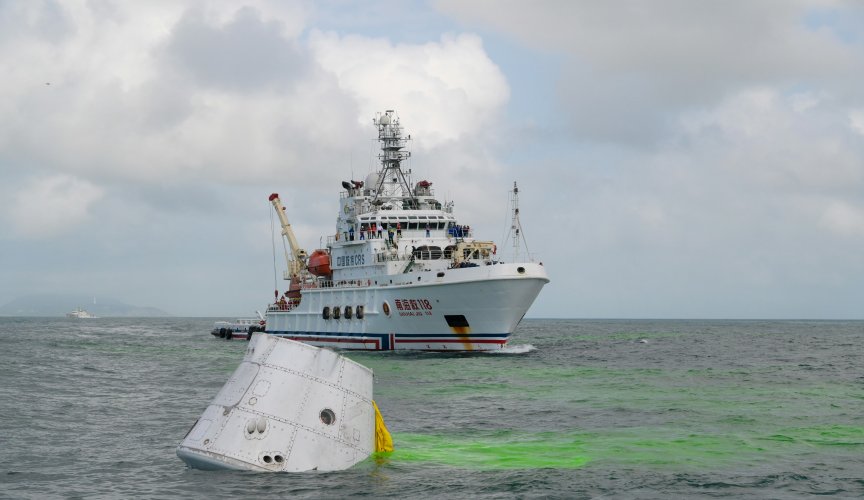
From the end of January to the beginning of February, the various ships involved in the Long March 10 rocket's sea recovery mission successively set sail for the waters near the rocket's theoretical landing point.

On February 4, the ship-rocket assembly was transferred to the launch pad. The Long March 10, my country's fourth-generation rocket, features intelligent flight and reusability. This low-altitude flight test is a key technology verification for the reusability of the Long March 10 series rockets. It will carry the new-generation manned spacecraft "Mengzhou" to conduct China's first maximum dynamic pressure escape and the world's first rocket recovery via a sea-based net system. The entire flight test is planned to last 470 seconds, for which the test team has been preparing for five years.

Zhu Pingping, China Aerospace Science and Technology Corporation: The maximum dynamic pressure escape test was conducted under atmospheric conditions of approximately 27 kPa. The dynamic pressure of our return is currently the highest in China, and the heat flow is also the most demanding. Therefore, combining the ascent-phase escape and return profile is a world first, so we felt it was very difficult, challenging, and risky.

Before the launch mission, three overall checks and three full-system rehearsals are required, involving full-process drills of the launch site, rocket, spacecraft, telemetry, tracking and control, communication, and recovery systems.

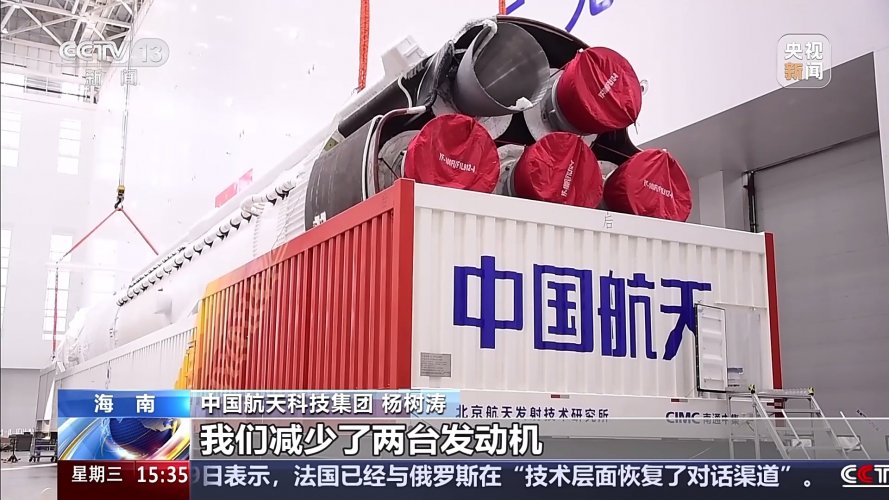
CCTV reporter Wang Xiaodan: Because the Long March 10 launch control and measurement building is still under construction, to ensure the timely progress of all test missions, researchers have temporarily set up the rocket's rear-end launch control system inside a container cabin. Here, they are conducting various remote control, testing, and inspection tasks before launch.

Inside the cabin, commands echoed continuously. Although the space was cramped, all the functions and conditions required for the launch mission were complete. Liao Guorui, who previously served as the 01 commander in missions such as the launch of the space station's core module, has moved to a new position since joining the Long March 10 mission, becoming the first-level commander of the rocket system. He is responsible for directing and coordinating the launch and measurement work of various subsystems of the rocket. This position was newly created to meet the needs of manned launch missions, facilitating efficient collaboration between multiple systems. Beside Liao Guorui is Zhu Pingping, the chief designer of the Long March 10 rocket, who serves as the second-level commander of the rocket system in this test mission. The two have been working side-by-side for over a year.

Zhu Pingping, China Aerospace Science and Technology Corporation: This configuration is based on our new generation rockets. We have a dual-position setup, where we coordinate to interpret tests and handle any anomalies. The cooperation between the two sides is excellent, with redundant dual positions and back-to-back checks.

Liao Guorui, Wenchang Space Launch Site: Every mission is a fresh start, and it's essentially a mission that combines a maiden flight with testing. Therefore, we must be even more rigorous and meticulous. It's also the first time, which is definitely difficult. The equipment is new, the processes are new, the rocket is new, the spacecraft is new, and the organizational command model is also new. Facing so many new challenges, we must do every task carefully and meticulously, ensuring the entire plan is coordinated and aligned. We will resolve all questions before ignition.

Inside the recovery ship of the Shenzhou spacecraft's return capsule search and recovery team, the dispatching command was given by Feng Haoming, the Blue Whale dispatcher. He previously served as the Eagle dispatcher for the Shenzhou spacecraft's airborne division; this is his first time serving as the dispatcher for sea recovery.

From tracking the Gobi Desert to pinpointing the ocean, every second counts in the search and rescue team. However, unlike the relatively mature four landing point predictions used in the Shenzhou mission, this mission required landing point predictions every 3-5 minutes based on ocean currents. The faster the current, the more frequent the landing point reports and the greater the amount of information, posing a significant challenge to scheduling.

Feng Haoming, Jiuquan Satellite Launch Center: After the Shenzhou spacecraft lands, the location is fixed. However, after the Mengzhou spacecraft capsule lands at sea, it constantly drifts with the waves. Therefore, we must constantly monitor the position of the return capsule. A degree can be hundreds of kilometers, and a minute can be tens of kilometers. Our requirement is that we cannot be wrong by even a second.

To cope with the harsh weather and constantly changing ocean currents at sea, the optical measurement team adopted a multi-method, multi-point, and full-coverage strategy to fill in the gaps. Shipborne optoelectronic recording equipment was installed on the ship, combined with a gyroscope stabilization system, to ensure clear and stable tracking images even on violently turbulent seas.

In the electrical testing hall of the spacecraft system, the participants conducted the final pre-mission check. Tian Lin and his team began tackling the technical challenges of the Mengzhou spacecraft's escape system five years ago, and arrived at the Wenchang launch site two months ago to begin test preparations. He required every team member to have 100% familiarity with the status of the spacecraft product they were responsible for.

This maximum dynamic pressure escape flight test of the Mengzhou spacecraft verifies its ability to escape under extreme conditions during the rocket ignition and ascent phase, when dynamic pressure reaches its peak, which is crucial to the astronauts' safety.

Tian Lin, China Aerospace Science and Technology Corporation: "The pressure should have been gradually released from the beginning. From the initial design and verification, we encountered many challenges and difficulties. The entire team was under immense pressure. Where to start, where were the risks, how to solve these problems, how to verify these aspects—it took about five years. I think the pressure was manageable; the main focus was on preparing for the final sprint of this mission."

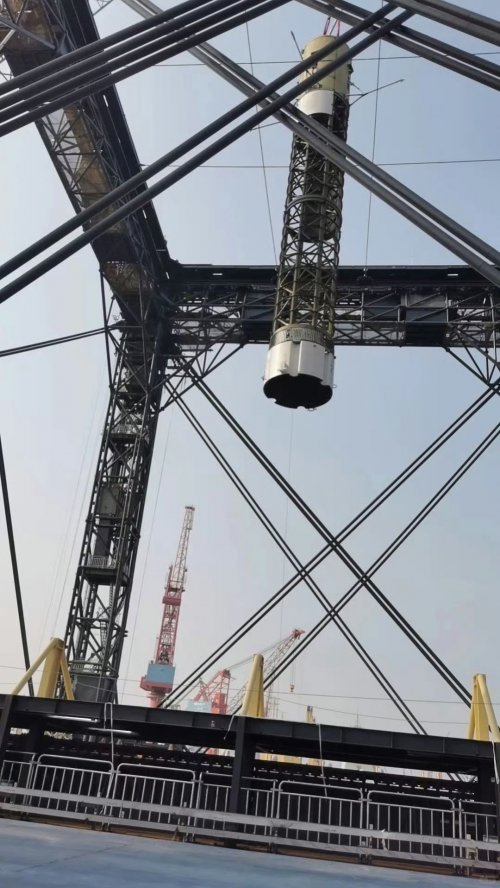
On the "Navigator" sea recovery platform, about 200 nautical miles from Wenchang, the marine recovery team's technicians were working diligently. This mission employed a sea-based splashdown recovery method. Simultaneously, the recovery platform and capture net system conducted online simulations of capture based on telemetry data transmitted from the rocket, verifying the feasibility of the plan and laying a solid foundation for subsequent sea-based platform recovery.

CCTV Reporter Ma Yuchen: The "Navigator" sea-based recovery platform is 144 meters long, 50 meters wide, and has a full-load displacement exceeding 25,000 tons—a truly massive vessel. However, the launch tower is nearly 70 meters high, and with the hull and antennas, the overall height is close to a 30-story building. Therefore, its center of gravity is very high. Coupled with the harsh sea conditions in winter, I felt the entire hull was swaying irregularly.

China Aerospace Science and Technology Corporation Li Shiyu: For us, one of the challenges was the high real-time dynamics. The trolley had to move from its initial position to a designated location in an extremely short time. Then, it had to pull a nearly one-ton arresting cable to achieve capture. This required the entire mechanism to have high-speed movement capabilities, which is extremely difficult. The second key breakthrough is the switching between the capture and buffering states. This is a core technological breakthrough; after capturing the rocket in a very short time, we must immediately absorb the rocket's energy to complete the buffering process.

The day before launch, after a comprehensive review, the rocket met the propellant loading requirements. Since the propellant loading facilities at the launch site were not yet fully completed, this mission used liquid oxygen and kerosene tank trucks for temporary loading.

Zhu Pingping, China Aerospace Science and Technology Corporation: We hope to use this complete success to wish the people of the whole country a Happy New Year.

Zhu Pingping, China Aerospace Science and Technology Corporation: I am very excited. China's reusable rocket has achieved a major and crucial technological breakthrough today!

Long March 10 Rocket Test Team: The "ten" is well-deserved!

Long March 10 Rocket Sea Recovery Squadron: Undeterred by challenges, forging ahead on the waves, the sea recovery squadron wishes our great motherland prosperity and strength! Happy Spring Festival!

Mengzhou Spacecraft Return Capsule Search and Recovery Team: Like a thousand horses galloping to open a new chapter, "Mengzhou" chases dreams towards the heavens. Wishing China's aerospace industry a prosperous future! May your achievements continue! (CCTV) #Aerospace workers send New Year's greetings to the people of China with a successful mission# Karl-Dawali's Weibo video

https://news.cctv.cn/2026/02/15/ARTICpknVH0nsPiIVnmE4LNe260215.shtml
 
Long March 10 is like a fully moon optimised Falcon Heavy.

The main problem with Falcon Heavy for moon missions is that the center core has to get the upper stage to a much higher velocity. It can't land on the drone ship without a massive payload penalty. China solves this issue by placing a third stage on top allowing the second stage to start and end sooner. This allows the side boosters and center core to all be reused with minimal payload penalty.

The Long March 10 payload to TLI is nearly identical to the weight of the Apollo service module. The race is on.
 
Long March 10 is like a fully moon optimised Falcon Heavy.

The main problem with Falcon Heavy for moon missions is that the center core has to get the upper stage to a much higher velocity. It can't land on the drone ship without a massive payload penalty. China solves this issue by placing a third stage on top allowing the second stage to start and end sooner. This allows the side boosters and center core to all be reused with minimal payload penalty.

The Long March 10 payload to TLI is nearly identical to the weight of the Apollo service module. The race is on.
Hmm I don’t think we have CZ-10 tricore reuse payload capacity yet.

All planned use for CZ-10 for lunar mission called for fully expended varient.
 
Hmm I don’t think we have CZ-10 tricore reuse payload capacity yet.

All planned use for CZ-10 for lunar mission called for fully expended varient.
It's listed at 27 ton in multiple sources. It doesn't mention expendable or reusable.

It is clear from a rocket equation perspective that Long March 10 is full optimised for moon missions with the extra hydrogen third stage. Long March 10 is effectively a 3.5 stage rocket with the side boosters staging earlier than the core. This gives it a strong advantage at moon missions and makes it hard to directly compare to US launch systems with fewer stages.

The boosters and core of the Long March 10 when performing a moon mission would be staging at similar speeds as Falcon Heavy performing a LEO mission. The payload reduction for Long March 10 on a moon mission would then be fairly low when operating with reusability. Falcon Heavy payload to LEO only drops from ~68 ton expendable to ~50 ton when having the core and boosters reusable.

Falcon Heavy is estimated to have 20 ton to TLI. Long March 10 has a 54% higher takeoff weight. That is 30 ton with everything being equal without even taking into account the efficient hydrogen third stage. The 27 ton goal is most likely with the long term goal of reusability. It is a fairly optimised and low risk design.

80% of the takeoff mass can effectively be reusable on a moon mission. That is excellent as a sustainable long term solution.

New Glenn being two stage will suffer a massive payload penalty to the moon if it tries to recover the first stage. From memory Falcon Heavy has only recovered the center core once when going beyond LEO and that could only be done because the payload was tiny. I'm not sure why the New Glenn 3 stage version disappeared as that was clearly optimised for the moon. Blue origin is clearly concentrating on LEO. I can definitely see China getting to the moon surface first.
 
As of 18 Feb 2026 the argument of perigee is 285° which means the orbit's closest point (perigee) is in the southern hemisphere, just past the southernmost extreme of the orbit. The perigee occurs deep in the Southern Hemisphere.
For the dwell time, the spacecraft will travel at its highest velocity near 285° and spend the majority of its time moving slowly near 105° (Northern Hemisphere).
 
Last edited:

Attachments

  • 5ae9b80d3607f037a30cfb0a64dbdd12400685445.png
    5ae9b80d3607f037a30cfb0a64dbdd12400685445.png
    5.4 MB · Views: 82
  • 1376d28478c19d0fb53881cd3e875375400685445.png
    1376d28478c19d0fb53881cd3e875375400685445.png
    5.1 MB · Views: 79
  • 04544fe8a391bb1ba31777c909f10708400685445.png
    04544fe8a391bb1ba31777c909f10708400685445.png
    2.6 MB · Views: 80
Last edited by a moderator:
The sea breeze was damp, and waves lapped against the shore. For most, it was an ordinary winter day, but for Ma Xiaobing, chief designer of the Mengzhou manned spacecraft system for China's manned space program, it was a long-awaited moment.
[...]
The successfully recovered Mengzhou return capsule was actually an “old ship.”

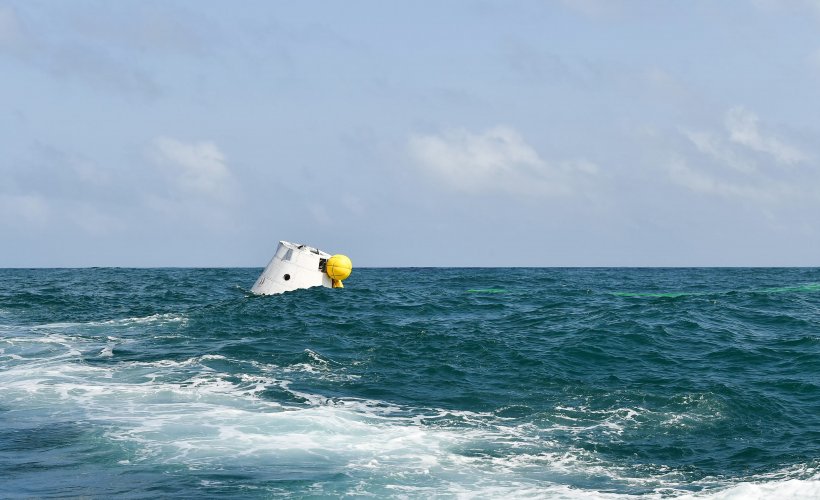
This return capsule had previously conducted airdrop tests and zero-altitude escape flight tests; this was its third major flight test mission. “The reason it was used for this flight test assessment, as everyone knows, is that it was designed for multiple uses, inherently carrying the mission of prototype verification.”

During its months in Wenchang, Hainan, this spacecraft underwent a real test. This mission was not just a launch, but a full-process practical exercise integrating “launch, flight control, and recovery.”

One of the original design principles of the Mengzhou spacecraft was economy, namely, “reusability.” Ma Xiaobing explained that the spacecraft was designed from the outset with the goal of unifying lunar landing and near-Earth orbit missions in mind. Although lunar return requires enduring extremely high heat fluxes from the second cosmic velocity, placing stringent demands on heat protection, this design, while somewhat "overkill" for near-Earth missions, can reduce repetitive development work by 80%–90% through standardized design, significantly lowering costs.

"Future missions will follow the same pattern. After this flight, the next mission will only require replacing the external heat shield; most internal components, such as the metal structure, can be reused," Ma Xiaobing stated.
[...]
The journey must continue towards this goal. The recently returned spacecraft capsule will not be transported back to Beijing immediately. It will remain in Hainan, awaiting the next important test—the sea-floating test. The team needs to verify the spacecraft's floating stability and its ability to protect the cabin environment under different sea conditions, even with astronauts inside.

https://mp.weixin.qq.com/s/N12X-F7-F4TeBzlv_8KrFg
 
BEIJING, Feb. 27 (Xinhua; Original from CMSA) -- In 2026, the China Manned Space Program will thoroughly implement the deployment of the 15th Five-Year Plan, deepening the advancement of its two major missions -- the application and development of the space station and the manned lunar exploration -- from a new starting point, striving to make greater contributions to accelerating the construction of a space powerhouse.

According to the China Manned Space Agency (CMSA), the China Space Station is currently operating stably in orbit with good efficiency; the development and construction for the lunar landing phase of the manned lunar exploration project are progressing smoothly, achieving multiple phased breakthroughs.

Since entering the stage of space station application and development, all parts of the program have worked in close coordination, successfully completing six crewed flights, four cargo resupply missions, and seven spacecraft return missions. They successfully implemented the first emergency launch mission, with six astronaut crews totaling 18 person-times conducting long-term stays in orbit. A total of 13 astronaut spacewalks and multiple payload deployments have been carried out, along with several extravehicular repair missions. The world record for the longest single spacewalk by astronauts was set. The selection of the fourth batch of reserve astronauts, including payload experts from Hong Kong and Macau, has been completed, and the selection process for low-cost cargo transportation systems has been finalized, with development work initiated.

In 2026, China plans to conduct two crewed missions and one cargo spacecraft resupply mission. Astronauts from the Hong Kong and Macau regions are expected to perform space station missions as early as this year, and one astronaut from the Shenzhou-23 crew will conduct a one-year in-orbit stay experiment.

Aiming for the goal of Chinese astronauts landing on the moon for the first time before 2030, the development and construction work for the lunar landing phase of the manned lunar exploration project is advancing steadily. So far, the development of major flight products, including the Long March-10 carrier rocket, the Mengzhou crew spacecraft, and the Lanyue lunar lander, is progressing smoothly. A series of large-scale tests have been successfully completed, including the zero-altitude escape test for the Mengzhou crew spacecraft, the landing and takeoff test for the Lanyue lander, the tethered ignition test for the Long March-10 rocket, and the low-altitude demonstration and verification of the Long March-10 rocket system, as well as the maximum dynamic pressure escape flight test for the Mengzhou spacecraft system.

In 2026, efforts will be fully dedicated to the construction of supporting facilities and equipment for the lunar landing mission at the Wenchang Spacecraft Launch Site, as well as the development of ground support systems including tracking, telemetry and command (TT&C), communications, and landing sites.

Since the project's initiation and implementation, it has consistently adhered to the principles of "peaceful utilization, equal and mutually beneficial cooperation, and common development," actively promoting international cooperation and exchanges in the field of manned spaceflight. In 2025, China and Pakistan signed a cooperation agreement on the selection and training of astronauts. The selection process is currently progressing smoothly. According to the flight mission plan and arrangements, a Pakistani astronaut will later perform a short-term flight mission as a payload expert, conducting scientific experiments from the Pakistani side aboard the China Space Station. Furthermore, the CMSA will continue to promote the implementation of cooperation projects with the United Nations Office for Outer Space Affairs (UNOOSA). China always welcomes fellow spacefarers from around the world to participate in and share the achievements of China's manned spaceflight development, working together to advance global space technology and making new and greater contributions to the peaceful use of outer space and the benefit of all humanity.
https://www.news.cn/tech/20260227/91d86e2fca6e455caddc2538a5a4735f/c.html
 
TheSpaceEngineer
@mcrs987
·
3m
Our first glimpse at the BF-20 FFSC engine powerhead by LandSpace. Still very limited views, but there's enough information here to conclude that the engine has taken a route similar to the design of Raptor.

Almost a literal mirror image as far as the fuel powerhead (side facing us) is concerned. Unclear as of now if the oxygen powerhead is also side-hung or centered above the thrust chamber like on Raptor but I'm betting it's centered. Really hope to see that part at some point soon, given if they have pulled that part off correctly they would certainly be the first to *properly* reverse engineer the Raptor engine, and especially the first to put it into effect

View: https://twitter.com/mcrs987/status/2029727366587507074


Pre burner (second twitter post)

View: https://twitter.com/mcrs987/status/2029727368823091605


https://ysxw.cctv.cn/article.html?t...2&item_id=17771692269801256699&channelId=1119
Recently, the "Blue Flame," a 220-ton-class liquid oxygen-methane full-flow staged combustion cycle engine developed by LandSpace, successfully completed a long-duration full-system test, marking a significant breakthrough for my country in the field of high-thrust, high-performance liquid rocket engines.

The "Blue Flame" engine adopts an internationally advanced full-flow staged combustion cycle configuration and a highly integrated design with high chamber pressure. It serves as a crucial power infrastructure and core supporting capability for the development of my country's next-generation large and heavy-lift launch vehicles, laying the foundation for building a high-efficiency, reusable heavy-lift launch vehicle propulsion system.

This engine boasts advantages such as high fuel efficiency, a high thrust-to-weight ratio, and long lifespan. However, its design, testing, and manufacturing are challenging, and currently only one foreign rocket has achieved operational use. The "Blue Flame" engine underwent its first full-system test in May 2025 and has since completed over 100 full-system ignition tests. Through rapid iterative optimization, the development team has further improved the product's maturity, laying the foundation for the development of reliable reusable engine products in the future.
 

Similar threads

Back
Top Bottom